Sound Transmissions returns with a bang. Fully loaded and equipped with booming basses and heartwarming synths that will melt all listening habits. Premis captures frequencies and developes soundscapes, a force to be reckoned with. The remixes from Double Precision, Thrived and Sha Ru are just showing what's possible if you explore the Transmissions minds! Don't you dare sleep on this
release!
Suche:reck
repressed !
The original version of 'Angel' needs no further introduction as its
already been a big club smasher since released in mid March.
The remixes are now about to hit the clubs and of course we got
something special everyone. Ripperton is behind the haunting and techno driven remix which definitely up there with his best work to date and Hot Since 82 does his thing and delivers a phat driving tech house remix sure to pack the floors around the globe.
To round the package of singer/songwriter Hayze has given us his wonderfull deephouse interpretation of the song and this will go down well for the early hours we reckon.
Green Black Vinyl
With her second full-length album, Zanias condenses her post-punk, techno and italo influences into a collection of simultaneously brooding and uplifting pop songs. ‘Unearthed’ explores the multiplicities of human connections, written at a time when connectedness was a resource more scarce than ever before. Field recordings from nature, vocal samples and an array of acoustic instruments are manipulated within a structure of catchy melodic synth maneuvers and driving rhythms, accompanied by her familiar and powerful voice conveying personal musings on hopeless desires and stoic acceptance. ‘Unearthed’ seeks the light and finds it within the exquisite pain of reckoning loneliness.
Sheffield's thatmanmonkz is quite the sonic force to be reckoned with. With an impressive discography across the board, dropping his most recent album "Columbusing" on Delusions of Grandeur in 2016 and running his own successful imprint "Shadeleaf", we're very happy to welcome him to Dirt Crew and present his latest EP "Shade Throw". Kicking things off rough and ready in true Detroit "Hight Tech Jazz" style, "Manna for Poppa" is a Saxed up dance floor bomb ready for the taking. "Intrinsic Divine", a sonically soaring breakbeat outing lightens the mood a little, think classic trip hop meets modern deep house. The cinematic string arrangement is accompanied by freestyle piano and licks of ad-libbed sax over a steady kit. "Space Jam 2017" sees thatmanmonkz team up with New York City's Clyde Phalanx to create a pure psyched up space house outing. We can picture this one over a sun-drenched Balearic scenery or deep in a dark and smokey basement somewhere. Jazzy freestyle drums underpin a live guitar improvisation that gets truly nasty on this interplanetary journey. Slow and sexy is the tempo for the closing track. "Evolver" is a soulful disco burner reminiscent of Idjut Boys, grooving along with smooth RnB vocals and salacious keys while intoxicating strings lift the energy to pure cosmic goodness.
- 1: 23
- 2: Cross My Heart
- 3: Downtown Lover
- 4: All Bad Parts
- 5: Maybe Not Tonight
- 6: Body
- 7: Lifestyle
- 8: Undressed
- 9: Always Talking About You
- 10: Do You Know What I'm Thinking
Brighton four-piece Lime Garden return with their self-reckoning second album 'Maybe Not Tonight' So Young Records (the record label launched by So Young Magazine).
'Maybe Not Tonight' unfolds as a full night out, charting the pleasures and perils of partying and impulsive decisions.
Vocalist and guitarist Chloe Howard says: “The album is about a night out, from start to finish. As the night progresses, you’re having a great time, until your ex walks in with someone else. You hate the way you look but rather than going home, you press the big red button and get even more drunk. Eventually, you take yourself home full of melancholy, chaos and anger.”
Following their critically acclaimed 2024 debut 'One More Thing', which captured the raw live energy that earned them slots at festivals including Glastonbury and Green Man, Maybe Not Tonight sees Lime Garden expand their signature “wonk-pop” sound upwards and outwards. The result is their most intoxicating and luminous material to date.
- 1: Twenty Circles To The Ground
- 2: All Falls Together
- 3: All Gone, All Gone
- 4: Almost Let You In
- 5: In The Avalon/Little Killer
- 6: Don't Take My Night From Me
- 7: Each Star Marks A Day
- 8: Lenore's Lullaby
- 9: The Lily And The Brakeman
- 10: Now, Divide
- 11: What You Reckon, What You Breathe
- 12: For As Long As It Will Matter
- 1334: Blues
- 14: Wooden Heart
Nehmt Euch einen Moment und lässt Euch die Kataloge dieser Meister des amerikanischen Folk auf der Zunge zergehen: MAGNOLIA ELECTRIC CO., CENTRO-MATIC, SONGS: OHIA, SOUTH SAN GABRIEL. Und lasst uns ganz ehrlich sein: Eine Dosis des künstlerischen Egos und ein wenig Eitelkeit können einen höheren Dienst erfüllen. Auf dieser Kollaboration von Jason Molina und Will Johnson scheint der jeweils andere Künstler sein Gegenüber und dessen Talent zu befeuern und sowohl die Performance als auch die Kreativität auf neue Höhen zu befördern. Im brüderlichen Teilen von Ideen werden Molina und Johnson zwei Poeten unter Poeten, die sich in ihrer Werkstatt daran machen, eine einzige, übergeordnete Elegie zu erschaffen. Der einzigartige Stil und die typische Produktion jedes einzelnen Musikers fügen sich hier zu einer gemeinsamen Schnittmenge zusammen. Der dokumentarische Ansatz eines Jason Molina richtet sich ganz häuslich in den subtilen Störungen und Produktionstricks eine Will Johnson ein, während der kräftige Tenor von Molina einen perfekten Tanzpartner in der sanften Reibeisenstimme von Johnson findet. Während die individuellen Performances hier bereits atemberaubend sind, ist die Zusammenkunft beider das, was den Zauber von "Molina&Johnson" ausmacht.
UILTY RAZORS, BONA FIDE PUNKS.
Writings on the topic that go off in all directions, mind-numbing lectures given by academics, and testimonies, most of them heavily doctored, from those who “lived through that era”: so many people today fantasize about the early days of punk in our country… This blessed moment when no one had yet thought of flaunting a ridiculous green mohawk, taking Sid Vicious as a hero, or – even worse – making the so-called alternative scene both festive and boorish. There was no such thing in 1976 or 1977, when it wasn’t easy to get hold of the first 45s by the Pistols or the Clash. Few people were aware of what was happening on the fringes of the fringes at the time. Malcolm McLaren was virtually unknown, and having short hair made you seem strange. Who knew then that rock music, which had taken a very bad turn since the early 1970s, would once again become an essential element of liberation? That, thanks to short and fast songs, it would once again rediscover that primitive, social side that was so hated by older generations? Who knew that, besides a few loners who read the music press (it was even better if they read it in English) and frequented the right record stores? Many of these formed bands, because it was impossible to do otherwise. We quickly went from listening to the Velvet Underground to trying to play the Stooges’ intros. It’s a somewhat collective story, even though there weren’t many people to start it.
The Guilty Razors were among those who took part in this initial upheaval in Paris. They were far from being the worst. They had something special and even released a single that was well above the national average. They also had enough songs to fill an album, the one you’re holding. In everyone’s opinion, they were definitely not among the punk impostors that followed in their wake. They were, at least, genuine and credible.
Guilty Razors, Parisian punk band (1975-1978). To understand something about their somewhat linear but very energetic sound, we might need to talk about the context in which it was born and, more broadly, recall the boredom (a theme that would become capital in punk songs) coupled with the desire to blow everything off, which were the basis for the formation of bands playing a rejuvenated rock music ; about the passion for a few records by the Kinks or the early Who, by the Stooges, by the Velvet mostly, which set you apart from the crowd.
And of course, we should remember this new wave, which was promoted by a few articles in the specialized press and some cutting-edge record stores, coming from New York or London, whose small but powerful influence could be felt in Paris and in a handful of isolated places in the provinces, lulled to sleep by so many appalling things, from Tangerine Dream to President Giscard d’Estaing...
In 1975-76, French music was, as almost always, in a sorry state ; it was still dominated by Johnny Hallyday and Sylvie Vartan. Local rock music was also rather bleak, apart from Bijou and Little Bob who tried to revive this small scene with poorly sound-engineered gigs played to almost no one.
In the working class suburbs at the time, it was mainly hard rock music played to 11 that helped people forget about their gruelling shifts at the factory. Here and there, on the outskirts of major cities, you still could find a few rockers with sideburns wearing black armbands since the death of Gene Vincent, but it wasn’t a proper mass movement, just a source of real danger to anyone they came across who wasn't like them. In August 1976, a festival unlike any other took place in Mont-de-Marsan – the First European Punk Festival as the poster said – with almost as many people on stage as in the audience. Yet, on that day, a quasi historical event happened, when, under the blazing afternoon sun, a band of unknowns called The Damned made an unprecedented noise in the arena, reminiscent of the chaotic Stooges in their early adolescence. They were the first genuine punk band to perform in our country: from then on, anything was possible, almost anything seemed permissible.
It makes sense that the four+1 members of Guilty Razors, who initially amplified acoustic guitars with crappy tape recorder microphones, would adopt punk music (pronounced paink in French) naturally and instinctively, since it combines liberating noise with speed of execution and – crucially – a very healthy sense of rebellion (the protesters of May 1968 proclaimed, and it was even a slogan, that they weren’t against old people, but against what had made them grow old. In the mid-1970s, it seemed normal and obvious that old people should now ALSO be targeted!!!).
At the time, the desire to fight back, and break down authority and apathy, was either red or black, often taking the form of leafleting, tumultuous general assemblies in the schoolyard, and massive or shabby demonstrations, most of the time overflowing with an exciting vitality that sometimes turned into fights with the riot police. Indeed, soon after the end of the Vietnam War and following Pinochet’s coup in Chile, all over France, Trotskyist and anarcho-libertarian fervour was firmly entrenched among parts of the educated youth population, who were equally rebellious and troublemakers whenever they had the chance. It should also be noted that when the single "Anarchy in the UK" was first heard, even though not many of us had access to it, both the title and its explosive sound immediately resonated with some of those troublemakers crying out for ANARCHY!!! Meanwhile, the left-wing majority still equated punks with reckless young neo-Nazis. Of course, the widely circulated photos in the mainstream press of Siouxsie Sioux with her swastikas didn’t necessarily help to win over the theorists of the Great Revolution. It took Joe Strummer to introduce The Clash as an anti-racist, anti-fascist and anti-ignorance band for the rejection of old-school revolutionaries to fade a little.
The Lycée Jean-Baptiste Say at Porte d’Auteuil, despite being located in the very posh and very exclusive 16th arrondissement of Paris, didn’t escape these "committed" upheavals, which doubled as the perfect outlet for the less timid members of this generation.
“Back then, politics were fun,” says Tristam Nada, who studied there and went on to become Guilty Razors’ frontman. “Jean-Baptiste was the leftist high-school in the neighbourhood. When the far right guys from the GUD came down there, the Communist League guys from elsewhere helped us fight them off.”
Anything that could challenge authority was fair game and of course, strikes for just about any reason would lead to increasingly frequent truancy (with a definitive farewell to education that would soon follow). Tristam Nada spent his 10th and 11th unfinished grades with José Perez, who had come from Spain, where his father, a janitor, had been sentenced to death by Franco. “José steered my tastes towards solid acts such as The Who. Like most teenagers, I had previously absorbed just about everything that came my way, from Yes to Led Zeppelin to Genesis. I was exploring… And then one day, he told me that he and his brother Carlos wanted to start a rock band.” The Perez brothers already played guitar. “Of course, they were Spanish!”, jokes their singer. “Then, somewhat reluctantly, José took up the bass and we were soon joined by Jano – who called himself Jano Homicid – who took up the rhythm guitar.” Several drummers would later join this core of not easily intimidated young guys who didn’t let adversity get the better of them.
The first rehearsals of the newly named Guilty Razors took place in the bedroom of a Perez aunt. There, the three rookies tried to cover a few standards, songs that often were an integral part of their lives. During a first, short gig, in front of a bewildered audience of tough old-school rockers, they launched into a clunky version of the Velvet Underground's “Heroin”. Challenge or recklessness? A bit of both, probably… And then, step by step, their limited repertoire expanded as they decided to write their own songs, sung in a not always very accurate or academic English, but who cared about proper grammar or the right vocabulary, since what truly mattered was to make the words sound as good as possible while playing very, very fast music? And spitting out those words in a language that left no doubt as to what it conveyed mattered as well.
Trying their hand a the kind of rock music disliked by most of the neighbourhood, making noise, being fiercely provocative: they still belonged to a tiny clique who, at this very moment, had chosen to impose this difference. And there were very few places in France or elsewhere, where one could witness the first stirrings of something that wasn’t a trend yet, let alone a movement.
In the provinces, in late 1976 or early 1977, there couldn’t be more than thirty record stores that were a bit more discerning than average, where you could hear this new kind of short-haired rock music called “punk”. The old clientele, who previously had no problem coming in to buy the latest McCartney or Aerosmith LP, now felt a little less comfortable there…
In Paris, these enlightened places were quite rare and often located nex to what would become the Forum des Halles, a big shopping mall. Between three aging sex workers, a couple of second-hand clothes shops, sellers of hippie paraphernalia and small fashion designers, the good word was loudly spread in two pioneering places – propagators of what was still only a new underground movement. Historically, the first one was the Open Market, a kind of poorly, but tastefully stocked cave. Speakers blasted out the sound of sixties garage bands from the Nuggets compilation (a crucial reference for José Perez) or the badly dressed English kids of Eddie and the Hot Rods. This black-painted den was opened a few years earlier by Marc Zermati, a character who wasn’t always in a sunny disposition, but always quite radical in his (good) choices and his opinions. He founded the independent label Skydog and was one of the promoters of the Mont-de-Marsan punk festivals. Not far from there was Harry Cover, another store more in tune with the new New York scene, which was amply covered in the house fanzine, Rock News (even though it was in it that the photos of the Sex Pistols were first published in France).
It was a favorite hang-out of the Perez brothers and Tristam Nada, as the latter explained. “It’s at Harry Cover’s that we first heard the Pistols and Clash’s 45s, and after that, we decided to start writing our first songs. If they could do it, so could we!”
The sonic shocks that were “Anarchy in the UK”, “White Riot” or the Buzzcocks’s EP, “Spiral Scratch” – which Guilty Razors' sound is reminiscent of – were soon to be amplified by an unparalleled visual shock. In April 1977, right after the release of their first LP, The Clash performed at the Palais des Glaces in Paris, during a punk night organised by Marc Zermati. For many who were there, it was the gig of a lifetime…
Of course, Guilty Razors and Tristam were in the audience: “That concert was fabulous… We Parisian punks were almost all dressed in black and white, with white shirts, skinny leather ties, bikers jackets or light jackets, etc. The Clash, on the other hand, wore colourful clothes. Well, the next day, at the Gibus, you’d spot everyone who had been at this concert, but they weren’t wearing anything black, they were all wearing colours.”
It makes sense to mention the Gibus club, as Guilty Razors often played there (sometimes in front of a hostile audience). It was also the only place in Paris that regularly scheduled new Parisian or Anglo-Saxon acts, such as Generation X, Siouxsie and the Banshees, the Slits, and Johnny Thunders who would become a kind of messed-up mascot for the venue. A little later, in 1978, the Rose Bonbon – formerly the Nashville – also attracted nightly owls in search of electric thrills… In 1977, the iconic but not necessarily excellent Asphalt Jungle often played at the Gibus, sometimes sharing the bill with Metal Urbain, the only band whose aura would later transcend the French borders (“I saw them as the French Sex Pistols,” said Geoff Travis, head of their British label Rough Trade). Already established in this small scene, Metal Urbain helped the young and restless Guilty Razors who had just arrived. Guitarist for Metal Urbain Hermann Schwartz remembers it: “They were younger than us, we were a bit like their mentors even if it’s too strong a word… At least they were credible. We thought they were good, and they had good songs which reminded of the Buzzcocks that I liked a lot. But at some point, they started hanging out with the Hells Angels. That’s when we stopped following them.”
The break-up was mutual, since, Guilty Razors, for their part, were shocked when they saw a fringe element of the audience at Metal Urbain concerts who repeatedly shouted “Sieg Heil” and gave Nazi salutes. These provocations, even still minor (the bulk of the skinhead crowd would later make their presence felt during concerts), weren’t really to the liking of the Perez brothers, whose anti-fascist convictions were firmly rooted. Some things are non-negotiable.
A few months earlier (in July 1978), Guilty Razors had nevertheless opened very successfully for Metal Urbain at the Bus Palladium, a more traditonally old-school rock night-club. But, as was sometimes the case back then, the night turned into a mass brawl when suburban rockers came to “beat up punks”.
Back then, Parisian nights weren’t always sweet and serene.
So, after opening as best as they could for The Jam (their sound having been ruined by the PA system), our local heroes were – once again – met outside by a horde of greasers out to get them. “Thankfully,” says Tristam, “we were with our roadies, motorless bikers who acted as a protective barrier. We were chased in the neighbouring streets and the whole thing ended in front of a bar, with the owner coming out with a rifle…”
Although Tristam and the Perez brothers narrowly escaped various, potentially bloody, incidents, they weren’t completely innocent of wrongdoing either. They still find amusing their mugging of two strangers in the street for example (“We were broke and we simply wanted to buy tickets for the Heartbreakers concert that night,” says Tristam). It so happened that their victims were two key figures in the rock business at the time: radio presenter Alain Manneval and music publisher Philippe Constantin. They filed a complaint and sought monetary compensation, but somehow the band’s manager, the skilful but very controversial Alexis, managed to get the complaint withdrawn and Guilty Razors ended up signing with Constantin with a substantial advance.
They also signed with Polydor and the label released in 1978 their only three-track 45, featuring “I Don't Wanna be A Rich”, “Hurts and Noises” and “Provocate” (songs that exuded perpetual rebellion and an unquenchable desire for “class” confrontation). It was a very good record, but due to a lack of promotion (radio stations didn’t play French artists singing in English), it didn’t sell very well. Only 800 copies were allegedly sold and the rest of the stock was pulped… Initially, the three tracks were to be included on a LP that never came to be, since they were dropped by Polydor (“Let’s say we sometimes caused a ruckus in their offices!” laughs Tristam.) In order to perfect the long-awaited LP, the band recorded demos of other tracks. There was a cover of Pink Floyd's “Lucifer Sam” from the Syd Barrett era – proof of an enduring love for the sixties’ greats –, “Wake Up” a hangover tale and “Bad Heart” about the Baader-Meinhof gang, whose actions had a profound impact on the era and on a generation seeking extreme dissent... On the album you’re now discovering, you can also hear five previously unreleased tracks recorded a bit later during an extended and freezing stay in Madrid, in a makeshift studio with the invaluable help of a drummer also acting as sound engineer. He was both an enthusiastic old hippie and a proper whizz at sound engineering. Here too, certain influences from the fifties and sixties (Link Wray, the Troggs) are more than obvious in the band’s music.
Shortly after a final stormy and rather barbaric (on the audience’s side) “Punk night” at the Olympia in June 1978, Tristam left the band ; his bandmates continued without him for a short while.
But like most pioneering punk bands of the era, Guilty Razors eventually split up for good after three years (besides once in Spain, they’d only played in Paris). The reason for ceasing business activities were more or less the same for everyone: there were no venues outside one’s small circuit to play this kind of rock music, which was still frightening, unknown, or of little interest to most people. The chances of recording an LP were virtually null, since major labels were only signing unoriginal but reassuring sub-Téléphone clones, and the smaller ones were only interested in progressive rock or French chanson for youth clubs. And what about self-production? No one in our small safety-pinned world had thought about it yet. There wasn’t enough money to embark on that sort of venture anyway.
So yes, the early days of punk in France were truly No Future!
2026 Repress
For all those who relate “maybe to the wind, because they can feel it, or dirt, because they can touch it. But nothing else.” Like Bobby Cornett (aka Shane), we are all trying to find where we belong.
Belong To The Wind marks Forager Records’ debut release: A lovingly curated collection of crooning psychedelic folk and soul songs gathered from American 45s of the 1970s. The compilation features 10 songs from 10 different acts, each with an indelible story of love, loss, loneliness, and an unrelenting desire to shed the confines of routine existence.
Meet a man named Denny Fast, perched behind a tobacco stained piano in a smokey Michigan lounge. He’s singing of the faded memory of distant hope and better times past. Listen to a portrait of the heartless Texan, told in arrestingly angelic prose by Connie Mims of St. Elmo’s Fire. Contemplate with Snuffy, the honest musings of a failed and misunderstood outsider, daring to hope for change.
Belong To The Wind aims to shed light on the more opaque cuts of these brooding artists. Many of these songs were recorded at the early stages of a career, at a time when experimenting and searching are pursued with reckless abandon. As a result, these songs are aggressively honest and uncompromising. Many have a distinct sense of the lo-fi DIY variety. Others are polished in production. Some are minimal, tentative and vulnerable. What all of these songs share, is a transportive quality. An uncanny ability to take a captive listener on a search for the soul, and a journey into the bellowing fields of easy reflection.
Sit back and enjoy a soft trip through the hazy milieu of a loner’s mind.
- 1: Reckless
- 2: Personal Rock N' Roll
- 3: Night Of Passion
- 4: Strip Me Down
- 5: Tongue Of Love
- 6: Love Tornado
- 7: Bad Girl
- 8: Street Survivor
- 9: Too Dangerous
- 10: Bodyrock
Black Vinyl[25,00 €]
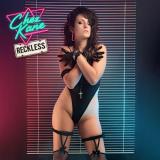
British rock singer Chez Kane is back with her third studio album, “Reckless” — an explosive blend of arena-ready hooks, slick guitar work, and unapologetic 80s-style swagger. Following the success of her first two records, Chez levels up with a collection that’s bigger in sound, richer in emotion, and packed with pure melodic firepower. Once again written and produced by Danny Rexon, frontman of Swedish hard rockers Crazy Lixx, “Reckless” channels the golden age of melodic rock while injecting it with fresh energy and modern production. The chemistry between Chez and Danny continues to shine, resulting in a record that blends 80s-inspired anthems, infectious hooks, and soaring vocals into a modern rock statement with attitude.
From glam-infused bangers to emotional slow-burners, “Reckless” showcases Chez’s growing confidence and undeniable charisma, proving she’s not just riding the revival wave — she’s leading it. If you’re craving fist-pumping choruses, soaring vocals, and a no-holds-barred throwback to the glory days of rock, look no further. Chez Kane’s “Reckless” is melodic rock done right — bold, catchy, and undeniably alive. Turn it up loud. This one’s recklessly unforgettable.
British rock singer Chez Kane is back with her third studio album, “Reckless” — an explosive blend of arena-ready hooks, slick guitar work, and unapologetic 80s-style swagger. Following the success of her first two records, Chez levels up with a collection that’s bigger in sound, richer in emotion, and packed with pure melodic firepower. Once again written and produced by Danny Rexon, frontman of Swedish hard rockers Crazy Lixx, “Reckless” channels the golden age of melodic rock while injecting it with fresh energy and modern production. The chemistry between Chez and Danny continues to shine, resulting in a record that blends 80s-inspired anthems, infectious hooks, and soaring vocals into a modern rock statement with attitude.
From glam-infused bangers to emotional slow-burners, “Reckless” showcases Chez’s growing confidence and undeniable charisma, proving she’s not just riding the revival wave — she’s leading it. If you’re craving fist-pumping choruses, soaring vocals, and a no-holds-barred throwback to the glory days of rock, look no further. Chez Kane’s “Reckless” is melodic rock done right — bold, catchy, and undeniably alive. Turn it up loud. This one’s recklessly unforgettable.
- A1: Everybody Ready?!
- A2: Earn The Crown
- A3: A Song For The Outcast
- A4: Minus Celsius
- A5: Pigs For Swine
- A6: One Sound
- A7: Say When
- A8: Year By Year
- A9: Friends
- A10: Be Myself And I
- A11: You Tell Me You Love Me You Lie
Backyard Babies was formed in 1987 in Nässjö and can by rights be called Sweden’s most influential glam punk act. Between 1994 and 2019 they released eight studio albums of which Stockholm Syndrome is their fifth. Here we have another collection of bangers brought to you by the babies with reckless abandon. This time they invited a whole slew of guest musicians such as the Ramones, Danko Jones, The Cardigans, Turbonegro, and The Hellacopters, elevating the whole affair to another level with no signs of stopping. This is the first time the album is available again on vinyl since ten years and features the songs "Minus Celsius", "A Song for the Outcast", and "Everybody Ready?!". Stockholm Syndrome is available as a limited edition of 1000 individually numbered copies on crystal clear & black marbled vinyl and includes a 4-page booklet with lyrics.
"Saint Cloud" von Katie Crutchfield alias Waxahatchee ist das fünfte Album der Indie-Songschreiberin und wurde im Sommer 2019 auf der texanischen Sonic Ranch in Tornillo und Long Pond in Stuyvesant, NY, aufgenommen und von Brad Cook (Bon Iver, Big Red Machine) produziert. Mit unerschütterlicher Ehrlichkeit unterzieht sich Crutchfield auf "Saint Cloud" einer offenen Selbstprüfung. Das Album entstand nach Crutchfields Entschluss Alkohol und Drogen hinter sich zu lassen, entsprechend widmet sie sich lyrisch dem Thema Sucht. Das schlägt sich auch klanglich in einer klareren und traditionelleren Ausrichtung des Albums nieder: "I think all of my records are turbulent and emotional, but this one feels like it has a little dose of enlightenment. It feels a little more calm and less reckless." gibt die Musikerin zu Protokoll. Auch musikalisch beschreitet Crutchfield neues Terrain, während die letzten beiden gefeierten Alben "Out In The Storm" (2017) und "Ivy Tripp" (2015) noch von lärmenden Gitarren bestimmt waren, streift "Saint Cloud" diese Wall of Sound Schicht für Schicht ab, um Platz für Crutchfields Stimme und Texte zu schaffen. Das Ergebnis ist ein Album geworden, das von klassischen Americana-Sounds durchwoben ist, aber mit einem modernen Touch. Auf "Saint Cloud" präsentiert sich Crutchfield erneut als eine der talentiertesten Geschichtenerzählerinnen der Gegenwart und sitzt so selbstsicher im Songwriter-Sattel wie noch nie zuvor.
- What Happens Next?
- Yesterday's Donuts
- The Man I'm Supposed To Be
- Someone In My Mirror
- Shame Shame
- Screamin
- I've Got To
- Use My Imagination
- Living Your Life
- Gentle On My Mind
Rooted in modern blues but unafraid to stretch beyond tradition, the record crackles with grit, groove, and lived- in emotion, presenting an artist who isn't waiting for answers, he's moving forward without them. Across the album, Stillman digs deep into themes of self-reckoning, loss, pride, and renewal.
Songs wrestle openly with identity, shame, and hard- earned perspective, balancing moments of vulnerability with sharp wit and raw confidence. Whether confronting inner demons or finding humor in heartbreak, the writing feels honest and unfiltered, anchored by soulful vocals and muscular musicianship . What Happens Next? is an album about growth through motion-- accepting change, facing consequences, and choosing momentum over fear. High- energy, emotionally grounded, and deeply human, it marks a defining step forward for Gabe Stillman , capturing an artist fully stepping into his voice and daring the listener to do the same.
- Kyle
- Being A Man
- An Angry Man
- Mood 01
- Fight A
- The View
- Rage
- Fight B
- Fight C
- Safe Zone
- Mood 02
- Chase 03
- Chase 04
- Mood 03
- Fight E
- Chimera 01
- Mood 04
- The Exiles
- Mood 05
- Timer 01
- Chimera 03
- Timer 02
- The Beast
- Mood 06
- Revenge
- A Changed Man
Double LP pressed on transparent red vinyl with black marbles. In Dying Light: The Beast, you step back into Kyle Crane's skin, but he's no longer the man he once was. Years of experiments have left him torn between fragile humanity and a monstrous power that he can barely control. Every light, every shadow, every choice feels dangerous. The forests and ruins of Castor Woods don't just set the stage, they breathe, they watch, and they punish the reckless. This is survival stripped to the bone, where horror is not just outside, but inside you. Olivier Deriviere's powerful and capturing score for Dying Light: The Beast doesn't just accompany Crane's journey, it is his voice. Sometimes it whispers in empty rooms, fragile and broken, sometimes it roars with distorted rhythms and pounding drums when the Beast takes over. Between silence and sound, the music pulls you deeper into Kyle's fractured soul, making every step and every heartbeat part of the story. It's not just a soundtrack, it's the echo of a man losing, and maybe finding, himself.
- World Of Trouble
- Hellbent On Colorado
- Loud And Clear
- Carolina
- The Wicked
- Plains Of Ohio
- Cincinnati
- Runaway Horse
- Overtime
- Funeral Singer
- Our Lady
- Eastern Bluebird
Inspired by the long tradition of radical country and folk artists, longtime friends Sally Buice and Molly Rochelson use their passion for literature and storytelling to craft an album that reckons with the current global fever pitch. The album's 12 introspective, thematically and sonically layered tracks chart a transformative pilgrimage through an inextricably connected world. A woman desperate to save her community from a gas pipeline in "Plains of Ohio," a devout grandmother traveling across the world to Yugoslavia in search of the Virgin Mary in "Our Lady," and a trouble- making Bible College misfit in "Loud and Clear" are just a few of the archetypes listeners meet.
The Cincinnati-based duo cut their teeth as teens busking on Market Square in Knoxville, TN. Produced by Eli LoPinto (Chris Stapleton), the duo opted for a bigger sound and the result is a bonafide, left-of-center indie country record. Path of Totality does not shy away from the weight of political strife and catastrophe, opting instead to boldly confront it, bringing to bear the power to unite us all.
Debuting on Token with his 'Blind Witness' EP, Pierce serves high-intensity cuts produced with finesse and flare. An architect of wide dimension, the producer works meticulously not only on the bite of his elements but the textures that glue everything together. Diving into immersion, Pierce executes four surgically precise tracks that burst at the seams and onto the dancefloor.
The balance of design to compliment each element is a tough feat, but Pierce funnels his expertise into very precise intention, making 'Blind Witness' a force to be reckoned with already so early in the year.
- 1: Thank God It’s Mum’s (Live At Mum’s)
- 2: Freckles
- 3: The Rabbit Hole
- 4: Switch It Off
- 5: I Hope You Notice Me
- 6: Belly Laugh
- 7: Touchy Subject
- 8: Sobering
- 9: Love Will Kill Me
Rising singer-songwriter Hetta Falzon announces her debut EP ‘Henrietta’, due for release on March 13th. Marking a new chapter for the Manchester-based artist, the EP captures Hetta at her most self-aware and emotionally articulate yet - balancing tenderness, humour and quiet self-reckoning across a collection of deeply personal songs. Following recent releases ‘Thank God It’s Mum’s (Live at Mum’s)’, ‘The Rabbit Hole’ and ‘I Hope You Notice Me’, Henrietta expands Hetta’s soft, soulful world while keeping its emotional core intact. Where earlier releases leaned into stillness and vulnerability, the EP introduces moments of lightness and observational wit - songs that don’t shy away from heartbreak, but aren’t afraid to smile at it either.
A brash, unapologetic blend of electronic, dance, punk, industrial, and pop music, No Lube So Rude exists at the intersection of the personal and the political, where the body serves not only as a sexual and spiritual vessel, but also as the front line in a battle for basic human rights. Peaches’ lyrics are bawdy and explicit here, laced with biting sarcasm and clever wordplay, but they’re also surprisingly vulnerable, offering up a candid look in the mirror from a post-menopausal queer icon reckoning with a society that’s come to expect silence, if not outright erasure. The result is a deliberately provocative exploration of identity, sexuality, and bodily autonomy from a trailblazer, a singular work of emotional and sonic alchemy that balances the poetic and the profane in equal measure as it transforms all the friction and frustration of modern life into joy and transcendence.
- The Set Up Part 1
- Can You Get Me Out Of Phoenix?
- Jumping Off In Madras
- Dilaudid Diane
- Keep The Shades Down
- Getting Out Of The Ward
- The Set Up Part 2
- The Reckless Life
- Walking With His Sleeves Down
- The Meter Keeps Ticking
- The Set Up Part 3
- The Last Time I Saw Her
The Delines were finishing the "Mr. Luck & Ms. Doom" sessions when Willy brought in a tune called "Walking With His Sleeves Down". Vocalist Amy Boone learned it on piano and the Band recorded it live. The take was stunning but the song didn"t quite fit the record so they set it aside along with "The Reckless Life", "Dilaudid Diane" (featured in their recent encores) and "Jumping off in Madras". The song worked sonically but again didn"t feel quite right lyrically and when they finished the record Willy couldn"t stop writing songs for it. The US opioid epidemic with thousands of young people rattled with addiction and living in tents and on the streets and in old cars and RVs, influenced "Luck and Doom" but even more so with The Set Up. Their stalwart producer, John Morgan Askew, was at the helm again and he"s the king of building atmospheric worlds. You can really feel it on this one. By the time we finished they realized "The Set Up" was the wayward, misguided, and lonely sister to "Mr. Luck & Ms. Doom". More ragged and undone but all CinemaScope Delines.
- A1: Acid Moon 06:29
- A2: Son Of The Forest 06:05
- A3: Arise 04:30
- A4: Interwebspider 04:55
- B1: Fruit Of Knowledge 05:42
- B2: Manta Magic 04:30
- B3: Basking In The Rain 06:14
- B4: Breathe 05:20
Triple J refers to him as "the multi talented creative whose chaotic and sweet energy has coined him as a force to be reckoned with both on and off the dancefloor."
In collaboration with Method Music, Impressed are proud to present STÜM's EP's SONS OF THE FOREST/ FRUIT OF KNOWLEDGE, pressed together for the first time ever on limited edition vinyl.
"a rising prospect who’ll be sound tracking so many euphoric moments in your life." JJJ