The visionary Walter Maioli (Futuro Antico, Aktuala) and the eccentric electronic musician John Zandijik first met in 1984 when they both gravitated toward the experimental Sound Reporters collective, participating in the release of Ethnoelectronics (1986). Shortly afterward, the two met at Zandijik's studio in Rotterdam, where they completed their journey of exploration to the edge of the Universe in just three nights. The recordings were made only after 3 a.m., when psychic energy is at its peak, and inspiration belongs solely to the realm of dreams. It was a ritual of long galactic fluctuation, where the mystical sound of the flute was filtered and expanded by the Aureal system, a device capable of breaking it down into cascades of aureal harmonies. Through its extemporaneous approach, the music transforms perceptions of ancient pyramids or tropical forests into phosphorescent nebulae, luminous fountain openings, and unprecedented planetary interstices—interstellar portals leading to new archetypal-ancestral visions. It feels like sailing through colored orbits in the red gases of Jupiter and Mars, lost and dissolved forever in the engines and gears of the most secret cosmos. Between Pink Floyd-esque psychedelic flashes and Tangerine Dream-inspired sidereal architectures, Maioli and Zandijik reveal the most phantasmagoric and unknown side of Sound Reporters.
Cerca:record breakin music
- 1: Playful Slowed
- 2: Ether Circus Harmonics
- 3: Celestial Piano
- 4: Stuck Run Baby
- 5: Seagulls
- 6: Downwards Spiral
- 7: Stuck
OONA Recordings is proud to announce the upcoming release of the soundtrack for The Girl With The Needle by Frederikke Hoffmeier. Hoffmeier, whom performs under the stage name Puce Mary, brings a raw, intense and atmospheric score to this Oscar-nominated film, which is contending for Best International Feature. Known for her bold, experimental approach to sound, Hoffmeier’s composition immerses listeners in the film’s dark, emotionally-charged world. Directed by Magnus von Horn, The Girl With The Needle premiered at the Cannes Film Festival, where it earned praise for its uncompromising vision. The film went on to receive a Golden Globe nomination for Best Non-English Language Film and won two prestigious awards at the European Film Awards, including Best Score for Hoffmeier’s hauntingly powerful work. The score to The Girl With The Needle is as dark as it is compelling, a masterclass in creating tension, unease, and raw emotional weight. Hoffmeier’s sound design is equal parts abrasive and intimate, drawing the listener into a world of fractured beauty. Her use of organic textures, electro-acoustic undertones, and dissonant, atonal melodies challenges traditional notions of film music, offering something deeply visceral and unpredictable. The Guardian described Hoffmeier’s score as "nerve-abrading," highlighting the relentless, uncomfortable energy that underpins the film. The Chicago Reader similarly calls the score haunting, noting how it amplifies the film’s stark atmosphere. Drawing comparisons to the intense works of composers like Mica Levi, Awards Radar Magazine praises Hoffmeier for pushing the film’s emotional core to its breaking point, deepening the agony of the protagonist. Throughout the film, Hoffmeier’s score becomes as much a character as the people on screen. Her collaboration with von Horn is marked by a shared vision of pushing the limits of cinema and sound. Screen Daily describes the score as "daring," with its aggressive, contemporary tones standing in stark contrast to conventional film scores. The result is a uniquely modern, avant-garde work that reflects the film's visceral and unsettling nature. Hoffmeier crafts a world of sound that lingers long after the credits roll. The soundtrack’s fusion of organic instrumentation with electro-acoustic elements and bold industrial sounds sets it apart from the ordinary. The British Film Institute notes how Hoffmeier’s "atonal score" creates an "enervating effect," pulling listeners deeper into the film’s raw emotional depths. The combination of brutal sound design and haunting melodies builds a layered, evocative listening experience, one that grows increasingly intense with every listen.
- The First Letter (2025 Re-Master)
- Sexy & Rich (Janet) (2025 Re-Master)
- So & Slow (2025 Re-Recording)
Following the departure of Wire's drummer Robert Grey in 1990 WIR had risen phoenix like from the ashes of the acclaimed UK post-punk band after and were created to fulfil the final phase of Wire's Mute Records contract. With a more sequence based sound, WIR saw the band breaking all their own rules by creating a new sparse electronic music with Graham Lewis singing most of the vocals and even cannibalising their own catalogue by sometimes sampling their own older material. WIR was, however, not a long-term project and besides completing their only album, The First Letter, their only other activities were a very small number of gigs and two multi-artist "conceptual happenings" under the name I Saw You. One of these was in Clapham in April 1992 on election night and the other in Vienna in Feb 1993. On that Vienna trip, in addition to playing the gig, the band recorded a radio session for the Austrian national broadcaster ORF which was organised by Peter Rehberg - later the person behind MEGO & sadly no longer with us. This was released in 1996 by Touch on CD and consisted of two long tracks with a running time of almost 25 minutes. Once the short run of CDs had sold out, the rights technically fell to the band, and pinkflag released it - digital only - in 2007 and now released on vinyl for the first time. The remastered 2025 vinyl / CD / digital edition adds a newly recorded, Taylor Swift style re-recording of what is undoubtedly WIR's most pop moment, the dark brooding shadows of So and Slow. The version released here is based on how the band played it live, so, inspite of being instantly recognisable, it does not follow the arrangement of any previously released version.
Ground-breaking afro-rock and jazz with Memphis soul roots on this lost 1972 gem. Lovingly restored and reissued by Matsuli Music
'Black Soul' from 1972 is the third and last known album by The Anchors, a soul group originally formed in Johannesburg's Alexandra township in 1968. Their first two albums, 'Soul Upstairs' from 1969 and 'Everything' from 1971, were issued on Teal's City Special label alongside other prominent South African soul groups of the era like The Beaters, The Movers and The Flaming Souls.
On 'Black Soul', The Anchors undergo a notable shift, moving away from their early Memphis soul influences towards a pioneering African-driven sound. These changes laid the foundations for an emerging afro-fusion scene in the years to come from groups like Batsumi, The Drive and Harari.
'Black Soul' features a who's who of intergenerational musicians from great South African bands over the decades. In addition to Zacks Nkosi, the renowned bandleader of the Jazz Maniacs and long-time member of the African Swingsters in the 1940s and 50s, this album includes kwela star Little Kid Lex Hendricks, known for his Columbia recordings of the late 1950s; as well as Zack's son Jabu Nkosi who would go on to play with The Drive, Roots and Sakhile; and Banza Kgasoane later a member of The Beaters, Harari and then Mango Groove.
Now remastered for its first release since the original 1972 pressing, this lost gem offers a revealing glimpse into the evolution of South African music during a transformative era.
Zacks Nkosi (Sax), Patrick Jabu Nkosi (Organ and Flute), Anderson Nkosi (Lead Guitar), Given Sabela (Bass Guitar), Kid Lex Hendrix (Sax), Banza Kgasoane (Trumpet), Peter Morake (Drums), Hamilton Nzimande (Musical Director).
Original LP issued in South Africa on GRC’s CBS label (LAB 4037) in 1972.
Produced for reissue by Chris Albertyn and Matt Temple at Matsuli Music, and Siemon Allen at Flatinternational.
Original vinyl sourced from the Flatinternational Archive.
Artwork restoration and design by Siemon Allen.
Audio restoration, mastering and lacquers by Frank Merritt at The Carvery.
Manufactured at Pallas, Germany.
- Maltreated Mind Makes Man Manic
- Chained To His Fate
- Nowhere To Hide
- Sunset At Dawn
- From The Past
- Breaking Through
- Misanthropic Anthem
- Death Has To Wait
- Through The Pain
- Drowned In Dreams
CADAVER, one of Norway's first and most influential death metal bands, has carved a distinctive path through the annals of extreme music. Formed in 1988 in Fredrikstad by Anders Odden (guitar/vocals) and Ole Bjerkebakke (drums/vocals), the band emerged from the ashes of their earlier black metal project, Baphomet. Their vision blended thrash and death metal with progressive influences from bands like Voivod and the chaotic insanity of Napalm Death, forging a sound that defied conventions. In 2024, Anders Odden delved deep into CADAVER 's history, unearthing unreleased material that offers a fascinating glimpse into the band's formative years. Before signing with Earache Records in 1992, CADAVER had worked on what would eventually become their second album, ...In Pains. During this period, they recorded raw and unpolished versions of many tracks in the same studio where Hallucinating Anxiety was born. These early recordings featured working titles that were later changed, and among them was a song titled "Maltreated Mind Makes Man Manic," which was never completed at the time. Anders revisited these hidden gems at Studio Tomb, located in Råde, Norway—the very place where CADAVER was first formed. With the old lineup reunited for this session, they finished the additional recordings necessary to bring their original vision to life. The result is Hymns of Misanthropy, a newly completed album from 1991 that will finally see the light of day through Listenable Records in April 2025. This release showcases CADAVER's unique approach to extreme music and highlights their previously underappreciated influence on the early Norwegian black metal scene. With Hymns of Misanthropy, listeners can experience a raw and powerful chapter of CADAVER's history, demonstrating once again that they were never just a typical death metal band. Instead, they remain an ever-evolving force that consistently pushes the envelope of what extreme music can achieve.
Since 2020, and from coast to coast, indie-rockers Fib have been rewiring brains with their singular, jangly sound and furiously tight live performances. Fib's members connected in Portland through their love of punk, friendship, and their shared exceptional musical abilities. After releasing their debut self-titled tape in 2021 and touring the US, the band picked up and moved across the country after falling in love with Philadelphia. The city quickly warmed to Fib's controlled mania- the band putting on the tightest show imaginable, and then, at the end of the set, destroying their instruments in total chaos mode. They matched Philadelphia's freak- fitting like a fingerless glove. Now, connecting with Philly label Julia's War, the group is releasing their debut full-length record Heavy Lifting- a musical odyssey exploring arty pop, punk and progressive rock- while simultaneously breaking free from genre and giving the listener a vividly surreal auditory experience. With Heavy Lifting, Fib shed their early, scrappy, lofi limitations, and embraced a new, expansive and warm recording capture. This bigger sound allows the group to put their technical skill, harmonious vocals, and hyper-infectious songwriting on full display. Songs like 'Mutuals' and 'Say' are frenetic and bouncy- shifting through virtuosic arrangements held together with intermittent, powerful hooks. With tunes like 'Dotted Line' and 'PS,' the band settles deeper into the grooves and songwriting allowing the listener to zone in and bob their head a bit more. While the nine tracks that comprise Heavy Lifting are equally unique and invigorating showcasing the members' intricate guitar tangles and polyrhythms, the album is holistically composed- a greater sum than its parts. The release would easily sit well for fans of new bands like Palm, TAGABOW, and Water From Your Eyes, but would just as easily be a welcome addition for record heads who love bands like This Heat, Television, and Psychic TV. While this might all be hard to believe, and their name is Fib- it's no lie. Fib's Heavy Lifting is a vibrant, moving and endless sonic rainbow. Pick it up and step into their wild and ecstatic void.
- 1: From An Ocean, To A Lake
- 2: All They Want Is Violence
- 3: Reveille!
- 4: Blue Gatorade
- 5: Sårbare
- 6: Running Through The Tøyen Arboretum In The Spring
- 1: Misundelig
- 2: Closer – Demo
- 3: Solo Yo Y Tú
- 4: Lampi
- 5: スイセン
- 6: Oh, When I Was In Love With You
- 7: Cascades (葉月君へ)
- 8: Attar
Hailed by Pitchfork for his “ambient, intimate…songs that blossom gently with intricate musical details and enigmatic lyrics,” Conner Youngblood gained early acclaim with a series of self-released singles and EPs before breaking out internationally with his 2018 full-length debut, Cheyenne, which fused electronic and analog elements into a lush mix of bedroom pop and chamber folk. Youngblood toured the record heavily until 2020, when the pandemic forced him off the road and, hungry for fresh inspiration, he began enrolling in Russian, Danish, Spanish, and Japanese language lessons. He didn’t realize it at the time, but those classes weren’t just expanding his vocabulary, they were laying the groundwork for his most ambitious, experimental album yet: Cascades, Cascading, Cascadingly.
Written and recorded at home in Nashville, the collection is a dreamy series of meditations steeped in desire and yearning, loneliness and loss, exhilaration and escape. The lyrics blur the lines between fact and fiction, toying with magical realism and outright abstraction in various languages, and the arrangements are surreal and cinematic to match, hinting at everything from Cocteau Twins to Atoms For Peace. In addition to producing and engineering, Youngblood played every instrument on the album himself, and the result is a pure, unfiltered journey deep into the subconscious of a relentlessly curious artist, one with a boundless imagination and an insatiable appetite for sonic exploration.
Maurice Starr,Eleanor Grant,Leon Moses,Dutch Robinson,Silk,Jackie Moore&Wilson Pickett,The F
The Lowdown: A Catawba Records Story LP
- A1: Maurice Starr - You And Me
- A2: Eleanor Grant - Don’t Knock My Love
- A3: Leon Moses - She’s Too Serious
- A4: Dutch Robinson - Lowdown (7-Inch Mix)
- A5: Silk - Somethin’ ‘Bout The Way
- B1: Eleanor Grant - Lovin’ Your Good Thing Away
- B2: Jackie Moore & Wilson Pickett - Seconds Of Your Love (Satril 12-Inch Edit)
- B3: The Fantastic Aleems Ft Leroy Burgess - Get Down Friday Night (7-Inch Mix)
- B4: Sandy Kerr - Thug Rock (Logan’s Dub)
Catawba Records was born in the late seventies; a label founded by Richard Mack who ran promotions for CBS Records. Mack was responsible for breaking Gold & Platinum sellers including Earth Wind & Fire, The O’Jays, Wild Cherry, Emotions, Santana, Betty Wright and The Jackson’s. Catawba Records hosted some of the coolest up and coming names in dance music during the early to mid eighties, including Dutch Robinson, Jimmy Castor, Wilson Pickett, Jackie Moore and Brook Benton. Celebrating its 40 year anniversary, Catawba is back with a limited edition pressing featuring edits of the favourites, new and unreleased tracks and a gatefold packed with history.
• Within a year of her ground-breaking Double-Album “Bad Girls”, Donna Summer left Casablanca Records
to become the first Artist signed to the new Geffen Records label.
• The third album released for the label was 1984’s “CATS WITHOUT CLAWS”, which was produced by
Michael Omartian, who followed-up his production duties on “She Works Hard For The Money” by giving
the album a mid-80s dance/pop themed sound. The album includes the singles ‘Supernatural Love’, ‘There
Goes My Baby’ and ‘Eyes’.
• “CATS WITHOUT CLAWS” reached the Top 30 in several countries across Europe, also becoming a Top 40
album in the USA and Japan.
• Michael Omartian’s production credits include albums with Michael Bolton, Peter Cetera, Christopher
Cross, Amy Grant, Whitney Houston, The Jacksons, and Rod Stewart. Alongside Quincy Jones, he coproduced USA For Africa’s 1985 No. 1 hit, "We Are the World".
• Donna won a Grammy Award for Best Inspirational Performance for the album’s final track, ‘Forgive Me’.
• This special edition revisits the original album on 180g Pink Colour vinyl.
- A1: Do U Fm
- A2: Novelist Sad Face
- A3: Green Box
- A4: Dusty
- A5: The Linda Song
- A6: Dm Bf
- B1: I Tried
- B2: Melodies Like Mark
- B3: Wildcat
- B4: How U Remind Me
- B5: Pocky
- B6: Bon Tempiii
- B7: Pt Basement
- B8: Alberqurque Ii
- B9: Mary's
Yellow Coloured Vinyl[29,37 €]
Kneading dough is tricky – you should know how it’s supposed to feel. If you try too hard you could make it worse. It’s a beautiful practice – creation with a gentle touch, to work at something so it can be left alone. “If it’s too drawn out it’s awful. It’s easy to give too much.” Dance in the mirror. Contemplate your veiny hands. Who do they remind you of?
You begin by mixing flour and water. “What happens when your people die? Why’d they move the rock to the other side of Ulster Park?” Eliza Niemi asks two seemingly unrelated questions in a rising melody with guitar accompaniment, like fingers playing spider up to the nape of your neck. Gentle pressure. Strands of gluten form to bind the mix. A new question lingers in the binding. When she admits “but I don’t know how to tell if I’m feeling it or not,” that question surfaces through the text. It is reiterated throughout the album. When I’m working with dough I think the same thing to myself.
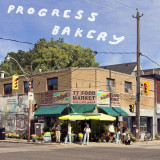
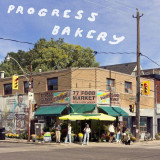
On Progress Bakery, her second album as a solo artist, Eliza knows to leave some questions alone – to let juxtaposition and tension be the proof. It doesn’t have to be hard. The feelings and revelations they provoke rise in the heat. The smell is sweet. Crispy on the outside and soft all the way through. She playfully slip-slides through words and sounds and images, delighting in surprise, skimming ideas like stones cast across clear water, touching down briefly with uncommon grace.
The question provoked between those opening lines resurfaces in the strands between songs – “Do U FM” is fully formed and beautifully layered, while “Novelist Sad Face” is a short, acapella rendering of gentle curiosity. What is holding these ideas together? Some songs demand more, seem to carry a whole load – eventually the skipping stone will halt to sink and resume its idle duty – while others drift in and out of focus, the way thoughts and dreams become interwoven before the mind is sunk into true sleep.
Music and words don’t always have to interact. Where she decides to keep them apart gives a new contour to where and how she puts them together. The kind of thing you’re supposed to take for granted with songs and their singers comes alive in Eliza’s hands – the little miracle of mixing, kneading, stretching, and stopping.
So often on Progress Bakery, Eliza teases out truth and meaning by asking questions. “Do I wanna be crying?” “Do you want me good or do you want me bad?” “Do I need an eye test?” “I’m writing songs in my head while you’re going over stuff with me — is that cruel??” In “Pocky” Eliza ends with a question that feels to me like the actual biography, succinct and revealing:
I don’t wanna be made to see
I just wanna ask “what’s that?”
Grace that ought to be rare, but in its care and precision is offered humbly, with great generosity, and without announcing itself. Eliza’s simple, miraculous music is given further form and shape by a group of collaborators – invaluable guest musicians Jeremy Ray, Evan Cartwright, Steven McPhail, Kenny Boothby, Ed Squires, Carolina Chauffe, Dorothea Paas, Louie Short, and Avalon Tassonyi. Together with Louie Short, who recorded, mixed, and produced the album along with Jeremy Ray and Lukas Cheung, Eliza has cultivated a richness in sound and texture that prods and provokes the ticklish ear. Barely audible guitar tinkering, a brief lo-fi field recording of trumpets, the harmonic clicking of a looped synthesizer, a flourish of reeds, a child’s conversation, each uncanny sound perfectly placed, rippling out under a soft breeze.
Lay in bed alone at night and ask aloud to the stillness,
“What were you doing at the Albuquerque Airport?
What were you doing there??”
And hear your question answered by a dream of swelling, undulating cellos. Try to grasp at the melody and structure. It’s not an answer (if there could be one), but it moves deeper, closer to the weird layer of fleeting moments and disconnected images, barely perceptible at its core. Wait for the dream reel to click into place.
Eliza took me for a ride in Nicole (her beloved Dodge Grand Caravan) and told me she’d been thinking of the album as an embodiment of transition – and I think every transition, known or unknown, carries the weight of new meaning, skittering off the surface tension of life as you know it, creating ripples, sometimes bouncing off and sometimes breaking through. There is a trick you can use to tell if a dough is glutinous enough. You’re supposed to stretch it out as thin as you can without breaking it and hold it up to the light. If you can see through, even if it renders the world murky and uncertain, you should leave it alone. I love this trick. It’s one that Eliza seems to know intuitively: work gently and ask questions and don’t always expect answers, and when you can, take a glimpse at something new, and then leave.
Kneading dough is tricky – you should know how it’s supposed to feel. If you try too hard you could make it worse. It’s a beautiful practice – creation with a gentle touch, to work at something so it can be left alone. “If it’s too drawn out it’s awful. It’s easy to give too much.” Dance in the mirror. Contemplate your veiny hands. Who do they remind you of?
You begin by mixing flour and water. “What happens when your people die? Why’d they move the rock to the other side of Ulster Park?” Eliza Niemi asks two seemingly unrelated questions in a rising melody with guitar accompaniment, like fingers playing spider up to the nape of your neck. Gentle pressure. Strands of gluten form to bind the mix. A new question lingers in the binding. When she admits “but I don’t know how to tell if I’m feeling it or not,” that question surfaces through the text. It is reiterated throughout the album. When I’m working with dough I think the same thing to myself.
On Progress Bakery, her second album as a solo artist, Eliza knows to leave some questions alone – to let juxtaposition and tension be the proof. It doesn’t have to be hard. The feelings and revelations they provoke rise in the heat. The smell is sweet. Crispy on the outside and soft all the way through. She playfully slip-slides through words and sounds and images, delighting in surprise, skimming ideas like stones cast across clear water, touching down briefly with uncommon grace.
The question provoked between those opening lines resurfaces in the strands between songs – “Do U FM” is fully formed and beautifully layered, while “Novelist Sad Face” is a short, acapella rendering of gentle curiosity. What is holding these ideas together? Some songs demand more, seem to carry a whole load – eventually the skipping stone will halt to sink and resume its idle duty – while others drift in and out of focus, the way thoughts and dreams become interwoven before the mind is sunk into true sleep.
Music and words don’t always have to interact. Where she decides to keep them apart gives a new contour to where and how she puts them together. The kind of thing you’re supposed to take for granted with songs and their singers comes alive in Eliza’s hands – the little miracle of mixing, kneading, stretching, and stopping.
So often on Progress Bakery, Eliza teases out truth and meaning by asking questions. “Do I wanna be crying?” “Do you want me good or do you want me bad?” “Do I need an eye test?” “I’m writing songs in my head while you’re going over stuff with me — is that cruel??” In “Pocky” Eliza ends with a question that feels to me like the actual biography, succinct and revealing:
I don’t wanna be made to see
I just wanna ask “what’s that?”
Grace that ought to be rare, but in its care and precision is offered humbly, with great generosity, and without announcing itself. Eliza’s simple, miraculous music is given further form and shape by a group of collaborators – invaluable guest musicians Jeremy Ray, Evan Cartwright, Steven McPhail, Kenny Boothby, Ed Squires, Carolina Chauffe, Dorothea Paas, Louie Short, and Avalon Tassonyi. Together with Louie Short, who recorded, mixed, and produced the album along with Jeremy Ray and Lukas Cheung, Eliza has cultivated a richness in sound and texture that prods and provokes the ticklish ear. Barely audible guitar tinkering, a brief lo-fi field recording of trumpets, the harmonic clicking of a looped synthesizer, a flourish of reeds, a child’s conversation, each uncanny sound perfectly placed, rippling out under a soft breeze.
Lay in bed alone at night and ask aloud to the stillness,
“What were you doing at the Albuquerque Airport?
What were you doing there??”
And hear your question answered by a dream of swelling, undulating cellos. Try to grasp at the melody and structure. It’s not an answer (if there could be one), but it moves deeper, closer to the weird layer of fleeting moments and disconnected images, barely perceptible at its core. Wait for the dream reel to click into place.
Eliza took me for a ride in Nicole (her beloved Dodge Grand Caravan) and told me she’d been thinking of the album as an embodiment of transition – and I think every transition, known or unknown, carries the weight of new meaning, skittering off the surface tension of life as you know it, creating ripples, sometimes bouncing off and sometimes breaking through. There is a trick you can use to tell if a dough is glutinous enough. You’re supposed to stretch it out as thin as you can without breaking it and hold it up to the light. If you can see through, even if it renders the world murky and uncertain, you should leave it alone. I love this trick. It’s one that Eliza seems to know intuitively: work gently and ask questions and don’t always expect answers, and when you can, take a glimpse at something new, and then leave.
- Waco Kool Aid
- Hand Me Down Love
- Girl From Plaquemine
- Bayou La Batre
- Almost Forever
- Felt My Heart Breaking
- Shotgun Religion
- Man On The Marquee
- Just In Case
- Another House
- It'll Come Back To Me
- Fog Rolls In
Andrew Duhon has a knack for telling the kind of stories that clearly cost the writer something to tell- the kind of honesty that feels noble and never half hearted. When a song written by a stranger heals you, even in the smallest way, that's a connection beyond entertainment, and that is the journey Andrew Duhon sets out on from his home in Louisiana. His songs are about recognizing our story as much as they are about telling his, and his coast to coast pursuits have given him a clearer view of the American Landscape than most are privy to. Still, after years of voyaging off to every corner of the country, a new sensation arises with each return home to New Orleans. From that familiar return comes The Parish Record, a snapshot of life venturing from and returning to one of America's purest cultural vignettes, and the beauty, conflict, and stories that come with it. The Parish Record was recorded at Dockside Studios in Maurice, LA, where deep in Cajun country sits a wood-panel barn engulfed in oak and cypress trees along the slow butterscotch bayou pace of the Vermillion River. In this isolated hub of Acadiana, Andrew Duhon embarked with his trio of most trusted musicians - Myles Weeks (James Hunter Six, Eric Lindell) on Bass, Jim Kolacek (Feufollet) on Drums, and Daniel Walker (Heart, Ann Wilson, Amy Ray) on Keys - to harness of the sound and feeling of their surroundings. "I wanted this record to feel like home. It wasn't time to get out of town or try out something new on this one. It was about believing in the songs from where the songs came from," Duhon says.
‘The Return of Pachyman’ is a supernatural force
from a brave new world that’s a little bit San Juan,
a little LA, and a whole lot of Channel One in
Kingston, Jamaica. Designed to be a resurrection
of sound systems from the past through which we
can celebrate a post-Trump future, the record
shows that blasting off into reggae’s deep space
has never gone out of style.
Pachy García (aka Pachyman) is perhaps best
known as the drummer / vocalist for the LA-based
band Prettiest Eyes, a unique pop-noise project
that reflects his other formative interest, synth
punk. He thinks of ‘The Return of Pachyman’ the
same way King Tubby might - an ‘X-ray’ of reggae
music, breaking it down to its bare bones.
Originally a guitarist, he moved to Los Angeles in
the early 2010s and developed his passion for
dub. From there, he started recording bass, drums
and piano and collecting recording equipment in
his basement studio, which he calls 333 House.
With ‘The Return of Pachyman’, García wants to
show how the Caribbean flow is transnational, a
vibe that resounds from Jamaica to San Juan to
Southern California. “With this project, I was
looking to make positive music and radiate good
energy; something to kinda disconnect from the
negative things that were happening at the
moment,” Garcia explains. “I am trying to make this
project a service for humanity in the sense that I
just wanted to shine a positive light.”
Bon Iver's debut full-length For Emma, Forever Ago has been making major waves in critics circles based on the strength of an early artist-pressed advance cd and a couple awe-inspiring sets at CMJ in October 2007. The New York Times called it "irresistible" and Pitchfork stamped its early review of the album with a Recommended tag. For those of you hiding away in a cabin of your own, it's time that you hear the story, and more importantly, the music. Bon Iver (pronounced: bohn eevair; French for "good winter" and spelled wrong on purpose) is a greeting, a celebration and a sentiment. It is a new statement of an artist moving on and establishing the groundwork for a lasting career. For Emma, Forever Ago is the debut of this lineage of songs. As a whole, the record is entirely cohesive throughout and remains centered around a particular aesthetic, prompted by the time and place for which it was recorded. Justin Vernon, the primary force behind Bon Iver, seems to have tested his boundaries to the maximum, and in doing so has managed to break free from any pre-cursing or finished forms. It wasn't planned. The goal was to hibernate. Vernon moved to a remote cabin in the woods of Northwestern Wisconsin at the onset of winter. He lived there alone for three months, filling his days with wood splitting and other chores around the land. This solitary time slowly began feeding a bold, uninhibited new musical focus. The days slowly evolved into nights filled with twelve-hour recording blocks, breaking only for trips on the tractor into the pines to saw and haul firewood, or for frozen sunrises high up a deer stand. All of his personal trouble, lack of perspective, heartache, longing, love, loss and guilt that had been stock piled over the course of the past six years, was suddenly purged into the form of song.
Bugge Wesseltoft has long been a shaper of his own jazz idioms, through his diverse solo albums, his group projects such as New Conception of Jazz, OKWorld! and RYMDEN, and collaborations with artists such as Sidsel Endresen, Henning Kraggerud or Henrik Schwarz.
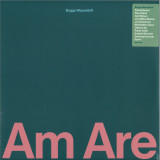
"Am Are" features special constellations of superb musicians that spans both generations and styles, and is an exploration of sonic textures, dynamic contrasts of mood and style, and ranges from sparse arrangements through to complex layers of dubs and loops and improvisational interplay.
The album begins with Bugge alone on "How?" with layers of undulating atmospheric synth, brought into focus by Bugge's piano at the forefront, creating a minimalist miniature that is both emotive and serene. For "Villrein" Bugge is joined by Elias Tafjord on drums, beginning with a santur-like synth figure, floating over ominous formant sci-fi bass synths bubbling and pulsing, and overlaid by phrenetic piano that only stops to lock into the santur figure before relaunching on its own journeys, all underpinned by Elias Tafjord's expressive drumming. "Is Anyone Listening?" demonstrate's Bugge's songcraft, layering muted percussive piano behind Rohey's distinctive and beautiful vocals punctuated by Martin Myhre Olsen's tenor saxophone, creating a soulful mood tinged with desperation.
"BAG" presents the first classic piano trio of the album - Bugge on piano and synths, Arild Andersen on bass, and Gard Nilssen on drums - announcing itself with an insistent riff, chattering drums, breaking into a progressive rock-style passage of bass and piano in unison. "Reel", the second track from this trio, is a mellow soundscape that evolves to become hazy urban downbeat jazz.
The second piano trio of Bugge (Rhodes and Korg MS20 synth), Sveinung Hovensjø (Electric Bass), and Jon Christensen (Drums and Bells) offers a completely different perspective. The first track "Render" features Bugge's Zawinul-esque Rhodes and monosynth leads, Sveinung's fuzz bass in something of a leading role, all carried with chattering gusto by Jon Christensen's dynamic drumming that brings texture and space as well as rhythm to the piece. "Vender" begins as an atmospheric piece, with reed organ-like synth washes, and octave-processed bass with a somewhat sitar-like tone, meandering until the track breaks down into drums and bass weaving around an insistent drum machine loop, dripping with synth pads and monosynth lead.
"JazzBasill" introduces the third piano trio - featuring Bugge (Piano), Jens Mikkel Madsen (Acoustic Bass) and Øyunn (Drums) - and offers a classic piano trio style with urban sophistication, that is lyrical, and interspersed with staccato cadences, giving a feeling of broken swing, slightly staggered yet driving forwards. The title track "AM ARE" is late night jazz, with baroque whispers, and distinctly melodic.
The final track, "Think Ahead" features the non-standard trio of Bugge (Piano/Organ), Oddrun Lilja (Guitar) and Sanskriti Shrestha (Tablas/Harp). Beginning with a minimalist piano figure, table, and sustained guitar, the track breaks down to a noise surge and ambient windscape, with guitar birds and abstract grinding, before returning to minimalist melodicism.
The shifting personnel across the album, as well as the three different studios in which it was recorded - Village Recording in Copenhagen, Rainbow Studios in Oslo, and his own Buggesroom Studio - creates a feeling of dynamic change and musical variety that is unified by Bugge's piano and keyboards. His playing moves between foreground, where he allows the music to elevate him, and background, where he move gently like a beneficent presence, tending to the demands of the spirit of the musical moments he has captured. It is an album powered by restless exploration and shaped by distinctive musical personalities; it is a journey through different moods, illuminated and brought into focus by Bugge's measured approach and guiding hand.
- A1: Shadow Captain
- A2: See The Changes
- A3: Carried Away
- B1: Fair Game
- B2: Anything At All
- B3: Cathedral
- C1: Dark Star
- C2: Just A Song Before I Go
- C3: Run From Tears
- D1: Cold Rain
- D2: In My Dreams
- D3: I Give You Give Blind
CSN was the trio's last fully realized album, and also the last recording on which the three principals handled all the vocal parts without the sweetening of additional voices. It has held up remarkably well, both as a memento of its time and as a thoroughly enjoyable musical work." — AllMusic
Crosby, Stills & Nash was a folk rock supergroup made up of American singer-songwriters David Crosby, Stephen Stills, and English singer-songwriter Graham Nash. CSN's 1977 self-titled album is a return to the harmony-soaked idealism with which the trio had been catapulted to popularity; it reached No. 2 on the charts, behind Fleetwood Mac's megasuccessful Rumours.
AllMusic says the songs on CSN show a "great deal of lyrical maturity and compositional complexity compared to those earlier albums (from a far more innocent time). "Just a Song Before I Go" was the latest of Graham Nash's radio-friendly acoustic numbers, and a Top Ten single. "See the Changes" and "Dark Star" ranked with the best of Stephen Stills' work, while David Crosby contributed three classics from his distinctive oeuvre: "Shadow Captain," "Anything at All," and the beautiful "In My Dreams."And Nash's multi-part "Cathedral," a recollection of an acid trip taken in Winchester Cathedral on his 32nd birthday, became a staple of the group's live repertoire.
Ground-breaking music perfection deserves definitive sound and top-notch packaging. This reissue was mastered directly from the original master tape by Chris Bellman at Bernie Grundman Mastering and cut at 45 RPM. Pressed on 180-gram vinyl at Quality Record Pressings, and housed in a tip-on old style gatefold double pocket jacket with textured stock by Stoughton Printing.
- No Cruise Control
- Densite
- Jungle The Jungle
- Helix
- Aurillac Accident
- Double Z
- Dodorian
- Funk Kraut
- Snare Attack
- Magnavox Odyssey
Some record crates deserve a sub-category called 'play it again, Sam'. tracks that spin on the turntables without a push. Funk Kraut, Zombie Zombie's second LP on Born Bad, is of this kind. This well-proportioned classic is a fine example of the style the trio has been embodying: instrumental for synths and drums music played live. This time it was a quick affair, recorded by Laurent Deboisgisson in the studio of Cheveu's singer. A pretty straightforward job, and a far cry from their previous concept album. Let us praise Krikor Kouchian's mix: drums have been resampled with some restraint, and that Linn Drum kick lightens up the overall mix. It marks a notable evolution in the band's sound, and adds some dynamic. The album kicks off with 'No cruise control', a big bad sedan that effortlessly eats up the distance at 120 BPM. Kraut as can be, with a twist. And as far as funk goes, it's not Bootsy Collins, but there's a whiff. Space is structured by synth patterns, for optimized drumming : forward, straight and fluid, top-notch suspension (Cosmic Neman / Dr Scho?nberg take care of business on drums). They treat themselves to a diversion via Darmstadt to take some musique concrete on board : mechanical birds chirp, the odd atonal piano here and there. Nerds will appreciate liner notes detailing the equipment used : about twenty synths and they still describe it as minimal. With 'Densite?', we've just passed a polyphonic milestone: outright chords ! Long, suspended pads, pierced only by fat claps. Clapping hands are not far off. The band shows it has mastered concise pop formats. That same vibe can be found in 'Jungle the Jungle', paradoxical tune, catchy and moody at once. You'll get some brass riffs in 'Helix', which takes off on a synth moving from one speaker to another to herald the crash of syncopated drums to come.Zombie Zombie sounds ready to write themes for niche TV series.'Aurillac Accident' documents a haphazard soundcheck which, once in the studio, became a bitter ballad, breaking apart into dubby gravy. Live with two drummers performing, this aspect showcases in 'Snare Attack' and 'Double Z', with its jogging hi-hats and creepy little toy piano motifs. Cardio levels are high on 'Dodorian', perfect track for depraved spinning classes, with its moving filter, disco arpeggios and flashes of synthetic brass. 'Magnavox Odyssey', a nostalgic but bouncy synth lasagna, brings this album to a majestic close. The cover by Dddixie sets the tone with its 'Motorik Vibes & Stereo Grooves' sticker. Motorik, absolutely, it's autobahn time for 45 minutes. And when it comes to stereo grooving, the acoustic image is as wide as the canyons of Mars. DO NOT MISS THIS ALBUM (or the previous Vae Vobis)!
- A1: Do U Fm
- A2: Novelist Sad Face
- A3: Green Box
- A4: Dusty
- A5: The Linda Song
- A6: Dm Bf
- B1: I Tried
- B2: Melodies Like Mark
- B3: Wildcat
- B4: How U Remind Me
- B5: Pocky
- B6: Bon Tempiii
- B7: Pt Basement
- B8: Alberqurque Ii
- B9: Mary's
Kneading dough is tricky – you should know how it’s supposed to feel. If you try too hard you could make it worse. It’s a beautiful practice – creation with a gentle touch, to work at something so it can be left alone. “If it’s too drawn out it’s awful. It’s easy to give too much.” Dance in the mirror. Contemplate your veiny hands. Who do they remind you of?
You begin by mixing flour and water. “What happens when your people die? Why’d they move the rock to the other side of Ulster Park?” Eliza Niemi asks two seemingly unrelated questions in a rising melody with guitar accompaniment, like fingers playing spider up to the nape of your neck. Gentle pressure. Strands of gluten form to bind the mix. A new question lingers in the binding. When she admits “but I don’t know how to tell if I’m feeling it or not,” that question surfaces through the text. It is reiterated throughout the album. When I’m working with dough I think the same thing to myself.
On Progress Bakery, her second album as a solo artist, Eliza knows to leave some questions alone – to let juxtaposition and tension be the proof. It doesn’t have to be hard. The feelings and revelations they provoke rise in the heat. The smell is sweet. Crispy on the outside and soft all the way through. She playfully slip-slides through words and sounds and images, delighting in surprise, skimming ideas like stones cast across clear water, touching down briefly with uncommon grace.
The question provoked between those opening lines resurfaces in the strands between songs – “Do U FM” is fully formed and beautifully layered, while “Novelist Sad Face” is a short, acapella rendering of gentle curiosity. What is holding these ideas together? Some songs demand more, seem to carry a whole load – eventually the skipping stone will halt to sink and resume its idle duty – while others drift in and out of focus, the way thoughts and dreams become interwoven before the mind is sunk into true sleep.
Music and words don’t always have to interact. Where she decides to keep them apart gives a new contour to where and how she puts them together. The kind of thing you’re supposed to take for granted with songs and their singers comes alive in Eliza’s hands – the little miracle of mixing, kneading, stretching, and stopping.
So often on Progress Bakery, Eliza teases out truth and meaning by asking questions. “Do I wanna be crying?” “Do you want me good or do you want me bad?” “Do I need an eye test?” “I’m writing songs in my head while you’re going over stuff with me — is that cruel??” In “Pocky” Eliza ends with a question that feels to me like the actual biography, succinct and revealing:
I don’t wanna be made to see
I just wanna ask “what’s that?”
Grace that ought to be rare, but in its care and precision is offered humbly, with great generosity, and without announcing itself. Eliza’s simple, miraculous music is given further form and shape by a group of collaborators – invaluable guest musicians Jeremy Ray, Evan Cartwright, Steven McPhail, Kenny Boothby, Ed Squires, Carolina Chauffe, Dorothea Paas, Louie Short, and Avalon Tassonyi. Together with Louie Short, who recorded, mixed, and produced the album along with Jeremy Ray and Lukas Cheung, Eliza has cultivated a richness in sound and texture that prods and provokes the ticklish ear. Barely audible guitar tinkering, a brief lo-fi field recording of trumpets, the harmonic clicking of a looped synthesizer, a flourish of reeds, a child’s conversation, each uncanny sound perfectly placed, rippling out under a soft breeze.
Lay in bed alone at night and ask aloud to the stillness,
“What were you doing at the Albuquerque Airport?
What were you doing there??”
And hear your question answered by a dream of swelling, undulating cellos. Try to grasp at the melody and structure. It’s not an answer (if there could be one), but it moves deeper, closer to the weird layer of fleeting moments and disconnected images, barely perceptible at its core. Wait for the dream reel to click into place.
Eliza took me for a ride in Nicole (her beloved Dodge Grand Caravan) and told me she’d been thinking of the album as an embodiment of transition – and I think every transition, known or unknown, carries the weight of new meaning, skittering off the surface tension of life as you know it, creating ripples, sometimes bouncing off and sometimes breaking through. There is a trick you can use to tell if a dough is glutinous enough. You’re supposed to stretch it out as thin as you can without breaking it and hold it up to the light. If you can see through, even if it renders the world murky and uncertain, you should leave it alone. I love this trick. It’s one that Eliza seems to know intuitively: work gently and ask questions and don’t always expect answers, and when you can, take a glimpse at something new, and then leave.
- A1: Queen - A Kind Of Magic
- A2: Philip Bailey & Phil Collins - Easy Lover
- A3: The Police - Message In A Bottle
- A4: The Killers - Mr. Brightside
- A5: Noah Kahan - Stick Season
- A6: Olivia Rodrigo - Drivers License
- A7: Lana Del Rey - Video Games
- B1: Coldplay - Trouble
- B2: Duran Duran - Ordinary World
- B3: Sinéad O'connor - Nothing Compares 2 U
- B4: Pretenders - I Go To Sleep
- B5: Shirley Bassey - Diamonds Are Forever
- B6: Dusty Springfield - I Only Want To Be With You
- B7: Soft Cell - Tainted Love
- B8: Ultravox – Vienna
- C1: John Lennon - Imagine
- C2: Billy Joel - Just The Way You Are
- C3: Céline Dion - All By Myself
- C4: Mark Ronson Feat. Miley Cyrus - Nothing Breaks Like A Heart
- C5: John Denver - Take Me Home, Country Roads
- C6: Glen Campbell - Wichita Lineman
- C7: Paul Simon - Graceland
- C8: Electric Light Orchestra - Last Train To London
- D1: Elton John - Tiny Dancer
- D2: Lewis Capaldi - Someone You Loved
- D3: Lady Gaga & Bradley Cooper - Shallow
- D4: Wings - With A Little Luck
- D5: Simply Red - Fairground
- D6: Stevie Wonder - Uptight (Everything's Alright)
- D7: The Supremes - Stop! In The Name Of Love
- D8: Dionne Warwick - Walk On By
- E1: Neil Diamond - Sweet Caroline
- E2: Cliff Richard - Devil Woman
- E3: Donna Summer - Macarthur Park
- E4: Gloria Gaynor - I Will Survive
- E5: Sophie Ellis-Bextor - Murder On The Dancefloor
- E6: Ed Sheeran - Galway Girl
- E7: Pharrell Williams - Happy (From "Despicable Me 2")
- E8: All-4-One - I Swear
- F1: Spandau Ballet - Gold
- F2: Survivor - Eye Of The Tiger
- F3: Take That - Rule The World
- F4: Bonnie Tyler - Lost In France
- F5: Marianne Faithfull - The Ballad Of Lucy Jordan
- F6: Blondie - Heart Of Glass
- F7: Tina Turner - The Best
NOW Music proudly presents NOW That’s What I Call Gold – The Ultimate Hits – this essential 3-LP set brings together 46 tracks by legendary artists with timeless anthems, celebrating some of the greatest hits of all time, including chart-topping classics and enduring favourites.
LP1 sets the stage with Queen’s electrifying ‘A Kind Of Magic’, followed by Philip Bailey & Phil Collins’ #1 ‘Easy Lover’. The Police feature with their #1 smash ‘Message In A Bottle’, while The Killers follow with their record-breaking anthem ‘Mr. Brightside’. The massive ‘Stick Season’ from Noah Kahan is up next before the first side finishes with Lana Del Rey’s stunning ‘Video Games’. Flip the LP over for contemporary classics from Coldplay and Duran Duran. Sinéad O’Connor’s ‘Nothing Compares 2 U’ still sounds raw and breath-taking and is followed by classics from the Pretenders, Shirley Bassey, Dusty Springfield, and Soft Cell’s ‘Tainted Love’, one of the best-selling UK singles of the ‘80s, whilst another of those closes out the first LP: Ultravox with their masterpiece, ‘Vienna’.
LP2 delivers a legendary lineup, including Billy Joel with his Grammy-winning ‘Just The Way You Are’ and Céline Dion’s powerful version of ‘All By Myself’. John Denver’s ‘Take Me Home, Country Roads’ and Paul Simon’s groundbreaking ‘Graceland’ are featured along with the pop genius of Electric Light Orchestra with ‘Last Train To London’. While on the other side timeless ballads from Elton John with ‘Tiny Dancer’ and Lewis Capaldi’s ‘Someone You Loved’ come ahead of Wings, Simply Red and ‘60s gems from Stevie Wonder, The Supremes and the peerless ‘Walk On By’ from Dionne Warwick.
LP3 opens with Neil Diamond’s universally beloved singalong anthem, ‘Sweet Caroline’ and Cliff Richard’s mid-70s classic, ‘Devil Woman’. Disco legends Donna Summer (‘MacArthur Park’) and Gloria Gaynor (‘I Will Survive’), lead into Sophie Ellis Bextor’s ‘Murder On The Dancefloor’ which became a smash for the second time recently. Ed Sheeran and Pharrell Williams had enduringly popular hits with ‘Galway Girl’ and ‘Happy’, and the side closes with the harmonic vocals of All-4-One and their beautiful signature song ‘I Swear’. The final side is packed with anthemic and uplifting classics kicking off with Spandau Ballet’s ‘Gold’, Survivor’s ‘Eye Of The Tiger’, and Take That’s soaring ‘Rule The World’. The remainder of the collection celebrates and showcases some of the ‘70s greatest tracks including Bonnie Tyler’s ‘Lost In France’, Marianne Faithfull’s poignant ‘The Ballad Of Lucy Jordan’ and Blondie’s era-defining and genre-defying #1 ‘Heart Of Glass’.
NOW That’s What I Call Gold is a must-have for all music lovers —packed with legendary artists, timeless hits, and unforgettable moments in pop. Don’t miss out on this golden treasure trove of musical brilliance!
- 1: United Provinces Of India
- 2: Topknot
- 3: The 911 Curry
- 4: Natch
- 5: Double Decker Eyelashes
- 6: The Biro Pen
- 7: Supercomputed
- 8: Once There Was A Wintertime
- 9: Double Digit
- 10: Don't Shake It
Repress!
VERY LTD 100 COPIES UK
‘Indian Wedding Sweetmeat Celebrations’ transparent Yellow vinyl.** Ten years on from its original release, Ample Play Records will release, the ground breaking ‘Cornershop And The Double ‘O’ Groove Of’ album by Cornershop feat. Bubbley Kaur on vinyl for the first time. The LP, pressed as a stunning limited edition of 500 copies on ‘Indian Wedding Sweetmeat Celebrations’ sticky transparent Yellow vinyl in a gatefold sleeve with poster insert, will be available via mail order direct from the group and in all good independent record shops from 3rd December 2021. Cut for vinyl at optimum levels by Fluid Mastering, the same clever folk who mastered both the celebrated ‘England Is A Garden’ and ‘England Is A Garden Instrumentals’ albums. It’s a vinyl release that Rough Trade Shops have petitioned us for years to action and we’re pleased to report they consider the audio results to be “topknotch, an amazingly defined cut”. After many a time in the studio, under lab conditions Cornershop originally released the album in 2011 featuring the incredible double sugar-coated vocals of Bubbley Kaur. When Tjinder and Bubbley decided to work with each other, she had not recorded a note of music. They had met very fleetingly, years ago at a cellar gathering in Preston Lancashire, where Tjinder & Benedict studied. So it was much surprise when a taxi driver friend introduced him to a lady that liked singing, worked in a local launderette, and was the same lady he had met in a northern cellar bar. They then met a good many times at Tjinder’s house where they would listen to and discuss traditional Punjabi Folk Music, and slowly Bubbley came out writing her own original lyrics, which were set to a varied range of modern musics. ‘Natch’ was the first song she recorded, followed by ‘Topknot,’ and together they became the first double ‘A’ single on Rough Trade Records. The complete recordings were made in their own good time. Tjinder explains “There was no need to quickly put the album out, but there was a need to make it top rank and evergreen, especially as I have wanted to do an album like this for 20 years.” Benedict & Tjinder set up their own label, Ample Play in 2009 to release the highly acclaimed album ‘Judy Sucks A Lemon For Breakfast.’ The way Tjinder & Bubbley met was like a hindi movie script, and the outcome of the music is like an Asian version of The Kids From Fame – totally upbeat, giving rise to new ways of expressing yourself.