Before there was Rimarimba, Suffolk-born, Felixstowe-based musician and home recording enthusiast Robert Cox assembled a cast of friends, some musicians and some not so much, for an experiment in group exploration and ecstatic expression under the name The Same. Sonically and gravitationally defined by Cox’s collaboration with guitarist Andy Thomas (a partnership which formed in 1976 to record as General Motors), Sync or Swim, The Same’s one and only album, also featured keyboards by Florence Atkinson and Paul Ridout, and vocals by Robert’s sister Rebecca.
Originally released in small cassette and vinyl quantities on Unlikely Records, Cox’s imprint and a meeting point for many other musicians found at the fringe, the back cover of the original album jacket is as much a map of the personnel, place, and process
fundamental to Sync or Swim as it is a table of contents for DIY music-making at the beginning of the 80s: “Recorded in peaceful Wiltshire between September 18th and October 6th 1981 (using a miscellany of home made devices) onto a Teac A-3300SX via a Teac A-3440. No noise reduction systems were used.”
The additional equipment listed – a combination of consumer technology and DIY innovation – speaks to an unpretentious, improvisational ethos that pilots Sync or Swim, and Cox’s career as a whole. Rimarimba, whose near complete discography Freedom To Spend made available again in 2019, showcased Cox’s simultaneously hermetic and prolific creative process, while The Same celebrates making sound for sound’s sake and the serendipity surrounding those moments.
Wiltshire, home to the Stonehenge stone circles and a county of empty plains in the southwest of England, is worlds away from the commerce and industry of Glenn Branca’s New York City or Neu’s Düsseldorf. While The Same may feel in some ways like a British blend of these minimalist and motorik machinations, Cox and Thomas were curiously fascinated with The Grateful Dead and Frank Zappa’s brand of psychedelic music.
Cox’s own definition of British psychedelia is “folk music meeting technology and going bonkers.” It’s by this definition that Sync or Swim takes unexpected forms, from tape-speed tomfoolery, concrète sound collage and analog delayed marimbas, to the colorful spectrum of interwoven guitar play between Cox and Thomas reminiscent of Ghanaian Highlife but more accurately indebted to Jerry Garcia.
Search:red city
Red Vinyl
RAWAX proudly welcomes Mr. Gerald Mitchell to the Family!
We are happy to present you in near future his own series on the Motor City Edition! This will include new releases and classic re-issues.
Starting with M5 - Celestial Highways from 1999. Originally released on Metroplex.
2021 Repress
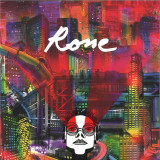
Rone is a stalwart of the French electronic scene and returns with his fourth album, 'Mirapolis', a synesthetic journey with features from Bryce Dessner (The National), Baxter Dury, John Stanier (Battles) and Saul Williams. The artwork was created by the critically acclaimed director Michel Gondry.
Stepping into Rone's music is like sleepwalking through a vividly colourful dream, eventually stumbling across a strange, scintillating Megapolis of saturated light and colours: 'Mirapolis'. Its twelve tracks / districts, each with their own specific planning, pulsate as though animated by their musical mastermind.
The project was an opportunity to get reacquainted with long- time stage and studio partners John Stanier, Gaspar Claus and the Vacarme band and Bryce Dessner (guitarist for The National,) while bringing in new collaborators (and thus, new interpretation of Rone's dreams). We find American slam-poet Saul Williams, who happened to be in Paris for a moment and contributes a searing anti-Trump screed, Baxter Dury, who brings an irresistible East London touch to 'Switches', a kind of fan fic that reimagines the Beatles' Sergeant Pepper lounging pensive in a club chair, Israeli electronic music muse Noga Erez, who inspired 'Waves' which, despite being recorded remotely, betrays a euphoric partnership, and finally, Kazu Makino, Blonde Redhead's bewitching singer and multi- instrumentalist, who contributes to the album's closer, the gauzy 'Down For The Cause'.
Rone remains a producer of grand instrumental pieces, which cannot be easily categorized in the architectural canon of our electronic music galaxy. Hypnotic, cinematic opening track 'I Philip' is an offshoot from the score for the first French virtual reality fiction, built around Philip K Dick - the perfect gate into a city that then opens up myriad temporal perspectives.
- A1: Africa Is My Root - Osayomore Joseph And The Creative Seven
- A2: Ta Gha Hunsimwen - Akaba Man The Nigie Rokets
- A3: Popular Side - Akaba Man And The African Pride
- B1: Iranm Iran - Victor Uwaifo And His Titibitis
- B2: Sakpaide No 2 - Victor Uwaifo And His Titibitis
- B3: Ta Ghi Rare - Akaba Man The Nigie Rokets
- C1: My Name Is Money - Osayomore Joseph
- C2: Ogbov Omwan - Akaba Man The Nigie Rokets
- C3: Aibalegbe - Victor Uwaifo And His Titibitis
- D1: Who Know Man - Osayomore Joseph And The Ulele Power Sound
- D2: Obviemama - Victor Uwaifo And His Titibitis
- D3: Ororo No De Fade - Osayomore Joseph And The Ulele Power Sound
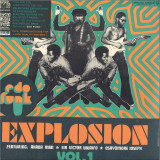
Analog Africa Presents Edo Funk Explosion Vol. 1, available on
2xLP/Gatefold LP with 20-page booklet / CD with 36-page booklet. It was
in Benin City, in the heart of Nigeria, that a new hybrid of intoxicating
highlife music known as Edo Funk was born.
It first emerged in the late 1970s when a group of musicians began to experiment with different ways of integrating elements from their native Edo culture
and fusing them with new sound effects coming from West Africa s night-clubs.
Unlike the rather polished 1980 s Nigerian disco productions coming out of the
international metropolis of Lagos Edo Funk was raw and reduced to its bare
minimum.
Someone was needed to channel this energy into a distinctive sound and Sir
Victor Uwaifo appeared like a mad professor with his Joromi studio. Uwaifo
took the skeletal structure of Edo music and relentless began fusing them with
synthesizers, electric guitars and 80 s effect racks which resulted in some of the
most outstanding Edo recordings ever made. An explosive spiced up brew with
an odd psychedelic note known as Edo Funk.
That’s the sound you’ll be discovering in the first volume of the Edo Funk Explosion series which focusses on the genre’s greatest originators; Osayomore
Joseph, Akaba Man, and Sir Victor Uwaifo: Osayomore Joseph was one of the
first musicians to bring the sound of the flute into the horn-dominated world
of highlife, and his skills as a performer made him a fixture on the Lagos scene.
When he returned to settle in Benin City in the mid 1970s - at the invitation of
the royal family - he devoted himself to the modernisation and electrification
of Edo music, using funk and Afro-beat as the building blocks for songs that
weren’t afraid to call out government corruption or confront the dark legacy of
Nigeria’s colonial past.
Akaba Man was the philosopher king of Edo funk. Less overtly political than Osayomore Joseph and less psychedelic than Victor Uwaifo, he found the perfect
medium for his message in the trance-like grooves of Edo funk. With pulsating
rhythms awash in cosmic synth-fields and lyrics that express a deep personal
vision, he found great success at the dawn of the 1980s as one of Benin City’s
most persuasive ambassadors of funky highlife.
Victor Uwaifo was already a star in Nigeria when he built the legendary Joromi
studios in his hometown of Benin City in 1978. Using his unique guitar style as
the mediating force between West-African highlife and the traditional rhythms
and melodies of Edo music, he had scored several hits in the early seventies,
but once he had his own sixteen-track facility he was able to pursue his obsession with the synesthetic possibilities of pure sound, adding squelchy synths,
swirling organs and studio effects to hypnotic basslines and raw grooves. Between his own records and his production for other musicians, he quickly established himself as the godfather of Edo funk.
What unites these diverse musicians is their ability to strip funk down to its
primal essence and use it as the foundation for their own excursions inward to
the heart of Edo culture and outward to the furthest limits of sonic alchemy.
The twelve tracks on Edo Funk Explosion Volume 1 pulse with raw inspiration,
mixing highlife horns, driving rhythms, day-glo keyboards and tripped-out guitars into a funk experience unlike any other.
- A1: One Dark Knight (Intro)
- A2: From The Shadows (Plains Of Passage)
- A3: Boss Victory
- A4: The Magic Mirror (Tower Hub)
- A5: The Lonely Parapet
- A6: Tools Of War (Clockwork Tower)
- A7: Aqua Vitae (Explodatorium)
- B1: Facing The Task (Lost City)
- B2: Both Eyes Open
- B3: A Cargo Of Fineries (Flying Machine)
- B4: The Price Of Doing Business (Iron Whale)
- B5: The Struggle Never Ends
- C1: A Wintry Paradise (Stranded Ship)
- C2: In The Halls Of The King (Pridemoor Keep)
- C3: Hidden By Night (Lich Yard)
- C4: Boss - Embraced By Darkness
- C5: Hitting Close To Home
- D1: Boss - Go No Further!
- D2: A Fool's Wager
- D3: Incompleto Sin Ti
- D4: Fate Approaches
- D5: Know Thy True Self
- D6: Final Redemption
- D7: An Imposition Of Order (Ending)
- D8: Trailer - Specter Of Torment
- Dark Strands - The Last Ride
- Dark Strands - We Own The Night
- Dark Strands - Black Dog
- Dark Strands - Wandering Star
- Vox Low - I'll Save You Anyway (Evelyne)
- Vox Low - I'm Coming To Your House (Feat. Tarik Ziour)
- Vox Low - Loving Hell
- High Boys - Drunken Master
- High Boys - Down With Chaos
- High Boys - This Is The Captain Speaking
- High Boys - No Hope For A Sexual Revolution
- Timothy J. Fairplay - Mindfighter
- Timothy J. Fairplay - Nightmare City
- Timothy J. Fairplay - Lost In The Mirror Maze
- Timothy J. Fairplay - Jennifer Has Some Strange Ideas
- Fontän - Sen Sen No Sen (Red Axes Remix)
- Fontän - Mangsebung (Timothy J Fairplay Remix)
- Fontän - Gangri (Khjinda Remix)
- Fontän - Bardo (Mythologen Remix)
- Fontän - Shadows (Pardon Moi Remix)
- Birds Of Paradise - Tito
- Birds Of Paradise - Joy-Rides
- Birds Of Paradise - Smoking Holiday
- Birds Of Paradise - Breather Resist
- Mythologen - The Joy I Feel
- Mythologen - Canavan's Peckham Pool Club
- Mythologen - Blackheath
- Mythologen - House Of Parakeet
- Jamie Paton - Enhance 224
- Jamie Paton - State Line
- Jamie Paton - Disk Memories
- Jamie Paton - Leviathan Aftermath
- Frak - Corridor
- Frak - Stetoskop
- Frak - Micro Fisson
- Frak - Arcitect
- Birds - Solitary Dancers
- Birds - Night Time Life
- Birds - Dont Drink The Acid Water
- Birds - Young Blood
What better way to celebrate 100 releases than with a handmade box containing soul expanding music!? Höga Nord Rekords have reached an important goal and releases a rare box set containing all 12” from the HNRUK-series plus a new record from Birds, unique for this box. Except Birds, this compilation includes Dark Strands, High Boys, Vox Low, Timothy J. Fairplay, Fontän, Bird Of Paradise, Mythologen, Jamie Paton and Frak.
The music is of course the main focus of all releases on Höga Nord Rekords but what birthday gift comes without a proper wrapping? This exclusive handmade box made in Norrmalms kartongfabrik in Stockholm, is a celebration to the Scandinavian Bronze age. You’ll find rock carvings like those on the artwork scattered over the land but mostly near Gothenburg, home of Höga Nord Rekords on the Swedish west coast.
Archaeological evidence proves similarities in ornaments and pictures between the Nordic and European Bronze age, just like you find common features in the music released on our label. Though the acts in this compilation box come from all over Europe and beyond, they stem from an obscured and mysterious common source of escapism, purity and creativity.
This definitive rare groove was first released in 1978 but the unique US 7” version from 1980 has not been reissued for over 40 years and has been impossible to find. It sounds how It was originally pressed and is coupled with an extended version of the ultra-rare ‘RED 3’ mix released in the UK on Grapevine, the Richard Searling/John Anderson label that preceded Expansion “Give Me The Sunshine” was composed by Johnny Simone at the time he was working with Stevie Wonder at Motown. Others in the group were Kenny Stover and Alvin Few, all three of them born under the ‘Leo’ star sign. Kenny worked as a songwriter at Motown and lived in the same house as Marvin Gaye at the time “What’s Going On” became an idea. He co-wrote “Inner City Blues” but was only credited much later. The original “I’m Back For More” included here has equal standing in the soul world too, the song later reaching new heights when covered by Al Johnson featuring Jean Carn. Both songs come from the album “We Need Each Other”, long associated with Expansion Records. The two songs featured here first appeared on Expansion 12” in 1986, the launch year of the label which in 2021 celebrates it’s 35th Anniversary.
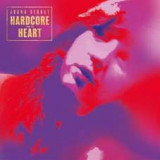
Catalan singer-songwriter Joana Serrat returns with new album ‘Hardcore From The Heart’, out June 11 on Loose Music. Serrat’s fifth album, ‘Hardcore From The Heart’ is the follow-up to 2017’s acclaimed ‘Dripping Springs’ (“…like Mazzy Star guesting on an early Neil Young demo,” Mojo). For the recording, Serrat travelled from her home in Vic, a small city near Barcelona, to Redwood Studio in Denton, Texas, where she teamed up with engineer and producer Ted Young (Kurt Vile, Sonic Youth, Lee Ranaldo).
- A1: Policeman Skank (The Story Of My Life)
- A2: Test The Theory
- A3: Personal Feeling
- A4: Try
- A5: Sentiments For A Reason
- B1: Soul On Fire
- B2: Freefall
- B3: Out Of Many
- B4: Control
- B5: Out Of My Mind
- B6: Get Out Of Here
• First formed in the 1990s in Manchester, Audioweb were signed to U2’s Mother Records label
• ‘Fireworks City’ is the bands second and final album originally released in 1998
• First time this album has been released on vinyl
• Highlights include the singles ‘Policeman Skank (The Story Of My Life)’ which reached #21 in
the UK charts and ‘Get Out of Here’
• Pressed on 180g heavyweight red vinyl with original artwork and printed inner sleeve
delving is a new project by Nick DiSalvo, best known as the frontman
of the heavy rock band Elder. Hirschbrunnen, his debut album, draws
from a wide swath of influences and sounds ranging from psychedelic
and krautrock to early electronic and ambient music, all while showcasing
the evocative melodies and songwriting he’s become known for.“I’m an almost obsessive songwriter,
working on music every day and
amassing a huge collection of song
fragments and ideas that often don’t
get the attention I’d like because of
the time I spend with my main band.
‘Thanks’ to this pandemic, I’ve had
plenty of time to pick up some of the
songs I’ve written over the past years
and finally make an album that I’ve
been telling myself forever I’d do.
From my earliest moments as a
musician, I have been obsessed with
home recordings, begging my parents
for a Tascam 4-track cassette
recorder for Christmas when I was
12 and making my own albums. delving
is a continuation of this creative
spirit: experimenting all on my own,
forgetting bands, fans and expectations
and making whatever music I
want to.
Hirschbrunnen - ‘stag fountain’ - is
the colloquial name of a large fountain
that presides over a large green
area near where I live. For me, it’s
been strange to see my world, which
normally consists of a fair amount
of travel and external stimuli, reduced
to one city, one district, one
block for so long. Frustrating as that
is, you might start to find inspiration
and surprising beauty in your
everyday surroundings that you
otherwise would have ignored. Just
as all the music I make is influenced
by my experiences, Hirschbrunnen is
a product of this unique and strange
time in which we all have been forced
to delve more deeply into our own
thoughts.”
Bounding on from the Door to the Cosmos, the label'sexpansive triple vinyl compilation, OnTheCorner has paired up new artists in this series of cosmically twinned EPs. Twinning EPs on a single piece of wax reduces the impact on the environment and wallet friendly. Each brace of cosmically twinned OnTheCorner artists interstellar balearic for the deepspace bound. Each 12" will be split taking over a whole side of black wax. Party wax loaded with Stardust. Get your fix of tomorrow's sound, tonight! Side A is UFFE's 'Not All the Stars EP' - an underground emissary channeling dark bass weight through a prism of jazz-house - dub-tech hitters. A singular talent leading the charge into new frontiers with OnTheCorner. Not All The Stars EP is aprelude to his first LP on the label and follows on from City's Dead and that featured on Door to the Cosmos in 2020. Petwo Evans' 'Bootstrap EP' on the flip side is made of soundsystem-primed, innovative club tracks. Welsh Futurism, celestial electrics and objects of space-junk percussion. CERN loops, cyber kinetic grooves, machine pulses and chugging house kicks converse in the orbit of 'Gyroscope'. Petwo Evansfeeds the tracks compulsion with heady layers awash with dreamy vocal stabs, synths and hazy harmonics.
- A1: James Brown & The Famous Flames - Please, Please, Please
- A2: Little Willie John - Fever
- A3: Barrett Strong - Money (That's What I Want) (That's What I Want)
- A4: Ben E King - Stand By Me
- A5: Sam Cooke - (What A) Wonderful World (What A)
- A6: Ray Charles - Unchain My Heart
- A7: Solomon Burke - Cry To Me
- A8: James Ray - I've Got My Mind Set On You (Part 1 & 2)
- B1: Otis Redding - These Arms Of Mine
- B2: Marvin Gaye & The Vandellas - Stubborn Kind Of Fellow
- B3: Stevie Wonder - Hallelujah (I Love Her So) (I Love Her So)
- B4: Gene Chandler - Duke Of Earl
- B5: The Isley Brothers - Right Now
- B6: Bob & Earl - Harlem Shuffle
- B7: Timmy Thomas - Why Can't We Live Together
- C1: Gil Scott Heron - Lady Day & John Coltrane
- C2: Aaron Neville - Aaron Neville
- C3: Darondo - Didn't I
- C4: Lonnie Liston Smith & The Cosmic Echoes - Expansions
- C5: Joe Simon - Drowning In The Sea Of Love
- D1: Al Jarreau - Ain't No Sunshine
- D2: Barry White - Ghetto Letto
- D3: Curtis Mayfield - You Mean Everything To Me
- D4: Syl Johnson - They Can't See Your Good Side
- D5: Terry Callier - Running Around (Fug City Mix)
On Halloween 2014, the director and composer John Carpenter introduced the world to the next phase of his career with “Vortex,” the first single from Lost Themes, his first-ever solo record. In the months that followed, Lost Themes right-fully returned Carpenter to the forefront of the discussion of music and film’s crucial intersection. Carpenter’s foundational primacy and lasting influence on genre score work was both rediscovered and reaffirmed. So widespread was the acclaim for Lost Themes, that the composer was moved to embark on something he had never before entertained – playing his music live in front of an audience. 2016 will host the first ever John Carpenter tour and in true Carpenter spirit, a sequel to Lost Themes: Lost Themes II. The follow-up brings quite a few noticeable changes to the process, which result in an even more cohesive record.
Lost Themes’cowriters Cody Carpenter (John’s son) and Daniel Davies (John’s godson) both returned. Cody was recently also heard as a composer for Showtime’s Masters of Horror series (Cigarette Burns and Pro-Life), and NBC’s Zoo. Davies was a composer for NBC’s Zoo, as well as the motion picture Condemned. All three brought in sketches and worked together in the same city, a luxury they weren’t afforded on the first Lost Themes. The result was a more focused effort, one that was completed on a compressed schedule — not unlike Carpenter’s classic, notoriously low-budget early films. The musical world of Lost Themes II is also a wider one than that of its predecessor. More electric and acoustic guitar help flesh out the songs, still driven by Carpenter’s trademark minimal synth.Keep your eyes peeled for John and his co-writers to hit the road next year performing both lost and newly found themes, in addition to retrospective work from Mr. Carpenter’s multi-generational career. Long live the Horror Master.
Cuernavaca / Stateville / Frankincense And Myrrh / Apsara / Ancestral / Spin / Zincali
Approaching his eighty-fifth birthday, sharp and lean, Phil Cohran lives a couple of blocks from the lake on the north side of Chicago. His modest apartment is filled with a palpable richness. His cornet and trumpets, zithers, French horn, harp and frankiphones (an electric kalimba of his own invention); his beloved telescope; African art; a mural of the Chinese monastery where Muslim monks bestowed on him the name Kelan ('holy scripture'); hand-printed posters from the culture wars of 1960s Chicago; all reflect a life dedicated not just to music, but also to science and astronomy, to history and activism. In its range of subject matter the track-list of Kelan Philip Cohran & The Hypnotic Brass Ensemble embodies this invigorating and all-embracing curiosity: a Mexican hill-town filled with perfume and flowers... an Illinois state prison where Cohran taught inmates in the 1960s... heavenly dancers in the temples of Cambodia... a tribute to a sixteenth-century Venetian musicologist. Welcome to the musical world of Kelan Philip Cohran.
Cohran was born in Mississippi and grew up in St Louis. In the immediate post-war years St Louis was a jazz heartland, home of stalwarts like Clark Terry and Oliver Nelson (both of whom he played with), not to mention a genius called Miles Davis. In 1950 Cohran moved to another heartland, Kansas City, where he played trumpet in one of the hardest swinging swing-groups, led by Jay McShann (who famously had given Charlie Parker his first job). With McShann he spent 'the best year of my life', touring as far as Mexico and playing proto-rock'n'roll in Texas with the likes of Big Mama Thornton on vocals. Back in St Louis Cohran led his own group, the Rajas Of Swing, whose show involved wearing red jackets, grey slacks, blue suede shoes and turbans.
Then in the mid-50s he moved to Chicago. He had a small group with a friend, the legendary tenor saxophonist John Gilmore, whose regular gig was to play at Sarah Vaughan's weekly 'birthday' parties, an excuse for the Sassy One to splash the cash and have some fun. ('What, Sarah Vaughan would sing with you and John Gilmore' 'No way, Sarah didn't sing, she was too busy partying.') And in 1959, through Gilmore, he was invited to join Sun Ra's Arkestra, at a crucial period in the evolution of that extraordinary group. Effortlessly wrapping traditions as divergent as boogie-woogie and electronica in an Afro-centric, intergalactic mythology of his own making, Sun Ra casts a huge shadow across conventional narratives of jazz history. 'With Sunny', Cohran simply says, 'I found my own voice'.
You can hear the emergence of this voice on the LP Angels And Demons At Play, recorded in 1960 - Sun Ra's masterpiece from the period. On the track Music From The World Tomorrow, against the urgent whipped and chopped percussion of the Arkestra, it is Cohran's zither, initially bowed and then plucked and strummed, which is the track's magic ingredient. More profoundly it was Sun Ra's example - his defiant self-confidence and sense of purpose - that set Cohran on his own (to quote another Ra composition) 'pathway to unknown worlds'. Indeed this spirit of self-belief led Cohran to turn down the invitation to accompany the Arkestra when Sun Ra moved east in 1961.
Staying in Chicago, Cohran founded the Affro-Arts Theater and performed with the Artistic Heritage Ensemble, recording the group for his own Zulu Records imprint. (Co-members went on to become Earth Wind & Fire; Cohran taught the group's leader Maurice White the mysteries of the frankiphone). The AACM, a musicians' collective of immense influence and importance, had its first meeting in Cohran's front room. With Oscar Brown Jr and Gene Page he wrote and performed in a show celebrating the nineteenth-century Afro-American poet Paul Lawrence Dunbar. He taught music tirelessly in schools and prisons. His studies into music theory and history led him to the discovery of a key book in his life, Gioseffo Zarlino's treatise on harmony, published in Venice in1558. Astronomy is another passion and another area of expertise. One of the gems of the Cohran discography is African Skies, with its lovely harp playing, commissioned by the Chicago Planetarium in 1993.
In Chicago he also raised a large family. Many of his children have gone on to become professional musicians; eight of them are the Hypnotic Brass Ensemble. For each of them, their first teacher was their father, who famously insisted on giving them music lessons not just for several hours after school, but for several hours before school as well. Their father's music was all around them as children; they all vividly remember lying in bed at night not being able to sleep because their father was rehearsing with the Jazz Workshop downstairs.
For the Hypnotic Brass Ensemble, the voyage to where they are now - whether tearing up festivals from Glastonbury to Melbourne, or touring with Gorillaz, or recording their first album on Honest Jon's - has involved a necessary stepping away from their father's shadow. Phil Cohran is the first to recognise this, happily allowing their sound - heavy on the funk, with the urgency of hip hop never far away - to blossom.
But likewise this album is for all of them a natural step. Recorded in Chicago in June 2011, the idea was beautifully simple - 'my music and their band' as Phil puts it, 'we don't have to rattle on more than that'. Only to point out perhaps that here - in the majestic surge of Zincali, for instance, or in the sheer verve and bounce of Cuernevaca - is music not just filled with the warmth of home. This is music that plumbs the depths and rings with joy.
'Cuernevaca is a town in the mountains south of Mexico City. I was there in 1950 when I was on the road with Jay McShann's band. It's a place close to paradise, a city filled with the fragrance of flowers. I always wanted to go back... In 1974 I taught workshops at the prison in Stateville, the Big House where Al Capone spent time. There's a huge wall around the prison, and once I took Hypnotic there - ha - to see what the future holds for them... Makeda, the Queen of Sheba, sent a caravan of gifts to King Solomon - a caravan that took more than a day to pass one point - and the main gifts were Frankincense And Myrrh... I wrote Apsara in 1967, when Jackie Kennedy was in the news with her visit to the temple of Angkor Wat in Cambodia. Apsara were celestial beings, dancers who brought forth the civilization of ancient Cambodia, by dancing in the holy nectar called Amrita... Ancestral is a meditation drone written for my Friday-night residence at the Ethiopian Diamond Restaurant in Chicago's Rogers Park... Spin is the latest of these compositions. Everything in the cosmos spins, from the smallest objects we can see in a microscope to the largest galaxies. Spin is the motion of all things whether it looks like it or not... Zincali is a name Spanish gypsies call themselves. 'Zin', East Africa; 'cali', the people. One of the offshoots in my research into Moorish Spain has led me to Gioseffo Zarlino, the sixteenth-century master of music at St Mark's in Venice. It's said that Bach lost his sight reading Zarlino's treatise on counterpoint. His greatest composition is his setting of the Song of Songs - 'Nigra Sum', 'I am black'. This is my tribute to Zarlino and to the zincali.'
Bristol hip hop duo release their debut 12” ahead of an album in July featuring a thumping electro remix by SURGEON (Dynamic Tension/ Tresor Records) and an extended remix by Ree-Vo themselves.
The lp ‘All Welcome on Planet Ree-Vo’ due for release in July could only really have been made in one city steeped as it is in Bristol’s decades of less conventional hip hop and bass music. Tweaked and fine tuned during the summer of 2020 the record punches with a mix of red eyed paranoia to a playful future funk.
T. Relly is pure Bristol hip hop royalty – known in the community variously for his links to all of the city’s major club nights, his passion and support for the most disadvantaged (through his work with the youth and prison leavers), through to compering stages at St Paul’s Carnival and his seminal 2018 lp with DJ Rogue ‘Let Them Know’
Andy Spaceland (AKA Andy Jenks) got involved in Bristol bass music as soon as he moved to the city with Static Sound System and a collaborative 12” with Rudy Tambala (AR Kane ) as Sugarboat Vs Sufi, before his band Alpha were signed to Massive Attack ’s label Melankolic, whilst he also became one of their tour DJ’s. His CV of collaborations range from Smith and Mighty to Madonna, and he is currently releasing music with US producer Butch Vig in the band 5 Billion in Diamonds , and working on new tracks with Mark Stewart (The Pop Group). His signature can be heard on this remix for Elizabeth Fraser
Belgian underground DJ/producer Red D continues his solo Red Basics quest with the second release in this series in which he explores a variety of sounds that make him tick, always drawing inspiration from his favourite city: Detroit. The A-side travels to the heartland of classic Detroit deep house, taking in deep chords, a pitched-down vocal sample and the subbest of bass antics making for a groove that can be enjoyed both on and off the dancefloor. On the B-side the melancholy of the continued longing for better days prevails, delivering a cut to make you think and sway at the same time. Electronic music for your mind, heart, body and soul.
Before fronting classic post-punk group The Sound, Adrian Borland was a Wimbledon teenager enamored of Iggy Pop and the Velvet Underground. With friends, he formed The Outsiders. In 1976, they home-recorded Calling On Youth, a searching full-length that straddles nihilo-punk argot (“Terminal Case” and “I’m Screwed Up”) as well as smudged glam balladry (“Start Over” and “Weird”). Its release in 1977, on the group’s own Raw Edge label, with Borland’s cityscape abstraction on the cover, marked the first independent punk full-length in the United Kingdom.
The Outsiders, featuring bassist Bob Lawrence and drummer Adrian “Jan” James, were punk in the moment before punk cut ties with solos and five minute songs. (Close Up, released in 1978, is more streamlined.) Like the Saints or Crime, they still trafficked in rock ’n’ roll. Calling On Youth, though, announces Borland as more than a precious teenage bandleader. The nervous introspection, wiry leads and negative space that he would refine solo and in The Sound, Second Layer and Witch Trials glistens throughout Calling On Youth, beckoning rediscovery.
Ryley Walker currently resides in New York City. But his latest LP is a Chicago record in spirit. The masterful Course In Fable, the songwriter’s fi@h solo effort,
draws from the deep well of that city’s ferCle 1990s scene, when bands like Tortoise, The Sea and Cake and Gastr del Sol were reshaping the underground,
mixing and matching indie rock, jazz, prog and beyond.
Walker spent his formaCve years in Chicago, absorbing those heady sounds and finding ways to make them his own. Even though he emerged at first in folkrock
troubadour mode, it makes sense that he’s arrived at this point; each LP has grown more intricate and assured, his influences disClling into something
original and unusual. To put it simply: Course In Fable is Walker’s best record yet, full of acCve imaginaCon and endless possibiliCes.
Last October, Ryley went straight to one of the primary architects of the Chicago sound to make the LP. John McEn:re, Course In Fable’s producer/engineer/
mixer, can rightly be called a legend for his work with Tortoise, Stereolab, The Red Krayola, Jim O’Rourke and countless others over a prolific career that now
spans more than three decades. Seeing his name in an album’s liners is preVy much a trademark of quality.
Another Windy City exile, McEnCre is based on the west coast these days, working out of the Portland, OR studio he’s dubbed Soma West. On the seven songs
here, he delivers the signature shimmering and prisCne sonics he’s become known for over the years. But McEnCre was also inCmately involved with Course
In Fable’s overall creaCve process. “I told him to take the mixes and have at it,” Walker says.
The result is a rich, immersive affair — a headphones record if ever there was one. Course In Fable’s songs are twisty, labyrinthine things, stuffed full of ideas
(Walker half-jokingly calls it his “prog record”). But no maVer how complex it gets, the album is never overwhelmingly busy. Wiry guitars melt into gorgeous
string secCons (arranged by Douglas Jenkins of the Portland Cello Project). Tricky Cme signatures abound but feel as natural as can be. Melodies o@en dri@ in
unexpected direcCons but remain downright hummable. Like Walker’s beloved Genesis, the pop element is never too far from the surface even when shit
gets weird. (And speaking of weird, Ryley says that in addiCon to Genesis, much of the album’s inspiraCon comes from “Australian extreme scooter riders on
YouTube and balding gear heads on Craigslist.” Go figure.)
To help put together these various puzzle pieces, Ryley assembled a band made up of several longCme collaborators. Bill MacKay (another Chicago mainstay)
and Walker have made two excellent instrumental duo records of interlocking guitars and warm give-and-take — a rapport very much in evidence
throughout Course In Fable. The freakishly talented drummer Ryan Jewell has performed with Walker for years now in a variety of seangs, from
straighborward song-centric sets to blown-out improv extravaganzas. Bassist Andrew ScoJ Young (Tiger Hatchery, Health&Beauty) has logged many miles on
tour with Walker; he and Jewell are frequently astonishing, a buoyant-but-always-locked-in rhythm secCon, able to navigate someCmes dizzying turnarounds
with apparent ease. Listening to the interplay between Walker and these musicians and you might be fooled into thinking they’d spent a year roadtesCng
Course In Fable’s songs. But it all came together relaCvely fast, thanks to demos, rehearsals and the kind of musical empathy that comes from years of
playing together.
Beneath the wondrous interplay, you’ll find some of Walker’s most personal – if sCll typically crypCc — lyrics, hinCng at some of the trials the songwriter has
been dealing with in recent years. Balanced with necessary doses of dark humor and oddball poetry, Course In Fable feels most of all like a life-affirming
record, fresh air in the lungs, sun on your skin. “Fuck me, I’m alive,” Ryley sings at one point, a moment of both disbelief and pure joy.
Walker has released his albums on a who’s-who of independent labels over the past decade — Tompkins Square, Dead Oceans, Thrill Jockey and Drag City
among them. This Cme around, he’s doing it DIY-style, puang Course In Fable out on his own Husky Pants imprint. You’re in good hands. This is an album that
sounds great (mastered by Greg Calbi), looks great (artwork by Jenny Nelson and design by Michael Vallera). It probably even smells great. Whether you’ve
been onboard since the beginning or are new to the Ryley Walker universe, you’re in for a treat.
Alan Vega’s name is synonymous with unfettered, tireless creativity. Beginning in the late 1950s, when he was a fine art student at Brooklyn College, through his years playing in Suicide, and all the way up until his death in 2016, Vega was constantly creating. That
process naturally led to a wealth of material that didn’t see the light of day immediately when it was recorded, which came to be known as the Vega Vault. Mutator is the first in a series of archival releases from the Vault that will come out on Sacred Bones Records.
Mutator was recorded alongside Vega’s longtime collaborator Liz Lamere at his NYC studio from 1995-1996, and it serves as a document of a particularly fertile time in his creative life. He had 11 full-length solo albums come out during the ’80s, ’90s and ’00s - plus numerous collaborations, and Suicide records A Way of Life and Why Be Blue. Mutator wasn’t shelved intentionally, but Vega’s back-to-thegrindstone M.O. meant that he had moved on to making his next record before this one was finished. Lamere and Vega’s friend and confidante Jared Artaud (The Vacant Lots) rediscovered the raw, unmixed recordings from the Mutator sessions in the Vault in 2019. Soon after, they mixed and produced them into the visionary album that was lurking within those tapes.
“Our primary purpose for going into the studio was to experiment with sound, not to ‘make records,’” Lamere recalls. “I was playing the machines with Alan manipulating sounds. I played riffs while Alan morphed the sounds being channeled through the machines.”
At the time of the Mutator sessions, Vega was massively inspired by what was happening in the streets of New York - not only the hip hop scenes that were exploding throughout the outer boroughs, but also the literal sounds of the streets, the traffic noise and industrial ambience of city living. That influence trickled into the sounds he and Lamere captured in those sessions. That sensibility, paired with Vega’s unmistakable voice and force of personality, is what made it the great album it is now. The final piece was the production job, completed by Lamere and Artaud 25 years after the songs were first captured.
Alan Vega’s name is synonymous with unfettered, tireless creativity. Beginning in the late 1950s, when he was a fine art student at Brooklyn College, through his years playing in Suicide, and all the way up until his death in 2016, Vega was constantly creating. That
process naturally led to a wealth of material that didn’t see the light of day immediately when it was recorded, which came to be known as the Vega Vault. Mutator is the first in a series of archival releases from the Vault that will come out on Sacred Bones Records.
Mutator was recorded alongside Vega’s longtime collaborator Liz Lamere at his NYC studio from 1995-1996, and it serves as a document of a particularly fertile time in his creative life. He had 11 full-length solo albums come out during the ’80s, ’90s and ’00s - plus numerous collaborations, and Suicide records A Way of Life and Why Be Blue. Mutator wasn’t shelved intentionally, but Vega’s back-to-thegrindstone M.O. meant that he had moved on to making his next record before this one was finished. Lamere and Vega’s friend and confidante Jared Artaud (The Vacant Lots) rediscovered the raw, unmixed recordings from the Mutator sessions in the Vault in 2019. Soon after, they mixed and produced them into the visionary album that was lurking within those tapes.
“Our primary purpose for going into the studio was to experiment with sound, not to ‘make records,’” Lamere recalls. “I was playing the machines with Alan manipulating sounds. I played riffs while Alan morphed the sounds being channeled through the machines.”
At the time of the Mutator sessions, Vega was massively inspired by what was happening in the streets of New York - not only the hip hop scenes that were exploding throughout the outer boroughs, but also the literal sounds of the streets, the traffic noise and industrial ambience of city living. That influence trickled into the sounds he and Lamere captured in those sessions. That sensibility, paired with Vega’s unmistakable voice and force of personality, is what made it the great album it is now. The final piece was the production job, completed by Lamere and Artaud 25 years after the songs were first captured.