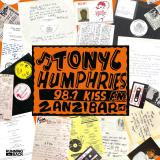
Telling a tale of house music’s early days or roots without mentioning Tony Humphries as a club DJ, remixer and radio disc jockey would make it an incomplete, forged and most of all a bit of a yawn.
Born in Brooklyn in 1957, Humphries’ musical journey is synonymous with New York City’s dance music history and the evolution from uptempo soul music to house: from being a dancer at David Mancuso’s infamous Loft parties to becoming a mobile DJ and getting the call from Shep Pettibone to become his right hand at
the then new Kiss FM radio station, followed by countless remix offers and a legendary residency at Newark’s Club Zanzibar. Next to that one, is was especially his work as a radio disc jockey for said station during most of the 1980s until 1994 that gave him majestic clout. Breaking new records week in, week out,
putting New Jersey acts like Adeva and Jomanda or countless up-and-coming producers from there on the musical map, while simultaneously playing the hottest imports from Europe, trax from Chicago, dance classics and all things straight from New York’s music factory that never seemed to stop.
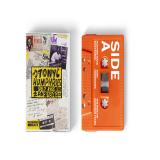
Going to his vast and almost complete archive of radio shows from way back when he graced those airwaves, we at Running Back Records have pickedNew Release Information original recordings that symbolize his importance as an industry giant and ambassador of this style of music.
„But one thing I would like to point out is that, as a DJ, the music I play is not my music. I want to make it perfectly clear that it is music that is released, and it’s everyone’s music. I do not take any other credit than being the middle person exposing this music.“
(Tony Humphries in: What Kind of House Party Is This?, Jonathan Fleming, 1996)
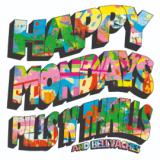
Originally released in 1990 by Happy Mondays, Pills ‘n’ Thrills and Bellyaches captured the chaotic, euphoric spirit of the Madchester movement, blending indie rock, acid house rhythms and funk grooves into a sound that helped reshape British alternative music. Featuring era-defining tracks such as “Step On” and “Kinky Afro,” the record became both a commercial breakthrough and a cultural snapshot of a generation fuelled by dance culture and Northern nightlife.
More than three decades later, its grooves, attitude and genre-blurring production still resonate strongly with contemporary audiences, influencing modern indie and electronic artists alike.
1LP Red Edition. All original audio remastered from Factory Records master tapes. Includes original album and brand new liner notes by James Brown.
The band's name stems from the idea of reinterpreting and renewing what already exists: a creative drive that has underpinned their songwriting and the development of their sound from the very beginning. Following the EP/ demo 4 Little Hanged Toys (Copro Records/Casket Music), they made their debut in 2012 with Technicolor Noise (Zeta Factory), an album blending alternative rock, electronica and industrial influences. In 2015, they released Daytime Sleepwalkers on This Is Core, marking an evolution towards darker atmospheres, in which dark and new wave elements are woven more consciously into their sound. The following year saw the release of DSRMX, a collection of remixes that further expands the project's electronic dimension. After a hiatus due to personal circumstances, the band returned in 2026 with Faithless on Overdub Recordings, an intense, conceptual and political album that heralded a new artistic chapter, deeply influenced by their lived experiences.
Telling a tale of house music’s early days or roots without mentioning Tony Humphries as a club DJ, remixer and radio disc jockey would make it an incomplete, forged and most of all a bit of a yawn.
Born in Brooklyn in 1957, Humphries’ musical journey is synonymous with New York City’s dance music history and the evolution from uptempo soul music to house: from being a dancer at David Mancuso’s infamous Loft parties to becoming a mobile DJ and getting the call from Shep Pettibone to become his right hand at
the then new Kiss FM radio station, followed by countless remix offers and a legendary residency at Newark’s Club Zanzibar. Next to that one, is was especially his work as a radio disc jockey for said station during most of the 1980s until 1994 that gave him majestic clout. Breaking new records week in, week out,
putting New Jersey acts like Adeva and Jomanda or countless up-and-coming producers from there on the musical map, while simultaneously playing the hottest imports from Europe, trax from Chicago, dance classics and all things straight from New York’s music factory that never seemed to stop.
Going to his vast and almost complete archive of radio shows from way back when he graced those airwaves, we at Running Back Records have pickedNew Release Information original recordings that symbolize his importance as an industry giant and ambassador of this style of music.
„But one thing I would like to point out is that, as a DJ, the music I play is not my music. I want to make it perfectly clear that it is music that is released, and it’s everyone’s music. I do not take any other credit than being the middle person exposing this music.“
(Tony Humphries in: What Kind of House Party Is This?, Jonathan Fleming, 1996)
out of Stock
Last delivered 4 months ago available to reorder, subject to availability
Writings on the topic that go off in all directions, mind-numbing lectures given by academics, and testimonies, most of them heavily doctored, from those who “lived through that era”: so many people today fantasize about the early days of punk in our country… This blessed moment when no one had yet thought of flaunting a ridiculous green mohawk, taking Sid Vicious as a hero, or – even worse – making the so-called alternative scene both festive and boorish. There was no such thing in 1976 or 1977, when it wasn’t easy to get hold of the first 45s by the Pistols or the Clash. Few people were aware of what was happening on the fringes of the fringes at the time. Malcolm McLaren was virtually unknown, and having short hair made you seem strange. Who knew then that rock music, which had taken a very bad turn since the early 1970s, would once again become an essential element of liberation? That, thanks to short and fast songs, it would once again rediscover that primitive, social side that was so hated by older generations? Who knew that, besides a few loners who read the music press (it was even better if they read it in English) and frequented the right record stores? Many of these formed bands, because it was impossible to do otherwise. We quickly went from listening to the Velvet Underground to trying to play the Stooges’ intros. It’s a somewhat collective story, even though there weren’t many people to start it.
The Guilty Razors were among those who took part in this initial upheaval in Paris. They were far from being the worst. They had something special and even released a single that was well above the national average. They also had enough songs to fill an album, the one you’re holding. In everyone’s opinion, they were definitely not among the punk impostors that followed in their wake. They were, at least, genuine and credible.
Guilty Razors, Parisian punk band (1975-1978). To understand something about their somewhat linear but very energetic sound, we might need to talk about the context in which it was born and, more broadly, recall the boredom (a theme that would become capital in punk songs) coupled with the desire to blow everything off, which were the basis for the formation of bands playing a rejuvenated rock music ; about the passion for a few records by the Kinks or the early Who, by the Stooges, by the Velvet mostly, which set you apart from the crowd.
And of course, we should remember this new wave, which was promoted by a few articles in the specialized press and some cutting-edge record stores, coming from New York or London, whose small but powerful influence could be felt in Paris and in a handful of isolated places in the provinces, lulled to sleep by so many appalling things, from Tangerine Dream to President Giscard d’Estaing...
In 1975-76, French music was, as almost always, in a sorry state ; it was still dominated by Johnny Hallyday and Sylvie Vartan. Local rock music was also rather bleak, apart from Bijou and Little Bob who tried to revive this small scene with poorly sound-engineered gigs played to almost no one.
In the working class suburbs at the time, it was mainly hard rock music played to 11 that helped people forget about their gruelling shifts at the factory. Here and there, on the outskirts of major cities, you still could find a few rockers with sideburns wearing black armbands since the death of Gene Vincent, but it wasn’t a proper mass movement, just a source of real danger to anyone they came across who wasn't like them. In August 1976, a festival unlike any other took place in Mont-de-Marsan – the First European Punk Festival as the poster said – with almost as many people on stage as in the audience. Yet, on that day, a quasi historical event happened, when, under the blazing afternoon sun, a band of unknowns called The Damned made an unprecedented noise in the arena, reminiscent of the chaotic Stooges in their early adolescence. They were the first genuine punk band to perform in our country: from then on, anything was possible, almost anything seemed permissible.
It makes sense that the four+1 members of Guilty Razors, who initially amplified acoustic guitars with crappy tape recorder microphones, would adopt punk music (pronounced paink in French) naturally and instinctively, since it combines liberating noise with speed of execution and – crucially – a very healthy sense of rebellion (the protesters of May 1968 proclaimed, and it was even a slogan, that they weren’t against old people, but against what had made them grow old. In the mid-1970s, it seemed normal and obvious that old people should now ALSO be targeted!!!).
At the time, the desire to fight back, and break down authority and apathy, was either red or black, often taking the form of leafleting, tumultuous general assemblies in the schoolyard, and massive or shabby demonstrations, most of the time overflowing with an exciting vitality that sometimes turned into fights with the riot police. Indeed, soon after the end of the Vietnam War and following Pinochet’s coup in Chile, all over France, Trotskyist and anarcho-libertarian fervour was firmly entrenched among parts of the educated youth population, who were equally rebellious and troublemakers whenever they had the chance. It should also be noted that when the single "Anarchy in the UK" was first heard, even though not many of us had access to it, both the title and its explosive sound immediately resonated with some of those troublemakers crying out for ANARCHY!!! Meanwhile, the left-wing majority still equated punks with reckless young neo-Nazis. Of course, the widely circulated photos in the mainstream press of Siouxsie Sioux with her swastikas didn’t necessarily help to win over the theorists of the Great Revolution. It took Joe Strummer to introduce The Clash as an anti-racist, anti-fascist and anti-ignorance band for the rejection of old-school revolutionaries to fade a little.
The Lycée Jean-Baptiste Say at Porte d’Auteuil, despite being located in the very posh and very exclusive 16th arrondissement of Paris, didn’t escape these "committed" upheavals, which doubled as the perfect outlet for the less timid members of this generation.
“Back then, politics were fun,” says Tristam Nada, who studied there and went on to become Guilty Razors’ frontman. “Jean-Baptiste was the leftist high-school in the neighbourhood. When the far right guys from the GUD came down there, the Communist League guys from elsewhere helped us fight them off.”
Anything that could challenge authority was fair game and of course, strikes for just about any reason would lead to increasingly frequent truancy (with a definitive farewell to education that would soon follow). Tristam Nada spent his 10th and 11th unfinished grades with José Perez, who had come from Spain, where his father, a janitor, had been sentenced to death by Franco. “José steered my tastes towards solid acts such as The Who. Like most teenagers, I had previously absorbed just about everything that came my way, from Yes to Led Zeppelin to Genesis. I was exploring… And then one day, he told me that he and his brother Carlos wanted to start a rock band.” The Perez brothers already played guitar. “Of course, they were Spanish!”, jokes their singer. “Then, somewhat reluctantly, José took up the bass and we were soon joined by Jano – who called himself Jano Homicid – who took up the rhythm guitar.” Several drummers would later join this core of not easily intimidated young guys who didn’t let adversity get the better of them.
The first rehearsals of the newly named Guilty Razors took place in the bedroom of a Perez aunt. There, the three rookies tried to cover a few standards, songs that often were an integral part of their lives. During a first, short gig, in front of a bewildered audience of tough old-school rockers, they launched into a clunky version of the Velvet Underground's “Heroin”. Challenge or recklessness? A bit of both, probably… And then, step by step, their limited repertoire expanded as they decided to write their own songs, sung in a not always very accurate or academic English, but who cared about proper grammar or the right vocabulary, since what truly mattered was to make the words sound as good as possible while playing very, very fast music? And spitting out those words in a language that left no doubt as to what it conveyed mattered as well.
Trying their hand a the kind of rock music disliked by most of the neighbourhood, making noise, being fiercely provocative: they still belonged to a tiny clique who, at this very moment, had chosen to impose this difference. And there were very few places in France or elsewhere, where one could witness the first stirrings of something that wasn’t a trend yet, let alone a movement.
In the provinces, in late 1976 or early 1977, there couldn’t be more than thirty record stores that were a bit more discerning than average, where you could hear this new kind of short-haired rock music called “punk”. The old clientele, who previously had no problem coming in to buy the latest McCartney or Aerosmith LP, now felt a little less comfortable there…
In Paris, these enlightened places were quite rare and often located nex to what would become the Forum des Halles, a big shopping mall. Between three aging sex workers, a couple of second-hand clothes shops, sellers of hippie paraphernalia and small fashion designers, the good word was loudly spread in two pioneering places – propagators of what was still only a new underground movement. Historically, the first one was the Open Market, a kind of poorly, but tastefully stocked cave. Speakers blasted out the sound of sixties garage bands from the Nuggets compilation (a crucial reference for José Perez) or the badly dressed English kids of Eddie and the Hot Rods. This black-painted den was opened a few years earlier by Marc Zermati, a character who wasn’t always in a sunny disposition, but always quite radical in his (good) choices and his opinions. He founded the independent label Skydog and was one of the promoters of the Mont-de-Marsan punk festivals. Not far from there was Harry Cover, another store more in tune with the new New York scene, which was amply covered in the house fanzine, Rock News (even though it was in it that the photos of the Sex Pistols were first published in France).
It was a favorite hang-out of the Perez brothers and Tristam Nada, as the latter explained. “It’s at Harry Cover’s that we first heard the Pistols and Clash’s 45s, and after that, we decided to start writing our first songs. If they could do it, so could we!”
The sonic shocks that were “Anarchy in the UK”, “White Riot” or the Buzzcocks’s EP, “Spiral Scratch” – which Guilty Razors' sound is reminiscent of – were soon to be amplified by an unparalleled visual shock. In April 1977, right after the release of their first LP, The Clash performed at the Palais des Glaces in Paris, during a punk night organised by Marc Zermati. For many who were there, it was the gig of a lifetime…
Of course, Guilty Razors and Tristam were in the audience: “That concert was fabulous… We Parisian punks were almost all dressed in black and white, with white shirts, skinny leather ties, bikers jackets or light jackets, etc. The Clash, on the other hand, wore colourful clothes. Well, the next day, at the Gibus, you’d spot everyone who had been at this concert, but they weren’t wearing anything black, they were all wearing colours.”
It makes sense to mention the Gibus club, as Guilty Razors often played there (sometimes in front of a hostile audience). It was also the only place in Paris that regularly scheduled new Parisian or Anglo-Saxon acts, such as Generation X, Siouxsie and the Banshees, the Slits, and Johnny Thunders who would become a kind of messed-up mascot for the venue. A little later, in 1978, the Rose Bonbon – formerly the Nashville – also attracted nightly owls in search of electric thrills… In 1977, the iconic but not necessarily excellent Asphalt Jungle often played at the Gibus, sometimes sharing the bill with Metal Urbain, the only band whose aura would later transcend the French borders (“I saw them as the French Sex Pistols,” said Geoff Travis, head of their British label Rough Trade). Already established in this small scene, Metal Urbain helped the young and restless Guilty Razors who had just arrived. Guitarist for Metal Urbain Hermann Schwartz remembers it: “They were younger than us, we were a bit like their mentors even if it’s too strong a word… At least they were credible. We thought they were good, and they had good songs which reminded of the Buzzcocks that I liked a lot. But at some point, they started hanging out with the Hells Angels. That’s when we stopped following them.”
The break-up was mutual, since, Guilty Razors, for their part, were shocked when they saw a fringe element of the audience at Metal Urbain concerts who repeatedly shouted “Sieg Heil” and gave Nazi salutes. These provocations, even still minor (the bulk of the skinhead crowd would later make their presence felt during concerts), weren’t really to the liking of the Perez brothers, whose anti-fascist convictions were firmly rooted. Some things are non-negotiable.
A few months earlier (in July 1978), Guilty Razors had nevertheless opened very successfully for Metal Urbain at the Bus Palladium, a more traditonally old-school rock night-club. But, as was sometimes the case back then, the night turned into a mass brawl when suburban rockers came to “beat up punks”.
Back then, Parisian nights weren’t always sweet and serene.
So, after opening as best as they could for The Jam (their sound having been ruined by the PA system), our local heroes were – once again – met outside by a horde of greasers out to get them. “Thankfully,” says Tristam, “we were with our roadies, motorless bikers who acted as a protective barrier. We were chased in the neighbouring streets and the whole thing ended in front of a bar, with the owner coming out with a rifle…”
Although Tristam and the Perez brothers narrowly escaped various, potentially bloody, incidents, they weren’t completely innocent of wrongdoing either. They still find amusing their mugging of two strangers in the street for example (“We were broke and we simply wanted to buy tickets for the Heartbreakers concert that night,” says Tristam). It so happened that their victims were two key figures in the rock business at the time: radio presenter Alain Manneval and music publisher Philippe Constantin. They filed a complaint and sought monetary compensation, but somehow the band’s manager, the skilful but very controversial Alexis, managed to get the complaint withdrawn and Guilty Razors ended up signing with Constantin with a substantial advance.
They also signed with Polydor and the label released in 1978 their only three-track 45, featuring “I Don't Wanna be A Rich”, “Hurts and Noises” and “Provocate” (songs that exuded perpetual rebellion and an unquenchable desire for “class” confrontation). It was a very good record, but due to a lack of promotion (radio stations didn’t play French artists singing in English), it didn’t sell very well. Only 800 copies were allegedly sold and the rest of the stock was pulped… Initially, the three tracks were to be included on a LP that never came to be, since they were dropped by Polydor (“Let’s say we sometimes caused a ruckus in their offices!” laughs Tristam.) In order to perfect the long-awaited LP, the band recorded demos of other tracks. There was a cover of Pink Floyd's “Lucifer Sam” from the Syd Barrett era – proof of an enduring love for the sixties’ greats –, “Wake Up” a hangover tale and “Bad Heart” about the Baader-Meinhof gang, whose actions had a profound impact on the era and on a generation seeking extreme dissent... On the album you’re now discovering, you can also hear five previously unreleased tracks recorded a bit later during an extended and freezing stay in Madrid, in a makeshift studio with the invaluable help of a drummer also acting as sound engineer. He was both an enthusiastic old hippie and a proper whizz at sound engineering. Here too, certain influences from the fifties and sixties (Link Wray, the Troggs) are more than obvious in the band’s music.
Shortly after a final stormy and rather barbaric (on the audience’s side) “Punk night” at the Olympia in June 1978, Tristam left the band ; his bandmates continued without him for a short while.
But like most pioneering punk bands of the era, Guilty Razors eventually split up for good after three years (besides once in Spain, they’d only played in Paris). The reason for ceasing business activities were more or less the same for everyone: there were no venues outside one’s small circuit to play this kind of rock music, which was still frightening, unknown, or of little interest to most people. The chances of recording an LP were virtually null, since major labels were only signing unoriginal but reassuring sub-Téléphone clones, and the smaller ones were only interested in progressive rock or French chanson for youth clubs. And what about self-production? No one in our small safety-pinned world had thought about it yet. There wasn’t enough money to embark on that sort of venture anyway.
So yes, the early days of punk in France were truly No Future!
out of Stock
Last delivered 6 months ago available to reorder, subject to availability
'Balconies' is an urgent, physical record shaped by momentum and heat. The album takes its title from a recurring metaphor: a balcony as a place of exposure and distance. Elevated, visible, yet removed from the action below. Throughout the record, Tin Fingers explore feelings of observation, displacement and restlessness, moving through places without fully belonging.
Musically, 'Balconies' marks a clear shift for the Antwerp band. Where earlier releases leaned into intimacy and melancholy, this album is louder, more direct and built for movement. Sharp, energetic songs are balanced by the band's continued attention to atmosphere and imagery.
The album was written instinctively over three months by frontman Felix Machtelinckx before being brought to the band, with arrangements coming together quickly thanks to years of shared experience. Recording took place over four hot summer days at The Old Carpet Factory on Hydra, Greece. The warmth, the sea and the island's isolation shaped both sound and mood, while limited time encouraged live recordings that capture the album's raw energy and immediacy. 'Balconies' was mixed by D. James Goodwin (The National, Kevin Morby, Whitney).
Following the release, Tin Fingers will present 'Balconies' live, with shows at De Roma (Antwerp), Mezz (Breda) and Supersonic (Paris).
The Communards’ sophomore album ‘Red’ consolidated the genius of the musical partnership between Bronski Beat singer Jimmy Somerville and pianist Richard Coles. Fusing synths and hi-NRG production with lush string and horn arrangements, The Communards straddled pop and the political, the album’s themes set against the political unrest and moral panic of late 80s Britain. A global smash upon its release, this remastered and expanded 35Th Anniversary Edition features an extensive array of B-sides, live tracks, demo versions and remixes, including classic mixes by legendary 80s club doyens Shep Pettibone, Clivilles & Cole (better known as C&C Music Factory) and a euphoric new 2022 remix of ‘Never Can Say Goodbye’ by UK outfit The 2 Bears (Hot Chip’s Joe Goddard and DJ Raf Rundell). Available on Deluxe Double CD , Collector White & Red Double Vinyl , Black Vinyl. All editions remastered , with new sleeve notes.
out of Stock
Last delivered 7 months ago available to reorder, subject to availability
As a founding member of Dublin experimental folk group Lankum, Ian Lynch explores submerged leylines of music and song. Forging a musical path that is all at once dark, mysterious and foreboding, but ultimately transcendental. His new solo project One Leg One Eye sees him taking a fresh approach to musical arrangement culminating in a sound that is more rooted in the raw aesthetics of second wave black metal than contemporary folk. The project was born across 2021, a period in which Lynch was able to enjoy the freedom of experimenting and exploring different paths of sound design without expectation or pressure. Seeking out interesting settings to record music and gather field recordings, there are several environments, external and interior, whose respective essence have seeped into the spirit of the music and come to represent Lynch’s artistic approach and development with this singular debut album, …And Take The Black Worm With Me. Rediscovered spaces in Dublin and the familiar enclave of his bedroom are intrinsic to the distinct and sometimes harrowing atmosphere conjured throughout the album’s five enveloping compositions. One particular location, an abandoned factory where his father worked when Ian was a child, provided a space of great inspiration and intrigue during this time. Lynch frequently visited the large abandoned warehouse and sang with his shruti box, contented in his solitude. ‘I’d Rather Be Tending My Sheep’, grew into existence from those initial sessions, eventually finding a home as an emotive centrepiece to the album. Reflecting on the overall recording of …And Take The Black Worm With Me, Lynch says, “Everything I was doing with these songs was all kind of new to me; experimenting with different sounds, textures and palettes and seeing what I could come up with by piecing it all together. I spent about a year making the album. I loved the whole process because it was basically just me in my bedroom recording everything. The experience of recording like this and having my own time to do it was amazing. I could focus on recording a specific element and happily spend all day working on that one part, doing it as many times as I wanted. At the end of the day if it didn’t feel right, I could just try it again the next day. When you’re on your own you can spend as much time as you want on particular parts until you feel that it’s absolutely perfect. I found that to be a really liberating experience. It was probably my favourite experience recording music.” The collection of songs (and their chronology) featured on …And Take The Black Worm With Me tell a story unique to Lynch’s experiences with anxiety and recognising his shadow self. Whilst the album became an outlet of personal expression for Lynch, the overarching themes and subsequent journey to confront one’s internal dichotomy of light and dark before accepting this inherent duality is universally shared. The eerie and often unsettling world contained within the album’s texturally dense opener ‘Glistening, She Emerges’, driven by the captivating drone of distorted uilleann pipes, immediately immerses the listener in this transportive work. It descends with a great heaviness, yet woven throughout the arrangement is a fascinating and indescribable entity that draws you further into this otherworldly dimension. This mood continues as the tracklist progresses and transitions into Lynch’s haunting realisation of ‘Bold and Undaunted Youth’ which further demonstrates a cinematic influence to Lynch’s compositional style. Sonically, Lynch effectively builds an impressively vast terrain with brilliantly murky lo-fi recording techniques and an unshakable curiosity to move beyond conventional structures and play with the timbre of the instruments available to him. From recording hurdy-gurdy or concertina to tape and experimenting with loops and effects pedals to stitching field recordings together, there’s an intimacy established between Lynch and his audience established through the simultaneously eerie and beautiful tones courting through …And Take The Black Worm With Me. This culminates in ‘Only the Diceys’, the extraordinary closing track in which we reach a place of resolution mapped into the album’s narrative structure. Mixed by longtime collaborator John ‘Spud’ Murphy in his Dublin-based Guerrilla Sounds Studio and mastered by Harvey Birrell …And Take The Black Worm With Me features contributions from Ruth Clinton (Landless) on church organ and vocals by Laurie Shanaman (Ails, Ludicra). Of Shanaman’s participation, in particular, which further illustrates the lo-fi and DIY ethos to the recording, Lynch says, “Laurie is my favourite black metal vocalist of all time and so I reached out to her hoping to have her involved in some way. She did, and she features on the opening track by providing some incredible screams. She recorded them into her phone and sent them over to me; what appears on the album is literally a phone recording of her screaming in her kitchen!” …And Take The Black Worm With Me continues Ian Lynch’s groundbreaking work with Lankum; recontextualising traditional forms and generating new spheres of music in his wake, confirming his status as one of the most interesting and innovative artists working in Ireland today.
"I've never met Rod Modell (Deepchord) in person, but we have met through music. He found an obscure cassette of Chi music (from '86), sent it to Astral Industries and paved the way for the release (30 years later) of 'The Original Recordings' in 2016. Since then, we've exchanged ideas and good music. I sent Rod a preview of 'The Kallikatsou Recordings' - he really liked it - and here came the idea for a remix of 'Lanterns'. I started working on some random, lo-fi samples from Youtube, using Audacity, perhaps the simplest way of producing loops and samples. It's the only computer based system that feels like the tape recorders I used to work with. I sent the first sketches to Rod on Facebook, but they ended up in the wrong inbox. I forgot about them, but months later he came back saying he loved them. I decided to go back to working on them, maintaining the lo-fi approach. I began manipulating the samples: time-stretching, tempo and pitch-shifting, mixing different layers and adding old-school monophonic old speaker' effects, delays and loops. I used a few field recordings, voices and samples from my early ambient cassettes, and they matched. Ario from Astral Industries got involved and the experiment turned into a plan - a vinyl release - 'Red Lantern at the Kallkatsou''.
The Communards’ sophomore album ‘Red’ consolidated the genius of the musical partnership between Bronski Beat singer Jimmy Somerville and pianist Richard Coles. Fusing synths and hi-NRG production with lush string and horn arrangements, The Communards straddled pop and the political, the album’s themes set against the political unrest and moral panic of late 80s Britain. A global smash upon its release, this remastered and expanded 35Th Anniversary Edition features an extensive array of B-sides, live tracks, demo versions and remixes, including classic mixes by legendary 80s club doyens Shep Pettibone, Clivilles & Cole (better known as C&C Music Factory) and a euphoric new 2022 remix of ‘Never Can Say Goodbye’ by UK outfit The 2 Bears (Hot Chip’s Joe Goddard and DJ Raf Rundell). Available on Deluxe Double CD , Collector White & Red Double Vinyl , Black Vinyl. All editions remastered , with new sleeve notes.
Mattiel, the Atlanta based group made up of Mattiel Brown and Jonah Swilley, announce
the release of their third album, ‘Georgia Gothic’, on Heavenly Recordings. ‘Georgia
Gothic’, a magic third in Mattiel’s run of full-length albums, was shaped in the quiet
seclusion of a woodland cabin in the north of the Atlanta duo’s mother-state; “Some
faraway place that just Jonah and I could go where there would be no distractions,
nothing else going on, and we could turn everything off and only focus on writing songs,”
reflects Brown.
Where 2017’s self-titled debut and its 2019 follow-up Satis Factory were written with what
Swilley refers to as a “hands-off” approach - he arranging the music and Brown the lyrics
and vocals, the two working largely separately - the making of ‘Georgia Gothic’ was, for
the first time, a truly collaborative undertaking. “This was the first time we made a point to
just be together and work out ideas in the same room. That was the initial intention... it
was about learning what each other wanted to accomplish on a sonic level, and then just
trying different things out,” Swilley continues. “Everything happened backwards. Normally,
you’d have friends that make a band... with us, we started making music from the jump,
and then became homies.”
Cultivated by time spent together on the road touring the first two albums, it is this
newfound sense of intimacy between Mattiel’s members that enabled the writing of
‘Georgia Gothic’ not as two separate musicians, but rather as one creative entity. The
album remained within the four walls of Brown and Swilley’s private world for much of its
evolution - with recording taking place in a simple studio set up by the pair in the
borrowed room of a dialysis centre, Swilley in the producer’s seat - until, nearing
completion, it was transferred into the trusted hands of the Grammy award-winning John
Congleton (whose extensive list of credits includes artists as diverse as Angel Olsen, Earl
Sweatshirt, Erykah Badu and Sleater Kinney) for mixing.
Not only does the affinity between its creators translate into an electric synergy between
‘Georgia Gothic’s words and music - the brine-shock of Brown’s taut lyricism cut against
the bourbon-smoothness of Swilley’s instrumentation - but here too are the palpable
spoils of experimentation, each party trustful enough of the other to trial and error their
practices into new geometries. Swilley puts this wide palate, in part, down to the place
they call home. “I definitely feel like being from Georgia allows us to have a certain way of
approaching music.” Brown chimes in: “We haven’t really highlighted where we’re from in
the past two records, even though those were also written in Georgia. There’s so much
great art and great music that’s come from Georgia, from all different types of genres and
all over the state - but take R.E.M. and OutKast: there’s this weirdness that I can’t really
put my finger on.” Swilley concurs: “It’s the same with the B-52s, the Black Lips... it
doesn’t feel like L.A., it doesn’t feel like New York, it feels like another planet. We’re not
really in a ‘scene’ here in the same way. You have to make your own sound, create your
own identity.”
And it is precisely the forging of Mattiel’s distinct musical identity that ‘Georgia Gothic’
signals; its members guiding each other ever-homewards not just in a geographical or
sonic sense, but spiritually, too.
Initial LP pressing on Red Hot coloured 140g vinyl with digital download code. (Once this
format has sold out, a black 140g vinyl edition with digital download - HVNLP202 - will be
made available.)
ondon Records are to release Happy Mondays ‘The Early EPs’ on October 25, available digitally and as a 4 x 12” coloured vinyl box set. The release brings together the seminal Manchester band’s first four EPs – ‘Forty Five EP’ (1985), ‘Freaky Dancin/The Egg EP’ (1986), ‘Tart Tart EP’ (1987), and ‘24 Hour Party People’ (1987).
‘The Early EPs’, which have never before been available digitally, have been re-mastered from the original two-inch tapes held in the Factory/London Records archive. The artwork has been redrawn and digitised by original designers Central Station Design. The original Happy Mondays line-up will embark on a UK headline tour in late October, including London’s Roundhouse on October 31.
London Records will follow this release later this year with vinyl reissues of Happy Mondays first four albums - ‘Squirrel and G-man Twenty Four Hour Party People Plastic Face Carnt Smile (White Out)’, ‘Bummed’, ‘Pills ’n’ Thrills and Bellyaches’ & ‘Yes Please!’ - later this year. None of these albums has been available on vinyl for over a decade.
‘The Early EPs’, which have never before been available digitally, have been re-mastered from the original two-inch tapes held in the Factory/London Records archive. The artwork has been redrawn and digitised by original designers Central Station Design. The original Happy Mondays line-up will embark on a UK headline tour later this month, including London’s Roundhouse on October 31.
London Records will follow this release later this year with vinyl reissues of Happy Mondays first four albums - ‘Squirrel and G-man Twenty Four Hour Party People Plastic Face Carnt Smile (White Out)’, ‘Bummed’, ‘Pills ’n’ Thrills and Bellyaches’ & ‘Yes Please!’ - later this year. None of these albums has been available on vinyl for several years.
out of Stock
Last delivered 6 years ago available to reorder, subject to availability
For his third album for Far Out Recordings, London based multi-instrumentalist and one of Europe's finest saxophonists Sean Khan ventures to Rio de Janeiro to collaborate with iconic Brazilian polymath Hermeto Pascoal. Taking its title from the escaped slave settlement 'Palmares' in the Northeast of Brazil during the 1600s, Palmares Fantasy is Khan's utopian jazz message for the world, and features Azymuth drummer Ivan 'Mamao' Conti, bassist Paulo Russo, guitarist Jim Mullen, and guest vocals from Brazilian chanteuse Sabrina Malheiros, and Cinematic Orchestra frontwoman Heidi Vogel.
Like Hermeto Pascoal, Sean Khan is a self-taught musician. Never able to afford his original dream of studying at Berklee, and having been turned away from Guildhall School of Music for being 'too raw', he became disillusioned with what he saw as the exclusivity, elitism and dangerous institutionalisation of the jazz world. Yet Sean's love for music and the drive to create never faltered.
Hermeto Pascoal, the man Miles Davis once dubbed the most impressive musician in the world', is a similarly independent artist. A true maverick whose ingenuity and freedom from conventional restraints is so great that he has essentially conceived his own musical language, made him the dream collaboration for Sean.
Aspiring to inclusivity and equality also informs the message in Khan's music. Inspired by the 17th Century settlement of Palmares in Brazil's Alagoas region, which was free from the Portuguese crown's murderous exploitation of South America for a century, Khan notes his fascination with the fact that while majoritively made up of escaped African slaves, many deserter conquistadors also joined the settlement.
Hearing the deep-grooving title track with this history in mind, the listener is transported to a futuristic musical eden, with Mamao's insatiable 10/8 rhythm back-boning Hermeto's wild improvised vocals, rhodes and whistles, while Sean's harmonically brilliant sax and flute add more layers of moody, characterful expression. 'Moment of Collapse' is Sean's poetic study on the uncertainties of modern day western civilisation, delicately presented by the gorgeous vocals of Heidi Vogel and drenched in lugubrious strings and Alice Coltrane-esque harp. The two covers on the album are of Hermeto's own 'Montreux' (on which Hermeto plays solos on a teapot and a pint of water), and an uplifting soulful jazz-funk take on Milton Nascimento & Lo Borges MPB classic 'Tudo Que Voce Podia Ser' featuring the vocals of pioneering nu-bossa voice Sabrina Malheiros.
The recording sessions for the album were part of an intensive and hugely productive eight-week excursion to South America for Far Out boss Joe Davis in the summer of 2016, which also saw the sessions for Azymuth's Fênix and a forthcoming album from Uruguayan fusion legend Hugo Fattoruso.
Fantastic' Gilles Peterson
Loving this!' Opolopo
Thank you!' Sassy J
Proper! Great track.' Colin Dale
this is great!' Yannick Elverfeld (RBMA / Needs Records)
I've enjoyed Sean Khan's earlier releases, but this really seems like he's grown into his fairly considerable talent.' Mark Sampson (Songlines)
His last album was his best so far, but I think this one may be even better.' Laurence Pragnell (Soul Brother Records)
dope!!!' Kyri (R2 Records)
this is great - really cool vibe!' Sam Redmore
wonderful track - can't wait to hear the lp.' Simon Harrison (Basic Soul Radio)
This is very tasty indeed.' Gavin Boyd (Soul Has No Tempo)
Der nigerianische Musiker Fela Kuti gilt als Begründer des Afrobeat. Das Label Knitting Factory legt nun verschiedene Werke aus dem Backcatalogue als neue Vinyl-Edition vor. Diese entstammen ursprünglich dem von Brian Eno zusammengestellten Set "Vinyl Box 3/Compiled by Brian Eno" und waren einzeln nicht erhältlich. Schwarzes Vinyl / 180g. 1973 entstanden, ist "Gentleman" der direkte Vorläufer zum legendären Album "Alagbon Close" - und alle Zutaten des legendären Afrobeat sind hier schon perfekt angelegt. Thematisch pendelt das Album zwischen Kolonialismus (das Titelstück) und persönlichen Erlebnissen. "Fefe Naa Efe" zelebriert die Überwindung von Herzschmerz, während "Igbe" (zu Deutsch "Scheiße") durchdekliniert, wann ein Menschen "scheiße" handelt: von Verrat bis zur mangelnden Selbstachtung ist die Rede.
Following almost two years of driving bass music promotion, in the form of compilation albums, free download round-ups, reviews, guest mixes & mix series CDs, the time has come to transcend from what first began as an online blog into our very own music label. After working with renowned artists such as El-B, Quest, BunZer0 and Phaeleh, as well as fellow promotional platforms FatKidOnFire & Deeper Vibrations - the Albion community has developed and grown to become recognised across the board of the bass music spectrum. This extension of our brand will help in pushing this music even more, enabling us to curate a fundamentally diverse sound beside the culture that we so passionately enjoy.The launch of Albion Collective Recordings is to be set in motion with In Pieces, a collaborative down-tempo effort conceived between Vaun and Jafu which is radiant in textural soundscapes. This particular piece has been doing the rounds as a clip on Deeper Vibrations' YouTube channel since 2013, inducing longing excitement for the song to finally surface.
Bristol based Daniel Brown, aka Vaun, has prospered into one of the scene's most prolific producers, covering multiple styles and turning out numerous releases for MindStep Music, Redshift-One and Soulstep Records. After recently hinting at the imminent release of an album, Brown can also reap in the keepsake of ALBION001 alongside Canadian artist James Fuller, aka Jafu, who likewise has blossomed astutely alongside his soulful Chord Marauders collective.In Pieces falls somewhere amongst immersive trip-hop and jazzy 2-step, an affectional arrangement that makes wonderful use of Marvin Gaye's a cappella in his classic Sexual Healing. The composition will certainly induce healing of the cerebral kind, with its stripped and delicate percussion work, dubbed out horns and soothing string sections. Encapsulated within Vaun & Jafu's musical offering is our label's statement of intent. That is, to champion unique music that emanates elegance such as this collaboration - and such as J.Sparrow's remix treatment. Ryan Wild aka Jack Sparrow, a Deep Medi Musik signee and one half of dubstep extraordinaire duo Author, has granted the scene with his tenacity to build profoundly stunning electronic music. Wild has the tempo notched up for his In Pieces edit but remains true to Vaun and Jafu's approach in the sense of its lavish spatial touch. The atmospherics breeze over with a soft vibrancy, as the electronic guitar solo recording from the original plays over the initial main section charmingly. This is all resulting in a simply sumptuous mix which goes right up there with his top drawer remix work for Annie Drury and De Niro & Y. To compliment J.Sparrow's sublime contribution and to also complete the package, the Black Butter Records assosciated and Bristol-based outfit Sly-One have whipped up an outright banger of a remix. Joe Cannon, Dave Constant and Oliver Read can already boast an admirable set of releases in the four years since they've joined forces, featuring on Shifting Peaks, Lost In Translation and 877 Records. Add that to a rude collaboration with fellow Bristol head & rasta emcee Buggsy and a remix for Bad Mojo on Meanbucket, Sly-One had clearly meant business from the offset - and have shown absolutely no let up for us at Albion Collective. Served with a side order of the trio's classic subtle cowbell hits, their 2-step/bassline fusion works wonders with the vamped-up vocal sample and is ready and waiting to rumble clubs & festivals for this summer and beyond. Early DJ support for the release has been noted from artists including Phaeleh, Quantum Soul, Thelem, J. Robinson, Walsh, K-Man, Nanobyte, Syte, Trashbat, Majora and D-Operation Drop & Foster. Radio airings to date stand at Sub FM on the BunZer0's legendary FOB Show, BBC Introducing showcased the release and Monki played the Sly One Remix on BBC Radio 1 Extra. The almighty
Dubstep duo Truth added the J.Sparrow Remix to their recent 'Chronicles' mixtape on Soundcloud, which was posted to their 75,000 plus following, Biscuit Factory Records owner and dubstep legend Walsh opened the edit on his latest podcast and J.Sparrow is set to showcase the version in a mix for the iconic Deep Medi label. Support is confirmed from digital publications such as FatKidOnFire,
GetDarker, Trusik and MTV Wrap up, which will involve a number of featuresm reviews, track premieres and artist spotlights. A review will also be printed in November's edition of Mixmag on Tomas Fraser's Grime/Dubstep page