- A1: Time To Pretend (Album Version)
- A2: Weekend Wars (Album Version)
- A3: The Youth (Album Version)
- A4: Electric Feel (Album Version)
- A5: Kids (Album Version)
- B1: 4Th Dimensional Transition (Album Version)
- B2: Pieces Of What (Album Version)
- B3: Of Moons, Birds & Monsters (Album Version)
- B4: The Handshake (Album Version)
- B5: Future Reflections (Album Version)
Search:reflections
- A1: Audio Vesuvio
- A2: Robot Cop
- B1: Overexposed Polaroid
- B2: Vortex
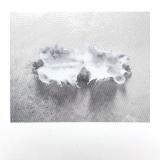
The debut EP Danza Nel Vulcano by Rotterdam duo Vesuvio Vortex is the first release of the label Radio Tornado Records. Rooted in italo disco, the music rolls into nearby genres with restless grooves and rough edges. In short: energetic, slightly melancholic, and always moving.
Audio Vesuvio opens with a bright, welcoming energy, setting the scene. Robot Cop brings a lively rush, the rhythms bouncing and colliding. Overexposed Polaroid slows things down, drifting through hazy reflections of what just happened. Vortex closes the EP in a softer, darker glow, the afterparty fading but the melodies lingering, like a dream that refuses to end.
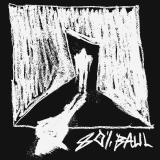
“Música Para Caminar” is the new album by 80%Baul, and the record that confirms his definitive leap from revelation to legend. Following the critically acclaimed debut Ayer y Ahora, this release positions 80%Baul alongside the great names of Spanish post-punk, standing shoulder to shoulder with seminal acts such as Décima Víctima and Parálisis Permanente. Rooted in a dark, introspective sensibility, Música Para Caminar also connects seamlessly with the vitality of today’s Spanish underground, aligning with the current wave of forward-thinking artists, including labelmates like Yvgoslavia. But this album is not defined by sound alone. Once again, 80%Baul surprises with songs that function as poems—bleak, incisive reflections on a decaying, dystopian present. More than music, Música Para Caminar is a statement: music with intention, depth, and meaning—an artistic vision that transcends genre and cements 80%Baul as one of the essential voices of contemporary Spanish post-punk. Presented in ONE-OFF truly limited edition of 300 copies lacquered pressed on 180 gr. high quality solid BLACK vinyl tracks have been specially remastered and mastered for vinyl by Daniel Hallhuber at Young and Cold Studios (Germany).
There’s no direct English translation for the word “hiraeth”. In the Welsh language, it describes a form of longing for an intangible something, somewhere or someone that no longer exists. Sofie Birch and Antonina Nowacka draw on the concept to guide their second collaborative album, a suite of vulnerable, open-hearted improvisations and reflections that attempt to grasp an image of the past that’s chimeric, dissolving almost as soon as it materializes. The duo’s process follows the same distant beacon; unlike Languoria, their critically acclaimed debut, Hiraeth is, at heart, an acoustic record, informed by in-person improvisations with voices and string instruments that gesture to an era before computers, AI and DAWs. It’s just as lush, but Hiraeth is warmer and more muted than its predecessor.
Nowacka and Birch conceived the album in the wake of a slew of collaborative live concerts, spurred on by serendipitous improvisations and an interest in paring down their setup. Unsound arranged a retreat in Sokołowsko, an idyllic village nestled in the verdant hills of Southern Poland, close to the Czech border. Sokołowsko surrounds a large ruined sanatorium that’s rumored to have inspired Thomas Mann’s 1924 novel The Magic Mountain, and has long been a magnet for artists. The two took the opportunity to rethink their approach completely, arriving with just a guitar, a zither and a portable Nagra reel-to-reel machine. Recording directly to tape, they sketched out ideas with just their voices and instruments, reflecting their surroundings without being distracted or mediated by modern technology.
“We wanted to get away from screens as much as possible,” says Birch, “to bring to the world something vulnerable and honest. Without advance preparation, every day we went out into the open air, finding places to sit, during sunset or the midday sun. We discovered new tunings on our instruments, picked up a melody, and started the machine, playing over
and over till we got a take.” In the autumn, they met again in a Copenhagen studio, sparingly and carefully layering old synths and organs to add more depth without muddying the mix.
Both Nowacka and Birch sing throughout, their voices threading the acoustic instruments and tangling with each other, almost becoming one. But it’s the environment of Sokołowsko, “the birds and the light, even the wind playing against the harps,” that’s woven into the music’s lining. Affected by time spent meditating and in nature, as well as the fact that Birch was pregnant whilst recording, the album feels alive and remarkably present. Even the sound quality of the tape machine gives Hiraeth a tactile, organic quality, as Nowacka puts it, “like being in a warm bath.”
They still have the raw recordings from Sokołowsko on old reels, physical souvenirs of their time spent making music in a “habitat for intuitive songs, a little ecosystem, alive and spirited.” The outmoded gear and remote setting helped the duo disengage from the modern world for a few moments and imagine an existence that’s been lost to time and nominal progress. With digital technology receding into the background, Nowacka and Birch had space to make “intuitive connections with frequencies and people,” as Birch explains. Hiraeth is a testament not to nostalgia, but to the power of kinship.
- A1: Enchanted Mirror 04:00
- A2: Summertime Love 03:00
- A3: Reflections 02:42
- A4: Concerto For Guitar 03:15
- B1: Rain 02:40
- B2: Leque 01:50
- B3: Missal (Estudo) 03:46
- B4: Adventure In Space 05:17
Introspection is a 1972 cult-favorite solo guitar album by Brazilian composer and guitarist Luiz Bonfà. Unlike his more famous bossa nova recordings, this album presents Bonfá in a deeply personal, almost meditative setting. Recorded primarily as a set of intimate solo guitar pieces, Introspection showcases Bonfà’s signature combination of classical technique, Brazilian rhythm and emotive melodic phrasing. Initially overlooked, Introspection later gained recognition as one of Bonfà’s most admired and distinctive works outside the mainstream bossa nova canon. This reissue is the first ever on vinyl after 1972.
Joe Fujinoki centered the compositions of his latest album Glass Torso round the idea of the fragility of the human body. Fujinoki described the narrative thread of the album as that of “holding the shape of a human body as if it might shatter like glass”. The precariousness of the body, the essence of the body as defined by Fujinoki as the torso, and the object relations between the boundaries of dialectical exercises pack themselves into his creative process.
Fujinoki recorded Glass Torso exclusively with analog synthesizers, stumbling in and out of structural loops to find space for accidental discoveries. The ten pieces of recorded material feel somewhere on the edge of typified form, feeling like a vascular system pumping in and out its undulating liquidities. Maybe this is the hollowed space held together by Fujinoki’s notion of the torso where you hear a microscopic world, dubby and generative. Fujinoki is adept at organizing this realm of subtle sound sources, giving proper considerations of shared tonal space. Seemingly, this handling of the precarity of sonic material elucidates Fujinoki’s mature attention to detail.
Ambient music genre tropes often affirm the listeners vessel for escape and dissociation. It provides an intoxicating allure by respite from an overwhelming exterior reality far outside the listeners controls. Here this space becomes apolitical, or its protest vocabulary softer and subtle. Fujinoki does not aim to tackle hyperobject topics on how to course correct the world, but he does something increasingly rarer to come across. On Glass Torso an alternative space is created not as shelter, but as a meditation on negotiation and compromise. This twenty eight minutes of audio lays down a foundation for imagination, for imagining how to negotiate the fragility of the self. Zoomed out, the implications of his negotiative sonics can be a playground for broader reflections on distributive care and attention.
Fujinoki says he feels “alert” to his physicality and placement in the world amidst vast digital cultures creating impositions on him and his surroundings. On Glass Torso he creates a concretized space on a vinyl record, where the virtual and the tangible antagonize one another that create the spectacle of the listening experience. This spectacle is a soft one, a considered one, and an utmost enjoyable one. Fujinoki juggles opposing forces brilliantly, and formulates an exquisite palette of soft passing music so he can also help the listener with the exquisite burden of their own Glass Torso.”
- Nick Klein, January 2026
THY WILL BE DONE is the newest album from $uicideboy$, delivered as a raw, unfiltered gift to the G59 fanbase. The 10-track album blends the duo’s signature hard-hitting, gritty sound with deeply personal reflections on life before and after sobriety, before and after finding God, and the ongoing tension between fame, money, and family. The focus track “BLOODSWEAT” anchors the project with brutal honesty and intensity, and will be accompanied by an official music video following the album’s release.
- A1: Sinners
- A2: Forgiveness
- A3: Collection Plates (Feat. Young Chris)
- A4: Offerings
- A5: Field Of Nightmares (Feat. Ot The Real)
- A6: Leather Sandalsa7. 16 Tithes
- B1: Sinners (Instrumental)
- B2: Forgiveness (Instrumental)
- B3: Collection Plates (Instrumental)
- B4: Offerings (Instrumental)
- B5: Field Of Nightmares (Instrumental)
- B6: Leather Sandals (Instrumental)
- B7: 16 Tithes (Instrumental)
“Salvation for the Wicked” unites Ransom, Boldy James, and producer Nicholas Craven for a gritty, soul-soaked showcase of sharp lyricism and minimalist, dust-laced production. Ransom and Boldy trade vivid, hard-earned reflections over Craven’s haunting loops, joined by standout features from Young Chris and OT The Real. Now on vinyl, the project’s warmth and texture hit even deeper, giving the raw performances and timeless sound the space they deserve in a format built to be felt as much as heard.
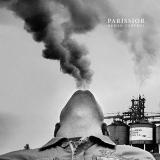
Parissior, moving between EBM, dark disco, indie dance and electronic music while blending analog and digital production.
The album brings together tracks that originally didn’t belong to previous EPs but eventually formed a coherent narrative exploring themes such as digital identity, illusion, authenticity and human imperfection.
From the sense of social pursuit in “The Chase”, to reflections on artificial validation in “True Connection” and “Smoke and Mirrors”, the record balances introspection with dancefloor energy.
The album also includes “Sintes Guarros” featuring Size M, and two additional digital-only tracks, expanding the project beyond the physical format.
Human Control ultimately works as a sonic map connecting machines, emotion and underground culture.
For Oath's latest release presents Vault with Holes, the first record from French duo C.ling. Formed by lifelong friends Paul Brunet and Alexandre Maillet, now based between Paris and Brussels, the pair draw from a wide European electronic music network and a classical background.
Combining hyper-kinetic sound design, delicate instrumentation and fluid, polyrhythmic layering, C.ling's sound is immersive and genre-less at times, rooted in remembrance and shifting emotional spaces. Vault with Holes unfolds like chapters, where thresholds between tracks feel like breaks in a narrative, reflective, tactile and quietly expansive.
Wasteland is a record that is unafraid to plunge into the darkness of the modern world and embrace the weirder, edgier and more unnerving moments that come from doing so. It is an album that captures all the enormity of life from the micro to the macro, zooming in on the personal as well reflecting on broader societal issues.
“Wasteland is about the idea of a place once known or familiar that is now broken down and unrecognisable,” says Ghedi. “It’s about exploring the process of watching someone’s surroundings and environment collapse.” And within that you have a lot going on. “It also explores death, personal loss, grief, mental health and how the natural world provides solace and meaning for that loss and how these worlds blur into one another.”
Ghedi has always been an artist that in many ways perfectly encompasses folk music in its purest form but he is also someone that frequently pushes the boundaries of that label and no more so is that apparent than on this record. As like previous albums, such as 2018’s A Hymn for Ancient Land and 2021’s In the Furrows of Common Place, Ghedi uses traditional folk songs as a means to explore contemporary issues via modern and experimentally-leaning music. “With the traditional material on this album I wanted to find songs with content that resonated with me,” says Ghedi. “But also that were based roughly around the north of England.” This is a central underlying theme to the album for Ghedi. The feelings of loss, erosion, and degradation are often most pronounced in working class communities and this was something he wanted to weave in. “It was important to voice and choose material that represented or expressed issues that correlated with things going on around me.”
However, as remarkable as some of the traditional material is, some of the most arresting work on the album is Ghedi’s entirely original compositions. Lead single ‘Wasteland’ is a stunning piece of work that while rooted in an environment being corrupted and broken – “there’s violence on these hills” Ghedi sorrowfully sings, before claiming this is no longer somewhere that can be called home – it is also a stirringly beautiful composition that soars and glides as it opens up, as sweeping strings swoop and in and out of Ghedi’s twangy electric guitar.
The decision to incorporate more fuller sounds, such as electric guitar and huge drums, results in a notable shift and evolution in tone for Ghedi. “The lyrical content needed something more band-driven and loud to deliver them,” he explains. “Incorporating the electric guitar in my songwriting was also a big part of opening the sound up, using drop tunings pushed me to use my voice in a wider range, which forced me to use falsetto a lot which I haven’t previously done before. That then opened the sound up and gave me creative ideas for bigger arrangements and to sonically really push things.”
What Ghedi has done in creating his masterpiece is construct a remarkable space where deeply intimate and personal feelings coexist with reflections on environment, place and society, while also interweaving historical context via traditional songs. Wasteland is as much of a world to explore and exist in as much as it is an album, with Ghedi carving out his distinctly unique sonic language and voice to explore that singular environment.
Wasteland is a record that is unafraid to plunge into the darkness of the modern world and embrace the weirder, edgier and more unnerving moments that come from doing so. It is an album that captures all the enormity of life from the micro to the macro, zooming in on the personal as well reflecting on broader societal issues.
“Wasteland is about the idea of a place once known or familiar that is now broken down and unrecognisable,” says Ghedi. “It’s about exploring the process of watching someone’s surroundings and environment collapse.” And within that you have a lot going on. “It also explores death, personal loss, grief, mental health and how the natural world provides solace and meaning for that loss and how these worlds blur into one another.”
Ghedi has always been an artist that in many ways perfectly encompasses folk music in its purest form but he is also someone that frequently pushes the boundaries of that label and no more so is that apparent than on this record. As like previous albums, such as 2018’s A Hymn for Ancient Land and 2021’s In the Furrows of Common Place, Ghedi uses traditional folk songs as a means to explore contemporary issues via modern and experimentally-leaning music. “With the traditional material on this album I wanted to find songs with content that resonated with me,” says Ghedi. “But also that were based roughly around the north of England.” This is a central underlying theme to the album for Ghedi. The feelings of loss, erosion, and degradation are often most pronounced in working class communities and this was something he wanted to weave in. “It was important to voice and choose material that represented or expressed issues that correlated with things going on around me.”
However, as remarkable as some of the traditional material is, some of the most arresting work on the album is Ghedi’s entirely original compositions. Lead single ‘Wasteland’ is a stunning piece of work that while rooted in an environment being corrupted and broken – “there’s violence on these hills” Ghedi sorrowfully sings, before claiming this is no longer somewhere that can be called home – it is also a stirringly beautiful composition that soars and glides as it opens up, as sweeping strings swoop and in and out of Ghedi’s twangy electric guitar.
The decision to incorporate more fuller sounds, such as electric guitar and huge drums, results in a notable shift and evolution in tone for Ghedi. “The lyrical content needed something more band-driven and loud to deliver them,” he explains. “Incorporating the electric guitar in my songwriting was also a big part of opening the sound up, using drop tunings pushed me to use my voice in a wider range, which forced me to use falsetto a lot which I haven’t previously done before. That then opened the sound up and gave me creative ideas for bigger arrangements and to sonically really push things.”
What Ghedi has done in creating his masterpiece is construct a remarkable space where deeply intimate and personal feelings coexist with reflections on environment, place and society, while also interweaving historical context via traditional songs. Wasteland is as much of a world to explore and exist in as much as it is an album, with Ghedi carving out his distinctly unique sonic language and voice to explore that singular environment.
- A1: On Your Mind
- A2: Nguzo Saba (The Struggle)
- B1: Unknown Track #3
- B2: Sexy Mama
- B3: Ultima Linda
- C1: Earthquake
- C2: Dizzy Profile (Alt Take)
- D1: Let Me Be The One
- D2: Alicia
- E1: Samba De Romance
- E2: Naima
- E3: Kimba
- F1: I’m Really Gonna Miss You
- F2: Reflections Of My Past (Feat Dennis Tini)
DJ Amir takes another deep dive into the back catalogue of Detroit's legendary Strata Records to curate a 2nd volume in his Strata Records – The Sound of Detroit compilations. Whereas volume one took in the soulful edge of the Strata canon this volume, as Amir says, 'leans into the label's groovier, funkier edges whilst still celebrating its bold, avant-garde spirit.' DJ Amir's relationship to the Strata label has resulted in the release of the long lost Charles Mingus live 'Jazz in Detroit' box set released on BBE Music along with re-issues from The Lyman Woodard Organisation and re-imaginings of Strata's genre defying music by Berlin based DJ and producer collective, Jazzanova as well as remixes from Kai Alce, Wajeed, Henrik Schwarz, re.decay and DJ Amir himself and, of course, volume one of The Sound of Detroit. Featuring music from The Soulmates, Fito Foster, Keith Boone & Janice Coombs and The Contemporary Jazz Quintet amongst others, The Sound of Detroit volume 2 absolutely exemplifies the importance of Strata Records in the history of innovative Black music as well as its place in the cultural landscape of Detroit as a powerhouse city for art and music. Released by BBE Music in collaboration with 180 Proof Records as a triple vinyl LP and high res. digital download DJ Amir presents Strata – The Sound of Detroit volume 2 really is a gem of a compilation to grace any serious music head's record collection.
David August's most expansive, ambitious album to date, the Italian – German composer and producer lets his vast sonic universe collapse, rediscovering in its wake an instrument that's been a constant presence in his life. 'Hymns' is a deeply personal set of candid piano – led reflections that tell a simpler but far more distinctive story; rather than concentrate on the life cycle of humanity and civilization, August narrows his field of vision, tracing his own background and re - asserting his relationship with a musical language he'd tried hard to unlearn. An intimate, instinctual album that emerged from isolation and contemplation, 'Hymns' is also a surprisingly hopeful suite of soft hued, evocative improvisations that well up from the depths of the soul. In August's own words, "it should recall light, not darkness."
‘Yarrow’ is a bouquet of new music by Portland, Oregon-based musician and field recordist Patricia Wolf, marking the label’s ninth release and the third of Season Two. These works are her reflections on the life cycle of plants and their dynamic ecological relationships.
Wolf created the album in response to her artist residency at the Rocky Mountain Biological Laboratory in Gothic, Colorado, as part of the Art-Science Exchange Project in the summer of 2024. She worked closely with ecologists Dr Paul CaraDonna, Dr Amy Iler, Dr Jane Ogilvie, Dr Nickolas Waser, Dr Mary Price, and Dr Will Petry, spending weeks engaged in long-term research on plants, pollinators, and their interactions as the climate changes.
Each track on Yarrow looks at a different part of a plant’s life. The songs touch on the conditions that plants need to grow, the quiet life of roots, how flowers attract pollinators, and the strength of seeds. The first single, 'Inflorescence', the scientific name for the floral display that a plant makes in an effort to reproduce, captures this event in song. The music slowly builds layers, reflecting the album’s overall feel. The album ends with the majestic Boards of Canada-esque 'Adapted for Extreme Conditions', and the entire b-side features Patricia’s field recordings from around Gothic, Colorado, and a guided meditation by Dr Paul CaraDonna, whose research inspired the project, inviting listeners to tune into the sounds and activities of the ecosystem.
In 2015 Sam Shepherd - aka Floating Points - released his break out, critically acclaimed debut Elaenia. Earlier this year he followed up the album with Reflections - Mojave Desert, a short film and soundtrack featuring tracks recorded in the Mojave Desert. Today the polymathic producer is pleased to announce his latest project, Ratio, an epic track bordering on 19-minutes that harks back to his earlier dance floor focussed releases. Over the course of the summer Floating Points has developed Ratio as part of his solo live electronic show at festivals around the world. The track has fast become a fan favourite, a true highlight of the set.
Ratio will be released on 20th October. The full-length version will be available on all digital platforms. The track will also be available on vinyl, presented as a deconstructed mix of the 18+ minutes.
Repress of original 2017 release.
- A1: Viaje Al Sol
- A2: The Maestro
- A3: Esferas De Cristal
- A4: Mama
- A5: Cascabel
- A6: Juguentes Rotos
- B1: Sigilo
- B2: Orquesta Sinfonica Angustia
- B3: Toro De Falaris
- B4: Perdon De Judas
- B5: Viento Androide
- B6: Corpus De Sangre
- A1: Dellarge - Viaje Al Sol (Silent Servant Remix) 7
- B1: Dellarge - Cascabel (Pedro Vian Remix) 7
lim. 150 blue transparent 180 Gr LP + 7" + Poster / incl. Silent Servant Remix
A cross-cutting label exploring the boundaries between different disciplines based on deep listening and music research, Modern Obscure Music is set to release 'INRI' (INDUSTRIA NACIONAL DEL RUIDO INFINITO) on the 1st December, the new album from Dellarge.
Inspired by the scenic beauty of his studio's surroundings at Lake Pátzcuaro in Michoacan, Mexico, Alejandro Barba, aka Dellarge, delves deep into the depths of his artistic consciousness to craft a spiritual album that encapsulates the essence of the place. 'INRI' stands for Industria Nacional del Ruido Infinito (National Industry of Infinite Noise) and serves as a vessel for Dellarge's innermost self-expression and reflections on the potential of humanity.
A multifaceted artist and veteran of the music industry for over two decades, his latest musical creation is an intimate and personal album and a departure from previous Techno/EBM-orientated Dellarge releases. 'INRI' (INDUSTRIA NACIONAL DEL RUIDO INFINITO) offers a mesmerizing blend of ambient, futuristic, and industrial sounds that transport listeners into a realm of mysticism, futurism, and duality and stands as a testament to Dellarge's artistic growth and his ability to transcend boundaries, offering listeners an immersive experience that connects them to his world.
Drawing inspiration from numerous sources, Dellarge found creative fuel in books such as 'El Arte de los Ruidos' by Luigi Russolo, 'Manifiestos y Textos Futuristas' by F.T. Marinetti, and science fiction classics including 'Congreso de Futurología' by Stanislaw Lem, 'Neuromancer' by William Gibson, and 'Dune' by Frank Herbert. Musically, he delved into the works of Coil, Michael Bundt, The Threshold Houseboys Choir, krautrock legends CAN and Popol Vuh, early Kraftwerk, Arthur Brown, Yello, Esquivel, The Residents, and Hector Lavoe for inspiration.
When asked about the creative process behind the album, Dellarge revealed a disciplined routine that involved immersing himself in the sounds, focusing on minute details that connected with the vivid world he envisioned. Ethereal tracks such as 'Viento Androide' and 'Viaje al Sol' offer a glimpse of a hopeful future, while darker compositions such as 'Corpus de Sangre' and 'Toro de Falaris', explore the wickedness and compassion within humanity. Each piece in the album represents a unique sonic journey.
'Viaje al Sol', the first single to be taken from the album, is set for release on the 27th October, and is also available as an EP which includes a remix from Juan Mendez aka Silent Servant. The remix is also included on the digital version of the album and available on 7" vinyl alongside an exclusive reworking of 'Cascabel' by the founder of Modern Obscure Music, Pedro Vian.