The Mapendo album of the Mighty Cavaliers, up to today, has been shrouded in mystery. If you look at the original cover of this very rare Kenyan funk-infused album all you will find are the names of the engineer and the producer, as EMI Kenya omitted the names of the musicians and the songwriters. Digging deeper a rather sinister story of deceit develops whereby Mapendo becomes symbolic for all what was wrong about the Kenyan record industry in the 1970s, and the music industry in Africa as a whole. As this maltreatment of artists proved endemic throughout the continent, although little talked about.
One of the three surviving members of the Mighty Cavaliers, bass player Bonnie Wanda - who started his career in 1971 with Gloria Africana - vividly remembers participating in the recording of the two albums the band made in 1976 and 1977 - Fisherman and Mapendo - and how they, especially on the last album, got short-changed by shrewd record label executives. In the 1960s it was mostly Indian and European record bosses that called the shots and usually gave musicians the chance of a one-off payment for their session time and recorded songs or wait for - hopefully - a generous royalty check. In most cases records didn't sell more than a thousand copies with an occasional hit selling in the tens of thousands, so musicians were reluctant to register themselves with the Music Copyright Society of Kenya. Although without doing so one couldn't receive royalties.
'For two years the Mighty Cavaliers performed five nights a week at the Starlight Club for five hour sets.
The re-release of Mapendo, the first of the German Want Some Records label, is another exciting puzzle piece in the tapestry of groovy Kenyan music. It proves that there are still great gems out there to be re-discovered for audiences worldwide.
Text written by Michiel van Oosterhout
This Album is dedicated to the musicians
Bonnie Wanda, Rashid Salim, Vuli Yeni, Juma Waweru Njuguna and Athmani 'guitar boy'."
Cerca:remember remember
SG is none other than Andrew Pekler returning to faitiche with an album of sentimental guitar escapism. For Lovers Only / Rain Suite features ten tracks made using only an electric guitar and a handful of effects pedals (plus some additional recordings of rain) and finds Pekler once again attempting to reconicile his tendencies towards kitsch, experimentation and minimalism.
What does Pekler's pseudonym SG stand for? Sentimental Guitar? Sound Gallery? Shy Guy? Sad Gnosis? Saudade Glamour? Soft Goth? We don't know, but we asked notorious Chicago romantic Sam Prekop for his take on the album – his reply:
--
It’s a wonder where the rivers go and far, how fast or slow.
Just seconds to remember, who can forget, when you are lost.
I think to recount every step, in both hands, eyes open, the clouds unfold, one two three. Every other step, just as well.
Where the moss is soft, you know strong. How many hours, days? I could have been careful, did I forget?
Never mind. Waking up, in these arms, where the rivers go, slow. One two three, one two three.
Another 1983 gem is remastered by the label Mr. Disc Organization
"Gaucho - Dance Forever"!
Gaucho is the trio formed by the great Italian producers Stefano Pulga, Luciano Ninzatti and Bruno Bergonzi that some of them remember in other music groups such as "Kano," "Dharma," "Sphinx" etc.
"Dance Forever!" Yes we want to dance forever with this rhythm!
Percussion that doesn't stop and this synth that provides the backdrop for this dance.
There is also a remix by young Musta and Stefano Ritteri who have
strengthened the track making it more powerful!
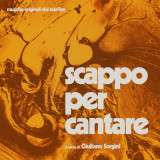
Another dream coming true! One of Giuliano Sorgini's finest and most sought-after titles is finally available as an official LP reissue – the first ever – remastered from the original tapes.
Originally released in 1971on the small library music imprint FAMA, which operated as a sub-label of RCA Italy, the record contains the original music written for Scappo per cantare, a small, pseudo-psychedelic 'musicarello' (musical comedy film) broadcast on RAI television and starring, among others, Italian singers Gianni Morandi and Mauro Lusini.
The only credited album artist is Sorgini, but it's impossible not to perceive, in this record, the hand of his close friend and colleague Alessandro Alessandroni.
This should not come as a surprise. In the early 70s, the two composers and multi-instrumentalists had a fruitful collaboration that saw them, under the monikers Braen (Alessandroni) and Raskovich (Sorgini), produce an abundance of works together, most of which have now gained the recognition they deserve. These include, among others, two 7" singles from their band The Pawnshop, three records in the series Alle sorgenti delle civiltà (Folkmusic), the crime/noir library albums Quarta pagina (Usignolo) and Inchiesta giudiziaria (Octopus Records), as well as the LP Tempo Libero (Panda Records), which was released shortly after the record presented here and in some ways drew rhythmic inspiration from it.
While their collaboration remained unacknowledged on the original release of Scappo per cantare (this was not uncommon at the time, especially in the field of library music), the record sounds perfectly in line with other works composed by Alessandroni in the early 70s, such as Complesso Gisteri's Mostra Collettiva (co-written with Oronzo De Filippi), or even a landmark album like Spontaneous, where Sorgini contributed to a handful of tracks.
So, yes, the sheer beauty of Scappo per cantare is the result of an incredible synergy between two heavyweights of Italian library music! Airy and sweeping melodies à la Zoo Folle, psychedelia à la Under Pompelmo, and various percussion instruments played by Sorgini seamlessly blend and fuse with elements and touches provided by Alessandroni.
More specifically, we find Alessandroni's signature, melancholy whistle in "Desolazione"; the peaceful and dreamy sound of his 12-string guitar in "Scogliere" and "Con Amore"; the trademark harmonies of his vocal ensemble Cantori Moderni in the last two tracks mentioned and in "Per cantare"; and his ingenious use of distortion on his Fender Stratocaster in the suspenseful transitions "Concentrazione" and "Fantocci", as well as in the frantic/hypnotic hippie numbers "Mordente" and "Fendente" (as a side note, it is worth remembering that Alessandroni experimented extensively with distortion in the rock-infused album Underground, co-written with De Filippi and released in 1971 under the moniker Braen's Machine, probably a reference to British psychedelic band Soft Machine).
The creative relationship between Sorgini and Alessandroni was so symbiotic that it would be useless to try to identify in more detail their respective contributions to the sound of Scappo per cantare. The alchemy between these two musical geniuses is the key to the album's exquisitely Italian mixture of cheerful lounge, sweet psychedelia and smooth easy listening.
To do justice to the quality of the music, this remastered reissue is enriched by a new artwork by Eric Adrian Lee, who drew inspiration from the psychedelic visual culture of the period in which the album was written and recorded.
Following his acclaimed first album, French pianist
Dexter Goldberg is back, leading a completely
renewed trio, formed with two young French jazz
wizards, double bassist Clément Daldosso (known
for his stints with the Paris Jazz Sessions and
Giovanni Mirabassi New Quartet) and drummer
Raphaël Pannier (currently a sideman with Biréli
Lagrène and Thomas Enhco), who has just
returned from New York.
Summoning the genuine spirit of childhood and the
pleasure of interplay, Goldberg puts his trio into
perspective, moving from homage to the great
masters - in particular, Ahmad Jamal, who
encouraged him just before passing - to the joyful
building of moving musical forms.
Dazzling cover illustration by cartoonist Thomas
Baas.
“Dexter affirms with just the right amount of
strength and delicacy his personality, that of an
authentic jazzman of the 21st century.” - Jazz
Magazine
Acclaimed NY-based singer songwriter Jordan Lee aka Mutual
Benefit announces ‘Growing At The Edges’, on Transgressive
Records, his first record since 2019.
‘Growing at the Edges’ is sonically expansive, artfully blending
genres from country to classical with the help of multifaceted
co-producer Gabriel Birnbaum (Wilder Maker) and critically
acclaimed string arranger Concetta Abbate. The band,
alongside Lee and Birnbaum, was made up of Wilder Maker
members Sean Mullins (Andy Shauf) and Nick Jost (Baroness)
and features help from Jonnie Baker of Florist and Eva
Goodman of Nighttime among others.
“I approached ‘Growing at the Edges’ as an act of worldbuilding. It was a place we visited often over the past 5 years
collaging and sonically redecorating until it reflected the joy and
the pain of being human in a universe that will always be
changing. I wanted to make music that could simultaneously
mourn versions of the past but still find hope in the seedlings
which could, perhaps, bloom into better futures” - Jordan Lee
The album cover is a purposefully ‘unfinished’ weaving by fibre
artist Natalie Phillips.
“I had this theme for ‘Growing at the Edges’ where I was
thinking about the first little life forms that pop up after
something natural like winter or less natural like a disaster and
kind of channeling their spirit for the art and music. That got me
imagining one of Natalie’s beautiful weavings but in-process
with stray yarn and loom still visible. Incomplete yet still
beautiful. I couldn’t be happier with how it turned out.”
Mutual Benefit’s live shows are known for their rotating cast of
wide-ranging musicians leading to inspired interpretations of the
extensive catalogue on notable stages like MoMA’s sculpture
garden or UK’s Green Man Festival as well as the occasional
surprise park or basement show at home in Brooklyn.
Throughout the years Mutual Benefit has been in Album Of The
Year lists among Pitchfork and Stereogum, as well as Folk
Musician Of The Year by New York’s Village Voice.
Anoushka Shankar, the acclaimed sitar player, producer and composer, shares a new mini-album: Chapter I: Forever, For Now is out via LEITER on limited edition vinyl and on all digital platforms from October 6, 2023.
Recorded at Berlin’s celebrated Funkhaus complex, the four new tracks make up the first chapter in a trilogy
of mini-albums Shankar will be writing and releasing as an evolving story between tours. Featuring guest
appearances by Nils Frahm (piano, glass harmonica, harmonium, slit drum), Gal Maestro (bass) and Magda
Giannikou (accordion), Forever, For Now was produced by praised Grammy-decorated singer and composer Arooj Aftab, with whom Shankar had previously collaborated on ‘Udhero Na’, from the deluxe edition of Aftab’s ‘Vulture Prince’ album.
Forever, For Now is Shankars first release since December 2022’s standalone single, ‘In Her Name’, which
commemorated the tenth anniversary of the 2012 gang rape in Delhi of Jyoti Singh Pandey, and the mini-
album also follows ‘Between Us...’, her live album for LEITER earlier the same year, recorded with Jules Anoushka Shankar, the acclaimed sitar player, producer and composer, shares a new mini-album: Chapter I: Forever, For Now is out via LEITER on limited edition vinyl and on all digital platforms from October 6, 2023.
Recorded at Berlin’s celebrated Funkhaus complex, the four new tracks make up the first chapter in a trilogy
of mini-albums Shankar will be writing and releasing as an evolving story between tours. Featuring guest
appearances by Nils Frahm (piano, glass harmonica, harmonium, slit drum), Gal Maestro (bass) and Magda
Giannikou (accordion), Forever, For Now was produced by praised Grammy-decorated singer and composer Arooj Aftab, with whom Shankar had previously collaborated on ‘Udhero Na’, from the deluxe edition of Aftab’s ‘Vulture Prince’ album.
Forever, For Now is Shankars first release since December 2022’s standalone single, ‘In Her Name’, which
commemorated the tenth anniversary of the 2012 gang rape in Delhi of Jyoti Singh Pandey, and the mini-
album also follows ‘Between Us...’, her live album for LEITER earlier the same year, recorded with Jules
Celebrating his 70th year in show business, Pat Boone, legendary singer, actor, songwriter, and author is reconnecting with his Nashville roots with a milestone country music project, Country Jubilee
Included in the 25 tracks are 5 Pat Boone Top 100 Country recordings, Boone's recordings of classic hits by Country legends, plus a new recording of the classic duet and Billboard #1 'You and I' (with featured guest artist Crystal Gayle), and Pat's new song, 'Grits' (with featured guest artists Ray Stevens, The Gatlin Brothers, Lorrie Morgan, Deborah Allen and Dean Miller), tailor-made for the line dancing crowd.
The Commemorative Edition 2CD format includes a 56- page booklet with 'The Story Behind the Song' (compiled by hit Country songwriter Frank Myers), 'I Remember Red' (influence of father-in-law and Country music pioneer and Grand Ole Opry co- founder Red Foley), lyrics, and archival and behind- the- scenes photographs.
Return of the B-Boy
Listening back to the “I Phantom” album as a whole re-connects me to the fact that “Return of the B-Boy” really was designed to be the crown jewel of the album. I wanted to create a song that was a feat in storytelling and in verbal dexterity. The slower tempo of Part 1 of the song gave me a chance to paint a clear view of the scenario in which the protagonist is brought back to life by music to save culture of a genre. The relentless tempo of Part 2 was one of the largest challenges I had faced as an MC at that point in my career but I did not want to earn style points at the cost of clear storytelling.
I remember that night so clearly; being in El-P‘s basement studio with the album due the next day and “Return of the B-Boy pt 2” being the only part of the album that wasn’t finished. In sports what happened that night would probably be the equivalent of somebody hitting a half court shot at the buzzer to win a championship. We were all there; myself, El-P, DJ Abilities, & Nasa (El-P’s studio engineer). We all knew the song had to be completed before sunrise, we all knew the importance of the song, and we all knew we had to do our best work. This was the scene; El-P searching for the perfect drum break, Nasa mixing everything on the fly as it was recorded, DJ Abilities searching for the perfect cuts to accentuate the song, and me making sure that every single line of my verse was exactly what I wanted it to be.
I’m glad I at least remember these elements of the process clearly because the rest of it really is a blur. I’m just glad that we managed to finish the song on time & get it out into the world. I truly am honored that our efforts back then led to the creation of a piece of music that is still resonating with people today.
As wonky as Weezer, as poignant as Pulp, Confidence heralds the long-awaited
return of The Hoosiers, the band whose debut album, The Trick To Life, sold well
over a million copies, and spawned four singles including Top 5 hits, Worried
About Ray, and Goodbye Mr A. Enter Confidence, a sonic shot of optimism,
effervescence and joie de vivre, and an album so hook-laden, you'll think you've
had it knocking around your house for years.
REMIXED & REMASTERED REISSUE OF THE PINEAPPLE THIEF'S 2003
STUDIO ALBUM
Kscope present 'Variations On A Dream', the third album from The Pineapple Thief
newly remixed by Bruce Soord & remastered by fellow bandmate Steve Kitch.
The Pineapple Thief are one of the leading lights of Europe's experimental rock
domain, led by post-progressive mastermind Bruce Soord, the band have built an
incredibly loyal fanbase over the past 23 years through extensive touring &
consistently lauded recordings. Founder Bruce Soord started The Pineapple Thief
as an outlet for his music back in 1999 & has since released over 15 studio
albums.
Albums like 'Someone Here Is Missing' (2010) & 'All The Wars' (2012) paved the
way to their recent releases. Multiple headline tours followed, including their
biggest headline performance in the UK at O2 Shepherds Bush Empire & their first
ever tour of North America.
'Variations On A Dream' opens with the timid beginnings of 'We Subside' as they
slowly move into the more progressive leaning 'Vapour Trails' before the delicate
strings of 'Resident Alien' position us toward the grand finale of the 16- minute
epic 'Remember Us'.
While earlier Kscope releases were many people's introduction to the band, The
Pineapple Thief spent the previous ten years building up a dedicated fan base
across the globe, selling over 25,000 records & nurturing their 'bittersweet'
progressive sound. A sound that has recently been revisited in a beautifully
packaged 'How Did We Find Our Way - 1999 - 2005' deluxe book set.
Kscope will be presenting 'Variations On A Dream' as a single black LP.
- 1: We Said
- 2: Different Rings
- 3: Unbeknownst
- 4: Predestined Confessions
- 5: How Prophetic
- 6: A Caged Dance
- 7: I Have Long Been Fascinated
- 8: Enthralled Not By Her Curious Blend
- 9: No Way Chastened
- 10: But I Never Heard A Sound So Long
- 11: The Promise
- 12: Shake My Bones
- 13: A(Way) Is Not An Option
- 14: For They Do Not Know
- 15: Others Each
- 16: Ain't I...your Mystery Is Our History
Celebrated composer, performer, saxophonist, soloist, band leader, educator, activist, and mixed-media artist Matana Roberts returns with a new installment of their acclaimed Coin Coin series. For over a decade, Coin Coin has been the central artistic project for Roberts, a remarkable exploration of American ancestry and the nature of memory through "sound quilting": modern composition that draws on a wide range of musical sources and traditions, along with research-driven historical and genealogical narratives that yield prose and poetry both spoken and sung, field recordings, and graphic scores. The Quietus declares "when the 12-album cycle is complete, it will be regarded as a singular masterpiece of 21st century sonic and narrative art" and Pitchfork calls it "one of the most provocative ongoing bodies of work by any American musician." Coin Coin Chapter Five: In the garden... is the first new recorded audio chapter since 2019 and centers upon reproductive rights, summoning the story of a family ancestor who died in early adulthood, from a cause kept obfuscated and hushed, shrouded in disinformation and shame. Roberts reimagines diaristic and oral narratives, delivered in strident streams of spoken word that punctuate the hour-long work, with recurring musical themes frequently accompanied by the declarative refrain "my name is your name / our name is their name / we are named / we remember / they forget." As Roberts writes in the accompanying liner notes essay: I find it absolutely disgusting that the same trauma my grand ancestor, whose story we are telling in this chapter, is closely mirroring the experiences of some poor soul today as I write this... Our aforementioned grand, who perished at a young age, leaving her growing children motherless, did not have to die. The negative consequences of her death have reverberated down through generations in my family line, in the same way that a similar resounding might happen for someone else's ancestral line generations from today. While often jazz-adjacent, and with Matana's inimitable saxophone and indomitable voice at the core, Roberts situates Coin Coin outside the Jazz genre and within heterodox pathways of post-modern composition, electroacoustic music, sound collage, experimental voice, and sound art. In the garden... undeniably continues to express and expand upon the project's magnificent iconoclasm, nonetheless being the most jazz-inflected chapter since Coin Coin Chapter Two: Mississippi Moonchile(2013). Recorded in Brooklyn with a stellar acoustic ensemble that includes Stuart Bogie, Gitanjali Jain, Darius Jones, Matt Lavelle, Mike Pride, Ryan Sawyer, Corey Smythe, and Mazz Swift, abetted by some sparkling pieces featuring modular synthesis courtesy of album producer Kyp Malone (Bent Arcana, TV On The Radio), In the garden... traverses a vivid stylistic array of thematic overtures, excursions and set pieces, ranging from spacious textural invocations to gorgeously tempered horn-led compositions to driving free jazz and exhilarating through composed bursts of cacophony. With storytelling spoken-word lead vocals by Roberts channeled recurringly throughout, alongside various other deployments of layered and group voices, the album is alternately a meditation and fever dream of narrative potency. This is some of the most intense and intensive music Roberts has composed and captured to date, richly conceived and deeply felt, restless yet focused, unflinchingly substantive and unique. Coin Coin Chapter Five: In the garden... channels epigenetic trauma and tragedy with teeming complexity and fierce beauty _ a eulogy, testimony, and celebration, melding music and language in a stunning polychromatic flow of vernaculars and poetics. A powerful work of subjective commemoration and historical-cultural communion that speaks indelibly to the present moment.
2x10” in 350 gsm widespine jacket w/interior colour flood + 300 gsm printed inners + 20”x 10” fold-out insert + DL card
- A1: Someone Else Not Me
- A2: Lava Lamp
- A3: Playing With Uranium
- A4: Hallucinating Elvis
- B1: Starting To Remember
- B2: Pop Trash Movie
- B3: Fragment
- B4: Mars Meets Venus
- C1: Lady Xanax
- C2: The Sun Doesn't Shine Forever
- C3: Kiss Goodbye
- C4: Last Day On Earth
- D1: Prototypes
- D2: Someone Else Not Me (En Espoñol)
- D3: Someone Else Not Me (En Francais)
Erste offizielle Vinyl-Neuauflage.
POP TRASH war das 10. Studioalbum der englischen New-Wave-Band DURAN DURAN. Es wurde ursprünglich am 19. Juni 2000 veröffentlicht und ist seit der Erstveröffentlichung auf CD nicht mehr zu erhalten. POP TRASH war das letzte Album der Band, auf dem das Trio Simon Le Bon, Nick Rhodes und Warren Cuccurullo. Das Album Artwork, das von Andrew Day entworfen wurde, zeigt einen mit Strasssteinen verziertes Auto, das Liberace gehörte.
Dan Auerbach’s debut solo album, Keep It Hid, returns to physical formats, with the seminal 2009 collection being reissued on vinyl and CD via Easy Eye Sound - the label that Keep It Hid first inspired him to create. The fourteen-song debut marked Auerbach’s first major work outside of The Black Keys, helping to establish his multifaceted career as a Grammy®-winning producer, mentor to emerging talent and founder of Easy Eye Sound, which is now Billboard’s reigning Blues Label Of The Year. Keep It Hid was originally recorded by Auerbach as he was building his first home studio in Akron, Ohio - a precursor to his Easy Eye Sound Studio in Nashville, where Auerbach now records and produces most of the label’s current releases. Inspired by trips to many of his all-time favorite rooms - from Suma Recording in Cleveland to Robin Hood in Texas to Toe Rag in London - Auerbach discovered a passion for studio work that remains at the center of his musical world nearly fifteen years on. Also tapping into his love of record-collecting and crate-digging more than ever before, Keep It Hid was inspired by forgotten 60s psych rock, obscure British power-pop, bluegrass family bands and even the lyricism of his own father, Chuck Auerbach (Dan would go onto produce Chuck’s debut album, Remember Me, in 2018). The album was hailed as “intimate and thrilling” by NPR’s Fresh Air upon its original release, with reviewer Ken Tucker adding it “sounds like a clearing of the throat and mind.”
In 1995 the self-titled full-length debut of Die Anarchistische Abendunterhaltung (DAAU) was released. The band consisted of four young, 'classically derailed' musicians who played their own compositions with acoustic instruments such as violin, cello, clarinet and accordion. Their work contained influences from Roma music, Eastern European folk, klezmer and jazz, but was performed with the energy, rebellious spirit and Sturm und Drang of a bona fide punk band. DAAU was part of the fertile Antwerp scene, which also produced dEUS, Zita Swoon and Kiss My Jazz, and soon signed an international record deal with Sony Classical.
The group's influential first record, which has been out of print for a while, is now finally being released again and is available on vinyl for the very first time.
In those early days, DAAU consisted of four young, classically trained musicians who tackled their instrumental compositions with a true punk spirit. 'If we'd had guitars, bass or drums at that time, we would probably have been just another rock band', says accordionist Roel Van Camp, who, together with his schoolmates Buni Lenski on violin, the latter's brother Simon on cello and Han Stubbe on clarinet made up the Antwerp quartet. 'With our acoustic instruments we tried to create our own version of the music we loved listening to, from sixties rock and prog to new wave.'
The quartet, which initially played in streets and cafes, appealed to a diverse audience and sometimes joked that they were a classically trained unit that had 'gone off the rails'. 'As befits teenagers, we wanted to shake things up', Stubbe remembers, 'even though we always kept cherishing our classical backgrounds.' Van Camp: 'Our education was never supposed to feel like a straitjacket. We were free-spirited enough to ignore the laws and regulations of the music academy and to create our own sound. Our compositions were open to influences from Roma music, Eastern European folk, klezmer and jazz'. 'That eclecticism was a direct result of the zeitgeist', Han Stubbe adds. 'We loved different styles and happily mixed them together'.
The monniker Die Anarchistische Abendunterhaltung was derived from Steppenwolf, a novel by German writer Hermann Hesse about a character who was outside society. 'In the book, the narrator talks of a theatre', Van Camp explains. 'And at the entrance there is a warning sign sign that says: if you go in here, you are guaranteed to lose your mind. That was an apt description of the way our music worked'.
Almost all tracks on DAAU's first album were 'Drieslagstelsels' (or 'three-course rotations'). The term referred to an agricultural method of the early Middle Ages, but also to the fact that each song of the group consisted of three major movements. Van Camp: 'The titles of those pieces referred to our method of writing. We piled up a huge bunch of ideas, because we wanted to tell more than just one story. With each composition, we took the listener for a ride'.
In 1995 the self-titled full-length debut of Die Anarchistische Abendunterhaltung (DAAU) was released. The band consisted of four young, 'classically derailed' musicians who played their own compositions with acoustic instruments such as violin, cello, clarinet and accordion. Their work contained influences from Roma music, Eastern European folk, klezmer and jazz, but was performed with the energy, rebellious spirit and Sturm und Drang of a bona fide punk band. DAAU was part of the fertile Antwerp scene, which also produced dEUS, Zita Swoon and Kiss My Jazz, and soon signed an international record deal with Sony Classical.
The group's influential first record, which has been out of print for a while, is now finally being released again and is available on vinyl for the very first time.
In those early days, DAAU consisted of four young, classically trained musicians who tackled their instrumental compositions with a true punk spirit. 'If we'd had guitars, bass or drums at that time, we would probably have been just another rock band', says accordionist Roel Van Camp, who, together with his schoolmates Buni Lenski on violin, the latter's brother Simon on cello and Han Stubbe on clarinet made up the Antwerp quartet. 'With our acoustic instruments we tried to create our own version of the music we loved listening to, from sixties rock and prog to new wave.'
The quartet, which initially played in streets and cafes, appealed to a diverse audience and sometimes joked that they were a classically trained unit that had 'gone off the rails'. 'As befits teenagers, we wanted to shake things up', Stubbe remembers, 'even though we always kept cherishing our classical backgrounds.' Van Camp: 'Our education was never supposed to feel like a straitjacket. We were free-spirited enough to ignore the laws and regulations of the music academy and to create our own sound. Our compositions were open to influences from Roma music, Eastern European folk, klezmer and jazz'. 'That eclecticism was a direct result of the zeitgeist', Han Stubbe adds. 'We loved different styles and happily mixed them together'.
The monniker Die Anarchistische Abendunterhaltung was derived from Steppenwolf, a novel by German writer Hermann Hesse about a character who was outside society. 'In the book, the narrator talks of a theatre', Van Camp explains. 'And at the entrance there is a warning sign sign that says: if you go in here, you are guaranteed to lose your mind. That was an apt description of the way our music worked'.
Almost all tracks on DAAU's first album were 'Drieslagstelsels' (or 'three-course rotations'). The term referred to an agricultural method of the early Middle Ages, but also to the fact that each song of the group consisted of three major movements. Van Camp: 'The titles of those pieces referred to our method of writing. We piled up a huge bunch of ideas, because we wanted to tell more than just one story. With each composition, we took the listener for a ride'.
Infekto aka Rico Tubbs aka Riku Pentti is a Finnish producer, from the city of Tampere. A long time figurehead of the Finnish dance scene, he first started releasing music under Infekto on Aquasky’s Passenger label in 2002, later launching his Rico Tubbs pseudonym on Jay Cunning’s Menu Music. And prior to all of that, he was part of the Mombfunk MC’s… you remember… Freestyler!
Here he goes back to his original musical love, hardcore rave. Four total destroyers that brings the warehouse feel… uplifting melodies with heavy bass and beats.
Teaming up with The Ragga Twins on one of the tracks and bringing in the heavy remix pressure from the one and only Marc Mac from Reinforced aka Manix and one half of 4-Hero. On top of that Nervous & Anxious also delivery a kickout punch with their remix, keeping things on that Finnish tip!
Pressed on 180g heavyweight vinyl and presented in a Amen Brother housebag with a black inner sleeve.
These sonic stories emerged from a gathering of artists concerned with alternative uses of everyday objects, subversive anti-aesthetics, sensual-absent poetry, moving optical discs, and echoes of activities occurring in the Earth's orbit. It was a performative celebration of entangled audio-visual events that enabled us to learn once again how to tune in to a place: with our eyes, with our ears, with our minds. While listening to the record, I remember what it sounded like in the space. I remember monologues of chairs that were given voice, phones eavesdropping and speaking back to us, cassettes falling on the floor (intentionally): some visions unfolding in front of our very eyes and others in our minds. Try to imagine all that these short pieces might still contain. As Peter Fengler exclaims in his chorus: it will all work out. Just choose a bicycle, low on emissions and also better for the tummy and the legs! (Lucija Gregov)
Nach mittlerweile zwölf Jahren Bandgeschichte ist es Zeit, die neue Power Metal Hoffnung WINTERSTORM auf ein neues Level zu heben. Ihr fünftes Album "Everfrost" ist ihr Debut auf AFM Records und zeigt zurecht, dass die deutsche Band mit Gruppen wie Blind Guardian und Rhapsody Of Fire verglichen wird.
Dies liegt vor allem an der Melodie, welche bei WINTERSTORM ganz klar im Vordergrund steht und sich in ohrwurmlastigen Refrains und vielen mehrstimmigen Gesängen widerspiegelt. Dabei verschmelzen markante Elemente verschiedener Metalstile miteinander und erhalten so eine ganz neue Anmutung. "Winter" steht für nordischen Viking und Folk-Metal, "Storm" für schnellen Powermetal, welche zusammen mit epischem und orchestralem Metal in einem neuen Glanz erstrahlen. "Everfrost" ist ein vielseitiges und kraftvolles Album, welches sich hinter gestandenen Genrekollegen nicht verstecken muss.
Alles in allem eine explosive Mischung, welche auf WINTERSTORMS neuestem Werk ein weiteres Highlight findet.
Rising Wings wurde 2006 von Florian "Flo" Bauer als One-Man Melodic Rock Band gegründet. Florian Bauer spielt seit Jahren in verschiedenen Rockformationen, wie der AOR-Band Youringa und der Hardrock Band Saviors Cry. 2006 & 2008 erschienen die ersten EPs. Weitere Singles erschienen mit sehr positiven Feedback. Nun endlich das erste Full Lenght Album "Reach". Auf dem Album sind Florian Bauer an Gesang, Gitarre, Bass und Keyboards sowie Franz Raßhofer (Joe Leila), Falco Münch (Reload), Markus Herzinger (2nd East) und Bobby Santiago (Bloodwork) am Schlagzeug zu hören. Das Album wurde von Ray Balconis im Studio Ray Recording in Queens, New York, von Rolf Beyer und Peter Hillinger in den Klangwasserstudios Halsbach und von Chris Lausmann im MS Productions Studio in Poing, München, aufgenommen. Florian Bauer und Chris Lausmann (Bonfire, Voices Of Rock) haben das Album im MS Production Studio produziert und gemischt.