Massimo Morini, has been technical director and conductor of San Remo festival for over 30 years. On his conducting debut in 1995 he was only 26 years old. Before his big hall music adventure started, back in 1985 he formed his first italo disco group – J.F & Hitwave, later to be transformed into Love Kills (I want to Become). A forgotten and highly demanded among obscure 7″ italo collectors tune titled “Dance Floor Girl” is now brought back to the light of day on a 12″ vinyl. The reissue contains previously unreleased 12″ version as well remixes by Flemming Dalum, Italoconnection and Also Playable Mono.
Cerca:remo con
Anyone who has had even half an eye on the electro scene over the past decade will already be familiar with Emile Facey aka Plant43's unique sound, mixing an uncompromising approach to off kilter rhythms and machine-led funk with an emotive and powerful use of melody. This trio of ultra fresh tracks were penned for recent live shows in The Hague and Berlin and are brimming with the energy and excitement Facey felt on his return to the live circuit. 'Remote Signals' is led by a booming kick drum heavy enough to command any audience with Facey weaving ever more complex webs of melody around it. 'Searching The Skies' builds a mysterious atmosphere based around a call and response between characterful melodic elements while 'Constantly Morphing Entity' closes the EP with a flourish of forward moving beats and an SH101 bass line designed to move any dancefloor.
- 2022 repress / comes in label sleeve -
We launch our rocket number 057 by the expert hands of Tensal, three pieces of direct to the floor operational techno, faster, heavier and darker than the previous outcome by Hector.
On the A-side, the first cut is "Civil Defense", sharp continuous sequences showing up right from the beginning, solid kicks and a memorable break. This one is gone make some damage in sound systems out there.
B1 "Collapse", again starting with no remorse, white noises, distorted textures, heavy sub bass action and hi speed tempos, another to the bone exercise.
B2 is "Bihotxak", solid grooves, percussive panned details, on a linear and tooly arrangement excellent for long mixes and build-ups.
Composed, designed and recorded by Tensal. Mixed by Oscar Mulero.
Oxygeno writes a new chapter with Vertigo, moving into a more angry mood. The EP kicks off with Thirty Against One, with a heart-wrenching bassline, distorted drums and a tense atmosphere. Norbak pays tribute to the original, carefully using the stems and getting a powerful and direct remix.
Side A continues with Vertigo, a suffocating and anxious track, rising and becoming more and more tense as the track progresses. On side B we find False Mirages, a hypnotic, distorted and direct track for the dancefloor. Positive Centre, with a sound design mastery, remodelled the track into heavy industrial vibes.
Finally, we also deliver a digital bonus track, Metamorphosis, ending the EP in a more atmospheric and hypnotic mood, providing a safe place for you to come down.
INTRODUCING: TRADER Hailing from Aarhus, Denmark, this explosive, close-knit four-piece have created what is best described as a sonic freight train. Equally noisy and catchy, the songs are driven by distortion, relentless drumming and an enchanting sense of directness. Throughout their existence Trader have thrilled audiences and critics alike, gaining a reputation as a riveting live band as well as trusted deliverers of potent rock anthems. This October, Trader will release their sophomore album “Their Best Work So Far”. The album sees Trader taking on a more diverse and dynamic sound while still homaging their beloved grand era of American 90’s alternative rock music. As the album title wittily indicates, the band took the ambition of good, sincere songwriting and craftsmanship as their cornerstones. To fulfill this ambition, the band relocated from the confines of their home studio to the legendary Silence Studio in Sweden - an old, refurbished two-storey school house hidden in the woods of small-town Koppom. This was the perfect remotion for Trader to escape the everyday humdrum and focus their piled-up energy into 9 songs. Being a hard-working band with no big commercial payoffs in sight can make you question if you chose the right path in life. Drummer Kristian Vissing elaborates: “We just had an anniversary at our old high school and met with our class mates from back then, who talked about how great it was to finish university and finally have a career going. These expectations from peers and society on how to lead a good and proper life can get you down sometimes and leave you with doubt. It’s sort of a theme on this album. We want to urge everyone to take a halt and enjoy where you’re at right now and not always have your eyes set on the future.” “Their Best Work So Far” is out on November 11 via Part Time Records.
- A1: Philipp Gorbachev - Ivan, Come On, Unlock The Box (Kraviz Edit)
- A2: K-Hand - The Box
- B1: Nikita Zabelin - Bells
- B2: Vladimir Dubyshkin - Lose Yourself
- C1: Barcode Population - Marduk
- C2: Roma Zuckerman - Geburt Part 2
- D1: Barcode Population - Internum
- D2: Nina Kraviz - I Believe I Can Fly (Klm Delayed Flight Version)
2022 Repress
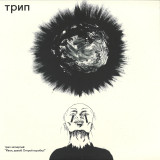
Trip Recordings follows the huge success of its first three releases with a third double-vinyl album, once more curated by label owner Nina Kraviz and featuring gatefold artwork by in-house artist Tombo. The release draws on contributions from established Trip members Kraviz, Population One and Nikita Zabelin, in addition to new artists added to its expending roster including K-Hand, Philipp Gorbachev, Vladimir Dubyshkin and Roma Zuckerman.As established with the label's first three releases, TRP004 will function as a soundtrack to a scenario and its accompanying artwork from Kraviz and Tombo. The title 'Ivan, Come On! Unlock The Box!' (, ! !) is inspired by the track contributed by Philipp Gorbachev (Comeme/PG Tunes), from which Kraviz has extrapolated a story of a rule-defying Russian maverick who is 'searching for the key to the future'.Set for release in mid-November, TRP004's two twelve-inches orbit around a nucleus of talent drawn from label boss Nina Kraviz's homeland of Russia. In addition to 'I Believe I Can Fly (KLM Delayed Flight Version) - one of her own 'road tracks' produced during the producer's hectic global touring schedule - Kraviz has enlisted a quartet of her countrymen for this latest collection. Philipp Gorbachev contributes his most uncompromisingly techno track yet, while Moscow's Nikita Zabelin follows his label debut on TRP003 ('De Niro Is Concerned') with the sinister minimalism of 'Bells'. In addition, TRP003 marks the label debuts of Vladimir Dubyshkin and Roma Zuckerman, both of whom were recommended to Kraviz by Zabelin. The former - a true outsider, just 17 years of age and based in the remote Russian town of Tambov - follows an early 2015 LP for SUB-AMP Records with the disorienting off-kilter techno of 'Lose Yourself', while the latter marks his first ever release despite years of producing with the unsettling 'Geburt Part 2'.
Completing TRP004 are two defiantly individual international artists: K-HAND makes her Trip debut following a two-decade career that's seen her become on of Detroit's true underground, and relatively unsung, heroes. Her contribution, 'The Box', finds her clipping effortlessly within Trip's aesthetic, with a heady textured acid potboiler. Two more Barcode Population tracks, excavated from a mine of undiscovered Nineties-made rarities, complete the release with furiously paced techno rollers which will remain strictly vinyl-only.
Horse Lords return with Comradely Objects, an alloy of erudite influences and approaches given frenetic gravity in pursuit of a united musical and political vision. The band's fifth album doesn't document a new utopia, so much as limn a thrilling portrait of revolution underway. Comradely Objects adheres to the essential instrumental sound documented on the previous four albums and four mixtapes by the quartet of Andrew Bernstein (saxophone, percussion, electronics), Max Eilbacher (bass, electronics), Owen Gardner (guitar, electronics), and Sam Haberman (drums). But the album refocuses that sound, pulling the disparate strands of the band's restless musical purview tightly around propulsive, rhythmic grids. Comradely Objects ripples, drones, chugs, and soars with a new abandon and steely control. This transformation came, in part, due to circumstance. Sidelined from touring their early 2020 album The Common Task in a world turned upside down, Horse Lords promptly returned to their Baltimore practice space and began piecing together the music that became Comradely Objects (Bernstein, Eilbacher, and Gardner have since relocated to Germany). Removed from their tried and true method of refining new music on the road, the quartet invested less energy ensuring live playability and more rehearsing and recording. The deliberate writing and tracking process, a rarity since the band's earliest days, led to a collection of pieces that signal a new peak of creativity and musical heft without devolving into studio sprawl or frippery. Comradely Objects reflects familiar elements of Horse Lords' established palette_the mantra-like repetition of minimalism and global traditional musics, complex counterpoint, the subtleties of microtonality, a breadth of timbres and textures drawn from all across the avant-garde_with some standout stylistic innovations. At different moments, the album veers closer to free jazz than anything else in the band's catalog, channels spectral electroacoustic tones, and throbs with unexpected yet felicitous synth. While these new elements are evidence of additional studio time and care, Comradely Objects retains the dizzying obsessive rhythmic energy that galvanizes the best moments of the band. Music for people who like Mdou Moctar, This Heat!, Battles, Ndagga Rhythm Force, Can, Captain Beefheart, Art Ensemble of Chicago, LaMonte Young.
Hailing from Brighton, InTechnicolour are a riffy, groovy, rock band with a knack for creating a colourful song or two. Formed in 2015 through a want to play loud music through slightly broken amps, the basis of the band was created. Comprised of members from the likes of Delta Sleep, LUO and Broker the five-piece are a fully-formed band of technically gifted musicians, cutting loose and playing music that’s about as far removed from their day jobs as it’s possible to get – and they are doing it better than a good portion of their contemporaries. Landing somewhere between the slack desert-groove of Kyuss and Karma to Burn, the band combine deeply satisfying riffs with a dynamic vocal style, which calls to mind the sounds of Baroness, Gojira and Mastodon.
Aggressive Blackened Death Metal with hooks and technical finesse that invokes the Ancient Gods! Aurora Borealis has been around for years (going back to as far as 1994! and it has mostly self-released their albums. Underground fanatics might remember the band reaching out to promote its music on forums back in the day and tracking its progress, each album was a large improvement over the earlier ones. And through time Aurora Borealis had great drummers ranked in its line-ups: Tony Laureano, Derek Roddy and Tim Yeung, which indicates the quality and level we talk about here. Aurora Borealis plays Black/Death Metal, remaining gritty not unlike Angelcorpse, but being more dynamic comparatively. It has got unique themes and the album artworks represent that. As the band name suggests, they are indicative of the Aurora Borealis phenomenon although the band has progressed to involve sci-fi imagery not far removed from Nocturnus, where artworks are concerned. Musically, the band remains true to its original Black/Death sound but it’s doing it with far more potential and competency than the others. The band’s definitely got a solid US death metal sense, it is not flirting too much with the European style of melody-infused death metal as it may appear. One will be surprised to find it so hard-hitting and gravelly and yet be rife with some of the most driven and enthusiastic activity. It is not solely focused on being technical (which in a way it is) but it is varied and it is catchy. Floridian Death Metal bands have much in common with the way Aurora Borealis structures its songs and there is the ever-present Morbid Angel influence, infected with some early Malevolent Creation rabidity. This is what makes death metal so good, few could contest with that. It’s got Death Metal in its genes, but Aurora Borealis takes the vitriol from Black Metal especially in the vocal department and gives the music an edge that is hard to miss. Here there is that special spice, that sizzling quality that comes from the rasps, adding a certain Thrashiness to it as well. The hooks make this album special, because writing good songs can be safely left in the hands of founding member Ron Vento.
Time and duration are core themes in the work of both William Basinski and Janek Schaefer, and this long-distance collaboration took a suitably long gestation of eight years from start to finish. In that time, our collective perception of time has at times become disorienting. " . . . on reflection " remodels that instability as an exquisite work of art - one that is unmoored by time or space. Limitation breeds creativity, revealed as an expression of minimalism and close focus. Deploying a delicate piano passage from their collective archive, Basinski and Schaefer weave and reweave in numerous ways, forging an iridescent flurry of flickering melodies. The sounds of various birds heard from late night windows on tour can occasionally be heard throughout, ricocheting off mirrored facades, reflecting on themselves as they continually reshape their own environments with song. " . . . on reflection " looks backwards, a bustling revelry of positive emotions heard through the aging mirrors of memory. It is a celebratory meditation where sound shimmers through time like the light of the sea's waves glistening as it folds and unfolds upon itself. Created 2014-2022 between L.A. & London. Mixed at Narnia, Walton-on-Thames. For Harold Budd.
For Fans Of: J. Tillman, Phosphorescent, Low, Damien Jurado, Bill Callhan. “It’s going to be hard to talk about this when it’s done.” So begins A Mold For The Bell, the new album from Colorado singer-songwriter and producer Logan Farmer. What follows that enigmatic lyric is a collection of stark and ambient folk songs, tethered solely by Farmer’s unadorned vocals, acoustic guitar, and moving embellishments from contributors, including saxophonist Joseph Shabason (who also mixed the album) and renowned harpist Mary Lattimore. With the help of Grammy-nominated producer Andrew Berlin (Gregory Alan Isakov), Farmer tracked all of the vocal and guitar parts over two days in the early months of 2021. The tracks were recorded quickly, live in the studio to capture the raw intimacy and immediacy of Farmer’s live performances. The rest of the album’s creation occurred remotely, over texts, phone calls, and emails with Shabason and a handful of other musicians, as wildfires, insurrections and the pandemic raged around them. “I was working at a bookstore that winter,” Farmer explains, “and I’d walk to my shift every day, obsessing over lyrics and early mixes in a cheap pair of earbuds.” These daily walks would take him past a church, where he’d often stop on the sidewalk and listen to the bells at the top of the hour. “I’ve always loved the sound of church bells, but as the situation worsened, what began as a comfort began to feel ominous, almost threatening.” This experience, alongside influences as disparate as Tarkovsky’s film Andrei Rublev and the novels of Olga Tokarczuk, led to a collection of songs that are similarly foreboding, expanding upon the stark and spacious universe of Farmer’s last album (2020’s Still No Mother) to reveal an atmosphere that’s even more oppressively still, like an abandoned Victorian home. Tracks: 01 Silence or Swell 02 Cue Sunday Bells 03 Horsehair (feat. Mary Lattimore) 04 Crooked Lines 05 William 06 The Moment 07 Renegade 08 South Vienna
Sasu Ripatti, now sporting the new "Ripatti Deluxe" moniker, presents his very own abstract take on early rave and happy hardcore. "Speed Demon" marks the first release on Ripatti's newly launched label "Rajaton".
The Finnish word ”raja” has multiple meanings. It could refer to a ”border”, ”limit”, ”boundary”, or even ”capacity” if understood broadly. It feels that ”border” is the first interpretation that comes to mind when the word is met in isolation of additional context. It often includes political energy of some sort. Or perhaps it’s just this particular point in time that leads the mind into such field of thought.
As the Dutch author Rutger Bregman notes in his book Human Kind – A Hopeful History, the real trouble with people began when the first person had the idea of drawing a line on sand and claiming ownership of the area on their side. The concept of physical borders was born.
Naturally, there are mental borders, as well. Think about all the things you shut out because they’re ”not for you”. They are numerous and we do it all the time. The issue is not to stop that, but to recognize when to let new things in, even if they’re not commonplace. Mental borders might often be easier to rewrite than physical ones, but the challenge remains a real one.
That’s where the derivative form ”rajaton” comes to play. By simply adding the ”-ton”, all borders, limits, boundaries and capacities are lifted in an instant. We have something ”borderless” instead, and are thus free to expand our thinking.
One could argue that the word ”rajaton” implies not the removal of borders but instead their very non-existence at large. How will our mind work when the concept of borders doesn’t even enter the conscious thought?
Mental borderlessness is a truly fascinating concept. A maximalist array of opportunities and potential ideas enters the picture – one which is also limitless, unlimited, sans boundaries, and also without a danger of being depleted. It’s an all-existence of multitudes where hierarchy also starts to deteriorate, giving way to a new form of full understanding without judgement.
Music is one fine place for such thinking, especially when thinking about the role of the listener. Occupying a much more active position than is generally recognized, the listener can greatly benefit from borderless thinking, and thus help to enhance the collective perceived significance of any given body of work. When there are no boundaries, the interpretation remains unchained and honest.
Basically it was all already said by the late revolutionary jazz pianist Burton Greene: ”Borders are boring!”
Sasu Ripatti, now sporting the new "Ripatti Deluxe" moniker, presents his very own abstract take on early rave and happy hardcore. "Speed Demon" marks the first release on Ripatti's newly launched label "Rajaton".
The Finnish word ”raja” has multiple meanings. It could refer to a ”border”, ”limit”, ”boundary”, or even ”capacity” if understood broadly. It feels that ”border” is the first interpretation that comes to mind when the word is met in isolation of additional context. It often includes political energy of some sort. Or perhaps it’s just this particular point in time that leads the mind into such field of thought.
As the Dutch author Rutger Bregman notes in his book Human Kind – A Hopeful History, the real trouble with people began when the first person had the idea of drawing a line on sand and claiming ownership of the area on their side. The concept of physical borders was born.
Naturally, there are mental borders, as well. Think about all the things you shut out because they’re ”not for you”. They are numerous and we do it all the time. The issue is not to stop that, but to recognize when to let new things in, even if they’re not commonplace. Mental borders might often be easier to rewrite than physical ones, but the challenge remains a real one.
That’s where the derivative form ”rajaton” comes to play. By simply adding the ”-ton”, all borders, limits, boundaries and capacities are lifted in an instant. We have something ”borderless” instead, and are thus free to expand our thinking.
One could argue that the word ”rajaton” implies not the removal of borders but instead their very non-existence at large. How will our mind work when the concept of borders doesn’t even enter the conscious thought?
Mental borderlessness is a truly fascinating concept. A maximalist array of opportunities and potential ideas enters the picture – one which is also limitless, unlimited, sans boundaries, and also without a danger of being depleted. It’s an all-existence of multitudes where hierarchy also starts to deteriorate, giving way to a new form of full understanding without judgement.
Music is one fine place for such thinking, especially when thinking about the role of the listener. Occupying a much more active position than is generally recognized, the listener can greatly benefit from borderless thinking, and thus help to enhance the collective perceived significance of any given body of work. When there are no boundaries, the interpretation remains unchained and honest.
Basically it was all already said by the late revolutionary jazz pianist Burton Greene: ”Borders are boring!”
Dear friends, Can you imagine a rolling recording studio? This is exactly where recordings of Himbert´s „Old Banger EP“ took place. For his debut on Brombert Records he put all his gear into an old campervan. Footloose and fancy-free Himbert produced four tracks with dry and almost tangibly sound aesthetics, that take you on a trip into a world remote from commercialized rave and club culture. The EP kicks off with „C35“, a track driven by a gritty bassline that is counteracted by an euphoric chord pattern. This combination pushes into a thrilling atmosphere that keeps you in excitement all the time. „T3“ releases tension with a swirling bass and soft sound pads and sends you on a diving trip. „MB100“ comes in entirely different. This track is a mad rush! An absurd bass-engine and pointed dub echos force up ecstasy with every single loop. Last but not least, „J5“ shows yet another side of Himbert´s sound. With airy-fairy woodblock hits and an eerily beautiful synthline this one has an almost trance-touch and leads you into full contemplation.
Written and recorded in the midst of a dizzying stretch in which nearly everything about the way the band lived and worked was turned on its head, Motel Radio's "The Garden" is indeed a work of relentless hope. The songs are profoundly vulnerable here, and the performances are warm and breezy, calling to mind everything from Andy Shauf and Cass McCombs to Beck and Tame Impala with an easygoing demeanor that belies the deep emotional work underpinning them. Motel Radio generated early buzz in their adopted hometown of New Orleans on the strength of their 2015 debut EP, Days & Nights, which helped land them dates with the likes of Kurt Vile and Drive-By Truckers in addition to festival slots at Firefly, Jazz Fest, and more. The band followed it up with the similarly well-received Desert Surf Films in 2016 and their first full-length, Siesta Del Sol, in 2019, touring the country on a seemingly endless loop as they built up their devoted following one night at a time. Since then, the band had set a goal of becoming more self-sufficient and learning to record on their own, and when it came time to cut The Garden, they dove in headfirst, cutting half the collection in an old fishing camp south of New Orleans with the help of engineer Ross Farbe (Video Age, Esther Rose) and the other half fully remotely while engineering themselves. "There was this real creative freedom that came with working remotely and learning how to run the sessions on our own," explains co-lead singer Ian Wellman. "Synths, samples, beats, plug-ins; suddenly these whole new worlds of sound were at our fingertips and the possibilities were limitless." That creative liberation is easy to hear on The Garden, which opens with the mesmerizing "Wise." Like much of the album, it's a gentle meditation on finding joy and fulfillment, on spreading love and positivity. "I've gotta open my eyes," co-lead singer Winston Triolo sings over dreamy guitars and a hypnotic digital drum loop. "I only get one life, well now how can I live it wise?" The airy "Outta Sight" celebrates the simple pleasures of letting go and being present, while the washed-out "Sweet Daze" revels in the warmth of human connection, and propulsive "Happiness Pie" looks for ways to share the comfort and contentment that comes with self-acceptance. On The Garden, they've realized there's no sweeter garden than the one you grow yourself.
Heady with hooks and unforgettable melodies, gliding on deeply danceable grooves, always with Air Waves’ innate compassion, concision and uncanny pop sense shining throughout. A masterpiece that’s beautifully simple, instantly accessible and entirely addictive. Featuring Cass Mccombs, Skyler Skjelset (Fleet Foxes, Beach House), Luke Temple, Brian Betancourt (Hospitality, Sam Evian), Rina Mushonga, Frankie Cosmos, Lispector, David Christian, Ethan Sass, and Ben Florencio. ‘The Dance’ has waited three years to see the light of day and it comes to us now, blinking, smiling in the widening light of 2022 feeling more needed and necessary but also more joyous than ever before. It’s both a snapshot of these songs as they were recorded but crucially, in the intervening time those songs have had additional arrangements crafted by Nicole, created remotely and virtually, with a few like-minded collaborators. The result is simultaneously Air Waves freshest, most spontaneous yet finessed album yet. Nicole Schneit released their first independent album in 2009 under the Air Waves moniker, a name inspired by a Guided By Voices song - subsequent albums like 2010’s ‘Dungeon Dots’ (which featured a guest vocal from fellow Brooklynite Sharon Van Etten), 2015’s ‘Parting Glances’ and 2017’s stunning ‘Warrior’ crystallised Schneit’s vision of loose-but-focused, convivial but startling pop. ‘The Dance’ continues that trajectory but finds Schneit opening up their music to a more fluid sense of space and movement, while keeping their lyrical eye between the personal and the political, from the specific to the universal with a haiku-like directness and suggestion. You won’t find a better soundtrack for the solidarity, strength, romance and movement we all need right now than ‘The Dance’ - Air Waves’ best album yet // “There is a rawness, both musical and emotional, proving that the simplest ways to communicate feelings are sometimes the most effective” Pitchfork // “More varied and ambitious than ever” Stereogum // Track List A1 The Roof (feat. Luke Temple & Rina Mushonga) A2 The Dance A3 Star Earring (feat. Lispector) A4 Alien (feat. Cass McCombs) B1 Black Metal Demon (feat. Frankie Cosmos & Merce Lemon) B2 Treehouse B3 Wait B4 The Light B5 Peer Peer
The 'Privacy Angels' dwell in a liminal zone, a folk magical world sprawling within some remote nodes of the digital universe. An a-chronic plane of contradictions in which the spiritual and the machinic exist in a contrast that, instead of leading to mutual annihilation or subjugation, produces weird forms of life and uncanny forms of beauty. Like flowers sprouting from glitching fluxes of data transmissions, in the corrupted memory of a heavenly landscape. It is the vision of Italian (though London-based) musician and multidisciplinary artist Nicola Tirabasso, channeled through his usual musical avatar VISIO, a dimension he came in contact with while retreating in his native Sibillini Mountains in Marche, central Italy. A type of forced hermitage dictated by the global pandemic and whose idyllic premises were constantly unbalanced and contaminated by the constant presence of the digital world. But again, it is by means of this contrast that art is born. While channeling the magic, the fables and even the superstitions the locals have imbued the region with, Tirabasso developed them into audial spirits of electronic abstraction. A juxtaposition of mystic retreat and information-age alienation that, for some brief, ineffable and baffling moments, seemed to make him able to hear the angels. The album itself is a collection of digitally broken folk songs and logarithmic chants of praise. Acoustic instruments are broken down, replicated and re-materialization, while computer-generated ghosts and synthetic tones are allowed to exist and resonate in ancient spaces. Most of the actual recordings have been in fact made at desecrated XVI church in a town near Montappone, not far from the birth place of XX century painter Osvaldo Licini, whose influence echoes all throughout the region. Licini’s idiosyncratic mix of primitivism, futurism and orphic realism similarly echoes all throughout the record, with VISIO even paying tribute to his painting ‘Angelo Ribelle’ in titling one of the tracks. Collaborations made in person and through file-swaps have traversed the album’s conception and enrich its palette by presenting different versions of reality. Haunter co-founder Daniele Guerrini (Heith) co-produced every track with Tirabasso and gave a fundamental contribution to the album’s final form. Elsewhere, City and Kenichi Iwasa evoke their own privacy angels and let them dance with VISIO’s. Be it, in the depths of the earth or in the dissolution of a digital cloud, it is just as possible to (un)know the divine. Genre: Electronic / Experimental Listen: Track list: 1. Moonchild 2. Extasi Exile 3. Youth Grows Forever 4. Untitled X 5. Blessed Mystery 6. Years Of Silence 7. angelo ribelle
To coincide with the Brian Jonestown Massacre’s start of their 2022 European tour is the release of two new tracks by the band. Recorded in Berlin & remotely between 2020 & 2021, the opening track “Fudge” is from the forthcoming album “The Future is Your Past” the second track “The Future is Your Past” is exclusive to this release (Yes I know it’s not a typo the B side is the name of the forthcoming album but the track is not on the album). With Anton Newcombe (Vocals/ Guitars) Hakon Adalsteinsson (guitar), Hallberg Daði Hallbergsson (bass), & Uri Rennert (drums) playing on this offering . The release comes in a heavy weight PVC bag with the artwork being a J card so you can see the vinyl 10” - Tracklisting SIDE A – Fudge SIDE B – The Future is Your Past European Dates – 2022 - 25/09 FRANCE Nancy – L’Autre Canal , 26/09 FRANCE Grenoble – La Belle Electrique , 27/09 FRANCE Toulouse – Le Bikini , 28/09 SPAIN Barcelona – Apolo , 29/09 SPAIN Madrid – La Paqui , 30/09 SPAIN Bilbao – Kafe Antzokia , 01/10 FRANCE Bordeaux – Le Vigean , 02/10 FRANCE La Rochelle – La Sirene , 04/10 FRANCE Paris – La Trianon , 06/10 THE NETHERLANDS Nijmegen – Doornroosje , 07/10 GERMANY Cologne – Luxor , 08/10 SWITZERLAND Zurich – Mascotte , 09/10 GERMANY Munich – Strom , 10/10 CZECH REPUBLIC Prague – Lucerna Music Bar ,11/10 GERMANY Dresden – Beatpol , 12/10 THE NETHERLANDS Amsterdam – Paradiso , 14/10 BELGIUM Antwerp-Desertfest 2023- 28/01 U.K Falmouth – Princess Pavilions , 29/01 U.K Bristol – SWX ,31/01 U.K Brighton – Concorde 2 , 01/02 U.K Brighton – Concorde 2 , 03/02 U.K Birmingham – Academy 2 , 04/02 U.K Manchester – Ritz 05/02 U.K Glasgow – Barrowlands, 06/02 U.K Edinburgh – La Belle Angele , 07/02 U.K Newcastle – Riverside , 09/02 IRELAND Dublin – Academy , 10/02 U.K Belfast – Limelight 2 , 11/02 U.K Liverpool – Camp & Furnace , 12/02 U.K Nottingham – Rescue Rooms ,14/02 U.K Leeds – Stylus , 15/02 U.K London – Forum , 18/02 GERMANY Hamburg – Knust , 19/02 DENMARK Copenhagen – Amager Bio , 20/02 SWEDEN Gothenburg – Pustervik , 21/02/23 SWEDEN Stockholm -Slaktkyrkan , 22/02 NORWAY Oslo – Rockefeller , 23/02 SWEDEN Malmo – Moriska Paviljonen , 25/02 GERMANY Berlin – Festsaal Kreuzberg
Master’s second album recorded by Scott Burns at Morrissound Studios! Classic 1990’s Death Metal! One of the problems with looking back on a musical genre from a perspective years or decades removed from the core of the movement itself is that subsequent developments tend to obscure both a genres origins and threads within a tradition that died out without offspring. As a result, interesting and deserving albums often get lost in the shuffle as reviewers reflect on those albums most “influential” upon later achievements. Death metal pioneers Master are among those who have been shortchanged as a result of that phenomenon, and their 1990 masterpiece “On the Seventh Day, God Created... Master” remains a fascinating exploration both of the genre’s roots and of spaces it might have occupied had different paths been taken. There are a couple of things that leap out immediately to even the casual listener. The first is the seeming primitivism of the music, with songs consisting of relatively brief, bludgeoning pieces driven by relentless rhythms, cyclic riffs and simple melodic hooks. The second is the realization that someone is playing some seriously insane, brilliantly constructed leads. In this case, that someone is Paul Masvidal, far exceeding anything he ever achieved with Cynic. Beneath the surface simplicity, lies a creative spirit that at once recalls the primal birth of death metal (which Master was both present for and very much a driving force behind) and points the way to what the genre might have become. Very apparent are the genre’s hardcore roots, Master here eschewing the Slayer-derived technical architecture that came to dominate most “modern” death metal in favor of structures that would not have been out of place on Discharge’s landmark “Hear Nothing See Nothing Say Nothing” release (there are even a few appearances of the infamous D-beat). Within the unrelenting storm of brutal repetition, the music’s core meaning is encoded, a sheer primal rage dripping from thunderous cycles of power chords and the open throated roar (again the hardcore influence) of vocalist and chief songwriter Paul Speckman.