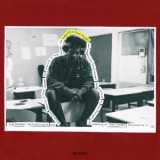
When Paul Murphy released his critically acclaimed debut solo album, Claremont 56, in 2006, many thought it would be the first of many. In a way, it was, as in the years since he’s released a string of collaborative sets alongside Benjamin J Smith (as Smith & Mudd), and as part of underground ‘supergroups’ Paqua, Bison and Hillside. But that second solo album? Well, it just had to wait. In early 2023, Murphy finally decided to scratch that itch, roping in some of his most trusted collaborators (keyboardist and bassist Michele Chiavarini, percussionist Patrick Dawes, guitarist Dave Noble and HF International’s Kashif included) to lay down a sumptuous set of tracks that not only showcases his now familiar (bit hard to pigeonhole) neo-Balearic sound, but also proves how much he has matured as a writer and producer since 2006.
In The Garden of Mindfulness is richly musically detailed, expertly arranged and full to bursting with fluid instrumental solos, with Murphy and his collaborators serving up tracks that brilliantly blur the boundaries between languid jazz-funk, downtempo, vintage synth-laden krautrock, dubby grooves and sun-splashed soundscapes. It simply sparkles from the moment that opener ‘Eighty Three’ slowly rises like the morning sun, with gentle, undulating synth sounds ushering in a slow-motion jazz-funk excursion rich in twinkling electronics, spacey pads and warming bass. Recent single ‘Katanaboy’, a lusciously layered dub disco-infused dancefloor excursion in Murphy’s familiar style, raises the temperature a touch, before ‘Bonne Anse’ and the sublime ‘Unka Paw’ (whose combination of evocative fretless bass, extended electric piano solos, Clavinet licks and acoustic guitars is genuinely spellbinding) invite a combination of wavy shuffling and flat-on-the-back, eyes-closed appreciation.
And so it continues, with gorgeous title track ‘In The Garden of Mindfulness’ making way for the boogie-influenced, Japanese-British brilliance of ‘Hangsang’ (check the jaunty pianos, yearning breakdown and exotic melodies). Murphy’s long held love of warm, weighty bass, hypnotic disco grooves, colourful analogue synth sounds and jazzy guitars once again comes to the fore on ‘Way Of The Hollow’ before the album reaches a fittingly triumphant conclusion with ‘Late In March’.
A neat sonic summary of all that makes the set such a rewarding and entertaining experience, repeat listens reveals a wealth of musical details, from off-kilter triple-time drums and surprise bass guitar solos, to impeccable piano solos (provided by the immensely talented Chiavarini), fizzing jazz-funk synth doodles and stirring synth-strings. It’s a breathlessly brilliant way to end an album that was genuinely worth waiting for.
Поиск:repeat repeat
Все
DNO welcomes two new signees, Slovenian producer Marka San and UK rapper Axel Holy, for one of the label’s darkest releases yet. The ‘Hidden Knowledge’ EP presents five tracks of dread bass and bad-trip sonics, as the Bristolian MC delivers cut-throat bars with the kind of calm, looming menace of a tomcat toying with its prey.
It was DEDW8, Axel’s horror-touched collab with Split Prophets’ Blanka, that first made him known in Slovenia, prompting Marka San to get in touch about working together. The same sinister vibe that drives that project has spread its tendrils right through the ‘Hidden Knowledge’ EP, from the twisted brass and squirming bass of ‘Where Did You Go’, which drags its feet like some zombified blues track as Axel repeats the titular phrase in his husky drawl, to the equally chilling ‘Classics’— all eerie samples and abyssal lows, with a pitched-down hook and braggadocious bars.
On ‘Patterns’, Axel goes to war, attacking the creeping beat with vicious battle bars and stories of the hustle, while ‘Hidden Knowledge’ sees him flex his vocabulary to take swipes at the powerful, and ‘Robert Downey’ makes his unswerving determination clear over grungy guitar.
Deliciously macabre, with intricate layers and lyrics that’ll have you spotting something new on every listen, yet still heavyweight enough for the dance, this is a match made in the nine circles and we can’t get enough of it.
Rhythms of postmodern realism at the very bottom of the DNO.
The Bony King of Nowhere is the artistic alias of Belgian artist Bram Vanparys. He made a mark in 2018 with the release of his critically acclaimed album Silent Days. The record received consistent 4- and 5-star press reviews and was hailed as his best album to date. It also earned Vanparys a Music Industry Award (BE) for 'best author-composer'. Silent Days revealed the full potential of the singer-songwriter and his commitment to never repeat himself and keep surpassing his creative abilities.
The new album, entitled Everybody Knows, has been a long time coming, partly due to Vanparys' aforementioned pledge to artistic evolution. The first two tracks he unveiled give a definite hint of what to expect from this album. 'Are You Still Alive' and 'Almost Invisible' carry the quality mark, known colour scheme and scent of The Bony King of Nowhere, but add many more hues and details. The new record showcases the new league Vanparys is playing in. Themes like rusted patterns in society, the obedience of the everyday man, the structural false ignorance of big shots, the toxicity of online communication and other very recognisable but not always pleasant subjects. Inspired by the observations of many sociologists, Vanparys dissects our society, the loneliest ever. This album is not just disconcerting though, in its strength lies a sense of hope and vigour.
The first singles promise a new album with lots of punch and energy, while Vanparys is unveiling the complete complexion of his voice whilst remaining vulnerable and honest. On the album, he is accompanied by multi-talent guitarist Vitja Pauwels (Naima Joris), pianist Hendrik Lasure (Tamino, Bombataz), drummer Simon Segers (Sylvie Kreusch, Stadt) and bass player Jasper Hautekiet.
While the songwriting legends, particularly Neil Young and Bob Dylan, have always kept Bram company, his latest compositions also draw inspiration from more contemporary artists. The influence of PJ Harvey, Blur and Nick Cave are unmistakable when you listen to his music. While staying true to his heartfelt songwriting style and captivating voice, The Bony King Of Nowhere embarks on a journey into uncharted musical and thematic realms.
The last time this band was on tour in support of 'Silent Days', they took a big leap forward while touring 75 shows across renowned venues and festivals in Belgium, The Netherlands, Germany, and France, with a packed Ancienne Belgique in Brussels as one of the highlights. Now the five-man-band, consisting of Jasper Hautekiet, Simon Segers, Thijs Troch (Nordmann), Gertjan Van Hellemont (Douglas Firs), will start this tour with shows in Ekko, Utrecht on March 6 and Ancienne Belgique, Brussels on March 8.4
The Bony King of Nowhere is the artistic alias of Belgian artist Bram Vanparys. He made a mark in 2018 with the release of his critically acclaimed album Silent Days. The record received consistent 4- and 5-star press reviews and was hailed as his best album to date. It also earned Vanparys a Music Industry Award (BE) for 'best author-composer'. Silent Days revealed the full potential of the singer-songwriter and his commitment to never repeat himself and keep surpassing his creative abilities.
The new album, entitled Everybody Knows, has been a long time coming, partly due to Vanparys' aforementioned pledge to artistic evolution. The first two tracks he unveiled give a definite hint of what to expect from this album. 'Are You Still Alive' and 'Almost Invisible' carry the quality mark, known colour scheme and scent of The Bony King of Nowhere, but add many more hues and details. The new record showcases the new league Vanparys is playing in. Themes like rusted patterns in society, the obedience of the everyday man, the structural false ignorance of big shots, the toxicity of online communication and other very recognisable but not always pleasant subjects. Inspired by the observations of many sociologists, Vanparys dissects our society, the loneliest ever. This album is not just disconcerting though, in its strength lies a sense of hope and vigour.
The first singles promise a new album with lots of punch and energy, while Vanparys is unveiling the complete complexion of his voice whilst remaining vulnerable and honest. On the album, he is accompanied by multi-talent guitarist Vitja Pauwels (Naima Joris), pianist Hendrik Lasure (Tamino, Bombataz), drummer Simon Segers (Sylvie Kreusch, Stadt) and bass player Jasper Hautekiet.
While the songwriting legends, particularly Neil Young and Bob Dylan, have always kept Bram company, his latest compositions also draw inspiration from more contemporary artists. The influence of PJ Harvey, Blur and Nick Cave are unmistakable when you listen to his music. While staying true to his heartfelt songwriting style and captivating voice, The Bony King Of Nowhere embarks on a journey into uncharted musical and thematic realms.
The last time this band was on tour in support of 'Silent Days', they took a big leap forward while touring 75 shows across renowned venues and festivals in Belgium, The Netherlands, Germany, and France, with a packed Ancienne Belgique in Brussels as one of the highlights. Now the five-man-band, consisting of Jasper Hautekiet, Simon Segers, Thijs Troch (Nordmann), Gertjan Van Hellemont (Douglas Firs), will start this tour with shows in Ekko, Utrecht on March 6 and Ancienne Belgique, Brussels on March 8.4
- A1: Aquarius Rising
- A2: Inner Search
- A3: When It’s Real
- A4: Psych Impression
- A5: Peace Of Time
- A6: Blue Miles
- A7: Lauren’s Astral Vision
- A8: Expressions From "The Ear
- B1: The Yellow Field
- B2: Donte’s French Excursion
- B3: Solar Journey
- B4: Transitions
- B5: Shades Of Mauve
- B6: Cosmic Portals
- B7: A Piece For Reflection
The Madlib Invazion Music Library Series Entry #7: Composer, producer & arranger Mario Luciano and vocalist Lauren Santi of Polyphonic Music Library deliver a collection of recordings that delve into Psychedelic Jazz, Experimental Soul & Cosmic Fusion. This is the next up in a series of music library releases, with future volumes produced by DJ Muggs, Karriem Riggins and more. The Madlib Invazion Music Library Series was created by Madlib and Egon to give their creative friends a chance to stretch out and indulge in whatever type of music they wanted. This music was created for easy, one-stop clearance in film and television synchronization usage and for sampling. You can also enjoy these albums in the way that many do with the best of the best vintage library catalogs – listen, ponder, repeat.
Space Age Recordings are pleased to announce a 500 copy repress of Spacemen 3 live album “Threebie 3” on heavyweight yellow vinyl. Originally released in 1989 and only available with a coupon contained in the Spacemen 3 classic "Playing With Fire", "Threebie 3" has become something of a collector's item. Featuring four tracks from a live show at the Melkweg, Amsterdam from February 1988 and a studio version of "Live Intro Theme (Xtacy)". The tracks "Starship", "Revolution", "Suicide" and "Repeater" capture perfectly the spirit of the Spacemen 3 live experience. The trademark drones and one chord barrages are tied together by a brooding sense of urgency and a near chaotic air of energy.
After two years and a half, Pietro Santangelo (formerly Nu Genea sax player) and his PS5 ensemble are back to Hyperjazz Records with a brand new album: Echologia.
'Echologia' draws inspiration from the idea of natural biodiversity as an expression of contamination, coexistence and balance. In the same way as the biological agents contribute to the life of a certain ecosystem, seemingly distant musical languages act as elements of balance in a fertile and blooming musical system. Multiculturalism becomes coexistence.
As in the previous 'Unconscious Collective' (Hyperjazz, 2021), suggestive saxophones textures interwine on a solid rhythmic equilibrium and move naturally along an imaginary line highlighting the ancestral connection between Africa and Mediterranean Sea. On the background, the tribute to the earlier Jamaican dub masters with a strong use of vintage echoes in the mixing phase.
Album cover by Sabrina Cirillo is inspired by the myth of the nymph Echo, the Oread condemned by Juno to be able to express herself by repeating only the last words of theinterlocutor, who died of pain due to the impossibility of communicating her love to Narcissus.
- A1: Gödel, Escher - Bachin The Circle Of Fifths
- A2: Cutie Bam-Boo Dance
- A3: Num
- A4: Wigwig
- A5: Indirect
- B1: Gya-Dynamo-Generator
- B2: Any Repeated Sound Becomes Music
- C1: Robotomy Mam
- C2: Grid Bug Invention
- C3: Kaze Wo Atsumete
- C4: Odoremi
- C5: 7 Up & Galapagos Pop
- D1: Longing For Gamelan
- D2: Ultimate Random Walker Comeback
- D3: Children Of The Distant Future
- D4: Dissipative Structure Of
Delasi, the Koforidua-based producer, singer and rapper has released his new single ‘Amplifier’ featuring Nii Noi Nortey.
Prophetic, spiritual and frenetic, ‘Amplifier’ is Delasi’s testimony in musical form. A manifestation of Delasi emerging triumphant after many years in limbo as he searched for a long-awaited breakthrough in the music industry.
Produced by Delasi himself alongside Morgan Greenstreet, ‘Amplifier’ is underpinned by the texture of coastal rhythms indigenous to Accra and tightly ornamented with bustling drum breaks, electronic synth lines and jazz sensibilities.
Veteran Ghanaian multi-instrumentalist and sound designer Nii Noi Nortey appears on the track to deliver an explosive and rhythmically intense saxophone performance throughout as it tastefully builds to an emphatic crescendo.
Self-described as a prayer, the track’s maximalist and percussive instrumentation is cleverly juxtaposed with minimal lyrics where Delasi’s faint vocal repeats a series of repeated phrases like evoking the mood and semblance of a meditative chant and religious experience. Harkening to the work of afrofuturistic jazz musicians like Sun Ra and Pharaoh Sanders.
Speaking on the track’s meaning, Delasi said: “‘Amplifier’ is my prayer and like with other songs of mine it can scare me because I write things and then it’ll manifest in exact detail. The song is basically outlining how hard I’ve worked and how I need an amplifier to have my desires fulfilled. It's like a mantra and that’s why it's not so lyrical”.
‘Amplifier’ marks Delasi’s first release as a lead artist since his 2015 self-released project ‘#thoughtjourney’ which garnered support and praise from Rolling Stone, BBC6 Music, Worldwide FM, KCRW, Afropop Worldwide, Deutschlandfunk Kultur, NRK and legendary French DJ/Producer Laurent Garnier. Additionally parlaying into touring and festival gigs across Nairobi, Berlin, Morocco, Denmark and Sweden.
Delasi is an artist that has been quietly prolific for over a decade. Honing his musicianship exploring sonic possibilities with Ableton and Teenage Engineering. Eventually entrenching himself in the Ghanaian rap scene via collaborations with Hammer of The Last Two, Reggie Rockstone and Yaw P with whom he would release a joint project ‘Imperfections: The Break Up Vol 1’ in 2013.
He was musically raised on a diet heavily influenced by his father who exposed him to the sounds of Marvin Gaye, Bob Marley & The Wailers, Bobby McFerrin, Jim Reeves and Billy Ocean alongside the soundtracks for movies like Doctor Zhivago, The Sound of Music and La Bamba. Delasi’s own tastes would be heavily informed by linchpins of US Hip-Hop like Wu-Tang Clan, Nas, Onyx and M.O.P in addition to alternative R&B artists Frank Ocean and James Blake.
After many years of operating as a proudly independent and self-contained artist, Delasi has now partnered with Gilles Peterson’s Brownswood Recordings. One of the world’s leading indie labels, famed for their instrumental role in breaking the likes of KOKOROKO, Yussef Dayes, Swindle, Joe-Armon Jones, Shabaka And The Ancestors, Zara McFarlane and Ghostpoet.
With Delasi now being granted resources to give his music the grand and worthy footing, he is now on the cusp of the artistic breakthrough that was long out of reach. Speaking further on how the deal with Brownswood inspired the new single, Delasi said:
“The music I’ve created this go round is so strong that I can’t handle it all by myself. Though I had a lot of fun doing it all by myself with ‘#thoughtjourney’, this time around I needed it to be with a home who could properly amplify it.”
The Madlib Invazion Music Library Series Entry #7: Producer/multi-instrumentalist Joe Harrison (El Michels Affair/Gunna) fuses modern production with vintage instruments, drawing a line between J Dilla and David Axelrod. This is the next up in a series of music library releases, with future volumes produced by DJ Muggs, Karriem Riggins and more. The Madlib Invazion Music Library Series was created by Madlib and Egon to give their creative friends a chance to stretch out and indulge in whatever type of music they wanted. This music was created for easy, one-stop clearance in film and television synchronization usage and for sampling. You can also enjoy these albums in the way that many do with the best of the best vintage library catalogs – listen, ponder, repeat
Producer / composer / multi-instrumentalist Angel Marcloid records music under the moniker Fire-Toolz. Though Marcloid’s output emerges in a litany of aliases and projects — from the jazz fusion / new age of Nonlocal Forecast to the vaporous nostalgia of MindSpring Memories — the Fire-Toolz catalog remains the central focus of the prolific artist’s musical universe and a home for Marcloid’s most ambitious work.
"I am upset because I see something that is not there.", the fifth Fire-Toolz album to join the Hausu Mountain catalog since 2017, follows 2021’s sprawling double-album Eternal Home and 2022’s self-released EP I will not use the body’s eyes today. I am upset… offers listeners a prismatic cross-section of juxtaposed genres and compositional contortions to explore, maintaining Fire-Toolz’s signature density and complexity while tightening the scope of Marcloid’s experimentation into the project’s most focused song cycle to date.
Perhaps more than any previous Fire-Toolz album, I am upset... presents some form of pop music, carried in Marcloid’s passages of clean vocals, in the bright synth tones that animate its tracks, in the yearning saxophone lines that pour into view and whisk the narrative onto a new path. The format of a one-person “band” carries a different weight in a landscape of solo artists crafting modernist productions that don’t allude in the slightest to various twentieth-century rock-related traditions. Fire-Toolz exists on both sides of this divide. The music of Fire-Toolz draws energy on a moment-to-moment basis from the constant fluctuation between seemingly disparate styles, yet Marcloid repeatedly pulls off the impossible feat of making chaotic deviations and improbable jump-cuts between ideas sound holistic, as if such compositional gambits were already logical to begin with. Bursts of harsh textural noise cut into drifts of new age synth bliss, while screamo verses bookend passages of hyper-technical jazz fusion.
This album was originally only released for the Japanese market and is now
available worldwide for the first time.
In the early 1990s, Makoto Kimata repeatedly asked Eugen to record the lullaby
"Berceuse" by the French composer Benjamin Godard (1849-1895) for his
grandson. This is how the 'Lullabies' project started. Since it was not possible to
record in Japan, Eugen Cicero rented the radio studio of the former SWF in Mainz,
Germany.
Here, he recorded twelve lullabies within three days together with Ringo Hirth on
drums and Decebal Badila on bass. It was to become the last studio recording of
his career. However, the 'Lullabies' were only produced for the Japanese market.
Eugen Cicero enjoyed cult status in Japan. The Japanese love jazz and classical
music equally, and do not tend to differentiate, as is the case in Europe, especially
in Germany.
When one speaks of lullabies, jazz enthusiasts immediately think of "Lullaby Of
Birdland" by George Shearing. The classically educated music lover, however, will
have the songs of Brahms, Mozart and Schubert in mind. Well, you may find both
genres combined on this album.
While many people do find their nightly rest with sleeping pills, head phones or
iPhone in hand these days, this music gives you an attractive alternative.
Following their contribution to the 2022 International Women’s Day compilation, and a co-production credit on “Dreaming is Essential” by Byron Yeates, Eoin DJ drops their first release on Radiant Records, Total Body. The 4-track EP is replete with mind-bending, lustrous tracks waiting to be spun out to sweatbox dancefloors.
“Total Body” invites movement from its first seconds. Layers and layers of snares, shakers and rhythmic synth stabs build tension before the pulse of a rolling bassline cements the elements into a cohesive hard house groove. Fragments and chops of sensx’s vocals wrap in and around the sonic field, leaving wisps of reverb and echo in their wake before repeating the track’s Total Body mantra in the breakdown. The result is a lushly-scored density of sound, with a relentless stomp that never feels overcrowded or too heavy.
Angel D’lite’s remix takes a more skeletal approach to “Total Body”: a snare and clap march beneath chiming vocal stabs, rumbling low end and rolling breakbeats, flipping the original into a modern bass-heavy hybrid number. The rhythmic synth from the original, reversed and efex’d, ushers us in, and then out of the track, around extra bass stabs and pitch shifted “Total Body” chops.
On the B side, “Ultra Soft” lifts off with a firm kick and a rolling 3-note bassline. Despite the title, the track hits harder than “Total Body” and sings with Eoin DJ signatures: swirling funnels of processed vocals, rich, ear-itching textures, stripped back percussion and rave-ready samples are sprinkled with 303s, to create a track that sits comfortably with both classic trance and techno and contemporary “Progressive” dance music.
The EP’s closer, a remix of “Ultra Soft” by Byron Yeates, compresses the astrally-inclined scale of the original track into shining slices of sound. A playful, chiming melody starts off the track alongside the kick, working through precise grooves, knife-sharp snares, a throbbing bass and chopped-up, smokey vocals. The result: 6 minutes of total embodiment from the Radiant Records boss.
#40 ON ROLLING STONE'S 500 GREATEST ALBUMS OF ALL TIME: ANTICIPATES LATE 1960S TURBULENCE VIA PROPHETIC SONGS AND DARK THEMES
1/4" / 15 IPS analogue master to DSD 256 to analogue console to lathe
Any discussion about the finest psychedelic rock record ever recorded is incomplete if it doesn't grant consideration to Love's Forever Changes. Ranked by Rolling Stone as the 40th greatest album ever made, and named by Mojo the second-greatest psychedelic set in history, the effort is an internationally recognized seminal work of art. Transcending language and convention, its magnitude and magnificence need to be heard again and again. For here is an effort whose mind-boggling acoustic complexities and kaleidoscopic nuances are tailored for high-fidelity playback.
Nearly unlimited headroom, vast instrumental separation, transparent clarity, artifact-free atmospherics, and faithful balances appear out of jet-black backgrounds. Turn it up as loud as you want; the sole limitation will be your system's potential.
Commercially ignored upon release in November 1967, Forever Changes confronts the alienation, paranoia, violence, and strife that would soon plague the countercultural movement and send the Summer of Love into a tailspin. Apart from its lyrical themes and prescient malaise, the record's enduring nature equally owes to intertwined arrangements sewn together with Latin guitar-picked lines, finessed folk harmonies, mariachi-inspired horn charts, and subdued strings.
The seemingly opposing combination – ominous, dark reflections situated amidst lush, light melodic beds – affords Forever Changes a distinguished tension of claustrophobia and openness, dourness and ecstasy, ugliness and elegance enjoyed by no other record in the rock canon. Much of the contrast owes to leader Arthur Lee's mental state and pertinent observations. Lee, whose suppressed romanticism often surfaces even amidst the blackest shadows and most cynical moments, believed he would soon die, and hence channeled everything from lasting hopes to acid-addled decay to the chilling testimony of a Vietnam veteran in his narratives.
Alternatively sad and beautiful, the album-opening and flamenco-inspired "Alone Again Or" establishes the mood for what follows. Vocals overlap and soar; tempos rise and fall; surrealism trades places with reality.Forever Changes thrives both because of and in spite of a surfeit of labyrinthine chords and difficult notes that never repeat. Its ambitious construction almost forced the already fractured band to cede responsibilities to session musicians, which appear on two tracks. The quintet's resolve to not only complete the album, but to do so with such poignancy and curiosity, further enhances Forever Changes' standing.
No wonder that, in the twilight of his troubled career, Lee performed the record in its entirely during concerts met with overwhelming critical acclaim. It was, and will always be, a personal manifesto of timeless relevance and appeal.
This record is massive and amazing. Nowhere To Go But Up is Guided By Voices’ third album of 2023 (and thirtyninth overall) and is a sprawling, wild adventure. With virtually no choruses and just two repeated lyrics in forty minutes, GBV is audacious and unafraid. One of the most fully realized works that Guided By Voices has created, Nowhere To Go But Up showcases an expert rock band at the top of their game. The band is on a roll and unstoppable. Following their monumental 40th Anniversary Celebration in Dayton, Ohio, GBV begins their fifth decade with a bang!
Van Halen did more than announce to the world the earthshaking arrival of a revolutionary guitarist. Performed by an enterprising California quartet that took its name from two of its principal members, the 1978 debut ripped headlines away from punk, injected fresh energy into a then-moribund rock 'n' roll scene, reimagined how heavy music and throwback pop could coexist, and invited everyone to experience the top-down pleasures of a beach-front Saturday night every day of the week no matter where they lived. Painstakingly restored by Mobile Fidelity Sound Lab, and the first of a multi-album series in an exciting partnership between the famous reissue label and Van Halen, Van Halen delivers feel-good thrills and hormonally charged desires like never before.
Limited to 12,000 numbered copies, pressed on dead-quiet MoFi SuperVinyl at RTI, and mastered from the original analogue master tapes, Mobile Fidelity's ultra-hi-fi UltraDisc One-Step 180g 45RPM 2LP collector's edition pays tribute to the record's merit and allows fans to experience Van Halen's original blend of raw power, Hollywood flair, and vaudeville fun for generations to come. Playing with reference-setting sonics that elevate a 10-times-platinum landmark whose importance cannot be quantitatively measured, this definitive version provides a clear, clean, transparent, balanced, and turn-the-volume-up-to-11 view of an album that birthed entirely new styles. Since MoFi's unique SuperVinyl compound allows you to crank the decibels to your wildest desires without risking noise-floor interference, prepare to not only hear but feel Van Halen in your chest, no fifth-row concert seat necessary.
The premium packaging and gorgeous presentation of the UD1S Van Halen pressing befit its extremely select status. Housed in a deluxe box, it features special foil-stamped jackets and faithful-to-the-original graphics that illuminate the splendor of the recording. No expense has been spared. Aurally and visually, this UD1S reissue exists as a curatorial artefact meant to be preserved, touched, and examined. It is made for discerning listeners that prize sound quality and production, and who desire to fully immerse themselves in the art – and everything involved with the album, from the iconic cover art to the meticulous finishes and, yes, of course, Eddie Van Halen's pioneering fretwork and his brother Alex's double-bass percussion.
Indeed, could a piece of music that transformed how countless guitarists approached their instrument be more fittingly named than "Eruption"? Likely not, and in just 102 seconds, Eddie Van Halen rewrote, reimagined, and reconfigured a vocabulary last significantly updated a decade earlier by fellow six-string wizard Jimi Hendrix. Akin to the Washington State legend, Eddie Van Halen developed his own techniques and tones all the while making his seismic accomplishments seem effortless. Devoid of the pretence, ego, and showiness that infected many of his imitators, the Dutch native sticks to a straightforward approach that underlines the authority, prowess, and visionary scope of his playing and then-unheard-of finger-tapping skills. Throughout Van Halen, he establishes himself as an instant idol – a savant whose otherworldly combination of breadth, poise, feel, speed, force, and melody seems beamed in from another galaxy.
As does nearly every song on the record, whose cohesiveness and dynamic put into perspective the advanced chemistry and one-for-all spirit the youthful band had out of the gates. Having paid its dues for years in bars and clubs – going as far as recording a 24-track demo for Kiss bassist Gene Simmons at Village Recorders only to be spurned by management companies that felt its music wouldn't go anywhere – Van Halen finally got a deserved break when Warner Bros. executives signed the group in 1977. The subsequent recording sessions further testify on behalf of the band's synergy and alignment. Completed in just a few weeks with producer Ted Templeman, Van Halen was primarily cut live in the studio with minimal overdubs and edits. The explosiveness, energy, and electricity remain definitive, and as heard on this UD1S set, put the group on a private stage – humming amplifiers, Frankenstrat guitar, bright spotlights, sweaty headbands, and then some.
Van Halen yielded just one hit in the form of a Top 40 single (a breathless cover of the Kinks' "You Really Got Me") but practically every song on the revered LP has become a staple. Named the 202nd Greatest Album of All Time by Rolling Stone and considered by countless experts as one of the best debuts in history, the record displays what can happen with four distinct talents gel and strive for the same purposes. In Van Halen's case, the latter almost always involved partying, freedom, sex, and, in the immortal words of singer David Lee Roth, living "life like there's no tomorrow." The celebration manifests from the opening notes of the strutting "Runnin' with the Devil" – announced with the blare of droning car horns, Michael Anthony's robust bass line, and Alex Van Halen's thumping drumming – and continues through the conclusion of the white-hot "On Fire," goosed by Eddie Van Halen's race-track-ready lines, Roth's flamboyant deliveries, and the rhythm section's cat-like pounce.
Picking out individual highlights on Van Halen is akin to trying to count all the stars in a clear nighttime desert sky: There are far too many to identify, once you see one you notice another dozen you didn't spot before, and the cluster is best enjoyed as a whole. What's evident over repeat listens is the sheer diversity, a fact that's often overlooked: The high harmonies and background funk of "Jamie's Cryin'"; the insistent cane-and-a-tophat shuffle and doo-wop shoo-bop vocal break on "I'm the One"; the throwback acoustic blues that spreads into fast-paced, single-entendre wildfire on the Roth-led standout interpretation of John Brim's "Ice Cream Man." Like the man says, on Van Halen, all the flavours are guaranteed to satisfy.
More About Mobile Fidelity UltraDisc One-Step and Why It Is Superior
Instead of utilizing the industry-standard three-step lacquer process, Mobile Fidelity Sound Lab's new UltraDisc One-Step (UD1S) uses only one step, bypassing two processes of generational loss. While three-step processing is designed for optimum yield and efficiency, UD1S is created for the ultimate in sound quality. Just as Mobile Fidelity pioneered the UHQR (Ultra High-Quality Record) with JVC in the 1980s, UD1S again represents another state-of-the-art advance in the record-manufacturing process. MFSL engineers begin with the original master recordings, painstakingly transfer them to DSD 256, and meticulously cut a set of lacquers. These lacquers are used to create a very fragile, pristine UD1S stamper called a "convert." Delicate "converts" are then formed into the actual record stampers, producing a final product that literally and figuratively brings you closer to the music. By skipping the additional steps of pulling another positive and an additional negative, as done in the three-step process used in standard pressings, UD1S produces a final LP with the lowest noise floor possible today. The removal of the additional two steps of generational loss in the plating process reveals tremendous amounts of extra musical detail and dynamics, which are otherwise lost due to the standard copying process. Every conceivable aspect of vinyl production is optimized to produce the most perfect record album available today.
MoFi SuperVinyl
Developed by NEOTECH and RTI, MoFi SuperVinyl is the most exacting-to-specification vinyl compound ever devised. Analogue lovers have never seen (or heard) anything like it. Extraordinarily expensive and extremely painstaking to produce, the special proprietary compound addresses two specific areas of improvement: noise floor reduction and enhanced groove definition. The vinyl composition features a new carbonless dye (hold the disc up to the light and see) and produces the world's quietest surfaces. This high-definition formula also allows for the creation of cleaner grooves that are indistinguishable from the original lacquer. MoFi SuperVinyl provides the closest approximation of what the label's engineers hear in the mastering lab.
High Vis were formed in 2016 from the ashes of some of the UK's best hardcore bands. Gild-toothed frontman Graham Sayle's anguished lyrics about life in working class Britain were familiar to fans of Tremors' full-throttle thrash, but alongside his former bandmate Edward `Ski' Harper and veterans of Dirty Money, DiE and The Smear, High Vis sought to transform that energy and intensity into something entirely new.Like scene-mates Chubby and the Gang did by pulling in unlikely source material from classic doo-wop or Micromoon have by combining everything from psychedelia and metal into their high potency mix, High Vis' 2019 debut album, No Sense No Feeling showed the band were never going to be constrained by any sense of genre rules or regulations. Its claustrophobic rattle bore traces of Joy Division, Bauhaus, Crisis, The Cure and Gang Of Four lurking in the shadows. 2020's synth-driven EP, Society Exists, was further evidence of the band's restless creative MO.High Vis' second album Blending sees them open their viewfinder wider than ever before. Alongside longstanding favourites such as Fugazi and Echo and The Bunnymen; Ride and even Flock Of Seagulls were shared reference points as the band worked on the album together.From the anthemic sweep of opener "Talk For Hours", through the title track's psychedelic swirl and "Fever Dream"'s baggy groove, it sees High Vis' sound blossoming into something with an unlimited richness. The hazy drift of "Shame" or the melodic jangle of "Trauma Bonds" may take them until uncharted waters, but they still have all the power and bite that made No Sense No Feeling so remarkable.Lyrically, the album represents another leap forward too. Talking frankly about poverty, class politics, and the challenges of everyday life, Sayle's lyrics have always addressed the downtrodden and discarded communities across Britain slipping below the waterline. This time around, Sayle's lost not of that social consciousness, but he's looked at himself and his own emotional landscape, and in the process created something that feels more universal, that reaches a hand-out to people and ultimately gives a message of hope."To me, the lyrics are less selfish," reflects Sayle. "In the past, I couldn't see past whatever was going on with me. It's about accepting things and being open to conversations and learning to talk to people rather than just thinking that we're all doomed."The song "Talk for Hours" is a prime example of that. Born out of an afternoon meeting up with an old group of mates "repeating the same thing and not actually learning anything about each other" it offers to actually break the cycle and to listen and speak frankly about shared feelings and experiences. "Trauma Bonds", meanwhile, traces the broken lines of those living in lost communities, but ultimately realises that despite our shared scars, there's still hope to move on to a better future."The message of the album is you're not who you're told you are," Sayle summarises. "You're not your class background. Whatever it is, you're not that. Don't resign yourself to thinking you can't be this and you can't be that."It's a vitally important message right now, and one that could be the motto for not only Blending, but for High Vis themselves.
Noema’s new album is a surreal cosmic journey. The music on it is part of a comprehensive art piece that includes remixes, interactive choreography and stage design, theatre, and costumes called ONE.
In ONE, Noema tells the story of his interdimensional space explorations, in which he manifests as four different entities. Because of the energetic state of humanity, these entities became trapped in our dimension and now put on performances to re-power their portal, so that we can all be interdimensional again! During the performance five actors invite up to 120 people from the audience to join the action.
Sun Ra meets Steve Reich meets Larry Levan - imagine it as a “happening” from the 70s.
The music from ONE is loosely based on the minimal music classic “In C" by Terry Riley. It consists of 56 melodic patterns, which are repeated and consecutively played from the first to the last. Every player can move on to the next pattern at their own pace.
The UKs finest purveyors of dancefloor dynamite, Disclosure return with their fourth album, ‘Alchemy’, their first album in three years. The super duo, consisting of brothers Guy and Howard Lawrence, are one the world's most celebrated and well known electronic acts.
With a career spanning over a decade, they have collected Grammy, Ivor Novello and Mercury Prize nominations, repeatedly topped the UK charts, and soundtracked the lives of a generation. The album sees the duo produce the first Disclosure album with no features. A deeply personal album for Howard lyrically, ‘Alchemy’ also showcases Guy as a producer at the top of his game.
Noema’s new album is a surreal cosmic journey. The music on it is part of a comprehensive art piece that includes remixes, interactive choreography and stage design, theatre, and costumes called ONE.
In ONE, Noema tells the story of his interdimensional space explorations, in which he manifests as four different entities. Because of the energetic state of humanity, these entities became trapped in our dimension and now put on performances to re-power their portal, so that we can all be interdimensional again! During the performance five actors invite up to 120 people from the audience to join the action.
Sun Ra meets Steve Reich meets Larry Levan - imagine it as a “happening” from the 70s.
The music from ONE is loosely based on the minimal music classic “In C" by Terry Riley. It consists of 56 melodic patterns, which are repeated and consecutively played from the first to the last. Every player can move on to the next pattern at their own pace.