Federica Grappasonni aka Mistura Pura is an Italian DJ, composer, singer, vinyl collector and music producer. She started to play and produce music at the age of 19 in Bologna, Italy. Before becoming a DJ she wrote and performed her songs live, either as a duo or with a complete band. In the ‘Acid Jazz’ era she was totally immersed in Bossanova, Jazz-funk and Jazzy Hip Hop music. At the time she wrote poetry and songs, singing melodies that burned in her mind. ‘Ed è…’ is one of the first songs she wrote. While ‘Vamo Vive’ is the result of the mix of more songs connected as part of her repertoire, made as a later piece of her musical puzzle.
At the end of the ‘90s and for the following decade Federica became known in the so called ‘lounge scene’ as a selector with Mistura Pura DJ sets in great demand, she gained residencies in the most beautiful and cool places in Milan, the isle of Panarea, Eolian Islands, and Sicily. Coming into the present day she decided to edit and rework some of her repertoire with both songs being revisited while keeping the original voice she recorded at the time and with the support of the pianist and co-arranger Alberto Napolioni and the flautist Carlo Nicita whom worked very well to define the harmonies of the musical works. After 25 years from that period and during the pandemic, Federica repeatedly told herself as a loop ‘go to live Fede’. It was during a walk on the beach that she remembered capturing a frame of a couple of children building a castle in the sand on the Adriatic sea with all the meaning and poetry that this image portrays; a sense of freedom, innocence and truth. In this sense ‘Vamo Vive’ and ‘Ed è…’ is a gentle scream of hope in a time when humanity was closed and living like prisoners in their own houses.
quête:repeat
Ronan lands on nascent X-Kalay sub-label Another Place with renewed focus and a new EP. Musing on personal crossroads, ‘Leaves of Life’ is a highly evocative contemplation on the tides of life. It’s the culmination of a personal arc having sat with the material for six years, further refining the lush, introspective sound that’s characterised his output to date.
The outcome feels similarly unhurried; a pristine, genre-spanning exploration rendered with meticulous attention to detail. Soul-bearing stuff interspersed with words of reassurance through quietly spoken vocals.
The opener strives for utopia. Carried away on a warm current, ‘Song of Surrender’ initiates with a gorgeous unfurling of life-affirming trance that begs repeat immersion. Comparatively direct, ‘Cure for Toxicity’ comes on a breaks-driven flex before a fleeting switch-up into 2-step territory.
Supple groove and jazz modalities fuel airily introspective D&B as we shift focus to title track ‘Leaves of Life’. Then, finally, Ronan closes things out with a ritual purification of sorts. Deploying more breaks but bordering on new age, ‘Sacral Dub’ exudes a soothing, massaging quality with dubby tendencies in full effect.
One of Death Metal's biggest bands, DYING FETUS return with their highly anticipated new album, Make Them Beg For Death. Recorded in Baltimore with longtime producer Steve Wright and mixed by Mark Lewis (Cannibal Corpse), Make Them Beg For Death contains every DYING FETUS hallmark. The veteran Death Metal band’s ninth album is fast, intense, and brimming with unstoppable grooves. Monstrous riffs, blast beats, unstoppable hooks, and earth-moving grooves define their catalog. “We put our own twist on Death Metal,” explains co-vocalist/guitarist John Gallagher. “We were like most bands, starting in the garage, drinking beer, having a little fun on the weekend, finding the right amps through trial and error. We blended aspects of bands we liked – Suffocation, Obituary, Deicide, and Cannibal Corpse, among others; the dual vocal approach of Carcass – and made them our own. ‘Let’s make it moshy, let’s make it slammy.’” Make Them Beg For Death delivers savage beatdowns equally designed to pulverize and mesmerize. “It follows on from where Wrong One To Fuck With left off,” drummer Trey Williams promises. “We don’t need to participate in the technical death metal arms race. We’ve got the big guns, and we’ve proven that. It’s all about pointing them in the right direction, so to speak.” To the men of DYING FETUS, the mission is straightforward. “The philosophy is the same now as it was when the band started,” Gallagher confirms. “To write catchy riffs and to make it memorable. Whatever style of music you’re doing, make it something people want to hear repeatedly.”
It is always our pleasure to have new talents in the house, and we've been following Notzing's development since long ago. His approach to techno is absolutely personal and complex, hard and intrincated, mental and physical.
Protae is the first missile in this box full of weapons, a super busy techno exercise with compacted drums, drilling synth lines and random metallic hits breaking the monotony. The effect on the floor is devastating and has been tested extensively in dancefloors worldwide by label owner Oscar Mulero in the past months. 7 minutes of pure dancefloor mayhem.
Fagus continues with the sickness, with hysterical synth washe repeating an hypnotic chant, adding layers of sound as the groove goes by. Repetition is here the key to proper trance, not exactly with pleasant tones but by aggression.
Ekaterin is gummy and elastic with formant synth sounds chewing frequencies and changing constantly in shape. Another mental mantra with a physical drive.
Molniya slows down the pace and dives into profound sound scapes full of unnatural underwater sounds and washes providing a feeling of scuba diving.
To end this sonic odyssey, Emision goes completely beatless, growing from the profound sub bass frequencies to crispy and crunchy surface noises, creating the soundtrack of floating in outer space with no gravity. Please beware of the super intense bass tones when playing on a big sound system.
The perfect combination of experimentation and punchiness, keep an eye on this guy, is gonna make some proper noise in the coming years.
Following nearly 20 years of working together as a trio, and numerous cross-collaborations in different configuration between them, Ideologic Organ presents Placelessness, the debut full-length by Chris Abrahams, Oren Ambarchi, and Robbie Avenaim, comprising two long-form works at juncture of ambient music, minimalism, rigorous experimentalism and improvisation, and machine music. Having carved distinct pathways across a diverse number of musical idioms for decades, Chris Abrahams, Oren Ambarchi, and Robbie Avenaim are each, respectively, among the most noteworthy and groundbreaking figures to have emerged from Australia's thriving experimental music scene. Ambarchi and Avenaim first encountered Abrahams when seeing the Necks - the project that has served as the primary vehicle for his singular approach to the piano since its founding in 1987 - together during the late 1980s, not long after having met in Sydney's underground music community. The pair's collaborations date back more than 35 years, criss-crossing Ambarchi's pioneering solo and ensemble work for guitar and Avenaim's visionary efforts for SARPS (Semi Automated Robotic Percussion System), robotic and kinetic extensions to his drum kit. In 2004, fate brought the three together in a trio performance at the What Is Music? Festival, the annual touring showcase of experimental music founded and run by Ambarchi and Avenaim between 1994-2012. For the nearly two decades since, Abrahams, Ambarchi, and Avenaim have intermittently reformed in exclusively live contexts, in Australia and abroad, cultivating and refining the fertile ground first tilled in that early meeting. Placelessness is the first album to present this remarkable trio's efforts in recorded form. Placelessness is the joining of three highly individualised streams, working in perfect harmony; the point at which friendship, mutual respect, and decades of creative exploration produce a singular spectrum of sound. Featuring Abrahams on piano, Ambarchi on guitar, and Avenaim on drums, the album's two sides draw on each artist's enduring dedication to long-form composition. Its two pieces, Placelessness I and Placelessness II, initially began as a single, 40 minute work, before being divided and reworked into distinct, complimentary gestures for the corresponding sides of the LP. Beginning with restrained clusters of reverberant piano tones, Placelessness I progresses at an almost glacial pace, with Abrahams' interventions increasing met by sparse responses, darting within vast ambiences, on guitar and percussion by Ambarchi and Avenaim. Remarkably conversational within its convergences of tonal, rhythmic, and textural abstraction, over the work's duration a progressive sense of tension unfurls and contracts, refusing release, as each of the ensemble's members contribute to an increasingly tangled sense of density at its resolve. While an entirely autonomous work, Placelessness II rapidly realises a distillation of the energy hinted at across the length of its predecessor. Following a luring passage of harmonious calm, Abrahams' launches into shimmering lines of repeating arpeggios, complimented at each escalation of tempo by Avenaim's machine gun fire percussion work and Ambarchi's masterful delivery of tonality and texture, as the trio collectively generate dense sheets of pointillistic ambience within which individual identity is almost lost, before slowly unspooling into unexpected abstractions and dissonances that deftly intervene with the work's inner logic and calm. What could easily be termed a maximalist take on Minimalism, Placelessness is a masterstroke of contemporary, real time composition, that blurs the boundaries between ambient music, experimentalism, free improvisation, and machine music. Drawing on Chris Abrahams, Oren Ambarchi, and Robbie Avenaim's decades of respective solo and collaborative practice, and the culmination of nearly twenty years of working together as a trio, it's two durational pieces - Placelessness I and Placelessness II - take form with a startling sense of effortlessness and grace, neither shying away from explicit beauty or rigorously tension within their forms.
For their fourth album, »Bear In Town«, indie avant-pop supergroup Spirit Fest made a virtue of distance, with group members split across Europe, and recording sessions taking place after a brief 2021 tour of Europe. It’s an object lesson in perseverance and commitment, as the music here is some of Spirit Fest’s most moving yet. The six songs on this album illuminate different aspects of the transnational quintet’s character – lovely, heart-rending pop songs; melancholy chants; the joys of simple repetition – with the group’s guitar pop tended by gentle flourishes of piano and electronics.
Some of those flourishes were spirited onto »Bear In Town« across the waves, with Mat Fowler (Bons, Jam Money) contributing from Britain, while the body of the music was recorded in a small apartment studio in Munich by the other members of Spirit Fest: Saya and Ueno (Tenniscoats), Markus Acher (The Notwist) and Cico Beck (Joasinho, Aloa Input). »Bear In Town« is concise and powerful, the infectious joy of the spirit communicated, beautifully, by melodies that balance the heartfelt with the melancholy. Reflecting on those sessions, Acher says, »I think the album captures how well we played together at that time.« It’s all the more impressive given this material was put down live in the studio, with a few vocal overdubs. The depth of feeling at the core of Spirit Fest’s music is evident from the opening notes of »Bear In Town«.
»Kou-Kou Land«, the first song on the album, recalls several earlier Tenniscoats songs, like »Baibaba Bimba«, in the way the musicians weave gentle complexity around a simple, repeated chant; the stop-start structure of »Kou-Kou Land« builds anticipation, while Saya’s simple melody is lovely, delivered in an absent-minded hum that’s deeply affecting. »Lost & Found« revolves around a delightful descending chord change that breaks up the swaying, folksy verses, gorgeous electronic whirrs and purring winds floating through the song. The following »In Our House« possesses such sweet sadness, it’s one of Spirit Fest’s most moving songs yet.
»Like A Plane« repurposes a song that Markus Acher originally wrote and recorded for his solo EP of the same title, released on a 2022 10-inch single on Morr Music. The original was a gentle, introverted lament, but the version on »Bear In Town« has a widescreen tenderness, its melancholy framed by raindrop piano. The album concludes with two moments of playful splendour, the bossa-inflected »Hill Blo«, and the driving title track, both led by Saya, who is in stunning voice on this album; on »Bear In Town«, her awestruck wonder perfectly captures the sense of possibility in the song’s capacious chords. Like the rest of the album, it’s full of kindness, rich with psych-pop splendour… a balm for troubled times.
The Madlib Invazion Music Library Series Entry #3: Drummer and Producer J-Zone offers his take on The Ultimate Beats, Breaks and Funk. This is the next up in a series of music library releases, with future volumes produced by DJ Muggs, Karriem Riggins and more. The Madlib Invazion Music Library Series was created by Madlib and Egon to give their creative friends a chance to stretch out and indulge in whatever type of music they wanted. This music was created for easy, one-stop clearance in film and television synchronization usage and for sampling. You can also enjoy these albums in the way that many do with the best of the best vintage library catalogs – listen, ponder, repeat.
So how do you pick only a dozen or so songs for a greatest hits album? Bowling For Soup has cracked the code by bringing together songs people ACTUALLY liked! In their Volume 2 release, Bowling For Soup covers the years 2004 to 2009, pulling from some of their greatest albums, to include hits "1985" and "Hight School Never Ends." This masterpiece of an album is going to be one you have on repeat!
Moiss Music released a hot pair of EPs in February and repeat the same trick in May with another quality double drop. It is a various artists offering as always with DJ Delivery's 'Never Gonna Give You Up' a sure-fire floor-filling anthem to start things off. It's got loopy drums and string samples as well as sumptuous vocal harmony then Borka & The Gang keep the feel-good vibes alive with 'Kidding Feelings and Even Funkier's' Dance With Your Feet' is another smile-inducing bit of disco warmth with withering sic-fi synths and hip swinging claps. Jordan Reece's 'Prayer' has hints of gospel in the vocal while noodling keys and tight kicks all get looped to perfection.
- A1: Rythmiques N° 4 2 03
- A2: Rythmiques N° 5 2 03
- A3: Rythmiques N° 6 2 10
- A4: Rythmiques N° 7 1 48
- A5: Rythmiques N° 8 3 50
- A6: Rythmiques N° 9 2 45
- A7: Piano + Piano 2 30
- B1: Auto Rythmiques 3 45
- B2: Rythmiques N° 10 2 00
- B3: Rythmiques N° 11 2 10
- B4: Océan Horizon 2 45
- B5: Super Carrousel 1 40
- B6: Gay Shopping 2 10
- B7: Suspense N° 1 3 50
Part of Tele Music Reissue Campaign, 2023 first time reissue, 140g vinyl
Wow! Pierre-Alain Dahan & Mat Camison's Rythmiques is another iconic release in the hallowed Tele Music catalogue. First appearing in 1973, it features tense funk, blunted jazz and heavy breaks all the way. Considered the rightful sequel to Continental Pop Sound, it's a vital album for producers and DJs; and you can probably guess that RHYTHM is central to the record's presentation. And you can really taste what's rhythm, to borrow a phrase. French drummer, percussionist and composer Pierre-Alain Dahan was a key member of the legendary Arpadys, Disco & Co, Voyage, Tumblack (with Wally Badarou, Mallia et al!) and Jef Gilson Septet whilst his partner here, Mat Camison, was a pioneering synth LORD. So, you know this Be With reissue is absolutely crucial.
The album picks up from where Continental Pop Sound left us, opening with the tense, stabbing thriller-funk of "Rythmiques N° 4". The dubbier "Rythmiques N° 5" is no less electric and definitely has a spacey air of wonky funk about it with the slightly off-kilter rolling piano. "Rythmiques N° 6" is more percussive-focussed with a brilliantly hypnotic opening that really stretches the drama out. “Rythmique N° 7” alternates between fast-paced, skipping drums and slo-mo funk, always with the clavinet high up in the mix. Wicked. The dope jazz of “Rythmique N° 8” truly mesmerises with licks of electric piano, funky bass flourishes and varied percussion. “Rythmique N° 9” has great, sloppy-yet-hard intro drums which sound like something Daft Punk could've pilfered circa Human After All, punctuated by a guitar rock refrain that repeats til the end but is never overdone. The A-Side closes with the beautiful, melancholic "Piano + Piano", a reflective jazzy piano track which could easily open a wide-ranging set this autumn and many after it. Stunning.
Opening Side B, "Auto Rythmiques" is a hectic yet compelling funk workout but it's all about the frankly devastating breakbeats on “Rythmiques N° 10 & N° 11” with effortlessly twisted funk bass lines over open drum breaks and enough tension and rhythmic switch-ups to keep your neck-snapping and your mind lifted. Downright essential. Taking leave from the heavy funk break action, the pastoral "Océan Horizon" is perhaps an unfairly overlooked highlight. A gorgeous, softly-aquatic, ambient gem, it's gently percussive with warm, floaty keys decorating the mellow rhythmic bed. The mercifully brief "Super Carrousel" is harmless fun-fair-funk but perhaps best skipped over whilst the intriguingly titled "Gay Shopping" is another throwaway exercise in inexcusable jaunt whilst. To close out this memorable set, thankfully, we're left with "Suspense N° 1" to get us back on course with its unsurprisingly tense mix of urgent stringed instruments that flirt with rhythm and melody yet the longer the track goes on. Deep.
One of the very best French drummers ever, Pierre-Alain Dahan began his career at the Blue Note in Paris with Sonny Stitt, Dexter Gordon and Daniel Humair. Some start, eh?! He also participated in the recording of Serge Gainsbourg's cult album 'La Ballade de Melody Nelson' before going on to make countless KILLER library funk records and be a key member in the legendary Arpadys, Disco & Co, Voyage, Tumblack (with Wally Badarou, Sauveur Mallia et al), Jef Gilson Septet (alongside Henri Texier) and many more. Some pedigree.
The audio for Rythmiques has been remastered by Be With regular Simon Francis, ensuring this release sounds better than ever. Cicely Balston's expert skills have made sure nothing is lost in the cut whilst the original, iconic Tele Music house sleeve has been restored here at Be With HQ as the finishing touch to this long overdue re-issue.
- A1: Manifest
- A2: Everything Was Set On Fire
- A3: Doba Extazy
- A4: Plague Remedy
- A5: Zmrzli
- A6: Odovzdat
- A7: Dialogicke Vyvolavania
- A8: Goddess Disappears In The Sky
- A9: Puhpowee
- A10: Artemisia
- A11: It Felt Like I Was Supposed To Follow It
- A12: Septat
- A13: Otvorit Zilu
- A14: Doba Odriekania
- A15: Devat Mien
- A16: Ked Si Pan, Zaplat Dzban
- A17: Pohar Viny
- A18: Crash It To Dust
- A19: The Catharsis Of Human Sorrow
- A20: Death Comes When You Stop Counting On It
- A21: A Goddess Comes From Within The Earth
- A22: Chytat Sa
- A23: 13Th Month
In 2020, electronic musician Nina Pixel was offered a track on a compilation album of songs from the Liptov region. What started as a rearrangement of a single folk song eventually grew in scope and size, eventually becoming a series of releases. Titled Ancestral Archaeology, the series counts two self-released EPs, an audiovisual show in co-operation with Adrián Kriška, and now, after two years, a double LP published by Weltschmerzen. In this definitive form of an album, Ancestral Archaeology reveals itself as a musical reimagination of traditional historical Slovak culture at large.
Nina Pixel averts the perils of lapsing into inauthentic fakelore by building her music with, rather than on, the ethnographic riches of Slovakia. With the eagerness of a genuine archeological prospector, Ancestral Archaeology invokes the always present but seldom perceived linchpins of folklore culture: the desperate clinging to the memory of pre-Christian paganism and witchcraft, songs with narratives of beautiful innate wyrdness that is utterly unfit for mass culture, and superstition as the most serious longing for the balance between sense and irrationality.
If we acknowledge the truism of folklore as the shared way of expression in rural society, the techno music on Ancestral Archeology proposes that, in the urban society of ours, this role is served by raves. The argument isn't as much declared as it's implied // in music and in the spoken-word lyrics that are rife with historical and contemporary sources. An 18th-century recipe by the writer and priest Juraj Fándly proposes snorting the grounded flowers of the medicinal weed Valerian as a way of curing bad vision. "It is a proven remedy!" we are repeatedly assured, and it's not hard imagining Fándly and his parishioners, strung out on Valerian, moving almost involuntarily to the rhythms of their era just as we can move to Ancestral Archeology.
Nina Pixel is a Slovak music artist based in Berlin. Lyrics are inspired by Slovak folklore traditions, songs and shared beliefs.
Manifestation tools: cello, overtone flute koncovka, fujara, gong, metal bowls, sheep bell, field recordings of Slovak forests, Andreas's tom and various drum machines.
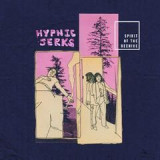
Unlike the spiraling momentum of the band's sophomore LP, pleasure suck, the spirit of the beehive takes a more grounded approach here, though the ground it's standing on is equally otherworldly. Dreamy is a fitting adjective, but the ten tracks on Hypnic Jerks never fully slip into the peaceful character of dream-pop. Hypnic Jerks has the quality of an indescribable dream fading from memory as you slowly begin to regain consciousness. Its warped guitar tones, transcendental synths and smattering of eerie audio samples conjure this purgatorial space between reverie and reality. It's an arena where the songs unexpectedly contort themselves and take on different textures, morphing in and out of one another. Once the celestial harmonies, balmy keys and creeping false climax of album closer it's gonna find you roll past, it's clear that the spirit of the beehive has secured a seat at this decade's table of musical visionaries.
Svitlana Okhrimenko (artist name: Svitlana Nianio) is a Ukrainian artist, musician, and signer. She is one of the most prominent representatives of the independent music scene of Kyiv in the late 1980s — early 90s. She has repeatedly recorded and performed in collaboration with other musicians and bands, such as Oleksandr Yurchenko, Sugar White Death (Cukor Bila Smert’), Ivanov Down, GeeNerve & Taran, and Blemish. Svitlana still performs and publishes new recordings today.
“Transilvania Smile” is one of the first solo works recorded in 1994. During this time, Svitlana repeatedly visited Germany, where she had the experience of playing in parks and on the streets, gathering contacts of the local art scene. Her cooperation with the international choreographic group Pentamonia, based in Cologne and consisting of several girls who performed in theaters, took part in various performances, and were engaged in music. They met in the 1990s during joint performances with "Sugar-White Death." After that, they corresponded, and the idea of doing something together arose. Svitlana attended several of their performances, which inspired her to write music for a new project, and the band members helped to realize their creative ideas. Later, they started rehearsing together.
The name “Transilvania Smile” was invented by the project participants, and it symbolized the mold on the mirror and the reflection of a smiling vampire. However, shortly before the premiere, they changed it to “Firefox”, as the participants actively used flashlights and the play of light and shadows in the scenography.
The premiere occurred in the local Urania theater, previously a gallery. Isabel Bartensein directed the choreography, and Svitlana played, sang, and improvised. She said it was an excellent experience for her and the band. Besides Cologne, they also performed in Aachen.
Later, Michael Springer offered Svitlana to record this material in his "Phantom" studio. They had already worked together and recorded music for their project (Svitlana Okhrimenko / Phanton). Michael was also interested in the Ukrainian independent scene and participated in the creation of several compilations that featured bands from Kyiv and Kharkiv. Svetlana played the piano and harmonium in the studio and also sang. After the recording, the material was never released in its entirety. Two compositions appeared on the cassette compilation “Shovaisia” (Hide) in 1995, some episodes were re-recorded for the “Kytytsi” album in 1999, but for a long time, the full version of this recording remained practically unknown to listeners and was kept in Svitlana's and Michael’s archives.
This album is one of the most personal and insightful works of Svitlana Nianio from the 90s, which you can now get to know in its original form and sound.
The first encounters of Chassol with Indian music date from his teenage years where, thanks to John Mc Laughlin and his band Shakti, he could hear ragas, rhythm structures and Indian instruments mixed with jazz.
Then came Ravi Shankar, Hariprasad Chaurasia and the devotional songs.
More recently, the documentaries by Louis Malle (Phantom India) and by Johan van der Keuken (The Eye Above The Well) left their marks on him and after having harmonized New-Orleans in "Nola Cherie", the choice to attempt at an harmonization of life, sounds, motifs, noises and traffic from Northern India quite naturally grew on him.
In Calcutta and Varanasi, India's most ancient city, he went to shoot sitarists, percussionists, singers, dancers, the kids, the Ganga, the city and the apparent chaos of the traffic.
Indiamore spreads over four movements, one same tonal harmonic suite of warm and real pop chords that marries the modal Indian music usually resting on a sole continuous bass line played by the tampura.
In repeating these images, in treating their sound as a music material and in harmonizing the actors' speech with his own harmonic obsessions, he achieves to blend a documentary approach into a
- A1: We Crossed The Atlantic
- A2: The Love You Bring
- A3: When I Was Howard Hughes
- A4: Failed Adventure
- B1: Stars (Twilight Mix)
- B2: Grand Central
- B3: International Exiles
- B4: Merry-Go-Round
- B5: Radios Appear
- C1: City Terminus
- C2: Min Min Light
- C3: Oregon Snow
- C4: Cherry Lake
- C5: Blackout
- D1: Please Don’t Say Goodbye
- D2: Museum Station
- D3: Blue Train
- D4: You Were There
- D5: Something Better Beginning
Selected Songs 1997-2003 compiles some of the finest moments in the recording history of Hydroplane, the Melbourne-based indie-pop three-piece that operated alongside The Cat’s Miaow through the second half of the nineties. It’s the third release in what feels, now, like a loosely planned series by World Of Echo, documenting the music made by this group of friends in Melbourne sharehouses (The Cat’s Miaow’s Songs ’94-’98, 2022), or in the case of The Shapiros (Gone By Fall, 2023), while traversing the International Pop Underground.
Hydroplane would be familiar to anyone already following these breadcrumb trails – Andrew Withycombe, Bart Cummings and Kerrie Bolton were the group’s core, all members of The Cat’s Miaow. With Cat’s Miaow drummer Cameron Smith itinerant, having moved to London, the trio used this opportunity to expand their music. It’s a subtle, but important shift. If The Cat’s Miaow was about the perfect, minimalist, two-minute pop song, Hydroplane’s music was far more open-ended, embracing the loops and drones, sampled house-y shuffle beats, the burbling of a Roland Jupiter-4 synth, all of which the trio joined, effortlessly, to their endless capacity for moving, elegant melodicism.
They may have only planned to release one seven-inch single, but the sound Hydroplane created was so bewitching, so compelling, that the project’s lifespan ran for around half a decade, and they ended up releasing three albums, including a self-titled debut recently reissued by Efficient Space, and seven singles. There are all kinds of compelling things happening in the music compiled here – the hazy repetition of the gentler side of Krautrock is in here, somewhere, which also suggests Stereolab at their most intimate and disarmed; the gently drifting guitars, gauzy and oneiric, set the songs adrift and floating, each one lost in its own imagined, distracted world. Songs like “The Love You Bring” set indistinct tonal floats across dance rhythms, in a way not quite heard since My Bloody Valentine’s “Instrumental” – but with the added gift of Bolton’s gorgeous voice.
This loose coalition with dance music, and the quiet experimentalism at the heart of Hydroplane, also gestures towards peers like Hood, Acetate Zero and Other People’s Children, and releases on renegade labels like Wurlitzer Jukebox and Enraptured. Like those groups and labels, The Cat’s Miaow were reconciling independent pop music’s past – sweet melody and melancholy, chiming and droning guitars – with the futures promised by DIY electronics and nascent digitalia, the interface of indie and IDM that led to some of the underground’s most blissful, texturally swoonsome music. All that is here, but also, the poise of the melodies is pure Cat’s Miaow, though, with Bolton’s voice sailing, pacifically, over some of the most pared-down, gorgeous music made during their decade.
It was a time, too, when such music could make waves – “We Crossed The Atlantic”, one of their early singles, was picked up by John Peel, who played it repeatedly on his legendary radio show, the song reaching #13 on his 1997 Festive 50. That the song itself was a cover of a tune by 1960s Australian beatnik-pop-poet Pip Proud felt even more perfect – a group of outsiders paying tribute to another outsider, played on the radio one of the few broadcasters brave and human enough to take a chance on this music. But it was a time where everything was up for grabs, and genres were flowing into each other: folk songs went drone; indie re-discovered noise; ambient pop floated, again, out onto the dancefloor. And while they may have been sequestered away in Melbourne, Australia, Hydroplane felt core to that scene, a quietly driving force.
Compiling material from across their brief but mercurial career, this double album perfectly captures the magic and mystery of Hydroplane’s dreamlike, perfect pop songs.
The Madlib Invazion Music Library Series Entry #1: JJ Whiteeld (Poets of Rhythm/Whiteeld Brothers/Karl Hector) takes on Ethiopian Jazz and Psychedelic Funk. This is the first in a series of music library releases, with future volumes produced by DJ Muggs, J-Zone, and Karriem Riggins, among others. The series starts here, with JJ Whitefield’s Ethio Meditations/Drama Al Dente. The Madlib Invazion Music Library Series was created by Madlib and Egon to give their creative friends a chance to stretch out and indulge in whatever type of music they wanted. This music was created for easy, one-stop clearance in film and television synchronization usage and for sampling. You can also enjoy these albums in the way that many do with the best of the best vintage library catalogs – listen, ponder, repeat.
Coke Bottle Clear Vinyl. High Vis were formed in 2016 from the ashes of some of the UK's best hardcore bands. Gild-toothed frontman Graham Sayle's anguished lyrics about life in working class Britain were familiar to fans of Tremors' full-throttle thrash, but alongside his former bandmate Edward `Ski' Harper and veterans of Dirty Money, DiE and The Smear, High Vis sought to transform that energy and intensity into something entirely new.Like scene-mates Chubby and the Gang did by pulling in unlikely source material from classic doo-wop or Micromoon have by combining everything from psychedelia and metal into their high potency mix, High Vis' 2019 debut album, No Sense No Feeling showed the band were never going to be constrained by any sense of genre rules or regulations. Its claustrophobic rattle bore traces of Joy Division, Bauhaus, Crisis, The Cure and Gang Of Four lurking in the shadows. 2020's synth-driven EP, Society Exists, was further evidence of the band's restless creative MO.High Vis' second album Blending sees them open their viewfinder wider than ever before. Alongside longstanding favourites such as Fugazi and Echo and The Bunnymen; Ride and even Flock Of Seagulls were shared reference points as the band worked on the album together.From the anthemic sweep of opener "Talk For Hours", through the title track's psychedelic swirl and "Fever Dream"'s baggy groove, it sees High Vis' sound blossoming into something with an unlimited richness. The hazy drift of "Shame" or the melodic jangle of "Trauma Bonds" may take them until uncharted waters, but they still have all the power and bite that made No Sense No Feeling so remarkable.Lyrically, the album represents another leap forward too. Talking frankly about poverty, class politics, and the challenges of everyday life, Sayle's lyrics have always addressed the downtrodden and discarded communities across Britain slipping below the waterline. This time around, Sayle's lost not of that social consciousness, but he's looked at himself and his own emotional landscape, and in the process created something that feels more universal, that reaches a hand-out to people and ultimately gives a message of hope."To me, the lyrics are less selfish," reflects Sayle. "In the past, I couldn't see past whatever was going on with me. It's about accepting things and being open to conversations and learning to talk to people rather than just thinking that we're all doomed."The song "Talk for Hours" is a prime example of that. Born out of an afternoon meeting up with an old group of mates "repeating the same thing and not actually learning anything about each other" it offers to actually break the cycle and to listen and speak frankly about shared feelings and experiences. "Trauma Bonds", meanwhile, traces the broken lines of those living in lost communities, but ultimately realises that despite our shared scars, there's still hope to move on to a better future."The message of the album is you're not who you're told you are," Sayle summarises. "You're not your class background. Whatever it is, you're not that. Don't resign yourself to thinking you can't be this and you can't be that."It's a vitally important message right now, and one that could be the motto for not only Blending, but for High Vis themselves.
Joel Paterson has been a mainstay of the Chicago roots music scene for
over twenty years, playing with many bands and showcasing his unique
blend jazz, blues, rockabilly, country and western swing
'Wheelhouse Rag' is a 14- track collection of original rags and country blues on
solo, finger picking acoustic guitar.
The all- acoustic, 1920's- tinged 'Wheelhouse Rag' may at first seem like a
departure in genre for the guitarist - he is predominantly known for his
instrumental multitracked recordings reminiscent of Les Paul and Chet Atkins -
Joel learned to play guitar by ear from the records of acoustic legends such as
Blind Blake, Robert Johnson, Reverend Gary Davis, and Big Bill Broonzy. He later
expanded his repertoire to include techniques of the thumb-picking giants Merle
Travis and Chet Atkins. These influences can be heard throughout the album,
mixed in with many more twists and turns from the mind of the artist, to bring
you, 'Wheelhouse Rag:' the original fingerstyle guitar instrumentals of Joel
Paterson.
Original fingerstyle guitar rag and country blues instrumentals by in-demand
Chicago roots guitarist Joel Paterson, who has played with Cactus Blossoms, JD
McPherson, Kelley Hogan, and more, bringing his unique blend of jazz, blues,
rockabilly, and country & western style to the mix.
RIYL: Les Paul, Chet Atkins, Reverend Gary Davis, Cactus Blossoms, Pokey
LaFarge, Merle Travis
"Guitarist Paterson's free-ranging music defies easy categorization. He addresses
classic country, blues and Tin Pan Alley tunes as timeless works that reward
repeated listening." - Howard Reich, Chicago Tribune"Of all the "vintage" artists
injecting new life into bygone styles with originality and a sense of humor, Joel
Paterson just might top the list." - Dan Forte, Vintage Guitar Magazine
- Walls & A Roof (Interlude)
- 102: Years Of
- Comedy (Intro)
- Fishtown
- Unfinished
- House
- Blue Lips
- Ohio
- Tears Of Fate
- Karpehs Don’t Flinch
- Yesterday’s Price
- The Tide Is My Witness
- Moments
- Stolen
- Take A Half (A Feeling We Chase)
- Another Half
- Repeat Myself
- Glass
- Face
Das Blue-Note-Debüt eines außergewöhnlichen Musikers zwischen Pop und Jazz! Seit seiner Debütsingle „Cold War“ (2018) kennt man Cautious Clay. Der Titel wurde mehr als 150 Millionen Mal gestreamt und von Taylor Swift auf ihrem Album „Lover“ gesampelt. Als Songwriter hat Cautious Clay mit Billie Eilish, John Mayer, John Legend, Khalid, Kavinsky, Melanie Martinez, Remi Wolf und anderen gearbeitet. 2021 legte Cautious Clay mit “Deadpan Love” sein erstes Album vor, das im Musikexpress als “ein aufregender Tanz zwischen R’n’B und Indie Songwritertum” beschrieben wurde. Mit seinem zweiten Album „Karpeh“ setzt der in Cleveland, Ohio, geborene, in New York lebende Sänger, Songwriter, Produzent und Multiinstrumentalist zu seinem nächsten großen Karriereschritt an - die Zusammenarbeit mit dem Jazzlabel Blue Note Records! Mit einem Mix aus R&B, Hip-Hop, Leftfield-Indie-Pop und Jazz-Elementen hat sich Cautious Clay bislang einen Namen für poetische und emotional ehrliche Musik gemacht, auf Blue-Note-Records und in Zusammenarbeit mit Label-Größen wie Immanuel Wilkins und Ambrose Akinmusire fügt er seiner Musik jetzt eine weitere Dimension hinzu.
Stephen Steinbrink discovered a short YouTube video of a street magician who approaches a highschooler walking home in Barstow, California. “Here, let me show you my idea,” he says, as he places a quarter on the kid’s hand. The magician performs some relaxed flourishes, and the coin vanishes. In silence, the kid stares at his hand at the nothing where there once, indisputably, was something, until his wonder finds a single word: “Cool.” The title of Disappearing Coin, the new album from Oakland songwriter Stephen Steinbrink, comes from this short clip. “When I look at it now,” he says, “I relate to the kid, who’s obviously uneasy in his body, and going through the experience of being a teenager in the early 2000s growing up in a bleak desert town like I did. I also relate to the coin, an inanimate disc of possibility. And I relate to the magician, an absurd facilitator of sending what is tactile and concrete into the wispy conceptual realm.” “I’ve watched it probably a hundred times,” he says. “It cracked me up but also blew my mind open the feeling of wonder I experienced watching this video became a guide as I navigated new ways of staying in the realm of what’s both real and magical.” Following the 2018 release of Utopia Teased, Steinbrink completed an apprenticeship in the nearly-lost art of Stained Glass, becoming a glazier at a studio that over three years, fully restored the enormous 90-year-old windows in San Francisco’s Grace Cathedral. He committed to his Buddhist study, beginning lay monastic training before the process was thwarted by the pandemic. He dove deeper into music production for other artists, engineering two albums by Boy Scouts released on Anti- Records in 2018 and 2021. Steinbrink delighted in the way these pursuits pulled at the thread of ego’s tapestry and decentralized him from his craft, allowing him to embody a new role as a creative caretaker engaging in practices that felt communal and restorative. “As I slowly began writing for myself again, I tried to imbue my new songs with this sense of playfulness and wonder I felt while exploring these other interests.” He says. Feeling unlocked from the pressures of perfection that he often felt in his earlier work, creating Disappearing Coin felt buoyant and healing. “The album feels like an integration of all of my past musical selves zeroing in on the present,” Steinbrink explains, “I felt free to explore new ways of writing, through different perspectives, experimenting with fictional songwriting, visual archetypal language, and total collaboration.” This “total collaboration” was a joyous new venture after years of solo performing and recording. The album can be seen as a 42 minute session of show and tell, the manifestation of Steinbrink repeating the mantra of “Here, let me show you my idea” to himself over and over. Disappearing Coin is at once a welcome return for the veteran Steinbrink and the debut of a totally new artist, one who has found a new path to himself with new goals of openness, curiosity, and self-acceptance. “Recalls the magic pop purity of Arthur Russell...its minimalism manages to feel enlightened and transformative.” PITCHFORK // “Melodic and self-assured. Steinbrink delivers his knotted lyricism with a smooth lilt.