After the successful first volume of their split collection, Lucretio
and Marieu a.k.a. The Analogue Cops come back on Memento with a
breathtaking four tracks E.P..
Lucretio delivers two cuts written and produced with the extraordinary
Kyma workstation: “Ghetto Stab” is an heavy DanceMania influenced
party banger while “Any Idea” is a deep techno journey into the realms of spectral manipulation.
Marieu brings in all the hardware horsepower romanticism with “Tab and Rub” and “The Restored Text”; the first being acid excursion into the memories of the earl From days, the second interpolating massive kick drums and saturated harmonics with frantic vocal samples.
A record not to be missed!
Supported by: Rhadoo, Ame (Kristian), Dj Ralf, Marco Faraone, Arnaud Le Texier, Ilario Alicante, The Wasp, Shlomi Aber, Richie Hawtin, Joseph Capriati, Maceo Plex, Marco Carola, Francesco Farfa..
Search:restore
Compression and expansion, focus and surrender, tension and release - the elusive state of balance is less of an inert, perfect condition than it is an interaction or moderation over time between polarized points. Rarely is it defined nor clearly prescribed. Through careful examination of the factors and conditions involved can a possible pathway be uncovered, in any particular scenario. The attached transmission is not a declaration of balance, nor a prescription towards it. But rather, it is like a snapshot captured of an object in motion.
Nairobi, Kenya, 1978. In the Phonogram Ltd. music studio, the popular Congolese Rumba band Les Mangelepa is finishing a session. Things are going well: they have recorded all the music they planned and still have an hour to kill before giving back the studio keys. How about improvising one last song on the spot? And this is how “Nyako Konya” was born. An incredible 9 minutes hypnotic jam, that’ll eventually become one of their biggest tunes, earning them a Gold record and international acclaim throughout Africa. Meticulously restored and remastered by French engineer Nicolas Thelliez, the original version is featured here together with remixes by three talented producers: French House/Disco producer extraordinaire Yuksek and his wall of sound skills, Netherlands’ Afro lovers and world famous studio maverick Umoja delivering a space dub Lee Scratch Perry style, and last but not least, the trademarked syncopated stabs from Brooklyn’s Uproot Andy.
Tape / Cassette
Mark Gergis is a producer, musician and audiovisual archivist known for his radio and video productions, recordings and performances. His work has focused on regional folk-pop music from the Middle East and Southeast Asia, including choubi and dabke from Iraq and Syria. As an archivist, Gergis is currently working on the project Syrian Cassette Archives, for which he aims to restore, preserve, catalogue and share his large collection of Syrian media from what can be called Syria’s ‘cassette era’ (1970s–2010). As an artist, under his name and others (Porest) he has released music on the Sublime Frequencies, Discrepant and Nashazphone to name just a few. It’s a wonder that amongst this hectic schedule he still finds time to present us with a new (old) collection of early century recordings (1999-2013).
Locational recordings, radio and TV intercepts, cassette excerpts, environments and street music all expertly all expertly meshed up into a vivid sound journey from places that were (and might) never be again.
Pedro "Ramayá" Beltrán, born in Patico, a small town in Colombia's Bolívar province, is a maestro of Colombian folkloric music known as the King of the 'caña de millo' flute, although he is also proficient in various percussion instruments as well as the reed instrument known as 'gaita'. He founded La Cumbia Moderna de Soledad in the early 1970's. With this group he set out to "modernize" the folkloric music of his people, adding electric bass and a brass section to
fresh arrangements of cumbias, porros, fandangos, puyas and other costeño genres. "La Clavada" (1979) was La Cumbia Moderna de Soledad's sixth record and first for Codiscos' Costeño imprint.
The LP has many excellent examples of Beltrán's inventive mix of the ancient and the modern, making for a collection of tunes brimming with tradition and yet fearlessly bristling with innovation, not the least of which is 'Crees que soy sexy', with its gaita refrain mimicking the main melody of Rod Stewart's international disco smash 'Da Ya Think I'm Sexy'.
The album's title song was a massive hit in Colombia and has become a standard of the genre. Restored to its original glorious sound, this LP is poised to be rediscovered as an innovative yet rootsy gem. Presented in facsimile artwork and pressed on 180g vinyl.
Part of Vampisoul's reissue series of classic LP's from Colombia's Codiscos and it's sublabels such as Zeida, Costeño and Famoso.
Aviador Dro are without a doubt the most avant-garde and influential techno-pop band from Spain. They started in 1979 and this year are celebrating their 40th anniversary playing shows, re-releasing some old works, publishing a book and also a new album.
“Acción Contra El Pasado” was recorded in Madrid in December of 1980 and is one of the oldest live performances of which there is a recording evidence. This concert is legendary not only for its age, but also for including some unreleased songs, a couple of early covers by Kraftwerk and Sex Pistols and vintage versions of classics tracks.
“Aviador Dro y su Maquinaria Humana” (exactly as it was announced on the original flyer) was formed at that time by Biovac N, Fox Cicloide, Placa Tumbler, Derflex Tipo IARR, CTA 102, X, Metalina 2 and Cyberjet. A priceless piece of history restored and remastered from the original cassette recorded directly from the mixing desk.
Limited edition of 400 copies with a A2 size colour poster.
Drawings created by the Polish artist Michał Arkusiński.
When acclaimed South African musician Guy Buttery first sought out Dr. Kanada Narahari in late 2016, it was as his patient.
“It was a dark time.” Buttery recalls, “I had been bedridden for months and had been suffering from debilitating bouts of fatigue which no diagnosis or medication could help me get to the bottom of. When I first met Kanada, I was at the stage where even picking up my guitar to make music had become a joyless and taxing exercise.”
As Buttery’s searched for a cure, a family member recommended he see Kanada an Ayurvedic doctor who had relocated to South Africa from India and set up a practice in Durban. It was during this consultation, that the musician first experienced how Narahari infused the healing properties of Indian Classical music into his practice. Rather than treating him with a smorgasbord of pharmaceuticals, Narahari played his sitar and set Buttery on a strict daily diet of Raga’s to fast track his recovery.
Buttery was not only struck by his doctor’s musical talents but by the powerful healing properties inherent in his sitar compositions. When he left Narahari’s doctors room that afternoon, he asserts he was feeling decidedly clearer, lighter and stronger.
“Diving into Kanada’s music was definitely one of the reasons I'm still here today.” he admits. “The consistent tonal centre at the heart of Indian Classical Music, literally became my support pillar over this period. A central core of sorts in which to fall back on, strengthen and discover.”
Narahari as it turned out, was not only a prominent music therapist (and one of the only Ayurvedic doctors practicing in South Africa) but like Buttery, a highly accomplished musician with a devoted following back in his homeland.
Born in a small village along the Western Ghats in Karnataka, India, Narahari, at the age of nine, had enrolled to study Carnatic classical vocal and developed an interest in Hindustani Classical music with a particular passion for the sitar. While Buttery had secured his reputation as one of South Africa’s musical treasures, a multi-instrumentalist who commands sold-out performances both locally and internationally and more recently had been awarded the prestigious 2018 Standard Bank Young Artist for Music.
From this consultation, a friendship developed between the two musicians with Buttery soon inviting Narahari to join him in his studio. But it wasn’t all plain sailing in the beginning. While Buttery and Narahari’s sensibilities were very much aligned, there were a range of cultural and musical influences, nuances and inflections that first needed to be navigated and understood.
“I suppose we had to find a common ground.” Buttery says, before adding, “Which in the end turned out to be pretty "uncommon ground" for the both of us.”
It was after a few intensive sessions together that something exhilarating began to emerge. What began as a few idle improvisations soon evolved into feverish and lengthier jams. Whenever time permitted, the musicians would meet, descending deeper into the emerging sounds, while reimagining the realms that existed between their African and Indian heritages.
Over the next few months, the duo would rack up over fifteen hours of recordings in studio, and it was up to Buttery to shape the material into an album which they collectively titled Nāḍī, which Narahari translates from the Sanskrit as "The Channel" or "An Internal River".
During this period, Narahari bestowed upon Buttery, the moniker Guruji while Guy would refer to him, in affectionate return, as Panditji. Each time the musicians would meet, the studio space would be cleared by an impromptu ritual, with Guruji burning African Imphepho while Panditji would chant a Sanskrit mantra dusting Indian Agarbatti clouds over their instruments.
Once the room had been made hazy with this aromatic alchemy (with the ancestors welcomed in) the musicians would pick up their instruments and plunge into shimmering tides of sound. Reflecting on these sessions, Narahari recalls the immense creative freedom he felt throughout: “Guy and I tried to wander as much as possible, without any speculative, preoccupied ideologies or limitations. Love remained at the forefront of our journey together.”
“Those evenings we spent together in the studio” adds Buttery, “felt incredibly rich with purpose and a profound sense of freedom. While improvising, anything could happen and mostly did.”
On a first listen, the tracks on Nāḍī emerge as salty, humid invocations to the inscrutable depths and misty myths of the Indian ocean-- that vast body of water that stretches between, and laps the shorelines, of the artists’ respective homelands.
When asked to describe the sound him and Narahari refined, Buttery prefers to relay a series of evocative images.
“For me” he explains, “Nāḍī is a lighthouse, a beacon that resides at the bottom of the ocean.” As Buttery envisions it, “what once offered light to guide ships to safety, has been submerged and re-purposed by marine life as a coral-reef temple. Similarly, this sunken lighthouse exists as a concealed cenotaph, memorializing the ancient sea-routes and passages that once connected the two distant lands.”
On paper this may sound obscure but listening to the songs, it serves as an apt metaphor.
Across each meditative movement, listeners are able to relive the journey, immersing themselves in a series of incantations, replete with high dynamics, delicate African-Indian inflections and virtuoso string playing of an entirely new order. Further complimenting the fusion of musical dialects are a range of guest artists including Shane Cooper on bass, Thandi Ntuli on vocals, Chris Letcher on organ, Ronan Skillen on tabla and percussion and Julian Redpath on guitar, synth and backing vocals.
Now like the submerged lighthouse, the recordings stand as a monument, a marker and snapshot of this fortuitous meeting, a tribute to the healing gifts of Guruji and Panditji in performance. It’s a process that already, both musicians look back on with reverence and nostalgia.
Buttery ruminates in closing, that when he first met Kanada his illness correlated with the biggest drought South Africa had experienced in many years “…for whatever reason, whenever we would connect and make music together, the sky would tend to open. Even if it was just a few drops. This went on for months, until finally the drought dissipated and my health had been restored.”
By the time the heavens did open across the East Coast, a deep friendship had been forged and with it abundant musical offerings poured down. A treasured sample of which we able to share in every time we press play and immerse ourselves in the sacrosanct musical universe that is Nāḍī.
Australian Soul Jazz holy grail from 1968! Limited to 300 copies w/wide. Debut release on Pacific Theatre Encore, the reissue label started by Melbourne's contemporary funk / soul lynchpin Australian Lance Ferguson (The Bamboos, Menagerie, Lanu, ex Cookin' On 3 Burners). Two high energy Mod burners, both originals taken from the forthcoming album 'Whatever It's Worth'.
Lead by Australia's own rival to Jimmy Smith and Jimmy Witherspoon, the '68 line up of Col Nolan & The Soul Syndicate would prove to be an Australian jazz super-group, consisting of John Sangster on drums / percussion (whose own late '60s Festival albums are highly collectable), John Allan on bass, Col Loughnan on sax and Jimmy Doyle on guitar (the latter two were also in mid Oz '70s jazz-rock giants, Ayers Rock).
"Pacific Theatre Encore will be reissuing music from across the globe, but it was important to me for the first release to shine a light on the important legacy of our own scene" says Ferguson, who meticulously restored the audio himself, which was then remastered.
My Music is a stellar spiritual soul / jazz-funk gem, recorded by keyboardist-singer Samuel Jonathan Johnson in 1978. The epitome of a cult classic, it didn't do much upon its release but steadily found an audience over the decades that followed. It eventually worked its way into the culture, and latterly the wantlists, of wave after wave of soul aficionados.
This is music that shares the jazzy R&B DNA of contemporaries like Roy Ayers and is an intoxicating blend of mellow moments and more groove-heavy tracks. Spacey keys and lush production give it a luxurious, enveloping warmth.
My Music opens with the gorgeous title track: an indulgent slow jam opus. Introducing us to Johnson’s compelling musical vision, it features a rich mélange of production techniques. Dripping in strings, horns, backing singers, popping funk bass lines and swooshing synth waves, it’s an unusually structured cosmic two stepper that has an irrepressible groove. Accordingly, it’s been a favourite with the diggers and it was sampled by The Alchemist for Jadakiss’s “We Gonna Make It” (and it was also used on Ras Kass’s “Home Sweet Home”… but that’s a story for another time).
The up-tempo “Sweet Love” bubbles over with joy, its uplifting lyrics backed by infectious bass and jazzy Fender Rhodes lines. It follows a cover of “What the World Need’s Now Is Love”, taken at a funereal pace that transforms it into a heartfelt plea for love and understanding. Essential in these dark days.
After a full-minute-long opening of lush cinematic strings and horns, “Because I Love You” makes space for Samuel’s voice, accompanied by some keys and just a sprinkle of guitar. It builds back up and then mellows its way out to a jazz lounge finish (in all the right ways). The feel-good ebullience of the Stevie Wonder-esque “It Ain’t Easy” closes out the LP’s first side.
The second side bursts open with the heavy bounce and disco-funk basslines of “You”, a slightly off-beat string-laden dancer with insistent horns and a piano-assisted groove. Next up is “Just Us”, a legendary steppers track that could be heard oozing out of deep soul radios and funk sound systems back in the late 80s.
“Yesterdays and Tomorrow” is a moving original ballad that is followed by an exquisite high-stepping paean to mom in the form of “Thank You Mother Dear”. The thumping easy-glide of “Reason For The Reason” brings the album to a close.
Respectfully mastered by Simon Francis and cut by the master Pete Norman, this reissue of Samuel Jonathan Johnson’s sole LP sounds as sumptuous as that scarlet gown on the front cover. The sleeve artwork was lovingly restored by the Be With team. My Music is a luxurious and rare collection of songs that now has an opportunity to reach beyond its cult audience.
Soundway have come to their last release of 2019, and they've saved the best till last.
Ft. a 12" single with both sides absolute dancefloor belters, think Latin disco meets parang soca from Barbados (original label from Trinidad/Tobago).
Both tracks - Colleen Grant "Latin Parang", and Sandra Hamilton "Parang Jam" - are not only highly sought after on vinyl, we are also officially reissuing both tracks officially for the first time on vinyl and digital since their original early 1980s releases.
Restored, remastered and sounding as fresh if not fresher than before! Attached are the sales notes, with salient details below.
‘Still Strange’ reaches back into the prized loft tapes of Jeff Sharp aka Orior following the revelatory discovery of his overlooked early ‘80s gems on 2016’s ‘Strange Dream’ collection, as coaxed out by
DDS dons Miles Whittaker and Sean Canty.
Huddling another sublime, dusty set of analogue tapes freshly baked and remarkably well-restored by Andy Popplewell, ’Still Strange’ contains four gorgeous flashbacks to the era 1979-1983
surrounding and even pre-dating ‘Strange Beauty’, and then shifts focus to recordings that Orior made around the early ‘90s.
As with its predecessor, Orior is not alone on the material in ’Still Strange.’ From those feted early tapes we find Phil Hollis returning to lend jagged guitar on the drum machine sizzle of ‘Feels Like
Summer’, while the mysterious synth player New Cross John makes vital contribution to ‘Invium.’
Along with the aching synth sigh of ‘To Return’, which pre-dated all of these recordings, and the nine minutes of haunting bedsit strums in ‘Larbico Alt Mix’ which came from the first batch, the
early material is all arguably worth the price of admission alone for seekers of lost synth treasures - really this stuff is just so good..
However, the album’s other six tracks expand knowledge of Orior’s work into the ‘90s and also contain some extraordinary material. Salvaged from further loft tapes found in various states of degradation, and subsequently mixed down between London’s Goldsmiths College and Miles Whittaker’s Whalley Range attic (and elsewhere), they are decidedly more blunt and gloaming, especially in the Deathprod-like ‘Under Shadow’ and the near static witching hour ambience of ‘Endless’, while shorter vignettes such as ‘Unknown Future’, ‘Gothic’ and ‘Another’ point to pre-echoes of BoC’s crepuscular scapes and even Bladerunner-esque sci-fi noir soundscapes
The masters for this EP were long lost. These recordings have been made by Ron Wells using a high end LINN cartridge, restored digitally (clicks, noise, rumble) using Izotope RX by Robin at Music Preservation Society and Remastered by Subvert Central Mastering by Bob Macc.
Kontakt brings back two sought after minimal-dubtechno tracks by Metric System, which was one of many aliases used by Thomas P. Heckmann in the 90ties, where he explored the sounds of the legendary Sequential Circuits 440 and EMU SP-12. The original recordings have been carefully restored and officially re-mastered by Thomas himself. Limited coloured vinyl.
- A1: Mission (Title Demo)
- A2: Strain (Start Demo)
- A3: Back Alive (Stage 1)
- A4: Cry Out Enemy (Stage Boss)
- A5: Stirring (Stage Clear)
- A6: Seen Through (Stage 2)
- A7: Wrath Of Earth (Stage 3)
- A8: The Jupiter Spirit (Stage 3 Boss)
- A9: Cheer Up (Stage 4)
- B1: Forest Of Planet (Stage 5)
- B2: Foul Smell (Stage 6)
- B3: Dark Nebula - Ankoku Seiun (Stage 7)
- B4: End Of War (Stage 8)
- B5: Galactic Ruler (Final Stage - Final Boss)
- B6: Revive (Ending)
- B7: Ocean War (Continue)
- B8: Game Over
- B9: Head Waver (Name Entry)
- C1: Mission (Title Demo)
- C2: Strain (Start Demo)
- C3: Back Alive (Stage 1)
- C4: Cry Out Enemy (Stage Boss)
- C5: Stirring (Stage Clear)
- C6: Seen Through (Stage 2)
- C7: Wrath Of Earth (Stage 3)
- C8: The Jupiter Spirit (Stage 3 Boss)
- C9: Cheer Up (Stage 4)
- D1: Forest Of Planet (Stage 5)
- D2: Foul Smell (Stage 6)
- D3: Dark Nebula - Ankoku Seiun (Stage 7)
- D4: End Of War (Stage 8)
- D5: Galactic Ruler (Final Stage - Final Boss)
- D6: Revive (Ending)
- D7: Ocean War (Continue)
- D8: Game Over
- D9: Head Waver (Name Entry)
SNK and Brave Wave Productions are proud to reveal their third collaboration : Generation Series 09 - PULSTAR for CD and vinyl.
Originally released for NEO GEO in 1995, 2D shooter PULSTAR became a cult classic among SNK fans, featuring fast-paced gameplay, graphics and music. The soundtrack is composed by ex-SNK composer Harumi Fujita.
PULSTAR The Definitive Soundtrack features the entirety of the original music remastered and restored to the highest possible quality, in collaboration and consultation with SNK and original composer Harumi Fujita. This re-release features both the Neo Geo AES and Neo Geo CD versions of the PULSTAR soundtrack, giving fans a choice of which arrangements to listen to.
PULSTAR The Definitive Soundtrack on CD and vinyl will feature a booklet containing artwork from the SNK archives, in addition to in-depth track-by-track liner notes written by composer Fujita herself. Fujita recalls her feelings on each song, detailing the methodology in which they were created and what inspired their direction, which includes historical events that occurred in Japan during the mid-1990s.
PULSTAR The Definitive Soundtrack features an exclusive cover drawn during the game’s development but has never been publicly revealed until now. Fans of the original package design will find it reproduced faithfully in the center gatefold.
The vinyl release will come on 2 LPs, with Disc 1 (Sides A and B) dedicated to the Neo Geo AES version and Disc 2 (Sides C and D) dedicated to the Neo Geo CD version.
©SNK CORPORATION. All rights reserved. Licensed for use by BRAVE WAVE PRODUCTIONS.
MUSAR continues to explore the healthy landscape of underground and alternative electronic music with the debut release on the label from Nightwave. 'The Journey' is a fitting title for the Glaswegian producer, DJ and promoter, who has been a lynchpin for the city's vibrant music scene since her first release in 2010. In the time since, Nightwave has a developed a punchy and highly original sound that blends potent influences of acid, techno and forward-thinking bass music, with releases on DABJ, UTTU, Fool's Gold, DEXT and her own imprint Heka Trax.
For her MUSAR debut, Nightwave celebrates, in her own words, "joy, dance, exploring inner worlds, the celebration of nature and life and how it all interconnects". On a delicate tip, opening and title track 'The Journey' establishes the EP's "rainforest rave" aesthetic, spiralling upwards with weightless energy. It's underlying percussion steps forward on 'Jiboia Groove', which blossoms thrillingly into wave upon wave of ethereal, breakbeat-led rave.
'Monkey Puzzle' pulls a similar, if more uncompromising trick, only with its rhythmic timber instead succumbing to layers of rough-hewn, squealing acid synthesis and pounding snare drums. 'Forest Guru' meanwhile restores much of the record's spiritual equilibrium in one fell swoop, finding a clearing in the landscape to sculpt a rolling, detailed jam that's as playful as it is creative.
Naive founder and Lisbon's rave goddess, Violet generously remixes 'The Journey' in intriguing fashion, unravelling a trippy and tense riddle at the heart of the rainforest.
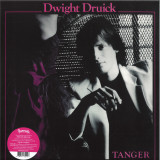
Dwight Druick’s born in Montreal to a professional gambler and an ex-Radio City Rockette. One of five children, he grew up in a family buoyed by music and beleaguered by the vagaries of miscalculated risk. After attaining a McGill University bachelor’s degree in Art
History, Dwight fully embraced both music and risk by traveling to London, where he signed a contract with Pye Records and Joe Cocker’s management company. The ensuing record,
Druick & Lorange was released to critical acclaim and relative success. After returning to Canada, Dwight recorded two albums with Phil Vyvial: Midnight and Minuit. Recorded with the Muscle Shoals Rhythm Section in Alabama, the duo’s work achieved airplay success in Quebec and across Canada. Dwight subsequently released his first French language solo album, Tanger, released in 1980 by the Canadian label, Bobinason.
Today quite hard to find in its original version, Tanger is first of all an incredibly solid album, clearly underrated and deserving more credit. Mostly known by collectors and DJs for the
stunning cover of Toto’s classic hit, “Georgy Porgy”, which was produced and arranged with the help of George Thurston (Boule Noire), it includes many other tasty titles, with amongst
them another fine rendition of “Open Your Eyes” by The Doobie Brothers. In fact, with its brilliant mix of Modern-Soul, Disco and AOR styles, the whole album is already considered
by many connoisseurs as a classic, and clearly a must have for anyone enjoying this musical blend. Never reissued on vinyl until now, there was not much more needed at Favorite Recordings
to make it happened. Officially licensed to Dwight Druick, who was unfortunately not able to provide the original tapes, Tanger has been perfectly restored and remastered by Frank Merritt, at The Carvery, London. CD and digital edition will also come with “Georgy Porgy (Version Disco)” as a bonus track.
Timeless Legend came from Columbus, Ohio. Their ‘Synchronised’ album from 1980 is one of the rarest ‘rare grooves’ and both original copies and the ‘northern soul’ single “I Was Born To Love You” still sell for over £1,000 a copy.
By 1985 music styles had changed and the group with shortened name Timelesscapitalized on the burgeoning boogie scene with the 12” double header we reissue here. Of the two sides “You’re The One” has become the most enduring and in demand, again an original reach which has been sold for £1000 on the collectors scene. The French reissue from 2011 is also extremely sought after. In this edition the release has been restored to how the original first looked and sounded on Pendulum Records artwork from Expansion.
Blueboy’s first and now legendary album finally reissued by Australian label A Colourful Storm. Presented for the first time on vinyl since its release in 1992, the recording by Keith Girdler, Gemma Townley, Paul Stewart, Lloyd Armstrong and Mark Andes is immortalised in Sarah Records history as an evergreen of indie-pop and modern DIY. “…the sort of feelings that rarely escape from the Sarah daydream factory” wrote NME at the time. Long overdue reissue with original artwork faithfully restored by Sarah Records’ own Matt Haynes. Full colour reverse-card sleeve with printed insert and lyrics sheet.
TV Victor was one of the first artists of Tresor Records where he became legendary with several of his ambient and trance productions including Trance Garden 1-3 and Trancecology Chapter 1. In 1989, he launched his first solo project: Moondance - The Magic Sound of the Moon, where he lay foundations for later explorations with experimental sounds fused with pop elements and anticipated an ambient excursion to be had in the future.
In the following decades TV Victor created impressive solo works that traversed between ambient and trance, he collaborated with artists like Moritz v. Oswald, Max Loderbauer, Ari Benjamin Meyers, Paul Browse and Tobias Freud. Contrary to common mainstream tendencies he created a very unique interpretation of both genres. In recent years Victor has concentrated on creating experimental and abstract sonic spaces for escaping reality, spaces that live through the imagination of the listener. Each piece, a segment of a larger musical movement; stands alone to create new sonic continuums. Otherworldy music that is in its own sphere.
30 years after the release of Moondance and 50 years after the first landing, Lullabies For Insomniacs revisit TV Victor's musical roots with 'Back To The Moon'. The previously unreleased works were carefully selected from his vaults and restored by Berlin based engineer Brett Olke (B Ashra), the album offers a glimpse into the future by creating a soundtrack for mankind's settlement of beyond in a conceivable hereafter.
Munich. 1994. A group buck current trends with a ground-breaking release. Tikitaka by Tamburá left aside the techno of the time to focus on a the lesser known styles of afrobeat and tribal music. The result was three tracks that sail and soar on a primal energy, three works that whisk listeners away to exotic lands of wooden wind instruments, ritualistic vocals and, even, bag pipe majesty. For twenty five years this record has been an unattainable mystery, until now that is. Kalahari Oyster Cult have lovingly restored all three of the trailblazing original tracks alongside two very special remixes. Melbourne’s Tornado Wallace adds new layers of intensity as he cuts and reshapes melodies and beats to set any floor alight with this visionary remake. Dazion offers a very different interpretation. Focusing on vocals, this new talent accentuates the shamanic-like chants of Tikitaka, using them as a base from which throbbing synth lines grow as new depths are explored. An EP every bit as daring in 2019 as it was in 1994.