Under exhausted lights of civil discontent the count has just began. What you parodied, what you scrutinised rears its pure gaze when punctured beyond performance. We cried for justice but instead found order, and now we face the chain. PC World comes through with a haunting EP on She Lost Kontrol to distort the view and warp the vision of industrial addicts and mutant punks with their second release “Order”, a discursive counterattack on four distinct forms of command. The South London duo disfigures the unconscious reduction of pleasure and fetish, the connective tissue between privatisation and violence, the seduction of societal norms, and the neurotic tendencies of self-defeat. Like the surrender to a future shock, these four interwoven tracks are produced for the recognition of restraint and the demand for wanting more. B-side remixes of the title track “Order” come from Physical Wash (former member of High-Functioning Flesh) and Aktion Mutante (featuring members of Violent Poison and Unhuman), two additional perversions of protocol from synth-punk veterans on both sides of the Atlantic. So initiate these six cries of havoc in solidarity with this wasted world, a world of precarious necessity and incessant definition. A world whose shape and conscience will forever be satisfied by order.
Buscar:restraint
Australian award winning producer Plutonic Lab returns with a sophisticated, genre defying Double A Side Single ‘Blind Eyes’ and ‘Give It Up.’
Pluto brings together a strong list of talented artists: The soulful, smoky voice of Natalie Slade, New Zealand based Rwandan rapper Raiza Biza, and multi instrumentalist 8H.
The two tracks mark an intoxicating return for the producer, showcasing how he is able to bring together artists’ of diverse backgrounds and styles to display skills, restraint and synergy in a moment in time.
Plutonic Lab says, “I feel the sound of these two pieces have a great balance between electronic textures, acoustic instrumentation, jazz, tough beats and clout.”
The two songs are an example of Plutonic Lab’s collaborative, versatile nature and his ability to cross genres without limitations.
Plutonic Lab
Plutonic Lab has provided the backdrop for countless artists over a mammoth career spanning over two decades, collaborating with artists locally and internationally including Black Milk, Drapht, Hilltop Hoods, G-Love (US), Lanks, Guilty Simpson (US) and Wiley (UK).
Plutonic Lab’s 2016 LP “Deep Above The Noise” attained feature album status on Double J and Won “Best Hip-Hop Album’ at the AGE Music Victoria Awards 2016. Notably he produced Dialectrix’s 2013 album, “The Cold Light of Day” which was shortlisted for the Australian Music Prize, won the 2009 UK Mercury Prize for his work with Speech Debelle, and was nominated for ‘Best Urban Release’ at the 2008 ARIA Awards as half of the hip-hop duo Muph & Plutonic, who also placed 2 songs in the Triple J’s “Hottest 100.”
Pluto has toured across extensively across Australia, internationally and as tour drummer for Hilltop Hoods in the U.S, Canada, UK & Europe.
For Chris Tooker, the first decade of his artistic journey was immersed in bands while the second was engaged in wandering the realms of electronica in the form of creator, composer and engineer for DJ duo KMLN. Today, after many incarnations, Tooker returns to the source of himself while carrying both the treasures of his past and a vision for the future. Tooker has long been called to pursuing obsessive trails through the greater cosmos. On these journeys, he seeks particles with a hypnotic essence. Once found, he interprets this magic in his own special way, through the most universal language - music. His music tells stories of fascinating adventures through the dust, the palms, and the gritty streets of yonder. It is colorful, deep, and disco laced. It flaunts rare collected percussion (delivered live in his sets), various instruments and sometimes whispers a touch of voice. Now his solo-debut EP Nang’o drops on Acid Pauli and Nico Stojan’s label Ouie. For the lead track Nang’o, Tooker recruits the phenomenal talents of Kenya’s multi-instrumentalist Labdi. Labdi’s oruto (a western Kenyan fiddle instrument) and bewitching vocals provide the hooks for this subtle, shuffling track, presented here as both a full version and as an instrumental. Baladi features Shawna Hofmann both on co-production and vocal duties - this time a more driving, rolling groove develops with Shawna adding sultry, evocative vocals to the mix. Undone rounds off the physical release - another signature exercise in subtlety and restraint, as an infectious groove folds in bubbling synths, crisp percussion and dubby effects.
Way nding is Christopher Bissonnette’s sixth solo studio release and his rst, of hopefully many, for 12k. The album embodies an evolution of Bissonnette’s work, moving from an exclusively synth-based series of explorations to an amalgam of electronics and acoustic methods. Each track seeks to nd grandeur on a diminutive scale. Bissonnette’s focus has shifted from sweeping pastoral drones to introspective passages with delicate melody and elusive harmonies interlaced with studio and eld recordings. This minute scale is also re ected in a photographic series that studies the domestic landscape of home. The sequence of images transforms the banality and insigni cance of the familial interior into expansive vistas and bucolic panoramas. Way nding is Bissonnette’s most intimate and gauzy work to date and executed with beautiful restraint.
The collaborative debut of American minimal techno pioneer Troy Pierce and Colombian audiovisual artist Natalia Escobar aka Poison Arrow was conceived in reverse: first they created a collection of shadowy surrealist videos, then wrote music inspired by them. This inverted process proved remarkably fruitful. Shatter is a simmering, slow-burn noir odyssey inspired by the Greek myth of Echo and Narcissus, traversing subtle shades of sleepwalker dub, metallic lament, broken beats, and erotic negative space. It's an effectively unsettling evocation of the legend's core theme: “There is nothing more complex than a shattered heart, or a heart that can't love.”
Considering their shared background trafficking in darkened dance floor modes, what's most striking about Pierce with Arrow's partnership is its rhythmic restraint. The album's 10 tracks seethe and shudder between glamor and gloom, with only occasional dread-steeped metronomes mapping the malaise to a grid. They speak of pursuing a “spatial approach” with this project, which manifests in the music's immersive design and patient execution, each mangled clang and rippling pool of bass allowed to reverberate
its full flickering waveform.
The collaborative debut of American minimal techno pioneer Troy Pierce and Colombian audiovisual artist Natalia Escobar aka Poison Arrow was conceived in reverse: first they created a collection of shadowy surrealist videos, then wrote music inspired by them. This inverted process proved remarkably fruitful. Shatter is a simmering, slow-burn noir odyssey inspired by the Greek myth of Echo and Narcissus, traversing subtle shades of sleepwalker dub, metallic lament, broken beats, and erotic negative space. It's an effectively unsettling evocation of the legend's core theme: "There is nothing more complex than a shattered heart, or a heart that can't love." Considering their shared background trafficking in darkened dance floor modes, what's most striking about Pierce with Arrow's partnership is its rhythmic restraint. The album's 10 tracks seethe and shudder between glamor and gloom, with only occasional dread-steeped metronomes mapping the malaise to a grid. They speak of pursuing a "spatial approach" with this project, which manifests in the music's immersive design and patient execution, each mangled clang and rippling pool of bass allowed to reverberate its full flickering waveform. Guest appearances by austere techno producer Konrad Black ("Obsidian Glass") and drum n bass institution dBridge ("It's A Love Story, After All") flow seamlessly into the whole, subtle sculptural accents on a dimly lit descent through purgatories of longing and lust. But the shadows recede for the record's closing cut, "Narcissus," which swells elegiacally in a mass of devotional drones over a muted heartbeat, like Narcissus gazing upon his reflection in holy awe: elusive true beauty, finally beheld, by itself.
- Warm Canto (Mal
- Waldron)
- Allegretto, Symphony No
- 7: (Ludwig Van
- Beethoven)
- A Remark You Made (Joe
- Zawinul)
- Sintra (Joachim Kühn)
- Ponta De Areia (Milton
- Nascimento)
- Redemption Song (Bob
- Marley)
- Touch The Light (Joachim
- Kühn)
- Fever (John Davenport &
- Eddie Cooley)
- Blue Velvet (Bernie
- Wayne & Lee Morris)
- Stardust (Hoagy
- Carmichael)
- Purple Rain (Prince)
- Last Tango In Paris (Gato
- Barbieri)
- Peace Piece (Bill Evans)
The variety of Kühn’s pianism in this collection is
quite remarkable.
The listener is first welcomed into the inviting,
comforting and regular pulse of Mal Waldron’s
‘Warm Canto’. And yet later, by complete contrast,
Kühn’s own composition ‘Sintra’ gives a
masterclass in freedom, delay and the alchemical
art of keeping the listener waiting on tenterhooks.
Prince’s ‘Purple Rain’ is achingly soulful, whereas
Kühn found the encouragement to revisit Bill
Evans’ ‘Peace Piece’ from the dignity and restraint
of classical pianist Igor Levit’s version.
LP pressed on 180g vinyl.
4-Track Guitar Music is the unassuming title of a cassette by Swedish composer Mats Erlandsson, which was originally released on Kali Maloneʼs and Maria W. Hornʼs XKatedral label in 2018. Composed using only, as the album title implies, a 4-track tape deck and an electric guitar, the music was later modified on the computer and re-amplified in the machine hall of Ställbergs Gruva, a disbanded Swedish iron mine.
The music is primarily composed using melodic motifs and canonical structures in which a set of pitches are transposed in octaves and delayed, creating an ever-evolving cyclical polyphony. Contrary to the albumʼs modest title, the music is a tour-de-force of exuberance and stoic catharsis, continuously bordering on a sense of ecstatic serenity, sincere contemplation and restraint.
Now Vaagner is proud to present the work on vinyl for the first time via a fully remastered reissue of 4-Track Guitar Music, with the Double LP including a bonus track titled "Cellar" by Mats Erlandsson which was not included on the original release.
As a composer, musician and sound artist, Mats Erlandsson is part of the vibrantly reemerging field of drone music in Stockholm, Sweden, and is associated with practices characterized by the extensive use of sustained sound.Erlandsson has undergone studies in composition in Stockholm, where he received a Masterʼs degree in Composition of Electronic Music. In addition to his own artistic practice, Erlandsson holds a position as studio assistant at the world-renowned Elektronmusikstudion (EMS) in Stockholm. He presents his work both as a solo artist and in collaborations, most notably together with Yair Elazar Glotman.Recent releases include Minnesmärke on Hallow Ground (2020), the collaboration Emmanatemade with Yair Elazar Glotman on 130701 (2020), Hypodermic Letters on Portals Editions (2018), Selective Miracles and Valentina Tereshkova on Posh Isolation (2016), and again together with Glotman, Negative Chambers on Miasmah (2017). Erlandsson has performed his work extensively, most recently at Présences Électronique hosted by the GRM in Paris, CTM 2019 and The Long Now in Berlin, Norbergfestival in Norberg, Sonica Festival in Ljubljana and in various music and arts venues around the world.
The collaborative debut of American minimal techno pioneer Troy Pierce and Colombian audiovisual artist Natalia Escobar aka Poison Arrow was conceived in reverse: first they created a collection of shadowy surrealist videos, then wrote music inspired by them. This inverted process proved remarkably fruitful. Shatter is a simmering, slow-burn noir odyssey inspired by the Greek myth of Echo and Narcissus, traversing subtle shades of sleepwalker dub, metallic lament, broken beats, and erotic negative space. It's an effectively unsettling evocation of the legend's core theme: “There is nothing more complex than a shattered heart, or a heart that can't love.”
Considering their shared background trafficking in darkened dance floor modes, what's most striking about Pierce with Arrow's partnership is its rhythmic restraint. The album's 10 tracks seethe and shudder between glamor and gloom, with only occasional dread-steeped metronomes mapping the malaise to a grid. They speak of pursuing a “spatial approach” with this project, which manifests in the music's immersive design and patient execution, each mangled clang and rippling pool of bass allowed to reverberate
its full flickering waveform.
The band that became Nightshift formed in 2019 in the ecosystem of Glasgow's current indie scene. The city's fertile & creative group of musicians have been committed to pushing the boundaries of and blurring the lines between DIY, punk, experimentalism and indie pop for decades now; a home to bands like Shopping, Vital Idles, Current Affairs, Still House Plants, and Happy Meals as well as forebears like Orange Juice, Teenage Fanclub and Yummy Fur. Nightshift slot right in with all mentioned, featuring members from current indie stalwarts Spinning Coin, 2 Ply and Robert Sotelo. Initially formed by guitarist David Campbell and bassist Andrew Doig as a "No Wave/No New York/ early Sonic Youth/This Heat-esque" group, the addition of Eothen Stern (keyboards/vocals) and Chris White (drums) instantaneously transformed their approach (guitarist/vocalist/clarinetist Georgia Harris joined as the band was writing "Zöe"). The band self-released a full-length tape on CUSP Recordings in early 2020, laying the foundation of their sound; hypnotic, melodic, understated indie post-punk with hooks that stick around long after you've heard them. "Zöe" is the band's newest effort, and first for Trouble In Mind. Unlike the band's previous album, the songs on "Zöe" weren't conceived live in the band's practice space, but rather pieced together and recorded remotely during quarantine lockdown, with each member composing or improvising their parts in homes/home studios, layering ideas over loops someone made and passing it on. The isolation actually allowed for an openness and creativity to flow and many of the songs took on radically different forms from when they were originally envisioned. Vocalist & primary lyricist Eothen Stern says "The process of writing these songs separately during lockdown was a kind of exquisite corpse - I liked this gesticulation of reaching out to one another and responding. Building up the next layer and passing it on." Stern says "poetic restraints" to writing & Eno's Oblique Strategies concepts were on their mind when composing the words to the songs on "Zöe" and lists the influence of author Rosi Bradiotti's book "The Posthuman". "Zöe" means "live drive", derived from the word conatus. Bradiotti defines conatus as "an effort or striving, endeavour, impulse, inclination, tendency, undertaking, serving is an innate inclination of a thing to continue to exist and enhance itself." and Stern views it as "...a kind of feminist re-claiming of communal public, anti- privatisation, looking to strive for social and environmental justice. Zöe kind of became a character of striving for me when writing.". "Zöe" kicks off with "Piece Together", a hypnotic song anchored by the band's chanted vocals and serpentine guitar licks. "Spraypaint the Bridge" showcases Harris' clarinet in an unexpected & delightful melodic shift during the song's anti-chorus. Elsewhere tunes like the swooning "Infinity Winner" and "Outta Space"s minimalist, slinky rhythm swirl in a late-night vibe, while "Make Kin" ruminates on "Looking to kinship as a way of engaging with entangled environmental and reproductive issues... how a band is a bond" and lurches forward with kinetic guitar strangling and staccato rhythmic percussion from White and Doig. "Power Cut" is the album's centerpiece, kicking off side two and lures the listener into its world over it's 7-minute runtime. Lulling them into involuntary movement with its waves of melodic harmonies, synth drones and metronomic pulse, until they all come crashing down in the song's dissonant midsection. The band acknowledges the whiffs of nostalgia prevalent in "Zöe"s songs (the title track in particular), and the nature of writing and recording the album is soaked in the self-work, reflection and reevaluations involved not only personally but creatively in each member's lives. Consequently, the album becomes a collection of sketches of hope, growth, awareness of the power of the world and the power of self, kith, kinship, friendship, resistance, and possibility.
Me And Ennui Are Friends, Baby is the latest full-length from New Zealand-born, Melbourne-based singer-songwriter, Sarah Mary Chadwick, whose brutally honest songwriting has cast her contrary to the gentleness of most current music. Comprised entirely of minimal solo piano arrangements, the album is despondently clear-eyed and smirkingly self-deprecating, completing a trilogy of records that started with The Queen Who Stole The Sky recorded on Melbourne Town Hall’s grand organ, and her only outing to date featuring a full band, Please Daddy. Each record has followed Chadwick’s internal processing after a traumatic event, with Chadwick’s zeal for psychoanalysis front and center. On Ennui, Chadwick presents an exacting intensity with her choice to pare back to piano and vocals. It’s in this stark setting that she focuses on the attempt she made on her life in 2019. The methods Chadwick employed here contrast those of her previous full-band record, which thrust her into a very different world of rehearsal, planning, restraint and control as a functional tool. The result, 2020’s critically acclaimed Please Daddy, was her most aching and engaging achievement to date: “a raw, often unnerving experience,” which “delivers compelling and uplifting catharsis” (Mojo). Recording Ennui shortly after those sessions, Chadwick concludes her trilogy by returning to the most immediate compositional process she can muster, doing it alone, with less between her and the microphone than ever before. Joined by long time production collaborators, Me And Ennui was mastered by David Walker at Stepford Audio and mixed and recorded by Geoff O’Connor at Vanity Lair—both expertly bringing scale, subtlety and intangible ascendence to this recording.
One of the most striking documents of Italy’s Minimalist movement, Giusto Pio’s "Motore Immobile" is a work with few equivalents. Produced by Franco Battiato in 1979, at the outset of a long and fruitful period of collaboration between the two composers, and issued by the legendary Cramps Records, its triumphs were met by silence, before falling from view.
"Motore Immobile" now sits within a reappraisal of a large neglected body of efforts made by the Italian avant-garde during the second half of the 1970’s and early 80’s. It is singular, but not alone. It resonates within a collective world of shimmering sound, one familiar to fans of Battiato, Lino Capra Vaccina, Luciano Cilio, Roberto Cacciapaglia, Francesco Messina and Raul Lovisoni.
An exercise in elegant restraint - note and resonance held to the most implicit need. Where everything between root and embellishment has been stripped away. A sublime organ drone, against interventions of deceptively simple structural complexity - executed by Piano, Violin, and Voice. A sonic sculpture reaching heights which few have touched. A thing of beauty and an album as perfect as they come.
Though synthesizers are the backbone of Shen’s music, while performing live, she plays self-made synths, invented instruments, and even acoustic objects like a bull whip.
Her live show vacillates between moments of restraint and swells of frenetic and confrontational movement. Her sound is dynamic with a sensitivity to texture and structure throughout. This sensitivity is maintained in her debut LP
Hair Birth, the result of several weekends locked in a studio creating cacophonous, wondrous synth noise with Harvard’s Buchla 100 and Serge modular systems.
She tracked hours of stems before cloistering herself in a painstaking editing process. Songs like ‘Under The Stall Door’ sound like a cybernetic rollercoaster with rumbles and shrieks that hurtle the listener through virtual space. Others, like ‘Bolete,’ are tense, dense mood pieces that move from the queasy to the tranquil to the surreal.
Big Crown Records is proud to present Ekundayo, Liam Bailey’s debut record on the label. This album is a long time in the making, and after listening, clearly worth the wait. It didn’t take a long time to record, but it did take years for all the stars to line up.
Bailey, born and raised in Nottingham, England, the son of an English mother and Jamaican father got his early influences from his mom’s record collection. Bob Marley and Dillinger, Stevie Wonder and The Supremes, The Beatles and Jimi Hendrix would eventually shape the singer/songwriter we know today.
Fast-forward to 2005, Liam is in London and doing the whatever-gig-you-can-get musician hustle with hopes of landing a record deal. And it was through this time that Liam first teamed up with Leon Michels, musician / producer luminary, and the co-founder of Brooklyn's own Big Crown Records. Liam flew out to New York and those first sessions together produced the now classic tunes “When Will They Learn” and “I’m Gonna Miss You” which still get spins at reggae spots around the globe. That trip helped kick off what was to follow next for Liam: a slew of record releases, label deals, and working with some wildly-notable mainstream producers. Even a just-famous Amy Winehouse heard one of Liam's apartment-made, lo-fi recordings through a friend and liked what she heard. Regardless of the audio quality, Liam's particular sound shone through—all guitar, warm-rough and genuine soul. She signed him to her label shortly after.
But, as the story can go with major labels, they already had an idea of the Liam they wanted to make, promote, and push. With the typical pay-day enticement, Liam did his best to fit into whatever shape they put him to. "'Maybe I can make it work,' that's what you're thinking," Liam remembers, "but, you quickly find out that you can't."
While Liam’s career went through a bunch of record industry twists and turns he and Michels stayed in touch and would regularly connect and collaborate. Finally, in 2019, the time was right to do a full-length album together. And this time, it would be free of any restricting major label presumptions and opinions. "This is the record we always wanted to make," says Michels. Set to release in November 2020, the album is called Ekundayo. And the word's meaning may be all you need to know to get to the essence of this project. It means "sorrow becomes joy" in Yoruba, a language spoken mostly in Western Africa. On the surface, Ekundayo is a weighty Reggae record, full of new and old textured riddims. But listen more in-depth, and you'll find subject matter that's more recognizable from a modern-day R&B record. An example of the former is the first single off the album. Sung to the most beautiful woman at the nightspot, "Champion" is a joyous anthem powered by a silly-thick Juno-bass throb and 808-proof drums. In short, "Champion" is dancehall-ready. But then there's a song like "Don't Blame NY." Moody and sparse with a somber drive, you might have to resist the urge to compare it to a Frank Ocean-ish type vibe. Liam's voice is in a different but fitting element here, showing stripped-back emotion and soulful restraint. Anyone who has lived and tried to thrive in New York won't have a hard time relating to the lyrics but they may join the masses who blame the city, while Liam points the finger at himself and sings praises to The Big Apple.
Credit to Leon's hand, elements of Jamaican production are everywhere, peppered throughout the record. Like the pitch-perfect organ stabs that push through the authentically positive "White Light," or the muted, percussive guitar strums that chug along in the back of "Fight." In the same vein of any fantastic singer/songwriter album, Ekundayo is a reflection of who Liam Bailey is, taking on topics and approaches he never would think of just a few years ago. Some evidence: "Ugly Truth" is about reconnecting with his biological father, a subject he once thought would be too personal to address. The journey from conforming to major labels to this latest record has been a long one for Liam, and a bit of a struggle. But struggle may be the only way we truly grow and evolve. With a new clarity of purpose, sound, and life, Liam has found joy out of those struggles. And it's called Ekundayo.
Big Crown Records is proud to present Ekundayo, Liam Bailey’s debut record on the label. This album is a long time in the making, and after listening, clearly worth the wait. It didn’t take a long time to record, but it did take years for all the stars to line up.
Bailey, born and raised in Nottingham, England, the son of an English mother and Jamaican father got his early influences from his mom’s record collection. Bob Marley and Dillinger, Stevie Wonder and The Supremes, The Beatles and Jimi Hendrix would eventually shape the singer/songwriter we know today.
Fast-forward to 2005, Liam is in London and doing the whatever-gig-you-can-get musician hustle with hopes of landing a record deal. And it was through this time that Liam first teamed up with Leon Michels, musician / producer luminary, and the co-founder of Brooklyn's own Big Crown Records. Liam flew out to New York and those first sessions together produced the now classic tunes “When Will They Learn” and “I’m Gonna Miss You” which still get spins at reggae spots around the globe. That trip helped kick off what was to follow next for Liam: a slew of record releases, label deals, and working with some wildly-notable mainstream producers. Even a just-famous Amy Winehouse heard one of Liam's apartment-made, lo-fi recordings through a friend and liked what she heard. Regardless of the audio quality, Liam's particular sound shone through—all guitar, warm-rough and genuine soul. She signed him to her label shortly after.
But, as the story can go with major labels, they already had an idea of the Liam they wanted to make, promote, and push. With the typical pay-day enticement, Liam did his best to fit into whatever shape they put him to. "'Maybe I can make it work,' that's what you're thinking," Liam remembers, "but, you quickly find out that you can't."
While Liam’s career went through a bunch of record industry twists and turns he and Michels stayed in touch and would regularly connect and collaborate. Finally, in 2019, the time was right to do a full-length album together. And this time, it would be free of any restricting major label presumptions and opinions. "This is the record we always wanted to make," says Michels. Set to release in November 2020, the album is called Ekundayo. And the word's meaning may be all you need to know to get to the essence of this project. It means "sorrow becomes joy" in Yoruba, a language spoken mostly in Western Africa. On the surface, Ekundayo is a weighty Reggae record, full of new and old textured riddims. But listen more in-depth, and you'll find subject matter that's more recognizable from a modern-day R&B record. An example of the former is the first single off the album. Sung to the most beautiful woman at the nightspot, "Champion" is a joyous anthem powered by a silly-thick Juno-bass throb and 808-proof drums. In short, "Champion" is dancehall-ready. But then there's a song like "Don't Blame NY." Moody and sparse with a somber drive, you might have to resist the urge to compare it to a Frank Ocean-ish type vibe. Liam's voice is in a different but fitting element here, showing stripped-back emotion and soulful restraint. Anyone who has lived and tried to thrive in New York won't have a hard time relating to the lyrics but they may join the masses who blame the city, while Liam points the finger at himself and sings praises to The Big Apple.
Credit to Leon's hand, elements of Jamaican production are everywhere, peppered throughout the record. Like the pitch-perfect organ stabs that push through the authentically positive "White Light," or the muted, percussive guitar strums that chug along in the back of "Fight." In the same vein of any fantastic singer/songwriter album, Ekundayo is a reflection of who Liam Bailey is, taking on topics and approaches he never would think of just a few years ago. Some evidence: "Ugly Truth" is about reconnecting with his biological father, a subject he once thought would be too personal to address. The journey from conforming to major labels to this latest record has been a long one for Liam, and a bit of a struggle. But struggle may be the only way we truly grow and evolve. With a new clarity of purpose, sound, and life, Liam has found joy out of those struggles. And it's called Ekundayo.
Following up on their debut LP Kick Drunk Love for Marcel Vogel’s Intimate Friends imprint a few years back, we are proud to present the next installment in the sporadic KAMM legacy: Cookie Policies.
Far more sonically rich and musically adventurous than its predecessor, Cookie Policies sees the band make bold strides into new territories where classically hardwired categories such as jazz, indie rock, and electronica melt into one another with immaculate, timeless ease.
The band members’ positions are more clear cut as well this round, with Marc David Barrite (aka Dave Aju, who also did one of his coveted mix engineering jobs on the LP) on prominent lead vocals in many of the pieces, Alland Byallo on trumpet, Kenneth Scott on synth bass, and Marc Smith adding guitar sections while the others shared the arranging and programming duties. This makes for a deeper continuation of the otherworldly combination of their known individual production styles, as well as a musical whole truly greater than the sum of its parts.
The set starts off with “Bird Call”, whose opening ode to Morricone ok corral-meets-samurai showdown riffs flow into a loose and drifting psychedelic boom bap blip, building until a glorious change-up of key and energy brings the track to its peak and deconstructed back down. “Rachel, the Largest Bullfrog” then takes things in a sweeter, slightly more traditionally-structured direction where dusty indie-folk ballad vibes intersect with an array of twisted cosmic tones, bits of computer keyboard percussion, and deep rolling sub bass. “Buckle Down” then moves things back away from acoustic restraints into a beautiful synth-laden musing on potential regret, with an ultra-potent horn section from Byallo vs a nasty stacked Roland SH-101 finish.
“CCBPGC” cools things off for a few minutes with an ambient field recording slice-and-dice motif, which slowly but surely evolves into a slinking jazz noir groove from another dimension. The more traditional song structures return on the lovely “La Luna”, where Barrite’s pen and soulful voice take to nautical longing themes over apropos waves of sonic textures. The ebb and flow of the verse/chorus sections eventually rise and give way to an absolutely gorgeous denouement. “Shleem” then takes us into pure unadulterated soaring sci-fi soundtrack ambient blast-off bliss, while the epic closing track “The Soft Glow of Electric Sex” gives a hearty nod to early masters of sprawling psychedelic jam sessions, from Pink Floyd and Can to In A Silent Way-era Miles and Liquid Liquid, while bringing it clearly into futurist millennia. The gradual evolution of the piece into its grand finale is the stuff we true music-lovers live and die for. We hope you enjoy the ride as much as we do.
At the heart of Christian Stadsgaard's solo project Vanity Productions is a voracious emotive charge that's forever tempered by an austere and self-disciplined approach to composition. His new album for Posh Isolation, the label and project that he authors with Loke Rahbek, is the most thoroughgoing realisation of the tendencies and processes captured in the guise of Vanity Productions to date. Entitled 'But All Spiked,' the album presents a suite of five pieces that veer surely yet subtly through a complimentary range of acousmatic environments. Of his recent works its perhaps 'Only The Stars Come Out At Night' that most resembles a preliminary route in to the arena of his new album. Sometimes overtly, though often with a cryptic veneer, he modulates a central refrain across each piece that comes to engulf the stereo field with different intentions. Citing the influence of American minimalist composers, Stadsgaard has refigured some of the compositional practices towards his particular context and oeuvre. A medley of strings and electronics waver in and out of place on the opening piece, 'White Ribbons On The Ceiling,' introducing the careful preparation and treatment of sound as a means of articulating a profound though compassionate melancholy. The album is drenched in sorrow and seeks its expression with great economy. And it's around this detail that there's perhaps some slight indication of the album's turbulent personal context and the major life changes that underpin it. Stadsgaard's restraint proposes a wealth of wistful invocations. This control, once combined with the subdued presence of his penchant for glaring noise, is what organises 'But All Spiked' into the meditative and dynamic work that it is.
2025 Repress
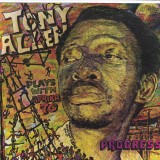
Comet Records presents the Tony Allen & Afrika 70 reissue series with the classic late seventies first four solo albums of Tony Allen remastered and restored: Jealousy, Progress, No Accomodation for Lagos & No Discrimination, all coming in an heavy Deluxe Tip-On Jacket. Recorded with Afrika 70 at the height of their power as Fela Kuti’s band, these are seminal recordings in the pantheon of Afrobeat history. Once again, Comet Records has the opportunity to shine a light on the sheer musicality and originality of the humble drumming giant. Tony Allen’s passing in April 2020 sent a shockwave across the world, as fans and collaborators from Lagos to Brooklyn and everywhere in between mourned the loss of a generous and powerful being, the kind of being we thought would live forever. Thankfully, we have the gift of Tony’s timeless music, starting with these four special solo albums, through which his musical voice guides our dancing feet and full hearts forever. Progress showcases Afrika 70 doing what they do best: digging deep and bringing the force, but always with
remarkable restraint and swagger, propelled by Tony’s steady hands and feet. The title track, “Progress” starts with a bang and never loses steam - a performance so fierce that it stands alongside Fela’s most
powerful anthems. The second track, “Afro Disco Beat” shows Tony Allen at one of his creative peaks. He tells: “What I was saying on Progress was that instead of fighting Fela for money, I was trying to progress and create on my own. Progress is what a hard worker is looking for I had to look it for myself” (Taken from Tony’s autobiography by Michael Veal). Tony Allen possessed magic within him, which he spent his entire life sharing with us through his drumming hands, tapping feet and generous heart. That magic is ever-present and strong on these formative solo albums - they are must-haves for Afrobeat fans across the globe.