quête:revival ep

Genres
Tout
COMPUMA - HORIZONS

Compuma

HORIZONS

12inchSA008LP
SOMETHING ABOUT
30.05.2025

COMPUMA's new new album “horizons”now available on vinyl via his own label Something About!

The album “horizons” is a further development of COMPUMA's “horizons EP”, which was released in July 2023 as a digital-only EP on his Bandcamp. The songs are inspired by the scenery and environment of Lake Ezu, Kumamoto, where the artist's roots lie, and by his walks in various places around Japan.

Horizons 1”, in which the undulations of electronic sounds seem to represent a leisurely walk across a clear expanse of sky and lake scenery, and the vocoder voice somewhat reminds us of people's activities, and the piece changes to a more minimalistic play of rhythms and electronic sounds, as if focusing on introspection in the midst of walking. The album also includes “horizons 2,” which changes with exquisite salinity, “horizons 3,” which pays homage to early electronic music, and “horizons 4,” a more stoic minimal electro-dubwise piece that seems to be immersed in the act of walking, The last track on the album, “horizons 5,” is a non-beat ambient track with a hint of the waterfront, as if the artist is gazing at the vast sky, as if the steps of the first half of the album are expanding into a faint memory, and is accompanied by a field recording. The album includes “horizons 5”, a non-beating ambient taste that is covered by field recordings and depicts the atmosphere of a wandering waterfront, and five versions of “horizons” that remind us of the days of “walking”, sometimes immersed in the scenery and walking, sometimes lost in thought, with “horizons interlude” in between, which reminds us of the surface of a bobbing lake, and is a self-titled version of “View 2” from the previous album, “A View”. The album contains seven songs in total, including a self-remix of “View 2” and an electro version of “view 2 electro”, reminiscent of the shimmering surface of a lake.

Personally speaking, this work reminds me somewhat of Kraftwerk's “Autobahn,” which depicted the countryside of West Germany with minimal electronic sounds, and this work also seems to depict a scene of a “walk” with electronic sounds. However, what is different from “Autobahn” is that there is an element in the middle part of the album that seems to go into introspection in the midst of walking, and it is a work that shows various views (including feelings) throughout the album. From a macro perspective, this album is a new response to the recent environmental music revival and generalization of ambient music, which he has introduced as a DJ and record buyer for a long time.
The album was co-produced by hacchi, who also works with Deavid Soul, Urban Volcano Sound, and as a recording/mastering engineer, and mastered by Nakamura Soichiro of Peace Music, a studio that has produced many masterpieces, including Shintaro Sakamoto's solo work. The package artwork is by designer Seiichiro Suzuki. The package artwork is by designer Sei Suzuki. (The package artwork was designed by designer Sei Suzuki.)

******

Compuma is a Tokyo-based log-serving DJ whose extensive knowledge of obscure and left-field music across so many genres and different regions of the world established himself as one of the most respected record buyers in Japan,
a country well known as record collectors’ paradise. While he built his career in record business over decades, he has also been sharing his expertise in music as a DJ just as long. Not only the breath and the depth of where his selection derives are hard to compete, the way he blends them all together is also a state of art. Often intricately layered and collaged, Compuma is capable of sculpting something entirely new with bits and pieces of existing tracks in various forms such as ambient soundscapes to dubbed out club sets. In 2017, his unique ability caught the attention of Berlin Atonal directors and he was invited to play at the festival in Berlin.

He extends his skills into remixing which can be heard on the released from EM Records - “Compuma meets Haku” (2015) and “Bangkok Nights” (2017.) In June 2022, he released his first solo album, A View.
He is also an active member of a DJ trio called Akuma No Numa (which translates to “devil’s swamp”) in which he explores darker and more psychedelic periphery of dance music.

pré-commande30.05.2025

il devrait être publié sur 30.05.2025

34,03
ORPHIA - L’AVENTURE DES GENS MODERNES
  • Cernes Et Maquillage
  • L'aventure Des Gens Modernes
  • Voyage Idéal
  • Visage
  • Télévision Et Idéal
  • Oberheim
  • Crayon Noir

2023, past and future merge into one. Stripped of temporal markers, today's artists unabashedly draw from the past while boldly gazing into the future. Amid revivals and

innovations, trends and undercurrents, the game is intricate, the nuances abundant. Orphia's music is no exception. Behind the synthesizers, the Genevan weaves a musical tapestry on a tightrope. Cold wave, synth-pop, post-punk, eurodance, Indochine, Depeche Mode, Boards of Canada, Eurythmics... it all blends in a grand synthetic ritual where the festivities happily don't stop at the first light of dawn. Charging forward, swiftly, strongly, into an uncertain future, no questions asked but with a quick glance in the rearview mirror, just to be sure.

"L'Aventure des Gens Modernes" resides in this retro-futuristic melancholy, between nostalgia and a thirst for tomorrow. Without ever falling into foolish nostalgia or soulless revival, the EP reflects an absolute urgency. Urgency to produce, first and foremost, as studio work has become a true raison d'être for Orphia. Urgency to also shout out a certain rage against a world devoid of hope, and this on stage where the artist performs alone, synths in hand and sharp beats for the dancefloor. In an era where the past enables facing the future, the 5 tracks of "L'Aventure des Gens Modernes" breathe a breath of fresh air into a scene in ruins. Cyberpunk or punk in general, Orphia wants to go fast and take everything in its path.

pré-commande16.05.2025

il devrait être publié sur 16.05.2025

21,43
Prospect Park, Taka Boom, Lou Casablanca, Angela Johnson, Da Funk Junkies & DiscoGalactiX, Massimo B - Groove Is In The Heart Vol. 2

DJ Support: Dimitri From Paris, David Morales, Dave Lee, The Shapeshifters, Brian Tappert, Quentin Harris, Michael Gray, Dr. Packer, Marcel Vogel, Dj Pippi, Sebb Junior, Dj Pope, Dj Oji and many others

Groove Culture main men Micky More and Andy Tee are once again at the controls as the label presents its' second collection of 'Groove Is In The Heart'. As with the popular imprint's various EPs, the focus is on joining the dots between organic house, revivalist disco, uplifting dancefloor soul and colourful jazz-funk. There's much to admire from start to finish, a very strong bunch including MM & AT's celebratory Mix of Prospect Park's swirling disco-funk treat Feat Taka Boom 'i Got This Feelin', a wonderfully rolling and soulful Groove Assassin rework of Lou Casablanca and Angela Johnson's 'Gimme Your Love', Da Funk Junkies and DiscoGalactiX tasty Feel Good house Tune 'Holding On' and the revivalist Italo-house warmth of Massimo Berardi's 'Who I Am' Feat. Sheree Hicks.

pas en stock

Commandez maintenant et nous commanderons l'article pour vous chez notre fournisseur.

14,24

Derniere entrée: 4 jours
Various - ECHOES OF ITALY – THE BIRDS OF PARADISE – EARLY 90S HOUSE VIBES VOL.2 (2x12")

Googling “paradise house”, the first results to pop up are an endless list of European b&b’s with whitewashed lime façades, all of them promising “…an unmatched travel experience a few steps from the sea”. Next, a little further down, are the institutional websites of a few select semi-luxury retirement homes (no photos shown, but lots of stock images of smiling nurses with reassuring looks). To find the “paradise house” we’re after, we have to scroll even further down. Much further down.

It feels like yesterday, and at the same time it seems like a million years ago. The Eighties had just ended, and it was still unclear what to expect from the Nineties. Mobile phones that were not the size of a briefcase and did not cost as much as a car? A frightening economic crisis? The guitar-rock revival?! Certainly, the best place to observe that moment of transition was the dancefloor. Truly epochal transformations were happening there. From America, within a short distance one from the other, two revolutionary new musical styles had arrived: the first one sounded a bit like an “on a budget” version of the best Seventies disco-music – Philly sound made with a set of piano-bar keyboards! – the other was even more sparse, futuristic and extraterrestrial. It was a music with a quite distinct “physical” component, which at the same time, to be fully grasped, seemed to call for the knotty theories of certain French post-modern philosophers: Gilles Deleuze, Félix Guattari, Paul Virilio... Both those genres – we would learn shortly after – were born in the black communities of Chicago and Detroit, although listening to those vinyl 12” (often wrapped in generic white covers, and with little indication in the label) you could not easily guess whether behind them there was a black boy from somewhere in the Usa, or a girl from Berlin, or a pale kid from a Cornish coastal town.

Quickly, similar sounds began to show up from all corners of Europe. A thousand variations of the same intuition: leaner, less lean, happier, slightly less intoxicated, more broken, slower, faster, much faster... Boom! From the dancefloors – the London ones at least, whose chronicles we eagerly read every month in the pages of The Face and i-D – came tales of a new generation of clubbers who had completely stopped “dressing up” to go dancing; of hot tempered hooligans bursting into tears and hugging everyone under the strobe lights as the notes of Strings of Life rose up through the fumes of dry ice (certain “smiling” pills were also involved, sure). At this point, however, we must move on to Switzerland.

In Switzerland, in the quiet and diligent town of Lugano, between the 1980s and 1990s there was a club called “Morandi”. Its hot night was on Wednesdays, when the audience also came from Milan, Como, Varese and Zurich. Legend goes that, one night, none less than Prince and Sheila E were spotted hiding among the sofas, on a day-off of the Italian dates of the Nude Tour… The Wednesday resident and superstar was an Italian dj with an exotic name: Don Carlos. The soundtrack he devised was a mixture of Chicago, Detroit, the most progressive R&B and certain forgotten classics of old disco music: practically, what the Paradise Garage in New York might have sounded like had it not closed in 1987. In between, Don Carlos also managed to squeeze in some tracks he had worked on in his studio on Lago Maggiore. One in particular: a track that was rather slow compared to the BPM in fashion at the time, but which was a perfect bridge between house and R&B. The title was Alone: Don Carlos would explain years later that it had to be intended both in the English meaning of “by itself” and like the Italian word meaning “halo”. That wasn’t the only double entendre about the song, anyway. Its own very deep nature was, indeed, double. On the one hand, Alone was built around an angelic keyboard pattern and a romantic piano riff that took you straight to heaven; on the other, it showcased enough electronic squelches (plus a sax part that sounded like it had been dissolved by acid rain) to pigeonhole the tune into the “junk modernity” section, aka the hallmark of all the most innovative sounds of the time: music that sounded like it was hand-crafted from the scraps of glittering overground pop.

No one knows who was the first to call it “paradise house”, nor when it happened. Alternative definitions on the same topic one happened to hear included “ambient house”, “dream house”, “Mediterranean progressive”… but of course none were as good (and alluring) as “paradise house”. What is certain is that such inclination for sounds that were in equal measure angelic and neurotic, romantic and unaffective, quickly became the trademark of the second generation of Italian house. Music that seemed shyly equidistant from all the rhythmic and electronic revolutions that had happened up to that moment (“Music perfectly adept at going nowhere slowly” as noted by English journalist Craig McLean in a legendary field report for Blah Blah Blah magazine). Music that to a inattentive ear might have sounded as anonymous as a snapshot of a random group of passers-by at 10AM in the centre of any major city, but perfectly described the (slow) awakening in the real world after the universal love binge of the so-called Second Summer of Love.

For a brief but unforgettable season, in Italy “paradise house” was the official soundtrack of interminable weekends spent inside the car, darting from one club to another, cutting the peninsula from North to centre, from East to West coast in pursuit of the latest after-hours disco, trading kilometres per hour with beats per minute: practically, a new New Year’s Eve every Friday and Saturday night. This too was no small transformation, as well as a shock for an adult Italy that was encountering for the first time – thanks to its sons and daughters – the wild side of industrial modernity. The clubbers of the so-called “fuoriorario” scene were the balls gone mad in the pinball machine most feared by newspapers, magazines and TV pundits. What they did each and every weekend, apart from going crazy to the sound of the current white labels, was linking distant geographical points and non-places (thank you Marc Augé!) – old dance halls, farmhouses and business centres – transformed for one night into house music heaven. As Marco D’Eramo wrote in his 1995 essay on Chicago, Il maiale e il grattacielo: “Four-wheeled capitalism distorts our age-old image of the city, it allows the suburbs to be connected to each other, whereas before they were connected only by the centre (…) It makes possible a metropolitan area without a metropolis, without a city centre, without downtown. The periphery is no longer a periphery of any centre, but is self-centred”.

“Paradise house” perfectly understood all of this and turned it into a sort of cyber-blues that didn’t even need words, and unexpectedly brought back a drop of melancholic (post?)-humanity within a world that by then – as we would wholly realise in the decades to come – was fully inhuman and heartless. A world where we were all alone, and surrounded by a sinister yellowish halo, like a neon at the end of its life cycle. But, for one night at least, happy."

pas en stock

Commandez maintenant et nous commanderons l'article pour vous chez notre fournisseur.

28,99

Derniere entrée: 35 jours
Various - ECHOES OF ITALY - ARTISTS IN WONDERLAND – EARLY 90S HOUSE VIBES VOL.1 LP 2x12"

Volume 1 of this expertly curated project of 90s Italian House - put together by Don Carlos.

If Paradise was half as nice… by Fabio De Luca.

Googling “paradise house”, the first results to pop up are an endless list of European b&b’s with whitewashed lime façades, all of them promising “…an unmatched travel experience a few steps from the sea”. Next, a little further down, are the institutional websites of a few select semi-luxury retirement homes (no photos shown, but lots of stock images of smiling nurses with reassuring looks). To find the “paradise house” we’re after, we have to scroll even further down. Much further down.

It feels like yesterday, and at the same time it seems like a million years ago. The Eighties had just ended, and it was still unclear what to expect from the Nineties. Mobile phones that were not the size of a briefcase and did not cost as much as a car? A frightening economic crisis? The guitar-rock revival?! Certainly, the best place to observe that moment of transition was the dancefloor. Truly epochal transformations were happening there. From America, within a short distance one from the other, two revolutionary new musical styles had arrived: the first one sounded a bit like an “on a budget” version of the best Seventies disco-music – Philly sound made with a set of piano-bar keyboards! – the other was even more sparse, futuristic and extraterrestrial. It was a music with a quite distinct “physical” component, which at the same time, to be fully grasped, seemed to call for the knotty theories of certain French post-modern philosophers: Gilles Deleuze, Félix Guattari, Paul Virilio... Both those genres – we would learn shortly after – were born in the black communities of Chicago and Detroit, although listening to those vinyl 12” (often wrapped in generic white covers, and with little indication in the label) you could not easily guess whether behind them there was a black boy from somewhere in the Usa, or a girl from Berlin, or a pale kid from a Cornish coastal town.

Quickly, similar sounds began to show up from all corners of Europe. A thousand variations of the same intuition: leaner, less lean, happier, slightly less intoxicated, more broken, slower, faster, much faster... Boom! From the dancefloors – the London ones at least, whose chronicles we eagerly read every month in the pages of The Face and i-D – came tales of a new generation of clubbers who had completely stopped “dressing up” to go dancing; of hot tempered hooligans bursting into tears and hugging everyone under the strobe lights as the notes of Strings of Life rose up through the fumes of dry ice (certain “smiling” pills were also involved, sure). At this point, however, we must move on to Switzerland.

In Switzerland, in the quiet and diligent town of Lugano, between the 1980s and 1990s there was a club called “Morandi”. Its hot night was on Wednesdays, when the audience also came from Milan, Como, Varese and Zurich. Legend goes that, one night, none less than Prince and Sheila E were spotted hiding among the sofas, on a day-off of the Italian dates of the Nude Tour… The Wednesday resident and superstar was an Italian dj with an exotic name: Don Carlos. The soundtrack he devised was a mixture of Chicago, Detroit, the most progressive R&B and certain forgotten classics of old disco music: practically, what the Paradise Garage in New York might have sounded like had it not closed in 1987. In between, Don Carlos also managed to squeeze in some tracks he had worked on in his studio on Lago Maggiore. One in particular: a track that was rather slow compared to the BPM in fashion at the time, but which was a perfect bridge between house and R&B. The title was Alone: Don Carlos would explain years later that it had to be intended both in the English meaning of “by itself” and like the Italian word meaning “halo”. That wasn’t the only double entendre about the song, anyway. Its own very deep nature was, indeed, double. On the one hand, Alone was built around an angelic keyboard pattern and a romantic piano riff that took you straight to heaven; on the other, it showcased enough electronic squelches (plus a sax part that sounded like it had been dissolved by acid rain) to pigeonhole the tune into the “junk modernity” section, aka the hallmark of all the most innovative sounds of the time: music that sounded like it was hand-crafted from the scraps of glittering overground pop.

No one knows who was the first to call it “paradise house”, nor when it happened. Alternative definitions on the same topic one happened to hear included “ambient house”, “dream house”, “Mediterranean progressive”… but of course none were as good (and alluring) as “paradise house”. What is certain is that such inclination for sounds that were in equal measure angelic and neurotic, romantic and unaffective, quickly became the trademark of the second generation of Italian house. Music that seemed shyly equidistant from all the rhythmic and electronic revolutions that had happened up to that moment (“Music perfectly adept at going nowhere slowly” as noted by English journalist Craig McLean in a legendary field report for Blah Blah Blah magazine). Music that to a inattentive ear might have sounded as anonymous as a snapshot of a random group of passers-by at 10AM in the centre of any major city, but perfectly described the (slow) awakening in the real world after the universal love binge of the so-called Second Summer of Love.

For a brief but unforgettable season, in Italy “paradise house” was the official soundtrack of interminable weekends spent inside the car, darting from one club to another, cutting the peninsula from North to centre, from East to West coast in pursuit of the latest after-hours disco, trading kilometres per hour with beats per minute: practically, a new New Year’s Eve every Friday and Saturday night. This too was no small transformation, as well as a shock for an adult Italy that was encountering for the first time – thanks to its sons and daughters – the wild side of industrial modernity. The clubbers of the so-called “fuoriorario” scene were the balls gone mad in the pinball machine most feared by newspapers, magazines and TV pundits. What they did each and every weekend, apart from going crazy to the sound of the current white labels, was linking distant geographical points and non-places (thank you Marc Augé!) – old dance halls, farmhouses and business centres – transformed for one night into house music heaven. As Marco D’Eramo wrote in his 1995 essay on Chicago, Il maiale e il grattacielo: “Four-wheeled capitalism distorts our age-old image of the city, it allows the suburbs to be connected to each other, whereas before they were connected only by the centre (…) It makes possible a metropolitan area without a metropolis, without a city centre, without downtown. The periphery is no longer a periphery of any centre, but is self-centred”.

“Paradise house” perfectly understood all of this and turned it into a sort of cyber-blues that didn’t even need words, and unexpectedly brought back a drop of melancholic (post?)-humanity within a world that by then – as we would wholly realise in the decades to come – was fully inhuman and heartless. A world where we were all alone, and surrounded by a sinister yellowish halo, like a neon at the end of its life cycle. But, for one night at least, happy.

pas en stock

Commandez maintenant et nous commanderons l'article pour vous chez notre fournisseur.

28,99

Derniere entrée: 35 jours
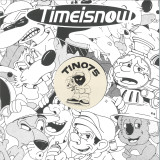
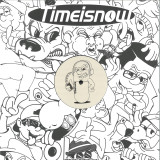
Bushbaby - Roll To The Rhythm EP

Bass music royalty Bushbaby joins the Time Is Now family with his Roll To The Rhythm EP, delivering three colossal bass-driven rollers that are sure to shake the dancefloor.

Once again, Bushbaby proves why he's at the forefront of bass music, consistently pushing boundaries and setting the standard for the genre. His unique ability to blend raw, infectious UKG rhythms with cutting-edge sound design makes this EP a standout in the current UKG revival-original, unforgettable, and destined to make waves. With support already rolling in from bass heavyweights like Interplanetary Criminal and Bakey, this 3-track banger is primed to dominate club sound systems and sounds absolutely massive on big speakers.

Whether you're digging through your record bag or prepping your USB for the next club night, Roll To The Rhythm is a must-have record.

pas en stock

Commandez maintenant et nous commanderons l'article pour vous chez notre fournisseur.

11,98

Last In: 7 months ago
Killer Mike - Michael & The Mighty Midnight Revival  LIMITED EDITION
  • Bussin Bricks Intro
  • Nobody Knows (Feat. Anthony Hamilton, Jordan Alyssa, Troy Durden & Adonica Nunn)
  • Humble Me
  • Higher Level (Feat. Jori & Adonica Nunn)
  • Exit 9 Scenic Route (Feat Offset, Blxst, Lena Byrd Miles & Troy Durden)
  • Lord Prepare Me (Feat. Bellygang Kush, Jane Handcock, Adonica Nunn)
  • Slummer 4 Junkies (Feat. Lena Byrd Miles, Alicia Peters-Jordan, Jori, Adonica Nunn, Jordan Alyssa & Troy Durden)
  • Had To Go Get It (Feat. Troy Durden)
  • ’97 3-6 Freestyle
  • Still Talk’n That Shit (Feat. Key Glock & Project Pat)
  • High & Holy (Physical Only)

"For me this is a testimonial. When I was growing up an important part of church service was people having the opportunity to stand up and give public testimony on their trials, tribulations, and triumphs. After the celebratory atmosphere that followed MICHAEL I was reminded that tribulations never cease, but God is always with me and this is a testimonial of my tumultuous times, my trials, and my continued triumph in spite of doubt, outright hate, and fear. I am here to speak to and with my fellow sinners and Saints.” - KILLER MIKE


MIchael & The Mighty Midnight Revival - Songs For Sinners And Saints", a ten song collection that provides a bookend to the 3 time GRAMMY winning MICHAEL era and puts the speculation about the aftermath of February 4 to bed. Killer Mike states "This is the epilogue to MICHAEL. This is what comes after Feb 4th. I had a year to live with MICHAEL and realized I had more I wanted to do with this sound before moving on."

pré-commande22.11.2024

il devrait être publié sur 22.11.2024

25,63
ACIDBOY AKA REGAL - THE FINAL CHAPTER (PART 1)

Known for his pivotal role in the Acid Techno sub-genre revival through his label, Involve Records, Regal's latest work revisits the genre's essence while infusing it with a fresh, modern twist. Under his ACIDBOY alias, his latest album, 'The Final Chapter', is a nostalgic and forward-looking expression of an artist who has grown and adapted but remains true to his core musical identity.


This eleven-track project blends the high-energy sounds that first defined his career with the depth and maturity gained over years of evolution whilst also honouring an unforgettable era of one of electronic music's boldest and most expressive sub-genres and artists.

'The Final Chapter' is an album that goes against the current flow, bringing to light the sound of the sub-genres of Techno from the last 35 years. It's a clever balance between past and present, the old and new Regal aka ACIDBOY, emphasising his introverted artistic side, a lover of music and production as well as a story intended for a patient and cultured listener. The album defies superficial musical trends, offering a profound sonic experience that invites listeners on a deeper journey, far removed from the quick-hit tracks designed for social media.

The name of this album and Regal's previous EP 'The Last Summer' certainly leaves room for interpretation as these might sound like signs of a farewell to the music scene.

pas en stock

Commandez maintenant et nous commanderons l'article pour vous chez notre fournisseur.

12,19

Derniere entrée: 41 jours
ACIDBOY AKA REGAL - THE FINAL CHAPTER (PART 2)

Known for his pivotal role in the Acid Techno sub-genre revival through his label, Involve Records, Regal's latest work revisits the genre's essence while infusing it with a fresh, modern twist. Under his ACIDBOY alias, his latest album, 'The Final Chapter', is a nostalgic and forward-looking expression of an artist who has grown and adapted but remains true to his core musical identity. This eleven-track project blends the high-energy sounds that first defined his career with the depth and maturity gained over years of evolution whilst also honouring an unforgettable era of one of electronic music's boldest and most expressive sub-genres and artists.

'The Final Chapter' is an album that goes against the current flow, bringing to light the sound of the sub-genres of Techno from the last 35 years. It's a clever balance between past and present, the old and new Regal aka ACIDBOY, emphasising his introverted artistic side, a lover of music and production as well as a story intended for a patient and cultured listener. The album defies superficial musical trends, offering a profound sonic experience that invites listeners on a deeper journey, far removed from the quick-hit tracks designed for social media.

The name of this album and Regal's previous EP 'The Last Summer' certainly leaves room for interpretation as these might sound like signs of a farewell to the music scene.

pas en stock

Commandez maintenant et nous commanderons l'article pour vous chez notre fournisseur.

12,19

Last In: 12 months ago
the Men They Couldn't Hang - The Magnificent 40 Vol 2 LP 2x12"

The two separate double vinyl sets are now available that correlate to the triple CD released earlier this year. TMTCH stumbled into existence onstage at the Alternative Country Festival, Electric Ballroom, Camden on Easter Sunday in 1984; after a long afternoon busking and drinking in a Hammersmith subway. They knew three chords and a hundred songs all of which sounded a bit the same, a frenzied skiffle that was exciting to jump around and drink snakebite to. If they thought about longevity at all, a lifespan of 40 days seemed most likely. It's forty years later and they are still running. Since those early days, and without much of a game plan other than always stepping onward, TMTCH have released around 20 albums plus many side projects, bootlegs, curios and an unknown number of T shirts. They've toured constantly, whether in dingy pub backrooms or Grand Ballrooms and Festival Stages. From Cairo to Reykjavik and all points in between, the TMTCH roadshow has shambled and thrilled through the decades, always passionate, always literate, occasionally dishevelled. Forty years of recording has spawned a vast back catalogue, well represented here by songs from each album, style and era; a tapestry of human stories and vibrant characters. So there are the fast sprints like early folk hoedown 'Ironmasters', the frantic shanty 'Raising Hell' and the amphetamine punk blues of 'Going Back to Coventry'. Then there are the waltzing folk ballads, from their impassioned version of the anti war standard 'Green Fields Of France' to the bitter regret of 'The Bells' and the righteous testimony of 'Our Day'. Elsewhere there are anthems galore; 'The Crest' a swirling gaelic chant, 'Rosettes', a fast marching assault of drums, fiddles and mandolins; historical epics such as 'Ghosts Of Cable Street', 'Shirt of Blue' and 'The Colours'; romantic ballads like the wistful 'Parted From You' and 'Island in The Rain'. All the eras are here; from the wiry lo fi of the first album, through the eighties into full blown MTV ready multi trackers with vast charging drums; the initial simplicity of their recipe deepening and darkening. And then on through the nineties, noughties and tens; always the double pronged vocals drifting between harmony and unison, always the celtic, folk and country tones vying for attention, the emotive fiddle, the top end mandolin above the thundering rhythm section. On through bouffant hair, spiky hair, dyed hair, thin hair and hats; on through Grunge, Baggy, Madchester, Rave, Britpop. On through the Miner's Strike, Poll Tax, New Labour, Iraq and Brexit. On through marriage, children, loss and revival. Forty years at the working end of rock and roll is a feat achieved by very few bands. It requires tremendous chemistry, a deep catalogue; both panoramic and miniature, a vital and irrepressible energy, all of which is on resplendent display in this sprawling 3 disc compilation. But most of all it requires an intense resilience, something that TMTCH possess in spades. Forty years on the run; was ever a band so aptly named?

pré-commande08.11.2024

il devrait être publié sur 08.11.2024

46,18
THE PRIMATES - WE ARE THE PRIMATES

This 1986 album by The Primates remain as the only recording ever released by these four 60s r&b and garage fans. Originally published on Greg Shaw's very own Voxx (Bomp! sublabel focused on revival garage/psychedelia) and produced by Shaw himself, this valuable musical document that portraits the essence of the L.A. 80s garage scene, has been out of print for more than 20 years! So we thought it would be a perfect record to reissue as part of our Bomp! reissue series. The Primates were formed in 1984 and cut their teeth at L.A. spots such as the Cavern Club, as part of a growing scene of devoted Nuggets/Pebbles fans, fascinated with 1960s garage punk classics. The core of the band were Brett Miller and Ted Edlefsen, sporting Vox guitars, and Erik Bluhm as front man, with different drummers, mostly Brian Corrigan but then also Eric from Threw the Looking Glass and Gene from The Miracle Workers. The opener 'I Ain't Like You', 'Bad Luck' or the fun cover of Neil Sedaka's 'I Go Ape' reflect the wild, party-driven mood of the entire album, making you wonder how crazy their shows were in the golden era of the L.A. 80s garage scene. Combining originals and versions (check their great take on Q65's 'I Got Nightmares'), "We Are The Primates" remains as a wild, raw, party album that every fan of garage music should own. Munster is thrilled to reissue this essential '80s garage gem as part of a series of releases celebrating Bomp! 50th anniversary. Our issue includes a booklet with liner notes and rare photos and ephemera.

pré-commande08.11.2024

il devrait être publié sur 08.11.2024

20,38
HASSOUGAKUDAN/SHANG SHANG TYHOON - Pom Poko Soundtrack
  • A1: Tanuki, Let's Play
  • A2: Main Title
  • A3: Life Of A Tanuki
  • A4: Revival Of The Art Of Transformation
  • A5: Musical Accompaniment To Ses-Ses-Se
  • A6: Musical Accompaniment To Toryanse
  • A7: Wind And Clouds, Dance Of Urgency
  • A8: Tan-Tan Tanuki
  • A9: Inviting Cat's Samba
  • A10: Twin Stars "Song Of Going Around The Stars”
  • A11: Hibernation
  • A12: Joys Of Spring
  • A13: Homesickness: Awa - Tokyo - Sado
  • A14: Tanuki's Mambo
  • A15: Happy Hanagasa
  • A16: Going Into Battle
  • A17: Subtle And Profound Mysterious Music
  • B1: Pom Poko Tanuki Music
  • B2: Whirlwind Shamisen
  • B3: Rengeso - Gonta's Death Of Honor
  • B4: Elegy
  • B5: Undercurrent
  • B6: The Tanukis Now... (Epilogue)
  • B7: Pom Poko Main Theme "Genki Song”
  • B8: Ending Theme『Itsudemo Dareka Ga』Shang Shang Typhoon

Recorded using various traditional musical instruments, the album includes Japanese-style music, samba, mambo, and more, featuring songs like "Itsudemo Dareka ga".

pré-commande05.11.2024

il devrait être publié sur 05.11.2024

42,48
Various - 4 The Nite EP

From Karma Recordings comes their third EP. Straight off the back of 002 selling out DJ Rap joins the list of prestigious producers wanting to showcase their skills on the label. DJ Rap being the queen of dnb this remix bridges the gap between jungle and drum n bass. The Original from DJ KOS blends beautiful synths with slammin’ breakbeats. Flip it over to showcase DJ Ande’s seventies revival with Six Million Dollard and DJ Terraces Slippin’ Time which skillfully blends hardcore and jungle seemlessly together.

pas en stock

Commandez maintenant et nous commanderons l'article pour vous chez notre fournisseur.

14,71

Last In: 3 years ago
The Joe Harriott Quintet - Movement LP

On 4 October 2024 Universal Music Recordings and Decca Records are making Jamaican/British jazz saxophonist Joe Harriott’s album ‘Movement’ available again for the first time since it was released in 1964. Long sought after by collectors and connoisseurs, original copies now sell for upwards of £1,000.

This new edition was mastered at Abbey Road using high definition 24bit/192kHz audio files, copied directly from the original stereo analogue master tapes (previously only the mono version has been on vinyl). Images of those tapes are included in the package alongside new sleeve notes written by noted author, compiler and documentary maker Tony Higgins, who also acts as Executive Producer for Decca’s ‘British Jazz Explosion’ series.

Recorded in 1963, ‘Movement’ was released as part of the Lansdowne Series, overseen by the influential Denis Preston, one of the UK’s first independent record producers, and engineered by Adrian Kerridge. Of the nine tracks, seven are Harriott originals, whilst the other two were written by another pioneer of British Jazz, Michael Garrick. Playing alongside Joe were bassist Coleridge Goode (b. 1914 Jamaica, d. 2015 London), drummer Bobby Orr (b. Scotland 1928, d. 2020), pianist Pat Smythe (b. Scotland 1923, d. 1983), and trumpet/flugelhorn player Ellsworth ‘Shake’ Keane (b. St. Vincent 1927, d. 1997).

Born in Jamaica in 1928, Joseph Arthurlin Harriott was a pupil at the Alpha Boys School (alma mater to Harold McNair, Dizzy Reece, and a myriad of Ska greats). He arrived in Britain in the early ’50s, initially touring with the Ozzie Da Costa Band, followed by a brief spell with the Ronnie Scott Big Band, and sessions backing the likes of George Chisholm, and Lita Roza.

By the mid ’50s Joe was a big enough draw to release records under his own name, and whilst these early recordings conform to the then popular bop style, the following decade would see him release albums whose titles chart his development; ‘Free Form’ in 1960, and ‘Abstract’ in 1963.

‘Movement’ is a testament to Joe Harriott’s visionary approach to jazz. It blends structure with freedom, tradition with innovation, and individual expression with collective creativity. His development of free-form jazz represents a significant contribution to the genre, paralleling yet distinct from the work of Ornette Coleman and other American free jazz artists. It is an essential listen, not only for fans of British jazz, but jazz fans in general.

It is perhaps best summed up by the epitaph that now adorns Joe’s gravestone; “Parker? There’s them over here can play a few aces too.”

pré-commande04.10.2024

il devrait être publié sur 04.10.2024

30,67
Various - Music By The Newton Brothers - X-Men ‘97 OST LP 2x12"

Mutant, in partnership with Hollywood Records and Marvel Studios are proud to present The Newton Brothers' score to the hit animated series X-Men '97


The highly anticipated revival of the long-dormant and seminal animated series is as fun, thoughtful and emotionally charged as the original run, while being matured slightly for an audience that has aged since its last episode nearly thirty years ago. But matching the energy, tone of the original was dependent on nailing the sound, and that clearly was top of mind for the series composers The Newton Brothers.


The Newton Brothers have produced an incredibly dynamic collection of music - from tackling the implications of serious political allegories, deep emotional truths, all while still embracing the fantastical surprises present in this universe (such as being sucked into a video game). X-Men '97 proves you can tackle legacy work in creative and original ways.


2 x 140g translucent blue and red vinyl housed in a gatefold jacket Artwork by Phantom City Creative.

pré-commande27.09.2024

il devrait être publié sur 27.09.2024

29,83
Lumineers - Lumineers LP 2x12"

Lumineers

Lumineers LP 2x12"

2x12inchDUA2382
DUALTONE
27.09.2024

In 2011, an eponymous, self-recorded EP led to touring, and before long The Lumineers started attracting devout fans. They're drawn by songs like "Ho Hey" and "Stubborn Love," Americana-inflected barn burners in the vein of the Avett Brothers and Mumford & Sons. The roots revival of the last few yeas has primed listeners for a new generation of rustic, heart-on-the-sleeve music. The Lumineers walk that line with an unerring gift for timeless melodies and soul-stirring lyrics.

pré-commande27.09.2024

il devrait être publié sur 27.09.2024

35,08
Lumineers - The Lumineers LP

Lumineers

The Lumineers LP

12inchDUA16081
DUALTONE
27.09.2024

In 2011, an eponymous, self-recorded EP led to touring, and before long The Lumineers started attracting devout fans. They're drawn by songs like "Ho Hey" and "Stubborn Love," Americana-inflected barn burners in the vein of the Avett Brothers and Mumford & Sons. The roots revival of the last few yeas has primed listeners for a new generation of rustic, heart-on-the-sleeve music. The Lumineers walk that line with an unerring gift for timeless melodies and soul-stirring lyrics.

pré-commande27.09.2024

il devrait être publié sur 27.09.2024

28,95
THE PANDORAS - IT'S ABOUT TIME LP

Bomp Records of Burbank, California was likely the most significant American independent record label of the 1970s. In 1979 Voxx was founded as a subsidiary of Bomp as a specialty label for '60s-styled garage and psychedelic inspired music and was home to the debut album of the Pandoras. The Pandoras really got started back in 1982 when triple threat Paula Pierce (guitar, vocals AND songwriter) met singer and guitarist Debbie Mendoza at Chaffey College Rancho Cucamonga, one of those dozens of small communities that make up the greater Los Angeles area. According to stories told around the campfire, Paula had posted an advertisement on the bulletin board inside the college's cafeteria. The ad was both simple and direct: Wanted: female musician to jam with. As legend has it, the ad also stressed a keen interest in 60's garage punk music. Debbie answered Paula's ad, and soon the two girls were bringing guitars to school and holding impromptu jam sessions between classes. A little later that year, Paula brought in Gwynne Kahn on keyboards and second guitar, and Debbie convinced drummer Casey Gomez to join. People who were around at the time pinpoint December 1982 as the official beginning of the Pandoras as a band. The Pandoras didn't waste any time getting down to business. They started gigging regularly, and their repertoire of tasty garage nuggets expanded substantially, fueled both by Paula's talented songwriting and also no doubt by her relationship with Unclaimed frontman Shelley Ganz and his extensive knowledge of obscure 60's gems. The Pandoras unleashed their first recordings on the world in 1983 with the "I'm Here, I'm Gone" EP on Moxie records. It was a meaty slab of girls in the garage punk rock, and while maybe not as polished as subsequent efforts, it clearly showed off the talent of the band. Greg Shaw had been alerted to the band a few months earlier, and always one to know a good thing when he heard it, he quickly signed them. "It's About Time" saw the light of the day in 1984 on Voxx Records and became one of the first and best efforts of authentic 1960's-styled garage punk to emerge from the revival scene. It was pure garage gold! Today, 40 years after its original release date, we are thrilled to reissue this essential '80s garage punk gem as part of a series of releases celebrating Bomp! 50th anniversary. Our issue includes 3 bonus tracks and liner notes by Gravedigger V's John Hanrattie. "Paula Pierce refused to play it cute. On The Pandoras' debut album she out-snarled, out-screamed, out-fuzzed and out araged the male-dominated competition-like a well-aimed go-go boot to the jugular." - Mike Stax, Ugly Things Magazine "As good a '60s punk record as any contemporary combo is likely to make." - Trouser Press

pré-commande30.08.2024

il devrait être publié sur 30.08.2024

20,38
Municipal Waste - Tango & Thrash LP

Municipal Waste

Tango & Thrash LP

12inch4065629710682
ADA
23.08.2024

Municipal Waste haben sich einen Namen gemacht als DIE Band des Thrash-Metal-Revivals der 2000er Jahre. Die 2001 gegründete Band ist für ihre Energie bekannt und humorvolle Herangehensweise an Crossover-Thrash. Ihre EP "Tango & Thrash" wird jetzt vollständig neu veröffentlicht Remastered mit Bonustracks! "Minds Are Controlled" stammt ursprünglich von Corrosion Of Conformity, die MW-Jungs geben ihm jetzt ihren Anstrick, voll im Punk/Thrash-Stil.

pré-commande23.08.2024

il devrait être publié sur 23.08.2024

27,94
Prozak - Ras EP

Prozak

Ras EP

12inchTIN043
Time Is Now
16.08.2024

2024 repress !

One of the leading names in the current UKG revival Prozak returns to DJ Mag's 'breakthrough label of the year' Time Is Now with another weighty cut of bass driven goodness. TIP!

pas en stock

Commandez maintenant et nous commanderons l'article pour vous chez notre fournisseur.

14,92

Last In: 21 months ago
Articles par page:
N/ABPM
Vinyl