Rare South African Funk/Soul album from 1977 - First vinyl reissue since 1982 - First ever release outside of the African Continent - 180g black vinyl // Harari was a band that was deeply rooted in pan-African politics, the parallel cross-influences of the Black Panther Movement and Black Consciousness. African American soul music and Soweto Soul contributed to the way Harari became purveyors of all the styles we know today as Afro-soul, Afro-pop and Afro-jazz. The Beaters/Harari left behind a body of work that fused traditional African sounds with rock, funk, jazz, soul and psychedelia into a unique and coherent sound. It shows their ability to capture the many genres flying around South Africa during a time of intense political and cultural shifts. The album we are presenting you today (Genesis from 1977) comes swinging right out the gate with a set of six monster anthems, explosive up-tempo jams, gorgeous vocal harmonies and chants, Afro-centric fusions of rock, funk and indigenous influences. The album is packed with mesmerizing drum-grooves, psychedelic improvisations and catchy Afrobeat rhythms. This is a quintessential Harari record that every serious collector or fan needs to have in his collection. Originally released in 1977 on Gallo Records South Africa (and later repressed in 1982 on the same label), Tidal Waves Music now proudly presents the first official reissue of this rare album (original copies tend to go for LARGE amounts on the secondary market_that is if you're lucky enough to come across one). This is also the FIRST time 'Genesis' is being released outside of the African continent. This unique record comes as a deluxe 180g vinyl edition (strictly limited to 500 copies) with obi strip and featuring the original artwork.
Cerca:rhythm beate
- A1: Dick Khoza And The Afro Pedlars - Chapita
- A2: Ensemble Of Rhythm And Art - Pelican Fantasy
- A3: Spirits Rejoice - Sugar Pie
- B1: Makhona Zonke Band- The Webb
- B2: Abacothozi - Night In Pelican
- C1: The Black Pages - There Goes
- C2: The Headquarters - Moshate
- C3: The Shyannes - Asso-Kam
- D1: Almon Memela’s Soweto - Pelican City
- D2: The Drive - I Have A Dream
‘The Afro Modern Seventies Sounds of Soweto’s First Nightclub
• Over ten years in the making, this is the first compilation from South African vinyl re-issue specialists Matsuli Music
• Ten track double gatefold album journey through jazz, funk, fusion and disco, detailing the incredible story and sounds behind the Soweto nightclub during the height of apartheid
• Uniquely South African take on the trans-Atlantic sounds of Philadelphia, Detroit and New York City
• Cover artwork by Zulu Bidi (of Batsumi fame) with unseen photographs, and liner notes by Kwanele Sosibo featuring interviews with key musicians, players and a former president of South Africa
• Audio mastered and cut for vinyl by Frank Merritt at The Carvery with heavyweight 180g vinyl pressed at Pallas in Germany
A night-time haunt in the backstreets of Soweto run by a well-known bootlegger should have been a prime zone for nefarious underworld activities. Instead, it nurtured an underground of a different kind. Soon after its opening in 1973, Club Pelican became a spot where musicians steeped in the tradition of South African jazz began to cook up experimental sounds inspired by communion, competition and the movements in funk and soul blowing in from the West. Located in an industrial park on the western edge of Orlando East, Soweto, Club Pelican was off the beaten track, among a matrix of railway and industrial infrastructure. In a different time and place, this would have been a prototypical nightclub location, except there was no local precedent to follow. This was Soweto’s first night club.
In the intervening years, this location has served to heighten the now-defunct spot’s legendary status as a singular venue, one that ruled the night in the Seventies. Initially called Lucky’s and established in 1973, the Pelican’s impact on the Soweto cultural landscape was immediate. Lorded over by a charismatic figure known as Lucky Michaels, the club became the jewel in a nondescript collection of family businesses. It boasted a diverse pool of talent in its succession of house bands and an A-list of ghetto-fabulous singers as
its cabaret stars. Its VIP section was a veritable who’s who of Soweto society and its stage, hosting a mix of the day’s pop culture infused with the creativity and individual histories of the musicians, the Pelican filled a live music vacuum.
One Night in Pelican captures the halcyon seventies period with a single nightclub embodying an indomitable spirit of its troubadour players. While schooled and rooted in “standards” and local forms, the music could take any direction, at a moment’s notice. This compilation features all the key groups and players of the time: Abacothozi, Almon Memela’s Soweto, The Black Pages, Dick Khoza and the Afro Pedlars, The Drive, Ensemble of Rhythm and Art , The Headquarters, Makhona Zonke Band, the Shyannes and Spirits Rejoice.’
Samosa Records releases are coming thick and fast in what could be their finest year yet. Lex & Locke are the latest talent to make their Samosa debut with their ‘Pacifica’ EP – a sublime three tracker which is mouth watering from the off.
First up is Balandra. From the moment you hear the raw four to the floor drumbeat, you’re under its spell. The infectious bass riff moves the scenery around a little, whilst the subtle bongo attack teases what’s to come. And what’s coming is a funky, rolling cosmic lead synth that has no right to sound that damn sexy, no right at all. The vibe quickly grows into an interstellar journey, aided by an outrageously funky clav jam that gets inside your head. Balandra feels like the soundtrack to an ‘after dark’ undercover stakeout in a 1970s cop thriller. Detectives Lex & Locke are on the case and the evidence is compelling. A unique, 122bpm funk bomb which has the Samosa fingerprints all over it.
A2 is Cabo Pulmo – continuing the vibe of Balandra, Lex & Locke lay down some serious grooves in what initially sounds like a live funk band jamming away in the studio without a care in the world. No soon as we get into the beat and the bass, there’s an immediate switch to a swirling, bold cocktail of funk infused with a touch of jazz that belies the 124bpm tempo. The production is expertly tight; layers of synth, electric organ and punchy guitar riffs make this ideal for both the sun terrace and the dance floor. You’re under arrest, and Lex & Locke are reading you your rights!
The final track, Nine Palms has a real quirky, almost broken beat feel to it with its high-hat ride pattern and punchy bass drum. A wickedly twisted analogue organ riff is quickly introduced, which is cleverly used as both a rhythm device and the melodic platform that sets up the whole track. Lex & Locke seem to be total masters of a ‘free-style funky synth lead’, and we’re treated to another slice of this particularly tasty pie in ‘Nine Palms’. Whereas Balandra is the late-night stake-out, Nine Palms is the final act where Lex & Locke high five each other following another successful bust.
The Pacifica EP has a wonderfully intimate and assured vibe about it and is sure to feature in many a summer soundtrack. This release also proves that Samosa Records aren’t afraid to go off the beaten path occasionally - and when it’s this good we’re more than happy to follow. Grab this amazing cut of wax while you can!
Acid Jazz Records continue their exclusive
licensing agreement with Albarika Store, the
legendary record label that defined the sound of
Benin and influenced the entire region of West
Africa and beyond.
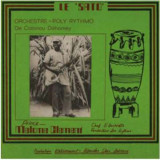
Recorded and issued in 1974, ‘Le Sato’ is one of
the earliest releases on the Albarika label and it is
also one of the deepest.
Sato is the term for the traditional rhythms that
soundtrack Vodun (Voodoo) rituals and
ceremonies in Benin. Performance of Sato is
reserved for these sacred rites, which evoke the
spirits of the dead and can last for several days
and attract hundreds of people. Sato rhythms
cannot be played outside of Vodun.
A large ceremonial Sato drum is used, which
measured over 1.5m in height. This drum is played
using wooden stick beaters, the drummer dancing
while playing. The Sato drummers are supported
by percussionists and other drummers playing
smaller drums. Together, they create unique,
layered, trance-inducing polyrhythms.
Part of Ernesto Chahoud’s ‘Middle Eastern Heavens’ album series, BBE Music reissues Lebanese composer Ihsan Al-Munzer’s 1985 masterpiece ‘Sonatina for Maria’. Al-Munzer’s sixth solo release, the first entirely composed of his own original works, ‘Sonatina for Maria’ takes a step away from the sound of his earlier ‘Belly Dance Disco’ album (reissued by BBE in 2020). This innovative library album features eight synth-driven instrumentals that effortlessly flow through psychedelic pop, cinematic soundtracks and disco music. Taking in a range of styles, the album illustrates Al-Munzer’s skill in composition and arrangement that saw him become one of the busiest arrangers of Lebanon’s 1980s pop scene. The record goes deeper into the Western rhythm Al-Munzer explored at the beginning of his career and brought to his Middle Eastern fusion productions, with the synthesizer still taking centre stage, and the electric guitar, bass and drums ever more present. When Al-Munzer entered Copenhagen’s Sun Studio in 1985 to record ‘Sonatina for Maria’, the composer thought it would be his last ever album. Diagnosed with mouth cancer, he had travelled to Denmark for treatment and decided to make one final work while awaiting his operation. The composer wrote the record during a particularly challenging period in Lebanon too – the country was buckling at its knees: destroyed, bankrupt and beaten after 10 years of civil war. “When I made the album, I had a sad feeling because of the war in Lebanon and it was hard for me to be away from my country at that time” reflects Al-Munzer. Hence, the album has a particular originality and energy across its eight tracks, wrapped up in melancholy and nostalgia for a troubled homeland, as well as showing a lust for life. Dedicated to his then five-year old daughter, title track ‘Sonatina for Maria’ is an up-tempo disco instrumental with a classical theme. Several pop ballads feature on the album, as well as trippy 1980s TV-style soundtrack ‘Dindolo’ and Arabic disco instrumental ‘Mishwar’ (Picnic), revolving around a punchy Middle Eastern melody. The album includes the main theme from the 1983 Lebanese film ‘Al Makhtouf’, one of three films for which Al-Munzer wrote the soundtrack. Directed by Clauda Akl, the film starred iconic Lebanese singer and actress Sabah. ‘Streets of Beirut’ captures the atmosphere of the Lebanese capital’s deserted streets in wartime and the album closes on fast-paced Euro-disco instrumental ‘Gipsy Nights’. Al-Munzer’s five releases from the 1970s and 1980s are part of BBE Music’s Middle Eastern Heavens reissue series, a collection of ground-breaking productions from Lebanon, curated by Lebanese DJ, compiler and music researcher Ernesto Chahoud. Notes by Natalie Shooter, edited by Will Sumsuch.
“The Vale” is in immersive electronic album of dark soundtrack work. It’s the first of several Everyday Dust releases scheduled for Castles in Space in 2021.
Everyday Dust is RJ McConnell. Based in Scotland, RJ ditched piano lessons when he realised I had no interest in being an instrumentalist. Instead he wanted to create his own musical works from the ground up. He goes on, “I was much happier working my way through music theory books on my own and applying my learning to my own music. We had a little home studio when I was a child. My Dad was also a musician and was involved in local amateur theatre where he prepared and operated all the sound cues on reel to reel tape. So from an early age I was messing around with tape machines, making tape loops and recording music. For years I tried to make the most interesting tones I could from a Yamaha home keyboard by passing it through my Dad’s guitar pedals, or recording to tape and playing it back at different speeds etc. My first proper synth was the Roland SH101.” He went on to study music and sound for theatre and worked for many years as a theatre composer before branching into larger events and eventually film and documentary work.
The Vale story starts in 2018. RJ again, “I was brought in as composer for an independent horror short that was being filmed in Istanbul. The film was a vampire movie, very atmospheric and beautifully shot. I was aware of being a Scottish composer on a Turkish film and therefore didn’t want to attempt in any way to make anything that sounded traditionally Turkish. I wanted to represent the idea of these ancient beings who had existed in one of the oldest cities in the world for centuries. I wondered how I could imply this “ancient” world with the instruments I had to hand. I recorded various old metal whistles, which were slowed right down to become eerie arcane horn blasts that sounded like they had come from another time. I also recorded lots of melodica, which was again slowed down to sound like wheezing old harmonium drones. I spent another day recording inside an old piano, plucking individual strings and also hammering them percussively with wooden beaters. Using synthesizers and effects as the “glue” to bring these sounds together I started to work on the cues for the film. I had scored most of the film by the time I heard it was being cancelled. The concept and story had been taken over by a streaming site who wanted to make it into a series - with a drastically different tone and style.
“Later that same year I had worked on a project that incorporated the folklore of a celtic water sprite who kept the waterfalls and streams running smoothly so they could turn the mills of the local village. In return the villagers would bring the water sprite bannocks (Scottish flatbreads) each day. I started to daydream about a darker, Lovecraftian twist on this story. Some Ancient One dwelling in the forests and controlling the water - the very life essence of the village - in return for offerings of the soul. The concept was filed away in the back of my mind for some months.
“The following year I was on a flight to visit my friend in Bodrum. He had been the producer and editor on the original disbanded Vampire film, and I found myself thinking about the project again. I wondered if the sound cue files were still on my laptop, which they were. It had been a year since I’d even heard them. Hearing the eldritch folk-tinged sounds of the whistles and plucked strings my mind instantly returned to the idea of the Lovecraftian folk horror story. I started jotting down notes and musical ideas and by the time I landed in Bodrum I already had the album title - The Vale. Having the album concept and prototype ideas to work with was a huge head start in making the album. Although all of the original cues were so dramatically developed and transformed that they really just served as the initial clay on the wheel.
“I used a Doepfer A100 modular synth to create the animalistic yelps, conches and horns that were improvised over the original cues as a response to the arcane “folk” world of the acoustic instruments. This half-acoustic half-modular landscape was the sonic scene-setter I needed to move onto the composition and musical journey of the album. I composed and developed most of the musical parts on an Oberheim Matrix 6 synthesizer. However all the percussion, rhythmic sequences and ornamental synth sounds were created from improvised modular sessions multitrack recorded. A lot of editing later, the soundtrack to the movie in my mind was finally there.
Dynamic Sounds Studio has its roots firmly set in Jamaica’s history. It was the first state of the art studio built in Kingston, Jamaica and a firm favourite with all the topflight homespun artists. Bob Marley chose to record the bulk of his seminal 'Catch A Fire' album there and many foreign musicians trying to catch some of that reggae magic and emulate that sound have beaten a path to its doors. As you will see the studio had a history already of its own, that was carved out before it became the aptly named Dynamic Sounds.
Originally named WIRL Studio's (West Indies Records Limited), it was set up initially to record Jamaica's versions of the American Rhythm and Blues tunes that were proving so popular on the island. It was started back in 1958 by Political leader Edward Seaga an astute businessman, who had many interests around the island including clubs and bars. As the R & B music evolved into its own styles from Mento into Ska, one of its main protagonists Byron Lee and his band the Dragonaires would be at the forefront and be seen as ambassadors to the cause. Edward Seaga would choose the band to head the 1964 World’s Fair and take them to New York to showcase the Jamaican Ska Music. His political ambitions leading the American friendly JLP (Jamaican Labour Party) against the Cuban inspired PNP (People's National Party), would see him cutting back his other interests and lead to the selling of WIRL, lock stock and barrel to Byron Lee. On taking over the business he renamed it Dynamic Sounds and extended it to include not only a top of the range recording studio but a pressing plant to distribute the new hot sounds of the day directly to the streets of Jamaica. The address would also change to 15 Bell Road, it's old address No 13, seemingly too unlucky for such a fine establishment.
The studio has become part of the Jamaican culture and each twist and turn in its musical story has been caught and recorded here. We get on board when the music had slowed down to the reggae skank that we now know and love. We have picked some fine cuts that we feel best represent the times. The rhythms are pushed to the fore and the great Sylvan Morris a much-underrated studio master, always came up with some interesting effects to enhance the version cuts. A fine time in reggae's history caught at one of Jamaica's finest studios. Dynamic Sounds from a Dynamic Studio.....
Hypnotecho’O is Pho Bho’s second release made and arranged by Matteo Coffetti, label’s co-founder along with Federico Spini. The record’s distinctive feature is its original fusion between ethnic samples beaten by violent kicks and sharp snares from the rawest techno. What it generates it’s a unique rhythm-flow ideal for the dancefloor. The collaboration with Filippo Zenna is the result of the two artist’s anxieties and fears over a past that is no longer here and a tomorrow that strives to come.
- A1: Mose Allison - If You're Going To The City
- A2: Les Mccann - Sad Little Girl
- A3: Lee Morgan - Psychedelic
- A4: Eddie Harris - Listen Here
- A5: Harold Mcnair - The Hipster
- B1: Art Blakey's Jazz Messengers - Kozo's Waltz
- B2: Joe Gordon - Terra Firma Irma
- B3: Blossom Dearie - Now At Last
- B4: Blue Mitchell - Mi Hermano
- C1: Jimmy Smith - A Walk On The Wild Side
- C2: David Axelrod - Get Up Off Your Knees
- C3: Brand New Heavies - Sphynx
- C4: Marlena Shaw - Look At Me, Look At You
- C5: Charles Williams - Trees & Grass & Things
- D1: Geoffrey Stoner - Bend Your Head Down Low
- D2: Blacks & Blues - Chains
- D3: Leon Thomas - Just In Time To See The Sun
- D4: Norman Connors - Mother Of The Future
- D5: Kamasi Washington - The Rhythm Changes
A follow up to 2018’s Jazz On The Corner which has now sold over 10,000 copies, and last year’s equally successful Soul On The Corner, this compilation see Martin and Eddie return to the world of jazz for another bite at the cherry after Volume one was declared to be “the best jazz compilation of the last 20 years” by Jazz FM’s Chris Phillips
The concept came from a radio show that Freeman and Piller put together for BBC Radio 6 Music which was so well received that the pair decided to dig deep into their record collections and build a double album of some of their favourite tracks.
The concept is simple: an album packed full of jazz gems which they hope are slightly off the beaten track. This year we have hidden gems from Nina Simone and Nicola Conte, classics from Roberta Flack, Roy Ayers and The MJQ, whilst the new British jazz generation is represented by Emma Emma-Jean Thackray. Running the gamut from hard bop, to progressive fusion via Latin beats, it’s an exhilarating listen from start to finish.
LostSoundBytes throws us by force into the deep end of a poorly lubricated engine with this 5 tracks mini album. Hear the dirty mechanical rumble of an old abandoned tractor that LostSoundBytes has just hot wired and driven off with, leaving road kill on his way. Driving fast or slow, you may ask. Who cares ! For our beneluxian shaman puts the pedal to the metal destroying the speakers on the way with Rusty Tractor. A certain vision of combustion by our mechanic LostSoundBytes : saturated rhythms on beaten up drum machines dragging us between Brussels and Paris.
2x12"
Tinfoil is the project of DeFeKT and Sunil Sharpe. Initially forged as a studio collaboration in 2014 (and later as a live show), the pair have since racked up an impressive catalogue of 12s on their own self-titled label. Tinfoil's sound is unique in today's scene, reflecting the versatility of both artists, plus a combined know-how of techno and electro. Their music comes primarily from live studio jams, enforced by a desire to get quickly to the point in what they do. This is no surprise given the fast, technical way in which they each perform solo.
For their debut album, Tinfoil provide a varied but cohesive collection of tracks. Following the intro's epic synth blasts, they open with a bang through 'Caravan Life' - a sinister, bassline-driven destroyer that builds and builds over a blend of claps, filter zaps and crying feedback. 'Beads' continues in a heads-down vein, this time with a more musical EBM type bass and knocking rimshots that mark the first appearance of Sunil's role-playing, haunting lead vocals.
'Friendly Safe Fumes' marries playful bass notes to a singing lead line, as fizzling closed hats and busy claps whip things into a frenzy. Next enter the otherworldly mutant electro of 'Meadow Pulse', signaling a well-timed lull in mood to explore a silkier side to Tinfoil's production. 'Every Saturday Night' starts with a taxi conversation about horses and carbolic soap in bygone Dublin days, before launching into a volley of clattering beats and hip-shaking FM sequences.
'Multi-DOMINATION' retains some of the FM wonk and treads a broken-beated path, featuring vocals this time akin to a ritualistic chant or perhaps the murmurings of a possessed baby. 'Both Roads To Triogue' meanwhile, brings us to a short intersection, splicing odd voices with a dense tribal rhythm. 'The Wolves Of Hellfire' is Tinfoil in more minimal dancefloor mode, as drones filter in and out under a resonating bass that detonates at all the right times.
Closing with 'Resting Point', the climax becomes deadly. The beats are stepped and the bass boisterous, while pained screams become quickly uncontrolled, setting up for a crescendo of roughneck rhythms, ricocheting kicks and turbulent modular wails.
Tinfoil have been on a roll since the beginning but maybe 'On A Roll' emphasizes this a little bit more now.