WRWTFWW Records is ecstatic to announce a limited edition vinyl release of the remarkable PONYBOI (Original Motion Picture Soundtrack) by Chilean-born composer, arranger, music producer, and multi-instrumentalist Cristobal "Cristo" Tapia de Veer (The White Lotus, Utopia, Smile, Black Mirror, and many more).
This collector's edition presents Tapia de Veer's complete original score for the critically acclaimed feature film PONYBOI - a bold, genre-defying neo-noir tale directed by Esteban Arango and and starring filmmaker, actor, screenwriter, model, and intersex rights activist River Gallo who also wrote the movie. The soundtrack arrives as a deluxe audiophile vinyl LP, housed in a luxurious 350gsm gold cardboard sleeve, cut with utmost precision by Sidney Claire Meyer at the legendary Emil Berliner Studios, home to Deutsche Grammophon's world-renowned legacy.
Vivid, seductive, gritty, dreamy, tender, and sometimes heart-pounding in its tension, the PONYBOI soundtrack is a sinuous creature of its own - an emotional, atmospheric, and deeply textural listening experience. Tapia de Veer fuses shimmering electronics with haunting melodies, raw rhythms, shadowy ambience, and surges of romantic intensity, perfectly embodying the film's world of danger, desire, identity, and survival on a single wild New Jersey night. It's daring, intimate, stylishly noir, and unmistakably Cristo: music that refuses boundaries and speaks directly to the pulse.
The LP showcases Cristobal Tapia de Veer's uncanny ability to blend experimental sound design with narrative emotion - a talent that has earned him global acclaim and numerous awards, including four Primetime Emmy Awards for The White Lotus.
This new WRWTFWW edition celebrates his artistry in its purest form: warm, rich, analog, and physically stunning. A must for soundtrack fanatics, ambient and experimental music lovers, and rare memorabilia collectors.
Search:rhythm composer
Tauceti (Lilou Chelal) is a DJ / producer / composer from Lyon. As a DJ Chelal distills a dark, tropical and sensual techno with percussive and vaporous rhythms in her mix. She stands for a very particular elegance and a certain, clearly audible maturity, which makes her stand out. "Guanyin" is her very first full length - where she transfers the elegance of her sound into a very personal and unique journey.
Tauceti about "Guanyin":
I am pleased to announce the release of my very first ambient album on the Denovali label. This is probably the most personal record I produced so far, because it is in a way a tribute to my Middle Eastern and Asian origins. It is a hybrid and intimate object, at the border between futurism and cultural heritage, with a desire to approach a more contemporary environment at the limit of classical. I used traditional instrument patterns, sounds intimately linked to oriental instruments, all the while using my electronic touch composed of drone/ ambient and sound distortions. This is the result of a year of reflection and increased exploration of new frontiers in the studio, which has gradually evolved into a desire to make an album concrete. Composed of eight tracks, some of you may have heard some of them during my ambient set during the last edition of Nuits Sonores, just before Vail and Rodhad’s magnificent live performance. It’s a kind of homecoming for me, the very first tracks I produced years ago already being part of the ambient register. This is an opportunity for me to reaffirm the multi-faceted aspect of my artistic project, drawing on various aesthetic registers, between ambient and techno. I would like to warmly thank the Denovali label for their trust here, and with whom I will have the chance and the opportunity to maintain a privileged relationship for the next years.
Maria is the debut album from renowned Brazilian electric bassist and composer Moyses Dos Santos. A homecoming for the London-based artist, Moyses’ debut reconnects him with his North-Eastern roots while assembling an international cast of collaborators including legendary Brazilian arranger Arthur Verocai, US trumpet sensation Theo Croker and London-based vocal star Lynda Dawn.
After relocating from Brazil to London in the early 2000s, Moyses dos Santos quickly became one of the capitals’ most in-demand players, sharing stages, studios, and writing credits with best-selling artists including Nile Rodgers, Janelle Monáe, Emile Sandé, Gregory Porter and Omar.
In 2022, Moyses toured with Brazilian jazz-funk legends Azymuth, completing the rhythm section alongside Brazilian drumming master Ivan "Mamão" Conti. "It felt like he was my wise Brazilian grandfather figure." Moyses recalls. "When you spend so many years working internationally, you unconsciously start to leave certain parts of yourself behind. Mamão encouraged me to reconnect with Brazilian music, and that's where this record really began."
Brazil’s North-east, where African, indigenous and European traditions collided and fused most intensely, produced a musical heritage unlike anything else on earth, Moyses dos Santos is a product of this syncretism. On Maria, named after his mother, Moyses brings the musical vocabularies of his youth to the fore. From the soul of the church band where he began to learn his trade as a musician, to the rolling batucadas – maractus, baiaos, sambas and frevos – which he played throughout his teenage years.
Drawing on the lineage of North American electric bass giants like George Duke, Jaco Pastorius, and Stanley Clarke, Moyses runs Brazilian musical traditions through jazz, funk, soul and disco: his sound charged with the cosmopolitan energy of London's contemporary jazz scene.
Lead single and album opener “Boa Viagem’ is joyous, carnivalesque dancefloor jazz: a timeless groove for the nightclub and street party alike. Calling directly to a higher power “Brazilian Spirit” is an astral-jazz phenomenon, featuring the transcendent trumpet playing of Grammy nominated Theo Croker. On “Saudade” Moyses calls upon iconic Brazilian maestro Arthur Verocai, whose signature string arrangements cascade around the divine vocals of ascendant London artist Lynda Dawn.
With impeccable style, charisma, warmth and virtuosity, Moyses steps forward with his stunning debut Maria: out on vinyl, LP, CD and digitally on the 12th June 2026.
Inner Image is a series of live studio recordings by Kamran Sadeghi, an Iranian, New York City-based composer and interdisciplinary artist working across electronic music, sound art, and multichannel composition. The EP is focused on rhythm programming and non-sample-based, hyper-sculpted synthesis. Audible artifacts become compositional material, producing shifting textures while exploring auditory illusion, spectral layering, and spatial perception. This debut release on amenthia recordings bridges Sadeghi's club sound system music with his ongoing work in sound art and avant-garde composition.
Métron Records announces Mycorrhizal Music, the forthcoming album from composer and multi instrumentalist Ess Whiteley. Currently a PhD candidate in Composition at the University of California-San Diego, Whiteley’s practice spans recordings, installations, performances, and scores, a body of work as diverse as the fungal webs that inspire it.
Across seven tracks, Whiteley explores interconnected sound worlds shaped by mycelium networks, rhizomatic structures, and other unseen systems that sustain life. Rooted in experimental electronics, minimalism, ambient and IDM, the record imagines sound as ephemeral connective tissue capable of reshaping how a listener might experience time, memory, and futurity.
At the core of Whiteley’s work is an excavation of what lies beneath perception, the felt but unspoken currents of emotionality and subtle experiences that dwell in the unconscious.
Mycorrhizal Music channels these hidden threads into a speculative ecosystem of kinship and exchange, where joy, play, and spirituality interlace like branching hyphae beneath the soil. Mycorrhizal Music has been conceived as kinetic ambient music, designed to move with the listener while walking, riding trains, driving, cooking, where everyday rhythms align with shifting sonic textures, reminding them of hidden, interconnected, mycelial webs of spiritual vitality beneath the surfaces of daily activity.
Guided by a vision of speculative ecology and interspecies resonance, it thrives in contrasts: tracks like Rhizomatic Harpists and Whispered Messages in Tapestried Fields of Fluid Motion pulse with fluid momentum, while Kaleidoscopic Patterns of Emptiness Dancing drifts into fragile stillness.
With artwork by Kenta Senekt and mastering by Brandon Hocura, Mycorrhizal Music extends Métron Records’ ethos of cultivating subtle, interconnected sound worlds.
- A1: Drawdown
- A2: Hold (Feat Ale Hop & Sara Persico)
- A3: 20230704_102400 Jpg Feat. Valerio Tricoli, Anthony Pateras & Ale Hop)
- A4: Strial
- A5: Calco (Feat Ale Hop, Antonina Nowacka & Anthony Pateras)
- B1: The Lower Primate In Us 2 (Feat Ale Hop & Renato Grieco)
- B2: Prima (Feat Ale Hop)
- B3: Xhakers (Feat Aleksandra Słyż)
- B4: Kwesch(Ə)Nˌmärk
- B5: Angelica Chirurgia (Feat Ale Hop & Antonina Nowacka)
- B6: Eyecontact (Nereo`s)
After spending much of the last years focusing on the evolution of his own instrument, the drummophone, the release of ZERO,999… reveals a new paradigm in La Foresta's work and career.
In this album he collects fragments of live performances and site-specific installations conducted over the last decade, with and without the drummophone — reimagining and repurposing them as compositional elements that he has interwoven with recent studio recordings and collaborations to form eleven viscerally powerful pieces of overwhelming rhythmic and textural density.
La Foresta weaves together these captured moments in time, while employing combinatory strategies inspired by Italo Calvino's tarot stories in "Il castello dei destini incrociati," forging relationships and connections between recordings from the collaborators and his own. In approaching accompanying and augmenting these recordings, Riccardo, in the role of percussionist and composer explores the tension between his personal and academic focus on rhythmic structures and his fascination with repurposing the drum as a durational instrument.
Contributions from collaborators include the synthetic textures of Valerio Tricoli, Anthony Pateras, Aleksandra Słiż, and Renato Grieco, the vocalizations of Antonina Nowacka and Sara Persico, and the guitar experimentations of Ale Hop and Stefano Pilia, bringing together a distributed ensemble of musicians pulling apart the orthodoxies of their own instruments and techniques. Through the interaction of these elements, La Foresta imagines a causal network that binds, integrates and informs fragmented contexts, performers and performances, exploiting new possibilities of the drummophone.
ZERO,999… is conceived as a suite where sound and time are communicated simultaneously at different orders of scale, a single strike of a drum is a drone if slowed down one thousand times, an hour-long drone is a brief tick in the clock of geological time. A seemingly static object, such as the number 1, can both be defined by its fixedness, and as a process in which eternally approaching (0,999...) is the same as arriving.
k 11: EyeContact (Nereo`s) feat. Stefano Pilia
The Éthiopiques series returns! Essential archive recordings from an extremely fruitful period in Ethiopian music.
Before “Swinging Addis” took over the world, there was Moussié Nerses Nalbandian — the Armenian-born composer who shaped modern Ethiopian music. Mentor, arranger, and pioneer, he laid the foundations of Ethio-jazz.
This Éthiopiques volume revives his forgotten legacy, recorded live by Either/ Orchestra First issue ever with new exclusive photos and in depth liner 8-page insert.
“Ethiopian jazzmen are the best musicians that we have seen so far in Africa.
They really are promising handlers of jazz instruments.”
Wilbur De Paris
(1959, after a concert in Addis Ababa)
አዲስ፡ዘመን። *Addis zèmèn* **A new era.**
The time is the mid-1950s and early 1960s, just before "Swinging Addis" bloomed – or rather boomed – onto the scene. Brass instruments are still dominant, but the advent of the electric guitar, and the very first electronic organs, are just around the corner. Rock’n'Roll, R’n’B, Soul and the Twist have not yet barged their way in. Addis Ababa is steeped in the big band atmosphere of the post-war era, with Glenn Miller's *In the* *Mood* as its world-wide theme song, neck and neck with the Latin craze that was in vogue at the same period. Life has become enjoyable once again, with the return of peace after the terrible Italian Fascist invasion of Ethiopia (1935-1941). The redeployment of modern music is part and parcel of the postwar reconstruction. *Addis zèmèn* – a new era – is the watchword of the postwar period, just as it was all across war-torn Europe.
The generation who were the young parents of baby boomers** were the first to enjoy this musical renaissance, before the baby boomers themselves took over and forever super-charged the soundtrack of the final days of imperial reign. Music is Ethiopia's most popular art form, and very often serves as the best barometer for the upsurge of energy that is critical for reconstruction. Whether it be jazz in Saint-Germain-des-Prés or the *zazous* who revolutionised both jazz and French *chanson* after the *Libération*, be it Madrid's post-Franco Movida, or Dada, the Surrealists and *les années folles* that followed World War I, the periods just after mourning and hardship always give rise to brighter and more tuneful tomorrows. Addis Ababa, as the country's capital, and the epicentre of change, was no exception to this vital rule.
**Two generations of Nalbandian musicians**
Nersès Nalbandian belonged to a family of Armenian exiles, who had moved to Ethiopia in the mid-1920s. The uncle Kevork arrived along with the fabled "*Arba Lidjotch*", the** "*40 Kids*", young Armenian orphans and musicians that the Ras Tafari had recruited when he visited Jerusalem in 1924, intending to turn their brass band into the official imperial band. If Kevork Nalbandian was the one who first opened the way of modernism, pushing innovation so far as to invent musical theatre, it was his nephew Nersès who would go on to become, from the 1940s and until his death in 1977, a pivotal figure of modern Ethiopian music and of the heights it. Going all the way back to the 1950s. Nothing less. And it is Nersès who is largely to thank for the brassy colours that so greatly contributed to the international renown of Ethiopian groove. While the younger generations today venture timidly into the genealogy of their country's modern music, often losing their way amidst a distinctly xenophobic historiographical complacency, many survivors of the imperial period are still around to bear witness and pay tribute to the essential role that "Moussié Nersès" played in the rise of Abyssinia's musical modernity.
Given the year of his birth (15 March 1915), no one knows for sure if Nersès Nalbandian was born in Aintab, today Gaziantep (Turkiye/former Ottoman Empire) or on the other side of the border in Alep, Syria... What is certain is that his family, like the entire Armenian community, was amongst the victims of the genocide perpetrated by the Turks. Alep, the place of safety – today in ruins.
Before Nersès then, there was uncle Kevork (1887-1963). For a quarter of a century, he was a whirlwind of activity in music teaching and theatrical innovation. *Guèbrè Mariam le Gondaré* (የጎንደሬ ገብረ ማርያም አጥቶ ማግኘት, 1926 EC=1934) is his most famous creation. This play included "ten Ethiopian songs" — a totally innovative approach. According to his autobiographical notes, preserved by the Nalbandian family, Kevork indicates that he composed some 50 such pieces over the course of his career. This shows just how much he understood, very early on, the critical importance of song as Ethiopia's crowning artistic form. Indeed, for Ethiopian listeners, the most important thing is the lyrics, with all their multifarious mischief, far more than a strong melody, sophisticated arrangements or even an exceptional voice. (This is also why Ethiopians by and large, and beginning with the artists and producers themselves, believed for a long time — and wrongly — that their music could not possibly be exported, and could never win over audiences abroad, who did not speak the country's languages).
Last but not least, one of Kevork's major contributions remains composing Ethiopia's first national anthem – with lyrics by Yoftahé Negussié.
Nersès Nalbandian moved to Ethiopia at the end of the 1930s, at the behest of his ground-breaking uncle. Proficient in many instruments (pretty much everything but the drums), conductor, choir director, composer, arranger, adapter, creator, piano tuner, purveyor of rented pianos,... he was above all an energetic and influential teacher. From 1946 onwards, thanks to Kevork's connexion, Nersès was appointed musical director of the Addis Ababa Municipality Band. In just a few years, Nersès transformed it into the first truly modern ensemble, thanks to the quality of his teaching, his choice of repertoire, and the sophistication of his arrangements. It was this group that would go on to become the orchestra of the Haile Selassie Theatre shortly after its inauguration in 1955, which was a major celebration of the Emperor's jubilee, marking the 25th anniversary of his on-again-off-again reign.
At some point or other in his long career, Nersès Nalbandian had a hand in the creation of just about every institutional band (Municipality Band, Police Orchestra, Imperial Bodyguard Band, Army Band, Yared Music School…), but it was with the Haile Selassie Theatre – today the National Theatre – that his abilities were most on display, up until his death in 1977. To this must be added the development of choral singing in Ethiopia, hitherto unknown, and a sort of secret garden dedicated to the memory of Armenian sacred music, and brought together in two thick, unpublished volumes. Shortly before his death (November 13, 1977), he was appointed to lead the impressive Ethiopian delegation at Festac in Lagos, Nigeria (January-February 1977).
His status as a stateless foreigner regularly excluded him from the most senior positions, in spite of the respect he commanded (and commands to this day) from the musicians of his era. Naturally gifted and largely self-taught, Nerses was tirelessly curious about new musical developments, drawing inspiration from the very first imported records, and especially from listening intensely to the musical programmes broadcast over short-wave radio – BBC *First*. A prolific composer and arranger, he was constantly mindful of formalising and integrating Ethiopian parameters (specific “musical modes”, pentatonic scale, and the dominance of ternary rhythms) into his “modernisation” of the musical culture, rather than trying to over-westernise it. It even seems very probable that *Moussié* Nerses made a decisive contribution to the development of tighter music-teaching methods, in order to revitalise musical education during this period of prodigious cultural ferment. Flying in the face of all the historiographical and musicological evidence, it is taken as sacrosanct dogma that the four musical modes or chords officially recognised today, the *qǝñǝt* or *qiñit* (ቅኝት), are every bit as millennial as Ethiopia itself. It would appear however that some streamlining of these chords actually took place in around 1960. It was only from this time onward that music teaching was structured around these four fundamental musical modes and chords: *Ambassel*, *Bati*, *Tezeta* and *Antchi Hoyé*. A historical and musical “details” that is, apparently, difficult to swallow, especially if that should honour a *foreigner*. Modern Ethiopian music has Nersès to thank for many of its standards and, to this day, it is not unusual for the National Radio to broadcast thunderous oldies that bear unmistakable traces of his outrageously groovy touch.
Venice, Italy – 2025 Paolo Mosca, the Italian producer, composer, and DJ acclaimed for his soulful approach to electronic music, unveils his new alias I.O.N with the forthcoming debut EP Signals, set to be released on Ritmotherapy. Known for releases on Slow Life, Altered Circuits, and a recent collaboration with Alex Neri, Mosca now steps into uncharted territory fusing experimental electronics with rock-inspired textures and raw energy for the dancefloor.
Signals is a daring reimagining of 90s sonic aesthetics, drawing inspiration from the breakbeat and hip-hop influences of cult films like Blade & The Matrix. Each track on the EP blurs the line between nostalgia and innovation, layering hypnotic riffs, rolling basslines, and gripping vocal samples with futuristic precision.
The EP kicks off with “Camouflage” , where breakbeat rhythms and hip-hop flavors meet futuristic atmospheres. A grabbing vocal, heavy low-end, and hypnotic riff drive the track into a world of cinematic tension and release.
“Escape” follows with a slower tempo, but its restrained pulse only builds anticipation. Classical violin lines cut through break-driven drums, leading to a long-awaited drop that delivers an overwhelming yet deeply satisfying release.
Next, “Neo” builds momentum with a gritty 303 bassline and sharp synths, locked into a relentless 4x4 rhythm. The track feels like an expedition through acid-soaked landscapes, equal parts raw and refined.
“They Are Looking at You” closes the EP with explosive energy, bursting with hip-hop vocals that command “don’t stop. ” Propelled by a nasty bassline and oriental-inspired synth melodies, it’s a track built to ignite dancefloors and spark spontaneous breakdance energy.
With Signals, I.O.N presents more than just an EP; It's a manifesto for a new era of club music. It’s heavy yet soulful, experimental yet deeply physical, and above all, a fresh signal to the global electronic scene that something new has arrived. Reserved for their official release on Ritmotherapy, the anticipation around this project signals a bold new chapter for both artist and label.
- A1: Amedeo Tommasi - Brasilia (The Sound)
- A2: Max Rocci & His Friends - Colorombo (Il Mondo Dei Giovani, Vol 4)
- A3: Max Rocci & His Friends - Niagara Falls (Il Mondo Dei Giovani, Vol 4)
- A4: Alessandroni E Il Suo Complesso - Via Mare (L'ora Del Cocktail)
- A5: Joël Vandroogenbroeck - Electronic Jungle (Images Of Flute In Nature)
- A6: Kema - Pescatori (Canto Femminile) (La Natura E L'uomo)
- B1: Desert - Leaving (Desert)
- B2: The Swingers - Depressione (Jazz Video)
- B3: Latrudi - Feeling (Teleobiettivo)
- B4: Narassa, Amedeo Tommasi Trio - Lalo (Made In The Usa)
- B5: The Swingers Feat Marco Di Marco - Meditazione (Il Mondo Dei Giovani, Vol. 1)
- B6: The Swingers - Nostalgia (Il Mondo Dei Giovani, Vol 3)
Blue note / Schema / Far Out recordings artist shares a new compilation of golden age italian library music.
Following his acclaimed five-part Viagem compilation series celebrating Brazil's forgotten bossa nova and samba jazz, Far Out, Blue Note and Schema recording artist and international DJ Nicola Conte turns his curatorial attention homeward with Viaggio, an extraordinary exploration of Italy's library music renaissance 1970-79.
The 12-track compilation spotlights the remarkable creative explosion that occurred during the seventies: when some of the greatest yet most historically overlooked composers, including Amedeo Tommasi, Alessandro Alessandroni and Max Rocci, were composing and recording huge amounts of original music for film and television libraries.
Unlike commercial releases designed for mass consumption, library music was created specifically to accompany images on screen. This meant creative freedom for composers who imagined scenarios, feelings and worlds to soundtrack. Pressed in limited quantities, these recordings were distributed only to internal circles of music supervisors, journalists, and television professionals – making them virtually invisible to the general public for decades.
"This is a journey through a largely forgotten world," explains Conte. "While major jazz recording opportunities were scarce, an incredible network of small labels owned by publishing companies – often created by the composers themselves – began to flourish. This created an open space where musicians could express more experimental and free thinking sounds."
At the heart of Viaggio stands Amedeo Tommasi, the sophisticated jazz pianist who emerged in 1960 backing international stars like Chet Baker, Bobby Jaspar, and Jacques Pelzer. Tommasi was among Italy's earliest artists to introduce Black US modal jazz influences, and when traditional recording opportunities dwindled, he pivoted to soundtrack and library music, helping define a distinctly Italian sound that bridged experimental jazz with the emerging possibilities afforded by developments in synthesizer and recording technologies.
The compilation features rare gems from small label outputs, namely the Cenacolo and Rotary label catalogs. Tommasi's contemporaries include the great Alessandro Alessandroni and his vocalist wife Giulia De Mutiis (Kema), Stefano Torrosi (under the alias Farlocco - meaning fake/phony), and Belgian composer Joël Vandroogenbroeck. The recordings capture the technological evolution of the era as beguiling synthesis often combines with global influences spanning Brazilian rhythms, jazz-funk explorations, and Middle Eastern scales.
"You can hear both the haunting melodies and sun-kissed atmospheres so typical of Italian culture from that era," Conte observes. "Some of these albums could have been proper artist releases, while others were specifically designed for accompanying images on screen, yet all were crafted with exploratory creativity that still resonates powerfully today."
- A1: Perot Ft. Seth Troxler & John Camp
- A2: World Keeps Changing
- A3: Midtown Mirage Ft. Taylor Bense & John Camp
- A4: Bond Ft. Taylor Bense, John Camp & Dillon Cooper
- A5: Nrg
- A6: Real Job Ft. Taylor Bense
- B1: Hat Down Ft. No Regular Play
- B2: $1000 Ft. Taylor Bense
- B3: Hold Dear
- B4: Carousel Ft. No Regular Play
- B5: Sometimes It's About Us Ft. John Camp & Michael Feinberg
A DJ, producer and prolific collaborator, Greg Paulus’s musical career has led to a truly enviable discography. Born in Minnesota and now an essential part of New York’s sprawling musical landscape, Paulus has taken the foundations of an organic childhood education by his father, the composer Stephen Paulus, and seen it blossom into an unpredictable musical journey encompassing house, soul, jazz and hip-hop.
While touring as a trumpet player with indie band Beirut, as well as in Matthew Dear’s live ensemble, back home he was helping to redefine New York’s underground dance scene as one half of No Regular Play. Alongside childhood friend Nick DeBruyn, the pair brought their deeply musical sound to no less than fifty countries across the world. A decade on, and Paulus arrives on Seth Troxler’s Slacker 85 imprint for his long-awaited debut solo LP, ‘Close To Home’, a deeply felt long-play celebration of his personal cornerstones; family, trust and hope.
From the opening, organic swell of ‘Perot’, arranged with Seth Troxler himself alongside John Camp, ‘Close To Home’ introduces itself as a focused, conscious trip, it’s languid trumpet spilling over into the reflective ‘World Keeps Changing’, which introduces Paulus’s philosophy of music as a constant. ‘Midtown Mirage’ meanwhile leans into the idea of the city itself as a collaborator, resisting pressure and finding its own restful groove. Back over the river, ‘Bond’ roots itself in Brooklyn with a contribution from resident Dillon Cooper, flipping rap standards amid psychedelic flourishes.
Paulus nods toward his dancefloor form on ‘NRG’, a slinky, lo-slung club groove that seamlessly evolves to meld the artist’s nocturnal and studio instincts. In contrast, ‘Real Job’ switches the tempo on Paulus’s MPC to embody an old-school, beatdown flavour, subtly teased out alongside composer and sound designer, Taylor Bense. Doubling down on this languorous groove, ‘Hat Down’ introduces a full-scale No Regular Play reunion, the first of two collaborative tracks that recall the duo’s imperial phase of confidently minimal productions, while evolving their craft.
Following a few missed calls made with love taken from Paulus’s answering machine on ‘$1000’ the minimal, reflective arrangement of ‘Hold Dear’ finds the artist stripping back his layered sound for a skittering, vulnerable exploration of intimacy and life’s devotions.
For a memorable finale, Paulus recruits jazz prodigy Michael Feinberg to deliver upright funk on the deliciously rich ‘Sometimes It’s About Us’. A purely celebratory collage of bopping rhythms and vocals, sharply plucked guitars and archive samples, ‘Close To Home’ concludes with Paulus leading his friends, ensemble and many influences in rare harmony.
Comes with DL card & 2P insert / wrapped in shrink + a sticker
At long last, Takao is back with his long-awaited second album, seven years in the making. His 2018 "Stealth" was (and still is) a much-loved set, mixing elements of ambient and environmental music; with this new release Takao breaks free of the gravitational pull of these earlier influences and strides confidently forward. "The End of the Brim" jettisons some of the more abstract elements of his previous work, embracing a “universal listenability” and a more concrete intensity, with a focus on supple rhythms and strengthened senses of melodic development and harmonic sophistication. This musical growth can be linked with Takao’s admiration of composers Ken Muramatsu and Toshifumi Hinata, who are generally associated with commercial “production music” and easy listening. Another contributing factor is his private study with veteran keyboardist Ichiko Hashimoto of Colored Music. The ten tracks here include three vocal tracks, with three different singers (Yumea Horiike, Cristel Bere, Atsuo Fujimoto of Colored Music) and seven keyboard-led pieces. The vocal pieces are integral parts of the album’s flow, rather than typical “songs” driven by the name and personality of the singer. All of these factors, plus the veteran presence of engineer Hiroshi Haraguchi, known for his work with Haruomi Hosono, who mixed half of the album's tracks, along with the use of excellent old-school synths, aligned with Takao’s forward-looking vision, have combined to give us an album with a unique sense of timelessness. A spotlight illuminating future paths for pop music, available on CD/Vinyl LP/Digital, with English/Japanese lyrics, and liner notes by Yuji Shibasaki.
Arriving two years after the first chapter, Absurd Matter 2 isn’t just a sequel, it’s an evolution, redrawing the boundaries established by its acclaimed predecessor. The Berlin-based Italian producer tempers his confrontational sonics with rare moments of introspection, shifting seamlessly between blown-out noise, warped hip-hop, mutant club experimentation, and weightless ambience. Textures disintegrate and reassemble, rhythms flex and crumble, and every detail balances on the edge of fantasy. It’s a poetic, layered response to Nino Pedone’s changing physical reality: the gradual hearing loss and perceptual renegotiation triggered by Ménière’s disease, which struck him in 2022. At first, the experience felt like betrayal, a brutal disconnection from the very sense that had shaped his life. But over time, the disorientation turned into a strange kind of focus. The silence between sounds became as expressive as the sounds themselves.
The first Absurd Matter was a visceral reaction to trauma; the second is more reflective – an ambiguous chronicle of sensory recalibration. Pedone doesn’t represent his altered inner reality through extremes, but through depth, zooming in on illusory distortions, tense rhythmic fluctuations, and fragmented sonics. Dense, immersive, and mystical, the album mirrors Pedone’s evolving relationship with perception itself.
Tinnitus-like feedback wails and noir-ish strings introduce “Repeater”, making it immediately clear that Pedone is painting a more delicately finessed image this time around. Fleshed out by raps from cult MCs billy woods and E L U C I D, the track is marked by subtle, sophisticated contrasts: the blurred, inverted rhythms that couch Armand Hammer’s haunted back-and-forth, and the glitchy interference that offsets the lavish orchestral phrases. Backwoodz associate Fatboi Sharif lends his Lynchian drawl to “Bandage Chipped Wings”, grounding Pedone’s lysergic rhythmic distortions with syrupy, horror-inspired couplets. Pedone also invites discomfort into “Crash Landing”, with droning, metallic tones that contradict South Central rapper ICECOLDBISHOP’s elastic flow. “Bitch, I don't give a fuck about anybody,” he squawks over Pedone’s incongruous rasping textures and time-warped beats, “cash out at any party.” Working alongside London’s Loraine James on production, Pedone reunites with Moor Mother on “I Saw The Light”, blending James’ soft-focus atmospherics with soundsystem-damaging, overdriven bass hits and rusted percussive snips. Moor Mother’s assertive words hover over the wreckage, tightening Pedone’s themes of overstimulation and altered awareness as they stutter and veer off course, vanishing into the backdrop.
Contrasting his more pensive experiments, Pedone’s dancefloor deviations are more concentrated on Absurd Matter 2 than ever before. He torches a stuttering dembow structure on “X”, obfuscating the rhythm’s familiar energy with disturbing audio hallucinations. On “Splintered”, he reunites with Kenyan prodigy Slikback, mangling neon-lit trance arpeggios with dissociated trap rhythms. He sharpens his skills to a fine point on “Oblivion Step”, observing 2- step through a lens of distortion and personal abstraction, shaking blipping synth leads over neck-snapping drums and counteracting the momentum with airless sci-fi soundscapes.
Perhaps the album’s most surprising moment arrives with “Viel”, which features vocals from Los Angeles-based composer Kaitlyn Aurelia Smith. Together, Pedone and Smith chance upon their notion of dub techno, fogging synth stabs and ghostly vocal traces into eerie harmonic distortions. On some level, it’s almost pop music, a far cry from the bleak dissonance of Absurd Matter and a hopeful way to reframe turbulence as transformation. Absurd Matter 2 doesn’t simply document a process; it enacts one. It doesn’t offer clarity; it invites disorientation. It’s not a map of the labyrinth, but a foghorn piercing the darkness.
This album is not just a homage — it’s a gentle act of remembrance. A way of tuning in to what Lucier showed us: that listening is an art in itself. A meditation on resonance, memory, and the quiet power of pure sound. Or to quote Alvin Lucier himself: “I guess I’m trying to help people hold shells up to their ears, and listen to the ocean again.”
The influence of Alvin Lucier’s work on acoustic phenomena and the interplay between sound and space is difficult to overstate. His legacy continues to echo through the work of countless composers and sound artists today. Lucier’s music is marked by a sense of childlike wonder and sonic simplicity - shifting our perception from what we hear to how we listen.
At the heart of his compositions lies the sine wave: the purest, most elemental form of sound. Clarinetist Dries Tack pays tribute to this master of minimalism with an album centered around two works Lucier composed as intimate ‘In Memoriams’ for friends. Both pieces explore a single, elegant idea: the interaction between an instrumental tone and a sine wave.
Out of that interaction, ‘beatings’ emerge — a pulsating rhythm that accelerates or decelerates as the waves draw nearer or drift apart. Though built on the same concept, the two works are like mirrored reflections of one another: In Memoriam Jon Higgins, the sine wave glides in a slow glissando while the clarinet holds steady tones. In Memoriam Stuart Marshall, it’s the clarinet that dances around a fixed sine wave.
Dries Tack is a clarinetist specializing in contemporary performance practices. He performs with ensembles such as Nadar Ensemble, Curious Chamber Players, and Ensemble Fractales. As co-artistic director of the GLoW Collective, he explores collaborative practices across artistic disciplines in the broadest sense. In addition to his ensemble work, Dries curates solo projects that offer fresh perspectives on existing repertoire or give rise to entirely new works at the intersection of composition and improvisation.
The Danish/Norwegian duo of Ida Urd and Ingri Høyland believe that music is an extension of one’s immediate sensory environment. Duvet, their collaborative full-length debut, explores the way that creating sounds together is intertwined with various quotidian actions: establishing surroundings, rearranging furniture, moving towards the light, collecting flowers or other objects for aesthetic and sensuous impulses. Through a quiet and attentive process, music becomes a way of nurturing space: a soft architecture for play, writing, care, or simply rest.
Sonically, Duvet feels like an extension of Høyland’s last album, 2023’s Ode to Stone, which also featured Urd along with ambient musician Sofie Birch and visual artist Lea Guldditte Hestelund. But where that album, created in response to an open call for work themed around Denmark’s national parks, suggested rolling landscapes and endless horizons, Duvet turns inward, countering chill winds with glowing warmth. Its eight tracks seek a balance between abstraction and melody, intention and happenstance.
“We had a truly inspiring and rewarding process working with Birk Gjerlufsen Nielsen from Vanessa Amara, who co-produced and mixed the album with us,” Ingri adds. “He approached the material with great care and sensitivity, while also bringing his own distinct presence and creativity into the sound.”
Høyland and Urd both studied at the Rhythmic Music Conservatory in Copenhagen, which has turned out many acclaimed artists over the past few years, including Erica de Casier, Astrid Sonne, and Smerz. Over many years, the two composers have developed a collaborative method based on connection and trust. A practice, they write, “where composing, or rather suggesting, sounds and melodies for one another is a way of carefully talking, mending emotions and obstacles. Saying yes to one another. The compositional space becomes a nest for entangling whatever emotions, thoughts, or barriers one of the composers brings to the given day or moment.”
Quiet and contemplative, Duvet is simple on the surface but rich in timbral, textural, and emotional complexity. Høyland and Urd sourced their sounds from an array of instruments and techniques—electronic devices, modules, pedals, and also electroacoustic treatments of various wind instruments.
Mixing primarily through analog tape units added further mystery and depth, weaving together wordless voices and unknown sounds—breathing, rustling, perhaps the coppery gleam of Urd’s electric bass—into a dynamic matrix. Like a nest, pull one twig and the whole thing unravels.
In the winter of 2023, Ingri Høyland and Ida Urd retreated to a summer house along the coast to create the album. Picture the scene: an abiding quiet all around. Gardens carpeted by snow; beach grass silvery against the silvery sky; a tendril of smoke rising from the chimney. Not another soul in earshot. This sanctuary was the perfect setting to yield this meditation on shelter, trust, and communication. The two composers hope the album can be a similar space for others—a temporary space of residence, it can represent a summerhouse, a cabin in the woods, your favorite bench or wherever you need to go. “The album also works really well when picking out apples in the supermarket” Urd laughs.
- A1: Murking Shadows
- A2: Ecto Green Code
- A3: The Preyers Forest
- A4: Scream Dreamer
- A5: Metal Preyers Feat Sockethead - Red Swines
- A6: Crater Creature
- A7: Carpenters Cabin
- B1: Slime Things Accent
- B2: Wasp Faced Invasions
- B3: Metal Preyers Feat Lord Tusk - Metal Mans Revolt
- B4: On Her Way 0
- B5: Metal Preyers Feat Lord Tusk - Gremlin Gurgle
- B6: Shadow Swamps
- B7: Escape - The Sunrise
Black vinyl LP. Following 2019's acclaimed self-titled debut album, Metal Preyers take the left hand path into a gloomy backwater filled with haunted creatures and fraught with peril. "Shadow Swamps" again finds London-based Jesse Hackett handling the music and Chicago's Mariano Chavez fashioning the album's visual identity, which this time includes a short film and book for a fully immersive experience. "Shadow Swamps" is the soundtrack to a pitch-black fairy tale about a father and daughter as they journey through a swamp avoiding gremlins, red swines and crater creatures. Musically, it pivots between the clattering Czech new wave experimentation of "Valerie and her Week of Wonders" composer Luboš Fišer, or the magical, eccentric lounge of Birmingham's Broadcast, and the grinding industrial grot of Italian pioneer Maurizio Bianchi. This time around, Hackett has roped in production assists from his six year-old-daughter wonder Nyasha hackett who used phone memos to record herself singing - veteran Metal Preyers collaborator Lord Tusk, and Manchester-based painter, DJ and producer Richard Harris, aka Sockethead. The crew inks an unsettling, richly textured sonic landscape, with claws of rhythmic smoke curling around chiming otherworldly xylophone, disembodied fiddle drones echoing over screwed 'n chopped beatbox dirt and half-heard magical vocals buried under clouds of white noise. Track listing: 1 Murking Shadows 2 Ecto Green Code 3 The Preyers Forest 4 Scream Dreamer 5 Red Swines 6 Crate Creature 7 Carpenters Cabin 8 Slime Things Accent 9 Wasp Faced Invasion 10 Metal Mans Revolt 11 On Her Way 12 Gremlin Gurgle 13 Shadow Swamps 14 Escape - The Sunrise
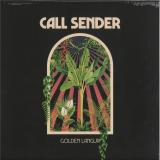
Call Sender is the collaborative brainchild that unites the talents of Paul Elliott, a versatile multi-instrumentalist, composer, producer, and recording engineer from Suffolk/UK and Michael Reed, a multi-talented instrumentalist, recording engineer, and drummer residing in the Bay Area/USA. Despite working together for the past four years, the pair are yet to meet in person!
After connecting on social media over their love of drum breaks and vintage reverbs Elliott and Reed fostered their creative partnership by bouncing recordings back and forth via email and this virtual collaboration resulted in their first album, the jazz-funk inspired “Lost To The Storm” (Tru Thoughts, 2023). With four singles from the album gaining radio play and becoming a favourite for tastemakers and DJs, the pair began work on the follow up “Golden Langur”. With this new record, the aim was to retain their signature Call Sender sound, a heady mix of B-movie soundtracks, classic library music and psychedelic funk and soul, but also introduce elements of lo-fi soul as well as collaborating with some of their talented friends as featured artists.
These features include fantastic instrumental contributions from the incomparable funkmaster Shawn Lee (Ping Pong Orchestra/Young Gun Silver Fox) on “Brainforests” and the legendary JJ Whitefield (Poets Of Rhythm/Whitefield Brothers) who kicks ass in two tempos on “Two Tails”. Not to mention the silky-smooth vocals from the Bay Area’s Andre Cruz, vocal duet from Lucid Paradise that is reminiscent of Gil Scott Heron and Paul Elliott’s seven year old son Buddy drops a vocal on the future B-boy classic “Rainbow”. Together Call Sender has an old-school vintage foundation with a modern perspective. Influenced by iconic acts such as Klaus Weiss, Miles Davis and Nino Nardini and with a hip and funky sonic aesthetic, Call Sender’s music is nostalgic without being pastiche, has a sense of travelling at its core, having been recorded in different parts of the globe, while never hesitating on the direction of the music.
An elusive cult gem resurfaces through Glossy Mistakes. Originally released in 1986, L'Empire Des Sons is an otherworldly blend of synth pop, folk experimentation, and cinematic percussive layers-dreamlike, poetic, and wildly ahead of its time. L'Empire Des Sons was a fleeting yet powerful transmission from the fringes of the French underground-an album that blurred genre lines and evaded easy classification. Fusing experimental folk, lo-fi synth pop, and avant-garde textures, the record exists in its own sonic universe: poetic, layered, and fiercely independent. Formed in Saint-Étienne by percussionist and composer Dominique Lentin (Dagon, Fille Qui Mousse) and first-time vocalist Bipé Redon, L'Empire Des Sons emerged from the vibrant DIY spirit of the early 1980s. Their paths crossed during the interdisciplinary project L'Opéra Quotidien, and what followed was an intuitive, deeply collaborative process. "I would bring in lyrics and my voice," Bipé recalled, "and Dominique would shape the music around the atmosphere or rhythm suggested by the words." The result is a collection of songs that feel both meticulously constructed and completely free. Ethnic percussion, marimbas, xylophones, and synthesizers dance around Bipé's surreal, fragmented lyrics-little sonic postcards from imagined worlds. There's a theatricality here, but it never feels forced; rather, it's playful, intimate, and raw. Despite their inventiveness, L'Empire Des Sons remained a well-kept secret-circulating only in select avant-garde circles and eventually becoming an extremely sought-after collector's item. Now, thanks to Glossy Mistakes, this lost artifact returns to the world with new life: remastered from the original tapes, pressed on vinyl for the first time with extended liner notes. L'Empire Des Sons was never meant to be boxed in. Like the quote from Brian Eno that opens their liner notes-"For the world to be interesting, you have to be manipulating it all the time"-their music resists stasis. It evolves, shifts, surprises. And now, it finally gets the audience it always deserved.
Released in 1979, "Tutti Fluti" is undoubtedly one of Teddy Lasry’s most unique and poetic albums.
Entirely centered on flutes, of which he is an undisputed master, this record offers a dreamlike dive into
ethereal jazz, naturalistic ambient, and subtle electronic experimentation.
Teddy Lasry, an original member of Magma, is known for his distinctive approach to wind instruments
and synthesizers. As a composer, performer, and texture inventor, he builds here a delicate,
contemplative, and timeless sound world.
On Tutti Fluti, flutes become voices, breath, wind, and a call to the imagination. Accompanied by
luminous keyboards and subtle rhythms, they shape an organic, soft, and introspective music—perfect
for active meditation or immersive listening.
A rare and atypical album, Tutti Fluti now finds its place among the great classics of auteur library
music, between spiritual jazz and the imagined soundtrack of a film never made.
Limited edition – A precious reissue for collectors, dreamer flutists, and sonic explorers.
- A1: T Lasry - Cortina
- A2: T Lasry - Squaw Valley Part 1
- A3: T Lasry - Squaw Valley Part 2
- A4: T Lasry - Chamonix
- A5: T Lasry - Saporo
- A6: T Lasry - Kandahar
- B1: C Perraudin - Snow Sound
- B2: C Perraudin - Nurburgring
- B3: C Perraudin - Le Mans
- B4: C Perraudin - Monte Carlo Rallye
- B5: C Perraudin - Indianapolis 76
- B6: C Perraudin - Monza
- B7: C Perraudin - Altitude
Released in 1979, "Tutti Fluti" is undoubtedly one of Teddy Lasry’s most unique and poetic albums.
Entirely centered on flutes, of which he is an undisputed master, this record offers a dreamlike dive into
ethereal jazz, naturalistic ambient, and subtle electronic experimentation.
Teddy Lasry, an original member of Magma, is known for his distinctive approach to wind instruments
and synthesizers. As a composer, performer, and texture inventor, he builds here a delicate,
contemplative, and timeless sound world.
On Tutti Fluti, flutes become voices, breath, wind, and a call to the imagination. Accompanied by
luminous keyboards and subtle rhythms, they shape an organic, soft, and introspective music—perfect
for active meditation or immersive listening.
A rare and atypical album, Tutti Fluti now finds its place among the great classics of auteur library
music, between spiritual jazz and the imagined soundtrack of a film never made.
Limited edition – A precious reissue for collectors, dreamer flutists, and sonic explorers.
Long kept in the shadows, "+ Ou – 8000" is a rare gem of the French musical avant-garde, born from the meeting of three
composers at the peak of their inventiveness. Initially intended as sound illustration, this album crosses the boundaries of
library music, space jazz, and electronic experimentation, with a freedom and boldness that today give it cult status.
Teddy Lasry, an iconic figure from the MAGMA universe, has always moved between jazz, progressive rock, and electronic
music. A saxophonist by training, he explores here synthetic and spatial territories with striking modernity.
Francis Mercier, discreet yet remarkably effective, is a sound craftsman who left his mark on many library music records
in the 1970s. Here he delivers precise rhythmic textures, tense atmospheres, and a minimalist groove mastery.
Christian Perraudin, a chameleon composer bridging academic music and film scoring, brings his cinematic touch—
floating melancholy and sci-fi tension. A true artisan of sonic ambiance.
Boldly visionary, + Ou - 8000 is an invitation to active listening, a journey into the heart of a fascinating sound laboratory.
This unprecedented vinyl reissue is a unique opportunity to (re)discover a crucial record that remained out of reach for far
too long.
Limited edition – for lovers of rarities, analog synths, and genre-defying musical exploration.