How can one explain the lasting popularity of the bass clarinet in musical circles from Vienna to Brussels? Perhaps because its frequency range articulates an alternative to conventions of popular music, where "bass" is reserved primarily for rhythmic impulses and the very foundation of the music. Viennese bass clarinetist Susanna Gartmayer's playing can by no means be reduced to just this, rather, it scutinizes the entire sound universe: she can do rhythm and drone, not to mention melody and noise, often all at once. Who would be a more fitting collaborator than Stefan Schneider, with his minimalist rhythms and subtle cosmic exploration?
Together, Schneider and Gartmayer form the project So Sner, which owes its existence to a concert in 2015 at the Approximation Festival in Düsseldorf. Gartmayer's bass clarinet polyphonies so impressed Schneider that he quickly suggested a collaboration. That same year, they began recording the album "Reime" in Kraftwerk's former Kling Klang studio, which in 2015 became workspace and concert venue simply called Elektro Müller. The second part was recorded in the summer of 2020 in Düsseldorf-Kaiserswerth at Stammhaus church, whose interior wood paneling facilitated organic acoustics.
Susanna Gartmayer has been active as a musician and composer in various realms between experimental rock music, improvisation and multimedia sound performance since the early 2000s, releasing the album "Smaller Sad" with Christof Kurzmann and "Black Burst Sound Generator" with Brigitta Bödenauer in 2020. In addition to his solo project Mapstation, Düsseldorf-based musician and producer Stefan Schneider has been pursuing new avenues of experimental music in the here and now for over 20 years, in numerous collaborations with Sofia Jernberg, Krautrock pioneer Hans-Joachim Roedelius, or visual artist Katharina Grosse among others.
So Sner's sound is equally oriented towards experiment and tradition, whose roots can be traced back to the UK of the early 80s: an era in which soul and synth, jazz and industrial, avant-garde and polyrhythm were blended with the help of intellectualism and punk attitude in such a way that manifold sketches of possible music emerged which are only being colorized today. Like So Sner - from the very first stomp to the very last drop.
Olaf Karnik, Cologne, October 2021
Search:rhythm composer
Efficient Space presents Soft and Fragile by Ros Bandt and LIME (Live Improvised Music Events), originally released by Move Records in 1983. A pioneering figure in Australian music, Bandt is known for her work with sound sculpture, electronics, acoustic ecology, and invented instruments, as well as her writings and teaching.
Soft and Fragile comprises a series of structured improvisations performed on custom-built bells and gongs. On the side-long ‘Ocean Bells’, Bandt performs on her ‘flagong’, a three-tiered vertical glass marimba that she made in 1978, inspired by the ‘cloud chamber bowls’ of maverick instrument builder and microtonal composer Harry Partch. Over a long tape loop made up of slowed down sounds from the same instrument, she delicately strikes the glass bells with mallets, allowing individual pitch-es to ring out and decay with the aquatic wavering quality that suggested the piece’s title, eventually building into flowing melodic sequences. Structured as a series of events determined by the length of the performer’s breath, this gently undulating music invites listeners to lose themselves in delicate microtonal fluctuations and subtle yet expressive phrasing.
For ‘Shifts’, Bandt is joined by Julie Doyle, Gavan McCarthy, and Carolyn Robb on a collectively composed work for clay bells. Atop a steady pulse, melodic and rhythmic cells expand and contract, shifting between LIME’s four members. LIME also perform the closing ‘Annapurna’, where timbres sourced from glass, clay and metal are freely threaded through a pulsating tape backdrop generated from loops of the ensemble chanting.
Presented in a redesigned sleeve showcasing the performers and their instruments, the reissue repro-duces the extensive original liner notes. While Bandt’s ideas and techniques draw on aspects of the invented instrument tradition of Partch and Bertoia, Stockhausen’s intuitive music, and the cyclical structures of American minimalism and Javanese gamelan, the floating world of Soft and Fragile also resonates with the work of New Age outlier Stephan Micus and contemporary practitioners such as Tomoko Sauvage. In Bandt’s own words, this is ‘elegant and sensual music where the body and mind have the time to reflect and catch up with the moment as it passes…It is a music intended for res-pite’.
- A1: Hello Baby
- A2: I Got The Rhythm (Feat. Elliott Cole)
- A3: All My Love (Feat. Juliette Ashby)
- A4: (Searching For) Peace & Love
- A5: Take You Home (Feat. Joss Stone)
- A6: Nothing Personal (Feat. Elliott Cole)
- A7: The Bakery Girl Intermission
- B1: One World (Feat. Herbal T)
- B2: Fires Glow (Feat. Emma Noble)
- B3: Magic Together (Feat. Elliott Cole)
- B4: Walk In The Sun (Feat. Professor Elemental)
- B5: Now I Feel Good (Feat. Elliott Cole)
REISSUE!
Multi-instrumentalist, composer, producer and DJ, Adam Gibbons (aka Lack of Afro) is back in considerable style with 'Hello Baby' - his fifth studio record and the first Lack of Afro album to be released on his own LOA Records imprint. 'Hello Baby' is a genre-bending colossus of an album that is packed full of Adam's trademark multi-instrumental goodness, heavy drums, percussion-packed production, and ear for a good tune.
The new album by the Peruvian-born / Berlin-based experimental artist Ale Hop was conceived in a context of immobility and provides six sonic vignettes that wonder about location, circularity, rootedness and experience. In collaboration with Ana Quiroga,
Concepcion Huerta, Daniela Huerta, Elsa M'balla, Felicity Magan, Fil Uno, Ignacio Briceño, KMRU, Manongo Mujica, Moises Horta, Nicole L'huillier, Raul Jardín, Sukitoa Onamau, Tomas Tello.
Following her explorations on music's inherent fixation to geographic space and time, be it through the longing of home ("Apophenia" 2019) or scientific magnification of invisible worlds ("The Life of Insects" 2020), Berlin-based Peruvian-born experimental composer Ale Hop's fourth album, "Why Is It They Say a City Like Any City?", was conceived in a context of immobility. During the lockdown
months, she started a process of remote collaboration, by sending messages, posted from various cities along a South American trip, to thirteen musicians from around the world. She journaled her impressions upon these places to an intimate fictional character while reflecting on matters of time,
sound, space, cosmology and colonial memory. The thirteen musicians dialogued with this voice by taking upon the challenge of responding to the messages with sound collaborations.
Field recordings, mouth drumming, drone cellos, electronic loops, arrhythmic rhythms and voices came back from this experiment. Ale assembled them, by layering, twisting and turning, into sonic vignettes that wonder about location, circularity, rootedness and experience, making it the first time she's set her guitar aside. Expect no answers to the album's title question, but an innermost psychedelic rumination.
"Despite the technological resources that appear to dilute distances, the simulation of closeness mirrored on the digital space is an emptied body, a state of precarity, a flat surface; unable to withhold an experience of exchange," Ale states. "So, I began this project by asking myself, how can we escape from the reduced experience of the virtual? The idea behind this experiment was that my messages and the places they describe could drive the composition, be a catalyzer, a
score. Thus, to use geography as a tool to remember and imagine, to allow new soundscapes to emerge."
"Memory, diffuse and divergent, sometimes reaches out to the future in its search for form, taking shape from the reflections and echoes that come back … like throwing a rock in a pond and having a rock thrown back at you."
- A1: Nanbu Ushioi-Uta (Feat Kifu Mitsuhashi)
- A2: Isohama Bon-Uta (Feat Toshiko Yonekawa)
- A3: Hohai-Bushi (Feat Kifu Mitsuhashi)
- A4: Otemoyan (Feat Toshiko Yonekawa)
- A5: Aizu Bandaisan (Feat Kifu Mitsuhashi)
- B1: Saitaro-Bushi (Feat Toshiko Yonekawa)
- B2: Soma Nagareyama (Feat Kifu Mitsuhashi)
- B3: Yagi-Bushi (Feat Toshiko Yonekawa)
- B4: Asadoya Yunta (Feat Kifu Mitsuhashi)
- B5: Konpira Fune Fune (Feat Toshiko Yonekawa)
Following the already classic Wamono A to Z trilogy, 180g presents an exceptional collection of jazz funk / rare groove tunes recorded in the mid-seventies at the Nippon Columbia studios by three giants of Japanese music: arranger Kiyoshi Yamaya, koto legend Toshiko Yonekawa and shakuhachi master Kifu Mitsuhashi.
- 180g heavy vinyl pressing, reverse board jacket
- Fully licensed Nippon Columbia masters available for the first time outside of Japan
- Mastering and lacquer cut by Jukka Sarapää at Timmion Cutting Lab, Helsinki, Finland
- Artwork by Nker
---
Born in 1932 in Tokyo, Kiyoshi Yamaya started his musical career in 1953 when he played in various jazz bands in town. In 1957, Yamaya joined Nobuo Hara's famous jazz big band Sharps & Flats as a baritone saxophone player and started composing, arranging, and recording for them and other big bands. He became a key jazz figure in Japan in the sixties together with Norio Maeda and Keitaro Miho, both jazz pianists, composers and arrangers, by forming the Modern Jazz Three Association – which aimed at improving the level of Japanese jazz composition and arrangement. In the mid-seventies, his Contemporary Sound Orchestra explored jazz funk fusions with traditional Japanese melodies and instruments such as the shakuhachi, koto, biwa, and shamisen. These works were recorded for a series of panoramic Japanese albums released domestically on Denon and Nippon Columbia, from which the tracks on this compilation are taken from.
Toshiko Yonekawa, born 1913 in the city of Himeji, not so far from Osaka, is the eldest daughter of koto and shamisen master Kin'o Yonekawa. She started studying both instruments with her talented father from the age of 3, played in her first concert at 8, and was only 12 years old when she first appeared on national radio. Her unique style of koto playing is widely recognized due to the extreme accuracy of the intonation and rhythm, as well as the unequaled beauty of the instrument's sonority. After a life decorated with awards and prizes, Toshiko Yonekawa was named a Living National Treasure in 1996.
Born in Tokyo in 1950, Kifu Mitsuhashi is a great master of Koto style shakuhachi. After completing the NHK Hōgaku Training Program in 1972, Mitsuhashi became a member of Pro Musica Nipponia, a group of leading composers and top-ranking musicians devoted to performing a wide-ranging repertoire of classical and contemporary compositions from both Japan and the West – in which all music is performed by traditional Japanese musical instruments. Mitsuhashi has toured the world for hundreds of recitals, also as a soloist, and has performed his art with the greatest ensembles such as the BBC Symphony Orchestra and the Berliner Philharmoniker. In 2020, Kifu Mitsuhashi was awarded the Order of the Rising Sun.
---
All tracks selected and compiled by Greg Gouty and Maxime Brottes, with the assistance of Ryohei "Nitchiku-kun" Tanaka.
All tracks licensed by Nippon Columbia, Japan.
Mastering and lacquer cut by Jukka Sarapää at Timmion Cutting Lab, Helsinki, Finland.
Artwork by Nicolas Kerembellec (Nker.fr).
Proofreading by Brian Durr (Diskotopia).
Executive producers: Greg Gouty and Maxime Brottes.
180GWALP04 - Manufactured and distributed by 180g.
Beyond their highly sought after 1978 album Festa Para Um Novo Rei - home to the mystical jazz-funk classic ‘Vidigal’ and released on Philips’ iconic Musica Popular Brasileira Contemporanea series (MPBC) - little is known about Marcos Resende & Index, even to aficionados of obscure Brazilian music. Far Out Recordings is immensely proud to present their previously unreleased self-titled debut album from 1976, contributing a crucial missing work from the glory days of progressive Brazilian instrumental music.
Born in Cachoeiro de Itapemirim, Brazil in 1947, Marcos Resende was a prodigious child who learned to play the accordion at the age of two, and the piano aged six. In spite of his immense musical potential, he travelled to Lisbon in the 60s to study medicine. Yet continuing to explore his musical passion on the side, he formed a trio which went on to open for Dexter Gordon at the Cascais Jazz Festival in 1971. From here he formed the electronic oriented prog-jazz group Status, who opened shows for the likes of Elton John, Phil Woods, Stan Getz, Art Blakey & The Jazz Messengers, but in spite of their relative live success they have no known recordings.
Now established as a highly regarded keyboardist, composer, and innovative electronic musician, Resende returned home to Brazil following Portugal’s Revolução dos Cravos in 1974. Inspired by US jazz and British progressive rock he’d experienced while residing in Europe, Resende went all out acquiring a keyboard arsenal to be reckoned with, which included the Prophet 5, Yamaha CP-708 and Mini Moog. Determined to integrate his newfound inspirations with Brazilian rhythms and jazz traditions, he formed a new quartet with Rubão Sabino (bass), Claudio Caribé (drums) and the late great Oberdan Magalhães, of Banda Black Rio and Cry Babies fame. Marcos Resende & Index recorded their self-titled debut at Sonoviso Studios with the legendary sound engineer Toninho Barbosa, known as the ‘Brazilian Rudy Van Gelder’ whose impressive resumé includes the era defining classics Light As A Feather by Azymuth, Previsão Do Tempo by Marcos Valle, and Quem É Quem by João Donato. Marcos Resende & Index fits perfectly amongst these masterpieces, sharing both the timeless ethereal qualities as well as the progressive and futuristic ideals of Light As A Feather in particular.
Greek electronic composer Vangelis created his piece Albedo 0.39 while influenced by blues and jazz music. The concept album is themed around space physics. The title is based on a planet’s albedo; the proportion of the light it receives that is reflected back into space.
Albedo 0.39 features tracks “Pulstar” and “Alpha” and became his first album that reached #18 of the UK Album Charts. Vangelis played every instrument on the record, which resulted in effective and versatile synthesizer passages. Critics describe the tracks as mesmerizing trips of assorted rhythms that include elements of jazz and mild rock.
The multiple-award winning composer of electronic, progressive, orchestral and jazz music Vangelis started his career working on numerous successful projects, such as Aphrodite’s Child, a collaboration with Yes lead singer Jon Anderson and award winning soundtracks for Missing (1982), Chariots of Fire (1981), Blade Runner (1982) and 1492: Conquest of Paradise (1992). He composed over 50 albums and is still creative in developing new concepts.
Duane Pitre returns to Imprec with Omniscient Voices, an articulate, intense and emotionally resonant set of five pieces for justly tuned piano and electronics.
Omniscient Voices is a uniquely distinct work that follows Pitre's trilogy of releases which culminated with 2015’s Bayou Electric and included the critically acclaimed Feel Free (2012) and Bridges (2013) albums. Where those albums were rooted in long form pieces, Omniscient Voices is a collection of shorter pieces, offering more harmonic variety than previous works, with a unique sound and feel that is still unmistakably the work of Duane Pitre.
In 2019, after a five year period where Pitre did not focus on outward facing music, but instead on his own personal practice, a small idea in the form of a question came to him: would the combination of his latest computer- and electronic-based experiments, used in conjunction with justly tuned piano, produce interesting results; simply put, would it “work”? Concurrently, Pitre was studying a handful of Morton Feldman scores for their focus on tonal clusters, reading a book on Arvo Pärt’s life and work, and contemplating the pulse-based rhythms of Steve Reich and Phillip Glass.
In 2020, with no intention of making a new album, the composer tried to answer this question. The results would spawn five pieces that would become Omniscient Voices. On this new work, Pitre finds himself giving equal priority to both piano and electronics, utilizing his Max/MSP-based generative network to real-time convert precomposed piano motifs, into data, which is then used to communicate with two polyphonic, microtonal hardware synthesizers whose patches Pitre authored; this process generates the electronic component of the album. Pitre also utilizes controlled improvisation to interact with the piano-reactive electronics in a spontaneous and inspired manner, going back and forth between these two pianistic approaches. In all, this approach creates a “musical feedback loop” of sorts.
Despite Omniscient Voices being the culmination of 15 years of hard work and inspiration, this beautiful album somehow materialized in a natural, intuitive and effortless way (like any artist's best work.)
Artist's statement: “When making the pieces that would become Omniscient Voices, I often viewed the piano as human action, a single note becoming a single gesture that has the potential to change the electronic environment, the electronics becoming the environment surrounding that human in the natural world, who then has the power to change their actions based on their surroundings. All actions have consequences. The interconnectedness of everything. Single actions making waves of change.”
RIYL: Arvo Pärt, Morton Feldman, Steve Reich, Phillip Glass
Mastered and cut by Golden and pressed at RTI for maximum fidelity.
Morrice is no less than a pioneer of Portuguese techno, churning out high-octane bangers and rave-tinged rollers alike from his hometown of Porto since the mid 90s. Lucky for us he didn't slow down, and his fresh offerings are as enticing as ever - we got our hands on some of the finest crop of Morrice's characteristically deranged, sonic techno and 'Back on Tracks' was born. One can hear the realness of a legend-worthy path in dance music in every tough beat and in every bass line twist and turn: the opener 'Dirty Smack' is a raw, no-frills mutant banger that will throw even the most bashful raver into a frenzy, reminding us all why we miss dancing together so much. 'Stress Will Kill You' is a tense, paranoid techno roller featuring a super effective lead over an economic but super banging technoid beat&bass. 'Synth Lies' is another trip recalling Midwest movements and exuberant composers like Poindexter. On the flip, you'll find the soulful depths of a warm 'Doctor' as well as the wonderfully Detroitian-via-Douro dream of 'Acorda', all silky pads and stabs. The record closes with a 'Dirty Smack' remix by Paraíso regular Violet who infuses the original with broken rhythms and percussive highlights.
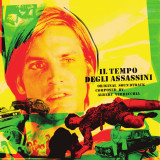
Between the 60s and 80s, Albert Verrecchia played a major role in Italian pop music and on the European disco and Afro-cosmic scene, both under his own name and under the monikers Albert Weyman and Albert Prince. He was the keyboardist of legendary Italian-French r'n'b band I Pyranas, served as a session Hammondist for singer and TV star Raffaella Carrà, and produced the disco trio Belle Epoque as well as the debut album of singer-songwriter Alan Sorrenti. Among his many incarnations, in the early and mid-70s he also composed a few soundtracks for Italian genre cinema, including for movies such as the poliziottesco Roma drogata, la polizia non può intervenire (Hallucinating Trip, 1975, Lucio Marcaccini) and the erotic drama Tecnica di un amore (1972, Brunello Rondi).
The score he wrote in 1975 for Il tempo degli assassini (Season of Assassins, a film about a gang of criminal youths who terrorize the city of Rome in the already violent 70s) is certainly his most accomplished work in the genre. Conceived for a small ensemble, it was written almost entirely on the spot in the recording studio. Verrecchia himself played the Moog, and his dynamic and percussive approach to the instrument resulted in a style midway between funk and proto-disco. A modern rhythmic style - or Ritmico Moderno, which is the title chosen by CAM for the LP containing the soundtrack and released two years later as part of a promotional library music series only distributed to film professionals and radio and TV programmers (CML series, cat. no. 131). One is led to wonder whether it was thanks to that LP that, in 1977, three pieces from the soundtrack found their way into another film about youth gangs, the Spanish Perros callejeros (Street Warriors), written and directed by Jose Antonio de la Loma. On a side but important note, there's the added bonus of popular 70s and 80s entertainer Sammy Barbot singing on Gang Leader alongside female vocal group Baba Yaga. What a pity that Verrecchia's career as a film composer ended here!
Tete Mbambisa has performed and recorded with many of the giants of South African Jazz (Bazil ‘Manenberg’ Coetzee, Johnny Dyani, Dick Khoza, Duku Makasi, Gideon Nxumalo, Dudu Pukwana, etc...), and is one of the very few South African jazz musicians that can claim to have played with the three jazz generations of the last fifty years. His work as a pianist, vocalist, composer and arranger is a landmark on South African jazz history.
After a recording hiatus, Mbambisa returned in 1974 with an octet album, 'Tete's Big Sound' released on a newly formed label, As Shams or The Sun, established by South African record store owner and independent producer Rashid Vally. 'Tet's Big Sound' included tracks like 'Unity' and the 'Black Heroes Lamentation', now considered a classic in the South African jazz underground. The sound that Mbambisa carved in this period was wholly acoustic, and is a style that now is often loosely labelled spiritual jazz, a sound that alludes to deep African textures and rhythms balanced with clear nods to American hard bop and modal jazz, sometimes edging toward free improvisation in echoes of John Coltrane and Pharaoh Sanders.
Renowned Finnish jazz innovator and band leader Iro Haarla takes a detour towards progressive rock Iro Haarla Electric Ensemble to release their debut album in October Known for her large number of works in the field of acoustic free jazz, Iro Haarla is a notable Finnish pianist, composer, arranger and band leader. Now, having inked a deal with Finnish cult label Svart Records, Haarla takes an eye-opening sidestep towards progressive rock. Her new band consisting of renowned Finnish musicians, Iro Haarla Electric Ensemble weaves a vastly colourful world of sound around Haarla’s peculiar melodies, and welcomes us to new sonic territory: a vibrant world where black music influenced rhythms, acoustic instruments, analog synthesizers and spacelike, valiant electric guitars converge. In her long career as one of the most distinctive creative powers in modern scandinavian jazz, Haarla’s history includes both the works with her past life partner Edward Vesala (d. 1999) and an extensive repertoire of her own innovative solo works, recorded for the renowned ECM Records. For What Will We Leave Behind - Images from Planet Earth Haarla has put together a band whose musical expression is strong and profound. The rhythm of the music lies in the dynamic hands of bass player Ulf Krokfors and drummer Aniida Vesala, and together with Sami Sippola’s (Hot Heroes) responsive tenor saxophone and Finnish rock legend Jukka Orma’s (Sielun Veljet) imaginative ability to dive into new dimensions with his electric guitar, What Will We Leave Behind grows into an unforgettable experience for both prog rock and jazz enthusiasts. Out on the 29th of October 2021, the Iro Haarla Electric Ensemble debut is a homage to nature - our common planet and home. Inspired by nature, the album is also a cry for help in the age of natural disasters and depletion of natural resources around us. “I admire nature’s grand beauty, which arises from extreme phenomena and the battle for survival. The thread of life is unbroken”, Haarla says. Each album track portrays a place on Earth: between the humane opening track The Song We Loaned From Our Children and the hopeful closing track What Will We Leave Behind? vibrates a variety of soundscapes from lakesides, oceans, glaciers and rainforests, all the way to the winds and rumbles of mountains and man-made cities. Adding even more depth to the musical themes and landscapes, the album’s cover art was picked up from environmental art pioneer Teuri Haarla’s photo collection.
Legendary Brazilian group Orquestra Afro-Brasileira are reborn for first new album in over fifty years, produced by Beastie Boys collaborator Mario Caldato Jr.
Led by maverick composer Abigail Moura, Orquestra Afro-Brasileira were one of the most influential yet overlooked groups in Brazilian music history. Operating for almost thirty years until 1970, they released just two albums - the first of which, Obaluayê, has recently been reissued by Day Dreamer Records - and left behind a legacy of Afro-Brazilian consciousness that continues to resonate today.
Combining Yoruba spirituality, folk tales, Candomblé chants and West African percussion with the instrumentation of the big band jazz tradition in the United States, the Orquestra placed Afro-Brazilian heritage in a new and vital context. Weaving emancipatory narratives into complex poly-rhythms and powerful, syncopated horn lines, the group educated and enlightened all those who saw them perform.
For Abigail’s protégé and percussionist on the group’s 1968 album Carlos Negreiros, the message of the group’s music had a profound impact: “I became aware of what it is to be black,” he says, “discovering the extraordinary potential of the Afro-Brazilian culture in the making of the national ethos.” Now the last remaining member of the original Orquestra, Carlos was tracked down by producer Mario Caldato Jr. - whose credits include Beastie Boys, Marcelo D2 and Seu Jorge among others - to oversee the first new album of Orquestra Afro-Brasileira material since 1968.
“I was overwhelmed with the percussive rhythms, beautiful deep vocals and combined energy,” Caldato Jr. explains. “It felt like the most authentic Brazilian roots music I had ever heard. It was raw and dynamic, a pure organic sound and energy. It was a spiritual experience.”
Alongside arranger Caio Cezar, Carlos assembled his Orquestra to record five tracks at Berna Ceppas’ Estudio Maravilha 8 studio in Rio De Janeiro. With percussion, horns and vocals cut in single takes over three days, the session captured the intuitive, pure and natural spirit of the group in full flow.
Following the success of the initial session, five additional tracks were recorded at the iconic Estudio CIA dos Tecnicos in Copacabana to complete the album. Mixed by Caldato Jr., 80 Anos is a contemporary incarnation of Abigail Moura’s vision, bristling with the flair of the original recordings.
Far Out Recordings presents a double bill of two monumental Brit funk classics. Keep In Touch and Stay were the first two 12” singles by the iconic Freeez, both self-funded passion projects of its founding member John Rocca, for his own Pink Rhythm imprint.
It all started over the counter at Derek’s Records on Petticoat Lane, London in the mid-70s. Rocca - at the time a budding teenage percussionist - met the prolific guitarist, composer, producer and all round brit funk fixer Jean-Paul “Bluey” Maunick (also the father of Far Out producer Daniel Maunick). Best known as the founding member of Light of the World, Incognito, and more recently Str4ta, Bluey’s involvement in the origins of Freeez are lesser known, but no less crucial. Bluey invited Rocca to a weekly jam session in an East London basement, where they would develop their craft, form their first band Freeez and develop the idea for ‘Keep In Touch’: “Back in the basement there was this one particular track we were playing that I really loved. It had a groove that I thought I could sell” Rocca reminisces.
Going against the advice of all the musicians involved, who thought he was mad and set to lose all his money, John decided to go full DIY, hire out a high end studio in the West End to record ‘Keep In Touch’ and release it as a private press, birthing his now famed Pink Rhythm label. Featuring Bluey on guitar, Peter Maas on bass, Paul Morgan on drums, Jason Wright on keyboards, and John Rocca on percussion, Keep In Touch was a surprise underground hit selling over 5000 copies and reaching #49 in the UK, leading Freeez into a record deal with Pye / Calibre.
Still giddy from the experience of having produced and pressed his first record at the age of just 19, John set out to do it all again with ‘Stay’ and ‘Hot Footing It’, enlisting Bluey & co once again. This time Rocca attempted to take things to the next level by adding vocals into the mix. Though this new arrangement initially backfired and cost John the deal with Pye / Calibre who weren’t feeling the slight change of vibe, original copies of the Stay 12” have become one of the most in demand from the brit funk canon.
These foundational DIY 12” singles paved the way for Freeez to become a household name in the history of British funk who went on to record hits like ‘Southern Freeze’ and ‘IOU’ as well as underground cult classics like ‘Melodies of Love’ and ‘India’ as Pink Rhythm, John Rocca’s later formation of Freeez named after his imprint.
‘Eighteen Movements’ is a collection of recordings captured at live performances between 2017 – 2019. The record’s rich textures combine ambient, tribal rhythms, field recordings, ritualistic vibes, and a meditative feeling that runs through the entire LP. Đ.K. is in full flight mode, illustrating the project’s aptitude for deep transcendence.
Đ.K. is a DJ, composer & producer based in Paris, France. A versatile and prolific artist, D.K. has cultivated an eclectic body of work in recent years, with acclaimed output on renowned labels including Antinote, Melody As Truth, 12th Isle, Good Morning Tapes, Music From Memory’s Second Circle imprint, and L.I.E.S. (as 45 ACP).
Luminous and mesmeric, D.K.’s work combines finetuned traces of house, synth pop, ambient, balearic, minimalism, and fourth world music, creating energies and soundscapes which aim to invoke elevated forms of consciousness.
Prismatic tones exchange space with devotional drums on ‘Clarity’ and ‘Echo Chamber’, as Đ.K. hits a hypnotic stride somewhere between Jon Hassell, HTRK & a Folkways percussion ensemble. With ‘Full Consciousness’ meditation bells ring out across a progression of gleaming new age emanations, conjuring an entrancing spell. Movements of pulse and ether.
On ‘Mirror’, sonorous, elaborate percussive phrases are interwoven with drifting ambient vapours, while ‘The Other Side’ veers into broad, rolling blasts of dub and Antipodean drone, a cavernous trance evoking the early roots of Ras Michael and Yabby You, pared back to resolute drum sequences and infused with esoteric chimes and sultry synthesis.
The finale of ‘Eighteen Movements’ represents one of Đ.K..’s most ambitious recordings. ‘Awakening’ is an epic tone poem of aqueous, outer planetary resonance that completes this mercurial cycle with a poignant, euphoric fadeout. Chronicled in the moment, alternating between rhythm and repose, momentum and aviation, 'Eighteen Movements' sees Đ.K. voyaging further, into vast, uncharted outskirts of sound. A collection of movements for heightened states and new diversions.
Mastered by Jose Guerrero at Plataforma Continental. Graphic Design by Javi Tortosa.
LIMITED CLEAR VINYL
LA based composer/sound designer duoHeliochrysumannounce the release of their visceral, deep and exploratory debut albumWe Become Mist.The album has beenmixed by Ben Frost and mastered by Valgeir Sigurdsson.
Heliochrysumis the world building meeting of Michael Deragon and Daniel Lea
( L A N D, Important Records), in which a collaboration becomes a sculpted journey into new aural and imaginative cosmology.We Become Mistuses analogue and digital processes to mine the depths of industrial and science fictional, psychedelic soundscapes, often cinematic in tone and texture.
Taking their cue from a shared palette of sounds, textures and rhythms,Heliochrysumcreate a unifying score that is at once improvisatory and sonically certain.We Become Mist is nothing short of the progression from a souterrain awakening to the terraformed sound of a new world coming into existence.
These tracks overlay analog sound sources, digital hard wrought processing and visual sound design, constantly morphing and turning on their own searching torque. Mixed by Ben Frost and mastered by Valgeir Sigurdsson, the accumulation of sheer vision and depth is transportative, if not outright mind wrenching. In between this melding of the analogue and digital was mixed another element: the album istinged with psilocybin technology. As a listener you can hear as you move through a psychedelic passage, like out of a state of lockdown into one of alien otherworldliness.
The piano, industrial crescendo of ˜We Remain Beneath is evidence of this, sounds modified into careful, lush arrangements. A Future Unfolds sounds like a burnished unfurling, a resplendent distortion bringing to mind some epic revelation while tracks such as ˜Infinite Dark or ˜Pre Dawn bristle with chrome pulses that burn with alarm and dulcet drama.
Just as they did with their palette of sounds,Heliochrysumtaps into a wide range of emotions from hope to devastation, growth and contagion.
The name Heliochrysum evokes the Latin for sunflower but also a healing tincture: in the overlaid orchestration and distorted lightness, the roiling, life-giving pour of the sun can be heard. Simplicity washed with emotional intensity, the remembered dreams of far-off, science-fictive discoveries.
Nair Mirabrat is a Uruguayan ensemble led by the composer Martín Ibarra. The candomberos of Montevideo are dressed in the infinite colors of the world and they immerse themselves in the world of song and dance, building bridges between the inside and the outside. "Juntos ahora" is built based on the myth of the hero and his journey through the symbolic labyrinth. Death, time and place are the themes where the lyrics wander. DESCRIPTION Martín Ibarra and his Nair Mirabrat ensemble bring a garden variety of electrifying rhythms with "Juntos ahora", fusing together elements of candombe fusion, jazz, and pop. Deep in the Montevideo music scene, Nair Mirabrat effortlessly transcends genres and local tradition bringing forth a new era of influence as they revel in the bliss of Ibarra's soaring vocals over tropical rhythms. Ibarra and crew are a modern-day mixture of Jaime Roos, OPA, Hugo Fattoruso and Eduardo Mateo with their explorative, forward-thinking passion of keeping it 100% Uruguay. Chris J. Morris
In the words of Jerzy Mączyński, Sariani is a musical meditation exploring Indian musical culture and the widely understood concept of trance. The album has its roots in Mączyński’s growing friendship with Waclaw Zimpel, a fellow Polish avant-garde musician with experience in both experimental jazz and meditative ambient music. The pair first connected online during the early stages of the COVID-19 pandemic, with Mączyński suggesting they join forces on an album-length collaborative project a few months later.
Sariani was recorded over the course of eight months at two different studios in their home city of Warsaw (one of which included access to an empty swimming pool, whose unique acoustics were utilised during the recording). Both composers recorded electronic textures, loops, and rhythms, onto which they added saxophone (Mączyński) and voice textures courtesy of fellow Polish musicians Wiktoria Jakubowska and Olga Koziel.
The album comprises six separate musical stories, each of which was inspired either by a specific “empirical experience” from Mączyński’s travels in India, or wider cultural themes relevant to the country in the 21st century. These include Mączyński’s first encounter with the Book of Rag (‘Raga or Raga’); the essence of spirituality within temple buildings (‘Temple of Jetsu’); a vivid dream featuring a superhero who calls for reflection on equality and freedom (‘Sariani’); and a life-changing trip to Mount Everest with guitarist Szymon Wójcik (‘Everest Inn’, which features recordings made by the pair at the Monkey Temple in Kathmandu).
When you’re trying to make it through tough times, you need a little light to find your way. That light blazes brightly on the alchemical second album from Penelope Isles, an album forged amid emotional upheaval and band changes. Setting the uncertainties of twentysomething life to alt-rock and psychedelic songs brimming with life, colour and feeling, ‘Which Way to Happy’ emerges as a luminous victory for Jack and Lily Wolter, the siblings whose bond holds the
band tight at its core.
Produced by Jack and mixed by US alt-rock legend Dave Fridmann, the result is an intoxicating leap forward for the Brighton-based band, following the calling-card DIY smarts of their 2019 debut, ‘Until the Tide Creeps In’. Sometimes it swoons, sometimes it soars. Sometimes it says it’s OK to not be OK. And sometimes it says it’s OK to look for the way to happy, too. Pitched between fertile coastal metaphors and winged melodies, intimate confessionals and expansive cosmic pop, deep sorrows and serene soul-pop pick-you-ups, it transforms ‘difficult second album’ clichés into a thing of glorious contrasts: a second-album surge of up-close, heartfelt intimacies and expansive, experimental vision.
Field recordings were made during a stay at a small cottage in Cornwall, where Penelope Isles began work on the album. With romantic heartache already in the air, things swiftly got worse:
lockdown began, claustrophobia kicked in and emotions ran high. As Jack puts it, “We were there for about two or three months. It was a tiny cottage with four of us in and we all went a bit bonkers, and we drank far too much, and it spiralled a bit out of control. There were a lot of emotional evenings and realisations, which I think reflects in the songs.”
At different points along the way, Jack Sowton and Becky Redford left the Isles. An old friend, multi-instrumentalist Henry Nicholson, stepped in swiftly - “A godsend after a low time,” says Lily. Another friend, Hannah Feenstra, contributed drum parts; now, Joe Taylor is the band’s drummer. After Cornwall, the band redid many of the rhythm tracks, recorded a little in Brighton, then recorded more in Cornwall at their parents’ house. “It was,” says Jack, “a proper
rollercoaster ride.”
The ride continued with Fridmann, whose recent credits include Isles’ favourites Mogwai’s No 1 album, ‘As the Love Continues’. As Lily puts it, the process of sending Fridmann a mix, receiving it back in the morning and then having five hours to make decisions on it resulted first in stress, then in something sublime. “I love everything he’s touched - MGMT, Mogwai, Mercury Rev. He would turn our mix into this electric, fiery thing. There were some moments that were
initially hard, like on ‘Miss Moon’, where he took out the bass when it gets to the chorus. But now it’s my favourite bit on the record. He made everything so colourful. It’s an intensesounding record - a hot record. It was so refreshing to have that blast of energy from Dave - it’s like he framed our pictures.”
Away from the confines of the cottage, the Wolters also opened the door to a collaboration with storied composer Fiona Brice, whose credits include John Grant, Lost Horizons and Placebo. A
“big bucket-list tick” for Jack and Lily, the team-up results in glorious arrangements across the album: for Lily, ‘11 11’ stood out. “I was in absolute tears when she sent back the strings for ‘11 11’. It was like, oh my goodness, she’s nailed it.”
On its release, ‘Until the Tide Creeps In’ received rave reviews from Q, DIY, The Line of Best Fit and many others, while finding champions in Steve Lamacq and Shaun Keaveny. It also become part of a lifeline for music fans during the 2020 lockdown when the band participated in Tim Burgess’s Twitter Listening Party. Meanwhile, extensive touring saw the Isles develop into a formidable live force, with ‘Gnarbone’ emerging as a sure-fire showstopper.
Now, the Isles have 11 more showstoppers to add to the mix. At the album’s heart, the band’s core traits have never been stronger: the bond between the Wolters, a sensitivity towards complex feelings, a desire to celebrate life in all its facets and an ambitious reach combine to create an album that feels utterly, emphatically present on every front, rich in depth and uplift.
LP pressed on 180g clear vinyl with A4 print.
Legally blind from birth, Brazilian keyboard player, composer and bandleader Manfredo Fest learnt to read music in braille and began studying classical music at a young age. By 17 he had fallen in love with jazz (particularly the music of fellow blind pianist George Shearing) before becoming swept up in Rio's emergent bossa nova movement in the sixties. Moving to the States in 1967 where he would go on to work with fellow countryman Sergio Mendes, Fest recorded and self-released Brazilian Dorian Dream in 1976, enlisting Thomas Kini (bass), Alejo Poveda (drums, percussion) and Roberta Davis (vocals).
Like a turbo-powered, intergalactic elevator ride, Brazilian Dorian Dream builds on the principle of the modal diatonic scales of the Dorian mode, with influences of Brazilian rhythms, North American jazz and funk, and music of the European baroque and romantic era. The coming together of these intergenerational and intercontinental styles coupled with Fest's visionary use of the Fender Rhodes, Clavinet, Arp and Moog synthesizers (plus a whole load of effects units), makes for an album light years ahead of its time.
The miraculous wordless vocals of American jazz singer Roberta Davis are nailed so tightly alongside Manfredo's keys and mind-bending synths that it sounds almost alien. On the album's liner notes, Fest preaches Davis' ability highlighting how hard it is to sing such precise intervals so accurately. One of the tracks on which the vocals shine brightest is space funk stepper "Jungle Cat", which features hard funky drums, freaky synth lines and expert Rhodes comping. The track builds up and up before releasing into the unmistakable scat melody in the chorus.
A few years after releasing Brazilian Dorian Dream, Fest recorded and released his Manifestations album in 1979, featuring 'Jungle Kitten'': a new dancefloor focused variation on "Jungle Cat". At around 140 BPM 'Jungle Kitten' was possibly deemed too fast for statside dance floors, which explains why it never got a US 12" release. But the track became something of an underground hit at jazz dance clubs and all-dayers across the UK in the 80s and as a result it has probably become Fest's most well known track since.