Two sides, each lasting 8 minutes and 50 seconds. A clash that resonates in friction, united by the materiality of vinyl - if only for a time. Or at best, a rapprochement, like in cinema. On side A, a MIDI composition by Xavier Robel for synthesized piano, based on La Monte Young's tuning system for The Well-Tuned Piano. Mouse clicks, boxing gloves, vibrancy, and mischief. On side B, a positively insistent On-U Sound-flavored rhythmic investigation, produced by Androo in response to Xavier Robel's composition (one he hadn't asked for). From sparse elements, a kaleidoscopic pulse unfolds - as dub seeps within a fog of electroacoustic fluctuations.
Suche:rhythm o
Musically, the album represents a range of compositional approaches. Murky, densely textured depths of sound are explored with subtle pulses and pings woven within, contrasted with composed or improvised moments of acoustic instrumentation making a move into the foreground. Certain tracks on Sea Island such as album opener Ahull make rhythm their focus by exploring subtle polyrhythms and investigating colliding moments of repetition and variation.
Though staunchly electronic at its core, instruments such as vibraphone and piano make appearances, and layers of live musicality, improvisation and detail appear in the looped and layered beds of manipulated sound recordings.
A varied cast of players appear in the loscil “ensemble”, some familiar collaborators from the past such as Jason Zumpano on rhodes and Josh Lindstrom on vibraphone, and others new to the mix such as Fieldheadʼs Elaine Reynolds who provides layered violin on Catalina 1943, and Ashley Pitre contributing vocals on Bleeding Ink. Seattle pianist Kelly Wyse, who collaborated with loscil on his 2013 edition of piano-centric reworks Intervalo, performs on the tracks Sea Island Murders and En Masse.
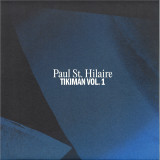
For the first time in more than a decade, Paul St. Hilaire (AKA Tikiman) presents a solo album – 100% Tiki.
Over his 30-plus year career, St. Hilaire has become one of dance music’s quietly legendary figures. Born and raised in Dominica, he moved to Berlin in 1994 and has lent both his voice and his musicianship to some of the most iconic electronic music from the German capital – and beyond. Renowned for his collaborations with Moritz von Oswald and Mark Ernestus (AKA Rhythm & Sound), he has also appeared on records with Deadbeat, Rhauder, Larry Heard aka Mr. Fingers and Stereotyp (G-Stone Recordings), amongst others.
However, few know the extent of St. Hilaire’s compositional and technical mastery. From his home studio in Kreuzberg, which includes an extensive collection of vintage hardware, self-built instruments and notebooks scribbled with endless lyrics, he has created a vast archive of material spanning ambient dub, avant-jazz, lush techno and lovers rock.
Tikiman Vol. 1 is a heady, downtempo tour de force of patois metaphors on education, displacement and personal vs. global histories, as is evident on slippy album opener “Bedroom in My Bag”: Mister, mister / Where are you going? / I’m heading for a faraway land / What are you having in the bag in your hand? / Help us to understand / He said, I’ve got my bedroom in my bag.
Overall, the album’s lyrics reflect on life between Berlin and Dominica, specifically St. Hilaire’s hometown of Grand Bay, where he has worked with various musicians famous for the island’s different genres of carnival music. St. Hilaire himself always favoured the island’s more “discrete” music, developing a sonic synergy between two different geographical strains of groove and minimalism, and combining them with foundational Caribbean mixing techniques, which provide the basis for his songwriting and distinct
baritone.
Tikiman Vol.1 offers a rare insight into St. Hilaire’s complex artistry, from the eyes-down grooves of “Little Way” and the guitar-heavy digi dancehall experiment “Keep Safe,” to the subtle hypnosis of “Ten to One” and the softly crashing synth waves of closer “Three And A Half”, evoking not only beaches but also coasts and borders. It’s a fitting expression of both the breadth of St. Hilaire’s work, as well as his history as one of the few black, Berlin-based artists who, despite remaining largely overlooked, has influenced the city’s electronic music culture since its beginnings.
Credits
Written & Produced by Paul St. Hilaire
Mastered by Stefan Betke
Artwork by Grant Gibson
Kynant Records was founded in 2015 by Richard Akingbehin, a British-Nigerian radio programmer (Refuge Worldwide), music writer and DJ. Originally specialising in deep techno and featuring artists such as Cio D’Or, Terrence Dixon and Donato Dozzy, Kynant has since launched a sub-label Kynant EX which focuses on ambient, dub and experimental electronics.
Limited to 300 copies. Yellow Vinyl. Approaching Doom is the third album by Monsternaut, a darker and heavier representation of the band's established devotion to groovy riffs and to the point compositions. The songs took shape over several years, during which the arrival of a new drummer opened the door to more adventurous rhythms and riff ideas, pushing the band into new territory while staying true to their roots. Sonically, the album leans toward the grit and weight of early 90s metal rather than polished modern production, giving it a raw and immediate edge. Its lyrics and atmosphere follow a naturally darker direction as well, adding an extra layer of tension beneath the grooves. Recorded entirely the old fashioned way, straight to analog tape with no digital editing, it captures the band playing as they are, relying on performance, chemistry, and feel rather than correction. The result is a record that hits harder, feels more focused, and marks a confident new chapter in Monsternaut's evolution.
7SINS SERIES is a collection of seven EPs, each associated with one of the seven deadly sins. Curated by Pau Pérez, the series is released on the SpecialK Records label, driven by Carlos Caballer, and brings together seven producers, each responsible for shaping a distinct release.
LUTTONY is the first EP in the 7SINS SERIES. This release is driven by a clear mission: constant, no-compromise groove. Each track is built around catchy basslines that set the pulse from the very first bar, wrapping the listener in a hypnotic sound that never lets up. Inspired by part of the current Valencia sound, the project focuses on energy, rhythm, and club-oriented atmospheres. No detours, no filler—music made straight for the dance floor.
Scopeotaku’s latest is a continuation of themes he explored in System Failure. Mutating into darker dimensions, influenced by recent world events. reality error is steeped in strangled synths, tape hiss and distorted echoes. Featuring crushed low-tech rhythms and recordings inspired by science fiction B-movies. Scopeotaku seizes the means of production with full on DiY approach. Setting out to soundtrack a dystopian society that has lost touch with the soul of humanity. A world where corporate greed and disruptive extremist views amplified by echo chambers soaked in misinformation drown the voices of reason and compassion. Within this murky swamp however lies a glimmer of light and hope for us all to not accept the future but to shape it.
50 DiY tapes with download code included.
Recorded in Glasgow
Music From Memory is thrilled to present ‘Aquáticos’, a captivating new record from Los Angeles producer Eddie Ruscha and Brazilian guitarist Fabiano Do Nascimento. Blending Nascimento’s expressive, Afro-samba and choro-inflected guitar with Ruscha’s cosmic, groove-driven sound, ‘Aquáticos’ marks the start of a vibrant musical partnership—an organic, free-spirited collaboration full of interplay and vitality.
Conceived during the early 2020’s, ‘Aquáticos’ grew from a series of recording sessions in which the music unfolded naturally, in a state of effortless flow. Album opener ‘Nascer,’ the very first piece they recorded, captures such a moment perfectly: Nascimento’s 7- and 10-string nylon guitars weave seamlessly with Ruscha’s modular synths, drum machines, and vintage keyboards. Like much of Ruscha’s work under Secret Circuit and E Ruscha V, it is rich in lush, rhythmic textures—pulsing and bubbling with vibrant energy.
The initial session that produced the opening track set the tone for the record, establishing a template of intuitive interplay and musical freedom. Each subsequent session built upon the last, gradually shaping ‘Aquáticos’ across nine tracks, all characterized by melodic richness, rhythmic depth, and an unshakable sense of spontaneity.
‘Aquáticos’ pulls the listener gently into a celebration of musical conversation — a radiant, immersive journey where Ruscha and Nascimento’s instruments breathe together, echoing the joy, curiosity, and playful spirit that define their collaboration.
Sleeve art and design by Michael Willis.
- A1: Think
- A2: Messin' Up
- A3: Dedicated To The One I Love
- A4: Tell The Truth
- A5: It Hurts Inside
- A6: When I Get Like This
- A7: Good Lookin' Woman
- A8: Say It
- B1: Don't Let It Be In Vain
- B2: I'm With You
- B3: Show Me
- B4: I Got To Know
- B5: Much In Need
- B6: Catch That Teardrop
- B7: What's In The Heart
- B8: Get Something Out Of It
The “5” Royales were the most enduring and influential of all the 1950s proto-soul groups. In a very crowded market, their success was remarkable. The Royales were the first African American group to introduce gospel based vocal styles into the rhythm and blues format. This gave an intensity to their recordings and live performances that no other combo could get near, thanks to the passion and power that lead singer Johnny Tanner generated. Furthermore, the group possessed in Lowman Pauling a songwriter of genius and a guitarist, who invented an exciting style of playing that linked stinging solos with rhythmic accompaniment. The Harbingers Of Soul is a mouth-watering overview featuring the best of the King era and the most soulful sides from their stay at Home Of The Blues. 180gsm vinyl. Sleeve notes by John Ridley.
Ąnis is a Lithuanian producer and DJ working in the space between broken rhythms and atmospheric weight. His tracks blur the line between club tools and introspective pieces - raw, textured, and unpolished in the best way.
Ąnis’ debut album “I Swear I’m Not Delusional” builds from late-night sketches into fully formed pressure systems. Ambient passages fall into break-driven grooves, each track shifting like a mood swing. It's rooted in tension, repetition, and space - think the grit and movement of early Skee Mask filtered through a more personal, less polished lens. Tracks like “Mountain People” carry warmth without needing to explain themselves, while others feel like they were made at 3am with no lights on. It’s not chasing a scene - just locked into its own pulse. This isn’t background music. It asks you to sit with it - or move to it. Either way, it sticks.
Credits
Original tracks written, produced, arranged and recorded by Jonas Zubavičius in Vilnius. Mastering by Pranas Gudaitis aka audiomastering.lt. Artwork and design by Povilas Baranauskis.
Yuvi Havkin aka Rejoicer returns with an exceptional collaborative album, California Space Craft. On this aptly titled record, he joins forces with seasoned LA bass polymath Sam Wilkes — known for his inspired studio work with Sam Gendel and his dynamic live performances alongside Louis Cole and KNOWER — and drummer Tamir Barzilay, completing the LA-connected trifecta alongside a select handful of key featured guests. The idea for California Space Craft was born out of a series of inspired live sessions in Los Angeles between 2019 and 2022, notably at Listen to Music Outside in the Daylight Under a Tree, where the trio’s natural chemistry first began to bloom. The resulting recordings encompass a wide variety of inspired sound stylings, as one would expect from any of these accomplished artists on their own; however, the sum is truly greater than the parts here, with the fluidity of their freeform improvisations over a dedicated three-day recording session feeling remarkably focused as a cohesive whole. Opening track “Traveling Light” sets the LP’s tone with equal parts Sly & Robbie-style, space echo– drenched rhythms and the cozy kosmische, guitar-led feel of early-2000s genre-fluid explorers like Tortoise. As we continue on to “Ritual in G#,” we are reminded that this is indeed a unique and timeless sonic space the trio has created, as Havkin’s crisp Rhodes chords anchor an ever-evolving psychedelic sound bed. The soaring trumpet of Avishai Cohen adorns the Afrobeat-indebted “Lion Water,” with Barzilay laying down a proper Allen-esque groove, while “Further (with you),” featuring Nitai Hershkovits on keys, offers a defining look at the titular concept of the album — with pure Cali feels coalescing effortlessly into sciNew Release Information fi narrative modes and a proper dose of Rejoicer futurism. Elsewhere, “Her Hair in the Air” shines with fresh polyrhythmic intention, illustrating the balanced bond between the three collaborators at their conversational peak, and the brisk synth strokes of “Early Porpoises,” alongside LP closer “Oceanic Friends” — again ideally named — double as a grand, in-stereo ride into the blissful Pacific sunset horizon. California Space Craft embodies the power of open, collective intention and musical kinship, offering memorable, uplifting moments and an aural glimpse of hope, warmth, and loving melodious calm in an otherwise quite chaotic time for humanity.
- Honey
- The Smoke
- Division
- Bury Me
- Limits
- Love You Better
- River Rise
- Believe In The Devil
- Outgrowing
Ora Cogans Musik ist wie Alchemie: teils Instinkt, teils Ritual und immer aus den Ecken entstanden, wo das Leben am intensivsten ist. ,Hard Hearted Woman", ihr Debüt bei Sacred Bones, ist wie ein Zauber für alle, die in einer immer härter werdenden Welt wild bleiben wollen. Mit einer Mischung aus eindringlichem Folk, Psych Rock und einem Hauch von Country schafft Cogan eine Welt, in der Katharsis üppig, geheimnisvoll und lebenswichtig ist. Geschrieben im ,Twin Peaks"-ähnlichen Nanaimo, British Columbia, entstand ,Hard Hearted Woman" aus einer Mischung aus kalten Wasserbädern, langen Schwimmrunden im Fluss, nächtlichen Gesprächen mit Freunden über Kunst und Politik und langen Autofahrten durch die ländliche Landschaft von Lillooet, um ihre Patin zu besuchen. Sie nahm das Album mit ihrer geliebten Band und Gästen aus der Country- und Experimentalmusikszene zusammen mit David Parry (Loving) im Dream Club in Victoria, British Columbia, sowie in ihrem Studio in Nanaimo und aus der Ferne mit Tom Deis auf. Das Ergebnis ist ein Album, das wie etwas aus Rauch und Meerwasser geglänzt ist - intim, schimmernd und ebenso von Witz wie von Trauer geprägt. Es ist eine wirbelnde, juwelenfarbene Ode an alle Engel und Dämonen. Das Album beginnt mit ,Honey", einem langsam aufblühenden, brennenden Song, der auf warmen Streichern und lockeren, treibenden Percussions aufgebaut ist. Cogans Stimme ist ruhig, rauchig und tröstlich und richtet sich an die ,hartgesottene Frau", die das Album prägt. Der Song, der als Reaktion auf die Anti-Trans-Gesetzgebung geschrieben wurde, strahlt Widerstandsfähigkeit aus, ohne jemals seine Zärtlichkeit zu verlieren. ,The Smoke" steigt auf einem hypnotischen Rhythmus empor, der an JJ Cale erinnert, während er die Form auseinanderzieht. Es ist ein Groove für die Endzeit, in dem Congas, Shaker, geknackte Gitarren und geisterhaft verwitterte Texturen aufeinanderprallen, während Cogan die dunkleren Ecken unserer gemeinsamen Menschlichkeit durchforstet. In ,Division" hallt ihre Stimme durch eine karge, hallende Landschaft. Der Song baut sich auf wie eine Leuchtrakete in der Nacht, ein Plädoyer gegen die betäubende Grausamkeit, die heutzutage zur Routine geworden ist. ,Hard Hearted Woman" ist ein Werk der Hingabe an das Geheimnisvolle, an die Gemeinschaft, an die seltsame Kraft, in einer zerbrochenen Welt Kunst zu schaffen. ,Das ist der wichtigste Teil, die Magie", sagt Cogan. Trotz seines Titels geht es in Hard Hearted Woman nicht darum, sich zu verschließen, sondern um Härte als Widerstandsfähigkeit. Es ist die Hülle, die wir uns zulegen, damit unser menschlichstes, zerbrechlichstes Selbst überleben kann. Es ist ein Album für alle, die versuchen, offen zu bleiben, auch wenn die Welt das unmöglich erscheinen lässt.
- A1: _Etude No. 1 (Edit) - 04:36
- A2: _Etude No. 2 (Edit) - 03:37
- A3: _Etude No. 3 (Edit) - 02:28
- A4: _Etude No. 5 (Edit) - 05:08
- A5: _Etude No. 6 (Edit) - 03:27
- B1: _Etude No. 8 (Edit) - 03:45
- B2: _Etude No. 10 (Edit) - 03:27
- B3: _Etude No. 16 (Edit) - 03:41
- B4: _Etude No. 17 (Edit) - 05:23
- B5: _Etude No. 18 (Edit) - 03:19
With Figures of Glass (Piano Etudes – Edits), Vanessa Wagner offers a new listening perspective on Philip Glass’s Piano Études, shaping a curated selection of edited versions drawn from her acclaimed recording of the complete cycle. These edits do not alter the substance of the works; rather, they refine their temporal focus, revealing their emotional force with renewed clarity.
Conceived in parallel with Figures of Glass, a hybrid project developed with visual arts collective Scale, the release extends a dialogue between piano and light, sound and space. Between piano and light, Vanessa Wagner interprets Glass’s Études at the heart of a scenographic installation, exploring the visual imagination embedded in the composer’s music. Minimal structures become spatial gestures; repetition opens onto perception, colour, and resonance. Taken together, these edits form a coherent arc through Glass’s language: from tension and propulsion to suspension and introspection, from rhythmic urgency to contemplative stillness. Wagner’s approach is marked by precision, restraint, and a deep attention to resonance, allowing each piece to unfold with an assumed expressive sobriety.
Figures of Glass also exists as a live creation, presented for the first time in Paris at the Théâtre du Châtelet on April 7, 2026. In both recorded and staged forms, the project invites contemporary listening contexts — from focused headphone listening to immersive visual environments — while reaffirming the Piano Études as a major landmark of 21st-century repertoire. Bridging modern classical piano, minimalist writing, and spatial listening formats, Figures of Glass (Piano Etudes – Edits) speaks equally to traditional classical audiences and new listeners discovering Philip Glass through curated, editorial-driven experiences.
- A1: Sunlight Zone
- A2: Clarion-Clipperton Zone
- A3: Oreison
- B1: Twilight Zone
- B2: Fracture
- B3: Abyss
- B4: Polymetallic Nodule
- B5: Hadal
- B6: Sunlight Zone (Strings Version) *
Laurel Halo returns with an album of original soundtrack music, composed for the film Midnight Zone by visual artist Julian Charrière. Following the path of a drifting Fresnel lighthouse lens as it descends through the Clarion-Clipperton Fracture Zone — a remote abyssal plain in the Pacific Ocean, rich in rare metals and increasingly targeted for deep-sea mining — the film traces a descent into one of Earth’s last untouched ecosystems.
Charrière’s film reveals the deep not as void, but as a luminous biome teeming with fragile life: bioluminescent creatures, swirling schools of fish, and elusive predators. The suspended lens becomes an abyssal campfire, attracting species caught in the tides of uncertainty, their futures hanging in the balance.
Echoing this tension, Halo’s compositions evoke a sensory freefall, where gravity falters and light and sound flicker in uncertain rhythms. Midnight Zone is a sonic drift through the space between what we seek to extract, fail to understand, and must protect.
Halo’s score evokes the life that exists beyond our physical airbound capacity. The material features long, subtle passages of electro-acoustic ambient, drone and sound design, slowly flowing and unfolding with rich detail. The music, composed largely on a Montage 8 synthesizer and Yamaha TransAcoustic piano at the Yamaha studios in New York City, possesses an uncanny quality: that of synthetic waveforms being amplified and sung through the stringboard of the physical body of the TransAcoustic piano. Combined with stacks of violin and viol da gamba, the music on Midnight Zone possesses trace elements of a human hand in an otherwise sunken landscape. Patient, submerged, and alive. The album will be the third on Halo’s imprint, Awe.
The film is central to Charrière’s current solo exhibition Midnight Zone. The exhibition engages with underwater ecologies, exploring the complexity of water as an elemental medium affected by anthropogenic degradation. Reflecting upon its flow and materiality, profundity and politics, its mundane and sacral dimensions, the solo show acts as a kaleidoscope, inviting us to dive deep.
- A1: Caballo Salvaje
- B1: Cumbia De La Noche
From the windswept streets of Edinburgh comes a sound that gallops wild through the night — equal parts jungle heat and Highland haze. Los Chichanos, a fiercely multicultural collective formed in 2021 under the spirited direction of guitarist Sandino Borges. Never ones to wait for an invitation, the band have carved out a scene of their own in Edinburgh, a home for tropical rhythm and nocturnal joy amid Scotland’s long dark nights. Their devotion to the electrifying pulse of Peruvian tropical music, cumbia and chicha, intertwined with Afro-Latin rhythms and vintage psychedelia runs deep.
Add the soul Cuban son, the swing of Brazilian grooves and a hint of spaghetti western melodrama, and you begin to hear the distinct voice of Los Chichanos. Caballo Salvaje gallops forward with fuzzed- out guitar, echo-drenched organ, and the untamed spirit of the Andes. Cumbia de la Noche was written during a harsh winter season when daylight became a distant memory.
Delphine Dora, the prolific French composer and multi-instrumentalist, graces Marionette with a suite of keyboard instrumentals that evoke futurism and the transcendental. Based in France and actively releasing music since the 00’s, Delphine’s remarkable solo and collaborative projects loosely connect the dots scattered across modern classical, folk, ambient, and poetic writing - always seeking new ambitions in terms of her sound.
Leaving behind the chaos of city life for the quiet solitude of a small village in the French countryside, Delphine finds herself fully immersed in the present moment and committed to her multi-disciplinary creative practices, savoring the experiences of deep listening in nature and her environment. Drawing from an academic background in Outsider Art and Art Brut, Dora yearns to express intimate inner dialogues, revealing the beauty of vulnerability through transportive musical passages to the mystical and sublime.
L’inéluctable pulsation du temps was composed in 2018, at a time when Delphine’s life was becoming increasingly busy, marked by relentless touring and concerts unfolding in rapid succession across different places. Written in parallel with L’Inattingible, her most ambitious album, it stands as its instrumental counterpart. The recordings reflect a period of exploration and assimilation of the Nord Electro, an instrument that opened up vast sonic possibilities, particularly for the development of rich polyphonies inspired by repetitive music. The track titles draw inspiration from an essay by Hartmut Rosa on the notions of acceleration and alienation - a reflection that resonates strongly with the pre-covid era right before the quarantine. The album reveals Delphine’s most colorful and rhythmic side, an aural mille-feuille, in total contrast with her previous melancholic vocal works.
On L’inéluctable pulsation du temps, Dora sustains atmospheric drone miniatures that form the foundation for flowing, cyclical arpeggios, spiraling into a liminal dream space where the repetitive phrasing of melodies rewards introspective listening. The compositions move through (dis)enchanted landscapes, taking unexpected turns into more haunted terrain, their contours further blurred by Dora’s intuitive articulation and sense of refinement. By mirroring both the acceleration of time and the experience of alienation, Delphine conjures up timeless sonic meditations, rendering the inevitable pulsation of time as something at once mesmerizing and unsettling.
- A1: Ali Ou Hayani
- A2: Ana Sahraoui
- A3: Nihayat Hob
- A4: Angham Chaabia
- A5: Dikrayat
- A6: Alach Yayouni
- B1: Layali Fass
- B2: Lobna
- B3: Tanger L'été
- B4: Taksim Abdou
- B5: Hanan
- B6: Interlude
Abdou El Omari was born in 1945 in Tafraout, south of Agadir -- a village suspended between the pink granite peaks of the Anti-Atlas and the waves of the Atlantic. A landscape already musical in itself. He grew up in the dry mountain light, surrounded by the rhythms of nature and Berber's culture. Very little is known about the man -- a veil of mystery still surrounds his life, only deepening the fascination. In the 1970s, as Morocco was transforming, Abdou El Omari shaped a sound of his own -- a visionary blend of spiritual jazz, psychedelic funk, Moroccan traditions, and early electronic experimentation. Today, his work is resurfacing, rediscovered by a new generation of listeners in search of lost horizons. This record stands among its rarest and most precious fragments. At twenty-two, he founded his first group, Les Fugitifs, which gained him local fame. Soon after, he released records and cassettes on labels such as Cléopâtre, Hassania, Boussiphone, Hilali, and his own, Al Awtar, while performing on RTM (national radio and television). He also composed for artists like Naima Samih, Laila Ghofran, and Aicha El Waad. In 1976, through the label Gam, he released his only vinyl album, Nuits d'été -- a record that would become cult decades later, reissued in 2017 by Radio Martiko. In the 1980s, his music grew quieter, more secret. He tried to recover his old tapes from the studios he had recorded in, but gradually withdrew from the scene and returned to hairdressing. A pioneer of musical fusion, he opened paths that would remain unexplored for years. He passed away in 2010, never witnessing the rediscovery of his music by diggers, bloggers, and collectors online. One day, his close friend and poet Aziz Essamadi, rescued a cardboard box from the trash -- a box containing Abdou El Omari's personal archives. It was later entrusted to Casablanca based collector Ahmed Khalil, founder of the label Dikraphone. Inside were treasures preserved by chance: demos, rehearsals, private recordings, unseen photographs -- and a stunning, almost forgotten cassette. Here, El Omari sounds bolder than ever, exploring territories where pop, cosmic disco, electric blues, and Moroccan tradition merge without boundaries. Armed with his ARP Odyssey synthesizer, hypnotic grooves, and the celestial layers of his Farfisa, he expanded the dialogue between deep roots and electronic exploration. This album is the continuation of a vision -- a music of the Moroccan future: rooted, but reaching for the unknown. Colorful, magnetic and timeless, here is music for dancing as much as for dreaming.
- A1: El Cayuco
- A2: Complicacion
- A3: Mambo
- A4: Llego Mijan
- A5: Cuando Te Vea
- A6: Hong Kong Mambo
- B1: Mambo Gozon
- B2: Mi Chiquita Quiere Bembe
- B3: Varsity Drag
- B4: Estoy Sempre Junto A Ti
- B5: Agua Limpia Todo
- B6: Saca Tu Mujer
Dance Mania from 1958 is Tito Puente's bestselling and most essential album. Delivering incredibly tight mambo rhythms, Puente knew how to get his traditional southern American music across. Helped by an impeccable, vivid stereo production (as part of RCA's aptly named original "Living Stereo" series), this infectious mix of Latin dance tracks will get anyone up on their feet. Featuring the inimitable Ray Baretto on percussion,
The album does exactly what the title says: shake your derriere like you just don't care! This record should belong in everyone's jazz, soul or Latin music record collection.
Dance Mania is available as a limited edition on green vinyl.
Danny Scott Lane is a New York-based musician, photographer and sound artist whose work drifts between jazz, ambient, and gentle funk. Originally an actor and singer before turning to photography, Lane brings a cinematic and emotional sensibility to his recordings - music that feels intimate, tactile, and quietly surreal. He has scored films and commercials, and his eclectic taste has taken him to DJ booths around the world.
Since his first tape release in 2019, Lane has released nine albums, five of them with WRWTFWW Records, each expanding his distinct blend of warmth, rhythm, and daydream. His tenth LP, House of Alice, welcomes back three-time collaborator David Lackner and introduces Michael Gagliardi, further deepening the reflective world Lane continues to build.
The album's title is derived from the Alice Austen House. Danny took an interest in the prolific 'street' photography of Alice where she often captured everyday life and intimate depictions of women's lives beautifully. Inspiring images that reflect in his own photography as well. We will continue to stand on the shoulders of giants.
Expect a gentle mix of electronic new age jazz and soft funk.
Danny Scott Lane is a New York-based musician, photographer and sound artist whose work drifts between jazz, ambient, and gentle funk. Originally an actor and singer before turning to photography, Lane brings a cinematic and emotional sensibility to his recordings - music that feels intimate, tactile, and quietly surreal. He has scored films and commercials, and his eclectic taste has taken him to DJ booths around the world.
Since his first tape release in 2019, Lane has released nine albums, five of them with WRWTFWW Records, each expanding his distinct blend of warmth, rhythm, and daydream. His tenth LP, House of Alice, welcomes back three-time collaborator David Lackner and introduces Michael Gagliardi, further deepening the reflective world Lane continues to build.
The album's title is derived from the Alice Austen House. Danny took an interest in the prolific 'street' photography of Alice where she often captured everyday life and intimate depictions of women's lives beautifully. Inspiring images that reflect in his own photography as well. We will continue to stand on the shoulders of giants.
Expect a gentle mix of electronic new age jazz and soft funk.