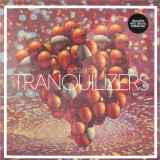
In a release inspired by the smooth rhythms of the region's past, Atlanta-based Dog Bite offers more music medicine in the form of Tranquilizers. The sophomore release transcends the reverie state of Velvet Changes in pursuit of a darker, more full-bodied experience. Tranquilizers migrates into a dreamy sonic realm enveloped in its own soulful influence. Frontman Phil Jones found his extensive listening to iconic R&B musicians such as Otis Redding and Isaac Hayes to be the original muse for the album. In its formation it began as a soul record; however, at its core the release remains grounded in Dog Bite's beloved shoegaze landscapes. With the support of Woody Shortridge on bass and Tak Takemura on drums, Dog Bite purposefully evades sedation through its blend of smoky textures across divergent genres. Being an album submerged between the differences of classic funk and rock music, it is Jones' customary croon that weaves a common mesh in the record's diverse artistry. First making music at the end of his high school days, 23-year-old Phil Jones began Dog Bite after dropping out of the Savannah College of Art and Design. Influenced by the work of J Dilla, Portishead, Caribou, Panda Bear and The Roots, Jones began self-releasing tracks, followed-by a 7-inch and CD on Young Turks. While later touring as the keyboardist to Washed Out he picked up an acoustic guitar and composed his debut-full length, Velvet Changes, released on Carpark in early 2013. In support of Velvet Changes, Dog Bite embarked on an extensive North American winter tour with labelmate Toro Y Moi. The two marked the occasion with a split 7. Jones returns with his newest release on Carpark, the LA EP. In addition to his time with Washed Out, Jones has appeared on a matthewdavid release and produced for Mood Rings and Bosco. As one half of Acid Flashback, he's crafted tunes for the voice of Karen Jacobs (of Toronto's Free Kisses). Dog Bite performs live as a four-piece, featuring Jones' friend Woody Shortridge formerly of defunct Atlanta band Balkans.
Buscar:rhythm royal
- 1: Trenchtown Rock – Feat Ziggy Marley
- 2: Man Next Door – Feat Santigold
- 3: Rule The Nation – Feat Shaggy
- 4: Tom Drunk – Feat Tarrus Riley
- 5: Wake The Town
- 6: Stop That Train – Feat Rygin King
- 7: Soul Rebel – Feat David Hinds
- 8: Queen Majesty /Chalice In The Palace
- Feat Robbie Shakespeare
- 9: Small Axe – Feat Jesse Royal
- 10: Wear You To The Ball – Feat Richie Spice
- 11: Every Knee Shall Bow – Feat Big Youth & Mick Jones
- 12: Every Knee Shall Bow (Scientist Dub)
TROJAN JAMAICA / BMG is proud to announce the release of U-ROY’s final full-length, SOLID GOLD U-ROY. The album was originally set to come out in 2020 with plans for a worldwide tour in support, but unfortunately, the pandemic delayed the release. Now, with the heartbreaking loss of U-ROY on February 17, the album has become a celebration of one of the most profoundly influential reggae stars of his generation. An originator of the chatty rhythmic vocal style known as toasting — a key foundational element in the development of rap in its nascent stages in the 1970s — U-ROY left behind an unmatched legacy which is clearly on display on SOLID GOLD U-ROY, with its guest appearances including ZIGGY MARLEY, SHAGGY, MICK JONES of THE CLASH, SANTIGOLD, SLY & ROBBIE, DAVID HINDS of STEEL PULSE, and more. The album arrives on
July 16, 2021.
SOLID GOLD U-ROY is being heralded today by the release of “MAN NEXT DOOR” (Feat. SANTIGOLD). One of the great reggae songs of all time, the track features an indelible guest appearance by the incomparable Santigold. “Man Next Door” is a beloved reggae standard written by John Holt and released in 1968 by his group The Paragons. U-ROY sampled the song in 1982 for “Peace and Love in the Ghetto” on his Original DJ album. Pre-orders of SOLID GOLD U-ROY will come with an instant grat download of “MAN NEXT DOOR”
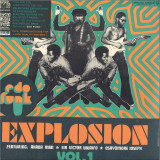
- A1: Africa Is My Root - Osayomore Joseph And The Creative Seven
- A2: Ta Gha Hunsimwen - Akaba Man The Nigie Rokets
- A3: Popular Side - Akaba Man And The African Pride
- B1: Iranm Iran - Victor Uwaifo And His Titibitis
- B2: Sakpaide No 2 - Victor Uwaifo And His Titibitis
- B3: Ta Ghi Rare - Akaba Man The Nigie Rokets
- C1: My Name Is Money - Osayomore Joseph
- C2: Ogbov Omwan - Akaba Man The Nigie Rokets
- C3: Aibalegbe - Victor Uwaifo And His Titibitis
- D1: Who Know Man - Osayomore Joseph And The Ulele Power Sound
- D2: Obviemama - Victor Uwaifo And His Titibitis
- D3: Ororo No De Fade - Osayomore Joseph And The Ulele Power Sound
Analog Africa Presents Edo Funk Explosion Vol. 1, available on
2xLP/Gatefold LP with 20-page booklet / CD with 36-page booklet. It was
in Benin City, in the heart of Nigeria, that a new hybrid of intoxicating
highlife music known as Edo Funk was born.
It first emerged in the late 1970s when a group of musicians began to experiment with different ways of integrating elements from their native Edo culture
and fusing them with new sound effects coming from West Africa s night-clubs.
Unlike the rather polished 1980 s Nigerian disco productions coming out of the
international metropolis of Lagos Edo Funk was raw and reduced to its bare
minimum.
Someone was needed to channel this energy into a distinctive sound and Sir
Victor Uwaifo appeared like a mad professor with his Joromi studio. Uwaifo
took the skeletal structure of Edo music and relentless began fusing them with
synthesizers, electric guitars and 80 s effect racks which resulted in some of the
most outstanding Edo recordings ever made. An explosive spiced up brew with
an odd psychedelic note known as Edo Funk.
That’s the sound you’ll be discovering in the first volume of the Edo Funk Explosion series which focusses on the genre’s greatest originators; Osayomore
Joseph, Akaba Man, and Sir Victor Uwaifo: Osayomore Joseph was one of the
first musicians to bring the sound of the flute into the horn-dominated world
of highlife, and his skills as a performer made him a fixture on the Lagos scene.
When he returned to settle in Benin City in the mid 1970s - at the invitation of
the royal family - he devoted himself to the modernisation and electrification
of Edo music, using funk and Afro-beat as the building blocks for songs that
weren’t afraid to call out government corruption or confront the dark legacy of
Nigeria’s colonial past.
Akaba Man was the philosopher king of Edo funk. Less overtly political than Osayomore Joseph and less psychedelic than Victor Uwaifo, he found the perfect
medium for his message in the trance-like grooves of Edo funk. With pulsating
rhythms awash in cosmic synth-fields and lyrics that express a deep personal
vision, he found great success at the dawn of the 1980s as one of Benin City’s
most persuasive ambassadors of funky highlife.
Victor Uwaifo was already a star in Nigeria when he built the legendary Joromi
studios in his hometown of Benin City in 1978. Using his unique guitar style as
the mediating force between West-African highlife and the traditional rhythms
and melodies of Edo music, he had scored several hits in the early seventies,
but once he had his own sixteen-track facility he was able to pursue his obsession with the synesthetic possibilities of pure sound, adding squelchy synths,
swirling organs and studio effects to hypnotic basslines and raw grooves. Between his own records and his production for other musicians, he quickly established himself as the godfather of Edo funk.
What unites these diverse musicians is their ability to strip funk down to its
primal essence and use it as the foundation for their own excursions inward to
the heart of Edo culture and outward to the furthest limits of sonic alchemy.
The twelve tracks on Edo Funk Explosion Volume 1 pulse with raw inspiration,
mixing highlife horns, driving rhythms, day-glo keyboards and tripped-out guitars into a funk experience unlike any other.
Imperium Droop brings two mavericks of sweeping exploration together into new avenues of musical expression. Kid Millions and Jan St. Werner explore a liminal space between improvisation and composition, a fluid yet defined sound-space, founded on the unique chemistry of their friendship and pushing into the future. Kid Millions stands as one of the most sought after drummers and improvisers in NYC, known for his work as the drummer for Oneida, his expansive solo work as Man Forever, as well as collaborations and performances with the likes of Laurie Anderson, Philip Glass, Royal Trux, Boredoms, White Hills, and Spiritualized. Regardless of who he's working with Kid Millions radically redefines the drums as an instrument. Jan St. Werner has consistently remained at the vanguard of electronic music. In his work as one half of the visionary duo Mouse On Mars, as well as his acclaimed solo work both as a composer and sound artist, and in collaborations with The Fall's Mark E Smith, Oval's Markus Popp, Stereolab, and The National St. Werner constantly pushes the limits of recorded sound. Together, Millions and Werner have crafted a monument of unpredictable beauty built on breathless forays into the unknown. Werner's application of a seemingly infinite arsenal of textures unleashes colorful swaths of energy. Mats Gustaffson joins Werner on the maximalist "Color Bagpipes," unleashing torrents of swiveling melody and breathy clicks over the exponential thunder of Millions' drum kit. Pieces like "Dark Tetrad" and "Astral Stare" demonstrate the duo's mastery of space and surprise. Dark flutters flow in slow pulses across "Apotropaic" where erratic swirls of sound twist and mutate on "Sorrows and Compensations," unified as a single force by the overwhelming diversity of sounds. Millions' drums effortlessly rides each wave of Werner's prismatic deluges and channels their energy into dynamic movements. Through his singular prowess, Millions' tireless rhythms and subtle gestures mirror Werner's boundless textural palette and drive each piece towards transcendence. On Imperium Droop, Kid Millions and Jan St. Werner have combined their powers into an incomparable work of gripping and intrepid sonic fluctuations.
At the end of 2016, after ten years and seven albums, Nick Thorburn quietly decided to put an end to Islands and retire from music. There was no announcement or farewell, only two shows at Webster Hall in New York and the Hollywood Forever Cemetery in Los Angeles to commemorate the tenth anniversary of the band’s widely adored debut album Return to the Sea. “This seemed like a perfect time to put a cap on things and close out the circle,” Thorburn says. He switched focus, selling and producing a pilot television script, creating a graphic novel with preeminent comics publisher Fantagraphics, and scoring a few films and the occasional BBC radio show. Thorburn’s years-long leave of absence resulted in a kind of rock and roll Rumspringa, with Nick unable to shake the bug for making records. After a sudden burst of creativity from a few weeks of working in his kitchen studio, Thorburn had written dozens and dozens of songs informed by everything from late-70s avant-disco to Thea Lim’s time-travel novel An Ocean of Minutes, and would write dozens more over the next year and a half, almost all with a clear focus on rhythm and groove. Thorburn decided that if he was going to make another Islands record, he’d do it without a deadline. He also wanted to work with outside producers, which would be his first time since 2009’s Vapours. He reached out to that album’s producer, Chris Coady (Beach House, Yeah Yeah Yeahs) , and asked Islands drummer Adam Halferty and guitarist Geordie Gordon to join him in a recording session at Sunset Sound in Los Angeles. “At the time I still wasn’t sure what this new music was going to be, or if coming back to Islands even made any sense,” says Thorburn. “But once we started playing, it quickly became clear this would be the next Islands album
After two UK #1 albums, 2 million album sales and an array of international acclaim, you might’ve thought you knew what to expect from Royal Blood. Those preconceptions were shattered when they released ‘Trouble’s Coming’ last summer. Hitting a melting pot of fiery rock riffs and danceable beats, they delivered something fresh, unexpected and yet entirely in tune with what they’d forged their reputation with.
The reaction was phenomenal, with highlights including 20 million streams, a premiere as Annie Mac’s Hottest Record and a run on Radio 1’s A-list and earned alternative radio support and media attention across the globe. In short, Royal Blood are primed to be bigger than ever before. That feat is set to be realised when they release their eagerly anticipated third album ‘Typhoons’ on April 30th via Warner Records.
When Mike Kerr and Ben Thatcher sat down to talk about making a new album, they knew what they wanted to achieve. It involved a conscious return to their roots, back when they had made music that was influenced by Daft Punk, Justice, and Philippe Zdar of Cassius. It also called for a similar back-to-basics approach to what had made their self-titled debut album so thrilling, visceral and original.
“We sort of stumbled on this sound, and it was immediately fun to play,” recalls Kerr. “That’s what sparked the creativity on the new album, the chasing of that feeling. It’s weird, though - if you think back to ‘Figure it Out’, it kind of contains the embryo of this album. We realised that we didn’t have to completely destroy what we’d created so far; we just had to shift it, change it. On paper, it’s a small reinvention. But when you hear it, it sounds so fresh.”
Those traits pulsate throughout the new single and title track. Kerr’s spiralling bass riff casts an hypnotic allure as it grows in intensity, while his vocals switch at will between a raw rock roar and a soulful falsetto. It’s underpinned by Thatcher’s thundering beats, his taut rhythms infused with groove-laden hi-hats.
After setting the tone with ‘Trouble’s Coming’, the album opens in breathless, take-no-prisoners style with the fierce metallic grooves of ‘Who Needs Friends’ hitting an early visceral peak. Royal Blood further reference their fresh array of influences by deploying vocodered vocals on ‘Million & One’ before dynamically switching between the biggest contrasts of their sound with ‘Limbo’. Already a fan favourite having been a regular during the duo’s 2019 shows, ‘Boilermaker’ lives up to its reputation and is more than matched by ‘Mad Visions’, which evokes a hyper-aggressive Prince. It ends with a final surprise in the shape of the stark piano ballad ‘All We Have Is Now’, a vulnerable and revealing reminder to live in the moment.
That song’s unguarded sentiments gives the album a redemptive finale. Whether directly or allusively, the album focuses on exploring the flipside of success that they’ve experienced. It comes from the realisation that success is much more complicated than it seems and that having the time to regain perspective is a precious commodity which becomes ever more elusive. The situation called for reflection and change, which Kerr addressed in Las Vegas. He downed an espresso martini and declared it to be his last drink, and soon discovered that his new-found sobriety would have a positive impact upon his creativity and life as a whole.
That new approach manifested itself in the duo’s decision to produce the majority of ‘Typhoons’ themselves. ‘Boilermaker’ was produced by Queens of the Stone Age frontman Josh Homme, the two bands having first connected when Royal Blood supported them on a huge North American tour. Meanwhile, the multiple Grammy Award winner Paul Epworth produced ‘Who Needs Friends’ and contributed additional production to ‘Trouble’s Coming’.
After two UK #1 albums, 2 million album sales and an array of international acclaim, you might’ve thought you knew what to expect from Royal Blood. Those preconceptions were shattered when they released ‘Trouble’s Coming’ last summer. Hitting a melting pot of fiery rock riffs and danceable beats, they delivered something fresh, unexpected and yet entirely in tune with what they’d forged their reputation with.
The reaction was phenomenal, with highlights including 20 million streams, a premiere as Annie Mac’s Hottest Record and a run on Radio 1’s A-list and earned alternative radio support and media attention across the globe. In short, Royal Blood are primed to be bigger than ever before. That feat is set to be realised when they release their eagerly anticipated third album ‘Typhoons’ on April 30th via Warner Records.
When Mike Kerr and Ben Thatcher sat down to talk about making a new album, they knew what they wanted to achieve. It involved a conscious return to their roots, back when they had made music that was influenced by Daft Punk, Justice, and Philippe Zdar of Cassius. It also called for a similar back-to-basics approach to what had made their self-titled debut album so thrilling, visceral and original.
“We sort of stumbled on this sound, and it was immediately fun to play,” recalls Kerr. “That’s what sparked the creativity on the new album, the chasing of that feeling. It’s weird, though - if you think back to ‘Figure it Out’, it kind of contains the embryo of this album. We realised that we didn’t have to completely destroy what we’d created so far; we just had to shift it, change it. On paper, it’s a small reinvention. But when you hear it, it sounds so fresh.”
Those traits pulsate throughout the new single and title track. Kerr’s spiralling bass riff casts an hypnotic allure as it grows in intensity, while his vocals switch at will between a raw rock roar and a soulful falsetto. It’s underpinned by Thatcher’s thundering beats, his taut rhythms infused with groove-laden hi-hats.
After setting the tone with ‘Trouble’s Coming’, the album opens in breathless, take-no-prisoners style with the fierce metallic grooves of ‘Who Needs Friends’ hitting an early visceral peak. Royal Blood further reference their fresh array of influences by deploying vocodered vocals on ‘Million & One’ before dynamically switching between the biggest contrasts of their sound with ‘Limbo’. Already a fan favourite having been a regular during the duo’s 2019 shows, ‘Boilermaker’ lives up to its reputation and is more than matched by ‘Mad Visions’, which evokes a hyper-aggressive Prince. It ends with a final surprise in the shape of the stark piano ballad ‘All We Have Is Now’, a vulnerable and revealing reminder to live in the moment.
That song’s unguarded sentiments gives the album a redemptive finale. Whether directly or allusively, the album focuses on exploring the flipside of success that they’ve experienced. It comes from the realisation that success is much more complicated than it seems and that having the time to regain perspective is a precious commodity which becomes ever more elusive. The situation called for reflection and change, which Kerr addressed in Las Vegas. He downed an espresso martini and declared it to be his last drink, and soon discovered that his new-found sobriety would have a positive impact upon his creativity and life as a whole.
That new approach manifested itself in the duo’s decision to produce the majority of ‘Typhoons’ themselves. ‘Boilermaker’ was produced by Queens of the Stone Age frontman Josh Homme, the two bands having first connected when Royal Blood supported them on a huge North American tour. Meanwhile, the multiple Grammy Award winner Paul Epworth produced ‘Who Needs Friends’ and contributed additional production to ‘Trouble’s Coming’.
"Don't Turn Me From Your Door" - John Lee Hooker (g, voc), Earl Hooker, Eddie Kirkland (g), a.o
John Lee Hooker is not only a mystery but also an interesting man to study. Some, like the author Jacques Demêtre called the musician from Mississippi »the most raw and African of all blues players from a musical point of view«, while the critic Net Hentoff was awestruck by Hooker’s unfiltered power of expression that could scare the pants off a listener taken unawares. The numbers on this LP bear witness to the fact that Hooker’s musical language could stir one’s emotions deeply, even without the meaty 'boom boom'. Each title is like a raw diamond, which is intentionally uncut and is to be perceived with directness. With a stutter and a slur in his speech, the singer declaims his song over a twangy guitar, which is driven along by the rhythmic meter. A final farewell is taken sluggishly and sullenly in the forthright text of "You Lost A Good Man", and even a song without words ("Misbelieving Baby") ponders a question in a purely instrumental monologue. Apart from a dash of boogie ("Pouring Down Rain") Hooker avoids all manner of sweet sounds and harmonies. He remains austerely raw, mercilessly honest, occasionally unforgiving and denies all thoughts of any kind regarding going 'back to the roots'. This sound IS the root of it all.
This Speakers Corner LP was remastered using pure analogue components only, from the master tapes through to the cutting head. More information under pure-analogue.
All royalties and mechanical rights have been paid.
Recording: 1953 in Cincinnati (OH) and July 1961 in Miami (FL)
Production: Henry Stone
- 1: Fender Iv - Everybody Up
- 2: The Sonics - Marlene
- 3: James Mask - Hootchie Coochie Gal
- 4: John Worthan - The Cats Were Jumpin
- 5: Vince Maloy - Hubba Hubba Ding Ding
- 6: Don Wade - Gone, Gone, Gone
- 7: Billy Wayne - I Love My Baby
- 8: Wally Willette And His Globe Rockers - Pink Elephantssi
- 1: Darrell Rhodes And The Falcons - Four O'clock Baby
- 2: Arlie Miller And The Bullets - Lou Ann
- 3: Cruisers - Betty Ann
- 4: Joe D. Johnson - Rattlesnake Daddy
- 5: Bobby Mcdowell - Lonely
- 6: Jerry Arnold And The Rhythm Captains - Can't Do Without
- 7: Gene Terry - The Woman I Love
- 8: Glen Glenn - Blue Jeans And A Boys' Shirtside C
- 1: Red Moore - Crawdad Song
- 2: Maylon Humphries And His Tri-Seniors - Worried 'Bout Yo
- 3: Van Brothers - Servant Of Love
- 4: Sonny Fisher - Sneaky Pete
- 5: Benny Cliff Trio - Shake Um Up Rock
- 6: Gene Norman - Snaggle Tooth Ann
- 7: Tommy Nelson - Hobo Bop
- 8: Lloyd Mccollough - Gonna Love My Babyside D
- 1: Don Ellis And Royal Dukes - Blue Fire
- 2: Sonny Wallace - Black Cadillac
- 3: Floyd Mack - I Like To Go
- 4: Rod Morris - Alabama Jailhouse
- 5: Carl Trantham And The Rhythm Allstars - Where There's A
- 6: Jim Oertling - Back Forty
- 7: Hodges Brothers - I'm Gonna Rock Some Too
- 8: Lonesome Drifter - Eager Boy
Nach Crazy Rhythms Of Mata Hari, Shake Your Bones, dem Cool Cat Club und Born To Hula! Folgt nun der 5. Teil der DJ-Set Serie auf Stag-O-Lee. Wie auch bei den Vorgängern handelt es sich hier um einen auf 80 Minuten eingedampftes DJ-Set von einem verdienten Recken der Zunft - Keb Darge. Gaz Mayall folgt direkt mit Volume 6. Linernotes: Rockabilly didn't cross my world until the early nineteen eighties at a Dirtbox weekender in Bournemouth, until then I was a pure northern soul boy. I didn't really get stuck into collecting the stuff until a decade later, but when I did what a wonderful world of tunes opened up to me, and I went wild on it. I was very lucky to be doing a record stall in Camden market at the time just across from Boz Boorer and Neil Scott's stall. They along with other serious collectors Dave Vickers, Barney Koumis, Cosmic Keith, Jim Fox, Dave Crozier, and many others taught me all I needed to know. I only ever made one great rockabilly discovery which none of them knew, "Little Bit Lonesome" by Charles Ross, but I was happy enough buying all their recommendations as they were all new and exciting for me. I have done several rockabilly comps before, but sadly the Philippines typhoon in 2013 destroyed my village and forced me to sell the bulk of my collection. Here are some of my favourites that I never got round to putting out before that happened. Two of the aforementioned collectors are no longer with us. I therefore dedicate this comp to Dave Vickers and Cosmic Keith who both had a huge influence on my life and my musical taste.
Nèg Ginen is a song composed by Jean Claude Dorvil on a traditional Nago rhythm (from Benin). Nèg in Haitian creole means “the dude“, “the guy“. It is about pride of being Haitians with solid African roots. As a matter of fact, when we mention Ginen, we talk about Africa. Like the majority of Chouk Bwa’s songs, this one is full of references mentioning Haitian voodoo rituals and spiritual /igures. For instance, Simbi Ganga is a lwa (voodoo spirit) from the Lakou Soukri Danach (voodoo temple) that lives in the water. Wild and brutal when he is chained up, he faithfully represents the Iwa Kongos, notorious for being real party-starters! Kebyesou is an Iwa who lives in the Lakou Souvnans (another temple). He is a royal /igure, like the Dahomey Iwas in general. The voodoo families are, so to speak, all present in this project!
Biography
After a /irst European performance in 2015 at Roskilde Festival leading to many other performances all around Europe, including WOMEX and WOMAD, Haitian traditionnal vodou band Chouk Bwa met the Brussels based duo The Ångströmers in 2016. Their new project combines a renewed dub sensitivity and Haitian rhythm science and spirituality. The ensemble has performed in Haiti and in European festivals including Trans Musicales de Rennes before releasing their /irst album Vodou Alé via Bongo Joe in 2020.
Modular synths and other vintage electronic instruments bring another dimension to Chouk Bwa’s music, although obviously it is always the band’s groove and /luent tempo that leads the energy of the ensemble: no laptops, no drum machines. There are certain freedoms that cannot be coerced. Even more, the electronic instruments are wired directly to the drums that feed them with impacts and caresses. All the Vodou families are there with their many rhythms and songs. Radical Vodou roots for urban audiences.
- Unreleased full version of this rare 45 for the first time.
- Cut from tape to lathe by the masters at Timmion Cutting Lab.
Western Michigan had a very healthy music scene throughout the '60s and '70s, with Georgia-born soul legend Jackey Beavers (aka Jackie Beavers) and producer Palmer James forging that area's soul identity. Beavers produced the recording by this obscure band from Battle Creek and issued their only 45 on his Jaber label. The rhythm section of Wright, Teasley and Scurlock were better known as Jr. Walker's All Star group, and they made this recording shortly before leaving the bandleader's ranks. The Us would share ties with the Apachies (track 20), for both bands included at some point members of Jr Walker's All Stars. Trombonist Jack Hill would be involved in both bands and would help create the unique arrangement on 'Let's Do It Today.' Bassist Larry Scurlock recounts the origin behind the song's theme, "We were ready to get on with it. No draggin' around, let's do this now, today is the day! I've lived this motto for all of my life."
The full-length version here shows The Us head into psychedelic regions in the final minutes of the song that have never been heard since they were recorded over 30 years ago. "I wrote it in less than half a day to get some royalties" remembers Scurlock. "We were experimenting with tuning, a quarter tone below the note. We were sure under the influence back in those days!"
Trouble, the aptly named new album on Goner Records, is a confident and joy-filled statement delivering the good-news gospel message unapologetically through music influenced by Ray Charles, Junior Kimbrough, Bill Withers and of course, his father.
Recorded at legendary Royal Studios in Memphis by Lawrence “Boo” Mitchell (Al Green, Solomon Burke, John Mayer, Buddy Guy, Mark Ronson & Bruno Mars, North Mississippi Allstars), Trouble is the culmination of everything in Rev. Wilkins’s remarkable life, his regional history, his family music history. And in a world once again riven with discord and division, like the Memphis of Wilkins’ youth in the 1960’s, Trouble delivers passionate and confident musical performances with a message of hope that meets our present moment equal to the best music from that earlier era.
To call the Reverend John Wilkins a national treasure would not be an overstatement. He is the son of pre-war blues/folk-revival legend Reverend Robert Wilkins and he leads one of the most exciting and uplifting musical acts on the blues and gospel circuit today. His multiracial, multi-generational band blends soul, southern gospel and hill country rhythm, into a sound that has the infectious drive of hill country blues with the emotional heights of a summer tent revival.
Following in the footsteps of his famous father Rev. Robert Wilkins, a blues-singer turned preacher who went from the juke joint to the pulpit, the life of Rev. John Wilkins took a similar path, echoing the story of the elder Wilkins’ most famous song, “Prodigal Son.”
But in 2020 John Wilkins’ life has been closer to a different iconic bible character, Lazarus, as he has miraculously risen after surviving a month-long stay in intensive care battling Covid19 in a Memphis hospital. As Rev. Wilkins sings on the closing track of his forthcoming album, “I’ve come through the storm and rain, I’ve come through the storm and rain, and I made it!”
Trouble, the aptly named new album on Goner Records, is a confident and joy-filled statement delivering the good-news gospel message unapologetically through music influenced by Ray Charles, Junior Kimbrough, Bill Withers and of course, his father.
Recorded at legendary Royal Studios in Memphis by Lawrence “Boo” Mitchell (Al Green, Solomon Burke, John Mayer, Buddy Guy, Mark Ronson & Bruno Mars, North Mississippi Allstars), Trouble is the culmination of everything in Rev. Wilkins’s remarkable life, his regional history, his family music history. And in a world once again riven with discord and division, like the Memphis of Wilkins’ youth in the 1960’s, Trouble delivers passionate and confident musical performances with a message of hope that meets our present moment equal to the best music from that earlier era.
To call the Reverend John Wilkins a national treasure would not be an overstatement. He is the son of pre-war blues/folk-revival legend Reverend Robert Wilkins and he leads one of the most exciting and uplifting musical acts on the blues and gospel circuit today. His multiracial, multi-generational band blends soul, southern gospel and hill country rhythm, into a sound that has the infectious drive of hill country blues with the emotional heights of a summer tent revival.
Following in the footsteps of his famous father Rev. Robert Wilkins, a blues-singer turned preacher who went from the juke joint to the pulpit, the life of Rev. John Wilkins took a similar path, echoing the story of the elder Wilkins’ most famous song, “Prodigal Son.”
But in 2020 John Wilkins’ life has been closer to a different iconic bible character, Lazarus, as he has miraculously risen after surviving a month-long stay in intensive care battling Covid19 in a Memphis hospital. As Rev. Wilkins sings on the closing track of his forthcoming album, “I’ve come through the storm and rain, I’ve come through the storm and rain, and I made it!”
And there is much to celebrate with this resurrection.
- A1: Fireflies & Palmwine
- A2: Big Man (Feat Shungudzo)
- A3: Patty Cake
- A4: Rebosando (Feat Chico Mann)
- A5: Body Yako (Feat Kongo Elektro & Thornato)
- A6: Ghost Dance
- B1: Fly Where You Want (Feat Jesse Royal)
- B2: Mi Poni (Feat Zuzuka Poderosa)
- B3: Makubenjalo (Feat Ongx & Epplesauce)
- B4: Yalla (Feat Karenbe)
- B5: Come Along (Feat Sye Elaine Spence)
- B6: Ghazal (Feat Alsarah)
- B7: New Story
The globetrotting beat maestro is back, with a truckload of tropical vibes and the irresistibly danceable soundtrack to your Summer! 3 years after releasing his groundbreaking collaborative album with singer Chico Mann (which landed him live sets on Boiler Room & KCRW's Morning Becomes Eclectic as well as a feature on NYTimes "Best Songs Of The Week") DJ/producer Captain Planet returns with NO VISA, set to drop June 26th on Bastard Jazz Recordings. In his trademark "Gumbo Funk" sound, the album mixes rhythms and musical styles from the Caribbean, Latin America, the Middle East and Africa, over highly danceable electronic beats, all firmly rooted in the hip hop, dancehall and house music that the Captain grew up playing as a DJ. Seamlessly bouncing from Brazilian Baile Funk, to Afrobeat, to Roots Reggae and Latin House, the entire record delivers the uplifting feel of one of the Captain's legendary boundary-crossing DJ sets. Building on these traditions he draws from, the Captain has created something fully original and unique.
NO VISA, the 5th full-length album from producer Charlie Wilder (aka Captain Planet), is both a return to form and a launchpad into the future. With 13 songs that feature vocalists from around the world, long-time fans will recognize several previous collaborators as well as the global influences that have always been central to Captain Planet's music. New friends, like prolific Zimbabwean-American singer Shungudzo (who has recent hits with Oliver Heldens & Rudimental), and Jamaican reggae star Jesse Royal, bring powerful subversive messages to the music as well. Showcasing the Captain's production chops and songwriting talents equally, the album unveils a unique musical landscape, a place where our political boundaries and cultural hierarchies begin to dissolve, where foreign languages mingle together and deep rooted traditions dance with the future.
With NO VISA, Captain Planet unveils a fully matured and truly unique form of electronic music- one that bridges gaps between worldwide cultural diasporas as well as contemporary dance music sub-genres (house, hip hop, dancehall & global bass). Throughout every Captain Planet song, it's clear to hear his inspired appreciation for breaking the boundaries between genres and bridging continents through rhythm.
Another win for the Glowing Pin as Müller & Wandt drop a fresh new age groover on a killer club dub tip. Elsewhere Phazer Boys, Suzanne Kraft, Philipp Otterbach and River Yarra remix the pscht out of their favourite tracks from ‘Instrumentalmusik..’. Expect Goan hits, cosmic trips, loved up rave and chilled out wave on this flawless five tracker.
Growing Bin becomes Glowing Pin for the most anticipated rematch of the century. Back at the beginning of 2018, Wolf Müller and Niklas Wandt went head to head for a box office smash, throwing a high school percussion tray, wall of hardware and voodoo skull into the ring for the tribal trip of ‘Instrumentalmusik Von Der Mitte Der World’. Now the multi-instrumental duo face off once again, but this time it’s a royal rumble with Phazer Boys, Suzanne Kraft, Phillip Otterbach and River Yarra all bringing the noise to the Glowing Pin.
Müller and Wandt dominate the action on the A1, playing loose with sampler vox, serene pads and future primitive rhythms on the unreleased ‘Fun Dub’ of the also unreleased ‘Dub Dub’. Imagine Ferris Bueller’s trampoline tumble trading Chicago to the Weissenhof and you’ll sense the mood of this New Age groove. Germany’s number one party dudes, those freaky Phazer Boys take a break from dropping killer Candomblé cuts to reach for the lasers on the A2, taking ‘Ahu’ to another dimension. Dripping in neon body paint and armed with fire poi, the Düsseldorf duo power up progressive house sequences, didgeridoo bass and thumping tribal house percussion for a wall-shaking, speaker-breaking remix.
The B1 belongs to synth whiz Suzanne Kraft who revels in glistening, gliding glory on an expansive remix of ‘Auflösung’. Sleek, serene and futuristic, the track shimmers like Fritz Lang’s Metropolis, free from inequality and rendered with the 5D(ub?) majesty of a DMT breakthrough.
B2 hears Salon associate and serious talent Philipp Otterbach take over on a stripped back and psychedelic post punk dub of ‘Expedition’. Angular bass by Süne Große and a stuttering rhythm underpin astral flourishes and the hazy vocals of Lucas Croon before the African elements begin to move to the forefront.
Last man standing is Australian outlier River Yarra, who leads us into the Krautback with a chugging dub of ‘Weltraumsandalen’. Lent a lysergic sparkle by a percolating one-note bassline, this slow motion stunner masters perpetual motion amid the eerie echoes of the bush, organic percussion and electronic animal cries fading into the night. Let the pins glow again.
Patrick Ryder
- 01: Lord Beginner - Sons And Daughters Of Africa
- 02: The Lion - Royal Wedding
- 03: The Mighty Terror - The Hydrogen Bomb
- 04: Dai Dai Simba - Modern Telephone
- 05: Willie Payne & The Starlite Tempos - Wa Sise
- 06: The Mighty Terror - The Emperor Of Africa
- 07: Louise Bennett - Bongo Man
- 08: Marie Bryant - My Handy Man
- 09: Nigerian Union Rhythm Group - Tortoise Mambo
- 10: Calypso Rhythm Kings - Boul Ve Se
- 11: The Mighty Terror - Life Is Like A Puzzle
- 12: The Mighty Terror - Chinese Children
- 13: Bill Rogers - Hungry Man From Clapham
- 14: Lili Verona - Underground Train
- 15: The Lion - Highway Code
- 16: Billy Sholanke - Kana Kana
- 17: Calypso Rhythm Kings - L’année Passée
- 18: Lord & Lady Beginner - One Morning
- 19: West African Rhythm Brothers - Ema Foju Ana Woku
- 20: Trinidad Steel Band - Caroline
part 8[26,01 €]
Still deeper forays into the musical landscape of the Windrush generation. A dazzling range of calypso, mento, joropo, steelband, palm-wine and r’n'b. Expert revivals of stringband music, from way back, alongside proto-Afro-funk. An uproarious selection of songs about the H-Bomb and modern phones, prostitution and Haile Selassie, mid-life crisis and the London Underground, racism and solidarity, the Highway Code and a 100% West Indian Royal Wedding.
For example some frantic British-Guianan joropo music-hall about Eatwell Brown from Clapham, who starts out biting off a piece of his mother-in-law’s face at a party, then devours everything in his path… a chunk of Brixton Prison, a Union Jack, a policeman’s uniform. Or Marie Bryant — collaborator of Lester Young and Duke Ellington — taking time off from skewering the South African PM Daniel Malan at her West End revue, to contribute some arch, swinging filth about uber-genitalia. Superior sound, courtesy of Abbey Road, D&M and Pallas; lovely gatefold sleeve; full-size booklet, with full notes, and fabulous previously-unseen photographs, including a set from the family archive of Russ Henderson (who led the first, impromptu Notting Hill Carnival march, in 1966).
Bram De Looze is a Belgian pianist and composer whose distinct musical vision has found its way through both solo projects and collaborations. His unique technical skill and musical maturity have earned him considerable critical acclaim back home as his work spotlights his far-ranging interests - from traditional classical piano music, to solo improvisations that have often been compared to Keith Jarrett and Jason Moran. On the 21st February 2020, Sdban Ultra will release his highly anticipated new solo album, 'Colour Talk'.
De Looze made his entrance onto the national jazz scene with LABtrio, formed in 2007 with Anneleen Boehme and Lander Gyselinck, and he immediately impressed, flirting with urban jazz, electronics and hip hop.
After a period of studying abroad at the New School for Jazz and Contemporary Music in New York, where he studied with Uri Caine and Marc Copland, in 2014, De Looze launched the international septet, Septych, that once again stressed his affinity for jazz, classical music and improvisation. With diverse and astounding improvisors like Daniel Levin, Lester St-Louis, Robin Verheyen, Gebhard Ullman, Bo Van Der Werf and Flin Van Hemmen, it was the start of an explorative musical journey.
Over the past few years, De Looze could frequently be heard with kindred spirits like Stephane Galland, Dre Hocevar and Antoine Pierre but it was a visit to the historical collection of pianofortes of Chris Maene that inspired De Looze to release his first solo album 'Piano e Forte' (2017), and it received critical acclaim for its creativity, spontaneity and passion. He would later garner further acclaim working alongside fellow Belgian Robin Verheyen and American rhythm painter Joey Baron with whom he recorded 'MixMonk' (2019), a tribute to the legendary jazz pianist Thelonius Monk.
Bram De Looze's solo career took off in an unexpected way with 'Piano e Forte', a project for which he approached historical instruments from a contemporary perspective. The switch to the Chris Maene Straight Strung Grand Piano for 'Switch The Stream' (2018) indicated a renewed search for movement, evolution and introspection. His latest solo project 'Colour Talk', continues this trajectory with another revolutionary piano model, designed by lauded architect Rafael Vinoly, and a continued attempt to renew from within.
On 'Colour Talk', what you hear is a musician who has freed himself from stylistic constraints and limitations. While still rooted in jazz, classical music and free improvisation have found a new balance, a coexistence that enables the pianist to express himself with a new vigour. Switching between shorter pieces that feel like curious, unresolved puzzles and more extended explorations, 'Colour Talk' is once again an ode to (re)invention in the grey zone were the classical idiom and improvisatory urges meet, with the 13-minute tour-de-force of 'Hypnosis' as one of several undisputed highlights.
If you asked De Looze about his current position as an artist, he would probably tell you that it's all about forward movement and the need to keep evolving, about a trajectory as work-in-progress. However, if you consider 'Colour Talk' as a freeze frame of where De Looze is at, it is hard not to consider it a highlight in a career that should have some more surprises in store.
Photonz is the alias of Marco Rodrigues a DJ, producer and driving force of Lisbon's underground scene. For little over a decade now, he's been crafting his own deeply personal style of Portuguese house and techno. As a DJ, Photonz grew a reputation for deep crates and intensely euphoric sets and in 2017, together with Violet (co-founder at his Radio Quantica) and Lisbon's own Rabbit Hole collective, he started the now infamous Mina parties - a monthly, sex-positive, queer and intersectional-feminist techno party aimed at using the dissociative potential of intense raving to create a temporary space of suspension away from patriarchal expectations. 'Nuit' is Photonz?s debut album and a simultaneous reference the Egyptian Goddess of the Stars or Night. Marco was really swept away by the concept of ?freedom of form under the night sky?, the accepting embrace of Nuit. Ancestral, but also socially advanced and utopian; a deification of the night time. These ideas manifest themselves as eleven songs spread across two LPs that wax and wane like the moon. Photonz channels early techno, Drexciyan rhythms, balearic & atmospheric house; layering sounds, creating moments. All songs have been mastered by George Horn at Fantasy Studios in Berkeley. The vinyl comes housed in a royal blue and neon yellow jacket with duality/birth symbolism and trance-hieroglyphs designed by Eloise Leigh. Each copy includes a glow-in-the-dark sticker and a postcard with notes
orwegian techno institution Ploink launches annual series entitled Affinity with its debut release featuring names like Skatebård, HndS, Roeglin, Fraunhofer, and Priq. Based in Bergen, Ploink has been flying the flag for Norwegian techno for well over two decades, organising some of the country’s best events and festivals. Co-founded by Thomas Urv and Miss Mostly, the label was born five years ago and has since released music from an array of home-grown talent including Mental Overdrive, KSMISK, Prins Thomas, +plattform, Joaquin Ruiz, Christian Tilt, and more.
Launching the label’s new Affinity series, Berlina Für Techno’s Roeglin is first with “Norm” which opens with glitched stabs, vocals and a tight drum pattern. Picking up the pace, Fraunhofer- formerly known as Dortmund -returns to the label bringing a shuffling rhythm, crunchy cymbals and spacy synths in “Saturn”. Bergen dance music royalty Skatebård remixes “Wake Up” by London-based Scandinavian duo HndS, maintaining the energy with thumping bass and bouncing chords. Tying it all together, Norwegian producer and drummer Priq’s “Area” sweeps in with decayed keys, pulsing percussion and a gripping atmosphere.
The past few years, we've watched from afar as Tokyo based DJ Haruka has established himself as one of Japan's top DJs and a crucial figure in the dance music scene. Since inviting him to play a Butter Sessions party in Melbourne and catching him multiple times in Japan, our online curiosities were met in real life with his impeccable taste and personalised style of house and techno. Needless to say, when Haruka sent us his debut EP "Senko", we instantly heard something special in his approach to music creation.
The three original tracks, entitled by their respective BPMs, encapsulate everything we loved about his DJ sets - bold, acidic and relentless synth sequences that are as intense as the Shibuya crossing, paired with masterful live percussion and drumming from Izpon (of Japanese salsa band Banderas) and Shigekazu Otake (of cult group Cro-Magnon) to create a unique sonic space. The recordings snarling nature reflects the pure force of DJ Nobu's Future Terror crew, of which Haruka is a key member. Additional live dubbing and mixing work from Naoyuki Uchida of Dry & Heavy - "Flying Rhythms" glues this raging bull together while purveying it's raw energy.
On the flip side, label heads Sleep D offer an unflinching club-ready version of "120", while French royalty Zadig contributes a mesmerising 14+ minute dubbed out, psychedelic burner that brings a new focus to the soundscapes of the original.
d 4. 120 (Sleep D Remix) feat. Izpon, Shigekazu Otake & Naoyuki Uchida
[e] 5. 106 (Zadig Remix) [feat. Izpon, Shigekazu Otake & Naoyuki Uchida]
[d] b1 | 120 (Sleep D Remix) [feat. Izpon, Shigekazu Otake & Naoyuki Uchida]
[feat. Izpon, Shigekazu Otake & Naoyuki Uchida]
[d] b1 | 120 (Sleep D Remix) [feat. Izpon, Shigekazu Otake & Naoyuki Uchida]
[feat. Izpon, Shigekazu Otake & Naoyuki Uchida]
[d] b1 | 120 (Sleep D Remix) [feat. Izpon, Shigekazu Otake & Naoyuki Uchida]
[feat. Izpon, Shigekazu Otake & Naoyuki Uchida]
[d] b1 | 120 (Sleep D Remix) [feat. Izpon, Shigekazu Otake & Naoyuki Uchida]
[feat. Izpon, Shigekazu Otake & Naoyuki Uchida]