I’ve lost my sense, I’ve lost control, I’ve lost my mind! Yeah, we all know how the song goes, but those words will no doubt end up driving their point home throughout the duration of Bloodstains’ self-titled debut LP. This thoroughly-welcome Euro pressing follows the album’s DIY release earlier in 2024, which is excellent news for UK/mainland fans of early 80s SoCal hardcore who’ve yet to hear it - the whole thing absolutely fkn rips. Feel free to rifle through your Adolescents, Weirdos and (natch) Agent Orange records to see what these guys have been mining, but all you’ll find is a launchpad - Bloodstains inevitably hail from California and they’re clearly au fait with all the above (not to mention a certain compilation), but they manage to inhabit that sound with a personality all of their own. Vocalist Cesar Marin splits his delivery between a sneering bark (like the most withering put-downs you’ve ever heard being delivered via nailgun) and a purposeful, melodic croon… which itself sounds it’s made from sandpaper and vitriol, but there you go. Most importantly, this is a band with SONGS. Eight of ‘em here, to be precise, and you’ll rarely have been so glad to have something turned up so loud it blows holes in your speakers. ‘Stray Bullets’ hangs its mighty chorus on a call-and-response refrain that dares you not to pick a side and bellow along, while instrumental opener ‘The Last Rites’ sets you up perfectly for the seething, volatile bundle of hooks to follow. I’d say the interplay between the band’s string-wielding Espinoza contingent is something to behold as well, but what am I, some kinda nerd? The guitars sound fkn awesome - that’ll do ya. And I don’t wanna spoil the party ahead of time, but just wait til you hear future anthem ‘Public Hanging’. I could go on about this record all day, but ultimately all you need to do is listen to it. Hell, even buy it. And dare I return to a theme, lose your mind.
Search:ri lo ve
"Million Dollar Baby" ist Pixeys bislang ehrgeizigstes Popprojekt, das sie zusammen mit Tom McFarland (Jungle, Olivia Dean, Alfie Templeman) und Rich Turvey (Rachel Chinouriri, Blossoms, The Coral) produzierte. Das Album folgt ihrer Reise der Selbstfindung als Künstlerin und dem Abwerfen damit verbundener Illusionen. "Million Dollar Baby" kombiniert Pixeys Liebe zu 90er Breakbeats mit ihren Skills als Popkünstlerin und -Produzentin, probiert und interpoliert einige ihrer Lieblingssongs, um nicht nur die Lücke zwischen alten und neuen Sounds zu schliessen, sondern einen völlig neuen Sound zu schaffen. Pixey erhält enorme Unterstützung von den britischen Popmedien und zierte hierzulande das Cover von Spotifys "Indie Brandneu" Playlist.
Schwedens beste Horror-Metaller MISTER MISERY kehren 2024 mit einem neuen Epos zurück: ihrem selbstbetitelten dritten Album "Mister Misery".
Bereitet euch darauf vor, eine düstere und abgedrehte Welt zu betreten, die von eigentümlichen Kreaturen wie dem "Crooked Man" oder der Gräfin "Erzsébet" bewohnt wird. MISTER MISERY verknüpfen meisterhaft Geschichten aus ihrer persönlichen Vergangenheit mit Gestalten, die die Monster sein könnten, die sich unter unseren Betten verstecken.
Mit ihrer originellen Mischung aus verschiedenen Metal-Subgenres wollten MISTER MISERY nie in irgendeine Schublade passen, sondern schufen mit ihrem einzigartigen Ansatz zu Modern Metal eine ganz eigene Schublade.
Das selbstbetitelte dritte Album von MISTER MISERY wird während des Auftritts der Band auf dem Wacken Open Air am 2. August 2024 über AFM Records veröffentlicht.
For Fans Of: Avatar, Ice Nine Kills, Motionless in White, Lord of the Lost, Rob Zombie
- A1: Rise
- A2: Planetary
- A3: Broken Radio
- A4: Feeling Neglected
- B1: Breakfast Of Champions
- B2: The Reason The Night Is Long
- B3: Lost, Dropped And Cancelled
- B4: Centrifuge
- B5: Melting!
Reissue des zweiten Albums "Look Now Look Again" (1999) der US-Emo-Band Rainer Maria. Mit Hilfe von Mark Haines (Poster Children, Son Volt) und Elliot Dicks (Joan Of Arc) in den Smart Studios aufgenommen, ist LNLA das definitive Rainer Maria-Album, ein Standard, an dem die Band immer gemessen werden wird. Die Gitarre ist offen gestimmt und singt durch einen aufgedrehten alten Fender-Verstärker, der melodische Bass rollt, das Schlagzeug dröhnt und der lyrische Kompromiss zwischen Kaia und Caithlin ist in der Lage, ein grapefruitgrosses Loch ins Herz zu stechen. Die Neuauflage erscheint auf Pink Stripe mit Brown Splatter-Vinyl, passend zum ikonischen Cover.
Continuing the Mr Bongo Cuban Classics Series, we shine a light on Los Reyes 73 and their sensational debut LP from 1975. The album had multiple different pressings under various titles and artworks, but the music stayed the same and speaks for itself. The group set the bar high with this fiery Afro-Cuban-funk gem, letting loose a vibrant Latin workout combining psych rock trippiness with a heavy dose of deep funk. Elements that fuse to firmly cement this album as a ‘70s Cuban masterpiece and one of our favourites here at Mr Bongo HQ.
Releasing just two albums and a handful of 7-inch singles, the band were a popular and influential group in Cuba at the time. Since then, they have featured on several compilation albums across the 2000s that have helped raise their profile amongst new audiences worldwide.
Produced by the magical Raúl Gómez, the album featured a list of heavyweight Cuban musicians. Directed by Santiago Reyes and Ovidio Guerra, with orchestration from greats including Ricardo Eddy Martinez who also released the much-loved album 'Expreso Ritmico' in 1978 alongside Ignacio Herrera, Mario Valdes and Gilberto García. The album also features the writing prowess of Los Van Van’s Miguel Ángel Rasalps.
Blending traditional Cuban Son aesthetics with funk influences and psychedelic touches, the music housed within showcases a cosmic fusion that stands up on any modern dancefloor. The scintillating opener ‘Grandes Amigos’, the tripped out ‘Adeoey’ and the grooving ‘Un Lamento Hecho Cancion’ are just a handful of examples that exhibit the sheer musical melting pot of this album.
For this reissue, we have chosen to use the artwork from a Mexican version of the album released on Pentagrama Records that features the beautiful bird illustration cover art. The Cuban edition was released on the state-run Areito.
- A1: Call Off The Search
- A2: Crawling Up A Hill
- A3: The Closest Thing To Crazy
- A4: My Aphrodisiac Is You
- A5: Learnin' The Blues
- A6: Blame It On The Moon
- B1: Belfast (Penguins And Cats)
- B2: I Think It's Going To Rain Today
- B3: Mockingbird Song
- B4: Tiger In The Night
- B5: Faraway Voice
- B6: Lilac Wine
- C1: Call Off The Search (Demo)
- C2: Tiger In The Night (Demo)
- C3: Faraway Voice (Demo)
- C4: I Think It's Going To Rain Today(Demo)
- C5: My Aphrodisiac Is You (Demo)
- C6: September Song (Demo)
- C7: It Seemed Like A Good Idea At The Time (Demo)
- D1: Downstairs To The Sun
- D2: Shirt Of A Ghost
- D3: Deep Purple
- D4: Turn To Tell
- D5: Jack's Room
- D6: Anniversary Song (Live)
2x12"[37,66 €]
Katie Meluas Debütalbum "Call Off The Search" machte sie sofort zu einem außergewöhnlichen neuen Talent. Das Album, welches dieses Jahr sein 20-jähriges Jubiläum feiert, zeigt ihren einzigartigen Gesangsstil, der Jazz-, Blues- und Folk-Einflüsse mit zeitgenössischer Pop-Sensibilität vermischt. Das Album wurde von Mike Batt mitgeschrieben und produziert, der eine zentrale Rolle bei der Entwicklung des prächtigen und anspruchsvollen Klangs des Albums spielte. Das zentrale Thema von "Call Off The Search" ist die Liebe und die Selbstfindung, ausgedrückt durch eine Sammlung von gefühlvollen und introspektiven Songs, darunter die Leadsingle "The Closest Thing to Crazy", die mit ihrer gefühlvollen Performance und der fesselnden Melodie das Publikum weltweit sofort in ihren Bann zog. Von Kritikern und Zuhörern wurde das Album für seinen reifen und gefühlvollen Sound gelobt, vor allem wenn man bedenkt, dass Katie Melua zum Zeitpunkt der Veröffentlichung erst 19 Jahre alt war. Call Off The Search" fand bei einem breiten Publikum Anklang, wurde ein kommerzieller Erfolg und zu einem der meistverkauften Alben des Jahres 2003.
Diese Neuauflage zum 20-jährigen Jubiläum wurde in den Metropolis Studios in London neu gemastert und enthält B-Seiten sowie sieben bisher unveröffentlichte und unverfälschte Demos, die Katie und Mike Batt 2002 aufgenommen haben. Die von Pete Paphides verfassten Liner Notes enthalten Beiträge aus einem neuen Interview mit Katie.
Recorded as part of the same daydreaming puzzle as Unwishing Well, Still Clouds at Noon brings out the slowcore/sadcore elements that drift through The Reds, Pinks & Purples’ melancholy catalog. Donaldson names '90s hometown San Francisco acts such as American Music Club and the more obscure Timco as pivotal to his guitar playing and development as a songwriter, both of which shine bright here. The slower tempo ballads on Still Clouds… often culminate in heavy fuzz drenched codas and showcase the more abstract poetic side of Donaldson’s lyricism. There’s an inherent pop-sensibility always at work though, with ear-worm melodies appearing over intoxicating circular riffs. Formerly a Bandcamp only digital release, this white vinyl version is remastered and adds two unreleased tracks, one featuring Mark Monnone from Australian pop-legends The Lucksmiths on bass
2024 repress.
The 2019 Stroom〰 split EP with Hessel Veldman marked the long-awaited vinyl debut of Enno Velthuys and served as a teaser for a reissue campaign of his work, shared between different labels. Finally!
In 1984 Velthuys released his classic tape ‘A Glimpse of Light’ on EXART, the label of Veldman, who stayed in close contact with Enno after hearing one of his private tapes being played on the radio by Willem de Ridder in 1980. During a live-broadcast event random tapes were played. “From Enno Velthuys, The Hague”, was written on the package. Willem introduced the tape, played it and a serene silence filled the studio. Present was a friend of De Ridder, Rob Smit, who visited Enno and his mother a few weeks later. This eventually resulted in Enno’s first release ‘Ontmoeting’ on KUBUS Kassettes in 1982. In those years, Enno was living a solitary life and rarely left his mother’s apartment. He managed to release 6 tapes of introvert, melancholic music from another dimension. Atmospheric melodies backed with sparse percussion, showing an excellent handling of the synthesizer.
The gifted musician with two souls silently passed away in 2009. Now we present, with involvement of the few once close to him, the first reissue of probably his most beloved work. Using the original master tape from the EXART vaults, carefully transferred, edited and remastered. Just Enno with his stripped-down compositions and fragile ambient sounds. An intimate experience celebrating bedroom-music and the glory days of do-it-yourself counterculture.
- A1: Ramona (Englisch)
- A2: Down By The Riverside
- A3: All Of Me
- A4: Oh Carol
- A5: Near You
- A6: Jealousy
- A7: I‘m Gonna Get Married
- A8: Cathy‘s Clown
- A9: Always
- A10: Pretty Blue Eyes
- B1: Ramona (Deutsch)
- B2: Have I Told You Lately That I Love You
- B3: In A Little Spanish Town
- B4: Little Ship
- B5: Save The Last Dance For Me
- B6: Rio Nights
- B7: (‚Till) I Kissed You
- B8: Red Sails In The Sunset
- B9: Let It Be Me
- B10: Lilli Marlene
Auch als Vinyl erhältlich und eine Bereicherung für alle VinylFans.
Die Blue Diamonds waren ein niederländisches Pop-Duo,
dass in den 1960er Jahren große Erfolge feierte. Auf dem
Album „Greatest Hits“ sind die bekanntesten und schönste
Hits wie „Ramona“ und „Little Ship“ enthalten. Tauchen Sie
ein in die nostalgische Welt der 60er Jahre und genießen
Sie die unvergesslichen Melodien der Blue Diamonds. Diese
CD ist ein Must-Have für Fans der Band und Liebhaber von
klassischem Pop. Sichern Sie sich jetzt Ihr Exemplar und
lassen Sie sich von den zeitlosen Klängen der Blue Diamonds
verzaubern!
Comes with insert and download coupon.
Imagine a Latin remake of Back to the Future. The mad scientist is Arsenio Rodriguez (the godfather of salsa) and the young student who travels through time with him is Eblis Alvarez (Meridian Brothers). This album can only be described as the perfect soundtrack for that movie that never was.
After the massive buzz generated by his first solo album, Mentallogenic, Alex Figueira got back in the studio to work in a more collective fashion this time, carefully assembling the second album of his largest project to date, Conjunto Papa Upa; a team of 6 musicians, spanning 3 generations of some of the best talent in the Latin and avant-garde scenes.
In an era where tropical music is dominated by purely electronic and rhythmically uniform sounds, the ten songs encompassed in “Fruta Madura” (“Ripe Fruit”) wander through the most diverse tempos, rhythms, and motifs effortlessly. A real breath of fresh air that gracefully incorporates soul, funk, jazz, psychedelia, and electronics into a solid tropical, irresistibly polyrhythmic foundation, without ever succumbing to the many genre clichés.
The distinctive production and catchy songwriting of Figueira shine in a very distinctive light on this second full-length. Living up to his reputation (Miles Cleret, founder of Soundway Records, called him “one of the scene's truly authentic and eccentric producers”), he takes the opportunity to show he’s not afraid to keep walking his own path.
Taking the band for a wild ride through the traditions of Africa, America, and the Caribbean; contrasting them with a ridiculously wide plethora of vintage, contemporary, and futuristic sounds, and pivoting on the exuberant musicality displayed by his musicians; the result leaves no doubt: this album is destined to be considered a future classic of the exciting tropical psychedelic music of the 21st century.
Addressing the most diverse themes in this new collection of songs, things take on a much more mature tone, as the title clearly suggests.
The opening track “El segundo es más sabroso” (“The second one is tastier”) sets the tone in the most assertive way imaginable, with the band boldly declaring, through multiple metaphorical references (laid upon a crazy mix of Dominican merengue, Detroit techno, classic and free jazz, dub, and electro), that the bar will be set higher with this second album.
The remaining compositions touch upon the most diverse subjects, with a fair dose of humor, sarcasm, and postmodern “magic realism”. “El Algoritmo” (The Algorithm) is a parranda-cumbia hybrid (for lack of a specific term) about the omnipresence of technology in our lives. The sophisticated Latin soul of the titling track “Fruta Madura” makes a case for the beauty of the maturity process. Some key philosophical teachings of Marcus Aurelius (the role of causality, the impositions of “the logos” and the importance of self-control) get a twisted cumbia treatment on “Reos del Deseo” (Prisoners of Desire). “No le pongas Coca-Cola” (“Don’t put Coca Cola in it”) shows us the most satirical side of the band, accusing those who mix Coca Cola with Rum of committing "sacrilege", on a powerful base of Dem Bow (the grandfather of Reggaeton), intertwined with touches of soul, salsa, and Cuban comparsa.
"Háblame Claro" (“Talk to me clearly”) is a story of heartbreak that evokes in its first part the spirit of the erotic salsa of the 80s (a subgenre deeply despised by purists), and after an unexpected samba interlude, leads to the hardest salsa of the 70s (a subgenre adored by purists), to end up in the surprising form of pure Afro-Cuban ceremonial music.
“Tu mamá tenía razón” ("Your Mom Was Right") is an attempt to exalt the spirit of the Latin American soap opera in the key of “acid bachata”, to recount a real-life case, witnessed by the band on countless occasions: the partying woman who arrives at the show accompanied by her bitter husband, who obviously does not like to dance. A very cheeky song to talk about the very serious and pertinent topic of female empowerment.
“La misma vaina” (“The same thing”) with its indescribable blend of bantú, candomblé, and Mozambique rhythms with abstract synthesizers, is an ode to adventure in favor of the aversion to taking risks and seeking predictability.
“Amigas picadas” (“Salty friends”) is another humorous song recounting another real-life case witnessed by the band on countless occasions: a love encounter sabotaged by the girlfriend's friends, who all happen to fancy the same guy. A jazzy take on the ancient Dominican rhythm of pambiche (grandfather of merengue), with generous psychedelic touches, resembling the classy late 60s releases of Guadeloupe's legendary producer / label owner Henri Debs.
“Vinimos a hablar” (“We came to talk”) takes sarcasm to the highest level, to ridicule the absurdity (also experienced by the band firsthand) seen in live music venues where people pay a ticket to go and have conversations that could be carried out much better on any bar, where no band is playing. The music alternates between a delicate melody with loose, sparse percussion and a full-on, pumping Angolan semba, with a techno kick drum included; bringing things to an apotheotic grooving finale, where the peculiar swing of Venezuelan calypso from the Callao region is thrown on top of all the precedent elements; closing the album in the most uplifting, “end of the carnival parade” feel.
The artwork is a delicate and impactful oil painting by Colombian artist Kevin Simón Mancera, who has collaborated many times with the label before (“Maracas, tambourines and other hellish things” tape and the Lola’s Dice LP).
What the experts are saying:
“Alex (Figueira) dove into this work with a brutal cohesion between lyrics and synths. Timbre poetry, sound poetry (you name it). And that, superimposed on his always impeccable percussive base, confirms the title of “avant-garde visionary of our beautiful Latin music”".
EBLIS ALVAREZ (MERIDIAN BROTHERS)
“Papa Upa's infectious quirkiness is a balm against boredom. A mature album, but without an expiration date”.
GLADYS PALMERA
“Here there is a lot of strength, drum, cadence and psychedelia, lost dance rhythms, united in an intercontinental Latin/African/and Caribbean journey, a unique winning combination that we could consider the new “Ritmo Figueira”.
DISCODELIC
Conjunto Papa Upa are:
Alex Figueira - Timbales, percussion, vocals.
Gerardo Rosales - Congas, percussion, vocals.
Ramón Mendeville - Bongos, percussion, vocals.
Randy Winterdal - Bass.
Andrew Moreno - Guitar.
Nico Chientarolli - Organ, piano, synths.
All songs written by Alex Figueira.
Arranged and performed by Conjunto Papa Upa.
Recorded, produced, mixed and mastered by Alex Figueira at Heat Too Hot, Amsterdam.

- A1: Prayer (From Xabo: Father Boniecki)
- A2: In Between (From Xabo: Father Boniecki)
- A3: Journey (From Xabo: Father Boniecki)
- A4: Trip To Ireland (From I Never Cry)
- A5: The Beach (From I Never Cry)
- A6: The Locker Room (From I Never Cry)
- A7: At The Hospital (From I Never Cry)
- B1: Waiting (From At Home)
- B2: Wildfires (From Truth In Fire)
- B3: Ghosts (From Pradziady)
- B4: Soleil Pâle
- B5: Nora (From Nora)
Writing music for film and theatre has always been a big part of Hania Rani's musical world. It is also a part of the creative process that can be tantalisingly out of reach for listeners, either the project doesn't come to fruition or the music simply isn't available away from the film or play. From early collaborations with friends, to last year's two scores for full length films (xAbo: Father Boniecki directed by Aleksandra Potoczek and I Never Cry directed by Piotr Domalewski') Rani has been involved in many such projects, each representing an important step in her artistic development and life as a composer and artist:
"Composing for motion picture or theatre is for me a very different kind of work than writing for my own projects. Firstly, I need to collaborate with somebody else who sees the world through the lense of their own art and craft. That's why these kinds of encounters can be so exciting - they are a promise of creating something very new, as a result of creative work of so many people from all walks of life. Secondly, I feel that music in film is an invisible character, a missing emotion that creates a special atmosphere and sensation. It doesn't illustrate, it completes the work of art. I think it is an extremely sensitive matter that rejects banal associations and easy solutions. I feel like composing for film works like an exercise for my imagination."
It is the nature of these collaborations though, that sometimes the composers own preferred compositions don't make the final cut. This is where Music for Film and Theatre comes in as it allows Rani to present a selection of her own personal favourite pieces composed for film and plays. Pieces that made it to the final cut and pieces that were rejected by the director or the producer. Bringing the music together as an album offers a chance for Rani to share her music with her listeners on her own terms and a chance for her fans to hear a different side of her art.
"I put them in one place, as a collection of precious objects that were kept for years in a drawer. Some of them were composed a couple years ago, some are the result of recent research. I am very happy to finally be able to present them as a separate project."
Rani is of course grateful to all of the directors who have entrusted her to create music for their projects, but she professes especially warm feelings for the pieces composed for her first 'real' theatre play, Pradziady, directed by Michał Zdunik. The title comes from 'Dziady' a term in Slavic folklore for the spirits of the ancestors and a collection of pre-Christian rites, rituals and customs that were dedicated to them. The essence of these rituals was the 'communion of the living with the dead', namely, the establishment of relationships with the souls of the ancestors. "I felt this story needed extremely dark and fragile music, and at the same time a sound that could express the mixture of the two worlds - the living and the dead. I decided to compose part of the soundtrack with a string quartet but including two cellos, viola and only one violin. We recorded in a little house, completely built from wood, mostly from Finnish pine. I always felt this space has a very special, warm and natural acoustics - especially when it is combined with string instruments. The track composed for this theatre play is called Ghosts but actually didn't finally make it to the performance, although I like it so much that I thought it would perfectly fit
this compilation". Other highlights include the enchanting Soleil Pâle written for a collaboration with director Neels Castillon, and improvising dancers Alt Take, the beautiful melancholy of In Between (from the film score for xAbo: Father Boniecki) and the magical bliss of The Beach (from I Never Cry) and together they create a beautiful offering from an artist whose every note is worth hearing, but for whom the journey is just beginning:
"I am very happy to see that many artists consider my music as the right soundtrack for their works, because film music was always a huge inspiration for any of my compositions. I find there a lot of life and real emotions, but also a feeling of freedom. Freedom from my own thinking patterns and prejudices. I also believe strongly in collaboration between people, I always feel this is the way to create something really new, based on a mixture of different ways of thinking, feeling, expressing."
This then is Hania Rani, Music for Film and Theatre – enjoy!
Repress!
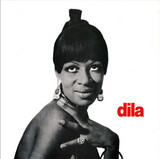
Far Out Recordings proudly presents the first and only album from the mysterious Brazilian vocal sensation Dila (pronounced “Jee-la”). Having reportedly died in a car crash shortly after the album’s release in 1971, there is very little known about the woman behind the voice. But the joyous music Dila left behind, gives us a picture as good as any, of a powerful feminine soul at the top of her game.
The liner notes on the elusive original LP, written by composer Arnoldo Medeiros attest: “Friend, look out! Because when this girl starts to sing, you’re in trouble. Hold the railing so you don’t fall down the stairs, because she’s coming this way and shaking up everything.”
Arranged and produced by Durval Ferreira, alongside his studio band affectionately known as “Os Grillos” (The Crickets), Dila (1971) is a rare glimpse into the authentic soulful Samba sound of Rio’s favelas in the late sixties and early seventies.
A blast of funky, percussive Brazilian breaks, scorching hot brass and swing-laden piano, the music is as iconic as the album’s stark cover, as is clear on opener ‘Inez’, composed by The Crickets’ bassist Romildo. There’s a fantastic interpretation of the Ivan Lins classic ‘Madalena’ (made famous by Elis Regina), a moving version of the Tom Jobim and Vinicius De Moraes classic ‘O Morro Não Tem Vez’, and a number of sunny original compositions by Arnold Madeiros, who’s other writing credits include music for Marcos Valle, Wanderlea, Evinha and Dom Salvador.
With original LPs extremely hard to come by, this rare treasure of Brazilian soul, which fans of Gal Costa, Celia, Evinha and Elis Regina will love, gets a much-deserved official reissue: remastered and pressed to 180g vinyl.
Die Geschichte von Canned Heat ist auch gleichzeitig die Geschichte von Exzessen, Drogenmissbrauch, psychischen Erkrankungen und Tablettensucht, verbunden mit der Affinität für bandinternen Begräbnisse. So sagte erst vor kurzem Drummer Adolfo "Fito" de la Parra in einem Interview: "Ich bin nach über 55 Jahren noch immer bei Canned Heat. Überhaupt noch am Leben zu sein, ist hier schon ein Triumph". Schließlich war Fito seit dem zweiten offiziellen Album der Band "Boogie With Canned Heat" mit dabei, das 1968 auf dem US-Label Liberty veröffentlicht wurde. 1970 erschien "Future Blues", das erste Album mit dem neuen Gitarristen Harvey Mandel. Mit "So Sad (The World"s in a Tangle)" enthält das Album den ersten Umweltschutz-Song der Band. Es handelt vom ständigen Smog über Los Angeles. "Let"s Work Together", eine Coverversion von Wilbert Harrisons "Let"s Stick Together" aus dem Jahre 1962, wurde für Canned Heat weltweit zu einem Top Ten Hit. Im gleichen Jahr folgte der Konzertmitschnitt ""70 Concert: Recorded Live In Europe". Aufgenommen an verschiedenen Orten während der Tournee durch Europa (u. a. der Londoner Royal Albert Hall), ist dies das erste offizielle Live-Album der Band und gleichzeitig das letzte Tondokument von Canned Heat mit Alan "Blind Owl" Wilson, der im September 1970 an einer Überdosis Tabletten starb. Mit "Final Vinyl" veröffentlichten Canned Heat vor kurzem ihr letztes Album; "Future Blues" und ""70 Concert: Recorded Live In Europe" gehören zu ihren essentiellen Alben, als die Band in ihrer Keybesetzung mit Al Wilson, Bob Hite, Fito de la Parra, Harvey Mandel und Larry Taylor Ende der 1960er / Anfang der 1970er Jahre den Zenit ihres Schaffens erreicht hatten. Wilsons Tod hinterließ eine Lücke, die nicht mehr zu schließen war, zumal auch Larry Taylor und Harvey Mandel kurz zuvor Canned Heat verlassen hatten, um sich John Mayalls "USA-Union"-Band anzuschließen.
Filipovich is one of a kind. The Belarus-born, Paris-based artist works in a multitude of media - found footage films, painting, silkscreening and performance to name a few. It's her musical output that has caught the attention of late, though, with Filipovich dropping a run of releases in recent years which began with 2021's Magnificat on Time Released Sound. Filipovich takes as much of a novel approach to her music-making as she does with her other artistic endeavours - Magnificat was centred around treated samples of Sergei Rachmaninov's All-Night Vigil, and she's also combined classical composition with contemporary electronic techniques on her subsequent drops.
For Idealized, Filipovich's debut on Sheffield's Central Processing Unit, she maintains the gothic air which characterised her previous releases and applies it to a record of widescreen contemporary techno joints. These tracks represent something of a gear shift for CPU, a label which has long made its name by delivering top-quality electro and machine-funk jams, but such is the quality of Idealized that these superbly-executed techno productions are sure to win over label fans both old and new.
Idealized is very much schooled in the German tradition of minimal/dub techno. Tracks like 'Physical', 'Wave' and 'Dance Minor' all anchor themselves on single, steady drum pulses and delay-drenched single-chord loops. Filipovich generally lets the central idea of these tracks play out across several minutes while introducing increasingly disorientating elements into the rest of the mix - wiccan atmospherics, clashing chords, spiralling delays and so forth. It's an approach at once respectful of Filipovich's predecessors - Basic Channel, Deepchord, Ellen Allien and so on - but also full of idiosyncrasies and individuality.
Many of the club cuts here hardwire us into the moody, murky environs of the darkest Berlin Basements. 'Ultra Red' rides forward on a crisp drum machine snap, a menacing burble of bassline and an eerie single-note synth whistle in the upper end of the mix; 'Dance Minor' shows off a bit of KiNK in the brain-bending modular loop that waxes and wanes at its centre; the second-half run from 'Wave' to closer 'Small Cave' travels ever-further out into deep space - the kick drums remain insistent, yet the textural elements are delivered with an edge and flair that evidences Filipovich's ability to think outside the box.
Filipovich's unusual methods, and the influence of sound art and electroacoustic composition on her music, are drawn out further when Idealized steps away from the dancefloor. 'Hydra' comes off like a more gothic version of Pole - its central pulse draws from dub techno but never quite settles into a danceable groove, and this beat is combined with the kind of unnerving keyboard work that would make John Carpenter proud. Although closer 'Small Cave' eventually locks into another dark-room techno roller, the opening section of the track delivers a weightless soundscape of bright, tinny chords and a scene-setting field recording.
Idealized, the first drop on Central Processing Unit from Paris-based Belarusian Lina Filpovich, broadens the label's horizons with a selection of finely crafted minimal/dub techno joints.
RIYL: Andy Stott, Deepchord, Ellen Allien, Moritz von Oswald
Limited Yellow w/ Purple Splatter Vinyl. Pigeons Playing Ping Pong has been turning heads coast-to-coast with their high-energy psychedelic funk shows for over 15 years. In 2014, the fledgling flock released their now-classic studio album, 'Psychology.' Featuring fan-favorite songs like "Horizon" and "Melting Lights," the album has produced 40 million streams on Spotify alone. Since its release, 'Psychology' has come to represent everything the band stands for, with its hypnotic hybrid of funk, rock, and infectious groove. "Recording 'Psychology' feels like a lifetime ago," says singer/guitarist Greg Ormont. "We were really just finding our identity as a band, but everything seemed to come together in the studio in a way that we all knew felt special. Looking back, the album laid the foundation for our growth, helped shape who we are as musicians, and the songs continue to be staples of our live catalog today."Ten years later, 'Psychology' still stands the test of time, and PPPP celebrates the anniversary with the first-ever vinyl pressing of their definitive studio work. Available on limited edition 180g Splatter Vinyl on July 12, 2024."We've always wanted to release 'Psychology' on vinyl, so we couldn't think of a better way to mark the 10-year anniversary than with its first-ever vinyl pressing!"
Limitiertes farbiges Vinyl, 2024 Pressung! Valley of Rain ist das Debütalbum von Giant Sand, das 1983 von Howe Gelb (Gesang, Gitarre) und Winston Watson (Schlagzeug), Tommy Larkins (Schlagzeug) und Scott Garber (Bass) aufgenommen und schließlich 1985 veröffentlicht wurde. Zum Zeitpunkt der Aufnahme war Howe Gelb mit den Möglichkeiten von Röhrenverstärkern nicht vertraut und hatte den Großteil des Albums mit einem Roland JC120 in den wunderbaren 8-Spur-Studio The Control Center in Korea Town, Los Angeles zusammen mit Ricky "Mix" Novak produziert. Gesamtkosten der eineinhalbtägigen Aufnahme betrugen $400. Als Enigma Records anbot, das Album zu veröffentlichen, baten sie um weitere 15 Minuten Musik, um es zu einer vollständigen LP zu machen. Ron Goudie wurde dann hinzugezogen, um die zusätzlichen Aufnahmen in einem Studio in Venedig, CA namens Mad Dog mit Eric Westfall Engineering zu überwachen. Es war dort, als Howe sich einen Verstärker auslieh, der im Studio gelagert worden war, dass er das Polster eines Röhrenverstärkers entdeckte und seine Welt sich veränderte. Der Verstärker war ein leicht modifizierter Fender Twin Reverb von Robbie Krieger von The Doors. 30 Jahre später, nachdem die Band auf unbestimmte Zeit eingeschläfert worden war, begannen sich die ersten Songs in die letzten Giant Sand Tourneen einzuschleichen. Irgendwie schien es angebracht, ihnen einen weiteren Versuch mit dem richtigen Verstärker zu geben, nur um zu sehen, was sie hätten sein können. Was die Idee zugänglicher machte, war die Verfügbarkeit der beiden ursprünglichen Schlagzeuger, die in Tucson lebten. Der erste Versuch kam letzten Sommer mit Winston & Tommy und Thoger Lund am Bass, sowie den beiden neuesten Mitgliedern, dem 29-jährigen Gabriel Sullivan und der 23-jährigen Annie Dolan an Doppelhalsgitarren. Das Geräusch war wahnsinnig. Der lustige Teil war Gabriel, der die Session entwickelt und gemischt hat und ihr einen absichtlichen 80er Jahre Produktionssound gab. Howe erklärte ihm später, dass er sich seit den ersten Originalaufnahmen im Krieg mit diesem Produktionstrend befand. So versuchten sie es alle noch einmal zur Weihnachtszeit, diesmal mit einem neu entdeckten Fender 30 Amp, der von 1980 - 1983 in Produktion war. Diese neue Neuaufnahme des ersten Albums klingt jetzt so, wie es hätte klingen sollen. Es wurde für $400 und am selben Tag und in der halben Sessionzeit wie das Original neu gemacht. Scott Garber kam sogar von Austin TX mit seinem Fretless Bass, so dass das Album buchstäblich die ursprüngliche Besetzung für mindestens die Hälfte der Songs zusammen hat. Giant Sand sind an den Anfang zurückgekehrt.
A holy grail for fans of French boogie, early hip hop, Arabic funk and Balearic bops,"Ettika" has been seriously sought after since Vidal Benjamin found it in the 1€ bin back in 2006. Teasing the ears of the underground via Vidal's 'Balearic Nightmare' mix for Noncollective, copies of the original were soon snapped up completely, and the later adopters were sated by a Blackdisco edit from Alexis Le-Tan (himself gifted Vidal's second copy), which is now also rare as hen's teeth. The fervour for the track is easy to understand. Underpinned by an endlessly buoyant bass groove, chanted female vocals dart out the speakers like a post- modern mantra while synth vamps flare in stuttering stereo.
Middle-Eastern motifs add an air of mystery, but this truly belongs in a dance floor utopia. That the track was the product of a 'back-to-work' scheme aimed at unemployed immigrant youth in Rouen only adds to the appeal. Led by teacher Bernard Guégan, a quartet of students delivered lyrics in French and Arabic inspired by their rejection letters, serving a little social commentary and a lot of funk. If you're mad on Ahmed Fakroun and Shams Dinn, or even those folks in the Bush of Ghosts, then this is a must have for you.
Archeology isn't just about excavation, there should be interpretation too, and in this case it comes from Italian duo Hear & Now and Leeds' The Veteran Delinquents. The former furnish the 12" with two radical takes, the dreamy downtempo stroll of their French Remix - all unhurried percussion, Gilmour-riffing and coastal élan - and the peaktime pump of their Arab Remix, which transports the original vocal into a land of desert new beat and Balearic trance with a little space left for some frazzled fretwork. If you've followed their work with Claremont you know the quality on show.
The Veteran Delinquents, the collaborative vehicle of Leeds stalwarts Craig Christon and Tim Hutton, condense a lifetime of club experiences into their remix, establishing the infectious groove of the original before subverting with chugging bass and winking acid, all augmented with their own slick synth work. The original was an all time classic at Craig's Joe's Bakery nights way back when, and this new interpretation is both respectful and revolutionary.
40 Years ago, Hunting Lodge was nearing the peak of its fertile 'tribal' period. In celebration of this anniversary we are releasing a book-style 3LP set including Nomad Souls, 'Tribal Warning Shot' (expanded) and The Harvest (live/expanded). All of the included tracks have been lovingly remastered from the original reels and cassettes, restored by Grant Richardson and mastered for vinyl by Sion Orgon. The Nomad Souls LP was originally released in the autumn of 1984 on S/M Operations in the USA, and in the following spring on Side Effekts Records, UK. The 'Tribal Warning Shot' 12” 4-track EP was released early 1985 on S/M Operations (USA). The title track was remixed with drums added for a 12” 45 release on Normal Records (Germany) soon thereafter. This version, along with the other three EP tracks appear on the second record in the set. A new remix of the 1983 7” 'Night From Night' b/w 'Untitled' is also included, along with 2 tracks that appeared on compilation albums and one previously unreleased track. To round off this LP we launch into a track from original The Harvest live cassette, to ease you into the album to come. The Harvest cassette was a collection of live Hunting Lodge tracks circa 1984 which has never appeared on LP until now. To make for a more cohesive theme we have separated the two LP sides by shows: Side A from Chicago, where the original 'Tribal Warning Shot (live)' was recorded, while the other side features a Detroit show which bears the distinction of being the only time Roselle Williams (The Wolf Hour) sang live with the band. Each side features one song that was NOT included on the original The Harvest release This set features a replica of the original S/M Operations' Nomad Souls cover, and of the original Normal Records 12” art on the second LP. The third sleeve features a newly designed back cover by Rolaid Alpo Cola, and an inner panel including the original promo poster artwork along with an essay from Graeme Revell.
Fractal Void is an avant-garde duo based in Düsseldorf, Germany. Their experimental music blends electronic and contemporary genres located somewhere in the field of musical tension between ambient, drone, halfstep and floor-affine IDM. During their live sets, Fractal Void create vertical reflections by processing sounds through software and interaction with real instruments in every unique musical performance like the Chinese contemporary calligraphic practice Dishu.
Their debut album Elemental Collection unveils a dense and lavishly layered transformation of artificial organic signals, sculpting an auditory world filled with emotive landscapes, overgrown polyrhythms and futuristic elements. Embedded within each track are field recordings serving as the heartbeat of the album. Through innovative and expansive deconstruction, Fractal Void create an energetic and sometimes contemplative experience.
The persons behind Fractal Void:
Back in 2008, their musical journey began with winning a Spectrasonics competition using field recordings of a locker door, that was implemented as a bass synth. Their collaboration was continued as producers of the eight-piece electronic jazz project „Mothers of Guru“.
Marcus Scheltinga is a composer, producer and multi-instrumentalist. Besides studying jazz trombone at the Conservatorium Hilversum and the Folkwanghochschule, he works as a musical director, lecturer and coach in 39 countries around the world. From ZDF sound design to live and studio performances with international greats, his own productions have included such as Grammy winner Larry Carlton and Peter Erskine. Mid-east and Indian inspired, Marcus is a true story teller as a musician and composer.
BORGBORG is a producer and DJ. She moves freely in different styles of electronic music with a focus on avant-garde driving techno, dark hypnotic vibes seamlessly blended with deconstructed beats, noise and timeless elements of IDM. She is a member of About Repetition, a group of artists dedicated to the research of repetition through artistic means, collaborating with a wide range of other collectives across Europe and co-founder of the techno event series „SCHLEIFEN“.
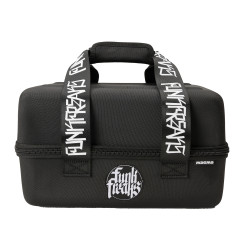
Designed for dedictated 45 vinyl-DJs, the all-new MAGMA 45 SANDWICH offers a remarkably sleek and lightweight innovation for carrying your 7“ records.
Constructed with a fully molded, shock-absorbing EVA shell, this case ensures superior protection and a secure fit for up to 150 7“ records.
The unique 50/50 "Sandwich" style enables the lid to serve as a second storage section, making organizing and flipping through your 45s more convenient. Tailored for seasoned 45 collectors on the move, the 45 SANDWICH seamlessly combines style and functionality, ensuring a solid and efficient travel companion for your musical treasures.
- fits: 120-150 x 7“ records
- Compact and lightweight design
- Crafted from 8 mm thick and rigid Durashock molded EVA foam and water rejecting 1680D Polyester exterior shell
- Molded interior for additional protection
- 50/50 Sandwich style enables the lid to serve as a second storage section
-Sturdy zipper
- Embossed molded feet
- Including shoulder strap (with metal hook)
- Including trolley sling
Outer dimensions (H/B/T):
38 x 22 x 24 cm
Inner dimensions:
33 x 19,5 x 20 cm
Weight:
1,1 kg
Color: black/juicy orange
DE:
Maßgeschneidert für ambitionierte 45-DJs, bietet das brandneue MAGMA 45 SANDWICH eine stylische und innovative Lösung, um deine 7-Inch Singles sicher zum nächsten Gig zu transportieren.
Durch seine robuste, stoßdämpfende Hülle aus geformtem EVA-Hartschaum gewährleistet dieses Case optimalen Schutz und festen Halt für bis zu 150 7“-Singles.
Der praktische 50/50 "Sandwich"-Style erlaubt es, den Deckel als zusätzliches Fach zu nutzen, was das Sortieren und Durchblättern deiner 45s noch komfortabler macht.
Das 45 SANDWICH vereint mühelos Style und Funktionalität, und wird so zu einem robusten und effizienten Reisebegleiter für deine musikalischen Schätze
- fits: 120-150 x 7“ Vinyl-Singles
- 8 mm EVA-Durashock-Hartschaum und wasserabweisendes 1680D D Polyesteraußenmaterial
- EVA-geformtes Innenleben für zusätzlichen Schutz
- Robuster Reißverschluss
- 50/50 Sandwich Style ermöglicht es, den Deckel als zusätzliche Ablage zu nutzen
- Komfortable Trageschlaufen und abnehmbarer Schultergurt (mit Metallverschluss)
- Trolley-Schlaufe
- Including shoulder strap (with metal hook)
- Including trolley sling
Aussenmaße (H/B/T):
38 x 22 x 24 cm
Innenmaße:
33 x 19,5 x 20 cm
Gewicht:
1,1 kg
Farbe: black/juicy orange