Buscar:rifle


'Artful Rifle is a new record label dedicated to 'non-serious techno music' founded by Berlin based producer Pablo Mateo. The first release 'Tentlover' EP comes up with 4 atmospherical, psychedelic techno trips - paying an homage to Octavia E. Butlers 'Xenogenesis' trilogy.
Haga su pedido ahora y le encargaremos el artículo en nuestro proveedor.
- A1: As Can Be
- A2: My Smile Is A Rifle
- A3: Head (Beach Arab)
- A4: Big Takeover
- A5: Curtains
- A6: Running Away Into You
- B1: Mascara
- B2: Been Insane
- B3: Skin Blues
- B4: Your Pussy's Glued To A Building On Fire
- B5: Blood On My Neck From Success
- B6: Ten To Butter Blood Voodoo
- C1: Untitled #1
- C2: Untitled #2
- C3: Untitled #3
- C4: Untitled #4
- C5: Untitled #5
- C6: Untitled #6
- C7: Untitled #7
- C8: Untitled #8
- D1: Untitled #9
- D2: Untitled #10
- D3: Untitled #11
- D4: Untitled #12
- D5: Untitled #13
2024 Repress
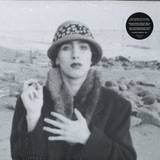
Niandra LaDes And Usually Just A T-Shirt is the first solo record by John Frusciante. Between 1990 and 1992 the guitarist made a series of 4-track recordings, which at the time were not intended for commercial release. After leaving the band Red Hot Chili Peppers in 1992, Frusciante was encouraged by friends to release the material that he wrote in his spare time during the Blood Sugar Sex Magik sessions.
Originally released on Rick Rubin's American Recordings label in 1994, Niandra LaDes is a mystifying work of tortured beauty. Frusciante plays various acoustic and electric guitars, experimenting with layers of vocals, piano and reverse tape effects. Channeling the ghosts of Syd Barrett and Skip Spence, his lyrics are at once utterly personal and willfully opaque.
Frusciante's rapidfire, angular playing shows how key he was in the Chili Peppers' evolution away from their funk-rock roots. His cover of "Big Takeover" perfectly deconstructs the Bad Brains original with laid-back tempo, twelve-string guitar and a fierce handle on melody.
The album's second part - thirteen untitled tracks that Frusciante defines as one complete piece, Usually Just A T-Shirt - contains several instrumentals featuring his signature guitar style. Sparse phrasing, delicate counterpoint and ethereal textures recall Neu/Harmonia's Michael Rother or The Durutti Column's Vini Reilly.
On the front cover, Frusciante appears in 1920s drag - a nod to Marcel Duchamp's alter-ego Rrose Sélavy - which comes from Toni Oswald's film Desert in the Shape.
This first-time vinyl release has been carefully remastered and approved by the artist. The double LP set is packaged with gatefold jacket and printed inner sleeves.
Haga su pedido ahora y le encargaremos el artículo en nuestro proveedor.

Haga su pedido ahora y le encargaremos el artículo en nuestro proveedor.
Following the beginning of its vinyl series, Rinascimento Elettronico returns with its second physical/digital release, a five-track journey shaped around hypnotic tension, bleep-driven patterns and deep, groove-oriented rhythms.
Manuel Di Martino delivers two dancefloor-focused compositions where driving percussion and intricate grooves meet the hypnotic and mental side of techno. Framing the release, an intro and outro create a continuous listening experience, setting the atmosphere and bringing the journey to its conclusion.
Completing the EP, Orbe reinterprets “Materia” through his distinctive hypnotic approach, pushing the sound deeper into a mental and immersive dimension.
debe ser publicado en 30.10.2026
- A1: Rita
- A2: Promesses de la tempête
- B1: Oummi
- B2: Passeport
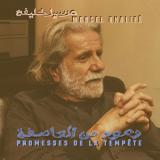
Half a century after its original release, legendary Lebanese musician and singer Marcel Khalife—renowned oud player and global icon of both music and activism—returns with a new recording. On this album, he reinterprets four of the five tracks from his debut, Promises of the Storm. A bold defiance of time and history.
Why revisit the same album, 50 years later? The reasons are many, but one stands above the rest: history itself seems to be repeating. The narrative unfolds once more in the same dire circumstances as half a century ago, as if time has folded in on itself, returning everything to its starting point. The urgency, the necessity—it all remains, pressing and inescapable. We must begin again.
In 1976, a young Marcel Khalife found himself exiled in Paris, fleeing the Lebanese Civil War and his family’s Christian village, where his progressive, left-wing ideas had placed him under a kind of house arrest. He was one of the few to openly and unwaveringly champion the Palestinian cause. The situation quickly became untenable, especially since, just a month before the war began in March 1975, Khalife—fresh out of the conservatory—had given his first public concert to great acclaim. Then, everything collapsed. What does one do when trapped at home? Read books, play the oud, and turn those readings into songs. In his family’s de facto prison, Khalife began setting the poetry of the great Palestinian poet Mahmoud Darwish to music. These songs, born of confinement, he carried with him into exile, driving to Paris where a producer offered him the chance to record an album. Naturally, the tracks were the ones he had been improvising at home from Darwish’s poems. The album’s title, Promises of the Storm, echoed the war that was just beginning. Khalife recalls that the album became a hit after a concert at the Fête de l’Huma, where 500 copies were sold in a single day. “Everything started there, and it never stopped,” he remembers. He would meet Mahmoud Darwish shortly after, at a dinner organized by mutual friends. From that moment, a deep friendship blossomed between the two men.
With Darwish’s words and Khalife’s music, the songs of Promises of the Storm are imbued with a powerful evocative force—melancholy, tenderness, and poetic resistance in the face of violence. The album catapulted Khalife to international stardom, leading to endless tours and recordings, yet he never abandoned his commitments.
Now, 50 years later, Promises of the Storm returns in a fresh recording, because history is repeating itself. After the Israeli bombings in Lebanon at the end of 2024, Khalife, who was on tour, found himself stranded in Paris. He remembered a recurring request from his son, musician Bachar Mar-Khalife, who had often urged him to re-record his now-classic debut album. One morning, oud in hand, Marcel knocked on his son’s door and said, “Shall we? I’m ready to record.”
These new versions are stripped down, raw, and intimate—just the solitary strings of the oud. Khalife sings as never before, his voice no longer marked by the fragility of youth but imbued with something deeper, freer, unshackled. It soars high yet resonates low, always clear, as if to escape sadness, to evoke love and violence, desire and exile. In just four songs, Khalife encapsulates a lifetime, and a philosophy of life. Rita tells of a love of Darwish’s, with the haunting line (translated from Arabic): “Between Rita’s eyes and mine, a rifle.” Oummi invokes the figure of the mother as a metaphor for the lost land. Promises of the Storm is a meditation on revolution, the hope for change, the melancholy of defeat, and the power of thought. Passport captures, through poetry, the feeling of being stateless—a citizen of everywhere and nowhere.
Time has only strengthened these texts and this music. History never repeats itself without a valid, indispensable reason for the present. That reason is fully contained in Marcel Khalife’s new interpretations, which have never sounded so clear, so right, so essential.
debe ser publicado en 20.11.2026

Not all music can cope with physical reality. Instruments can be pushed until they lose grip. Eventually, they will slip so far that their untethered voice is all that remains. Panoram follows up on his Pianosequenza series engaging in seventeen excursions into playing the part of the piano that doesn't exist, coaxing out inarticulate feelings in lieu of familiar characteristics. Sounds and rhythms resulting from thoughts that can't be put into quite the right words.
En el almacen y preparando para el envío

Welcoming London-based artist House on the Strand to the Eastern Nurseries fold following his impressive 2024 debut, "Heroine", Ruben Elbrond-Palmer channels a sombre, cinematic sense of sound with "Unrest".
Interpolating the visual sensibilities of some of his favourite artists, filmmakers, and photographers into the sonic field, Elbrond-Palmer’s palette cuts loose from the percussive elements of his previous work, blending analogue synthesis with repurposed guitars, haunting melodies, and field recordings that call to mind the hazy delirium of a dusty summer’s day. Sitting at its core, "Unrest" places harmony front and centre, with each sombre movement rising and falling as electric fences hum, helicopters hover overhead, and unknown events are set in motion.
Deceptively simple, the resultant album is gestalt—an elegy of melancholic moments, lost to the world.
Mastered by Ike Zwanniken of Hysterical Love Project - mainstay mastering engineer behind majority of INDEX, Co:Clear & Theory Therapy Releases
Established in 2019, Eastern Nurseries is a platform for deeply emotional contemporary electronic music based between Porto and Newcastle upon Tyne. Curated by Rui P. Andrade (aka Canadian Rifles) and Christopher Macarthur Owen (aka Burning Pyre).
The label has released a steady yet considered magna of records from Hasfeldt, Emma Acs, innerinnerlife and VAs encompassing the likes of Conna Harraway, Severin Black & Slowfoam.
Eastern Nurseries no. 41
Written & produced by Ruben Elbrond-Palmer
Recorded in London, Kobaek & Aude, 2019-2024
Mastered by Ike Zwanikken
Cover photo by Andrew Weathers
En el almacen y preparando para el envío

En el almacen y preparando para el envío
Following the success of Naturalisten’s release “Forms”, E2-E8 is back with the latest offering from Milan-based artist Joseph Tagliabue. “Espansione” presents a meticulously crafted sonic exploration that transcends conventional genre boundaries. It is a double LP consisting of four distinct parts: an ambient concept presented in Part 1 & 2, and four techno tracks in Part 3 & 4. This structure makes for a multifaceted listening experience, seamlessly blending organic textures with synthetic manipulations.
Part 3 & 4 pivot towards the dancefloor, presenting four tracks of driving, progressive techno. This transition from meditative ambient to hypnotic rave is executed with precision, showcasing Tagliabue’s versatility. These cuts are designed for late-night immersion, while maintaining the album’s overall sense of depth and trance and channeling a deep, immersive rave experience.
The album as a whole is a sophisticated sound collage, highlighting Tagliabue’s mastery of sonic manipulation. The dense sonic flow, characterised by echoes of distant temples and molten synthetic modulations, creates a compelling auditory and potentially visual experience. The interplay between organic and synthetic, combined with the album’s thematic depth, makes Espansione a noteworthy evolution in Joseph’s artistic expression. A work designed to be both deeply listened to, and physically experienced.
Early support comes from Vladimir Ivkovic, Marco Shuttle, Konduku, among others.
Haga su pedido ahora y le encargaremos el artículo en nuestro proveedor.
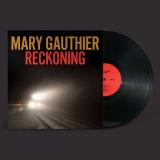
- 1: Alcohol and Adderall
- 2: Heaven
- 3: Judgement Day
- 4: Reckoning
- 5: Soldier of Fortune
- 6: Some Times
- 7: Black Ice
- 8: Gone
- 9: Thought I Heard a Train
Reckoning is a dense, carefully nuanced, profoundly complex text, though all nine songs are presented as directly as possible: Mary's voice, her guitar, bits of harmonica. Folk music, of a kind, but not a broadside. Nothing so easy as that. Topical songs with a long view, because she's seen and lived too much of it. Mary's most celebrated songs — “I Drink,” “Mercy Now,” “Drag Queens in Limousines” — are confessional stories, closely observed, clear-eyed and compassionate. She sings with the unmistakable languor of her native Louisiana, writes with the bluntness of Boston, where she was once a successful restauranteur, and rewrites with the fierce precision of Nashville, her home for many years. Her 2018 release, Rifles & Rosary Beads, co-written with wounded Iraq war veterans, received a Grammy nomination for Best Folk Album, and an Americana Music Association nomination for Album of the Year. During Covid she wrote and saw published (by MacMillan) Saved by a Song: The Art and Healing Power of Songwriting, part memoir, part reflection on songwriting, through the lens of her most impactful songs. “A reckoning,” Mary Gauthier writes on the outer sleeve to her newest album, “can be personal, political, or spiritual. These songs inhabit all three realms at once.”
debe ser publicado en 25.09.2026
- Emerald Pool - Pauline Anna Strom
- Superfici Riflettenti - Francesca Heart
- Living Mirror - Infant
- Hýdōr - Visible Cloaks
- Cosimo, Above a Waterfall - Les Halles
- Jäwrä - Shakali
- Overlooking the Lake, in the Mouth of the Grotto - Memotone
- Oh, to Be a Fountain - Eva Sajanová
- A River Song - Ursula K. Le Guin, Todd Barton
- Lunitidal Daydream - Marta Forsberg
- Pisara - Lau Nau
- Early Mist Dribbles Over The Grass - Feronia Wennborg, Lucy Duncombe
- Maré Vazia - Gonçalo F Cardoso
- Mannerjään sulaminen - Olli Aarni
- Chvíľku pred západom - Katov Syn(th)
- repository of dew - Perila
- At The Source - Miki Yui
- return - Bint Mbareh
- The Sky At The Bottom of the Well - Natalia Beylis
- μBqua - Natálie Pleváková
- silica pond - Giulia Rae
- The Cloud That Never Rains - Henrique Vaz
- Memory is a vapor - Home Baker, Plume Girl
- Coralline - Alexandra Spence
- Sub ondo - Eve Aboulkheir
- Utawai - Yoichi Kamimura
- Embrace - Liew Niyomkarn
- To a Trickle - usof
- The Pond - Slowfoam, Pablo Diserens
- Glitter Ice - sofi
- In-Out-Toad - ioa beduneau
- Water-lily Phase - Action Pyramid
- thereby losing the weightless delight of being swept along with it - Adam Badí Donoval
- Už prichádza - Adela Mede
- Tůně - Ursula Sereghy, Dorota Barová
- Legume Hydrosonics - Jonáš Gruska
- Angel Tears - Lamina
- Every Bottle Is A Flute - Hmot
- Surface Tension - Matthias Puech
- H2000: O - Forces
- Flurry at the Whirl-pull - Atte Elias Kantonen
- Seasick - Nikolaienko
- simulacrum - Lieven Martens
- supercritical fluids - Diane Barbé
- Statistique Synthétique aux Épaules de Cascade - Florian Hecker
- Under the white curtain - slyn
- Tap Water - Tomáš Knoflíček
- last waves of 2025 - Jules Reidy
- I Sink in the Sand - Koruth
- Mare Lapideum - Cheryl E. Leonard
- Dark Blue Nixie Spell - Andrew Oda
There is a pivotal scene in “August in the Water” (dir. Sōgo Ishii, 1995) where the surface of a pool turns into a stone wall. The water that gave the protagonist's life its meaning becomes a threat. As you fall through this stone wall, you appear in a set of underwater coral-reef corridors, and one of the most beautiful musical themes begins to play: Aquatic Ambience, composed by David Wise for Donkey Kong Country (1994). It's a theme that represents the weightless vibe of your new deep-sea life, where you go about your mundane errands, collecting bananas while driving on a swordfish, or, as HerzMayhem put it: "Poor monkey... always swimming, never going anywhere..."
Synthetic Water Music is the second of three compilations, following Synthetic Bird Music and timed to mappa's 10th anniversary. As with the birds, it gathers friends of the label, artists who have released with mappa or played our shows. Most of the music is new, made to measure for this compilation, much of it from Central and Eastern European hands. Birds and water mix well, so please feel invited to play them together, creating your own environments.
Where the birds were in one flock, water is dispersed across four chapters. You live your life as a droppity drop: vapour in the heavens, condensing in clouds, falling into a swamp, trickling into the deepest sea.
Tlālōcān (Cassette 1, Side A)
A place of eternal spring, of aquatic energy that nourishes everything and allows all things to bloom. Bubbly and splishy-sploshy, it is full of dripping sounds and moist caverns (“Emerald Pool” by Pauline Anna Strom), a landscape filled with living fountains (“Oh, to be a Fountain” by Eva Sajanová) and winding streams that flow through the area, forming part of its organic architecture. It is also a paradise reserved for those whose deaths were water-related, where the aquatic and terrestrial beings live in symbiosis and perspectives shift rapidly, from observing a single droplet (Shakali, Lau Nau) to dew (Feronia Wennborg & Lucy Duncombe) and on to flowing currents (Visible Cloaks) that gradually transform into river music (Ursula K. Le Guin & Todd Barton).
Nephelora (Cassette 1, Side B)
A celestial anti-gravity sound world made of evaporation, steam and the formation of clouds, as if looking at “The Sky At The Bottom of the Well” (by Natalia Beylis) or at “The Cloud That Never Rains” (by Henrique Vaz).
If a cloud never rains,
it is not a cloud at all, but a veil that parches the earth with its gaze.
It generates only its own shadow —
a looming mass of suspended longing,
a sky that hoards but never yields,
a reservoir that swallows every river and returns nothing but echoes.
The water in this world is often invisible but sometimes all the more present, as Bint Mbareh describes it: “Recently been obsessed with invisible waters because I come from a place where you have to imagine the water is there even though you cannot see a river, a sea, usually no rain, so water is in the air, the voice and the imaginal realm, drought is imagined to be negotiable.”
Žaboglach Zha-bo-glahch (Cassette 2, Side A)
A fusion of Scottish lochs and Slovak ponds: a misty, foul-smelling, swampy realm, the kind of place that swallowed Artax from The NeverEnding Story. Stagnant waters full of decay become a blooming habitat for sirens (“thereby losing the weightless delight of being swept along with it” by Adam Badí Donoval) and beings straddling the line between fauna and flora, inventing their own communication systems (“Water-lily phase” by Action Pyramid).
R'lyeh (Cassette 2, Side B)
A brooding sunken city at the bottom of the ocean. It’s a journey to get there. Let this chapter guide you, from the shore down to the depths, to the gates of an unexplored world that is inherently dark, unfathomable, and beyond the limits of human perception: starting with seasickness ("Seasick" by Nikolaienko), passing through a classic Poe-esque maelstrom ("Flurry at the Whirl-pull" by Atte Elias Kantonen), a gateway into the darkness and emptiness of the ocean floor, and finally traversing the city itself (“last waves of 2025” by Jules Reidy).
But what is pulling you to a place like this that only a few explore and even fewer leave? Maybe “the darkness that water can contain, the expanse of things we don't know and that can trigger fear instincts even as we try to rationalise them and think we are in control of the rest of nature” (“supercritical fluids” by Diane Barbé).
Dive in and surface wherever you like. Always swimming, never going anywhere. Just don’t forget to take water breaks.
P.S. Birds, then water, can you guess what comes next? Synthetic Soil Music, an elegy for insects and worms? Synthetic Glaciers, or maybe Pollinators? Which sounds would you miss the most if they disappeared? Or what if the third one never comes at all, and somebody, or something, makes Synthetic mappa Music instead. Don't you worry, with the right training data, it can all be replicated, better than the real thing.
debe ser publicado en 11.09.2026
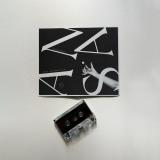
An emotional transmission wrought with the persistence of existence. Anasisana returns to Noir Age for his third release with the label. For Self Exploration, the Tunisian artist is focused here on existential alchemy; processing grief, encountering the unknown, and (possibly) experiencing growth through his simplistic and downtrodden approach to sound composition.
Anasisana constructs a plaintive sonic trajectory; leading in with harsher passages before settling into the restrained yet powerful ambient approach that we have come to love about Anas’ work. A skeletal, leftfield grunge deconstruction, echoing the corridors of HTRK’s darkest secrets crossed with the perpetual bliss of Isorinne, Canadian Rifles, or the warped dementia of The Caretaker.
A palindrome hypnotic.
Anasisana’s music has been published by labels such as Vaagner, Casement Exchange, Perfect Aesthetics, Trust Collective & Amulet of Tears.
Limited edition cassette with Rispgraph cover and newsprint insert.
debe ser publicado en 11.09.2026

- A1: Midcity 2 Marseille
- A2: Normandie Beach
- A3: Monaco Money
- A4: Guillotine Dreams x Bourgeoise Pigs
- A5: Vermont Veuve
- B1: Paper Mache Players
- B2: Louie XVI
- B3: Rifles In The Eiffel
- B4: Napoleon Nights
- B5: Champagne Corks
Grey Vinyl[27,69 €]
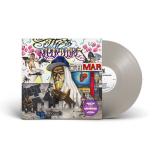
“The Repertoire” LP, the debut album from LA based artist Cousin Feo (Death At The Derby) officially comes to vinyl May 10th. The project was originally released in September of last year & is the first installment on his own indie imprint, Alumni Records. The album is entirely produced by the beat making French assassin Keor Meteor & furthermore establishes their connection from Mid City 2 Marseille.
Truly a unique body of work, this personal piece plays like a graphic novel in the form of rhyme, a short film on wax with cinematic word play & story telling fit for a classic film. A 27 minute audio experience, each joint layered into the next, thus creating a collage of moments & life experiences lived by him & his loved ones. It’s like mixing the heralded French film “La Haine” with scenes from “Training Day” & “The Professional” & setting it all in South Central LA.
More known & recognized for his famed footy themed projects like “Provoleta” & “Choripán” & creating “Death At The Derby”, Cousin Feo laces us with a more traditional sounding rap album, stepping outside the 20 yard box & showcasing the skill set extends beyond his niche artistry and sound. Tap in.
Limited edition of 400 hand-numbered copies.
debe ser publicado en 29.05.2026
“The Repertoire” LP, the debut album from LA based artist Cousin Feo (Death At The Derby) officially comes to vinyl May 10th. The project was originally released in September of last year & is the first installment on his own indie imprint, Alumni Records. The album is entirely produced by the beat making French assassin Keor Meteor & furthermore establishes their connection from Mid City 2 Marseille.
Truly a unique body of work, this personal piece plays like a graphic novel in the form of rhyme, a short film on wax with cinematic word play & story telling fit for a classic film. A 27 minute audio experience, each joint layered into the next, thus creating a collage of moments & life experiences lived by him & his loved ones. It’s like mixing the heralded French film “La Haine” with scenes from “Training Day” & “The Professional” & setting it all in South Central LA.
More known & recognized for his famed footy themed projects like “Provoleta” & “Choripán” & creating “Death At The Derby”, Cousin Feo laces us with a more traditional sounding rap album, stepping outside the 20 yard box & showcasing the skill set extends beyond his niche artistry and sound. Tap in.
Limited edition of 400 hand-numbered copies.
debe ser publicado en 29.05.2026
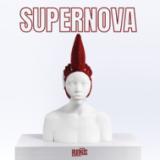
- Supernova
- Sheep
- 3310:
- Sniper Rifle
- Please Don't Come To Mars
- Every Ghetto Youth Is A Star
- Stone Love
- Sure As The Sun
- A Believer
- Life Over Death
- Last Night
- Ego Death
- The Boy Who Cried Wolf
He's worked as an artist, producer, songwriter, and scorer for the past decade, "winning a MOBO (for his work on Bashy's Being Poor Is Expensive)", as well as being nominated for GRAMMY, Juno, and Ivor Novello Awards, along the way. Recently, Runkus felt a deeper calling towards the world of visual art, which has lead to working with Bahamian artist Tavares Strachan, whose multi- disciplinary output has earned him a MacArthur Genius Prize. With the new album, SUPERNOVA, which includes guest appearances by Sean Paul and Peter Tosh, they have reignited a seamless collaboration of music and art, following in the footsteps of pairings like The Velvet Underground & Andy Warhol, Kanye West & Virgil Abloh, and (closer to Runkus's home country of Jamaica) Bob Marley & Neville Garrick. Roots reggae, thumping bass, dancehall energy, and deep lyricism merge together to tell a story of life and death, the sheep and the wolf, the version of you that has to die for the next one to be born, all elements of SUPERNOVA
debe ser publicado en 01.05.2026
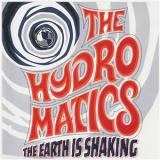
- 1: STANDIN AT THE JUKE
- 2: BABY JANE
- 3: MYSTICALLY YOURS
- 4: STREETS OF AMSTERDAM
- 5: FUNBALL
- 6: POWER AND GLORY
- 7: THE MOST
- 8: SPEECHLESS
- 9: ALL DOWN THE LINE
- 10: THE EARTH IS SHAKING
- 11: DETROIT LEANING
- 12: MONUMENTAL
First-ever vinyl edition of 2007 album "The Earth Is Shaking" by The Hydromatics featuring Kent Steedman (The Celibate Rifles) on guitar! Bang! Records brings you "The Earth Is Shaking", the THIRD album by The Hydromatics - a transatlantic high-energy rock 'n' roll unit powered by Detroit legend Scott Morgan (The Rationals / Sonic's Rendezvous Band) and Amsterdam cult-hero Tony "Slug" Leeuwenburgh (Loveslug). Originally released in 2007, this record captures the band leaner, rougher and fully locked-in: big riffs, street-level groove, zero filler, and that unmistakable Detroit soul-grit that Morgan owns like nobody else. And here's the headline for rock'n'roll die-hards: Kent Steedman (The Celibate Rifles) is on guitar - bringing bite, melody and attitude, plus extra sonic spice (yes: theremin) and production muscle. The result is The Hydromatics at maximum voltage, moving confidently into their own songs while still carrying the Motor City flame. Highlights include the swaggering "Streets Of Amsterdam", the barroom punch of "Standin' At The Juke", and the epic ride of "Detroit Leaning". Enjoy for the first time on vinyl!
debe ser publicado en 24.04.2026

- A1: Johnny And Dee Dee
- B1: Julie Is A Junkie
To commemorate the 40th Anniversary of the passing of James Darroch, singer/songwriter/guitarist for Sydney's incredible The Eastern Dark, Grown Up Wrong! is thrilled to announce a long-awaited reissue of the band's classic single "Julie Is A Junkie/Johnny and Dee Dee".
Heavily influenced by the Ramones - the band opened their first live show with 'Blitzkrieg Bop' and from then on opened with a new Ramones song every time they played, working through the band's complete catalogue in chronological order - as all manner of hyper-melodic and high energy rock. The Eastern Dark were a classic trio powered by former Celibate Rifles bassplayer James Darroch's blazing guitar and anchored by former Lime Spiders backing vocalist Bill Gibson's hard driving and melodic bass playing (and supreme backing vocals) and Geoff Milne's untouchable beat keeping. They set Sydney's Radio Birdman influenced scene alight in 1984 and quickly built an international following on the back of their classic single. Sadly, just hours after completing what would become their next release - the mini-LP "Long Live the New Flesh" - the band's life, and that of 26-year old James Darroch, was brutally ended in a road accident whilst the band was on its way to Melbourne.
On the back of the tragedy, the band's music lived on and it's global impact was reflected in the influence it bore on numerous bands, from Boston's the Lemoneads to Tokyo's Teengenenete, and obviously a succession of Australian bands from the Hard-Ons through to God and the Meanies and beyond.
After years of searching, surviving members Bill Gibson and Geoff Milne recently found the single's original multi-track tapes, and for the new release, the original recordings have been both remixed and remastered for maximum impact under their supervision.
debe ser publicado en 17.04.2026

- 18:
- 2: FRUTTI ACERBI
- 3: L'AIRONE
- 4: BRASS ON THE ROCKS
- 5: SUN
- 6: LA QUERCIA
- 7: CODE
- 8: LUCCIOLE
- 1: UN MOTIVO PER PARTIRE (VINYL-ONLY)
- 2: CORALLO E PERLE
- 3: RIVER PHOENIX
- 4: LE OSSESSIONI
- 5: DISTRATTA
- 6: PERDUTAMENTE
- 7: UN MOTIVO PER TORNARE
- 8: DISTRATTA (REPRISE)
Lucciole ist Silvia Tarozzis leuchtendes Nachfolgealbum zu den intimen Reflexionen von "Mi specchio e rifletto" und den tief verwurzelten Folk-Dialogen von "Canti di guerra, di lavoro e d'amore" mit Deborah Walker. Hier bringt Tarozzi Stimmen, Erinnerungen und musikalische Traditionen zusammen, um ein Album zu schaffen, auf dem avantgardistische Kompositionen, persönliche Erzählungen und kollektive Resonanz frei miteinander verschmelzen. Das Album beginnt mit einem strahlenden Blechbläserensemble, das wegen seines populären, feierlichen und spirituellen Klangs ausgewählt wurde, und endet mit dem Piccolo Coro Angelico, dem Kinderchor, mit dem sie seit über fünfzehn Jahren zusammenarbeitet und den sie als ,meine beste Kompositionsschule und ständige Quelle der Hoffnung" bezeichnet. Zwischen diesen beiden Eckpunkten zeichnen Tarozzis Lieder mit seltener Zärtlichkeit die Übergänge des Lebens nach: von der Kindheit zum Jugendalter, von Gesundheit zu Gebrechlichkeit, von Anwesenheit zu Abwesenheit. Die Streicher, Stimmen und melodischen Konturen, die "Mi specchio e rifletto" prägen, tauchen hier mit neuer Wärme und Tiefe wieder auf. Produziert von Tarozzi in enger Zusammenarbeit mit Marta Salogni, die das Album technisch umgesetzt und abgemischt hat, strahlt Lucciole eine Klarheit, Intimität und klangliche Großzügigkeit aus, die ihre gemeinsame Reise durch den Aufnahmeprozess widerspiegeln. Im Kern ist Lucciole ein Album über kleine Lichter, die durch Momente des Übergangs tragen - eine Einladung, genau hinzuhören auf die Orte, an denen sich das Leben verändert, und auf die Menschen, die leben und in Erinnerung bleiben und den Weg erhellen.
debe ser publicado en 10.04.2026

UILTY RAZORS, BONA FIDE PUNKS.
Writings on the topic that go off in all directions, mind-numbing lectures given by academics, and testimonies, most of them heavily doctored, from those who “lived through that era”: so many people today fantasize about the early days of punk in our country… This blessed moment when no one had yet thought of flaunting a ridiculous green mohawk, taking Sid Vicious as a hero, or – even worse – making the so-called alternative scene both festive and boorish. There was no such thing in 1976 or 1977, when it wasn’t easy to get hold of the first 45s by the Pistols or the Clash. Few people were aware of what was happening on the fringes of the fringes at the time. Malcolm McLaren was virtually unknown, and having short hair made you seem strange. Who knew then that rock music, which had taken a very bad turn since the early 1970s, would once again become an essential element of liberation? That, thanks to short and fast songs, it would once again rediscover that primitive, social side that was so hated by older generations? Who knew that, besides a few loners who read the music press (it was even better if they read it in English) and frequented the right record stores? Many of these formed bands, because it was impossible to do otherwise. We quickly went from listening to the Velvet Underground to trying to play the Stooges’ intros. It’s a somewhat collective story, even though there weren’t many people to start it.
The Guilty Razors were among those who took part in this initial upheaval in Paris. They were far from being the worst. They had something special and even released a single that was well above the national average. They also had enough songs to fill an album, the one you’re holding. In everyone’s opinion, they were definitely not among the punk impostors that followed in their wake. They were, at least, genuine and credible.
Guilty Razors, Parisian punk band (1975-1978). To understand something about their somewhat linear but very energetic sound, we might need to talk about the context in which it was born and, more broadly, recall the boredom (a theme that would become capital in punk songs) coupled with the desire to blow everything off, which were the basis for the formation of bands playing a rejuvenated rock music ; about the passion for a few records by the Kinks or the early Who, by the Stooges, by the Velvet mostly, which set you apart from the crowd.
And of course, we should remember this new wave, which was promoted by a few articles in the specialized press and some cutting-edge record stores, coming from New York or London, whose small but powerful influence could be felt in Paris and in a handful of isolated places in the provinces, lulled to sleep by so many appalling things, from Tangerine Dream to President Giscard d’Estaing...
In 1975-76, French music was, as almost always, in a sorry state ; it was still dominated by Johnny Hallyday and Sylvie Vartan. Local rock music was also rather bleak, apart from Bijou and Little Bob who tried to revive this small scene with poorly sound-engineered gigs played to almost no one.
In the working class suburbs at the time, it was mainly hard rock music played to 11 that helped people forget about their gruelling shifts at the factory. Here and there, on the outskirts of major cities, you still could find a few rockers with sideburns wearing black armbands since the death of Gene Vincent, but it wasn’t a proper mass movement, just a source of real danger to anyone they came across who wasn't like them. In August 1976, a festival unlike any other took place in Mont-de-Marsan – the First European Punk Festival as the poster said – with almost as many people on stage as in the audience. Yet, on that day, a quasi historical event happened, when, under the blazing afternoon sun, a band of unknowns called The Damned made an unprecedented noise in the arena, reminiscent of the chaotic Stooges in their early adolescence. They were the first genuine punk band to perform in our country: from then on, anything was possible, almost anything seemed permissible.
It makes sense that the four+1 members of Guilty Razors, who initially amplified acoustic guitars with crappy tape recorder microphones, would adopt punk music (pronounced paink in French) naturally and instinctively, since it combines liberating noise with speed of execution and – crucially – a very healthy sense of rebellion (the protesters of May 1968 proclaimed, and it was even a slogan, that they weren’t against old people, but against what had made them grow old. In the mid-1970s, it seemed normal and obvious that old people should now ALSO be targeted!!!).
At the time, the desire to fight back, and break down authority and apathy, was either red or black, often taking the form of leafleting, tumultuous general assemblies in the schoolyard, and massive or shabby demonstrations, most of the time overflowing with an exciting vitality that sometimes turned into fights with the riot police. Indeed, soon after the end of the Vietnam War and following Pinochet’s coup in Chile, all over France, Trotskyist and anarcho-libertarian fervour was firmly entrenched among parts of the educated youth population, who were equally rebellious and troublemakers whenever they had the chance. It should also be noted that when the single "Anarchy in the UK" was first heard, even though not many of us had access to it, both the title and its explosive sound immediately resonated with some of those troublemakers crying out for ANARCHY!!! Meanwhile, the left-wing majority still equated punks with reckless young neo-Nazis. Of course, the widely circulated photos in the mainstream press of Siouxsie Sioux with her swastikas didn’t necessarily help to win over the theorists of the Great Revolution. It took Joe Strummer to introduce The Clash as an anti-racist, anti-fascist and anti-ignorance band for the rejection of old-school revolutionaries to fade a little.
The Lycée Jean-Baptiste Say at Porte d’Auteuil, despite being located in the very posh and very exclusive 16th arrondissement of Paris, didn’t escape these "committed" upheavals, which doubled as the perfect outlet for the less timid members of this generation.
“Back then, politics were fun,” says Tristam Nada, who studied there and went on to become Guilty Razors’ frontman. “Jean-Baptiste was the leftist high-school in the neighbourhood. When the far right guys from the GUD came down there, the Communist League guys from elsewhere helped us fight them off.”
Anything that could challenge authority was fair game and of course, strikes for just about any reason would lead to increasingly frequent truancy (with a definitive farewell to education that would soon follow). Tristam Nada spent his 10th and 11th unfinished grades with José Perez, who had come from Spain, where his father, a janitor, had been sentenced to death by Franco. “José steered my tastes towards solid acts such as The Who. Like most teenagers, I had previously absorbed just about everything that came my way, from Yes to Led Zeppelin to Genesis. I was exploring… And then one day, he told me that he and his brother Carlos wanted to start a rock band.” The Perez brothers already played guitar. “Of course, they were Spanish!”, jokes their singer. “Then, somewhat reluctantly, José took up the bass and we were soon joined by Jano – who called himself Jano Homicid – who took up the rhythm guitar.” Several drummers would later join this core of not easily intimidated young guys who didn’t let adversity get the better of them.
The first rehearsals of the newly named Guilty Razors took place in the bedroom of a Perez aunt. There, the three rookies tried to cover a few standards, songs that often were an integral part of their lives. During a first, short gig, in front of a bewildered audience of tough old-school rockers, they launched into a clunky version of the Velvet Underground's “Heroin”. Challenge or recklessness? A bit of both, probably… And then, step by step, their limited repertoire expanded as they decided to write their own songs, sung in a not always very accurate or academic English, but who cared about proper grammar or the right vocabulary, since what truly mattered was to make the words sound as good as possible while playing very, very fast music? And spitting out those words in a language that left no doubt as to what it conveyed mattered as well.
Trying their hand a the kind of rock music disliked by most of the neighbourhood, making noise, being fiercely provocative: they still belonged to a tiny clique who, at this very moment, had chosen to impose this difference. And there were very few places in France or elsewhere, where one could witness the first stirrings of something that wasn’t a trend yet, let alone a movement.
In the provinces, in late 1976 or early 1977, there couldn’t be more than thirty record stores that were a bit more discerning than average, where you could hear this new kind of short-haired rock music called “punk”. The old clientele, who previously had no problem coming in to buy the latest McCartney or Aerosmith LP, now felt a little less comfortable there…
In Paris, these enlightened places were quite rare and often located nex to what would become the Forum des Halles, a big shopping mall. Between three aging sex workers, a couple of second-hand clothes shops, sellers of hippie paraphernalia and small fashion designers, the good word was loudly spread in two pioneering places – propagators of what was still only a new underground movement. Historically, the first one was the Open Market, a kind of poorly, but tastefully stocked cave. Speakers blasted out the sound of sixties garage bands from the Nuggets compilation (a crucial reference for José Perez) or the badly dressed English kids of Eddie and the Hot Rods. This black-painted den was opened a few years earlier by Marc Zermati, a character who wasn’t always in a sunny disposition, but always quite radical in his (good) choices and his opinions. He founded the independent label Skydog and was one of the promoters of the Mont-de-Marsan punk festivals. Not far from there was Harry Cover, another store more in tune with the new New York scene, which was amply covered in the house fanzine, Rock News (even though it was in it that the photos of the Sex Pistols were first published in France).
It was a favorite hang-out of the Perez brothers and Tristam Nada, as the latter explained. “It’s at Harry Cover’s that we first heard the Pistols and Clash’s 45s, and after that, we decided to start writing our first songs. If they could do it, so could we!”
The sonic shocks that were “Anarchy in the UK”, “White Riot” or the Buzzcocks’s EP, “Spiral Scratch” – which Guilty Razors' sound is reminiscent of – were soon to be amplified by an unparalleled visual shock. In April 1977, right after the release of their first LP, The Clash performed at the Palais des Glaces in Paris, during a punk night organised by Marc Zermati. For many who were there, it was the gig of a lifetime…
Of course, Guilty Razors and Tristam were in the audience: “That concert was fabulous… We Parisian punks were almost all dressed in black and white, with white shirts, skinny leather ties, bikers jackets or light jackets, etc. The Clash, on the other hand, wore colourful clothes. Well, the next day, at the Gibus, you’d spot everyone who had been at this concert, but they weren’t wearing anything black, they were all wearing colours.”
It makes sense to mention the Gibus club, as Guilty Razors often played there (sometimes in front of a hostile audience). It was also the only place in Paris that regularly scheduled new Parisian or Anglo-Saxon acts, such as Generation X, Siouxsie and the Banshees, the Slits, and Johnny Thunders who would become a kind of messed-up mascot for the venue. A little later, in 1978, the Rose Bonbon – formerly the Nashville – also attracted nightly owls in search of electric thrills… In 1977, the iconic but not necessarily excellent Asphalt Jungle often played at the Gibus, sometimes sharing the bill with Metal Urbain, the only band whose aura would later transcend the French borders (“I saw them as the French Sex Pistols,” said Geoff Travis, head of their British label Rough Trade). Already established in this small scene, Metal Urbain helped the young and restless Guilty Razors who had just arrived. Guitarist for Metal Urbain Hermann Schwartz remembers it: “They were younger than us, we were a bit like their mentors even if it’s too strong a word… At least they were credible. We thought they were good, and they had good songs which reminded of the Buzzcocks that I liked a lot. But at some point, they started hanging out with the Hells Angels. That’s when we stopped following them.”
The break-up was mutual, since, Guilty Razors, for their part, were shocked when they saw a fringe element of the audience at Metal Urbain concerts who repeatedly shouted “Sieg Heil” and gave Nazi salutes. These provocations, even still minor (the bulk of the skinhead crowd would later make their presence felt during concerts), weren’t really to the liking of the Perez brothers, whose anti-fascist convictions were firmly rooted. Some things are non-negotiable.
A few months earlier (in July 1978), Guilty Razors had nevertheless opened very successfully for Metal Urbain at the Bus Palladium, a more traditonally old-school rock night-club. But, as was sometimes the case back then, the night turned into a mass brawl when suburban rockers came to “beat up punks”.
Back then, Parisian nights weren’t always sweet and serene.
So, after opening as best as they could for The Jam (their sound having been ruined by the PA system), our local heroes were – once again – met outside by a horde of greasers out to get them. “Thankfully,” says Tristam, “we were with our roadies, motorless bikers who acted as a protective barrier. We were chased in the neighbouring streets and the whole thing ended in front of a bar, with the owner coming out with a rifle…”
Although Tristam and the Perez brothers narrowly escaped various, potentially bloody, incidents, they weren’t completely innocent of wrongdoing either. They still find amusing their mugging of two strangers in the street for example (“We were broke and we simply wanted to buy tickets for the Heartbreakers concert that night,” says Tristam). It so happened that their victims were two key figures in the rock business at the time: radio presenter Alain Manneval and music publisher Philippe Constantin. They filed a complaint and sought monetary compensation, but somehow the band’s manager, the skilful but very controversial Alexis, managed to get the complaint withdrawn and Guilty Razors ended up signing with Constantin with a substantial advance.
They also signed with Polydor and the label released in 1978 their only three-track 45, featuring “I Don't Wanna be A Rich”, “Hurts and Noises” and “Provocate” (songs that exuded perpetual rebellion and an unquenchable desire for “class” confrontation). It was a very good record, but due to a lack of promotion (radio stations didn’t play French artists singing in English), it didn’t sell very well. Only 800 copies were allegedly sold and the rest of the stock was pulped… Initially, the three tracks were to be included on a LP that never came to be, since they were dropped by Polydor (“Let’s say we sometimes caused a ruckus in their offices!” laughs Tristam.) In order to perfect the long-awaited LP, the band recorded demos of other tracks. There was a cover of Pink Floyd's “Lucifer Sam” from the Syd Barrett era – proof of an enduring love for the sixties’ greats –, “Wake Up” a hangover tale and “Bad Heart” about the Baader-Meinhof gang, whose actions had a profound impact on the era and on a generation seeking extreme dissent... On the album you’re now discovering, you can also hear five previously unreleased tracks recorded a bit later during an extended and freezing stay in Madrid, in a makeshift studio with the invaluable help of a drummer also acting as sound engineer. He was both an enthusiastic old hippie and a proper whizz at sound engineering. Here too, certain influences from the fifties and sixties (Link Wray, the Troggs) are more than obvious in the band’s music.
Shortly after a final stormy and rather barbaric (on the audience’s side) “Punk night” at the Olympia in June 1978, Tristam left the band ; his bandmates continued without him for a short while.
But like most pioneering punk bands of the era, Guilty Razors eventually split up for good after three years (besides once in Spain, they’d only played in Paris). The reason for ceasing business activities were more or less the same for everyone: there were no venues outside one’s small circuit to play this kind of rock music, which was still frightening, unknown, or of little interest to most people. The chances of recording an LP were virtually null, since major labels were only signing unoriginal but reassuring sub-Téléphone clones, and the smaller ones were only interested in progressive rock or French chanson for youth clubs. And what about self-production? No one in our small safety-pinned world had thought about it yet. There wasn’t enough money to embark on that sort of venture anyway.
So yes, the early days of punk in France were truly No Future!
Haga su pedido ahora y le encargaremos el artículo en nuestro proveedor.

- 1: Ora sono un lago
- 2: Prove d’esistenza / Il gesto
- 3: Nuda vela
- 4: Come un riflesso
- 5: Acrobata
- 6: Tra le labbra
- 7: Fragili danze
- 8: Volo dell’Angelo
- 9: Oltre le palpebre
- 10: Lonely blue star
debe ser publicado en 06.03.2026

- THE SILVER KEY
- THE CROSSHAIR
- ROOFTOP
- THE CHILD IN YOU
- RETURN OF THE REAPERS
- THE TRICKSTER
- I LIT A LIGHT
- THE RIFLEMAN'S WEDDING
- AS I DIVE
- BEGINNING OF THE END
- SHARED FATE
With `The devil's door' And Also The Trees, one true original Post-Punk/New Wave band, presents a quiet storm of an album. At times filmic, poetic and intense with an undercurrent of dark psychedelia. It completes a trilogy of works `The Bone Carver', `Mother-of-pearl Moon' and now `The devil's door' created by the current line-up. Here there are signature `And also the trees' poetic lyrics, orchestral guitar and soundtrack influenced songs inspired by newsreel, oil paintings and folklore. But with this work we have the addition of some surprising instruments that skew the album towards a world where John Barry meets Bela Bartok. And also the trees (AATT) formed during the original post-punk era in rural Worcestershire, an environment that has provided a constant inspiration to a group whose music has often explored the dark underbelly as well as the beauty of the British countryside. They are renowned for their captivating live performances, a unique style of mandolin-like electric guitar, evocative lyrics and dark jazz rhythms - not to mention a creative independence fiercely preserved for over four decades. Back then AATT immediately caught the attention of Robert Smith of The Cure, who invited them to tour with his group on several occasions. Smith was also involved with their early recordings alongside his bandmate Lol Tolhurst, who produced their first records. This longterm friendship and mutual respect was further solidified when AATT were invited to perform at the Robert Smith curated 2018 Meltdown festival in London. This July AATT appear as The Cure's special guests at the Nimes festival. Founded by singer Simon Jones and his guitarist brother Justin, AATT have maintained a continuous presence on the post-punk, and alternative rock scenes worldwide, with a solid fanbase e.g. in Germany.
debe ser publicado en 27.02.2026

- JOHNNY
- WORLD KEEPS TURNING
- ELECTRAVISION MANTRA
- DIAL OM
- WONDERFUL LIFE
- EL SALVADOR (FORMER CD ONLY TRACK)
- SEAN O'FARRELL
- BELFAST
- CYCLE
- THEY'RE KILLING US ALL (TO MAKE THE WORLD SAFE)
- O SALVATION
- FISH AND TREES (FORMER CD ONLY TRACK)
This remastered vinyl reissue of Blind Ear reintroduces The Celibate Rifles' urgent, socially aware punk-rock energy, cementing its place as a cornerstone of Australian alternative rock. 1989 is where The Celibate Rifles take their punk instincts to the next level-garage muscle, surgical precision, and a rock'n'roll pulse that sounds more urgent than ever today. Formed in Sydney ten years ago, the band appears here in full flight: two guitars in constant dialogue, a rhythm section with newfound dynamic range, and a razor-edged vocal that bites without losing melody. The remaster opens up the stereo image, sharpens the six-string detail, and restores to the turntable the physical punch this record demanded from day one; it's the definitive way to (re)discover a key title from the Australian school. The tracklist is pure traction: "Some Kind of Feeling" hits the ground running with speed and focus; "Wonderful Life '88" nails an instant hook and a clear-eyed critique of yuppie culture; and the closer, "O Salvation," lands as an expansive, cathartic statement of intent. Two tracks unusual in Australian rock for their subject matter-"Sean O'Farrell" and "Belfast"-tackle the Northern Ireland conflict head-on and underscore the band's social gaze, while the rest of the album maintains a no-filler intensity. This edition preserves the original LP sequence (the two bonus tracks existed only on the period CD) and stands as an essential piece for collectors and front racks alike: ideal for in-stores, listening bars, and classic alternative rock playlists. If your audience connects with BORED!, Radio Birdman, The New Christs, or The Saints, Blind Ear is an unequivocal yes.
debe ser publicado en 30.01.2026

- 1: Talking
- 2: Time in Hand
- 3: When I'm Alone
- 4: I'm Alive
- 5: Up Close
- 6: All Aboard
- 7: History
- 8: Shoot from the Lip
- 9: Peace and Quiet
- 10: Toe Rag
- 11: Winter Calls
- 12: She's the Only One
- 13: Robin Hood
- 14: Mr. Sunflower
- 15: Fall Apart
- 16: Darling Girl
debe ser publicado en 09.01.2026

Unfassbar! Cosmic Psychos kehren mit erstaunlichem Geständnis zurück: "I Really Like Beer"! Über 40 Jahre albern-schlauer Punkrock werden mit einem brandneuen "Konzeptalbum" über Bier fortgeführt, obwohl jedes frühere Album der Jungs auch irgendwie ein Konzeptalbum darüber war. Die Bierväter des australischen Punks klingen wie die Ramones mit Crocodile Hunter als Frontmann und schreiben Songs in einem unverkennbaren Down-Under-Stil über's Saufen, Raufen, Roadkill und die beste Zeit des Lebens. Die knallharte Herangehensweise der Jungs an den Punk hat sich als nachhaltig erwiesen und viele andere beeinflusst, von L7 und The Meanies bis hin zu The Chats und Amyl & The Sniffers. Das lärmende Punk-Trio wurde ursprünglich um 1985 von Bill Walsh, Peter Jones und Ross Knight in Melbourne gegründet. Robbie Watts ersetzte Jones 1990/91 an der Gitarre, und nach einer zwischenzeitlichen Pause gingen die Psychos 2005 zurück ins Studio, um ein neues Album aufzunehmen, wobei der neue Schlagzeuger Dean Muller (ex-Voodoo Lust) Bill Walsh ersetzte. Nach dem Schock über den tragischen Verlust von Robbie Watts im Jahr 2006 stand die Option im Raum, "Cosmic Psychos" zu begraben. Aber Knight war überwältigt von der Trauer und der Unterstützung der Fans, sodass er mit voller Unterstützung von Robbies Kindern beschloss, dass doch noch mehr Bier getrunken werden muss. John McKeering (von The Onyas) war bereits seit geraumer Zeit mit der Band befreundet und wurde Ende 2006 ausgewählt, von diesem Zeitpunkt an mit Knight & Muller Gitarre zu spielen. Mit einer legendären Debüt-EP, fast einem Dutzend Studioalben, einer Handvoll Live-Alben und einer von Fans finanzierten Dokumentation mit einer ziemlich prominenten Besetzung aus der Alternativ-Szene, liefern the blokes you can trust, wieder 12 neue Tracks mit geradlinigem, bierdurchnässtem Punkrock für Fans von Celibate Rifles, Radio Birdman, den frühen Saints, den Ramones aus ihrer mittleren Schaffensphase, Hard-Ons, C.O.F.F.I.N. und Stiff Richards. Das neue Album ist Classic Psychos, australischer Punkrock, so roh, laut und herrlich dumm wie eh und je - mit gelegentlichen Lebensweisheiten, die unter einem Haufen Riffs versteckt sind. Als CD (mit Bierschutzhülle aka Jewelcase) oder auf klassisch schwarzem Vinyl oder in farbigen LP-Versionen.
debe ser publicado en 07.11.2025

Unfassbar! Cosmic Psychos kehren mit erstaunlichem Geständnis zurück: "I Really Like Beer"! Über 40 Jahre albern-schlauer Punkrock werden mit einem brandneuen "Konzeptalbum" über Bier fortgeführt, obwohl jedes frühere Album der Jungs auch irgendwie ein Konzeptalbum darüber war. Die Bierväter des australischen Punks klingen wie die Ramones mit Crocodile Hunter als Frontmann und schreiben Songs in einem unverkennbaren Down-Under-Stil über's Saufen, Raufen, Roadkill und die beste Zeit des Lebens. Die knallharte Herangehensweise der Jungs an den Punk hat sich als nachhaltig erwiesen und viele andere beeinflusst, von L7 und The Meanies bis hin zu The Chats und Amyl & The Sniffers. Das lärmende Punk-Trio wurde ursprünglich um 1985 von Bill Walsh, Peter Jones und Ross Knight in Melbourne gegründet. Robbie Watts ersetzte Jones 1990/91 an der Gitarre, und nach einer zwischenzeitlichen Pause gingen die Psychos 2005 zurück ins Studio, um ein neues Album aufzunehmen, wobei der neue Schlagzeuger Dean Muller (ex-Voodoo Lust) Bill Walsh ersetzte. Nach dem Schock über den tragischen Verlust von Robbie Watts im Jahr 2006 stand die Option im Raum, "Cosmic Psychos" zu begraben. Aber Knight war überwältigt von der Trauer und der Unterstützung der Fans, sodass er mit voller Unterstützung von Robbies Kindern beschloss, dass doch noch mehr Bier getrunken werden muss. John McKeering (von The Onyas) war bereits seit geraumer Zeit mit der Band befreundet und wurde Ende 2006 ausgewählt, von diesem Zeitpunkt an mit Knight & Muller Gitarre zu spielen. Mit einer legendären Debüt-EP, fast einem Dutzend Studioalben, einer Handvoll Live-Alben und einer von Fans finanzierten Dokumentation mit einer ziemlich prominenten Besetzung aus der Alternativ-Szene, liefern the blokes you can trust, wieder 12 neue Tracks mit geradlinigem, bierdurchnässtem Punkrock für Fans von Celibate Rifles, Radio Birdman, den frühen Saints, den Ramones aus ihrer mittleren Schaffensphase, Hard-Ons, C.O.F.F.I.N. und Stiff Richards. Das neue Album ist Classic Psychos, australischer Punkrock, so roh, laut und herrlich dumm wie eh und je - mit gelegentlichen Lebensweisheiten, die unter einem Haufen Riffs versteckt sind. Als CD (mit Bierschutzhülle aka Jewelcase) oder auf klassisch schwarzem Vinyl oder in farbigen LP-Versionen.
debe ser publicado en 07.11.2025

BLACK STOUT VINYL[19,96 €]
PALE ALE YELLOW VINYL[21,43 €]
SMOKIN' MARBLED VINYL[22,65 €]
Unfassbar! Cosmic Psychos kehren mit erstaunlichem Geständnis zurück: "I Really Like Beer"! Über 40 Jahre albern-schlauer Punkrock werden mit einem brandneuen "Konzeptalbum" über Bier fortgeführt, obwohl jedes frühere Album der Jungs auch irgendwie ein Konzeptalbum darüber war. Die Bierväter des australischen Punks klingen wie die Ramones mit Crocodile Hunter als Frontmann und schreiben Songs in einem unverkennbaren Down-Under-Stil über's Saufen, Raufen, Roadkill und die beste Zeit des Lebens. Die knallharte Herangehensweise der Jungs an den Punk hat sich als nachhaltig erwiesen und viele andere beeinflusst, von L7 und The Meanies bis hin zu The Chats und Amyl & The Sniffers. Das lärmende Punk-Trio wurde ursprünglich um 1985 von Bill Walsh, Peter Jones und Ross Knight in Melbourne gegründet. Robbie Watts ersetzte Jones 1990/91 an der Gitarre, und nach einer zwischenzeitlichen Pause gingen die Psychos 2005 zurück ins Studio, um ein neues Album aufzunehmen, wobei der neue Schlagzeuger Dean Muller (ex-Voodoo Lust) Bill Walsh ersetzte. Nach dem Schock über den tragischen Verlust von Robbie Watts im Jahr 2006 stand die Option im Raum, "Cosmic Psychos" zu begraben. Aber Knight war überwältigt von der Trauer und der Unterstützung der Fans, sodass er mit voller Unterstützung von Robbies Kindern beschloss, dass doch noch mehr Bier getrunken werden muss. John McKeering (von The Onyas) war bereits seit geraumer Zeit mit der Band befreundet und wurde Ende 2006 ausgewählt, von diesem Zeitpunkt an mit Knight & Muller Gitarre zu spielen. Mit einer legendären Debüt-EP, fast einem Dutzend Studioalben, einer Handvoll Live-Alben und einer von Fans finanzierten Dokumentation mit einer ziemlich prominenten Besetzung aus der Alternativ-Szene, liefern the blokes you can trust, wieder 12 neue Tracks mit geradlinigem, bierdurchnässtem Punkrock für Fans von Celibate Rifles, Radio Birdman, den frühen Saints, den Ramones aus ihrer mittleren Schaffensphase, Hard-Ons, C.O.F.F.I.N. und Stiff Richards. Das neue Album ist Classic Psychos, australischer Punkrock, so roh, laut und herrlich dumm wie eh und je - mit gelegentlichen Lebensweisheiten, die unter einem Haufen Riffs versteckt sind. Als CD (mit Bierschutzhülle aka Jewelcase) oder auf klassisch schwarzem Vinyl oder in farbigen LP-Versionen.
debe ser publicado en 07.11.2025

- I LIKE BEER
- 10: CAN TRIP
- THIS COULD BE THE BEST BEER OF MY LIFE
- GRUNGE THIEF
- FLY IN MY SHED
- DO IT AGAIN
- 15: FOOTER
- HEY MICK, YOU'RE SICK
- HAVE ONE MORE
- DON'T FEED ME JELLY
- SPAGHETTI WESTON
- I REALLY REALLY REALLY LIKE BEER
Unfassbar! Cosmic Psychos kehren mit erstaunlichem Geständnis zurück: "I Really Like Beer"! Über 40 Jahre albern-schlauer Punkrock werden mit einem brandneuen "Konzeptalbum" über Bier fortgeführt, obwohl jedes frühere Album der Jungs auch irgendwie ein Konzeptalbum darüber war. Die Bierväter des australischen Punks klingen wie die Ramones mit Crocodile Hunter als Frontmann und schreiben Songs in einem unverkennbaren Down-Under-Stil über's Saufen, Raufen, Roadkill und die beste Zeit des Lebens. Die knallharte Herangehensweise der Jungs an den Punk hat sich als nachhaltig erwiesen und viele andere beeinflusst, von L7 und The Meanies bis hin zu The Chats und Amyl & The Sniffers. Das lärmende Punk-Trio wurde ursprünglich um 1985 von Bill Walsh, Peter Jones und Ross Knight in Melbourne gegründet. Robbie Watts ersetzte Jones 1990/91 an der Gitarre, und nach einer zwischenzeitlichen Pause gingen die Psychos 2005 zurück ins Studio, um ein neues Album aufzunehmen, wobei der neue Schlagzeuger Dean Muller (ex-Voodoo Lust) Bill Walsh ersetzte. Nach dem Schock über den tragischen Verlust von Robbie Watts im Jahr 2006 stand die Option im Raum, "Cosmic Psychos" zu begraben. Aber Knight war überwältigt von der Trauer und der Unterstützung der Fans, sodass er mit voller Unterstützung von Robbies Kindern beschloss, dass doch noch mehr Bier getrunken werden muss. John McKeering (von The Onyas) war bereits seit geraumer Zeit mit der Band befreundet und wurde Ende 2006 ausgewählt, von diesem Zeitpunkt an mit Knight & Muller Gitarre zu spielen. Mit einer legendären Debüt-EP, fast einem Dutzend Studioalben, einer Handvoll Live-Alben und einer von Fans finanzierten Dokumentation mit einer ziemlich prominenten Besetzung aus der Alternativ-Szene, liefern the blokes you can trust, wieder 12 neue Tracks mit geradlinigem, bierdurchnässtem Punkrock für Fans von Celibate Rifles, Radio Birdman, den frühen Saints, den Ramones aus ihrer mittleren Schaffensphase, Hard-Ons, C.O.F.F.I.N. und Stiff Richards. Das neue Album ist Classic Psychos, australischer Punkrock, so roh, laut und herrlich dumm wie eh und je - mit gelegentlichen Lebensweisheiten, die unter einem Haufen Riffs versteckt sind. Als CD (mit Bierschutzhülle aka Jewelcase) oder auf klassisch schwarzem Vinyl oder in farbigen LP-Versionen.
debe ser publicado en 07.11.2025
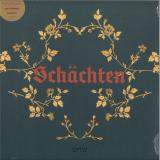
- A1: Slaughter 03 20
- A2: Dusk 01 50
- A3: Winter Clouds 01 28
- A4: Hollow Tree 01 56
- A5: Still Alive 01 11
- A6: The Cave 02 13
- A7: In Court 01 37
- A8: Hope Through Confusion 01 49
- A9: Not Guilty 51
- A10: Village Ceremony 51
- A11: Road Tension 01 22
- B1: Kneipe 01 18
- B2: Hunt Introduction 01 30
- B3: Rifle, Second Attempt 38
- B4: Hunt Epilogue 01 01
- B5: Confrontation 02 21
- B6: Judenfreund 01 19
- B7: Flashback 41
- B8: A True Friend 57
- B9: False Promises 01 39
- B10: How Do You Suffocate Weeds 01 55
- B11: Under The Masks We All Look The Same 02 58
- B12: Dream 01 32
- B13: Freedom 01 08
Erik K Skodvin's feature-length score to Thomas Roth's thriller "Schächten" feels like the epitome of all his musical projects, conjuring a dark cinematic trip through 1960's post-WWII Vienna in a film that touches on topics such as law, justice & revenge.
Releasing a soundtrack as a stand-alone album can be challenging; and "Schächten" is by no means a typical listening experience. The record contains 24 more or less short pieces evolving through dramatic movements, underlaying menace and deep emotive scenes. One thing that stands out is the linear atmosphere throughout the story which creates a wholeness that keeps your attention to the very end. Set in wintery Austrian landscapes in dimly saturated colours, the film's dramatic events with dark political undertones feels like a perfect situation for Skodvin's atmospheric collages - perhaps sounding closer than ever to his early works as Svarte Greiner or Deaf Center. Cello, violin, piano, analogue synth and plenty of hardly recognizable instrumentation come together in a record that feels very organic in its subdued tones. The score also features percussion by Andrea Belfi as well as a Chopin piano interpretation by Kelly Wyse to the bizarrely schizophrenic piece "Judenfreund".
With the contemporary world sliding into darkness again, listening to the soundtrack feels like coming to terms with ones own anxieties - something that in the end comes through as a cleansing experience. As quoted in the film "Everyone is their own devil. And we make this world our hell".
Short synopsis : "Vienna 1960s - The young Jewish business man Victor has to witness how the prosecution of a Nazi crime against his family fails. The political and legal system is still virtually run by former Nazis with large parts of society being entangled in the past. When Victor also loses his grief ridden father and his girlfriend’s family opposes their relationship and his identity, Victor begins to loose faith in formal justice and takes matters in his own hands."
Haga su pedido ahora y le encargaremos el artículo en nuestro proveedor.
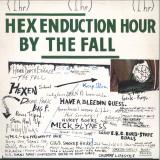
1982 was a decisive year for The Fall. Their critically acclaimed album ‘Hex Enduction Hour’ was released in March on Kamera Records, closely followed by ‘Room To Live’ in September of that year. ‘Hex Enduction Hour’ was the fourth studio album by The Fall, building on their lo-fi production and featuring a two-drummer line-up. The album was recorded in Reykjavik, Iceland and Hitchin, Hertfordshire. Featuring the classic line-up of Mark E. Smith alongside Steve Hanley (bass), Craig Scanlon (guitar), Karl Burns (drums), Paul Hanley (drums) and Marc Riley (guitar). This is another fine addition to Cherry Red’s series of deluxe Fall re-issues – “Fall Sound Archive”. ‘Hex Enduction Hour’ and ‘Room to Live’ are also available on a 7-CD boxset – “1982” Founded by its only constant member, Mark E. Smith, The Fall formed in Manchester in 1976 and were one of the most prominent post-punk groups in the world. Musically, there may have been several stylistic changes over the years, but it was often characterised by an abrasive guitar-driven sound and frequent use of repetition, always underpinned by Smith's distinctive vocals and often cryptic lyrics. “They are always different; they are always the same.” John Pee
Haga su pedido ahora y le encargaremos el artículo en nuestro proveedor.

debe ser publicado en 05.09.2025

- Wedding in the Park
- Work from Smoke
- Parenthetically
- Every Five Miles
- Thos. Dudly Ah! Old Must Dye
- Is that a Rifle when it Rains?
- The C in Cake
- The Wrong Soundings
Gastr del Sol"s second album returns at last to the vinyl format - its first physical manifestation in well over a decade. Once again, a drop of the needle may ignite any number of queries, summed simply in one: What IS this music? Such is the potent energy of Crookt, Crackt, or Fly, retaining its otherworldly qualities some 32 years and countless musical movements since. Crookt, Crackt, or Fly expands upon The Serpentine Similar"s minimalist stance in unexpected ways, imposing further austerity in the soundscape but for an unpredictable expansive quantity periodically overflowing, waves of blood sluicing through the elevator doors. This is partially due to a change within the group dynamic: the departure of bassist Ken "Bundy" Brown and the arrival of a new partner for guitarist and singer David Grubbs - guitarist and sound fuckerer Jim O"Rourke. O"Rourke"s initial work with Gastr involved editing and recomposing recordings of the Grubbs-Brown-&-sometimes-John-McEntire lineup, producing an utterly outré collage of cut-ups and other types of tape processing. This became the "20 Songs Less" single, after which he was invited to play with the group. It was a time of flux; Brown recalls playing a Gastr show at the Metro around this time featuring himself, John McEntire, Grubbs and O"Rourke - and one of the pieces played was a Tortoise song! Throughout these shifts, Gastr del Sol"s music was never less than fully considered and composed, even in moments redolent with the suggestion of the random and the non-sequitur. Grubbs and O"Rourke made no attempt to replicate Serpentine"s arrangement of thick, scaly drones and hypnotic song-visions in their own partnership, finding Crookt, Crackt,"s sound instead in spiny, gamelan-like interactions between their (mostly acoustic) guitars, played precisely in and out of formation with bright, fleet-fingered abandon. O"Rourke"s fondness for field recordings and his capacity for tape manipulation intersected with Grubbs" sensibilities, edifying his evolving song style: written with increased sharpness and sly surreal humor, sung closer to silence. Halfway into "Work from Smoke", the sudden collapse of the sound-walls around us signals Crookt, Crackt"s major departure. From the thicket of guitars, a swell of drones and free-jazz squeals, made up of bass clarinet, vibraphone and organ, pulls the listener into an entirely other acoustic space. "Every Five Miles" derails in similarly tactile fashion: a guitar duet boils up thunderously, then fragments and spirals apart. As a free electric guitar part crops up, improbably holding the center, the acoustic space around it continues to disintegrate in ambient stereo. A wedding of folk music idioms to classical, improvised and modern compositional modes (including Gastr"s own formative post-punk mode), Crookt, Crackt, or Fly is a song-based reality steadily giving way to its alternative alchemies playing out within.
debe ser publicado en 05.09.2025

Norman Westberg (guitar), Giridhar Udupa (ghatam, konnakol, khanjira, percussion) and Jacek Mazurkiewicz (double bass, electronics)An extraordinary meeting of three artists from three different musical worlds and three different continents. Norman Westberg (ex-Swans) and Jacek Mazurkiewicz have already released one album together "First Man In The Moon" in 2021 (published by the Swiss label Hallow Ground).In the new project, they are accompanied by Giridhar Udupa, an Indian master of ghatam (a clay percussion instrument that looks like a jug). The album will feature 3 long trance compositions, referring to ambient, krautrock, free jazz and Indian music.Jacek Mazurkiewicz describes the creation of this album as follows:"I met Norman Westberg while supporting the Swans tour in Poland as 3FoNIA. A few years later, during Norman's tour with Gira, we recorded a duet.The trio session took place similarly to the previous duet session during Norman's solo concert in Warsaw on the Swans tour.Recorded with Adam Toczko, a quick meeting on a day off from work.I invited Giridhar Udupa to the trio, whom I had met earlier during the period when I co-founded the band Limboski. I once invited Wacek Zimpel to play a few concerts with Giridhar. Wacek later created Saagara and I was wondering about some unusual musical context in which I would find myself with Giridhar. I was looking for an interesting sound configuration, but also a cultural one, with a different approach to creating music. I got the impression that for both Norman and Giridhar it was a fairly fresh meeting, not obvious. And on the other hand, ordinary - everyone did their own thing."Detroit guitarist Norman Westberg moved to New York in 1980 and became a part of the experimental music scene that was experiencing its golden age. Westberg himself became a permanent fixture when he joined the iconic avant-rock band Swans in 1983, and was the only member other than frontman Michael Gira to play with them for most of the band's run, both until their 1997 disbandment and his return in 2010. Westberg has also been involved with other legendary New York noise-rock acts, including Jim Thirlwell's Foetus and the post-Swans Heroine Sheiks, in which he played with Cows frontman Shannon Selberg; and in 2014, he joined the noise-rock supergroup Hidden Rifles, whose members included Mike Watt of Minutemen and Mark Shippy of U.S. Maple. Westberg's solo compositions, most often for solo guitar and a set of effects, draw on drone and post-minimalism, bringing to mind dark ambient passages from Swans albums.Giridhar Udupa is an extremely valued teacher and world-renowned artist, an Indian master of ghatam (a clay percussion instrument that looks like a jug). He was born into a family with long musical traditions. He began learning to play at the age of four, guided by his father. At the age of twelve, he already had his first performances behind him. He currently gives concerts alongside the greatest masters. He has received many prestigious awards. He performs in the USA, Spain, Canada, France, Switzerland, Germany, Oman and Kuwait. Giridhar Udupa is a member of the band of the Indian vocalist Bombay Jayashri, nominated for an Oscar for the best song for the film Life of Pi. He is one of the founders of the Layatharanga band. He also plays virtuoso other traditional instruments of South India, such as mridangam and kanjira, and is excellent at using the konnakol technique (a type of rhythmic vocalization).For three decades, the artist has been a global ambassador and icon of Carnatic music. He is the founder of The Udupa Foundation, a charity organization established in 2015 to promote Indian music, performing arts and culture. He has participated in recording dozens of albums. He is also well-known in our country thanks to his cooperation with Polish performers, which resulted in excellent artistic effects, such as the famous Indialucia - Michał Czachowski's group / project or the Saagara formation, led by Wacław Zimpel. Udupa also played on the album Lechoechoplexita, released by Leszek Hefi Wiśniewski, and on the album of the band Layatharanga, released in our country.Jacek Mazurkiewicz is interested in music in the broad sense. He puts his sounds together based on emotional impressions and pulse. Combining acoustics with electronics, he is constantly looking for a new sound. Solo as 3FoNIA, in a duet with Mikołaj Trzaska or Tomek Dąbrowski, the JMB trio with Wojtek Jachna and Jacek Buhl, in the Modular String Trio quartet, the Afrobeat quintet Faso Tamala are just some of his musical incarnations. With Patryk Zakrocki, as part of an audio mission, he massaged hundreds of pairs of ears in the Inner Ear Massage Office. He also deals with sound design, composing and producing music for films and theatre performances. He collaborated with many Polish and foreign artists.
debe ser publicado en 25.04.2025

- Opening Drive
- Walking To the Grave
- Attacked
- Flight From the Cemetery
- Refuge
- Trophy Room
- The Clothesline
- Dead Connection / Corpse On the Stairs / Ben Arrives
- Panic
- Blood From the Landing
- Smashing the Headlight
- Tire Iron Attack
- Don't Look At It!
- Back Porch Bonfire
- Searching the House
- The Music Box
- Boarding Up the House
- Knocked Out
- Fireplace and Torch
- Lounge Chair Bonfire
- The Cellar Door
- Finding the Rifle
- Ben Comforts Barbra
- Cleaning Upstairs
- Grasping Hands
- Ghouls Approach the House
- Down To the Cellar
- Up From the Cellar
- Escape Plan
- Tom and Judy
- Unboarding
- Molotov Cocktails
- Escape From the House
- Truck Escape
- Truck On Fire
- Feeding Frenzy
- Lights Out
- Final Siege
- Breakthrough
- Helen's Death
- Ghouls Overrun
- Cellar Nightmare
- The Posse
- Bonfire
- End Credits
- Bonus Night of the Living Dead 1968 Radio Spot
- New Arrivals
- Attack At the Window
B&W[48,95 €]
"Waxwork Records is honored to present the release of the Original Motion Picture Soundtrack to George A. Romero’s horror classic, NIGHT OF THE LIVING DEAD. Written, filmed, and released in 1968 by a rag tag group of Pittsburgh based misfits, NIGHT OF THE LIVING DEAD is an American independent horror film that follows the story of seven people trapped in a rural farmhouse that is besieged by a large and growing group of living dead ghouls. The film is regarded as a cult classic by critics, film scholars, and fans and has garnered critical acclaim. The film has been selected by the Library Of Congress for preservation in the National Film Registry and is deemed “culturally, historically, and aesthetically significant”.
Filmed and released on a shoestring budget, NIGHT OF THE LIVING DEAD became a smashing success earning over 250 times its budget. The film is a first of its kind and ushered in a new way of writing, directing, and filming horror films. The overused script of romantic, fantastical tales of otherworldly monsters and creatures was completely flipped and tossed aside by visionary George A. Romero. As the film’s writer and director, Romero created a new, obvious threat, and one that is universally recognizable - Our very own neighbors. Due to an unseen force beyond man’s control, the recently deceased arise from the dead in seek of living human victims. These ghouls kill and feast upon the flesh of their victims, and the only way of stopping them is by destroying their brains.
From 2015 to 2018, Waxwork Records worked closely with the remaining members of the independent production company that made NIGHT OF THE LIVING DEAD, Image Ten, to produce a definitive soundtrack album featuring all music from the film. Much of the film’s music was thought to be lost or destroyed but was located in its entirety and faithfully restored and re-mastered for vinyl. This special release of NIGHT OF THE LIVING DEAD features the complete soundtrack, double LP “Black & White Hand Poured” colored vinyl, all new artwork by Robert Sammelin, a booklet featuring never before seen production photos, liner notes by Daniel Kraus (co-author of THE SHAPE OF WATER with Guillermo Del Toro), liner notes by Night Of The Living Dead’s dialogue recorder and sound engineer, Gary Streiner, and deluxe packaging."
debe ser publicado en 06.12.2024

The Rills haben sicherlich ein oder zwei Häute abgestreift, um diesen Punkt am Vorabend ihres spritzigen Debütalbums zu erreichen. Produziert von Dave McCracken (Indie-Mastermind hinter Ian Brown, dEUS, The Rifles), nehmen diese drei jungen Freunde auf "Don't Be A Stranger" die ungenutzte Energie, die sie zu viralen Sensationen und Lieblingen der Grassroots-Szene gemacht hat, und verwandeln sie in etwas Überlegteres, Vollständigeres und Herzlicheres.
- "The Rills sind eine Mischung aus einer Northern Oasis inspirierten und einer trendy Post-Punk-Band aus London. Damit schafften sie es nicht nur mit ihrer Musik, sondern auch über Tiktok zu begeistern." - Budde Talent Agency (Tourveranstalter)
debe ser publicado en 08.11.2024

- Opening Drive
- Walking To the Grave
- Attacked
- Flight From the Cemetery
- Refuge
- Trophy Room
- The Clothesline
- Dead Connection / Corpse On the Stairs / Ben Arrives
- Panic
- Blood From the Landing
- Smashing the Headlight
- Tire Iron Attack
- Don't Look At It!
- Back Porch Bonfire
- Searching the House
- The Music Box
- Boarding Up the House
- Knocked Out
- Fireplace and Torch
- Lounge Chair Bonfire
- The Cellar Door
- Finding the Rifle
- Ben Comforts Barbra
- Cleaning Upstairs
- Grasping Hands
- Ghouls Approach the House
- Down To the Cellar
- Up From the Cellar
- Escape Plan
- Tom and Judy
- Unboarding
- Molotov Cocktails
- Escape From the House
- Truck Escape
- Truck On Fire
- Feeding Frenzy
- Lights Out
- Final Siege
- Breakthrough
- Helen's Death
- Ghouls Overrun
- Cellar Nightmare
- The Posse
- Bonfire
- End Credits
- Bonus Night of the Living Dead 1968 Radio Spot
- New Arrivals
- Attack At the Window
B&W[50,38 €]
"Waxwork Records is honored to present the release of the Original Motion Picture Soundtrack to George A. Romero’s horror classic, NIGHT OF THE LIVING DEAD. Written, filmed, and released in 1968 by a rag tag group of Pittsburgh based misfits, NIGHT OF THE LIVING DEAD is an American independent horror film that follows the story of seven people trapped in a rural farmhouse that is besieged by a large and growing group of living dead ghouls. The film is regarded as a cult classic by critics, film scholars, and fans and has garnered critical acclaim. The film has been selected by the Library Of Congress for preservation in the National Film Registry and is deemed “culturally, historically, and aesthetically significant”.
Filmed and released on a shoestring budget, NIGHT OF THE LIVING DEAD became a smashing success earning over 250 times its budget. The film is a first of its kind and ushered in a new way of writing, directing, and filming horror films. The overused script of romantic, fantastical tales of otherworldly monsters and creatures was completely flipped and tossed aside by visionary George A. Romero. As the film’s writer and director, Romero created a new, obvious threat, and one that is universally recognizable - Our very own neighbors. Due to an unseen force beyond man’s control, the recently deceased arise from the dead in seek of living human victims. These ghouls kill and feast upon the flesh of their victims, and the only way of stopping them is by destroying their brains.
From 2015 to 2018, Waxwork Records worked closely with the remaining members of the independent production company that made NIGHT OF THE LIVING DEAD, Image Ten, to produce a definitive soundtrack album featuring all music from the film. Much of the film’s music was thought to be lost or destroyed but was located in its entirety and faithfully restored and re-mastered for vinyl. This special release of NIGHT OF THE LIVING DEAD features the complete soundtrack, double LP “Black & White Hand Poured” colored vinyl, all new artwork by Robert Sammelin, a booklet featuring never before seen production photos, liner notes by Daniel Kraus (co-author of THE SHAPE OF WATER with Guillermo Del Toro), liner notes by Night Of The Living Dead’s dialogue recorder and sound engineer, Gary Streiner, and deluxe packaging."
debe ser publicado en 11.10.2024

Limited pressing of 300 LPs ! 180gm VINYL LPS w/ INSERT & DOWNLOAD FILE UNDER : GARAGE ROCK / PUB ROCK "I wanted to make a very NOW album, our past was fantastic at the time but it was exactly that.the past. We've learned a lot since then and with the combination of influences and personal tastes we've concocted a combination of Raw Power guitar grunt, a touch of The Cars' pop sensibilities and Bad Seeds brood." Dave Butterworth Veteran rockers The Double Agents return with their third album New Motion a powerful new recording evoking directness and immediacy and marking their first release of new material in nearly two decades. The Double Agents' initial incarnation circa 2000 saw the fiercely independent quintet rise from humble stages to becoming one of Melbourne's most revered pub rock bands. They twice toured Europe and eventually shared the stage with iconic luminaries Dead Moon, Mudhoney, The Dirtbombs, Celibate Rifles, The White Stripes and The Black Keys before an amicable hiatus in 2008. New Motion is a modern Australian rock record and marks a departure from their garage rock roots, as best exemplified in their self released 2023 anthology compilation Best Bits. So Far spanning their first three releases. The familiar twin vocals remain, Kim and Dave summoning that deep Dead Moon energy, as does Ryan Tandy's singular lead guitar playing and the rock solid backbeat of Myles Gallagher, but the band's scope seems to have widened on this record, with the inclusion of longtime cohort Mick Stylianou (Saint Jude) adding style and harmonic punch on bass guitar and backing vocals. ..The New Motion sessions were tracked to analog tape by Finn Keane at Head Gap and Julian McKenzie at Newmarket with vocal post production by Dave Larkin (Dallas Crane), mixing by Callum Barter (Courtney Barnett, Kurt Vile), mastering by Mikey Young. Dave Butterworth also produced the album.
debe ser publicado en 27.09.2024

Limited pressing of 300 LPs ! 180gm VINYL LPS w/ INSERT & DOWNLOAD FILE UNDER : GARAGE ROCK / PUB ROCK "I wanted to make a very NOW album, our past was fantastic at the time but it was exactly that.the past. We've learned a lot since then and with the combination of influences and personal tastes we've concocted a combination of Raw Power guitar grunt, a touch of The Cars' pop sensibilities and Bad Seeds brood." Dave Butterworth Veteran rockers The Double Agents return with their third album New Motion a powerful new recording evoking directness and immediacy and marking their first release of new material in nearly two decades. The Double Agents' initial incarnation circa 2000 saw the fiercely independent quintet rise from humble stages to becoming one of Melbourne's most revered pub rock bands. They twice toured Europe and eventually shared the stage with iconic luminaries Dead Moon, Mudhoney, The Dirtbombs, Celibate Rifles, The White Stripes and The Black Keys before an amicable hiatus in 2008. New Motion is a modern Australian rock record and marks a departure from their garage rock roots, as best exemplified in their self released 2023 anthology compilation Best Bits. So Far spanning their first three releases. The familiar twin vocals remain, Kim and Dave summoning that deep Dead Moon energy, as does Ryan Tandy's singular lead guitar playing and the rock solid backbeat of Myles Gallagher, but the band's scope seems to have widened on this record, with the inclusion of longtime cohort Mick Stylianou (Saint Jude) adding style and harmonic punch on bass guitar and backing vocals. ..The New Motion sessions were tracked to analog tape by Finn Keane at Head Gap and Julian McKenzie at Newmarket with vocal post production by Dave Larkin (Dallas Crane), mixing by Callum Barter (Courtney Barnett, Kurt Vile), mastering by Mikey Young. Dave Butterworth also produced the album.
debe ser publicado en 23.08.2024

I’ve lost my sense, I’ve lost control, I’ve lost my mind! Yeah, we all know how the song goes, but those words will no doubt end up driving their point home throughout the duration of Bloodstains’ self-titled debut LP. This thoroughly-welcome Euro pressing follows the album’s DIY release earlier in 2024, which is excellent news for UK/mainland fans of early 80s SoCal hardcore who’ve yet to hear it - the whole thing absolutely fkn rips. Feel free to rifle through your Adolescents, Weirdos and (natch) Agent Orange records to see what these guys have been mining, but all you’ll find is a launchpad - Bloodstains inevitably hail from California and they’re clearly au fait with all the above (not to mention a certain compilation), but they manage to inhabit that sound with a personality all of their own. Vocalist Cesar Marin splits his delivery between a sneering bark (like the most withering put-downs you’ve ever heard being delivered via nailgun) and a purposeful, melodic croon… which itself sounds it’s made from sandpaper and vitriol, but there you go. Most importantly, this is a band with SONGS. Eight of ‘em here, to be precise, and you’ll rarely have been so glad to have something turned up so loud it blows holes in your speakers. ‘Stray Bullets’ hangs its mighty chorus on a call-and-response refrain that dares you not to pick a side and bellow along, while instrumental opener ‘The Last Rites’ sets you up perfectly for the seething, volatile bundle of hooks to follow. I’d say the interplay between the band’s string-wielding Espinoza contingent is something to behold as well, but what am I, some kinda nerd? The guitars sound fkn awesome - that’ll do ya. And I don’t wanna spoil the party ahead of time, but just wait til you hear future anthem ‘Public Hanging’. I could go on about this record all day, but ultimately all you need to do is listen to it. Hell, even buy it. And dare I return to a theme, lose your mind.
debe ser publicado en 02.08.2024

Luxury Apartments have spent long enough pondering in the orb of creative frustration as art charged city dwellers and have alchemised a jagged piece of guitar work that calls on the past for a quick catch up before cracking on with their day as a witty, energised and wiry punk band. Formed before your favourite East London neighbourhood became full of high rises, cockapoos and pubs with Madri & Beavertown on Draft, there’s a whole swath of words you could use to describe Luxury Apartments, but doing so might draw too many parallels to estate agent listings wo we’re gonna let their track record and new LP do the talking… LA played with the likes of TOY, TELEGRAM, Deep Tan, Es, The Chisel and Rifle before even having an LP. Mixing dry humour with a belting live show served them well while the guys were woodshedding and earnt them early fans such as Graham Coxon and Jamie Reynolds, who I can only gather shed a single tear of seeing where they came from with all the chaotic guitar-busting, skin-splitting, bottle-smashing madness of an early LA show. But we’re here talking about NOW and NOW is the time to get your pre-order for their first LP, a half hour of power smashing the atoms of 80s c86 indie on lead track ‘Energy’, 77 punk on ‘Wire’ and new garage rock explosions on ‘Taliban’ which morph in to a piece of black wax that’s 100% guaranteed to get the disenfranchised wiggling, the fed-up hurling half bricks through foxtons windows and the punk lifers flipping off yet another boss before carving out another fork in their paths of resistance.
debe ser publicado en 31.05.2024
