Sometimes, a change of view can transform a person’s world. On ‘Don’t Come Down’, the artist formerly known as Matt Pond PA can be found with his “shoulder on the concrete” of a pavement, scoping out the world anew. This granular realignment of perspective serves as an open door to the debut album from The Natural Lines. At once clearly Pond’s work yet a huge leap forward in its measured songcraft, melodic immediacy, collaborative detail and wryly questioning lyrics, the result is a gorgeous album of intimate reflections from a relocated, renamed, revivified talent.
Recorded with close collaborators and friends over a period that saw Pond make vital adjustments to his life, its stealth emergence reflects his desire to set a fresh pace for himself and come from somewhere new, somewhere more open.
Now based in Kingston, New York, with his partner and wild dog Willa, Matt explains the album’s gestation thus. “It was something different from the start. I wanted to write as purely as I could. Instead of getting stuck in the ‘tour, write an album, release an album, tour’ cycle, which is not a natural way of writing or living, I wanted to write an album and when it was done I wanted to make sure it was done. I didn’t want this feeling of, ‘Oh, we didn’t have time’, or, ‘I don’t know whether I believe in the songs but it’s coming out anyway.’ I used to be always racing to the finish line, but I’m not anymore.”
For Matt, the call to ring the changes came with the recognition of “a certain nihilism or narcissism” involved in making music. “In some ways, you have to get in your own head and I think I went too far with that, with drinking and shutting people out. In something that I believe is collaborative, it’s not helpful.”
“I quit lying,” he adds. “I checked my harsher tones. I cut my drinking down. I went to therapy and figured out how to stop shouting at cars.”
Car troubles inspire ‘No More Tragedies’, the album’s standout second track, where he wryly details his desire to dampen his twinned impulses to take pictures of license plates blocking his parking space or take bricks to said car windshields. Warming melodies and harmonies soothe his rage, a balance maintained elsewhere on the album.
A need for connection underpins the lilting ‘Alex Bell’, where Matt’s lyrics playfully reference the inventor of the telephone over a plaintive cello and bubbling keyboards – evidence of the album’s carefully nurtured arrangements. With nimble sequencing, ‘My Answer’ follows with a question: do artists really need to get messed-up to create? Matt may not have the answer, he admits, but he articulates the question beautifully, channelling the influence of Blue Öyster Cult’s ‘Don’t Fear The Reaper’ into a song of fleet, melodic electric-folk drive.
Featuring 17-year-old MJ Murphy on misty backing vocals, the softly insistent ‘Don’t Come Down’ is an album centrepiece, detailing a need to see things anew. Like The Flaming Lips writing a classicist piano ballad, the twinkling ‘Artificial Moonlight’ finds Matt writing late at night, illuminated by the lights from streetlamps. Finally, ‘Mahwah’ closes the album on a note of arrival. While Matt Pond PA’s albums emerged from the disconnection of touring and living in vans, Pond is now happily – cruel winters aside – ensconced in Kingston. “I have found a place I love. Mercury Rev lives near here. It is a cool place to be, an artistic, mountainous, wild place to live. So – maybe this is it.”
In the case of The Natural Lines, a sense of arrival suggests itself. For Matt, the album follows two decades’ worth of Matt Pond PA records and soundtrack works. In a career he once described as “a series of benign mistakes,” Matt travelled far, moving from his band’s starting point in Philadelphia to Florida, Oakland and beyond while releasing 14 well-received albums. In 2017, he declared his intent to retire the Matt Pond PA name, though it lived on briefly in the reissue of The State Of Gold and EPs such as Free Fall, a tribute to Philadelphia.
Now, the name change honours his collaborators. Among a revolving cast, one constant presence in his work has been Chris Hansen, who plays guitar, bass, keys, saxophone and vocals on The Natural Lines’ debut. Matt’s partner, Anya Marina, contributes vocals. Other band members number Hilary James (cello/vocals), Kyle Kelly-Yahner (drums), Louie Lino (keys), Sarah Hansen (horns), Sean Hansen (drums/bass), Kat Murphy (vocals) and, also on vocals, MJ Murphy, for whom Matt brims with praise: “She can do anything she wants to musically.”
A heartening rebirth for Pond and his friends, the result also pays warming, witty, reflective and infectious testimony to the value of reconfiguring one’s outlook. “Once I took control of my mind, I could see what I wanted to say more clearly,” says Matt. “Instead of random floods of mania and panic, I felt like I was composed and composing. It has become as simple as reading the words of a sentence in the right order. As small as the pause before I hit ‘send’.” A development, you might say, conducted along the most natural of lines.
quête:right light
- A1: Same Old Blues (Don Nix)
- A2: Dust My Broom (Elmore James)
- A3: Worried Life Blues (Big Mayo)
- A4: Five Long Years (Eddie Boyd)
- A5: Key To The Highway (Bill Broonzy-Charles Segar)
- B1: Going Down (Don Nix)
- B2: Living On The Highway (Leon Russell-Don Nix)
- B3: Walking By Myself (Lane)
- B4: Tore Down (Sonny Thompson)
- B5: Palace Of The King (Leon Russell-Don Nix-Duck Dunn)
The first of for the tone for his work for the company: Leon Russell Freddie King ’s Shelter label set ’s three albums
superb electric blues with a prominent rock/ soul influence. The massive Texan and the longhaired Oklahoman got it right the first time
around with the aptly titled Getting Ready LP. Recorded at the legendary Chess studios in Chicago, it might well rank as Freddie King’s most creatively satisfying work.
An array of styles is assembled here, ranging from deep Texas Blues to touches of country church Gospel and hard sockin’ funk. Also, Freddie delved deep into blues history to give his spin on some classic pieces of the genre. Elmore James’ “Dust My Broom” is done acoustically, with just Freddie and his Spanish guitar. The production on Jimmy Rogers’ “Walking by Myself” is equally low-fi, adding Russell’s honky-tonk piano ramblings and a tambourine.
Willie Dixon’s “Worried Life Blues”, however, features King at his most powerfully expressive on this electric blues. The fast-paced stomper includes lightnin’-fast solos from King and he can be heard duelling with the studio guitarist Don Preston, as well.
- 01: Morose Vandal The White-Out Memorial
- 02: Saint Advantage
- 03: A Cast Of Gray On The Arm Lights The Stovetop Pilot
- 04: Loose Jaw
- 05: Ash Wednesday, The Triage
- 06: Sky Blue Above The Gang Violent Motion
- 07: Anxiety Interlude (Feat. Andre Altrez)
- 08: Feral Pet The Ankh The Ticker Wears
- 09: Tomorrow On The Installment Plan, A Debt Unpayable
Emotion Hospice is the debut LP by New York-based sound artist and writer Chaperone on Bedouin Records. Combining layers of doom electronics, dystopian ambient, and manipulated tape loops, Emotion Hospice reflects both the artist's suffering and recovery from addiction, as well as Philadelphia's history of socio-economic decay and misanthropy.
Emotion Hospice was recorded from 2016 to 2019, when Chaperone's David Coccagna lived and worked in his hometown of Philadelphia, a city notoriously known for its poverty, redlined city divisions, and fascist policing tactics. While exploring the sound of the city and the effects of its political and social climate, Coccagna also struggled with and managed to overcome a severe addiction to alcohol, tying further the misaligned nature of the self to the maladjusted world he grew up in that is reflected in the record itself.
Sonic thrills and their destruction is present throughout the record, as Coccagna experiments with the brutal manipulation of bossa nova, varying styles of jazz, hip hop, and rap, using 4-Track tape loops, shortwave radio frequencies, various apps on his iPad, and open source audio editing software. With Emotion Hospice, Chaperone liberates the inherent darkness of the cheerful and poppy music that he samples and transforms it into an extensive, doomy sound of a future that is dystopian, maladroit, suffering, but hopeful about human beings. The album was written and recorded entirely by Coccagna aside from the track featuring New York rapper and producer Andre Altrez, whose establishment of Girard Hall in Philadelphia was a beacon of DIY ethos that became legendary in the city in its own right.
Chaperone's Emotion Hospice is his first release on Bedouin Records. His cassette release Dead Pitbulls Slung On Tired Shoulders was his first outing for Bedouin's now defunct sub-label Bastakiya Tapes in 2017. This initial tape was the catalyst to a working relationship between Coccagna and label operator Salem Rashid as collaborators and colleagues.
Second part of the legendary "Screen" series.
It was hard to imagine a follow up to Yellow Screen as it was so successful. The pressure on our shoulders was quite high and rightly so, so we had to outdo ourselves for sure.
The first one to be « see the light » was New-York Philharmonic. A tasty mix of breakbeat, techno and trance. The main melody is just hypnotizing and gives a real feeling of escape. This track was chosen to be the main track of the EP.
Strawberry Milk is the most "underground" track of the EP. It is above all a personal pleasure of producers & composers in studio. We knew that New-York Philharmonic was going to be a hit so we had fun without any pressure on this track. It's a much more "mental" track that still gives off a certain melancholy.
Friday Sickness is without a doubt Mr Sam's favorite of all the tracks in the "Screen" series. It just contains all the elements that make a track perfect. It was as its name indicates composed and finished on a Friday when Mr Sam was sick.
The track was played the next day on CD at La bush and gave the audience a great moment of emotion. Mr Sam knew right away that the track was going to be a big success.
This EP is a perfect symbiosis of Mr. Sam's and Fred Baker's vision and proved that their relationship would only result in one classic release after another. The duo was only at the beginning of a great journey.
When the pandemic hit, Hannah van Loon adopted a dog named Gizmo, who became a much-needed companion while the Bay Area musician wrote her second album as Tanukichan. Aptly Named after her new four-legged friend, GIZMO is an exercise in release, whether from situational hindrances—a forced lockdown, for one—or from self-imposed hedonistic coping mechanisms.“ A theme I always had floating around was escape,” van Loon explains of her follow-up to 2018’s Sundays. “Escaping from myself, my problems, sadness and cycles.”
To channel the more uplifting spirit she wanted for GIZMO, van Loon turned to the radio pop-rock of her childhood: “I was struck by the in-your-face positivity of the lyrics,” she adds,referencing artists like 311, The Cranberries, and Tom Petty. “I wanted to bring that positivity while writing about the sad and helpless emotions I’d been grappling with.” But GIZMO’s lightheartedness doesn’t make it shallow: “I think that I could let it go, as beautiful as snow,” she murmurs on “Don’t Give Up,” a nu metal-meets-Cocteau Twins groove about the sudden awareness that all the relationships you depend on could vanish instantaneously. Van Loon’s main collaborator on GIZMO was Toro y Moi’s Chaz Bear, and the jangly pop earworm “Take Care” showcases the heavily distorted, in-your-face guitar work reminiscent of Bear’s own psych joints What For? And Mahal. On the hypnotic, wall-of-sound-rocker “Thin Air” featuring Enumclaw, van Loon channels the triumphant grit of The Smashing Pumpkins as she ponders the impermanence of even the most impactful relationships: “I’ll always have the memories/Of how you used to make me see/Until they fell in the ocean/They’re not swimming/They’re not floating.”
Existentialism aside, GIZMO also sees van Loon break out of her sonic comfort zone. “One ofthe main changes of how I’m approaching music now is that I want to have more fun in the process,” she says, and she walks the line between melodrama and whimsy gracefully: “I can learn something because I’ve been here before,” she sings on the soaring, bittersweet “Been Here Before.” Deftones-inspired thrash drums and screeching electric guitars are gracefully contrasted with van Loon’s hypnotic, almost deadpan vocal style and a crystal clear acoustic guitar she describes as “cute.” Gizmo the dog suddenly passed away right as van Loon finished the album, but he’s immortalised with his photo on the cover—a fitting emblem of this new era of Tanukichan.
Crackled radio-like transmissions from Norway's rural hinterland. Juni Habel's fragile finger-picked lullabies warm themselves by the open fire with her rich intimate voice atop twinkling arrangements and strange percussive instrumentation. Like glowing embers in the dark, these songs are odes to life and death, the beauty of belonging and human kinship with nature.
Push open the door of the old school house in the remote flatlands of Southern Norway that Juni Habel shares with her close-knit family and climb the stairs; you’ll find yourself in a former classroom – the home of her new album Carvings. A songbook of life’s lessons offering an expansive perspective as it navigates personal shadows between darkness and light.
“I knew I wanted to write from a larger perspective. I wanted to write about the course of nature, and the people in it - life and death, beauty and tragedy.” Juni says, “loss - the search for the dead - grasping to find the words, and liberation of giving that up. I also wanted to explore my own kinship with nature - a sense of belonging, and notice what is around with gratitude and zest for life.”
This unyielding spirit of family and nature is etched into Carvings’ unschooled approach. With beauty in mock-simplicity and radiating humanity like the music of Tia Blake, Julie Byrne or Myriam Gendron, Juni’s songwriting unfolds on her own terms, and is the sound of facing whatever mother nature decides will find its way to the top of the list.
Recorded between the classroom (‘big hall’), the hallway on the 2nd floor, and her bedroom with simple gear and vocals laid down in a single take. Co-producer, musician and singer Stian Skaaden, became her melodic confidant and experimental co-conspirator halving the burden by building the album’s layers through blowing a pipe, playing bow on the banjo, bottles or glockenspiel. “With this album I wanted to lean deeper into the process. The title Carvings illustrates thoroughness. It was a vulnerable project, to strive for creating something truly beautiful, to pour my soul into it,” she says.
Uninhibited by the possibility of ‘mistakes’ and jamming until she struck gold, Juni confidently discovered the truest expression of herself. “It takes courage to do things ‘wrong’ with uncertainty, record lyrics which are strange but feel right, on crappy mics, it can be good to fumble a bit,” Juni says before tellingly, “the joy of playing is quite fragile. I have to protect it. You can't use your head, you have to be inside the song.”
Lifted From Hubbard's Lauded 1979 Lp 'the Love Connection', This Sublime Piece Of Melodic, Deep, Soul/Jazz Will Have Ears And Minds Open With It's Instantly Recognisable Opening String Sequence.
Used To Devastating Effect On Pepe Bradock's All-time 1999 Deep-house Classic 'deep Burnt', Those Sweeping Strings Capture Us And Lead Us Into A Epic Journey With The Wondrous Vocal Stylings Of The Legendary Singer Al Jarreau.
This Is Prime Early Morning Music, Pushing All The Right Buttons & Spreading Light Wherever It Is Played, A Beautiful Beautiful Record Indeed! What Is Essentially An Extended And Rearranged Version Of Hubbard's 1967 Original, The '79 Version Of 'little Sunflower' Boasts A Sumptuous Arrangement & Production From The Mighty Claus Ogerman (Ben E King, Mel Torme, Bill Evans, Antonio Carlos Jobim & More).
A Truly Wondrous Piece Of Music, Reissued On A Single Side In It's Full 12" Length Of 9+ Minutes From The Source Archive Audio. Fully Legit, Licensed And Reissued With Love By Above Board Distribution And Columbia Records/Sony Bmg For Record Store Day, 2019.
”Look up, into the light” she said, while the camera shutter clicked. ”Like this? Does it look holy?” His neck felt stiff. Her reply: ”Yes, just like that. What do you mean holy? Like religious? ”No, more like trying to look very far, somewhere beyond what we can see.” ”Okay, stand still, I’m going to come close to you now. The light hits your face great.” *click, click, click.
He noticed her fingernails. They were not polished. Natural. Even somewhat rugged, as if something wore out the fingers slightly. What had these hands held besides the camera? What made the edges of her fingernails drift off?
He thought it’s weird to look straight into the camera. The photographer had closed her left eye, the one not looking into the lens. Then it opened, she looked up, perusing the surroundings, then she closed her eye again, then looked up, closed, looking up, very quickly. It all seemed very professional. Maybe she calculated the light, making sure it’s close to perfect. ”What will these photos look like?” – the thought popped into his head briefly. It was liberating to think it wouldn’t matter.
”What’s that song playing?” he asked. ”Wait a sec, Ol’ Dirty Bastard?” she replied. ”Oh yeah, right. But the sample?” ”Hey, could you look up again, like that. No, lower.”
New directions: ”Look out from the window, turn left.” ”My left or yours?” ”Yours, I always try to think from the direction of my model.” How professional! This is a good shoot, so natural. Should I worry about how the photos look like? No, I don’t want to. His thoughts bounced around. What would the story be like? It’s a big newspaper, everyone will read it. Maybe someone drinks coffee and eats a stroopwafel while they do it. Will they place the waffle on top of the mug for a brief while, so that it gets hot and the syrup melts a little? Then it feels wet, and you can bend the cookie.
She broke his train of thought off midway through: ”Now turn right, but look left, and slightly up, but don’t turn your face right.” ”Umm, like this? Sounds like a set of pilates instructions.” she laughed ”You do pilates?” ”Yeah, it’s hard sometimes. Have you tried?” ”No”, she said. ”I’m not good for sports that are done in groups.” ”Yeah, but in pilates you can just be inside your mind, drowning in your private thoughts.”
”What are you thinking in pilates?” she asked, taking more photos. ”Well, mostly just which way is right. And which left.” *click, click.
Record Kicks presents "Yours Truly", the new album by Bordeaux's "Soulboy", Mr. Alexis Evans.
Like fine Red Wine, "Soulboy" Alexis Evans gets better with Age. The best evidence of this is his brand new album "Yours Truly", set for release on February 3rd, 2023 on LP, CD and digital via Milan-based label Record Kicks. Produced and mixed by Louis-Marin Renaud (Lou Doillon, Theo Lawrence, Desmond Myers), "Yours Truly" is the third studio album by Bordeaux-based singer-songwriter Alexis Evans and sees the light 4 years after his previous LP "I've Come A Long Way", defined "Soul album of The Year" by Rolling Stone France. "Yours Truly" consists of 12 brilliantly soulful cuts that take direct inspiration from 60's & 70's classic soul music adding a sound that is firmly rooted in the new millennium.
Anticipated by the first single "Mr Right On Time", the album was recorded between Bordeaux and Nantes during 2021 and beginning of 2022. The idea behind the new album was to find a unique sound, mixing classic 60's & 70's soul music with more contemporary influences such as hip hop beats, jazz, reggae, and Caribbean sounds. To do that, Alexis paired up with producer Louis-Marin Renaud, known for his work with French-English singer, actress and model Lou Doillon and country-soul rising star Theo Lawrence, who took part in the arrangements and mixed the album.
"All instruments were recorded live, some titles were completely live and others got modified, cut, sampled, depending on the tunes in a kind of beatmaking way. It was a very fun and fulfilling project that will sound awesome on stage for sure," explains Alexis.
Lyrically, the album could be described as soulful everyday rhymes. "Love may be the number one subject in soul music and clearly has its place of honor in a few songs ("Close to me", "What is this feeling"), while other songs tend to deal with it in a more cynical but poetic way, for instance on "Mister right on time", in which beauty remains in simplicity," states Mr. Evans. He continues: "Another topic of the album is abandonment ("It matters to me", "The only apple", "Close to the water"). Whether it is the fear of being left behind or the sadness after a loss, this album still bears some traces of lockdown and I was aiming at giving another perspective on different matters, looking at them in a dreamlike way." The themes of the album are reflected in the cover artwork, made by Adrià F Marquès.
Alexis Evans, songwriter with a timeless style based in Bordeaux, France, found the love of music and learnt to play guitar thanks to his father, an English musician. His inspirations range from Marvin Gaye and Sam Cooke to David Bowie. At the age of 17 he debuted with his first project "Jumping to the Westside", with which he was awarded the "Cognac Blues Passion" prize and flew to the "International Blues Challenge" in Memphis, Tennessee, where he impressed the American audience even though he was still a teenager. Mr. Evanshas built a household name in the scene as the "enfant prodige of soul" starting with his first album, released in 2015, and consolidated his reputation with his second long play "I've Come a Long Way", released in 2019 on Record Kicks. Rolling Stone France described it as "The Soul album of the year", while Blues & Soul Magazine and BBC 6 defined him as "One of the most exciting additions to the international Soul Scene". Following the release of the album, Alexis toured in France and Europe extensively, stopped only in 2020 by the Pandemic. Thanks to the forced break, Alexis started to lay down the new album, and he's now ready to present the fruit of his hard work: "Yours Truly".
• Ty Karim is one of the finest Los Angeles singers to have never scored a hit in her own country. Her records are rightly lauded in Europe though and we present two of the best on her producer and partner’s Romark label in our Repro series. ‘Lighten Up Baby’ is a rare classic stomper from the heyday of Northern Soul. It was actually a one-off Car-A-Mel release in 1966 but it was recorded as part of Kent Harris’ Romark set-up.
• ‘All At Once’, on the other hand, is a moody mid-tempo number that has found favour with soul fans in recent years.
Braindance is the second, highly anticipated, collaborative EP from Irish producer DJ Mudak 2000 and French producer FTL, landing on their new label as the debut release.
Produced in Dublin & Paris, the two prolific junglists have encapsulated the intricacies of modern jungle while still highlighting the emotive elements of yesteryear.
The first track "I Wanna" begins as a fantastically light, classic jungle track with piercing soul vocals that unpacks into a soaring brawl of amens and intense 808s. A great representation of the duality of light and dark elements which make this whole EP a standout.
A2 "Barriers" is a driving, high tempo club ready cut. There is absolutely no messing about with this one, in your face reese business for the peak timers. On the flipside, title track "Braindance" is a complex yet ethereal roller carried along by hovering staccato vocals that are contrasted with a deep cutting sub that will hit you in all of the right spots.
The final track "Chasing A Dream" lives up to its name as its emotive synth lines and Sad Boys-esque cowbells will fill you with the tangible feelings of want and passion.
- 1: You And I
- 2: Red White & Blue
- 3: Surrender
- 4: What About Me
- 5: Truth
- 6: Hell's Not Dead
- 7: Soul On Fire
- 8: Let's Go
- 9: Best Of Times
- 10: Growing Old
- 11: Lighting Up The Sky
Hailu Mergia & Dahlak Band's Wede Harer Guzo is the third release on Awesome Tapes From Africa for Ethiopian keyboard and accordion maestro. In the years since Shemonmuanaye, Mergia has revamped his touring career, playing festivals and clubs worldwide, including a recent tour supporting Beirut. By 1978, Addis Ababa's nightlife was facing challenges. The ruling Derg regime imposed curfews, banning citizens from the streets after midnight until 6:00 am. But that didn't stop some people from dancing and partying through the night. Bands would play from evening until daybreak and people would stay at the clubs until curfew was lifted in the morning. One key denizen of Addis' musical golden age, Hailu Mergia, was preparing a follow-up to his seminal Tche Belew LP with the famed Walias Band. It was the band's only full-length record and it had been a success. But his Hilton house band colleagues were a bit tied up recording cassettes with different vocalists. Still Mergia, amidst recording and gigs with the Walias, was also eager to make another recording of his instrumental-focused arrangements. So he went to the nearby Ghion Hotel, another upmarket outpost with a popular nightclub. Dahlak Band was the house band at Ghion at the time. Together they made this tape Wede Harer Guzo right there in the club during the band's afternoon rehearsal meetings, with sessions lasting three days. Dahlak Band catered to a slightly more youthful, local audience, while Mergia's main gig with the Walias at Addis' swankiest hotel had a mixed audience that included wealthy Ethiopians, foreign diplomats and older folks from abroad. Therefore, their sets featured lighter fare during dinnertime and a less rollicking selection of jazz and r&b. Meanwhile, Dahlak was known more for the mainly soul and Amharic jams they served up for hours two nights a week to a younger crowd. Mergia released Wede Harer Guzo ("Journey to Harer," a city in eastern Ethiopia) with Sheba Music Shop, which was located in the Piazza district but has long since shut down. His cassette copy is the only known source we could find. Jessica Thompson at Coast Mastering managed to restore the recording to clean up layers of hiss, flutter and distorted frequencies, made worse by years of storage. Although there are some remaining sonic artifacts of the era's recording and cassette duplicating quality, this reissue captures the band's inimitable vibe. Recalling the audience's positive reaction to Wede Harer Guzo's novel arrangements, he says it sold well and found many fans. However, as no trace of the tape can be found online, there's no indication as to why the cassette appears largely forgotten until now
Mint Condition - A record label focused on excavating the outer fringes of classic House and Techno. Unreleased mixes, classics, overlooked gems and never heard before material, mined from the last 30+ years of contemporary dance music are the order of the day. From Chicago, Detroit and New York to London and beyond. Mint Condition have got their digging hats on to bring you exclusive heat and those rarer than rare jams that have been in your wants list for years. Dig in....
With acclaimed releases on Strictly Rhythm under his belt, much lauded Californian DJ and producer Safar followed up his early success on L.A. based Aqua Boogie. Originally released in 1996, 'Tangerine Train' would become his most sought after release, rightly garnering the attention of the most discerning DJs, record collectors and music heads alike as the eye watering Discogs prices will attest. 4 complimentary mixes of 'Tangerine Train' feature here, so get ready to jump on board.
The 'Absolute Runaway Train Mix' opens proceedings with driving beats and railroad bells. An undulating acid line builds and builds, adding chords that lead to a dramatic breakdown, train FX and strings add to the tension, reaching a mesmeric peak when a killer breakbeat kicks in and the acid line returns. Next up the 'Train Beats Mix' cuts the track back to the percussion and FX for those wanting to get creative in the mix. 'Lost In A Tunnel Of Dub' has all the classic elements of its predecessors, although programmed in a slightly more subtle way, the percussion remains as crisp as ever and a classic organ riff lightens the mood without ever losing the dancefloor energy. Last, but by no means least the 'Last Acid Train To Euphoria Mix' goes on a deeper hypnotic trip, losing the train FX, but adding an ethereal vocal to devastating effect.
Whichever mix you choose to play you can't go wrong, all are worthy of your attention and hard earned cash. The sound design and execution are second to none and what's more your dancefloors will shudder. "Tangerine Train' has been legitimately re-released with the full involvement of Safar, lovingly remastered by London's Curve Pusher from the original DATs especially for Mint Condition. 100% legit, licensed and released. Dug, remastered, repackaged and brought to you by the caring folks at your favourite reissue label -
Mint Condition!
Brussel's beat smith DC SALAS is back on the block - the Robert Johnson block that is! His 3rd release for LIVE AT ROBERT JOHNSON is also his 20th official release so far - so we have two things to celebrate spread over Diego Cortez Salas' powerful four-tracks EP called »Voces«.
Let's start with the title track: »Voces« is a call to alarm right from the beginning with its stabbing synth bass line and sirens. Add a couple of drum breaks and a heavy beat - et voilà: You have the first of four tunes to jump up and down to. Et oui, Salas surely knows how to build tension in a track - even in a voiceless track named »Voces«.
Next up is »The Lights« - and oh boy does Salas turn them on! These are quite trippy lights with a sound that could easily come from a twisted didgeridoo … The beat of »The Lights« is (of course) groovy as f*** - excuse our French. So let's turn on »The Lights«!
B-side opener »Metallic Glow« does just that: The track glows in bright metallic from the first second and features plenty of crazy sounds to do a crazy dance. Did we mention the groove? No? Well … just listen.
For »Safe Pace« Diego pulls out beautiful percussive elements and the 303 thus surfing on a not-so-safe pace to be honest: The last track of »Voces« is as fast and demanding as all the others.
DC Salas again managed to build four really solid stompers here to set any dancefloor on fire - without using any voice or vocal - these are REALLY SERIOUS SOUNDS you all should listen and dance to. NOW.
- A1: Logic System - Unit
- A2: Kraftwerk - Computerwelt (2009 Remastered
- B1: Whodini - Magic's Wand
- B2: Rocker's Revenger - Walking On Sunshine (Feat Donnie Calvin
- C1: Klein & Mbo - Dirty Talk (European Connection
- D1: Liaisons Dangereuses - Los Niños Del Parque
- D2: Yello - Bostich
- E1: The The - Giant
- F1: The Residents - Kaw-Liga
- G1: Clan Of Xymox - Stranger
- G2: A Split - Second - Flesh
- H1: Severed Heads - Dead Eyes Opened
- H2: The Weathermen - Poison!
- I1: New Order - Blue Monday
- J1: Anne Clark - Our Darkness
- J2: 16 Bit - Where Are You?
- K1: Phuture - We Are Phuture
- K2: Model 500 - No Ufo's (Vocal
- L1: Frankie Knuckles Feat Jamie Principle - Your Love
- L2: Quest - Mind Games (Street Mix
- M1: Jasper Van't Hof - Pili Pili
- N1: Guem Et Zaka Percussion - Le Serpent
- N2: Hugh Masekela - Don't Go Lose It Baby
- O1: Sly & Robbie - Make 'Em Move
- Q1: The Ecstasy Club - Jesus Loves The Acid
- R1: Foremost Poets - Reason To Be Dismal?
- S1: Lhasa - The Attic
- S2: A Guy Called Gerald - Voodoo Ray
- T1: M/A/R/R/S - Pump Up The Volume - Usa 12" Mix
- T2: Bobby Konders - Nervous Acid
- U1: Meat Beat Manifesto - Helter Skelter
- V1: Raze - Break 4 Love
- W1: Sueño Latino With Manuel Goettsching Performing E2-E4 - Sueño Latino (Paradise Version
- X1: Off - Electrica Salsa
- O2: Brian Eno - David Byrne - Help Me Somebody
- P1: Primal Scream - Loaded (Andy Weatherall Mix
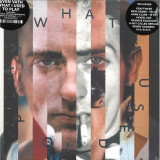
For this uniquely personal retrospective spread over twelve vinyl discs, Sven Väth takes us back to the early days of his DJ career. On What I Used To Play we meet great pioneers of electronic music, gifted percussionists, obscure wave bands, and innovative producers of a bygone 'new electronic' era. Rough beats and irresistible grooves from the identification stage of house, techno, and acid remind us not just how far electronic music has evolved over the past four decades, but how great it was to dance to EBM, techno, and house for the very first time.
If there is one protagonist of the electronic music scene who has remained curious, innovative and at the very cutting edge of music for over four decades, it's Sven Väth. His multi-layered artist albums and Sound of the Season mix compilations have been defining the genre for over two decades, and even today, he is constantly on the lookout for the next top tune to add to the highlights of his next set. At least, that's the case when he's not producing them himself as an artist or remixer. "Actually, it's always been part of my DNA to think ahead," and nothing had been further from his mind than looking back at his past, but when in spring of 2020 the international DJ circuit had to be scaled down to virtually zero, the 'restless traveler' suddenly had time. Time to stop and reflect on "how it actually was back then, at the very beginning of my career..."
"It was a great trip and with every track, beautiful memories came flooding back".
In the London apartment, he had just moved into, Sven has set up a "little music room", where he cocooned himself for several days, "to look way back for the first time and review my musical journey through the eighties, so to speak."
The interim result was six thematically oriented playlists with a grand total of 120 tracks from 'early 80s' to 'Balearic late 80s', together with excursions into afrobeat, European new wave, and EBM sounds and a few epochal techno/house tracks from the USA in between. From these 'Best of Sven Väth's favorites', the project What I Used To Play crystallized. Sven remembers how the Cocoon team reacted to his proposal: "They found the idea of making a compilation out of it MEGA from the beginning and everyone said 'Sven, go for it', but then, of course, the work really started, namely, to clear the rights and to get clean sounding masters of the up to 40-year-old tracks. There was also disappointment, of course. We couldn't clear certain titles because the rights holders in the USA had fallen out with each other or simply disappeared from the scene. In short, it wasn't easy, but now I can safely say we got the most important tracks."
Finally, after two years of research, curation, design, and administrative fine-tuning, the "little retrospective" from 1981 to 1990 is available. The exquisitely packaged, and three-kilo heavy box set is not only physically impressive, WIUTP is also the definitive record of Sven Väth's musical development. On each of the twenty-four sides of vinyl, you can trace track by track, what influenced him during which phase, and how he took off as a DJ from his parents' Queen's Pub straight into the spotlight at Dorian Gray. There and at Vogue (later OMEN), Sven became the style-defining player in the DJ booth that he still is today.
1981 - 1990: Future Sounds of Now
In the early eighties, the crowd in clubs like Vogue and Dorian Gray danced to what nowadays we call 'dance classics' - mainly disco, funk, soul, and chart pop. It was up to a new generation of DJs, including Sven Väth, the youngest protagonist in the Rhine-Main area at the time, to create their own club-ready music mix. Good new tracks and potential floor-fillers were rarities that had to be sought out and found, in order to prove oneself worthy.
Without MP3s, internet streaming, or other digital download possibilities, music didn't just gravitate to the DJ, instead, it had to be tracked down. In well-stocked record stores in Frankfurt and Wiesbaden or even in Amsterdam, London, or New York, Sven and friends sourced the material for countless magical nights. On WIUTP we can follow Sven's very personal journey through this wild, innovative era in which synth-pop, funk, hip-hop, and disco were successively replaced as 'club music' by house, techno, acid, and breakbeat. By the end of the decade, it was clear to see that these once exotic 'fringe' phenomena would soon become 'mass' phenomena.
Early 80s
Dirty Talk by the Italian-American duo Klein & M.B.O. represents the most innovative phase of the Italo-disco genre in the early eighties like no other track. Mario Boncaldo (I) and Tony Carrasco relied entirely on the original synthetic drum and percussion sounds of the Roland TR-808, coupled with the raunchy vocals of Rossana Casale and guitar accents of Davide Piatto. Of course, other tracks from this period were also influential in style, most notably Unit by Logic System, which worked as the perfect soundtrack to the laser lighting system at the legendary Dorian Gray club. With stomping beats and robotic rap interludes, Bostich by Yello also belongs on Sven's eternal playlist - after all, it caught the attention of Afrikaa Bambaataa, who invited the Swiss duo to perform at the Roxy in New York in 1983.
EBM Wave - Mid 80s
From today's point of view, the almost ten-minute-long, downtempo track Giant by Matt Johnson's band project The The, would probably not be considered an obvious club classic. However, a closer (re)listen reveals the rhythmic intricacies of the percussion overdubs by JG Thirlwell (aka Foetus) on Johnson's composition, and it becomes clear why this exceptional piece of music is one of Sven's absolute favorites. Other classics from this phase include Kaw-Liga by the mysterious The Residents, the hypnotic-synthetic Our Darkness by Anne Clark (and David Harrow), and last but not least, the somber, monotonous anthem Where Are You? by 16Bit, one of Sven Väth's projects together with Michael Münzing, Luca Anzilotti from 1986.
US House - Late 80s
You certainly can't talk about Chicago house without mentioning Frankie Knuckles. The resident DJ at the Warehouse not only gave the name to an entire genre, but also produced epochal floor fillers on the Trax label like the timeless Your Love, sung (and moaned) by Jamie Principle. Acid house protagonists Phuture also hail from Chicago, and on We Are Phuture (also released on Trax) we hear the chirping acid sounds of the legendary Roland TB-303 in full effect. Another featured classic is No UFO's by Detroit's Model 500 aka Juan Atkins, who is rightly considered the 'Godfather of Techno' even if the genre-defining track from 1985 still breathes with the spirit of hip-hop and electro from the first breakdance era.
Afrobeat
Le Serpent, by Algerian-born Abdelmadjid Guemguem, is a track that sounds completely different from everything else on WIUTP. Made in 1978, it's a monumental, rousing groove created without bass or synths, just with five congas! Even though Guem sadly passed away in 2021, his immortal, acoustic beats are understood all over the world and will continue to enrich many thousands of DJ sets for years to come. Another classic that not only Sven appreciates beyond measure is Hugh Masekela's Don't Go Lose it, Baby. In addition to being one of the most important jazz pioneers, the trumpeter and freedom fighter from Johannesburg was very experimental, integrating electronic sounds into his music in later years, in a similar vein to Miles Davis and Herbie Hancock. Dutch jazz pianist Jasper van't Hof's afrobeat project Pili Pili has also aged well. The trance-like, almost sixteen-minute-long track of the same name, manages to fill a whole side on the seventh of twelve vinyl discs in the WIUTP box.
UK-US-Euro - Late 80s
Time for a change of scene, in the truest sense of the word, and from a musical perspective, this section is like landing on another planet. First up is Andrew Weatherall's classic remix of Primal Scream's Loaded, featuring the iconic Peter Fonda sample (lifted from the 1966 biker film Wild Angels) that came to personify the mood triggered by the British Second Summer of Love in the late eighties: "We wanna be free to do what we wanna do, and we wanna get loaded...". This period also saw the emergence of M/A/R/R/S whose only single, 1987's Pump Up The Volume, became a club classic with support from DJ legend CJ Mackintosh. In this most eclectic of sections, we also encounter New York house and reggae producer Bobby Konders and his seminal Nervous Acid.
Balearic - Late 80s
Those who know him, know that Sven had already lost his heart to the 'magic island' of Ibiza as a teenager, so with that in mind, the WIUTP project couldn't end without a Balearic chapter. Inspired by Manuel Göttsching's E2-E4, the immortal, eponymously titled Sueño Latino belongs in there without question. Equally popular on the island was, and still is Break 4 Love by Raze, which thinking about it, would also fit perfectly into the house chapter. Last, but not least, there's an overdue reunion with Sven Väth himself, in his role as frontman of the successful Frankfurt trio OFF. Together with Michael Münzing and Luca Anzilotti (later of Snap!) this 'Organization For Fun' created the off-the-wall club hit Electric Salsa in 1986 which incidentally turned into an international chart smash, putting Sven in the enviable position of having to decide between pop stardom and a DJ career. Well, we all know how that decision turned out and the rest, as they say, is history. A not insignificant part of his story is What I Used To Play. Enjoy!
If naming is a form of claiming, of being claimed, how is one tethered to both the physical landscape that surrounds us, as well as our own internal emotional landscape_at times calm, at times turbulent, and ever changing? H.C. McEntire's new album Every Acre grapples with those themes_themes that encompass grief, loss, and links to land and loved ones. And naming_claiming land, claiming self, being claimed by ancestry and heritage_permeates the hauntingly beautiful landscape that is this poignant collection of songs. The songs straddle the line between music and poetry. In "New View," McEntire cites poets "Day, Ada, and Laux, Berry, and Olds"_fixtures in the world of writing, whose works are beacons of light over bleak horizons. The beginning of the song is backed by soft guitar plucks that fall on the downbeat and spangle like stars, and, throughout, guitar, bass, and drums swell together gently, mimicking ebbing and flowing tides under the moon. McEntire's voice (at once tender and fierce) intones the truth of both giving and taking, releasing and claiming: "Bend me, break me, split me right in two. Mend me, make me_I'll take more of you." Permeated by heartbeat-like drums, "Shadows" develops quiet ruminations on surrender and loss_reminiscing, moving on. This ponderous, dreamlike song asks the question of how "to make room." How does one make room, for self and for renewal and surrender, when it is so difficult to leave what you know behind? Playing with slivers of descending chromatics, along with the occasional downward-stepping bass, here McEntire yearns for home, and for nesting. Perhaps one of the more grief-stricken songs, "Rows of Clover" is a lamentation, one that touches on the loss of a "steadfast hound." The lone piano in the beginning of the song is rhythmically hymn-like. The stark verse arrangement gradually leads to a chorus that reads like a moody exhale, swollen with lush guitar strums and a Bill Withers-esque understated soul groove. But what stands out the most is an image of being "down on your knees, clawing at the garden"_the only explicit mention of a person in the song. "It ain't the easy kind of healing," sings McEntire, seemingly from further and further away as her voice echoes; and healing ta;kes time, time takes time_truths that linger painfully. "Dovetail" is a song that tells of various women. The song moves back and forth between solo piano and the addition of bass and drums under vocals. McEntire's gentle, trembling vibrato_harmonized in thirds in a celebratory manner_calls to mind a rejoicing psalm and shines through these images, leaving the listener cuttingly fraught with emotions_such as wonder, sadness, nostalgia_that can only arise with these juxtapositions. Gracious (and graceful) with its lilting melodies and lush harmonies, Every Acre ex - plores the acres of our physical and emotional homes. These songs are reaching for the kind of home that we all seek: one where we can rest and lay down (or tuck away) our burdens of loss. And maybe, moving through every acre of a world that often tries to tear our sense of identity and heritage down, McEntire sheds light on what it is to be human in this life_both stingy and gracious, both hurtful and kind.
Orange Viny
If naming is a form of claiming, of being claimed, how is one tethered to both the physical landscape that surrounds us, as well as our own internal emotional landscape_at times calm, at times turbulent, and ever changing? H.C. McEntire's new album Every Acre grapples with those themes_themes that encompass grief, loss, and links to land and loved ones. And naming_claiming land, claiming self, being claimed by ancestry and heritage_permeates the hauntingly beautiful landscape that is this poignant collection of songs. The songs straddle the line between music and poetry. In "New View," McEntire cites poets "Day, Ada, and Laux, Berry, and Olds"_fixtures in the world of writing, whose works are beacons of light over bleak horizons. The beginning of the song is backed by soft guitar plucks that fall on the downbeat and spangle like stars, and, throughout, guitar, bass, and drums swell together gently, mimicking ebbing and flowing tides under the moon. McEntire's voice (at once tender and fierce) intones the truth of both giving and taking, releasing and claiming: "Bend me, break me, split me right in two. Mend me, make me_I'll take more of you." Permeated by heartbeat-like drums, "Shadows" develops quiet ruminations on surrender and loss_reminiscing, moving on. This ponderous, dreamlike song asks the question of how "to make room." How does one make room, for self and for renewal and surrender, when it is so difficult to leave what you know behind? Playing with slivers of descending chromatics, along with the occasional downward-stepping bass, here McEntire yearns for home, and for nesting. Perhaps one of the more grief-stricken songs, "Rows of Clover" is a lamentation, one that touches on the loss of a "steadfast hound." The lone piano in the beginning of the song is rhythmically hymn-like. The stark verse arrangement gradually leads to a chorus that reads like a moody exhale, swollen with lush guitar strums and a Bill Withers-esque understated soul groove. But what stands out the most is an image of being "down on your knees, clawing at the garden"_the only explicit mention of a person in the song. "It ain't the easy kind of healing," sings McEntire, seemingly from further and further away as her voice echoes; and healing ta;kes time, time takes time_truths that linger painfully. "Dovetail" is a song that tells of various women. The song moves back and forth between solo piano and the addition of bass and drums under vocals. McEntire's gentle, trembling vibrato_harmonized in thirds in a celebratory manner_calls to mind a rejoicing psalm and shines through these images, leaving the listener cuttingly fraught with emotions_such as wonder, sadness, nostalgia_that can only arise with these juxtapositions. Gracious (and graceful) with its lilting melodies and lush harmonies, Every Acre ex - plores the acres of our physical and emotional homes. These songs are reaching for the kind of home that we all seek: one where we can rest and lay down (or tuck away) our burdens of loss. And maybe, moving through every acre of a world that often tries to tear our sense of identity and heritage down, McEntire sheds light on what it is to be human in this life_both stingy and gracious, both hurtful and kind.
If naming is a form of claiming, of being claimed, how is one tethered to both the physical landscape that surrounds us, as well as our own internal emotional landscape at times calm, at times turbulent, and ever changing? H.C. McEntire’s new album Every Acre grapples with those themes that encompass grief, loss, and links to land and loved ones. And naming claiming land, claiming self, being claimed by ancestry and heritage permeates the hauntingly beautiful landscape that is this poignant collection of songs. The songs straddle the line between music and poetry. In “New View,” McEntire cites poets “Day, Ada, and Laux, Berry, and Olds” fixtures in the world of writing, whose works are beacons of light over bleak horizons. The beginning of the song is backed by soft guitar plucks that fall on the downbeat and spangle like stars, and, throughout, guitar, bass, and drums swell together gently, mimicking ebbing and flowing tides under the moon. McEntire’s voice (at once tender and fierce) intones the truth of both giving and taking, releasing and claiming: “Bend me, break me, split me right in two. Mend me, make me I’ll take more of you.” Permeated by heartbeat-like drums, “Shadows” develops quiet ruminations on surrender and loss reminiscing, moving on. This ponderous, dreamlike song asks the question of how “to make room.” How does one make room, for self and for renewal and surrender, when it is so difficult to leave what you know behind? Playing with slivers of descending chromatics, along with the occasional downward-stepping bass, here McEntire yearns for home, and for nesting. Perhaps one of the more grief-stricken songs, “Rows of Clover” is a lamentation, one that touches on the loss of a “steadfast hound.” The lone piano in the beginning of the song is rhythmically hymn-like. The stark verse arrangement gradually leads to a chorus that reads like a moody exhale, swollen with lush guitar strums and a Bill Withers–esque understated soul groove. But what stands out the most is an image of being “down on your knees, clawing at the garden” the only explicit mention of a person in the song. “It ain’t the easy kind of healing,” sings McEntire, seemingly from further and further away as her voice echoes; and healing takes time, time takes time truths that linger painfully. “Dovetail” is a song that tells of various women. The song moves back and forth between solo piano and the addition of bass and drums under vocals. McEntire’s gentle, trembling vibrato harmonized in thirds in a celebratory manner calls to mind a rejoicing psalm and shines through these images, leaving the listener cuttingly fraught with emotions such as wonder, sadness, nostalgia that can only arise with these juxtapositions. Gracious (and graceful) with its lilting melodies and lush harmonies, Every Acre explores the acres of our physical and emotional homes. These songs are reaching for the kind of home that we all seek: one where we can rest and lay down (or tuck away) our burdens of loss. And maybe, moving through every acre of a world that often tries to tear our sense of identity and heritage down, McEntire sheds light on what it is to be human in this life both stingy and gracious, both hurtful and kind.
With One Day, Fucked Up have delivered one of the most energizing and intricate albums of their career, a massive-sounding record that arrives in deceptively small confines. The Canadian hardcore legends have been known for their epic scale in the past, so it might be a surprise that Fucked Up’s sixth studio album is their shortest to date, written and recorded in the confines of one literal day (hence the title). Don’t mistake size for substance, though: The band’s sound has only gotten bigger, more hard-charging, with even denser thickets of melody. “I wanted to see what I could record in literally one day.” That singular idea came to mind for guitarist Mike Haliechuk in the closing months of 2019. Haliechuk got himself into a studio and proceeded to write and record the record’s ten tracks over three eight-hour sessions, reconnecting with the core the band’s songwriting essence in the process. Initially, Fucked Up vocalist Damian Abraham was also set to complete his vocals in similar fashion—that is, before the lockdowns of 2020 took place. As it turns out, the isolation yielded creative dividends, as Abraham returned to contributing lyrics as well for the first time since 2014’s Glass Boys. “It almost felt like it might be the last time I’d ever get to record vocals for anything,” Abraham says of the stakes he felt while putting his part to tape, before reflecting on how he approached the lyrical process: “What do I want to say to friends who aren’t here anymore? What do I want to say to myself?” Over swarms of tuneful noise that evoke Sonic Youth circa Daydream Nation, Abraham lets loose on gentrification in “Lords of Kensington,” which was inspired by an “incredible” Toronto neighborhood that was regularly subject to life-ruining police surveillance and structural violence. “The police chief during that era he just opened a cannabis store,” Abraham explains. “It’s so cynical and gross, what society has come to but by being in a band, we’re culpable in changing the neighborhood, too, since the punk spaces and cool happenings that pop up are part of gentrification. Are you building a culture? Or are you ruining something that’s already been there?” Then there’s the dusky burn of “Cicada,” a sonic cousin to Dose Your Dreams’ excellent standout “The One I Want Will Come for Me” that features Haliechuk taking lead-vocal duty. The song is dedicated to lost friends, and in his words, it’s about “what life is like after you lose people, and our responsibility to carry them forward into the future, using the things they taught us as a light. I like to imagine the sound of cicadas as a metaphor for our strange life in the subculture we all just live these weird little hidden lives under the dirt, and then once in a generation, one of us gets to bust out of the dirt and intone their song so loud that it can be heard all over.” One Day is an undeniable work of confidence from a band that continues to operate at the top of their game, making music that’s guaranteed to last a lifetime and beyond.