Search:risk

Styles
All
Alex The Fairy - Can I Hear The Sound Of A Falling Branch

Alex the Fairy is an artist based in Berlin producing music with an emphasis on electronic and concrete methods. Alex the Fairy is also part of the 3Ddancer trio, a live act focusing on improvisation and expression using electronics.

Alex The Fairy writes: "I had sent The Tapeworm tracks before, but I was being difficult so was asked to send a new bunch, with a deadline. I sent the new bunch, a fairly odd collection expecting perhaps some of them to be combined with the older stuff but not seeing any coherence in them. I figured The Tapeworm would find at least something. To my surprise the suggestion that came back was exclusively the tracks I had sent the second time, and, re-listening through the tracks in this new order after returning from a Christmas dinner lying on the floor of my nephews bedroom gave them a completely new context. Despite them being quite varied in terms of age (one had been flung together a few days earlier on the train while another was approaching Schulreife) they seemed to meld together in such a way that I hardly recognised them…

Last year my grandmother died. My last grandparent. I had put off seeing her during corona, as I thought it best not to put her at risk and had almost left to visit her days before her death but had delayed my departure because of a medical appointment. My failure to her weighs heavy on my mind - fates grimacing grin: too little, too late. The approaching march of death, one generation closer was a confrontation I wasn't prepared for.

While clearing out her flat in the following weeks I had kept some of my grandfathers cassettes, live recordings of jazz greats, Pink Floyd, Sade and some classical among them, none originals, several presumably from the radio e.g. a church organ rendition of Bach. At the time I wasn't sure why I was hanging on to them, other than the urge to hoard, and that it felt wrong not at least to keep some. Half a year later, half way through mixing this cassette, suffering from my first bout of COVID, I had the insatiable urge to hook up the cassette player I had received from my grandfather after his death around nineteen years earlier and had been dragging along with me since. I stuck a cassette in only to immediately return to the safety of my covers. I began to work my way into what I had saved, hearing the fruits of my grandfathers labour decades before. It felt like quite an intimate interaction with someone I had long lost contact to/was long gone. Quite a wonderful thing, these time traveling cassettes.

I returned to the tracks to mix them shortly before my corona/cassette experience, with a new mixing console at hand. I had been looking for one for several years, but nothing had ever clicked, until I found this old broadcast desk 30 minutes from my place (it also coincided with a payment from a job the sum of which matched the price identically… fates return). Installing became a massive hassle and I doubted my decision continuously, but the further it was implemented the more it made sense. The first track I recorded with the mixer is on this cassette. Shortly before the mixing I was introduced to an Effektgerät by a friend, Rapha. Another good friend Art lent me their one, and I ended up using copious amounts of it throughout mixing, alongside my usual space creators. All the tracks on this release were mixed again on this mixer and are in a sense all a bit of a dub of the originals. I wouldn't have worked this way without the mixer, and the effect gave me a dimension I hadn't had before, so, from a technical perspective, the mixer and this effect define this release, giving it a coherence, at least for me. Emotionally of course the chaos and turbulence of the preceding year and my newfound appreciation for the medium give it a meaning I will struggle to formulate." – Alex The Fairy, Berlin, 9 May 2022

out of Stock

Order now and we will order the item for you at our supplier.

10,88

Last In: 3 years ago
The Mars Volta - Landscape Tantrums  - Unfinished Original Recordings Of De-Loused In The Comatorium

Landscape Tantrums Lost for two decades, the recent rediscovery of Landscape Tantrums the first attempt at recording the music that would become The Mars Volta’s De-Loused In The Comatorium revealed an important and hitherto missing chapter in the group’s evolution. Selfrecorded by Omar (assisted by Jon DeBaun) at Burbank’s Mad Dog Studios within a head spinning four days, Landscape Tantrums captures De-Loused in somewhat embryonic form, though much of what would make The Mars Volta’s debut album such an electrifying, sublime experience was already in place: the fearless invention, the fusion of futurist rock elements and traditions from outside of the rock orthodoxy, the sense of virtuosity working in service of emotional effect. From a distance, The Mars Volta must have seemed as if they were on a high when they walked into the studio to record what they expected to be their debut album (“I didn’t think of it as demos or a dry run,” Omar says). The group had recently played the Coachella festival to rave reviews, a vindication of the quixotic risk Omar and Cedric had taken, quitting At The Drive In to lead such an uncompromising musical proposition.


Their debut EP, Tremulant, had similarly signalled their singular vision, and been rewarded with similarly positive feedback. But the truth was that The Mars Volta entered Mad Dog in tatters, scarcely believing anything other than failure lay within their reach. They’d recently lost their bassist, Eva Gardner, and parted ways with keyboard play Ikey Owens. Tensions were brewing with drummer Jon Theodore, too himself a replacement for founding drummer Blake Fleming Omar questioning Theodore’s commitment to the group. And sound manipulator Jeremy Michael Ward’s drug problem had gotten so far out of hand that he’d been sent to rehab, and wouldn’t return until two days into the Landscape Tantrums. The pressure upon Omar was intense, and it began to manifest in the form of physical and emotional breakdowns. His art was his life, but now he began to wonder if it was actually going to kill him. Under such heavy manners, miracles occurred at Mad Dog. Surely that’s the only way to describe the music contained on Landscape Tantrums, as Omar fashioned early versions of Inertiatic ESP, Drunkship Of Lanterns and Eriatarka that rivalled the Rick Rubin produced versions that ended up on De- Loused for intensity, precision and immediacy, as Cedric delivered a powerfully intimate reading of Televators, and as a bare bones version of the group sketched out the peaks of what would become their debut masterpiece in barely half a week, on a shoestring, and believing they wouldn’t last long enough to see it hit the shelves. Listening to Landscape Tantrums now, with the benefit of hindsight and the knowledge of what these songs will become, one notices Cedric has yet to fully find the voice that will lend The Mars Volta their devastating authority, that Eriatarka will evolve even further under Rick Rubin’s watch, and that the lyrics to De-Loused’s climactic chapter, Take The Veil Cerpin Taxt, have yet to be penned. But one also notices how lithe the group sound here, how hungry, and one appreciates the raw edge that Rubin would later polish to a venomous sharpness. More than mere historical curiosity, Landscape Tantrums is an essential text for the dedicated Mars Volta aficionado, and a breathtaking album in its own right.


[a] a1. Roulette Dares (The Haunt Of) [Unfinished Original Recordings Of De-Loused In The Comatorium]

pre-order now10.06.2022

expected to be published on 10.06.2022

21,81
Various - Kicks & Hugs 01

Kicks & Hugs, a multi-disciplinary platform established in 2017 to hold space for like-minded creators, now launches its own label showcasing emerging sonic spheres that reach beyond momentary hype and trends alike. Based in Berlin, the foundation of Kicks & Hugs lies at intersectional crossroads of music and art, with their first record establishing a definite attitude towards contemporary artistry. Kicks & Hugs celebrates an immersive spectrum of talent across different mediums and promotes ideas composed of color to challenge a steady current of long exhausted black & white patterns within the realm of electronic music. The debut EP available on black & limited edition colored marble vinyl assorts a kinetic flow of ideas produced by a seemingly divergent roster. Completely ecstatic & exhilarating maze of rhythm by The Lone Flanger, additionally reworked with Varg2TM versus contrasting yet innovative dancefloor mechanics by Bertrand., ending with a hypnotic mix by Dasha Rush, the record is an absorbing material of dynamics that subtly surprise and leave nothing but an ambitious statement for what’s yet to come. KH01 is dedicated to a musical shape-shifter, a paramount figure, ephemeral talent & a dear friend – Andrew Smith. To end in his own words, Keep It Fungki. The Lone Flanger was an audio-visual project from the artist Jasen Loveland also known as Andrew Smith (1980-2021). Dedicated to exploring the intersection of music and visual arts in the expanded dimension, the work of TLF picked up where Loveland’s eponymous acid-based project left off, aspiring for a kind of transcendence that takes the listener beyond the previously known concepts to experiments with the possibility of creating a resonant bridge between frequencies, worlds and dimensions. The work of TLF questions, obfuscates and complexifies notions of rhythm, melody and musical genre… even our ability to rely on our senses for accurate information about the work in question Varg2TM also known as Jonas Rönnberg casts a cryptic shadow from the North over contemporary aesthetics, continuing to create in his largely collaborative and always thrilling approach. Tempering a caustic rhythmic sensibility with a pneumatic palette for high definition synthesis, his unique embrace of risk tests the reliability of the forms he works in as well as the genre borders he surveys. Bertrand.’s work as a producer incorporates a wide spectrum of influences and aims to create beyond the common means of electronic dance music. Bertrand.’s restless nature and desire for technical perfection bleed into his productions of bass-heavy futuristic soundscapes often juxtaposed with playfully intense dancefloor fundamentals. Dasha Rush constructs a rather wide assortment of electronic music and arts projects. She sees the genre as a starting place, not a destination. Rush brings up a mixture of rather rare electronic experimentation more akin to the brief movement of underground music. Credits: Mastering and mastercut by Andreas LUPO Lubich at Loop-O Cover artwork by Fredrik Altinell Graphic Design by Marta Braga Inner label artwork by Tommy Dwane Vocals by Kawala Bravo

out of Stock

Order now and we will order the item for you at our supplier.

12,56

Last In: 3 years ago

Weird Nightmare - Weird Nightmare

If you’re looking for a raw, sugary blast of distorted pop, look no further than
‘Weird Nightmare’. The debut album from METZ guitarist and vocalist Alex
Edkins contains all of his main band’s bite with an unexpected, yet totally
satisfying, sweetness. Imagine The Amps covering Big Star, or the gloriously
hissy miniature epics of classic-era Guided by Voices combined with the
bombast of ‘Copper Blue’- era Sugar - just tons of red-line distortion cut with the
type of tunecraft that thrills the moment it hits your ears.
 These ten songs showcase a new side of Edkins’ already-established
songwriting, but even though the bulk of ‘Weird Nightmare’ was recorded during
the COVID-19 pandemic, some of its tunes date back to 2013 in demo form.
“Hooks and melody have always been a big part of my writing, but they really
became the main focus this time” he explains. “It was about doing what felt
natural.”
 To be clear: Weird Nightmare is not a ‘pandemic album’, but an album - some of
which had been gestating for quite a while - that just so happened to be recorded
during the pandemic. “I had always planned on finishing these songs, but being
unable to tour with METZ, and forced to lock down, really gave me a push.” After
days spent homeschooling his son, Edkins would drive to the METZ rehearsal
room and tinker deep into the night on these songs’ deceptively simple structures
and rich, static-laden textures. “It was a godsend for me,” he states about the
creative process. “The hours would disappear and I would get lost in the music
and record. It was a beautiful escape.”
 ‘Weird Nightmare’ is, in its own way, a study in extremes: Edkins’ melodic
instincts and penchant for dissonance are both turned up to the max throughout,
the latter reflecting not only the barn-burning tendencies of METZ, but Alex’s own
sonic predilections. “It doesn’t sound right to my ears until it’s pushed over the
edge.” He also cites other artists who are masterful at mixing the sublime and the
punishing - Kim Deal and Scout Niblett among them - as influences on his own
songwriting. “My favorite songs are the simple ones,” he explains. “I’ve never
been attracted to virtuosity or technicality. Certain songs have the power to lift
your spirits like nothing else can. I wanted to create that type of song.”
 A few guests pitch in on Weird Nightmare: Canadian alt-pop genius Chad
VanGaalen adds his unmistakable touch to the ever-escalating ‘Oh No’, while
Alicia Bognanno of Bully lends her distinctive pipes to the thrashing ‘Wrecked’, a
collaboration that effectively saved the song. “I almost didn’t put it on the album
because I thought it was missing something,” Edkins explains. “I sent it to Alicia
and she lifted it way up.”
 And taking risks and reaching out of Edkins’ comfort zone was the name of the
game when it came to making ‘Weird Nightmare’. “I found myself doing new
things I didn’t have the guts to do before, recording everything by myself and
trusting all of my musical instincts,” he states. “I think when music manifests
quickly, a certain amount of honesty automatically comes along with it. When it is
a purely instinctual creation, there is no opportunity to obscure the truth.”
 Loser Edition LP pressed on Coke Bottle Green transparent vinyl.

pre-order now20.05.2022

expected to be published on 20.05.2022

25,42
Weird Nightmare - Weird Nightmare

Weird Nightmare

Weird Nightmare

CassetteSP1475
Sub Pop
20.05.2022

If you’re looking for a raw, sugary blast of distorted pop, look no further than
‘Weird Nightmare’. The debut album from METZ guitarist and vocalist Alex
Edkins contains all of his main band’s bite with an unexpected, yet totally
satisfying, sweetness. Imagine The Amps covering Big Star, or the gloriously
hissy miniature epics of classic-era Guided by Voices combined with the
bombast of ‘Copper Blue’- era Sugar - just tons of red-line distortion cut with the
type of tunecraft that thrills the moment it hits your ears.
 These ten songs showcase a new side of Edkins’ already-established
songwriting, but even though the bulk of ‘Weird Nightmare’ was recorded during
the COVID-19 pandemic, some of its tunes date back to 2013 in demo form.
“Hooks and melody have always been a big part of my writing, but they really
became the main focus this time” he explains. “It was about doing what felt
natural.”
 To be clear: Weird Nightmare is not a ‘pandemic album’, but an album - some of
which had been gestating for quite a while - that just so happened to be recorded
during the pandemic. “I had always planned on finishing these songs, but being
unable to tour with METZ, and forced to lock down, really gave me a push.” After
days spent homeschooling his son, Edkins would drive to the METZ rehearsal
room and tinker deep into the night on these songs’ deceptively simple structures
and rich, static-laden textures. “It was a godsend for me,” he states about the
creative process. “The hours would disappear and I would get lost in the music
and record. It was a beautiful escape.”
 ‘Weird Nightmare’ is, in its own way, a study in extremes: Edkins’ melodic
instincts and penchant for dissonance are both turned up to the max throughout,
the latter reflecting not only the barn-burning tendencies of METZ, but Alex’s own
sonic predilections. “It doesn’t sound right to my ears until it’s pushed over the
edge.” He also cites other artists who are masterful at mixing the sublime and the
punishing - Kim Deal and Scout Niblett among them - as influences on his own
songwriting. “My favorite songs are the simple ones,” he explains. “I’ve never
been attracted to virtuosity or technicality. Certain songs have the power to lift
your spirits like nothing else can. I wanted to create that type of song.”
 A few guests pitch in on Weird Nightmare: Canadian alt-pop genius Chad
VanGaalen adds his unmistakable touch to the ever-escalating ‘Oh No’, while
Alicia Bognanno of Bully lends her distinctive pipes to the thrashing ‘Wrecked’, a
collaboration that effectively saved the song. “I almost didn’t put it on the album
because I thought it was missing something,” Edkins explains. “I sent it to Alicia
and she lifted it way up.”
 And taking risks and reaching out of Edkins’ comfort zone was the name of the
game when it came to making ‘Weird Nightmare’. “I found myself doing new
things I didn’t have the guts to do before, recording everything by myself and
trusting all of my musical instincts,” he states. “I think when music manifests
quickly, a certain amount of honesty automatically comes along with it. When it is
a purely instinctual creation, there is no opportunity to obscure the truth.”
 Loser Edition LP pressed on Coke Bottle Green transparent vinyl.

pre-order now20.05.2022

expected to be published on 20.05.2022

10,04
ALFA MIST - ON MY ONES LP

Alfa Mist

ON MY ONES LP

10inchSEKITO7LTD
SEKITO
13.05.2022

Reissue

With his new project On My Ones, Alfa Mist takes a personal journey into melody, composition, improvisation and his relationship with the piano. Taking a step back from production and additional instrumentation, the self-taught pianist explores the instrument across six new tracks recorded at Fieldgate Studio in Cardiff.

Taking a step back from production and additional instrumentation, the self-taught pianist explores the instrument across six new tracks recorded at Fieldgate Studio in Cardiff, set for release through his own label Sekito.

out of Stock

Order now and we will order the item for you at our supplier.

17,86

Last In: 3 years ago
Perel - Jesus Was An Alien LP

Perel

Jesus Was An Alien LP

12inchKOM451
Kompakt
13.05.2022

The dance floor as devotional is a trope as old as the club itself. But, with her new album, Jesus Was An Alien, Perel subverts the stakes of our collective communion: Who are our arms raised to? Who are we seeking salvation from?

“Jesus Was An Alien is a discourse about whether Jesus was an actual alien,” she explains, “but also a social debate about what is and implies religion today.” She offers up her provocative second record – her first on Kompakt – as a soundtrack for the listener’s own journey through the intricacies and ironies of modern belief.

Picking up on the themes she brought to her debut, the 2018’s LP Hermetica on DFA, Perel has created ten tracks rich with spirit and allusion. Her influences are myriad, from the indie dance hitmakers of the early 2000s – Hot Chip, Simian Mobile Disco, Justice – to rave compilations that predate her ascent to the DJ booth, to more abstract inputs. Living with synesthesia, she says, “I feel emotions and colors piling up inside me, then there’s a triggering sound or event that opens a valve. My tracks are color streams that tell a story.”

Jesus Was An Alien is not just multicolored – it’s multi-lingual too, slipping in and out of tongues in a single track, sometimes dispensing with words altogether (the ecstatic breakdown of “The Principle of Vibration”). The album features Perel’s voice almost entirely but for her special collaboration with Canadian songwriter Marie Davidson on the title track.

“Jesus Was An Alien” stirs like a late-night revelation, a heady discovery awakened in the dark. Perel lays out a fiercely disciplined electro pulse, with Davidson’s proclamations growing more fervent over the song’s sensual stride. “I already said everything with my synthesizers and the melodies I created,” Perel explains of the collaboration, but “somehow she gave the song a voice I couldn’t.”

Perel drives further not only spiritually but sonically across the ten tracks, taking thrilling production risks: standouts include her breathy vocals atop a melodic piano strut on “Matrix;” the delirious blur of ghostly chimes and disembodied voices of “Religion;” and the retro radiance of “The Principle of Vibration,” in which Perel exhorts us to “come on and vibe” over an athletic riff and shuffling percussion.

“Kill The System,” meanwhile, hits the listener with tense acid pulses, building to only an imagined release and calls out the end of patriarchy. Album closer “Am Kanal” starts as a pensive cloud of a track, finally breaking into a rich textural rain of synths and stabs.

The variety throughout Jesus Was An Alien underlines Perel’s purpose in this latest project; she’s experimenting her way to answers – or maybe just more questions. After all, she says, “questions are the beginning of something new.”

out of Stock

Order now and we will order the item for you at our supplier.

24,33

Last In: 3 years ago
COIL - Musick To Play In The Dark2 LP 2x12"

- First vinyl reissue, available on LP for the first time in 20 years - Completely remastered audio and restored artwork - Side D lunar vinyl etching art // After leaving London in 1999 for the sleepy seaside retiree town of Weston-super-Mare, Coil co-founders John Balance and Peter "Sleazy" Christopherson set up shop in a palatial eight-bedroom estate to pursue the outer reaches of the group's heightening cabalistic chemistry. Among the staggering string of late-era masterpieces they produced is lunar opus Musick To Play In The Dark, widely hailed as an artistic zenith upon its release. The sessions that birthed it were in fact so fruitful that a second LP took shape during the creation of the first one. Aided by the recent addition of Welsh multi-instrumentalist engineer Thighpaulsandra, Coil mined further into the recesses of surrealist eldritch electronica Balance termed "moon music" - post-industrial spellcasting at the axis of narcotic and nocturnal energies. Musick To Play In The Dark² spans a full witching hour of bad acid sound design, synthesizer voyaging, opiated balladry, Luciferian glitch, and subliminal hymnals, alternately ominous, oracular, and absurd. Scottish gothic icon Rose McDowall guests on vocals for two tracks but otherwise the album is a hermetic affair, tapping into the group's limitless insular synergy. Opener "Something" is stark and incantational, a spoken word experiment for windswept voids. "Tiny Golden Books" unspools an aerial whirlpool of cosmic synth, both whispery and widescreen. "Ether" is an exercise in funeral procession piano and intoxicated wordplay ("It's either ether or the other"), while "Where Are You?" and "Batwings - A Liminal Hymn" lurk like liturgical murmurings heard on one's death bed, framed in granular FX and flickering candlelight. As a whole the collection skews more muted and remote than its predecessor, as if having grown accustomed to the nether regions of these darkening seances. But music box hallucination "Paranoid Inlay" captures the group's oblique comedic side, always glimmering beneath: over a warped, wobbly beat Balance intones an opaque narrative of serenity, Saint Peter, and suicidal vegetables, accompanied by spiraling harpsichord and stuttering squelches of electronics. "It seems concussion suits you," he repeats twice, like a macabre pickup line, before dictating a dear diary entry about risks and failures, finally concluding with as close to a self-portrait as Coil ever came: "On a clear day I can see forever / that the underworld is my oyster."

out of Stock

Order now and we will order the item for you at our supplier.

28,99

Last In: 9 months ago
COIL - Musick To Play In The Dark2 LP 2x12"

- First vinyl reissue, available on LP for the first time in 20 years - Completely remastered audio and restored artwork - Side D lunar vinyl etching art // After leaving London in 1999 for the sleepy seaside retiree town of Weston-super-Mare, Coil co-founders John Balance and Peter "Sleazy" Christopherson set up shop in a palatial eight-bedroom estate to pursue the outer reaches of the group's heightening cabalistic chemistry. Among the staggering string of late-era masterpieces they produced is lunar opus Musick To Play In The Dark, widely hailed as an artistic zenith upon its release. The sessions that birthed it were in fact so fruitful that a second LP took shape during the creation of the first one. Aided by the recent addition of Welsh multi-instrumentalist engineer Thighpaulsandra, Coil mined further into the recesses of surrealist eldritch electronica Balance termed "moon music" - post-industrial spellcasting at the axis of narcotic and nocturnal energies. Musick To Play In The Dark² spans a full witching hour of bad acid sound design, synthesizer voyaging, opiated balladry, Luciferian glitch, and subliminal hymnals, alternately ominous, oracular, and absurd. Scottish gothic icon Rose McDowall guests on vocals for two tracks but otherwise the album is a hermetic affair, tapping into the group's limitless insular synergy. Opener "Something" is stark and incantational, a spoken word experiment for windswept voids. "Tiny Golden Books" unspools an aerial whirlpool of cosmic synth, both whispery and widescreen. "Ether" is an exercise in funeral procession piano and intoxicated wordplay ("It's either ether or the other"), while "Where Are You?" and "Batwings - A Liminal Hymn" lurk like liturgical murmurings heard on one's death bed, framed in granular FX and flickering candlelight. As a whole the collection skews more muted and remote than its predecessor, as if having grown accustomed to the nether regions of these darkening seances. But music box hallucination "Paranoid Inlay" captures the group's oblique comedic side, always glimmering beneath: over a warped, wobbly beat Balance intones an opaque narrative of serenity, Saint Peter, and suicidal vegetables, accompanied by spiraling harpsichord and stuttering squelches of electronics. "It seems concussion suits you," he repeats twice, like a macabre pickup line, before dictating a dear diary entry about risks and failures, finally concluding with as close to a self-portrait as Coil ever came: "On a clear day I can see forever / that the underworld is my oyster."

pre-order now27.04.2022

expected to be published on 27.04.2022

37,27
COIL - Musick To Play In The Dark2 LP 2x12"

- First vinyl reissue, available on LP for the first time in 20 years - Completely remastered audio and restored artwork - Side D lunar vinyl etching art // After leaving London in 1999 for the sleepy seaside retiree town of Weston-super-Mare, Coil co-founders John Balance and Peter "Sleazy" Christopherson set up shop in a palatial eight-bedroom estate to pursue the outer reaches of the group's heightening cabalistic chemistry. Among the staggering string of late-era masterpieces they produced is lunar opus Musick To Play In The Dark, widely hailed as an artistic zenith upon its release. The sessions that birthed it were in fact so fruitful that a second LP took shape during the creation of the first one. Aided by the recent addition of Welsh multi-instrumentalist engineer Thighpaulsandra, Coil mined further into the recesses of surrealist eldritch electronica Balance termed "moon music" - post-industrial spellcasting at the axis of narcotic and nocturnal energies. Musick To Play In The Dark² spans a full witching hour of bad acid sound design, synthesizer voyaging, opiated balladry, Luciferian glitch, and subliminal hymnals, alternately ominous, oracular, and absurd. Scottish gothic icon Rose McDowall guests on vocals for two tracks but otherwise the album is a hermetic affair, tapping into the group's limitless insular synergy. Opener "Something" is stark and incantational, a spoken word experiment for windswept voids. "Tiny Golden Books" unspools an aerial whirlpool of cosmic synth, both whispery and widescreen. "Ether" is an exercise in funeral procession piano and intoxicated wordplay ("It's either ether or the other"), while "Where Are You?" and "Batwings - A Liminal Hymn" lurk like liturgical murmurings heard on one's death bed, framed in granular FX and flickering candlelight. As a whole the collection skews more muted and remote than its predecessor, as if having grown accustomed to the nether regions of these darkening seances. But music box hallucination "Paranoid Inlay" captures the group's oblique comedic side, always glimmering beneath: over a warped, wobbly beat Balance intones an opaque narrative of serenity, Saint Peter, and suicidal vegetables, accompanied by spiraling harpsichord and stuttering squelches of electronics. "It seems concussion suits you," he repeats twice, like a macabre pickup line, before dictating a dear diary entry about risks and failures, finally concluding with as close to a self-portrait as Coil ever came: "On a clear day I can see forever / that the underworld is my oyster."

pre-order now27.04.2022

expected to be published on 27.04.2022

37,27
THE SORCERER - TOM SOCHAS

The Sorcerer

TOM SOCHAS

12inchKRLP1
KHUMBU
15.04.2022

Building on the success of a solo EP released in early 2021, Franco-American jazz pianist Tom Sochas, previously known for his work with London staple Phoenician Blinds, releases his debut album 'The Sorcerer', which introduces Tom's new trio with Greek bassist Thodoris Ziarkas and British drummer Olly Sarkar. The record is very much an ode to story-telling, to ancient myths and tales, which presents itself as a present-day reimagining of a classic character. The album follows a linear story-line through which Tom Sochas blends his love of hard hitting post-bop and his passion for western classical repertoire to create an atmosphere rich in risk and solace.

pre-order now15.04.2022

expected to be published on 15.04.2022

31,81
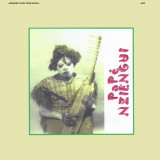
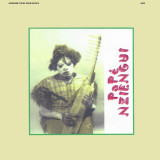
Papé Nziengui et son Groupe - Kadi Yombo LP 2x12"

Kadi Yombo, published in 1989, is the most successful album in the quest for a fusion between tradition and modernity in Bwiti harp music of the Tsogho people of Gabon. Combining beating rattles with a layer of synthesizers, Papé Nziengui blends in a contrapuntal dialogue characteristic of harp playing: male song in appeal and female choir in response, male voice of the musical arc and rhythms of female worship. But above all it’s Tsogho ritual music and modern studio orchestration. The result is an initiatory itinerary of 10 musical pieces which are all milestones likely to be simultaneously listened to, danced, meditated on, and soon acclaimed. In the years since, Nziengui has traveled he world from Lagos to Paris, from Tokyo to Cordoba, from Brussels to Mexico City to become a true icon, the emblem of Gabonese music.

Like Bob Dylan, "electrifying" folk and Bob Marley mixing rock with reggae, some purists have criticized Nziengui for having distorted the music of harp by imposing a cross with modern instruments. They even went so far as to claim that Nziengui was just an average harpist covering his shortcomings with stunts that were only good for impressing neophytes; like playing a harp placed upside down behind his back or playing two or three harps simultaneously. Sincere convictions or venomous defamations, in any case, Nziengui never gave in to such attacks, imposing himself on the contrary to pay homage to the elders (Yves Mouenga, Jean Honoré Miabé, Vickoss Ekondo) while instructing the maximum of young people. He is thus the promoter of many young talents, the most prominent of which is certainly his nephew Jean Pierre Mingongué. In a conservative society where the sacred is confused with secrecy, exposing the mysteries of Bwiti in broad daylight can be punished by exclusion or even execution.

Papé Nziengui has always claimed that he faces such risks because he never felt enslaved to a community that governs his life, that regulates his conduct, that has a right of censorship over his activities. Like Ravi Shankar, the famous sitarist, Papé Nziengui is a man of rupture but also of openness, a transmitter of culture. As proof, he has established himself in Libreville, Gabo’s capital, as the main harpist for sessions and concerts, accompanying the greatest national artists (Akendengué, Rompavè, Annie-Flore Batchiellilys, Les Champs sur la Lowé, etc.) as well as foreign artists (Papa Wemba, Manu Dibango, Kassav', Toups Bebey, etc.). In 1988, he was the first harpist to release an album in the form of a cassette produced by the French Cultural Center (Papé Nziengui, Chants et Musiques Tsogho). At the same time, he created his own group (Bovenga), combining traditional music instruments (musical bow, drums, various percussion instruments, etc.) in the framework of a true national orchestra, which gave the first concert and the first tours of a traditional music that was both modern and dynamic, thus "democratizing" the harp, to the dismay of certain purists.

On the other hand, in modern music, dominated by the logic of profit or even commercialism, artistic creation must often be adjusted for a specific audience based on reason rather than heart. But instead of allowing himself to be distorted, Papé Nziengui has always tried to produce music that is not a caricature, worthy in its expression as in its content, of the sacredness and transcendence of the music of the Origins. This is what makes Nziengui not only the musician, but the man someone whose age hasn’t altered any of his freshness or authenticity

pre-order now08.04.2022

expected to be published on 08.04.2022

32,73
Papé Nziengui et son Groupe - Kadi Yombo LP

Kadi Yombo, published in 1989, is the most successful album in the quest for a fusion between tradition and modernity in Bwiti harp music of the Tsogho people of Gabon. Combining beating rattles with a layer of synthesizers, Papé Nziengui blends in a contrapuntal dialogue characteristic of harp playing: male song in appeal and female choir in response, male voice of the musical arc and rhythms of female worship. But above all it’s Tsogho ritual music and modern studio orchestration. The result is an initiatory itinerary of 10 musical pieces which are all milestones likely to be simultaneously listened to, danced, meditated on, and soon acclaimed. In the years since, Nziengui has traveled he world from Lagos to Paris, from Tokyo to Cordoba, from Brussels to Mexico City to become a true icon, the emblem of Gabonese music.

Like Bob Dylan, "electrifying" folk and Bob Marley mixing rock with reggae, some purists have criticized Nziengui for having distorted the music of harp by imposing a cross with modern instruments. They even went so far as to claim that Nziengui was just an average harpist covering his shortcomings with stunts that were only good for impressing neophytes; like playing a harp placed upside down behind his back or playing two or three harps simultaneously. Sincere convictions or venomous defamations, in any case, Nziengui never gave in to such attacks, imposing himself on the contrary to pay homage to the elders (Yves Mouenga, Jean Honoré Miabé, Vickoss Ekondo) while instructing the maximum of young people. He is thus the promoter of many young talents, the most prominent of which is certainly his nephew Jean Pierre Mingongué. In a conservative society where the sacred is confused with secrecy, exposing the mysteries of Bwiti in broad daylight can be punished by exclusion or even execution.

Papé Nziengui has always claimed that he faces such risks because he never felt enslaved to a community that governs his life, that regulates his conduct, that has a right of censorship over his activities. Like Ravi Shankar, the famous sitarist, Papé Nziengui is a man of rupture but also of openness, a transmitter of culture. As proof, he has established himself in Libreville, Gabo’s capital, as the main harpist for sessions and concerts, accompanying the greatest national artists (Akendengué, Rompavè, Annie-Flore Batchiellilys, Les Champs sur la Lowé, etc.) as well as foreign artists (Papa Wemba, Manu Dibango, Kassav', Toups Bebey, etc.). In 1988, he was the first harpist to release an album in the form of a cassette produced by the French Cultural Center (Papé Nziengui, Chants et Musiques Tsogho). At the same time, he created his own group (Bovenga), combining traditional music instruments (musical bow, drums, various percussion instruments, etc.) in the framework of a true national orchestra, which gave the first concert and the first tours of a traditional music that was both modern and dynamic, thus "democratizing" the harp, to the dismay of certain purists.

On the other hand, in modern music, dominated by the logic of profit or even commercialism, artistic creation must often be adjusted for a specific audience based on reason rather than heart. But instead of allowing himself to be distorted, Papé Nziengui has always tried to produce music that is not a caricature, worthy in its expression as in its content, of the sacredness and transcendence of the music of the Origins. This is what makes Nziengui not only the musician, but the man someone whose age hasn’t altered any of his freshness or authenticity

pre-order now08.04.2022

expected to be published on 08.04.2022

10,29
Papé Nziengui et son Groupe - Kadi Yombo LP

Kadi Yombo, published in 1989, is the most successful album in the quest for a fusion between tradition and modernity in Bwiti harp music of the Tsogho people of Gabon. Combining beating rattles with a layer of synthesizers, Papé Nziengui blends in a contrapuntal dialogue characteristic of harp playing: male song in appeal and female choir in response, male voice of the musical arc and rhythms of female worship. But above all it’s Tsogho ritual music and modern studio orchestration. The result is an initiatory itinerary of 10 musical pieces which are all milestones likely to be simultaneously listened to, danced, meditated on, and soon acclaimed. In the years since, Nziengui has traveled he world from Lagos to Paris, from Tokyo to Cordoba, from Brussels to Mexico City to become a true icon, the emblem of Gabonese music.

Like Bob Dylan, "electrifying" folk and Bob Marley mixing rock with reggae, some purists have criticized Nziengui for having distorted the music of harp by imposing a cross with modern instruments. They even went so far as to claim that Nziengui was just an average harpist covering his shortcomings with stunts that were only good for impressing neophytes; like playing a harp placed upside down behind his back or playing two or three harps simultaneously. Sincere convictions or venomous defamations, in any case, Nziengui never gave in to such attacks, imposing himself on the contrary to pay homage to the elders (Yves Mouenga, Jean Honoré Miabé, Vickoss Ekondo) while instructing the maximum of young people. He is thus the promoter of many young talents, the most prominent of which is certainly his nephew Jean Pierre Mingongué. In a conservative society where the sacred is confused with secrecy, exposing the mysteries of Bwiti in broad daylight can be punished by exclusion or even execution.

Papé Nziengui has always claimed that he faces such risks because he never felt enslaved to a community that governs his life, that regulates his conduct, that has a right of censorship over his activities. Like Ravi Shankar, the famous sitarist, Papé Nziengui is a man of rupture but also of openness, a transmitter of culture. As proof, he has established himself in Libreville, Gabo’s capital, as the main harpist for sessions and concerts, accompanying the greatest national artists (Akendengué, Rompavè, Annie-Flore Batchiellilys, Les Champs sur la Lowé, etc.) as well as foreign artists (Papa Wemba, Manu Dibango, Kassav', Toups Bebey, etc.). In 1988, he was the first harpist to release an album in the form of a cassette produced by the French Cultural Center (Papé Nziengui, Chants et Musiques Tsogho). At the same time, he created his own group (Bovenga), combining traditional music instruments (musical bow, drums, various percussion instruments, etc.) in the framework of a true national orchestra, which gave the first concert and the first tours of a traditional music that was both modern and dynamic, thus "democratizing" the harp, to the dismay of certain purists.

On the other hand, in modern music, dominated by the logic of profit or even commercialism, artistic creation must often be adjusted for a specific audience based on reason rather than heart. But instead of allowing himself to be distorted, Papé Nziengui has always tried to produce music that is not a caricature, worthy in its expression as in its content, of the sacredness and transcendence of the music of the Origins. This is what makes Nziengui not only the musician, but the man someone whose age hasn’t altered any of his freshness or authenticity

pre-order now08.04.2022

expected to be published on 08.04.2022

32,73
Rolf Kuhn - Cucu Ear

Reissue of Rolf Kühn's funky 1980 LP 'Cucu Ear', beside his brother
Joachim Kühn, who as always took the place at the keys, Rolf brought
together an illustrious group of musicians from a variety of backgrounds
for this record, including Alphonse Mouzon, Philip Catherine, Charlie
Mariano, Herb Geller and Niels-Henning Ørsted Pedersen
For a German jazz musician to find international recognition as a major player
has been and remains a rarity. Clarinettist Rolf Kühn belongs to this elite class.
No one sounds like him on the clarinet; warm, round and masterful, his tone
remains unmistakable no matter what style he may be playing at any given
moment. His play resonates with a maturity and wisdom gathered from a long
and rich life of musical experiences.
"I have always had the desire to find unusual set-ups for my productions – like
working with musicians who come from very different genres such as classical
music, jazz fusion, pop, etc. But these trains of thought, which of course can be
very tempting, can never be implemented without a risk. In the case of "Cucu Ear"
for example Alphonse Mouzon and Niels- Henning Ørsted Pedersen played
together for the first time ever. With Niels and Alphonse, coming from such
different stylistic directions, the plan worked out so perfectly that they are among
my favorite rhythm groups today. Not least because of my brother Joachim, who
plays fantastic additional synthesizer solos in addition to his great piano playing.
These were two wonderful days in the studio and an unusual and extraordinary
session that is still today very special for me." - Rolf Kühn, 2019

pre-order now25.02.2022

expected to be published on 25.02.2022

26,85
Various - Risks Issues Opportunities 2

They are here, all over: sudden, random molecular movements. Invisible and yet extremely effective. Perceptible only to those who turn on things from a peculiar outlook. Now Rio unfolds the second edition of “Risks Issues Opportunities”, bringing interstellar musical developments full of little, yet profound molecule advances. Eight mystical fate spinners, with the muscle to shed some light on unanswered questions, that will stay unanswered after all. Monolithic, yet deeply fragile compositions, made by terrestrials like Leipzig based producer Syncboy, Pannotia from Sydney, Italy based dusty drum machines lovers Twoonky, Charlotte Simon, known as one half of the art duo Le Trucs from Frankfurt, Berlin mystic’s like Airaboi or Nadia D'Alò of the duo INIT, Brooklyn based “The Thing” housekeeper Willie Burns and Vienna’s symbolist sound poet Bocksrucker. They all created electric signs for the above. Murky analogue prophesiers without prophecy, bringing headway music against the greedy frontier spirit. Hypnotic tones out of a hazy musical outer space. Like a dream that forgot to dream, they wave around with veiled frequencies full of ray, processed through analogue machine power. Music, that is able to in sight humans to an Atget photography. Able to transmit flashes to the firmament, to stars that wander darkling in eternal space. And yes: to some who listen a sudden physical movement might transpire, despite the fact that all was made without a particular practical value. Art for art's sake‍. In favor of an alternative to reality. Compellingly haunted by itself. Like stone, that awaits a random molecular movement.

out of Stock

Order now and we will order the item for you at our supplier.

16,77

Last In: 3 years ago
Cloakroom - Dissolution Wave

Cloakroom celebrate their tenth anniversary as a band with their new album, Dissolution Wave. Dissolution Wave is a concept - a space western in which an act of theoretical physics—the dissolution wave—wipes out all of humanity’s existing art and abstract thought. In order to keep the world spinning on its axis, songsmiths must fill the ether with their compositions. Meanwhile, the Spire and Ward of Song act as a filter for human imagination: Only the best material can pass through the filter and keep the world turning. This is the universe that Cloakroom guitarist/vocalist Doyle Martin conceived as a way of processing the last few years. “We lost a couple of close friends over the course of writing this record,” he says. “Dreaming up another world felt easier to digest than the real nitty-gritty we’re immersed in every day.” With lyrics based on an imagined cosmology, Dissolution Wave also marks a grand expansion of Cloakroom’s dreamy space-rock palette. Written from the perspective of the album’s protagonist—an asteroid miner who writes songs by night—”A Force at Play” has an airy, pastoral feel. Meanwhile, the melancholy title track captures the miner’s regret as they lament that they signed up for such a long stint on the job, while closer “Dissembler” describes their anxiety about the revelator who will judge their work. “If you don’t write a good enough song in this universe, you run the risk of being forgotten and lose the opportunity to return as a meaningful form of life,” Martin explains. The stakes have never been higher!

pre-order now28.01.2022

expected to be published on 28.01.2022

22,65
Willie Nelson - Spirit
  • A1: Matador
  • A2: She Is Gone
  • A3: Your Memory Won't Die In My Grave
  • A4: I'm Not Trying To Forget You Anymore
  • A5: Too Sick To Pray
  • A6: Mariachi
  • A7: I'm Waiting Forever
  • B1: We Don't Run
  • B2: I Guess I've Come To Live Here In Your Eyes
  • B3: It's A Dream Come True
  • B4: I Thought About You, Lord
  • B5: Spirit Of E9
  • B6: Matador
also available

Black[26,01 €]


Newly remastered audio.
LP pressed on black vinyl & housed in a gatefold jacket.

Willie Nelson’s 1996 album Spirit is an emotional concept album illustrating the forlorn tale of a man abandoned by the great love of his life. We follow him down the path of loss as he confronts grief, gets back on his feet, and eventually finds solace in acceptance. While producing Spirit, Nelson assuredly knew the commercial risks behind releasing an album this melancholic. After all, in 1973 he himself wrote: “sad songs and waltzes ain’t selling this year.” Beloved by those familiar with Nelson’s deep catalog, Spirit largely slipped through the cracks in the mainstream, but remains highly revered amongst critics and fans alike.
Backed by legendary country fiddler Johnny Gimble (of Bob Wills and His Texas Playboys), sister Bobbie Nelson on piano, and his longtime touring guitarist Jody Payne, the song-cycle is anchored by lilting Spanish-inspired instrumentals that absorb a lonesome gravity when placed next to ballads that tug at even the most unwavering heartstrings. Likened to Bob Dylan’s Time Out Of Mind or Waylon Jennings’ Right For the Time, Spirit sees Nelson maturing most gracefully: he trades rousing sing-alongs and saloon tunes for gut-wrenching lyrics and instrumentation of greater precision and skill, proving this release as deep and as challenging as his career-defining albums released twenty years before.
Originally released by Island Records in 1996, Spirit is newly remastered and housed in a gatefold jacket. This is a chance to own this unique album in its most beautifully presented form.

pre-order now21.01.2022

expected to be published on 21.01.2022

30,21
The Mars Volta - Frances The Mute

The Mars Volta

Frances The Mute

3x12inch4250795604921
CLOUDS HILL
17.12.2021

Triumph breeds confidence, and with confidence comes an expansion of ambition, a focus of ability, an emboldening of audacity. De-Loused In The Comatorium had risked everything Omar and Cedric possessed on the wildest of gambits, the most impossible of dreams: making sense of the riot of influences ricocheting about Omar’s head, and memorialising their departed friend Julio Venegas through Cedric’s magical realist roman-a-clef. It Clouds Hill shouldn’t have worked. But it did, and with that fiendish tightrope act successfully accomplished, the duo stretched the wire even further and higher, over a figurative fiery pit peopled with lions, crocodiles, piranha and other sharp-toothed beasts not yet known to man. Because how do you make great art without taking great risks? Frances The Mute was no De-Loused Part Two. For one thing, the band’s configuration had changed, in the most painful way. Shortly before the release of De- Loused, sound manipulator and founder member Jeremy Michael Ward passed away, a wound Omar says the group never recovered from. But even though his inspired fucking- with-the-sonic-parameters is absent from Frances The Mute, his spirit and influence can still be determined, the album’s concept derived from a diary Ward had encountered in his day-job in repossession. “Jeremy picked up lots of interesting stuff when he was a repo man,” remembers Cedric. “Weird things, including this diary, He let us read it a bunch of times. It was by a guy who’d been adopted and was searching to find his real parents. It was very surreal, it didn’t make much sense – the guy might’ve been schizophrenic – but it was very inspiring. It felt like how certain music helps you escape your boring every-day life. The names and scenes in the diary directly inspired these songs.” Some of the tracks pre-dated De-Loused, having their origins in early demos Omar recorded at the duo’s Long Beach home Anikulapo, songs such as The Widow and Miranda The Ghost Just Isn’t Holy Anymore. Cedric had heard these jams in their embryonic state and began working in his mind on what he could bring to them. “I was attracted to The Widow like you would be to a lover, right?” Cedric remembers. “I sang over it with Omar while we were touring De-Loused in Australia on the Big Day Out, like, ‘Okay, I’ve got something for this.’” A potent ballad, laden with emotional crescendos and evoking the epic drama of Ennio Morricone – an effect aided by an elegiac trumpet part performed by Flea – The Widow would become The Mars Volta’s first song to chart on the Billboard Top 100, capturing the album’s potent sorrow and widescreen sprawl in miniature. Indeed, the lush sound of the album, the depth of detail and breadth of instrumentation, belies its grungy roots. Having tasted the luxury of Rick Rubin’s mansion, Omar veered in the opposite direction when recording Frances, cutting the album in what he describes as “a shithole... Basically a warehouse with one little air conditioner on its last legs, awful wiring and a console you couldn’t rely on. We were there night and day – I would literally lock engineer Jon DeBaun in there. He slept on a mattress in the vocal booth.” A considerably more complex and ambitious album than its predecessor – four of its five tracks lasted over ten minutes in length, with its closing epic Cassandra Gemini spanning over half an hour – Frances The Mute wasn’t recorded “live” by an ensemble, but with the individual musicians coming into the “shithole” and recording the parts Omar had scripted for them separately. “They had to have absolute trust in me,” Omar remembers, “Like actors trust their director.” In addition to the core band – now fleshed out with incoming bassist Juan Alderete, and Omar’s brother Marcel on keyboards and percussion – the album featured guitar solos from John Frusciante, saxophone and flute by future member Adrian Terrazas-Gonzales, a full string section, and piano played by Omar’s hero, salsa legend Larry Harlow. “It was a childhood dream come true,” Omar says. “We recorded with him in my hometown in Puerto Rico, and my father flew in to watch the session. Larry was a perfect gentleman, and a very lively spirit.” The album’s fevered intensity infected even the staid string section, Cedric remembers. “When they performed the part on Cassandra Gemini, ’25 wives in the lake tonight’, one of the guys in the orchestra played so hard he broke his bow, this real old, antique bow. And you could see his ‘classical’ side come out – like, ‘I broke this playing a fuckin’ rock song??’ He was pissed off. But I was like, ‘Fuck yeah, man, that’s on the record! You’ve got to realise things like that are cool.’” The album also features field recordings of “the coqui of Puerto Rico” during the opening minutes of Miranda That Ghost Just Isn’t Holy Anymore. “We took a page out of the Grateful Dead’s book there,” laughs Cedric. “They recorded air. We recorded fuckin’ frogs in Puerto Rico.”

pre-order now17.12.2021

expected to be published on 17.12.2021

47,77
ROOM - Pre-flight

Room

Pre-flight

12inchAK375LP
Akarma
06.12.2021

Room is a female-led early progressive rock group with minor orchestrations, simple jazzy vocals, heavy guitars and extended tracks. Like most early progressive rock-groups there's also some blues-rock and jazz-rock. The mix of genres works great for variety and is a good example of its time. The use of a small orchestra (violins, violas, cellos, bass, trumpets, horn, trombone) is always risky business for progressive rock-groups, but Room excels in its limited and effective use. Way better integrated then, for example, the silly orchestrations on Salisbury. Another key-element of the listening experience is the recording quality, which is remarkably good for such an unknown record - especially when it comes to the spacious feeling. The instruments are well spread in the musical landscape.

pre-order now06.12.2021

expected to be published on 06.12.2021

27,69
Items per Page:
N/ABPM
Vinyl