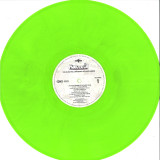
Back in 2012, Thee Oh Sees made their first appearance at Austin Psych Fest, performing an electrified set at Emo's East. The first of many Levitation appearances down in Austin, this show has been mixed by John Dwyer and mastered for vinyl by JJ Golden. Now immortalized on glorious 12" colored wax. "I think this was our first time at levitation but our millionth time in the amazing and tough as nails city of Austin, Texas. Brigid Dawson, Mike Shoun, Petey D and myself had already laid the live show out in front of crowds here, so it wasn't our first rodeo and certainly not my last. Our love is obvious here as we bring forth a short but sweet set of hits and deep cuts. This is also the version of the band with Lars "Fingers" Finberg of Intelligence fame as second banana drummer. So enjoy some primal and sensual double drumming and as a side note, no one died at this show. Thanks as always to Levitation for making shit happen" - John Dwyer LEVITATION and the LIVE AT LEVITATION Vinyl Series The first Austin Psych Fest was held in March 2008, and expanded to a 3 day event the following year. The event quickly developed into an international destination for psychedelic rock fans, with lineups spanning the fringes of indie rock, from up-and-comers to vintage legends, and capped off with headline performances from co-founders The Black Angels, along with Tame Impala, The Flaming Lips, The Brian Jonestown Massacre, Thee Oh Sees (in various forms) and many more. LEVITATION helped spark a movement, inspiring the creation of similar events across the globe and a burgeoning psych scene that would soon ignite. The series captures key moments in psychedelic rock history, and live music in Austin, Texas, pressed on beautiful limited edition colorful vinyl pressings - each an eye popping visual representation of the music contained within.
Поиск:rob fame
Все
Released in 1981& the last in a decade-long run of Top 50 R&B albums, ‘The Electric Spanking Of War Babies’ was the band’s twelfth studio LP & featured several players new to the Funkadelic line-up, notably Sly Stone. With its allusions to the Vietnam War & US imperialism, George Clinton’s project was destined to court controversy from the start, not least for its uncompromising sleeve art which original label Warner Bros. censored. Described by Robert Christgau as “the solidest, weirdest chunk of P-Funk since one nation gathered under a groove” & originally conceived as a double LP, many tracks saw release on Clinton’s later P-Funk projects. Arguably, it is better for having been précised down to a single album while still spawning two hit singles, the title track (US R&B No. 60) & ‘Shockwaves’ (US R&B No.53). FUNKADELIC Masterminded by the larger-than-life figure of George Clinton, Funkadelic was a key component of his influential P-Funk empire. Funkadelic’s unique combination of Rock, Psychedelia, R&B & Soul led to the band crossing over to the pop mainstream & gaining a vast international following, becoming one of the most important & influential groups in music. On 6 May 1997, Parliament / Funkadelic were inducted into the Rock & Roll Hall Of Fame by Prince. To commemorate six decades of thrilling & delighting fans, George Clinton returned to the stage in 2022 for a series of concerts. To celebrate, Charly have reissued Funkadelic’s classic four albums ‘Hardcore Jollies’; ‘One Nation Under A Groove’; ‘Uncle Jam Wants You’; & ‘The Electric Spanking Of War Babies’ (originally released by Warner Bros during a golden period for the band between 1976-1981). Each album will be available as deluxe gatefold Digi-Sleeve CDs in PVC wallets + obi-strip & facsimile-edition gatefold LPs on 180-gram black vinyl & limited edition 180-gram colored vinyl + 1970s-style obi-strip in a protective PVC sleeve. “They played a HUGE role in creating the future of music.” PRINCE
Released in 1981, ‘Skyy Line’ is the fourth album by the Brooklyn, NY-based R&B / funk / disco octet SKYY. ‘Skyy Line’ was a high note in the group’s tenure with Salsoul Records, the label having released a total of seven of the group’s albums.
The album, co-produced by group member Solomon Roberts and Randy Muller of Brass Construction fame, climbed to the top of the R&B charts with its cheeky hit “Call Me”, which was written and arranged by Muller/ Both the single and the album were certified gold by the RIAA.
Showcasing the signature vocal harmonies of sisters Denise, Dolores, and Bonné Dunning, couple with the crisp guitar licks of Solomon Roberts, the funk and rock-inspired guitars of Anibal “Booche” Sierra, Gerald Lebon’s classic R&B base thumps, Tommy McConnell’s pulsating drum riffs and Larry Greenberg’s synth and keyboard runs, this fourth LP crystallizes the group’s magic. ‘Skyy Line’ delivers 40 minutes of impeccable party music: equal parts irreverent and unforgettable.
Monks Road Social are an ever-changing collective of artists (some well-known, some just starting out) all with one thing in common - a love of making music.
Following the three genre bending albums MRS has already released this time round Richard Clarke turned to WONDERFULSOUND head honcho Miles Copeland to navigate the the vibe alongside mainstay of the band, the inimitable Dr Robert of Blow Monkeys fame.
Miles first showed up on debut album Down The Willows with the dreamy 'Golden Day' featuring Isle Of White favourite Angelina.
First single 'I’ll Keep On Searchin’ featuring Dr Robert on vocals is a lilting soulful slice of summer pop combining sweet melancholy and wistful chord changes.
Dr Robert explains “The song came from a piece of music Miles presented to me. It put me in mind of “Friends” era Beach Boys or early Smokey so the song came very quickly. Lyrically its informed by a kind of yearning. A desire for change, growth and connection. The things we’ve all been missing so much that give life meaning”
Miles continues…
“The idea for this single came about from these 2 loops sampled from some charity shop record creating this infectious lazy, jazzy groove but I knew the music needed to change and become its own thing… so when the Monks Road Social posse came knocking I knew the calibre of musicians involved would be able to flip it around, and that’s how a majority of the LP was written”.
'Confection' is a surprise-album from the talented composer Sebastien Tellier released on October 14, 2013 by Record Makers.
Apart from one song, ‘Confection’ is an entirely instrumental piece that Sebastien conceived like a motion picture score. Several romantic musical themes are showcased in different versions, orchestral or acoustic. Their sequence brings the listener on a succession of subtle climaxes, creating powerful emotions and leaving room for fantazised images.
The recording session of 'Sessions' was definitely old-school, as decided by the maestro. The very team which helped Tellier create his cult classic song 'La Ritournelle' 7 years ago was reunited for the occasion:
Tony Allen, of Fela fame, on drums. Rob, keyboardist for Phoenix. Emmanuel d'Orlando on string arrangements and Philippe Zdar mixed the record. He is also responsible for mixing albums for Phoenix, Cat Power, Beastie Boys, or Kindness and part of Cassius
The album artwork and ‘L’amour naissant’ video are from Jean-Baptiste Mondino.
'Confection' is an album as close as possible to Tellier's soul, a testimony of his deep musical skills. it showcases his outstanding composer talent as rarely before, reminding of his early albums such as 'L'incroyable vérité' or 'Politics'. 'Confection' is a love letter for a film that doesn't exist yet.
To celebrate the release of 'Confection' and for the first time in his career, Tellier will perform a special concert with an orchestra, in Paris on October 12.
Glasgow's First Lady of Jazz Carol Kidd, whose string of successful Linn recordings in the 1980's have made her a staple of international audiophile artists, returns with an all-new collection of delectable jazz and pop standards delivered in her inimitably smooth and heartfelt style.
Kidd has always been an artist celebrated for her cool, controlled phrasing and easy-going balladry, and her lovely new recording, BOTH SIDES NOW, is replete with her trademark inflection and warmth spread over classic songs by everyone from Rodgers & Hammerstein, Billy Joel, Joni Mitchell, and Richard Thompson. A songwriter of note, Kidd herself contributes two new tracks co-authored with Chris Anthony.
Impex's exclusive 180-gram 33 rpm LP, mastered by the superlative Kevin Gray at Cohearent Audio, features brilliantly detailed mid-tones, effortlessly stable bottom end, and crisp overtones. RTI's peerless pressing brings it all together for your listening pleasure.
Carol Kidd is an international award winning singer. She has been named 'Best Vocalist' at the British Jazz Awards on four occasions and was appointed MBE for Services to Jazz. In 2006, Carol was a winner of the prestigious Nordoff-Robbins Tartan Clef Music Award and in 2017 she received a Lifetime Achievement Award at the Scottish Jazz Awards. Renowned for her impeccable phrasing and delivery along with an unforgettable ability to breathe fresh life into any jazz standard, Carol has cut a distinctive path through the Great American Songbook throughout her career with orchestral and trio backing, as well as performing as a unique and intimate duo with guitarist Nigel Clark.
A long line of admirers has included Tony Bennett, Vic Damone and Frank Sinatra, who invited her to open for him at a stadium concert where he remarked that, "Carol Kidd is the best kept secret of British jazz." After a sensational performance at the Tribute to Johnny Mercer show at the Royal Concert Hall in Glasgow, Sir Michael Parkinson observed from the stage that "If there is a better jazz singer out there I have yet to hear them!" Luminaries who have performed alongside Carol as her guests include George Shearing, Georgie Fame, Annie Ross, Benny Carter, Joe Temperley, Bobby Watson and Martin Taylor.
Following a battle with cancer, Carol returned to the stage triumphant in the summer of 2013 to give a powerful, emotional performance at the Glasgow Jazz Festival. In the wake of this homecoming, it is impossible to deny that Kidd is one of the most remarkable artists and performers of our time.
With its name indicative of the music's boundary-testing diversity and Southwestern inspiration, On the Border finds the Eagles leaving everything on the table and embracing a harder edge that takes the band out of more relaxed territory and establishes it as a group that knows how – and wants – to rock. Glenn Frey, Don Henley, new member Don Felder, and company immediately announce their intent on the defiant album-opening hit "Already Gone" and never look back, crafting a gem of a record that from start to finish is arguably their most consistent and balanced effort.
Limited to 10,000 numbered copies, pressed on dead-quiet MoFi SuperVinyl at RTI, and mastered from the original analogue master tapes, Mobile Fidelity's ultra-hi-fi UltraDisc One-Step 180g 45RPM 2LP collector's edition pays tribute to the record's significance and enhances the experience for generations to come. Playing with reference sonics that elevate an effort revered by audiophiles, it provides a lively, dynamic, transparent, and intimate view of a release whose contemporary importance continues to grow. The opportunity to zero in on the particulars of the Eagles' golden harmonies, distinct vocal timbres, and cohesive interplay has never been better.
Visually, the premium packaging and gorgeous presentation of the UD1S On the Border pressing befit its select status. Housed in a deluxe box, it features special foil-stamped jackets and faithful-to-the-original graphics that illuminate the splendor of the recording. No expense has been spared. From every angle, this UD1S reissue exists as a curatorial artefact meant to be preserved, touched, and examined. It is made for discerning listeners that prize sound quality and production, and who desire to fully immerse themselves in the art – and everything involved with the album, from the iconic Navajo cover painting to the meticulous finishes.
And with On the Border, there's plenty to take in and soak up. Declared by famed critic Robert Christgau as "the Eagles' best album," the 1974 set claims a rich backstory. Initially recorded amid tumultuous sessions with producer Glyn Johns in London shortly after the release of the group's sophomore Desperado set, On the Border took a new turn after the band elected to scrap most of the prior work, return to its native California, and team with producer Bill Szymczyk to give the material less of a smooth, polished sheen and more toughness. Szymczyk also afforded the Eagles more input and freedom in the arrangements, and suggested adding another guitarist to play on "Good Day in Hell." Felder got the call, and so won over the Eagles with his skills, he quickly became the fifth member of the band.
While the late-arriving Felder only plays on one other album cut, "Already Gone," his mates more than prove their muster on the remainder of a double-platinum affair that established the Eagles as a force whose range transcended the calmer country-leaning style it perfected on their first two LPs. Primarily written by Jackson Browne and shelved during the Desperado sessions due to its higher-energy nature, the throttle-twisting "James Dean" ricochets with barbed riffs and rebellious swagger. Listen without limits to how Szymczyk's raw production stamps the song with a leather-and-jeans cool befitting its protagonist. Similarly rugged, the slide-guitar-fueled "Good Day in Hell" boasts its own mean streak. And the funk-laced, boot-stomping title track cautions "don't you tell me 'bout your law and order." Throughout On the Border, the Eagles are in no mood to mess around.
Not that the band skirts sentimental territory. On one of the era's finest covers, the Eagles nail the bittersweet feelings and bring high-definition detail to the vivid scenery of Tom Waits' "Ol' '55," a song the group makes its own. The rustic ballad "My Man" serves as a tribute to the recently deceased Gram Parsons, with singer-guitarist Bernie Leadon taking the lead on the microphone as he pours his heart out to his former Flying Burrito Brothers mate. And when it comes to romance, is it possible to top "Best of My Love"? Graced with Henley's honey-dipped vocals, refined wordless group harmonies, brushed drums, and the gentle strum of acoustic guitars, the Johns-produced cut soared to Number One and set the stage for what would soon be the Eagles' reality: global dominance.
More About Mobile Fidelity UltraDisc One-Step and Why It Is Superior
Instead of utilizing the industry-standard three-step lacquer process, Mobile Fidelity Sound Lab's new UltraDisc One-Step (UD1S) uses only one step, bypassing two processes of generational loss. While three-step processing is designed for optimum yield and efficiency, UD1S is created for the ultimate in sound quality. Just as Mobile Fidelity pioneered the UHQR (Ultra High-Quality Record) with JVC in the 1980s, UD1S again represents another state-of-the-art advance in the record-manufacturing process. MFSL engineers begin with the original master recordings, painstakingly transfer them to DSD 256, and meticulously cut a set of lacquers. These lacquers are used to create a very fragile, pristine UD1S stamper called a "convert." Delicate "converts" are then formed into the actual record stampers, producing a final product that literally and figuratively brings you closer to the music. By skipping the additional steps of pulling another positive and an additional negative, as done in the three-step process used in standard pressings, UD1S produces a final LP with the lowest noise floor possible today. The removal of the additional two steps of generational loss in the plating process reveals tremendous amounts of extra musical detail and dynamics, which are otherwise lost due to the standard copying process. The exclusive nature of these very limited pressings guarantees that every UD1S pressing serves as an immaculate replica of the lacquer sourced directly from the original master recording. Every conceivable aspect of vinyl production is optimized to produce the most perfect record album available today.
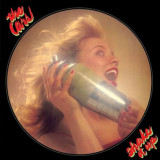
In celebration of the Cars' Rock and Roll Hall of Fame induction in April 2018, one of the legendary group's most iconic albums - Shake It Up - has been reissued in an Expanded 180g 2LP-set. Remastered edition of the original album with rare unreleased bonus tracks. An Illustrated booklet accompanies the music and contains liner notes written by renowned rock journalist David Fricke, who details the history of the album with new interviews by band member David Robinson.
The Cars recorded Shake It Up in 1981 at Syncro Sound, the band's newfound studio in Boston, with producer Roy Thomas Baker. Working in their own space afforded them the time to perfect the sound of the album, which became their third-straight Top 10 hit record and sold more than two million copies. It features the unforgettable singles "Since You're Gone," "Think It Over" and the title cut, the latter serving as their first Top 10 hit. Several unreleased tracks make their debut on Shake It Up: Expanded, including an early version of "Since You're Gone," the demo for "Shake It Up" and an unreleased song called "Midnight Dancer."
The crown jewel of Finnish Death Metal, reissued in a band-approved new 30th anniversary edition. Features a new vinyl master from the original source by Noise for Fiction, plus a booklet with a lengthy feature by Hippo Taatila and some visual memorabilia. As an added vinyl bonus there's a large poster by the original cover artist Rob Smits creating a new vision of the album cover for the new millennium. Together with bands like Demilich, Abhorrence, Disgrace, Xysma and Sentenced, Demigod from the wastelands of Loimaa, southern Finland, put Finland on the map in the global death metal scene in the late 80's and early 90's. Having risen to underground fame with their demo Unholy Domain, Slumber of Sullen Eyes was a hugely expected debut album. When it was finally released in 1992 after a complicated creation process at Tico-Tico Studios in northern Finland, it was received with open arms and drooling excitement by the then very active underground death metal scene. That scene was, however, short lived,and by 1994 pretty much every band had switched from death metal to something else entirely. What was left after the bands had left the building was a number of classic albums that constitute the legacy of Finnish Death Metal. Among them, Slumber of Sullen Eyes is one of the most original and ferocious. There was nobody like Demigod.
Death Is Not The End launch sub-label 333 with a first-time vinyl reissue for the late Devon Russell's Darker Than Blue LP - put together as a tribute to the great Curtis Mayfield. First issued in 1993 but featuring material originally recorded as far back as 1979, the collection includes a cast of prominent players across it's 10 tracks - featuring musical contributions from Sly Dunbar, Aston "Family Man" Barrett, Earl "Wire" Lindo, Dean Fraser, Bobby Ellis, Leroy "Horsemouth" Wallace, Prince Lincoln Thompson and many others - plus production & arrangment from Earl "Chinna" Smith, Sly Dunbar & King Tubby's Firehouse Crew alongside Russell himself. Limited to 333 copies.
"The concept for Darker Than Blue dates back to 1979. Returning from South Amerrica with my partner (in duo Lloyd & Devon) Lloyd Robinson, we did "Red Bum Ball" which had been a massive hit in the 60's. It was around this time that Earl Chinna Smith (of The Wailers and Soul Syndicate fame) approached me with the idea of re-making some Curtis Mayfield songs. "Darker Than Blue" was the first track we did, followed by "Move On Up" in 1981, both of which received great reviews.
On returning to Jamaica from a UK tour in 1986, my good friend King Tubby had taken on five men from my school of music, from which the Firehouse Crew were born. Within 3 years they had matured to become Jamaica's No.1 instrumental band, winning the Rockers award. Then in the spring of 1990, together we managed to record the album "Money, Sex & Violence", during a tour of the UK & France, on which we did Mayfield's "Give Me Your Love". The track was played to Steve Barrow who suggested we do more Curtis tracks.
Sly Dunbar and I have known each other for as long as I can remember. We grew up in the same hood and used to jam regularly in our youth. I told Sly about the further Mayfield tracks I wanted to do and he agreed that it would be a good idea. So Sly, myself and The Firehouse Crew went to work at the Leggo Studios in Kingston, Jamaica and created the remaining tracks for the Darker Than Blue LP, a tribute to Curtis Mayfield.
We grew up on the sounds of Curtis Mayfield and The Impressions. Everyone in Jamaica loved them. His death was a terrible thing, but while there is life, there is hope."
- Devon Russell, 1994.
333, under license from Prestige Elite Records Ltd.
The Dutch-Belgian jazz band duo Gare Du Nord released their seventh studio album Rendezvous 8:02 in 2012. The album has become a famed record in which urban jazz effortlessly meets with ancient blues, while still keeping on swinging. The album breathes the atmosphere of the big city Paris, where the tracks were created. It While holding on to their recognizable lounge sound, a new version was make of their most popular effort “Pablo’s Blues”. The track features vocals by the American blues musician Robert Johnson.
Rendezvous 8:02 is available as a 10th anniversary edition of 1000 individually numbered copies on translucent green coloured vinyl.
“Featuring the mega-hit ‘Place Your Hands’, the album was recorded in Abbey Road, Real World Studios and LA’s legendary Sound City Studios, with producer George Drakoulias at the helm. And it’s fair to say that Glow was the point where everything that made Reef so great – the spirit, the passion, the honesty, the undiluted energy – came together. It’s the sound of a band who were never short of talent or confidence firing on every single cylinder.
“I love every album we’ve made, but Glow is the one that really encapsulates the band,” says Gary Stringer today. “It’s emotional, it’s sexy, it’s passionate, it rocks hard. It’s everything Reef should be.”
Having burst onto the music scene in 1994, and with their debut album Replenish going Top 10 the following year, Reef were on a fast-track trajectory to international fame. But in true Reef style, there were no agonising songwriting sessions for Glow. It was written entirely on the hoof, wherever and whenever they had their instruments to hand – in soundchecks, between shows, in the band’s rehearsal space and the trusty blue VW van which carried them from gig to gig. “
“Featuring the mega-hit ‘Place Your Hands’, the album was recorded in Abbey Road, Real World Studios and LA’s legendary Sound City Studios, with producer George Drakoulias at the helm. And it’s fair to say that Glow was the point where everything that made Reef so great – the spirit, the passion, the honesty, the undiluted energy – came together. It’s the sound of a band who were never short of talent or confidence firing on every single cylinder.
“I love every album we’ve made, but Glow is the one that really encapsulates the band,” says Gary Stringer today. “It’s emotional, it’s sexy, it’s passionate, it rocks hard. It’s everything Reef should be.”
Having burst onto the music scene in 1994, and with their debut album Replenish going Top 10 the following year, Reef were on a fast-track trajectory to international fame. But in true Reef style, there were no agonising songwriting sessions for Glow. It was written entirely on the hoof, wherever and whenever they had their instruments to hand – in soundchecks, between shows, in the band’s rehearsal space and the trusty blue VW van which carried them from gig to gig. “
For fans of - Booker T & The MGs, James Taylor Quartet, Georgie Fame, Big Boss Man. Groovy Hammond garage rock instrumentals from Billy Childish (Thee Headcoats/CTMF etc) and featuring James Taylor (Prisoners/JTQ) We’re loving this new album by The Guy Hamper Trio! Who’s in the band sunshine? Mainly myself on guitar, Julie on bass, Wolf on drums, and of course Jamie on Hammond. A great bonus is Thee Headcoats with Bruce and Tub guest as rhythm section on a track or two. You and James Taylor go back a long way. Do you remember how you first met? The Prisoners were a young group who played with us (the Milkshakes) in the early 1980s. One day they turned up with an organ player, Jamie. Jamie used to then borrow my Selmer guitar amp to play through. You’ve revisited a few old classics on this album, and given them a true makeover. How would you describe The Guy Hamper Trio’s sound? I guess there must be a derogatory term for it but I might need some help finding it. In the very early days of The James Taylor Quartet (Wolf was their drummer back then), I was in the Natural Born Lovers (A blues group with Big Russ and Sexton Ming). We used to be the support for them. I really liked their sound and I guess The Guy Hamper Trio is not a million miles from that blues-influenced, film soundtrack vibe, man. There you made me say “man”. Next thing you know I will be saying “cool!” Let’s just say it's a wizard sound, Jamie is such a great player. Prior to this album The Guy Hamper Trio’s sole release was the ‘Polygraph Test’ 7” from 2009. Why such a big gap? It takes time for all of us to get all our solders in line. “Get on with it mush! And trifle not, your time is but short!” What inspired the album’s title track All The Poisons In the Mud? It’s actually the title of a novel I’ve been writing, and rewriting, over the past 12 years, and is taken from a quote from I Claudius by Robert Graves - a formative influence on me as a 15 year old. The sleeve art is pretty different to your other recent records, could you tell us a about that? Who designed it? I nominally designed it but the truth is that it's essentially a rip off of a Saul Bass sleeve he did for Duke Ellington. We started mining that seam back in the Milkshakes when Bruce (Brand) did the sleeve for Thee Knights of Trashe. The album closes with a storming cover of Jimi Hendrix’s “Fire”. What do you think Jimi would make of your version? I've been a fan of Jimi since my elder brother brought his records home in the '60s. Jimi was well known to “dig” others work and interpretations and would no doubt smile, narrow his smoky eyes and say “cool man!” and I would no doubt reply "wizard Jimi!" TRACKLISTING 1. All The Poisons in the Mud 2. Come Into My Life 3. Moon of the Popping Trees 4. Girl From '62 5. Full Eclipse of the Sun 6. Sally Sensation 7. 7% Solution 8. Step Out 9. Polygraph Test 10. The Kids are all Square 11. Skinwalker 12. Fire
Multiple-GRAMMY® Award-winning singer/songwriter Rob Thomas has released his debut holiday album, something about christmas time – available now via Atlantic Records. The 10-track collection, produced by Gregg Wattenberg, features a mix of new originals, classic covers and show-stopping duets with Ingrid Michaelson, BeBe Winans, Brad Paisley & Abby Anderson. The album is led by new single “small town christmas,” arriving alongside a touchingmemory-filled music video companion directed by David “Doc” Abbott.
Thomas also gives his long-beloved “A New York Christmas” a 2021 update for the project, nearly 20 years after the single’s original release. The reimagined version will be featured in the all new Hallmark Channel movie “A Royal Queens Christmas” – airing as part of their Countdown to Christmas programming with all new holiday movies airing every Friday, Saturday & Sunday at 8/7c. something about christmas time marks Thomas’ fifth solo album release, his latest following 2019’s Chip Tooth Smile. He most recently reunited with Santana for collaborative single “Move” (the first since their explosive #1 smash “Smooth”) & will hit the road once again in May 2022 with Matchbox Twenty.
ABOUT ROB THOMAS:
Rob Thomas is one of the most distinctive artists of this or any other era – a gifted vocalist, spellbinding performer, and acclaimed songwriter known worldwide as lead singer and primary composer with Matchbox Twenty as well as for his multi-platinum certified solo work and chart-topping collaborations with other artists. Among his countless hits are solo classics like “Lonely No More,” “Little Wonders,” “This Is How A Heart Breaks,” and “Streetcorner Symphony,” Matchbox Twenty favorites including “Push,” “3AM,” “If You’re Gone,” “Bent” and “How Far We’ve Come,” and of course the Billboard number 2 song of all time “Smooth,” his 3x RIAA platinum certified and 3x GRAMMY Award winning worldwide hit collaboration with Santana. The first artist to be honored with the Songwriters Hall of Fame’s prestigious “Hal David Starlight Award” and recipient of numerous BMI and ASCAP Awards, Thomas has contributed to sales of more than 80 million records.
A charismatic, engaging, and indefatigable live performer, Thomas has spent much of the past two decades on the road, fronting massive world treks with Matchbox Twenty and on his own as well as a series of intimate acoustic shows. Thomas is also a dedicated philanthropist, establishing Sidewalk Angels Foundation with his wife Marisol Thomas in 2003 and having raised millions for no-kill animal shelters and rescues across the US.
Welcome to the world of Edward Blankman, a retired dentist who wrote elegant, minimalist jazz in obscurity circa 1970. At least that's the story. In truth, Edward Blankman's Cape Cod Cottage is the 2021 concept album from Echo Park composer Brendan Eder. A tender, wistful follow up to 2020's To Mix With Time, the Cape Cod Cottage sound evokes the spirit of Erik Satie, Miles Davis with Gil Evans, and Stevie Wonder, balanced with the accessibility of 1960s lounge-exotica. Eder created Blankman's story to channel his own grief, with bittersweet tenderness. Read the liner notes (or watch the mini-doc), and you'll be transported to the quiet shores of Cape Cod in the early 70s, where a lonely retiree mourns his late wife, Natalie, with walks in nature and evenings at his Wurlitzer. The story is brought to life with a meticulously crafted package sporting classic liner notes, faux 1970s photographs documenting Edward with the musicians (taken during the actual session), a make-believe jazz label, and a commissioned oil painting of Edward's cottage. Eder brought together a dream line up with a ton of chemistry for the project; drummer Christian Euman (Jacob Collier), saxophonist Josh Johnson (Jeff Parker, Leon Bridges), and bassist Alex Boneham (Billy Childs), who all studied together at the Hancock Institute of Jazz. Rounding out the group is flutist Sarah Robinson, a recurring player in Eder's ensemble, and Edward Blankman (Brendan) on the Wurlitzer. The cast was booked for a single date with coveted engineer Michael Harris (Kamasi Washington, Angel Olsen) at famed Electro-Vox Recording Studios. To create realism for Edward's story, the charts were purposefully withheld from the musicians until they arrived at the studio. The result is an authentic and natural performance delivered by players at the top of their game, captured on lauded vintage equipment including the legendary Neve-8028 console. This was, hands down, one of the very best records of last year so don't miss out on this extremely limited pressing for UK and Europe. Under license from Jazz Dad Records.
The legendary Brownsville duo of Lil Fame and Billy Danze followed up their first group single "How About Some Hardcore" with their first full-length studio album, To The Death, in the Spring of 1994, and they haven’t let up the pressure since. While some solo offerings came earlier - most notably Fame’s appearance on The Hill That’s Real compilation- the classic aggressive energy the two emcees exhibit while trading rhymes back and forth is what street-rap fans have come to know and love from the group. If you are not into the that smash-ya-face-in style, then simply put, the Mash Out Posse is not for you. The album was produced entirely by DR Period, except for track "Guns N' Roses" (produced by Silver D), and it solidified what has become a successful 30 year career for M.O.P. Fame and Danze haven’t waivered from their grimy, crimey, high-energy boom bap style to this day, and the songs on this album established that fact early on. Tracks like "Rugged Neva Smoove", “Blue Steel”, “Guns N’ Roses”, and the robbery-story driven "Heistmasters" are early indicators of the ruckus they would later bring on anthems like “Stick To Ya Gunz” and “Ante Up”.
- A1: Rock This Mother
- A2: Talk To Me Girl
- A3: You Can Find Me
- A4: Check This Out
- A5: Jesus Going To Clean House
- A6: Hope You Understood
- A7: Is It What You Want
- A8: Love Is Everlasting
- A9: This Is Hip-Hop Art
- A10: Opposite Of Love
- A11: Do You Know What I Mean
- B1: Saving All My Love For You
- B2: Look Out Here I Come
- B3: Girl You Always Talking
- B4: Have A Great Day
- B5: Take My Hand
- B6: I Need Your Love
- B7: Your Town
- B8: Talk Around Town
- B9: Booty Head/Take A Little Walk
- B10: I Love My Mama
- B11: I Never Found Anyone Like You
Vinyl LP[23,49 €]
As the sun sets on a quaint East Nashville house, a young man bares a piece of his soul. Facing the camera, sporting a silky suit jacket/shirt/slacks/fingerless gloves ensemble that announces "singer" before he's even opened his mouth, Lee Tracy Johnson settles onto his stage, the front yard. He sways to the dirge-like drum machine pulse of a synth-soaked slow jam, extends his arms as if gaining his balance, and croons in affecting, fragile earnest, "I need your love… oh baby…"
Dogs in the yard next door begin barking. A mysterious cardboard robot figure, beamed in from galaxies unknown and affixed to a tree, is less vocal. Lee doesn't acknowledge either's presence. He's busy feeling it, arms and hands gesticulating. His voice rises in falsetto over the now-quiet dogs, over the ambient noise from the street that seeps into the handheld camcorder's microphone, over the recording of his own voice played back from a boombox off-camera. After six minutes the single, continuous shot ends. In this intimate creative universe there are no re-takes. There are many more music videos to shoot, and as Lee later puts it, "The first time you do it is actually the best. Because you can never get that again. You expressing yourself from within."
"I Need Your Love" dates from a lost heyday. From some time in the '80s or early '90s, when Lee Tracy (as he was known in performance) and his music partner/producer/manager Isaac Manning committed hours upon hours of their sonic and visual ideas to tape. Embracing drum machines and synthesizers – electronics that made their personal futurism palpable – they recorded exclusively at home, live in a room into a simple cassette deck. Soul, funk, electro and new wave informed their songs, yet Lee and Isaac eschewed the confinement of conventional categories and genres, preferring to let experimentation guide them.
"Anytime somebody put out a new record they had the same instruments or the same sound," explains Isaac. "So I basically wanted to find something that's really gonna stand out away from all of the rest of 'em." Their ethos meant that every idea they came up with was at least worth trying: echoed out half-rapped exhortations over frantic techno-style beats, gospel synth soul, modal electro-funk, oddball pop reinterpretations, emo AOR balladry, nods to Prince and the Fat Boys, or arrangements that might collapse mid-song into a mess of arcade game-ish blips before rallying to reach the finish line. All of it conjoined by consistent tape hiss, and most vitally, Lee's chameleonic voice, which managed to wildly shape shift and still evoke something sincere – whether toggling between falsetto and tenor exalting Jesus's return, or punctuating a melismatic romantic adlib with a succinct, "We all know how it feels to be alone."
"People think we went to a studio," says Isaac derisively. "We never went to no studio. We didn't have the money to go to no studio! We did this stuff at home. I shot videos in my front yard with whatever we could to get things together." Sometimes Isaac would just put on an instrumental record, be it "Planet Rock" or "Don't Cry For Me Argentina" (from Evita), press "record," and let Lee improvise over it, yielding peculiar love songs, would-be patriotic anthems, or Elvis Presley or Marilyn Monroe tributes. Technical limitations and a lack of professional polish never dissuaded them. They believed they were onto something.
"That struggle," Isaac says, "made that sound sound good to me."
In the parlance of modern music criticism Lee and Isaac's dizzying DIY efforts would inevitably be described as "outsider." But "outsider" carries the burden of untold additional layers of meaning if you're Black and from the South, creating on a budget, and trying to get someone, anyone within the country music capital of the world to take your vision seriously. "What category should we put it in?" Isaac asks rhetorically. "I don't know. All I know is feeling. I ain't gonna name it nothing. It's music. If it grabs your soul and touch your heart that's what it basically is supposed to do."
=
Born in 1963, the baby boy of nine siblings, Lee Tracy spent his earliest years living amidst the shotgun houses on Nashville's south side. "We was poor, man!" he says, recalling the outhouse his family used for a bathroom and the blocks of ice they kept in the kitchen to chill perishables. "But I actually don't think I really realized I was in poverty until I got grown and started thinking about it." Lee's mom worked at the Holiday Inn; his dad did whatever he had to do, from selling fruit from a horse drawn cart to bootlegging. "We didn't have much," Lee continues, "but my mother and my father got us the things we needed, the clothes on our back." By the end of the decade with the city's urban renewal programs razing entire neighborhoods to accommodate construction of the Interstate, the family moved to Edgehill Projects. Lee remembers music and art as a constant source of inspiration for he and his brothers and sisters – especially after seeing the Jackson 5 perform on Ed Sullivan. "As a small child I just knew that was what I wanted to do."
His older brother Don began musically mentoring him, introducing Lee to a variety of instruments and sounds. "He would never play one particular type of music, like R&B," says Lee. "I was surrounded by jazz, hard rock and roll, easy listening, gospel, reggae, country music; I mean I was a sponge absorbing all of that." Lee taught himself to play drums by beating on cardboard boxes, gaining a rep around the way for his timekeeping, and his singing voice. Emulating his favorites, Earth Wind & Fire and Cameo, he formed groups with other kids with era-evocative band names like Concept and TNT Connection, and emerged as the leader of disciplined rehearsals. "I made them practice," says Lee. "We practiced and practiced and practiced. Because I wanted that perfection." By high school the most accomplished of these bands would take top prize in a prominent local talent show. It was a big moment for Lee, and he felt ready to take things to the next level. But his band-mates had other ideas.
"I don't know what happened," he says, still miffed at the memory. "It must have blew they mind after we won and people started showing notice, because it's like everybody quit! I was like, where the hell did everybody go?" Lee had always made a point of interrogating prospective musicians about their intentions before joining his groups: were they really serious or just looking for a way to pick up girls? Now he understood even more the importance of finding a collaborator just as committed to the music as he was.
=
Isaac Manning had spent much of his life immersed in music and the arts – singing in the church choir with his family on Nashville's north side, writing, painting, dancing, and working various gigs within the entertainment industry. After serving in the armed forces, in the early '70s he ran The Teenage Place, a music and performance venue that catered to the local youth. But he was forced out of town when word of one of his recreational routines created a stir beyond the safe haven of his bohemian circles.
"I was growing marijuana," Isaac explains. "It wasn't no business, I was smoking it myself… I would put marijuana in scrambled eggs, cornbread and stuff." His weed use originated as a form of self-medication to combat severe tooth pain. But when he began sharing it with some of the other young people he hung out with, some of who just so happened to be the kids of Nashville politicians, the cops came calling. "When I got busted," he remembers, "they were talking about how they were gonna get rid of me because they didn't want me saying nothing about they children because of the politics and stuff. So I got my family, took two raggedy cars, and left Nashville and went to Vegas."
Out in the desert, Isaac happened to meet Chubby Checker of "The Twist" fame while the singer was gigging at The Flamingo. Impressed by Isaac's zeal, Checker invited him to go on the road with him as his tour manager/roadie/valet. The experience gave Isaac a window into a part of the entertainment world he'd never encountered – a glimpse of what a true pop act's audience looked like. "Chubby Checker, none of his shows were played for Black folks," he remembers. "All his gigs were done at high-class white people areas." Returning home after a few years with Chubby, Isaac was properly motivated to make it in Music City. He began writing songs and scouting around Nashville for local talent anywhere he could find it with an expressed goal: "Find someone who can deliver your songs the way you want 'em delivered and make people feel what you want them to feel."
One day while walking through Edgehill Projects Isaac heard someone playing the drums in a way that made him stop and take notice. "The music was so tight, just the drums made me feel like, oh I'm-a find this person," he recalls. "So I circled through the projects until I found who it was.
"That's how I met him – Lee Tracy. When I found him and he started singing and stuff, I said, ohhh, this is somebody different."
=
Theirs was a true complementary partnership: young Lee possessed the raw talent, the older Isaac the belief. "He's really the only one besides my brother and my family that really seen the potential in me," says Lee. "He made me see that I could do it."
Isaac long being a night owl, his house also made for a fertile collaborative environment – a space where there always seemed to be a new piece of his visual art on display: paintings, illustrations, and dolls and figures (including an enigmatic cardboard robot). Lee and Issac would hang out together and talk, listen to music, conjure ideas, and smoke the herb Isaac had resumed growing in his yard. "It got to where I could trust him, he could trust me," Isaac says of their bond. They also worked together for hours on drawings, spreading larges rolls of paper on the walls and sketching faces with abstract patterns and imagery: alien-like beings, tri-horned horse heads, inverted Janus-like characters where one visage blurred into the other.
Soon it became apparent that they didn't need other collaborators; self-sufficiency was the natural way forward. At Isaac's behest Lee, already fed up with dealing with band musicians, began playing around with a poly-sonic Yamaha keyboard at the local music store. "It had everything on it – trumpet, bass, drums, organ," remembers Lee. "And that's when I started recording my own stuff."
The technology afforded Lee the flexibility and independence he craved, setting him on a path other bedroom musicians and producers around the world were simultaneously following through the '80s into the early '90s. Saving up money from day jobs, he eventually supplemented the Yamaha Isaac had gotten him with Roland and Casio drum machines and a Moog. Lee was living in an apartment in Hillside at that point caring for his dad, who'd been partially paralyzed since early in life. In the evenings up in his second floor room, the music put him in a zone where he could tune out everything and lose himself in his ideas.
"Oh I loved it," he recalls. "I would really experiment with the instruments and use a lot of different sound effects. I was looking for something nobody else had. I wanted something totally different. And once I found the sound I was looking for, I would just smoke me a good joint and just let it go, hit the record button." More potent a creative stimulant than even Isaac's weed was the holistic flow and spontaneity of recording. Between sessions at Isaac's place and Lee's apartment, their volume of output quickly ballooned.
"We was always recording," says Lee. "That's why we have so much music. Even when I went to Isaac's and we start creating, I get home, my mind is racing, I gotta start creating, creating, creating. I remember there were times when I took a 90-minute tape from front to back and just filled it up."
"We never practiced," says Isaac. "See, that was just so odd about the whole thing. I could relate to him, and tell him about the songs I had ideas for and everything and stuff. And then he would bring it back or whatever, and we'd get together and put it down." Once the taskmaster hell bent on rehearsing, Lee had flipped a full 180. Perfection was no longer an aspiration, but the enemy of inspiration.
"I seen where practicing and practicing got me," says Lee. "A lot of musicians you get to playing and they gotta stop, they have to analyze the music. But while you analyzing you losing a lot of the greatness of what you creating. Stop analyzing what you play, just play! And it'll all take shape."
=
"I hope you understood the beginning of the record because this was invented from a dream I had today… (You tell me, I'll tell you, we'll figure it out together)" – Lee Tracy and Isaac Manning, "Hope You Understand"
Lee lets loose a maniacal cackle when he acknowledges that the material that he and Isaac recorded was by anyone's estimation pretty out there. It's the same laugh that commences "Hope You Understand" – a chaotic transmission that encapsulates the duality at the heart of their music: a stated desire to reach people and a compulsion to go as leftfield as they saw fit.
"We just did it," says Lee. "We cut the music on and cut loose. I don't sit around and write. I do it by listening, get a feeling, play the music, and the lyrics and stuff just come out of me."
The approach proved adaptable to interpreting other artists' material. While recording a cover of Whitney Houston's pop ballad "Saving All My Love For You," Lee played Whitney's version in his headphones as he laid down his own vocals – partially following the lyrics, partially using them as a departure point. The end result is barely recognizable compared with the original, Lee and Isaac having switched up the time signature and reinvented the melody along the way towards morphing a slick mainstream radio standard into something that sounds solely their own.
"I really used that song to get me started," says Lee. "Then I said, well I need something else, something is missing. Something just came over me. That's when I came up with 'Is It What You Want.'"
The song would become the centerpiece of Lee and Isaac's repertoire. Pushed along by a percolating metronomic Rhythm King style beat somewhere between a military march and a samba, "Is It What You Want" finds Lee pleading the sincerity of his commitment to a potential love interest embellished by vocal tics and hiccups subtlely reminiscent of his childhood hero MJ. Absent chord changes, only synth riffs gliding in and out like apparitions, the song achieves a lingering lo-fi power that leaves you feeling like it's still playing, somewhere, even after the fade out.
"I don't know, it's like a real spiritual song," Lee reflects. "But it's not just spiritual. To me the more I listen to it it's like about everything that you do in your everyday life, period. Is it what you want? Do you want a car or you don't want a car? Do you want Jesus or do you want the Devil? It's basically asking you the question. Can't nobody answer the question but you yourself."
In 1989 Lee won a lawsuit stemming from injuries sustained from a fight he'd gotten into. He took part of the settlement money and with Isaac pressed up "Saving All My Love For You" b/w "Is It What You Want" as a 45 single. Isaac christened the label One Chance Records. "Because that's all we wanted," he says with a laugh, "one chance."
Isaac sent the record out to radio stations and major labels, hoping for it to make enough noise to get picked up nationally. But the response he and Lee were hoping for never materialized. According to Isaac the closest the single got to getting played on the radio is when a disk jock from a local station made a highly unusual announcement on air: "The dude said on the radio, 107.5 – 'We are not gonna play 'Is It What You Want.' We cracked up! Wow, that's deep.
"It was a whole racist thing that was going on," he reflects. "So we just looked over and kept on going. That was it. That was about the way it goes… If you were Black and you were living in Nashville and stuff, that's the way you got treated." Isaac already knew as much from all the times he'd brought he and Lee's tapes (even their cache of country music tunes) over to Music Row to try to drum up interest to no avail.
"Isaac, he really worked his ass off," says Lee. "He probably been to every record place down on Music Row." Nashville's famed recording and music business corridor wasn't but a few blocks from where Lee grew up. Close enough, he remembers, for him to ride his bike along its back alleys and stumble upon the occasional random treasure, like a discarded box of harmonicas. Getting in through the front door, however, still felt a world away.
"I just don't think at the time our music fell into a category for them," he concedes. "It was before its time."
=
Lee stopped making music some time in the latter part of the '90s, around the time his mom passed away and life became increasingly tough to manage. "When my mother died I had a nervous breakdown," he says, "So I shut down for a long time. I was in such a sadness frame of mind. That's why nobody seen me. I had just disappeared off the map." He fell out of touch with Isaac, and in an indication of just how bad things had gotten for him, lost track of all the recordings they'd made together. Music became a distant memory.
Fortunately, Isaac kept the faith. In a self-published collection of his poetry – paeans to some of his favorite entertainment and public figures entitled Friends and Dick Clark – he'd written that he believed "music has a life of its own." But his prescience and presence of mind were truly manifested in the fact that he kept an archive of he and Lee's work. As perfectly imperfect as "Is It What You Want" now sounds in a post-Personal Space world, Lee and Isaac's lone official release was in fact just a taste. The bulk of the Is It What You Want album is culled from the pair's essentially unheard home recordings – complete songs, half-realized experiments, Isaac's blue monologues and pronouncements et al – compiled, mixed and programmed in the loose and impulsive creative spirit of their regular get-togethers from decades ago. The rest of us, it seems, may have finally caught up to them.
On the prospect of at long last reaching a wider audience, Isaac says simply, "I been trying for a long time, it feels good." Ever the survivor, he adds, "The only way I know how to make it to the top is to keep climbing. If one leg break on the ladder, hey, you gotta fix it and keep on going… That's where I be at. I'll kill death to make it out there."
For Lee it all feels akin to a personal resurrection: "It's like I was in a tomb and the tomb was opened and I'm back… Man, it feels so great. I feel like I'm gonna jump out of my skin." Success at this stage of his life, he realizes, probably means something different than what it did back when he was singing and dancing in Isaac's front yard. "What I really mean by 'making it,'" he explains isn't just the music being heard but, "the story being told."
Occasionally Lee will pull up "Is It What You Want" on YouTube on his phone, put on his headphones, and listen. He remembers the first time he heard his recorded voice. How surreal it was, how he thought to himself, "Is that really me?" What would he say to that younger version of himself now?
"I would probably tell myself, hang in there, don't give up. Keep striving for the goal. And everything will work out."
Despite what's printed on the record label, sometimes you do get more than one chance.
- A1: Superman Lost
- A2: Only For You (Feat Rachel K Collier)
- A3: Easy (Feat Porter Robinson)
- B1: Called Id
- B2: Little Damage
- B3: Pyramid Scheme (Feta Chuck D)
- C1: The Sky (Feat Linnea Schossow)
- C2: Like It Used To Be
- C3: Time On Your Side (Feat Janai)
- C4: Moderate Stimulation
- D1: Lucid Dreams
- D2: Ez
- D3: Hurricane (Feat Eyes That Lie)
- D4: Fall Into Dreams (Feat Pete Josef)
While so many follow the status quo, Mat Zo has always danced to the beat of his own drum. From his days topping both the drum & bass and trance charts simultaneously (releasing on Hospital Records as MRSA), to his current status as a big room innovator, collaborating with Public Enemy's Chuck D and dropping genre-blurring 70-track contributions to BBC Radio 1's Essential Mix, the precocious talent is destined to play by his own rules.
Supported by DJs as diverse as Skrillex, Madeon, Pete Tong, Above & Beyond, Steve Aoki and A-Trak, the LA-living producer's much anticipated debut LP 'Damage Control' is a bold, brilliantly diverse statement of intent from one of the scene's most unique talents. In a world of EDM sound a likes, this is electronic dance music with integrity and ambition. The release of the album will coincide with an extensive upcoming world headline tour, which sees Zo playing renowned dance music hubs such as Ministry of Sound in London, Light in Las Vegas, Create/Avalon in Los Angeles, Miami's LIV nightclub, Toronto's Guvernment and New York City's famed Pacha. (See full list of dates below).
The product of nearly three years dedicated work, 'Damage Control' represents a star of the future coming of age. Including his Beatport No.1 smash 'Easy' (feat. Porter Robinson) and recent hook-up with hip-hop legend Chuck D (Public Enemy) on 'Pyramid Scheme', Zo's 14-track LP also features the sun-soaked melodies of his innovative future single 'Lucid Dreams' - another track that perfectly embodies his uniquely quirky take on big room sounds.
What really sets the album apart from the pack are its diversions away from the dancefloor. 'Damage Control' takes in everything from electro-charged French house ('Only For You' feat. Rachel K. Collier), classy trance vibes ('The Sky' feat. Linnea Schossow) and big room progressive, through to wonky, trap-styled beats ('Caller ID' and 'Little Damage'), UK garage updates ('EZ') and hip-hop ('Moderate Stimulation').
Retaining a cohesive thread throughout thanks to Zo's unmistakable sense of fun and infectious grasp of melody, 'Damage Control' is tipped as one of the most forward-thinking debut artist albums of 2013.