In the late 1980s, the renowned American jazz pianist, composer, and arranger John Hicks formed one of the most influential ensembles consisting of musicians that had played music at the highest level all their lives and gained their status as both stand-alone artists and important sidemen. Each of them had participated in many of jazz’s great moments and all shared the ability, documented on many albums, to inspire their fellow musicians to even greater heights. The ‘John Hicks Trio’ had several line-up changes over the years that included greats such as Clifford Barbaro (Strata East, Blue Note, Sun Ra Arkestra, Charles Tolliver), Clint Houston (Prestige, Nina Simone, Roy Ayers, Azar Lawrence), Ray Drummond (Freddie Hubbard, Art Blakey, Lalo Schifrin), Marcus McLaurine (Muse, Verve, Weldon Irvine, Kool & The Gang) and Victor Lewis (Steve Grossman, Stan Getz, Charles Mingus, Cedar Walton, Chet Baker).
On the album we are presenting you today (I’ll Give You Something To Remember Me By from 1988) the trio consists out of some of the biggest and best players in the jazz, funk and soul scenes:
On piano we have the Atlanta based trio’s bandleader JOHN HICKS (1941-2006). He served as a leader on more than 30 albums and played as a sideman on more than 300 other recordings. After being taught piano by his mother, Hicks went on to study at Lincoln University of Missouri, Berklee College of Music, and the Juilliard School. After playing with a number of different artists during the early ’60s (including Oliver Nelson and being part of Pharoah Sanders’s first band) he joined Art Blakey & The Jazz Messengers in 1964. In the early ’70s he taught jazz history and improvisation at Southern Illinois University before resuming his career as a recording artist. Next to his many solo recordings for labels such as Strata East and Concord, Hicks would collaborate with all the big names in the scene, including Archie Shepp, Mingus and Alvin Queen. In 2014 & 2015, J Dilla paid homage to John Hicks by sampling two of his songs.
On drums we have the legendary IDRIS MUHAMMAD (1939-2014) who to this day is still considered as one of the most influential drummers covering a multitude of genre-transcending styles. Born in New Orleans, he showed early talent as a percussionist and began his professional career while still a teenager, playing on Fats Domino’s ‘Blueberry Hill’. He then toured with Sam Cooke and would later go on to work with Curtis Mayfield. Next to his landmark solo recordings for Prestige Records, Idris would collaborate with iconic musicians and acts from the likes of Manu Dibango, Ahmad Jamal, Melvin Sparks, Charles Earland, Walter Bishop, Ceasar Frazier, Roberta Flack, Gato Barbieri, Nathan Davis, Sonny Rollins, Lou Donaldson, Galt MacDermot, Lonnie Smith…and countless others. Idris Muhammad’s work was sampled by renowned performers such as Drake, Beastie Boys and Fatboy Slim.
On bass we have CURTIS LUNDY (born 1955) who originates from Florida. Lundy is a well-respected bass player (and a master of his instrument), choir director, arranger, composer and producer who was part of performances and recordings of renowned acts and artists such as Pharoah Sanders, Frank Morgan, Cole Porter, Chico Freeman, Khan Jamal… and many others!
On I’ll Give You Something To Remember Me By (recorded at the legendary Dutch Studio 44 in March 1987 and released on Limetree Records in 1988) the listener is treated to eight majestic tracks of the highest caliber (including an excellent Thelonious Monk cover-tune) and features a remarkable outing of advanced musicianship by three jazz-giants in their prime, delivering an inspirational gem of an album.
These recordings sound as successful, young and vibrant as ever! Expect supercharged ragtime Post Bop with striking notes, no-holds-barred musicianship, high swinging solos, screaming choruses and plenty of solid virtuosity to spare. The up tempo none stop Latin beat is complimented by the terrific drum solos of Idris Muhammad and the rhythmic bass strokes of Curtis Lundy. This electrifying set of tracks makes this release a bonafide hit and a must have for any self-respecting jazz fan or collector.
Suche:rob smith
Brussel's beat smith DC SALAS is back on the block - the Robert Johnson block that is! His 3rd release for LIVE AT ROBERT JOHNSON is also his 20th official release so far - so we have two things to celebrate spread over Diego Cortez Salas' powerful four-tracks EP called »Voces«.
Let's start with the title track: »Voces« is a call to alarm right from the beginning with its stabbing synth bass line and sirens. Add a couple of drum breaks and a heavy beat - et voilà: You have the first of four tunes to jump up and down to. Et oui, Salas surely knows how to build tension in a track - even in a voiceless track named »Voces«.
Next up is »The Lights« - and oh boy does Salas turn them on! These are quite trippy lights with a sound that could easily come from a twisted didgeridoo … The beat of »The Lights« is (of course) groovy as f*** - excuse our French. So let's turn on »The Lights«!
B-side opener »Metallic Glow« does just that: The track glows in bright metallic from the first second and features plenty of crazy sounds to do a crazy dance. Did we mention the groove? No? Well … just listen.
For »Safe Pace« Diego pulls out beautiful percussive elements and the 303 thus surfing on a not-so-safe pace to be honest: The last track of »Voces« is as fast and demanding as all the others.
DC Salas again managed to build four really solid stompers here to set any dancefloor on fire - without using any voice or vocal - these are REALLY SERIOUS SOUNDS you all should listen and dance to. NOW.
Totó's music has been sampled and remixed by countless DJs and producers from Timbaland to Michel Cleis - indeed the trance-like grooves of her tambores and the majesty of her voice continues to be an irresistible formula.
The Garabato Sessions brings influences from Bristol to Bogotá, with new remixes of Totó's classic Adios Fulana. DJ, musician and remixer, Rob Smith (RSD), best known for making and playing breakbeat, drum & bass and dubstep, and as half of the duo Smith & Mighty (with Ray Mighty) provides the Bristol connection with his remixes.
Bogotá-based Richard Blair - from the band Sidestepper - retains the earthy Colombian sound of the traditional African-influenced drums and adds his own dub twist
Stay What You Are is the breakout third studio album by the American alternative rock band Saves The Day. Produced by Rob Schnapf (Elliot Smith, Beck, The Vines) in early 2001 it's a record that remains incredibly influential within the emo and rock scene to
this day, showcasing the band's signature blend of upbeat catchy melodies, with dark lyrical undertones. Features the standout singles 'At Your Funeral' and 'Freakish'.
Originally released on July 10th 2001, the album saw Saves The Day crack the Billboard 200 at the same time other that emo acts like Jimmy Eat World and Dashboard Confessional were enjoying mainstream success.
This new pressing comes on double 10" splatter vinyl, packaged in a hand-numbered gatefold sleeve with lyrics and accompanying insert; released via Hassle Records for the UK/EU in conjunction with Vagrant Records to celebrate their 25th Anniversary.
- A1: Gloria/In Excelsis Deo/Gloria (Version)
- A2: Redondo Beach
- A3: Birdland
- A4: Free Money
- B1: Kimberly
- B2: Break It Up
- B3: Land: Horses/Land, Of A Thousand Dances/La Mer (De)
- B4: Elegie
Patti Smith, “the first published poet to move her poetry completely into rock 'n' roll and to entice experimental rock fans into the forbidden cinema of her hallucinatory fantasy” (New York Times), began her musical career unconventionally. It took off at a poetry reading where she was backed by Lenny Kaye on guitar; later star photographer Robert Mapplethorpe financed her punk-rock cult single "Hey Joe". In 1975, encouraged by her success, Patti Smith released "Horses", an album in which she fused rock riffs and spoken rhythms to create a punk-trash sound. The rock scene was electrified, raging about ”the best garage sound of the 70s” (Creem Magazine) and conjectured that Smith had “drawn up material from Rimbaud, Burroughs, Dylan and Velvet Underground into a hot needle and injected it under the skin” (Sounds Magazine). Later productions were dismissed as sentimental and self-loving outpourings, since the rock-poet didn’t continue in the same vein as "Horses", with its metallic harshness and raw language. That’s why this recording remains an impressive unique production by a visionary rock ’n’ roll singer.
Death Is Not The End launch sub-label 333 with a first-time vinyl reissue for the late Devon Russell's Darker Than Blue LP - put together as a tribute to the great Curtis Mayfield. First issued in 1993 but featuring material originally recorded as far back as 1979, the collection includes a cast of prominent players across it's 10 tracks - featuring musical contributions from Sly Dunbar, Aston "Family Man" Barrett, Earl "Wire" Lindo, Dean Fraser, Bobby Ellis, Leroy "Horsemouth" Wallace, Prince Lincoln Thompson and many others - plus production & arrangment from Earl "Chinna" Smith, Sly Dunbar & King Tubby's Firehouse Crew alongside Russell himself. Limited to 333 copies.
"The concept for Darker Than Blue dates back to 1979. Returning from South Amerrica with my partner (in duo Lloyd & Devon) Lloyd Robinson, we did "Red Bum Ball" which had been a massive hit in the 60's. It was around this time that Earl Chinna Smith (of The Wailers and Soul Syndicate fame) approached me with the idea of re-making some Curtis Mayfield songs. "Darker Than Blue" was the first track we did, followed by "Move On Up" in 1981, both of which received great reviews.
On returning to Jamaica from a UK tour in 1986, my good friend King Tubby had taken on five men from my school of music, from which the Firehouse Crew were born. Within 3 years they had matured to become Jamaica's No.1 instrumental band, winning the Rockers award. Then in the spring of 1990, together we managed to record the album "Money, Sex & Violence", during a tour of the UK & France, on which we did Mayfield's "Give Me Your Love". The track was played to Steve Barrow who suggested we do more Curtis tracks.
Sly Dunbar and I have known each other for as long as I can remember. We grew up in the same hood and used to jam regularly in our youth. I told Sly about the further Mayfield tracks I wanted to do and he agreed that it would be a good idea. So Sly, myself and The Firehouse Crew went to work at the Leggo Studios in Kingston, Jamaica and created the remaining tracks for the Darker Than Blue LP, a tribute to Curtis Mayfield.
We grew up on the sounds of Curtis Mayfield and The Impressions. Everyone in Jamaica loved them. His death was a terrible thing, but while there is life, there is hope."
- Devon Russell, 1994.
333, under license from Prestige Elite Records Ltd.
Sound: An Exhibition of Sound Sculpture, Instrument Building and Acoustically Tuned Spaces opened at the Los Angeles Institute of Contemporary Art in the summer of 1979 (and was also on view later that year at PS1 in New York). Curated by Bob Wilhiteand Robert Smith, the exhibition surveyed the field of sound art. The forty-four participants were painters pivoted toward performance, conceptual artists attracted to time-based mediums, self-styled creators of environments, and musicians (formally trained and otherwise) fashioning new instruments from household items and consumer electronics. They were more or less object-oriented and, at the same time, more or less music-oriented. What brought them all together, as the exhibition catalog gamely asserted, was sculpting in three-dimensional space.
The Sound exhibit included installations, recordings played in the exhibition space and a series of live performances, demonstrating instruments that otherwise rested inert in the gallery. For a broader sense of the show than a single visit provided, the curators also produced a compilation album featuring short pieces, or excerpts from longer works, by many of the participants. (Artists in the exhibition, but not on the LP include Alvin Lucier and Mike Kelley.) Selections from bright lights of the 20th century avant-garde – such as composers Bill Fontana, Yoshi Wada and Paul DeMarinis; conceptual artists and performance artists Terry Fox, Tom Marioni and Jim Pomeroy; experimental vocalist Joan La Barbara; and Los Angeles Free Music Society members Tom Recchion and John Duncan – feature alongside the sounds of Jim Hobart's tuned jars, Ivor Darreg's fretless banjo, Doug Hollis' aeolian harp and Richard Dunlap's rubber bands.
This first-time reissue is limited to 500 numbered copies. Comes with poster.
After the relative success of The Bitter Springs' last album, The Odd Shower, Simon Rivers promptly disbanded the long-running group and began recording his first solo album, Like Yer Wounds Too, under the name Poor Performer. As Jim Wirth wrote of a recent Bitter Springs reissue, "Weaving the messy threads of suburban life into dense tapestries, he has something of the Go-Betweens' gift for melody, something of Mark E Smith’s ear for language, something of Vic Godard’s common touch, and almost none of the acclaim that should have been his due." This holds true for Poor Performer's debut album, though the songs seem based around a loose concept of issues dealing with middle-age self-reflection . . . though nothing nearly as navel-gazing as that statement might imply! Rivers: "For as long as I can remember, I've been either making records or planning to make them. But for once, this is a record I didn't really plan to make. The strange circumstances of the Covid lockdown led to its coming together. I'd lost my Dad to a demential-related death, retired from work due to mental stress, and was shielded for seven months . . . I took my banjo, my Dad's Yamaha keyboard and a few of my guitars, and booked a month of studio days at One Cat with the brilliant Jon Clayton at the controls . . . after a week or so of recording backing tracks, Jon said, "I think 57 songs is a bit ambitious, Si", so together made the decisions that shaped this record and its accompanying EP." With 7" 45s now nearly as expensive to make as a full vinyl LP, a decision was made to include likely contenders on a bonus CD EP, which certainly rivals the album in quality and perhaps generally exceeds it in immediacy, but Like Yer Wounds Too is more of a grower than anything yet released by Tiny Global Productions, and one of the releases we're most proud to present to the public. Humour, insight and brilliance abound. Album tracks: Golden London Leaves / Kempton Park / Life U Chose / Hard To Be Happy / Lil' Bro / Sleepy Little Town / No Escape From Me And You / Right As Rain / The Point / Our Souls / The Frog's Tale / Can You Whistle? / Something's Gonna Kill Ya ep tracks: The World Has Had Enough / 2 Hard 2B Happy / For A While / Get Up Them Stairs / Daylight Robbery
Broadway in Soho to perform a wholly improvised concert. This ensemble’s solos spring from collective improvisations and a tumultuous backbeat, loosely inspired by the creations of Coltrane, Coleman, Albert Ayler, and their brethren. The de facto leader was Richard “Dickie” Landry, a saxophonist and keyboardist who joined composer Philip Glass’s group in 1969. Landry had become a fixture in downtown New York’s loft and art scenes at the close of the 1960s, after he high-tailed it by car from Louisiana to the Lower East Side and auspiciously encountered Ornette Coleman at the Village Gate the night of his arrival.
For this concert, fellow Glass reedists Jon Smith and Richard Peck joined in, alongside Rusty Gilder and Robert Prado, both doubling on bass (upright and electric) and trumpet. The drum chair was occupied by New Orleans firecracker David Lee, Jr., who brought alto saxophonist Alan Braufman along for the session (Braufman was the only non-Louisiana player in the band). The ensemble stretched
out in the gallery for several hours in a configuration reflecting those that took place at Landry’s Chinatown loft, documented in photos by artists Tina Girouard and Suzanne Harris that adorn the inside of the original gatefold album jacket. Recorded live by Glass’ sound engineer Kurt Munkacsi, the album was released as a double LP on Chatham Square, the small imprint Landry and Glass co-ran, in a stark greyscale cover and simply titled Solos. The order of the players’ improvisations was laid out on the album inner labels, though unsurprisingly there’s a fair amount of blend. At the end of the day Solos is beyond category, a rousing exploration of instrumentation, rhythm, and life.
- A1: The Howard Lemon Singers - I Know God Is Real
- A2: John Fiddy - Baddy
- A3: Keith Mansfield - Omen
- A4: Masaaki Hirao - Track 4
- A5: Bernard Lubat - Super Smog 2
- A6: Eleanore Mills - He Said Goodbye
- A7: Detroit Emeralds - So Long
- B1: Syd Dale - Web Of Fear
- B2: Bennie Maupin - Farewell To Rahsaan
- B3: Procul Harum - Repent Walpurgis
- B4: Elkie Brooks - Honey Can I Put On Your Clothes
- B5: Solaris - Rainbow Music
- B6: The Smith Connection - Under My Wings
- B7: Les Mccann - Roberta
- B8: Junior Mance - I Believe To My Soul
Revisiting a press release for the Nightingales' last album, Four Against Fate, we recalled hesitant anticipation for the forthcoming King Rocker, a film documentary of Robert Lloyd and Nightingales, made by Michael Cumming and Stewart Lee. After forty years of activity, Robert and the band had seen hyped recordings go lost, scant commercial success. Royalties? Ha. Yet response to King Rocker was immediately positive. Fab reviews galore, a long process regaining master rights which led to a series of expanded reissues with Fire. A tour postponed three times finally took place, to fully-packed houses. It was a very good year. The band felt a degree of anxiety prior to the sessions, which took place at Valencia's Elefante Studios. With bassist Andi Schmid isolated during Covid, the band had yet begun working out individual rough sketches, typically battered into songs over a period of months. They went into a new studio blind, with a new producer, Jorge Bernabe, without rehearsals . . . and produced a top-to-bottom masterpiece. Thirty seconds in, "Sunlit Uplands", is already a classic showcasing Fliss Kitson's increased songwriting power and the core dichotomy of the groups's best songs: perverse as fuck, catchy as fuck. I � CCTV is highlighted by a fab Jim Smith astral-garage guitar riff . . . and that's a one-two punch few albums ever equal, let alone carry over to the affectionate "Frances Sokolov", Robert's ode to mentor Vi Subversa, the playground riff that underlines "Spread Yourself Out" and then "Bloody Breath", the best encapsulation of all the band's genius in developing a kind of "pop" that no other combo has ever cracked. Other highlights include the lopsided mysterious beauty of "Magical Left Foot", the courtly raver of "I Need The Money At The Time" with a wonderful motorik groove driven by bassist Andi Schmid, and the album closer, "My Sweet Friend", a rockabilly lullaby which sounds like a magical outtake from Robert's one and only solo album It's a corker, it's a marvel, it's the best Nightingales record to date. Try and deny it. Tracks: 1 Sunlight Uplands (Turn That Frown Upside Down) 2 I � CCTV 3 Frances Sokolov 4 Spread Yourself Out 5 Bloody Breath 6 Mind Of Stone 7 I Needed The Money At The Time 8 The Very Nature 9 Magical Left Foot 10 Mark Meets No Mark 11 My Sweet Friend
Dreamers is the new project from the legendary British saxophonist and composer Mark Lockheart featuring Elliot Galvin (Dinosaur, Elliot Galvin Trio), Tom Herbert (Polar Bear, The Invisible) and Dave Smith (Robert Plant). Stylistically free and psychedelic in nature, the release of Dreamers signals a new trajectory for the musician who has already featured on a wide ranging and diverse catalogue of albums including Radiohead's Kid A. As a founding member of Loose Tubes and Polar Bear, Mark Lockheart has always remained ahead of the curve and has constantly explored new directions in his own music. Dreamers epitomises this adaptation and evolution, allowing the music to speak beyond the boundaries of genre and predictability. Mark has created an album which is direct and unpretentious but also surprising and unexpected.
- A1: Wide Open Space Motion (2:19)
- A2: Incessant Efforts (2:28)
- A3: Pink Sails (2:09)
- A4: Relaxed Mood (4:18)
- A5: Transiency (1:14)
- A6: Driving Sequences (3:26)
- A7: Action And Suspense (2:06)
- B1: Southern Mentality (2:43)
- B2: Hovering (2:13)
- B3: Bows (4:30)
- B4: Outset (1:39)
- B5: Constellation (1:38)
- B6: Changing Directions (2:39)
- B7: Neutral Position (1:49)
- B8: Departure For Universe (2:10)Or Universe (2:10)
They say: "Contemporary synthesizer sounds illustrating wide open space activities, environment and research."
We say: Panoramic proto-techno underwater-electro library dynamite.
One of the hardest pulls on the seminal Coloursound, Open Space Motion (Underscores) isn't just regarded as one of the best releases from library-funk overlord Klaus Weiss. It's one of the very best library records ever.
As cult as it gets when it comes to library music, the Klaus Weiss sound was built on top of sometimes funky, sometimes frenetic, but always hard-hitting drums. AND YET! Open Space Motion departs from his drum-heavy approach by being completely...BEATLESS! That's right, the virtuoso beat smith, Mr "drumcrazy of Deutschland", a man known for snapping necks at will, crafted one of the most horizontally sumptuous, elegantly sweeping electronic masterpieces, sans-drums, a good decade before chill-out rooms became a thing. It features organic instruments married to pulsing synth bass atop brilliantly subdued yet irresistibly funky percussion. Possessing a very special vibe, that's at once futuristic yet cinematic, it overflows with atmosphere.
The highlights - unsurprisingly - are many. The very first track - the unstoppable "Wide Open Space Motion" - is a sinister, string-fried electro bomb that rides an unrelenting bass loop. "Incessant Efforts" is more reflective, with pastoral yet probing flutes atop strutting synth chords and head-nod percussion that really swings. The heavenly, uber-kosmiche "Pink Sails" hovers over swirling neon-synthy-strings and yet more unobtrusive percussion. The beautiful "Transiency" is a dramatic piano-led underscore, its creeping unease created by patient strings, unhurried percussion and some wonderfully strident keys. "Driving Sequences" is perhaps the key tune here, and if the Detroit crew weren't listening to this staggering piece then, well, imagine if they *were*.
The bubbling rhythms of "Southern Mentality", at first ominous, give way to a more optimistic vibe as the movement progresses. The lush, gorgeous "Bows" is deep-sea slow-motion magic whilst the bright-eyed "Outset" feels as fresh as the dawn, and no less beautiful. How these tracks haven't been gobbled up by sample-driven producers is beyond us. Equally calming is the sweeping majesty of "Constellation", again conjuring images of being at one with and fully beguiled by the wonders of nature, of space, of underwater worlds. "Changing Directions" is another fidgety, propulsive non-Detroit beatless bomb.
As with all our library music re-issues, the audio for Open Space Motion comes from the original analogue tapes and has been remastered for vinyl by Be With regular Simon Francis. Richard Robinson has brought the original Coloursound sleeve back to life in all its metallic silver glory.
- A1: “Midnight Walker” (Davy Spillane Cover)
- A2: “Death And Resurrection Show” (Killing Joke Cover)
- A3: “Time” (Dennis Wilson Cover)
- A4: “Sad Motherfuckin’ Parade” (Johnny Depp Original)
- A5: “Don’t Talk (Put Your Head On My Shoulder)” (Beach Boys Cover)
- A6: “This Is A Song For Miss Heady Lamarr” (Johnny Depp Original)
- B1: “Caroline, No” (Beach Boys Cover)
- B2: “Ooo Baby Baby” (The Miracles Cover)
- B3: “What’s Going On” (Marvin Gaye Cover)
- B4: “Venus In Furs” (The Velvet Underground Cover)
- B5: “Let It Be Me” (The Everly Brothers Cover)
- B6: “Stars” (Janis Ian Cover)
- B7: “Isolation” (John Lennon Cover)
Jeff Beck and Johnny Depp tapped into the frustration of living through the pandemic in 2020 with their well-timed cover of John Lennon’s “Isolation.” The Grammy winning guitarist and Hollywood Vampires co-founder are back with their first album together, appropriately titled, JEFF BECK AND JOHNNY DEPP. On the new record, Beck’s first studio effort in six years, the artists coax unexpected performances from one another on 11 covers and two originals that touch on everything from Celtic and Motown to John Lennon, the Beach Boys and The Velvet Underground.
The result is a wild roller coaster ride through different genres where hairpin juxtapositions deliver some of the album’s biggest thrills. A remarkable example comes early on when the industrial stomp of Killing Joke’s “Death And Resurrection Show” gives way to the intense heartache of Dennis Wilson’s “Time.” Each performance stands on its own, but the sharp contrast created by sequencing them together heightens the emotional impact of both songs.
The duo recorded most of the album in Beck’s studio over three years while Depp lived on and off in the guitarist’s English cottage. Robert Adam Stevenson co-produced several tracks on the album and engineered many of the sessions remotely from Depp’s studio in Los Angeles. When the basic tracks were finished, they were fleshed out by musicians who’ve played with Beck through the years, including drummer Vinnie Colaiuta and bassist Rhonda Smith.
The album title will be “18.” The cover illustration (attached) was done by Jeff’s wife, Sandra and pictures them when they were both 18. Here’s Jeff’s comment on the title from the PR: Beck explains the album title: “When Johnny and I started playing together, it really ignited our youthful spirit and creativity. We would joke about how we felt 18 again, so that just became the album title too.”
- A1: Junior Murvin - Roots Train (Previously Unreleased Dubplate Mix)
- A2: Jimmy Riley - Woman Gotta Have Love (Previously Unreleased Dubplate Mix)
- A3: The Upsetters - Set Up Yourself
- A4: Henrick Nicholson - Brotherly Love
- B1: Junior Murvin - Let's Fall In Love
- B2: Eric Donaldson - Say A Little Prayer
- B3: Jimmy Riley - I Never Had It So Good
- B4: Junior Murvin - Mister Craven
- C1: Lord Creator - Such Is Life
- C2: The Upsetters - Such Is Life (Version)
- C3: Danny Clarke - Nuh Fi Run It Down
- C4: The Upsetters - Nuh Fi Run It Down (Version)
- D1: Lee Perry - What A Sin (Extended Mix)
- D2: Bobby Ellis - Ska Baby
- D3: The Upsetters - Ska Version
- D4: The Upsetters - Beard Man Shuffle (Extended Mix)
A tumultuous selection of recordings from Black Ark, Perry's legendary studio and hotbed of creation. Rare 12" versions, unreleased mixes and featuring a stellar line-up, including:
Drums: Mikey ‘Boo’ Richards, Lowell ‘Sly’ Dunbar
Bass: Boris Gardiner, Radcliffe ‘Dougie’ Bryan
Guitar: Earl ‘Chinna’ Smith, Ernest Ranglin, Robert ‘Billy’ Johnson, Lynford ‘Hux’ Brown
Keyboards: Winston Wright, Robbie Lynn, Keith Sterling
Percussion: Noel ‘Scully’ Simms, Lee Perry
Acclaimed composer, artist, and producer Kaitlyn Aurelia Smith returns to Ghostly International with Let’s Turn it Into Sound, her most ambitious, intuitive, and inviting work to date. Though ambient and modern new age circles have embraced Smith’s catalog, Let’s Turn it Into Sound favors a more baroque and robust form of avant-pop. The music bursts with vertiginous vocal harmonies and detailed sound design, forming a truly unique sonic vision.
Picture London, thirty years ago, as Neneh Cherry gears up to release her debut album Raw Like Sushi - a thrumming, restless, vibrant city that in 1989, much like today, pulsed defiantly against a backdrop of increasing political doom, rocking to the joyful noise of culture leaping across boundaries, radically reordering itself. Rents are low.
Soho hums to the chatter of poets, vagabonds and petty sex tourists drinking in the same elixir of possibility. The divisions between the queens of Old Compton and mods and punks of Carnaby Streets look huge but feel slight. A spirit of multiracial unity permeates the air.
New York hip hop and Chicago house continue their euphoric colonisation of nightclub culture. Amid this maelstrom, Neneh Cherry emerges, capturing the entire, giddy rumble of this rolling community street culture in one record, Raw Like Sushi. With no interest in genre, Raw Like Sushi upsets and inverts everything you thought you knew about how pop can work, at it's brightest and most effective.
One of the greatest debut albums of all time, born halfway between Never Mind The Bollocks and Boy In Da Corner, Raw Like Sushi was ready to escort you right to the centre of it's dancefloor, dripping hot sweat under a mirrorball at 3am - and its particular magic remains just as potent today.
To celebrate the 30th anniversary of an album that culturally, musically and stylistically defined a generation and everything that followed, Raw Like Sushi has been remastered at Abbey Road and will be released in super deluxe format across 3CD and 3LP heavyweight vinyl box sets, and 1CD and 1LP formats.
The box sets include a stunning 48-page 12x12 book packed full of iconic photos, new interviews, liner notes and memorabilia. The album features five of Neneh’s biggest singles - including the worldwide smash hit single ‘Buffalo Stance’ as well as hit singles ‘Manchild’ produced by Massive Attack’s Robert Del Naja, ‘Kisses On The Wind’, ‘Heart’ and ‘Inna City Mamma’. It also features rare mixes of key tracks by Massive Attack, Arthur Baker, Smith N Mighty, and more.
Since the release of Raw Like Sushi 30 years ago, Neneh Cherry has continued to define and redefine culture, style and music releasing five studio albums, including 2018’s Broken Politics, produced by Four Tet, which was met with critical acclaim by the likes of The Guardian, Rolling Stone, The Times, Q and Pitchfork.
Neneh went on to tour the album throughout 2019 including her largest ever headline show at London’s Roundhouse, and festival performances at Glastonbury, Latitude, Primavera, Pitchfork and more proving her music and message more relevant than ever.
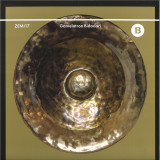
The Gamelatron is many things; one could call it a sculpture, a multimodal installation, an instrument, a robot, a feat of engineering, a vision—and it is all of these things. More importantly, though, it is a concept sustained by Aaron Taylor Kuffner, aka Zemi17, whose Gamelatrons are “sound producing kinetic sculptures” designed to create an immersive, visceral experience for the listener. Not a small feat, and yet the ambitions of Zemi17 are absolutely realized in this long-standing project, culminating now in his third release for The Bunker NY: Gamelatron Bidadari.
The Gamelatron Bidadari is not just a name—it is one of seventy-plus musical sculptures that Zemi17 has conceptualized, designed, and fabricated. Therefore, it would be inaccurate to think of this release as simply a series of arrangements composed in a finite period of time. Rather, it’s a window into a project and a process that is much larger than any single album can encapsulate. Gamelatron Bidardi is the culmination of more than a decade of work, and is central to Zemi17’s evolution, not only as a musician but as an artist.
Having studied gamelan for many years in Indonesian villages and at the Institut Seni Indonesia in Yogyakarta, Kuffner is a musician, an artist, technologist, and craftsman. The gongs in his sculptures are co-created with master Indonesian artisans. Each Gamelatron composition is site-responsive, meaning its sounds are composed for the acoustics and intentions of the space it inhabits, whether it’s an art gallery, a wooded landscape, or the inner temple of Burning Man. The Gamelatron does not stand alone: it is in constant co-creation with its physical environment, and in dialogue with gamelan’s long-standing history.
Originally exhibited at the Smithsonian Renwick as part of a show entitled, No Spectators: The Art of Burning Man, the Gamelatron Bidadari produces sounds that are delicate yet strong, and deeply hypnotic. Textured chiming creates intricate polyrhythmic patterns that are both complex and simple, or in a word, elegant. On Gamelan Bidadari, Zemi17 refrains from adhering to the strict musical structures; his approach to composition is free flowing.
He says, “I want to evoke what the music tells me it has to offer. It is like following water to its conclusion (or non-conclusion).” The arrangements on this album, written by Zemi17 and performed by the robotic arms of the Gamelatron, leaves the listener feeling enchanted, nourished and enriched.
A sense of the mystical comes through in the tonal quality of the instrument, and is conceptually felt in the sculpture’s name: the Bidadari, which loosely translates to “forest nymph.” The music conjures up natural wonder, and the four sculptures that make up the Gamelatron Bidadari, in fact, resemble trees. They are four independent yet connected entities, each with a large gong situated at their structural base—the sonic “roots” of the sculpture—while smaller gongs branch off of a golden, trunk-like spine. The Gamelatron Bidadari is as physically stunning as it is mesmerizing to the ear. A kind of divinity is invoked through its sound, or a sacred cohesion between past and present, tradition and new form. Meant to be viscerally experienced, the sounds of the Gamelatron call for sublime togetherness. Gamelatron Bidadari is not just an album but the crystallization of Kuffner’s work; it is a condensed yet spacious glimpse into the sonic power of Zemi17’s Gamelatrons, which have already been heard and experienced live by over a million people.
A previously unreleased project of Henning Christiansen, monumental in scope, traversing years, countries and now, formats. The Henning Christiansen Archive is proud to finally present one of the crown jewels of the archive, the masterpiece ‘Penthesilea’ as a 2LP and 5CD set. Both limited to 300 copies. Pentheseila is one of the most ambitious works in the entire Henning Christiansen oeuvre. A large-scale work from the mid eighties based on the play of the same name by Heinrich von Kleist (1808). Both Henning and his widow, Ursula Reuter Christiansen, were enthusiastic about Kleist’s text, both making works around the themes within this portent text. Henning Christiansen first developed a work around this text for the Rosenfest festival performed in Berlin in 1984. Rosenfest was curated by René Block and featured a variety of composers presenting works in response to Kleist’s work including Robert Ashley, “Blue” Gene Tyranny etc. Henning formulated a composition utilising tape, field recordings, voice, soprano, and violoncello alongside the home made instruments of Werner Durand. The live presentation was then expanded upon and first performed two years later at Teatro Olímpico, Rome on the 8th November 1986 as directed by Carlo Quartucci. The two releases presented here include a 2 x vinyl LP of the Rosenfest recordings in 1984 and a 5CD set sharing the four and a half hour backing track prepared for the Teatro Olímpico performance in Rome in 1986. Together these two releases make up a substantial overview of one of the most significant works in the entire Christiansen canon. THE REALITY IS A GHOST IN MY MIND (LP1) is a work that unfolds patiently with a mix of field recordings; wind, bird song and the sound of snow being crushed underfoot all unite in a foreboding atmosphere. IN PENTHESILEAS HÖHLE (LP2) features electronic treatments to the original field recordings found on THE REALITY IS A GHOST IN MY MIND, a representation of psychological reorientation perhaps? A deep ground tone (or ROOT as Henning calls it) leads the listener through a variety of realistic and unrealistic environments. As Henning says in his essay reprinted on the back sleeve: “Then comes a section where the field recordings of the sea, the storm, birds, cars and other things, are built together so that the realism of these sounds become unreal. For example the cars drive into the sea and the birds are singing within the storm. When you hear footsteps in the show, it’s Kleist sneaking past Deutsche Schauspielhaus. When you hear a deep, human sleeping noise, it’s Achilles sleeping. When you hear hammering it’s the weapon smith working. When you hear a stone being thrown it means the unanswered question: “Who threw the first stone?” These recordings lead to the finale where Carla Tatò’s haunted vocals into her singing mournfully along with Jan Tilman Schade’s violoncello and tuba, then a chainsaw appears. Presented in a deluxe di-cut sleeve with writings by Ursula Reuter Christiansen and Henning Christiansen and adorned with an artwork, Penthesilea by Ursula Reuter Christiansen, 1983.
On High Flying Man, the third LP by Matt Berry’s pseudo-eponymous project The Berries, loss and desire take center stage. Berry delves deep into 21st century malaise, crafting densely layered songs which project an unshakable yearning for deliverance from the world’s shortcomings. Each track extends an outstretched palm towards universal connection, blending a complex of mix of pop hooks, rock swagger, and psychedelia into dejected populist anthems. Faced with the perils of an isolating world, High Flying Man reignites the tradition of great American songwriting, speaking in the voice of the longing masses. At heart, Berry demands more life, rejecting both arty cynicism and nostalgic escapism.
Berry cut his teeth at a young age playing in the bands Happy Diving (Topshelf Records) and Big Bite (Pop Wig), and has since regularly served as a touring member for bands like Angel Dust and Dark Tea. His early work with Happy Diving and Big Bite solidified his position as an upcoming star in the world of fuzzed-out indie rock, earning him tours and opening slots with the likes of Turnstile, Dinosaur Jr., Nothing, The Swirlies, and The Coathangers. With The Berries, however, Berry turns the Big Muffs down (although not off), creating sonic space to stretch his wings as a burgeoning pop songwriter. The psychedelic-surrealist textures of his earlier output are not gone, per say, but rather find themselves folded into more expansive, rock-oriented arrangements, becoming accoutrements as opposed to the driving force of each song itself.
High Flying Man follows The Berries’ previous releases, 2018’s Start All Over Again and 2019’s Berryland. While longtime listeners will undoubtedly recognize Berry’s disaffected drawl and melodic sensibility, High Flying Man’s complex arrangements and expansive sonic landscape place it well apart from its predecessors. Berry enlisted live band members Danny Paul (drums), Emma Danner (backing vocals), and Lance Umble (bass) during the recording of High Flying Man, as well as the mixing talents of Rob Schnapf (Elliott Smith, Beck, Guided by Voices), breaking from the self-produced home recording ethos of the previous Berries LPs. The collaborative nature of High Flying Man’s recording process is reflected in the quality of each song’s arrangement. Freed from the pressure of being individually responsible for every detail committed to tape, Berry was able to focus his attention more fully on the creative demands of constructing a dynamic and cohesive record. High Flying Man pivots away from any sort of obvious nod to Americana tropes, baggy British attitude, or Neil Young-esque riffing, leaning head on into a lush, idiosyncratic grandeur.
Each track evokes the irreverent and flashy style of a songwriting voice finding itself for the first time. Berry’s guitar heroics extend towards new heights, channeling the simple pop mastery of Lindsay Buckingham (“Prime”) and the wicked emotion of a 21st century “November Rain” (“High Flying Man”). Unusual stylistic juxtapositions give certain songs an almost timeless quality: Bert Jansch-esque crooning finds its counterpoint in sweeping, distortion-soaked riffs (“A Drop of Rain”), the primitive rhythms of Amon Duul are given an arena-sized, Britpop facelift (“Life’s Blood”). On High Flying Man, however, the ballad reigns supreme. “Down That Road Again” drips with sentimentality, powered by soft, undeniable pop melodies and pared-down chord progressions. Album-centerpiece “Eagle Eye” teeters between pure grace and extreme sorrow, unfolding into a massive, immediately memorable tide of melancholic beauty.
Lyrically, High Flying Man is both simple and direct. Although often bitter about the state of the world, Berry has no overtly political axe to grind. In some instances, he takes jabs at the moral laziness of aging millennials, expressing his yearning for a return to vitality and conviction (“Prime”). In other instances, Berry turns his criticism inwards, examining his longing for a better life and his repeated tendency to self-sabotage (“Down That Road Again”). These two poles balance each other out, creating a thematic tenor which is more so self-implicating and empathetic than critical. If anyone is to blame, it is the world we have been saddled with, not the people left to pick up its pieces. Although often personal, Berry’s words evoke a universal experience of continued belief in the face of loss. “High Flying Man” chronicles the growing distance between Berry and an old friend who has been shipwrecked by the weight of trauma, evoking the sorrow of trying to love someone who is no longer able to keep up with reality. Even the most somber passages of “Eagle Eye” (“long before I become aware of it, my friend/it’s 6 AM and I’m gonna die”) find their redemption in a burning devotion towards something worth living for (“If there’s one thing I can depend on/it’s my old friend/my shining light/my eagle eye”).
With High Flying Man, Matt Berry embraces undying love in the face of isolation. Daring to want more life becomes a spiritual rallying cry against a world that has failed to make life either meaningful or beautiful. At their core, these songs are not about revolution, but they are about the faith that gives something like revolution a purpose in the first place.
- A1: Aquarius (Feat Horace Andy)
- A2: Nuh Fraid A Dem (Feat Luciano)
- A3: The Blessings (Feat Michael Rose)
- A4: Wicked (Feat Little Roy)
- A5: Stress (Feat Beres Hammond)
- A6: Bunker Buster
- B1: Lucky Friend (Backing Vocals The Tamlins)
- B2: The Light In Me (Feat Ronnie Davis)
- B3: Humble Lion (Feat Junior Rass)
- B4: Warrior (Feat Junior Reid)
- B5: Inna We Life (Feat Lonie)
- B6: Flesh & Blood (Feat Half Pint)
Tapper Zukie after taking a little time out of the musical arena has come back with an album full of great material and has called in an A list of fellow Jamaican artists to add flavour to this great set. As Tapper named the album himself ‘Bunker Buster’ it shows Mr Zukie busting back out of the studio and back in the arena in fine style.
The opening track finds his long-standing working partner Horace Andy adding his distinctive vocal style to ‘Aquarius’. ‘Nuh Fraid A Dem’ features the great Luciano, ‘The Blessings’ the mighty Michael Rose, and Little Roy adds some magical rhymes to ‘Wicked’. The soulful voice of Beres Hammond sweetens the effects of `Stress’. The killer title track `Buster Bunker’ is backed up by the Musical Intimidators and Tapper has reworked his ‘Good Luck My Friend’ track to ‘Lucky Friend’ which features the timeless backing vocals by the legendary Jamaican vocal group The Tamlins. Digging even deeper into his back catalogue he has also pulled up some classic rhythms and more existing vocals to rework over. For example, ‘The Light In Me’ features the greatly missed Ronnie Davis. Junior Rass adds his mighty roar to ‘Humble Lion’ and Junior Reid leads the charge on ‘Warrior’. Half Pint adds a musical layer to Flesh and Blood. All in all a great selection of musical ideas that also features the cream of Jamaica’s musicians, Sly Dunbar and Robbie Shakespeare, Flabba Holt, Chinna Smith to name but a few. Tapper’s son Noel Barnes (AKA Brand New) alongside Pam Hall adds some gloss to the CD edition of this release.
Such is his standing in the reggae community that a call out to Jamaica’s finest set of singers and their eager reply to add their talents has made this an album not to be missed and can sit proudly alongside and find a place in his already prodigious catalogue.
Hope you enjoy the set…….
"Full recording of one of the most engaging and beguiling Late Junction live sessions we’ve ever heard - the one off first meeting between Korean multi-instrumentalist Park Jiha and writer and performer Roy Claire Potter.
It’s an unlikely pairing which works from the first breath. Park Jiha plays the saenghwang, a Korean mouth organ which she blows in long multiphonics to set pace for Potter’s words. They unfurl a scene slowly in front of you, rich and focused, shifting your field of vision and drawing you in, elsewhere. It’s impossible not to follow, not to look for where they point. When the piri sounds for a flooded town on the B side, the water flows between your own feet; Potter’s words a sometimes frightening hörspiel in scouse.
Though the details are fine, the space each artist gives one another and their instruments, their language, is given to the listener in turn. A careful melody picks out a route for words with no fixed meaning, a body with no fixed direction, and we are invited to listen and see a kind of music made visible in its inference. A truly very special record we are very proud to share.
—
Influenced by linguistics and performance theory, Roy Claire Potter makes performance, text, drawing, installation and film, and oen collaborates with musicians and sound artists to make audio for music festivals and radio. Across the wide range of their practice, Roy tells stories built from fragmented, intense images that depict moving bodies or domestic scenes and architectural settings. Roy’s interest in subtext and narrative sequencing is felt in the way they use fast-paced talking or reading speeds, and restricted or partial views of space. Complicated social or group dynamics, and the aftermath of violent events are common themes in Roy’s work and are usually treated with a dark, sometimes wilful humour.
Park Jiha creates exploratory music rooted in traditional Korean instrumental performance. To this session she brings three instruments: a Korean hammered dulcimer called a yanggeum, a saenghwang which is an instrument made of 24 slender bamboo pipes attached to a bowl and played like a harmonica and a double-reed bamboo flute called a piri, which sounds similar to an oboe.
—
Recorded and mixed on: 30 January 2020 by Rob Winter, Pete Smith and Andy Rushton at Maida Vale Studios, London for “Late Junction - Roy Claire Potter and Park Jiha in session”. Produced by Rebecca Gaskell, Katie Callin and Alannah Chance at Reduced Listening for BBC Radio 3."
- A1: Lee 'Scratch' Perry & The Upsetters - Soul Fire
- A2: Sister Nancy - Bam Bam
- A3: Gregory Isaacs - Babylon Too Rough
- A4: Wayne Smith - Under Me Sleng Teng
- A5: Sheila Hylton - The Bed’s Too Big Without You
- A6: Black Uhuru - Happiness
- B1: The Wailers - I Shot The Sheriff
- B2: John Holt - I Will
- B3: The Mighty Diamonds - I Need A Roof
- B4: Chaka Demus & Pliers - Murder She Wrote
- B5: Ini Kamoze - Jump For Jah
- C1: Bob Marley - Sun Is Shining
- C2: The Melodians - Rivers Of Babylon
- C3: Billy Boyo - One Spliff A Day
- C4: Black Uhuru - General Penitentiary
- C5: Sly, Robbie & Taxi Gang - Santa Barbara
- D1: John Holt - I’ve Got To Get Away
- D2: Sizzla - Solid As A Rock
- D3: Beenie Man - Tear Off Mi Garment
- D4: The Mighty Diamonds - Pass The Kutchie
- D5: Ini Kamoze - World A Music
Classic Double Black Vinyl, DL card. The Nightingales' last original full-length for two decades stands as the final masterpiece postpunk album released before the C86 era. Back on vinyl for the first time in over 3 decades, the reissue is updated to include the whole of the 1985's 7" single "It's A Cracker" and "What A Carry On" 12" EP, plus a clutch of rare tracks never before released on vinyl and a bit of history from Robert Lloyd. Despondently anti-Thatcher and with an air of hopelessness, In The Good Old Country Way has the sense that time was allowed for experimentation and reflection during its creation. Expectations were high as The Nightingales released their sole Vindaloo album and possibly the most underrated album of the postpunk era. The opening number is heavy on the hoedown, not unlike records their pals The Mekons would release around the same time - a rootsy underlayment to songs of wit, energy and observation, adaptable both to lengthy groove-based observation and high-octane rants alike. Maria Smith's violin weaves in and out of songs, while the rhythm section of Pete Jenner (bass) and Ron Collins (drums) hold what might have been a disjointed mess, but it's multi-instrumentalist / arranger Pete Byrchmore who shares the spotlight with Lloyd. "It's A Cracker" stuns, not stylistically dissimilar to their recent records for the first ninety seconds, though featuring a bridge hinting at new developments in their sound which could be heard on the next Nightingales release, ‘What A Carry On’. A sublime record, it features the powerful title track in two version, one of the band's best songs, "Comfort And Joy", and the tenderly alienating "First My Job". "Lloyd's cracked it. A fucking good album." Mark E. Smith, The Fall.
- A1: Soul Fingers - Where Is The Love
- A2: Arthur Conley - Funky Street
- A3: Laura Lee - Crumbs Off The Table
- A4: Boogaloo Combo - Hot Pants Road
- A5: Jean Knight - Carry On
- A6: Chuck Womack & The Sweet Souls ?- Ham Hocks And Beans (Pt 1)
- B1: Nico Gomez And His Afro Percussion Inc – Lupita
- B2: Roberto Roena Y Su Apollo Sound –
- B3: Tim Maia - Sossego
- B4: Charanga 76 - Music Trance
- B5: Jorge Ben - Cavaleiro Do Cavalo Imaculado
- C1: Lonnie Smith - Do It
- C2: Uncle Louie - I Like Funky Music
- C3: Sweet Daddy Floyd ?- I Just Can't Help Myself
- C4: East Coast - The Rock
- D1: Mavis John - Use My Body
- D2: Goody Goody - It Looks Like Love
- D3: Tracy Weber - Sure Shot
A sound that embraces different styles and different eras, but which has only one basic concept as a common denominator: spreading the “Black Power Sound”.
That’s the spirit of the double vinyl compilation of Soul Fingers, a legendary Black Music traveling party that has now become a cult in Italy, still religiously followed by dancers of all kinds and ages.
At Soul Fingers it is usual to listen and dance to a unique and tasty blend of soul, disco and funk, with rap and latin rhythms. There are no preconceptions other than that of putting songs to feel good and make people feel good.
The real deal is to share with the dancefloor a record that is magical, full of soul and that can elevate us from our state of human beings to become a single beating heart under the speakers of the sound system.
He may not have known it before, but Toronto-born, New York-based
guitarist Matthew Stevens, prized for his forceful, distinctive electric
sound was an ideal candidate to make an album fully devoted to solo
acoustic guitar: the intimate, unadorned, straightforwardly titled
'Pittsburgh'
September 2020, Stevens was hunkering down in his wife's family's hometown of
Pittsburgh, while navigating his way through the crisis. He had with him a vintage
Martin 00-17, a small- body mahogany guitar. Practicing daily on the Martin, he
began generating a series of short song "starts" - ideas and sketches he thought
might lead somewhere. Then one rainy Pittsburgh day, Stevens' bike slid out from
under him and he broke his right elbow. Rather than getting derailed musically, he
became immersed in a creative process that led straight to 'Pittsburgh': a
document of those short song "starts" from the notebook, now hatched as
completed compositions. "Playing this music became a big part of my rehab,"
Stevens recalls.
As the album took shape, it became clear to Stevens that he was headed in the
direction of a wholly unaccompanied recital, with no overdubs or sound layering
of any kind. Just him and this special Martin, two Neumann U89 mics and enough
peace of mind across two separate sessions to make 'Pittsburgh' the triumph that
it is.
In addition to his extensive high-profile work with Esperanza Spalding (serving as
co- producer on 'Exposure' and '12 Little Spells'), Stevens is also a member,
songwriter and co-producer of Terri Lyne Carrington's GRAMMY-nominated Social
Science band. He has made vital contributions to groups led by Dave Douglas,
Linda May Han Oh, Christian Scott aTunde Adjuah, Ben Williams and more. With
tenor saxophonist Walter Smith III he co-leads the In Common collective. Stevens
has also amassed many credits beyond the jazz world, collaborating on
forthcoming releases by Anna B Savage, Jamila Woods, Tyler Armes
(Murdagang) and Berlin-based electronic artist Robag Wruhme.
- 1: Arrival
- 1: 2Sonovabitch
- 1: 3Cistern / Old On Lens
- 1: 4Swab Dog Swab / Seagull / Winslow's Story
- 1: 5Curse Your Name / Dirty Weather
- 1: 6Murder / Mermaid / Heavy Labour
- 1: 7Stranded
- 1: 8The Sea King's Fury
- 1: 9Mermaid Lust / Stabbing The Charm
- 1: 0Why'd Ya Spill Your Beans?
- 1: Filthy Dog
- 1: 2The Light Belongs To Me
- 1: 3Into The Light
Mark Korven's original soundtrack for 'The Lighthouse,' starring Robert Pattinson and Willem Dafoe, marks his second collaboration with director Robert Eggers (The Witch).
"Robert Eggers and I were rather like the two wickies that went insane in The Lighthouse, musically speaking. We travelled to some very dark harmonic and textural places. We both enjoy not just breaking the rules, but blowing them to smithereens. The spirit of experimentation was always present."
-Composer Mark Korven
"Composer Mark Korven and I developed a shorthand working together on The Witch. This made collaborating on The Lighthouse an incredibly enjoyable process. But it was not without its many challenges. Originally, I wanted a score with no strings at all. The Witch soundtrack was so string-prominent that I wanted a full departure. I only wanted horns, pipes, conch shells, concertina - things that sounded like the sea - or the lighthouse station's ominous foghorn. It would be a minimalist aleatoric soundtrack with a nod to sea shanties and ancient Greek music. As Mark and I embraced the sound of big brass sections, it quickly became a maximalist aleatoric soundtrack.
- 1: Dubvisionist Meets Dubblestandart - Fly Me To The Moon
- 1: 2 Dubmatix Meets Future Dub Orchestra - Black Arc
- 1: 3 Dubjestic - Sleepless
- 1: 4 Seanie T Meets Aldubb - Punky Reggae Party (Rob Smith A
- 1: 5 Dubmones - Pinhead
- 1: 6 Dubby Stardust Ft. Jasmine Ash - Heroes
- 1: 7 Re 20 (Palmer In Dub) Ft. Mika Bajinsky - Every Kind O
- 1: 8 Dubxanne Aka Guido Craveiro Ft. Sara Lugo - Heart Of Gl
- 1: 9 Dubinator Ft. Dieter Meier - Magic (Anarchy Version)
- 1: 0 Seeed - Komm In Mein Haus (Umberto Echo - Dub)
Es gibt eine Dub-Serie die seit Jahren für Furore sorgt, und das seit der VÖ der "KING SIZE DUB 1" (damals in Zusammenarbeit mit dem Kult-Magazin SPEX) im Jahre 1994! In der Serie gab es immer wieder Ausflüge zu obskursen Zählweisen (Vol.69) und Specials über bestimmte Regionen (Dub In Germany), Labels (ON-U Sound Records aus London) oder Bands (Dubmatix aus Toronto)! Wunderbar, dass nun mit KSD 25 eine weitere Compilation der Reihe Dub als vielschichtige Kunst des Klangmischens darstellt. Im Rahmen dieser Ausgabe dubben sich alte und neue Freunde des Hauses Echo Beach gegenseitig oder präsentieren eigene Versionen von Pop- und Reggae-Hits von u.a. Ramones, Bob Marley, Blondie, Robert Palmer und David Bowie. Die Musik suggeriert Sonnenschein und Sound Systems, heissen Sand und coole Drinks, der Bass schlurft gelassen aber auch aufreizend rebellisch. Dub ist die Kunst des Disk Jockeys, den sie zunächst in Jamaika zum Star erhoben haben. In den Fünfzigern waren dort Musikmobile, die "Sound Systems", der Ersatz für fehlende Radiosender. Die auf Exklusivität bedachten DJs nahmen ihre Hitsingles bald selbst auf, mit instrumentalen Rückseiten für Ulk und Ansagen. Ende der Sechziger verselbständigte sich dieser Dub durch den technischen Fortschritt. King Tubby und Lee "Scratch" Perry spielten mit Hall, Echo und rückläufigen Bändern. Dub löste sich von Jamaika, ging nach New York oder London, wo er in seiner Militanz gut zum Punk passte.
Benefits are an issues-based music collective from Teesside in the
North East of England. They write songs about the urgencies that
concern them, and they play them loud.
Forming in 2019 and consisting of Kingsley Hall on vocals, Robbie
Major and Hugh Major on synths and noise, and Jonny Snowball
on drums, they quickly evolved from a standard shouty punk rock
outfit into a minimalist, overtly political band that merges noise,
hip-hop and industrial rock, creating an effect that feels urgent,
darkly hilarious and unsettling all at once.
Thus far, Benefits have been completely DIY yet, via a succession
of digital singles and accompanying videos through 2021, they
built a following that enabled them to complete a sold-out headline
UK tour in March 2022. They also gained fans in high places,
including Sleaford Mods, Black Francis, Garbage and Elijah Wood
and Steve Albini.
James and Ryan of Yard Act were also instant admirers and that’s
where their label Zen F.C. comes in. Using their ill-gotten major
label gains Zen F.C. are pressing Benefit’s single ‘Flag’ (backed
with ‘Empire’) on vinyl.
On working with Yard Act, Kingsley comments: “I think Benefits
come at some of the same subject matter that they talk about but
from a slightly different angle (and by ‘slightly different’ I really
mean ‘more frequent swearing’, though we've never said the C
word in a song unlike...ahem). We appreciate every bit of help
we’ve had off them, we just wish we could somehow repay that
kindness (not monetarily mind, we're totally skint).”
Yard Act’s James Smith says of the release: “Lots of bands are
saying all this stuff so what makes Benefits so special? Why do I
need to be told what I already know over and over again by a
shouty man from Teesside? Well, because no one else is saying it
with such physicality they sound like their voice box is about to
leap from their throat and eat your eyeballs. With that little bit of
influence we’ve garnered and the small fortune of money we now
have kicking about, I’m so glad we can play a part in spreading the
word on Benefits, because I think they’re well on their way to a
classic debut album, and I’m going to fucking love being able to
brag about how important I was in making it all happen.”
Standard Edition[26,68 €]
‘Heart Under’, Just Mustard’s second album and first for Partisan Records
(IDLES, Fontaines D.C., Laura Marling), is an album that asks you to forget
what you know. At every turn, this remarkable record reconfigures and
stretches the ideas and ambition of a rock band and turns a year of lockdown
and personal struggles into a breath-taking artistic statement.
Across its 10 tracks, the album presents a coherent style and ethos - those
scything guitars, Katie’s magical vocals - but still incorporates a wide and
untethered vision. There are brooding, atmospheric rock songs (‘Still’, ‘In
Shade’) and others that apply a lighter, dreamier touch (‘Sore’, ‘Mirrors’), all
tied together with impeccable instrumentation and a united vision.
On debut ‘Wednesday’, the band played with dreamier soundscapes and
production techniques, and ‘Heart Under’ serves as the next stage of this
development, with every instrument brilliantly pushed to its limit and every
boundary of the band stretched.
After the band had finished recording and producing the album, ‘Heart Under’
was pushed even further into singular territory when the band worked with
mixer David Wrench, whose previous collaborators include Frank Ocean,
Let’s Eat Grandma, Jamie xx, FKA twigs and beyond. “We wanted someone
who had done pop and electronic records and didn’t just work within rock
music,” Katie says.
“Ireland’s buzziest new band” - The FADER
“Their rapturous reception here at SXSW is a testament to their startling
evolution as well as the excitement that can only come from watching a band
just beginning to realise the full extent of their powers.” - NME
“They have well and truly mastered the art of atmospheric rock” - Loud And
Quiet (9/10)
Supporting Fontaines D.C. on their European and US tours this year. They
were handpicked by Robert Smith to support The Cure in Dublin in 2019.
Eire headline tour in June, UK headline tour in September, including Village
Underground, and EU headline tour in October.
Choice Music Prize nomination for Irish Album Of The Year for their debut
album, ‘Wednesday’.
CD housed in a cardboard wallet with lyric and photo insert.
LP pressed on black vinyl and housed in a single sleeve jacket with lyric and
photo insert.
RIYL: Velvet Underground, Lou Reed, Nick Cave, Patti Smith, Leonard Cohen, Iggy Pop, Radiohead & Tom Waits. "If you have never heard the Doctors of Madness, you should. Musically they are the Velvet Underground, New York Dolls with shades of glam, hippie, prog and punk all rolled into one, yet are still totally original. Vastly underrated, they should have been huge. Pure genius" Vic Reeves…. The DOM are “the missing link between David Bowie & The Sex Pistols” (The Guardian May 2017). Exploding onto the music scene in 1975 with their theatrical, William Burroughs-inspired Sci-fi nightmare, they were misunderstood by many, but those who knew understood the importance of the band’s dangerous, uncompromising approach to lyrics, to music and to performance. Among the many fans of the band were acts as diverse as The Damned, Vic Reeves, Joe Elliott of Def Leppard, Spiritualized, Julian Cope, The Adverts, The Skids and Simple Minds. The Sex Pistols supported them, so did The Jam & Joy Division. They were the first to combine the avant-garde approach of The Velvet Underground with a distinctly European aesthetic. The blue hair, exotic stage-names, the lyrical themes of urban decay, political propaganda, mind control and madness were all taken up by the punk bands who followed in their wake. The DOM were trailblazers, pioneers, adventurers…pushing the boundaries of rock music and theatre to see how far it would go before it bust. What happened after them was due, in no small part, to what they achieved in 3 short years. They may not have been Jesus Christ, but they were, arguably, John the Baptist!!! Now, 40 years after they imploded, they are back…with an album seething with lyrical anger and passion. It is the most potent and incisive musical dissection of modern life and contemporary politics released the decade. With tracks titles like “So Many ways To Hurt You”, “Sour Hour”, “Make It Stop!” and the ground-breaking sonic assault of the title track “Dark Times”, Richard “Kid” Strange proves once again that he has his finger firmly on the pulse of our times, just as he had when he founded the band in 1974. Produced by John Leckie (Radiohead, Stone Roses, Pink Floyd), the new album, Dark Times, features contributions from Joe Elliott (Def Leppard), Sarah Jane Morris (Communards), Terry Edwards (PJ Harvey, Nick Cave etc), Steve ‘Boltz’ Bolton (The Who, Scott Walker) and the young protest singer Lily Bud, alongside the current thrilling and thunderous DOM rhythm section of Susumu Ukei (bass guitar) & Mackii Ukei (drums) of the Japanese extreme glam-metal band Sister Paul, and Dylan O Bates (violin and keyboards). Julian Cope, another rock star who, like Strange, found the confines of music too tight for his ambition, his energy and his imagination, was blown away when he first heard the songs, declaring, “These Dark Times are enormously informing: the RULES OF THE FUTURE are indeed being forged right now”. Top producer Martyn Ware (Human League/Heaven 17) said the album “…reminds me of Iggy Pop’s Kill City album – love it.” and Biba Kopf (The Wire) declared, “Still listening to new DOM album with immense interest and pleasure”. The first single, Make It Stop!, is an impassioned howl against the global drift to right wing extremism and persecution of minorities, and is already a live showstopper for the band. It features the thrilling cross-generational combination of Def Leppard’s Joe Elliott and Lily Bud on backing vocals. In the period since the last DOM gig in 1978, Richard has written a memoir, collaborated on a cantata with internationally celebrated composer Gavin Bryars, worked as an actor on films with Tim Burton, Martin Scorsese, Harmony Korine & Jack Nicholson, toured the world in a Russian version of Hamlet with James Nesbitt as his grave-digging co-star, played Glastonbury, sung baritone in the British premiere of Frank Zappa’s200 Motels at the Royal Festival Hall, directed a multi-media evening celebrating the life and work of William Burroughs, won Best Art Film Prize at the Portobello Film Festival last year, had his own live talk show, worked with Tom Waits and Marianne Faithfull on the William Burroughs/Robert Wilson stage play The Black Rider, curated events for the Tate Gallery, and sung Walt Disney songs with Jarvis Cocker.
Contemporary pianist and composer James Heather announces his
second album, ‘Invisible Forces’, via Ahead of Our Time, Ninja Tune
founders Coldcut’s first record label.
An album influenced by the sensibility of electronic, ambient, orchestral
and post-rock music but channelled through solo piano and Heather’s
classical and jazz grounding.
With regards to his “superb” (Crack Magazine) and “masterful”
(Electronic Sound, Dummy) debut, ‘Stories From Far Away On Piano’,
the songs are grander, deeper and broader in emotional range and are
developed through a series of improvisation techniques. Heather
describes it as ‘pulse music’, with each track performed in a single take
and with their roots in this live improvisation, often honed on the road
where he moves between tender to more propulsive, trance-inducing
dynamics.
For fans of Jean-Michel Blais, Sarah Davachi, John Carroll Kirby, Otto A.
Totland, Ólafur Arnalds, Nils Frahm, The Cinematic Orchestra.
CD in slipcase with printed inner.
140g violet vinyl with holofoil detail sleeve.
“The sound Heather makes is captivating.” - Electronic Sound
“Masterful contemporary piano.” - Dummy
“A remarkable piece of music that yields more secrets the more it’s
played” - Clash
Featured in Coldcut’s ambient compilation ‘@0’ alongside Suzanne
Ciani, Ryuichi Sakamoto, Kaitlyn Aurelia Smith, Helena Hauff, Skee
Mask, Julianna Barwick, Steve Roach, Laraaji and Mira Calix.
Notable supporters of Heather’s music include James Lavelle (UNKLE),
Nils Frahm, Cillian Murphy, Flying Lotus’ Brainfeeder (via the live
session he did for them in 2021), The Cinematic Orchestra, The Bug,
Leandro Taub, Actress, Bicep, Martyn and Tim Noakes (Dazed).
James has collaborated with the likes of Dawn Richard, Coldcut,
Mumdance and Roger Robinson (King Midas Sound).
Danish singer-songwriter Soren Munk releases his debut solo album Purr Show on 15 April 2022 via Navarino Records.Soren also travels the world as a cameraman for Channel 4 News, and the album was written and recorded in between trips to cover some of the major global events of recent times, from the war in Mali to the Taliban resurgence in Afghanistan
Soren also co- wrote the much- loved theme tune to the hit animated TV series Charlie and Lola – which is currently trending on TikTok with millions of views.Despite the nature of his news work, the songwriting on Purr Show has a more private focus, dealing in intimate but ambiguous moments of love and loss.
Melodic and intense, the album has elements of Dream Pop, Slowcore and classic songwriting, while the blend of electric guitars, analogue synths and vocals draws on the work of artists that combine restraint and power, such as Neil Young, Low, Big Star and Elliot Smith. Soren worked with Andy Ramsay from Stereolab to record the album, and Jimmie Robertson (Depeche Mode, Arctic Monkeys) during the mixing Soren explains, “I wanted to create slow pop songs. Romantic and melodic but with an edge of strangeness that makes them harder to pin down. That's the music I respond to – things that are assertive but fragile at the same time. Where every element counts.”Soren drew together a strong lineup of musicians and collaborators, including guitarists Garo Nahoulakian (Emiliana Torrini, Gaz Coombes, Piney Gir) and Nick 'Growler' Fowler (Gaz Coombes, Luke Haines); a Danish rhythm section of drummer Nikolaj Bjerre (Lamb) and bassist Andreas Jensen (Dub Pistols); and
pianist Tom Dyson (co-writer of the Charlie and Lola theme). Soren's vocals are often combined on the songs with the soft alto of backing singer Emma Faulkner, creating a sense of something confidential, like snatches of pillow talk.
Repress
Bump 'n Grind Wax's newest relief channels a collective sigh of relief, one that promises to remind the world that joy and love can triumph through togetherness.
Bristol's sonic luminary, Rob Smith (aka RSD), has offered his support in this dynamic cover of Al Green's "Let's Stay Together." With a hint of lover's rock and a dash of neo-soul, RSD invites Denise Morgan to voice this timeless tune. On the A-side, prominent piano runs, synth stabs, and RSD's iconic drum section frame Morgan's deliciously-soulful approach to this classic. RSD brings the magic for the B-side version, "Let's Dub Together." With a blown-out bassline, Denise's tricked out vocal samples, and a thoughtful caressing of the track's timing, reverb, and echo, RSD adds his undeniable signature to the latest BnG Wax tribute.
A formidable architect behind the now-beloved "Bristol Sound," Rob has been an irreplaceable thread in the development of bass-heavy dance music since the 1980s. From raves to basements, lounges to sound system dances, Rob has pushed the limits of music technology to forge a vital link between the past and future. He is a pioneer who has explored the intersections of nearly every genre through dubbed-out breaks, drops, and quintessential remixes. BnG Wax is honored to have his fingerprints on one of our releases.
Led By Saxophonist Rob Mitchell, Abstract Orchestra Have Been A Consistent Presence On The U.k. Music Scene, Touring Constantly In Promotion Of Their Debut Lp "dilla" And Follow Up 45 "new Day Feat. Illa J", Steadily Building A Loyal And Supportive Fanbase.inspired By The Legendary Live Performances Of The Roots With Jay-z And The 40 Piece Orchestral Arrangements By Miguel-atwood Ferguson Of The Work Of J Dilla, Classic Arranging Techniques Underpin Modern Loop-based Structures, Breathing New Life Into Familiar Material.
The Band Itself Is Based On The Classic Jazz Big Band Instrumentation Of Saxes, Trumpets And Trombones And Features The Cream Of The North Of England's Jazz Scene Who Collectively Have Played With Jamiroquai, Corinne Bailey Rae, Mark Ronson, Martha Reeves, John Legend & The Roots, Roots Manuva And Amy Winehouse.
"madvillain Vol. 1" Takes The Template Of Their Debut Lp "dilla" And Applies The Same Approach To The Collaboration Ofmf Doomandmadlib, Akamadvillainand Their Albumsmadvillainyandmadvillain 2. Sampling The Likes Of Sun Ra, Bill Evans, Freddie Hubbard, George Duke, Dr. Lonnie Smith, Quincy Jones And Stevie Wonder Gave The Albums A Jazz Oriented Feel And Ethos Which In Turn Lend Themselves Perfectly To The Deconstruction And Re-imagining Of Abstract Orchestra. As With Their Debut, All The Tracks Were Recorded Live In The Studio With Very Few Overdubs.
Abstract Orchestra'smadvillain Vol 1. Explores The Jazz, Tv Soundtrack And Film Score Aspect Of The Original Work, Combining It With Classic Big Band Writing And A Focus On Improvisation. There Is A Strong Influence Ofquincy Jones, Lalo Schifrinanddavid Shire(composer Of The Soundtrack Tothe Taking Of Pelham 123) On The Album, And The Arranger Rob Mitchell Crafts His Own Sound That Inhabits The Space Between Madlib's Production And Quincy Jones' Writing. Bandleader And Arranger Rob Mitchell Says Of The Record: "'madvillainy' Is A Jazz Album As Much As It Is A Hip-hop Album And I Wanted To Explore This Reciprocal Territory There Has Always Been Between Jazz And Hip-hop. 70's Cop Show Soundtracks Have Always Captured My Interest And Imagination, And I Discovered So Much Amazing Music Through Tv Themes, Quincy Jones And Lalo Schifrin In Particular. They Explored Sounds That Were Menacing, Angular, Dissonant, Frantic And Yet Captivating. They Were Also Able To Write Music That Was The Flip Side Of All That Dark Chaos, And Write Lush And Beautiful Music. Arranging And Scoring Up Madvillain Vol 1. Has Allowed Me To Explore These Sounds That I've Always Loved, Yet Keeping A Strong Hip-hop Identity As The Core Of Its Sound."
"In Vivo" is the result of the photographic work of Klavdij Sluban at the Fleury-Mérogis Young Offender Institution (France) from 1995 to 2016 Beds in addition to his work from Izalco prison, located in El Salvador, from 2008 visiting rooms connected to the music of Gareth Davis.
Gareth Davis is an artist, composer and musician living in Amsterdam. He plays clarinet(s), the result of a somewhat impulsive purchase whilst window shopping in Covent Garden, London, around ten years before the turn of the century. The serendipitous location of a rather wonderful (and equally important, rather cheap) second hand record shop less than 10m from the bus stop required for seven years of schooling, combined with delivering newspapers on a daily basis, lead to a somewhat eclectic, dusty and generally unclassified taste in music.
The result. Activity covering sonic art and contemporary classical music through rock, improvisation and noise with collaborations that have included the premiering of new written pieces by composers such as Bernhard Lang, Peter Ablinger, Toshio Hosokawa and Jonathan Harvey, soloist with orchestras including the SWR Symphonieorchester, Warsaw Philharmonic and Orquesta de la Comunidad de Madrid, performances with groups and performers ranging from the Neue Vocalsolisten and Arditti Quartet through to improvisers Elliott Sharp and Frances Marie Uitti, electronic artists Robin Rimbaud and Merzbow and multimedia work with artists including Christian Marclay and Peter Greenaway.
"In Vivo" is his second solo release after to have recorded a bunch of collaborative albums with artists such as Scanner, Machinefabriek, Steven R. Smith, Kleefstra Brothers, Frances-Marie Uitti, Merzbow, Adain Baker, Duane Pitre and more...
Klavdij Sluban, winner of the European Publishers Award for Photography 2009, of the Leica Prize (2004) and of the Niépce Prize (2000), main French prize in photography, is a French photographer of Slovenian origin born in Paris in 1963.
He develops a rigorous and coherent body of work, nourished by literature, never inspired by immediate and sensational current affairs, making him one of the most interesting photographers of his generation. The Balkans, the Black Sea, the Baltic Sea, the Caribbean, Central America, Russia, China and the Antarctic (first artistic mission in the Kerguelen islands) can be read as many successive steps of an in-depth study of a patient proximity to the encountered real.
His images have been shown in such leading institutions as the Metropolitan Museum of Photography of Tokyo, the Maison Européenne de la Photographie in Paris, the Rencontres d’Arles, the Museum of Photography in Helsinki, the Fine Arts Museum in Canton, the Musée Beaubourg, the Museum of Texas Tech University. His many books include East to East (published simultaneously by Actes Sud, Dewi Lewis, Petliti, Braus, Apeiron & Lunwerg with a text by Erri de Luca), Entre Parenthèses, (Photo Poche, Actes Sud), Transverses, (Maison Européenne de la Photographie) and Balkans -Transit, with a text by François Maspero (Seuil). Since 1995, Sluban has been photographing teenagers in jails. In each prison he organizes workshops with the young offenders to share his passion. First originated in France, in the prison of Fleury-Mérogis with support of Henri Cartier-Bresson during 7 years, as well as Marc Riboud and William Klein punctually. This commitment was pursued in the disciplinary camps of Eastern Europe –Serbia, Slovenia, Ukraine, Georgia, Moldavia, Latvia – and in the disciplinary centres of Moscow and St Petersburg as well as in Ireland. From 2007 to 2012, Sluban has been working in Central America with imprisoned youngsters belonging to maras (gangs) in Guatemala and Salvador. In 2015, he started photographing imprisoned teenagers in Brazil. In 2013, the musée Niépce showed a retrospective of K.Sluban’s work, After Darkness, 1995-2012. In 2015/16, he was awarded the Villa Kujoyama Residence in Kyoto, Japan. K.Sluban is member of national and international jurys, such as prix Niépce, prix de la Jeune Photographie de Niort, prix Leica, All About Photo…
The Slow Show release their fourth studio album, their first for three years, entitled ‘Still Life’,
via PIAS. The four-piece, who first formed in Manchester, will support the release with a
European tour in February and March 2022, culminating in an already sold-out hometown show
at Manchester’s Hallé St Peters on 4th March.
Lead track ‘Blinking’ is a perfect taster to the new direction ‘Still Life’ offers. Same but different
again. “An ode to love and loyalty. The song is a defiant pledge to never giving up on the
people you love. Musically we wanted the song to have impact, a directness and powerful
punch that we’d previously shied away from.” - Robert Goodwin (vocals)
The making of ‘Still Life’ has been quite the ride. Following their breakthrough album, ‘White
Water’, it was clear The Slow Show were not just ‘another band from Manchester’. The legacy
of The Smiths, Joy Division and all those other great predecessors is not something to be trifled
with, but The Slow Show didn't need to wear their address on their sleeve: this was something
else, fully formed, with a mesmerising sound, rich in atmosphere and melody.
With the band’s desire to push each other outside of their respective comfort zones during the
recording process, ‘Still Life’ subsequently offers a more diverse, rich and interesting sound
than previous albums.
“We did develop our sound,” says Rob Goodwin. “We had to try something else. We felt we
owed that to ourselves, and to the people that come and enjoy the music. We explored a lot of
stuff: different sounds, different feelings, different ideas, different processes as well. Some of
them didn’t work at all, but some did. It was difficult and challenging, but it felt good in the end.”
This experimental side to the creative process allowed the band to introduce new elements to
their work. “Some new approaches and sounds crept in,” keyboardist Frederik ‘T Kindt admits.
“Some were far from our older work. For instance: after some initial encouragement from me,
Rob was keen to sing a bit higher on this record. Chris was encouraged to make his drums a
bit more present; some things almost sound like a breakbeat to my ears.”
Recorded remotely over the course of the past year, with Goodwin recording vocals from
Dusseldorf in Germany and the rest of band recording in the UK, ‘Still Life’, as a concept, takes
inspiration from the experiences of lockdown: “Before the virus arrived, I had a busy life;
spending two weeks in Germany with my girlfriend, and then flying to Manchester to work with
Fred or to a gig.” Goodwin remarks: “And then all of a sudden, life came to a halt. It took a little
getting used to, but I actually had a really nice realisation during that time. I understood that the
slower life got, the more I saw. I spent a lot of time in nature, seeing things in a different
perspective. And that's what you need when you're trying to create. You have to really look,
and then you see things happening everywhere.”
The tracks themselves are brimming with emotion and reverence towards the significant
relationships we encounter in life. Stand-out anthem ‘Blinking’ is a defiant pledge to never
giving up on the people you love. Musically the band wanted the song to have impact, a
directness and powerful punch that they’d previously shied away from. Whilst ‘Woven Blue’
deals with the aftermath of uncoupling. The idea that meaningful relationships are very often
woven and complex, making resolve difficult.
These very personal tracks are counterbalanced with the more topical, ‘Breathe’, which
documents some of the unjust and heart-breaking scenes of 2020 with spoken word references
to John Boyega’s emotional rallying cry in support of Black Lives Matter movement in London’s
Hyde Park.
In all, Still Life marks another evolution of a band that have never tried to fit in any particular
box but have inhabited their own unique universe.
LP pressed on white viny
- A1: Bob Marley - Sun Is Shining
- A2: Lee "Scratch" Perry & The Upsetters - Soul Fire
- A3: Cornell Campbell - No Good Girl
- A4: Don Carlos - Rivers Of Babylon
- A5: Gregory Isaacs - Oh What A Feeling
- A6: The Wailers - I Shot The Sheriff (Instrumental)
- B1: Ini Kamoze - World A Music
- B2: Barrington Levy - Warm & Sunny Day
- B3: The Tamlins - Baltimore
- B4: Dennis Brown - Revolution
- B5: Sugar Minott - Rub A Dub Sounds
- B6: Horace Andy - Cus Cus
- C1: Freddy Mcgregor - Big Ship
- C2: Michael Rose - Artibella
- C3: Bob Marley & The Wailers - Soul Rebel
- C4: John Holt - I've Got To Get Away
- C5: Jimmy Riley - Sexual Healing
- C6: Yellowman - Zungguzungguguzungguzeng
- D1: Black Uhuru - Sinsemilla
- D2: Clint Eastwood - Love Story
- D3: Jackie Edwards - Let Me Go Girl
- D4: U-Brown - Tu-Sheng-Peng
- D5: Jackie Edwards - Angel Of Love
- D6: The Heptones - Island Woman
- E1: Dillinger - Cool Operator
- E2: Ricky Grant - Rocky Road
- E3: Marcia Griffiths - Come See About Me
- E4: Black Uhuru - I Love King Selassie
- E5: Chaka Demus & Pliers - Murder She Wrote
- E6: Sly & Robbie - Hot You're Hot
- F1: Max Romeo - Material Man
- F2: Wayne Smith - Under Me Sleng Teng
- F3: Derrick Morgan - Sensimella
- F4: Maxi Priest - Only A Smile
- F5: Alton Ellis - I'm Still In Love With You
- F6: Sly & Robbie - Night Nurse (Feat Simply Red)
- G1: Sister Nancy - Bam Bam
- G2: Beres Hammond & Zap Pow - Last War
- G3: Ranking Dread - Fattie Boom Boom
- G4: Mighty Diamonds - I Need A Roof
- G5: Capleton - That Day Will Come
- G6: Errol Dunkley - Ok Fred
- H1: Ken Boothe - Artibella
- H2: Eek-A-Mouse - Ganga Smuggling
- H3: John Holt - Police In Helicopter
- H4: Marcia Aitken - I'm Still In Love With You
- H5: Althea & Donna - Uptown Top Ranking
- H6: Johnny Osbourne - Jahoviah
- I1: Winston Mcanuff & Fixi - Garden Of Love
- I2: Gregory Isaacs - Babylon Too Rough
- I3: Matthew Mcanuff - Be Careful
- I4: Morgan Heritage - The Return
- I5: Inna De Yard - Let The Water Run Dry (Feat Ken Boothe)
- I6: Alborosie - No Cocaine
- J1: Alpha Blondy - Cocody Rock
- J2: Clinton Fearon - This Morning
- J3: Horace Andy - Ain't No Sunshine
- J4: Tom Fire - Brainwash (Feat Matthew Mcanuff)
- J5: Soom T - Politic Man
- J6: Biga Ranx - Liquid Sunshine
"In Vivo" is the result of the photographic work of Klavdij Sluban at the Fleury-Mérogis Young Offender Institution (France) from 1995 to 2016 Beds in addition to his work from Izalco prison, located in El Salvador, from 2008 [visiting rooms] connected to the music of Gareth Davis.
Gareth Davis is an artist, composer and musician living in Amsterdam. He plays clarinet(s), the result of a somewhat impulsive purchase whilst window shopping in Covent Garden, London, around ten years before the turn of the century. The serendipitous location of a rather wonderful (and equally important, rather cheap) second hand record shop less than 10m from the bus stop required for seven years of schooling, combined with delivering newspapers on a daily basis, lead to a somewhat eclectic, dusty and generally unclassified taste in music.
The result. Activity covering sonic art and contemporary classical music through rock, improvisation and noise with collaborations that have included the premiering of new written pieces by composers such as Bernhard Lang, Peter Ablinger, Toshio Hosokawa and Jonathan Harvey, soloist with orchestras including the SWR Symphonieorchester, Warsaw Philharmonic and Orquesta de la Comunidad de Madrid, performances with groups and performers ranging from the Neue Vocalsolisten and Arditti Quartet through to improvisers Elliott Sharp and Frances Marie Uitti, electronic artists Robin Rimbaud and Merzbow and multimedia work with artists including Christian Marclay and Peter Greenaway.
"In Vivo" is his second solo release after to have recorded a bunch of collaborative albums with artists such as Scanner, Machinefabriek, Steven R. Smith, Kleefstra Brothers, Frances-Marie Uitti, Merzbow, Adain Baker, Duane Pitre and more...
Klavdij Sluban, winner of the European Publishers Award for Photography 2009, of the Leica Prize (2004) and of the Niépce Prize (2000), main French prize in photography, is a French photographer of Slovenian origin born in Paris in 1963.
He develops a rigorous and coherent body of work, nourished by literature, never inspired by immediate and sensational current affairs, making him one of the most interesting photographers of his generation. The Balkans, the Black Sea, the Baltic Sea, the Caribbean, Central America, Russia, China and the Antarctic (first artistic mission in the Kerguelen islands) can be read as many successive steps of an in-depth study of a patient proximity to the encountered real.
His images have been shown in such leading institutions as the Metropolitan Museum of Photography of Tokyo, the Maison Européenne de la Photographie in Paris, the Rencontres d’Arles, the Museum of Photography in Helsinki, the Fine Arts Museum in Canton, the Musée Beaubourg, the Museum of Texas Tech University. His many books include East to East (published simultaneously by Actes Sud, Dewi Lewis, Petliti, Braus, Apeiron & Lunwerg with a text by Erri de Luca), Entre Parenthèses, (Photo Poche, Actes Sud), Transverses, (Maison Européenne de la Photographie) and Balkans -Transit, with a text by François Maspero (Seuil). Since 1995, Sluban has been photographing teenagers in jails. In each prison he organizes workshops with the young offenders to share his passion. First originated in France, in the prison of Fleury-Mérogis with support of Henri Cartier-Bresson during 7 years, as well as Marc Riboud and William Klein punctually. This commitment was pursued in the disciplinary camps of Eastern Europe –Serbia, Slovenia, Ukraine, Georgia, Moldavia, Latvia – and in the disciplinary centres of Moscow and St Petersburg as well as in Ireland. From 2007 to 2012, Sluban has been working in Central America with imprisoned youngsters belonging to maras (gangs) in Guatemala and Salvador. In 2015, he started photographing imprisoned teenagers in Brazil. In 2013, the musée Niépce showed a retrospective of K.Sluban’s work, After Darkness, 1995-2012. In 2015/16, he was awarded the Villa Kujoyama Residence in Kyoto, Japan. K.Sluban is member of national and international jurys, such as prix Niépce, prix de la Jeune Photographie de Niort, prix Leica, All About Photo…