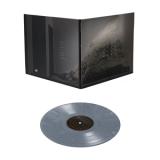
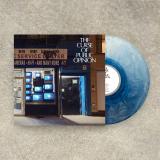
Heavyweight psychedelic improvisers EarthBall are back with their third and most monstrous record to date: ‘Outside Over There’, released on Upset The Rhythm (Nov 7th). Born from the haunted basements of Nanaimo, Canada, the quintet thrives on spontaneity, shaping improvisation into jagged hallucinations and ecstatic eruptions.
Recorded live-off-the-floor in 2024 in Jeremy, Izzy, and Kellen’s basement, and mixed by drummer John Brennan, ‘Outside Over There’ is an album that feels both summoned and inevitable. Each track lands with uncanny purpose, as if uncovered rather than written.
The opener, 100%, features a cameo from comedian and English icon Stewart Lee, who lent his blessing for the band to use a fragment of his stand-up. The album was mastered by John Dieterich (Deerhoof), with liner text contributed by longtime comrade John Olson (Wolf Eyes). Olson describes the album in his unmistakable style:
“This eight-track odyssey unfolds like a dreamscape, where whispered incantations brush against the shadowy fringes of the cosmos, and wild, Cézanne-inspired rock anthems erupt like geysers of color in the midst of a western warm and wet rain storm… culminating in the sprawling eleven minute masterpiece, ‘And The Music Shall Untune The Sky,’ aptly dubbed the Earth Crusher. A creation so utterly deconstructed and intertwined with the pulse of nature itself that if AI was called upon to conceive ‘Outside Over There’ anew, it would just spit back, “F.U. in Tree Font”. An enchanting invitation for even the flat-earthers to join the circle, if only just a little.”
EarthBall’s trajectory has been relentless. Their 2024 album ‘It’s Yours’ was praised by The Quietus as “fully aggressive and fully life-affirming,” and by The Wire as "a boisterous mind-melting album”. The band’s live double set LP ‘Actual Earth Music Vol. 1 & 2’ (2025) captured blistering performances: a performance opening for Wolf Eyes at the Fox Cabaret, and a Café OTO improvised throw-down featuring Chris Corsano and Steve Beresford. These releases on their own confirm them as one of Canada’s most vital experimental exports, not to mention the impressive self-released discography on their Bandcamp. The band’s reach has stretched far beyond their west coast roots with a UK tour May 2024, plus this past June, EarthBall closed Montreal’s Suoni Per Il Popolo Festival alongside Pulitzer Prize-winning composer Raven Chacon. This November they will perform at Le Guess Who? Festival in Utrecht, with a European tour to follow (tour dates below). Outside of EarthBall, each member carries their own torch. Jeremy Van Wyck, founding member of the legendary Shearing Pinx, has toured extensively, released over 100 records, and has been a vital force in the Vancouver and West Coast underground for the past 25 years. He and Isabel Ford (Izzy) play together not only in EarthBall, but also in Psychedelic Dirt, Shearing Pinx, Behaviours, and Crotch.
John Brennan collaborates widely, including recently with Endlings (Raven Chacon and John Dieterich), Evichen (Victoria Shen), Francesco Fonassi, Plan Your Future (with Greg Saunier of Deerhoof), Brennan/Corsano duo and Physics with John Dieterich. Kellen Maclaughlin performs with KVMP and Ora Corgan, while saxophonist Liam Murphy is a west coast staple, playing with the best across Vancouver Island and the mainland. On three of the tracks of ‘Outside Over There’, the band is joined by their comrade Justin Patterson, who also plays with Brennan in the duo Modale. This cross-pollination fuels EarthBall’s sound - a collective improvisation, psychically overdriven, and grinding into bloom.
Outside Over There’ is more than an album though, it is a ritual, a gathering of sound at the forest’s edge; where feedback, saxophone screams, and ecstatic vocals dissolve the boundary between chaos and clarity. EarthBall invite you into their circle, to share in the joyful terror of spontaneous creation. ‘Outside Over There’ will be released on November 7th through Upset The Rhythm digitally and as a limited blue-in-black vinyl LP.
Search:rock set
- Rivers Of Gold
- The Unease - Part 1
- The Unease - Part 2
- Distant Dream
- Longing For Home
- The Wee Hours
- Into The Dream
- New Adventures
- Sunrise
- Summer Breeze (No Rest, No Sleep)
- Last Days Of Summer
- Winds Of Fall - Part 1
- Winds Of Fall - Part 2
- Winds Of Fall - Part 3
- Winter Freeze
- Winter Storm A New Day
- Spring In The Air
- Finale
- New Adventures - Reprise
Adventure's self-titled 2000 debut is finally getting the reissue treatment, remastered by Jacob Holm-Lupo. This album got great reviews at the time, and helped kickstart a new Norwegian prog scene. The music was inspired by bands like Kansas, Uriah Heep and Camel, with an added touch of folk music. ADVENTURE is the brainchild of the Norwegian multi-instrumentalist Odd Roar Bakken, who had 23 years of experience in Rock bands playing guitars & mandolins, and singing in bands like Tammatoys and Nordagust until 1990, when he met Nils Larsen, Torkel Aune and eventually the talented guitar player Terje Flessen. They started working together, each time getting closer to the Symphonic sound they aimed for But they still had a hard time finding a singer that could fit their style - until 1995 when they finally met Verbjorn Moen. They soon started work on their self-produced and self-released, self-titled debut album, a process lasting all the way until November 1999, with a release in the year 2000. The album is a great expression of Symphonic Prog - inspired mostly by Camel, but with an added hard rock influence from bands as Ayreon and Uriah Heep. The lineup of their debut album is consists of Odd-Roar Bakken (Keyboards, Acoustic Guitar, Mandolin, Lead Guitar and Backing Vocals), Terje Flessen (Lead Guitars, Rhythm Guitars, Acoustic Guitars and Bass Guitars), Vebjorn Moen (Lead Vocals and Backing Vocals) with some guests like Elisabeth Nilssen and Stine Mostervik on flute and Stein Egil Bratland on drums and backing vocals. ADVENTURE is a rare example of a band that didn't played Progressive Rock by nature: They set out to perform music in the vein of the classic symphonic prog genre - but adding some Norwegian Hard Rock, inspired by the Byron & Thain Uriah Heep line-up, something entirely different manifested itself.
- 1: Seven Roads
- 2: Bright (V1)
- 3: Masquerade
- 4: Bright (Fast)
- 5: Drive
- 6: Champagne
- 7: East Of Eden
- 8: Domino
- 9: It's Made Of Teak
- 10: In Your Arms
- 11: Bvs
- 12: Exorcist Ii
- 13: Campfire Masquerade
- 14: Bright (Take 22)
Will Butler, known for his work with Arcade Fire, has composed the original score for the Broadway play Stereophonic. The play, set in the 1970s, explores the dynamics of a rock band on the brink of success or collapse. Butler’s score authentically captures the era, using period-specific instruments and recording techniques to evoke the raw energy of 1970s rock.. He recorded the parts with the original cast from Stereophonic, including Will Brill, Andrew R. Butler, Juliana Canfield, Eli Gelb, Tom Pecinka, Sarah Pidgeon, and Chris Stack. The production received acclaim from critics and no less than 13 nominations at the 77th Tony Awards, taking home five, including Best New Play. Stereophonic now holds the record for the most Tony nominations by a play. Stereophonic is available as a limited edition on translucent yellow coloured vinyl and includes an insert.
- 1: Gonna Lose
- 2: Fool's Gold
- 3: Understood
- 4: Elements
- 5: Rock Steady
- 6: Spiderweb
- 7: Never Alright
- 8: Alright
- 9: Comes A Day
"When The Wind Forgets Your Name" ist das erste neue Built to Spill -Album seit der Veröffentlichung von "Untethered Moon" aus dem Jahr 2015 und das achte Studioalbum dr langlebigen Band um Mastermind Doug Martsch. Es wurde von Martsch produziert, von Martsch, Lê Almeida, Joao Casaes und Josh Lewis gemischt und von Mell Dettmer gemastert. Das Cover Artwork wurde von dem Comiczeichner Alex Graham (Dog Biscuits; Fantagraphics Books) gestaltet, der auch den fünfzigteiligen Comicstrip für das Klappcover des Albums illustriert hat (erhältlich mit den CD-, LP- und MC-Ausgaben des Albums). Seit 1992 wollte Doug Martsch, Gründer von Built to Spill, dass seine geliebte Band ein gemeinschaftliches Projekt ist, eine sich ständig weiterentwickelnde Gruppe von unglaublichen Musikern, die gemeinsam Musik machen und live spielen. Nach mehreren Alben und EPs auf Independent-Labels stand Martsch von 1995 bis 2016 bei Warner Brothers unter Vertrag. In dieser Zeit nahmen er und seine wechselnden Mitstreiter sechs unbestreitbar großartige Alben auf - "Perfect From Now On", "Keep It Like A Secret", "Ancient Melodies Of The Future", "You In Reverse", "There Is No Enemy", "Untethered Moon". "When The Wind Forgets Your Name" setzt nun die Erweiterung des Built to Spill -Universums auf neue und aufregende Weise fort. Im Jahr 2018 brachten Martschs Glück und seine Intuition ihn mit dem brasilianischen Lo-Fi-Punk-Künstler und Produzenten Le Almeida und seinem langjährigen Mitstreiter Joao Casaes zusammen, beide von der psychedelischen Jazz-Rock-Band ORUA. Als Martsch ihre Musik entdeckte, verliebte er sich sofort in sie und bat sie bei Built to Spill mitzumachen, als er eine neue Begleitband für Auftritte in Brasilien brauchte. Die Auftritte in Brasilien liefen so gut, dass Martsch, Almeida und Casaes beschlossen, 2019 weiter zusammen zu spielen und durch die USA und Europa zu touren. Bei Soundchecks erlernten sie neue Songs, die Martsch geschrieben hatte, und als die Tournee zu Ende war, nahmen sie die Bass- und Schlagzeugspuren in seinem Proberaum in Boise auf. Nachdem sie nach Hause geflogen waren, begann Martsch selbst mit dem Overdubbing von Gitarren und Gesang. Das gemeinschaftliche Abmischen fand während der Pandemie übers Internet statt, in dem die Tracks hin und her geschickt wurden. Herausgekommen ist "When The Wind Forgets Your Name", eine komplexe und schlüssige Mischung aus den unterschiedlichen musikalischen Ideen der Künstler. Neben den poetischen Texten und Themen von Built to Spill sorgen die Experimente und die Liebe zum Detail für ein Album voller einzigartiger, lebendiger und zeitloser Klänge.
Limitierte Loser Edition, gepresst auf "Misty Kiwi Fruit Green" farbiges Vinyl. "When The Wind Forgets Your Name" ist das erste neue Built to Spill -Album seit der Veröffentlichung von "Untethered Moon" aus dem Jahr 2015 und das achte Studioalbum dr langlebigen Band um Mastermind Doug Martsch. Es wurde von Martsch produziert, von Martsch, Lê Almeida, Joao Casaes und Josh Lewis gemischt und von Mell Dettmer gemastert. Das Cover Artwork wurde von dem Comiczeichner Alex Graham (Dog Biscuits; Fantagraphics Books) gestaltet, der auch den fünfzigteiligen Comicstrip für das Klappcover des Albums illustriert hat (erhältlich mit den CD-, LP- und MC-Ausgaben des Albums). Seit 1992 wollte Doug Martsch, Gründer von Built to Spill, dass seine geliebte Band ein gemeinschaftliches Projekt ist, eine sich ständig weiterentwickelnde Gruppe von unglaublichen Musikern, die gemeinsam Musik machen und live spielen. Nach mehreren Alben und EPs auf Independent-Labels stand Martsch von 1995 bis 2016 bei Warner Brothers unter Vertrag. In dieser Zeit nahmen er und seine wechselnden Mitstreiter sechs unbestreitbar großartige Alben auf - "Perfect From Now On", "Keep It Like A Secret", "Ancient Melodies Of The Future", "You In Reverse", "There Is No Enemy", "Untethered Moon". "When The Wind Forgets Your Name" setzt nun die Erweiterung des Built to Spill -Universums auf neue und aufregende Weise fort. Im Jahr 2018 brachten Martschs Glück und seine Intuition ihn mit dem brasilianischen Lo-Fi-Punk-Künstler und Produzenten Le Almeida und seinem langjährigen Mitstreiter Joao Casaes zusammen, beide von der psychedelischen Jazz-Rock-Band ORUA. Als Martsch ihre Musik entdeckte, verliebte er sich sofort in sie und bat sie bei Built to Spill mitzumachen, als er eine neue Begleitband für Auftritte in Brasilien brauchte. Die Auftritte in Brasilien liefen so gut, dass Martsch, Almeida und Casaes beschlossen, 2019 weiter zusammen zu spielen und durch die USA und Europa zu touren. Bei Soundchecks erlernten sie neue Songs, die Martsch geschrieben hatte, und als die Tournee zu Ende war, nahmen sie die Bass- und Schlagzeugspuren in seinem Proberaum in Boise auf. Nachdem sie nach Hause geflogen waren, begann Martsch selbst mit dem Overdubbing von Gitarren und Gesang. Das gemeinschaftliche Abmischen fand während der Pandemie übers Internet statt, in dem die Tracks hin und her geschickt wurden. Herausgekommen ist "When The Wind Forgets Your Name", eine komplexe und schlüssige Mischung aus den unterschiedlichen musikalischen Ideen der Künstler. Neben den poetischen Texten und Themen von Built to Spill sorgen die Experimente und die Liebe zum Detail für ein Album voller einzigartiger, lebendiger und zeitloser Klänge.
- A1: Robert Pico - Le Chien Fidèle
- A2: Annie Girardot - La Femme Faux Cils
- A3: Spauv Georges - Je Suis L'état
- A4: Zoé - Zoé
- A5: Jacques Da Sylva - Fou
- A6: Valentin - Je Suis Un Vagabond
- A7: Jacques Malia - Histoire De Gitan
- A8: Bernard Jamet - Raison Legale
- B1: Jean-Pierre Lebort - Barbara Au Chapeau Rose
- B2: Les Concentrés - Fils De Dégénérés
- B3: Les Missiles - Publicité
- B4: Hegessipe - Le Credi D'hegessipe
- B5: Marechalement Votre - Ethero Disco
- B6: Mamlouk - Decollez Les
- B7: Mozaique - L'amour Nu
- B8: Jean-Marc Garrigues - Je Dis Non
- B9: Penuel - Astronef 328
The journey through French-speaking pop archives continues with this fifth volume, packed with fuzz, gimmicks, and dissent. Far from the charts, the selected tracks display a great creative freedom, often backed by corrosive humor. Welcome to the surprising, kaleidoscopic, and colorful world of the late sixties and early seventies, Wizzz!
Born in Montauban, Robert Pico stumbled into music by chance when he met René Vaneste, then artistic director at Pathé-Marconi. René brought him to Paris to record his first 45 RPM EP in 1964. A year later, Pierre Perret introduced him to Vogue, where he recorded his second album with Claude Nougaro’s orchestra. Sylvie Vartan then introduced him to RCA, where he recorded four singles, including the astonishing "Chien Fidèle," a track backed by a hair-rising fuzz guitar. Alongside his solo career, he also composed for other artists like Alain Delon (the song was recorded but remains unreleased), Magali Noël, Bourvil, and Georges Guétary. In the Paris of the sixties, he mingled with Mireille Darc, Elsa Martinelli, Marie Laforêt, France Gall, Françoise Hardy, Petula Clark, Régine, Dani, Serge Gainsbourg, Joe Dassin, Franck Fernandel, Charles Level, and Roland Vincent. Despite his efforts and winning a Grand Prix Sacem for his final record, Robert Pico didn’t achieve the expected success in show business and decided to leave Paris and return to the Southwest, where he devoted himself to writing. He is the author of 23 books (including Delon et Compagnie, Jean-Marc Savary Editions 2025, a memoir about his youth and his many encounters). Today, he is relieved to never have become a celebrity and devotes himself to his work with passion.
In 1969, the Franco-Italian movie Erotissimo was released, directed by Gérard Pirès (who later directed Taxi in 1998, written and produced by Luc Besson). This pop comedy features Annie Girardot, Jean Yanne, Francis Blanche, Serge Gainsbourg, Nicole Croisille, Jacques Martin, and Patrick Topaloff. The soundtrack was written by Michel Polnareff and William Sheller, with lyrics by Jean-Lou Dabadie. "La Femme Faux-cils," performed by Annie Girardot. It recounts the feelings of a rich CEO's wife who seeks to develop her sex appeal under the influence of advertisement and magazines. Groovy, sparkling and light, this track, with ITS lush arrangements humorously critiques consumer society and feminine beauty standards.
“Je suis l’Etat” (1967) is the flagship track of the first EP by singer-songwriter Spauv Georges, aka Georges Larriaga, better known as Jim Larriaga (1941-2022). Born into a family of bakers, the young man was initially planning to become a hairdresser when he discovered English-speaking music through Elvis Presley and the Beatles. After this revelation, he decided he would become a songwriter and gave himself five years to succeed. He recorded his first two EP’s independently for RCA under the pseudonym Spauv Georges; meaning “that poor George”, a nickname given to him by the mother of her friend Jean-Pierre Prévotat (future drummer of the Players, Triangle, or Johnny Hallyday). Portraying a depressed and eccentric young man, Spauv Georges created corrosive and amusing songs that didn’t reach a wide audience, despite a TV appearance with Jean-Christophe Averty.
Supported by his loyal friend and fellow songwriter Jean-Max Rivière, Georges Larriaga met the future singer Carlos in the early '70s, then Sylvie Vartan’s assistant. He wrote songs for Carlos, including the popular "La vie est belle," "Y’a des indiens partout," and "La cantine", which went onto become a huge hit in 1972. He also composed for Claude François (“Anne-Marie”, 1971), Charlotte Julian (“Fleur de province”, 1972), helped launch child singer Roméo (who sold 4 million records), and later wrote the hit "Pas besoin d’éducation sexuelle" (1975) for the young Julie Bataille. In 1971, Jim recorded an album for Disc'Az: “L’univers étrange et fou de Jim Larriaga”, which featured pop gems like “La maison de mon père”.
The story of the song "Zoé" began when Pierre Dorsay, artistic director at Vogue Records, asked Swiss singer and musician Pierre Alain to write a song for a new female singer. The inspiration came when he realized that Zoé (the artist's name) was also the name of France's first atomic battery, created in 1948, which consisted of uranium oxide immersed in heavy water! The lyrics reflect a bubbling energy that must be handled with caution, while the instrumentation echoes this atomic theme, notably with the use of a theremin.
Zoé’s career lasted only as long as a single 45 RPM, but it seems Christine Fontane was the vocalist behind this pseudonym, who is known for several EPs, a good "popcorn" album in 1964, and a handful of children’s singles in the '70s. Regardless, the photograph on the cover is of a different girl entirely.
Later, Pierre Alain continued his career, writing songs for himself, Marie Laforêt, Danièle Licari, Alice Dona, Arlette Zola (3rd place in Eurovision 1982), and achieving multiple gold and platinum records in Canada. Also an inventor with several patents, president of the Romande Academy, and head of the French Alliance in Geneva, he now composes atonal music, books, and poetry. Moreover, he is also the host of "Les Mardis de Pierre Alain" at "Le P'tit Music'Hohl" in Geneva.
Filled with oriental choruses and fuzz guitar, "Fou" is from Jacques Da Sylva's only EP released by Vogue in 1967. Despite the quality of this recording, all traces of this singer disappear after this first effort.
Valentin is a baroque pop singer born in Belgium. He is the songwriter and composer of most of the tracks on his three singles released in the late 60s in Canada. A legend says that he reincarnated himself as Jacky Valentin during the 1970s for a rock'n'roll revival career in Belgium, but his older brother sadly debunked this story. Valentin's first two singles were arranged by Claude Rogen, a Parisian session pianist who had come to Canada to promote the song “Mister A Gogo”, a cover of David Bowie’s “Laughing Gnome”, adapted by singer Delphine, his wife at the time. Far from his usual network, Claude Rogen arranged music for Polydor, including the arrangements for “Je suis un vagabond” in 1969, a jerk tune with string arrangements and a furious optimism.
Jacques Malia wrote, composed, and recorded his only 45 EP for Festival in 1966. “Histoire de gitan” is an incredible beat track with bohemian scat that tells the story of a gypsy musician who came to Paris to make it in the Music-Hall, to no avail. The hero of the song and its author probably shared a similar fate, as Jacques Malia faded into anonymity after this remarkable attempt.
Bernard Jamet recorded two EPs for Barclay in the late sixties and co-wrote several songs with Christine Pilzer, Pascal Danel, and prolific songwriters Michel Delancray and Mya Simile. The track “Raison Légale” (1968), his masterpiece, immerses the listener in a courtroom right when a murderer is being judged, with jerk rhythm and free arrangements. A unique, paranoid, judicial, and psychedelic oddity.
Jean-Pierre Lebrot-Millers started his career in show business in 1967 as a singer and songwriter for the Philips label. After three singles, he wrote several songs of a new kind with his friend Pierre Halioche, in the midst of the sexual liberation movement and the democratization of drugs. With provocative lyrics, “Les filles du hasard” and “Barbara au Chapeau Rose” were released on a Philips singles in 1968. The character of Barbara was inspired by a queen of Parisian nightlife during the psychedelic years: model Charlotte Martin, who dated Eric Clapton from 1965 to 1968, then Jimmy Page from 1970 to 1983. Jean-Claude Petit’s arrangements, with a table-filled intro, soul brass, and Hendrixian guitar, emphasize the flamboyance of a hedonistic and sexy character, whose dog is named Junkie because “Junkie est un nom exquis”! The track was recorded live in three takes with a full orchestra.
Upon its release, the record was censored by Europe 1 and RTL due to its references to drug use. Jean-Pierre Lebrot was then banned from the airwaves and later dismissed by his record label. He changed his artist name to Jean-Pierre Millers, while his companion Pierre Halioche became D. Dolby for a new dreamy composition, “Chilla”, which Jean-Pierre produced himself with arrangements by Jean Musy. Once again, the song was immediately censored everywhere. After this setback, he decided to stop singing and started taking on odd jobs to support his Swedish wife and their son until the day he met Jean-Pierre Martin, then production manager at Decca, who had worked with Manu Dibango. Martin offered Jean-Pierre Lebrot-Millers, then employed at Rank Xerox, the position of artistic director at Decca. He accepted and became, a year later, promotion director (radio, press, TV). He worked on Julio Iglesias’s first album for Decca, which became a massive hit and allowed him to meet Claude Carrère. The latter asked him to write new songs and find their performers, much like a “talent scout.” It’s through him that Jean-Pierre discovered Julie Pietri and Corinne Hermès. He composed “Ma Pompadour” for Ringo, Sheila’s husband, and took the microphone again for the syncope hit “Rendez-Vous” in 1982.
That same year, Jean-Pierre Lebrot-Millers tried to release a track for which he had heavily gone into debt: “Si la vie est un cadeau”. Having recorded it in London, he presented it to numerous professionals, all of whom refused to get involved. The same thing happened with Antenne 2 and the Sacem when he proposed the song as France’s entry for Eurovision. He then met Haïm Saban, who was producing cartoon soundtracks and had just launched the Goldorak theme song. Saban, having listened to the song, declared it had the potential to become a hit. He sent Jean-Pierre and Corinne Hermès to meet the CEO of the Luxembourg radio and television network. The latter received them, asked to hear a verse and chorus a cappella in his office, and immediately hired them to represent Luxembourg at Eurovision 1983. They reworked the arrangements and recorded a new version with Haïm Saban as co-producer. The song ended up winning Eurovision 1983, a great comeback for our hero. He continued producing and hung out with the band Nacash in Belgium when a couple came to introduce their daughter for an impromptu audition in a hotel room. The girl sang “Les démons de minuit” while dancing to a radio cassette. Impressed, he had her take singing lessons for a year and composed a song for her (for which he had the melody and title, but no lyrics). This required him to go on the hunt for a lyricist, who ended up being Guy Carlier. They recorded the song, which was initially a ballad, at Bernard Estardy’s CBE studio, and gave the singer a new name: Melody. They showed the song around their industry network without success. Later, Estardy called Jean-Pierre to suggest changing the rhythm and making it pop-rock. Orlando, Dalida’s brother, liked the result and decided to co-produce the track. “Y’a pas que les grands qui rêvent » became a classic hit. The song has since been covered by Juliette Armanet (as a ballad, like the original) and Valentina.
Born into an aristocratic Breton family, Hervé Mettais-Cartier worked as a DJ at Queen Kiss, a nightclub in Poitiers, where he formed the band Les Concentrés with Michel (an actor) and Christian (a radio technician). Together, they created a repertoire of whimsical songs (“Ma bique est morte”, “J’suis un salaud”, “Fils de dégénéré”...) that they performed on stage dressed in white (in homage to “concentrated milk”). They performed at Bliboquet and Olympia in 1968 for the 10th edition of the “Relais de la chanson Française” organized by L’Humanité-Dimanche and Nous les Garçons et les Filles, sponsored by Pepsi Cola. Winners in the author-composer category, alongside Danish singer Dorte, their visibility allowed them to record a 45, and appear on television in Jean-Christophe Averty’s show. The A-side of the disc features Bruno le ravageur, a casatchok dedicated to Bruno Caquatrix, the director of Olympia, nicknamed in the song “Coq Atroce” or “croque-actrices”. The B-side is dedicated to “Fils de dégénéré”, a quirky tribute to Hervé's aristocratic roots, mixing absurdity with sophisticated vocal harmonies.
After Les Concentrés, Hervé Mettais-Cartier formed the duo La Paire et sa Bêtise with his friend Olivier Robert. They performed in Parisian cabarets and toured with Pierre Vassiliu. In the late 1970s, Hervé began a solo career. He recorded two albums for the Motors label in 1978 and 1979, which did not achieve their anticipated success due to lack of promotion. In 1980, he met Bernadette, with whom he started a family and created a “Chansons à voir” (songs to see) show that he performed until his death at the end of 2024.
Publicité comes from the final EP by the Missiles (Ducretet Thomson, 1966), a disc that also includes “La (nouvelle) guerre de cent ans”, featured on Volume 4 of our Wizzz! series. Please refer to the booklet for the story of the band.
“He’s 1.82 meters tall, 28 years old, weighs 135 kg, is black and Belgian”: this is the description of singer Hegesippe on the back of his sole single (Decca, 1967). He appears on the album cover wearing a Greek toga, like a hippie gag – we are at the end of the year 1967. In “Le crédo d’Hegesippe”, this former bodyguard of Antoine and the Charlots plays the delightful card of the thick brute converted to Flower-Power and non-violence, with arrangements by Jean-Daniel Mercier, aka Paul Mille.
“Ethéro-disco” was released on a promotional record for clients of the Maréchal company (Liège, Belgium) for the New Year 1979. Over a funky rhythm, celebrity impersonations (Brigitte Bardot, Jacques Dutronc, Fernandel…) deliver an enigmatic text about pharmaceutical products like ether, bismuth, and aspartate. The track was composed by Dan Sarravah (responsible for Joanna's “Hold-up inusité” featured on Wizzz! Volume 3) and Tony Talado, who was also a singer (one 45 in 1967), songwriter (with over a dozen credits between 1964 and 1985 in various styles from surf music to disco), author (Devenez Végétarien, Dricot Editions, 1985), ad designer, and psychologist.
Décollez-les is on the A-side of Mamlouk's only single, a pseudonym for Marsel Hurten, who is known for his work on several EPs in the late sixties, as well as composing music for Hervé Vilard’s “Capri, c’est fini”, Claude Channes' “La Haine”, Annie Philippe’s “On m’a toujours dit”, and Nancy Holloway’s “Panne de Cœur”.
This strange song, with Afrobeat horns and absurd dialogues between a chef and his kitchen staff, is the result of a collaboration between Marsel Hurten and one of his neighbors, a photographer from Pavillon-sous-Bois (93), where the musician settled after returning from the Algerian War. A music video was shot to promote the record.
Marsel Hurten was born in Tourcoing (59) into a musical family. At a young age, he joined the brass band founded by his grandfather, playing the piston before studying trumpet at the conservatory, as well as teaching himself how to play the guitar. As an orchestra musician, he toured in France, Belgium, Germany, and England. He released a series of solo 45’s between 1965 and 1968 for the DMF and Az labels before stopping recording to focus on working for other artists (Gilles Olivier, Noëlle Cordier…).
“L’amour nu” (Vogue, 1971) is the work of the short-lived Belgian band Mozaïque. The track, written by singer Jacques Albin, closely resembles another of his compositions, “Carré Blanc”, which he recorded in 1969 for Disc’AZ.
Represented by the Lumi Son micro-label based in Marignane (Côte d'Azur), Jean-Marc Garrigues released two 45 RPMs in the late sixties, defending the French jerk sound. The song “Je dis Non” is a short, joyful ode to youth, pop music, and rebellion.
Songwriter and performer Jacques Penuel released three singles. The first one, “Astronef 328” (Fontana, 1969), features a dizzying series of chords punctuated by sound effects, a sci-fi story, and arrangements by Jean-Claude Vannier.
We would like to sincerely thank Pierre Alain, Moon Blaha, Marsel Hurten, Bastien Larriaga, Jean-Pierre Lebrot-Millers, Bernadette Mettais-Cartier, Robert Pico, Olivier Robert, Claude Rogen, Micky Segura.
- A1: Gnaahh
- A2: Up In Flames
- A3: Hands In The Air
- B1: Lifestyle
- B2: Is There Love In Space
- B3: If I Could Fly
- C1: The Souls Of Distortion
- C2: Just Look Up
- C3: I Like The Rain
- D1: Searching
- D2: Bamboo
- 180 GRAM AUDIOPHILE VINYL
- GATEFOLD
- HIS 10TH ALBUM, AVAILABLE ON VINYL FOR THE FIRST TIME
Joe Satriani is a 15-time Grammy Award nominee and has sold over 10 million albums, making him the biggest-selling instrumental rock guitarist of all time. Satriani accompanied Mick Jagger as lead guitarist for his first solo tour and Satriani briefly toured with Deep Purple as the lead guitarist, joining shortly after the departure of Ritchie Blackmore in November 1993.
He has worked with a range of guitarists during the G3 tour, which he founded in 1995. Satriani has been the guitarist for the supergroup Chickenfoot since joining the band in 2008.
Is There Love in Space is the tenth studio album by Joe Satriani, originally released in 2004. The album reached the top 100 in several countries. A lawsuit was filed by Satriani accusing the band Coldplay of plagiarizing substantial original Portions' of his song If I Could Fly' on their 2008 song Viva la Vida'. The case was eventually dismissed, with both parties allegedly agreeing to an undisclosed settlement.
Is There Love in Space is now finally available on vinyl for the first time.
- A1: The Whip Hand
- A2: Aegis
- A3: Dyslexicon
- B1: Empty Vessels Make The Loudest Sound
- B2: The Malkin Jewel
- B3: Lapochka
- C1: In Absentia
- C2: Imago
- C3: Molochwalker
- C4: Trinkets Pale Of Moon
- D1: Vedamalady
- D2: Noctourniquet
- D3: Zed And Two Naughts
Noctourniquet And then everything went black, at least for a while, at least for The Mars Volta. In the months and years following their fifth full-length, Octahedron, Omar kept on at his usual fearsome creative pace. In fact, he ramped up his output considerably, starting up his own Rodriguez Lopez Productions label and releasing a slew of solo albums. It was a practice he’d begun shortly after De-Loused’s release, with his solo debut A Manual Dexterity: Soundtrack Volume One, but as the decade reached its close, Omar grew to rely upon his solo recordings as an outlet for his prolific creativity, these albums often exploring musical pastures far beyond even The Mars Volta’s wide-ranging parameters. Before choosing to release music under his own name, Omar would always play it to Cedric first, to see if the frontman thought it had potential to become Mars Volta music. Shortly after Octahedron’s completion, Cedric flagged one batch of tracks Omar had cut with Deantoni Parks, a brilliant drummer and composer who’d briefly occupied the Mars Volta drumstool in-between Jon Theodore and Thomas Pridgen’s tenures, and whose volcanic creativity and unique, unpredictable approach to rhythm and composition had quickly made him one of Omar’s favourite artistic foils.
As with the music that made up Octahedron, the new tracks Cedric had optioned for The Mars Volta often veered far from the riotous, Grand Guignol visions of their earlier releases. It possessed the punchy, song-based focus of Octahedron, though this was a considerably darker, more menacing strain of pop, with synthesisers figuring heavily in the productions. Cedric took the tracks in 2009 and set about writing songs to the music. But no more new Mars Volta music would be heard until 2012. The years that passed in-between were nonetheless momentous, and busy, witnessing an unexpected reunion of the members of At The Drive-In, and Cedric joining his own side-project, Anywhere. But there wasn’t any sign of life within the Mars Volta until Omar, Cedric and their bandmates took to the road for a series of live shows in the spring of 2011, billed as The Omar Rodriguez-Lopez Group, debuting the songs that would become Noctourniquet. The album followed the next year, and it remains one of The Mars Volta’s finest, its electronic textures staking out unfamiliar but fertile new ground.
An unsettling, subtly turbulent listen, Noctourniquet found Cedric sketching out a story about “some sort of device that stops the darkness from bleeding”, drawing influence variously from the nursery rhyme Solomon Grundy, the Greek myth of Hyacinthus and the song Birth, School, Work, Death by British underground rockers The Godfathers. It was an album of dystopian futurism, signalled by the paranoid cyber-rock of opener The Whip Hand and its unnerving chorus, “That’s when I disconnect from you”. But it was also an album of inspired, unexpected moves and uncanny invention, like how Dyslexicon seemed to eerily evoke Blondie’s Rapture, before rushing headlong into its bruising chorus, tempos shifting restlessly throughout like quaking earth beneath the listener’s feet, or how Aegis put a brave new spin on The Mars Volta’s trademark rewiring of salsa’s overdriven passions, or how Cedric had never sounded as scary as he did on The Malkin Jewel’s mutant burlesque shuffle. Tracks like Molochwalker were sleek and concise in a way The Mars Volta had never really attempted before – which was all part of Omar’s plan.
“It had all been guitar, guitar, guitar, overdubs, everything fighting for space in the same frequency,” he explains. “So for Noctourniquet, it was all about subtracting elements, of sticking to how I made demos.” Deantoni’s presence helped revivify the group, playing against cliché and expectation, and taking each song in unexpected directions. “I’d beatbox a rhythm for him to play, to go with my guitar part, and he’d come back with three or four alternate options. It was so great.” Similarly, Cedric had never sung better than on Noctourniquet, staking out a fearsome spectrum from the chilling Tom Waitsian growl of The Malkin Jewel to the keening, beautiful vocalisation on Vedamalady, rising to match some of Omar’s most deft, most immediately effective and melodic songs yet. Indeed, Noctourniquet is the sound of a band discovering new ways to do familiar things, renewing their commitment to their mission, finding fresh inspiration a decade in, and shaking off any complacency that might have come with ten years of acclaim and success.
- Kopanitsa (Traditional)
- Ravel Reloaded (Willeitner)
- String Quartet No. 4, Ii, Percussive Dimensions (Bartók)
- String Quartet No. 4, Iii (Bartók)
- Lydian Rose (Willeitner)
- String Quartet No. 4, Iv, Percussive Dimensions (Bartók)
- Raindance (Willeitner)
- Convalescence (Mirarab)
- String Quartet No. 4, V (Bartók)
- Skymning (Lyssarides)
Founded in 2012, Vision String Quartet quickly became one of the most innovative ensembles in contemporary chamber music. What sets them apart is their fearless flexibility: combining classical stringquartet mastery with fearless, genre-defying creativity. They perform from memory, showcasing extraordinary musical communication and freedom on stage. They write and perform their own music, blending influences from folk, rock, jazz, minimalism and improvisation.
Based in Berlin - part of a vibrant creative scene, constantly experimenting - Vision String Quartet are expanding the definition of chamber music by making it accessible, relevant and visually engaging for a new generation.
‘In the Fields’ is the young quartet’s bold return - their ACT debut and first recording in five years. It’s a single, choreographed journey that fuses the spirit of folk, the pulse of dance and the depth of classical tradition into one seamless arc.
Inspired by Béla Bartók’s Fourth String Quartet and its dramatic fivemovement form, the album reimagines the string quartet as a living, breathing band, one that thrives on improvisation, rhythm and fearless experimentation. Movements from Bartók are interwoven with music by Ravel and Dvořák, original works by the quartet’s own Florian Willeitner and their guest collaborators, and arrangements of traditional folk tunes.
Joined by pianist Joel Lyssarides, guitarist Mahan Mirarab and drummer Bernhard Schimpelsberger, the ensemble expands the sonic possibilities of the string quartet, exploring new tonal Worlds where classical mastery meets jazz, folk and global influences.
‘In the Fields’ is an album that bridges past and future - timeless yet full of fresh energy - and a declaration that the string quartet still has endless horizons. The quartet invite listeners to press play, lean in and be carried across fields of sound, memory, invention and tradition.
- Maputxe
- Urrun
- Eguraldi Lainotsua
- Hay Algo Aquí Que Va Mal
- Balazalak
- La Línea Del Frente
- In-Komunikazioa (Intro Free Nelson Mandela)
- Desmond Tutu
- Newroz
- Azoka Eguna
- Euskal Herria Jamaika Clash
- A La Calle + La Familia Iskariote
- Bizitza Zein Laburra Den
- Nicaragua Sandinista
- Dow To The River To Pray
- Black Is Beltza ·
- After-Boltxebike
- Aiako Txikito/Hiri Gerrilaren Dantza
- Bidasoa Fundamentalista
- Jon Maia: Versos A Madrid
- Lehenbiziko Bala
- Itxoiten
- Etxerat
- Zu Atrapatu Arte
- Kolore Bizia
- Radio Rahim
- Dub Manifest
- Yalah Ramallah
- (Intro) Gora Herria
- Sarri, Sarri
The musical legacy of a night that will live on for years - Fermin Muguruza's 40th anniversary roar! Under the title "Akelarre Antifascista" (which literal translation would be "Anti-Fascist Witches' Coven", but loosely translated as Anti-Fascist Celebration), in a reference to the legendary Akelarre, a wild gathering of Basque witches, this album distils all the intensity, sweat and collective excitement of a night when thousands of voices joined together to celebrate not just a career, but a way of seeing art as resistance. On 15th February 2025, Madrid saw more than just a concert: it was a collective ritual, an anti-fascist demonstration in which thousands of voices came together as one to emphasize the tenacity of a voice that never surrendered. Four decades after lighting the fuse of combative rock in Euskal Herria, the Basque Country, Fermin Muguruza chose the capital of Spain, a city that closed its doors to him so many times and that he has described as "the heart of the beast", to make the definitive record of his 40th anniversary tour. The result is "Akelarre Antifascista", a live album that distils the history of a musical and political resistance that has spanned generations, languages and frontiers. The concert, sold out with 15,000 people, was an explosion of energy, memory and future. Right from the first chord, the Sports Palace of Madrid became an open setting, a free territory where bodies, rhythms, languages and flags mixed freely. Triple 180gr vinyl LP in trifold sleeve.
- 1: The Cottar
- 2: The Linton Wyrm
- 3: Snodgerss
- 4: Chamber
- 5: Wynne
‘Clyppan’ is an Old English verb meaning “to embrace” or “to clasp.” It also referred to an ancient ritual in which people gathered in a circle, singing together around a sacred shrine. It’s a fitting title for the latest release from Newcastle’s Smote – a visceral document of the band’s electrifying live set, captured within the walls of London’s Bear Bites Horse recording studio.
Following the release of their acclaimed 2024 album ‘A Grand Stream’, Smote embarked on an intensive tour schedule, refining their live performance along the way into something transcendental – a full-spectrum psychic voyage. Anyone who caught them at Supernormal, Supersonic, or this year’s Roadburn Festival can attest: Smote are an unforgettable sonic presence, a near religious experience.
Recognising the urgency and potency of the band’s current live form, Rocket Recordings encouraged Smote’s founder and sonic architect Dan Foggin to document their live set in the studio. It was a sound too powerful to be left undocumented – it was something that needed to be clasped for future generations.
On January 22, 2025 – the day before their thunderous performance at London’s ICA alongside labelmates Teeth Of The Sea – the four members of Smote entered Bear Bites Horse studio. With producer Wayne Adams at the controls, they laid down a live set brimming with raw, elemental power.
What emerged is ‘Clyppan’ – four drone-and-repetition driven incantations, distilled from the primal essence of Smote’s sound. These tracks channel something ancient and urgent, summoning spirits and revelations in their wake. It’s music as ritual, as invocation – pure aural sorcery.
So gather together. Form a circle. Join hands. And embrace the ecstatic, untamed energy of Smote in their most untethered and primal form.
Seit über fünfzig Jahren steht Yes an der Spitze des Rock und zeichnet sich durch seine unvergleichliche
Handwerkskunst, Kreativität und Innovationskraft aus, mit der es symphonische Meisterwerke schafft, die
bis heute inspirieren.
Am 23. Januar 2026 veröffentlicht Mercury Studios „Yes Symphonic Live“, eine herausragende LiveSammlung mit 14 Songs, die in High Definition gefilmt wurde. Sänger Jon Anderson, Bassist Chris
Squire, Leadgitarrist Steve Howe und Schlagzeuger Alan White haben die dramatische Intensität ihres
2001 erschienenen Albums „Magnification“ wiederaufleben lassen, dem ersten Yes-Album ohne Keyboards
und dem letzten Yes-Album mit Anderson.
Zur Unterstützung ihres symphonischen Albums Magnification gingen sie 2001 mit einem neuen Ansatz
für ihre Live-Sets auf Tournee. Sie holten sich die Hilfe des European Festival Orchestra unter der Leitung
von Wilhelm Keitel, um ihren Live-Sets neue, üppige Texturen zu verleihen und so den Geist ihres neuen
Albums auf der Bühne zum Leben zu erwecken. Sie spielten nicht nur Titel aus Magnification, sondern
auch neu interpretierte Versionen ihrer zeitlosen Hits.
Klassiker wie „Owner Of A Lonely Heart”, „Long Distance Runaround” und „I’ve Seen All Good People”
klangen noch nie so grandios.
Das fünfte Album der Newcastler Riffzauberer Pigs Pigs Pigs Pigs Pigs Pigs Pigs (aka PIGSx7) ist geprägt von kalkulierter Aggression und selbstzerfrleichenden Texten. Zu den verblüffenden Boni gehören verspielte Synthesizer-Arbeiten und der Auftritt eines Hip-Hop-Masters. Mit seinem Titel, der Absurdität und Ernsthaftigkeit einander gegenüberstellt, ist dies Death Hilarious. Während Land Of Sleeper von 2023 als immersives Kopfhörer-Erlebnis konzipiert war, strebten Pigs dieses Mal nach etwas direkterem, böseren. ,Wir wollten, dass es ein Schlag ins Gesicht ist", grinst Produzent und Gitarrist Sam Grant. Dieses Ziel kam zum Teil dadurch zustande, dass die Band in den letzten Jahren sooooo viele Gigs gespielt hat. Die Band fühlte sich gut geölt und reif dafür, den Zuhörern zu Hause die Art von Prügel zu verpassen, die ihr Publikum von der Bühne aus erhält. Death Hilarious bietet einige Überraschungen, vor allem der Track 'Glib Tongued', bei dem El-P von Run The Jewels als Gastmusiker mitwirkt. Als Bassist John-Michael Hedley unwissentlich das schrieb, was seine Bandkollegen als ihr Äquivalent zu einer Hip-Hop-Nummer betrachteten, setzten die Pigs ihre Ziele hoch an und sicherten sich einen fulminanten Beitrag von einem der größten Rapper der Welt. Das soll nicht heißen, dass Pigs zum Nu-Metal übergegangen sind. Death Hilarious ist eine abwechslungsreiches, straffes Album, das sich zwischen sabbathianischem Doom, grotesk minimalistischem Noise Rock und zyklischen Post-Metal-Fortissimos bewegt. Auch die Pigs treiben sich selbst weiter an. Unpassende Synthesizer-Soli tauchen dort auf, wo normalerweise Gitarren-Histrionik Platz hätte. Klaviertracks lauern im Mix und verleihen dem Klangstrudeln eine fast unterschwellige Tiefe. Stitches" ist wie Motörhead, die versuchen, Glamrock mit einem beschwipsten Keyboarder zu spielen. Und dann ist da noch das 100-Meilen-Tempo des Cosmic-Thrash-Openers ,Blockage". Verzerrte Licks fliegen aus den Verstärkern von Grant und Lead-Gitarrist Adam Ian Sykes, während die Rhythmusgruppe dahinter brutzelt. Mit all dieser Power, die durch die Adern fließt, wird Death Hilarious mit Leichtigkeit eines der besten Rockalben des Jahres 2025 sein... und das ist kein Witz!
- 1: Europium Alluminate
- 2: A Circle And A Star (Vocals Susan Christie)
- 3: The Fallen By Watch Bird
- 4: Turning In Circles
- 5: Hud A Llefrith
- 6: Whispers Of Winter
- 7: Noctilumina
- 8: My Soul Was Lost, My Soul Was Lost, And No One Saved Me
- 9: Silver Chord (Vocals Wendy Flower)
- 10: Europium Alluminate (W/ Demdike Stare)
- 11: A Circle And A Star Part I
- 12: The Fallen By Watchbird (Video Edit)
- 13: Turning In Circles
- 14: Majic Milk
- 15: Whispers Of Winter (W/ Wendy Flower)
- 16: Noctilumina (W/ Anworth Kirk)
- 17: My Soul Was Lost, My Soul Was Lost & No One Saved Me
- 18: Silver Cord (W/ Samandtheplants & Wendy Flower)
- 19: A Circle And A Star Part Ii
Erweiterte Deluxe-Jubiläumsausgabe von "The Fallen By Watch Bird", das neben dem Originalalbum auch das Kompendium "The Watchbird Alluminate" enthält, alternative Versionen und Neuinterpretationen von u.a. Demdike Stare, The Focus Group, Anworth Kirk und Emma Tricca. Seit der ursprünglichen Veröffentlichung vor 15 Jahren hat sich Jane Weaver zu einer der markantesten und experimentierfreudigsten Stimmen aus UK entwickelt und eine Reihe von gefeierten Alben veröffentlicht, darunter "The Silver Globe", "Modern Kosmology", "Flock" und "Love In Constant Spectacle". Es ist ein psychedelischer Femme-Folk-Rock-Teppich, der Einflüsse aus dem osteuropäischen Kinderkino, deutschen Kunstmärchen, der TV-Musik der 70er Jahre und elektronischen Soundtracks der 80er Jahre aufgreift. Dieses konzeptionelle Album, das von Synths und Mystik durchdrungen ist, verwebt Bilder von abwesenden Seeleuten, Telekinese, Tierbotschaften und weißer Magie mit heidnischen Themen wie Tod und Wiedergeburt. Ein prägendes Meisterwerk aus ihrer ständig wachsenden Diskografie, das ihre Reise von ihren folkloristischen und poporientierten Anfängen bis hin zu den psychedelischen Synth-Pop-Experimenten von heute dokumentiert. Das Album umfasst sieben Kapitel und enthält Beiträge von Septième Soeur Wendy Flower vom Folk-Pop-Duo Wendy & Bonnie, das 1969 das Album Genesis veröffentlichte, Lisa Jen, der walisischen Sängerin auf Gruff Rhys' Candylion, der verstorbenen amerikanischen Folk-Pop-Sängerin Susan Christie und dem bosnischen Folk-Musiker und Violinisten Behar. Als Extra setzt "The Watchbird Alluminate" die Reise fort, indem es in Drone, Psychedelia, Folk und weitere Klanglandschaften eintaucht. Einzel-CD oder limitierte 2LP-Edition in Marineblau und Cremefarbenem Vinyl, Gatefold-Sleeve + Obi-Streifen & DL-Karte.
- 1: Opening
- 2: Intro
- 3: Eleanor
- 4: Fear The Sea
- 5: Leaves
- 6: In Motion #2
- 7: Adrenaline
With their bold blend of doom metal roots, atmospheric rock, and ethereal vocals, THE GATHERING were already reshaping heavy music in the mid-90s. But few recordings capture that electric live energy better than their iconic set at Dynamo Open Air , and now, for the very first time, this legendary moment finally arrives and it's everything fans could hope for. Expertly released by 7 Mater / Sevan Mater, this deluxe edition is limited to 500 copies each on Black and Purple vinyl, with a custom cover artwork designed by Sevan Mater that honors the spirit of the era while bringing new visual depth. It's not just a reissue - it's a resurrection. Recorded during a time when the band was ascending into cult status, the Dynamo performance showcases the perfect fusion of Anneke van Giersbergen's soaring vocals with the band's dynamic instrumental interplay. Songs like "Eleanor", and "Leaves" ring out with clarity and emotion, capturing both the power and subtlety that defined their live presence
Seit 2007 bricht das schwedische Power-Disco-Quartett Royal Republic mit allen Rock'n'Roll-Normen, verweigert sich Klischees und schafft mit seinem fünften Studioalbum "LoveCop" eine rebellisch brillante Mischung. Gegründet mit Hits wie "Tommy Gun", entwickelte sich Royal Republic durch Alben wie "Save The Nation" und "Club Majesty" weiter. Mit Hits wie "My House" und "LoveCop" zeigt das Album, das in den Hansa Studios in Berlin von Michael Ilbert und Adam Grahn aufgenommen wurde, durch charakteristisch freche Riffs und Wortspiele, eine Fortsetzung ihres unwiderstehlichen Sounds. Vollgepackt mit intelligenten Drum-Beats und groovigen Bass-Lines ist es eine schweißtreibende Fusion aus Metallica und Michael Bolton. Macht Euch bereit für eine musikalische Achterbahnfahrt, wenn "LoveCop" die Herzen zum Schmelzen bringt und gleichzeitig die Lautsprecher in Brand setzt. Es ist die Befreiung von allen Fesseln mit dem Recht einfach mal wieder laut zu sein! Nehmt die Hände hoch und tanzt zu den unaufhaltsamen Beats von Royal Republic.
‘Pilot’ is the debut album from London quintet Miniseries. Channelling the epic sweep of TV themes and movie soundtracks into resplendent space rock they explore themes of youth and ageing, heartbreak and paranoia, euphoria and existential dread.
Songwriter Doug Morch (Longview) had been working on largely acoustic folk songs when he met Angela Gannon (The Magic Numbers) at Glastonbury 2017. Romance and musical collaboration ensued. The band coalesced in the hallowed environs of Farringdon's The Betsey Trotwood pub – a musical nexus where burgeoning indie and Americana scenes collide – where they met fellow songwriter and guitarist Dermot Watson (from Brighton's The Dials) and drummer Danny Abbasi and were joined by Doug's former bandmate Aidan Banks on bass. When they came together, their indie folk mutated into motorik art rock, with their first single being an eight-minute jam called "Road".
When it came to capturing their sound, the band reached for maverick musician and producer Sean Read. They recorded tracks at Read's Famous Times studio in Clapton, London, as well as at Edwyn Collins' Clashnarrow in Helmsdale, Scotland – one of the world's most breathtaking and idiosyncratic studio locations, adding unquantifiable magic to the proceedings.
For the closing track "May You Always", they headed to another studio imbued with tangible inspiration: Blueprint Studio in Salford with producer Craig Potter (Elbow) at the helm. For the song, Dermot drew cinematic inspiration from the Withnail & I line "I'll never play The Dane", the song is about realising that the things you aspired to in youth will never come to pass and being at peace with that realisation.
The recurring themes of youth and ageing are apparent in the resplendent lead track ‘You're Gold’ – a heartfelt call for young people to reject materialism and exploitative influencer culture in search of life's deeper meaning, with stylistic nods to The Pixies and early Stereolab.
On the opposite end of the spectrum, "Sepia" explores old age and fading memories through dementia, where the ending descends into chaos like a fragmenting mind. Elements of "Sepia" are foreshadowed in the album's opening track, the instrumental "Pilot Theme", which pays homage to TV theme music, invoking spy thrillers or perhaps something otherworldly from science fiction.
“Offcumdens” is a Calder Valley, Yorkshire term for people who live in the area but come from somewhere else. Hailing from Bury, Lancashire, Morch wrote the song while living in Hebden Bridge (and watching too much Happy Valley) and found himself being an offcumden. It’s a pop at the kind of local nativism which breeds intolerance and an illustration of the sinister rise of wider political populism.
Miniseries' Pilot is just the beginning of the story. Enthralling and atmospheric, the London quintet have created something familiar yet timeless. As singer Doug Morch says, "It's the Miniseries Pilot episode. Like the TV episode a studio makes to test whether it's viable.” In the age of streaming and box-sets, this is an album to truly binge on. We can’t wait to hear what happens next.
- 1: Acid Rain
- 2: I.k.a.m.f
- 3: Happy :)
- 4: Waterfall
- 5: Swerve
- 6: Make Believe
- 7: Moon
- 8: Let's See If You Can Float
- 9: The Scarecrow
- 10: Cope In The Coma
Greywind is an Irish emo/alternative rock duo from Killarney, formed by siblings Steph and Paul O’Sullivan. Known for their atmospheric soundscapes, soaring melodies, and deeply emotive lyrics, the band first gained attention with their critically acclaimed debut album Afterthoughts in 2017. Blending post-hardcore energy with cinematic grandeur, Greywind quickly earned a devoted following, praised for their anthemic choruses and powerful emotional honesty. Their long-awaited sophomore album, Severed Heart City, was recorded in Los Angeles with acclaimed producer Sam Guaiana and is set for release via Frontiers Label Group in September 2025. The record showcases the band’s continued growth both sonically and thematically — evolving their signature blend of brooding textures and explosive hooks into something even more dynamic and expressive. From the haunting opener Acid Rain to the cathartic closer Cope in the Coma, Severed Heart City is a visceral, emotionally resonant journey. Themes of mental health, inner conflict, and fragile hope run throughout, elevated by Steph’s impassioned vocal delivery and Paul’s gripping guitar work. With Severed Heart City, Greywind cements their place as one of the most compelling and authentic voices in modern alt-rock. This is a band that turns vulnerability into power — and pain into unforgettable songs
- 1: Empress
- 2: Run River Run
- 3: Kaleidoscope
- 4: Melting Away
- 5: Hide My Weapons
- 6: Taming The Beast
- 7: Pay It No Mind
- 8: Like A Crown
- 9: Shoulda Woulda Coulda
- 10: Gust Of Wind
- 11: Hiding Place
Hazy Runway Indie Rock That Oozes Vibes
Katie Schecter is for fans of Sharon Van Etten, Caroline Rose, and Amy Winehouse. Raised in NYC, it feels as if Katie Schecter time traveled to present day from a chicer and more sonically cool yesteryear of the future. She effortlessly blends the half-cool, half-kitsch of her home in Nashville that is neither new nor timeless. Deeply soulful and introspective indie rock vibes await the listener when you drop the needle on this LP. Produced with love and care by Nick Bockrath of Cage The Elephant with an incredible set of musicians (Homer Stenweiss, Leon Michels to name a few!) this LP is one that reveals more of itself the more you spin it.
- 1: Crucifixion
- 2: Primordial Sorcery
- 3: Barbarian Queen
- 4: Belly Of The Beast
- 5: Prison Planet Bios-4
- 6: A Place For Peace
- 7: Final War
- 8: In Pandemonium
- 9: Sacrificial Lamb
- 10: Vermiform (In A Perfect World)
- 11: Crystal Magic
Wiccans only make noise when they feel like it. A band that’s been uttered in reverence for nearly two decades with only a handful of releases, each one a stand-alone classic.
You see, it’s hard to pinpoint a band that actually has the equal influences of American psychedelia and hard rock all anchored in the glorious benevolence of American Hardcore. A tonne of bands dance around and flirt with each but it rarely lands in the sweet spot. They’re not trying to fit some supposed perfect space and that’s the very point so many others miss.
Wiccans are creating the space. Breaking rules and allowing a bit of breadth to what is often a claustrophobic style of music. This might sound scary as everyone knows that the more Hardcore evolves the worse it is - at least on record. The formula that Wiccans are playing with on Phase IV should scare you. It’s totally potent with odd songwriting, intensely creative and varied guitar work and completely pissed vocals. Phase IV does whatever the fuck it wants and passes the bar that only Wiccans could have set for themselves. All of this is propelled by a far stronger production quality than previous efforts and instead of having that expose some fault line it’s secured it as a modern classic.
It’s the kind of shit that will shake the dandruff from the beard of a Third Man collector but will also make that guy stop going to DIY gigs because they’re “too rough” or whatever. I’m just sitting here wondering if this is maybe what might have happened if Poison Idea wrote Hidden World. There’s always space for a carbon copy Negative Approach destroying someones basement and they usually put out a record that is clearly brilliant but fuck me if I can’t help but yawn.
Am I getting old or is Hardcore painting by numbers? In a slough of legitimately top tier Hardcore Punk releases, this one actually sounds like something truly special.
- 1: Legado
- 2: Os Cacadores
- 3: As Selvas Vermelhas No Planeta Dos Eminentes
This expansive journey blends atmospheric and post- black metal with progressive rock, folk, and ambient textures. Unlike the previous album's medium- length tracks, this work unfolds in three sprawling suites, each flowing organically across genres, anchored by Bruno Augusto Ribeiro's lyrics and Caio Lemos's evocative vocals and instrumentation. The opening track, Legado, sets a primordial, threatened landscape, combining aggressive black metal riffs, driving percussion, and melodic interludes of flute and acoustic guitar, shifting between fury and melancholy. Os Cacadores ("The Hunters") balances dreamlike atmospheres and confrontational energy, contrasting Ribeiro's harsh vocals with Lemos's melodic delivery, weaving climactic guitar passages with contemplative ambient moments.
Roughly three years after the release of Balts, Schreel Van De Velde’s debut album on Blickwinkel, the guitar and drums improv-centered duo is happy to present their sophomore album A One And A Two.
The Brussels-based musicians sound more decisive than ever: the loud became louder, the quiet became quieter, the weird became weirder and the nostalgic became more nostalgic. The fruit peeled off one of its own shells, getting closer to its heart.
The album came about as a result of 2 separate studio sessions. For a first one, they restricted themself to solely electric guitar and drums, without overdubs, and with most songs ending up as one-takers. A second one took place some months later in a different recording space, using classical guitar with a matching small, cute drum set-up.
On both sessions, the duo played the same compositions, with some additional improvisations. Afterwards they made a blend of both sessions, mixing both energies: A One And A Two. A new language, organic and well-considered, was found.
Throughout the album, touches of minimalism, American primitivism, free-improv, and 90s indie rock can be found, but always within the limits of Schreel Van De Veldes freshly found voice: one that combines sentiment and cerebrality, overview, playfulness and mystery.
Lucas Schreel is a classically trained guitarist based in Brussels. His first solo album We're Never Afraid of Getting Up Every Morning was released through Sentimental Records in 2019 and was well-received both in written-press (Humo, Enola & Indiestyle) and radio (Duyster, Radio 1 & Klara). Besides his solo work, Schreel is also a member of the lo-fi indierockband Kloothommel.
Acclaimed Brussels percussionist Casper Van De Velde made quite a name for himself through his bands like SCHNTZL, Bombataz, Donder among others. His work received prices at International Jazz Contest d’Avignon and Storm! Contest (Jazzlab). Casper is currently also a member of the recently formed An Pierlé Quartet.
- A1: 100%
- A2: Hete's Johnny (Original Mix)
- A3: Down-Low
- B4: Rock Diz
- B5: The Prophecy (Original Mix)
- B6: Do My Thing (Extended Mix)
Seit 35 Jahren sind Deepack ein treibender Motor in der Hardstyle-Szene. Was in den frühen Pioniertagen des Genres begann, entwickelte sich zu einer Karriere voller Meilensteine und unvergesslicher Momente. In diesem Jahr feierten sie ihr Jubiläum mit speziellen »35 Years of Madness«-Sets auf Festivals wie »Defqon. 1«, »Decibel Outdoor« und »Mysteryland«.
2LP, 180gm vinyl, “Impex Style” Heavy Duty Outer Sleeve w/Flap, Sealed with Analogue October Records Sticker, Hype Sticker
Abbey Road Half speed master from the original tapes
380 gsm Invercote G Sleeve 300 gsm 12 page insert
4.5/5 RECOMMENDED / Editors Choice in Jazzwise magazine
‘And much as audiophiles will savour the tech achievement of this re-issue, the point is the Kaleidoscope of Rainbows
remains joyous, optimistic music that embraces difference and divergence. It needs celebrating not as a revived fossil but as a timeless artwork. Enjoy. And enjoy again’
RIYL Ian Carr / Nucleus / Weather Report / Clips and Art: https://we.tl/t-PfY9QXSjlt
NEIL ARDLEY – KALEIDOSCOPE OF RAINBOWS The Definitive 2LP Reissue of a Landmark in British Jazz Fusion
Analogue October Records proudly presents the long-awaited reissue of Kaleidoscope of Rainbows, Neil Ardley’s 1976 masterpiece, originally released on Gull Records. Produced by Neil Ardley and recorded at London’s famed Morgan Studios, the sessions were engineered and mixed by Martin Levan, capturing one of the most ambitious and beloved works in British jazz. Following the acclaimed reissues of Courtney Pine’s Journey to the Urge Within (AOR-001-ST) and Neil Ardley’s Harmony of the Spheres (AOR-002-ST)—both praised by the audiophile press including The Tracking Angle—this third release confirms Analogue October as one of today’s most meticulous and exciting reissue labels.
A Suite of Sound and Colour
Commissioned for the 1975 Camden Jazz Festival, Kaleidoscope of Rainbows is structured as a seven-part suite, each movement reflecting a colour of the spectrum. Ardley’s composition weaves together jazz improvisation, progressive rock energy, and orchestral elegance in one of the most imaginative British jazz recordings of the era. Featuring Ian Carr, Barbara Thompson, Tony Coe, Trevor Tomkins, and Geoff Castle, the album is a who’s who of the UK’s vibrant 1970s jazz scene.
Cut at Abbey Road, Pressed at Record Industry
For this definitive edition, Analogue October worked directly from the original Gull master tapes. Mastering was entrusted to Miles Showell at Abbey Road Studios, using his renowned half-speed process to extract every detail and dynamic from Ardley’s score. To give the music the headroom it deserves, the reissue has been expanded to a deluxe 2LP set, pressed on the highest-quality vinyl at Record Industry in Haarlem, Netherlands. The result is a presentation that finally does justice to the scope and brilliance of Ardley’s vision.
Deluxe Package – Restored from the Source
The artwork has been meticulously restored from the original film elements, ensuring a sleeve of unmatched vibrancy and fidelity. Inside, a 12-page booklet printed on heavyweight card features an in-depth essay on Neil Ardley and the making of Kaleidoscope of Rainbows, written by Jazzwise magazine editor Mike Flynn, alongside rare photographs from the period.
Curated and Produced by Craig Crane
As with every Analogue October release, Kaleidoscope of Rainbows has been curated and produced by label founder Craig Crane with a collector’s eye for detail and a deep respect for the music’s legacy. This reissue is not only the definitive vinyl edition of one of the great British jazz fusion albums—it also continues the label’s mission to restore and celebrate the most vital recordings of the era.
Neil Ardley’s Kaleidoscope of Rainbows—vivid, expansive, and timeless—returns as the essential edition for audiophiles and jazz lovers alike.
Retail-ready product description (short form):
Produced by Neil Ardley and recorded in 1976 at London’s Morgan Studios, engineered and mixed by Martin Levan, Kaleidoscope of Rainbows is a cornerstone of British jazz fusion. This definitive 2LP reissue, mastered at Abbey Road by Miles Showell from the original Gull master tapes and pressed at Record Industry (NL), finally gives the music the dynamic headroom it deserves. The deluxe edition includes restored artwork and a 12-page booklet featuring an in-depth essay by Jazzwise editor Mike Flynn.
- A1: The Jungle
- A2: Love That Boy
- A3: House On Fire
- A4: Sacrifice
- B1: Get My Mind
- B2: Le Queens
- B3: In Your Eyes
- B4: Bold
Montreal indie rock trio Plants and Animals announce "The Jungle", their fifth studio album set to be released October 23rd via Secret City Records. Their shortest album yet and certainly their boldest, "The Jungle" is eight acts in a world full of noise. The album is auto-produced and was recorded at Mixart, their studio in Montreal. The band explains : "We started working on this a couple of years ago. Warren was afraid for a friend's health. He thought he was self-medicating too much and not taking care of himself. He couldn't let go of this image of an overworked dude swallowing too many sleeping pills and falling asleep with the stove on. So it began as the place next door, sometime before Greta Thunberg turned the expression into a rallying cry, where Earth is the house and the people are sleeping. It's terrifying, and on the whole we're not unlike this friend, are we?" "The Jungle" starts with electronic drums that sound like insects at night. A whole universe comes alive in the dark. It's beautiful, complex and unsettling. Systematic and chaotic. All instinct, no plan. Voices taunt,"yeah yeah yeah." This tangled time in which we find ourselves is reflected back in shadows. Every song is such a landscape. The first one grinds to a halt and you become a kid looking out a car window at the moon, wondering how it's still on your tail as you speed past a steady blur of trees. You watch a house go up in a yellow strobe that echoes the disco weirdness of Giorgio Moroder, Donna Summer and David Bowie. You get pummelled by a rhythm then set free by a sudden change of scenery_the wind stops, clarity returns. You're under a streetlight in Queens, soft-focus, slow motion, falling in love. You speak French now too, in case you didn't already. Bienvenue. These are personal experiences made in a volatile world, and they reflect that world right back at us, even by accident. There's one song Nic sings to his teenage son who was dealing with climate change anxiety and drifting into uncharted independence. The band carries it out slowly together into a sweet blue horizon. Warren wrote the words to another shortly after losing his father. It's about the things we inherit not necessarily being the things we want. In a broader sense, that's where a lot of people find themselves right now.
- A1: Disco Mania
- A2: Miniminiminiminijupe
- A3: Noise Boys
- A4: Hungriges Afrika
- B1: One Second Too Late
- B2: Sweet Jane
- B3: Ping Pong Lied
2025 Reissue.
Münchenbuchsee, a suburb of Bern, Switzerland. Stephan Eicher is the youngest of three children. His father, a radio and TV repairman, is also a jazz violinist and a sound tinkerer in his spare time. In the family home's converted fallout shelter turned studio, Mr. Eicher experiments with homemade sequencers, tortures handcrafted drum machines, and abuses reel-to-reel tape recorders—all under the fascinated gaze of young Stephan.
The boy quickly develops a musical curiosity, exploring sound through various experiments and wanderings. Alongside his younger brother Martin, Stephan crafts audio plays on a homemade multi-track recorder (essentially several cassette decks hooked together!), which they write, record, add sound effects to, and perform for family and friends. Just a couple of nice kids, really...
Then comes 1972, and Lou Reed's Transformer album changes everything for the Eicher kids. For 13-year-old Stephan, it's a revelation—especially "Vicious", the opening track, which he plays on repeat for months. He convinces his father to buy him an electric guitar. Not stopping there, his father also builds him a tube amp using an old radio.
Then comes adolescence. A rough one. Stephan leaves home at 16 and moves to Zurich. With obvious artistic talent, he persuades his art teacher to help him get into F+F, a radical, alternative art school—despite his young age. Accepted, he starts learning video techniques, determined to become a filmmaker.
At F+F, Stephan organizes Dada-style happenings and concerts with a group of friends known as the Noise Boys. Among them: one of his teachers on bass, Veit Stauffer on drums (who would later found ReR/Recommended Records), his girlfriend Sacha on vocals, and Stephan on guitar. In one of their early performances, they release a remote-controlled mouse covered in dull razor blades into the audience to create panic and chaos. Keeping with this aggressive, confrontational spirit, they once played a concert while wearing headphones blasting Tristan and Isolde, trying to perform their own songs simultaneously—to maximize the cacophony. The goal was always the same: clear the room.
Their “songs,” if you can call them that, followed suit. Take "Hungeriges Afrika", for instance—performed entirely with power drills and some drum feedback.
To make ends meet, Stephan returns to Bern on weekends to work as a waiter at the Spex Club, the city’s main punk venue. On September 16, 1980, during a show by proto-electro group Starter, the police raid the club and arrest everyone. Stephan, who manages to avoid arrest, seizes the opportunity to “borrow” Starter’s gear left behind. He suddenly finds himself in possession of a Roland Promars synth, a Korg MS20, and a gorgeous CR78 drum machine, which he runs through a Big Muff distortion pedal to get that perfect gritty sound.
He then sets out to reinterpret some Noise Boys tracks, reworking them during impromptu sessions recorded on a dictaphone (yes, a dictaphone—now the lo-fi sound makes more sense, doesn’t it?). He ironically titles the resulting cassette "Stephan Eicher spielt Noise Boys" ("Stephan Eicher plays Noise Boys"). This gem features seven tracks, which are the ones reissued here.
Back in Zurich, he visits his friends Andrew Moore and Robert Vogel, who have a DIY cassette duplication setup. They make 25 copies of Stephan Eicher spielt Noise Boys for Stephan and his friends. Robert encourages him to visit Urs Steiger of Off Course Records and play him the tape.
Without much hope, Stephan shows up at Urs’s office. But Urs is instantly hooked and suggests releasing a 7” single. Due to space constraints, they reluctantly drop two of the seven tracks ("Hungeriges Afrika" and "One Second"). As for the musical score featured on the cover—it was randomly chosen and remains a mystery to this day. Calling all music theory nerds!
The 7-inch is pressed in 750 copies and released in the first week of December 1980—a date Stephan remembers well, as it’s the same week John Lennon was killed. Smartly, Urs sends a promo copy to François Murner, Switzerland’s answer to John Peel, who hosts a show on alternative station Sounds. Murner falls in love with the record and starts giving it airtime. To Stephan’s surprise, sales follow—and people actually seem interested in his music.
Even this modest underground success scares Stephan a bit. He stops making music for a year and moves to Bologna, where he works as a programmer at Radio Città, a feminist radio station.
Meanwhile, Stephan’s younger brother Martin, who’s also involved in the punk scene, joins the band Glueams as a singer and guitarist. Glueams, named after the fanzine run by two of its members (drummer Marco Repetto and bassist GT), eventually rebrands as Grauzone. Stephan is invited to their shows to project hacked Super 8 visuals live on stage.
Urs Steiger, now working on a compilation titled Swiss Wave – The Album, asks Grauzone to contribute alongside bands like Liliput, Jack and the Rippers, The Sick, and Ladyshave (Fall 1980).
For the album, Martin tasks Stephan with producing their recording sessions. Under Stephan's artistic direction, two tracks emerge: "Raum" and "Eisbär". During "Eisbär", Martin plays a minimalist bass line borrowed from post-punk band The Feelies (just an open string). Drummer Marco Repetto struggles to keep time. Later that evening, unhappy with the takes, Stephan builds a four-bar drum loop from a ¼-inch tape and uses it instead of the flawed original. He then adds bleepy synths and wind sounds to complete the track’s icy vibe before handing it over to Urs.
The Swiss Wave – The Album compilation is released quietly at first, but things snowball thanks to "Eisbär", which eventually becomes a smash hit—selling over 600,000 singles.
Meanwhile, Stephan plays in a rockabilly band called SMUV (named after Switzerland’s social security agency) and begins producing artists, including the debut album of Starter (1981), which includes a more pop-oriented version of "Minijupe".
By early 1982, Stephan starts spending time with the post-punk girl band Liliput (formerly Kleenex). They’re older than him, and he happily drives them around in his Renault Major, acting as their roadie.
By 1983, Grauzone—signed to the major label EMI, which turned out to be a misstep—is falling apart. Stephan begins to pivot toward a more mainstream pop sound with his debut solo album Les Chansons Bleues.
But that... is already another story.
- Odaat
- Darkest Night
Stephen Murray, for fans of CAAMP, Mt. Joy, and Houndmouth. Stephen Murray is back with another 7" after the success of his first two singles with Soul Step Records. Expanding on those Americana and Folk flavored tracks, Stephen explores R&B and Hazy Indie Rock on these new tunes. ODAAT is where the haze sets in with an introspective indie jam while Darkest Night is a torch ballad that has one of the biggest musical crescendos to wrap up the B-side. Stephen is backed by some of Nashville's best musicians to gather these sounds. Drop the needle on this 45 and soak up this genre-bending artist.
- A1: Canvas 11
- A2: Canvas 2
- A3: Speed Table
- A4: More Frog Poems
- A5: Beautiful Holy Jewel Home
- B1: Canvas 8
- B2: Bird Spells
- B3: I See Poseurs Every Day
- B4: The Suite Goes Quiet
“So, how did this band even happen?” That’s the question most often asked of Winged Wheel, a creatively and geographically scattered collective who have somehow congregated to make a noise that’s unexpected but undeniable. The band includes Whitney Johnson (Matchess, Circuit des Yeux), Cory Plump (Spray Paint, co-owner of the dream venue Tubby’s), Matthew J. Rolin (solo guitar wizard and half of the Powers/Rolin Duo), Steve Shelley (Sonic Youth), Lonnie Slack, and Fred Thomas (Idle Ray, Tyvek), each player living in a different city and bringing their own unique element to the group’s chain reactions. Early long distance file-trading between a few members yielded 2022’s No Island, a debut album that was accidentally really good. Good enough for the band to expand their membership and meet in person for the sessions that became 2024’s Big Hotel, a surgically-assembled murk of high energy kosmische rock with jammed-out tendencies.
Fast forward just a little and all of a sudden the band that started out as a passing idea has completed multiple tours, become a taper’s dream with sets that drift through structure and improvisation, and ridden the momentum to places unforeseen on their third album, Desert So Green. After a run of shows across the Midwest in the spring of 2025, the group settled into a studio on the outskirts of Chicago to track their next record. Though the full lineup had only been solidified for a little over a year at this point, time together on stage led to a quickly-expanding sound and a unified vision of always going somewhere new. To this end, Winged Wheel abandoned the play-now-sort-it-out-later approach of Big Hotel and instead spent hours refining flashes of inspiration into coherent songs.
- A1: Nothing On Me
- A2: All The Best
- A3: Keep Up
- A4: Juice
- A5: Everything Is Ok
- B1: Going Nowhere
- B2: Night Light
- B3: I Just Wanna Win One Time
- B4: In The Middle
White Lies, eine der gefeirtesten Gitarrenbands Großbritanniens, veröffentlichen ihr siebtes Album "Night Light". Inspiriert von der Live-Performance-Fernsehshow The Midnight Special aus den 1970er-Jahren, beschloss das Trio, die Stücke zunächst live zu meistern und bis ins Detail zu verfeinern, bevor es ins Studio ging. Mehr Einfachheit statt aufwendiger Set-Ups. So konnten sie sich auf das Songwriting und die Chemie zwischen den Songs konzentrierten und verließen sich auf ihre 17-jährige musikalische Verbindung, um die Energie des Albums zu formen. Das Ergebnis, an dem neben dem Produzenten Riley McIntyre auch der Keyboarder Seth Evans maßgeblich mitgearbeitet haben, klingt nach Progressive Rock, Synthie-Klangwelten und beizeiten sogar nach Disco. White Lies klingen auch auf ihrem siebten Album noch selbstbewusst und kreativ zugleich. Oder wie Sänger und Gitarrist Harry McVeigh sagt: "Wir wissen endlich, was wir tun."
- A1: (Part I)
- B1: Prelude (Part Ii)
- B2: Maiysha
- C1: Interlude
- C2: Theme From Jack Johnson
The capstone of Miles Davis’ electric period, Agharta reigns as a funk-rock fireball — a blazing comet streaked energy and elan, a fearless organism feasting on adventure and freedom, a seven-headed Godzilla stomping its way through Osaka, Japan. Recorded on February 1, 1975 at Osaka Festival Hall at the first of a two-show stand, the double album offers an endless abundance of surprises and shifts — as well as a road-proven ensemble whose chemistry and abilities equal that of any of Davis’ celebrated bands. If the true measure of jazz is the capacity to adapt to the moment and challenge perception, Agharta is consummate.
Sourced from the original master tapes, housed in a Stoughton gatefold jacket, and pressed at Fidelity Record Pressing in California, Mobile Fidelity’s numbered-edition 180g 33RPM 2LP set of this epic live release presents it in audiophile sound on a domestic pressing for the first time. Offering greater degrees of separation, detail, and richness than the compressed CD editions and more clarity, openness, and presence than older vinyl copies, this version of the 1975 release helps bring the concert stage to your home. Just make sure your turntable and speakers are up to the challenge of Davis and Co.’s explosive performances — and producing the decibels they demand.
Teeming with vibrant colors, tones, and pace, Mobile Fidelity’s reissue captures the hear-it-to-believe-it flow, sweep, and moodiness of the music. Though the group honors looseness and freedom with religious verve, the specificity and scale rendered by this remaster allows you to detect methods behind the alleged madness that are often otherwise harder to discern. This insight extends to the understated changes in volume, harmonics, and phrasings. In many ways, you can listen as Davis himself did that early February evening as he helped coordinate the overall direction and decided on whether to blow his wah-wah-wired trumpet or take a turn on the organ.
Tellingly, Agharta would likely never have been made if not for Davis’ ventures overseas and, specifically, to the Land of the Rising Sun. Having for years faced a backlash on his native soil for his choices to experiment and blow past all known borders, Davis was welcomed with open arms in Japan. The concert documented on Agharta — as well as the day’s later show, captured on the equally exciting Pangea — stemmed from a sold-out three-week tour that would ultimately mark Davis’ final public appearances for years, as he soon settled into semi-retirement and nursed the wounds connected to an unprecedented stretch of restless and relentless output.
For all the band-fueled merit of Agharta — and there’s plenty, given the cast of saxophonist Sonny Fortune, bassist Michael Henderson, drummer Al Foster, percussionist James Mtume, and guitarists Reggie Lucas and Pete Cosey seemingly blasts off to outer space and travels distant galaxies by the time this minimally edited record runs its course — Davis’ own playing often remains overlooked. As critics Richard Cook and Brian Morton observed, it is “often fantastically subtle, creating surges and ebbs in a harmonically static line, allowing him to build huge melismatic variations on a single note.” He attacks like a man on a mission, out to prove naysayers wrong and bent on trailblazing another new path forward. Convention and skeptics be damned.
Noisy and furious, dark and discordant, abstract and off-balance, radical and intense, abrasive and atmospheric, strangely beautiful and hypnotically eccentric: Agharta evades simple description, and refuses to be pinned down in any established category — rock, jazz, punk, ambient, prog, avante-garde, or otherwise. Shot through with trench-deep grooves, screaming riffs, scalding solos, and free-improv leads, its cosmic thrust comes on as the equivalent of an animated pointillist painting comprised of millions of textured dots, dashes, and dabs that hold your attention so raptly you want to revisit the ideas again and again.
Always steps ahead of everyone else, Davis knew what he was doing even when Agharta debuted in Japan before later hitting U.S. markets. Though “Maiysha” and “Theme from Jack Johnson” are identified in the track listing, the record contains a number of uncredited references to other Davis works, including a nod to “So What.” This decision to bypass labels only adds to the art of the reveal — the rare black magic in which Agharta expertly deals.
- 1: The Barbarian
- 2: Take A Pebble
- 3: Knife-Edge
- 4: The Three Fates A. Clotho B. Lachesis C. Atropos
- 5: Tank
- 6: Lucky Man
Supergroups existed before Emerson, Lake & Palmer formed in 1970. And, as we all know well, many came after. But few, if any, matched the English trio’s chemistry and its elevated combination of virtuosity, vision, and verve. Having influenced a multitude of followers, ELP’s prowess was obvious from the start. The band’s self-titled debut stands as a towering statement of creative imagination, execution, and discipline more than five decades after its original release.
Mastered at MoFi’s California studio, housed in a Stoughton jacket, and pressed at Fidelity Record Pressing, Mobile Fidelity’s numbered-edition 180g 33RPM LP of Emerson, Lake & Palmer presents the benchmark album in audiophile sound. Clear, dynamic, and balanced, this collectible edition honors the perfectionist approaches that both informed the playing and recording of the record.
Distinguished with black backgrounds, this reissue brings to light the epic scope, tonal depth, and mind-bending degrees of musicianship on display. Aspects — textures, nuances, effects, melodies, tempo changes — that go hand-in-hand with the trio’s compositions and interplay are rendered amid broad soundstages and delivered with pinpoint detail. Whether you’ve owned multiple copies of this touchstone or seeking out your first version, you’ll relish the presence, separation, imaging, and crispness that help make every song come across as if the group has set up shop in your listening space.
Opening the door to the seemingly infinite possibilities of progressive rock while steering clear of excess, Emerson, Lake & Palmer achieved a rare feat in that its complex, cerebral music didn’t prevent it from attaining mainstream success. The gold-certified effort launched the career of a band that would sell tens of millions of records. It also landed a Top 50 single in the form of the ballad “Lucky Man,” whose vocal harmonies, folksy strumming, multi-tracked instrumentation, and breakthrough Moog solo almost feel quaint in the face of the other fare on the album.
Comprised of genre-defying originals and hybrid arrangements of two classical pieces, the album Rolling Stone originally and rightly said is “best heard as a whole” matches outrageous ambition with the otherworldly skills of three musicians who remain among the finest to ever pick up their respective instruments. While Emerson soon drew the lion’s share of headlines for his ability on keys — clavinet, Moog, piano, Hammond organ, and pipe organ included — Greg Lake’s aptitude on guitar and bass, along with well as Carl Palmer’s monster talents behind the kit, created a three-headed hydra that devoured everything in front of it.
That extends to the radical reinterpretation of Bela Bartok’s “The Barbarian” that begins the LP, a performance that in less than four-and-a-half minutes runs the gamut from distorted to churchy to angular and blustery. More classical flourishes, keyboard wizardry, hard-rock heaviness, and gothic signatures emerge throughout “Knife-Edge,” which reimagines music by Leos Janacek and J.S. Bach — and ultimately invites you to explore a cathedral of sound teeming with separate bursts of keys and percussion.
And did someone say “drumming”? Check out Palmer’s monster salvo on “Tank,” a rhythmic showcase that marches out with knee-bent notes and mirror-reflected passages. Or dive into the mythological suite “The Three Fates.” Replete with three parts and Emerson playing the pipe organ at Royal Festival Hall, it shoots off sonic fireworks via sophisticated arpeggios, jazz improvisations, dancing counter-meters, sizzling chords, and a few explosions. Please don’t hold anyone at MoFi responsible if your system cannot handle it; this is heady stuff.
Indeed, everything on Emerson, Lake & Palmer is there for a purpose. Whether you aim to attempt to dissect all of the notes, shifts, and polyrhythmic bluster or just want to absorb this album as one living, breathing organism, this version invites you to do both as many times as you desire.
- Despair
- Devil Woman
- Hell Better
- Hiq82
- Humanity One
- Last Days At Hot Slit
- Lazarus
- Monday
- Shape
- Sweet Jesus
- Indifference
Fluo pink and blue splatter vinyl[38,61 €]
This is the third release by Trevor Dunn (Mr Bungle, Fantomas, Trio Convulsant, various with John Zorn) and Kevin Rutmanis (Tomahawk, Melvins, Cows, Hepa/Titus) On this outing Trevor joins Lords and Lady Kevin (duo of Kevin Rutmanis and drummer/artist Gina Skwoz) for a full length LP "Last Days at Hot Slit"
Songs are loosely based on assorted gospel, blues and jazz songs, some original, some covers. Included is a re-working of Mingus "Devil Woman". The trio based the pieces on improvisations that were then arranged and used to build free standing songs. A multitude of instruments were exploited by all those involved, to create a sizzling blend of aural delicacies. The album title is from a collection by writer Andrea Dworkin, often sited as the Celine of feminism. Less outre perhaps than their previous recordings, these songs hover somewhere between soundtrack- like excursions, to jazz/ blues mutations to a demented "rock" sounding affair. Something for everybody, or perhaps, nobody! Uniting former and current members of Tomahawk, Last Days At Hot Slit marks a powerful reunion between Rutmanis and Dunn. The record took shape gradually, born from Rutmanis's raw, unconventional bass recordings. "I sent Trevor a phone recording of some hideous bass racket and asked if he wanted to add anything," Rutmanis shares. "What he sent back was something like delicious fresh cherries with ice and banana slices." The pair's combined creativity gave rise to a new, immersive soundscape, while their collaborative piece, Crackpot Whorehead, set the tone for the current formation of Lords and Lady Kevin."
- A.waters Of March
- B.how To Cope
May Simones has been garnering attention for her solid Berklee-trained technique, musicality spanning J-pop, jazz, indie, and bossa nova, and bilingual
English-Japanese lyrics. Following her 2025 Fuji Rock Festival appearance, she has already confirmed her first Japan tour, starting in January 2026.
She is one of the most talked-about singer-songwriters today. Meanwhile, John Roseboro is a Haitian-American singer-songwriter who blends elements of indie
folk, bedroom pop, and jazz with bossa nova rhythms. Unconstrained by typical idioms, his unconventional songwriting and arrangements have led him to
proclaim himself "post-bossa nova," garnering attention among some listeners in Japan.
The duo's cover of Antonio Carlos Jobim's classic "Waters of March" was a hit that quickly raised their profile. The intimate atmosphere created by May's soft
vocals and John's guitar is a testament to the two's friendship. This outstanding cover could set a new standard for English-language bossa nova.
- 1: Sorry4Dying
- 2: Tell Me A Joke
- 3: Don't Mind Me
- 4: Picking Up Hands
- 5: Born Yesterday
- 6: The Memories We Lost In Translation
- 7: House Settling
- 8: Knots
- 9: Fantasyworld
- 10: Fractions Of Infinity
- 11: Cassini's Division
Quadeca got his start on YouTube around ten years ago, posting mostly hip-hop freestyles, mixtapes and more, building a steady following through the years. His 2022 record, I Didn't Mean To Haunt You, was his first major departure from hip-hop, containing folktronica, indie rock, shoegaze and many more genre elements.
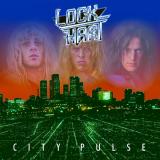
- Ett
- Misinfom The Uninformed
- Noll
- Hello Scotland
- Final Touch/Hidden Agenda
- He Came, He Stayed, He Fell
- Tomorrow My Friend
- We'll Meet In The End
White[34,87 €]
Long regarded as singular architects within European post-rock, EF have built a catalogue defined by dynamic patience, melodic clarity, and widescreen emotional reach. Across two decades of touring, the Gothenburg ensemble have carried that language to clubs and theatres at home and abroad, earning a reputation for meticulous, high-impact live shows and a body of work that has steadily gathered critical regard and a devoted international following. Reimagined and with expanded production including strings and brass, this edition is a considered re-engagement with the material that first crystallised EF's voice. The band returns to thesesongs with the benefit of twenty years' craft, presenting new arrangements that stretch time and deepen narrative, while retaining the quiet-to-catharsis arc that has always set their music apart. "Since it's our precious first born we wanted to give it the love it surely deserves. We felt we didn't want to celebrate its big 20th birthday by just remastering it and we surely didn't want to make the songs too modern and unrecognisable for the old fans. We wanted to give it a tighter, more dramatic and bombastic make over_ a gentle touch of today's EF." (Niklas Åström) Originally released in 2006, `Give Me Beauty_ or Give Me Death!' introduced EF's signature blend of cinematic guitars, patient dynamics and aching melody. For this new edition, along with an incredible cover illustration by Phillip Janta and brand-new bonus track `Noll', the band returned to the material with fresh ears and clear intentions: to open more space in the arrangements and to enrich the melodic lines with orchestral colour. `Give Me Beauty_ or Give Me Death!' (20th-Anniversary Edition) is a document of growth rendered with care: more instrumentation, more time, more consequence. The album is an act of stewardship_ both a homage and a forward-looking manifesto for EF and for discerning listeners everywhere. FOR FANS OF Explosions in the Sky, Mogwai, Caspian, Gospeed You! Black Emperor, Yndi Halda, Mono Black or White Double Vinyl, Digisleeve Single CD. Includes bonustrack Noll.
Long regarded as singular architects within European post-rock, EF have built a catalogue defined by dynamic patience, melodic clarity, and widescreen emotional reach. Across two decades of touring, the Gothenburg ensemble have carried that language to clubs and theatres at home and abroad, earning a reputation for meticulous, high-impact live shows and a body of work that has steadily gathered critical regard and a devoted international following. Reimagined and with expanded production including strings and brass, this edition is a considered re-engagement with the material that first crystallised EF's voice. The band returns to these songs with the benefit of twenty years' craft, presenting new arrangements that stretch time and deepen narrative, while retaining the quiet-to-catharsis arc that has always set their music apart. "Since it's our precious first born we wanted to give it the love it surely deserves. We felt we didn't want to celebrate its big 20th birthday by just remastering it and we surely didn't want to make the songs too modern and unrecognisable for the old fans. We wanted to give it a tighter, more dramatic and bombastic make over_ a gentle touch of today's EF." (Niklas Åström) Originally released in 2006, `Give Me Beauty_ or Give Me Death!' introduced EF's signature blend of cinematic guitars, patient dynamics and aching melody. For this new edition, along with an incredible cover illustration by Phillip Janta and brand-new bonus track `Noll', the band returned to the material with fresh ears and clear intentions: to open more space in the arrangements and to enrich the melodic lines with orchestral colour. `Give Me Beauty_ or Give Me Death!' (20th-Anniversary Edition) is a document of growth rendered with care: more instrumentation, more time, more consequence. The album is an act of stewardship_ both a homage and a forward-looking manifesto for EF and for discerning listeners everywhere. FOR FANS OF Explosions in the Sky, Mogwai, Caspian, Gospeed You! Black Emperor, Yndi Halda, Mono Black or White Double Vinyl, Digisleeve Single CD. Includes bonustrack Noll.
In November 2023, I played an event in Stockholm, put on by Bojan aka Boj Lucki, who runs a label called Bukva Sound, which I had done a remix for earlier that year. DJ Sofa was also on the lineup with me, as well as someone I had never heard of called Gustav Ejstes.
A lot of people I was talking to at the event and on the day were telling me about Gustav and how much of a spectacle it was that he would be DJing tonight, and explaining about a band he is a part of called Dungen (pronounced Doon-yen) which is very well known & respected in psychedelic rock.
I checked his set out and was very impressed by how confident he was with his vinyl mixing & selection, as well as some of the tracks on digital he was playing that I'd never heard before. I told him afterwards how much I enjoyed his set and he seemed quite happy about that, because he had been a long time vinyl buyer of my music & other releases on Future Retro London.
The day after, Bojan took me & DJ Sofa to meet Gustav at his home & we got to chat with him about music, see his record collection & hear some jungle/hardcore tracks that he had been making. Turns out a lot of the tracks I liked from his set that I'd not recognised were ones that he made!
I thought it'd be really cool to be able to release some of them as he's never put anything out like this & since he's a fan of the label, so I asked if he'd up for it and here we are!
Big thanks to Gustav for the wicked music, his manager Oskar for his co-operation in helping to put his release together, to Bojan for introducing me to Gustav's work & to The Tribes for doing the artwork.
Sam Bhok releases his debut album, Sloom. Influenced by experimental club sounds as well as the filmic emotion of post-rock and film scores, Sloom resists minimalism in favour of dense, interlocking layers. Euphoric synth textures and fractured drum patterns drive the record, pairing club energy with reflective undercurrents as hardware synths and drum machines are set against caustically digital, hyper-modern sounds.
Known for his behind-the-scenes work with Gilles Peterson, most notably as an integral part of the Worldwide FM team, Sloom represents Sam stepping into focus as a skilled producer of forward thinking electronic music. Written between 2020 and 2025, the record is a statement of identity and a creative shift away from the world of the selector, and towards something more personal and expansive.
Mastered and cut by legendary engineer Beau Thomas on eco-mix marbled vinyl, Sam Bhok draws from analogue and modular synthesis, processed and twisted into restless forms that reflect the unease of the digital age. Sloom is charged with anxieties about technology, capitalism, culture, and climate, delivered both through introspective, IDM-informed tracks and moments of dancefloor catharsis.