Enterprising composer and musician Eddie Suzuki made his own path throughout his lifetime. Born on October 4, 1929, Suzuki worked as a young shoeshiner in 1940s Honolulu, saving enough money to take piano lessons. In high school, he lead a big band orchestra of 16, and sometimes up to 40 members. By the age of 18, he owned a piano shop that pivoted to become Honolulu’s top guitar store.
For Eddie Suzuki, music always came first. In 1973, after performing and composing songs for many years, Eddie Suzuki and his group, New Hawaii, recorded the now impossibly rare album, High Tide.
The LP is “not a rock-out”, local music journalist Wayne Harada ruminated in a 1973 review. “Rather, it’s one man’s vision — and version — of the now Hawaii.” A seasoned mix of psych, Hawaiian, and pop sensibilities, the music on High Tide gave the listener a look into Eddie’s singular vision celebrating the sights and sounds (and spirit) of Hawaii.
Eddie Suzuki’s New Hawaii:
Laurence Harada, guitar
John Schulmeister, bass
Gary Fittro, drums
Nani Kuaiwa, vocals
Eddie Suzuki, vocals, Hammond organ, Arp synthesizer.
"A beautiful album celebrating Hawaii’s warmth and spirit. The personal story here is that I reached out for a license just 1 week too late — Eddie Suzuki had died the week prior to my initial phone call. It took a couple years until I was able to connect with his son and get his permission to reissue Eddie's music." – Roger Bong, Aloha Got Soul
Buscar:roger eno
In 1971, Bulbous Creation poured what little personal surplus they had into a full day of recording at Cavern Studios, tracking enough material for a full length album. The band wouldn’t stay together long enough to save up for a custom pressing on Rock. Singer/guitarist Paul Parkinson was deeply individualistic, and left to perform his songs as he thought they should be, as a solo act. He preferred coffee shops to concert halls, and would stick to his craft another 20 years before hanging it up. Drummer Horstmann followed suit. Jim “Bugs” Wine and guitarist Alan Lewis soldiered on, shortening their name to the more sensible Creation and adding vocalist Wayne Austin, dynamic drummer Tommy Ward, and guitarist Roger Sewell. The Bulbous Creation LP was nearly doomed to oblivion, but for the efforts of Rich Haupt, who issued an unauthorized eight song LP in 1995 on his Rockadelic imprint. Lewis died in 1998 of esophageal cancer. When Paul Parkinson died of leukemia in 2001, a lone copy turned up amongst his possessions, with piece of mind that someone, somewhere, was listening.”
LTD Ocean Blue 12inch+MP3 EP
Die Veröffentlichung ist als Schwesterstück zu der EP-Veröffentlichung "Asleep Versions"konzipiert, die 2014 veröffentlicht wurde und sie besteht aus Jon Hopkins Interpretationen von Thom Yorkes "Dawn Chorus", James Yorkstons "Heron", Roger Eno and Brian Enos "Wintergreen" und Luke Abbots "Modern Driveway“ die er am Klavier begleitet.
LTD Ocean Blue[17,19 €]
Die Veröffentlichung ist als Schwesterstück zu der EP-Veröffentlichung "Asleep Versions"konzipiert, die 2014 veröffentlicht wurde und sie besteht aus Jon Hopkins Interpretationen von Thom Yorkes "Dawn Chorus", James Yorkstons "Heron", Roger Eno and Brian Enos "Wintergreen" und Luke Abbots "Modern Driveway“ die er am Klavier begleitet.
Following recent super-deluxe editions and multi-format releases of classic Who albums – ‘My Generation’, ‘Tommy’ and ‘Quadrophenia’, and the success of ‘Live at Fillmore’, we follow with The Who Sell Out – this set shaping up to be the most superlative of all…!!
Released in December 1967 – the album reflected a remarkable year in popular culture. As well as being forever immortalised as the moment when the counterculture and the ‘Love Generation’ went global, 1967 produced tremendous musical upheavals as “pop” metamorphosed to “rock”.
Originally planned by Pete Townshend and the band’s managers, as a loose concept album including jingles and commercials linking the songs styled as a Radio London broadcast – born out of necessity as the band’s managers wanted a new album and there weren’t enough songs.
The original plan was to sell advertising space on the album – Jaguar cars, Coca-Cola etc. The jingles pay tribute to the pirate radio stations and expose the myths of ‘pop-culture’ and mock consumer society – way ahead of their time…
The homage to pop-art is evident in both the advertising jingles and the iconic sleeve design – created by David King (art director at the Sunday Times) and Roger Law (who invented Spitting Image) producing four giant images for each band member – Odorono deodorant, Medac spot cream, Charles Atlas and Heinz baked beans (Roger apparently caught pneumonia from sitting in the cold beans for too long).
Photography by renowned portrait photographer David Montgomery (rare out-takes included)
The album is a bold depiction of the period in which it was made – the tail-end of the ‘swinging-60s’ meets pop-art mixed with psychedelia and straight-ahead pop craft. It’s glorious blend of classic powerful Who instrumentation, melodic harmonies, satirical lyrical imagery crystallised for what was only the group’s third album – the ambition and scope is unrivalled by the Who, or any others from that period.
Within the bold concept, were a batch of fabulous and diverse songs – I Can See for Miles (a Top Ten hit) is a Who classic, Rael, a Townshend ‘mini-opera’ with musical motifs that reappeared in Tommy and the psychedelic blast of Armenia City in the Sky and Relax are among the very best material of the 1960s.
One of the most extraordinary albums of any era – it’s The Who’s last ‘pop’ album. Two years later came Tommy – a double concept album about a deaf, dumb and blind kid…
“We were hoping to get free Jaguars. We got fifty tins of free Baked Beans”
Pete Townshend
Superb unreleased soundtrack from British 1972 sex comedy starring Gabrielle Drake (Nick Drake’s sister) and Rchard O’Sullivan (Gilbert O’Sullivan’s brother!). Brilliant music on many levels, 17 sexy tracks of swinging jet-set jazz, groovy scatty vocals, hell it must be good because it’s on Trunk Records.
Take yourself back to the fleapit cinemas of the early 1970s. My home town of Aldershot had two - the ABC/123 (with three screens) and The Palace (just one screen, and anything but palatial). Au Pair Girls, released in 1972, was exactly the kind of soft porn “comedy” flick with a vague plot that would, without doubt, have been playing as part of a double bill to the regular “dirty mac brigade”. Such films and such establishments guaranteed the small crowd regular titillating wide screen visions of nude women in preposterous situations and fulfilling preposterous fantasies.
The title of Au Pair Girls suggests it all of course; yes, four young women fly into London from Europe and Asia, are sent to their new employers and find themselves in unexpected and unusual situations pretty fast. There is of course full nudity, crudity and a large slab of cheese on the menu.There is also no real comedy, a sprinkling of infamous character actors (Richard O’Sullivan, John Le Mesurier), and “UFO” actress Gabrielle Drake (sister of Nick Drake) wearing nothing at all. If anything, the film has maintained a vague middle aged male following because of Gabrielle.
But there’s little to save this film from contemporary criticism - its outdated view of life, rights, sex and taste sit uncomfortably today. But the jet set soundtrack by Roger Webb was worth saving.
By 1972 Roger Webb’s career in film and TV music was taking off. He was an established songwriter and live pianist with a jazz trio. He’d already penned a few British scores and was just starting on a formidable future with library companies including Chappell, de Wolfe and Capitol. His route to Au Pair Girls was accidentally through Norman Newell, one of the giants of the post war music industry.Actress and performer Dee / Deanne Shenderry had asked Newell to recommend an artist to arrange her up and coming album. New;ee recommended Roger Webb.The two worked together and some music was produced, but to my knowledge only got to acetate stage (possibly for Apple Records). Dee husband was Kenneth Shipman, a co-owner ofTwickenham film studios.And so when Kenneth Shipman started pre
production of Au Pair Girls, Roger Webb was an easy go-to for film music composition.
Many years ago there was an original reel / master for Au Pair Girls. It was transferred to CD, DAT and cassette circa 1990 and the rapidly degrading tape was subsequently misplaced, lost or just binned. So all we had to work with was a rather shaky transfer from nearly 30 years ago, one which included numerous wobbles as well as speeding up and slowing down moments.The job of rescuing all this was left to Jon Brooks, my hero for all such musical problems. The end result is what you hear on this album. It is by no means sonically perfect but it is all we will ever have.
It’s certainly not Roger Webb’s best ever score (I have more of his ace work coming) but it has a certain charm and relentlessness.The lyrics were written by Norman Newell, and I can imagine the pair having a huge amount of fun putting the score together and recording it, with - as you’d expect - a pretty tight band and lively vocal group.The main theme does, as one reviewer state, “go on a bit”, but there’s enough musically here for me to get excited about and really want to “stick it out”. So I have.
Sam went into an almost psychotic state when making music. He wasn’t himself. He was immersed in the creativity to such an extent that it was almost like a psychotic trance. Here’s an example. He found all this giant kelp down at Western Port bay and he would bathe himself in it for weeks. He would replenish the water and put salt in the bath, but leave the kelp in there. I used to ask Julie, his partner and wife, “How’s everything going?” and she’d say, “Just go and have a look at the bath.” - Tony Rogers
Sam Mallet could have pursued a career as a French literature professor in Paris, but decided his true calling was to remain in Australia, dedicate himself to his music and find the plateau; a word he used to describe the sensory worlds residing in music. Under the influence of Eno, Jon Hassell, Arvo Pärt, John Coltrane and Robert Fripp, Sam explored a wide variety of musical styles and put them to service soundtracking the time based works of his peers. He crafted spatial ambience, somber jazz, and drum computer driven rockers for short films and experimental video works, television shows (including the original Australian Wilfred series), feature films and live theatre. The avant garde Anthill Theatre, known for its departure from conventional staging practices and having a keen eye for talent, enlisted Mallet to provide soundtracks for approximately 40 productions throughout the 1980s and early 1990s.
Sadly, Sam passed away in 2014. A crucial piece of his legacy is undoubtedly the body of work he produced during his life, and the archive of recorded works is vast and deep. Sam seemingly saved everything, from fragments to finished pieces; and often repurposed previously released tracks by collaging them into new pieces. He self released a small number of cassettes and CDs from the mid 1980s onward, the contents of which were culled from soundtrack work and original pieces, but the majority of his music was experienced only within the ephemeral live performances.
Wetlands is the product of countless hours spent with this archive by Rowan Mason (Sanpo Disco/Recurring Dream) and Tony Remple (Musique Plastique), offering a dynamic survey of Sam’s work, and housed in a jacket evoking the minimal design and colour palette of his earliest cassette releases. Two selections of Sam Mallet’s music were featured on the compilation Midday Moon (also produced by Rowan), released last year by Bedroom Suck Records. Along with Left Ear Records’ Antipodean Anomalies, Midday Moon has served to highlight outlier musics and scenes from Australia and New Zealand, and Wetlands plunges deeper into the catalog of this obscure yet groundbreaking artist.
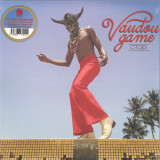
No one had been through those doors in years. Unchanged, seemingly untouched, just a Guard watching over it, one wondered whether the place would ever see the light of day again. Built in the 70s by Scotch, there were only twenty such places in the entire world. Twenty studios, all identical. Most had undergone a digital makeover in the 80s, but not this one; situated in Lomé, this studio had stayed true to its original form. Silent and uninhabited but waiting for one thing, and one thing only: for the sacred fire to be lit once again. That of the Togolese Recording Office, is studio OTODI for those in the know. Through thick layers of dust, the console was vibrating still, impatient to be turned on and spurt out the sound so unique to analog. That sound is what Peter Solo and his band Vaudou Game came to seek out.
The original vibrations of Lomé's sound, resonating within the studio space, an undercurrent pulsing within the walls, the floor, and the entire atmosphere. A presence at once electrical and mystical sourced through the amps that had never really gone cold, despite the deep sleep that they had been forced into. In taking over the studio's 3000 square feet, enough to house a full orchestra, Vaudou Game had the space necessary to conjure the spirits of voodoo, those very spirits who watch over men and nature, and with whom Peter converses every day.
For the most authentic of frequencies to fully imbibe this third album, Peter Solo entrusted the rhythmic section to a Togolese bass and drum duo, putting the groove in the expert hands of those versed in feeling and a type of musicianship that you can't learn in any school. This was also a way to put OTODI on the path of a more heavily hued funk sound, the backbone of which maintains flexibility and agility when moving over to highlife, straightens out when enhanced with frequent guest Roger Damawuzan's James Brown type screams, and softens when making the way for strings. Snaking and undulating when a chorus of Togolese women takes over, guiding it towards a slow, hypnotic trance. Up until now, Vaudou Game had maintained their connection to Togo from their base in France. This time, recording the entire album in Lomé at OTODI with local musicians, Peter Solo drew the voodoo fluid directly from the source, once again using only Togolese scales to make his guitar sing, his strings acting as channels between listeners and deities...
Roman producer (and a force behind MinimalRome label) Valerio Lombardozzi known as Heinrich Dressel returns to Barba with a second release for our label, titled "The Styx Swamp". Heinrich has a unique way of combining classic techno and electro sounds with elements from the beloved Drexcyan universe and John Carpenter leitmotifs, and making them come together in a manner that both moves your body and pushes your mind beyond the point of awareness. As with the previous record, "Lurking Underwater", here he pulls off the move with the same efficiency and without sounding like he's repeating himself. "Gray Slope", "Sailing The Nether Waterways" and "The Styx Swamp" are all quite moody and deep, rich with sound and thick with vibe. However, the tracks feel equally at home in 4 am techno situation and a heady afterhours affair. He truly is a master of crafting hybrids whose influences get so flawlessly embedded that it's hard to point them out. If that's not enough, "The Styx Swamp" got a treatment by Nigel Rogers aka Perseus Traxx, a multi-faceted producer and a mighty live act performer. Nigel stayed respectful to the original but made the original's bouncy groove into something more direct and reduced, while retaining the same feel conditioned by lead synth's hypnotic quality. We're known to give a little bit of extra love to our releases so (as all before) this one's pressed onto a heavy duty 180 gram vinyl and beautifully packaged in an original artwork by EmaEmaEma.