When you’re trying to make it through tough times, you need a little light to find your way. That light blazes brightly on the alchemical second album from Penelope Isles, an album forged amid emotional upheaval and band changes. Setting the uncertainties of twentysomething life to alt-rock and psychedelic songs brimming with life, colour and feeling, ‘Which Way to Happy’ emerges as a luminous victory for Jack and Lily Wolter, the siblings whose bond holds the
band tight at its core.
Produced by Jack and mixed by US alt-rock legend Dave Fridmann, the result is an intoxicating leap forward for the Brighton-based band, following the calling-card DIY smarts of their 2019 debut, ‘Until the Tide Creeps In’. Sometimes it swoons, sometimes it soars. Sometimes it says it’s OK to not be OK. And sometimes it says it’s OK to look for the way to happy, too. Pitched between fertile coastal metaphors and winged melodies, intimate confessionals and expansive cosmic pop, deep sorrows and serene soul-pop pick-you-ups, it transforms ‘difficult second album’ clichés into a thing of glorious contrasts: a second-album surge of up-close, heartfelt intimacies and expansive, experimental vision.
Field recordings were made during a stay at a small cottage in Cornwall, where Penelope Isles began work on the album. With romantic heartache already in the air, things swiftly got worse:
lockdown began, claustrophobia kicked in and emotions ran high. As Jack puts it, “We were there for about two or three months. It was a tiny cottage with four of us in and we all went a bit bonkers, and we drank far too much, and it spiralled a bit out of control. There were a lot of emotional evenings and realisations, which I think reflects in the songs.”
At different points along the way, Jack Sowton and Becky Redford left the Isles. An old friend, multi-instrumentalist Henry Nicholson, stepped in swiftly - “A godsend after a low time,” says Lily. Another friend, Hannah Feenstra, contributed drum parts; now, Joe Taylor is the band’s drummer. After Cornwall, the band redid many of the rhythm tracks, recorded a little in Brighton, then recorded more in Cornwall at their parents’ house. “It was,” says Jack, “a proper
rollercoaster ride.”
The ride continued with Fridmann, whose recent credits include Isles’ favourites Mogwai’s No 1 album, ‘As the Love Continues’. As Lily puts it, the process of sending Fridmann a mix, receiving it back in the morning and then having five hours to make decisions on it resulted first in stress, then in something sublime. “I love everything he’s touched - MGMT, Mogwai, Mercury Rev. He would turn our mix into this electric, fiery thing. There were some moments that were
initially hard, like on ‘Miss Moon’, where he took out the bass when it gets to the chorus. But now it’s my favourite bit on the record. He made everything so colourful. It’s an intensesounding record - a hot record. It was so refreshing to have that blast of energy from Dave - it’s like he framed our pictures.”
Away from the confines of the cottage, the Wolters also opened the door to a collaboration with storied composer Fiona Brice, whose credits include John Grant, Lost Horizons and Placebo. A
“big bucket-list tick” for Jack and Lily, the team-up results in glorious arrangements across the album: for Lily, ‘11 11’ stood out. “I was in absolute tears when she sent back the strings for ‘11 11’. It was like, oh my goodness, she’s nailed it.”
On its release, ‘Until the Tide Creeps In’ received rave reviews from Q, DIY, The Line of Best Fit and many others, while finding champions in Steve Lamacq and Shaun Keaveny. It also become part of a lifeline for music fans during the 2020 lockdown when the band participated in Tim Burgess’s Twitter Listening Party. Meanwhile, extensive touring saw the Isles develop into a formidable live force, with ‘Gnarbone’ emerging as a sure-fire showstopper.
Now, the Isles have 11 more showstoppers to add to the mix. At the album’s heart, the band’s core traits have never been stronger: the bond between the Wolters, a sensitivity towards complex feelings, a desire to celebrate life in all its facets and an ambitious reach combine to create an album that feels utterly, emphatically present on every front, rich in depth and uplift.
LP pressed on 180g clear vinyl with A4 print.
Cerca:romantic songs
If one always looks at the sky, he will end up with wings, a wise French man once declared. Halifax, Nova Scotia based musician Jeremy Costello had wings, long before he looked up. Wings of imagination. Brandishing in his head, transforming deep-rooted emotions into poetry and sound. Since 2012 the Canadian self-releases music as Special Costello, a moniker under which he records solo or with local friends like Saxophone player Nick Dourado or guitarist Dave Burns. His lyrics are sincerely woven poetic enunciations that balance between introspective emotions and existential philosophical demands. Lyrics from a spirit that is in love without an object, unconditional, mirroring his very own subconscious inner being. The music reflects his tempers in many colours. Glimpses of Synth-Pop, psychedelic rock nuances, traces of new romantic utopia, infantile Casio minimalism, Shoegaze haze, drama wave: Special Costello blends many styles, uniting all in his very own musing grandeur of pop music.
After an array of digital releases, Berlin based label Marmo Music now publishes the Special Costello touch for the first time physically fabricated on vinyl. Seven songs featuring the longing voice of Jeremy Costello, sometimes in correlation with spoken words and dialogues by noted artists, poets, and scientists. All creations have been recorded by himself between Spring 2017 and winter 2020, using the extrasomatic help of instruments and machines like Farfisa Combo Compact transistor organ, Roland JX3P polyphonic analog synthesizer, Roland D50 linear synthesizer, Roland Rhythm Composer TR-08, Arturia Microbrute monophonic analog synthesizer or a Gibson Thunderbird IV bass guitar. In communication with his sensitive inner blues, they created an atmospheric voyage into the heart of Special Costello, that fulfils Arthur Russel’s sapient declaration: being sad is not a crime! Seven musical paintings full of intimate, vibrant feelings and existential thoughts, veiled in an antidepressant neo new romantic glam. An epic tune like “The Next Day”, in which Costello’s singing links with thought-provoking spoken word samples, sounds like Robert Ashley is meeting Hans-Joachim Roedelius in a psychic séance with Brian Ferry. In comparison, a song like “If Not Depression, Then What?” grooves with a pulsating wave bass figure and an overall gently floating electronic majesty, while Costello’s voice takes deep listeners to an unknown higher ground. On the other hand, a composition like “Unsetting” offers a nonchalant graceful funk drift with reverberant hand claps, minimal guitar strains and a chromatic synth pop grace. Above all the music Costello’s voice cries, screams, whispers, and weeps with a compelling introspective elegancy, that invites to associate intensely with the nonpareil Special Costello touch.
Written, composed, and recorded by Jeremy Costello between 2016 to 2020 in Halifax, Scotch Village and Toronto (Canada).
Instruments used by the artist: Farfisa Combo Compact transistor organ, Roland JX3P Programmable Preset Polyphonic Synthesizer, Roland D50 linear synthesizer, Yamaha DX7 Frequency Modulation/Programmable Algorithm Synthesizer and TX7 FM Expander, Roland Computer Controlled Rhythm Composer TR-08, Arturia Microbrute Analog Synthesizer, Gibson Thunderbird IV bass guitar, MicroKorg Synthesizer/Vocoder, Electro Harmonix Small Stone Phaser, Memory Boy Analog Delay, Alesis Quadraverb, and finally, their voice was recorded using Shure Beta57A and AKG D 330 BT dynamic microphones.
Welcome to the world of Spöön Fazer!
This lost cold wave artist self-released a sought after 7” single in 1980 - Music 2 Dance 2 - and a 12” EP Sunset on Illuminated Records in 1982. In 2008 German label Anna Logue released an EP of unreleased songs that quickly sold out. Spöön featured on Cherry Reds Close To The Noise Floor compilation (2016) examining innovative U.K. electronica released between 1975 and 1984.
The music on these releases showcase Spöön's unique style that blended together art rock, drum machines, guitar, bass, washes of synthesisers and a compelling vocal style.
Spöön Fazer took to the stage over 30 times between 1980 and 1982 at venues ranging from the famous New Romantic haunt the Blitz Club to the Mind, Body and Spirit Festival at Olympia. He either appeared solo singing to pre-recorded music or with his backing band the In-Sect.
OM Swagger brings you a collection of material collated from Spööns personal tape archive. As well as tracks like Do Different Dances and Beat Dance Drumming that appeared on those hard to find recordings, we serve up unreleased tracks recorded between 1980 and 1982. Songs like Fall In Love With The East, Dancing In London, Samurai Dancing Party, Wish, Chan and Birthday show a more commercial side that never made it onto vinyl. These tracks are on a par with music released at the time by artists like Blancmange and John Foxx.
Aptly named Alternative Regression Therapy this 17-track compilation gives an insight into the lost world of Spöön Fazer detailing a career that started on a drum stool for punk band Whippets From Nowhere to a one-man crusade to enrich the cosmos with electronic music! Tracks like Michael, Row The Boat Ashore show that with the right backing Spöön might have
Continued over…
even hit the charts. Spöön even turned down the opportunity to become the drummer for the Thompson Twins just before they hit the big time.
It’s time to fall in love with Spöön Fazer.
Dark Star Safari is a musical entity comprised of Jan Bang, Erik Honoré, Eivind Aarset, Samuel Rohrer and John Derek Bishop. Their second fulllength offering Walk Through Lightly is the first to feature all five musicians together in the studio from the outset, making for a more organic refinement upon their already established methodology: gradually sculpting distinct songs out of collective improvisations, or using the raw material from initial recordings as the basis for more carefully articulated compositions. The final mix is one that invites few stylistic comparisons to other musical peers, and in fact few comparisons to existing genres. Though this second offering from the project is frosted over with a Scandinavian sense of spatiality and
melancholy, it’s best listened to without considering any origin points, geographic or otherwise: from the opening moments of “Walk Through Lightly,” listeners will feel as if teleported directly into the middle of an enigmatic film-in-progress.
The album opener immediately and successfully sets the table for what is to follow. The electronic and acoustic instrumentation is pensive, but not passive, with restrained scrapes and stridulations in the background combining with backwards-looped passages and perlescent or granulated sound effects to better emphasize the carefully arranged latticework of guitar, percussion, strings, and bass. In some places, such as on “Father’s Day” and “Measured Response,” the silences or breaths between passages are pronounced enough to be an instrument in their own right (and an elegant confirmation of the fact that silence is also a conveyor of information). This nuanced production, which wisely opts for intimacy instead of relying on overdone "instant atmosphere generators" like lengthy reverb, provides just enough tension to contrast with the sense of elevation provided by Bang’s vocal contributions: smoky, evanescent, and impressionistic recitations offering not snapshots of specific events, but rather complete emotional environments for the listener to hover through and explore.
Within these environments, the lyrical imagery focuses upon coming to grips with sudden transformations on both micro and macro levels (the opening “this was a perfect place / till we lost our way” from “Patria” or the foreboding “Poems that explore / Their silence / Crush their violence / Now their time ends” from “Measured Response.”) It focuses as well upon coming to thresholds or crossings, be they physical crossroads or internal states of mind, or both (see especially the striking turns of phrase from “Murmuration.”) With such things in mind, it’s only natural that there would be consideration of dreaming as well, and indeed four different titles on the LP make different reference to a dream or dream state, seemingly valuing dreams as part of the continuum of consciousness rather than something totally cut off from waking experience.
Given the sense of foreboding, anticipation, and even unease that these kinds of subjects often bring with them, the spare and un-hurried music is all the more intriguing, especially when the eponymous finale arrives and the percolating sound bed seems to hint at a coming resolution, but then leaves the listener with more questions than answers. By competently fusing a mature, economical approach to sincerely romantic lyrical themes, Walk Through Lightly is a rare accomplishment.
Events currently taking place throughout the world only serve to stoke a fire under the likes of Pillow Queens, who find themselves continually inspired by a Dublin that is no stranger to fighting social injustice. Street artists, fashion designers, musicians, film makers and more comprise a scene which routinely champions queerness and marginalized groups, and engages with and activates young people in response to the likes of the city’s ongoing housing and mental health crises. Pillow Queens’ songs of togetherness and unity ring out louder than ever before.
In their short lifespan as a band they've released two demo EPs, performed on a successful string of UK & Irish dates & festival appearances, had playlisting from BBC 6 Music, and found themselves opening for the likes of American Football and Pussy Riot, as well as stadium performances opening for IDLES and Future Islands.
With all this under their belt, the band began working with Mercury Prize nominated producer Tommy McLaughlin for their single 'Gay Girls' – which received a nomination for the RTE Choice Music Prize song of the year, as well as International pickup from NPR’s World Cafe and KEXP. The song also found its way into the heart of actor Cillian Murphy and his BBC6 mixtape show.
2019 saw Pillow Queens venture into mainland Europe, as they lit up the Eurosonic festival and completed a string of tour dates opening for Soak. The tour was a messy and joyous affair captured beautifully in the DIY video for the bands summer single 'HowDoILook'.
In Waiting is Pillow Queens’ debut album, the result of four years of brotherly love in a sisterly unit from Ireland’s most urgent, yearning, rock band. Crafted from our lives, and honed in a studio in rural Donegal in the northwest of Ireland, this is a record by queens in waiting and kings in the making. It’s an album about love; self-love, queer love, the anxiety-inducing fault lines of romantic love, and the love for a city and a country that simultaneously has your back and is on your back.
one hand on the steering wheel the other sewing a garden is the name of the second album by Canadian songwriter Alexandra Levy, publicly known by the moniker Ada Lea. On one hand, it’s a collection of walking-paced, cathartic pop/folk songs, on the other it’s a
book of heart-twisting, rear-view stories of city life. Ada Lea has followed up the creative, indie-rock songcraft of her debut what we say in private with surprising arrangements and new perspectives. The album is set in Montreal and each song exists as a dot on a personal history map of the city where Levy grew up. Due on September 24th from Saddle Creek and Next Door Records in Canada, the physical record will be released alongside a map of song locations and a songbook with chords and lyrics, inspired by Levy’s love of real book standards.
Levy penned and demoed this batch of songs in an artist residency in Banff, Alberta. After sorting and editing she made her way to Los Angeles to record with producer/engineer Marshall Vore (Phoebe Bridgers) who had previously worked on 2020’s woman, here E.P. After a long walk to the studio each morning, Levy spent her session days diving into the arrangements, playfully letting everything fall in place with complete trust for her collaborators. She notes “Marshall’s expertise and experience with drumming and songwriting was the perfect blend for what the songs needed. He was able to support me in a harmonic, lyrical, and rhythmic sense.” Other contributors that left a notable fingerprint on the soundscape include drummer Tasy Hudson, guitarist Harrison Whitford (of Phoebe Bridgers band), and mixing engineer Burke Reid (Courtney Barnett). Many songs came together with a blend of studio tracks and elements from the pre-recorded demos.
The resulting sounds range from classic, soft-rock beauty to intimate finger-picked folk passages and night-drive art-pop. And the textures are frequently surprising due to the collage of lo-fi and hi-fi sounds that tastefully decorate the album without ever clouding the heart-center of the song. Tracks like “damn” and “oranges” feel timeless with their AM gold groove and 70’s studio sheen, while songs like “my love 4 u is real '', “salt spring” and “can’t stop me from dying” sound completely modern in their use of electronics, sound effects, and pitched vocals. In their subtle, sonic variety, all of the album’s songs flow together with ease into one big, romantic dream for Levy’s silken vocals to float above.
Inspired by personal experience, daydreams, and Elena Ferrante’s Neapolitan novels, the lyrics of one hand... center storytelling on a bigger scale. The experience and emotions of a year are communicated through Levy’s vignettes of city life. Her prose is centered in its setting of the St Denis area of Montreal as it draws up memories from local haunts like Fameux, La Rockette, and Quai des Brumes in rearview reverie. Levy creates a balance through the album’s year by splitting her songs evenly into four seasons. Opening track “damn”, as a song of winter, kicks off the narrative with the events of a cursed New Year’s Eve party. Immediately this timeline becomes jumbled into a Proustian haziness. The listener is then led through the heat-stricken, brain fog of Summer song, “can’t stop me from dying” and then into the autumnal romanticism of “oranges” before returning back to New Year’s on “partner,” which Levy describes as “a woozy late-night taxi blues reflection on moments when timing can be so right, yet so wrong…”. These collected stories as a whole chart the unavoidable growth that comes with experience. “All is forgiven in time. All is forgotten in time. And when the music stopped, I heard an answer” (from “my love 4 u is real”).
Whether to consider these songs fiction or memoir remains unknown. On one hand, Levy says “Why would I try to write a story that’s not my own? What good would that do?” but on the other hand, she is quick to note the ways that language fails to describe reality, and how difficult this makes it to tell an actually true story. The poetic misuse of the word “sewing” in the album’s title serves as a nod to the limitations words provide. What does it mean to sew the garden? And how can we appreciate its carefully knit blooms when the rearview mirror is so full of car exhaust?
one hand on the steering wheel the other sewing a garden is the name of the second album by Canadian songwriter Alexandra Levy, publicly known by the moniker Ada Lea. On one hand, it’s a collection of walking-paced, cathartic pop/folk songs, on the other it’s a
book of heart-twisting, rear-view stories of city life. Ada Lea has followed up the creative, indie-rock songcraft of her debut what we say in private with surprising arrangements and new perspectives. The album is set in Montreal and each song exists as a dot on a personal history map of the city where Levy grew up. Due on September 24th from Saddle Creek and Next Door Records in Canada, the physical record will be released alongside a map of song locations and a songbook with chords and lyrics, inspired by Levy’s love of real book standards.
Levy penned and demoed this batch of songs in an artist residency in Banff, Alberta. After sorting and editing she made her way to Los Angeles to record with producer/engineer Marshall Vore (Phoebe Bridgers) who had previously worked on 2020’s woman, here E.P. After a long walk to the studio each morning, Levy spent her session days diving into the arrangements, playfully letting everything fall in place with complete trust for her collaborators. She notes “Marshall’s expertise and experience with drumming and songwriting was the perfect blend for what the songs needed. He was able to support me in a harmonic, lyrical, and rhythmic sense.” Other contributors that left a notable fingerprint on the soundscape include drummer Tasy Hudson, guitarist Harrison Whitford (of Phoebe Bridgers band), and mixing engineer Burke Reid (Courtney Barnett). Many songs came together with a blend of studio tracks and elements from the pre-recorded demos.
The resulting sounds range from classic, soft-rock beauty to intimate finger-picked folk passages and night-drive art-pop. And the textures are frequently surprising due to the collage of lo-fi and hi-fi sounds that tastefully decorate the album without ever clouding the heart-center of the song. Tracks like “damn” and “oranges” feel timeless with their AM gold groove and 70’s studio sheen, while songs like “my love 4 u is real '', “salt spring” and “can’t stop me from dying” sound completely modern in their use of electronics, sound effects, and pitched vocals. In their subtle, sonic variety, all of the album’s songs flow together with ease into one big, romantic dream for Levy’s silken vocals to float above.
Inspired by personal experience, daydreams, and Elena Ferrante’s Neapolitan novels, the lyrics of one hand... center storytelling on a bigger scale. The experience and emotions of a year are communicated through Levy’s vignettes of city life. Her prose is centered in its setting of the St Denis area of Montreal as it draws up memories from local haunts like Fameux, La Rockette, and Quai des Brumes in rearview reverie. Levy creates a balance through the album’s year by splitting her songs evenly into four seasons. Opening track “damn”, as a song of winter, kicks off the narrative with the events of a cursed New Year’s Eve party. Immediately this timeline becomes jumbled into a Proustian haziness. The listener is then led through the heat-stricken, brain fog of Summer song, “can’t stop me from dying” and then into the autumnal romanticism of “oranges” before returning back to New Year’s on “partner,” which Levy describes as “a woozy late-night taxi blues reflection on moments when timing can be so right, yet so wrong…”. These collected stories as a whole chart the unavoidable growth that comes with experience. “All is forgiven in time. All is forgotten in time. And when the music stopped, I heard an answer” (from “my love 4 u is real”).
Whether to consider these songs fiction or memoir remains unknown. On one hand, Levy says “Why would I try to write a story that’s not my own? What good would that do?” but on the other hand, she is quick to note the ways that language fails to describe reality, and how difficult this makes it to tell an actually true story. The poetic misuse of the word “sewing” in the album’s title serves as a nod to the limitations words provide. What does it mean to sew the garden? And how can we appreciate its carefully knit blooms when the rearview mirror is so full of car exhaust?
Songs Of Loss and Separation, the sprawling second album from TIMES OF GRACE is insistent in its bluesiness, bleeding distortion and emotion, weaving effortlessly between pensive, heavy, midtempo rock riffs and atmosphere. The band's sophomore effort and first since 2011 channels a haunting romanticism and deep spiritual yearning that collide in beautiful melancholy. The vocal interplay of Adam Dutkiewicz and Jesse Leach makes for a rich, dense, and enthralling concoction, powering through various trips through dark nights of the soul and mind-expanding excursions into the wild.
THE NIGHT FLIGHT ORCHESTRA is back! The band that formed as an idea of friends from several well known rock/metal bands (SOILWORK, ARCH ENEMY, MEAN STREAK) back almost a decade ago and has been dropping jaws ever since. With 5 albums already under their belt, 2 nominations for the Swedish Grammies, countless live shows and praises from fans and media alike, TNFO have steadily upped their game when it comes to paying tribute to a decade that influences all sorts of people and even industries to this day - the 80s. With hits like ‘Domino’, ‘Lovers In The Rain’, ‘West Ruth Ave’, ‘Divinyls’ or ‘This Time’, the band manages to maintain a variety of vibes and emotions within every album. From hard rockers, poppy digressions to progressive epics, disco-esque songs and almost cheesy yet loveable ballads.
Enter 2020, TNFO had just released their recent record, ‘Aeromantic’, and kicked off their European tour in support of it, when the Covid-19 pandemic hit. Björn Strid, the AOR dictator helming this exceptional collective called NFO, recalls “We made it one week into the tour after some absolutely amazing shows and then it all went south and we had to go home. Just about everyone on the tour got sick when they came home, with varied conditions.”
The band didn’t step back and accept the situation but decided to do what they do best instead: “It was pretty clear after some months into the Covid madness, that it was here to stay and that we weren’t gonna be able to tour for quite some time. So we made the best out of it. The remedy was simply to hit the studio again as soon as everybody was well again. It ended up being an incredibly creative 1,5 years and so many amazing songs came out of it.”
That being said, the second part of the ‘Aeromantic’ saga really captures what this band is all about: being in motion and romanticizing traveling, sometimes even with a broken heart - accompanied by the good things in life. Namely with songs like ‘White Jeans’, yet another jaw dropping classic rock gem about hot young love, cramped with nostalgia, or ‘Change’, which encompasses all the vibes you know from your favorite decade: Urgency, emotion, warmth and excitement. But also groovy danceable songs like ‘Chardonnay Nights’, a groovy, dreamy, yet uplifting homage to parties and hot love, or ‘Burn For Me’, a true feel good anthem for the summer - driving people to dance in the streets, all worries aside, to a brighter future.
On the other hand there are tracks like the almost progressive ‘Amber Through A Window’. A little throwback (at least titular) to the NFO’s epic 2017 album ‘Amber Galactic’: “Amber is with us wherever we go and I think she’ll keep coming back. She’s our mascot of escapism. The song was very interesting to compose. It takes you on quite a journey with key changes and goes from minor to major when you least expect it and throws you between different set of emotions. At the same time it feels pretty direct and operates like a mini epos. Really happy with how it turned out“, cites Strid.
Besides all this, the band has also stepped up their game when it comes to music videos for their timeless anthems. “White Jeans” for instance features Swedish TV personality Fredrik Lexfors and is a sweet little homage to the LGBTQIA+ community. “Fredrik is a good friend of mine and has loads of experience in the musical/theatre world and is super creative. He created this character called ”Kantorn” (The Cantor) some years ago and became a hit on YouTube. He has a very twisted and unique way of singing and acting, which is very funny. He was a part of Sweden’s Got Talent TV Show and went really far and became a crowd favorite. Fredrik has a lot of friends in the LGBTQIA+ community and I also have quite a few. We saw it as a joyful tribute and we’ve only gotten really good response. It’s of course also humorous but has a very nice balance and a very positive message.”
The bold and jovial video for “Burn For Me” on the other hand maybe among the biggest and best productions, the NFO ever recorded for the depths of the internet: “I’ve had this idea to film a ”Dancing in the Streets” video, where curious people come out of the woodworks and join the party in the streets. It’s a very classic 80’s scenario and very common in videos back then. Sort of the video to IRENE CARA’s ”Fame”. You don’t see it very often these days. We felt that it was needed and after “Burn For Me” was done I immediately envisoned it being the perfect ”post corona dancing celebration in the streets-song”.”
Those two videos are by far not everything the band will have to offer visually, but we won’t tell any more just for now. To be continued…
With all that new greatness up their sleeves, NFO are ready to take the world by storm – again! Even though coming up with a setlist for their scheduled tour starting in September may prove to become problematic according to the AOR Dictator: “Making a setlist might end up being a nightmare haha… I would be up for doing only songs off »Aeromantic I« and »Aeromantic II« since that’s really where we’re at right now, but I think most of our the Midnight Flyers would like to hear some old stuff, too. Maybe we could get away with it as long as we play “West Ruth Ave” as the ending song and create the good old conga train?”
“This is another new one off the greatest album ever made. It’s called ‘My Kingdom.’” Rock and roll arrogance has never hemmed so close to the truth as this Ian McCulloch introduction to “My Kingdom” during the 1983 A Crystal Day concert special. Not only were Echo & the Bunnymen aware of the instant classic status of their latest LP, but the grand, majestic and fluid nature of Ocean Rain made it clear that the band had indeed set out to make “the greatest album ever made.” Ironically, despite all of their work and focus, this masterpiece sounds like it was simply handed down from the gods. Following the more rock-oriented material on their first albums, the songs on Ocean Rain were a departure. The aim was to make something “conceptual with lush orchestration, but with a twist.” With their success using strings on tracks like “The Back of Love” and “Never Stop” providing confidence, the band employed a 35-piece orchestra for Ocean Rain. Guitarist Will Sergeant would later describe the finished recording as “windswept; dark and stormy.” The Scott Walker / Love inspired string arrangements, unusual instrumentation, inventive recording techniques and McCulloch’s abstract and bewildering mysticism all added to the unique and timeless quality of the album. A statement of purpose by one of the elite bands from the ’80s underground, Ocean Rain includes several of the Echo & the Bunnymen’s most adored recordings and some of the best songs from the era. “The Killing Moon,” “Silver,” “Seven Seas,” “Crystal Days” and the aforementioned “My Kingdom” continue to mesmerize a new generation of post-punk romantics, and the band’s influence can be heard in the grandiose spectacle of groups such as Arcade Fire and British Sea Power.
Limited Coke Bottle Green vinyl, 250 copies only for the UK. Any future pressing will be on black vinyl. Massage feature Alex Naidus from Pains At Being Pure At Heart. Recorded by Lewis Pesacov (Fool’s Gold, Foreign Born, Peel’d). Massage was supposed to be low-stakes, no big deal "anti-ambition," as Andrew Romano, guitarist and vocalist, put it. The L.A.based jangle-pop group's first album, 2018's Oh Boy, was a sweet and simple weekend warrior's affair, or more specifically, an every-other-Monday one, as the band members gathered to bash out songs that offered messy but heartfelt tribute to their chosen heroes: The Feelies, the Go-Betweens, Twerps, Flying Nun. For Romano, not taking things too seriously is a dead-serious affair: “Nothing kills the kind of music we want to make faster than the sense that a band is trying too hard,” he says. The kind of music Massage makes sunny, bittersweet, tender is less a proper genre than a minor zip code nested within guitar pop. Take a little "There She Goes" by the La's, some "If You Need Someone" by the Field Mice; the honey-drizzled guitars from The Cure's "Friday I'm In Love," a Jesus & Mary Chain backbeat, and you're almost all the way there. Indie pop, jangle pop, power pop whatever you call it, pushing too hard scares the spirit right out of this sweet, diffident music, and Massage have a touch so light the songs seem to form spontaneously, like wry smiles. Still, on their sophomore effort, Still Life, they manage to take a quantum leap forward in songwriting, production, and depth, all somehow without seeming to try. These 12 deft songs are full of late-summer sunlight and deep shadows, pained grins and shared jokes, shy declarations of love and quietly nursed heartbreak. Still Life resurrects a brief, romantic moment in the late-'80s, right after post-punk and immediately before alt-rock, when it seemed like any scrappy indie band might stumble across a hit. When Andrew Romano and Alex Naidus first met in 2007, Naidus had just joined a band with his friends Kip Berman and Peggy Wang that was about to stumble into many of them. When Naidus finally left Pains for L.A. in 2013, two hit albums and a few world tours later, he started playing with Romano to recapture the no-stakes, suburban-garage joy of making music for its own sake. It was "friendship incarnate," Naidus remembers. The other members came from within the friend circle Gabrielle Ferrer (keyboard/vocals) is Romano's sister-in-law, Michael Felix (drums) is one of Naidus’ best friends, and David Rager (bass) is a childhood friend of Felix’s. When Felix moved to Mexico City in early 2020, Naidus’ wife, Natalie de Almeida, stepped in. The result is the finest batch of songs they've ever produced. From Naidus' velvet-lined JAMC tribute "Half A Feeling" to Ferrer's Let It Be-era Replacements-tinged lament "The Double" to Romano's "In Gray & Blue," these are gold-standard indie-pop gems from emerging masters of the form. Still Life glows with the sincerity and unfakeable warmth of the era they so lovingly channel. Like the best Gin Blossoms chorus you still remember, the songs on Still Life stir big, pure emotions, but beneath them, uneasy truths about adulthood linger, just below the surface. Maybe the exact mix of ringing guitars and two-part harmonies can chase those feelings away, or redeem them, for at least a minute or three. Massage won't stop trying.
- A1: Limahl - Never Ending Story (Stranger Things)
- A2: Roxy Music - Love Is The Drug (Sex Education)
- A3: The Motels - Suddenly Last Summer (Breaking Bad)
- A4: Duran Duran - Save A Prayer (American Horror Story)
- A5: Abc - The Look Of Love (Dark)
- A6: Canned Heat - Going Up The Country (Legends Of Tomorrow)
- A7: Cutting Crew - (I Just) Died In Your Arms (Stranger Things)
- B1: Elton John - Rocket Man (I Think It’s Going To Be A Long Long Time) (Blacklist)
- B2: Salt-N-Pepa - Push It (Sex Education)
- B3: Devo - Whip It (Stranger Things)
- B4: Billy Ocean - Love Really Hurts Without You (Sex Education)
- B5: The Spencer Davis Group - Keep On Running (End Of The Fckn World)
- B6: Frankie Goes To Hollywood - Two Tribes (Sex Education)
- B7: Santa Esmeralda - Don’t Let Me Be Misunderstood (Riverdale)
- B8: Lesley Gore - You Don’t Own Me (American Horror Story)
Music has always played an important role in TV shows. It can create a vibe, tension, a romantic atmosphere or a certain setting in time. With the wide range of shows currently being offered by the growing number of streaming services, their audiences are discovering bands and artists, old and new, more than ever before.
Song Education brings together some of the pivotal songs from these series, with background info on each of these artists for educational purposes. But mostly, for you to enjoy these often re-discovered songs in the most romantic way to experience music: on a beautiful vinyl record.
Song Education is a new compilation that serves to familiarise youth and young adults with popular music from the 60’s through the 90’s. Some of the artists included on this record are Roxy Music, Duran Duran, The Cutting Crew, Elton John, Salt-N-Pepa and Frankie Goes to Hollywood. The album is available on solid red coloured vinyl. The package contains an insert with more information about the featured artists.
This album is released through Vinyl Base, a brand new sublabel by Music On Vinyl that is specifically targeted at youth and young adults.
- A1: The House Song - Lee Hazlewood
- A2: If Only She Had Stayed - Chris Gantry
- 3: Endless Miles Of Highway - Jerry Reed
- A4: The Back Side Of Dallas - Jeannie C Riley
- A5: Way Before The Time Of Towns - Hoyt Axton
- A6: Strawberry Farms - Tom T Hall
- B1: Down From Dover - Dolly Parton
- B2: July 12, 1939 - Charlie Rich
- B3: What Am I Doing In L.a.? - Nat Stuckey
- B4: Mr Stanton Don’t Believe It - Rob Galbraith
- B5: Saunders’ Ferry Lane - Sammi Smith
- B6: Four Shades Of Love - Henson Cargill
- C1: Drivin’ Nails In The Wall – Waylon Jennings & The Kimberlys
- C2: Ruby, Don’t Take Your Love To Town – Kenny Rogers & The First Edition
- C3: Why Can’t I Come Home - Ed Bruce
- C4: Mr Walker, It’s All Over - Billie Jo Spears
- C5: Harlan County - Jim Ford
- C6: Widow Wimberly - Tony Joe White
- D1: Belinda (Alt Take) - Bobbie Gentry
- D2: Joanne - Michael Nesmith & The First National Band
- D3: Mr Jackson’s Got Nothing To Do - John Hartford
- D4: Alone - Lee Hazlewood & Suzi Jane Hokom
- D5: Fabulous Body And Smile – Sir Robert Charles Griggs
- D6: I Feel Like Going Home - Charlie Rich
• “Choctaw Ridge” explores a new country sound, one that emerged at the end of the 60s in the wake of Bobbie Gentry’s ‘Ode To Billie Joe’, a shock number one hit in 1967. When singers like Gentry, Jimmy Webb, Michael Nesmith and Lee Hazlewood moved from the south to Los Angeles to make it in the music business, they were not part of the Nashville in-crowd and they forged a new direction.
• ‘Ode To Billie Joe’ was the tip of the iceberg, and its success helped a bunch of singers and storytellers to emerge over the next three or four years. Some of the tracks on this collection bear that song’s stamp more clearly than others: Sammi Smith’s moody ‘Saunders’ Ferry Lane’ had a similar mystery lyric, and Henson Cargill’s ‘Four Shades Of Love’ is a portmanteau, with one (or possibly two) of the theoretically romantic situations ending in death.
• Suddenly, character sketches of southerners became a lot more rounded – women didn’t have to stay home, or take abuse at the office, and darkness wasn’t only found at the bottom of a bottle. Storytelling is the link between all of the songs on this collection. We have cautionary tales about what could happen to someone who heads for the bright lights and doesn’t make it, ending up in the grasping hands of ‘Mr Walker’ (Billie Joe Spears), or on the ‘Back Side Of Dallas’ (Jeannie C Reilly), or on a mortuary slab in the case of the songwriter with the ‘Fabulous Body And Smile’ (Robert Charles Griggs). And there are stories about wanting to go home – Nat Stuckey’s ‘What Am I Doing In LA?’ and Charlie Rich’s ‘Feel Like Going Home’ – and others from Ed Bruce and Lee Hazlewood, who know that their home isn’t home anymore.
• The tracklist and fulsome sleeve notes have been put together by Bob Stanley (Saint Etienne) and Martin Green (Smashing, The Sound Gallery), who have been collecting these records for decades.
• The voices are resonant and relatable, and the productions take in the best of what pop had to offer in the late 60s and early 70s. Before the factionalism between smooth pop-conscious Nashville and the hedonistic ‘outlaws’ made it look inward again, this was a golden era for an atmospheric, inclusive and progressive country music. It began on the third of June, another sleepy, dusty Delta day.
With his debut release for Peckham club and label institution Rhythm Section International, Hackney-raised Jerome Thomas is declaring the dawning of a new age for British soul music.
Jerome’s school was a home filled with non-stop music; whether that was bootleg CDs of Rare Groove from East London’s Sunday markets to late 90s R&B on The Box or family favourites; Marvin Gaye, Curtis Mayfield, Al Green, Chico DeBarge, Jill Scott. He learnt his prodigious vocal craft of ad-libs and harmonies by listening to Brandy’s ‘98 LP ‘Never Say Never’ on repeat.
Working with a live 6 piece band of assorted ages and musical backgrounds from rock to classical jazz, Jerome’s sound is a 180 degree turn from the direction of travel of UK R&B which has trended towards producers tracks made inside the computer. Jerome composes the pieces, then allows space for interaction with his long term musical collaborators. The ‘organic decisions’ open up the scope of his music as they jam and record. The result is a sound that could been made in the 70s, the 90s or the 00s. He’s the new blood of the sophisticated British sound that traces back to artists like Mica Paris, Soul II Soul and Omar.
For Jerome, music has literally been a life saving vessel for self expression. Like 1% of the population, he has a stutter, which disrupts the fluent flow of his speech. The stutter disappears when he sings, freeing his voice as it’s transformed into an instrument. As an introverted, intuitive Pisces, the songwriting process lets him explore and express his internal cosmos; “a lot of my songs are like diary entries addressed to people I haven’t been able to talk to or speaking about desires I am too embarrassed to talk about”. Jerome describes his sound using the acronym FOE, standing for “Freedom of Expression” and “Fusion Of Everything”. His music is a space for him to dissolve boundaries and binaries.
“As soul beings we are all a mixture of masculine and feminine; a mixture of our Mum and our Dad”. His fine falsetto explores a register that can read as masculine or feminine. The romantic story that runs across the two vinyl sides of “That Secret Sauce” is told without specifying a gender point of view. As Jerome says “we all experience the same thing with romantic situations, so I didn’t want to pin it to one side”. Like many of the great soul records, a close listen to “That Secret Sauce” reveals its romantic narrative; from first meeting to sexual infatuation to the dissolution of the affair, the breaking up and the moving forward - keeping your energy clear. It’s a tale as old as time, retold.
Riley Downing (The Deslondes) sat down one day and decided he wanted to record a song or two for a simple 45. The Deslondes had been on a hiatus for a while and Downing had the creative itch to put something down on record. He had been in contact with his bandmate John James Tourville and they decided to work on a split 7” with a friend.
The recording session felt like a breath of fresh air and the communion of talented musicians produced more songs than expected. Downing left the session energized and continued to record and trade demos with Tourville. Downing and Tourville decided that there were enough ideas to make an album. There were not going to be any rules and nothing would be discarded. All notes and lyrics would be considered. ‘Start It Over’ is the result of that creative effort. An album where each song was crafted with a different idea in mind. Some of the songs are more nostalgic than others and some were just written for good oldfashioned fun. There is a romantic quality in each song. One song might help someone get through a hard time while one song might contribute to a good time. One song might bring up memories of a better time or just get you far enough down the road to start over.
LP pressed on Sea Glass & Turquoise coloured vinyl
After a year of sadness comes an album fit to resist it. Detritus, the third solo LP by violinist/composer Sarah Neufeld, confronts anguish with beauty, turmoil with grace, gliding through the present like a dancer mid-motion, reaching through space 'til she's caught. Detritus originated with a collaboration: in 2015, Neufeld was invited to appear on stage with the legendary dancer/choreographer Peggy Baker. Baker had prepared a solo piece based on work from Neufeld's second album, The Ridge, to which Neufeld added an original lyrical prelude. The live result was an incendiary duet, almost a sort of face-off, which left each artist unsated. They agreed to reunite for a more extended collaboration - a full-length show with Baker's company, where Neufeld would write to (and perform music alongside) Baker's choreography. It was a fertile partnership, uniting the two women's intense, curious, ferocious sensibilities across an age difference of 29 years. Baker had conceived the show around the title of Neufeld's prelude, "Who We Are In The Dark," exploring themes of loss, betrayal and the emptiness of space; Neufeld was herself in crisis mode, reacting to a specific, earthbound kind of grief (including the end of a relationship). Making work together, they drew on these raw feelings - insistent, urgent darkness but also something that was, for Neufeld at least, much more unexpected: a romantic, tender-hearted love, inspired by the movements of the dancers before her. The work premiered in February 2019. Even before Neufeld and Peggy Baker Dance Projects set off on tour, she had the intuition that this music might take another form: as a distilled set of songs, refined and developed beyond the versions performed on stage. Starting that summer, she began arranging this lush and soloistic material - work that eventually became Detritus - and performed some of these experiments at her own solo gigs. Neufeld worked throughout the process with her Arcade Fire bandmate Jeremy Gara, whose drums, synths and ambient electronics co-anchored the Peggy Baker shows and helped shape the reimagined album versions. She would go on to add foot-pedal bass synth, wordless vocals and swells of French horn courtesy of Bell Orchestre compatriot Pietro, bringing in woodwind wizard Stuart Bogie as a one-man flute ensemble, layering clusters of chords atop Neufeld's luminous compositions.
“This is the time. And this is the record of the time.”
Laurie Anderson’s 1982 debut album, Big Science, will return to vinyl for the first time in 30 years with a new red vinyl edition on Nonesuch Records. The release includes the re-mastered original album first released on CD for the 25thanniversary in 2007.
In the early 1980s, Laurie Anderson was already respected as a conceptual artist and composer, adept at employing gear both high-tech and homemade in her often violin-based pieces, and she was a familiar figure in the cross-pollinating, Lower Manhattan music-visual art-performance circles from which Philip Glass and David Byrne also emerged. While working on her now-legendary seven-hour performance art/theater piece United States, Part I–IV, she cut the spare ‘O Superman (For Massenet)’, an electronic-age update of 19th century French operatic composer Jules Massenet’s aria ‘O Souverain’, for the tiny New York City indie label 110 Records. In the UK, DJ John Peel picked up a copy of this very limited-edition 33⅓ RPM 7” and spun the eight-minute-plus track on BBC Radio 1. The exposure resulted in an unlikely #2 hit, lots of attention in the press, and a worldwide deal with Warner Bros. Records.
’Cause when love is gone, there's always justice.
And when justice is gone, there's always force.
And when force is gone, there's always Mom. Hi Mom!
At the time of its original release, the NME wrote of Big Science, ‘There’s a dream-like, subconscious quality about her songs which helps them work at deeper, secret levels of the psyche.’ With instrumentation ranging from tape loops to found sounds to bag pipes, Big Science anticipated the tech-savvy beats, anything-goes instrumentation and sample-based nature of much contemporary electronic and dance music. On the album’s 25th anniversary, Uncut noted, ‘The broader themes of alienation and disconnection still resonate, while Anderson’s use of loops and traditional/synthesized instrumentation is prescient.’
“In the ’70s I travelled a lot,” Anderson recounts. “I worked on a tobacco farm in Kentucky, hitchhiked to the North Pole, lived in a yurt in Chiapas, and worked on a media commune. I had my own romantic vision of the road. My plan was to make a portrait of the country. Big Science, the first part of the puzzle, eventually became part two of United States I–IV (Transportation, Politics, Money, Love). My goal was to be not just the narrator but also the outsider, the stranger. Although I wasfascinated by the United States, this portrait was also about how the country looked from a distance. I was performing a lot in Europe, where American culture was simultaneously booed and cheered. But the portrait was also a picture of a culture inventing a digital world and learning to live in it. Big Science was about technology, size, industrialization,shifting attitudes toward authority, and individuality. It was sometimes alarmist, picturing the country as a burning building, a plane crash. Alongside the techno was the apocalyptic. The absurd. The everyday. It was also a series of short stories about odd characters – hatcheck clerks and pilots, preachers, drifters and strangers. There was something about Massenet’s aria ‘O Souverain’ – which inspired ‘O Superman’ – that almost stopped my heart. The pauses, the melody. “O souverain, ô juge, ô père” (O Lord, o judge, o father). A prayer about empire, ambition, and loss.”
Laurie Anderson is one of America's most renowned – and daring – creative pioneers. Her work, which encompasses music, visual art, poetry, film, and photography, has challenged and delighted audiences around the world for over 40 years. Anderson released her first album with Nonesuch Records in 2001, the critically lauded Life on a String. Her subsequent releases on the label include Live in New York (2002), Homeland (2010), the soundtrack to Anderson’s acclaimed film Heart of a Dog (2015), and her Grammy-winning collaboration with Kronos Quartet, Landfall (2018). Additionally, Anderson’s virtual-reality film La Camera Insabbiata, with Hsin-Chien Huang, won the 2017 Venice Film Festival Award for Best VR Experience, and, in 2018, Skira Rizzoli published her book All the Things I Lost in the Flood: Essays on Pictures, Language and Code, the most comprehensive collection of her artwork to date.
With a new project called Don Juan 73, in which Magne met up with his old crony Roger Vadim again after the wreckage of the latter's low-key Hollywood escapade. The filmmaker's project with screenwriter Jean Cau was a rereading of the legend of Don Juan, now transformed as a female in the shape of Brigitte Bardot. Together, Magne and Bergman wrote several songs based on a fusion of cultures: an English rock voice (Mister Eye) over romantic melodies, all of it structured with themes that had a stoned atmosphere (Swedish Dream, for flute and orchestra), plus power-packed pieces that cast sidelong glances at Carl Orff.
Seven years and a handful of lifetimes ago, New Bums came
out of nowhere with their debut album, ‘Voices In a Rented
Room’ - a record the New York Times described as “feeling like
it’s falling apart.” New Bums took this as a compliment and,
thus emboldened, they toured relentlessly in support of the
release: criss-crossing the USA in the spring of 2014, with a
European run that summer. Then, silence descended, as the
Bums withdrew to the place from which they’d mysteriously
emerged.
Now, the Bums are back. 2021 finds them with a new album in
hand. Following a West Coast US tour in late 2019 it’s clear that
the duo of Donovan Quinn (Skygreen Leopards) and Ben
Chasny (Six Organs of Admittance, Rangda, etc) are fully
reanimated, as evidenced by the songs and sounds of ‘Last
Time I Saw Grace’.
Retaining the drunk-dog-locomotion of their debut, New Bums
sprinkle a bit of fresh fancy into their signature twin guitarsand-vocals sound, with cleaner recording techniques, further
developments in harmonies and a new appreciation for a song
with more than two parts, making ‘Last Time I Saw Grace’
nothing less than the perfect progression from the purposefully
murky mixes of their debut.
Continuing to embrace an acoustic rock ’n’ roll sound, inspired
by artists such as Jacobites, Robyn Hitchcock, Johnny
Thunders, Replacements and such, New Bums push the words
and the stories to the front of the line, crafting tales with satiric
glee on ‘Last Time I Saw Grace’. However, this world of empty
perfume bottles, bodies tied to masts and moving onward to
devastation (after the bottle on the table pulls out a gun) feels
much more Gombrowiczian dreamscape than drunken night on
the town. Yes, everything is wasted but this is an existential
wasteland rather than a substance-laden one. This combination
of arch Californian post-aristocratic melodrama with torn and
frayed acoustic guitars opens up a new genre entirely, one
those at Drag City are tempted to call Rent Control Romantic.
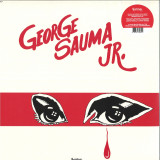
Favorite Recordings proudly presents an exclusive eponymous LP by Brazilian singer and composer George Sauma Jr., originally produced in 1985. Imagine a never-marketed release on which you’d hear not only the beautiful and genuine George’s songs but also the work from two figures of the Brazilian Music Golden Age: Arthur Verocai and Junior Mendes! A much-needed album for all Brazilian connoisseurs.
Back in the days, George Sauma Jr. was a young artist from Rio de Janeiro, learning on his side how to play chords and compose songs since he was 10. Still at the university, he’s influenced by Brazilian artists like Cassiano or Tim Maia, deeply fascinated by the arrangements and the “levada” (the groove) of all these new Brazilian songs. Simple and romantic music that resonated to his soul and creativity.
Around 1985, the story took an unexpected turn. George tells: “Dna Deyse Lucidy, the mother of Junior Mendes was a candidate for deputy and went to my father’s company to advertise. When I saw her, I shouted, “I’m a big fan of your son!” ” Of course, she could not praise more the work of her son. On her advises, George went to his studio on Rua Siqueria Campos at Copacabana. Junior loved the project and sent him to Arthur Verocai to improve the arrangements. Without money, the decision was taken to record everything at Junior Mendes’ studio on an 8-channel mixer. It was a small set-up but the emotions were there! George surely had other plans for some of his songs but without the budget, they ended up doing everything the best they could. And they did very fine with a top-notch team of musicians: Paulo Black on Drums, Arthur Verocai on Guitar, Ricardo Do Canto on Bass and Helvius Vilela on Keyboards.
Leaving the studio with the tapes, George tried to knock doors of international labels, but none did even dare to give him an answer. With less than 1000 copies pressed back in the days and without any distributor or label behind him, he went with proud to record stores, but received nothing than a strong reality check regarding the difficulties for a young Brazilian artist to achieve something on the saturated market of the 80s. Even for free, record stores didn’t want it. In the end, he ended up giving copies to friends and families, knowing deep inside that the songs were good! George tells: “I decided to leave, calm and conscious. I’ve still made three more albums, however on tapes, as it was more affordable. This time, just for my pleasure…”.
Thirty-five years after, it’s with great emotion that this first album by George Sauma Jr. is now made available as Vinyl LP with its original offset printed innersleeve & CD