"I wanted to talk about what I know best, which life from my perspective" Rébecca M’Boungou is not unaware of the universal part of her mixed race life so many upheavals, splendors, melancholies, pleasures or pains present in this century.Kolinga tells much more than the musical adventure of a dark-skinned country girl from southwestern France who expresses herself in French, English and Lingala on a music which drawsfrom pop, Congolese rumba, jazz, soul, song, hip hop...
Cerca:rumba
Colleen is an aboundingly inventive composer and artist. For two decades Cécile Schott, as Colleen, has crafted welcoming, enchanting, and bewildering music. The multi-instrumentalist and vocalist's timeless compositions make use of carefully selected tools to mold memories into transcendent splendor. The Tunnel and the Clearing finds Schott at her most vulnerable and confident, invoking contemplative and swirling organ processed through analog electronics, steady drum machine syncopations and her distinctive voice. On an album centered on processing the complicated washes of emotion through tribulations and revelations Colleen presents a vision of breathless clarity.
Finnish Death Doom spearhead Kuolemanlaakso, starring vocalist Mikko Kotamäki, are about to release their first album in eight years. The new album Kuusumu was produced by V. Santura, who also took responsibility for producing the band’s previous records. In addition to his studio works, Santura is known as the guitarist of Triptykon and Dark Fortress. Kuusumu is the band’s fourth full-length album, and it will be out in 2022 via Svart Records. “The recording pause got unnecessarily long, but there’s no rush in doom. It was great to get back to work with the folks and catch up with some good friends as well. Kuusumu’s keyboards were played by Aleksi Munter (Swallow the Sun, Insomnium, Ghost Brigade) and Lotta Ruutiainen (Luna Kills) performed female vocals on the album. In my opinion we took many steps forward on Kuusumu”, guitarist-songwriter Laakso says. Kuusumu's texts are loosely based on the sudden global cooling that began in 535, leading to a 10-year winter, loss of crops, mass deaths of cattle and other animals, and famine. Climate change was most likely caused by massive volcanic eruptions, the fog of which darkened the sun for one and a half years, causing intolerable cold. Moreover, the plague pandemic that began in the Byzantine Empire in 541 swept across Europe, killing tens of millions of people during the climate crisis. “Our previous releases are autumn albums, so this time we decided to make a winter album. I came across the literature about those catastrophic events by chance, and got thoroughly inspired - especially by contemporary stories. It wasn’t long until the album material was there already. It’s spine-chilling to think that deadly climate change and a pandemic also raged 1,500 years ago when medicine, information flow and living conditions were in their infancy. There was no knowledge about electricity, for example. People imagined that the gods are angry and the darkness is eternal. One way or another, the power of nature should still not be underestimated,” says the band's artistic director Laakso. On Kuusumu, Kuolemanlaakso stretch their artistic boundaries even further. The album contains the familiar slow heaviness, but also more epic, faster and more polished material. The first single Katkeruuden malja, featuring Lotta Ruutiainen, represents the catchier and lighter side of the album. “Katkeruuden malja draws its inspiration from grief and misery. Musically it trips almost in the landscapes of Tribulation, but with longing, Kalevala-infused and, in my opinion, very Finnish melodies. Regarding singing, Kotamäki introduces new winds, and Lotta's parts really top it all off. The music video is like a visual extension of the cover art and the album’s lyrical themes, ” Laakso comments. The previous Kuolemanlaakso record Tulijoutsen (2014), reached the 10th place on Finland's official album list and was selected as one of the best records of the year on Soundi, Rumba, Kaaoszine and Imperiumi, among others.

- A1: Preservation Hall Jazz Band - That's It! (Nickodemus Remix)
- A2: Gabriele Poso - La Bola (Nickodemus Remix)
- A3: Pernett - La Rumba Bacana (Nickodemus Remix)
- A4: Quantic Presenta Flowering Inferno - No Soy Del Valle (Feat Nidia Gongora - Nickodemus & Zeb Remix)
- B1: Empresarios - Cumbia (Nickodemus Remix)
- B2: Bosq - Rumbero (Feat Nidia Gongora - Nickodemus Remix)
- B3: Veiux Farka Toure - Sangare (Nickodemus Remix)
- B4: Atropolis - Gaita Flute (Nickodemus Remix)
The Remix Machine has been pumping through Nickodemus’ studio since the late 90’s with over 100 remixes as far & wide. In this special vinyl selection of 8 remixes, Nickodemus chose some rare unreleased on vinyl remixes including Preservation Hall Jazz Band uptempo driving Jazz stomper, to the funky afro-latin dance-floor main stays of Gabriele Poso, Pernett & Vieux Farka Toure afro-latin mid tempo sure-shots, to the Colombian dubbed out Empresarios, Quantic & Atropolis.
Here we have 4 songs on each side, a very limited edition for the DJ’s & vinyl collectors.
A multicultural explosion of West African, French and Brighton sounds
Stranded Horse is a touring machine centered around composer, songwriter and
instrument maker Yann Tambour.Whilst he had developed his own kora playing
and teamed up with local player Boubacar Cissokho (cousin and protege of
erstwhile Tambour collaborator Ballake Sissoko) In terms of repertoire, there is
nothing to stop him from covering Joy Division, the Smiths or even Jackson C.
Frank and the moving "My Name is Carnival".Behind Yann Tambour and his band
Stranded Horse lies a faith in chance encounters, a belief that renewal is born out
of chaos. They strive to skirt conventions and labels and wed together
unexpected genres, rules and habits in an album of erratic wanderings, dance and
trance, at a time when more and more get walled off by reluctance and suspicion.
But a strange spell, it seems, was cast on our stranded horse since he chose to
hit the dancefloor for the first time the very year nobody could. Yann Tambour
was first known as Encre at the turn of the millennium. He was then whispering
and stacking orchestral samples into a kind of spoken word electronica with an
acoustic tinge. But in 2005, he decided to return to his early love for arpeggios
and dusted off his classical guitar, all the while growing a fascination for the kora,
an instrument symbolic of West-Africa.
But Stranded Horse doesn't forget to draw on the indie heritage that is still very
much present, as evidenced by "In A Sharper Fairway", which may remind the
most passionate folk fans of the folk- mindedness of Jackson C Franck. As for
the choice of English or French, it is a natural one, whether it is a question of
immersing oneself into the contemplative and poignant "Sparks Turn To Stone" or
entering the frenzied dance of the irresistible "Rumba du trépas", the richness of
the lyrics is reinforced by a voice stripped of all artifice, making each composition
sincere and authentic. The same is true when, with Youssou N'Dour's permission,
Stranded Horse adapts Star Band de Dakar's heady and vast "Thiely" from Wolof
to French.
A multicultural explosion of West African, French and Brighton sounds
Stranded Horse is a touring machine centered around composer, songwriter and
instrument maker Yann Tambour.Whilst he had developed his own kora playing
and teamed up with local player Boubacar Cissokho (cousin and protege of
erstwhile Tambour collaborator Ballake Sissoko) In terms of repertoire, there is
nothing to stop him from covering Joy Division, the Smiths or even Jackson C.
Frank and the moving "My Name is Carnival".Behind Yann Tambour and his band
Stranded Horse lies a faith in chance encounters, a belief that renewal is born out
of chaos. They strive to skirt conventions and labels and wed together
unexpected genres, rules and habits in an album of erratic wanderings, dance and
trance, at a time when more and more get walled off by reluctance and suspicion.
But a strange spell, it seems, was cast on our stranded horse since he chose to
hit the dancefloor for the first time the very year nobody could. Yann Tambour
was first known as Encre at the turn of the millennium. He was then whispering
and stacking orchestral samples into a kind of spoken word electronica with an
acoustic tinge. But in 2005, he decided to return to his early love for arpeggios
and dusted off his classical guitar, all the while growing a fascination for the kora,
an instrument symbolic of West-Africa.
But Stranded Horse doesn't forget to draw on the indie heritage that is still very
much present, as evidenced by "In A Sharper Fairway", which may remind the
most passionate folk fans of the folk- mindedness of Jackson C Franck. As for
the choice of English or French, it is a natural one, whether it is a question of
immersing oneself into the contemplative and poignant "Sparks Turn To Stone" or
entering the frenzied dance of the irresistible "Rumba du trépas", the richness of
the lyrics is reinforced by a voice stripped of all artifice, making each composition
sincere and authentic. The same is true when, with Youssou N'Dour's permission,
Stranded Horse adapts Star Band de Dakar's heady and vast "Thiely" from Wolof
to French.
- A1: Linda Guajira
- A2: Que Bueno Baila Usted
- A3: Relax & Mambo
- A4: Al Son Del Pilon
- A5: Tabu
- A6: Yo No Quiero Piedra En Mi Camino
- A7: La Mulata Rumbera
- A8: Lagrimas Negras
- A9: Dejame Recordar
- B1: Guantanamera
- B10: Saradonga
- B2: Cogele El Golpe
- B3: Dundumbanza
- B4: Magia Negra
- B5: Gandinga, Mondongo Y Sandunga
- B6: Te Di Un Beso Sin Importancia
- B7: Mambo Riff
- B8: La Rumba Me Llama
- B9: Mambo No 5
- A10: El Manisero
26 original recordings with comprehensive 12-page booklet
The music of Cuba, including its instruments, performance, and dance, comprises
a large set of unique traditions influenced mostly by West African and European
(especially Spanish) music. Cuban music is among the richest and most
influential regional music in the world.
Cuban music has contributed to the development of a wide variety of genres and
styles around the globe. Examples include the son Cubano, guarachá, danzón,
bolero, rhumba, Afro- Cuban jazz, salsa, and a wide variety of genres in Latin
America. Many of these styles are represented on this outstanding collection,
which presents 26 of Cuban music's greatest hits performed by the most
celebrated Cuban stars.
- A1: Juan Pablo Torres Y Algo Nuevo - Y Que Bien
- A2: Orquesta Los Van Van - Por Que Lo Haces
- A3: Los Latinos - Quemando
- A4: Farah Maria - Amame Y No Pienses Mas
- B1: Fa 5 - Muevete Con Las Fuerzas Del Corazon
- B2: Tambores De Enrique Bonne - Como Arrullos De Palma
- B3: Ricardo Eddy Martinez - Expresso Ritmico
- C1: Los Papines - Solo De Tumba Y Bongo
- C2: Grupo Sintesis - Aqui Estamos
- C3: Los Van Van - Llegada
- C4: Grupo Raices Nuevas - Baila Mi Guaguanco
- D1: Luis Carbonell - La Rumba
- D2: Orquesta Riverside - En Casa Del Trompo No Bailes
- D3: Juan Formel & Los Van Van - Llegue, Llegue
- E1: Grupo Los Yoyi - Tu No Me Puedes Conquistar
- E2: Los Papines - Para Que Niegas?
- E3: Grupo De Experimentacion Sonora Del Icaic - Cuba Va!
- E4: Raul Gomez - Luces En La Pista
- F1: Los Brito - El 4-5-6
- F2: Leo Brouwer - Tema De El Rancheador De La Naturaleza
- F3: Ricardo Eddy Martinez - La 132
- F4: Los Reyes 73 - Finalizo Un Amor
Cuba: Music and Revolution: Culture Clash in Havana: Experiments in Latin Music 1975-85 Vol. 2 is the new album compiled by Gilles Peterson and Stuart Baker (Soul Jazz Records) that takes off in exactly the same vein as the much-acclaimed Vol. 1 – exploring the many styles that came out of Cuba in the 1970s as Latin and Salsa mixed with heavy doses of Jazz, Funk, and Disco to create some of the most dancefloor-friendly music ever made!
The album comes as a heavyweight 3xLP and deluxe 2xCD set, complete with extensive sleeve notes, and is jam-packed with heavy bass lines, synth and Wah-Wah guitar funk combined with the heavyweight percussion, powerful brass lines and the all-encompassing Latin rhythms of Cuban music known
throughout the world.
Much of the music on this album is featured in the deluxe large format book ‘Cuba: Music and Revolution: Original Cover Art of Cuban Music: Record Sleeve Designs of Revolutionary Cuba 1959-90’, released by Soul Jazz Books and also compiled by Gilles Peterson and Stuart Baker (Soul Jazz Records),
featuring the music and record designs of Cuba, made in the 30-year period following the Cuban Revolution.
The music on this new album features a host of rarities from legendary Cuban artists such as Los Van Van, alongside Grupo De Experimentación, Farah Maria, Ricardo Eddy Martinez, Juan Pablo Torres, Grupo Sintesis and Orquesta Riverside, most of whose names remain largely unknown outside of Cuba but have long been favourite club tracks and secret-weapons in Gilles Peterson’s record boxes!
The music on this album reflects the most cutting-edge of Cuban groups that were recording in Cuba in the 1970s and 1980s – all searching for a new Cuban identity and new musical forms reflecting both the Afro-Cuban cultural heritage of a nation that gave birth to Latin music and its new position as a socialist state. Most of the music featured on this album has never been heard outside of Cuba.
Both Gilles Peterson and Stuart Baker have been involved in Cuban music for more than two decades – Gilles Peterson with his many Havana Cultura projects for his Brownswood label and Stuart Baker with a number of Soul Jazz Records albums recorded in Cuba. This Soul Jazz Records album is released in conjunction with Egrem, the Cuban state record company, and has been put together after the many crate-digging trips that both compilers have made on the streets of Havana and beyond in Cuba stretching over a 20-year period, searching out rare and elusive original Cuban vinyl records
A fantastic compilation of the great Salum Abdallah and Cuban Marimba Band. 12 perfect songs from the stars of the early 60s "muziki wa dansi" (dance music) scene in Tanzania, mixing local music styles with Cuban son, cha cha, and twist. One of the greatest music scenes anywhere, ever, which has been criminally underrepresented in this era of apparently inexhaustable reissues - finally a stellar compilation dedicated to it! Shimmering guitars and driving rumba basslines, horns weaving counterpoint harmonies through the air, irresistible percussion locking it all in, and the heartwarming voice of Salum Abdallah. Music that just feels GOOD. The LP comes in an old style tip-on jacket, with a printed inner sleeve featuring lyrics in Swahili and English.
- A1: Santana & Salvador Santana & Asdru Sierra - Ghost Of Future Pull/New Light
- A2: Santana & Chris Stapleton - Santana Celebration
- A3: Santana & Rob Thomas & American Authors - Rumbalero
- A4: Diane Warren & G-Eazy & Santana - Joy
- A5: Santana & Stella Santana & Avi Snow & Mvca - Move
- B1: Whiter Shade Of Pale (Feat Steve Winwood)
- B2: Break (Feat Ally Brooke)
- B3: Yo Estare (Feat Ally Brooke)
- B4: She's Fire
- C1: Peace Power (Feat Corey Glover)
- C2: America For Sale (Feat Kirk Hammett & Marc Osegueda)
- C3: Breathing Underwater
- C4: Mother Yes
- D1: Song For Cindy
- D2: Angel Choir/All Together (Feat Chick Corea & Gayle Moran Corea)
- D3: Ghost Of Future Pull Ii
- A1: Santana & Salvador Santana & Asdru Sierra - Ghost Of Future Pull/New Light
- A2: Santana & Chris Stapleton - Santana Celebration
- A3: Santana & Rob Thomas & American Authors - Rumbalero
- A4: Diane Warren & G-Eazy & Santana - Joy
- A5: Santana & Stella Santana & Avi Snow & Mvca - Move
- B1: Whiter Shade Of Pale (Feat Steve Winwood)
- B2: Break (Feat Ally Brooke)
- B3: Yo Estare (Feat Ally Brooke)
- B4: She's Fire
- C1: Peace Power (Feat Corey Glover)
- C2: America For Sale (Feat Kirk Hammett & Marc Osegueda)
- C3: Breathing Underwater
- C4: Mother Yes
- D1: Song For Cindy
- D2: Angel Choir/All Together (Feat Chick Corea & Gayle Moran Corea)
- D3: Ghost Of Future Pull Ii
Los Romeros transport the listener to the Andalusian region of Spain for an album of Flamenco improvisations and songs. Noted Mexican singer/actress Maria Victoria provides vocals. Recorded at United Recording Studio, Hollywood, December 27–30, 1966. Prior releases have included heavy-handed dynamics processing and added echo. For this issue, the first-generation master tapes are presented as they were recorded, transporting the listener into the room and into a true Flamenco performance by the Royal Family of Spanish Guitar, and Ms. Victoria.
Recorded in Havana’s famed Egrem Studios, the group displays a cohesion forged by an intense performing and touring cycle. The musical conversation that began in the Areito studios three years earlier blossomed into an easy, intimate dialogue between good friends - allowing full, fearless musical expression and risk-taking outside of their comfort zones.
Building upon Perez Prado’s dissonant, near avant-garde vision of the mambo, and highlighting the Lucumí subtext of Cuban rhythms and styles, the band continues to explore, develop and expand the island’s rich rhythmic palette and repertoire - pushing the conventions of what is considered “mambo” - and drawing deeply from folkloric and religious traditions seldom heard in popular music. 16 Rayos is here to shine its musical rays on us, warm our hearts, and irresistibly move our bodies.
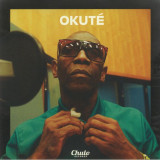
When Orquesta Akokán burst onto the global music scene a mere three years ago, their no-holds-barred 21st century take on the venerable Cuban mambo lit up stages around the world with a fierce and unremitting joy. Singer José "Pepito" Gómez, Chulo Records producer and multi instrumentalist Jacob Plasse, and arranger Michael Eckroth joined forces with a carefully curated selection of Havana’s most extraordinary musicians as Orquesta Akokán, polishing Cuban mambo’s golden sound to a luminous, contemporary sheen. Along the way Orquesta Akokán imbued these legendary Cuban grooves with a renewed vitality and powerful sense of akokán ---the Yoruba word used by Cubans to mean “from the heart” or “soul.”
On the Cuban side of the equation the Orquesta boasts some of the island’s greatest instrumentalists culled from members of near-mythical groups such as Los Van Van, NG La Banda, and Irakere (notably César Lopez, Orquesta Akokan’s point man in Havana). The ensemble for 16 Rayos shines a light on Cuba’s musical families and multigenerational legacy with the participation of two fabled Vizcainos on percussion - Roberto "Tato" Vizcaino Jr. and his father Roberto Vizcaino Guillot, a member of Chucho Valdes’ seminal 90’s quartet. Another family duo added their masterful legacy to the recording, with trumpeter Reinaldo “Molote” Melián bringing in his son, Reinaldo Melián Zamora, to play trumpet on several tunes alongside lead trumpet Harold Madrigal Frías. The winds and brass are rounded out with a rich saxophone section made up of young lion Jamil Shery and Germán Velazco (musical director for Pablo Milanés)on tenor, with Evaristo Denis on baritone and César López on alto, along with Yoandy Argudin and Heikel Fabián Trimiño on trombone. Coros were sung by Eddie Venegas and Luis Soto. Significantly, Orquesta Akokán added strings to the ensemble for the first time, with the participation of violinists Amelia Febles Díaz, Jenny Peña and Anabel Estévez Acosta, whose virtuosity stems from the classical training for which Cuban musicians are so renowned. The power and grace of Pedro "Tata" Francisco Almeida Barriel’s vocals lead the way on “4 de Octubre” and “Llegue con mi Rumba,” evincing why he is considered one of the Cuban rumba’s premier exponents. Another highly recognized singer, legendary guarachera Xiomara Valdés - who’s shared the stage with legends such as Beny Moré and Omara Portuondo and received the Ministry of Culture’s Distinción por la Cultura Nacional de Cuba as a significant contributor to Cuba’s musical legacy - is the featured guest on the title track.
It's back-to-back hits with the return of the Names You Can Trust split single series featuring two new emerging artists and record debuts.
After years on the local New York scene as DJs, collaborators and permanent fixtures amongst the brightest of musicians and artists, Raspadura has spent a long time brewing behind the curtain, tucked away in the musical minds of real life partners Josue Granados (Sonidero Mixteco, Los Taxis) and Dayan Silva (Dayansiiita). Their coming out party as recording artists is a perfect encapsulation of the duo's raucous but delightful energy. "Pa Que Gocen" is pure punkera, but seasoned with a deep musical appreciation that abounds in the timeless tropical music universe, and surely a precursor to further recording adventures, as this debut should warrant. The appeal is obvious as soon as the needle drops. Silva's enchanting vocals grab you immediately, with tales of sweets upon sweets. Pure visions of dulce, panela and miel are chanted over the rhythm of Granados' low down ska-beat and hypnotizing tres cubano. For Raspadura, dessert is first!
Come fly with Grupo Pernil in this ode to the timeless vibes of gypsy rumba, merengue and guaracha. Featuring an international all-star cast of musicians from travelling adventures and collaborations of recent years, "Danza de la Cabra" was originally conceived at home in the NYCT studio, and later brought to life with additional sessions inside Amsterdam's Heat Too Hot and Barcelona's Nación Funk studios. This one-off instrumental recording turned into a case of severe psicodelica, under the influence and improvisation of the group's talented players and percussion professionals, then amped and electrified for maximum effect with a touch of studio magic and a taste for local iberico. Featuring members of Greenwood Rhythm Coalition, Conjunto Papa Upa, Fundación Tony Manero and Los Fulanos.
Having stepped into fourth year of existence the factory of Depth.Request manufactures an article in form of an EP titled "Night Wounds Time" produced by British-born underground scene veteran Mahk Rumbae under the guise Antechamber, which - in slight contrast to his arguably better known alias Codex Empire - he ostensibly reserves for a more dysfunctional brand of electronic music intended as much for frantic terpsichorean participation as for contemplating the inevitable under the gloom of moonless nights. In line with offbeat nature of sounds presented, the release gives a subtle nod to Tod Phillips' literary work "A Humument", borrowing its name and
track titles from the lines within the idiosyncratic book.
- A1: Amapola
- A2: Siboney
- A3: Perfidia
- A4: Miami Beach Rhumba
- A5: Malaguena
- A6: Begin The Beguine
- A7: Yours (Quiereme Mucho)
- A8: Green Eyes
- A9: What A Diff’rence A Day Made
- A10: Mama Inez
- B1: Tea For Two
- B2: El Cumbanchero
- B3: Besame Mucho
- B4: Sway
- B5: Tequila
- B6: Frenesi
- B7: Maria Elena
- B8: Jungle Concerto
- B9: Brazil
- B10: Mambo At The Waldorf
- B11: Say “S S “
180g vinyl gatefold sleeve edition. A leading figure of Latin music, Xavier
Cugat spread the rhumba, mambo, and cha-cha-cha all over the world,
becoming one of the greatest stars of the genre.
While born in Spain, bandleader Xavier Cugat spent his formative years in Havana, Cuba, where he became a brilliant violinist and arranger. Cugat was a
leading figure in the spread of Latin music, and after moving to New York City
he became the leader of the resident orchestra at the Waldorf-Astoria before
and after World War II, where he gained perennial fame. He would become
known as the “Rumba King”. Compiled here are 21 of his greatest hits, recorded during his finest years.