Bar Musica is a brand new label that promises to inject plenty of charm and originality into the underground house and techno world. The first release kicked up quite a storm from label owner Bartolomeo, and the second release features a trio of great originals by J Paraguai, with a remix from long time electronic talent Bruno Pronsato.
Rumba is up first and is a full fat, corrugated house track with tribal percussion, punchy drums that swing down low and Afro vocals. It is a dynamite groove with roughshod tin pot hits that are carefully treated and bring a lovably wild side to the track. Thesoundsays founder and Berlin based New Yorker Bruno Pronsato has been on the fringes of the underground for more than a decade with inventive EPs and LPs on labels like Hello repeat and Bosconi. His remix is stripped back to a forceful and rubbery techno groove. Blistered synths rip up the middle and spooky voices, trippy effects and manic loops all make it a freaky late night or after-hours tune that will send floors wild.
Ble is then another J Paraguai, and this one is again unhinged and urgent, with intense synths exploding above shuffling, tightly knotted minimal drums and sweeping pads. It's pure WTF music for brave DJs and dancers and is a truly original production.
Then last original Atles is rugged and impactful in the way in combines house and techno into new ideas. It is stripped back to little chopped loops that bury deep in your brain and have you in a trance in no time. As such, it rounds out a fine EP and keeps this exciting new label going off in great style.
Suche:rumba
- A1: David
- A2: Loquillo Feat Caramelo De Cuba
- A3: Guajiro Italiano Feat Dany Noel
- A4: Georgina’s Rumba Feat Jorge Pardo
- A5: Las Olas Del Ma Feat Aroa Fernández
- B1: El Miramar Feat Kilino Y Joni Jiménez
- B2: Twanguero Gitano Feat Rafita De Madrid
- B3: Acacias Feat Alain Pérez
- B4: Tema De Vero, Cami Y Coni Feat Ismael Maitin
- B5: La Media Naranja Feat Frederlyn Mayora
Georgina's Rumba is a magnum opus in the field of latin music in the broadest sense. Gabriele Deiana Sardinian guitarist, composer, arranger, producer and lyricist brings together 36 musicians for this work, including the winners of the Latin Grammy 2021 Alain Perez and Ivan "Melon" Lewis. 15 Cubans, 12 Spanish gypsies, 5 Spanish and 3 Venezuelans give life to a musical biographical journey that ranges from latin jazz to bolero, salsa, flamenco-jazz, tropical, nordic
argentine style, son montuno and modern flamenco.
The record also features former members of the Paco de Lucia sextet including Jorge Pardo and Carles Benavent. The best of the best of each genre. The vinyl format is gatefold and contains a 6 pages insert 30cm x 30cm with photos and the history of the album.
A true and fascinating novel in that began in 1992. The cover is a hand-painted watercolor by the illustrator Gianluigi Concas and contains an encrypted rebus that can be solved by reading the novel in the insert.
- A1: Ekonda Musicians - Généalogie De La Walé (Rumba Rules Edit)
- A2: Brigade Sarbati - Rando
- A3: Lumumba Ya Muana - Tozozela Ba Ancêtres
- A4: Brigade Sarbati - Edenda
- A5: Église La Résurrection - Nzambi Ya Babo
- A6: Werrason - Block Cadenas
- B1: Brigade Sarbati (Choeur) - Ma Descendance
- B2: Brigade Sarbati - Tshouna Baby
- B3: Papa Wemba - Excuse Me (Live Au New Morning, 2006, Rumba Rules Edit)
- B4: Franco Et Le Tout Puissant O K. Jazz - Kinshasa Makambo (Live From Télé Zaïre, 1982, 2022 Remaster)
- B5: Lumumba Ya Muana - La Vie Est Belle
The official soundtrack of the 2021 'Rumba Rules, New genealogies' documentary movie by Congolese artist Sammy Baloji and Quebec filmmaker David Nadeau-Bernatchez. A deep dive into Kinshasa’s vibrant Rumba scene, including remastered classics by Brigade Sarbati, Werrason, Papa Wemba, Franco & le Tout Puissant O.K. Jazz
Rumba Rules, New genealogies is about contemporary rumba in Kinshasa, but this music has deep historical roots nevertheless. Born in the interstices of the colonial world and thriving during the three decades of the Mobutu era in Zaïre, Congolese rumba has been iconic and popular all over Africa for decades. The roots of Rumba are even deeper, and the many paths it evokes trigger the imagination. The story goes that this music came with the migration of the ‘Kumba’ drum and dance in previous centuries, African slaves having carried it all around the Americas and giving birth to Cuban ’Rumba’, Colombian ‘Kumbia’ and many others. With its varied rhythms, guitars and horns, through LPs and radio stations, Rumba came back to (re)conquer Africa throughout the 20th century, paving the way for new practices. One could say this music is a sort of palimpsest, a memory in itself of Atlantic migrations and histories.
Rumba is nowadays discussed all around the world, igniting many debates among the Congolese diaspora. Being the constant talk of the town sometimes overloads public debate, and many people get tired of this broken record. Thus, over the last decade, enterprising producers have worked hard to promote Kinshasa’s musical diversity and tried to emulate new sounds to reach worldwide attention. But Kin’ locals and urban dwellers will not be fooled : new shoots cannot hide the forest. Despite some difficulties to innovate, despite the pastoralist sermons and the diaspora fighters pushing for concert cancelations, rumba is still at the core of the Congo today. Talented artists such as Fally Ipupa, Ferré Gola, Brigade Sarbati and others are leading the fifth generation, and the religious world has also proven to be a nurturing environment for the cultural and economic dynamism of this music.
Focusing on the music of Brigade Sarbati and his Orchestra, this record offers a deep dive into Kinshasa’s rumba scene. Halfway between professional studios and Zoom H4 field recordings, the rumba herein is about today’s youth: dense, full of energy and breakdowns, insights and name-dropping. The cavacha rhythm, the solo and bass guitar’s playing style, the singing style and numerous dedications all resonate with the history of Rumba. In an era where digital sound is taking over, it is interesting to highlight the instrumental and live performance compositions of this music. Digital technology is indeed used during the recording and mixing phases, but Congolese rumba still relies strongly on instrumental playing. There is all that but also, many other things to hear on this record… It’s time to let it be. A big thanks to Étienne Tron for making it possible: it is on his initiative and through his patience that this album is in your hands today. (David Nadeau-Bernatchez, december 2021)
- Malata
- Tika Kolela Chérie
- Ba Mpangi Ya Matadi
- Mosala Etindi
- Casier Judiciare
- La Mode Ya Pius Apiki Dalapo
- Ngai Muana Na Weyi
- Cha Cha Cha Erique
- Baiser Na Litama
- Lopango Ya Bana Na Ngai
- Victoire De Bruxelles
- Onzeteuna
- Revolver
- Baila Charanga
- El Paso De Encarnacion
- El Pinazo
- Na Mokili Mibale Na Mibale
- Ma Nkewa
- Bandoki Kabasala Ye Nkenda Ko
- Beno Bakongo Sika
- Owawa
- Camp Luka
- Lokumu Ya Mwasi Mpo Na Mobali
This album is a compilation of hard-to-find 7" singles released in Kenya by the Audio Productions stable in the first half of the 1980s and most have never been released outside of East Africa.
Amongst others, it features artists such as Super Wanyika, led by the legendary vocalist Issa Juma, originally from Tanzania, who played a pivotal role in the Kenyan club scene in the late 1970s and early 1980s. Also featured is Orchestra Shika Shika, a Congolese band based in Nairobi, who recorded more than 70 singles for a host of labels. Their track included here, " Diana" is one of their very best and was the title track of their album released in 1983; featuring the sublime vocals of Jimmy Monimambo and Lovy Longomba.
We hope you enjoy this deep dive into these lost sounds from Kenya's rumba and benga scene!
(The LP also comes with a free CD featuring additional material)
(180gr vinyl) Dizzy Mandjeku & Odemba OK Allstars, the esteemed Congolese musical ensemble, joyfully announces the forthcoming release of their latest masterpiece, "Odemba Nostalgie - Rumba Congolaise," on vinyl format.
Dizzy Mandjeku is considered a living guitar legend. The guitar riff from Stromae’s Papaoutai, ten years on tour with Zap Mama and besties with Baloji. Over the years he has built up an entire repertoire with the greats of Congolese rumba. Cuban rumba was vibrant in Congo and it didn’t take long before traditional elements started to blend with modern instruments. With Franco Luambo and his band T.P.O.K. Jazz at the forefront, the music evolved into a brand new style called Rumba Odemba. Dizzy, having been a member of the T.P.O.K. Jazz later founded the Odemba OK Allstars in Brussels in order to keep th unique ‘Rumba Odemba’ alive.
As an hommage to Franco Luambo, Dizzy took six of songs he used to play with him and interweaved them into two medleys: ‘Odemba #1’ and ‘Odemba #2’.
"Odemba Nostalgie - Rumba Congolaise" pays homage to the timeless tradition of Congolese rumba. Guided by the expertise of producer Toms Ntale and mixer Vincent Kenis (Crammed Discs) the album delivers an authentic listening experience that transports listeners to the heart of Congo's vibrant music scene.
"Dizzy Mandjeku & Odemba OK Allstars bring pure Franco OK Jazz rumba to the stage - brassy, funky, soukous heaven, with the enduring sound of the 60’s and 70’s getting everyone dancing and whooping." - Songlines (Anita Scott)
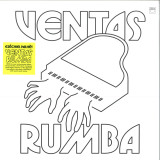
With his new instrumental album Ventas Rumba, the French composer (and singer) returns to his signature instrument, the piano, blending it with warm synth tones. This album represents a "return to his roots ", allowing Ezéchiel Pailhès to reinvent himself in a seamless way while still exploring ballads and ritornellos, halfway between light-heartedness and melancholy. Ezéchiel Pailhès has been meaning to write a solo piano album for as long as he can remember. Hardly surprising, of course, for this academically-trained pianist, brought up on classical music and then studied jazz. Yet, since his 2001 debut with the electro-pop duo Nôze, and his subsequent four albums, the artist had constantly postponed this project that was so close to his heart. Then in 2022, just as he was getting ready to start producing an album of new songs, this long-standing aim finally materialized.
The melodies he wrote seemed to stand on their own naturally, spurring him on to compose this series of fourteen tracks, recorded in sessions split between France and Latvia.
A new piano: the Una Corda
Ezéchiel wanted this project dedicated to the piano to begin a new narrative, to explore new instrumental terrain and new tones, something far removed from the familiar piano he has been playing all his life. He opted for the Una Corda piano, designed by David Klavins, a groundbreaking instrument builder renowned for his distinctive pianos with vertical shapes and frames.
The Una Corda, created in 2014, is an upright piano with a single string per note (unlike three strings on traditional pianos). Enticed by the "crystalline and unique" tones of this instrument, which is hard to find in France, Ezéchiel travelled to Kuldiga, Latvia (where David Klavins set up his workshops and studios), to record the first part of the album. Although the title of the album may initially conjure up images of a distant, sensual dance, the reality is quite different. Ventas Rumba indeed refers to the waterfall and rapids (in Latvian: rumba) of the river Ventas, which runs near this small village in the western part of the country. Ezéchiel chose to blur the lines, as the sound and musicality of the title likely evoke both his short stay in the Baltic country, and also a form of distant exotic imagery perfectly in tune with his own mischievous wit. Tracks as short stories
Back in France, Ezéchiel enhanced the first tracks recorded in Kuldiga with subtle synth tone layers, and added other tracks composed and recorded at his Montreuil studio. The album reflects a deliberate and sensitive orchestration of piano, synth keyboards and digital effects, as he puts it: "playing to erase the differences between the tones of the various instruments", as if each instrument's texture echoed the others. According to Ezéchiel, you can listen to Ventas Rumba as you would leaf through "a collection of short stories", through compositions that rarely exceed three minutes and evoke figures of movement, lightness, curves or modulation, such as "La ligne", "La valse des singes" or "Fly Finger". Others more seriously relate to a kind of spirituality, which quietly infuses such different tracks as "Ferveur", "Éclair" and "Louanges". Ezéchiel adds: “I’m by no means religious, but I like what God has managed to get musicians to achieve (laughs)". "Louanges", for instance, despite its electronic edge, "refers to Olivier Messiaen, a very devout composer who I greatly admire". Other tracks are directly inspired by the classical music he listens to on a daily basis. For example, Chopin's “8th Nocturne” formed the backdrop of “Pianovado”. Likewise, the harmonic structure of Beethoven's “Waldstein Sonata No. 21” inspired “Opus 53”. Aside from these multiple references and inspirations, which quickly recede behind a style that is uniquely his, Ezéchiel Pailhès keeps exploring ideas already found on his first solo albums, this time in an instrumental format, undoubtedly purer, fostering an imaginary world that evokes the shapes and themes of ballads, ritornellos, light-heartedness, passing time, reverie or a universal subdued melancholy.
This compilation collects a number of 7" singles produced by Audio Productions Ltd. in Kenya's capital Nairobi in the first half of the 1980s and released on the Wendo, Lulus, Mlima and APL imprints. The bands featured on this release are the New Gatanga Boys, Ruwengo Bros Band, Banana Hill Band and Les Victoria 'C' Kings from Kenya, Les Moto Moto and Orch Les Volcano from Tanzania (the latter being led here by Charles Ray Kasembe after the death of the legendary Mbaraka Mwinshehe). The closing track is by Orch Zaituken Band, whose name is a contraction of the countries its members came from: Zaire (now Democratic Republic of the Congo), Tanzania, Uganda and Kenya. The group is emblematic of the Kenyan capital's role as a magnet for East African musicians seeking to earn a living by recording and playing live in the 1970s and 1980s.
No Wahala Sounds are proud to bring you this latest collection of rare 45s from the golden era of benga and rumba, which have never been released outside Kenya before.
- 01: Kangundo D Boys - Mpenzi Maggie
- 02: Kyanganga Boys Band - Ivinda Ya Tene
- 03: Nyeri Honey Boys - Ndikwenda Kwanangwo
- 04: Kangundo D Boys - Mbarak Mwinshehe
- 05: Kirurumo Boys - Mwendwa Wama
- 06: Kali Kali Boys - Ungwana Ni Tabia
- 07: Kirurumo Boys - Njeri
- 08: Nyeri Honey Boys - Nowe Wecuka
- 09: Kyanganga Boys Band - Kyalo Kya Sikimu
- 10: Kali Kali Boys - Mchezo Wa Panya
This album is a celebration of benga and rumba music recorded in Nairobi, Kenya in the early 1980s. The five Kenyan groups chosen all feature "Boys" in their band names in one form or another; a common theme in Kenyan music at that time.
The tracks selected were all released as 7" vinyl singles on the Boxer, Lulus and Hit Parade labels, which were all part of Babu Shah's Audio Productions stable. This is the first time they have been released outside of Kenya.
No Wahala Sounds are proud to bring you these lost musical gems and would like to thank Doug Paterson for digital clean up from the original vinyl.
Due for release on 09 April 2021. Interest for airplay from Tom Ravenscroft and Gideon Coe from BBC 6 Music, DJ Ritu from Resonance FM/SOAS Radio, Roger Hill from BBC Merseyside, Steve Barker from BBC Lancashire, and DJ Debbie Golt from Resonance FM.
Catalan Gypsy singer from Perpignan France has been making waves in the Gypsy Rumba scene with his new album "El Mundo".. prompting the release of this 12" Vinyl EP of his tune "La Rumba Me Va" with Remixes from Ashley Beedle, Art of Tones, Raph Dumas and Jeff The Fish covering several different styles from classic House, New Disco, Soul and Latin Jazz. There's something a little different here for the DJs... Gypsy goes global!
Bristol stalwarts October & Borai join forces once again for their second outing on Happy Skull. The pair join the dots between sleazy EBM and rugged, hardcore atmospherics.
Lead track 'Fatal Rumba' is a titanium plated slab of latin funk for freakier, late night dance floors. On the B-Side 'Swipe Left' drops the tempo but turns the pressure up to boiling point, a chugging drum machine workout complete with pulsating 303's and dub techno chords. To round things off, Conch bosses Bash & T give 'Swipe Left' the full UK treatment, flipping it to a mutant funky roller.
The Disco music fever was also present in the Rumba and Flamenco scene of Spain in the late '70s / early '80s. Producers, sound engineers and studio musicians, collaborated closely with flamenco / rumba singers and bands, highlighting the productions that genius Josep Llobell did for the Belter label in Barcelona. Here you got 12 disco-rumba-flamenco bombs, a time machine to the boites and discotheques of the late 70s and the perfect soundtrack to an imaginary Kinki' cinema soundtrack.
Featuring Sangre Gitana, Rumba 3, Tobago, Los Gachós, La Marelu, El Turronero...
Insert with liner notes by Txarly Brown and photos.
Analog Africa has now the privilege to present 11 tracks by Verckys et L'Orchestre Vévé at the height of their most funky capabilities.
Compiled over the course of many years in a land of hardship, we welcome you to the grooviest era of the Congo.
Congo's turbulent and exhilarating '70s: Nightclubs and dance floors were packed to the brim in the capital, Kinshasa. Exuberant crowds, still giddy from independence
a decade prior, grooved to the sounds of the country`s classics. In fact the whole continent was submerged into the Congolese Rumba craze. Encouraged by the fantastic
productions of the Ngoma label, vibrant radio waves had been spreading the Congo sound from Leopoldville all over the continent, becoming the countries' No.1 export.
- A1: Amor Verdadero
- A2: Alto Songo
- B1: Habana Del Este
- B2: A Toda Cuba Le Gusta
- C1: Fiesta De La Rumba
- C2: Los Sito' Asere
- C3: Pío Mentroso
- D1: María Caracoles
- D2: Clasiqueando Con Rubén
- D3: Elube Changó
'A Toda Cuba le Gusta', the classic debut album by the Afro-Cuban All Stars. The frst in a trilogy of extraordinary albums recorded by World Circuit in a single two-week session
at Havana's EGREM studios, 1996. The other albums, which share many of the same personnel, were 'Buena Vista Social Club' and 'Introducing Rubén González'. Remastered by Bernie Grundman from the original analogue tapes and now available
for the frst tme on double 180gm heavyweight vinyl, housed in a gatefold sleeve and presented alongside a 32 page booklet as part of World Circuit's classic album series. Plays at 45rpm.
- A1: Tomoko Soryo - I Say Who
- A2: Taeko Ohnuki - Kusuri Wo Takusan
- A3: Minako Yoshida - Midnight Driver
- A4: Nanako Sato - Subterranean Futari Bocci
- B1: Haruomi Hosono - Sports Men
- B2: Izumi Kobayashi - Coffee Rumba
- B3: Foe - In My Jungle
- B4: Akira Inoue, Hiroshi Sato, Masataka Matsutoya - Sun Bathing
- C1: Hiroshi Satoh - Say Goodbye
- C2: Yukihiro Takahashi - Drip Dry Eyes
- C3: Masayoshi Takanaka - Bamboo Vender
- C4: Shigeru Suzuki - Lady Pink Panther
- D1: Haruomi Hosono, Takahiko Ishikawa, Masataka Matsutoya - Mykonos No Hanayome
- D2: Yasuko Agawa - La Night
- D3: Hitomi Tohyama - Exotic Yokogao
- D4: Tazumi Toyoshima - Machibouke
Pacific Breeze is a collection of choice cuts that range from silky smooth grooves to innovative techno pop bangers and everything in between.
Long-revered by crate diggers and adventurous music heads, this music has never been released outside of Japan until now. Including key artists like Taeko Ohnuki and Minako Yoshida, as well as cult favorites Hitomi Tohyama and Hiroshi Sato, the long-awaited release also features newly commissioned cover painting by Tokyo-based artist Hiroshi Nagai, whose iconic images of resort living have graced the covers of many classic City Pop albums of the 1980s.
Many of the key City Pop players evolved from the Japanese New Music scene of the early '70s, as heard on Light In The Attic's acclaimed Even a Tree Can Shed Tears: Japanese Folk & Rock 1969-1973, the first release of the ongoing Japan Archival Series. In fact, you could say City Pop set sail with a champagne smash from Happy End, the freakishly talented subversives who included amongst their ranks Haruomi Hosono and Shigeru Suzuki, both featured on this compilation. As Michael K. Bourdaghs noted in his book, Sayonara Amerika, Sayonara Nippon, this music was, 'Deconstructing the line between imitation and authenticity.' Some of the best City Pop teeters in this zone—easy listening with mutant exotica, tilted techno-pop, and steamy boogie bubbling beneath the gloss.
2xLP housed in a deluxe wide spine jacket with over sized fold-out booklet, full color printed inner sleeves, and custom die-cut obi card
- A1: Hyper On Experience - Lift Me Up (Luna-C Remix
- A2: Pete Cannon - The Box (Sunny & Deck Hussy Remix
- B1: Alex Jungle - The Need In Me (M-Project Remix
- B2: Shadowplay - Calling Me (Clayfighter Remix
- C1: Wislov - You Make Me Happy (Audio X Remix
- C2: Paul Bradley - Magic (Empyreal Remix
- D1: Sunny & Deck Hussy - Only You (Mannik Remix
- D2: Ant To Be - Nobody Likes Me (Scartat Remix
- E1: Demcore - Believe (Ant To Be Remix
- E2: Rock Deh Riddum (Dj Ham Remix
- F1: Anglerfish & Lucider - Rumba! (Shoreman Remix
- F2: Audio X - Set Your Feelings Free (Liquid Remix
* This triple pack LP is the 100th release from Kniteforce Records, and is a showcase for the brand new 'old skool' styled hardcore. Containing a spread of big name artists from the originals, such as Liquid, Hyper On Experience, Luna-C, Alk-e-d, Dj Ham and Future Primitive, to newcomers such as Pete Cannon, Alex Jungle and Ant To Be, every track slams home the new old sound of today (yesterday) with the style and competence expected from the Kniteforce Family. Full of variety, and the very essence of the music from 1991 - 1996, this is not to be missed!
Club / DJ Support
Billy Bunter, the Fat Controller, Glowkid, Slipmatt, Dj Jedi, Dj Luna-C, Dj Brisk, Clayfighter, Jimni Cricket, Bustin, Sc@r, Doughboy, Saiyan, Dave Skywalker, Ponder and many others
- A1: Canto De Amor Jayeechi
- A2: Quitiplás
- A3: Punto Oriental
- A4: Rumba Callejera
- A5: Percusión Con Platos
- A6: Tamboritas De Fulía
- A7: Jujuta
- A8: Tambor De Palma
- B1: Saludo A San Juan Bautista
- B2: Campana De Los Diablos De Chuao
- B3: Canto De Pilón
- B4: Joropo Estribillo
- B5: Marimba Indígena
- B6: Carrizos Con Baile
- B7: Tambor De Los Diablos De Yare
- B8: Canto Yekuana
"After a concert of Kenyan singer Ogoya Nengo in Berlin in 2015 in a pleasant conversation Guillermo Lares told me about his father, Oswaldo Lares, a studied architect who, parallel with his professional activity, began to make field recordings of the traditional and indigenous Venezuelan music from the early 1960s onwards up until today.
His search and fascination for finding the musical roots of his country led Oswaldo Lares to visit the rural villages outside Caracas, investigating the many and varied musical cultures of the region and the complex relationship between Venezuelan folk music and its various origins, including the African (mu´sica afrodescendiente).
The vast amount of music documents in the form of sound recordings, photographs and videos accompanied by notes and studies reflect the scope of this entirely self- taught sound engineer's work and represent a passionate documentary, making his work today one of the most comprehensive and systematic that has ever been assembled by a single person in Venezuela. Oswaldo Lares as an ethnomusicologist remained an amateur in the most direct meaning of the word: amare. Whereas most studied ethnomusicologists travel around the world to explore far away continents and foreign cultures, Oswaldo began to devote much of his spare time to the generally overlooked folk traditions that existed right in his very neighbourhood.
Currently Guillermo Lares has started to promote his father's work through the Achivolares Foundation, turning it into a living archive that preserves an essential part of Venezuelan musical memory. It is a pleasure and honor of our label TAL to support the invaluable work of Oswaldo and Guillermo Lares with this album."
- A1: Los Nickelos - Emilie Cha Cha
- A2: Lembe Carlos - Koko
- A3: Yeye National - Eldorado
- A4: Los Nickelos - Endende
- A5: Ebuka Ebuka - Poso Na Yo Egilite
- A6: Afro Negro - Si Me Quierre
- B1: Ba Bolingo - Mi Mambito
- B2: Ebuka Ebuka - Merengue Soucouss
- B3: Afro Negro - Princessia Nono
- B4: Los Nickelos - Guarache Fredo
- B5: Ebuka Ebuka - Mpenzi Niambiye
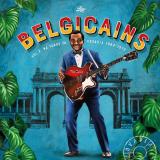
Following the sold-out first volume, the Belgian label Covadia presents a second chapter of Les Belgicains, focusing on the European rumba created by Congolese students in Belgium during the 1960s.
Volume 2 includes 11 rare tracks originally issued on 45 rpm singles or never released before. Highlights include the dancefloor favourite “Guaracha Fredo” by LOS NICKELOS and previously unreleased recordings by the orchestra EBUKA EBUKA, like the swinging “Merengue Soucouss” and the emotional “Mpenzi Niambiye”. The songs unmistakably express a longing for recognition and for a rightful place for a new nation.