Tom Misch’s long-awaited sophomore album Full Circle finds the London-based artist, songwriter, and producer at his most personal and honest. Exploring the moments that have shaped him over the last four years: family, friendships, nature, and celebrates the work of finding his way back to himself. Made during his time spent between London, Cornwall, Portugal, and Nashville with a focus on classic songwriting, honing a collection of eleven timeless songs including the previously released singles ‘Old Man’ and ‘Red Moon’. While Full Circle contends with some of quieter moments of the last four years, it remains optimistic and effortlessly listenable, anchored by unadorned vocals and a warm, analogue sound. And the beauty of Full Circle lies in the universality of its lyrics, inviting listeners to inhabit Tom’s world or trace their own path within it. Full Circle stands as both a reflection of his journey and a statement of ongoing evolution.
Search:run x
CRAZY LTD run !
A crazy bloody mother fucking record !
At the end of the day, between the artists and the producers that was the game tosay :
peaple are dmn crazy not to run on this shit... or they are shit...
don't let them win :)
100 LTD white Label from the Beat Grafters gang.
Just have a few !! HURRY UP !!
- A1: So Much Things (1979 Dubplate Mix)
- B1: Hot Steppers
Apex militant late '70s style here, if you think you are into steppers you should have this one firmly in your sights. One of Mr. Smart's hardest records, this originally appeared only as an album track, but also had some fame as a dubplate played at the time by Jah Shaka and others. We've long had that cut in our sights, and while some nice new re-mixes of this tune appeared in the last few years, here is the real thing from '79 steel. The A-side features the raw dubplate cut vocal, no horns or other adornment, HARD to the point stepping drum and bass style. The B-side features the original Gussie Clarke dub mix aptly titled "Hot Steppers", also previously released only on album. This cut as well was run on dubplate back at the time, a killer mix with full horns but no vocal. Leroy Smart is one of our all time favorite artists and we take pride in having re-released a handful of his all time best records, this one now added to that list.
- A1: Philip Smart - Get Smart Theme
- A2: Sammy Levi - Come Off The Road
- A3: Lilly Melody - Promotion & Stripe
- A4: Scion Success - Cry Fi Mi Girl
- A5: Tom And Jerry Horns - Autumn Leaves
- B1: Tony Tuff - Hit And Run
- B3: Shelene - Where Does It Go From Here
- B4: Frankie Paul - Plastic Smile
- B5: Half Pint - Don't Try To Use Me
Following our well received "Prince Philip Presents..." 2LP compilation, here's a lovely overview of the second phase of Philip's career, as engineer & producer at his own studio, HC&F. These ten tracks comprise our favorites from his production catalog, spanning the mid '80s when the studio really got going, right up until 1996 and his last set of proper productions. The album holds a mix of well known classics like the Garnett Silk, lesser known album only cuts like the Frankie Paul, NY dancehall 12" staples like the Scion Success or Shelene, as well as some lesser known gems. We'd be remiss in not mentioning that this album also contains two previously unreleased cuts - a wicked mid '80s Tony Tuff, and the wild vocoder laden 1985 theme song for Philip's "Get Smart" radio show, which ran for many many years on New York University's WNYU radio station.
long content, you may need to expand row to see all... • Warren Zevon’s final concert, recorded August 9, 2002 at the Edmonton Folk Music Festival, available for the first time
• Features “Werewolves Of London,” “Poor Poor Pitiful Me,” “Lawyers, Guns & Money,” “Play It All Night Long,” and more
• Double LP with etched 4th side and liner notes fromlongtime Zevon band member and friend Matt Cartsonis, who accompanied Warren during this performance
• Available for on opaque metallic silver vinyl
One of my favorite repeatable moments in our sets was looking over when he was singing that line from “Don’t Let Us Get Sick”: “I’m lucky to be here with someone I like . . .” to find him looking at me. That’s some pure and precious stuff, and I’m immensely grateful for the memory.
—Matt Cartsonis from his liner notes
Luckily, 2025 Rock & Roll Hall of Fame inductee, Warren Zevon left us with a treasure trove of nearly four decades of incredible songs and performances. Neither Warren, nor his long-time band member, accompanist, and friend Matt Cartsonis, nor the 14,000 people in attendance at the Edmonton Folk Music Festival knew this would be Warren’s final concert—it was just another great performance from an exceptional songwriter and artist. Epilogue: Live At The Edmonton Folk Music Festival offers you the chance to experience it for the first time, or relive it if you were there.
Featuring Warren on guitar, harmonica, and piano, with Cartsonis adding guitar, dulcimer, fiddle, harmonies and more, the pair run through classics like “Werewolves Of London,” “Poor Poor Pitiful Me,” Lawyers, Guns And Money,” and “Play It All Night Long.” The set also features a performance of the song “Dirty Life And Times,” only ever played twice! The pair found room in the set to pay tribute to Canada with a cover of Joni Mitchell’s “A Case Of You” and the traditional, “Canadee-i-o.”
Available on double metallic silver Vinyl (with etched fourth side), Epilogue: Live At The Edmonton Folk Music Festival has been mastered and restored by multiple Grammy-winning engineer Michael Graves and Jordan McLeod of Osiris Studio with Matt Cartsonis. Cartsonis also adds poignant liner notes about the performance, and insight into his musical relationship and friendship with Zevon.
Epilogue: Live At The Edmonton Folk Music Festival is a gift from a truly legendary singer and songwriter. Play it all night long, indeed.
long content, you may need to expand row to see all... Mutant freut sich, in Zusammenarbeit mit Milan Records das offizielle Soundtrack-Album zu Edgar Wrights Sci-Fi-Action-Thriller The Running Man zu veröffentlichen.Das Album enthält die Original-Filmmusik des Oscar-Preisträgers Steven Price (Gravity, Last Night in Soho, Baby Driver). The Running Man, bei dem Wright als Co-Autor und Regisseur fungierte, handelt von einem Vater aus der Arbeiterklasse, der alles daran setzt, seine kranke Tochter zu retten. Er nimmt an einer tödlichen TV-Gameshow teil, in der die Kandidaten 30 Tage lang überleben müssen, während sie von Profikillern gejagt werden. Durch seinen Instinkt, seinen Widerstand und seine Entschlossenheit wird er zum unerwarteten Publikumsliebling – und zu einer Bedrohung für das gesamte System.Wir sind große Fans von Edgar und Steven und freuen uns sehr, dass sie uns erneut ein fantastisches Kinoerlebnis bescheren. Steven Prices Score für The Running Man ist eine schillernde Mischung aus treibenden Beats, brodelnden Synthesizern und traditionellen orchestralen Elementen, die vor Einfallsreichtum und Stil nur so sprühen. Das Hauptthema besitzt eine elegante, zeitlose Qualität mit üppigen, beruhigenden Streichern, die eine hypnotische Melodie weben. Im Gegensatz dazu stehen die Titel der Gameshow-Sequenzen, die wirklich unterhaltsam, bombastisch und im Retro-Stil gehalten sind – was wiederum einen Kontrast zu den düstereren, dystopischen Stücken bildet, die im gesamten Werk verteilt sind. Im Film wirkt die Musik wie ein weiterer Charakter, der die Geschichte vorantreibt. Als eigenständiges Hörerlebnis ist sie fesselnd, dynamisch, macht großen Spaß und fängt die vielen Facetten und Stimmungen des Films perfekt ein.Die Vinyl-Edition mit dem Artwork von Luke Preece ist auf zwei farbige 140g-LPs gepresst. Sie enthält ein „The Truth“-Zine als Replika aus dem Film mit exklusiven Liner Notes von Edgar Wright und Komponist Steven Price.Ebenfalls auf CD erhältlich.
- 1: Live From Mumbai 00:36
- 2: No Other Than 04:03
- 3: Powerman & Iron Fist (Fighting Without Fighting Version) 0:00
- 4: Sure Shot! 03:32
- 5: Fresh Like Dougie 04:42
- 6: How To Cut & Paste (Lesson 1) 04:54
- 7: Audobahn 03:56
- 8: All Out War 03:46
- 9: Break Down 03:24
- 10: Golden Crown (Feat. Oxygen) 04:52
- 11: Fashion Plate 04:13
- 12: Sister Of Phyllis Diller 04:01
- 13: Heroes Of The East (Feat. Paten Locke) 04:21
- 14: The Pack Up (Part 3) 02:44
RED & YELLOW SPLATTER Vinyl[29,20 €]
Expanded Edition Double Cassette Box Set including main album and Bonus Cassette with unique download cards
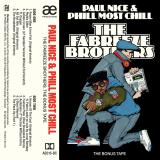
AE Productions in association with Sure Shot Recordings and In Effect Recordings are pleased to announce a 10 Year Anniversary Edition of the critically acclaimed Phill Most Chill and Paul Nice album as the Fabreeze Brothers.
The hugely successful first edition which was pressed on colour vinyl and supplied in double fold out sleeve sold out in only 2 weeks from release date and then the 2nd pressing black vinyl edition sold out a little while later but has for years been out of print but is increasingly requested by shops, via email, social media, AE Productions website back in stock requests, etc…
As it has been 10 years since original release back in 2015 at the time of proceeding with manufacturing, it was the perfect opportunity to do a 3rd pressing to mark the anniversary but we had to pull out all the stops for a 3rd run of this incredible album and also make it subtly different again in packaging design from the 1st and 2nd pressings so that each has it’s own particular feel and quality.
With help from the original designer and all-round vinyl artwork supremo Mr Krum we have found some nice adjustments for the gatefold sleeve where the detail from the insert sheet found in the original issues is incorporated into the inside panels of the sleeve. We have also tweaked the hype sticker to mark the 10th Anniversary Edition and updated the vinyl labels so as to work better with the new Splatter vinyl which follows the original red and yellow vinyl but each splattered with the opposite colour.
For something a little extra we have compiled a Limited Expanded Edition Double Cassette Box Set that includes the original album and also a ‘Bonus Tape’ which features all of the remixes, alternate versions, Original Versions of album cuts and bonus tracks found on B-sides of the array of singles and we included for good measure 2 tracks that only appeared on the promotional only LP sampler that ended up being different on the final release. This is limited to cassette just for the non-vinyl heads as all of these tracks already appear on vinyl. The outer box is A5 card in black with gold foil Fabreeze Brothers logo and comes with discography booklet.
‘The Bonus Tape’ from the box set is also available as a standalone cassette release with alternate j-card art work so that it has it’s own flavour and so that anyone that purchased one of the original run of cassettes that sold out before we could even ship any copies, did not need to purchase the main album again unnecessarily and to make it noticeable from the Expanded Edition Box Set version.
This version also has an alternate shell design in keeping with the clear shell with dark liner that was commonplace back in the 90’s and the cassette geeks may note the red text on the spine as was also a common design back then – giving this a pseudonym of ‘the 90’s tape’ during the design process.
We couldn’t stop there so we also have an extremely low quantity Limited Edition Mini Disc version which is the main album plus 8 of the bonus tracks from The Bonus Tape – only missing the 2 least significant alternate versions but clocking in at just a few seconds under 80 minutes – the absolute maximum for the format! Mini Disc???!!! You’re probably asking – yes!
While looking into the cassette duplication options we realised that the duplicator also offers Mini Disc production so we thought that it may be worth doing a very small run just because not only are professionally manufactured Mini Disc’s rare in Hip Hop, they are rare within the entire music industry as they never really took off as a medium to purchase music but ended up as the choice for home recorded Walkman and car use. Indeed, AE boss Mr Fantastic still has his main machine, portable and old discs. Amazingly also, the sleeve artwork transferred brilliantly to the Mini Disc template. They are manufactured using high quality Sony discs using ATRAC 4.5 codec.
All releases are supplied with unique free download codes on cards that are included inside the packaging but also with the Expanded Edition cassette and Mini Disc having 2 cards – 1 for the main album and a 2nd card for ‘The Bonus Tape’. The free downloads are supplied direct from Phill Most Chill’s Bandcamp page keeping it independent.
- A1: Wolf's Theme
- A2: Harappā
- A3: Body And Soul
- B1: Doxie
- B2: Chattanooga Choo-Choo
- B3: I Can't Get Started
- B4: Viva Giappone
During his time with the Yosuke Yamashita Trio, Nakamura poured his entire being into every note, weaving flashes of inspiration and raw impulses into powerful blows in the early 1970s. With this work, he undergoes yet another transformation. As Nakamura himself described: “Sharing space with everyone, feeling as if we’re flying freely like birds that’s the ideal.” Here, layers of sound and moments of silence expand the sonic space, and within it, Nakamura’s saxophone runs vibrantly and unrestrained.
Highlights include the exhilarating “Wolf’s Theme”, inspired by Kazumasa Hirai’s Wolf Guy series; the nostalgic melodies and relaxed groove of “Harappa”; elegant, richly textured interpretations of standards like “Body & Soul” and “I Can’t Get Started”; and the dynamic, liberating energy of “Viva Giappone”. In every track, Nakamura’s ideal is vividly realized. Featuring contributions from Toshiyuki Daitoku, Aki Takase, and Ryojiro Furusawa.
- A1: Escalier
- A2: L'ile Perdue
- A3: Le Bal
- A4: Sur Le Chemin De L'école
- A5: L'ile La Nuit
- A6: Holidays(S)
- B1: Robot Rêveur
- B2: Dernier Vol
- B3: Pas De Côté
- B4: Cavalière De L'aube
- B5: Idésia
- B6: Balayeur De L'espace
The duo’s debut album sets off on an airy, groovy odyssey.
Recorded at the legendary La Frette studio (Parcels, Fontaines D.C.), the album follows an extensive period of demo development.
Immersed alongside outstanding musicians, the team worked in a relaxed, old-school spirit: a handful of takes, tape recording, and analog gear. Plenty of space was left for ideas to emerge organically in the studio. The arrangements—synthesizers, flute, backing vocals, percussion—were then carefully refined over many months.
"Idésia" stands out for its delicate production, brought to life by Maxime Kosinetz on recording (Oracle Sisters, Bon Voyage Organisation), Stan Neff on mixing (Andrea Laszlo de Simone, Polo & Pan), and Chab on mastering (Daft Punk, La Femme).
The record unfolds across changing sonic landscapes, with Will’s voice gliding over melodies rooted in a bright, warm groove. A subtle blend of pop and Californian warmth runs throughout the album.
The album explores themes of childhood (Sur le Chemin de l’École, L’Île Perdue), ecstatic escapes (Holiday(s), Pas de Côté, Escalier), and simple pleasures (Le Bal, Cavalière de l’Aube). It also casts a poetic eye on the evolution of the world (Dernier Vol, Robot Rêveur, Balayeur de l’Espace). Will & Paul play with contrasts, shifting perspectives along the way.
"Idésia" is the imaginary world in which Will & Paul gracefully lose themselves - a suspended place between nostalgia and science fiction, as if their silhouettes were drifting from a bright, carefree past toward a place suspended in time.
- Sumba Ale
- La Luna
- Malvada
- Mi Bombo
- La Vida Es Un Baile
- La Memoria De Justino
- Si Yo Fuera
- Todo En Vida
- Ojunjo
Nuevos Ríos ist das neue Projekt, das aus der Zusammenarbeit zwischen der legendären kolumbianischen Band Canalón de Timbiquí, angeführt von der unverwechselbaren Stimme von Nidia Góngora (Quantic, Ondatrópica, The Bongo Hop), und dem in Toulouse ansässigen Trio Reco Reco entstanden ist, das für seine Erkundungen tranceartigen Rhythmen aus Südamerika und darüber hinaus bekannt ist. Als neueste Kreation der pulsierenden kolumbianischen Szene, die sich durch vielfältige Hybridisierungen auszeichnet, bietet Nuevos Ríos einen atemberaubenden Einblick in die afro-kolumbianischen Traditionen der kolumbianischen Pazifikküste, ergänzt durch elektronische und verstärkte Elemente. Das Ergebnis ist beeindruckend: eine Odyssee, die nie von ihrem Kurs abweicht, Grenzen überschreitet und die Zuhörer auf die Entdeckung eines neuen Flusses voller gewundener Pfade mitnimmt. In dieser Musik spüren wir tropische Hitze, die verkörperte Kraft musikalischer Traditionen und den Schweiß europäischer Tanzflächen in einem einzigartigen Cocktail - sofort süchtig machend, manchmal introspektiv und immer unwiderstehlich tanzbar. Das Projekt entstand an den Ufern des Flusses Timbiquí und nahm durch die Begegnung zwischen Canalón de Timbiquí - der Gruppe, die von Maestra Nidia Góngora gegründet wurde, deren faszinierende und sofort erkennbare Stimme Projekte wie Quantic, Ondatrópica und The Bongo Hop geprägt hat - und Reco Reco, leidenschaftlichen Entdeckern tranceartiger Musik, insbesondere aus Südamerika, Gestalt an. Weit abseits der ausgetretenen Pfade, im Herzen der kolumbianischen Pazifikregion, fanden die beiden Gruppen auf natürliche Weise im Dorf Timbiquí zusammen, dem Ursprung der Musik von Canalón und von Nidia Góngora selbst. Durch eine Reihe von improvisierten Jam-Sessions im Erdgeschoss von Nidias Haus wurde die Verschmelzung ihrer Musik zu einem offensichtlichen Weg - geboren aus dem gemeinsamen Wunsch, aufmerksamen Zuhörern die Kraft dieser menschlichen und musikalischen Begegnung zu offenbaren. Dieses erste Kapitel, veröffentlicht bei ZZK Records - einem Label, das dafür bekannt ist, südamerikanische Juwelen zu entdecken (Son Rompe Pera, Nicola Cruz, La Yegros_) - wird von der einzigartigen Komposition und Klangfarbe von Nidia Góngora getragen. In den Tracks findet jedes Element des Ensembles seinen richtigen Platz: Die Kraft der kolumbianischen Pazifik-Percussion und die Poesie der Marimba de Chonta fesseln uns mit einem würzigen Gitarrenriff, das nie weit von Westafrika entfernt ist; die Stärke der Stimmen wird durch elektronische Texturen noch verstärkt, während sich Schlagzeug und Bass zu einem doppelten Motor für das gleichnamige Schiff Nuevos Ríos verbinden. Die Texte erzählen vom Alltag in enger Verbindung mit der Natur, rund um einen Fluss, der sowohl eine zentrale Verkehrsader als auch ein Kanal des Austauschs ist - ohne die harten Realitäten einer Region zu verschleiern, die von den internen Konflikten Kolumbiens gezeichnet ist. Und vielleicht ist diese Musik bereits eine erste Antwort auf einige dieser Wunden, in Form eines Rituals der kollektiven Feier. Das selbstbetitelte Debütalbum bietet eine einzigartige Perspektive auf das afro-stämmige Erbe der kolumbianischen Pazifikküste - ergänzt durch die Kraft verstärkter und elektronischer Musik. Man spürt die Wärme der Tropen, die Kraft der perkussiven und vokalen Traditionen und den Schweiß europäischer Tanzflächen, was zu einem unwiderstehlich hypnotischen und zum Tanzen animierenden Ergebnis führt.
2LP 180gm heavyweight 45 RPM Audiophile Edition, Featuring a half speed remaster by Miles Showell at Abbey Road Studios, Housed in polylined inners, Printed insert with sleevenote. The Alan Parsons Project"s multi-million selling album The Turn of a Friendly Card (1980), their celebrated prog pop tour de force, is reissued in a variety of formats, including this 2LP heavyweight, 45 RPM Audiophile edition. Expertly cut by Miles Showell at Abbey Road Studios on a customised Neumann VMS 80 lathe at half speed using high-resolution archive transfers taken from Eric Woolfson"s rarely played, mint condition duplicate masters run at the time of the original sessions in 1980. Like other Alan Parsons Project albums, there were a variety of different lead vocalists employed including Chris Rainbow, Lenny Zakatek, Elmer Gantry as well as Eric Woolfson himself. Plus, a selection of session musicians such as guitarists Ian Bairnson and David Paton and drummer Stuart Elliott with arrangements by Andrew Powell.
- 01: Maanitus &Amp; Tšiižik
- 02: Markka
- 03: Melkutus
- 04: Letška
- 05: Kuuen Parin Hoirola
- 06: Brišatka
- 07: Tšiižik
- 08: Kirkonkellot
- 09: Kirkonkellot Korkea
- 10: Hoirola, 3 Parin
- 11: Lippa
- 12: Kyngäkiža
- 13: Ristakondra
- 14: Vanha Polkka
- 15: Viistoista
- 16: Vanha Valssi
- 17: Kiberä
- 18: Maanitus Kuokan Kanteleella
- 19: Tuuti Lasta Nukkumahe
Vinyl[22,65 €]
Death Is Not The End present a further volume of Arja Kastinen's eerie amalgamations of 110 year old wax cylinders with her own meticulously transcribed takes, this time focussing in on Armas Otto Väisänen's field recordings of kantele player Iivana Mišukka (b. 1861 d.1919).
"Ivana Mišukka (1861–1919) was one of the Karelian kantele players recorded by the folk music researcher Armas Otto Väisänen on wax cylinders in 1916 and 1917. In the early 20th century, the remote areas of Border Karelia were undergoing the final phase of a transformation in musical culture, with the ancient runo song tradition giving way to newer forms of music. This transition is reflected in Mišukka's repertoire and choice of instrument. The ancient small kantele, hollowed out of a single piece of wood, was already rare at the turn of the century. Mišukka's kantele was a new type of instrument with 26 strings, constructed of several parts, but he played it using the traditional plucking technique. Like other Border Karelian kantele players, his repertoire consisted of music rooted in runosong culture, as well as newer dances and songs from the east and west. Most of the recorded material falls into the latter category.
Ivan Bogdanov Mišukka was born out of wedlock in Suursara village, Suistamo, on 1 May 1861. He began playing the kantele at the age of five or six, quickly mastering the instrument. In adulthood, he was considered one of the area's best master players. Mišukka was landless for most of his life and lived in different parts of the Suistamo parish. His first wife, Tekla Markintytär, died in 1897 at the age of 40, and his second wife, Jevdokia Filipintytär Jeminen, died in 1907 at the age of 50. Seven children were born from the first marriage, two of whom died young. The third wife, Maria Ignatintytär Gurnan (Kuurnanen), was a well-known master of lamentations. Together with Maria, Iivana Mišukka worked as a tenant farmer in the village of Suursara. Mišukka suffered from rheumatism, which prevented him from participating in physical work like Maria. This was apparently partly the reason why Iivana Mišukka went to earn extra money by playing the kantele on gig trips. He often had other traditional artists from Suistamo as his travelling companions, such as the runosingers Konstantin Kuokka and Iivana Onoila. Iivana Mišukka died in Leppäsyrjä village, Suistamo, on 18 May 1919 at the age of 58, and his kantele was donated to Teppana Jänis.
Mišukka only used 14 of the 26 strings on his kantele, playing the same tunes either a fourth higher or lower. He tuned his kantele to the major scale using fifths, except for a low seventh scale degree on the upper strings, but not below the fundamental. Since he did not use the seventh note of the scale on the upper strings at all, he could use the major scale both lower and a fourth higher with this tuning. According to Mišukka, the sound of higher, or 'finer', strings is 'more beautiful', while that of lower ones is 'greater'. Among runosingers, the size of the thirds varied, ranging from major to minor to neutral. A similar phenomenon can be observed in kantele tunings, where the third, sixth and seventh scale degrees vary in a comparable way.
During a meeting, Väisänen suggested that Mišukka play the smaller kantele belonging to Konstantin Kuokka. The idea was to bring it closer to the horn to improve the recording quality. However, the kantele was completely out of tune, and now Mišukka tuned it to the Lydian scale (track 18).
Using the old plucking technique, Mišukka placed his right middle finger on the fundamental tone, his right index finger on the second scale degree, his left middle finger on the third scale degree and his left index finger on the fourth scale degree, and his right thumb on the fifth. The thumb also played the notes above the fifth note of the scale. As Mišukka remarked to Väisänen: 'Peigaloll' tuloo enemb ruadoa' (the thumb has to do more work). However, he did not use the seventh note of the scale on the upper strings at all. Below the fundamental note, he played the seventh and sixth notes of the scale with his right middle finger of and the fifth note of the scale with his right ring finger. This fifth scale degree below the fundamental is almost always used as a drone. Sometimes, when the melody required it, Mišukka, like other players, also varied the fingering. He would also occasionally strike the same string with the side of his fingernail after plucking it.
The wax cylinder recordings of Karelian kantele players are kept in the archives of the Finnish Literature Society in Helsinki, Finland. Copies were made of them onto reel-to-reel tapes in both the 1960s and 1980s. The 1960s copies are mono and the 1980s copies are stereo. However, not all kantele recordings from these decades have survived.
The sound of the kantele is difficult to hear in wax cylinder recordings due to its low volume, and it occasionally becomes completely obscured by noise. During the copying process, the cylinder sometimes rotates unevenly, resulting in breaks or jumps in the music. Additionally, the rotation speed of the cylinder in the copies does not correspond to the performance speed of the original music, which alters the pitch. However, since Väisänen's precise notes are available in the archive, it is possible to deduce the melodies, their speed, and the tuning level of the kantele in the recordings. Of the copies of the original recordings from the 1960s and 1980s, I have selected the one that best met the requirements of this publication and adjusted the speed of the recording to align with Väisänen's notes. To enhance the listening experience, I have replayed the songs, which now partly overlap the old recordings on this release."
— Arja Kastinen
- 01: Maanitus &Amp; Tšiižik
- 02: Markka
- 03: Melkutus
- 04: Letška
- 05: Kuuen Parin Hoirola
- 06: Brišatka
- 07: Tšiižik
- 08: Kirkonkellot
- 09: Kirkonkellot Korkea
- 10: Hoirola, 3 Parin
- 11: Lippa
- 12: Kyngäkiža
- 13: Ristakondra
- 14: Vanha Polkka
- 15: Viistoista
- 16: Vanha Valssi
- 17: Kiberä
- 18: Maanitus Kuokan Kanteleella
- 19: Tuuti Lasta Nukkumahe
Tape[16,39 €]
Death Is Not The End present a further volume of Arja Kastinen's eerie amalgamations of 110 year old wax cylinders with her own meticulously transcribed takes, this time focussing in on Armas Otto Väisänen's field recordings of kantele player Iivana Mišukka (b. 1861 d.1919).
"Ivana Mišukka (1861–1919) was one of the Karelian kantele players recorded by the folk music researcher Armas Otto Väisänen on wax cylinders in 1916 and 1917. In the early 20th century, the remote areas of Border Karelia were undergoing the final phase of a transformation in musical culture, with the ancient runo song tradition giving way to newer forms of music. This transition is reflected in Mišukka's repertoire and choice of instrument. The ancient small kantele, hollowed out of a single piece of wood, was already rare at the turn of the century. Mišukka's kantele was a new type of instrument with 26 strings, constructed of several parts, but he played it using the traditional plucking technique. Like other Border Karelian kantele players, his repertoire consisted of music rooted in runosong culture, as well as newer dances and songs from the east and west. Most of the recorded material falls into the latter category.
Ivan Bogdanov Mišukka was born out of wedlock in Suursara village, Suistamo, on 1 May 1861. He began playing the kantele at the age of five or six, quickly mastering the instrument. In adulthood, he was considered one of the area's best master players. Mišukka was landless for most of his life and lived in different parts of the Suistamo parish. His first wife, Tekla Markintytär, died in 1897 at the age of 40, and his second wife, Jevdokia Filipintytär Jeminen, died in 1907 at the age of 50. Seven children were born from the first marriage, two of whom died young. The third wife, Maria Ignatintytär Gurnan (Kuurnanen), was a well-known master of lamentations. Together with Maria, Iivana Mišukka worked as a tenant farmer in the village of Suursara. Mišukka suffered from rheumatism, which prevented him from participating in physical work like Maria. This was apparently partly the reason why Iivana Mišukka went to earn extra money by playing the kantele on gig trips. He often had other traditional artists from Suistamo as his travelling companions, such as the runosingers Konstantin Kuokka and Iivana Onoila. Iivana Mišukka died in Leppäsyrjä village, Suistamo, on 18 May 1919 at the age of 58, and his kantele was donated to Teppana Jänis.
Mišukka only used 14 of the 26 strings on his kantele, playing the same tunes either a fourth higher or lower. He tuned his kantele to the major scale using fifths, except for a low seventh scale degree on the upper strings, but not below the fundamental. Since he did not use the seventh note of the scale on the upper strings at all, he could use the major scale both lower and a fourth higher with this tuning. According to Mišukka, the sound of higher, or 'finer', strings is 'more beautiful', while that of lower ones is 'greater'. Among runosingers, the size of the thirds varied, ranging from major to minor to neutral. A similar phenomenon can be observed in kantele tunings, where the third, sixth and seventh scale degrees vary in a comparable way.
During a meeting, Väisänen suggested that Mišukka play the smaller kantele belonging to Konstantin Kuokka. The idea was to bring it closer to the horn to improve the recording quality. However, the kantele was completely out of tune, and now Mišukka tuned it to the Lydian scale (track 18).
Using the old plucking technique, Mišukka placed his right middle finger on the fundamental tone, his right index finger on the second scale degree, his left middle finger on the third scale degree and his left index finger on the fourth scale degree, and his right thumb on the fifth. The thumb also played the notes above the fifth note of the scale. As Mišukka remarked to Väisänen: 'Peigaloll' tuloo enemb ruadoa' (the thumb has to do more work). However, he did not use the seventh note of the scale on the upper strings at all. Below the fundamental note, he played the seventh and sixth notes of the scale with his right middle finger of and the fifth note of the scale with his right ring finger. This fifth scale degree below the fundamental is almost always used as a drone. Sometimes, when the melody required it, Mišukka, like other players, also varied the fingering. He would also occasionally strike the same string with the side of his fingernail after plucking it.
The wax cylinder recordings of Karelian kantele players are kept in the archives of the Finnish Literature Society in Helsinki, Finland. Copies were made of them onto reel-to-reel tapes in both the 1960s and 1980s. The 1960s copies are mono and the 1980s copies are stereo. However, not all kantele recordings from these decades have survived.
The sound of the kantele is difficult to hear in wax cylinder recordings due to its low volume, and it occasionally becomes completely obscured by noise. During the copying process, the cylinder sometimes rotates unevenly, resulting in breaks or jumps in the music. Additionally, the rotation speed of the cylinder in the copies does not correspond to the performance speed of the original music, which alters the pitch. However, since Väisänen's precise notes are available in the archive, it is possible to deduce the melodies, their speed, and the tuning level of the kantele in the recordings. Of the copies of the original recordings from the 1960s and 1980s, I have selected the one that best met the requirements of this publication and adjusted the speed of the recording to align with Väisänen's notes. To enhance the listening experience, I have replayed the songs, which now partly overlap the old recordings on this release."
— Arja Kastinen

- A1: Lonely Town Lonely Street
- A2: Let Me In Your Life
- A3: Who Is He (& What Is He To You)?
- A4: Use Me
- A5: Lean On Me
- B1: Kissing My Love
- B2: I Don't Know
- B3: Another Day To Run
- B4: I Don't Want You On My Mind
- B5: Take It All In & Check It All Out
black vinyl[34,41 €]
- Immer Ärger In Der Stadt
- Jj Cale
- Wer Wirst Du Gewesen Sein
- Tuta Lubosc
- Irgendwann Zu Spät
- Zarz Me Ksuse
- Moja Wutroba
- Pytas A Namakas
- Die Welt Ist Grausam
- New Orleans
- Bevor Du Gehst
- Wer Bist Du
- Werden Wir Jemals
- Kommt Die Nacht
- Willis Traum
Die 15 Songs sind eine Reise und zaubern uns mit der klassischen Rock-Group (Gitarre, Bass, Schlagzeug) sowie mit Slideguitar, Geige, Nyckel-Harpa, Chor, Klavier- und Orgelsounds bunte Bilder in den Kopf. Eine Mischung aus erdigem Blues - Country und Folkrock mit prägnanten Lyrics auf deutscher und sorbischer Sprache.Die Musik öffnet mit ruhigen, tiefen, gospelartigen Passagen Räume und bewegt sich bis hin zum Punkrock.Textlich handelt das Album vom Weg, den du mit der Zeit gehst, von den damit verbundenen Sorgen, vom Ringen mit dem Guten und dem Bösen, von Liebe, von Freundschaft aber vor allem von Hoffnung. Der Sound von J.J.Cale, Neil Young und Ry Cooder verschmilzt mit modernem Postpunk und kreiert etwas ganz eigenes. Ein Album mit vielen Ecken, Kanten und Rundungen.Jacke selbst nennt seine Musik Lusitzana, was eine Anspielung auf den Begriff Americana ist. Hier gehts jedoch um das Leben in den langsam austrocknenden Sümpfen und Wäldern der Lausitz, rund um die Spree - Wo die Wölfe heulen und die Schafe ins Gras beißen. Aber die Hoffnung stirbt zuletzt und der Rock wird siegen! (Henne)
Multi-platinum singer, songwriter and filmmaker Melanie Martinez returns with HADES, her long-awaited fourth studio album and first full-length release in three years. Following a career-defining run that has generated over 30 billion global streams, 5.54 billion YouTube views, and a worldwide audience of 62.2 million+, HADES arrives as the next chapter in a momentous ascent. Her previous three albums CRY BABY, K-12, and PORTALS, all debuted at #1 on the Billboard Alternative Albums chart, with PORTALS launching at #2 on the Billboard 200, cementing Martinez as one of alternative pop’s most innovative and influential forces.
Die mit mehreren Platinauszeichnungen geehrte Sängerin, Songwriterin und Filmemacherin Melanie Martinez kehrt mit HADES zurück, ihrem lang erwarteten vierten Studioalbum und ersten vollständigen Release seit drei Jahren. Nach einer Karriere, die über 30 Milliarden Streams weltweit, 5,54 Milliarden YouTube-Aufrufe und ein weltweites Publikum von über 62,2 Millionen Menschen hervorgebracht hat, erscheint HADES als nächstes Kapitel in einem bedeutenden Aufstieg. Ihre drei vorherigen Alben CRY BABY, K-12 und PORTALS debütierten alle auf Platz 1 der Billboard Alternative Albums Charts, wobei PORTALS auf Platz 2 der Billboard 200 und Platz 4 der deutschen Charts einstieg und Martinez als eine der innovativsten und einflussreichsten Kräfte des Alternative Pop etablierte.
- 1: Rock N Roll Is The Only Way
- 2: No Speed Limit For Destruction
- 3: Among The Remains
- 4: 10 Packs Of Smokes
- 5: Run Away
- 6: Time Bomb
- 7: Warriors Of The Wasteland
- 8: Fast Way To Die
- 9: Wild City Night
On their 3rd and final album INEPSY leave the D-Beat Punk behind in favor of some Tank meets Motorhead Bad Ass Hard Rock Motorcycle Metal.