Search:rush city

Styles
All
Niklas Paschburg - L'Ècho De Bretagne LP
  • 01: Paimpol
  • 02: Marché
  • 03: Le Port
  • 04: À La Maison
  • 05: La Vie Lente
  • 06: Bandes
  • 07: Adieu

A century-old grand piano, a secluded house surrounded by the greenery of Brittany, no internet connection, and a reel-to-reel recorder.L'Écho de Bretagne, the new EP by Niklas Paschburg, set for release from fall 2025 via Nettwerk Music Group, is a solo piano record as essential as it is intense. An album made of silences, space, slowness. A music that doesn't chase impact, but truth.

the album release is march 26th - 2026.

If his previous work, Mexican Alps (2025), marked the first time the German composer and producer created an ambient-electronic album without his instrument of choice, the piano, L'Écho de Bretagne emerges as a direct response to that absence. "It was exactly the lack of piano that brought about the need for this new record, which instead puts that instrument, so vital to me, at the very center, stripping everything else away," Niklas explains.

Born in 1994, Paschburg has shaped over the years a musical path deeply connected to travel, nature, and introspection. From his debutTuur Mang Welten(2016) toOceanic(2018),Svalbard(2020),Panta Rhei(2023), and the aforementionedMexican Alps— alongside soundtracks, remixes, and collaborations with artists like RY X, Hania Rani, Ásgeir, and Bryan Senti — his sound bridges neoclassical, electronic, ambient, and pop-driven composition.

WithL'Écho de Bretagne, the Hamburg-born, Berlin-based musician continues his exploration by seeking solitude in nature, much like he did onSvalbard, but this time with an even more radical choice: disconnecting completely from the internet, and switching off both computer and smartphone for a while, in order to fully immerse himself in his new music. "I rented an old cottage in Paimpol, Brittany, where I knew there was a grand piano," he recounts. "When I got there, I discovered that not only was the piano more than a hundred years old, but it was also of an unknown brand, never restored, and quite difficult to play. But that gave it a unique character, and I didn't give up. Sure, it was an instrument left to its own fate, I couldn't play anything too fast. But how fascinating was that? I'm convinced that setting limits, instead of giving yourself total freedom when composing, can become an extraordinary source of inspiration."

As for the decision to temporarily detach from a life that demands we stay constantly connected, Niklas describes it as both a creative and human experiment. "I had my laptop and phone with me, just in case, but I kept them turned off. That choice made me wantL'Écho de Bretagneto be a fully analog work, even in how it was recorded." A way of clearing the mind. "I don't think I've ever been as calm as I was during those days in Paimpol. Even though I was working on a very specific project and didn't have much time, that period was more relaxing than any vacation."

Not that it was free of hiccups. "I'd borrowed a reel-to-reel recorder small enough to travel with me, but after recording a session on the piano, I realized it wasn't working properly, the sound was distorted, full of crackles. I got worried, because I wasn't near any big city where I could find a technician. Luckily, I figured out the problem was the old tape reels I had brought along. That was the only time I had to go online, to order new ones. But it was just for a moment. I shut everything off again right after." At that point, Niklas was waiting for the new tapes to arrive. He found out, completely by chance, from a local UPS courier that they had been delivered to a nearby village. "Since my phone was off, I couldn't track the shipment. So one day I asked this delivery guy, who didn't know anything about it. But from that point on, we'd see each other daily and talk… That's what being disconnected also means: reconnecting with people around you, even strangers. It was thanks to that courier that I found out where the tapes had ended up. And he even helped me get them back, writing directions for me on a scrap of paper."

But there's another element that makes this new EP unique.L'Écho de Bretagnewas recorded entirely live; its tracks are all improvised, complete with their imperfections. This approach leads to a sound that is pure, profoundly organic, and deeply authentic, intentionally preserved to give the listener the feeling of a live performance happening in their own living room. The touch of fingers on the keys, the breath of the wood, the tension of the vibrating string, all become part of the music. There is no construction, only expression. "Even now, when I listen back to it, I feel that moment I gave myself to step away from everything: from reality, from words, from noise." The result is a collection of suspended melodies and atmospheres, reflecting a state of the soul. A refuge from the rush of time. A pause from the world.

pre-order now24.04.2026

expected to be published on 24.04.2026

25,00
Andy Fairweather Low - The Invisible Bluesman
  • My Baby Left Me
  • Rollin And Tumblin
  • Got Love If You Want It
  • Gin House Blues
  • Baby What You Want Me To Do
  • When Things Go Wrong
  • Matchbox
  • Mystery Train
  • So Glad You're Mine
  • Bright Lights, Big City
  • Lightnin's Boogie
  • Lifeis Good

Throughout a professional career defined by early pop successes, every single one of Andy Fairweather Low's performances has been shaped by his blues, gospel and soul influences, and although the many hits he has enjoyed have to some extent overshadowed his undeniable credentials as a great bluesman - his talent for the blues hasn't escaped the notice of some of the world's finest artists who have drawn on his skills as a guitarist and singer Eric Clapton of course leads this impressive list of Andy's discerning employers and collaborators which includes, BB King, Benmont Tench, Bill Wyman, Bob Dylan, Bonnie Raitt, Buddy Guy, Charlie Dore, Charlie Watts, Chris Barber, Chris Rea, Clarence 'Gatemouth' Brown, Dave Edmunds, David Crosby, David Gilmour, David Sanborn, Donald 'Duck' Dunn, Edie Brickell, Elton John, Emmylou Harris, Garth Hudson, George Harrison, Georgie Fame, Gerry Rafferty, Helen Watson, Jackson Browne, Jeff Beck, Jimi Hendrix, Jimmy Page, Joe Cocker, Joe Satriani, John Mayall, Kate Bush, Levon Helm, Linda Ronstadt, Lonnie Donegan, Mary J. Blige, Mick Hucknall, Otis Rush, Paul Weller, Paul Young, Pete Townshend, Phil Collins, Richard and Linda Thompson, Rick Danko, Ringo Starr, Roger Waters, Ronnie Lane, Sheryl Crow, Steve Gadd, Steve Winwood, Stevie Nicks, The Impressions, The Who, Van Morrison, Warren Zevon, and hundreds more. But, despite the blues having become such a hugely popular genre internationally these days, and Andy having been in the thick of it for most of his professional life, he has largely missed the recognition he deserves in that field because up until now, he has never released a blues album. That's why I wanted to make a record that reveals the identity of the Invisible Bluesman to the world beyond his existing loyal fans. Meet Andy Fairweather Lowdown!

pre-order now

This item has not yet been released. You can pre-order the product now.

25,42
Peverelist - Pulse Remix EP

Following the completion of the Pulse EP series, Peverelist invites four producers to present their own refreshing takes on choice cuts from his most recent phase of club exploration.

Fadi Mohem channels the bright angles of 'Pulse IX' into a buoyant, sleek run of uptempo dub techno with an unmistakable Berlin focus. Huey Mnemonic takes the crafty, curious swerve of 'Pulse XX' and sets it to a 4/4 rush of exuberant, steady-climbing techno informed by his Detroit surroundings. Munich-based artist Polygonia's snaking electronica response to 'Pulse VII' capitalises on the swooning melody of the original's second half and matches it with vibrant sound design. Rounding off an especially invigorating round of remixes, the stark jack of 'Pulse V' becomes a twinkling, dreamy Motor City reverie in the hands of the legendary Optic Nerve, aka Keith Tucker.

The end result is a collection of remixes bursting with the same vibrant, uplifting energy that courses throughout the Pulse series.

Livity Sound is a label set up by Peverelist in 2011 as a vehicle for a raw and exploratory strain of UK techno, rooted in the heritage of UK dance music and sound system culture. It has since become one of the UK's foremost protagonists for cutting edge underground electronic music.

out of Stock

Order now and we will order the item for you at our supplier.

15,34

Last In: 56 days ago
DJ Subaru - Dog

DJ Subaru

Dog

12inchCWPT013
CWPT
08.12.2025

DJ Subaru returns to Palms Trax’s CWPT with ‘Dog’, showcasing three tracks of offbeat dancefloor material that encompasses throbbing italo, sticky indie dancefloors and snarling, timeless punk.

Following on from their 2024 EP ‘Lots of Love’, the short time since has seen the DJ and producer rising on their own terms, scoring Tune of The Week from BBC 6Music’s ‘Introducing’, playing multiple gigs at Berghain/Panorama Bar and elsewhere around Europe, always returning to hone their cultishly adored Pleasuremaxxx party in their home city of Leeds.

Title track ‘Dog’ reunites DJ Subaru with regular vocal collaborator Chopper Johnson, delivering a gratifying sermon of canine defiance to suit Subaru’s razor-sharp motorik disco, whose pumping bassline and angular guitar licks prove irresistible to dancers seeking independent energy in the lineage of CBGBs or Trash.

Meanwhile, 'Rush' channels the same philosophy into a pogoing pleasure palace, raising the tempo and masterfully dividing its impulses between the cosmic elegance of Norwegian nu-disco and Pete Waterman’s poppers-fuelled strobe light fantasies. The result is an international anthem in memory of all local discotheques.

Finally, ‘Swoon’ steps back from the fizzier attitude of its tougher siblings for Subaru’s most disciplined attempt yet at a “proper club track”; the result succeeds entirely on its own terms, destined to transfix revelers with blissful analogue chords and slinky drums, while never skipping a beat on Subaru’s unique sonic character. From Leeds, with love.

out of Stock

Order now and we will order the item for you at our supplier.

15,76

Last In: 4 months ago
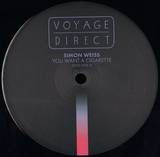
Simon Weiss - Brain Fever Ep

It was December 2015 when Simon Weiss delivered his first EP for Voyage Direct, an impressively intergalactic affair full of supersonic synthesizer arpeggio lines, Motor City influences and robotic drum machine hits. Two years on, the experienced Dutch producer returns to action for the first time since, in the process delivering another quartet of starry-eyed productions.
.
Through releases on Deepermotions, Rush Hour and Hometaping is Killing Music, Weiss has established a reputation for combining a deep understanding of dancefloor dynamics with a sci-fi inspired futurist aesthetic. Both of these complimentary traits are much in evidence on his second outing for Voyage Direct.

Weiss blasts off via Brain Fever', where raw, mind-altering arpeggio bass, fuzzy drum machine hits, spacey chords and alien electronics thrust our hero skywards. Think of it as techno for funk-fuelled, Italo-disco loving astronauts whose journey to the end of the universe is only just underway. This intergalactic funk blueprint is explored further on the deeper and more melodious You Want A Cigarette', where Weiss's vocoder vocals wrap themselves around mutant TB-303 lines, rush-inducing chords and clattering machine percussion.

On Space Ghetto (Booty)', our hero celebrates the discovery of previously unknown worlds in the only way he knows how. With kaleidoscopic, full-throttle electronic motifs and funk-fuelled synth-bass to the fore, Weiss offers his own unique take on electrofunk. Pleasingly fuzzy and tightly wrapped in the syncopated drum machine handclaps of ghetto-house, it's a typically far-sighted and attractive proposition.

With just two minutes to go until his spacecraft touches down on alien territory, Weiss rounds things off via the melancholic chord progressions and heartfelt vocoder vocals of Intro', a beat-free excursion just tailor made for dramatic set openings and spine-tingling mix endings. He may be stepping into unknown territory, but it won't be the last you'll hear from Simon Weiss.

out of Stock

Order now and we will order the item for you at our supplier.

11,72

Last In: 8 years ago
Kevin Morby - This Is A Photograph

The story begins with Kevin Morby absentmindedly flipping through a box of old family photos in the basement of his childhood home in Kansas City. Just hours before, at a family dinner, his father had collapsed in front of him and had to be rushed to the hospital. That night Morby still felt the shock and fear lodged in his bones. So he gazed at the images until one of the pictures jumped out at him: his father as a young man, proud and strong and filled with confidence, posing on a lawn with his shirt off. This was in January of 2020. As the months went on and the world dramatically changed around him, Morby felt an eerie similarity between his feelings of that night and the atmosphere of those spring days. Fear, anxiety, hope and resilience all churning together. The themes began twisting in his mind. History, trauma and the grand fight against time. Having the courage to dream, even while knowing the tragedy that often awaits those who dare to dream. While his father regained his strength, Morby meditated on these ideas. And then, he headed to Memphis. He moved into the Peabody Hotel and spent his days paying tribute and genuflecting to the dreamers he admired. In the evening, he would return to his room and document his ideas on a makeshift recording set-up, with just his guitar and a microphone. The songs, elegiac in nature, befitting all he had seen, poured out of him.Produced by Sam Cohen (who also worked on Morby’s Singing Saw and Oh My God), This Is A Photograph features musical contributions from longtime staples of Morby’s live band, as well as old friends and new collaborators alike. If Oh My God saw Morby getting celestial and in constant motion and Sundowner was a study in localized intent, This Is A Photograph finds Morby making an Americana paean, a visceral life and death, blood on the canvas outpouring. As Morby reminds us early on, time is undefeated. So what do we do while we’re still here? This is a photograph of that sense of yearning

pre-order now21.11.2025

expected to be published on 21.11.2025

20,97
Grooverider - Grooverider Presents The Prototype Years (2x12")
  • A1: Codename John Feat. Grooverider - Dreams Of Heaven
  • A2: John B. - Secrets
  • B1: Optical - Grey Odyssey
  • B2: Matrix - Optical
  • B3: Codename John Feat. Grooverider - Deep Inside
  • C1: Dillinja - Silver Blade
  • C2: Ed Rush & Fierce - Locust
  • D1: Codename John Feat. Grooverider - Warned
  • D2: Boymerang - Still
  • D3: Lemon D - City Lights

Along with his long-time DJ partner Fabio and contemporaries Goldie and LTJ Bukem, Grooverider is known as one of the originators of the UK jungle/drum and bass scene. In the early nineties he founded Prototype Recordings which soon became the home of many influential 12” singles that showcased a new side of breaks-heavy electronic music: deep, gritty, and futuristic. In 1997 Grooverider put together a collection of 12 heavy hitters from the Prototype catalogue, some of which previously only available as white label promos on acetate such as Dillinja’s “Silver Blade” and Ed Rush & Fierce’s “Locust”. Lemon D’s “City Lights” was previously only available on acetate and the CD version of this release. Now, after more than 25 years, a selection of these tracks is available again in the form of a DJ-friendly double LP. Finding these tracks separately will be very difficult, so don’t miss your chance to snag yourself a copy of this one. The Prototype Years is now available as a limited edition of 750 individually numbered copies on translucent red coloured vinyl.

out of Stock

Order now and we will order the item for you at our supplier.

44,12

Last In: 5 months ago
Wata Igarashi & Polygonia - Cross Passage

RYC presents a four-track journey at the junction of their respective universes, teleporting us straight to a propulsive, mind-expanding headspace as we're invited to explore sonic territories still uncharted and harmonics yet unravelled. The collaborative A-side begins with the dynamic title-track, 'Cross Passage', a proactively future-facing number packing the kind of utopian drive that used to define the original techno sound. A highly cinematic narrative boasting Detroit-style vision and epic breath, 'Cross Passage' builds bridges between hi-tech elation and organic integration, transcending mere functionality to push back and expand the limits of techno as a deep communication vessel between the individual and the mass. Firing off like a binary script gone astray, 'Fibre Axis' takes us on a further bumpy ride across shape-shifting interfaces and blurred-out digital scapes, via abrupt pixel landslides and fractured 3D renderings. Side-B finds each producer dishing out a slice of his/her own musical idiom. Polygonia strikes first with the pulsating 'Voltage Blues' - a mesmeric roller cut from pure eerie synth algebra, boundary-pushing abstraction and surgical but experimental-leaning rhythmic assault. The result is a piece of cutting-edge techno hoodoo, ready to take on clubs with utmost abrasive swagger. Sniping a hail of rainbow-like analogue synth outpour, Wata Igarashi's solo contribution 'The Tunnel Dreams' rounds off the journey on a fiercely nonconformist note. Merging a hard-hitting main swing with 8-bit-esque audio pointillism and brooding bass undertones, the Japanese producer cuts a path of antigravitational abandon and relentless rush towards absolving euphoria, which shall leave all in the room levitating somewhere between sheer daze and love-thirsty XTC. *Clad in the sleekest cover art courtesy of designer Atact, RYCL024 is pressed to red & white marbled vinyl for you, fancy platter collectors and picky audio-visual aesthetes alike.

out of Stock

Order now and we will order the item for you at our supplier.

14,08

Last In: 6 months ago
ARIS 1201 - 12:01 LP

Aris 1201

12:01 LP

12inch020CAF?
CAF?
06.10.2025

12:01, time to wake up! Aris 1201 is back on CAF? with a new record. Deeply rooted in the city center of Geneva, this eight tracker is as smokey as its rush hour traffic jams. Bringing together old tracks with new material, this album spans from 4/4 club-ready highways to hip-hop inspired groovy beats. Using a minimum amount of ingredients (raw samples, percussive rhythmics, grainy textures), Aris 1201 delivers a result full of layers and complexity. So only one thing to do: hop in front of the Blunt Mobile and have a nice ride.

pre-order now06.10.2025

expected to be published on 06.10.2025

19,12
Various - Dolores: Salsa & Guaracha From 70's French West Indies

In Guadeloupe, many people think that jazz and ka music are like a ring and a finger. To some extent, the same could be said about so called Latin music and the music played in the French West Indies.

Both aesthetics were born in the Caribbean and bear so many connections that they can easily be considered cousins. In constant dialogue, there are lots of examples of their fruitful alliance and have been for a while. The English country dance that used to be practiced in European lounges came to be called kadrille in Martinique and contradanza in Cuba. They both featured additional percussion instruments inherited from the transatlantic deportation. Drawing from shared feelings about the same traumatized identity – later to be creolized – it would be hard not to assume that they were meant to inspire each other. The golden age of the orchestras that graced the Pigalle nights during the interwar period further proves the point. As soon as the 1930s, Havana-born Don Barreto naturally mixed danzón and biguine music in a combo based at Melody's Bar. In the following decade, Félix Valvert, a conductor who was born and raised in Basse-Terre in Guadelupe, also worked wonders in Montparnasse with La Coupole, which was an orchestra made up of eclectic musicians. Afro- Caribbean performers of various origins were often hired on rhythm and brass sections in jazz bands, which used to enliven the typical French balls of the capital. In the 1930s and onwards, Rico’s Creole Band was one of them.


Martinican violinist-clarinettist Ernest Léardée, who would become the king of biguine music as well as the main figure of French Uncle Ben's TV commercials (a dark stigma of post-colonial stereotypes), had musicians from the whole Caribbean sphere play at his Bal Blomet – and they all enchanted "ces Zazous-là" (according the words of Léardée's biguine-calypso piece). In les Antilles (French for French West Indies), music history started to speed up in the 1950s, when trade expanded and radio stations grew bigger. The Guadelupean and Martiniquais youth tuned in their old galena radio sets to South American and Caribbean music. As for the women traders, les pacotilleuses, they bought and sold goods across different islands (the "passing of items through various hands" was thought to be most pleasurable) and brought back countless sounds in their luggage. Such was the case of Madame Balthazar, who once returned from Puerto Rico with the first 45rpm and 33rpm to ever enter Martinique.

Out of this adventure was created the famous Martinican label La Maison des Merengues, a music business she opened and undertook with her husband and which proved to be a major landmark. At the end of the 1950s, in Puerto Rico, Marius Cultier competed in the Piano International Contest playing a version of Monk's Round 'Midnight. He won the first prize and this distinction foreshadowed everything that was to come. Cultier, the heretic Monk of jazz, was quickly praised for writing superb melodies, always tinged with a twist that conferred a unique sound to his music. It didn't take long for the gifted self-taught musician to get to play with Los Cubanos, making a name for himself thanks to his impressive maestria on merengues.

The rest is history. Besides, in the late 1950s, Frantz Charles-Denis, born into the upper middle class in Saint-Pierre and better known by his first name Francisco, went back home after working at La Cabane Cubaine – a club located rue Fontaine where he had caught the Latin fever. Francisco's music was therefore heavily marked by his Cuban cousins' influence, which gave the combos he led a specific style and also led to renewal. Things were swinging hard in La Savane, located in the main square in Fort-de-France. He set up the Shango club close by and tested out the biguine lélé there, a new music formula spiced up with Latin rhythms. Soon afterwards, fate had him fly to Puerto Rico and Venezuela.

As for percussionist Henri Guédon (percussions were only a part of his many talents), he was born in Fort-de-France in May 22nd 1944, the day marking the celebration of the abolition of slavery. As an old man, he could remember that in " his father's Teppaz, a lot of hectic 6/8 music was constantly playing...". In the opening lines of his Lettre à Dizzy, a small illustrated collection of writings published by Del Arco, he highlighted the huge impact that cubop had on him as a teenage boy, around 1960. He eventually turned out to be the lider maximo in La Contesta, a big band steeped in Latin jazz. He was also the one who originated the word zouk to describe music which brought the sound of the New York barrio to Paris. It was the culmination of a journey that started in Sainte-Marie: "a mythical place for bélé, the equivalent of Cuban guaguancó". In the early 1960s, the tertiary economy developed to the detriment of agriculture. Yet rural life was where roots music emerged in Martinique and in Guadeloupe.

Record companies played a major part in the process of Latin versions sweeping across the islands – before reaching everywhere else. Producer Célini, boss of the great Aux Ondes label, and Marcel Mavounzy, both the head of Émeraude records - a firm which was founded in 1953 - as well as the brother of famous saxophonist Robert Mavounzy, were big names to bear in mind. Although there were many of them - all of whom are featured on this record - Henri Debs was definitely the major figure in the recording adventure. He proved to be so influential that he even got compared to Berry Gordy. In the mid 1950s, when he acquired his first Teppaz, he worked on his first compositions: a bolero and a chachacha. Then, he became the one man who made people discover Caribbean music, from calypso to merengue. He was among the first ones to rush out to San Juan, Puerto Rico, to buy records and distribute them through a store run by one of his brothers in Fort-de-France. He had members of the Fania All Star come and perform there, which he was madly proud about. He was also the first one to pay attention to Haitian music, such as compas direct and various other rhythms which would soon flood the market. As a result, many of the combos hitting his legendary studio would end up boosted by widespread "Afro-Latin" rhythms. However, he never denied his identity: gwo ka drums were given a major role, although they were instruments which had long been banned from the "official" music spheres. The present selection bears witness to such a creative swarming. Here are fourteen tracks of untimely yet unprecedented cross-fertilization: all types of music rooted in the Creole archipelago have found their way, whatsoever, to the tracklisting. Whether originating from the city or being more rural, they all go back to what Edouard Glissant, in an interview about the place of West Indian music in the Afro-American scope, called "the trace of singing, the one which got erased by slavery." "It is so in jazz, but also in reggae, calypso, biguine, salsa... This trace also manifests through the drums, whether Guadelupean, Dominican, Jamaican or Cuban... None of them being quite the same. They all point to the idea of a trace, seeking it out and connecting to each other through it. This is the hallmark of the African diaspora: its ability to create something new, in relation to itself, out of a trace. It may be the memory of a rhythm, the crafting of a drum, a means of expression which doesn't resort to an old language but to the modalities of it." The opening track features one of the emblematic orchestras of this aesthetic identity, criscrossing many music types from the archipelago. The 1974 Ray Barretto guajira – Ray Barretto was a major New York drummer influenced by Charlie Parker and Chano Pozzo – is magnificently performed by Malavoi, a legendary Fayolais group (i.e from Fort-de-France). Additionally, the compilation ends on a piece by Los Martiniqueños de Francisco. It symbolically closes the circle as it is a genuine potomitan of Martinique culture which also functions as a tireless campaigner for Afro-Caribbean music. Practicing the danmyé rounds (a kind of capoeiria) to the rhythm of the bèlè drum, it delivers a terrific Caterete, a kind of champeta of Afro- Colombian obedience which was originally composed by Colombian Fabián Ramón Veloz Fernández for the group Wgenda Kenya. The icing on the cake is Brazilian Marku Ribas, who found refuge in Martinique in the early 1970s, bringing his singing to the last trance-inducing track. These two "versions" convey the whole tone of a selection composed of rarities and classics of the tropicalized genre, swarming with tonic accents and convoluted rhythms. It is the sort of cocktail that the West Indians never failed to spice up with their own ingredients. For instance, the Los Caraïbes cover of Dónde, a famous Cuban theme composed by producer Ernesto Duarte Brito, has a typical violin and features renowned Martinique singer Joby Valente and his piquant voice.


The track used to be – or so we think – their only existing 45rpm. The meaningful Amor en chachachá by L'Ensemble Tropicana, a band which included Haitian musicians among whom was composer and leader Michel Desgrotte, also recalls how Latin music was pervasive in the tropics in the mid-1960s. They were the ones keeping people dancing at Le Cocoteraie in Guadelupe and La Bananeraie in Martinique. Around the same time, another "foreign" band, Congolese Freddy Mars N'Kounkou's Ryco Jazz, achieved some success on both islands by covering Latin jazz classics – such as their adaptation of Wachi Wara, a "soul sauce" by Dizzy Gillespie and Chano Pozo whose interweaving of strings and percussions can have anyone hit the dancefloor. How can you resist Dap Pinian indeed, a powerful guaguancó by Eugene Balthazar, performed by the Tropicana Orchestra and published by the Martinique-founded La Maison des Merengues? It also acts as a symbol of the maelstrom at work. Going by the name Paco et L'orchestre Cachunga, Roger Jaffory used to play guaguancó too: his Fania-inspired Oye mi consejo is one example of his style. Baila!!!!! Dancing was also one of the Kings' focus points. Oriza is a Puerto Rican bomba and a "classic" originally composed by Nuevayorquino trumpeter Ernie Agosto, which reserves major space for brasses, giving it a special sheen.

Emerging from the New York barrios crucible was also La Perfecta, a Martinique group originating from Trinidad, whose name directly references the totemic Eddie Palmieri figure as well as his own band, also called La Perfecta. Here they borrow Toumbadora from Colombian producer and composer Efraín Lancheros and interpret it by emphasizing percussions, which set fire to the track even more than the wind instruments. The same goes for Martinique's Super Jaguars, who use Tatalibaba – a composition by Cuban guitarist Florencio "Picolo" Santana which was made famous by Celia Cruz & La Sonora Matencera – as a pretext for sending their cadences into a frenzy. In a more typically salsa vein, the Super Combo, a famous Guadelupean orchestra from Pointe-Noire that was formed around the Desplan family and had Roger Plonquitte and Elie Bianay on board, adapt Serana, a theme by Roberto Angleró Pepín, a Puerto Rican composer, singer and musician also known for his song Soy Boricua. Here again, their vision comes close to surpassing the original. In the 1970s, L'Ensemble Abricot provided a handful of tracks of different syles, hence reaching the pinnacle of the art of achieving variety and giving pleasure. They played boleros, biguines, compas direct, guaguancó and even a good old boogaloo - the type they wanted to keep close to their hearts for ever, "pour toujours", as they sang along together in one of their songs. Léon Bertide's Martinican ensemble excelled at the boogaloo which had been composed by Puerto Rican saxophonist Hector Santos for the legendary El Gran Combo.


Three years later, in 1972, Henri Guédon, with the help of Paul Rosine on the vibraphone, tackled the Bilongo made famous by Eddie Palmieri. Such a classic!!!!! And so were the Aiglons, the band from Guadelupe: choosing to execute Pensando en tí, a composition by Dominican Aniceto Batista, on a cooler tempo than the original, they noticeably used a wonderfully (un)tuned keyboard in place of the accordion. On the high-value collectible single – the first one released by Les Aiglons under the Duli Disc label – there is a sticker classifying the track under the generic name "Afro". Now that is what we call a symbol. Jacques Denis
out of Stock

Order now and we will order the item for you at our supplier.

21,43

Last In: 57 days ago
Ryan Adams - Changes LP 2x12"

Ryan Adams

Changes LP 2x12"

2x12inchPAXAM084LP
Pax Am
13.06.2025
  • A1: Powderfinger
  • A2: Panic
  • A3: Aching To Be
  • A4: Don’t You Forget About Me
  • A5: Changes
  • B1: Headshrinker
  • B2: The Man In Me
  • B3: Candy Says
  • B4: Runaway Train
  • B5: Queen Of Hearts
  • C1: Sympathy For The Devil
  • C2: Harvest Moon
  • C3: After The Gold Rush
  • C4: Atlantic City
  • C5: Living On A Prayer
  • D1: Nutshell
  • D2: Monkey Gone To Heaven
  • D3: The Crystal Ship
  • D4: When Doves Cry
  • D5: True Love Will Find You In The End
pre-order now13.06.2025

expected to be published on 13.06.2025

32,73
COFFIN PRICK - LOOSE ENCHANTMENT
  • Follow You Where You’re Talking
  • Shortly Forgotten Pleasure
  • Loose Enchantment
  • Exile In Exile
  • Work (Feat. Steven Brown Of Tuxedomoon)
  • Soap
  • Spy V Spy
  • Theme From “Other People’s Lives”
  • Window In Your Eye
  • Western Folly: Floating Love/ Drying Off In The Rain/How Seconds Work

Over and through the hot cement of North East L.A., an almost-dry riverbed winds like a snake through the city. Coyotes lap at its trickling stream by moonlight, as pedestrians rush past it by day without a second glance, their thoughts tangled up in the distractions of life in a sprawling metropolis. Here, amongst the many avenues and gentle hills, we find Coffin Prick (alias: Ryan Weinstein).

Loose Enchantment, this latest Coffin Prick record, is music conceived of in a different frame of mind for humans living in a world nearly-disenchanted with itself. The album consists of eleven new pieces of music recorded by Coffin Prick himself at his home in Los Angeles, a great city of quicksand-like commitments and those who love them enough to uphold the ends of their collective bargains. A record as much about the confusion of modern life as it is endeavored to expose the lusts in the very loins of creation. Sounds enchanting enough for you? Let’s look a little more closely…

On the heels of 2023’s Laughing (Sophomore Lounge), Coffin Prick got busy. And fast. Playing shows into the year with a newly minted live band, while simultaneously working day and night in his home studio laying the ground for what would become Loose Enchantment. Whereas he was essentially a recording know-nothing at the inception of his last LP, he’d learned a thing or two about better capturing his ideas by this point, taking the sidesteps and victories born of the experience Laughing provided and turning the bright lights on them. As many of Los Angeles’s drivers choose to do, it was time to take some surface roads. Odes to self-delusion, the mysteries of creation, cleanliness, and the secrets in other people’s lives.

A little Loose Enchantment for everyone, basically.

pre-order now22.05.2025

expected to be published on 22.05.2025

32,56
SOICHI TERADA - APE ESCAPE ORIGINAPE SOUNDTRACKS IN A BOX (Boxset 4x12")
 
44

4XLP. Hardcover slipcase box. Liner notes from Soichi Terada, Colour: translucent red, clear, blue, and yellow vinyl

It has been 25 years since the release of Saru Get You (サルゲッチュ), known stateside and in the UK as Ape Escape. Ape Escape marked a significant milestone for the PlayStation, as it was the first game to require use of the PlayStation's DualShock (analog) controller. In Ape Escape, the use of the analogue sticks goes beyond camera rotation and acts as an extension of Kakeru's (Spike's) own character, controlling his many gadgets like the stun club, time net, and sky flyer. It's a unique form of control that, really, didn't become popularized until the release of the Nintendo Wii. It feels like a distinctly Japanese design, the sort of off-the-wall design that is either embraced or rejected on a global scale. In Ape Escape's case, the mechanic caught on.

Ape Escape is fast, frantic, and—at times—downright frustrating. Pipo monkeys dash, taunt, and swim away from your advances. They ride water monsters, fly UFOs, and even shoot uzis! Whether it's Kakeru, his friends, or the monkeys themselves, the characters are always running across the levels. This mad dash is enhanced by the game's soundtrack, composed by legendary composer Soichi Terada. As he recalls, the director of the production said, "Spike and his friends always have the image of running." In response, Terada happily produced fast songs with an average speed of over 170bpm. The resulting gameplay and audio is a match made in heaven.

Ape Escape is the first game soundtrack Mr. Terada ever created. The producers of the game heard one of his singles, "Sumo Jungle," and thought his frenetic drum-and-bass (Jungle) would be perfect for the game. The marriage of Ape Escape's charming overworld and Soichi's upbeat compositions is nothing short
of sublime. Especially now, it is difficult to separate the mischievous Pipos and fast-paced action from Soichi Terada's silky smooth synthesizer and heart-pounding bass. Earlier this year (2024), Soichi Terada's Ape Escape work was celebrated by the six-track EP Apes in the Net, which includes music from Ape Escape 1 and 3 (Terada did not compose the series' second installment). The label, Rush Hour Music, has prestigiously championed almost all of Soichi Terada's music, especially his (specifically non-VGM) house, jungle, and drum and bass releases (Sounds from the Far East, Asakusa Light, and more).
Before Apes in the Net, Terada's Ape Escape music was only available on CD, released in Japan around 2010. This release featured reconstructed tracks created by Mr. Terada himself, identical to the music arrangements featured in the game. The biggest difference, of course, was that they were of higher fidelity than was originally available on the PS1 disk format. Completing all of the aforementioned releases is this box set, released by Far East Recording in partnership with Cartridge Thunder and officially licensed by Sony Computer Entertainment. This box set release includes four LPs, housed individually by a hardcover slipcase. This box set includes every song from Ape Escape 1, except those available on Apes in the Net. This box set release also includes one bonus song, previously unreleased anywhere else (including the game itself!).

The music on this box set was meticulously mastered by Justin Perkins of Mystery Room Mastering. Using Mr. Terada's premastered source files, the music was completely and specifically mastered for vinyl. Rounding out the audio is absolutely stunning artwork created by Gobo3D. CT worked with Gobo to recreate some of Ape Escape's most iconic characters, referencing the original Japanese guidebook and other promotional materials. The result is visually delicious 300dpi artwork that takes you straight back to 1999. As uber-fans of the original PlayStation game, Cartridge Thunder and Far East Recording are proud to celebrate Soichi Terada's music and pay our respects to such a legendary PlayStation franchise—on the original hardware's 30th anniversary no less! It's with a happy heart, then, that Far East Recording and CT present to you Soichi Terada's Ape Escape Originape Soundtracks in a Box.

Please note: due to licensing exclusivity, this release does not include tracks previously released on Apes in the Net

out of Stock

Order now and we will order the item for you at our supplier.

106,68

Last In: 12 months ago
My Mine - Hypnotic Tango EP

Repress.

The Italo dance classic that Carl Craig sampled for the legendary 69 track 'Rushed'

Finally available again on Dark Entries


We are honored to announce the next 12 in Dark Entries Editions is one of the all time Italo Disco club classics: My Mine - 'Hypnotic Tango'. My Mine were the trio of Stefano Micheli (vocals, keyboards), Carlo Malatesta (vocals, keyboards), and Danilo Rosati (drums, keyboards) formed from the ashes of Italian New Wave group Ipnotico Tango in 1982. They shifted focus from the experimental post punk sounds towards something more commercial with which to try and enter the market, namely to make a record. At that time Carlo was studying in Bologna and he had heard about producer and arranger Mauro Malavasi famous at that time for the many hits produced for Macho, Peter Jacques Band, Change, Luther Vandross, Ritchie Family. The group handed Malavasi a demo tape and four days later they were invited to Fonoprint Studios to record their first single, 'Hypnotic Tango'.

Utilizing new electronic instruments like the now legendary Roland TB-303, Danilo improvised a simple but effective synthesizer bass line and passed it through the Roland Echo until something magical came out. 'Hypnotic Tango' was released on Progress Record in 1983 and became an international hit across Europe and US dance clubs in New York, Detroit and Chicago, capturing the imagination of House and Techno producers. In 1987 the legendary Frankie Knuckles remixed 'Hypnotic Tango' at Seagrape Studios in Chicago, with assistance from studio engineers Tommy White and Brett Wilcotts. Originally released on Danica Records as the 'Powerhouse Mix' paying tribute to the Windy City club atmosphere and adding his own "sighs" in the track as well. The Hypnotic Remix This reissue presents 4 mixes of 'Hypnotic Tango' including the 'Hypnotic Mix' only appearing together once before in 1990 on Rams Horn Records. All songs are remastered for vinyl by George Horn at Fantasy Studios in Berkeley. The vinyl comes housed in a jacket with original artwork and includes an insert with photos and liner notes by Stefano Micheli. 'Look on the floor and all is spinning round, Someone told me this was just a dance And take a chance I ain't met before..Do you think I really have a chance"

out of Stock

Order now and we will order the item for you at our supplier.

15,08

Last In: 10 months ago
OMEGA - GAMMAPOLIS

Omega

GAMMAPOLIS

12inchMIG3241
MIG
25.10.2024

Geplant war es von Omega damals logischer Weise nicht, die eigene Karriere in Genre-Phasen einzuteilen. So etwas machen später Musikjournalisten und Fans - und unter ihnen besonders die Statistiker. Nach deren Lesart gilt die zweite Hälfte der Siebziger als Space-Rock-Ära der ungarischen Band. Abgebildet wird sie durch die Trilogie "Time Robber" (1976), "Skyrover" (1978) und schließlich "Gammapolis" (1979). Zwar waren sphärische Klänge bereits davor und auch danach noch im Schaffen des Budapester Quintetts zu vernehmen, derart konzeptionell fokussiert zeigten sich Omega jedoch tatsächlich nur auf diesem Triple. Nimmt man die Erfolgs-LP "Time Robber" weiterhin als Qualitätsmaßstab, hielt auch "Gammapolis" mühelos mit. Die Kompositionen der Gruppe um Sänger Jànos Kòbor waren melancholischer geworden, die bittersüßen Melodien schmeichelten. Das galt besonders für den siebenminütigen Opener "Dawn In The City" ("Hajnal a város felett"), dem Titelsong "Gammapolis" und "Silver Rain" ("Ezüst esö"). Zwischen der westeuropäischen, englischsprachigen Version und dem ungarischen "Original" gibt es neben dem Gesang und der Sprache in der Titelreihenfolge und bei der Songlänge einige kleine Unterschiede. Minimal ließen Omega die instrumentalen Passagen einiger Stücke auf der Muttersprachenvariante länger fließen. Für die westeuropäischen Omega-Platten-Käufer jedoch hatten diese feinen Unterschiede keine Relevanz, kannten sie meist die ungarischen Songs gar nicht. Ebenso wenig dürften sie registriert haben, dass GAMMAPOLIS in Omegas Heimat mit fast einer dreiviertel Million Einheiten die am besten verkaufte LP der Band-Karriere wurde. Das deutsche Cover-Artwork wich jedoch von der ungarischen Version erheblich ab: Zeigte die Bacillus/Bellaphon-Variante die Silhouetten der Musiker vor einem von Flak-Scheinwerfern durchschnittenen Nachthimmel, war auf dem Pepita-Album offenbar die zwar futuristische, allerdings auch karge Welt auf einem fremden Planeten zu sehen.

pre-order now25.10.2024

expected to be published on 25.10.2024

20,59
DEMAE - LIFE WORKS OUT... USUALLY

2024 Reissue

Touching Bass continue to prise open a distinct, exciting lane for themselves as a label home for forward-thinking, soulful music with the incredible debut project from London's Demae (aka Bubblerap and ? of Hawk House) entitled "Life Works Out...Usually" - "Life Works Out...Usually" is a soothing antidote to these turbulent times; a soulful coming-of-age story celebrating black joy, self-empowerment and life learnings centred around an integral two year period of growth and featuring appearances from Fatima (Eglo Records), Joe Armon-Jones, Ego Ella May and Nala Sinephro - all part of our close-knit, London-based musical community. Sonically, it draws a unique line between the grit of inner-city London soul, interstellar Flying Lotus electronic rushes and new-age Dilla-isms mixed with flecks of London's exciting jazz-influenced sounds. Production comes from rising producers like Eun (Ego Ella May, Denzel Himself), Jake Milliner (Slum Village, Yazmin Lacey, Lord Apex), 104.ROG (Liv.e, THEESatisfaction) and Wu-Lu (Ego Ella May). For those not yet accustomed, Demae's work stretches beyond her solo project. She has been a fundamental part of Fatima's touring band as a backing vocalist since the release of her much loved second album And Yet It's All Love. Prior to that, she was one-third of hip-hop adventurists, Hawk House, whose introspective, eclectic style was reshuffling the rule book for UK-based rap, quickly making them one of the UK's most exciting emerging sounds and earning fans from Mac Miller and Ghostpoet to Wretch 32 and Jill Scott.

out of Stock

Order now and we will order the item for you at our supplier.

17,86

Last In: 5 years ago
Big Ups - Eighteen Hours of Static

"Here is what 2014 felt like: The cold, rushed walk from the Montrose Avenue L to the downstairs entrance of 20 Meadow Street, an address you could never quite remember. The careful steep climb to the top of the nondescript building, where Titus Andronicus’s Patrick Stickles was waiting to take your balled-up cash and stamp the inside of your wrist. Standing beneath that jagged cardboard punk bunting, draped with tangled twinkle lights, while Joe Galarraga, frontman of Big Ups, slowly, menacingly, wound a microphone cable around his fist. Then a barbed F-sharp sprang forward from Amar Lal’s guitar, shaking the entirety of Shea Stadium to life.

For much of that time period, ten years now behind us, it would be easy to say, man, you just had to be there. You had to be there when Death By Audio closed. You had to be there when the Apple store opened on Bedford Ave. If you weren’t there when a small, specific subculture of New York City took over its abandoned lofts and grimy basements and squatted itself into community, that’s okay — it might be too clunky and myopic to explain now. Released in January 2014 to Dead Labour in the US and Tough Love Records in the UK, Eighteen Hours of Static stands even now as a triumphant representation of what Big Ups did so well over the course of their nine-year run as a band. Now, with the re-release of Big Ups’ killer debut full-length, those who didn’t get to experience all this the first time around will get a shot at living as if it’s the glory days again."

pre-order now20.09.2024

expected to be published on 20.09.2024

31,72
FRED THE GODSON - GODSON
  • A1: Godson (Intro)
  • A2: The Sermon
  • A3: Too Fat
  • A4: Put In Work
  • A5: She Call Me God
  • A6: The City
  • B1: Streets Of The Bronx
  • B2: Rush
  • B3: We Gon' Fly
  • B4: Money
  • B5: Talkin' Bout Money
  • B6: It's All There
  • B7: Can I Live 2020
pre-order now09.09.2024

expected to be published on 09.09.2024

28,15
MINT FIELD - ASPRENDER A SER:EXTENDED

Mint Field

ASPRENDER A SER:EXTENDED

12inchFLTLPC1105
Felte
30.08.2024

Milky Clear Vinyl. Aprender a Ser: Extended is an EP by Mexico City band Mint Field. It was recorded in the same sessions as Mint Field's latest album, Aprender A Ser. Mint Field decided to split the work into an album and an EP as they felt it was too dense for a double album and wanted these songs to co-exist in another space and have its own time to shine. As with Aprender A Ser, the EP incorporates influences from shoegaze, trip-hop, dream pop and electronic music. The final track includes longtime friend and cello player Mabe Fratti to play Cello. Time. It's something we tend to cherish. As a band, you're typically thrown into more than usual stressful scenarios when recording albums and rushing decisions becomes the norm. Mexico City's Mint Field knows this all too well. Rewind to the spring of 2020 (yes, Covid). The band started fleshing out their new album Aprender a Ser (meaning Learn To Be in English), the follow up to 2020's minimalist psych/ shoegaze album, Sentimiento Mundial. For the first time, the band was not under any time constraints in the recording process. They wrote, recorded, produced and mixed the album in isolation. They had time to slow things down and think more obsessively about the sound, environment and vibe they wanted to create. Aprender a Ser became really intimate, every single detail was meticulously worked on. Mint Field recorded take after take, but at the same time tried to keep the soul of the demos intact. Some of the guitar and drums are first takes in the final versions. The band would let a recording sit, leave it and come back to it. The songs evolved a lot doing so, but at the same time didn't lose the essence of its original intention. Thematically, Aprender a Ser talks about opening our perspective of the reality that we live every day, acknowledging each moment that we witness in life. Learning to recognize what we are, what we live, what we see, what we feel. Whether it's seeing ourselves in the past and observing how we have evolved in the present. Or the lifetime of a butterfly from its formation within a cocoon to how it lives its short life in five days. Or seeing how an orchid slowly opens every day, never forgetting the essence of what we are and will be. Nothing in life should be taken for granted. Living in the present is a gift. Learning to be (Aprender a ser) is learning to recognize our emotions, not repress them, not turn them off and feel them.

pre-order now30.08.2024

expected to be published on 30.08.2024

22,65
Items per Page:
N/ABPM
Vinyl