An exclusive 7" re-release of this psychedelic funk ballad from Tulsa's "Outback" Band. As featured on Now-Again's 'More Loving On The Flipside' compilation, "Strangers (In Our Homeland)" epitomises the expression of social & political change during an era of psychedlia infused music. In partnership with the two surviving members of Outback, both Symphonical & Now-Again are proud to showcase the voice of independent artists.
----------
The origin of "Outback" dates back to the late 50s, a five-piece blues outfit named "Little Lo and the Rest of Us" included music educator & bass guitarist Edward "Cha-Cha" Cherry, saxophonists Eugene "Buggy" Roach & James "Flab" Farley whom, alongside drummer Roscoe J. Dabney III "Roach", Ronnie Wilson on trumpet, guitarists Roy "Rochester" Walker & Michael Collins, would form The Magnificent Seven, the house band for Tulsa's 'Rose Room'.
Alumni of Booker T. Washington High School, The Magnificent Seven influenced & set the standard for the Tulsa sound, as demonstrated through their only single, recorded in 1966, the two part 'Pluck-A-Pluck'. 'The Sevenettes', the groups' female vocal trio, included the rotation of Lena Luckey Wilson, Gwendolyn French, Rose Brewer Lewis, Jeanetta Williams & Maxayn. The Magnificent Seven, led by "Cha-Cha", toured nationally throughout the 60s with their infectious, raw R&B sound, and were the platform for many of Tulsa's talent including Ronnie & Charlie Wilson who would later create the GAP Band.
Roscoe J. Dabney III, the first Black Panther to establish the Tulsa chapter in 1969 known as the NCCF (National Committee to Combat Fascism), proposed the name change to "Outback" in the early 70s. Their sound & formation was changing from R&B to Psychedelic, from the grit to the phase, epitomised by their unique line-up of having two bassists playing simultaneously, both Reggie Cherry & "Chilly" Willie Lewis, the musical foundation to their only recorded single, "Strangers (In Our Homeland)" & "Reggie's Thang".
Song writer & band affiliate, Maurice Pope, produced the lyrics to "Strangers (In Our Homeland)" and handed over the musical attributes to Willie Lewis & Outback to convey his message, as sung by Lena Luckey Wilson. Dabney recalls the song is based on religious scriptures, whilst highlighting the parallel of Black slavery in the U.S.
"Reggie's Thang", written by Dabney's cousin, bassist Reggie Cherry, provides a psychedelic instrumental, a sound which Lena recalls is what set apart Outback from other Tulsa groups. As well as playing clubs, the seated shows provided an environment for the group to showcase their musicianship to those who wanted to be immersed & listen.
Their single, released on Empathy, was recorded in 1972, and are the only known recordings by Outback. Recorded live onto 8-track at a studio located at on East Pine St in the heart of Tulsa's Black community, an independent & unknown studio located on a strip mall.
The Outback members who recorded are:
Lena Luckey Wilson - Vocals
Roscoe J. Dabney III "Roach" - Drums
"Chilly" Willie Lewis - Bass
Reggie Cherry - Bass
Edward "Cha-Cha" Cherry - Keys
Joyce Daws - Trumpet
Roy Walker "Rochester" - Guitar
Robert Luckey "Uncle Bobby"- Percussion
Fredy Berry "Freddy" - Tenor Sax
Band leader & group manager: Edward "Cha-Cha" Cherry
Booking Agent: Ernie Fields Sr.
In 1973 whilst performing in Ft. Worth, TX, Buck Ram approached Willie Lewis backstage and invited him to join The Platters, Lewis accepted. Supposedly, a recording deal was offered to Outback in exchange, which never happened.
The group continued in various formations after Lewis left, however as an integral member, the feeling never equalled their original form and soon after dissolved.
Leon Russell approached Lena Lucky Wilson in 1974 to go on tour with the GAP Band as their backing singer, upon returning Tulsa Lena moved to Los Angeles to pursue her musical career with Leon & Mary Russell amongst various others.
Dabney continued music and became a TV producer & director in 1976.
The only surviving members of Outback today are Lena Luckey Wilson & Roscoe J. Dabney III.
Поиск:russell
Все
- 1: I Used To Be Fun
- 2: Treat Me Better
- 3: Backseat Driver
- 4: I Love You
- 5: Your House My House
- 6: Salt (Feat. The Grogans)
- 7: I Don't Want It
- 8: Cayenne Pepper
- 9: Ahhhh!
- 10: Lights Out
- 11: Toe Bone
- 12: Never Saw It Coming
- 13: Kissy Kissy
Teen Jesus and the Jean Teasers are a powerhouse, celebrated for their raw emotion and incisive social observations. Their talent has earned them nominations for Best Independent Punk Album or EP at the AIR Awards, Emerging Songwriter of the Year and Song of the Year at the APRA Awards, along with nods from the J Awards and Rolling Stone Awards. Recognised as Spotify's RADAR Artist, their rising global influence is undeniable.
Following their award winning 2022 EP, Pretty Good For A Girl Band, their debut album I Love You charted at number 6 on the ARIA Albums Chart, marking a significant milestone. The accompanying tour saw them sell out iconic venues like 170 Russell in Melbourne, the Metro Theatre in Sydney, and The Triffid in Brisbane. They capped off the year supporting the Foo Fighters at AAMI Park in Melbourne and launched into 2024 by supporting The Vaccines across the EU/UK. They will support Pearl Jam on select dates in the United States mid-2025.
I Love You showcases the bands growth, with each member contributing to songwriting. It stands as a definitive statement of their sound—joy, rage, and euphoria, delivered with precision and heart. Teen Jesus and the Jean Teasers continue to make waves, solidifying their place in the music industry.
The Crystal Hum is the debut vinyl release by Taiwan-based artist Yuching Huang and her first release for Night School.
A beguiling dreamscape of crackles, spluttering, love-struck Casios presided over by the the spectral vocal and guitar work of Huang, Yuching sings love songs at the end of this world and the beginning of the next. Recorded during a hiatus from her group Aemong (a duo with artist Henrique Uba) in Berlin, these songs elevate Huang’s unique vocal style and grasp of atmospherics. The Crystal Hum deconstructs balladry, Garage, guitar music and reforms it into a
unified ghostly otherworld version of these languages.
The Crystal Hum thrums with buried desire, trails of nocturnal reverb seeping out of apartment windows, diaristic vocal performances and deeply emotive, evocative Western-style strings. Formulated by Yuching Huang after periods of frustration and experimentation, the album is an exercise in minimalism and paring back, with some tracks like JohnJohn featuring little else than an elastic bass, spring reverb trails, an interjecting vocal and swelling, dislocated synths. The effect is spellbinding, the soundtrack to getting lost in the labyrinthine, closed streets of Venice, Taipei, Hong Kong, or mirror versions of them in the imagination.
On opener Fly! Little Black Thing, a subterranean funk bassline roots Huang’s singing, a rudimentary, unreliable beat floundering in whimsy underneath. Demure, dream Dance music, Huang references classic lo fi experimenters Suicide and Arthur Russell as well as Night School label mates The Space Lady and Ela Orleans. In fact, after the release of Aemong’s third album Crimson, Huang credits the direction of The Crystal Hum to being enchanted by The Space Lady’s Greatest Hits,
the landmark lo-fi recording made by Susan Dietrich Schneider in 1990. The new, minimalist approach to her sound world reveals and shrouds in equal measure. On the heart-melter Love, a sultry mid-tempo Casio + bass backing drops into the ether with Huang’s vocal swimming in preternatural void before emerging anew, in awe at the world. Every chord change heralds new perspectives, every guitar flurry swells and drips emotion, nothing is wasted and space billows out from between the grooves.
Huang never reveals more than necessary, making this an in-between love album: the right amount of mystery and darkened mirror shines wanely on The Crystal Hum while remaining fragile and vulnerable in the sweet spots. Turning over in pillowing smoke and night in the dark corners, Huang sings in both Mandarin and English. The songs speak of earthly matters seemingly at the edge of dissipating into nothing. Distorted, beguiling Sambas warble like sweating dancehalls in an imagined Lynchian 60s, as on Thoughts. Closer You, An Illusion warps a classic 60s Girlgroup bassline beloved of the likes of Les Rallizes
Denudes into a slight ballad on the edge of the void, held back by the teary-eyed, wistful and enveloping vocal cooed by Huang. Each song feels like a love song dedicated to the bits between worlds, between beats, the negative space between people where desires, feelings and loss hangs in the air, resolute and unresolved.
"For nearly four decades, Alison Krauss & Union Station have upheld their legacy as one of the most influential and widely celebrated acts in bluegrass and roots music. Krauss is a 27-time Grammy winner and was inducted into the Bluegrass Music Hall of Fame in 2021. Known for an immaculately crafted but endlessly surprising sound that transcends the boundaries of roots, country, rock & roll, and pop, Alison Krauss & Union Station are making their long-awaited return with Arcadia – their first LP since the 2011 masterpiece Paper Airplane—a critically lauded, multiple Grammy Award winning LP that debuted at #1 on the Billboard Country, Bluegrass, and Folk Album charts. This spring, they will embark on a 73-date tour of North America, their first since 2015.
Arcadia was produced by Alison Krauss & Union Station with additional production by 10-time Grammy winning producer Gary Paczosa, who has worked extensively with the band. The players – Alison Krauss (fiddle, lead vocal), Jerry Douglas (Dobro, lap steel, vocals), Ron Block (banjo, guitar, vocals), Barry Bales (bass, vocals), and welcoming highly acclaimed and celebrated tenor vocalist Russell Moore (guitar, mandolin, lead vocal) as the newest member – are five distinct personalities, each of whom also enjoys a flourishing solo career. But when they come together, they transform into a peerless group of musicians who share a singular focus."
- A1: A Fine Romance
- A2: Gee Baby, Ain't I Good To You
- A3: Moonlight In Vermont
- A4: Don't Be That Way
- A5: They Can't Take That Away From Me
- B1: Stompin' At The Savoy
- B2: Tenderly
- B3: Cheek To Cheek
- B4: Autumn In New-York
- C1: I Won't Dance
- C2: A Foggy Day
- C3: Let's Call The Whole Thing Off
- C4: Love Is Here To Stay
- C5: They All Laughed
- D1: I've Got My Love To Keep Me Warm
- D2: Stars Fell On Alabama
- D3: I Got Plenty O' Nuttin
- D4: Summertime
- D5: It Ain't Necessarily So
The queen Ella Fitzgerald and the king Louis Armstrong first met in 1946 for the recording of "The Firm Fram Sauce", a song made famous the previous year by Nat "King" Cole. They had the opportunity to collaborate again in the studio for a few tracks in 1950 and 1952, but it was mainly between 1956 and 1958 that the duo was extremely active. Thanks to the impetus of producer Norman Granz, the star-studded partnership recorded at this period nearly fifty songs, considered masterpieces of jazz history. All these great standards were released on Norman Granz"s Verve label, with a dream cast: Oscar Peterson, Herb Ellis, Ray Brown, Buddy Rich, and Louie Bellson. The grand finale took place in 1958 with their incomparable version of Gershwin"s "Porgy & Bess" conducted by Russell Garcia. For this Greatest Hits album showcasing the association of two geniuses, we have focused on the 1956-1958 period, choosing the most iconic standards and concluding this double vinyl on a high note with three excerpts from "Porgy & Bess".
- A1: Apricot Morning
- A2: Transatlantic
- A3: Brand New Watusi (Featuring Eq)
- B1: Search The Heavens (Feat. Alice Russell)
- B2: Wider Than The Sky
- B3: Primate Boogaloo (Featuring Aspects)
- C1: Blackstone Rock
- C2: Sweet Calling (Featuring Alice Russell)
- C3: Trouble From The River
- D1: Not So Blue
- D2: Off The Beaten Track
With his debut singles championed by global tastemakers such as Gilles Peterson, Mr Scruff and Jazzanova, Quantic was quick to follow on the initial success of ‘The 5th Exotic’ Like Tru Thoughts label-mates Bonobo and Jon Kennedy, who went on to record with Ninja Tune and Grand Central respectively, Quantic took his inspiration from sleepy 1990s chill and his enviable collection of funk 45s. Apricot Morning, Quantic's ambitious sophomore full length, is built upon the achievements of its esteemed predecessor. Plentiful strings find themselves in friction against the hoots & parps of afrobeat brass, the loping percussion is tasked with drawing these elements together into a cohesive whole. Some inspired instrumentals were further fleshed out by the wonderful vocal contributions of EQ, Bristolian hip-hoppers Aspects and the majestic Alice Russell.
- A1: Brinna Ut
- A2: Etiopisk Hallucination
- A3: Letar Efter Nya Plågor
- A4: Köpa Saker
- A5: Verkligheten Och Jag
- B1: Balladen Om Elpriset I Augusti 2022
- B2: Coral Bass Strings
- B3: Dödsdisco
- B4: Ringer Å Ringer
- B5: Välkommen På Intervju
Cindy Lee, Arthur Russell, Viagra Boys, On-U Sound. In the discourse around new albums from singular, world-building artists, the phrase “a big step forward” can often be a blinking red warning sign. You know you’re about to be pulled somewhere new against your will. Inertia is a hell of a thing. It’s nice here. Surely, the party’s not over yet? JJULIUS’ Vol. 3 album is a big step forward, or a step up, out of the murky basement of the preceding two volumes. There’s no time to acclimate. A spindly violin grabs you by the hand and pulls you into the pastoral bounce of “Brinna ut,” which, in spite of its meaning (“Burn out”), creates the kind of blind positivity and warm stomach feeling less cynical people might find in self-help seminars. For us, we have records like this. And, inertia be damned, Vol. 3 has charm like a balm. JJULIUS records have always arrived like meteors from another planet, an impression hammered home by the fact that they’re titled like compendiums of artifacts. And while Vols. 1 and 2 carried that notable tinge of darkness, Vol. 3 has (almost!) cast that shadow, adding elements of disco (“Dödsdisco”) and dream-pop (“Etopisk hallucination”) to his forever favorites Arthur Russell, African Head Charge, and The Fall. Some of that new car smell could be attributed to a change in process. Each song was written over beats played by Tor Sjödén of the wild-eyed Stockholm group Viagra Boys, beats that were themselves inspired by tracks from the likes of Patrick Cowley, CAN, Count Ossie, Black Devil Disco Club and others that Julius would send to him as inspiration. Unless you’re Mark E. Smith, fervor fades. Eventually we all crave a lie down in some nice grass, a few minutes to gaze at the sky and wonder if everything is actually all that bad. Vol. 3 gives you 35 of those respiting minutes. “No looking back, no misery, no talking trash, no enemies.”
After his father and other close relatives died in a short period, singer, composer and multi-instrumentalist Asa Horvitz wanted a musical language to evoke our metaphysical and tangible experiences with loss. Horvitz and a team of friends assembled a dataset of over 150 texts from throughout history that dealt with grief and fed them through a custom Natural Language Processing AI system. Based on the cryptic text that resulted, they created a music-theatre production which toured in Europe and is presented here as a series of standout recordings from the project’s long genesis. GHOST’s compositions started as vocal improvisations led by Horvitz and bassist/singer-songwriter Carmen Quill, accompanied by Ariadne Randall and Bryan West (processing, synths, viola da gamba, etc). Later, Horvitz’s uncle—esteemed pianist and composer Wayne Horvitz—interpolated additional passages. Recalling (at turns) Robert Ashley’s spoken-word operas, Arthur Russell’s vaporous pop song, medieval music, outre hip-hop, and the undulations of Einstein on the Beach, the music remains soulful despite its partially systematized means of production. GHOST derives its strength from its empathetic perspective, tracking the tidal patterns that underpin our grief without attempting to fabricate their logic.
– Winston Cook Wilson
Orange-farbenes Vinyl mit DLC sowie Digisleeve-CD! Memorial Waterslides" ist das Debütalbum von MEMORIALS, dem Duo bestehend aus Verity Susman und Matthew Simms (zuvor bei Electrelane und Wire). Es handelt sich um ein surrealistisches Pop-Album, das sowohl zeitlos als auch zeitgemäß ist und eine seltene Mischung aus klassischem Songwriting und Avantgarde-Attitüde aufweist. MEMORIALS kreieren einen Panorama-Pop, der auf Vertrautes und Fremdes zurückgreift, aber bekannte Pfade aber auch neue Wege beschreitet. Mit ihrem verspielten und experimentellen Stil, kombiniert mit einer Liebe zu Melodien, stehen sie in einer Reihe mit Broadcast, Portishead, Arthur Russell, The Velvet Underground, Yo La Tengo und Tortoise. Das Album ist voll von Bildern, die eine verlorene Zukunft, eine verschleierte Gegenwart und eine tagträumerische Vergangenheit heraufbeschwören, wobei jeder Song eine Rolle bei der Schaffung einer wirbelnden Breitwandatmosphäre spielt und den Hörer mit auf die Reise nimmt. Der Sound des Albums, das die beiden komplett selbst produziert haben, wurde von den Experimenten mit Tonbändern inspiriert, mit denen sie zunächst auf der Bühne herumspielten, als sie begannen, ihre vielschichtigen Aufnahmen für Live-Auftritte als Duo zu entwickeln. Nach ihren gefeierten 2023-Soundtracks "Women Against The Bomb" und "Tramps!", einer Europatournee mit Stereolab (sie wurden als "Stereolabs böser Zwilling" bezeichnet) und einem neuen Musikauftrag des Centre Pompidou in Paris kamen Verity und Matthew auf MEMORIALS in umgekehrter Richtung an, indem sie ihren Soundtrack-Alltagsjobs entflohen, um kosmische Reisen durch den Gartenschuppen in psychedelischen Rock, abgefahrenen Folk und wilde analoge Elektronik zu unternehmen. "Exciting and unpredictable" The Guardian. "Everything you'd expect from a duo adept in the strange and esoteric, while also in thrall to pop music's melodic bent." The Quietus.
- 1:
- Panic Attack
- I'm In Love... (Ft. Dot Allison & Michael Rother)
- Madder Lake Deep
- Apple Green Ufo
- Pinball Wanderer
- Music Concrete
- The Notes You Never Hear
- Space Station Mantra
Ride guitarist and songwriter Andy Bell’s third solo album pinball wanderer is an otherworldly collection of intergalactic wizardry that mixes psychedelic melodies, Can-via-The Stone Roses grooves and Arthur Russell-style experimental textures. With guest appearances from Dot Allison and Neu! legend Michael Rother on a cover of The Passions’ peerless post-punk classic ‘I’m In Love With A German Film Star’, it is perfect for both deep-listening headphones moments and cutting across the coolest, most understated dancefloors. The loose-limbed rhythm tracks were the starting point and were laid down with the help of Andy’s old Oasis bandmate Gem Archer. The rest followed after an intense all-night session last summer, with the completed album being delivered the following morning. It’s Andy’s finest work to date; a quintessential nighttime record where you can slip through the gaps in the notes and revel in the moment.
Memorial Waterslides" ist das Debütalbum von MEMORIALS, dem Duo bestehend aus Verity Susman und Matthew Simms (zuvor bei Electrelane und Wire). Es handelt sich um ein surrealistisches Pop-Album, das sowohl zeitlos als auch zeitgemäß ist und eine seltene Mischung aus klassischem Songwriting und Avantgarde-Attitüde aufweist. MEMORIALS kreieren einen Panorama-Pop, der auf Vertrautes und Fremdes zurückgreift, aber bekannte Pfade aber auch neue Wege beschreitet. Mit ihrem verspielten und experimentellen Stil, kombiniert mit einer Liebe zu Melodien, stehen sie in einer Reihe mit Broadcast, Portishead, Arthur Russell, The Velvet Underground, Yo La Tengo und Tortoise. Das Album ist voll von Bildern, die eine verlorene Zukunft, eine verschleierte Gegenwart und eine tagträumerische Vergangenheit heraufbeschwören, wobei jeder Song eine Rolle bei der Schaffung einer wirbelnden Breitwandatmosphäre spielt und den Hörer mit auf die Reise nimmt. Der Sound des Albums, das die beiden komplett selbst produziert haben, wurde von den Experimenten mit Tonbändern inspiriert, mit denen sie zunächst auf der Bühne herumspielten, als sie begannen, ihre vielschichtigen Aufnahmen für Live-Auftritte als Duo zu entwickeln. Nach ihren gefeierten 2023-Soundtracks "Women Against The Bomb" und "Tramps!", einer Europatournee mit Stereolab (sie wurden als "Stereolabs böser Zwilling" bezeichnet) und einem neuen Musikauftrag des Centre Pompidou in Paris kamen Verity und Matthew auf MEMORIALS in umgekehrter Richtung an, indem sie ihren Soundtrack-Alltagsjobs entflohen, um kosmische Reisen durch den Gartenschuppen in psychedelischen Rock, abgefahrenen Folk und wilde analoge Elektronik zu unternehmen. "Exciting and unpredictable" The Guardian. "Everything you'd expect from a duo adept in the strange and esoteric, while also in thrall to pop music's melodic bent." The Quietus. (Limitiertes) Pink farbenes Vinyl mit DLC sowie Digisleeve-CD!
- A1: Giving Up
- A2: A Song For You
- B1: Little Girl
- B2: He Ain't Heavy, He's My Brother
- C1: Magnificent Sanctuary Band
- C2: She Is My Lady
- D1: I Believe In Magic
- D2: Take A Love Song
- D3: Put Your Hand In The Hand
Speakers Corner[42,82 €]
Pressed at Quality Record Pressings. Tip-on old style gatefold double pocket jacket by Stoughton Printing
Donny Hathaway's second album, released in April 1971, can be considered the antithesis of a "sophomore slump." The collection of cover songs found the artist not only spotlighting his talent, but his tastes. Among the songs he chose to cover on the LP was Leon Russell's "A Song for You," taken from Russell's debut album which was barely a year old at the time. Hathaway's impassioned version is so strong that many listeners are still shocked to discover that the song is indeed a cover.
With songs by Billy Preston ("Little Girl"), Mac Davis ("I Believe in Music") and Van McCoy (Gladys Knight and the Pips' 1964 hit, "Giving Up"), the record didn't exactly ignite the charts, peaking at No. 73 for the week of July 24, 1971 (the No. 1 album in America that week: Carole King's Tapestry). Hathaway's second LP is so much more than its chart performance.
Atlantic producer Jerry Wexler took over most of the production duties, with Hathaway producing one track, the self-penned "Take a Love Song." One of just three solo studio albums Hathaway recorded before his tragic death in 1979, Donny Hathaway is a truly timeless classic that will never go out of style.
Pressed on 180-gram vinyl at Quality Record Pressings, and housed in a tip-on old style gatefold double pocket jacket by Stoughton Printing.
Pressed at Quality Record Pressings. Tip-on old style gatefold double pocket jacket by Stoughton Printing
Donny Hathaway's second album, released in April 1971, can be considered the antithesis of a "sophomore slump." The collection of cover songs found the artist not only spotlighting his talent, but his tastes. Among the songs he chose to cover on the LP was Leon Russell's "A Song for You," taken from Russell's debut album which was barely a year old at the time. Hathaway's impassioned version is so strong that many listeners are still shocked to discover that the song is indeed a cover.
With songs by Billy Preston ("Little Girl"), Mac Davis ("I Believe in Music") and Van McCoy (Gladys Knight and the Pips' 1964 hit, "Giving Up"), the record didn't exactly ignite the charts, peaking at No. 73 for the week of July 24, 1971 (the No. 1 album in America that week: Carole King's Tapestry). Hathaway's second LP is so much more than its chart performance.
Atlantic producer Jerry Wexler took over most of the production duties, with Hathaway producing one track, the self-penned "Take a Love Song." One of just three solo studio albums Hathaway recorded before his tragic death in 1979, Donny Hathaway is a truly timeless classic that will never go out of style.
Pressed on 180-gram vinyl at Quality Record Pressings, and housed in a tip-on old style gatefold double pocket jacket by Stoughton Printing.
- A1: Pupper
- A2: The Beautiful World
- A3: Stray
- A4: Piano Tree
- A5: Introverts As Leaders
- A6: Our Secret
- B1: Good Afternoon
- B2: Oh Lauren
- B3: The Door
- B4: Look
- B5: Elevation
David Allred is a prolific composer and producer based in Portland, Oregon. His new album The Beautiful World captures an enriched, realised understanding of why he composes in the first place. Dedicated to the expression of existential themes such as death, grief, longing and loss, the album’s core theme centres around the suicide of a young girl Lauren, who was a family friend to Allred. For as long as he could remember, Allred always created music out of a kind of dissociative state which he finds alluringly easy to lapse into. A repetition of a motif is usually where he begins composing. But unlike his previous works, The Beautiful World firmly has one foot in reality and is deeply intertwined with Allred’s relationships, past and present. Through his correspondence with Erased Tapes label head and the album’s producer, Robert Raths, over the past year, he came to realise that everyone has a Lauren in a way – someone they’d lost. Through writing to Raths, Allred was able to draw out this thread from the work and position it more clearly as the central concept to this work. The music doesn’t reflect the chaos of trauma, instead it has a therapeutic quality. It was through this dialogue that Allred was able to create what may be his most cohesive body of work to date. The 11 track album unfolds around Oh Lauren, providing the core of the album’s sentiment – how grief returns to us throughout life over and over. Embedded more than halfway through the album, Allred allows listeners to cohabit a meditative space through ambient textures, drones and ballads echoing the vocal sincerity of Arthur Russell, Daniel Johnston and the hypnotic storytelling of Robert Ashley. To truly reckon with The Beautiful World’s emotional position, listeners must understand the importance of the figure of Lauren, and the significance she has had throughout Allred’s life. Lauren’s suicide as a child provided the catalyst for Allred’s lifelong grief. But it was death anxiety and grief itself which provided Allred a link to a universal relationship that people have with each other and the world they live in. Impermanence and loss are the driving force behind all of our connections. The trance-like nature of the album perhaps comes from David Allred’s time sense – particularly when it comes to memory and trauma. Time becomes non-linear rather than a straight line – where one can repeat or return to the same themes but older and in a different frame of mind. Grief continues to manifest itself in life and despite personal growth, there will always be moments where the same feeling will manifest itself again. The album encourages listeners to sit with the concept of grief, and Allred is hopeful they can find comfort and learn to process it in a healing way. The Beautiful World is therefore heavily influenced by Allred’s work in therapy, particularly his relationship to writing music. In the past, Allred would be composing music as a means to dissociate from his life, but the album sees him engaging and connecting more authentically than ever with others and himself. Despite his prolific previous works being made in the company of others, Allred needed to step back from the scenes that he’s worked in to discover what he really wanted to create. Allred concludes: “In the power of love, curiosity, humour, and reconciliation, we give you The Beautiful World.”
Black Truffle is thrilled to begin 2025 with a rare solo release from Konrad Sprenger, alias of elusive Berlin composer-producer-instrument builder Jörg Hiller. A prolific collaborator, Sprenger has worked extensively with icons of American minimalism such as Ellen Fullman (with whom her recorded the gloriously eccentric song album Ort) and Arnold Dreyblatt (as a core member of the Orchestra of Excited Strings since 2009), as well as releasing their music on his impeccably curated label, Choose. As an instrument builder and installation artist, he has overseen the creation of a computer-controlled multi-channel electric guitar and, with Phillip Sollmann, a modular pipe organ system designed to be reconfigured from space to space.
In much of Hiller’s work, a scientific approach to acoustic phenomena co-exists with a pop sensibility and a sly sense of humour. Nowhere is this unique combination more in evidence than in his slim body of solo work, beginning with the startling diversity of instrumentation and compositional approaches heard on the short pieces of Miniaturen (2006) and Versprochen (2009), followed by the more single-minded exploration of the computer-controlled electric guitar on Stack Music (2017). Set brings together these various strands of Sprenger’s work into a wildly infectious, playful epic, performed by the composer and the mysterious Ensemble Risonanze Moderne. On the LP’s second side, we are also treated to a guest appearance from longtime collaborator Oren Ambarchi, on whose recent solo releases Simian Angel and Shebang Sprenger has made key production contributions. Ambarchi’s signature stuttering, swirling harmonics weave through a sparkling assemblage of electric guitars, acoustic instruments, percussion and electronics—though, given the deft use that much of Sprenger’s recent production work makes of midi-controlled sampled instrumentation, it’s anyone’s guess where the acoustic ends and the digital begins here.
As soon as the needle drops on the first side, we are inside a musical world that Set will inhabit for its 33 minutes: sparkling guitar harmonics and palm-muted notes, tuned percussion, crisp electronic drum hits, flashes of horns, and untraceable bursts of synthetic sound are arranged into a skittering polyrhythmic framework calling up the detail-rich percussive constructions of contemporary techno filtered through the pointillism of the post-serialist European avant-garde. Behind this shifting mist of particulate sound, winds and strings sound out held chords, reminiscent of Arthur Russell’s Tower of Meaning in their epic yet seemingly aimless drift. The relationship between elements is mysterious, appearing both carefully considered and almost random. Though never straying too far from where it begins, as the piece moves along, it spotlights increasingly bizarre instrument choices (shakuhachi and steel drums, anyone?) as well as momentary liftoffs into motorik propulsion. Set is a fascinating, mercurial thing: at once propulsive and fragmented, essentially static in form yet ever-changing in detail, unabashedly egghead in its construction yet sure to get the feet tapping.
- A1: No More Drama - Ft Ernest Ranglin
- A2: Tell Me Why - Ft Ken Boothe
- A3: Got To Live - Ft Earl 16
- A4: Look No Further - Ft Ms Maurice
- A5: Gone Are The Days - Ft Alexia Coley
- A6: Meanwhile Shuffle - Ft Matic Horns
- B1: Cee Rocka - Ft Dougal & Ciyo
- B2: The Underground - Ft Devon Russell
- B3: Where The River - Ft Earl 16
- B4: Harder - Ft Ernest Ranglin
- B5: Futile Cause - Ft Alexia Coley
- B6: Down River - Ft Ms Maurice
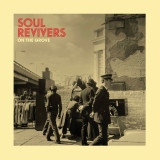
"On The Grove" is an ambitious and passionate collaboration project, it features musicians spanning seven decades, including Jamaican legends: Ernest Ranglin, Ken Boothe, Earl 16 and Devon Russell; alongside contemporary artists, including jazz trumpeter Ms. Maurice (known for her work with Afro—Jazz Ensemble Kokoroko and Nubya Garcia), and vocalist Alexia Coley.
Will probably ship earlier than the 14th. Up until Raising Hell, the rap juggernaut we know as Run-DMC was still in its building and breaking-down- doors phase. In 1986 that changed, and in a dramatic way. With their third long-player, the group had reached the mountaintop. It was THE record that proved hip-hop wasn't a fad. Raising Hell marked an important and significant new era for the group. Leaving producer Larry Smith for up-and- coming sonic innovator Rick Rubin (still co-produced by Run's brother Russell Simmons), they began to fully transition not only their own sound, but the sound of the entire genre. Less live playing - with some exceptions - and a slicker, tighter sonic attack. Musical aesthetics aside, though, at their core they stayed true to the essence of hip-hop: two turntables and a microphone, or two. It's impossible to talk about the album without its worldwide smash, 'Walk This Way,' which hit #4 on the Billboard pop charts and saw the group digging in the rock crates to summon Aerosmith in the flesh, combining Steven Tyler's and Joe Perry's musicianship with the group's own take on the '70s classic. The song's video cemented Run-DMC as legit MTV idols, and both groups rode its wave to new heights. Beyond 'Walk This Way,' the platter is full to the hilt with undeniable classic singles: 'You Be Illin''; 'It's Tricky'; 'Peter Piper' and the fashion-world shifting 'My Adidas.' Each song was new proof that Run-DMC's sound was indeed new, but still familiar, and full of the energy, charisma and innovation that drew fans to their first two LPs. Aside from the singles, the reason the album stands up so well is the fact that there is virtually no filler. 'Proud To Be Black' remains a pioneering and underrated cut when people talk about 'conscious' hip-hop. And to make sure they never lost the streets that gave them their start, 'Hit It Run,' 'Son Of Byford,' 'Is It Live' and 'Perfection' all bring it back to the group's early days in the park. Besides the triple platinum status the album achieved, it was more than just a pop smash. It signaled a new era for rap music, and it was
the no-turning- back point for the entire genre. This was the beginning of what we now call the Golden Era, and it still sounds as fresh today as it did three decades ago.
- The Year I Lived In Richmond
- The Tooth Fairy
- Big Chris Electric
- How You Got Your Picture On The Wall
- Rene Goodnight
- The One About The Rabbit In The Snow
- Brian's Golden Hour
- Little Sable Point Lighthouse
- Andrew & Meagan
- Premonition
- Richmond
Horrible Occurrences is the title of the new Advance Base album, and there is truth in advertising. In these songs_all centered around a fictional town called Richmond and featuring an interlinked cast of characters_you will hear stories of death and disappearance, climactic confrontations and unsolved mysteries. "Richmond is just this place where all the bad memories live," Owen Ashworth explains, and nearly 30 years into his songwriting career, none of his records have packed quite the emotional intensity of this one. And yet something alchemical happens in the telling of these tales. Like a masterful short story collection, Horrible Occurrences is inspiring and alive, idiosyncratic and electric, pulling you closer with each word. In the six years since his last full-length collection of originals, 2018's Animal Companionship, Ashworth gathered ideas from performing live and traveling around the country, returning to cities that he once called home and revisiting old ghosts, memories, and fragments of unfinished ideas. Blending truth and fiction into a dreamlike composite, the songs convey the winding path our memory takes as the years go by, giving voice to a subconscious that is still unpacking old memories for new wisdom. Drawing inspiration from the otherworldly loneliness depicted on '80s masterpieces like Arthur Russell's World of Echo and Bruce Springsteen's Nebraska, the music never crowds Ashworth's detailed storytelling but it also never feels auxiliary. These are beautiful songs, but they stick with you for their ability to strike dissonant, unforgettable emotional chords. It is this pervasive empathy in Ashworth's songwriting_along with his writerly gift for clear settings and complex characters_that has made him a guiding light for so many independent artists. The things that happen throughout Horrible Occurrences are what we tend to call "unspeakable"_events that draw gut-level responses just from acknowledging that they could happen. But part of the triumph of the record is how simply and generously Ashworth finds the language to share them. For the characters in these songs who make it out okay, these are the types of memories they will be tossing and turning their whole lives, waiting for quiet moments to confide them among the people they trust. For the rest of us, they are signs of life along the highway on a dark, snowy night: reminders that, as isolated as we may feel, we are not alone on the road.
Sage Green Vinyl. Highly anticipated first pressing of Live at The Cabin, originally a live-stream release show performance during the pandemic after Slaughter Beach, Dog's "At The Moonbase" record. The album was released digitally through Lame-O Records in the fall of 2022, and has been a cult favorite release by fans of the band. Available with beautiful artwork by Russell Edling (Lame-O, Golden Apples) fans will appreciate getting to dive deeper into the world of Slaughter Beach, Dog.
Howlin Rain’s grand 3xLP archival statement and untold story, written over nearly two decades in invisible ink between the lines. Features never before heard songs from The Russian Wilds, The Dharma Wheel, The Alligator Bride, Mansion Songs, Live Rain and the lost Ethan Miller Band sessions. With a broad cast of musical characters including Rick Rubin (Producer/American Records), Luther Dickinson (North Mississippi Allstars), Scarlet Rivera (Bob Dylan’s Rolling Thunder Revue), Joel Robinow (Once and Future Band), Isaiah Mitchell (Earthless/ The Black Crowes) and many more. Includes songs by The Rolling Stones, Grateful Dead, Leon Russell and Neil Merryweather. “I wanted to compile the record so it would have impact like our grandest, wildest, most unabashed studio album. I left out home demos, and songs from quiet corners, sketches, etc, in favor of fully formed, fully finished, studio level tracks from front to back. Lost at Sea is intended to be something that you can pour yourself into and get swept away in.” — Ethan Miller (Founder, bandleader)