Joyce Manor are California pop-punk legends and I Used To Go To This Bar is this epochal band operating at the top of their game. They continue to deliver relentlessly satisfying rock music in a manner that makes it look simply effortless. The Torrance, California-hailing trio of Barry Johnson, Chase Knobbe, and Matt Ebert are at a point in their career where their position as one of the most beloved rock bands is a foregone conclusion. Their seventh album finds the group continuing to find rich new veins to tap in their short-and sweet songcraft without losing an ounce of bite that gained them such repute in the first place. I Used To Go To This Bar further situates Joyce Manor in the rich lineage of their influences and inspirations. Think AFI"s rapid-fire burn, Weezer"s indelible power-pop acumen, and the dusky emotionalism of The Smiths while further establishing them as leading lights in the current rock landscape. The fresh burst of inspiration that fuels I Used To Go To This Bar proves that Joyce Manor are far from content to rest on such laurels, moving forward with their sound and style in a way that reminds you of how they got to this point in the first place. Catch them live at Coachella 2026.
quête:sa ha ra
Soft Echoes presents the first physical edition of ‘In a Few Places Along the River’ by Abul Mogard as a limited run of 500 vinyl copies. Originally released digitally in 2022, the album now appears in its intended form, marking the label’s second release.
Three long pieces, composed between 2019 and 2022, emerged from Mogard’s meticulous experimentation with analogue and digital instruments. Slowly evolving harmonic fields of layered drones and spectral textures drift across the record. They are enhanced by reverb from Scotland’s Inchindown oil tanks, which hold the longest reverberation of any man-made structure, giving the music a haunting resonance and a sense of suspended space.
‘Against a White Cloud’ and ‘In True Contemplation’ open the album with their nocturnal tones that gradually intensify into dense, immersive waves of sound. Side B is devoted to the 21-minute elegiacal piece ‘Along the River’, which flows between weight and silence, unfolding with reflective depth and moments of subtle transcendence. As one listener observed, “His music doesn't break the wilful suspension of disbelief: you stay in its trance.”
“Recording for this album began in 2019, when I was still living in London,” Mogard explains. “The first version of ‘Along the River’ was created at my studio near Brick Lane. It started with experimenting around a chord progression inspired by a classical piece I had once been recommended, though, strangely enough, I no longer recall what it was. Early in 2022, I revealed the identity behind Abul Mogard and wanted to mark this new period, so I decided to release it quickly, by myself, as digital-only.”
After returning to Rome, Mogard created the other two pieces, working with new digital instruments alongside his modular synthesiser, and integrated recordings from the London sessions. The music reveals a patient attention to texture and space, defining his usual restraint. Mogard adds, “I was trying to explore very subtle changes in the spectral characteristics of the music using extremely slow, intertwined tones.”
Described by critics as one of Mogard’s most melancholic and absorbing releases, the album maintains an austere beauty and contemplative weight, leaving a lingering impression that lasts far beyond the final note.
The music has extended beyond the album itself, with tracks appearing in films and contemporary artworks. Most notably, Swedish artist Peder Bjurman’s ‘Slow Walker’ audiovisual installation and French filmmaker Fleuryfontaine’s politically charged animated film ‘Soixante-sept millisecondes’.
Mastered by Rafael Anton Irisarri and cut to vinyl by Lupo, the record emphasises the clarity and depth of Mogard’s frequencies, with each layer precisely balanced. The cover artwork and design are by Marja de Sanctis, who has collaborated with Abul since his first cassette release in 2012.
- A1: Phantoms & Monsters (4 20)
- A2: A Witch & A Devil (3 56)
- A3: Truth Is For Losers (2 50)
- A4: Schmutzig (2 37)
- A5: My Friend The Monster (4 08)
- A6: The Madness Of The Summer (4 51)
- B1: Morn (4 39)
- B2: Noon (6 11)
- B3: Night (11 27)
- C1: Flight (Piano Solo) (20 30)
- D1: Break (Piano Solo) (7 30)
- D2: Moon (Piano Solo) (13 40)
Smokey Vinyl[27,52 €]
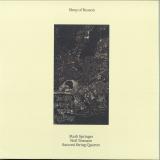
I fell into a deep sleep of reason Everything broken and hence when I woke up from that deep sleep of reason it all made sense
A Unique Artistic Partnership This project represents a distinct and carefully considered artistic endeavor. Developed by Mark Springer (Rip, Rig and Panic) and Neil Tennant (The Pet Shop Boys), it combines a suite for piano, quartet, and quintet with vocals, accompanied by lyrics offering thoughtful introspection. The collaboration explores the intersection of divergent creative approaches-one characterized by radical expression, the other by meticulous craftsmanship. The result is a work that invites reflection and demonstrates the potential of disciplined artistic dialogue.
The Sources of the Project Neil Tennant: I bought a book of Goya's print series Los Caprichos which had inspired Mark's music and saw that the artworks were a satirical, cruel, nightmarish portrayal of the politics, corruption and culture of his era, exploring his dreams - or nightmares - while exposing the double standards of the ruling establishment. The lyrics I wrote for "Sleep of Reason", in response to Los Caprichos, are intended to be sardonic and dreamlike, looking back to Goya's nightmares but then reflecting on my experiences in 21st Century popular culture and media in which I have located the "monsters" Goya saw in his dreams. It often feels like we're living in an era dominated by monsters with their grotesque egos hollering through social media, unfiltered and untruthful, leaving a trail of wreckage behind them. Maybe it's always felt like that.
- A1: Barbour Singers - Don&Apos;T Let Satan Get You
- A2: Selah Jubilee Singers - I Feel Like My Time Ain&Apos;T Long
- A3: Alphabetical Four - Have You Heard About The World Coming To An End?
- A4: Norfolk Jazz &Amp; Jubilee Quartet - This Old World Is In A Bad Condition
- A5: Kentucky Jubilee Four - I&Apos;M Gonna Lay Down My Heavy Load
- A6: Galilee Singers - Singing With The Angels
- A7: Elder Charles Beck - I&Apos;M Going To Walk Right In And Make Myself At Home
- A8: Birmingham Jubilee Singers - Raise A Ruckus Tonight
- B1: Monarch Jazz Quartet Of Norfolk - Somebody&Apos;S Always Talking About Me
- B2: Davis Bible Singers - Do You Want To Be A Lover Of The Lord
- B3: Utica Institute Jubilee Singers - Leaning On The Lord
- B4: Alabama Harmonizers - Holy Unto The Lord
- B5: Birmingham Jubilee Singers - What You Gonna Do When The World&Apos;S On Fire
- B6: New Orleans University Glee Club - The Old Ark&Apos;S A-Movering
- B7: Pilgrim Jubilee Singers - The Lord&Apos;S Prayer
- B8: Royal Harmony Singers - I&Apos;M On My Way To Heaven Anyhow
Tape[16,39 €]
Death Is Not The End present a compilation gathering a cross-section of early gospel choirs and vocal harmony groups recorded between late 1920s and the mid-1950s - a period when spirituals & jubilee traditions merged with blues, jazz and early rhythm and blues, providing the musical routes for the coalescence of the civil rights movement born out of the black church. In the modern world these perennially vital recordings provide a fitting tonic for the near-dystopia we find ourselves living through.
- A1: What's Wrong?
- A2: Overkill
- A3: The Anatomy Of A School Shooting
- B1: Glenwood Projects (Feat. Uncle Howie, Necro & Goretex)
- B2: Peace Sells
- B3: Unstoppable
- B4: Death Smiles At Murder (Feat. Mr Hyde)
- C1: Chasing The Dragon (Feat Necro)
- C2: Alien Workshop
- C3: Canarsie Artie's Brigade (Feat. Necro, Q-Unique & Goretex)
- C4: Porno Director (Feat. Goretex & Sabac Red)
- D1: American History X
- D2: Uncle Zowie
- D3: Legend Has It
- D4: The Final Scene
- D5: Chasing The Dragon (Moshpit Mix) (Feat. Necro)
CASSETTE[22,65 €]
Twenty years ago, ILL BILL released “What’s Wrong With Bill?”, a raw, unfiltered snapshot of where his mind was at during a dark, creative and transformative time. Chaos and clarity in musical form, a record built from trauma, truth and the New York streets that raised him. He never imagined it would become what it did: a cult classic with a revered mystique that continues to be quoted and debated 20 years later. This album captured ILL BILL at his most urgent, most aggressive and most alert to the madness around him.
For the first time in two decades, “What’s Wrong With Bill?” is being reissued on 2LP vinyl, a complete capsule including an alternate variant cover, 20th anniversary commemorative OBI strip, and, for the first time ever, a cassette edition, alongside a remastered limited edition CD. This is more than nostalgia, it’s encapsulated arcana, proudly representative of an era when Hip Hop was dangerous, fearless and alive. This one is for the true believers who never forgot.
- A1: Orchestral Manoeuvres In The Dark– Telegraph
- A2: Blancmange– That's Love, That It Is
- A3: China Crisis– Tragedy And Mystery
- A4: Adam Ant– Strip
- A5: Divine– Love Reaction
- A6: Yello – I Love You
- A7: Talk Talk– My Foolish Friend
- A8: Japan– Canton (Live)
- B1: Fun Boy Three– The More I See (The Less I Believe)
- B2: Tracie*– Give It Some Emotion
- B3: The Teardrop Explodes– You Disappear From View
- B4: Xtc– Love On A Farmboy's Wages
- B5: The Stranglers– Midnight Summer Dream
- B6: The Kinks– Don't Forget To Dance
- B7: Mari Wilson– Cry Me A River
- C1: Bauhaus– Lagartija Nick
- C2: Marc And The Mambas– Black Heart
- C3: The Glove– Like An Animal
- C4: Freur– Doot Doot
- C5: The B-52'S– Song For A Future Generation
- C6: Wall Of Voodoo– Mexican Radio
- C7: Joe Jackson– Breaking Us In Two
- D1: Oliver Cheatham– Get Down Saturday Night
- D2: Rockers Revenge– The Harder They Come
- D3: Freeez– Pop Goes My Love
- D4: Malcolm Mclaren– Soweto
- D5: Culture Club– I'll Tumble 4 Ya
- D6: The Belle Stars– Indian Summer
- D7: Level 42– Out Of Sight Out Of Mind
- D8: Daryl Hall & John Oates– One On One
- E1: Sparks & Jane Wiedlin– Cool Places
- E2: The Romantics– Talking In Your Sleep
- E3: The Fixx– Saved By Zero
- E4: The Motels– Suddenly Last Summer
- E5: Modern English– I Melt With You
- E6: Missing Persons– Walking In L A
- E7: Naked Eyes– Always Something There To Remind Me
- E8: Taco– Puttin' On The Ritz
- F1: Electric Light Orchestra– Secret Messages
- F2: Men At Work– Overkill
- F3: Pat Benatar– Little Too Late
- F4: Journey– Separate Ways (Worlds Apart)
- F5: Styx– Mr Roboto
- F6: Giorgio Moroder & Joe Esposito– Lady, Lady
- F7: Stephen Bishop– It Might Be You
Celebrating the first year of ‘NOW That’s What I Call Music’ – 1983. ‘Now Yearbook’ presents a stellar selection of 1983’s biggest and best hits… 80 huge chart hits from the year, alongside enduring and well-loved classics on 4 CDs. 1983 saw British artists achieving unprecedented success across the world with ‘Every Breath You Take’ from The Police being the year’s biggest seller in the U.S., and ‘Karma Chameleon’ from Culture Club being the top seller in the U.K. Breakthrough acts, achieving their first big hits – all here – include a staggering line-up of future superstars: U2, Eurythmics, Wham!, Paul Young, The Style Council, Marillion and Thompson Twins, to name a few..' Released on a LTD 4CD SET: This will be a limited run of 5000 4CD units housed in ‘hard-back book’ packaging and featuring a 28-page booklet that includes an overview of the chart music of 1983, a track by track guide including chart stats and fun facts, a selection of original picture sleeves and a quiz. 2CD Standard set and also a limited edition of 3000 units, pressed on 3LP translucent red vinyl...
‘Call To Arms & Angels’ is the title of the twelfth studio album from South London collective Archive.
A 17-track double CD / triple LP recorded at RAK studios in London and released on
Dangervisit/PIAS.
Deluxe editions of the album also include a bonus ‘Super8’ album of new and
exclusive instrumentals, as featured in the band’s ‘Super8’ documentary that will
accompany the release of the album.
Produced by Archive and long-time collaborator Jérome Devoise, ‘Call To Arms &
Angels’ is the band’s first studio set since 2016’s ‘The False Foundation’.
Talking about the new album, Darius Keeler says, “Writing our twelfth studio album
was an extraordinary time for the band. The song writing became an unfolding
narrative as the world got stranger and more disturbing every day. With people’s
freedoms being pushed to the brink, the suffering Covid caused and the terrible
events in the US lead by Trump and the rise of the Right, anything seemed possible.
“To reflect on these times as artists brought up a darkness and an anger, but also a
strange kind of inspiration that was at times unsettling. It really made us appreciate
the power of music and how lucky we are to be able to express our feelings in this
way.
“It seems there is light at the end of the tunnel, but there are always shadows within
that light.”
Deluxe 2CD album plus ‘Super8’ bonus CD in 40-page casebound Polaroid
bookpack.
2CD album.
Deluxe vinyl box set with white coloured vinyl 3LP (exclusive to this box set), ‘Super8’
bonus LP on white vinyl (exclusive to this box set), deluxe 3CD with Polaroid booklet
and 12” x 12” art print.
Triple LP on gold vinyl in triple gatefold sleeve.
Triple LP on green vinyl in triple gatefold sleeve.
Triple LP on black vinyl in triple gatefold sleeve.
- A1: Pt 1
- B1: Pt 2
Atef Swaitat (yarghul) and Abu Ali (lead vocals) are popular Bedouin wedding musicians continuing a long family tradition in Jenin and the north of historic Palestine. The album is comprised of immersive field recordings from weddings across the Galilee in the 1970s.
Copyright of Majazz Project / Palestinian Sound Archive
Created by Mo’min Swaitat
***
Over several years, Mo’min Swaitat has amassed an archive of rare tapes and vinyl from Palestine and beyond, spanning field recordings of weddings to revolutionary tracks and synth-heavy 80s funk. Many of these were acquired from a former record label in Jenin in the north of the West Bank. The Majazz Project is a research project borne out of the archive, focused around sampling, remixing and reissuing vintage Palestinian cassettes. It is a collaboration between Arab and non-Arab DJs, producers and artists interested in shedding new light on the richness and diversity of Palestinian musical heritage.
Repress.
Just one week after the outbreak of the First Intifada in 1987, Riad Awwad brought his sisters Hanan, Alia and Nariman together in their living room and began recording The Intifada album on equipment he had made himself. One of these was co-written with their friend, the acclaimed Palestinian writer Mahmoud Darwish. Riad printed 3000 copies of the cassettes which he began distributing in the Old City of Jerusalem and across the West Bank. The Israeli Army immediately confiscated all the copies they could find, the vast majority of which remain in the military archives to this day. Riad was arrested, interrogated and detained for several months. Straight after his release, he formed a band, Palestinian Union, and put out a new album. He then founded a school, offering kids in the West Bank an alternative musical education, teaching them how to create their own electronic equipment. In 2005, Riad was tragically killed in a car accident. His legacy lives on through his family, his timeless music and his powerful story, which continues to inspire to this day.
Over several years, Mo’min Swaitat has amassed an archive of rare tapes and vinyl from Palestine and beyond. Many of these were acquired from a former record label in his hometown of Jenin, in the north of the West Bank. The Majazz Project is a research project and record label borne out of the archive, focused around sampling, remixing and reissuing vintage Palestinian and Arabic cassettes and LPs, shedding new light on the richness and diversity of Arabic musical heritage.
- 2: Against Death
- Smashed
- Can't Touch
- Sit
- Lucky
- Safe
- Son Of
- Destiny
- Billions
- Death Of Music
- No Mail
- I.d.o.l
- Yo
- Bawk
- Crack
- Headless
- In So Many
- Ajukaja Me
“Certain albums hit like howling bullets at pivotal moments, tearing open the face of music to reveal hidden sonic muscles and fusing them back into something both strangely familiar and yet entirely unrecognisable. We believe this is one of those records.”
The double album Death of Music delivers 18 crooked vocal pops, some ruthless, others unexpectedly disarming. In some songs, Ajukaja & Mart Avi function like a two-headed saurus swinging its spiky tail to shady pop-house smackers. In others, Ajukaja's serene organ licks descend into subterranean caverns, allowing Avi to float to the surface on their wavelengths and turn his voice into billions of extinct moths, enslaved by the moonlight’s pull. There are songs that face destruction and those that seek to prevent it.
One kykeon rap goes, “If you die before you die, then when you die, you don't die!”. Ajukaja & Mart Avi have embraced this notion to create new music that allows them to thrive in the algorithmic wasteland. 13 years in the making, these 66 minutes are packed with lifetimes of truths you didn’t know you needed to know. They are Ajukaja & Mart Avi – two against death.
Produced by Ajukaja
Words by Mart Avi, Music by Raul Saaremets
Guitar and Bass by Sten Sheripov (Can’t Touch The Earth, Safe)
Sax by Steve Vanoni (I.D.O.L.)
Recorded between 2011—2024
Mastered by The Bastard
Cover Photo by fs
Sleeve by Marke, Mart Avi
Pressed in Tartu, Estonia
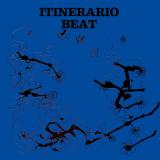
- 01: Uno Dei Due (Feat. Rigol (Duilio Radici))
- 02: Sembrava Sincera (Feat. Rigol (Duilio Radici))
- 03: Il Mago (Feat. Rigol (Duilio Radici))
- 04: Il Campione (Feat. Rigol (Duilio Radici))
- 05: Itinerario Romantico (Feat. Rigol (Duilio Radici))
- 06: L&Apos;Ascensore (Feat. Rigol (Duilio Radici))
- 07: Strane Vacanze (Feat. Rigol (Duilio Radici))
- 08: Viaggio A Londra (Feat. Rigol (Duilio Radici))
- 09: Quartiere Residenziale (Feat. Rigol (Duilio Radici))
- 10: La Baita (Feat. Rigol (Duilio Radici))
First-ever official reissue - Clear blue vinyl edition.
"Itinerario Beat" is as intriguing as it is mysterious. Performed by a group of largely unknown musicians called The Blue Sharks—previously heard on the excellent "It Became Crystal" (reissued by Redi Edizioni in 2021, Cat. No. REDILP001)—the album features ten easy-listening instrumental compositions for bass, drums, piano, and Hammond organ. The tracks are arranged and performed with distinctive taste, blending elements of beat, jazz-funk, and symphonic pop. Officially credited to Rigol, the pseudonym of composer Duilio Radici, the music also appears to include an uncredited contribution from Ugo Fusco, composer of several soundtrack LPs published by Edizioni Leonardi.
Beyond their use in television and film, library music tracks are highly sought after by renowned musicians and DJs and are frequently sampled. A notable example is "Itinerario romantico," included on this LP, which was sampled by rapper Travis Scott in his 2016 track "90210."
Deluxe Box Set featuring 69 tracks over TWELVE 12" LP's! We're at it once again, going all out with 12 mind melting color pressings and deluxe packaging with extra goodies: RAINBOW FOIL NUMBERED BOX Hand numbered box, Rainbow Splatter Vinyl is Limited to 1000 copies DELUXE COLOR PRESSINGS Hypnotic Rainbow Splatter vinyl pressings with unique op art label for each 12" PHOTO SLEEVES Each 12" in a custom photo inner-sleeve, with 35mm photos by Bob Greco (@picturemanbob) DELUXE 24" x 24" POSTER With polaroid film photos from the festival by Bob Greco BONUS BOOTLEG STICKER Sourced from poster created by Ernie Houk (@leftiesmudges), originally made for Field of Visions 'Mirage City' MIXED & MASTERED Mixed from multi-track stems and mastered for vinyl by Craig Lawrence
- A1: When We Dance (4:24)
- A2: Heart Started Beating
- B1: Desperation Looks Ill
- B2: Who Just Wants To Survive? (5:09)
The new EP is released on limited edition 'Scissorhands Ice Blue' coloured vinyl with a hand-numbered gold riso print sleeve art with obi strip. Sarah/Shaun wooed hearts and wowed critics with debut EP It's True What They Say? in 2024 plus follow-up EP Someone's Ghost in 2025.
They have been featured across the media including BBC Radio 6Music, BBC Radio Scotland, The List and The Skinny. They've played gigs supporting French legends Air, Glaswegian 80s pop legends The Bluebells, Glasgow's huge Glasvegas, a slew of venues across Glasgow and Edinburgh, not to mention the festivals: Kelburn Garden Party, Fringe By The Sea, Kendall Calling, Dunbar Music Festival and Hidden Door Festival. The duo are set to release a full length album in late 2026.
[b] A2 Heart Started Beating [Backwards] (4:10)
[c] B1 Desperation Looks Ill [From The Other Side] (4:26)
- 1: Lemonade Tycoon
- 2: Anti-Bird-Spike-Bird-Nest
- 3: Interlude (Stride)
- 4: Allcapsallbold
- 5: Pet Boss
Taupe’s latest album release, waxing | waning delivers jazz experimentalism, ‘skronk’, avant-rock, and electronics, by the Glasgow-based trio, due out via Minority Records. Across its seven tracks, waxing | waning captures Taupe’s approach – bold and boundary pushing – shaped by a fresh shift in the band’s dynamic and compositional approach.
Taupe’s waxing | waning, co-composed and realised by its players in a studio that was once an undertaker’s premises in Glasgow, is an absolutely affirmative album, an act of cultural defiance in desperate times.
Comprising Mike Parr-Burman (guitar, bass guitar, electronics), Jamie Stockbridge (alto and baritone saxophones) and Alex Palmer (drum kit, percussion), Taupe work up a storm of skronk, free jazz and harmolodic frenzy whose closest relations include Zu, Melt Banana and John Zorn. However, waxing | waning is from its opening, stuttering blasts, an exercise in seeking out and claiming new territory, finding unique and novel permutations in which jazz, rock, electronics interbreed at breakneck pace. Here is a group determined to say and do things they don’t get to say and do elsewhere in their musical lives.
‘Lemonade Tycoon’ hits the ground skronking. It’s cubistic jazz, cumulative in its impact, avoiding the white lines of the conventional freeway, bridling, bustling, coming at you from all angles – a three way conversation of astonishing rapidity, fast track, telepathic communication – everyone from James Chance to Albert Ayler coming at you at once, before morphing in to a spidery scrawl of electronics and furious percussion. ‘Anti-Bird-Spike BirdNest’s‘ title somehow sums up the sort of mental images evoked by the music – its sheer creative disobedience, as if being chased in vain, like a delivery rider evading capture by ICE agents -– shapeshifting, assuming different shades, sprouting metal quills and, in its midsection, seeming almost to swallow itself alive, before regurgitating itself in a sublime mess.
‘Interlude (Stride)’ is not exactly ambient, more a horizontal enmeshment of percussion, drones, reverberant noise, electronics, a sonic mulch. ‘allcapsallbold' reminds of early Aksak Maboul, in its playfulness, a haywire series of short phrases, subject to mechanical interference, a complex weave of irregular rhythms, increasingly eloquent sax phraseology and caustic guitars, which land heavier and heavier. ‘Pet Boss' is the new jazz equivalent of a highly evolved, mature conversation among brilliant equals, sharp, empathetic, complementary, rising to a collective, joyful noise. On the title track, electronics descend like a shower of bright particles, intensifying in their luminosity, whitening the skies, as sax and drums kick up a tempestuous, spontaneously sculpted noise that summons the ghosts of the great free jazz players, before a dark calm descends slowly. Finally, ‘Turn Push Kick’, a burgeoning chatterstorm of electronics, before the group kicks in, at angles to one another, led by abrasive guitars, reminiscent of Sunn O))) in their ritualistic concussion, riffing, digging deep amid squealing sax and piledriving percussion.
- 1: Ghost Sub
- 2: Harm
- 3: Deltas
- 4: Kay
- 5: Walrus
- 6: Two
Nachdem sie sich schon fast 20 Jahre kannten, schien die Zusammenarbeit zwischen Nick Sanborn und Chris Rosenau irgendwie vorprogrammiert, kam aber eher zufällig zustande - bei einem Musikfestival in Eaux Claires, wo die Chemie sofort stimmte. Während sie probten, merkten sie, dass sie schon dabei waren, ein Album aufzunehmen. Sie behielten die Arbeitsmixe und Titel bei, auch die Vogelstimmen und Verkehrsgeräusche, die ins Mikrofon kamen. Das Ergebnis war ,Bluebird" aus dem Jahr 2019, ein kleines Wunderwerk mit fünf Titeln, bei dem man das Gefühl hatte, mit ihnen im Raum zu sitzen und zu lächeln, während sie ihre wortlose Harmonie fanden.Zwei Jahre später trafen sich Rosenau (Volcano Choir, Collections of Colonies of Bees) und Sanborn (Sylvan Esso, Made of Oak) wieder. Sie hatten Spaß bei Runde zwei, aber die Sessions waren weder so unbeschwert wie beim ersten Versuch noch so fokussiert, dass sie sich spannend und neu anfühlten. Die beiden legten diese Stücke beiseite, um es zu einem späteren Zeitpunkt erneut zu versuchen. Dann kam die Pandemie. Es gab Tourneen. Es gab andere Platten. Es gab das Leben im Allgemeinen. Als Rosenau sich wieder zu Betty's (Sylvan Esso's Studio in den Wäldern von North Carolina) wagte, um es erneut zu versuchen, waren vier Jahre vergangen. Und Sanborn baute sein Live-Equipment von Sylvan Esso auseinander, ordnete es neu und fügte neue Teile hinzu, in der Hoffnung, jegliche Muskelgedächtnis für einen Echtzeitaustausch zu vermeiden. Sie wussten sofort, dass es funktionierte, ohne die Zweifel der Vergangenheit im Schlepptau. An diesem ersten Tag, einem Donnerstag, entstanden ,Ghost Sub" und ,Harm". Am zweiten Tag hatten sie einen Fehlstart mit einem Stück namens ,Kay", bei dem Sanborns Synthesizer nicht ganz zu Rosenaus Riff passten, bevor sie mit ,Deltas" weitermachten. Es gab einen Fehlstart, der hier erhalten geblieben ist, aber was folgte, war eine erhabene Morgenmelodie, als würde man müde aufwachen und von dem plötzlichen Licht draußen überwältigt werden. Es ist der Klang des Erwachens zum Leben und der Liebe zu diesem Leben, und es ist das kleine Juwel in der Mitte der sechs Songs, die sie an diesem Wochenende aufgenommen haben, die sechs Songs, die hier in der Reihenfolge präsentiert werden, in der sie entstanden sind. Sie beendeten ,Two" kurz bevor Rosenau zum Flughafen aufbrach; es ist ein langer Abschied, süß und sentimental und traurig, ein letztes Gespräch zwischen zwei Freunden, die ihre gemeinsame Zeit genossen haben. Das Band bricht ab, aber man muss nicht hören, was er sagt, um zu wissen, was er sagt. Das war gut, perfekt, genau das, was wir gesucht haben, genau richtig, Kumpel. So fühlt sich ,Two" von Anfang bis Ende an - zwei Freunde, die fest miteinander verbunden sind und sich in ihren schönen Austausch vertiefen.
- The Beginning And The End
- Seventh Degraded Hymn
- Memorial Environment #4
- Eighth Degraded Hymn
- Memorial Environment #5
- Ninth Degraded Hymn
- Memorial Environment #6
- Tenth Degraded Hymn
- The End Of Life In Sound
Der postklassische Komponist, Klangkünstler und Kurator Matthew Patton ist mit seinem zweiten Album als Those Who Walk Away zurück. "Afterlife Requiem" ist eine Elegie für seinen Freund und Kollegen Jóhann Jóhannsson. Drones, Elektroakustik und fast vollständige Stille, extrahiert aus unvollendeten Aufnahmen auf Jóhannssons Festplatten, bilden die Grundlage für zwei Streichquintette - Ghost Orchestra (Reykjavík) und Possible Orchestra (Winnipeg) -, die in einem traurigen, langatmigen Werk verarbeitet und ausgelöscht werden. Patton hat auch wieder mit Andy Rudolph (Guy Maddin) und Paul Corley (Sigur Rós, Ben Frost) an der Koproduktion und dem Sounddesign gearbeitet, um eine brodelnde Körperlichkeit zu schaffen, die brodelnde Tiefen mit eindringlichen Bewegungen gespenstischer Streicher kontrastiert. ,Alles, was ich je geschrieben habe, ist ein Requiem. Alles ist ein Ende. Der Tod ist überall in dieser Musik präsent. In meinen Werken geht es um das Verschwinden - der Gegenwart, der Vergangenheit, von allem. Afterlife Requiem wird im Laufe seiner Dauer immer langsamer, es ist ein einziges großes Ritardando, die Zeit verlangsamt sich nicht nur, sie verschwindet. Ohne dass ich darüber nachgedacht hätte, ereigneten sich zwei miteinander verbundene Tragödien, die während des Schreibens, Aufnehmens und Arbeitens organisch an die Oberfläche kamen: der Tod meiner Mutter und der Tod des Komponisten und Freundes Jóhann Jóhannsson. Wenn ich mit dem Schreiben anfange, denke ich an nichts Bestimmtes, ich schreibe einfach, komponiere, nehme auf und höre zu ... aber irgendwas macht sich immer auf unvorhergesehene Weise bemerkbar oder drängt sich in den Vordergrund. Nach dem medizinisch assistierten Tod meiner Mutter wurde mir beim Ausräumen ihrer Wohnung klar, dass ich auch die physische Manifestation ihrer Welt auslöschte - und dass ich genau dasselbe mit der Musik tat, die ich schrieb und aufnahm. Während dieser Zeit wurde mir auch Jóhanns Tod immer wieder bewusst. Für Afterlife Requiem habe ich kurze, verlassene Fragmente aus Jóhann Jóhannssons Festplatten genommen und diese körperlosen Audio-Geister abwechselnd in meine eigene Musik eingebaut, wobei ich sie unrein gelassen habe - und dabei die Grenze zwischen Schaffen und Zerstören verwischt habe. Nach seinem Tod hatte ich diese Festplatten aus Jóhannssons Berliner Studio zum Anhören bekommen. Diese Musik war aufgegeben worden, in verschiedenen Stadien der Entstehung und Auflösung: ein Verzeichnis zerfallener und toter Erinnerungen, vergessen und jetzt nur noch in einer Reihe ineinandergreifender mechanischer Teile vorhanden, die mit der Zeit selbst versagen und verschwinden werden, wie alles andere auch. Monatelang hörte ich mir diese Überreste von Jóhanns Musik obsessiv an und versuchte, Hinweise auf Jóhann vor seinem Tod zu finden. Oft stellte ich fest, dass er das Aufnahmegerät noch lange nach Ende der aufgenommenen Musik laufen gelassen hatte. Er schien nicht zu bemerken, dass die Musik aufgehört hatte, oder registrierte nicht, dass dies das Ende der Musik war, oder vielleicht war er durch etwas anderes abgelenkt. Aber ich fand diese langen Stillephasen zutiefst emotional und berührend. Die verschwindenden Elegien von Afterlife Requiem sind weniger Musik als vielmehr Überreste von Musik. Auf diese Weise arbeite ich immer auf die Subtraktion von Bedeutung hin. Die Musik ist fern und verschwommen, beschädigt, geisterhaft und gespenstisch und deutet nur wie eine halb vergessene Erinnerung an das, was einmal existierte, eine verdichtete Darstellung von Verfall und Auslöschung. Ich habe dieses neue Stück von Anfang bis Ende mit diesen körperlosen Stillephasen aus Jóhanns eigenem Werk, Raum und Zeit unterlegt. Jetzt für immer verschwunden, bleibt seine aufgezeichnete Stille zurück; eine monumentale Leere, die der Welt verloren gegangen ist. Im gesamten Stück, insbesondere in den Abschnitten ,Memorial Environment", habe ich auch unzählige Geräusche aus der Natur integriert, von vulkanischer Lava über Lastenaufzüge bis hin zum menschlichen Blutfluss, dem Zischen von Turbinen und Selbstmordinjektionen. Der Künstler Robert Smithson sagte vor Jahrzehnten: ,Es ist die Dimension der Abwesenheit, die es noch zu finden gilt." Für mich misst diese Musik auch, wie die Zeit abläuft. Tatsächlich ist die Zeit bereits abgelaufen. Die Ewigkeit hat bereits begonnen." - Matthew Patton (Those Who Walk Away)
- A1: Electrifield Love
- A2: Come On Y'all
- A3: Your Love (Is All I Need)
- A4: What Would I Do?
- B1: Sugar Plum (Gimmie Some)
- B2: A Better World (For Everyone)
- B3: A Change Is Gonna Come
- B4: Explain It To Her Mama
- B5: Our Generation
Magenta Vinyl[32,35 €]
Super-rare Stax funk masterpiece, a big favourite of Pete Rock who sampled it on his classic ‘Let’s Straighten It Out’.
When we started the BGP Funk & Jazz Classics series earlier this year we had an idea that we would put a few albums out, and that would be that. But as we reach our third batch of five we have found that there is a whole world of sought-after original albums, which for a myriad of reasons have failed to turn up in the reissue racks. This time we have come up with something very special, digging deep into the Stax Records vaults to rescue five of the most collectable albums on the label.
Ernie Hines “Electrified” was recorded for Stax’s We Produce subsidiary. Hines had been signed to the label by Al Bell on the recommendation of the publisher of Jet magazine. The album is a fantastic piece of southern soul, with a couple of funk tracks, including ‘Our Generation’, a politically-edged call to arms, that became very sought-after when it was sampled by Pete Rock. (Dean Rudland)
Super-rare Stax funk masterpiece, a big favourite of Pete Rock who sampled it on his classic ‘Let’s Straighten It Out’.
When we started the BGP Funk & Jazz Classics series earlier this year we had an idea that we would put a few albums out, and that would be that. But as we reach our third batch of five we have found that there is a whole world of sought-after original albums, which for a myriad of reasons have failed to turn up in the reissue racks. This time we have come up with something very special, digging deep into the Stax Records vaults to rescue five of the most collectable albums on the label.
Ernie Hines “Electrified” was recorded for Stax’s We Produce subsidiary. Hines had been signed to the label by Al Bell on the recommendation of the publisher of Jet magazine. The album is a fantastic piece of southern soul, with a couple of funk tracks, including ‘Our Generation’, a politically-edged call to arms, that became very sought-after when it was sampled by Pete Rock. (Dean Rudland)
- Phonè
- Turenas
- Stria
- Sabelithe
Dr. John Chowning (b. 1934) is a pioneering computer musician, composer and professor who, in 1967, discovered the FM synthesis algorithm. This breakthrough in electronic music allowed for simple, yet rich timbres described as sounding "real." With this discovery, Chowning composed singular, dramatic electronic music and changed the timbre of music forever.
Chowning utilized the potential of computers to synthesize sounds according to programmed instructions. The composer's use of his own FM algorithms, digital synthesis with computers and the new compositional concepts offered by a programmable musical structure combine to create some of the most original and unique electronic music ever created.
The compositions on this LP were realized between 1966 and 1981 and the music on this LP, with the exception of Stria, was originally released on CD in Germany (Wergo, 1988). The version of Stria included here contains a section not included on the Wergo CD. Thus, this version of Stria is complete. This is the first time these purely digital recordings have been released on an analog medium. The original dynamics of these groundbreaking compositions have been preserved on this LP. As a result, listeners are advised to increase volume with caution.
In 1975, John Chowning founded the CCRMA - Center For Computer Research In Music and Acoustics at Stanford University. Through Stanford, Chowning licensed his groundbreaking algorithms to Yamaha resulting in numerous new instruments including the iconic DX series of keyboards. In 1972, his composition Tureens which is included on this LP, was the first to create the illusion of continuous 360-degree space using four speakers.
Technical Notes:
All pieces on this LP are originally quadrophonic. The illusion of moving sound sources is thus projected from the surrounding environment given by four loud-speakers on the stereo-basis.
STRIA was composed using Chowning’s own program to compile the musical structure into note-lists and MUSIC 10 (by D. Poole/Tovar) to generate the sounds in software-synthesis. The original quadrophonic version utilized 12 bits, two different sampling rates being used to accommodate the enormous amount of data on the magnetic disc-packs available at that time. The original sound-data was processed by sampling-rate conversion and digital mixes to achieve the stereo version presented on this LP.
SABELITH and TURENAS were synthesized originally using Smiths’ SCORE and MUSIC 10. However, their format was changed from direct sound-samples to a command stream for a special purpose computer, the System Concepts Digital Synthesizer, designed by Peter Samson, one of the first large-scale digital synthesizers for real-time sound processing - one was designed for CCRMA in the late seventies. For this recording the sounds were recorded directly from the synthesizer computing the samples in real-time.
PHONÈ was realized with the System Concepts Digital Synthesizer using again Chowning’s own program to create the note list.
The master tape of this LP was made directly from the computer system at CCRMA which generated and stored the sound data in digital format. No analog recording was involved at any stage of the production and editing process.
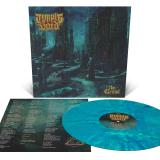
- 1: Poison Icon
- 2: Godless Cynic
- 3: The Crawl
- 4: A Dead Issue
- 5: Thy Mountain Eternal
- 6: Soulburn
- 7: The Twin Stranger
Critically acclaimed Death Metal force TEMPLE OF VOID return with their new album, The Crawl. The caveman brawn of previous albums, namely Summoning the Slayer (2022), remains, but there’s a wider dynamic on the group’s fifth full-length album at play. Now a quartet—featuring guitarist Alex Awn, drummer Jason Pearce, vocalist/guitarist Mike Erdody, and bassist Justin Malek—the Michiganders aren’t shying away from their non-metal influences, seeking greater integration of grunge and post-punk with their brutish signature. Singles “The Crawl” and “Soulburn” demonstrate the proficiency of TEMPLE OF VOID's death-cloaked, spearheaded attack. From the high intensity of opener “Poison Icon” to the granite wall of “The Twin Stranger,” The Crawl isn’t just TEMPLE OF VOID evolved, it’s a harbinger of death metal to come. “The biggest shift for me on this record was not feeling like we had to fly the ‘death-doom banner’ as part of our identity,” says Alex Awn. “Death-doom, as a genre, gave us something to anchor our sound around when we started. It was always a reference and touchstone. At the same time, we always wanted to make sure we had our own spin on it. We’ve always been adding to the conversation, adding to the genre, giving our point of view. A huge part of what makes a Temple of Void record is the non-death-doom influences that make up our DNA. And on album five we never once asked ourselves, ‘Do we have enough death metal? Do we have enough doom metal?’ We simply wrote a heavy-ass record—let the chips fall where they may.” For lyrics, Erdody built on the psychology and fear themes of Summoning the Slayer. The overarching theme of The Crawl is, put rather simply, an “allegory about life, choices, and consequences.” It’s a qualitative view on the horrors of the human condition and the contemplation of our monstrous capabilities. “The Twin Stranger,” for example, is about being stalked by a person’s doppelganger; “Godless Cynic” draws on a short story by sci-fi author Harlan Ellison; and “Poison Icon” tackles the crushing effects of mankind’s intrinsic nature to deceive and control.