Sa Bat' Machines & Tam Ly continuent sur la lancée et proposent un nouveau EP 3 titres electro deep bass.
La Combinaison de Sa Bat' Machines, producteur parisien, musicien, et compositeur de bass music et de Tam Ly, chanteuse auteure, compositrice et caméleon passionné de jazz, de musique classique et de mélopées orientales, avec le guitariste Pierre Maddio fonctionne suavement.
Les influences sont multiples, entre sons concrets, harmonies jazz et riffs de guitares un tantinet rock. La voix est mélancholique et syncopée, expressive ou fantomatique.
Elle invoque des instantanés intimistes, "Strange Fruit" est une interpretation du titre d'Abel Meeropol popularisé par Billie Holliday puis Nina Simone.
Road trip electro, ce vinyle n'est pas dsans nous rappeler la bande original du film "Mulholland Drive".
A écouter tard, ou au réveil.
text: Supa Cosh
Search:sa
Once again Sa Bat' Machines invites you to a travel... A very musical EP here offering some psychedelic synths meeting up with saxophones with Seven, the first tune... Second track invites you to a more Folktronic dubstep trip, a bit in the STEPPAS Records spirit. The flip opens with a pure Dub groover, sweet and bassy, offering a tune at the frontier to be a powerfull riddim... The EP finishes on a short Klez track, electroswing killer !
Alex Dorothée Was Born In Guadaloupe, And Lived Between Paris And His Hometown. He Began His Musical Career As Part Of The Band: The Will Boy, Vautours And Les Junior De Paris. He Has Released 8 Albums And Several Singles. Harmonie Exotic Will Re-propose You The Reissue Of The Album au Krisma Discothèque' Released In The Mid 80s.
- A1: Rene & Angela - I'll Be Good
- A2: Zapp - Heartbreaker (P1 + 2)
- A3: Timex Social Club - Rumors
- B1: Mtume - Juicy Fruit
- B2: Sugardaddy Feat. Ronika - Don't Look Any Further
- B3: Meli'sa Morgan - Fool's Paradise
- C1: George Franklin Smallwood & Marshmellow Band - You Know I Love You
- C2: Royalle Delite - I'll Be A Freak For You
- C3: Bits & Pieces - Don't Stop The Music
- D1: Donna Allen - Serious
- D2: Change - Change Of Heart
- D3: The Gap Band - I Owe It To Myself
- E1: 52Nd Street - You're My Last Chance
- E2: Thelma Houston - You Used To Hold Me So Tight
- E3: Alexander O'neal - What's Missing
- F1: Aurra - You And Me Tonight
- F2: Samson & Delilah - I Can Feel Your Love Slippin' Away
- F3: Sharon Brown - I Specialize In Love
It is 1983 and you've just stepped into your Ford Capri with your girlfriend Julie. You live in Harlow, but in your head you're really somewhere near Salou in Spain, next to your yacht. But the thing you really love is soul and they play nothing but at Sups in Loughton. OK, so It's not 1983 at all. It's 2014, but listening to this electrofied soul, will put you back in the zone. Tom Findlay, one half of Grammy-nominated Groove Armada, has put this collection together: a stamp of authenticity in itself. Tom has also put a few of these through the edit wringer, reworking many of the tunes for maximum towelling sockability.
You'll probably recognise a few tunes. There's Mtume's incredible 'Juicy Fruit', still sounding advanced and modern, while 'I Specialize In Love, mixed by disco legend Tee Scott, is even older yet sounds equally perky.
The 1980s was a period that was pretty much owned by Minneapolis thanks to Prince and former cohorts Jam & Lewis and the latter weigh in with a pair of killer productions, Thelma Houston's 'You Used To Hold Me So Tight' and Alexander O'Neal's 'What's Missing'. And since this is Late Night Tales, there is always our exclusive cover version, this time done by Findlay and Tim Hutton's Sugardaddy, who've delivered an ace version of 'Don't Look Any Further'.
Grab yourself a bar stool, order a cocktail, take a sip and make believe you're lying on a shagpile carpet with the soul star of your dreams.
Bill Brewster
Automatic Soul, like my previously compiled Late Night Tales Music For Pleasure, is based very much on a sound. It's a sound that I feel has been overlooked: 80s R&B-infused music, with drum machines, synths and invariably brilliant vocals. It's formed the bedrock of my rare groove sets for all the years I've played. It's not the most fashionable, but to me it's the perfect marriage of technology and soul, hence the title for this album, Automatic Soul. There are plenty of songs I could have included, and no doubt some that I shouldn't, but I've tried to represent what's best to me from this era. It's not a classic Late Night Tales. It's a pretty personal journey, which I hope some of you might be willing to share... Tom Findlay Groove Armada September 2014.
- A1: Outkast - Prototype
- A2: Tweet - Drunk
- A3: Sa-Ra Creative Partners - Cosmic Ball
- A4: Chick Corea - El Bozo (Part 1)
- B1: Dr Octagon - Blue Flowers
- B2: Metronomy - Hypnose (Exclusive Cover Version)
- B3: Alessi Brothers - Seabird
- B4: Autechre - Fold4,Wrap5
- B5: Mick Karn - Weather The Windmill
- C1: The Alan Parsons Project - Eye In The Sky
- C2: Two Lone Swordsmen - You Are
- C3: Tonto's Expanding Head Band - Cybernaut
- C4: Pete Drake - Forever
- C5: Appaloosa - The Day (We Fell In Love)
- C6: Kate & Anna Mcgarrigle - Complainte Pour Ste Catherine
- D1: Herman Dune - Winners Lose
- D2: Cat Power - Werewolf
- D3: Paul Morley - Lost For Words Pt.4 (Exclusive Spoken Word Piece)
2024 repress
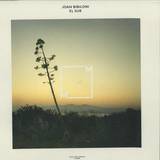
Staying on the Mediterranean coast for their third release, Music From Memory this time shift their attention to the work of Mallorcan musician Joan Bibiloni. TIP!
Primarily a guitarist, Bibiloni was creating music at an early age, releasing his first single at the tender age of 15. In his twenties he formed Spanish progrock outfits Zebra and Euterpe where he would meet Pepe Milan, the two of them becoming the bluesy folk duo 'Milan & Bibiloni'. Bibiloni himself would later go on to play with a number of luminary musicians such as Larry Coryell, Daevid Allen and John Cage to name but a few.
In 1982 Bibiloni set up his own label Blau in order to highlight the muchoverlooked work of musicians not only on his home island of Mallorca but across the Balearic Islands. In doing so he created a platform not only for
local talent but also for his own music to breathe a new life, much influenced by the landscape and life that surrounds the islands.
Whilst Bibiloni's first solo releases on his Blau imprint have stronger echoes of contemporary Jazz fusion of the time, it is on the album known as 'Una Vida Llarga I Tranquila' where Bibiloni really began to experiment with new sounds
and technologies; fusing tape loops, drum computers and synthesizers.
Taking these more electronic infused works as a departure point for the compilation and drawing on material from across his following five albums, 'El Sur' sets out to highlight Joan Bibiloni's unique ambient fusion and sun-drenched Mediterranean beach boogie.
- A1: Ganroku Hanami Odori - Takeshi Terauchi & Bunnys
- A2: Rising Guitar - Takeshi Terauchi & Bunnys
- A3: Sado Okesa - Takeshi Terauchi & Bunnys
- A4: The Clamour Of The Sun - Takeshi Terauchi & Bunnys
- A5: Hoshi Eno Tabishi - Takeshi Terauchi & Blue Jeans
- A6: Meiji Ichidai Onna - Takeshi Terauchi & Blue Jeans
- A7: Sa No Sa - Takeshi Terauchi & Blue Jeans
- A8: South Pier - Takeshi Terauchi & Bunnys
- B1: Summer Boogaloo - Takeshi Terauchi & Bunnys
- B2: Touryanse - Takeshi Terauchi & Blue Jeans
- B3: Meigetsu Akagi Yama - Takeshi Terauchi & Blue Jeans
- B4: Nambuzaka Yuki No Wakare - Takeshi Terauchi & Blue Jeans
- B5: Tsugaru Yamabiko Uta - Takeshi Terauchi & Blue Jeans
- B6: Tsugaru Eleki Bushi - Takeshi Terauchi & Blue Jeans
Mar & Sol presents the new album of the legendary band África Negra,"Alia cu Omali". New songs and some popular classics recorded between Lisbon and S.Tomé.
This album Its a reflection of the old rumba and soukous music that this epic band of São Tomé e Príncipe got us used to. They are an icon and one of the main bands of this island, representing in their music the authenticity and culture of the former Portuguese colony on the equatorial meridian.
It is our mission to expand this culture and here it is the testimony in our series of Luso Afro music which could best represent São Tomé.
serenitatem, the fifteenth installment of FRKWYS, RVNG Intl.'s collaboration series pairing intergenerational artists in creative conversation, joins Visible Cloaks with Yoshio Ojima and Satsuki Shibano, two trailblazers of the Japanese avantgarde music and visual arts scenes of the 1980s and 90s.
Yoshio Ojima began his career as a composer of environmental and ambient music, with a particular interest, and optimism, in the possibilities of generative software. His compositional pursuit of human synthesis with computerized forms was realized in its fullest potential alongside Satsuki Shibano, a pianist renowned for her interpretations of Erik Satie and Claude Debussy. Together, they were among a handful of influential Japanese artists whose innovations still resonate, if not more vibrantly than ever, well beyond the tightly-knit scene's original core. In the early 90s, Ojima was among the programmers of the influential satellite radio experiment St. Giga, a constantly-evolving sonic landscape that combined field recordings and sound collage with occasional readings of Japanese poetry. Satsuki was a regular reader for the station. This musical terrarium bloomed out of sight in a small Tokyo studio, a greenhouse of sound with no set start or finish time that audiences could tune into, absorb, and immerse.
The perpetual flow state of St. Giga — recordings of which Ojima shared with Visible Cloaks — would be highly influential to serenitatem's constitution. As Visible Cloaks, the Portland, Oregon duo of Spencer Doran and Ryan Carlile have developed their own set of creative strategies that form an aesthetic fuse point between human intention, aleatoric composition, and improvisation.
These are notions most recently reflected in 2017's Reassemblage and Lex, a respective album and EP in which the duo combined generative software and virtual representations of global instruments into lacy, interlocking patterns. Long time admirers of Ojima's work on albums like 1988's Une Collection Des Chainons, Doran and Carlile discovered after an online introduction that they shared with Yoshio and Satsuki an abiding interest in pre-classical composers, the Lovely Music, Ltd. label, and the British avant-garde, as well as a mutual respect for one another's techniques and processes.
The four musicians met in Tokyo, Japan at Sounduno Studios in December 2017, at the tail end of Visible Cloaks' first Japanese tour, to commence work on serenitatem. Leading up to the studio sessions, Doran and Carlile sent Ojima processed sound sketches recorded while on a European tour, which Yoshio would add to and return. Visible Cloaks would then fold Yoshio's edits back into the original compositions, which Doran and Carlile brought to the exploratory recording session. During that week together in Tokyo, the quartet made use of a number of creative strategies — 'echoing sound together,' as Yoshio puts it. Among the strategies, MIDI randomization gave the quartet melodic lines and what Doran calls 'randomized clouds,' or 'tightly grouped notes that become smeared tonal clusters functioning more like chords in themselves.' Carlile would also feed Ojima and Satsuki's text into Wotja, a generative music software which produced a MIDI language around which the quartet expanded their compositions.
'The aim,' Doran says of serenitatem, 'was to make a work that was not specifically ambient (or environmental), but something more multi-hued, weaving these deconstructive concepts into an album that has a deeper architecture underpinning it.' Accordingly, serenitatem is a marvelously sharp record, its sutures between human and machine virtually impossible to find but suggested everywhere you turn. The collaboration among Ojima, Satsuki, and Visible Cloaks is both musically and conceptually inseparable from the technology that made it possible. Throughout the album, Shibano's playing resonates like Satie's, her rhythms cascading like drops from leaves an hour after the rain. Overtones are stretched and warped like modeling clay, then spun around and shown off from multiple angles.
A single soaring note might seem to be suddenly plunged underwater, its richness of sound made shallow and its sharp edges blunted. Pittering chimes and rapidly warping vocal samples hang in the luxuriously glossy space, water trickles from ear-toear, familiar melodies rise from nothing and dissolve before they can be traced. With the depth of its emotional charge, serenitatem burns away the easy cynicism of the day, presenting itself as the kind of delocalized work of art the internet promised us decades ago — a synthesis of artistic visions, technological sophistication, futurist ambition, and, occasionally, ancient polyphony. Listening to it can feel a bit like tuning in to a 21st Century version of St. Giga: It's a place where the future still grows.
Visible Cloaks, Yoshio Ojima, and Satsuki Shibano's serenitatem, FRKWYS Vol. 15, will be available across LP, CD, and digital formats on April 5, 2019. The quartet will perform select live shows throughout 2019.
" I used to live in rue de Clignancourt, and remember as a kid going to the 14th of July West Indian ball organized by my father rue André Del Sartre in Montmartre every year. There I would meet, among others, saxophonist Robert Mavounzy. Sticking to the area, my older brother had a band and often played at the famous venue La Cigale, where even Henri Salvador joined him for a jam from time to time."Since childhood Serge Fabriano bathed in music, to-ing and fro-ing between his native Guadeloupe and Paris where he grew up. He attended the music conservatory, learnt how to play bass, met and played with many musicians and was ultimately angling for a career as a music teacher. But Serge had wanderlust; he lived to meet new people and was passionate about travel.Thus, it was in a squat located rue de Flandres in the 19th district of Paris that Serge Fabriano met by chance zarb player Djamchid Chemirami, one of Iran's greatest percussionists, who invited him to the Arts Festival of Shiraz-Persepolis. After a month-long motorcycle journey, he and his guitar teacher, Roger Bénichou, arrived in Tehran. Sadly their guitars didn't survive the journey. It was there that he met, among others, Woody Shaw, Max Roach and his wife Abbey Lincoln. Serge also formed a friendship with saxophonist Gary Bartz and stayed on a month playing with the cream of the musicians who'd attended to the Festival.During the mid-70's, he alternated between teaching classes and live gigs, and performed in Germany with a funk band comprised of ex-GIs from the US Army. He also met the members of Chick Corea's group, Return to Forever, and especially Stanley Clarke who became a great source of inspiration to him.From 1978 onwards, Serge Fabriano put aside teaching and devoted more time to music. He became a musician's musician, doing studio recordings with rock bands. He also played with members of the Caribbean diaspora, which included the great drummer Marcel Lollia (known as Velo), Patrick Jean-Marie, Guy Conquette, Winston Berkley, Mino CineluDuring the "Ayatollah Comédie" musical comedy tour organized by the Journal Liberation, Serge met actor Pierre Clémenti (Il Gattopardo, Belle De Jour, The Conformist). This was a game-changer : "I was trying to record my first record. Clémenti suggested the Studio Beaubourg in Paris. "The group Fabriano Fuzion - Fabriano Unit Zion - was born.The band brought together some of the Caribbean's most inspired musicians: Martinican-born Mario Canonge on the piano (his first appearance on an album), Alain-Jean Marie on the synthesizer, Edouard and Pierre Labor on saxophones, Claude Vamur (Kassav ') on the drums, singer/percussionists Marie-Reine Lamoureux and Marie-Céline Lafontaine, percussionists Roger Raspail, Sully Cally and Hector Ficadière (Tumblack, Vent Levé) on Ka percussions.It is precisely the Gwo Ka - this ancestral 'root' music deeply embedded in the heart of the Guadeloupe musician - which constitutes the rhythmic backbone of this first opus. The Gwo Ka, the jazz, the poetry and the spiritual vibe are gathered here to form a splendid album; one of the true masterpieces to emerge from the French West Indies.Rarely will a band have borne its name so well than Fabriano Fuzion - its music is a multiple and collective work in which each element brings its identity and its richness, conferring to this major work a truly fusional dimension.
- A1: Arcueil
- A2: Gymnopedie Iii - 1888
- A3: Etre Jaloux De Son Camarada Qui A Une Grosse Tete - 1913
- A4: Gnossienne I - 1890
- A5: Lui Manger Sa Tartine - 1913
- A6: L'initiation Fragmento - 1891
- A7: Valse Du Chocolate Aux Amandes - 1913
- A8: Gnossienne Ii - 1890
- B1: Gymnopedie I - 1888
- B2: Gymnopedie Ii - 1888
- B3: Gnossienne Ii - 1890
- B4: Le Chant Guerrier Du Roi Des Haricorts - 1913
- B5: Profiter De Cel Qui'il A Des Cors Aux Pied Pour Lui Pendre Son Cerceu - 1913
- B6: Petite Prelude A La Journee - 1913
- B7: Prelude A La Porte Heroque Du Ciel Fragmento - 1894
- B8: Arcueil
Originally released in 1986 under Luis Delgado's cult imprint El Cometa de Madrid'
Produced by Luis Delgado (Finnis Africae, Mecánica Popular) and performed by Patricia Escudero, this beautiful record dives into Erik Satie's compositional work thru an experimental optic.
Entirely recorded on Synthesizers, and making heavy use of FX and timbral manipulation, this recording brings out a Satie that's never heard before.
-This record was remastered and cut from the original tapes. However, those tapes were highly affected for what is known as the Sticky Shed Syndrome, and were very deteriorated.
Even though that was professionally taken care of, it was a very long process to get a result that exceeded our standards to be pressed. That being said, there are very few parts were you might find an slight change on sound that was impossible to eliminate completely, due to the above mentioned issue
- A1: Daniel Forestal Et Sa Guitare - Ces P'tits Je T'aime
- A2: Casimir Létang - Travail Z'enfants! Chantez Après!
- A3: Cyril Diaz Et Son Orchestre - Feeling Happy
- A4: Georges Tinedor Et Manuela Pioche - Collié Et Zanno
- A5: Henri Debs Quintet - Douce Kombass
- A6: Joseph Lacides - Mr. Morin
- B1: Geno Exilie - Lan Misè
- B2: Dolor Et Les Diables Du Rythme - Salvana
- B3: Sydney Lérémon Et Ses Amis Du Calvaire Baie- Mahault - You You Matayango
- B4: Raymond Cicault Et Son Orchestre Volcan - À Mon Ami Lucien Jolibois
- B5: Orchestre Esperanza Et Jean Leroy - Ou Pas Bel
- B6: Henri Debs Sextet Et Paul Blamar - Moin Çé On Maléré
- C1: Le Ry-Co Jazz - Si I Bon Di I Bon
- C2: Remy Mondey - Meringue Mondey
- C3: Henri Guedon Et Les Contesta - Van Van
- C4: Les Shupa Shupa D'haiti - Batterie Shupa
- D1: Paul Blamar Et Vélo - Lovency
- D2: Eric Virgal - Stanislas
- D3: Les Aiglons - Les Aiglons Ka Satisfait
- D4: Tutus De La Guyane - Nanao Nanao
- D5: Guy Conquette - Assez Fait Cancan
Only those who read all the credits on record liner notes will know the full details: Areski is of course Brigitte Fontaine's partner in life, but also her creative alter ego, and the composer of the music of most of her songs. Even though it was his wife Brigitte and not him who wrote the lyrics, Areski is a poet in his own right. Furthermore, he is polyvalent: composing, arranging, singing, improvising, playing every possible instrument and even acting! Areski, to sum up, is the perfect mix of the tradition of Munir Bashir with the European sophistication' of someone like Jean-Claude Vannier, one foot permanently in Versailles (where he was born) and the maghreb. Areski, is left bank French songs without the stylistic effects, revised and updated through contact with arab-andalusian music. He is a Living Theatre style happening with a dose of cosmic free jazz, surrealist poetry viewed through the prism of Kabyle culture... All that and a lot more!
Areski honed his talent observing the stars of traditional chaâbi, testing it out in bars and dives before meeting, during military service, the singer Jacques Higelin with whom he would record his first cult album, and who would present him to his wife-to-be, Brigitte Fontaine. Between 1969 and 1980, with her, Areski would contribute an essential chapter to French underground music including classics such as Comme à la radio (with the Art Ensemble of Chicago), Je ne connais pas cet homme, L'Incendie, Le Bonheur and Vous et nous. For all that, Areski has never really tried to have a career under his own name, in spite of the wonderful Un Beau matin first published in 1970, and which it is high time to de (re)discover (better late than never). Those already in the know will not be surprised to see, especially, Jean-Charles Capon, author of the inspired L'Univers-solitude, Brigitte Fontaine of course, or Daniel Vallancien, author of a no-less inspired duo with saxophonist Philippe Maté. All contributing to an acerbic poetic universe, concerned but never militant, and open to worldwide influences long before they became a fashion.
Inspired, poetic, in a word essential: Un Beau Matin is one of the best albums of the French underground produced by Pierre Barouh on his label Saravah, alongside those by Maurice Lemaître, Catharsis, Claude Yvans, Mahjun, Barney Wilen, Cohelmec Ensemble et Michel Roques.
Gifted Culture collective kicks off with Zinnigheddas Jam Berlin, first 12' of a series of three releases recorded exclusively during improvised jam sessions. Gifted Culture wants artists to breath and to represent in music the contemporaneity that surrounds us. Gifted Culture catches that very moment on tape. This is an itinerant music project, to highlight the context as influence on the artistic process.
During the first session Two Thou, Autre, Xinner and Demo gather together during a Sunday night in Kreuzberg with an electric bass and a bunch of synthesizers. There they start to tell us how they feel the 'now'.
- A1: Voltar-Se (Turn Back)
- A2: A Alma Do Vento (The Soul Of The Wind)
- A3: The God Is A Big God (Feat. Nina Miranda)
- A4: Tudo Ao Redor (Everything Around (Feat. Moreno Veloso)
- A5: Asas (Wings)
- A6: Árvores (Trees)
- A7: Aracne (Arachne)
- A8: Pare De Correr (Stop Running (Feat. Pedro Sá))
- B1: Serra Dos Orgãos
- B2: Shanti Luz (Peace Light)
- B3: Insatiable (Insatiable (Feat. Nina Miranda))
- B4: Dama Da Noite (Lady Of The Night)
- B5: Logo (Feat. Sean O'haga *
- B6: Terra (Earth)
- A1: Filó Machado - Quero Pouco, Quero Muito
- A2: Sandra De Sá - Guarde Minha Voz
- A3: Altay Veloso - Débora
- A4: Junior Mendes - Copacabana Sadia
- B5: Don Beto - Renascendo Em Mim
- B6: Lucia Turnbull - Toda Manhã Brilha O Sol
- B7: Guilherme Arantes - Coisas Do Brasil (Ao Vivo)
- B8: Carlos Bivar - Maré
- B9: Biafra - Leão Ferido
- C10: Santa Cruz - Mais Uma Chance
- C11: Jane Duboc - Se Eu Te Pego De Jeito
- C12: Cassiano - Rio Best-Seller
- C13: Carlinhos E Soninha Queiroz - Pra Você
- C14: Gelson Oliveira - Acordes E Sementes
- D15: Zeca Do Trombone - Rota-Mar
- D16: Roupa Nova - Clearer
- D17: Kiko Zambianchi - Estréia
- D18: Brylho - Jóia Rara
- D19: Rita Lee - Atlantida
- A1: Plage De La Concurrence Ojard
- A2: Dormir Ojard
- A3: Regarde En Bas, Où L'ombre Est Plus Noire Ojard
- A4: Phonogénie Ojard
- A5: Sans Craindre Le Vent Et Le Vertige Ojard
- B1: Les Machines Parlantes Ojard
- B2: La Question Ojard
- B3: Les Coursiers De L'exil Ojard
- B4: De Sang Bleu Ojard
- B5: Quelle Histoire, Là-Bas, Attend Sa Fin Ojard
LP Maxime Daoud, a much sought after musician accompanying Forever Pavot and his brother Adrien Soleiman, has released under the alias Ojard a first album of soft and delicate instrumental vignettes. If '' Euphonie '' calls for cinematographic comparisons (Vladimir Cosma, Basil Kirchin), the minimalism of the arrangements, the simplicity of the melodies conjure up to Erik Satie's '' furniture music '' and Brian Eno's 'thinking music.
qua" wurde im Jahr 2009 in Ohio von Tim Story aufgenommen. Das Album enthält 17 Miniaturwelten, manche eiskalt, manche warm, aber alle erfüllt von der für Cluster typischen spielerisch-irrlichternden Flüchtigkeit und Spontaneität. "Auf 'Qua' begegnen wir ständig dem charakteristischen Cluster-Pulsschlag, modern, aber zugleich durch und durch zeitlos", beschreibt der Produzent das Werk. Für die Aufnahmen hatte Moebius ein paar wunderbar schrullige Loops im Gepäck, alles andere entstand vor Ort aus den technischen Möglichkeiten und Spielereien, die die beiden im Studio aufstöberten. Dazu gehörten ein alter Drum-Computer, eine kitschige Farfisa, neueste Keyboards, digitales Equipment und ein billiges Yamaha Omnichord. Abgerundet wurde das Ganze durch Fundstücke wie eine quietschende Badezimmertür, die Moebius mit seinem Recorder, den er praktisch immer mit sich herumtrug, aufnahm und einer Zweitverwertung zuführte. Später gab Moebius den Songs noch verschmitzte Nonsenstitel, zum Beispiel"Putoil". Auch das fröhlich-dadaistische Plattencover stammt vo n ihm.