Some tracks have a lot of history to them. Some are just one of life's mysteries.
TEDI seems to have been a work in progress with New York producers Greg Carmichael and Mitch Braithwaite.
The body of work being recorded during the late 1970's and early 1980's was a daily procedure with many people passing through. Over time Greg had no recollection of the recording and neither did his good friend Leroy Burgess. Sadly Mitch Braithwaite is no longer with us. But his music lives on with this boogie soul record with those stabbing piano keys , synth and reverbs. Topped with some growling vocals. The singer sounds familiar but I haven't a clue who it is? Tedi someone!!
Cerca:sad edit
MIXED SUGAR - GANGSTER GIRL b/w IT’S A BAD FEELING / I’M SAD WE’VE BROKE UP.
MIXED SUGAR were a 70s soul group from Flint, Michigan led by Regional Garland - The main man toiled in obscurity for years writing, singing and producing a series of revered 70s & 80s soul songs, as in The Perfections, 21st Generations, Vann & Reggie and Brilliance.
All three tracks on this 7” appeared on the 2012 compilation, ‘Regional Garland - Mixed Sugar The Complete Works,1970 - 1987’ from reissue imprint masters, Now Again Records.
Two of the tracks were previously unreleased until this wonderful collection unearthed them. The raw, funky and soulful ‘It’s A Bad Feeling’ came out on F.G.S. Records in 1974 and commands a £500 price tag.
We are highlighting ‘Gangster Girl’, a song with a great storyline and now taken to a new level with an extended edit - wah wah effects, swirling strings and there’s a killer instrumental break!
- A1: Song Of A Devil's Servant
- A2: Angelina
- A3: Pam Pam Poope Poope Loux
- A4: Hurry Hurry Hurry
- B1: My Baby Ruby
- B2: Judy
- B3: Goodbye Mama
- B4: Murdock 9-6182
- B5: Just A Little Bit Of Peace In My Heart
- C1: Sad Story Of Sam Stone
- C2: High In The Sky
- C3: Remember My Friend
- C4: Time Is A Book
- C5: Backbiting Baby
- D1: I'm A Running
- D2: I Sing My Song
- D3: Mitch Mover
- D4: God Bless The Day
- D5: Grand Piano
Our well received series of Golden Earring remastered and expanded editions continue with On The Double. The Red Bullet archive was turned inside out again by Wouter Bessels and he found the original first-generation quarter inch master tapes of this classic 1969 album. These particular tapes have never been used for any release before, as in the analogue days of mixing and mastering it was customary to run off a set of equalized tape copies - with compression and sometimes reverb added - for release on vinyl and cassette. Also, genuine stereo mixes of both ‘Dong-Dong-Di-Ki-Di-Gi-Dong’ and its B-side ‘Wake Up-Breakfast!’ were found.
As the On The Double album was mixed in glorious stereo, we've included these never-before released stereo mixes (instead of the original 1968 mono mixes), alongside the original stereo mixes of ‘Where Would I Be’/’It’s Alright, But I Admit It Could Be Better’, the single that came out after On The Double. All in all, this expanded release of On The Double contains everything released by Golden Earrings between the albums Miracle Mirror and Eight Miles High and, as it features all original stereo mixes, fills another important hole in the reissue programme of the band. On The Double (remastered and expanded) is now available as a individually numbered edition of 1000 copies on crystal clear vinyl. It contains an insert, printed inner sleeves with liner notes by acclaimed Golden Earring biographer & archivist Jeroen Ras and additional remastering notes and comes in a gatefold sleeve.
180g Gold Vinyl
- A1: Ann Sexton – You’ve Been Gone Too Long
- A2: Psychodelic Frankie – Putting You Out Of My Life
- A3: The Sweet Vandals - Papa’s Got A Brand New Bag
- A4: The Tom – Emmanuel And Ron Experience – When You Lose Your Groove
- A5: Sharon Jones & The Dap-Kings - What Have You Done For Me Lately (Part 1)
- A6: Tony & Tandy – Two Can Make It Together
- B1: The T.s.u. Toronadoes – What Good Am I?
- B2: Coke Escovedo – I Wouldn't Change A Thing
- B3: Maxine – A Love I Believe In
- B4: Carl Carlton – I Can Feel It
- B5: Al Supersonic & The Teenagers – Paint Yourself In The Corner
- B6: Esther Phillips – Just Say Goodbye
- B7: Joe Valentine – I Lost The Only Love I Had
LP with printed Innersleeve with Linernotes by Eddie Piller (Acid Jazz) The compilation series “DJ's Choice” was launched in 2008 and has already enjoyed the participation of several high-profile curators, such as Keb Darge, Marc Hype, and DJ Suspect. A few years before the death of Unique Label founder Henry Storch in 2018, a DJ's Choice edition was created with his long-time friend and fellow DJ Eddie Piller. Unfortunately, it never came to fruition—as is so often the case, life had other plans, and sadly not all of them were pleasant. However, the idea was never completely forgotten, and with the help of Eddie and Henry's DJ partner in crime Sandra (Frollein Taube), a list of tracks that were on Henry's quick-select list for his sets was finally compiled.
DJ Support by Fabrizio Mammarella, Sean Johnston (ALFOS), Erol Alkan, Ame, Fango, Jaye Ward, SHMLSS, Camilo Miranda, Marco Passarani, Logan Fisher, Massimiliano Pagliara, Otto (Bordello a Parigi), Phil Mison, Giulia Gutterer, Pete Herbert, Franz Scala, Lauer, Pedro Bertho, Feel Fly ...
New music from legendary Adriatic DJ and producer Verdo is as rare as an MP3 in the golden age of disco. Which is why you should be hella excited for GRATIS CLUB, his first full-length album and a love letter to the iconic club he once called home in Senigallia.
A true Loyal Hell Yeah Recordings member and consummate musician, Verdo brings his signature piano melodies to Italo disco, hi-NRG, and trance magic across X cuts that are equal parts dancefloor propulsion and cosmic exploration.
GRATIS CLUB captures the energy, eccentricity and euphoria of the club Verdo played and directed, translating the pulse of a local institution into a timeless, high-voltage record. With previous releases on Danny Was A Drag King and this label, including his 2020 Symmetry EP, Verdo continues to prove he’s one of Italy’s best-kept secrets with this new album.
Opener and lead single ‘Let In The Light' is pure Italo disco adrenaline: shimmering arps soar over lush chords and retro analogue drums, igniting the dancefloor. Second single ‘Boulevardier’ is introspective yet radiant with rugged synths spiralling inward while shiny 80s chords inject colour and retro soul, all carried by supple, marching drums. 'Eyes Melody' is an ascent to a higher state with acrobatic drums and bass and more luminous synth magic, 'Ballad' has a more downbeat and late-night feel with pensive pads and sad vocoder, then the title cut is bold, bright and unabashed in its stomping disco brilliance. 'Our Love Come Back' has a sense of yearning that surely translates the sadness felt at the closing of Gratis Club, then 'Lest We Forget' is a reminder of how pumping and sweaty the main room got with Verdo in the booth. 'Little Blue's is the gentle comedown and comforting hand that leads you home in a reverie.
GRATIS CLUB is a pure hit of unbridled Italo disco joy.
- A1: Excerpt
- A2: Living With The Law
- A3: Big Sky Country
- A4: Kick The Stones
- A5: Make The Dirt Stick
- A6: Poison Girl
- A7: Dust Radio
- B1: Phone Call From Leavenworth
- B2: I Forget You Every Day
- B3: Long Way Around
- B4: Look What Love Has Done
- B5: Bordertown
In 1991, Chris Whitley made his debut with the beautiful album Living with the Law, which immediately showcased his brilliant songwriting and unique guitar playing. Blending blues, roots and folk, the debut was positively received by critics and aficionados of these more traditional genres. Growing up, Whitley listened to Southern radio, which played artists such as Muddy Waters, Howlin' Wolf, Bob Dylan and Jimi Hendrix. His career started by playing with artists like Arto Lindsay and Michael Beinhorn. Interestingly, Whitley lived in Belgium for a short time in the 1980s, where he started his career playing guitar for 2 Belgen and Nacht und Nebel. In the 1990s, he started his solo career at Kingsway Studio in New Orleans, owned by none other than Daniel Lanois. The result was an album characterized by the use of traditional instruments such as the slide guitar and banjo. All of this is accompanied by his splendidly timbred voice and honest lyrics exploring themes such as freedom, desire and human struggle. Sadly Chris Whitley passed away in 2005, but his influence on contemporary songwriters and blues artists remains strong. a_Living with the Law is available as a 35th anniversary edition of 1000 individually numbered copies on gold coloured vinyl and includes an insert.
- A1: Robert Pico - Le Chien Fidèle
- A2: Annie Girardot - La Femme Faux Cils
- A3: Spauv Georges - Je Suis L'état
- A4: Zoé - Zoé
- A5: Jacques Da Sylva - Fou
- A6: Valentin - Je Suis Un Vagabond
- A7: Jacques Malia - Histoire De Gitan
- A8: Bernard Jamet - Raison Legale
- B1: Jean-Pierre Lebort - Barbara Au Chapeau Rose
- B2: Les Concentrés - Fils De Dégénérés
- B3: Les Missiles - Publicité
- B4: Hegessipe - Le Credi D'hegessipe
- B5: Marechalement Votre - Ethero Disco
- B6: Mamlouk - Decollez Les
- B7: Mozaique - L'amour Nu
- B8: Jean-Marc Garrigues - Je Dis Non
- B9: Penuel - Astronef 328
The journey through French-speaking pop archives continues with this fifth volume, packed with fuzz, gimmicks, and dissent. Far from the charts, the selected tracks display a great creative freedom, often backed by corrosive humor. Welcome to the surprising, kaleidoscopic, and colorful world of the late sixties and early seventies, Wizzz!
Born in Montauban, Robert Pico stumbled into music by chance when he met René Vaneste, then artistic director at Pathé-Marconi. René brought him to Paris to record his first 45 RPM EP in 1964. A year later, Pierre Perret introduced him to Vogue, where he recorded his second album with Claude Nougaro’s orchestra. Sylvie Vartan then introduced him to RCA, where he recorded four singles, including the astonishing "Chien Fidèle," a track backed by a hair-rising fuzz guitar. Alongside his solo career, he also composed for other artists like Alain Delon (the song was recorded but remains unreleased), Magali Noël, Bourvil, and Georges Guétary. In the Paris of the sixties, he mingled with Mireille Darc, Elsa Martinelli, Marie Laforêt, France Gall, Françoise Hardy, Petula Clark, Régine, Dani, Serge Gainsbourg, Joe Dassin, Franck Fernandel, Charles Level, and Roland Vincent. Despite his efforts and winning a Grand Prix Sacem for his final record, Robert Pico didn’t achieve the expected success in show business and decided to leave Paris and return to the Southwest, where he devoted himself to writing. He is the author of 23 books (including Delon et Compagnie, Jean-Marc Savary Editions 2025, a memoir about his youth and his many encounters). Today, he is relieved to never have become a celebrity and devotes himself to his work with passion.
In 1969, the Franco-Italian movie Erotissimo was released, directed by Gérard Pirès (who later directed Taxi in 1998, written and produced by Luc Besson). This pop comedy features Annie Girardot, Jean Yanne, Francis Blanche, Serge Gainsbourg, Nicole Croisille, Jacques Martin, and Patrick Topaloff. The soundtrack was written by Michel Polnareff and William Sheller, with lyrics by Jean-Lou Dabadie. "La Femme Faux-cils," performed by Annie Girardot. It recounts the feelings of a rich CEO's wife who seeks to develop her sex appeal under the influence of advertisement and magazines. Groovy, sparkling and light, this track, with ITS lush arrangements humorously critiques consumer society and feminine beauty standards.
“Je suis l’Etat” (1967) is the flagship track of the first EP by singer-songwriter Spauv Georges, aka Georges Larriaga, better known as Jim Larriaga (1941-2022). Born into a family of bakers, the young man was initially planning to become a hairdresser when he discovered English-speaking music through Elvis Presley and the Beatles. After this revelation, he decided he would become a songwriter and gave himself five years to succeed. He recorded his first two EP’s independently for RCA under the pseudonym Spauv Georges; meaning “that poor George”, a nickname given to him by the mother of her friend Jean-Pierre Prévotat (future drummer of the Players, Triangle, or Johnny Hallyday). Portraying a depressed and eccentric young man, Spauv Georges created corrosive and amusing songs that didn’t reach a wide audience, despite a TV appearance with Jean-Christophe Averty.
Supported by his loyal friend and fellow songwriter Jean-Max Rivière, Georges Larriaga met the future singer Carlos in the early '70s, then Sylvie Vartan’s assistant. He wrote songs for Carlos, including the popular "La vie est belle," "Y’a des indiens partout," and "La cantine", which went onto become a huge hit in 1972. He also composed for Claude François (“Anne-Marie”, 1971), Charlotte Julian (“Fleur de province”, 1972), helped launch child singer Roméo (who sold 4 million records), and later wrote the hit "Pas besoin d’éducation sexuelle" (1975) for the young Julie Bataille. In 1971, Jim recorded an album for Disc'Az: “L’univers étrange et fou de Jim Larriaga”, which featured pop gems like “La maison de mon père”.
The story of the song "Zoé" began when Pierre Dorsay, artistic director at Vogue Records, asked Swiss singer and musician Pierre Alain to write a song for a new female singer. The inspiration came when he realized that Zoé (the artist's name) was also the name of France's first atomic battery, created in 1948, which consisted of uranium oxide immersed in heavy water! The lyrics reflect a bubbling energy that must be handled with caution, while the instrumentation echoes this atomic theme, notably with the use of a theremin.
Zoé’s career lasted only as long as a single 45 RPM, but it seems Christine Fontane was the vocalist behind this pseudonym, who is known for several EPs, a good "popcorn" album in 1964, and a handful of children’s singles in the '70s. Regardless, the photograph on the cover is of a different girl entirely.
Later, Pierre Alain continued his career, writing songs for himself, Marie Laforêt, Danièle Licari, Alice Dona, Arlette Zola (3rd place in Eurovision 1982), and achieving multiple gold and platinum records in Canada. Also an inventor with several patents, president of the Romande Academy, and head of the French Alliance in Geneva, he now composes atonal music, books, and poetry. Moreover, he is also the host of "Les Mardis de Pierre Alain" at "Le P'tit Music'Hohl" in Geneva.
Filled with oriental choruses and fuzz guitar, "Fou" is from Jacques Da Sylva's only EP released by Vogue in 1967. Despite the quality of this recording, all traces of this singer disappear after this first effort.
Valentin is a baroque pop singer born in Belgium. He is the songwriter and composer of most of the tracks on his three singles released in the late 60s in Canada. A legend says that he reincarnated himself as Jacky Valentin during the 1970s for a rock'n'roll revival career in Belgium, but his older brother sadly debunked this story. Valentin's first two singles were arranged by Claude Rogen, a Parisian session pianist who had come to Canada to promote the song “Mister A Gogo”, a cover of David Bowie’s “Laughing Gnome”, adapted by singer Delphine, his wife at the time. Far from his usual network, Claude Rogen arranged music for Polydor, including the arrangements for “Je suis un vagabond” in 1969, a jerk tune with string arrangements and a furious optimism.
Jacques Malia wrote, composed, and recorded his only 45 EP for Festival in 1966. “Histoire de gitan” is an incredible beat track with bohemian scat that tells the story of a gypsy musician who came to Paris to make it in the Music-Hall, to no avail. The hero of the song and its author probably shared a similar fate, as Jacques Malia faded into anonymity after this remarkable attempt.
Bernard Jamet recorded two EPs for Barclay in the late sixties and co-wrote several songs with Christine Pilzer, Pascal Danel, and prolific songwriters Michel Delancray and Mya Simile. The track “Raison Légale” (1968), his masterpiece, immerses the listener in a courtroom right when a murderer is being judged, with jerk rhythm and free arrangements. A unique, paranoid, judicial, and psychedelic oddity.
Jean-Pierre Lebrot-Millers started his career in show business in 1967 as a singer and songwriter for the Philips label. After three singles, he wrote several songs of a new kind with his friend Pierre Halioche, in the midst of the sexual liberation movement and the democratization of drugs. With provocative lyrics, “Les filles du hasard” and “Barbara au Chapeau Rose” were released on a Philips singles in 1968. The character of Barbara was inspired by a queen of Parisian nightlife during the psychedelic years: model Charlotte Martin, who dated Eric Clapton from 1965 to 1968, then Jimmy Page from 1970 to 1983. Jean-Claude Petit’s arrangements, with a table-filled intro, soul brass, and Hendrixian guitar, emphasize the flamboyance of a hedonistic and sexy character, whose dog is named Junkie because “Junkie est un nom exquis”! The track was recorded live in three takes with a full orchestra.
Upon its release, the record was censored by Europe 1 and RTL due to its references to drug use. Jean-Pierre Lebrot was then banned from the airwaves and later dismissed by his record label. He changed his artist name to Jean-Pierre Millers, while his companion Pierre Halioche became D. Dolby for a new dreamy composition, “Chilla”, which Jean-Pierre produced himself with arrangements by Jean Musy. Once again, the song was immediately censored everywhere. After this setback, he decided to stop singing and started taking on odd jobs to support his Swedish wife and their son until the day he met Jean-Pierre Martin, then production manager at Decca, who had worked with Manu Dibango. Martin offered Jean-Pierre Lebrot-Millers, then employed at Rank Xerox, the position of artistic director at Decca. He accepted and became, a year later, promotion director (radio, press, TV). He worked on Julio Iglesias’s first album for Decca, which became a massive hit and allowed him to meet Claude Carrère. The latter asked him to write new songs and find their performers, much like a “talent scout.” It’s through him that Jean-Pierre discovered Julie Pietri and Corinne Hermès. He composed “Ma Pompadour” for Ringo, Sheila’s husband, and took the microphone again for the syncope hit “Rendez-Vous” in 1982.
That same year, Jean-Pierre Lebrot-Millers tried to release a track for which he had heavily gone into debt: “Si la vie est un cadeau”. Having recorded it in London, he presented it to numerous professionals, all of whom refused to get involved. The same thing happened with Antenne 2 and the Sacem when he proposed the song as France’s entry for Eurovision. He then met Haïm Saban, who was producing cartoon soundtracks and had just launched the Goldorak theme song. Saban, having listened to the song, declared it had the potential to become a hit. He sent Jean-Pierre and Corinne Hermès to meet the CEO of the Luxembourg radio and television network. The latter received them, asked to hear a verse and chorus a cappella in his office, and immediately hired them to represent Luxembourg at Eurovision 1983. They reworked the arrangements and recorded a new version with Haïm Saban as co-producer. The song ended up winning Eurovision 1983, a great comeback for our hero. He continued producing and hung out with the band Nacash in Belgium when a couple came to introduce their daughter for an impromptu audition in a hotel room. The girl sang “Les démons de minuit” while dancing to a radio cassette. Impressed, he had her take singing lessons for a year and composed a song for her (for which he had the melody and title, but no lyrics). This required him to go on the hunt for a lyricist, who ended up being Guy Carlier. They recorded the song, which was initially a ballad, at Bernard Estardy’s CBE studio, and gave the singer a new name: Melody. They showed the song around their industry network without success. Later, Estardy called Jean-Pierre to suggest changing the rhythm and making it pop-rock. Orlando, Dalida’s brother, liked the result and decided to co-produce the track. “Y’a pas que les grands qui rêvent » became a classic hit. The song has since been covered by Juliette Armanet (as a ballad, like the original) and Valentina.
Born into an aristocratic Breton family, Hervé Mettais-Cartier worked as a DJ at Queen Kiss, a nightclub in Poitiers, where he formed the band Les Concentrés with Michel (an actor) and Christian (a radio technician). Together, they created a repertoire of whimsical songs (“Ma bique est morte”, “J’suis un salaud”, “Fils de dégénéré”...) that they performed on stage dressed in white (in homage to “concentrated milk”). They performed at Bliboquet and Olympia in 1968 for the 10th edition of the “Relais de la chanson Française” organized by L’Humanité-Dimanche and Nous les Garçons et les Filles, sponsored by Pepsi Cola. Winners in the author-composer category, alongside Danish singer Dorte, their visibility allowed them to record a 45, and appear on television in Jean-Christophe Averty’s show. The A-side of the disc features Bruno le ravageur, a casatchok dedicated to Bruno Caquatrix, the director of Olympia, nicknamed in the song “Coq Atroce” or “croque-actrices”. The B-side is dedicated to “Fils de dégénéré”, a quirky tribute to Hervé's aristocratic roots, mixing absurdity with sophisticated vocal harmonies.
After Les Concentrés, Hervé Mettais-Cartier formed the duo La Paire et sa Bêtise with his friend Olivier Robert. They performed in Parisian cabarets and toured with Pierre Vassiliu. In the late 1970s, Hervé began a solo career. He recorded two albums for the Motors label in 1978 and 1979, which did not achieve their anticipated success due to lack of promotion. In 1980, he met Bernadette, with whom he started a family and created a “Chansons à voir” (songs to see) show that he performed until his death at the end of 2024.
Publicité comes from the final EP by the Missiles (Ducretet Thomson, 1966), a disc that also includes “La (nouvelle) guerre de cent ans”, featured on Volume 4 of our Wizzz! series. Please refer to the booklet for the story of the band.
“He’s 1.82 meters tall, 28 years old, weighs 135 kg, is black and Belgian”: this is the description of singer Hegesippe on the back of his sole single (Decca, 1967). He appears on the album cover wearing a Greek toga, like a hippie gag – we are at the end of the year 1967. In “Le crédo d’Hegesippe”, this former bodyguard of Antoine and the Charlots plays the delightful card of the thick brute converted to Flower-Power and non-violence, with arrangements by Jean-Daniel Mercier, aka Paul Mille.
“Ethéro-disco” was released on a promotional record for clients of the Maréchal company (Liège, Belgium) for the New Year 1979. Over a funky rhythm, celebrity impersonations (Brigitte Bardot, Jacques Dutronc, Fernandel…) deliver an enigmatic text about pharmaceutical products like ether, bismuth, and aspartate. The track was composed by Dan Sarravah (responsible for Joanna's “Hold-up inusité” featured on Wizzz! Volume 3) and Tony Talado, who was also a singer (one 45 in 1967), songwriter (with over a dozen credits between 1964 and 1985 in various styles from surf music to disco), author (Devenez Végétarien, Dricot Editions, 1985), ad designer, and psychologist.
Décollez-les is on the A-side of Mamlouk's only single, a pseudonym for Marsel Hurten, who is known for his work on several EPs in the late sixties, as well as composing music for Hervé Vilard’s “Capri, c’est fini”, Claude Channes' “La Haine”, Annie Philippe’s “On m’a toujours dit”, and Nancy Holloway’s “Panne de Cœur”.
This strange song, with Afrobeat horns and absurd dialogues between a chef and his kitchen staff, is the result of a collaboration between Marsel Hurten and one of his neighbors, a photographer from Pavillon-sous-Bois (93), where the musician settled after returning from the Algerian War. A music video was shot to promote the record.
Marsel Hurten was born in Tourcoing (59) into a musical family. At a young age, he joined the brass band founded by his grandfather, playing the piston before studying trumpet at the conservatory, as well as teaching himself how to play the guitar. As an orchestra musician, he toured in France, Belgium, Germany, and England. He released a series of solo 45’s between 1965 and 1968 for the DMF and Az labels before stopping recording to focus on working for other artists (Gilles Olivier, Noëlle Cordier…).
“L’amour nu” (Vogue, 1971) is the work of the short-lived Belgian band Mozaïque. The track, written by singer Jacques Albin, closely resembles another of his compositions, “Carré Blanc”, which he recorded in 1969 for Disc’AZ.
Represented by the Lumi Son micro-label based in Marignane (Côte d'Azur), Jean-Marc Garrigues released two 45 RPMs in the late sixties, defending the French jerk sound. The song “Je dis Non” is a short, joyful ode to youth, pop music, and rebellion.
Songwriter and performer Jacques Penuel released three singles. The first one, “Astronef 328” (Fontana, 1969), features a dizzying series of chords punctuated by sound effects, a sci-fi story, and arrangements by Jean-Claude Vannier.
We would like to sincerely thank Pierre Alain, Moon Blaha, Marsel Hurten, Bastien Larriaga, Jean-Pierre Lebrot-Millers, Bernadette Mettais-Cartier, Robert Pico, Olivier Robert, Claude Rogen, Micky Segura.
repress allert! Fantastic tracks, exclusive floor_shaker made in Berlin. Czeck out the >do this gig rollo gold big fun< as always. Kicking house tracks on one of the oldest and best house labels. Since 1995 label owners Cab Driver submit straight grooving goodies on their very own label.
Für den Soundtrack von QUEER arbeiteten die Oscar- und Grammy-prämierten Komponisten Trent Reznor und Atticus Ross erneut mit Regisseur Luca Guadagnino zusammen. Dieser erscheint nun erstmals auf 180-Gramm transluzentem Kobaltblau-Vinyl. Diese spezielle Edition enthält ausgewählte Highlights aus Reznors und Ross' Originalkomposition sowie den Abspannsong "Vaster Than Empires", inspiriert von William S. Burroughs' letztem Tagebucheintrag und interpretiert von Caetano Veloso und Trent Reznor.
- 1: A Brief History Of Blindness (Feat. Lynn Blakey)
- 2: Waiting For The End Of Time (Feat. Jason Falkner)
- 3: Cloud To Cloud (Feat. Matthew Caws)
- 4: You Swallowed The Sun (Feat. Chris Stamey And Pat Sansone)
- 5: The Waiting Game (Feat. Aimee Mann)
- 6: In The Shadow Of The Moon (Feat. Lynn Blakey And Mike Mills)
- 7: So Sad (Don't Let Go) (Feat. Matthew Caws)
- 8: Ex Post Facto Kids (Feat. Mitch Easter)
- 9: How We Breathe (Feat. Lynn Blakey, Matthew Caws And Kimberley Rew)
- 10: The Quickening Sky (Feat. Django Haskins And Faith Jones)
- 11: All The Rage (Feat. Chris Stamey And Aimee Mann)
- 1: Can You Face The Water?
- 2: Mama Don't
- 3: Sitting At The Station
- 4: Poison Down The Wire
- 5: Desert Showers
- 6: Transatlantic Nights
- 7: Roses In The Desert
- 8: Sticks & Stones
- 9: The Cabin On The Hill
- 10: Bonfire
- 11: Seeing Ghosts
The Scunthorpian partners-in-crime Rupert and Henry Stansall, mythologized in wanted posters as Ruen Brothers, are back in the saddle with their fourth studio album: Awooo. Titled after the lycanthropic howling chorus of their melancholic track “Sitting at the Station,” Awooo finds the duo on the road again, full of ruminative wanderlust and exploring sprawling, dark deserts, carrying with only their songbook of western-inspired folklore. The meditative, building desire of “The Cabin on the Hill,” the pensive yearning etched inside “Poison Down the Wire,“ and a tasteful reimagining of the tried-and-true traditional “Mama Don’t” that could easily pass as an original, all exhibit the creative growth that these young troubadours have established over their decade-long career. This limited first edition pressing of Awooo is pressed on frosted shadow color vinyl and is limited to 800 copies worldwide.
- 1: Can You Face The Water?
- 2: Mama Don't
- 3: Sitting At The Station
- 4: Poison Down The Wire
- 5: Desert Showers
- 6: Transatlantic Nights
- 7: Roses In The Desert
- 8: Sticks & Stones
- 9: The Cabin On The Hill
- 10: Bonfire
- 11: Seeing Ghosts
The Scunthorpian partners-in-crime Rupert and Henry Stansall, mythologized in wanted posters as Ruen Brothers, are back in the saddle with their fourth studio album: Awooo. Titled after the lycanthropic howling chorus of their melancholic track “Sitting at the Station,” Awooo finds the duo on the road again, full of ruminative wanderlust and exploring sprawling, dark deserts, carrying with only their songbook of western-inspired folklore. The meditative, building desire of “The Cabin on the Hill,” the pensive yearning etched inside “Poison Down the Wire,“ and a tasteful reimagining of the tried-and-true traditional “Mama Don’t” that could easily pass as an original, all exhibit the creative growth that these young troubadours have established over their decade-long career. This limited indie exclusive pressing of Awooo is pressed on frosted shadow color vinyl and is autographed by both Henry and Rupert Stansall and is limited to 200 copies worldwide.
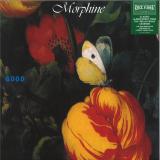
- A1: Good
- A2: The Saddest Song
- A3: Claire
- A4: Have A Lucky Day
- A5: You Speak My Language
- A6: You Look Like Rain
- B1: Do Not Go Quietly Unto Your Grave
- B2: Lisa
- B3: The Only One
- B4: Test-Tube Baby / Shoot’m Down
- B5: The Other Side
- B6: I Know You (Part I)
- B7: I Know You (Part Ii)
- Il Pleut
- Le Beau Cancer
- Il Se Passe Des Choses
- Une Fois Mais Pas Deux
- L'homme Objet
- Éternelle
- Blanche Neige
- Comme Rimbaud
- Dommage Que Tu Sois Mort
- Je Suis Inadaptée
- Cet Enfant Que Je T'avais Fait
- Une Fois Mais Pas Deux - Demo
- Éternelle - Demo
- Il Se Passe Des Choses - Demo
- Comme Rimbaud - Demo
- Il Pleut - Demo
- Blanche Neige - Demo
- L'homme Objet - Demo
- Dommage Que Tu Sois Mort - Demo
- Le Beau Cancer - Instrumental
- Une Fois Mais Pas Deux - Instrumental
- Comme Rimbaud - Instrumental
- Il Se Passe Des Choses - Instrumental
- Je Suis Inadaptée - Instrumental
- Dommage Que Tu Sois Mort - Instrumental
- Il Pleut - Niok Version
Wewantsounds is delighted to reissue French pop icon Brigitte Fontaine"s landmark 1968 album Brigitte Fontaine Est Folle, originally released on the cult label Saravah and arranged by Jean-Claude Vannier. This special 2-LP edition, approved by the artist, features the original album, newly remastered from the original tapes, along with a second LP of demos, instrumentals, and a live rendition of "Il Pleut" recorded for France Inter/ORTF. The release also includes a 20-page bilingual booklet with introductions by journalist Jeremy Allen and Stereolab"s Laetitia Sadier, essays by Brigitte Fontaine"s biographer Benoît Mouchart and Benjamin Barouh, plus full lyrics and rare archival photos.
- A1: How Long Will It Take To Walk A Mile? (Interlude)
- A2: F*Ck Everyone
- A3: One Thing
- A4: D£Aler
- A5: Spiders
- A6: Penny Out Of Nothing
- B1: Walk All Over You
- B2: Post Sex Clarity
- B3: Sad Sob Story! )
- B4: Can We Ignore It? (
- B5: Why Do I Feel Better When I Hurt You?
- B6: Not Like That Anymore
- B7: Who Fucking Cares?
- B8: Ur An Absolute C Word (Interlude)
Pressed on 140g nude pink vinyl, this edition comes with a 12x12 insert and includes the hit single ‘One Thing’. It’s sweet, subtle, and a little sarcastic, perfect for those days when you need to scream into the void and still look cute doing it. Call it “basic,” call it iconic, either way, it’s yours to define. This is for anyone who’s ever rolled their eyes and then turned the volume up. Who even decides what’s basic, anyway? Exactly.
- A1: Damn, Sam (I Love A Woman That Rains)
- A2: My Winding Wheel
- A3: To Be Young (Is To Be Sad, Is To Be High)
- A4: Why Do They Leave?
- A5: Oh My Sweet Carolina
- A6: Amy
- B1: Bartering Lines
- B2: Shakedown On 9Th Street
- B3: In My Time Of Need
- B4: Come Pick Me Up
- B5: Call Me On Your Way Back Home
Celebrating a quarter-century of Ryan Adams’ 2000 debut solo album release Heartbreaker. This release features 11 re-imagined tracks from the critically acclaimed record that helped define a generation of alt-country and Americana.
Newly re-worked with fresh emotion and stripped-back intensity, these new versions offer a deeper take on the originals with a sprinkling of strings.The heartbreak never ended.
- All Night
- Happiness All Around
- Violent Pictures
- The Future's Just More Of The Same
- Walking-Away World
- Still Clouds At Noon
- Everything You Ever Loved
- Walk Through Any Wall
- The House They Went Past
- Writing Songs
Recorded as part of the same daydreaming puzzle as Unwishing Well, Still Clouds at Noon brings out the slowcore/sadcore elements that drift through The Reds, Pinks & Purples' melancholy catalog. Donaldson names '90s hometown San Francisco acts such as American Music Club and the more obscure Timco as pivotal to his guitar playing and development as a songwriter, both of which shine bright here. The slower tempo ballads on Still Clouds_ often culminate in heavy fuzz drenched codas and showcase the more abstract poetic side of Donaldson's lyricism. There's an inherent pop-sensibility always at work though, with ear-worm melodies appearing over intoxicating circular riffs. Formerly a Bandcamp only digital release, this white vinyl version is remastered and adds two unreleased tracks, one featuring Mark Monnone from Australian pop-legends The Lucksmiths on bass. Strictly limited edition of 500 ww.
- A1: Way Back Then
- A2: Farewell
- A3: Don't Die In Vain
- A4: War
- A5: Sacrifice
- A6: Round The Circle I
- A7: Round I
- A8: The Rope Is Tied
- B1: Player Vs Pink Guards
- B2: No Way Back
- B3: We're Together
- B4: Way Forward
- B5: Pink Soldiers Redux
- B6: Ox I
- B7: Vote I
- C1: Jung-Bae Ya!
- C2: Gong-Gi With Bullets
- C3: The Team Hj
- C4: Birth
- C5: You're Nothing But A Puppet
- C6: Auf Wiedersehen
- C7: Let Me Be A Part Of The Game
- C8: Sad
- D1: Round The Circle V
- D2: Jun-Hee
- D3: Unfolded
- D4: Round Vi
Orange And Yellow Vinyl[46,85 €]
Jung Jaeil's haunting and innovative score for Netflix's global sensation Squid Game finally arrives on vinyl this summer! For three seasons, Jung's (of Parasite and Mickey 17 fame) iconic music has been essential in creating the intense atmosphere and emotional impact of the series. For this vinyl release, Jung Jaeil has exclusively compiled the best moments from three seasons of Squid Game. On this double LP, you'll hear Jung's mastery of blending classical, electronic and minimalist elements to create a soundscape that reflects the psychological tension and moral complexity of the show. From eerie piano motifs to unsettling ambient textures, the soundtrack heightens the suspense and emotional gravity of the survival drama. Tracks such as “Way Back Then” and “Pink Soldiers Redux” have become iconic for their chilling simplicity and dramatic impact. Squid Game's soundtrack not only complements the show's gripping visuals, but also stands as a masterclass in modern TV scoring. Jung Jaeil's work has received widespread acclaim, cementing his reputation as one of the most visionary contemporary composers. Squid Game is a limited edition of 3000 individually numbered copies on green (LP1) & pink (LP2) coloured vinyl. The records are housed in a limited edition POP-UP sleeve and include a 4-page booklet with liner notes by Jung Jaeil.