In the late 1980s, the renowned American jazz pianist, composer, and arranger John Hicks formed one of the most influential ensembles consisting of musicians that had played music at the highest level all their lives and gained their status as both stand-alone artists and important sidemen. Each of them had participated in many of jazz’s great moments and all shared the ability, documented on many albums, to inspire their fellow musicians to even greater heights. The ‘John Hicks Trio’ had several line-up changes over the years that included greats such as Clifford Barbaro (Strata East, Blue Note, Sun Ra Arkestra, Charles Tolliver), Clint Houston (Prestige, Nina Simone, Roy Ayers, Azar Lawrence), Ray Drummond (Freddie Hubbard, Art Blakey, Lalo Schifrin), Marcus McLaurine (Muse, Verve, Weldon Irvine, Kool & The Gang) and Victor Lewis (Steve Grossman, Stan Getz, Charles Mingus, Cedar Walton, Chet Baker).
On the album we are presenting you today (I’ll Give You Something To Remember Me By from 1988) the trio consists out of some of the biggest and best players in the jazz, funk and soul scenes:
On piano we have the Atlanta based trio’s bandleader JOHN HICKS (1941-2006). He served as a leader on more than 30 albums and played as a sideman on more than 300 other recordings. After being taught piano by his mother, Hicks went on to study at Lincoln University of Missouri, Berklee College of Music, and the Juilliard School. After playing with a number of different artists during the early ’60s (including Oliver Nelson and being part of Pharoah Sanders’s first band) he joined Art Blakey & The Jazz Messengers in 1964. In the early ’70s he taught jazz history and improvisation at Southern Illinois University before resuming his career as a recording artist. Next to his many solo recordings for labels such as Strata East and Concord, Hicks would collaborate with all the big names in the scene, including Archie Shepp, Mingus and Alvin Queen. In 2014 & 2015, J Dilla paid homage to John Hicks by sampling two of his songs.
On drums we have the legendary IDRIS MUHAMMAD (1939-2014) who to this day is still considered as one of the most influential drummers covering a multitude of genre-transcending styles. Born in New Orleans, he showed early talent as a percussionist and began his professional career while still a teenager, playing on Fats Domino’s ‘Blueberry Hill’. He then toured with Sam Cooke and would later go on to work with Curtis Mayfield. Next to his landmark solo recordings for Prestige Records, Idris would collaborate with iconic musicians and acts from the likes of Manu Dibango, Ahmad Jamal, Melvin Sparks, Charles Earland, Walter Bishop, Ceasar Frazier, Roberta Flack, Gato Barbieri, Nathan Davis, Sonny Rollins, Lou Donaldson, Galt MacDermot, Lonnie Smith…and countless others. Idris Muhammad’s work was sampled by renowned performers such as Drake, Beastie Boys and Fatboy Slim.
On bass we have CURTIS LUNDY (born 1955) who originates from Florida. Lundy is a well-respected bass player (and a master of his instrument), choir director, arranger, composer and producer who was part of performances and recordings of renowned acts and artists such as Pharoah Sanders, Frank Morgan, Cole Porter, Chico Freeman, Khan Jamal… and many others!
On I’ll Give You Something To Remember Me By (recorded at the legendary Dutch Studio 44 in March 1987 and released on Limetree Records in 1988) the listener is treated to eight majestic tracks of the highest caliber (including an excellent Thelonious Monk cover-tune) and features a remarkable outing of advanced musicianship by three jazz-giants in their prime, delivering an inspirational gem of an album.
These recordings sound as successful, young and vibrant as ever! Expect supercharged ragtime Post Bop with striking notes, no-holds-barred musicianship, high swinging solos, screaming choruses and plenty of solid virtuosity to spare. The up tempo none stop Latin beat is complimented by the terrific drum solos of Idris Muhammad and the rhythmic bass strokes of Curtis Lundy. This electrifying set of tracks makes this release a bonafide hit and a must have for any self-respecting jazz fan or collector.
Search:sam sanders
A stalwart of the Leeds music scene for the best part of 3 decades, Tony Burkill has so far maintained a low profile nationally, choosing to favour continued study and development of the instrument over the attainment of success or recognition within the music industry. Working as a sideman for hire on the local circuit, he has impressed audiences with his powerful and gutsy approach to improvisation and has been a well-kept secret amongst both musicians and audiences in the north of England since the 1980s.Recently featuring as a guest soloist on the debut album by The Sorcerers, Tony has been on the radar of ATA Records since the inception of the label. Impressed by his exuberant and earthy performance style they decided to embark on the writing and production of what was to become "Work Money Death", choosing to frame his playing in the context of the performers that have helped to shape his sound, most notably the spiritual jazz of the 60s and 70s.
"Work Money Death"explores the foundations laid by the great Tenor players of the 60s & 70s: Gato Barbieri, Pharoah Sanders, John Klemmer and John Coltrane, taking inspiration from their work and using it as a springboard for Tenor Saxophonist Tony Burkill's improvisation. Co-written with Bassist Neil Innes, the album attempts to frame Tony's playing within the context of that which has been most influential to him over the span of a 20+ year long career. Featuring on the record are Drummer Sam Hobbs (The Electric Doctor M and Producer of Matthew Bourne's Moogmemory), Bassist Neil Innes (The Sorcerers, Eddie Roberts' Roughneck), Pianist George Cooper (Abstract Orchestra), Percussionist Pete Williams (The Sorcerers) and features a guest performance from Pianist Matthew Bourne on the track "Beginning and End".
Support and airplay from Gilles Peterson (BBC6 Music, Worldwide FM), Jamie Cullum (BBC Radio 2). Good reviews have so far been forthcoming from the likes of Jazzman Gerald and Nat Birchall who described it as sounding "like a lost album from the spiritual jazz scene of the 1970s".
"Sounds sublime" - Gilles Peterson
"What a delightful, excitingly beautiful album. From "At Once Familiar " all the way through to "Same as Before" everything song feels and sounds sonically glorious. A modern day classic" - Nightmares On Wax
Taking a short sabbatical from their journey into the spiritual stratosphere and beyond, Work Money Death landed on terra firma just long enough to record a follow up to the critically acclaimed "The Space In Which The Uncontrollable Unknown Resides Can Be The Place From Which Creation Arises". The new album "Thought, Action, Reaction, Interaction" explores many of the meditative motifs that mould this unique group in their quest for the perfect sound and space. Those who are familiar with Work Money Death will know their output is as much an adventure for the listener as it was for the musicians.
"Thought, Action, Reaction, Interactions" is a salute to the now sadly deceased master of the spiritual sound Pharoah Sanders, and in particular the spontaneity of his recording process.
Each of the four tracks on "Thought, Action, Reaction, Interaction" were recorded in one take with no rehearsal and while the players may have known where they were starting off none of them were sure where they would end. As much as it is entertainment, and have no doubt this LP is an unctuous, spirit-smoothing joy from beginning to end, this is an experiment of making music in the moment. Spontaneous and spiritual in its truest sense, "Thought, Action, Reaction, Interaction" is a work of innovation and unsurpassed beauty.
"At Once Familiar" is a rising salute to the day, meditative, moving and fierce. An introduction to Burkill's emotive style, at once sweeping and succinct. It fills a room, and your head, with a very real sound, rich in texture and spirit.
"Freedom As A Heartfelt Song" is buoyant with harp, the spirit of the Yorkshire Pharoah is never more to the fore. Visceral sax rides over and uplifting backing, symbiotic and pinioned with power and beauty. Think Sun Ra horns meets Don Ellis brass.
"Song Of Healing" drifts on a river of music, guided through the rapids with a heartbeat bass line. This is temple sombre, with Eastern flavours and an overarching calm. A communion of sound, a master class in the understatement and power of the slow note, deceptively light.
"Same As Before" is spoken word playing foil to the call and response of the brass, dancing alongside and against each other. Spiritual vibrations cement ethereal forms to substantive sounds. A prayer to change."
As with the previous Work, Money, Death release (which was recorded in difficult conditions due to the Covid pandemic) the aim was to recreate a situation, in this case the impromptu and unrehearsed recording sessions of Sanders in the late 60's and early 70's, everything recorded in one take, creating a body of work that is a strong nod to a certain time and ethos but not a pastiche of it.
““Sounds sublime””
Gilles Peterson — BBC6, WorldWideFM
““What a delightful, excitingly beautiful album. From “At Once Familiar “ all the way through to “Same as Before” everything song feels and sounds sonically glorious. A modern day classic””
Nightmares On Wax —
Soul Jazz Records are releasing Count Ossie and The Mystic Revelation’s seminal 1975 album Tales of Mozambique in an expanded double album/single CD/digital format, fully remastered and with the inclusion of two bonus rare single-only tracks, full sleevenotes, exclusive photographs and interview.
Count Ossie is the central character in the development of Rastafarian roots music, nowadays an almost mythical and iconic figure. His importance in bringing Rastafarian music to a populist audience is matched only by Bob Marley’s promotion of the faith internationally in the 1970s.
Count Ossie’s drummers performed on the first commercially released single to integrate Rastafarian traditional music with popular music: the vocal group The Folkes Brothers’ groundbreaking song ‘Oh Carolina’, recorded for producer Prince Buster in 1959. In 1966 his drummers greeted the momentous arrival of Haile Selassie at Kingston airport.
His legendary jam sessions up in his Rastafarian compound in the hills of Wareika, Kingston, are famous for the many Jamaican musicians who attended including The Skatalites players – Roland Alphonso, Don Drummond, Johnny Moore, Lloyd Knibbs – and many others.
The Mystic Revelation of Rastafari formed in Kingston, Jamaica, in 1970, a union of Count Ossie’s Rastafarian drummers – variously known as his African Drums, Wareikas or his Afro-Combo – and the saxophonist Cedric Im Brooks’ horns group, The Mystics.
The Mystic Revelation of Rastafari are the defining group in bringing authentic Rastafarian rhythms into the collective consciousness of popular music, their unique music is at once rooted in the deep traditions and rituals of traditional drumming and chanting alongside a forward-thinking, even avant-garde, artistry influenced by the likes of John Coltrane, Sun Ra, Pharoah Sanders and other pioneering African-American jazz artists radicalised and charged by the civil rights movement of the 1960s.
Tales of Mozambique is a truly unique and fascinating ground-breaking album.
Count Ossie and The Mystic Revelation of Rastafari are the central group featured on Soul Jazz Records recent "Rastafari - The Dreads Enter Babylon” a collection showing the influence of Rastafari in Reggae and Jamaican popular culture.
Soul Jazz Records will also be releasing Count Ossie and The Rasta Family 'Man From Higher Heights’ in the near future.
* Bonus tracks
REVIEWS
" All roads in Rastafarian roots music lead to Count Ossie.He’s the lead character in this compelling subplot, the musician who was one of the first to put Rasta tenets into the heart of popular music.
He did so from his camp in the hills above Kingston, Count Ossie and his drummers casting a spell on the musicians who gathered to check him out and then went on to spread the word about the powerful nyabinghi rhythms and mesmerising percussion.
This is a reissue of the 1975 album Count Ossie made with his Rastafarian drummers and saxaphonist Cedric ‘Im’ Brooks’s group The Mystics.
It’s a groundbreaking, majestic work, by turns righteous in tone and joyous in execution. It’s the sound of Ossie and his ensemble narrating a history lesson and you’d be daft not to want to find out more." IRISH TIMES
Reggie B returns with his much awaited NBN release "Tinky's Jam.” This is his first full length album since “Soulofunkaquarian” released with INnatesounds. The album was most definitely worth the wait. It takes the listener through a personal and musical journey inspired by the birth of his son, who he affectionately calls “Tinky,” and the connection they share. Tinky was a major part of this album, oftentimes found in the studio during the conceptions of many of the songs. This album is unlike any other record released by the Kansas born producer, multi instrumentalist, singer and arranger. After the birth of his son, he was inspired and encouraged to get back into the musical game by the head of NBN, Onra. "Tinky's Jam" is something of a family affair with friends and old collaborators playing their part.
Born into a musical family to parents who were two sides of the same coin, a father who was one of the most renowned drummers in Topeka, Kansas funk and jazz fusion scenes and a mother who was one of the most prominent gospel singers in the city. The apple didn't fall far from the tree and Reggie has spent his life performing and playing with a healthy slew of releases.
This album is the result of countless days in the studio which yielded scores of a dozen slabs of head nodding funk.
Mostly instrumental and showcasing Reggie's many styles from the heavy bounce of "Futuristic Slow", to the George Clinton nod on "P For Life", and the crafted soul of "Gone Fishing" with Dominique Sanders to the cool street jazz feel of "Realize" with Donald Hates's sax adding flare as well as the beat of "Nose Dive" providing the nod factor for the heads.
Closing out the LP ``Tinky's Dance" - a raw soulful jam that lies somewhere between Prince and Larry Heard - for Reggie "the whole project felt like a gift to me and my baby boy Tinky! I wanted to let him know he’s always in my heart and soul and I love my Tinky man infinitely! It’s a children's album for the elevated child like Tinky!”
Comet Records present the first release out of the Comet new reissue series with this cult French Free Jazz LP from 1974, Crowded with Loneliness by Full Moon Ensemble was produced by Claude Delcloo, check the classic ‘Samba `Miaou’, like a lost Pharoah Sanders tune mixed with politically-engaged French poetry! The whole LP is varied, avant-garde and spiritual and now available as Vinyl LP with Gatefold cover, set to become collectible as the original is impossible to find.
The third release from Night Dreamer’s essential “Direct-to-Disc” sessions sees an incredible meeting between legendary US saxophonist Gary Bartz and leading UK spiritual jazz ensemble, Maisha, featuring two Bartz classics and three brand new joint songs written by both Bartz & Maisha in close collaboration.
Having cut his teeth playing with the likes of Charles Mingus, Max Roach, Art Blakey and finally in 1970, Miles Davis at the peak of his electric period, Gary Bartz became a leading figure of the early-to-mid 70s spiritual jazz movement, releasing a string of ground-breaking albums on legendary NYC jazz label Prestige Records with his NTU Troop, featuring classics such as “Celestial Blues”, “Uhuru Dance” and “I’ve Known Rivers”, before collaborating on Blue Note Records with the Mizell Brothers on the anthemic jazz funk of “Music Is My Sanctuary”. An oeuvre much loved by soul jazzers and hip hop fans alike.
Led by drummer Jake Long, Maisha have been central to the UK’s jazz explosion, and have fast become the UK’s most exciting and in-demand young spiritual jazz ensemble, from steller shows at Jazz re:freshed, Total Refreshment Centre & Church of Sound and supporting the Sun Ra Arkestra, to releasing their critically acclaimed debut LP, “There Is A Place” on Gilles Peterson’s Brownswood Recordings in 2018. Theirs is an organic & explosive sound that blends influences from afrobeat and broken beat to Persian music, with a deep love and understanding of jazz, particularly the heritage of spiritual jazz led by titans such as Pharoah Sanders, Alice Coltrane and of course, Gary Bartz.
Which makes this collaboration even more special. Bartz was first invited to share a stage with Maisha by Gilles Peterson to headline the inaugural We Out Here festival. Their chemistry was rich and instantaneous, certainly a two-way street, with the young musicians reinvigorating the legend’s performance and wowing the intergenerational festival audience. A European tour followed, including a London Jazz Festival highlight at the Royal Festival Hall, celebrating the 50th anniversary of his album “Another Earth”, originally featuring fellow legends, Pharoah Sanders, Charles Tolliver, Stanley Cowell, and John Coltrane’s own bassist, Reggie Workman.
Now the relationship has evolved into a special straight-to-disc recording for Night Dreamer Records, that captures the vitality of their collaboration. Whilst Bartz and Maisha reinvent classic Bartz compositions “Uhuru Sasa” and “Dr Follows Dance”, extending the pieces into long piece improvised grooves, their recording session gave birth to three brand new joint compositions, written the very same day. These include the propulsive “Leta’s Dance” that magically combines the Bartz’ soulful musical lyricism with Maisha’s African-jazz influences, and the organic jazz
funk of “Harlem to Haarlem”, featuring a hot solo from guest trumpeter Axel Kaner-Lidstrom of Cykada & Levitation Orchestra fame.
Like previous Night Dreamer efforts from afrobeat star Seun Kuti & Egypt 80, and the beautiful collaboration between Brazilian stars Seu Jorge & Rogê, the album was recorded in Haarlem’s Artone Studio, a stones throw from Amsterdam, in just one-take, straight-to-disc, avoiding post-production embellishments and retaining the purity of the performance lost in modern recording techniques.
This record really is an event, in and of itself, a meeting of talents, minds, generations and zeitgeist moments, captured in a unique and pure manner. The music does not disappoint, as Maisha have been inspired to reach new heights whilst we find Bartz truly reinvigorated, and both artists in tune to the spirit of the other.
Recorded direct-to-disc @ Artone Studio, Haarlem, The Netherlands on Tuesday 29th Wednesday 30th October 2019
Under the name Delicate Steve, guitarist extrodinaire Steve Marion has
spent the better part of the last decade establishing himself as one of the
most wildly innovative and widely revered players in the game.He's
recorded with Paul Simon, been sampled by Kanye West, toured in the
Black Keys, and released four critically acclaimed albums of genrebending instrumental music
He's your favorite musician's favorite musician, a virtuoso songwriter, producer,
and performer who occupies a lane entirely his own in the modern indie
landscape, but he's never liked the sound of the electric guitar? "I've tried
everything under the sun to get away from it," he explains. "Until now."Written and
recorded on a white 1966 Fender Stratocaster that reignited his love for the
instrument, Delicate Steve's warm and captivating new album, After Hours, marks
a first for Marion, an earnest, easygoing collection that revels in the simple joys of
plugging in and playing. The songs are sweet and breezy here, pairing vintage
soul grooves with mesmerizing, wordless melodies, and Marion's production work
is subtle and restrained, stepping back in all the right places to let the album's
masterful performances speak for themselves. In another first, Marion teamed up
with outside musicians on the record, bringing in renowned bassist Shahzad
Ismaily (Yoko Ono, Marc Ribot) and famed Brazilian percussionist Mauro Refosco
(David Byrne, Atoms For Peace) to help flesh out the arrangements and stretch
his sonic boundaries.
The result is a dreamy, introspective album built for late night comedowns and
deep dive soul searching, a cinematic, escapist fantasy for the wee hours of the
morning that draws on everything from Bill Withers and Sly Stone to Pharoah
Sanders and Salvador Dali as it explores memory and nostalgia, instinct and
intuition, serenity and transcendence.
Tidal Waves Music now proudly presents: the official reissue of this fantastic album, back available on vinyl for the first time since 1987. Available as a deluxe 180g 2XLP set, with TWO bonus tracks from the same session that were not featured on the original vinyl release. Pharoah `Farrell' Sanders (born 1940) is a leading figure in the world of jazz and one of the last living legends with connections to players like Sun Ra and John Coltrane. His tenor saxophone playing has earned him royal status amongst free jazz players, critics and collectors. On "Africa" from 1987 Sanders plays with an all-star line-up consisting of Idris Muhammad, John Hicks and Curtis Lundy. Muhammad brings his trademark tight sense of timekeeping, but with a looseness that we love - and Lundy's warm soulful bass does more than enough to give the set a sound bottom- all this while Hick's free lyrical piano works nicely with Sander's spiritual horn. The brilliant `Africa sessions' features the quartet at their best...soulful but also searching for a strong groove at the same time. The music here is less ornamented than on most of Sanders' studio recordings, where sextets, septets or larger lineups have been the norm, but this brilliant effort here remains every bit as compelling. Pharoah and his crew play with the utmost sensitivity and give a demonstration that shows us the full extent of their skills.
“As a human being it’s really important to feel and express
emotions whether happy or sad,” says Hiro Amamiya, the
Teleman drummer whose solo guise is Hiro Ama. “I sometimes
struggle to and so these are a collection of songs that explore
different emotions. I want people to feel something through my
music so I called this EP ‘Animal Emotions’.”
Amamiya follows up on swiftly on 2020’s field recording-heavy
EP ‘Uncertainty’ with a record made in his bedroom and during
a time of introspection to create something even more personal.
“On ‘Uncertainty’ I was using sounds from everywhere and
whatever sounded good,” he says. “But for ‘Animal Emotions’ I
stuck with fewer instruments so the EP feels much more united.
I also used more acoustic instruments as I sometimes feel
electronic music in general lacks some organic and human
elements so I tried to make this EP as organic as possible.”
However, buried beneath the warm electronics, gently pulsing
grooves, infectious melodies and immersive soundscapes - that
veer from disco strut to IDM via jazz-laced ambient - you’ll still
find some field recordings. “You might not hear them as
obviously as on my previous EP but field recordings are there,”
he says. “I like them because it's very spontaneous and gives
some human feel. It also adds some air to a recording which I
quite like.” On the opener ‘Free Soul’ - which marries funk bass
with subtle electronics and squelchy grooves - you can hear a
voice sample of a woman from Southeast Asia singing a lullaby.
“I wanted to make an up-tempo and danceable song so I can
dance in my room during the lockdown. I got lost in Jazz music
the last couple of years and it really changed and opened up
the way I make music.” The moods, tones and emotions on the
EP shift as seamlessly as the genres, never quite settling into
one single place and constantly exploring and expanding into
new musical terrain. A process mirrored by Amamiya’s own
varied influences and tastes that were funnelled into the record,
from film soundtracks to IDM to spiritual jazz such as
‘November Cotton Flower’ by Marion Brown and ‘Harvest’ by
Pharoah Sanders.
Renowned agent and jazz pioneer Wim Wigt founded Timeless Records in 1975. This Dutch record label has specialized in bebop, although it also did a sub-series of releases of Dixieland, Swing and Classical recordings. As of today, Timeless Records has, together with its three sub-labels, released over 900 albums. Notable releases include Dizzy Gillespie Meets Phil Woods Quintet, McCoy Tyner's Bon Voyage, Lou Donaldson's Forgotten Man, Eastern Rebellion and albums by the George Adams-Don Pullen Quartet, Chet Baker, Bill Evans, Art Blakey's Jazz Messengers and many more.
To celebrate the legacy of Wim Wigt's Timeless Records, Music On Vinyl is releasing a 45th anniversary jazz series. The series features albums that are part of the Timeless Records legacy and will be released throughout 2021/2022. To kick off this series, Pharoah Sanders' Africa is released on the 19th of November 2021.
Pharoah Sanders possesses one of the most distinctive tenor saxophone sounds in jazz, which has earned him royal status amongst free jazz players, critics and collectors. Harmonically rich and heavy with overtones, his sound can be as raw and abrasive as it is possible for a saxophonist to produce. His 1987 album Africa is soulful but also searching for a strong groove at the same time. The album is recorded with John Hicks, Curtis Lundy and Idris Muhammad and was an explicit tribute to his late mentor John Coltrane, another giant of jazz.
Africa by Pharoah Sanders is available on black vinyl. The album includes an insert with upcoming Timeless Records titles from the Timeless Records 45th Anniversary Jazz series. The sleeve contains liner notes by Kevin Whitehead.
A transcendental journey that takes in meditative musical mantras, sprawling tenor sax improvisation and mesmeric percussion, the new album byWork Money Death(the group that backed ATA artist Tony Burkill on his 2017 debut record of the same name) seeks to reinterpret the sound of artists such as Pharoah Sanders & Alice Coltrane over two tracks: the brooding tension of A-Side"Dusk"and the sanguine & uplifting"Dawn"on the B-Side.Titled "The Space In Which The Uncontrollable Unknown Resides Can Be The Place From Which Creation Arises", this new LP was conceived and recorded by Tony Burkill and Bassist Neil Innes during the spring/summer of 2020.
A stalwart of the Leeds music scene for the best part of 3 decades, Tony Burkill had maintained a low profile nationally, choosing to favour continued study and development on the instrument over attainment of success or recognition within the music industry. With his debut release on ATA in 2017 he impressed audiences with his powerful and gutsy approach to improvisation. Also featuring on the record are Drummer Sam Hobbs (The Electric Doctor M and Producer of Matthew Bourne's Moogmemory), Bassist Neil Innes (The Sorcerers, The Lewis Express), Pianist Adam Fairhall (Nat Birchall) and Percussionist Pete Williams (The Sorcerers, The Lewis Express).
Originally conceived as a large scale group performance of a single extended piece "The space in which the uncontrollable unknown resides, can be the place from which creation arises"was written by Tony and Neil through a series of extended improvisations similar to the extended meditation sessions that both musicians practice. These sessions enabled a state of flow through which Tony's compositional approach to improvisation yielded meaningful melodic fragments that would be returned to and developed in a way similar to someone returning to the mantra.
Spoken word recordings from Gregory Corso, Tina May Hall, Sam Lipsyte, Christine Schutt, Gary Lutz, Allen Ginsberg, Dawn Raffel, Jason Schwartz, Kathryn Scanlan, Scott McClanahan, & Terry Southern. About 40 years ago, in a record shop on Long Island during a weekend visit there to see my parents, i found a double-LP that looked like something i should definitely buy. It was called "BIG EGO", by the The DIAL-a-POEM POETS. On the cover was a picture of John Giorno (a great poet Ed Sanders had turned me on to) on a NYC rooftop with Philip Glass, Meredith Monk, and two kids. It cost $2. I bought it and rushed back to my parents house, where i still had my old turntable in the basement, not far from my Jimi Hendrix and Zappa Crappa posters, and my framed portrait of John Cage. My copy of Eno's "Discreet Music" was still on the turntable, having been left there years before, when i'd fled Long Island for good. I lifted it from the platter, gently slid it back into its sleeve, like a priceless religious artifact, and put Side A of the Dial-a-Poem LP on. I almost lost my mind while listening to it. The next day i went back to the same record shop looking for more DIAL-A-POEM LP's. i found two. One had a long list of names on the back, some famous, and some i'd never heard of before. I bought both LP's, and an hour later, for the first time in my life, i was exposed to the art of Laurie Anderson, whom i'd never heard of before. This was 1978. Her contribution was a piece called "Time To Go". It changed my life. Or at least, that’s how I remember it. I was just a kid, so there were a lot of moments like that, around then. Nowadays, these moments can be had in seconds, with a click of the cursor. That evening, as i sat alone by my imaginary campfire (ie; that record player in my parents basement), i promised myself that someday, somehow, i would embark upon a WORDS & MUSIC project that might move people the same way i was moved when i first heard Laurie, and Robert Wilson & Christopher Knowles, and Burroughs, and Ginsberg, and Corso, and Anne Waldman, and John Ashbery, and the great Charles Olson, and so many others. Words, for the very first time, had wielded the same power as music. And it was visceral. Just like music. It ran deep. It was a FEELING. John Giorno died in 2019, but he kept poetry alive like nobody's business. I was lucky enough to have spent some time with him in the early 1980's, when i was briefly a member of The Fugs, and often found myself surrounded by those Ginsberg called, "...the greatest minds of my generation". Ed Sanders (who'd ushered me into that scene) once told me that when he came to NYC, it was easy to go to a cafe, or to St Marks Church, and hear Burroughs, Corso, Ginsberg, and all the greats, reading their poetry. He said that even if you were just a bum on the street, you could just walk right up to them, and start a conversation. They were totally accessible, if they were in the right mood at that particular moment. So i was shocked when Sanders told me he didn't approach any of them, not even once, til he'd been going to their readings for nearly ten years. "For almost a decade, I went to every reading, every lecture, every panel discussion. But I never went near them. Never approached them. Not even once", Sanders told me. "For ten years, all I did, was listen." It took me four decades, but ... better late than never. I finally made WORDS & MUSIC, Book One.
Divine Invasions is the sophomore release from Welsh electro post-rock duo Ritual Cloak. The album builds on the cinematic soundscape themes of their debut, with the addition of vocals scattered throughout the record.
Work on Divine Invasions began as soon as the first album had been finished back in September 2019. The first album saw sparing use of guitar, instead mainly writing around piano. When it came to writing the second, Sanders and Barnett didn’t want to fall into the same routine, choosing to embrace exploring new sounds, experiment with new effects, making guitars sound like synths and using vocals for the first time.
The title Divine Invasions is inspired by the Philip K Dick biography. Dick was plagued by nervous breakdowns and driven to near insanity by visions of God.
For Fans Of:Mogwai, Radiohead, Sigur Ros, Kiasmos
Abbey Lincoln, often remembered for her seminal work with Max Roach, was a powerful performer and indeed one of the greatest Jazz voices of all time. "Straight Ahead" stands as one her best albums. Lincoln is matched here by a ultra-stellar line up including Jazz masters such as Booker Little — trumpet, Julian Priester — trombone Eric Dolphy — alto saxophone, bass clarinet, flute, Walter Benton and Coleman Hawkins — tenor saxophone, Mal Waldron — piano, Art Davis — bass, Max Roach — drums, Roger Sanders and Robert Whitley — congas. "Straight Ahead" is the perfect combination between Lincoln 's strong "Afro-Blue" tone singing, conscious lyrics and angular modern Jazz arrangements. Recorded in New York in a one-off studio session held on February 22, 1961 and released by Candid Records in the same year, the album includes highlights such as Oscar Brown jr's "When Malindy Sings", Thelonious Monk's "Blue Monk", Billie Holiday and Mal Waldron's "Left Alone" and "African Lady" a Randy Weston composition based on lyrics by the great writer Langston Hughes.
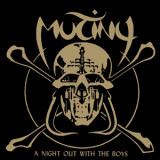
- Rare P-Funk album from 1983 - Funkadelic/Parliament All-Star Line-Up - First ever vinyl reissue - Comes with a repro of the original insert - 180g Black Vinyl Edition - Limited to 500 copies, comes with obi strip // Jerome "Bigfoot" Brailey is an American drummer who started performing in the early 1970s with several R&B groups from the likes of The Unifics, The Chambers Brothers and The Five Stairsteps where he developed his unique style and finesse on drums. Later in 1975 he joined George Clinton's P-Funk collective and has appeared on many of Parliament & Funkadelic's most popular recordings (some of which he also co-wrote). Brailey played on classic albums like `Mothership Connection' and `One Nation Under A Groove'. Samples from that body of work (and his drum arrangements) have since then appeared on hundreds of hip hop and contemporary R&B songs by renowned artists such as Kendrick Lamar and Childish Gambino. Jerome Brailey is a member of the Rock and Roll Hall of Fame (inducted in 1997) and part of their `50 greatest drummers in the Hall' list (stating that his drum style kept Parliament-Funkadelic rooted in the old-school `James Brown-style funk')_next to this achievement, he was proclaimed by Rolling Stone as one of the `100 Greatest Drummers of All Time' for his steady kick drum, shifty hi-hat action and intricately unpredictable snare patterns. Brailey earned numerous Gold and Platinum records with the P-Funk Organization and has worked as a session drummer for many talented artists such as Herbie Hancock, Buddy Miles, Snoop Dogg and Pharoah Sanders. George Clinton's funk empire was not without its disagreements and Jerome Brailey's `Mutiny' project was a direct result of just such a disagreement (as well as one of the more notable offshoots of the P-Funk axis). Mutiny performed in a style not far removed from the classic P-Funk style and with a lot of emphasis on the dual lead guitar work, but what makes them unique compared to their contemporaries is that at times their recordings also emit a darker, more sinister feeling. Besides Brailey on drums (and on most of the lead vocals) Mutiny featured a funk-alumni line-up and released three amazing and collectible albums: `Mutiny On The Mammaship' (CBS, 1979), `Funk Plus The One' (Columbia, 1980) and `A Night Out With the Boys' (J. Romeo, 1983)_these were followed by two comeback albums: `Aftershock' (Rykodisc 1995) and `Funk Road' (Catbone, 2013). The `Mutiny' album we are proudly presenting you today (A Night Out With The Boys) is an underrated gem made by musicians who defined the funk scene of the '70s and '80s! Featuring an all-star line-up that includes Rodney Curtis (Fred Wesley, Maceo Parker), Michael Hampton (Funkadelic-Parliament, Deee-Lite), Kenni Hairston (Cameo) and Maceo Bond of Osiris/Afrika Bambaataa fame! `A Night Out With The Boys' has it all: Jerome's trademark drumbeats, funky bass grooves, driving riffs accented by stinging synth parts, slow spacey (and prominently featured) guitars, top-notch lead vocals and chants that recall Sly Stone's "Loose Booty". The whole album is a hot dance jam with crisp percussion_an extremely infectious, locked-in-the-pocket bass-heavy monster-funk-bomb that any serious self-respecting funk fanatic must have in his/her collection!
In 1978 Pharoah Sanders went into the studio with pianist, Ed Kelly, who was an important figure in the local San Francisco and Oakland jazz scene. The two of them recorded six tracks which ranged from covers of standards, through soul jazz through to two real gems. The album was originally released as Ed Kelly and Friend due to Pharoah being contracted to Arista Records at the time. Indeed, as you can see, the cover shows Kelly playing next to Pharoah’s hat, shoes and Selmer tenor saxophone.
Rainbow Song, a Kelly composition, opens matters in a manner far removed from Pharoah’s work on his Impulse albums (although there had been a dramatic change of course when he signed with Arista and recorded). This is firmly in Grover Washington Junior territory with a liberal sprinkling of oh so tasteful strings. The Master’s sound is full and mighty as ever.
With the radio track out of the way it is business as hoped for and Newborn is a Sanders composition that burns with intensity. The power of his solo is as good as anything he has produced and he runs over the full span of the tenor’s range and onwards into territory lesser known or explored by 99% of sax players.
Sam Cooke’s You Send Me is treated with reverence and respect, with Pharoah delivering a sensitive and heartfelt rendition and ending with some extraordinary phonics, which we will meet again on later albums. Kelly’s accompaniment complements Sander’s playing before he receives his own space for a shimmering yet restrained solo which discloses what this non-pianist assumes to be an agile right hand.
Answer Me My Love is an early 50’s ballad with a fascinating back story. On its initial release in post-war Britain, covers of this fine melody stirred sufficient controversy for the song to be banned by the BBC. What led to it being barred from broadcast on the Light Programme and treated like Anarchy For The UK, Wet Dream and Give Ireland Back To The Irish? I can reveal that the reason for this draconian action was that the original version was entitled ‘Answer Me, My Lord’. In the olden days, it seems that a direct appeal to God was considered to be blasphemous- especially if set in a secular or selfish. Further research indicates that Nat King Cole made the most celebrated recording and that Bob Dylan used to sing it live in the 1990’s, presumably during his overtly Christian phase. Anyway, it is a grand tune.
Pharoah went on to record at least three studio versions of his great anthem You’ve Got To Have Freedom but the one here is the earliest incarnation that I am aware of. It is also the most restrained treatment of the theme, although Pharoah’s solo shows his ability to play with fire and power over the entire range of the horn. There’s plenty of space for Kelly’s piano too and he provides an elegant setting for Sanders’ exploratory work.
Powerful new spiritual jazz from Chile on Soul Jazz Records!
This album comes as a very limited one-off unique pressing of 1000-edition vinyl, limited editon CD and digital release.
Enrique Rodríguez and the Negra Chiway Band group have an instantly powerful and unique sound that is reminiscent of the ensembles of Sun Ra and his Arkestra as well as Horace Tapscott and his Pan-Afrikan Peoples Arkestra, one that channels the righteous spirits of Alice Coltrane, John Coltrane, Pharoah Sanders, Archie Shepp and McCoy Tyner together with a stunning Latin rhythmical and new consciousness and percussive energy. Added to this are elements of the Samurai film soundtracks of Akira Kurosawa, Popol Vuh’s musical spirituality (especially their work with film director Werner Herzog), Tibetan Buddhism and over-blowing chants, that all combine to give a truly unique new sound.
Enrique Rodríguez is a composer, percussionist, keyboardist, and producer from Santiago, Chile, whose work shows many similarities with the music featured on Soul Jazz Records’ recent collection ‘Kaleidoscope - New Spirts Known and Unknown’, featuring new forward-looking jazz artists including Mathew Halsall, Theon Cross, Emma-Jean Thackray and Makaya McCraven.
Like all these artists, Rodríguez’s work is a progressive and experimental fusion of earlier influences that combine into a new and definitely 21st century ground-breaking sound that, on account of its South American setting, give the group its truly unique feeling. Hypnotic modal piano riffs, powerful brass and flutes, an army of Latin percussion instruments, and addictive vocal chants all combine in this powerful mix of radical 60s Afro-centric jazz, eastern spirituality and cosmology, and Latin American rhythmical movement.
- A1: Das Goldene Zeitalter - Don't Give Up Your Smile Today
- A2: Nu Art Quartet - Black Bandit
- A3: John Tinsey - Freedom Excelsior (Part 2)
- A4: Obie Jessie Quartet - Black King
- A5: Walt Bolen - Peace Chant
- B1: Genghis Kyle - Bakit Ba
- B2: Luna Brothers Trio - Mozambique
- B3: Hozan Yamamoto - Spotlight On Sapporo
- B4: The Milestones - Funk
From 1963 to 2014: "Peace Chant - raw deep and spiritual jazz" exhibits 51 years of music. A well matched anthology with sounds to dive into, hard rhythms to dance to and vocals to meditate on.
The Tramp Records crew has compiled 9 tracks in nice order and dramaturgy. Some tunes you might have never heard before unless you own one of the rare original vintage vinyl records. Peace Chant is released on two separate LPs with own catalogue numbers and on one CD. Some songs I can't get out of my mind:
The previously unreleased "Don't Give Up Your Smile Today" is opening the compilation. It's from Das Goldene Zeitalter, a band that didn't survive - but whose members had a huge influence on German jazz, soul, afrobeat and funk within the last years merging into groups like The Poets of Rhythm, The Whitefiled Bros., and The Malcouns. Boris Geiger aka. Bo Baral sings a Pharoah Sanders like tune, his voice deeply resonating, the rhythm section heavily grooving.
After the first three woolly recorded tracks Walt Bolen's "Peace Chant" with its dry and funky sounds with flute, two guitars and percussion is quite a pleasure to listen to. Organ and voice are Bolen's who used to play the keys in San Fernando Valley church when he was a child. "Peace Chant" was recorded for his own Ar-Que label in 1972 and is one of the few cuts with him as a leader. He has played sessions and clubs for years and today he is sitting at the church organ again.
This publication's oldest recording dates back to 1963: "Mozambique" by Luna Brothers Trio, a Caribbean and hypnotic instrumental. For my jazz trained ears it is rather unusual that the güiro (the gherkin played with a stick) is being played throughout the entire song. Heavily laid back cowbell, concas and timbales and the slightly detuned piano are wonderful! "Mozambique" sounds like from another star but its origin is Los Angeles, where the brothers Fred and Ricardo Luna had their night club band. You could imagine a bast skirt strip and at the same time the great Raumpatrouille (Space Patrol) landing on German B&W TV screens in 1966.
Hozan Yamamoto recorded crime jazz with the Japanese bamboo flute shakuhachi. He belonged to Tony Scotts "Music for Zen Meditation" in 1964, played with Ravi Shankar, avant-garde jazz bassist Gary Peacock and appeared at Donaueschingen Festival for contemporary music. Tokio university's open minded lecturer recorded the funky and modal "Spotlight on Sapporo" in 1972.
- A1: Time Slips Away
- A2: What Do We Care (Feat Tom Sanders)
- A3: Wish I Was In Tokyo
- B1: Eyes Wide Shut (Feat Wooze)
- B2: Maker Baker Faker Taker
- B3: Myths Still Exist (Feat Niki Kini)
- C1: Sense Of Time
- C2: Turning Tides (Feat Vanity Fairy)
- C3: Back & Again
- D1: Natural Born Losers (Feat Wooze)
- D2: Violet Candy
- D3: Golden Hours (Feat Nuphar)
Moscoman aka Chen Moscovici, Wahlberliner aus Israel und DJ der Panorama Bar (Berghain), Space Miami und Pacha Ibiza, liefert nach Releases auf Because, Life & Death, Greco-Roman, ESP Institute (Debütalbum " A Shot In The Light" 2016) und seinem eigenen Label Disco Halal nun sein zweites Album auf Moshi Moshi ab. Auf "Time Slips Away" erweitert er seinen Sound aus Maschinen-Disco, Melodic Techno und wonky House um neue Klangstrukturen, die die 12 Tracks samt Vocalfeatures von Tom Sanders (Teleman), Vanity Fairy, Wooze, Niki Kini und Nuphar direkter und zwingender machen, was auch seinem frühen Indie-Rock-Background geschuldet ist.
The third release from Night Dreamer’s essential “Direct-to-Disc” sessions sees an incredible meeting between legendary US saxophonist Gary Bartz and leading UK spiritual jazz ensemble, Maisha, featuring two Bartz classics and three brand new joint songs written by both Bartz & Maisha in close collaboration. Having cut his teeth playing with the likes of Charles Mingus, Max Roach, Art Blakey and finally in 1970, Miles Davis at the peak of his electric period, Gary Bartz became a leading figure of the early-to-mid 70s spiritual jazz movement, releasing a string of ground-breaking albums on legendary NYC jazz label Prestige Records with his NTU Troop, featuring classics such as “Celestial Blues”, “Uhuru Dance” and “I’ve Known Rivers”, before collaborating on Blue Note Records with the Mizell Brothers on the anthemic jazz funk of “Music Is My Sanctuary”. An oeuvre much loved by soul jazzers and hip hop fans alike. Led by drummer Jake Long, Maisha have been central to the UK’s jazz explosion, and have fast become the UK’s most exciting and in-demand young spiritual jazz ensemble, from steller shows at Jazz re:freshed, Total Refreshment Centre & Church of Sound and supporting the Sun Ra Arkestra, to releasing their critically acclaimed debut LP, “There Is A Place” on Gilles Peterson’s Brownswood Recordings in 2018. Theirs is an organic & explosive sound that blends influences from afrobeat and broken beat to Persian music, with a deep love and understanding of jazz, particularly the heritage of spiritual jazz led by titans such as Pharoah Sanders, Alice Coltrane and of course, Gary Bartz. Which makes this collaboration even more special. Bartz was first invited to share a stage with Maisha by Gilles Peterson to headline the inaugural We Out Here festival. Their chemistry was rich and instantaneous, certainly a two-way street, with the young musicians reinvigorating the legend’s performance and wowing the intergenerational festival audience. A European tour followed, including a London Jazz Festival highlight at the Royal Festival Hall, celebrating the 50th anniversary of his album “Another Earth”, originally featuring fellow legends, Pharoah Sanders, Charles Tolliver, Stanley Cowell, and John Coltrane’s own bassist, Reggie Workman. Now the relationship has evolved into a special straight-to-disc recording for Night Dreamer Records, that captures the vitality of their collaboration. Whilst Bartz and Maisha reinvent classic Bartz compositions “Uhuru Sasa” and “Dr Follows Dance”, extending the pieces into long piece improvised grooves, their recording session gave birth to three brand new joint compositions, written the very same day. These include the propulsive “Leta’s Dance” that magically combines the Bartz’ soulful musical lyricism with Maisha’s African-jazz influences, and the organic jazz funk of “Harlem to Haarlem”, featuring a hot solo from guest trumpeter Axel Kaner-Lidstrom of Cykada & Levitation Orchestra fame. Like previous Night Dreamer efforts from afrobeat star Seun Kuti & Egypt 80, and the beautiful
collaboration between Brazilian stars Seu Jorge & Rogê, the album was recorded in Haarlem’s Artone Studio, a stones throw from Amsterdam, in just one-take, straight-to-disc, avoiding postproduction embellishments and retaining the purity of the performance lost in modern recording techniques. This record really is an event, in and of itself, a meeting of talents, minds, generations and zeitgeist moments, captured in a unique and pure manner. The music does not disappoint, as Maisha have been inspired to reach new heights whilst we find Bartz truly reinvigorated, and both artists in tune to the spirit of the other.
Born in Paris, raised in Vienna, resident in Ibiza, saxophonist and composer Muriel Grossmann embodies the borderless, pan-continental energies of contemporary European jazz. Her music emerges from the lineage of European jazz that's absorbed the progressive music of Coltrane, Dolphy and Sanders. Today, she cites players such as Illinois Jacquet and Lester Young in the same breath as the masters of the avant-garde, and her playing marries the directness and eloquence of the older generation with the questing, spiritualised playing epitomised by Coltrane. The roster of musicians she has played with is long, and includes veteran European avant-gardists including Joachim and Rolf Kühn, Wolfgang Reisinger and Thomas Heidepriem, and she works tirelessly with contemporary groups and big bands across the continent.
Since her first recordings in the early 2000s, Grossmann has released a dozen albums as leader, featuring sounds ranging from hard-swinging modernist jams to free improvisation, expansive spiritual work to rhythm-focussed Afrocentrism. But at the centre of her work is a thread of pure and heartfelt spiritual music in the modal tradition defined by Coltrane and close collaborators like Pharoah Sanders and Alice Coltrane. You can't play this music successfully if you don't mean it – like the music of her contemporary Nat Birchall, Grossmann's engagement with the Coltrane tradition is sincere and deep. Her music resonates within the tradition – more than just a style, it adds a new chapter to the story of modal and spiritual jazz in Europe.
This Jazzman set draws a selection from her 2016 album Natural Time ('Your Pace', 'Peace For All') and from 2017's Momentum ('Elevation', 'Chant' and 'Rising'). Featuring her regular quartet of Radomir Milojkovic (guitar) Uros Stamenkovic (drums) and Gina Schwarz (bass), the music on Elevation is pure sound, soul and spirit!
- LP only with thick tip on sleeve- Download card included inside
"Timeless and innovative... a musical genius" Mike Gates, UK Vibe
"A listening experience akin to transcendence" Andrew Jones, Down Beat
"Vibrant, passionate, exhilarating. A monument of spiritual jazz" Mark Sarazzy, Impro Jazz
"A journey that takes off like missile, passes through meditation, reaches nirvana and ends with thanksgiving" Elliot Simon, NYC jazz records
"Timelessly beautiful" Christian Bakonyi, Concerto
- A1: Zena Ayo - Long Long Gone
- A2: Rhonda Fleming - Cold Rain
- A3: Patsy Abbott W Margie Sherwin - Get Out Of Town
- A4: Honey Sanders - Some Like It Cool
- A5: Lynn Roberts - Beatnicks
- A6: Carol Gray - Cha Cha Bop
- B1: Lyn Avalon - I Walk The Streets
- B2: Nancy Dupont - Weather Report Love
- B3: Kay Martin & Her Body Guards - Fever
- B4: Cara Stewart W The Gold Coast Boys - The Midnight Blue
- B5: Del Rae - Contemplation Blues
- B6: Sarah Northcutt - Leav'n Woman
Stag-O-Lee präsentiert hier Teil 5 und 6 der usserst erfolgreichen Trashcan Records Serie, die sich obskuren und vergessenen Vinyl Schätzen aus den 50er und frühen 60er Jahren widmet. Die originalen 45er stammen aus der stattlichen Sammlung von Fedor, einem Sammler und Jäger aus Amsterdam, der sich in den letzten 25 Jahren durch tausende von Kisten mit Gebrauchtvinyl auf Flohmärkten der holländischen Metropole wühlte. Die Veröffentlichungen sind thematisch gegliedert - Vol. 5: Cha Cha compiliert 12 Tracks mit "an all-female beatnik extravaganza: the first vinyl compilation of its kind! From the bohemian misfit girl with her goateed boyfriend to the espresso sipping art school chick reading Kerouac..." . Vol. 6: The Natives Are Restless bietet 5 Tunes mit einem Dschungel-Thema auf der A-Seite und 5 luftige Exotica-Träume auf der B-Seite. Alle 24 Tracks sind "previously uncomped" und finden erstmals ihren Weg auf Großvinyl!!
Multi-instrumentalist and composer David 'Dijf' Sanders combines a broad mix of styles with a boundless approach full of multicultural blends. The Ghent based artist has always been working on various projects, collaborations or productions at the same time - lately he worked with Warhaus, Sylvie Kreusch, Mattias De Craene's MDC III and Wim Vandekeybus (Die Bakchen - Lasst uns tanzen), to name a few - but that did not keep him from releasing successful solo records as well.
Dijf, who was a member of the (synth)pop bands Teddiedrum and The Violent Husbands, already raised excitement with the exotica-oriented 'Moonlit Planetarium' (2016), an album that created an experimental clash between percussive, ethnic sounds and rather Western beats, occasionally topped off with his mysterious vocals.
After the acclaimed eclectic gem Java (2017) for which he recorded in Indonesia, Dijf Sanders sets off on another musical adventure to another part of the world. This time it is a world infused by Nepalese, Tibetan, Chinese and Indian culture. Dijf traveled to Nepal, and used his field recording and impressions to create a new universe together with drummer Simon Segers, Saxophone player Mattias De Craene and sitar player Nicolas Mortelmans.
Expect a sound trance where monk chanting, eclectic beats but also mantra style techno will be fused. Namaste!
'Garage bands suddenly obtain cult status and become the antithesis of their initial appeal'
Garage Class were a group of reluctant outliers who produced one of the finest contributions to the wave of UK DIY music that emerged during the late 70s and early to mid-80s.
Hailing from Alsager in North West England and comprised of Tim Shutt (vocals) Phil Murphy (lead guitar) Clive Williams (guitar) Lynne Sanders (bass) and Phil Bourne (drums / bass on studio recordings) Garage Class originally went by the name of The Pits before their then manager Steve Hurt imposed an alias which, though unpopular within their ranks, would nevertheless reflect the shambolic art they would eventually capture on their first and only single.
As The Pits the group offered a loutish inflection on glam-punk flamboyance, evoking Johnny Thunder hitting the north and remaining disowned yet undeterred in a dreary old boozer. But as Garage Class the group distilled a roughcast and homespun primitivism that felt quintessentially their own. In this they proved too unruly to be assimilated into any wider scene. Early gigs descended into acrimony and recognition proved elusive. Yet what they managed to make back then now sounds like an extraordinary article of underdog ambition.
Released in 1984, four years after it was originally recorded, the Terminal Tokyo single is an unlikely triumph of exceptional messthetic punk. Though raw and unpolished the songs here are precariously pop-minded and indisputably anthemic. The titular A-side reveals the dry and detached drawl of Shutt aka The Subliminal Kid, a sharp, jaded and poetic voice that has some of the most iconic lines never heard in punk. Accompanied by second-hand guitars, on-the-fly handclaps and a chorus like a terrace chant this is the cult hit that never was, a heroically artless masterpiece that has all the ragged character and misfit euphoria of Swell Maps and The Buzzcocks if they were more impulsive and boisterous, and left to their own devices in the remote margins of a Cheshire town. The original B-side is here substituted for I Got Standards, a track that, until now, has somehow remained unreleased. An ideal twin to Terminal Tokyo there's the same brusque and dog-eared quality to the band's delivery, as well as the same upfront emphasis on strong hooks and insistent momentum. Yet again, Shutt is on impeccable form, perfecting an inflated, adolescent antagonism that has all the sardonic, malcontented charm of similarly 'shirty' buggers like Dan Treacy (Television Personalities), Patrik Fitzgerald and Mark Perry (Alternative TV).
Although never accepted in their own time both tracks represent a brief but inspired moment of fervent imperfection, one that epitomized the best of a diffuse and autonomous underground movement spearheaded by The Desperate Bicycles and built upon by the likes of Amos & Sara, The Homosexuals, The Cleaners From Venus and Family Fodder. Like them Garage Class were situated at a point where punk, art, humour and a sense of stubborn independence all intersected.
In the years since Terminal Tokyo has accumulated a retrospective appeal among certain trusted circles, with Jon Dale celebrating the single in his exhaustive and essential Story of UK DIY for Fact Magazine, and original copies regularly changing hands for a foolish forty quid or so. With this inaugural release on the Outer Reaches label Terminal Tokyo is not only restored for the very first time but given a worthy expansion courtesy of JD Twitch (Optimo).
Continuing his own fascination with the fringe history of UK DIY - documented on his own outstanding compilation Cease & Desist: DIY! (Cult Classics From The Post Punk Era 1978-1982) and in his re-edits of Crass Records classics for an early release on RVNG INTL - Twitch reinterprets I Got Standards as an incisive, dubwise outing that pictures Jaki Liebezeit and Muslimgauze on a bender in England's provinces, tasked with remixing the raw product of local punks. A new slant on Garage Class' crude magnificence, built to play loud on contemporary soundsystems.
Although the latter part of 1980 spelled the end for Garage Class with members moving on to other projects (Bourne fell in with The Colours Out of Time, Murphy went on to front The Regular Guys and Shutt eventually left to form Happy Refugees) this reissue attempts to give their fleeting time together and the unique single statement they made the treatment it deserves. If this means Garage Class have obtained cult status, their initial appeal remains. Just listen for yourself.
Here Appear is an invocation, a salutation, and a celebration — of past and perfect lives, forgotten and remembered, exchanged and borrowed. Eve Essex's solo debut is a multi-instrumental fea(s)t combining synthesizer, drum machine, alto saxophone, piccolo, electric organ/harpsichord, harmonica, slide whistle, bells, guitar pedals, and voice— composed, arranged, and performed by Essex herself. What began as an improv set at Berlin's Harlekin bar, developed over the past two years into a complete body of work evoking multiple time periods, genres, characters, and sonic landscapes. The seven tracks that make up Here Appear harness elements of classical, drone, avant-jazz, and distorted pop, coupled with an ambitious vocal delivery that draws on the phrasing and articulations of Essex's own woodwind playing, to create a quasi-narrative me´lange retaining the vulnerability of live performance. On the opening track Grind Away,' otherworldly harmonica strains set the stage for lyrics citing Chinese sci-fi novel The Third Body Problem as source material. Saxophone and piccolo interludes Immediate Communicator' and Colorless Stone' move between medieval-tinged melodic inventions and textural noise, recalling a Pharoah Sanders-influenced fever dream, while the linguistic abstractions of Russian conceptual poet Lev Rubinstein guide the looped, layered, and textured vocals of title track Here Appear.' The album closes with a languid take on Jacqueline Humbert & David Rosenboom's 1978 composition Clear Light' from My New Music, recently reissued by Unseen Worlds. Here Appear owes its minimal production to the conditions of its genesis, evidencing the restrained process of the solo artist, instrumentation is confined to what can be played simultaneously. True to the album's avant-garde roots, each song involves an element of improvisation, often taking the form of prompts or variations on a melody rather than explicit compositions. Even its most structured pieces make use of live-sampled loops, which inject a spirited unpredictability into the songwriting process and subsequent performance. Classically trained in bassoon at New England Conservatory before receiving a BFA in sculpture from RISD, Eve Essex has performed as a solo artist at Artists Space, Commend, Safe Gallery, Signal, Trans Pecos, and U.S. Blues, in New York, Harlekin/Mathew Gallery and StudioAcht in Berlin, and the PUFFERSS Festival in Providence, RI. In addition to her solo practice, Essex regularly performs as one half of Das Audit (with Craig Kalpakjian), as well as in trios Hesper (with James K and Via App) and HEVM (with MV Carbon and Hunter Hunt-Hendrix), and has collaborated extensively with Juan Antonio Olivares as installation/performance-art duo Essex Olivares. Prior to the LP release on Sky Walking (April, 20), Here Appear arrives via New York City-based label Soap Library on March 9, 2018 in both cassette and digital format, mastered by Helmut Erler at Dubplates & Mastering, Berlin and recorded by Al Carlson at Gary's Electric, Brooklyn.