On his third solo album, following the success of "Éternel été", the founder of the electro duo Nôze is exploring, through piano and synths, the encounter between poetry and song. In this new work he has set to music verses by William Shakespeare, Victor Hugo, Pablo Neruda and on three songs, those of the poet Marceline Desbordes-Valmore, a pioneer of romanticism who notably influenced Verlaine and Baudelaire.
But what does this Oh !, giving its title to Ezéchiel Pailhès' third solo album, stand for? Is it an Oh ! of surprise, admiration or pain? "It is rather the Oh ! found in romantic poetry" says the French composer and singer with his deep and sweet voice. "An interjection that refers to a form of lament", even though it can convey other emotions such as complaint, nostalgia, a sad delight or a longed-for solace.
In Tout va bien, his previous album released in 2017, Ezéchiel Pailhès had set two Shakespeare sonnets to music. One of them, "Eternal été" has become a great success, thanks to its lines tinged with spleen and bliss. "Poetry, and its musicality, have always been part of my universe. For this new album, I therefore wanted to explore further the adaptation of poems into songs. "Bien Certain" is, once again, taken from William Shakespeare. "Tu te rappelleras" comes from Pablo Neruda's collection La centaine d'amour. "Oh ! Pourquoi te cacher ?" is from Victor Hugo. As for "Sans l'oublier", "La sincère" and "J'avais froid", they were all written by Marceline Desbordes-Valmore, a 19th century French poetess, still fairly unknown".
With Oh !, Ezechiel Pailhès has become more of a singer than ever before, through seven songs and four instrumental compositions, with intimate and warm modulations, carried by hypnotic piano melodies, instruments with unusual timbre and a subtle electronic production that recalls his past productions with his former duo Nôze.
"I wanted to expand my music further into songs" Ezéchiel adds, "to work more with my voice as a solo instrument and to limit the overlapping of voices and choirs found in my previous records". Produced in his Montreuil home studio, Oh ! is nevertheless imbued with an emotion found in his previous albums, close to 'saudade' or a slight melancholy, sometimes enhanced by chosen texts that evoke the disappointment of love, the longing, the distance between two people, or even men's weakness. "These poems evoke themes that may seem far from the concerns of our times. Yet, they are timeless and eternal; they manage to convey emotions that can often be difficult to say or write."
Among the texts chosen for this new album, the verses of the poet Marceline Desbordes-Valmore (1786-1859) are on a par with William Shakespeare's sonnets or Pablo Neruda's poem found on the same record:
" Sans l'oublier, on peut fuir ce qu'on aime.
On peut bannir son nom de ses discours,
Et, de l'absence implorant le secours,
Se dérober à ce maître suprême,
Sans l'oublier ! "
(…)
" Sans oublier une voix triste et tendre,
Oh ! que de jours j'ai vus naître et finir !
Je la redoute encore dans l'avenir :
C'est une voix que l'on cesse d'entendre,
Sans l'oublier ! "
"Without forgetting, we can run away from what we love.
Banish their name from our conversations,
And, begging the absence for consolation,
Escape the grip of this supreme master,
Without forgetting! "
(…)
"Without forgetting a sad and gentle voice,
Oh, how many days have I seen rise and fall!
And still I fear from the future:
A voice that can no longer be heard,
Without forgetting! "
Although less known today than her male counterparts, Marceline Desbordes-Valmore marked her times and the Romantic movement through the quality of her texts and her formal inventions, which Balzac admired, and whose influence seems to have been decisive on Verlaine and Baudelaire.
"Marceline Desbordes-Valmore's poetry is highly musical," says Ezéchiel with admiration. "Her artistry with rhythm and repetition sounds very good and takes on a new dimension when set to music. She even meant for some of her texts to become songs"
Поиск:same people
Все
Entitled ‘My Heart Is Hungry And The Days Go By So Quickly’ Danish singer and songwriter Jacob Bellens presents his fifth solo album. Thanks to his unique voice and his talent for heartfelt melodies, over the years Jacob, also known as frontman of I Got You On Tape and Murder, has become one of the most distinctive figures on the Scandinavian music scene. Slightly darker in tone than its predecessors ‘Trail Of Intuition’ (2018) or ‘Polyester Skin’ (2016), the new album lets us see the world through Jacob’s eyes.
Somewhere between left-field pop and a classical singer/songwriter approach, the songs were recorded in two sessions with producer Mads Brinch, drummer Tobias Laust, bass player Jonas Westergaard, keyboardist Malthe Rostrup and guitarist Tobias Fuglsang. “So many good friends and amazing instrumentalists have contributed to the sound“, explained Jacob. “And mostly, people were playing what they felt the song needed, which was an incredibly inspiring way of just letting the process develop naturally, and take on a life of its own.” As such, the recordings give off a distinct light-footed and organic feel. Rich in metaphors, the lyrics deal with personal perceptions based on everyday life occurrences that at the same time hint at the meaning of life in general - or at least suggest a higher perspective. The sonical expression is timeless but also modernistic and the lyrical point of view is refreshingly diverse, never just black or white. The sad songs have uplifting, often surreal qualities, and the lighter, uptempo songs also invite to a certain darkness. A flower basket full of difficult emotions, sprinkled with magical fairy dust that somehow makes everything worthwhile.
London-based folk-psych-country band The Hanging Stars return with their eclectic third studio album, A New Kind Of Sky, due out on 21 February 2019. Carrying on their exploration of transatlantic psychedelic folk and cosmic country, the new album blends twelve-string, harmony-laden lullabies with soft rock anthems to create a guilded box of bucolic folk-rock. As well as the band’s signature wistful pastoral escapism, there are lyrical concerns about the recent past; the systematic division of people, values, facts and humanity in The West in general - and the UK in particular. The band weave the same thread they have always woven but this time with a more unified vision, creating a kaleidoscopic poncho for these times.
The Hanging Stars comprise songwriter, singer and guitarist Richard Olson, Sam Ferman on bass, Paulie Cobra on drums, Patrick Ralla on guitars, keys and vocals, and renowned pedal steel player Joe Harvey-Whyte. Returning guest Collin Hegna from Brian Jonestown Massacre plays an instrument called a Marxophone on “Choir of Criers”. They also welcome Sean Read of The Rockingbirds and Dexy's Midnight Runners, who adds horns to “Three Rolling Hills” and “I Was A Stone”.
The main bulk of the recording for the new album was done live in the studio at Echozoo in Eastbourne with Dave Lynch. For the first time, the band decided to dive straight in to the recording studio following their German tour in 2018. Having lived in each other’s pockets and playing their new songs every night, the band were as tight and primed as they could possibly be. There ensued a few, very long, days of recording, capturing the essence of the band in their element.
The songwriting process was even more collaborative for this album, with the usual co-writes between Richard Olson, Sam Ferman and Patrick Ralla enhanced by Joe Harvey-White’s arrangements and Paulie Cobra’s harmonies. The biggest difference is that Sam Ferman sings lead on the first single “‘(I’ve Seen) The Summer in Her Eyes”, a song about lost love and self doubt channeled through two and a half minutes of garage pastoralism.
The album’s title track “A New Kind of Sky” tells a story from the point of view of somebody who idealises a past that never existed. The band go glam-rock on the stand-out track “I Will Please You”, a tale of a cult leader/world leader and his irresistible (for some) charm from the point-of-view of his most recent victim and “Heavy Blue” is a country music tale of drunken debauchery seen through the eyes of an inexperienced young man. The triumphant trumpet-driven song “These Rolling Hills” is a minor-key tale of a journey into the hills of Marin County, California undertaken by Paulie and Richard to visit friends Asteroid No. 4, with a most interesting outcome.
The Hanging Stars released their debut album Over the Silvery Lake in 2016, which received plaudits from broadsheets such as The Times, who described it as; "An album with enough of a hazy, sun-dappled charm to make the capital's dreariest weather bearable”, as well as The Guardian, who said; “Mersey-laced harmonies and just a whiff of the Gun Club.” They picked up a good amount of support at 6 Music and “The House on the Hill” scored a much-coveted 10/10 by John Robb on Steve Lamacq’s Roundtable.
Their second album Songs For Somewhere Else in 2017 received critical acclaim from the likes of Uncut (Revelations article), Shindig (several features and 4* review) as well as The Quietus and The Line Of Best Fit, plus radio support from Gideon Coe and Bob Harris (they performed an Under the Apple Tree Session for Bob Harris in January 2019).
Whilst playing their own successful sold-out headline dates, the band were invited to share the stage with Teenage Fanclub, The Clientele, Wolf People, The Long Ryders and GospelbeacH, as well as playing festivals such as Liverpool’s International Festival of Psychedelia, Red Rooster, Ramblin' Roots, UK Americana Festival and The Long Road.
4 techno tracks with rave and '90 trance sounds, wisely mixed with modern ones. Lucretio in the A side with an industrial digital track; same taste for Dove Quiete's track. The B side is characterized by two melodic and trance tracks from Albanish People and Stic.
After a few other successful projects, Franck Biyong, French-Cameroonian Afrobeat composer, guitar player and singer is back on Hot Casa with a hot futuristic Afro-Brazilian club anthem. The similarities and filiations between traditional West-African drumming and Afro-Brazilian religious musical rites are many: under colonial rule African people and African slaves outwardly practiced
Christianity but secretly prayed to their own God, Gods, or Ancestor spirits. So we aimed at keeping the gritty urban menacing sound and poetry of Afrobeat with the percussive mass rumble of Batucada and poignant beauty of Carioca. We then got in touch with Cristina Violle, the first lady of “Samba de Roda” in Paris who graced us with a startling inspired and heartfelt melody. The first completed version of the song then briefly went on alternative radio, we also made plans to release a vinyl version, but for one way or another we shelved the project, without thinking we would get back to it again…until a few months ago. We went back to the studio last summer and started ironing the song again from scratch. That same initial spirit and energy caught hold of us again from the day we started and we worked relentlessly to create a balanced but experimental track, showcasing rootsy sound, pop instrumentation, tight world beat drumming, song structure, jazzy horns, spacey synthesizers, choral-like vocal harmonies with call and response figurative vocals.
We now proudly present this brand new record; Like our predecessors years ago, we subconsciously did our best to keep alive a longtime tradition of cultural tradition of African Artistic
Renaissance, pushing further musical themes of contemporary African sound. To be continued…
From the cosmic creative musical mind of Swiss/Catalan studio whizz, Zeleste Nightclub engineer, video nasty film composer, occasional Jaume Sisa (Muìsica Dispersa) collaborator and future electronic music therapy pioneer J. M. Pagaìn comes the synth-ridden, vocoder-loaded 1984 sci-funk soundtrack to Barcelona’s daytime TV response to the universal E.T. phenomena. Get ready to meet your new alieniìgena amic and the unidentified flying object of thousands of Catalonian kids’ affections through the 1980's as Finders Keepers present Pagaìn’s lost lunar modular synth score to ‘Kiu I Els Seus Amics’ (Kiu And Friends aka Kiu Is Your Friend).
From the same intergalactic phenomenon that brought such delights as Turkey’s exploito cash-in ‘Badi’ or South Africa’s lo-rent homage ‘Nukie’ to our unregulated small screens and the same craze which filled international airwaves with the likes of Extra T’S electro smash single ‘E.T. Boogie’ or the million selling Columbian ‘Cumbia De E.T. El Extraterrestre’ smash hit... not to mention a wide range of unofficial theme-tune cover versions from Holland, Austria, France and Germany (lest we forget an inspired late period Lee Scratch Perry Album).
In 1982 the diaspora from Steven Spielberg’s small fictional mid-American neighbourhood that played host to everyone’s favourite torch fingered, three toed, Skittle-scoffing space goblin touched virtually every family home in every major city resulting in one of the biggest cinematic merchandise phenomenas of the 21 st Century, resulting in an unexpected high-demand / short-supply play-off in which bootleggers, copyists and counterfeiters rose to the challenge like never before.
When Spielberg regrettably told interviewers that he had no intention of making a sequel to ‘E.T. The Extra Terrestria’ it instantly became open-season for the imitators... but way before somebody squeezed-out ‘Mac & Me’, ‘ALF’ and ‘The Purple People Eater’, a team of kid’s TV executives in Catalunya were ready to fill the widening gap in the market without haste. Created in 1983 by Luna Films and Televisioì de Catalunya (TV3) and screened exclusively in Catalunya, ‘Kiu I Els Seus Amics’ was one of the first E.T. ‘tributes’ to make it out of the gate and with a crew of five individual directors and writers to ensure that the five episode, one-off series hit the wave of phone-home-fever, Kiu has since remained a short but sweet micro- memory in the hearts of an entire generation of Catalonian cosmonauts.
This special Finders Keepers edition comes complete with all of Pagaìn’s cosmic synthesiser soundscapes fully intact (barring striking comparisons with the likes of Tangerine Dream, John Carpenter, Vangelis and the soundtrack music of Suzanne Ciani), as well as some rare, unreleased, incidental TV edits. The bulk of this LP is made up of tracks taken from the rare full-length album, which was released after the TV programme had already been aired and coincided with sales of jigsaws and rubberised play figures in an attempt to catch-up with the unexpected mega-success of the show, needless to say, with a short promotional window, the LP (and cassette edition) did not benefit a re-press and with most copies sold to children, few vinyl pressings have escaped repeat needle scratches and decorated sleeves.
Black Truffle is pleased to present Realejo, the first vinyl release from Brazilian sound artist and composer Manuel Pessoa de Lima. Having composed works for diverse contexts including cinema, contemporary dance, theatre and television, Lima’s live appearances often take the form of self-reflexive lecture performances that combine electro-acoustic sound, red light, video and spoken text, moving unpredictably from the hilarious to the distressing.
Realejo consists of two side-long pieces of highly idiosyncratic electro-acoustic collage, beginning with recordings Lima made of himself playing the organ in the Schloss Solitude Chapel in Stuttgart. Exploring the peculiarities of the instrument’s mechanics, Lima made hours of recordings with the organ stops half-way open, moving from haunting gliding tones to oddly tuned fair-ground melodies reminiscent of the record’s namesake realejo, a hand-cranked organ traditionally found in Brazil as the musical accompaniment to the work of fortune-telling parrots.
To these organ sounds, Lima added recordings of a security guard made in São Paulo: ‘Just before coming to Stuttgart, I started making field recordings of a security guard in São Paulo. It's something pretty common in residential areas: they sit in a chair with a whistle, and use that to signal when people arrive, leave or pass by in the street. This particular security guard, Miguel Viana, works on the same street my parents live, and where I had my childhood, and he has worked there since I was a small child. He has watched the street at night, from 8PM to 6AM, every single day, except Sundays, for over 30 years’.
The poignant sounds of the security guard’s whistles punctuate Lima’s electro-acoustic environment, which also includes raw digital synthesis, recordings of his friends’ infant child, audio lifted from Youtube, and, on the LP’s second side, elements taken from an earlier work, ‘36 English to Portuguese Lessons’. Finely chiselled from dozens of hours of source material into a detail-rich, mercurial structure, Realejo is alternately jarring and seductive, introducing listeners to a young composer with a powerfully individual voice.
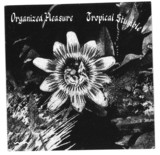
"In popular imagination, the early 80s were dreadful. Thatcher and Reagan led the world on a diet of austerity, unemployment and depression. The Berlin Wall separated East from West. The Sex Pistols had broken up. In sum, the future was unsure. Belgium was no exception. While Punk had been declared dead by some, its spirit was still roaming in country parishes and city alleyways. As the Catholic bourgeoisie provided young people with few opportunities, music was an obvious pastime. Teenage hopes of starting a band and putting out a record were everywhere. Organized Pleasure and Satin Wall were two bands living the dream. In contrast to a thousand others, they left us sounding evidence. This split 7” gathers two tracks originally recorded in 1981. It was the first and only studio excursion for both groups. After some local gigs, the people involved moved on to other projects. While their music is illustrative for the era, their story is distinct. Same but different."
"The first series comprises six related movements, usually organised in pairs, electronic sounds with instrumental and more rarely, concrete sounds: Incidences/resonances brings into play controlled resonances akin to sounds of concrete origin in a process that helps to expand the variable electronic sound sources.
Here, 'incidents' are opposed to one-off 'accidents' in the second movement: Accidents/Harmoniques (Accidents/Harmonics). In the second movement, very short events of instrumental origin change the harmonic tone of the continuum they interrupt or overlap.
Moreover, the high notes are underplayed, which stimulates the attention given to other phenomena generally hidden by the melodic form applied to the instrumental play. Géologie sonore (Sound Geology) is similar to a flight over an area where different 'sound' layers come to the surface one after the other.
When seen from high above, instrumental and electronic sounds seem to fuse ... Dynamique de la resonance (Dynamics of Resonance) is a microphonic exploration of a single sound resonating through different forms of percussion. L'Etude élastique (Elastic Study) places together various sounds produced by 'touching' elastic or instrumental skins (baloons, doumbeks) or vibrating strings and a number of instrumental gestures close to this 'touch', using electronic processes to generate white noise.
Conjugaison du timbre (Conjugated Tone), the last movement in the series, uses the same substance to apply rhythmic forms onto a perpetually varying tone continuum. "The second series of movements draws its inspiration from concrete and electronic sources rather than instrumental ones. Incidences/battements (Incidences/Beatings) is a reminder of the first movement in the first series which then quickly moves into Natures éphémères (Ephemeral Natures): ephemeral play on instrumental and electronic sounds, singled out by their internal trajectory rather than by the material itself. Matières induites (Induced Matters): just as molecular effervescence triggers a changes of state, it seems that the different states of these sound materials can be generated by each other or through induction processes.
In Ondes croisées (Crossed Waves), the pizz vibrations interfere with somehow 'visible' water drops on the surface of a similar material. Pleins et déliés (Downstrokes and Upstrokes) can be listened to as the energies absorbed in the motion of bouncing bodies, while hollow 'bubbles' and points bring together some people's gravity and others' downwards movements. The work finishes with Points contre champs (Reverse Angle Points).
Here, the notion of perspective of the different sound threads weaving a kind of network, or field, traps the occasional iterative elements in the foreground and progressively absorbs them, giving more space for the angle - and the chanted sound - to grow." (B.P.).
Yes, at last! Kinky keyboard porn! Whisper porn! Vinyl Porn! And all at the same time.! And what an ASMR treat we have for you here.
Recordings of 12 incredible bespoke mechanical keyboards made and recorded by the master of this modern art, Taeha Types. Yes, this is actual typing sounds on amazing future/retro/cutting edge keyboards. Every track different. Every keyboard different. Listen and weep - Or sleep - Or something ... An INCREDIBLE & UNIQUE listening experience. The first mechanical keyboard album EVER !!!
For the last few years a small scene has been growing. The mechanical keyboard scene. It’s now quite a big scene actually.
It makes total sense as most of us use keyboards everyday, so why not have an amazing keyboard to use instead of the total crap one you have. I mean just look down. It’s shit isn’t it. So, some people worked out that things could be improved - A lot. - So they started to make incredible, kinky keyboards, using both old and new tech: and the possibilities and options in construction are endless.
There are key cap options (GMK ABS, PBT etc etc), spring options (Cherry MX, Pandas, Alps etc etc) and even backplate options (steel, aluminum, copper etc etc), and of course case options too. And all these options make a big or little difference. And once made these keyboards are carefully lubricated spring by spring to give them that little extra smoothness and “ping”.
The results are beautiful, fetishistic, futuristic in an odd retro style, and they sound AMAZING when they are typed on. This is classic ASMR / whisper porn, the gentle click and rattle of carefully lubed springy keyboards make the hairs on the back of your neck rise. Either that or they gently woo you into a peaceful, sublime state. This is a classic and groundbreaking new Trunk album for our modern stressful times.
The recordings on this album are the first ever release of mechanical keyboard sounds. They are from a selection of (enhanced) keyboards from the 80s, 90s and now. They were recorded by the master maker of the modern mechanical keyboard, Nathan from Taeha Types.
He has a large following on Instagram, YouTube (videos of his hands typing on his keyboards hit 10K in just a couple of days after upload), and he now has over half a million views on his Twitch channel where he constructs keyboards live.
Sleevenotes on the album have been put together by Jonny Trunk and Stu London (AKA Futurecrime) from the London mechanical Keyboard scene. He knows what the fuck he is talking about. And you might not understand it, but you can catch up real quick - like I did.
- Album mastered by Jon Brooks, who also really understand these
sounds. And if you don’t, don’t worry - lots of others will.
I remember the first time I read W.E.B. DuBois eclectic masterpiece The Souls of Black Folk. The way in which this Weberian scholar flowed from personal account to prose to sociological analysis to music and even political intervention has had a lasting impact on my own work as a cultural anthropologist. It made me understand that as scholars we must use different means in order to give expression to the totality of the lived experience: There is only so much in an academic text.
The experience of alienation has always been at the heart of my scholarly and artistic practice. I have used academic writing, lecturing, theatre performance and electronic improvisation to understand and represent it as a theoretical concept, postcolonial condition and lived experience. I believe, some issues need to be told like a story, some analyzed in most abstract terms and others need to be sung like a gospel. The medium changes the message.
In this sense, I guess, I’m a singing cultural anthropologist.
For some time now I have been engaged in the use of dystopian themes and sounds to paint a sonic picture of structural racism and whiteness of our present. But recently I have grown weary of this Ballardian idea of Future Now and the resulting phantasmagorian aesthetics myself and others have been invested in. The widespread availability of Digital Audio Workstations, sequencers, loopers and delay pedals has lead us into a futuristic cul de sac best described by Mark Fisher as the very absence of future.
Likewise, I am most skeptical of the “naturalist” countermovement, the return of folk. Especially in Germany, I am convinced there is no such thing as an innocent or progressive folk musical expression as it is always connected to the idea of the homeland (“Heimat”) which in turn produces the colony. It seems to me, the current zeitgeist is stuck between a “museum of a dystopian future” and a “museum of an idealized past”, but I wanted to sing about the present.
So, I involuntarily returned to pop music in its two-folded meaning of something popular and addressing not an essentialist notion of “Volk” or its woke cousin “communities”, but society as a whole.
I entered the studio just with a few lo-fi sounding melodies and rhythms from my circuit bent CASIO synthesizer. I had no clue what the finished product would sound like. But as soon as Markus started drumming, in a way strangely reminding me of CAN’s Ethnographic Forgery Series, my uptight sounds were suddenly embedded within a warmer global sound spectrum. The alien at home and abroad and the strange overlapped: We were seeing one and the same sound differently but were gently held together by Tobias’ producing.
Making music is about building coalitions. It’s about suggesting an articulation of styles, sounds and people, that hasn’t materialized, yet, but may help us in the current crisis: I wanted Amon Düül II to send their drug induced archangel thunderbird to rescue the refugees, that had tried to escape the police by climbing up a tree in Munich in 2016. I wanted Sun Ra to taunt far-right protesters in Chemnitz in 2018. And I wanted to mourn the loss of a former kebab shop cum discotheque that served as proof that there is such a thing as a minoritarian universalism.
SCHLAND IS THE PLACE FOR ME is a pop album featuring songs of alienation, not only as a tragic experience, but as a pop-cultural promise. Maybe Bill Callahan sung it best, “I am Star Wars today, I am no longer English grey”. I want those who suffer from alienation to stand in alliance with those who seek alienation, and vice-versa. A coalition, that tolerates the possibility that we are moved by the same groove for contrary reasons.
Fehler Kuti
Munich, Autumn 2019
Music by Julian Warner, Markus Acher & Tobias Siegert
Saxophone on RINDERMARKT by Franz Brunner
Trombone on RINDERMARKT and IL by Matthias Götz
Recorded and mixed by Tobias Siegert in Munich.
SONTAGSFAVORIT mixed by Dario Albiez in Dusseldorf.
Mastered by Duphonic in Augsburg.
Artwork by Atelier Grande, Munich.
The time of superficiality is over, we need another perspec- tive. The Tableau Vivant, that reenactment of painting by people, offers a new way of looking at things. A look into the depths, into the innermost of the artwork, a liveliness that jumps right out of the picture. Tableau, the project of the Kame House founder Infuso Giallo and Berlin musician Joshua Gottmanns, dedicates its debut »Double Dream Hands« to a new liveliness. While Infuso Giallo delivered a new interpretation of Moog-Exotica with his first release »Ode to Sansevieria«, Joshua Gottmanns is an »old hand« in the business and has proven his songwriting qualities in different projects for more than ten years, most recent- ly in his project Neuzeitliche Bodenbeläge together with Niklas Wandt. But it’s not about the merits of past records, but the here and now, about the moment. This may have passed in the next second and at the same time lasting an eternity. In four live sessions (the term »Jams« may also be applicable), quite independent entities have emerged that embrace life and come into contact with themselves: Within You, Without You. The congenial pairing of these two new masters of (almost) instrumental songwriting features excursions into New Beat and Percussive Exotica as well as Austro-Wave and Electronica and is promising a playful mix of travels at the edge of stasis with a peculiar musical drawl and abrupt, danceable explosions of ecstasy.
Skyf Connection (pronounced skAyf) was a short lived project by long time friends Anthony Mthembu and Enoch Nondala. At the time they were working for Annic Music, an independent label run by married couple Anne and Nic Blignaut. Although the label was known mostly for Zulu, Sotho, Tsonga and other traditional styles, they had a few Disco releases on the label including groups like Keith Hutchinson’s Focus and Enoch’s discovery Lena, who went on to have huge success under the name Ebony a few years later.
In 1984, when an artist didn’t show up for a booked session they decided to make use of the studio time and began working on a demo. At the time Anthony and Enoch had been playing for a year at a new club called Gamsho, located on a farm on the outskirts of Kliptown Soweto. Along with Blackie Sibisi, Sepate Mokoena and Elijah “chippa” Khumalo they made up the resident house band. Due to cultural boycotts and American artists refusing to perform in the country, locals took it upon themselves to fill the market with the American sound the crowds demanded. The demo they recorded at Blue Tree Studios was going to be their product they could use to promote their brand of the American sound. They then took the demo to Universal Studios where their friend and trusted engineer Jan “fast fingers” Smit was working. It would be here that they would polish their demo into something they could take to their bosses and have pressed. Equipped with a DX 7, Linn Drum and some Juno synthesizers they were on their way. Jan lived up to his name and programmed the drums, it is rumoured he could program in almost real time, a skill that translated to the local arcade where he held high scores on many machines. Enoch would be singing and playing guitar while Anthony would do all the Bass and Keyboards. The result was 4 funky party anthems with synth work like no other recording at the time. Their take on what they believed the crowd would want to hear at the beloved club they called home.
From start to finish the 4 tracks portray what would have been a standard night at the Gamshu. Although the club would open earlier and the standard hours of most clubs was 6 to 6 , the band would start playing at 10pm. With their standard set time and Anthony and Enoch unique view on what a Disco should be, they chose the motto Ten to Ten as the album title because those were the hours when they were the stars and Disco ruled the dance floor. To get to the club was a bit difficult, you needed to drive along an empty road where thieves waited for any patrons trying their luck walking after dark. Since there was no transport during the night, the safest way to get home was to wait till the next morning to walk home. Even though in the summer months of Johannesburg light begins to peek in just after 4am, crowds refused to leave and stayed enjoying good music and company until 10am. The lead off track “Let’s Freak Together” has powerful lyrics encouraging people to let go of their worries, put aside any differences and let the music bring everyone to freak and dance together. The whole album is about the joy we can all feel when we share the same moments and how music can bring people together in a unique way, a philosophy shared with the original nightclubs of 70s New York. This approach to music is where the name Skyf Connection comes from, translating from slang to mean the connection we create through sharing, in this case Music and good times.
Skyf Connection would go on to play at Gamsho till the club’s closure in 1986. In those years their popularity lead to being booked for private events like weddings and birthday parties, as well as gigs in some other venues like Mofolo Hall. They would share the stage with many artists through the years learning artist’s songs and providing support as a backing band. After the club closed Anthony would go on to join the house band at The Pelican, another famous club located in Orlando East, as well as dabbling with songwriting for artists like Phumi Maduna and helping Enoch on many projects through the years. Enoch would ditch live music altogether and immerse himself in studio work, starting full time as a house producer and A&R for the recently formed Ream Music. He would go on to produce hit albums for pop artists like Percy Kay and Makwerhu but made his mark discovering countless artists that would become stars in the traditional market. They would remain friends until Anthony’s passing in 2016 and although Anthony is no longer with us his spirit lives in the grooves he left on this one of a kind record. His wife Vinolia will be accepting his portion of the profits on his behalf.
Hot off the heels of Aluxes, his 2018 Lumière Noire debut EP, young Mexican DJ/producer Iñigo
Vontier is inviting Chloé's label on a trip to the far corners of the body & mind with an album of
demented grooves, psychedelic take-offs and imaginary comic strips of mystical rituals. A
bewitching debut full-length. Mexicans may never possess the sonic science of the Germans,
the hedonistic madness of the English or the gift for synthesis of the French, but, as proven by
Iñigo Vontier's first full-length for Lumière Noire, their universe is much more exciting than
anyone would have ever thought.
The DJ/producer fully asserts his origins by brandishing the album’s title "El Hijo del Maiz" ("the
son of the corn") almost as an emblem: "in Mexico, corn is eaten daily. It has long been defined
as 'the gold of America', and I consider all Mexicans as children of corn". A spiritual and
embodied vision Iñigo's first Lumière Noire release, the four-track Aluxes, set the tone of the
young talent's distinctive interpretation of dark disco, which creeps up on the dancefloor from its
iconoclastic side. The two tracks and two remixes (one by Flügel, the other by Inigo himself)
featured on the 12" for lead single "Xu Xu" (featuring Red Axes-affiliate Xen's irrelevant vocals)
was a full-bodied confirmation that Vontier sees the dancefloor as an arena for the occult –
whether from the peoples of the equatorial jungle, the Middle East or, even from indocile
machines. But, while the spiritual element seems part and parcel of the Jalisco native’s output, it
is in no way the only ingredient of this first long-player: "this album best reflects my own vision
and spirituality, and the way I feel it" he says.
Whether contemplative or frenetic, the collection of tracks that make up “El Hijo Del Maiz” takes
the kitchen sink and throws it out the window: languid rhythms, haunted vocals, and mysterious
percussion fuel a discombobulated house set that scrambles the listener's five senses, leaving
one disoriented and exposed to the vagaries of vertigo. Following the demented, dystopian “Xu
Xu” EP, which explored an imaginary jungle that harbored Mayan and Egyptian pyramids,
Middle Eastern accents are once more present in the off-kilter “Bo Ni Ke” and its Japaneseinfluenced vocal trickery, which Moroccan flutes à la Jajouka transform into a feverish trance.
With the following three tracks, Iñigo Vontier raises himself to the same level of excellence as
the Pachanga duo (of which pride of the Mexican scene Rebolledo, is also known as a prolific
artisan of deconstruction): “Awaken”'s slumbering voice, heard as through the veil of hypnosis,
slowly introduces a techno beat which, as in follow-up “Time”, literally brings the listener to a
levitative state. In a housier vein, yet continuing in the same psychedelic, 90s-infused spirit,
“Don’t Go Back” disrupts the genre’s usual signatures with an out-of-tune keyboard that is
becoming the artist's trademark, destabilizing the listener into a drunken vertigo, with a good
helping of sexiness: "I think the sexy dimension definitely brings a kind of magic to music," says
Vontier. “I'm sure I felt this magic during my DJ sets, and I like to think that sorcerers use this
element in their practices. I might consider myself a bit of a sorcerer when I take over the DJ
booth, by the way." A mood and sound that can once again be found – in a quieter, more
bucolic version – on “Chiquitita” (feat. the flute stylings of pioneer DJ Rocca, now a partner of
cosmic disco legend Daniele Baldelli). The more cinematic, fast-paced and dreamy beat of the
no less captivating “Little Monster” might evoke the mischievous spirit of the Mayas' minor
mythological creatures, while ode to the magical herb Marijuana (feat Thomass Jackson)
proudly tramples into the debate that such a provocative title inevitably provokes: "psychedelic
drugs are powerful tools to reach a higher level of consciousness about what surrounds us, but
we must learn how to complete this psychic journey by ourselves, notably through meditation
and love.
In the end, El Hijo del Maiz is an album-length confirmation of Iñigo Vontier's uniqueness, and
his adherence to Lumière Noire's policy of letting artists fully express their vision – while letting
their passions guide their idiosyncrasies and explorations of innovative electronic signatures
Recital publish the newest record by Canadian composer Sarah Davachi. Currently working on her PhD in Musicology at UCLA, her trajectory has been unorthodox. Hailing from Calgary, Alberta, which, if you've never been there, doesn't really scream "Avant-Garde" (Calgary is the rodeo capital of the world). From a young age, Sarah was a driven pianist (and figure-skater, although that's a story for a different time). It is important and interesting that she chose to study esoteric music; as Sarah could have easily been a cowgirl or a concert pianist had her ingrained love of synthesis and sonic phenomenology not taken the wheel.
Sarah is a considered person. I find few people that have the diligence and resolve to take their time with music... especially in a live context. I respect that about her. The first time I saw Sarah perform, I presumptuously told her that her music reminded me of my favorite Mirror albums (the exceptional project of Andrew Chalk and Christoph Heemann). Sarah was not familiar with Mirror, so the compliment was initially lost on her. Years back I was in the same situation when a review compared my music to Andrew Chalk, who was unknown to me at the time. So I felt a kinship in our magnetic drift towards unspoken and clustered beauty.
Let Night Come On Bells End The Day follows the release of her "sound-wheel" LP All My Circles Run, which examines the isolation of different instruments. Let Night Come On..., recorded mainly with a Mellotron and electronic organ, feels like a return to the nest. Burrowed in the studio, Davachi was the only performer on this album. She both splays her compositional architecture and re-contextualizes the essence of her early output. She chiseled careful and shadowed hymns; anchors of emotion.
Two pillars of this album are "Mordents", which to my ears drops hints of her love for Progressive rock music - and "Buhrstone," comparable to a sombre funeral march of piano and flutes. These two examine punctuations of early music, gently plucking melodies and movements. The three other compositions are tonal works, blowing slow jets of lapping harmonics.
Writing this description now, I find it hard to separate "At Hand" from filmmaker Paul Clipson, who made a melancholic film for this piece of Sarah's. A fitting title for Sarah and Paul's relationship - frequently working in orbit of each other, meticulous and tactile. I cherish this track as a memory of Paul.
This is a lovely album to fill an evening living room with. A blanket, a cup of wine, a dim bulb, a wide window.
Three beautiful photo-prints by Davachi are included with Let Night Come On Bells End The Day. Frames are not included.
- Sean McCann
‘Green & Gold’ is the second collaborative release from Mr Key & Greenwood Sharps, the long awaited follow up to their
critically acclaimed 2015 album ‘Yesterday’s Futures’. The record was written and recorded between Greenwood Sharps’
cottage in the verdant English countryside and the off grid Finca in the foothills of the Andalusian Sierra Nevada, Spain where
Key is based.
The title has multiple meanings none of which are anything to do with weed or money. First and foremost, green and gold are
the colours which synesthete (a person who sees sound) Greenwood Sharps, composed the record in. It also alludes to the
dialogue between the green of the UK and the dusty gold of Andalucia which created the project. Finally green and gold speaks
of the dynamic between the sun and photosynthesising organisms, the driving force of life on earth.
‘Yesterday’s Futures’ took the listener on a meandering journey through a vast landscape of moods, sounds and ideas,
leading ultimately to redemption and the possibility of resolution. Thematically, ‘Green & Gold’ picks up where ‘Yesterday’s
Futures’ left off, but structurally it takes the opposite tack; an extended exploration of a single ubiquitous idea: universal love for
all things and all people and the challenge of maintaining these shiny ideals in day to day life, as our cynical side reasserts itself.
Key’s first output after an extended hiatus from releasing music makes it obvious that during this time he continued honing his
craft. The unique perspectives and disarming honesty which set him apart from his peers remain, but his technical prowess and
capacity to convey sentiment are notably enhanced. The same applies to Greenwood Sharps, who’s masterful production has
risen to new heights yet still maintains the rich and subtle sonic palette he has become known for.
Dropping alongside the EP is a short film featuring the works of long time collaborator Jamie Johnson, the man behind the
artwork for both ‘Green & Gold’ & ‘Yesterday’s Futures’. The short film is the visual counterpart to the EP and serves as the
perfect introduction to the world of ‘Green & Gold’ as it visually explores all the themes present in the music & provides a snap
shot of the incredible tracks on offer.
In a troubled and busy world, marred with anxieties and uncertainties, ‘Green & Gold’ comes as a breath of fresh air and offers some valuable food for thought for those searching for real heart felt substance rather than the sanitised, individualised &
commodified norm we have all become accustomed to.
Having returned from a 4-year break in August with its latest release from GW & Henry, A&R Edits follows up with a debut for Moplen.
With a recent remix of Frankie Knuckles ft. Jamie Principle and a Salsoul Reworks EP, Luca Moplen has been gaining new traction of late, so it felt fitting to release two of his evergreen edits on vinyl for the first time. Moplen’s edit of Tavares’ classic disco stomper ‘It Only Takes A Minute’ coupled with Greg Wilson’s edit of Moplen’s edit of Larry Levan’s mix of David Joseph’s ‘You Can’t Hide (Your Love From Me)’, if you can follow all that!
An all brother group hailing from Providence, Rhode Island, Tavares were a band that evolved with the disco sound, hitting their peak in 1976 when both ‘Heaven Must Be Missing An Angel’ and ‘Don’t Take Away The Music’ became huge club favourites. They scored their first R&B #1 in ‘1974 with a cover of Hall & Oates ‘She’s Gone’ and in 1975 they returned to the top of the R&B chart whilst going top 10 pop and scoring a #2 Disco hit with ‘It Only Takes A Minute’.
In 1992 a cover by boy band Take That would gift them their first top 10 entry, many people unaware that this track had first been recorded 17 years earlier. Rising to prominence in Brit-funk band Hi-Tension, David Joseph soon found his footing as a solo artist after they’d split, with his first release being ‘You Can’t Hide (Your Love From Me)’ in February 1983.
That same month, Greg Wilson appeared on The Tube, mixing between two copies of this very record – the first time mixing had been demonstrated on British TV. It would subsequently enter the UK chart, climbing into the top 20. The track would then be remixed by legendary Paradise Garage DJ Larry Levan, resulting in a #2 placing on the Billboard Dance chart.
Upon hearing Moplen’s extended dub edit, Greg worked further into it reintroducing the song – given his history with the track it was unthinkable that he’d play it without the vocal. The result is a unique version where Moplen’s dub sets the vibe during the first half of the edit before the song is finally introduced.
Casino Times? aka Nicholas Church and Joseph Spencer
from London have been betting against the house for
close to 10 years already, winning big with releases on
Wolf Music, Needwant, Omena and their own Casino
Edits label. The pair also hosts the radio Show “What’s
My Derivative?” on Bloop Radio.
Since Mireia Record’s big cheeses RSS Disco have been keen to gamble with the Time’s
music, routinely lighting up dancefloors with it, a loose connection and mutual admiration
formed over the years and eventually lead to this fine record here.
RUSH & KAWAI
Casino Times demonstrate their cunning yet natural and flowing sound with two originals:
“Rush” and “Kawai”. Both tracks are a proper trip of its own, psychedelic pinball machines
that’ll catapult you to the further edges of the known sphere.
An arpeggiated melody line leads the “Rush”, while a rock solid foundation of hard hitting
drums keep you steady. The melody filters into acidic fringes and a strange voice guides the
traveler to the core of this outer-body experience.
By intertwining a pulsating E-Bass with sharp percussions and a brazen guitar chords,
“Kawai” steers the travels even further out of world’s reach. A whole ensemble of sirens and
vocal fragments warn of imminent rapture. After this, it’ll be hard to return to the mundane.New Release Information
KAWAI (Conga Fever’s Belgian Fries Remix)
Leading the string of three remixes is Mireia’s Conga Fever. Known by now for impeccable
and inspired productions he might just have outdone himself again with this interpretation
of “Kawai”.
Taking cues from Belgian New Beat while sounding unconditionally modern at the same
time, Conga Fever has crafted a bona fide festival anthem. After confidently building up
tension and taking his time in the breakdown, the remix manages to release an incredible
amount of energy. We’ve seen people out of their minds and literally stage dive to this one.
KAWAI (Rigopolar Remix)
A new face and dream cast to the label: Rigopolar aka Menio Brown. The Brooklyn-based
producer and DJ has been on our radar for some years with a string of captivating releases
for Tom Tom Disco, Nazca Records and an upcoming EP on Duro. Especially “Sun Of
Lemuria’s” hypnotic brittleness turned our heads.
Adding a new high point to his repertoire, Rigopolar’s take on “Kawai” is an expansive, dark
journey into the void. Powerful lasers and strobe lights appear to lead the way, emergency
broadcast voices beckon the dancers to the floor. The clobbering bassline and twitching
melody help to reach previously unseen heights.
RUSH (Filburt Remix)
Working his signature slow-burn magic on his remix of “Rush” is Filburt. More than happy to
welcome him back to the label. The O*RS label head, DJ and producer is responsible for
some of our favorite material in the past and does not disappoint with this remix either.
Lush pad sounds oppose salient drumming, slowly tightening the atmosphere while a robotic
voice evokes a melancholic mood. The whole night’s rooted on this fervid bassline and it’ll
carry you into next Monday
Two dope Island Boogie tracks by Experience, an Afro Reggae group hailing from Germany. - Very nice steeldrumming in these tunes..
Experience’s “Share It With You” and “Happiness” can both be found on the private LP release “Oh! What A Feeling” from 1982. The group consisted of Anthony Flaverney from Trinidad, Curvin Murchant from Jamaica, Daniel Kofi Jefferson from Ghana and John Innies from Trinidad and was founded in Hamburg.
Anythony Flaverney, the lead singer on both songs, was active as songwriter and musician in Germany since the mid-1970s, most notably appearing on the Peter Herbolzheimer arranged “Caribbean Rock“ album by Malcolm's Locks (be sure to check their funk version of Bob Marley’s “Get Up Stand Up”!). Curvin Merchant, a highly respected drummer from Jamaica, settled in Germany around the same time. Before forming Experience, he was a member in several groups, including highly successful pop acts like Boney M. Later he became known as "Germany’s Grandfather of Roots Rock Reggae", among other things buildung up the "Reggae Center" in Hamburg. Flaverney and Merchant are joined by Daniel Jefferson on bass and John Innies on steel pan. The band existed for about 2 years, touring in Germany and Europe, unfortunately recording only one album which features a unique mix of Reggae and Funk.
The first track “Share It With You”, should give any serious music lover goose bumps. It was written by Flaverney and features a deep groove, steel drum solos and fantastic soulful vocals. It’s that type of tune you will play in a DJ set and people will come up to you and ask what it is. The single version is slightly edited.
Side B continues with Happiness, an equally great track with positive vibe and attitude, written by Flaverney and Jefferson. Again, the steel pan sounds give it that special compelling “Island” vibe from Trinidad.
The single is limited to 300 copies and comes in a beautiful picture sleeve showing part of the original artwork from the “Oh! What A Feeling” album.
Philippe Cam is the Thomas Pynchon of the electronic music world. Little is known about him and only a couple of pictures have been put online since he emerged on this planet to write his first and only album18 years ago. We know he worked as a sailor and that’s it. If you dig deeper you might find out that he worked as a DJ in the beginning of the 90ies in Brussels and began to study electronic music there and also began to write music for theaters and ballets.
The American distributor Forced Exposure once wrote that about him: „Philipe Cam is a star in his own field. He is among the few people who have succeeded to write hypnotic dance music without a conventional beat still conveying a thrilling, dramatic feel. Cam has developed an accurate, intense and complex formula of modulation-techno. Starting with music similar to Pan Sonic in 1996, his music turned towards a more elegant form of minimal music. Abstract soundtracks lead to an organic form of music, which was equally influenced by modern techno as Wolfgang Voigt's Studio 1/Gas or Basic Channel/Maurizio. Cam's music corresponds heavily to the Cologne scene, where his music is appreciated and played throughout the clubs by the likes of Michael Mayer, Tobias Thomas and various other DJs as well as experimental djs from the A-musik corner.“
So what’s new with his music? Basically the art of filtering is still his passion. Maybe he can be less associated with techno and the themes of his new tracks emerge in a more distinctive pattern? Well that’s hard to say, we would comment the energy of his early techno days in Brussels have returned here in a fierce way with some oft he tracks. The rhythmic movements are classy and stick with you. Whereas other tracks look for a distinctive relaxation of some kind.
We are releasing the album as a double clear vinyl with cover art by Yvette Klein who also designed the cover for his Philippe Cam’s album 18 years ago. Graphics for "Rotterdam" come from Cologne designer Daniela Thiel. We also would like to thank the cultural department of Cologne for supporting us to finance the album and to see the artistic value in this piece of minimalism.
The album kicks off with the mellow and soothing "Cocoa Beach". A Gentle beat that moves like bodies swaying in the hot summer sun. The clock moves a step forward and then a step backward as evolution takes a rest.
"Manga" feels like an acceleration to the moon, the contemplative moments come in spurts and hide in the intervals of the chords which are on the loose. Philippe Cam is the most energetic person in the world when it comes to core activity, this is head banging stuff for the ambient lounge.
"Short Summer" is a heavy and violent recognition. As intensive as it is it knows when to stop and disappear. In the ear and brain of the listeners it leaves an indisputable echo which lingers on for minutes. We suggest not to make a pause but jump directly into "Vermillions Sands".
What can be said about into "Vermillions Sands"? Be prepared some Terry Riley might lure around the corner to offer you some oranges on a silver plate, but don’t eat them. This is luring and beautiful at the same time. Maybe the best ambient track ever written and yet who can ever venture to say that without making a fool of himself. "Vermillions Sands" comes in waves and they could be longer we think.
"Rotterdam" the home of Philippe Cam for a long time but not anymore. He moved away. So that changes the perspective. But when was the track written? "Rotterdam" seems mechanical and rusty and spooky and divided. This arrangement is very different to all the other tracks so far and is almost dub in style but way more fractured. A steady stop and go emerges. But the longer it runs the better it gets. At minute 6 the brain resets itself and tries to grasp what has happened so far, reconstruction as a result of its own phantasmic imagination and hardly true at all, wonderful. Applause included!
Here comes "Bis", a short episode of a track and before we can comment on it, it is already over.
"The Game" is a mule of a track. It has a quiet stubborn sequence that bites and kicks you in the back without any change in near sight. We can hear a voice whispering, which sounds like a miniature vocoder featuring the voice of a child calling out - never stopping. This is treadmill to some extend but starts to breathe towards the middle of the track and slowly changes perspective. In fact there are some changes taking place here which go beyond a sound design that works heavily on the stereo image. Stick with it and the experience will be a great one.
"Ultimate Fly For Halloway" somehow orchestrates how you might feel after you climbed a 8000 meter high mountain and reached the top. A rejoicing off a special kind. Lava for the ears. No cheerleader murder plot sorry.
"Last Track" is a perfect example of a true minimalistic pice of music that manages to make contact with other genres and does this with elegance, determination and a lot of soul.
key selling points: The key selling point is the fact that Philippe Cam once was referred to as one of the main protagonists of the minimal music scene along with Wolfgang Voigt's Studio 1/Gas and Basic Channel/Maurizio. A true artist with a vision which is very rare.
Philippe Cam has picked up the sound he was famous for but has developed it further without selling out to any genre and expectation that rules our daily business.
Exactly this is the strength of the album to create a vivid world of impressions by using instruments in a whole different way than all software developers would suggest.
"Rotterdam" is a piece of art that can set off a firework when you listen to it and it owes nothing to anyone.