Mitka is a sound engineer and musician from Ekaterinburg, who mainly works in the film industry. We’ve contacted him after listening couple of his tracks on the web, his music amazed us, but we didn’t knew anything about Mitka himself. He doesn’t play live shows, doesn’t post on social media and in general it feels like he has an ascetic lifestyle.
For “Sound2” album Mitka has been recording drums in the forest, because “acoustic there is better than at home” and he didn’t had money for a studio. He made a guitar by himself because regular fret position is not for him, many of his compositions are played in quarter tone. The titles of the songs on the album are just Mitka’s notes, for understanding harmonies and tunings.
“Sound2” gives you the mystical and cinematic feeling, but at the same time sounds warm and familiar. While listenin this album you can imagine your walk through the green forest covered with fog. You might not know the way out, or how did you get there, but your mind can stay quiet and calm, because Mitka will be your guide.
Buscar:same
Red Vinyl
It has been exactly ten years since Finders Keepers first intrepidly entered Andrzej Korzyński’s cavernous musical vault, but it is only today that we are able to proudly announce the safe retrieval on what we consider the true heavy psych holy grail of the Polish composer’s mind-bending oeuvre. By cruel coincidence this welcome event has sadly come during the same year as the composer’s tragic passing. However, in true Korzyński style, alongside his previous Finders Keepers releases, the legacy he has left behind in this one final lost soundtrack project alone has come with musical riches beyond anyone’s wildest expectations.
The comprehensive elusive archive of the deeply psychedelic soundtrack to Andrzej Żuławski’s forbidden film Diabeł (The Devil) is perhaps the most detailed dossier one could wish to find – including audio sketches, rejected proposals and pre-butchered variations that play out like an intense and veritable creative conversation between the director and the maestro, both of whom are widely recognised as true mavericks of socialist-era Poland’s fertile artistic landscape. Never intended for anything as conventional as a straightforward movie tie-in promotional disc (state owned Eastern European record labels rarely did this), the music in this archive has required special forensic inspection. Let’s say the devil is in the detail. The 7” record you are now holding is more than just a companion piece, and it is far from a selection of the (non-existent) poppy title themes to promote a full feature-length album. This standalone release is wholly unique in its own right, giving Finders Keepers listeners a final access all areas snoop into the mind of one of the pillars of our alternative musical community.
As those familiar with Żuławski and Korzyński’s long-running relationship will understand (a methodology best exemplified in the schizoid soundtrack to the film Possession), their exchanges were deeply nuanced and often complicated, with lots of artistic “tennis” thrown into the mix. The key plot in this behind-the-scene fable is that after delivering his original off-kilter psychedelic score to the director, maestro Korzyński was asked to make the music “totally unique, like something from another planet”, to which Korzyński took his tapes, pulled down the vari-speed to a guttural grind and continued to recompose over the top using avant-garde electro-acoustic techniques while deploying psychedelic skills of guitarist Winicjusz Chróst. This limited record release proudly boasts Korzyński’s original uptempo awkward psychedelic pop music prior to the doom laden growls that make the official films soundtrack a true Goliath of Eastern European soundtrack composition. Which, when recontextualised, will stand as a veritable face-melter for stoner rock fans. As one of Finders Keepers deepest conquests, we are delighted to share The Devil Tapes… What is a grail without the wine.
When the 60’s turned into the 70’s there was a musical crossroads. The American blues had had it’s run with teens on both sides of the Atlantic long enough so that the blues-offspring named rock’n’roll had to expand or die. It did not die, it expanded in all kinds of directions! And right there in the crossroads between blues-based rock and all the world’s other sub-genres of rock, something happened to the blues. The format got experimented with, expanded and almost made unrecognizable. But at the same time the roots to the original ’real’ blues was never lost. Where Peter Green left Fleetwood Mac in 1970 with the track «Green Manalishi», where Johnny Winter stretched his musical legs, where ZZ Top bought Marshall full stacks and shot from the hip, and last but not least where the legend himself, Muddy Waters, stretched the limits of that was ’legal’ with the album «Electric Mud». And not to forget Jimi Hendrix, Free, Canned Heat and the rest of the gang from the Woodstock-era. The result was a highly electric musical revolution, where e.g. the newly born genre hard rock walked hand in hand with traditional delta blues. It is out from this musical mud The Devil and the Almighty Blues have found their inspiration. Formed in 2010, their music is slow, heavy, melodic and raw, all without losing the almighty blues out of sight. Filled with a profound love for the old heroes of the blues walking hand in hand with rock, metal, country and last but not least punk.
Cathode Blue Coloured Vinyl[26,01 €]
Hot on the heels of 2021’s Huffy (which reached #1 on the UK indie chart), New York indie rock legends We Are Scientists return with their 8th studio album, Lobes. Largely written at the same time as Huffy and once again self-produced, Lobes stays glued to the indie dance floor but showcases a darker, more electronic pop sound than its rock indebted predecessor. Always present though are the catchy melodies and soaring choruses which have become the band’s calling card over their near 2-decade career.
Black Vinyl[22,65 €]
Hot on the heels of 2021’s Huffy (which reached #1 on the UK indie chart), New York indie rock legends We Are Scientists return with their 8th studio album, Lobes. Largely written at the same time as Huffy and once again self-produced, Lobes stays glued to the indie dance floor but showcases a darker, more electronic pop sound than its rock indebted predecessor. Always present though are the catchy melodies and soaring choruses which have become the band’s calling card over their near 2-decade career.
Black Vinyl[31,51 €]
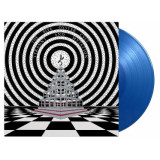
Tyranny and Mutation is the second studio album by American hard rock band Blue Öyster Cult, released on February 11, 1973, by Columbia Records. The album was recorded at the Columbia Studios in New York City during the year before and was produced by Murray Krugman and Sandy Pearlman. On May 12, 1973, the album peaked at #122 on the Billboard 200.
The song “Baby Ice Dog” features lyrics by singer/poet Patti Smith (who was keyboardist Allen Lanier’s girlfriend at the time), who would make several lyrical contributions to the band’s repertoire during its career. The song “The Red & The Black”, with lyrics referencing the Royal Canadian Mounted Police, is a renamed, re-recorded version of “I’m on the Lamb But I Ain’t No Sheep” from the same-titled debut album. The song was later covered by the Minutemen and Band of Susans.
Celebrating its 50th anniversary, Tyranny and Mutation is available as a limited edition of 2000 individually numbered copies on translucent blue coloured vinyl.
Red Vinyl
Adrian Borland and Graham Bailey might be better known as members of legendary post-punk group The Sound, but the two were childhood friends and had been playing together even earlier in The Outsiders, and continued their deep musical rapport as a duo, creating these intense and engaging songs as Second Layer at the same time as their higher profile band output.
Combining their early recordings, including the 1979 Flesh As Property EP and 1980 State Of Emergency EP, Courts Or Wars takes its title from the first song that served as the pair’s introduction to listeners. Right from the beginning you are enveloped in what The Quietus described as, “a monochrome worldview morbidly obsessed with the dehumanizing effect of war, nuclear weapon annihilation, and the fracturing and negation of the self within an increasingly distorted and technologically mediated society.” Where The Sound fit snugly next to Echo And The Bunnymen, Second Layer had far more in common with the pulsing menace of Suicide.
Borland’s familiar vocals and sense of melody hold a connection to his other songwriting, but within these songs he takes far more risks in his guitar work to suit the subject matter. What really drives everything is Bailey’s propulsive bedrock, formed by his homemade pre-drum machine rhythm generators, creating an innovative mechanical approach that somehow inserts a jittery neurotic touch that merges perfectly with his electronic layers driven by the wasp synth, various unique effects boxes or tape loops. Adding in Bailey’s own distinctive bass playing, the results feel personal and experimental, pointed and harsh, while also bracingly accessible and covered in dark manic energy.
Over forty years later, these recordings feel shockingly appropriate. In painting a bleak reality and frightening future, there is real desperate beauty here.
Following the April 2022 reissue of the album Shrimp Boats, We Are Busy
Bodies presents companion titles Plum and Cherry and Deeper in Black
to round out a Lionel Pillay and Basil Mannenberg Coetzee trilogy as part
of the label's As-Shams South African jazz archive series
The connection between these three albums is tight as the 1987 release Shrimp
Boats compiled unreleased recordings from both the 1979 session for Plum and
Cherry and the 1980 session for Deeper in Black. These two rare records have
been carefully remastered from their original tapes and are back in print for the
very first time in over 40 years.Shrimp Boats and Plum and Cherry capture the
extraordinary musical chemistry that existed between pianist Lionel Pillay and
tenor saxophonist Basil Coetzee in the late 1970s. The respective album
showpieces Shrimp Boats and Cherry each occupy an entire side of vinyl with
both exquisite musical journeys clocking in at an epic 25 minutes a piece. While
Shrimp Boats was an instrumental reimagining of the popular 1951 song by
American singer Jo Stafford, Cherry drew inspiration from Abdullah Ibrahim at the
behest of producer Rashid Vally, who wanted to emulate the success of the
famous track that had helped launch his independent As-Shams/The Sun record
label in 1974.
Ibrahim's hit Mannenberg had also featured Basil Coetzee and it was this zeitgeist
South African jazz recording that had given rise to his stage name. Capturing the
grace and vitality of working- class township life on the city fringe, Cherry
channels the type of laid-back Cape groove that Abdullah Ibrahim, recording as
Dollar Brand, introduced to South African jazz in the 1970s. On the flip side, Plum
appears to take its own simple chord change in the same direction before
breaking into a chugging 20-minute romp that verges on proto-electronica and on
which Pillay hangs all manner of savage keyboard riffing and experimentation.
The two distinct flavours of Plum and Cherry make for a well-rounded platter with
an iconic cover featuring the work of abstract expressionist painter and AsShams/The Sun collaborator Hargreaves Ntukwana.
- A1: Marlowe Returns (Intro)
- A2: Spring Kick
- A3: Small Business
- A4: Later With It
- A5: Otherworld
- A6: Future Power Sources
- A7: Sawdust Underground
- B1: Paydirt
- B2: Dead A Lot
- B3: Same Team
- B4: Og Funk Rock (Feat A-F-R-O)
- B5: Can’t Have Me Nothing
- B6: Lamilton Taeshawn
- B7: Preach Honest
- B8: A Madman Of Conviction (Outro)
North Carolina-based hip-hop producer L'Orange and rapper Solemn
Brigham are Marlowe
Quick-fire vocals and dusty breakbeats. With dazzling cinematic mise en scene,
L'Orange crafts a world that sounds like an old-time medicine show dropped into
90s Brooklyn. Pressed on Red Melting Wax color vinyl.
- A1: Marlowe Returns (Intro)
- A2: Spring Kick
- A3: Small Business
- A4: Later With It
- A5: Otherworld
- A6: Future Power Sources
- A7: Sawdust Underground
- B1: Paydirt
- B2: Dead A Lot
- B3: Same Team
- B4: Og Funk Rock (Feat A-F-R-O)
- B5: Can’t Have Me Nothing
- B6: Lamilton Taeshawn
- B7: Preach Honest
- B8: A Madman Of Conviction (Outro)
North Carolina-based hip-hop producer L'Orange and rapper Solemn
Brigham are Marlowe
Quick-fire vocals and dusty breakbeats. With dazzling cinematic mise en scene,
L'Orange crafts a world that sounds like an old-time medicine show dropped into
90s Brooklyn. Pressed on Red Melting Wax color vinyl.
Originally released in 1969 in a quantity so low that it was once rumored
to not even exist (seriously)
While groups like The Holy Modal Rounders were turning traditional American
folk on its head in the states throughout the 60s, The Maglory Dengluch's
approach took influence from the Scottish and Irish. Armed with banjos, tin
whistles, kazoos, and jugs they recorded the now infamous album to tape.
Officially released for the first time since the storied 99-copy, 1969 run on the long
defunct Granta label and includes exhaustive new liner notes from the band and a
download card with the entire album as well as five bonus tracks recorded during
the same session.
- 1: Wir Sind Zurück
- 2: Blues Auf A Part I
- 3: Kann Rock'n'roll Elektromobilität?
- 4: Kreuzberger Morgen Sind Lang
- 5: Brainstorming In Der Werbeabteilung
- 6: Der Kommissar
- 7: Bier
- 8: Indierock & Ac/Dc
- 9: Der Mann Im Anzug
- 10: Junge Union
- 11: Russischer Anwalt
- 12: Karneval In Köln
- 13: Im Weißen Rössl
- 14: Ich Höre Den Ganzen Tag Jeff Lynne
- 15: Der Beste Papa Der Welt
- 16: Lückenloser Lebenslauf
- 17: Ballett Kann Jeder
Black Vinyl[20,46 €]
Auf Platte #6 "Asozialdarwinismus" suchen Chefdenker Antworten auf Fragen wie: Wer hat nach Bon Scott und Brian Johnson eigentlich die drittdicksten Eier? Ist eine künstliche Intelligenz intelligenter als Werbeagenturhipster? Es geht um Brokeback Mountain in einer Jagdhütte am Wolfgangsee, der Kommissar ermittelt, ein russischer Anwalt plädiert auf Bewährungsstrafe, Jeff Lynne erweist die letzte Ehre, der beste Papa der Welt schießt besoffen Polyvinylchlorid-Einhörner. Woke Beratungsstellen verbreiten die neueste (?) Erkenntnis: Alkohol enthemmt - Bier muß nochmal auf den Prüfstand. Die wichtigste Erkenntnis jedoch: Pferdestärken und Deckhengst - Multitaskinggenie David Coverdale konnte früher beides gleichzeitig. Heute: elektrische / erektile Dysfunktion, Bienen und Blümchen - wenn morgen der Rock'n'Roll untergeht - Samenspender David spendiert nochmal großzügig einen Apfelbaum. Chefdenker unterlegen das Ganze mit dem Komapatienten Rock'n'Roll. Sollen doch andere Sterbehilfe leisten!
- A1: Recording A Tunnel (The Horns Play Underneath The Canal) (The Horns Play Underneath The Canal)
- A2: Les Lumieres (Part 1)
- A3: Les Lumieres (Part 2)
- A4: Throw It On A Fire
- A5: Recording A Tunnel (The Horns Play Underneath The Canal) Continued (The Horns Play Underneath The Canal)
- A6: The Upwards March
- A7: The Bells Play The Band
- B1: Recording A Tape (Typewriter Duet) (Typewriter Duet)
- B2: Nuevo
- B3: Salvatore Amato
- B4: Recording A Tunnel (The Invisible Bells) (The Invisible Bells)
Black Vinyl[17,44 €]
Clear Vinyl
Erased Tapes are immensely proud to announce the reissue of the debut album Recording a Tape the Colour of the Light by Bell Orchestre. To honour the album"s original recordings the album is also seeing its first vinyl repress since it was released in 2005. Originally formed in 1999 whilst studying at university, the first music Bell Orchestre made was live scores for contemporary dance performances. A few years later, the studio sessions for Recording A Tape.. took place simultaneously in the same studio as when Arcade Fire were recording their eponymous debut album Funeral. The two Montreal-based bands took turns to record their albums but due to the growing interest in Arcade Fire, Bell Orchestre was put on hold as band members Parry and Sarah Neufeld quickly became occupied with Arcade Fire"s busy touring schedule. "The Bell Orchestre album was almost done, but it kind of sat there. We were just sitting on this album that we were really proud of, but we didn"t have anyone to pay attention to it" Parry told Pitchfork in 2005. The album was released to critical acclaim and has since received cult status among fans. Bell Orchestre is a collaborative instrumental group based in Montreal. Its six members come from wildly divergent musical backgrounds, and the unlikely chemistry that results from their collaboration is the very thing that sustains their connection. It"s as if the group as a whole has tapped into a very particular, very distinct energy: like that of an approaching storm. In many ways, Bell Orchestre is the sum of not only its parts, but the sum of its influences and inspirations. Among those influences can be listed such diverse artists as Lee "Scratch" Perry, Arvo Pärt, Charles Mingus, and Talk Talk. But ultimately they work together to create something that none of them has quite heard before. Bell Orchestre has been known to retreat into the woods to make and write music: from a residency at the Banff Centre for the Arts, to the forests of Quebec and Vermont, and back to their hometown of Montreal. The specifics of time and place, the elemental forces at work outside, and those forces that exist inside, all come into play within Bell Orchestre"s musical process. This particular music could be made by no one else at no other time in history. The experience of listening to Bell Orchestre, whether live or recorded, is almost that of experiencing a form of synaesthesia: the result is a collage-like construction of not just sound, but visual elements as well. From a herd of elephants to that approaching storm on the horizon, from a quiet forest in the country to ice forming on a city street, from watching vapour trails disappear in the sky to watching the changing light of dusk through a window. The result then is not so much cinematic as it is evocative: Bell Orchestre have not just written the music to the film - they have created an invisible film that only comes to life in the listening
- A1: Recording A Tunnel (The Horns Play Underneath The Canal) (The Horns Play Underneath The Canal)
- A2: Les Lumieres (Part 1)
- A3: Les Lumieres (Part 2)
- A4: Throw It On A Fire
- A5: Recording A Tunnel (The Horns Play Underneath The Canal) Continued (The Horns Play Underneath The Canal)
- A6: The Upwards March
- A7: The Bells Play The Band
- B1: Recording A Tape (Typewriter Duet) (Typewriter Duet)
- B2: Nuevo
- B3: Salvatore Amato
- B4: Recording A Tunnel (The Invisible Bells) (The Invisible Bells)
Clear Vinyl[24,33 €]
Black Vinyl
Erased Tapes are immensely proud to announce the reissue of the debut album Recording a Tape the Colour of the Light by Bell Orchestre. To honour the album"s original recordings the album is also seeing its first vinyl repress since it was released in 2005. Originally formed in 1999 whilst studying at university, the first music Bell Orchestre made was live scores for contemporary dance performances. A few years later, the studio sessions for Recording A Tape.. took place simultaneously in the same studio as when Arcade Fire were recording their eponymous debut album Funeral. The two Montreal-based bands took turns to record their albums but due to the growing interest in Arcade Fire, Bell Orchestre was put on hold as band members Parry and Sarah Neufeld quickly became occupied with Arcade Fire"s busy touring schedule. "The Bell Orchestre album was almost done, but it kind of sat there. We were just sitting on this album that we were really proud of, but we didn"t have anyone to pay attention to it" Parry told Pitchfork in 2005. The album was released to critical acclaim and has since received cult status among fans. Bell Orchestre is a collaborative instrumental group based in Montreal. Its six members come from wildly divergent musical backgrounds, and the unlikely chemistry that results from their collaboration is the very thing that sustains their connection. It"s as if the group as a whole has tapped into a very particular, very distinct energy: like that of an approaching storm. In many ways, Bell Orchestre is the sum of not only its parts, but the sum of its influences and inspirations. Among those influences can be listed such diverse artists as Lee "Scratch" Perry, Arvo Pärt, Charles Mingus, and Talk Talk. But ultimately they work together to create something that none of them has quite heard before. Bell Orchestre has been known to retreat into the woods to make and write music: from a residency at the Banff Centre for the Arts, to the forests of Quebec and Vermont, and back to their hometown of Montreal. The specifics of time and place, the elemental forces at work outside, and those forces that exist inside, all come into play within Bell Orchestre"s musical process. This particular music could be made by no one else at no other time in history. The experience of listening to Bell Orchestre, whether live or recorded, is almost that of experiencing a form of synaesthesia: the result is a collage-like construction of not just sound, but visual elements as well. From a herd of elephants to that approaching storm on the horizon, from a quiet forest in the country to ice forming on a city street, from watching vapour trails disappear in the sky to watching the changing light of dusk through a window. The result then is not so much cinematic as it is evocative: Bell Orchestre have not just written the music to the film - they have created an invisible film that only comes to life in the listening
Stay What You Are is the breakout third studio album by the American alternative rock band Saves The Day. Produced by Rob Schnapf (Elliot Smith, Beck, The Vines) in early 2001 it's a record that remains incredibly influential within the emo and rock scene to
this day, showcasing the band's signature blend of upbeat catchy melodies, with dark lyrical undertones. Features the standout singles 'At Your Funeral' and 'Freakish'.
Originally released on July 10th 2001, the album saw Saves The Day crack the Billboard 200 at the same time other that emo acts like Jimmy Eat World and Dashboard Confessional were enjoying mainstream success.
This new pressing comes on double 10" splatter vinyl, packaged in a hand-numbered gatefold sleeve with lyrics and accompanying insert; released via Hassle Records for the UK/EU in conjunction with Vagrant Records to celebrate their 25th Anniversary.
Eric Clapton’s studio albums for Reprise Records are among the most beloved of the guitarist’s storied career and the focus of a new series of limited-edition, vinyl-only boxed sets. The first instalment, The Complete Reprise Studio Albums – Volume I, is available now The 180-gram, 12-LP set features Clapton’s first six studio albums for Reprise (Money and Cigarettes, Behind the Sun, August, Journeyman, From the Cradle, and Pilgrim) along with an additional LP of rarities from the era. The second instalment, coming in January, features 10 LPs that cover all five albums Clapton recorded for Reprise between 2001 and 2010, plus an LP exclusive to the collection that includes rarities from the same time.
The Complete Reprise Studio Albums – Volume II will be available on January 13, 2023. The set contains newly remastered versions of five studio albums pressed on 180-gram vinyl: Reptile (2001), Me & Mr. Johnson (2004), Sessions For Robert J (2004), Back Home (2005), and Clapton (2010). All the albums will be released as double-LPs except Sessions For Robert J, which makes its vinyl debut in the collection as a single LP.
Rarities (2001-2010), the collection’s final LP, brings together eight hard-to-find recordings from this prolific era in Clapton’s recording career. Highlights include the B-side “Johnny Guitar” and the Japanese-only bonus track, “Losing Hand.” “Midnight Hour Blues,” another rarity, was released in 2010 as a bonus track for Clapton.
VOLUME II covers a nine-year period that starts in 2001 with Reptile, Clapton’s 14th solo studio album. It reached #5 on the albums chart in the U.S. and sold more than 2.5 million copies worldwide. Two singles from the album – “Superman Inside” and “Reptile” – were nominated for Grammy Awards, with the latter winning for Best Pop Instrumental Performance.
Clapton returned in 2004 with Me and Mr. Johnson, an album of cover songs originally written and recorded by Delta-bluesman Robert Johnson, a trailblazing artist who profoundly influenced Clapton. Packed with passionate performances, the record sold more than two million copies worldwide and was nominated for a Grammy Award. The album is presented as a double-LP in the new collection and features an etching of the album cover on the final side.
Also in 2004, Clapton released Session for Robert J, a companion piece to Me and Mr. Johnson. The album captures acoustic and electric performances by Clapton and his band in Dallas and England as they rehearsed and recorded songs for Me and Mr. Johnson. The album, which makes its vinyl debut in this collection, includes fantastic versions of “Terraplane Blues” and “Sweet Home Chicago.”
Clapton’s hot streak continued in 2005 with Back Home, his 17th studio album. Certified gold in the U.S., the record featured guest performances by Vince Gill, John Mayer, Robert Randolph, Billy Preston, and Steve Winwood. On the album, Clapton paid tribute to his close friend George Harrison with a cover of Harrison’s 1979 song “Love Comes To Everyone.” Back Home won the 2006 Grammy Award for Best Engineered Album, Non-Classical.
Clapton is the final studio album on Volume II. It debuted in 2010 and peaked on the album charts at #6 in the U.S. and #7 in the U.K. Once again, Clapton was joined in the studio by an all-star group of guest musicians that includes Derek Trucks, Wynton Marsalis, Allen Toussaint, and J.J. Cale. On the album, Clapton mixed Tin Pan Alley standards and New Orleans jazz with new songs like “Run Back To Your Side,” which was nominated for a Grammy Award in 2011.
The Complete Reprise Studio Albums Vinyl Box Set - Volume 2 track listing
Reptile
• Reptile
• Got You On My Mind
• Travelin’ Light
• Believe In Life
• Come Back Baby
• Broken Down
• Find Myself 5:15
• I Ain’t Gonna Stand For It
• I Want A Little Girl
• Second Nature
• Don't Let Me Be Lonely Tonight
• Modern Girl
• Superman Inside
• Son & Sylvia
Me & Mr Johnson (3-sided Album)
• When You Got A Good Friend
• Little Queen OF Spades
• They're Red Hot
• Me And The Devil Blues
• Traveling Riverside Blues
• Last Fair Deal Gone Down
• Stop Breakin' Down Blues
• Milkcow's Calf Blues
• Kind Hearted Woman Blues
• Come On In My Kitchen
• If I Had Possession Over Judgement Day
• Love In Vain
• 32-20 Blues
• Hell Hound On My Trail
Sessions For Robert J
• Sweet Home Chicago
• Milkcow's Calf Blues
• Terraplane Blues
• If I Had Possession Over Judgement Day
• Stop Breakin' Down Blues
• Little Queen Of Spades
• Traveling Riverside Blues
• Me And The Devil Blues
• From Four Until Late
• Kind Hearted Woman Blues
• Ramblin' On My Mind
Back Home
• So Tired
• Say What You Will
• I'm Going Left
• Love Don't Love Nobody
• Revolution
• Love Comes To Everyone
• Lost And Found
• Piece Of My Heart
• One Day
• One Track Mind
• Run Home To Me
• Back Home
Clapton
• Travelin' Alone
• Rocking Chair
• River Runs Deep
• Judgement Day
• How Deep Is The Ocean
• My Very Good Friend The Milkman
• Can't Hold Out Much Longer
• That's No Way To Get Along
• Everything Will Be Alright
• Diamonds Made From Rain
• When Somebody Thinks You're Wonderful
• Hard Time Blues
• Run Back To Your Side
• Autumn Leaves
Rarities Vol 2
• Johnny Guitar
• Midnight Hour Blues
• You Better Watch Yourself
• Traveling Riverside Blues
• Little Queen Of Spades
• Take A Little Walk With Me
• Losing Hand
• I Was Fooled
Billy Nomates, the project of the Bristol-based songwriter, producer
and multi-instrumentalist Tor Maries, announces the release of her
much anticipated second studio album, ‘CACTI’, via Invada Records.
Recorded at her flat and Invada Studios, ‘CACTI’ is a huge step up
for the artist, who received widespread critical acclaim for her
eponymous 2020 debut album, with heavy airplay across BBC Radio
6 Music and support from luminaries such as Iggy Pop, Florence
Welsh and Steve Albini.
Though every bit as unrepentant as Billy Nomates’ debut, ‘CACTI’
comes from a much more exposed place and sees Tor further
develop her instinctive, inventive songwriting and production.
Unafraid to wade into the traumas of the past two years and the eerie
sense of apathy that lingers, alongside heartache and more political
themes, the 12-track collection openly confronts uncomfortable truths,
as Tor puts it, “70-80% of being bold is about being vulnerable as
hell.”
Maries said: “Writing ‘CACTI’ took just over a year. I wrote very
intensely and then none at all. (This seems to be the way I work
best). I picked up old drum machines, mapped out things in my
kitchen with the same small micro keyboard I always use and then
raided the cupboards and rooms at Invada Studios, to play and
experiment with old synths, an upright piano, this weird organ thing. I
hope everyone finds their own narrative in ‘CACTI’. I think it’s about
surviving it all.”
‘CACTI’ features ‘blue bones’ and ‘balance is gone’, both of which
have been playlisted at BBC 6 Music.
Based on an ancient Sumerian poem, MORTON SUBOTNICK's follow-up to his highly influential milestone "Silver Apples Of The Moon" is no less an adventurous sonic trip on the Buchla synthesizer. Limited edition (300 items) audiophile 180gr LP, especially remastered for vinyl. 2022 repress, 300 items.
Born 1933, MORTON SUBOTNICK is a key figure in the progress of electronic music: along with PAULINE OLIVEROS and RAMON SENDER he co-founded the San Francisco Tape Music Center in 1961 and from 1963 on he worked with DON BUCHLA on the development of the early synthesizer "Buchla Series 100". In 1967 the composer and musician released his debut "Silver Apples Of The Moon", which proved to be one of the most influential albums and an undoubted milestone in electronic music (which was even selected for the Library Of Congress in 2009). A year later MORTON SUBOTNICK presented his adventurous follow-up "The Wild Bull". Loosely based on / inspired by an ancient Sumerian poem of the same name - a lament about loss and death caused by war - the two parts embark on further explorations into the hitherto unimagined creative possibilities of the synthesizer. 54 years after its initial release, "The Wild Bull" has not lost a single bit of its visionary magnitude and is still an adventurous sonic trip.
Before Mahjun (of which Souffle Continu reissued, in 2016, the two albums released on Saravah), there was... Maajun. Five musicians (Jean-Pierre Arnoux, Cyril and Jean-Louis Lefebvre, Alain Roux and Roger Scaglia) and three times as many instruments at the service of an electric-poetic guerrilla group moulded from folk and blues. The group’s unique album, “Vivre la Mort du Vieux Monde” evokes an (imaginary) association of Frank Zappa and Jacques Higelin, of Sonny Sharrock and the Art Ensemble Of Chicago. Under these conditions, Long Live Death!
“The most French of all the French groups, determined to take Maurice Chevalier’s place in American hearts.” This was how Rock&Folk presented Mahjun in 1977. So be it. But when “Vivre la Mort du Vieux Monde”, was issued, it was 1971, and the name, though the same group, was still spelled Maajun. So, let’s look back at the story.
At the end of the sixties, five blues fans decided to form a French group ready to break down the barriers: Jean-Pierre Arnoux (drums, vibraphone, saxophone), Cyril Lefebvre (guitar, organ), Jean-Louis Lefebvre (bass, violin, guitar, vocals), Alain Roux (saxophone, flute, harmonica, vocals) and Roger Scaglia (guitar, vocals). This was Maajun, and Vivre la mort du vieux monde would be their only album, but which would (nevertheless) be followed by those of Mahjun created later by Lefebvre (Jean-Louis) and Arnoux.
Recorded for the Vogue label, “Vivre la Mort du Vieux Monde” would disturb a number of people. This is mostly due to the lyrics, many of which were written by Gérald Escot-Bocanegra, who, while summoning the spirit of Lautréamont and Rimbaud, turned the Maajun musicians on to rock and free jazz. Add a bit of politics into the mix, and the release of the album was delayed for several months. But then, wasn’t it worth waiting for?
Because “Vivre la Mort du Vieux Monde”, a real concept-album, is an important and iconoclastic statement made directly in the face of (francophone) dreamers of all countries. Over heavy guitar riffs, psychedelic interludes or fantasy-fuelled digressions, Maajun built mazes on the advice of alchemists known only to themselves before heading off on a long march on the “cracking walls”. It was an ambitious project, but Maajun could handle it, going so far as to proclaim: “Tomorrow will be a huge party!” But as we can see “tomorrow”, is now!