At the core of the creative process behind “HPC” and “Bor3d” lies meta-irony, a quality that permeates much of today’s digital content landscape.
Both tracks are a deliberate attempt to push the sound toward a barely perceptible absurdity and ironic unseriousness in their interpretation of well-familiar styles of dance club music. It is a play with form, expectation, and recognizability — balancing sincerity with sarcastic exaggeration.
Okay
Okay is built around interruption. Voices, fragments of dialogue, yawns, irritation — people seem to step inside the track uninvited. Someone is bored, someone is annoyed, someone tries to stop the flow entirely. Just like in real life, the process is constantly disrupted. The track reflects the experience of being surrounded by opinions, noise, and skepticism — especially the kind that will never be convinced, no matter what you do. “Okay” becomes a quiet, ironic response to this pressure: not agreement, not approval, but endurance. The track continues anyway.
Tripatura
Tripatura is a fictional creature — a warped echo of cryptid mythology. In this narrative, Tripatura doesn’t simply exist, it hunts. Once it finds you, it drags you into an endless trip with no exit point. Time stretches, perception blurs, and the track itself becomes the trap. Its prolonged, unresolved ending mirrors the experience of being stuck inside a loop that refuses closure. Tripatura doesn’t rush. It lingers, slowly pulling you deeper, until the trip no longer feels temporary.
Search:sarcastic
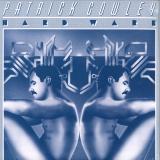
Cybernetic disco maestro Patrick Cowley graces Dark Entries once again with Hard Ware, an LP of far-out funk and synthpop celebrating what would have been Cowley’s 75th birthday. Best known for his chart-topping disco anthems, Cowley left us with an incredible body of work before his tragic death in 1982 due to AIDS-related illness. Since 2009, Dark Entries has been working with Cowley’s friends and family to uncover the singular artist’s lesser-known sides, including his soundtracks for gay pornographic films, which the label chronicled on compilation albums School Daze, Muscle Up, and Afternooners. Hard Ware presents the closing chapter in a trilogy of unreleased Cowley dancefloor bangers that began with 2022’s heavy-hitting Male Box and was continued with the soul and garage-inflected From Behind in 2024. The most expansive release in said trilogy, Hard Ware delivers ten tracks of pure, uncut Cowley: sultry, psychedelic, sarcastic, and just a bit sleazy. Cowley devotees will delight in “Tech-No,” a sparse instrumental demo version of his epically dystopian “Tech-No-Logical World.” You could soundtrack your next aerobics session with cheeky numbers like “Pajama Party Massacre” or “Shake It Up,” both of which feature Cowley himself on vocals. The frenetic “Big Ass in Motion” is built around samples from Rudy Ray Moore and The Madam’s infamous “Sensuous Black Woman,” an X-rated comedy record that would later feature in classic booty house records. Mid-tempo cosmic groovers are well-represented with jams like “Hellfire” and “Megablue,” which perfectly capture Cowley’s bathhouse-in-outerspace sensibilities. No collection of Cowley’s work would be complete without an interstellar floor-filler, and we’ve got quite a few here, like “Jungle Jump,” which pits whirling beats with dub-laced swirls of synth, or “Spellbinding Lover,” a Donna Summer-indebted melancholic boogie masterpiece that features Sylvester backup singer Jeanie Tracy. Hard Ware closes with the chilling synth-hymn ”Ice Age,” in which Loverde vocalist Peggy Gibbons sings of a coming frosty apocalypse. The story told in “Ice Age” mirrors the coming AIDS crisis and feels like a haunting premonition from Cowley. The record comes in a sleeve with a hand-airbrushed circuitboard-inspired design by Gwenaël Rattke, and includes lyrics as well as liner notes by Andrew Ryce and Peggy Gibbons. Hard Ware is another crucial document of a tremendous talent taken too soon.
Repress!
'You got the stuff' is not 'Lovely day' - that much is true. This one's a wigged out, extended, trip into deep space from 1978 that is truly baffling.
Of course, it features Bill singing for the first half of the track but then all of a sudden we're launched into a cosmic wormhole as everything just falls back and the track is stripped of any earthly qualities. People find themselves asking 'this...... this is Bill Withers' as lazer guided synths and rock solid drums pull us into the sonic vortex. Truly amazing. Obviously a nugget like this has not gone unnoticed and has been edited and chopped and sampled deftly by the more sarcastic, left-field oriented crate diggers out there but it has never been reissued legitimately - Until now!
A hugely sought after and collectible gem right here, backed with the wistful slow jam 'Look To Each Other For Love' as per the original 1978 Columbia promo 12" version. This left-field, cosmic classic has been legally reissued by Above Board distribution in conjunction with the legal rights holders - Sony Music Entertainment. This high quality repress features original Columbia pink label Disco 12" artwork and has been remastered from Sony's original sources by Optimum Mastering, Bristol UK.
- 1: Brand New Heartache
- 2: Long Ride
- 3: The Lie
- 4: Barroom Feather (Radio Edit)
- 5: Blind
- 6: Nothing New
- 7: One To One Another
- 8: Always Almost
- 9: Barroom Feather
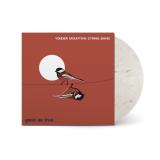
Good As True (2026), the 12th studio album from Yonder Mountain String Band, leans into a warm, expressive sound — bluegrass shaped with an indie edge, rock undertones, and a hint of country. Recorded live in the studio, its eight original tracks trace romantic, personal, and societal relationships and the work it takes to stay connected. The lead single “Brand New Heartache” pairs rock-driven verses with a bluegrass-lifted chorus as it follows the fallout of a breakup and the uneasy hope of starting again, while “Blind” opens with a striking instrumental riff that lingers long after the song ends, while its lyrics confront regret, mental health struggles, and the pull to become something better. “Long Ride” delivers a sharp, sarcastic look at life in a touring band; “Nothing New” and “The Lie” confront political rigidity and division; “One to One Another” and “Always Almost” pull toward quieter emotional corners; and “Barroom Feather” drifts into indie-folk terrain with one of the album’s most atmospheric jams. Across Good As True, Yonder moves between high-tempo runs, layered harmonies, and moments that breathe — a reminder that nearly three decades in, they’re still charting new ground.
- 1: Bound
- 2: A Love That Hurts
- 3: Breathe
- 4: Feeling Lucky
- 5: Flickering Light
- 6: I Know
- 7: Blackout
- 8: Stalemate
- 9: Hang On
- 10: One Of Us Cannot Be Wrong
Sugaring a Strawberry, the sophomore record from Julia, Julia, is a study in coming undone—on purpose. Recorded at COMA, Julia Kugel's home studio, and mixed through a custom Flickenger clone, the album drifts in and out of clarity like memory itself. It's emotionally retrospective, creatively unvarnished, and deeply human. You can hear it in the hiss, the warmth, in the vocals so raw they're like an open window. These songs weren't engineered for perfection. They were built to breathe. Her long-time collaborator and husband, Scott Montoya, mixes it all so loosely that you can hear the air between tracks— a space that makes the music feel inhabited rather than recorded.
"Bound" opens the album like a secret passed between sisters, solemn and unspeakably close. It begins with the softest of touches: hushed guitar, a near- whispered delivery that carries the intimacy of someone singing only for one other person. It's a love song, but not romantic, more ancestral in the way long bonds can be. All glow and undercurrent, "I Know," is like hearing someone hum through a wound. The track arrives as if it had been waiting, coiled and complete, to be sung. Its pulse is slow but insistent, anchored on a hypnotic loop and a vocal that's half-incantation, half-confession. One of the most outward-facing songs on the record, "Feeling Lucky," opens like a cigarette flicked in the dark– smoky and a little bit slick. Built on a skeletal beat and a nearly detached vocal, it leans into a sarcastic swagger that barely masks the ache beneath. The delivery is droll and glazed, the instrumentation is sparse and a little woozy, leaving space for her voice to sway—a shrug of a song, stylish in its sadness. "A Love That Hurts" drifts in on soft, fingerpicked guitar and a dry, close-mic vocal that feels both haunted and immediate. The mix is stripped down and analog-warm, letting tape hum and silence frame the emotion. Julia sings like she's remembering something she doesn't want to, each line a slight unraveling. Like the rest of the album, "A Love That Hurts" doesn't push toward resolution. It sits in the ache, sifts through it, makes it beautiful.
Sugaring a Strawberry doesn't seek catharsis so much as stumbles into it. There's a quiet volatility to these songs like they might fall apart if you press too hard. It moves in shadow and softness, asking questions it doesn't answer. It doesn’t end with closure. It ends with truth.
"Released in 1968, “Il medico della mutua” (The Doctor of the Mutual Insurance) is one of the sharpest and most bittersweet comedies in Italian cinema. The film stars Alberto Sordi as Dr. Guido Tersilli, an unscrupulous Roman physician who climbs the professional ladder by exploiting the public healthcare system with ruthless irony. Directed by Luigi Zampa, the film offers a lucid and sarcastic portrait of Italy during the economic boom — a country racing toward modernity, yet flaunting all its moral contradictions.
Giving musical voice to this social satire is Piero Piccioni, one of the undisputed masters of Italian film music. His score for “Il medico della mutua” perfectly captures his elegant and sophisticated style: smooth jazz, orchestral groove, and an ironic touch that mirrors the double nature of the protagonist — respectable on the surface, opportunistic at heart."
STANDFIRST Titanic, the project spearheaded by Mabe Fratti and Hector Tosta (aka I. la Católica), return with a sumptuous and life-affirming new album.
In her sensational 1929 biography Tiger Woman, dancer and socialite Betty May claimed her ‘coster’s eye’ meant she liked to wear as many colours as possible. “Colours to me are like children to a loving mother. Each is my favourite, yet I can never bring myself to deny the others by preferring one.” May’s bold and inclusive strategy is one that manages to transfer itself, almost a century later, to Hagen, the new record by Titanic.
Many will know Titanic as the Mexico City-based brainchild of cellist and singer Mabe Fratti and multiinstrumentalist Hector Tosta who is now operating under the pseudonym, I. la Católica, (taken, rather unusually, from the name of the street the pair live on). With Hagen, and their previous release, Vidrio, (2023), the pair are creating a distinctive signature sound in modern alternative pop music. Nobody else sounds quite like them. Both records have an open hearted nature and simple, winning melodies that play off against a taste for drama, spectacular orchestration and a feeling of otherworldly mystery. Hagen is the more ambitious, sometimes more mystical effort. From the opening handclaps of ‘Lágrima del Sol’, (a wonderfully uptempo playground chant translating as a tear from the sun but, surely, not referencing the brand of pineapple wine?), the record dances its way through various mid-to-late-eighties inspirations, lush and widescreen passages of melancholy and vertiginous contrasts.
Mystery is often found in the simple but slightly odd song titles. English translations of various track titles give, ‘you swallowed the gum’, ‘leak’, ‘a tear from the sun’, ‘raising the trophy’ ‘digging dimensions’, ‘the owner’, ‘the decapitated hen’ and ‘the trap is exposed’. All denote striking images, metaphysical hints and emotional cues or simple, even childlike actions. Though Fratti and Tosta don’t reveal its provenance, the album’s title could even be a crafty play on words: the listener would be forgiven in thinking the moments of brash contrast and eyebrow raising theatricalism in the music constitute a musical nod to German punk chanteuse, Nina Hagen.
On Hagen, singer and cellist Mabe Fratti once again displays her brilliant knack of speaking to us directly. There is never the suspicion of her playing to the gallery, and the directness of many of the lyrics don’t allow it. Parallel to this, Fratti has an almost magical ability to give Hector Tosta’s melodies, and her and Tosta’s lyrics ones imbued with an insight and meaning that feels otherworldly. Tosta admitted it was “pretty wild to hear Mabe take the interpretations to a different place” and the listener can pick up on the delight Fratti takes in (literally) adding a voice to the many narratives.
Two examples can be shown here: ‘Gotera’ (Leak) uses harsh slashes of cello and tough, gunfire-like guitars and drums and multiple vocal lines that could be acting as a Greek chorus. They play off brilliantly against Fratti’s soft, slightly baleful vocal take that delivers lyrics such as: ‘nobody knows where the leak is / but I know where it is / they fight in front of the door and / nobody can go in’. With ‘La Gallina Degollada’ the somewhat blithe melody melody line, sung with what could be sarcastic brio by Fratti, plays against an itchting rhythm and rasping guitar part. The punch comes when you see that the song is about a chicken that has been decapitated and read lyrics such as: ‘I already saw it, it moved, the decapitated chicken’ / ‘could it be that I'm broken’ and ‘Two people hurt each other by thinking that they no longer agree’/ ‘Hours pass and the chicken represents what scares me’.
There may be death and fights to deal with, but there is also a quality of chirpy self-reliance about Hagen that is a key part of its nature. Like Betty May and her colourful outfits, Hagen’s sound often revels in its own sense of richness. Throughout, the record delivers vaulting string sections or glutinous guitar squeals that could, like the powerful, driving ‘Escarbo Dimensiones’ (Digging Dimensions) have come directly from a glossy 1980s TV series. Fratti sees this “glam sound” developed by Tosta on the aforementioned track and ‘Te Tragaste el Chicle’ (You Swallowed The Gum), as moments that were truly “revealing” for the album as a whole during its making.
What else? The thud and thump of ‘La Trampa Sale’ (The Trap is Exposed), and its sudden change of tempo and mood betrays a monstrously ambitious piece of music, the players almost greedily creating the sounds. Other moments are heart wrenching: ‘Libra’ ends on a poppy chord switch that cleverly ramps up the emotion inherent in the music’s notation. You could almost imagine a teenager in a bedroom forty years ago, rewinding the track over and over on a small, cheap cassette player, unable to get enough of that sugarsweet switch. Elsewhere, Oneohtrix Point Never adds stardust and an unearthly sense of space on the changeable, slightly moody meditation, ‘Pájaro de Fuego’ (Firebird). The record ends with ‘Alzando el Trofeo’ (Lifting the Trophy), a track that could soundtrack a state wedding, what with its beautiful cascading piano parts, a sugary vocal and short triumphal guitar riffs that add a rich patina to the overall sound. Fratti: “When I doubled those vocals on ‘Alzando el Trofeo’ I felt there was an epiphany happening, right at that moment.”
Making a good record is a team game. Tosta and Fratti recall seeing Randall from Circular Ruin Studios in NYC “tweak the drums in ‘Libra’ to make that amazing effect of the gated reverb”, or the shaping of ‘Gotera’, “when (recording engineer) Nate Salon added some synths to the track.” Drummer Eli Keszler, “an amazing and versatile player” had the songs down pat in a couple of days” and, according to Tosta, Oneohtrix Point Never “just came to one of the sessions and we hung out, and after all the recordings he and Nate were together in some studio and out of nowhere they sent us some beautiful tracks for ‘Pájaro de Fuego’! Fratti concurs. “He decided that he wanted to record because he was listening to the record (Nate works closely with him) and he really liked it! It was a total honour, indeed!”
Bedazzled by the playing, the skyscraping ambition in the arrangements and the giddy moments of contrast thrown up by Hagen, we could allow ourselves a brief moment of flippancy and state that Titanic’s new record is Yacht Rock meets Aeschylus, full-on. It’s also worth speculating that, in this hyper-sensitive, intemperate age, Titanic’s music has the power, however fleetingly, to heal hurts. Hagen is a brilliant showcase for a fresh and enriching form of pop music: displaying a magpie eye for what glints and plundering what has gone before.
Like Vidrio, Hagen was partially and additionally recorded at Fratti and Tosta’s house, aka Tinho Studios in Mexico City, as well as Golden Girl Studios & Circular Ruin Studios in New York City. Mixing was done by Santiago Parra in Pedro y el Lobo Studios, Mexico City and mastered by Rafael Anton Irisarri at Black Knoll Studios, New York City. The recording engineer was Nate Salon.
Hagen featured Mabe Fratti on cello, vocals & backing vocals, I. la Católica on guitar, keyboards, prepared piano, bass & backing vocals, drums by Eli Keszler and synths in ‘Pájaro de Fuego’ from Daniel Lopatin and Nate Salon.
All compositions on Hagen are written by I. la Católica, except ‘Escarbo Dimensiones’ & ‘Pájaro de Fuego’, which were composed by I. la Católica and Mabe Fratti. The record was produced by I. la Católica and co-produced by Nate Salon & Mabe Fratti. And all lyrics are by I. la Católica except ‘Escarbo Dimensiones’, ‘Gotera’, ‘Gallina degollada’ & ‘Pájaro de Fuego’, which were written by I. la Católica & Mabe Fratti.
STANDFIRST Titanic, the project spearheaded by Mabe Fratti and Hector Tosta (aka I. la Católica), return with a sumptuous and life-affirming new album.
In her sensational 1929 biography Tiger Woman, dancer and socialite Betty May claimed her ‘coster’s eye’ meant she liked to wear as many colours as possible. “Colours to me are like children to a loving mother. Each is my favourite, yet I can never bring myself to deny the others by preferring one.” May’s bold and inclusive strategy is one that manages to transfer itself, almost a century later, to Hagen, the new record by Titanic.
Many will know Titanic as the Mexico City-based brainchild of cellist and singer Mabe Fratti and multiinstrumentalist Hector Tosta who is now operating under the pseudonym, I. la Católica, (taken, rather unusually, from the name of the street the pair live on). With Hagen, and their previous release, Vidrio, (2023), the pair are creating a distinctive signature sound in modern alternative pop music. Nobody else sounds quite like them. Both records have an open hearted nature and simple, winning melodies that play off against a taste for drama, spectacular orchestration and a feeling of otherworldly mystery. Hagen is the more ambitious, sometimes more mystical effort. From the opening handclaps of ‘Lágrima del Sol’, (a wonderfully uptempo playground chant translating as a tear from the sun but, surely, not referencing the brand of pineapple wine?), the record dances its way through various mid-to-late-eighties inspirations, lush and widescreen passages of melancholy and vertiginous contrasts.
Mystery is often found in the simple but slightly odd song titles. English translations of various track titles give, ‘you swallowed the gum’, ‘leak’, ‘a tear from the sun’, ‘raising the trophy’ ‘digging dimensions’, ‘the owner’, ‘the decapitated hen’ and ‘the trap is exposed’. All denote striking images, metaphysical hints and emotional cues or simple, even childlike actions. Though Fratti and Tosta don’t reveal its provenance, the album’s title could even be a crafty play on words: the listener would be forgiven in thinking the moments of brash contrast and eyebrow raising theatricalism in the music constitute a musical nod to German punk chanteuse, Nina Hagen.
On Hagen, singer and cellist Mabe Fratti once again displays her brilliant knack of speaking to us directly. There is never the suspicion of her playing to the gallery, and the directness of many of the lyrics don’t allow it. Parallel to this, Fratti has an almost magical ability to give Hector Tosta’s melodies, and her and Tosta’s lyrics ones imbued with an insight and meaning that feels otherworldly. Tosta admitted it was “pretty wild to hear Mabe take the interpretations to a different place” and the listener can pick up on the delight Fratti takes in (literally) adding a voice to the many narratives.
Two examples can be shown here: ‘Gotera’ (Leak) uses harsh slashes of cello and tough, gunfire-like guitars and drums and multiple vocal lines that could be acting as a Greek chorus. They play off brilliantly against Fratti’s soft, slightly baleful vocal take that delivers lyrics such as: ‘nobody knows where the leak is / but I know where it is / they fight in front of the door and / nobody can go in’. With ‘La Gallina Degollada’ the somewhat blithe melody melody line, sung with what could be sarcastic brio by Fratti, plays against an itchting rhythm and rasping guitar part. The punch comes when you see that the song is about a chicken that has been decapitated and read lyrics such as: ‘I already saw it, it moved, the decapitated chicken’ / ‘could it be that I'm broken’ and ‘Two people hurt each other by thinking that they no longer agree’/ ‘Hours pass and the chicken represents what scares me’.
There may be death and fights to deal with, but there is also a quality of chirpy self-reliance about Hagen that is a key part of its nature. Like Betty May and her colourful outfits, Hagen’s sound often revels in its own sense of richness. Throughout, the record delivers vaulting string sections or glutinous guitar squeals that could, like the powerful, driving ‘Escarbo Dimensiones’ (Digging Dimensions) have come directly from a glossy 1980s TV series. Fratti sees this “glam sound” developed by Tosta on the aforementioned track and ‘Te Tragaste el Chicle’ (You Swallowed The Gum), as moments that were truly “revealing” for the album as a whole during its making.
What else? The thud and thump of ‘La Trampa Sale’ (The Trap is Exposed), and its sudden change of tempo and mood betrays a monstrously ambitious piece of music, the players almost greedily creating the sounds. Other moments are heart wrenching: ‘Libra’ ends on a poppy chord switch that cleverly ramps up the emotion inherent in the music’s notation. You could almost imagine a teenager in a bedroom forty years ago, rewinding the track over and over on a small, cheap cassette player, unable to get enough of that sugarsweet switch. Elsewhere, Oneohtrix Point Never adds stardust and an unearthly sense of space on the changeable, slightly moody meditation, ‘Pájaro de Fuego’ (Firebird). The record ends with ‘Alzando el Trofeo’ (Lifting the Trophy), a track that could soundtrack a state wedding, what with its beautiful cascading piano parts, a sugary vocal and short triumphal guitar riffs that add a rich patina to the overall sound. Fratti: “When I doubled those vocals on ‘Alzando el Trofeo’ I felt there was an epiphany happening, right at that moment.”
Making a good record is a team game. Tosta and Fratti recall seeing Randall from Circular Ruin Studios in NYC “tweak the drums in ‘Libra’ to make that amazing effect of the gated reverb”, or the shaping of ‘Gotera’, “when (recording engineer) Nate Salon added some synths to the track.” Drummer Eli Keszler, “an amazing and versatile player” had the songs down pat in a couple of days” and, according to Tosta, Oneohtrix Point Never “just came to one of the sessions and we hung out, and after all the recordings he and Nate were together in some studio and out of nowhere they sent us some beautiful tracks for ‘Pájaro de Fuego’! Fratti concurs. “He decided that he wanted to record because he was listening to the record (Nate works closely with him) and he really liked it! It was a total honour, indeed!”
Bedazzled by the playing, the skyscraping ambition in the arrangements and the giddy moments of contrast thrown up by Hagen, we could allow ourselves a brief moment of flippancy and state that Titanic’s new record is Yacht Rock meets Aeschylus, full-on. It’s also worth speculating that, in this hyper-sensitive, intemperate age, Titanic’s music has the power, however fleetingly, to heal hurts. Hagen is a brilliant showcase for a fresh and enriching form of pop music: displaying a magpie eye for what glints and plundering what has gone before.
Like Vidrio, Hagen was partially and additionally recorded at Fratti and Tosta’s house, aka Tinho Studios in Mexico City, as well as Golden Girl Studios & Circular Ruin Studios in New York City. Mixing was done by Santiago Parra in Pedro y el Lobo Studios, Mexico City and mastered by Rafael Anton Irisarri at Black Knoll Studios, New York City. The recording engineer was Nate Salon.
Hagen featured Mabe Fratti on cello, vocals & backing vocals, I. la Católica on guitar, keyboards, prepared piano, bass & backing vocals, drums by Eli Keszler and synths in ‘Pájaro de Fuego’ from Daniel Lopatin and Nate Salon.
All compositions on Hagen are written by I. la Católica, except ‘Escarbo Dimensiones’ & ‘Pájaro de Fuego’, which were composed by I. la Católica and Mabe Fratti. The record was produced by I. la Católica and co-produced by Nate Salon & Mabe Fratti. And all lyrics are by I. la Católica except ‘Escarbo Dimensiones’, ‘Gotera’, ‘Gallina degollada’ & ‘Pájaro de Fuego’, which were written by I. la Católica & Mabe Fratti.
- A1: How Long Will It Take To Walk A Mile? (Interlude)
- A2: F*Ck Everyone
- A3: One Thing
- A4: D£Aler
- A5: Spiders
- A6: Penny Out Of Nothing
- B1: Walk All Over You
- B2: Post Sex Clarity
- B3: Sad Sob Story! )
- B4: Can We Ignore It? (
- B5: Why Do I Feel Better When I Hurt You?
- B6: Not Like That Anymore
- B7: Who Fucking Cares?
- B8: Ur An Absolute C Word (Interlude)
Pressed on 140g nude pink vinyl, this edition comes with a 12x12 insert and includes the hit single ‘One Thing’. It’s sweet, subtle, and a little sarcastic, perfect for those days when you need to scream into the void and still look cute doing it. Call it “basic,” call it iconic, either way, it’s yours to define. This is for anyone who’s ever rolled their eyes and then turned the volume up. Who even decides what’s basic, anyway? Exactly.
- 1: The Pit (2024 Remaster)
- 1: 2Take Me To The Specialist (2024 Remaster)
- 1: 3I Am The Walrus (2024 Remaster)
- 1: 4Watching Scotty Die (2024 Remaster)
- 1: 5Going To Graceland (2024 Remaster)
- 1: 6Big Time Operator" (Duane Houser, J.d. Miller) (2024 Remaster)
- 1: 7Instant Club Hit (You'll Dance To Anything) (2024 Remaster)
- 1: 8The Badger Song (2024 Remaster)
- 1: 9Tacoland (2024 Remaster)
- 1: 0City Of Mud (2024 Remaster)
- 1: Rocketship (2024 Remaster)
- 1: 2Nitro Burning Funny Cars (2024 Remaster)
- 1: 3Surfin' Cow (2024 Remaster)
- 1: 4(Theme From) Blood Orgy Of The Atomic Fern (2024 Remaster)
- 1: 5Jellyfish Heaven (2024 Remaster)
- 1: 6(Untitled Instrumental) (2024 Remaster)
The first re-pressing of the Dead Milkmen's classic "Bucky Fellini" since its original release on Enigma Records in 1987. This album is a fan favorite and contains the Billboard charting "Instant Club Hit (You'll Dance to Anything)". Remastered by Phil Nicolo for contemporary vinyl, pressed in DUCKY YELLOW VINYL. The newly designed gatefold includes the original front and back covers on a beautifully produced tip-on jacket. The interior is filled with news clippings, previously unseen photographs, show posters, and QR Code WAV and MP3 downloads--all collaged together by the one and only Dean Clean. Also included, for the first time, is an inner-sleeve with lyrics and all new song-inspired art from Joe Jack Talcum. Additional bonus materials include a reproduction of a beat up, original Bucky Fellini poster and a link to download the elusive "Boner Beat" remixes. Hear what The Toronto Star deemed "a sarcastic masterpiece that takes the mickey out of a dozen cherished American icons" like never before. The Dead Milkmen aren't as stupid as they'd like to be ... Now they sound as if they might know how to play their guitars, and they produce some on-target commentary such as 'Instant Club Hit (You'll Dance to Anything)'. - eople Magazine As with all Giving Groove releases all label profits are directly donated to a 501(c)3 music-related charity-the recipient being the wonderful Philadelphia based organization Rock to the Future.
“Music for Lovers” is the new solo outing of multi-instrumentalist Samuel Rohrer (playing a combination of percussion, modular synthesizer and keyboard-based instruments on this recording).
The album’s title, which has been used for other albums in unrelated musical genres, might be deceiving: those who expect overly sentimental, fluffy pieces full of levity from start to finish, or sarcastic and cynical attempts at rejecting such “easy” listening, will be surprised by the emotional and tonal complexity on display here. In Rohrer’s own words, it is dedicated to “those brave lovers, who are ready to not only find, but eventually become truth,” and as such is an exploration of an evolving process rather than an idealized state.
2024 coloured (violet) vinyl repress for this year's Sonic Cathedral's 20th anniversary! Hull/Leeds based five-piece bdrmm release their much anticipated debut Bedroom on July 3, via Sonic Cathedral. The 10-track album was recorded late last year at The Nave studio in Leeds by Alex Greaves (Working Mens Club, Bo Ningen) and mastered in Brooklyn by Heba Kadry (Slowdive, Beach House). It's a hugely accomplished debut and a real step up both sonically and lyrically from their early singles, which were rounded up on last year's If Not, When? EP. Musically, there are nods to The Cure's Disintegration, Deerhunter and DIIV, while the band reference RIDE and Radiohead. There are also echoes of krautrock and post-punk, from The Chameleons to Protomartyr, plus the proto shoegaze of the Pale Saints' The Comforts Of Madness, not least in the cross fading of some tracks, meaning the album is an almost seamless listen. As a result, Bedroom becomes an unexpected and unintentional concept album, running through the different stages of a break-up set against the backdrop of the ups and downs of your early twenties. "The subject matter spans mental health, alcohol abuse, unplanned pregnancy, drugs_ basically every cliché topic that you could think of," reveals frontman Ryan Smith. "But that doesn't mean they ever stop being relevant. It's a fucker growing up, but I'm lucky enough to have been able to project my feelings in the form of this band, surrounded by four of the best people I've ever met." And that band name, in case it needs explaining, is pronounced the same way as the album title. "I never thought I'd get to the stage where I would have to explain it so much," says Ryan. "We have been pronounced as Boredom, Bdum and my old boss thought we were a ska band called Bad Riddim. We're all sarcastic cunts, so Bedroom spelt correctly seemed like the perfect title." He's right. The perfect title for the perfect debut album. "A modern day shoegaze classic" - NME "The general roller coaster of being twenty-somethings in post-Brexit England who find themselves awash with a shimmering soundscape that recalls Oshin-era DIIV, Deerhunter's Microcastle, or even The Cure at their most ambiently grandiose" - Under The Radar
SITW’s fourth studio album is a satirical celebration of mistakes. A joyous lambasting of everyone and everything that’s wrong in the world, against the real-time backdrop of global uncertainty, corruption and political unrest.
A London Charivari. Rough Music. A gleeful old-fashioned cancelling. A Chaunter’s delight. 14th Century recording demons collecting mistakes in a sack. Women mugging rich merchants. Nettles being pissed on. Shit food at Lent. A terrible plan. An undoing. The aftermath of a car crash. Catching people doing something they shouldn’t. Nursery rhymes reimagined as death threats. Behind the sarcastic acerbic delivery, Nicola Kearey and Ian Carter convey thoughtful, essential interpretations encouraging us all to check ourselves, through the multi-layered music of cities through time.
This is about as far away from pastoral folk music as you can get.
In their typical wry city-weary style, a beady eye is cast over those committing wrongs in plain sight, with Kearey narrating a series of tales of people fucking up, or being fucked up, with some brief respite in Lavender - one of London’s oldest street melodies - the album being named after the 14th Century story of Tittivilus, the recording demon, who collects scribes’ mistakes (pokes) and the idle chatter of the “liars with their hairy tongues” congregation.
Despite this seriousness, the album’s working-class dry gallows humour carries a stoic “if you don’t laugh you’ll cry” feeling amongst the corruption, scandals and barefaced lies we all observe on a daily basis, with a warning that “only you can fix your deficits” and “it’s your words and deeds that matter…and let me tell you, they speak volumes”.
The core of the record imagines a sound of traditional London music, where the musical continuum is unbroken by the population decimated by the world wars, or by gentrification and social cleansing that has forced communities apart, and yet absorbs all the influences of all the communities that call London their home.
Carter and Kearey attempted sessions at The George Tavern, Whitechapel, and in Spitalfields, at Denis Severs’ House, and a restored weaver’s townhouse, carrying the aesthetic of the record in their heads as they moved from location to location, before settling into an old factory building and their own workshop. The resulting sparse and economical sound is harsher, more present, more essentially them. It is a mighty haranguing that demands your attention.
For the many things in life you still absolutely want to do, “Bucket List” is both a perfect soundtrack and a bipolar blueprint. The PLEXIPHONES‘ new studio album has everything it takes to be the perfect alternative pop record: shallowness and depth. Love and pain. Excellent songs and themes that will either touch or hurt you.
From a vote in favor of active euthanasia to a tribute to the queer movement, from love songs to almost sarcastic lullabies, from a profession of faith in fashionable sports to an addiction warning about excessive virtual reality consumption - everything that matters on “Bucket List” is here. Listening is more important than swearing! Now also on limited-edition vinyl!
HYPERWIDE LUSTRE is Orchestroll’s debut record, a mini-LP released on Montreal’s GARMO – a highly curious and deeply devolved collection of music produced and performed for a run of live club sets by the duo.
Jester-like, this is music that laughs at you: because it’s funny, because it’s not; because you did too much, because you did too little. Because you’re too loud; too quiet. Wrapped in the exquisite production chops of Richard-Robitaille and Osborne-Lanthier, Hyperwide Lustre is quasi-sarcastic and fully irreverent, a shimmering hybrid of spectral dance music and avant classical; psychedelic, cinematic, fluid, and yet bejeweled with a crushing opulence. Lovelorn synths and haunted, clattering, percussion rolls through these halls. Will you follow them to their source? Or turn away?
Like a slow labyrinthine descent into ever-less-familiar passages, Orchestroll have crafted an album that feels genuinely puzzling and new. A warm welcome into a strange world. Two puppetmasters who lost control of their puppets long ago. The keyboard whispers, but the mouse decides the tale.
This is The Wreckery album that never was but always should have been!
At the crest of the Australian post punk era, The Wreckery played atmospheric rock with film-noir swagger and renegade attitude, carving a loyal following. Critics quickly positioned them as successors to a darkly exciting avant-garde Melbourne tradition previously marked out by The Birthday Party.
Early recordings for Rampant Records (1985-87) showcased The Wreckery's fusion of swamp blues and noir-jazz, delivered with a deadpan, reckless, and romantic cut (check out the 'Ruling Energy' video!). Creative tensions saw the band implode as they were reaching their peak with the Laying Down Law album (Citadel Records, 1988). Yet another great and dangerous rock 'n' roll band who became a danger to themselves.
35 years later, the new album Fake is Forever delivers on unfulfilled promises, revealing The Wreckery on fire like never before. The DNA is still there – the signature sound of Charles Todd's baritone sax; the scathing lyrics and vocals of Hugo Race; the distorted angular guitars of Clayton-Jones; the eclecticism of multi-instrumentalist Robin Casinader; Nick Barker and former Plays With Marionettes drummer Frank Trobbiani fuse as the solid engine room of this iconic group. All the original edge with a new maturity and control.
The songs still emanate from the deep, dark end of the musical gene pool. The sarcastic, provocative lyrics of 'Smack Me Down', 'Get A Name' and 'Young People'; the musical fury of 'Stole it from Alpha Ray' and 'Evil Eye', the romantic melodrama of 'The Devil in You' and 'Whistle Clean', the deranged rock of 'Dragonfly' and 'Garbage Juice' – The Wreckery's range is as vast as it is ferocious. Whereas the band in the 80's were brash and angry this record finds the band conjuring quiet menace, sensual, intoxicating.
Hugo Race – vocals, guitars, keys
Ed Clayton-Jones - guitar, piano, synth, Mellotron, slide guitar , Solina string synth
Nick Barker – bass guitar and backing vocals
Charles Todd - the saxophones
Robin Casinader - Hammond organ, mellotron, mandolin and violin
Frank Trobbiani - the drums and percussion
Recorded by Andrew 'Idge' Hehir at Soundpark Studios, Melbourne
Mixed by Hugo Race at Helixed
Mastered by Toto Strapporava at 3Faders Studio, Buenos Aires
Published by Peermusic
This is The Wreckery album that never was but always should have been!
At the crest of the Australian post punk era, The Wreckery played atmospheric rock with film-noir swagger and renegade attitude, carving a loyal following. Critics quickly positioned them as successors to a darkly exciting avant-garde Melbourne tradition previously marked out by The Birthday Party.
Early recordings for Rampant Records (1985-87) showcased The Wreckery's fusion of swamp blues and noir-jazz, delivered with a deadpan, reckless, and romantic cut (check out the 'Ruling Energy' video!). Creative tensions saw the band implode as they were reaching their peak with the Laying Down Law album (Citadel Records, 1988). Yet another great and dangerous rock 'n' roll band who became a danger to themselves.
35 years later, the new album Fake is Forever delivers on unfulfilled promises, revealing The Wreckery on fire like never before. The DNA is still there – the signature sound of Charles Todd's baritone sax; the scathing lyrics and vocals of Hugo Race; the distorted angular guitars of Clayton-Jones; the eclecticism of multi-instrumentalist Robin Casinader; Nick Barker and former Plays With Marionettes drummer Frank Trobbiani fuse as the solid engine room of this iconic group. All the original edge with a new maturity and control.
The songs still emanate from the deep, dark end of the musical gene pool. The sarcastic, provocative lyrics of 'Smack Me Down', 'Get A Name' and 'Young People'; the musical fury of 'Stole it from Alpha Ray' and 'Evil Eye', the romantic melodrama of 'The Devil in You' and 'Whistle Clean', the deranged rock of 'Dragonfly' and 'Garbage Juice' – The Wreckery's range is as vast as it is ferocious. Whereas the band in the 80's were brash and angry this record finds the band conjuring quiet menace, sensual, intoxicating.
Hugo Race – vocals, guitars, keys
Ed Clayton-Jones - guitar, piano, synth, Mellotron, slide guitar , Solina string synth
Nick Barker – bass guitar and backing vocals
Charles Todd - the saxophones
Robin Casinader - Hammond organ, mellotron, mandolin and violin
Frank Trobbiani - the drums and percussion
Recorded by Andrew 'Idge' Hehir at Soundpark Studios, Melbourne
Mixed by Hugo Race at Helixed
Mastered by Toto Strapporava at 3Faders Studio, Buenos Aires
Published by Peermusic
- A1: Got A Fire In My Socket
- A2: Matter Vs Matter
- A3 10: 000 Monkeys + An Argument With Time
- A4: No One Wants To Hear It
- A5: Gotta Cold Feeling
- A6: Entangled Entropy
- B1: Call My City, Don't Call My Telephone
- B2: Josephine Says Explode
- B3: Schrödinger's Apocalypse
- B4: The Elasticity Of Knowing
- B5: A Billion Voices Screaming, Hello Void!
Dez Dare ventures further into the void than ever before on his 4th album and the 1st to be released via God Unknown Records, ‘A Billion Goats. A Billion Sparks. Fin.’. On past records Dare has fought beasts and beats alike, waging a fuzz war and tackling the biggest topics the world has to face; Doom scrolling, capitalist demagogues, a passionate dislike of the beach in summer. On this record he leaves the sardonic frustration behind for sarcastic existentialism, zeroing in on the big philosophical questions, and the pedantic shards of nonsense that make up our existence. Piling up the synths, noise boxes and guitar pedals, Dez set about building a soundscape of noise and ideas around the nature of reality, time, and how we interact with them. From the music you would play in your last moments, to the reverse Darwinism of modern society, to arguing with time itself, and very boring people talking at you, all is covered here for the aspiring existentialist. The self-produced Australian has spent over 3 decades producing music, releasing and touring bands, and doing live sound for z-grade metal bands. Growing up in the coastal town of Geelong (Djilang) in Australia, he was introduced to the DIY punk and rock scene at 15 and this community and the ideas rooted in the underground music scene have guided his output and ethics throughout his career. This year Dez will be joining forces with label titans God Unknown (Cassels / Duke Garwood / James Johnston + Steve Gullick / KLÄMP / Oneida / Oneida / Laura Loriga / Monster Magnet / Wellwater Conspiracy Soundgarden + Monster Magnet) and will be producing a deluxe version of the release that will include a 12 page comic illustrated by long time collaborator Mike Keane. Across the drone of noise and washed out guitars of the final track, ‘A Billion Voices Screaming, Hello Void!’, the chant repeats “We all return to where we begun...” which encapsulates the message that Dare delivers. We are all made from the same stardust and we all return to the universe that spat us out, we just need to enjoy the many shards of nonsense on that swift descent into the void...with wizards painted on the side." MAXIMUM ROCKNROLL "Early 90s-inspired take on DEVO punk... high energy sucker punches on your ear." Weirdo Shrine "Sludgey-grungey-fuzzed psychedelic-noiserock... I like the fact that despite all the edgy complexity, catchy songs emerge again and again."
One year after their Rock'n Folk (Fr) and Maximum Rock'n Roll (USA) acclaimed debut single, Paris based punk band Cheap Riot is returning with their first long player.
Sharping their new songs while heavily touring in mainland Europe, sharing the bill with bands like Hinds or Cosmonauts, Cheap Riot recorded this first album in a week with French analog wizard Lo' Spider. If the band will certainly not play at your prom, Ballroom Portrait is showing us red-hot catchy songs, remembering us class of '77. As any good punk record should be, Ballroom Portraits is heavily political, sarcastic and raging, but they never forget to bring up the melodies during the rampage.
In our opinion, Riot is still the best way to solve problems, especially when it's a Cheap Riot.
For fans of : Television Personnalities, The Undertones, The Clash, Nerves, Dogs
2024 Repress
Silvana Noris, Italian-German singer, is an artist who has embraced theater, sport (she has been awarded on various occasions in various martial arts disciplines), writing and singing.
The cult song "Din Don" published under the pseudonym of Evo in 1983 for the Italian label "Cultura & Musica".
With Silvana's voice in a very deep and dark intonation, accompanied by synthesizer chords creating a sort of melancholic cosmic-disco, defining an underground hit that has been only recently rediscovered by DJ-Harvey and played into his exclusive "Sarcastic-disco" sessions. Today Best Record Italy presents it again in a limited
edition remastered from the original master tapes at the highest level of quality possible!