HAVEN are proud to present the second record in their black label series focused on the crossover between sounds on the UK bass music spectrum and hard techno dynamics. This time UK break-beat maestro Mani Festo joins the label for the first time with an EP of hardcore-
inspired dance-floor weaponry alongside a remix from Swedish experimentalist PederMannerfelt.
The A side kicks off with 'Hunterr' with booming vocal cuts, pounding 4-4 kicks and break-beat rhythms sprinkled throughout for a prime UK hardcore and techno genre crossover slab of club material. This is followed by the Peder Mannerfelt remix where the Swedish legend brings his left-of-field sensibilities to the fore, submerging the vocals in to a ghostly high-frequency spectrum whisper alongside a looping bass-line and sludgy drum rhythms to close out the first side.
The B side starts with 'Swarmm' - a broken beat roller filled with screeching synth zaps and a mammoth break-beat in the second half. Up next comes 'Poison' with its eerie atmospheres and drones sat behind a 4-4 rhythm and charging break-beats in another dance-floor killer. Finally 'Machine' closes the EP with its syncopated electro rhythms and funky UK swing alongside chugging bass plucks and arpeggiated melodies in one more crossover hammer.
quête:sec
Repressed! Presented here, the definitive reissue of a lauded and misunderstood Krautrock album, German Oak’s Down in the Bunker.
The release has been fetishized and demonized, lauded and misunderstood for nearly four decades. In this definitive reissue of the album, the German Oak trio – together again after 30 years apart – have approved the remastering of their 70s music; finally tell the story behind the creation of their dark, brooding album – and the occult-obsessed record collector behind the original album’s release and its myth – and they share previously unreleased music and photos.
This two LP set presents the album as it was initially released, and a second disc of other songs by the band, both rare and previously unreleased
On A Golden Shore arrives as The Hanging Stars reflect on a year of triumphs. With an Americana Music Association Bob Harris - sanctioned award and a Nashville sell-out in Third Man’s Blue Room with Jack White approvingly looking on, they’re a leading light in the UK Cosmic Americana cohort. Their standing has allowed them to pay less attention to any preconceptions of what they are ‘supposed to be’. On A Golden Shore - their fifth album and their second for the pioneering Loose Music, following 2022’s Hollow Heart - finds them definitively themselves and presents a set of disparate songs whose fundamental linkage is the band that made them. On A Golden Shore was recorded at Edwyn Collins’ Clashnarrow Studios with Sean Read producing. Singer/guitarist Richard Olson, drummer Paulie Cobra, multi-instrumentalist Patrick Ralla, plus freshman bassist Paul Milne – laid down the album’s backbone over eight days. Mostly recorded live, even the solos done as a piece. Much is first take because trying better, it never worked as well. Pedal-steel player Joe Harvey-Whyte created and added his parts at his London studio bringing ‘shimmery psychedelic goodness’. Smartly sequenced On A Golden Shore proceeds in clusters of songs; commencing with the free and easy choogle of ‘Let Me Dream Of You’, encompassing the sunny glam of ‘Sweet Light’, the baggy Balearic waft of ‘Happiness Is A Bird’, the pan pipes and bongos of the exotic ‘Golden Shore’, through to the rolling banjo of ‘No Way Spell’ and the celestial cascades of ‘Heart In A Box’. Fashioned instinctively On A Golden Shore is ultimately an album of sensation as much as thought, filled with fleeting moments of blissful excess, and stumbling, rushing flutters of sound; its evanescent psychedelia, divine choruses, and shards of strings combine into an infectious, compelling Cosmic Heartbreak Boogie.
Suffolk-based singer songwriter James Varda’s fourth and final album before his death from a long battle with cancer in 2015, Chance And Time, set for a vinyl only reissue on Unspun Heroes is an astonishing aural document of a creative, forward -thinking musician coming to terms with a life slowly evaporating away. There is hubris, melancholy and an undeniable weight of sadness in these ten songs but, miraculously, there is also a stoic realisation and acceptance from Varda that is both heart-wrenching and deeply affecting. On Chance And Time Varda reconnects the human spirit to the land, a heavy, fearful heart to an optimistic soul, and in a beautiful poetic flourish gives a real tangible sense of loving and hope to his family and friends offering genuine reassurance and even, at times, a green light for celebration.
Carrying a certain air of mystique, that same sense of a ‘other worldliness’ if you will of say a Karen Dalton or a Jeff Buckley, Varda’s delivery and tone carries huge emotional weight here and an unique ability to add an honest perspective and warmth to the starkest of realities. The hard hitting impact of the opening tracks is blunt and sharply defined. There is pain, hardship, and fear wrapped in these tales - ‘The Doctor Spoke, Two Hearts Broke” - made all the more hitting as this is a real life journey in the here and now being catalogued. As we move towards the second half of the record there is something even deeper and truly incredible at play. Varda’s whole demeanor is one of understanding and acceptance - hear the celebratory shamanic vibe of the extraordinary ‘Pass It On’ and the poignantly reflective, chokingly sad finale ‘We Won’t Dream’ - bringing to an end a record that will leave a mark on everyone who hears it. Real art is both timeless and omnipresent, these songs from James Varda will hang in the air forever and be there for those who look to find understanding, joy and a sense of hope. Chance And Time is both an extraordinary record and poignant study of life and living, of death and what comes after.
James Varda released four albums between 1988 and his death in 2015. A fledgling career beginning on the singer-songwriting folk scene where his arrival was met with both curiosity and critical acclaim as was his debut, the John Leckie produced Hunger. Any momentum was lost however as it would be ten years before the next, In The Valley was met with a ruffle of applause. Cancer took hold of the troubadour and for a number of years Varda lived life and wrote songs until The River And The Stars appeared like a phoenix from the flames as he began to wrestle with the realities of his situation. It’s a record that beautifully lays the ground for this his masterpiece that was to follow.
Unspun Heroes, a new label set up by Simon White, has the sole purpose of finding and reissuing albums that he considers both undervalued and seemingly ignored. All releases will be on vinyl only complete with Obi strip and extensive liner notes. Each will be individually numbered and limited.
Red Vinyl[12,82 €]
Immerse yourself in the enchanting world of 'Perfections', Koralle's new EP, now available on Little Beat More!
Koralle, aKa Lorenzo Nada, musician, beatmaker and producer, formerly an underground legend under the moniker Godblesscomputers, returns to put his 'hands in the dough' a few months after the release of his third album 'Insomnia', fusing jazz vibes with the elements that characterise the deep roots of hip-hop in four stylish pearls that capture body and soul in an increasingly intimate dimension.
Listening begins with the EP's title track, "Perfections," a perfect chill awakening, accompanied by fleeting piano notes and a bass drum and snare rhythm in the tradition of the beatmaking masters.
The second track, "Leaf," hints at melancholic and mysterious nostalgic undertones, to be followed by the single "From the Heart," which features the extraordinary participation of Brooklyn lyricist Awon, a mainstay of American jazzrap, who fits in perfectly with Koralle's eclectic sound world.
Finally, the fourth track, 'Come Back to Me Baby,' is a homage to the blues and black music roots of the 1950s, an invitation to rewind the tape and listen to the album all over again.
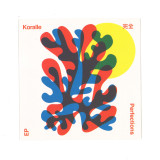
The EP is enriched by the art of Bernardo "Beerbo" Raspanti: a brightly coloured and variegated coral that tells of the different influences that come together in the artist's work and of a profound and engaging musical experience that will enchant connoisseurs and fans of the noble art of beatmaking.
Black Vinyl[11,72 €]
Immerse yourself in the enchanting world of 'Perfections', Koralle's new EP, now available on Little Beat More!
Koralle, aKa Lorenzo Nada, musician, beatmaker and producer, formerly an underground legend under the moniker Godblesscomputers, returns to put his 'hands in the dough' a few months after the release of his third album 'Insomnia', fusing jazz vibes with the elements that characterise the deep roots of hip-hop in four stylish pearls that capture body and soul in an increasingly intimate dimension.
Listening begins with the EP's title track, "Perfections," a perfect chill awakening, accompanied by fleeting piano notes and a bass drum and snare rhythm in the tradition of the beatmaking masters.
The second track, "Leaf," hints at melancholic and mysterious nostalgic undertones, to be followed by the single "From the Heart," which features the extraordinary participation of Brooklyn lyricist Awon, a mainstay of American jazzrap, who fits in perfectly with Koralle's eclectic sound world.
Finally, the fourth track, 'Come Back to Me Baby,' is a homage to the blues and black music roots of the 1950s, an invitation to rewind the tape and listen to the album all over again.
The EP is enriched by the art of Bernardo "Beerbo" Raspanti: a brightly coloured and variegated coral that tells of the different influences that come together in the artist's work and of a profound and engaging musical experience that will enchant connoisseurs and fans of the noble art of beatmaking.
Lisbet Fritze and Louise Foo have shared artistic trajectories for half of their lives, having been two thirds of pop noir purveyors Giana Factory. As Glas, the duo reveals a patchwork of everyday observations rooted in significant life changes: moving countries, becoming a mother, keeping sane with and without a significant other. The music conveys a quest for balance, riding the line between doomy drama and playing it cool.
Their 10 song, self-produced debut, Kisses Like Feathers, will be released, worldwide in March 2023, through Hamburg’s hfn music. All lyrics, vocals and instruments were performed by Glas, and recorded in their studio. The album was mixed by Anders Trentemøller, with artwork by Brunswicker studio The Copenhagen-based duo have never been short on inspiration. Lisbet has lent her vocal and guitar talents to Trentemøller, in both the studio and on stage. Louise has explored immersive music with avant-pop project SØSTR, along with her sister, Sharin Foo of The Raveonettes. Lisbet’s other life involves architectural design. Louise works with sound installations in a visual arts context. The musical ideas of these two polymaths find coherence in the newly-formed Glas.
Kisses Like Feathers embody Nordic duality. Dark at times, it also presents with an open ethereality. Some songs feel tailor-made for a club’s sound system. Others lend themselves to intimate, headphone moments. While Lisbet and Louise’s harmonious vocal stack is the common thread throughout the album, the musical fabric is interlaced with acoustic, electric, and electronic instruments. Lo-fi piano and acoustic guitars share a reciprocal space with rich, synthetic orchestration. Galloping, modern rhythms and folk arrangements are often featured in the same song. These elements, and so many others, buttress the pair’s hymns.
Violist, violinist and singer-songwriter Marla Hansen returns to Karaoke Kalk with "Salt", her second full-length album to date. Building upon the sonic palette the Berlin-based musician established with her debut "Dust" in 2020, "Salt" takes the delicate mixture of acoustic instruments such as viola, violin, piano and guitar combined with subtle electronics to the next level. The new album is both a remarkable departure and at the same time sheds a new yet reassuring light on Hansen's work and creativity. "Salt" features numerous collaborations with like-minded musicians and friends, e. g. producer and composer Simon Goff, The Notwist's drummer Andi Haberl and the renowned artist DM Stith.
The "Dust" has settled. After having recorded her solo debut of that name, in 2020 the world came to a grinding halt, leaving Marla Hansen left to her own devices in her adopted home of Berlin. For Hansen, who previously had lent her talent to many creative minds such as The National, Sufjan Stevens, The Hidden Cameras, Jay-Z and Ravi Coltrane, the collaborative aspect of writing and producing music had always played a crucial part in finding her own path as a solo artist.
"I started to explore synthesizers and electronic production myself," she remembers of the time when meeting other musicians in person was out of the question. "I am proud that I accomplished many of the electronic elements of the new album by myself, and otherwise laid the groundwork for the final electronic structures through my own experiments. I always wanted to record a 'big' record, one that has a lot of power and sound, and this one is 'bigger' than anything I have done so far."
"Salt" is big, indeed. The opener "Chains" is driven by a gliding bass line, bobbing 808 snares, deep chords and a mesmerizing chorus doubled by luscious strings, marking the beginning of a new chapter in her creative journey. A stark statement, both musically and lyrically. Meanwhile, the title track of the album is an almost abstract sounding ambient miniature, sketch-like, dark and haunting, showcasing Hansen's voice in a shy, brittle and fragile state. If This Mortal Coil/The Hope Blister were ever to record another album, these songs should be high up on the shortlist of tunes to pick. "The One Time" - a duet with Hansen's long-time friend DM Stith - gently meanders between a Philip Glass-inspired piece for chamber orchestra and a vocal ensemble performing on Top Of The Pops. In this range of styles and approaches, Hansen's vision is more present than ever.
For refining and finishing the songs, Hansen turned to Simon Goff, who produced the album and engineered much of the recording, merging Hansen's newly-found songwriting approach with the artistic delicacy which made her debut album an exceptional piece of work. Features include among others: Alice Dixon (Oriel Quartett) on cello, Kyle Resnick (The National, Beirut) on trumpet, Benjamin Lanz (The National, Beirut) on trombone and tuba, and Miles Perkin on bass. And then there is The Notwist's Andi Haberl, who "crafted perfect drum and percussion parts to move the songs wherever they needed to go, either into their driving grooves, slow-build explosions or gentle swells of feeling."
But what are songs actually about? "The themes revolve around a feeling of being trapped. Having to stay inside during the pandemic, with all the silence and stillness coming with it. Simultaneously, I was caught up in a professional situation that was not working for me, yet it required a lot of energy and time. I was thinking a lot about how to break old habits and patterns. Patterns in my life, patterns I saw my friends and loved-ones stuck in. There are a lot of ways that people can be trapped, and breaking out of that requires a lot of courage and energy - on all levels. The title 'Salt' seemed to fit, ocean themes showed up naturally in some of the songs, and I thought often about the quote: 'The cure for anything is salt water: sweat, tears or the sea.' Maybe I was just dreaming of the ocean, since it was inaccessible for the first time! But I wanted a cure for this feeling of being trapped, in a time of uncertainty and anxiety, salt as a remedy seemed to have some truth in it: sweat, tears or the sea."
Perseverance and the urge for freedom prevailed in the end. "Salt" is a bold artistic achievement, with songs as big as the biggest waves imaginable. With melodies as alluring as the most comfortable breezes. Perfect from start to finish.
Grand Canyon
the trip of a lifetime.
You're locked in beauty, the memories of the limestone, the secrets of the mountains.
When you approach them, you have the distinct impression that you're facing castles, monasteries, cities;
but they suddenly disappear, like fantastical dreams, illusions, or mirages.
You become a traveller in the land of dreams and Fata Morgana.
It's a place, where only Silence speaks.
And it was this Silence that inspired me to compose
"Melancholy".
Zbigniew Preisner
Wer sich auf den Weg nach Louisiana macht, kehrt meist nicht auf dem gleichen Weg wieder zurück. Die Songs von BROTHER DEGE atmen die schwüle Luft der sumpfigen Wälder im Mississippi-Delta und beschwören die Geister der Bayous herauf. In den Adern des für den GRAMMY Award nominierten Singer & Songwriter Dege Legg, der seine musikalische Heimat an den Kreuzwegen aus mitreißendem Rock'n'Roll, wortgewandtem American Folk und psychedelischer Glückseligkeit gefunden hat, fließt das heiße Blut seiner Heimat in Form von surrenden Slide-Gitarren, unverfälschtem Gesang und schweißgetränkter Poesie. Mit der Magie des tiefen amerikanischen Südens zieht BROTHER DEGE auf seinem sechsten Album "Aurora" die Hörer in den Banner seiner üppigen musikalischen Welt. Sein Aufstieg fand beinahe im Stillen statt und das, obwohl der Amerikaner zig Millionen Streams generiert hat und seine breite Anerkennung sogar von keinem geringeren als Quentin Tarantino honoriert wurde, der persönlich den Song "Too Old to Die Young" für eine Schlüsselsequenz in seinem Film "Django Unchained" auswählte. Die Musik von Dege Legg lässt kühne Hooks über einer Unterströmung aus bluesiger Verzerrung aufblitzen. Dabei kanalisiert er seine Liebe für die Klassiker der Siebziger und Achtziger in einer höchst individuellen Variante des Southern Rock in den Sound des 21. Jahrhunderts. Aus diesem stilistischen Nebel erwächst eine unvergleichliche Klangvision, die Alt-Americana gleichermaßen Schärfe und Gusto verleiht. Als Dege Legg im Jahr 2004 unter dem Namen BROTHER DEGE mit seinem Debütalbum "Trailerville" in der Szene des Südens aufkreuzte, war sein höchst individueller Sound bereits voll ausgeprägt. Schon der zweite Langspieler "Folk Songs of the American Longhair" brachte gleich mehrere Hymnen hervor, darunter auch "Too Old to Die Young". Dege Legg nutzte diesen Schwung, um gleich eine ganze Reihe von Fan-Favoriten zu veröffentlichen: "How To Kill A Horse" (2013), "Scorched Earth Policy" (2015) und "Farmer's Almanac" (2018). Es lässt sich nicht leugnen, dass BROTHER DEGE stark von der Musik und den Klängen des Deep South der USA beeinflusst ist, gegen die er in seiner wilden Jugend noch rebellierte. Doch obwohl seine Wurzeln stark hervortreten, übersetzt der amerikanische Gitarrist und Sänger die Songs seines neuen Meisterwerks "Aurora" noch einen Schritt weiter in die universelle Sprache des Rock'n'Roll. Aber Vorsicht: Wer sich einfach zurücklehnt, die Augen schließt und dieses wunderbare Album auf sich wirken lässt, könnte in Louisiana aufwachen!
We are back, and pleased to introduce you the first ever physical 'Various Artist' release with some of our favourite producers and good friends.Our dear Pily who has been the secret weapon inside many USB's and record bags lately, opens up with A1. 'Bailo En Circuito' sampling Alma Matris vocals, adding an infectious beat, simple and quirky enough to keep you going, masterpiece/.A2. Coming all the way from South America, Uruguayan super newcomer DJ/producer Marcos Coya debuts on DID with a straight fire tune. Hypnotic and with a characteristic acid strength, 'Buahh Trance' has been heavily supported by legendary DJ KOOLT this past summer. Flipping the record B1 is none other than the prince of fast heart-beats, recently moved to Spain, Prince De Takicardie brings the 'Badalona's House', an after-party happy/trippy tune, let's take the ride!.B2 by the Ibizan boy's JNJS (Jacob Saavedra & Jay Nortown) 'X-Money' is an economical broken-tech story, it will make you think about it, if you are deep in dis one enough...B3 is London's upcoming Dub Dealer Eren Arif with 'High Volume' a breakbeat dubby tune to close the V/A.
"Widowmaker's second and final album Stand by for Pain was written, rehearsed, recorded, mixed, and mastered in only 30 days. Speaking of the fast turnaround for the album, frontman Dee Snider (of Twisted Sister fame) said: ""I'm crazy about this record. We did this thing in 30 days and we did it how we wanted to do it. No worrying about how fast the 'hook' comes in a song."" Prior to release of Stand by for Pain, two tracks, ""Long Gone"" and ""Ready to Fall"", were released to radio as a promo. For the first time ever, Stand by for Pain is available on vinyl as a limited edition of 750 individually numbered copies on gold coloured vinyl. The vinyl package includes an insert. "
Stand By For Pain by Widowmaker, released 15 March 2024, includes the following tracks: "Protect and Serve", "Circles", "Just Business", "Bad Rain" and more.
This version of Stand By For Pain comes as a 1xLP. This release comes with (a) Insert(s).
The vinyl is pressed as a gold disc.
1995 war das Jahr, in dem ein neuer Stern am Himmel des Gothic Metal erschien. Liv Kristine Espenæs, die engelhafte Sopranstimme im Wechsel mit den Growls von Raymond I. Rohonyi von THEATRE OF TRAGEDY, hat seitdem viele Bands ihres Genres inspiriert. Robert Müller (Hammer), Dezember 1997, schrieb in einer Kurzbiografie folgende Zeilen: „Mit ihrer hohen, klaren, emotional ausdrucksstarken Stimme stand Liv Kristine immer im Mittelpunkt der Aufmerksamkeit. Da liegt es nahe, die Schönheit dieser Stimme in reiner Form, in einer Soloproduktion einzufangen.“ 1997 unterzeichnete Liv Kristine einen Solovertrag bei Massacre Records/Torsten Hartmann. Liv Kristine, die damals Masterstudentin in Englisch und Deutsch war, pendelte zwischen der Universität Stuttgart und den Aufnahmen im illinois Studio. Darüber hinaus tourte sie mit dem äußerst erfolgreichen THEATRE OF TRAGEDY um die Welt. Ein ganz besonderer, persönlicher Höhepunkt für Liv Kristine war der 24. Oktober 1997, als sie Nick Holmes (PARADISE LOST & HOST) an einem kalten Herbstmorgen von einer Tournee in Ludwigsburg, Deutschland, abholte. Nach einer Tasse schwarzem Tee und einer Scheibe Marmeladenbrot, wurden die Gesangsaufnahmen für die einfache, feine Gothic-Ballade „3 a.m.“ abgeschlossen. Beide haben einen Metal-Hintergrund, aber die Verschmelzung der beiden Stimmen ist einzigartig. Viel Subtilität, Magie und persönlichen Ausdruck stecken auch in den anderen Kompositionen auf Liv Kristines allererster SoloVeröffentlichung, die teilweise sogar in ihrer Muttersprache Norwegisch gesungen wurden. „Portrait: Ei tulle med øyne blå“, basierend auf einem alten norwegischen Kinderlied aus dem Jahr 1905, wurde im Juni 2023 von Geir „Gerlioz“ Bratland (DIMMU BORGIR) von Grund auf neu interpretiert und aufgenommen, ausschließlich für die Neuveröffentlichung von „Deus ex Machina“. Liv Kristine kennt diese Melodie seit ihren ersten Lebenswochen, denn ihre Mutter und Großmutter haben der kleinen „Stine“ dieses Lied als Gute-Nacht-Schlaflied vorgesungen. Bereits im Alter von sechs Jahren zeigte Liv Kristine eine besondere Empfänglichkeit für das Verständnis von Musik und den verschiedenen Arten des Singens. Es verging kein Tag, an dem das kleine, blonde Mädchen nicht sang und verträumt vor dem Spiegel stand. Das Lied „In the Heart of Juliet“ beschreibt, wie sie ihre Kindheit bewusst und unbewusst erlebte, die Glücksgefühle, ihre Liebe zu magischen Melodien, die Wunder der Natur und ihrer Jahreszeiten, aber auch die Freiheit des Seins. Bis heute bezeichnet sie das besondere Erlebnis des Singens als „my magic Bubble“.
An avant-garde masterpiece, a vocal-instrumental suite, a work of collective improvisation, directly addressing the racial and political issues of it’s day, We Insist! Max Roach’s Freedom Now Suite is one of the most important artistic statements of Civil Rights Movement and one of the most groundbreaking jazz albums of all time. Max Roach was already almost a decade into his career as one of the most influential jazz drummers and composers when he teamed up with lyricist Oscar Brown Jr. to collaborate on a piece they planned to perform at the centennial of the Emancipation Proclamation in 1963. Recorded just months after the February 1960 Greensboro sit-ins, the album stands as an early musical testament to the burgeoning rage, anger and passion that would take the Civil Rights Movement from its early victory in Montgomery in 1955 into a future that would dramatically alter race relations in the United States. The second release from the newly launched New York City based jazz label Candid Records, and produced by label co-founder, famed music critic and social activist, Nat Hentoff, the album is a bold statement, focused on civil injustices in black history ranging from slavery to contemporary racial prejudices, and featuring some of the finest jazz musicians ever, including Abbey Lincoln, Coleman Hawkins, Eric Dolphy, Booker Little, and Michael Babatunde Olatunji. The five movements of the work are organized as a historical progression through African-American history, a shape similar to the one in Duke Ellington’s Black, Brown and Beige. The Freedom Now Suite moves from slavery to Emancipation Day to the contemporary civil-rights struggle and African independence. The LP includes extraordinary liner notes written by Hentoff himself, giving a context and insight that adds to the experience of hearing these magnificent performances.
In 2005, an 18-year-old Raphael Gimenes left the sunny shores of Brazil behind, embarking on a journey to a distant and wintry land. "Dinamarca," the Portuguese name for Denmark, became his new home, where he has lived for almost two decades. Today, he presents his third album, a deep exploration of his life in Scandinavia. Rather than being a nationalistic tribute, "DINAMARCA" tells chapters from Gimenes" life story as a Brazilian living in the northern corners of the world. It guides us through the enchanting nordic woods, the vast fields stretching to the horizon, and the timeless sea resting beneath an endless sky. The melodies of blackbirds, the dances of red deer, and the whispers of ancient oaks form the backdrop for his musical stories. Within his songs, we experience moments of deep solitude and boundless inspiration, moments where reflection and creative passion intertwine. Gimenes skillfully turns the power of love into harmonies, dedicating songs to both his companion and his closest friends. Beyond these experiences, he leads us on journeys to Denmark"s neighboring lands, Norway and Sweden, where revelations and encounters with the mystical found their way into the lyrical fabric of his songs. The album"s orchestration includes Gimenes" vocals and the resonant chords of his classical guitar. Accompanying him throughout the album are Jan Kadereit"s multilayered percussion, and Lucas Delacroix"s bass synth, who also plays the electric guitar at times. The music further unfolds with the nuances of a string quartet, and a brass quintet, both recorded in the tropical highlands of Minas Gerais. Other guest musicians feature on individual songs, such as pianist Sebastian Macchi, flautist Flavia Huarachi, cellist Lucas Almeida, and singers Gaby Echevarria, Cecilia Pahl, and Cris Ferro. Gimenes has garnered acclaim and accolades across continents. His debut release, "Raphael Gimenes & As Montanhas de Som," delved deep into the rhythms and traditions of Brazil. It rose to prominence as the top Brazilian release in 2016 in Holland and was hailed as a "conceptual masterpiece" in Japan. His second album, "A Tongue Full of Suns," co-produced with Faroese multi-artist Teitur, ventured into the English language, blending Gimenes" inspirations from the world of prog-rock. Danish rock legend TimChristensen praised it as "top-shelf neo-folk," while Brazilian website80minutos described it as "hypnotizing." The music within "DINAMARCA" delves deep into the soul of a man who embraced a new land with open arms, while staying true to his roots. It unites elements from both of Gimenes" prior works, embarking on a journey across new musical horizons. The result is music that transcends borders, weaving itself into an intricately beautiful tapestry - a soul that has learned to harmonize with two worlds.
Most audiophiles know Alan Parsons Project's I Robot by heart. Engineered by Parsons after he performed the same duties on Pink Floyd's Dark Side of the Moon, the 1977 record reigns as a disc whose taut bass, crisp highs, clean production, and seemingly limitless dynamic range are matched only by the sensational prog-rock fare helmed by the keyboardist and his creative partner, Eric Woolfson. Not surprisingly, it's been issued myriad times. Can it be improved? Relish Mobile Fidelity's stupendous UltraDisc One-Step 180g 33RPM box set and the question becomes moot.
Mastered from the original master tapes and pressed at RTI on MoFi SuperVinyl, I Robot comes to life with reference-setting realism on this numbered, limited-edition reissue. Boasting immaculate highs and lows, generous spaciousness, and see-through transparency that takes you into the studio with Parsons and Woolfson at Abbey Road, this definitive edition is designed to demonstrate the full-range capabilities of the world's best stereo systems while offering listeners the convenience of having all the music on one LP.
Featuring a nearly inaudible noise floor, this transcendent UD1S edition functions as a repeat invitation to savor reference-grade soundstages, immersive smoothness, sought-after instrumental separation, three-dimensional imaging, and consummate tonal balances. Able to be played back at high volumes without compromise or fatigue, it is a demonstration record for the ages – the likes of which are no longer being made. This is the very reason you own and invest in high-end audio gear.
The special characteristics of this UD1S version extend to the premium packaging. Housed in an elegant slipcase, the reissue features special foil-stamped jackets and faithful-to-the-original graphics. Aurally and visually, it is made for discerning listeners who prize sound quality and production, and who desire to fully immerse themselves in everything about this conceptual landmark. The Alan Parsons Project's most famous record deserves nothing less.
Inspired by and loosely based around the Isaac Asimov stories of the same name, I Robot delves into themes of artificial intelligence and technological dominance that make the record extremely relevant in the 21st century. Indeed, Parsons and Woolfson's pinnacle creation dovetailed with the ascendency of Star Wars, which itself is experiencing a rebirth in an age of self-driving cars, smart devices, and mindless automation. Lyrically, songs such as "The Voice" call into question human behavior – and their relationship to increasing robotic supremacy – in everyday life. Parsons and Woolfson reflect the associated paranoia, dichotomy, and transformation via shifting sci-fi arrangements steeped in drama and moodiness.
The absorbing tunes on I Robot also continue to fascinate due to their perfectionism and innovation. Borrowing from Pink Floyd's strategies, Parsons and Woolfson utilize a looped sequence on the title track to create new downbeats. "Some Other Time" employs two different lead vocalists and yet gives the illusion that only one is involved. Captivating strings, a piccolo trumpet, and bona fide pipe organ grace "Don't Let It Show." The origins of "Nucleus" stem from a unique analog keyboard concoction dubbed "the Projectron," devised by Parsons and electronic engineer Keith Johnson. Andrew Powell's orchestral and choral arrangements top it all off, with "Total Eclipse" arriving as a frightening track that presages the climactic "Genesis Ch. 1 V. 32."
Does man or machine win in the end? Decide as you get lost in Mobile Fidelity's UltraDisc 180g 33RPM LP pressing. Secure your numbered copy today!
More About Mobile Fidelity UltraDisc One-Step and Why It Is Superior
Mobile Fidelity Sound Lab's UltraDisc One-Step (UD1S) technique bypasses generational losses inherent to the traditional three-step plating process by removing two steps: the production of father and mother plates, which are created to yield numerous stampers from each lacquer that is cut. For UD1S plating, stampers (also called "converts") are made directly from the lacquers. Since each lacquer yields only one stamper, multiple lacquers need to be cut. Mobile Fidelity's UD1S process produces a final LP with the lowest-possible noise floor. The removal of two steps of the plating process also reveals musical details and dynamics that would otherwise be lost due to the standard multi-step process. With UD1S, every aspect of vinyl production is optimized to produce the best-sounding vinyl album available today.
MoFi SuperVinyl
Developed by NEOTECH and RTI, MoFi SuperVinyl is the most exacting-to-specification vinyl compound ever devised. Analogue lovers have never seen (or heard) anything like it. Extraordinarily expensive and extremely painstaking to produce, the special proprietary compound addresses two specific areas of improvement: noise floor reduction and enhanced groove definition. The vinyl composition features a new carbonless dye (hold the disc up to the light and see) and produces the world's quietest surfaces. This high-definition formula also allows for the creation of cleaner grooves that are indistinguishable from the original lacquer. MoFi SuperVinyl provides the closest approximation of what the label's engineers hear in the mastering lab.
50 years after the genre turned the music world upside-down, GRADE 2 bring the raw power of old school punk to a new generation. Their second release on Tim Armstrong"s legendary Hellcat Records is a thumping 15 track tour de force melding the uncompromising ethos of punk with the howl of contemporary injustice, personal identity and frustrations of Gen-Z youth, authentically told by three lads with punk coursing through their veins. Formed on their native Isle of Wight when they were just 14 years old, Jack Chatfield (guitar & vocals), Jacob Hull (drums) and Sid Ryan (bass & vocals) honed their craft covering punk pioneers before creating a sound uniquely theirs: ten years on, the eponymous Grade 2 is their magnum opus. The new album was produced by the band along with Tim Timebomb (Armstrong) and T.J. Rivers at Armstrong"s Ship Rec Studio in Los Angeles. "Returning to Ship Rec Studio resparked that magic dynamic" says guitarist Jack Chatfield. "When we"re in there I feel like we reach our full potential. Tim would offer tweaks and tips for some songs, while others he"d compliment as finished first time we played them." "We worked flat-out recording this record," says drummer Jacob Hull, "but we never felt pressured, Tim keeping us in the zone to make the best tunes of our li ves.
For a few years Leo Robinson was the sort of hidden secret you sometimes come across in local music scenes. First in Manchester and now in Glasgow, he’d pop up regularly on DIY bills or as local support to a touring act, quietly blowing them off stage with his rich baritone vocal and homespun lo-fi tales of folklore and animism. With The Temple – his debut on PRAH Recordings – he looks set to cross over from being a cult concern.
“There's a spectrum within the album between fully mythologising or symbolising my lived experience, and just stating it in very matter of fact terms - that push and pull between the need to abstract and the need to break through the abstraction and have an honest moment with oneself” he explains. “This is one of the themes of the album as well as part of the process. The aim was to take all these anecdotal or symbolic elements and merge them into one narrative and one world, in a way that you can find your way through the record as if it were a landscape or language with its own logic.”
The record takes on a pastoral, slightly baroque nature that Robinson partly attributes to a friend screening a lot of ‘70s BBC material in his book shop that they used to hang out at. There are also elements of jazz, flickering to life in “The Spring”’s piano-led finale and coda.
Thematically, Robinson likens it to a Jungian ‘Hero's Journey’, his voice possessing a character who goes through several defined stages of consciousness. From conception and the beginning of an earthly life, the first half of the album recognises the development of the protagonist’s narrative and identity, before “The Pink Light”’s freeform departure from the hitherto more song-based suite devastatingly shatters this. The second half of the album then sees the protagonist witness “the uncontainable” water; learning that true divinity lies not in the individual self or lofty notions of gods and temples, but in the unremarkable nettles, insects and dogs on the roadside riverbank - referenced on tracks “The Cormorant” and “The Spring”.
Although now residing north of the border, The Temple was written while Robinson was finding his feet in Manchester, having moved there to go to art school as a teenager (as a visual artist, he has exhibited at the Tiwani Contemporary in London and Cardiff’s Chapter Arts Centre). As a result, many of the tracks bear out the shadows of his experiences in the northern city – at their most visible and explicit on the beautifully fragile storytelling of “The Pavement”. Written the day after the Manchester Arena Bombings, it recalls Robinson waking up to go to work on a hot summer’s day to discover that his street had been blocked off for terrorism investigations; it then progresses through the rest of his day, amidst the grimly surreal aftermath of the previous night.
Having written the chords, melodies and lyrics to the album, Robinson fleshed out the tunes by scoring out parts for the additional instrumentation, but it was only when a friend sent a demo to PRAH that he was able to fund its full recording. Guitars, vocals, piano and French Horn (the latter recorded by Lauren Reeve-Rawlings) were put down at Green Door Studios in Glasgow. Microphones were placed around the room and the sound of the musicians stepping on creaky floorboards and opening creaky doors were left audible to further the record’s live feel. The harpsichord heard on “The Serpent”, meanwhile, came from University of Glasgow lecturer David McGuinness. Strings were then recorded at PRAH Studios by Francesca Ter-Berg and Raven Bush, the Social Singing Choir adding their choral vocals to “Temple II”.
The result is an album that feels both luscious and yet intimately raw; as grand as Richard Dawson at his most panoramic but containing the rough edges and skeletal looseness of a Calvin Johnson work. At times Robinson lyrically moves towards the surreal, but ultimately this is a record grounded in reality; a true showcase of Robinson’s skill as a lyricist and songwriter.
PELIGRE is back on Saike with his most anticipated "BRB Crying" EP.
After releasing ''Welcome To The Sal'' in 2022, it was natural for him to get back to the mothership with this second establishment that has been already destroying the dance floors these past months. With 5 tracks ranging from pure Hard Techno to Neo Trance sounds, the rave just keeps on giving and the energy has never been so high.