The Seeds of Fulfillment by David Drazin (November 2018)
Andrew Venson founded Seeds of Fulfillment (SOF) in early 1978. In the 1960s he had played electric bass with Arthur Conley, and later the original Peaches and Herb. On the same bill with Big Brother and the Holding Company, he hung out backstage with Janis Joplin. Yes! Vince was hoping SOF would get all of us to the top. He composed three tunes for the band, and we always had a ball playing them.
Roger Myers is a marvelous drummer. We co-composed Namaste. Roger would settle on a drum pattern of four measures at a time that he wanted to keep, and I'd put chords and melody right on top of his pattern. When he layered a second drum pattern on top of the first one, we'd get two melodies at the same time. We thought we were going to collaborate on more songs this way, but it didn't happen.
Lee Savory is a very inventive jazz man. He's musically literate, and wrote excellent transpositions. I remember Lee's asking for my input while he was composing Tight Squeeze, but it was clear he had it down. Once when I was visiting a DJ who played the album in a local radio station, the total of checks next to Tight Squeeze for number of plays was by far the highest!
Randy Mather's sax playing always knocked me out. I could hardly wait to hear him solo. When he left SOF to go with Woody Herman's orchestra it was amazing, but true.
Jeanette Williams had recorded 45s for the Duke and Peacock label when she was 17 years old. Her powerful singing was incredible to me. When we needed an original for Jeanette, Vince composed it, and Roger's wife Linda wrote the lyrics.
In 1978 I was in my senior year at Ohio State University when I met Vince. He came into a bar called My Brother's Place where I was playing with a trumpet player named Bobby Alston. When I was a freshman at OSU I'd played in an off campus band called Akadama. Before that I played in my home town of Cleveland, Ohio in the Brush High School Stage Band and a jobbing band called The Midnight Combo.
Everyone in the band contributed something to Egg Cartons in a composition jam session. We rehearsed in Vince's basement, and he had covered the walls with egg cartons to make the room sound more like a recording studio. The Provider was inspired by Country Preacher by Joe Zawinul. In those days I especially admired the way Zawinul would get his soulful feelings across, but also loved Herbie Hancock and to a lesser degree Chick Corea too. It took two years (with a break of several months) for the band to conquer Self-Fulfilling Prophecy. It shows you what consideration and dedication is, that ultimately they felt it was worth learning.
We recorded at Fifth Floor Studios in Cincinnati, Ohio. While we were there I got to shake hands with Bootsy Collins, who was recording in the rooms downstairs at the same time. Years later, Fifth Floor burned down and all the master tapes were destroyed.
Поиск:second hand orchestra
Все
Moscow Is Mythologized For Its Grandeur And Gravity But Its Parable Pleasures Offer Splendor And Even Absurdity. Over The Ten, Symmetrical Pieces Of For, Kate Nv Scores Her Native Urban Environment With Just Enough Whimsy To Gurgle Through The City Cracks And Grow Psychotropic Foliage. Each Sound Assumes Its Own Personality, Moving Through The Album Metropolis Like Miniature, Mutating Molecules Viewed From Nv's Apartment Window.
Alternately A Guitar-wielding, Post-punker And One Within The Multitude Of Moscow Scratch Orchestra's Avant-garde, Nv Is A Versatile Artist That Maneuvers Instinctively In Whatever Musical Environs She Finds Herself. Nv's Second Solo Album Is An Even More Abstract Endeavor Than The Hybrid Pop Of 2016's Binasu. Inspired By Casual Moments Of Ephemeral Sound From Within And Beyond Her Apartment Walls, The Record Has A Clarity Arrived Altogether And From Right Under Her Nose. Recorded At Home, Nv Says It Was As If The Music Was Not Written By Herself, But Her Chair.
For Inhabits A Stage That Piero Milesi & Daniel Bacalov, Ann Southam, Or Hiroshi Yoshimura May Have Written Music For And Dresses It With Viktor Pivovarov's Psychedelic Depictions Of Moscow - Contorting Bodies, Flying Pencils, And Multi-dimensional Faces Dance With Subtle Arpeggiations, Conversational Voice Synthesis, And Anthropomorphic Midi. Animating Objects Is Essential To The Album. Like A Surreal Still Life, Each Piece Is An Alien Arrangement Of Common Elements That Extend The Everyday Ritual Into An Eternal Landscape Of Unconscious Activity. Somewhere Along That Landscape, Kate Awaits And Greets With Apples For Hands And Fish For Feet.
Like The Album Title, Each Composition Contained Within Is Represented As A Three Letter Word, In Russian And English. The First Half Of For Was Written In The Spring. Starting With yxo Ear,' Previously Released On The Peaceful Protest Compilation Cassette In 2017, Melodies Meander And Lollygag. a Two' Incorporates Human Breath Played Like Notes On A Pump Organ. Oak' Offers A Warm Tune To Tango. How' Loops Curious Notes That Bump Into Each Other With A Chirpy Acknowledgement. You,' The Only Track On For With Lyrics, Sets A Wassily Kadinsky Poem To Song.
The Second Half Of The Album Was Written In The Autumn. The Feathery Edges Of One' Extend Like Watercolors Bleeding Off A Rubber Scroll. See' Is A Subdued, Shadowy Variation Of How', As If The Same Song Were Played In Different Weather, Dimmer Light, Or By Kate's Devious Doppelganger. The Electronics Unravel And Unwind On Dog' Until The Final Track, Who,' Ends With Vague Solemnity And Rattled Metals.
A Short Online Film Series By Shura Kulak Will Accompany The Release Of For. The Films Follow A Solitary Figure Performing Ordinary Tasks Through A Slow, Warped Lens — Each Song Enacting A Daily Habit: Waking, Dressing, Reading, And So On. In Her Live Performances Around The Album, Kate Nv Will Play Each Song From Memory, Allowing For Variation From The Recorded Tracks, And Scenes From The Films Will Be Re-created And Improvised In The Moment.
Mammal Hands are a trio of like-minded musicians: Nick Smart piano, Jesse Barrett drums and tabla, and Jordan Smart saxophones. Floa is their second album for Gondwana Records and in the 18 months since their debut, Animalia, they have carved out a growing following both here and abroad for their hypnotic fusion of jazz, folk and electronica: winning fans from Bonobo and Gilles Peterson to Jamie Cullum. Landmark live performances have included shows at King's Place in London and the RNCM in Manchester, as well as a barn-storming debut at the Montreal Jazz Festival. Drawing on a rich well of influences from Sufi and shamanic African trance music, Irish and Eastern European folk music, to Steve Reich and Philip Glass and more contemporary electronica influences, their music is built around deceptively simple sounding ideas that are lent power through the use of repetition and rhythmic loops. They have been compared to both Portico Quartet and GoGo Penguin for the way in which they navigate the choppy waters between contemporary dance music and jazz. Floa (an old Norse word that means to deluge or to flow) is the sound of a more confident, experienced band: one that has grown together naturally through touring and gigging and through mammoth writing and rehearsal sessions where all three bring rhythmic, improvisational and melodic ideas to the table. Floa was recorded at Gondwana's home from home, 80 Hertz Studios in Manchester, reuniting the band with producer Matthew Halsall and features some of the Gondwana Orchestra strings who played on Halsall's acclaimed album Into Forever. Together they have crafted a wonderful sounding record, the richness of which perfectly illuminates the band's music. Artwork is from Gondwana's in-house design maestro Daniel Halsall whose artwork of symbols created from older symbols perfectly illustrates the creative ideas that drive the band's music.
The release is supported by an extensive UK tour including dates in Norwich, Bristol, Brighton, Manchester and beyond. The band support Matthew Halsall at St John's Hackney on May 26th and have their own head-line show at the Jazz Cafe, Camden on 31st May. Confirmed airplay from Jamie Cullum BBC Radio 2, Gilles Peterson 6 Music, Radio 3 Late Junction, BBC Scotland Jazz House, Jazz FM, John Kennedy X and full servicing to all specialist and online radio stations. Reviews from The Guardian, Mojo, Record Collector, Jazzwise, Nos Magazine, Nowthen and local press. Online support from AllAboutJazz, Quietus, Access All Areas, Bebop Spoken Here and beyond.
During the '70s, work days at Umiliani's Sound Workshop Studios were hectic; thousands of sessions were held in order to keep up with a very busy Italian movie industry: Hundreds of soundtracks alongside with music library were recorded and released on vinyl in very limited quantities for TV and film production use only. Those LPs are now proper collectors' items, extremely hard to find.
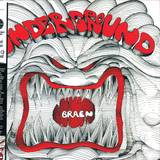
Filled with hypnotic bass lines, heavy drums and screaming fuzz guitars "Underground", the first LP of the fictitious group known as Braen's Machine, is one of the rarest and the most expensive of them all, always "reaching" sky high prices throughout the second hand vinyl market. A fast-beat jam with hammond scales and a twin lead guitar theme ("Flying") opens the A Side soon followed by "Imphormal", a classicfunk-beat-meetsfender- rhodes-and-psychedelic-guitar number. The music then switch to "thriller territories" with "Murder" which is based on prepared piano swells and a deeply hypnotic walking bass, reminiscent of the best Morricone's soundtracks for Dario Argento's movies. Two highly percussive songs complete the A Side: "Gap" is an improvised song with guitar and keyboards dwelling over an infectious drum rhythm while a marching snare and a vibraslap effect are the special features on "Militar Police".
The mood relaxes slightly on the opening of the B Side with a lazy jazz groove on "New Experience" but the rock influences are soon brought back on the following track "Fall Out". "Obstinacy" is all about keyboards with syncopated rhodes themes and distorted hammond sustained notes whilst the fuzz guitar is back again screaming through the left channel on the last song of the album, "Description". We could happly say that that was the golden age of the Italian music library. But who's behind the name "Braen's Machine" On the original cover the songs are credited to the composers Braen and Gisteri. Braen was a pseudonym often used by Alessandro Alessandroni, an extremely skilled and versatile musician, and one of Umiliani's closestcollaborators. He could write, conduct and arrange, he could sing (ever heard "Mah Na Mah Na"), he could whistle (ever heard Morricone's "For a fistful of dollars") and he could play almost anything: guitar, bass tuba, accordion, sitar and the list grows..... His first album "Alessandro Alessandroni e il suo complesso" (Sermi, 1969), had transformed the Italian library music from orchestral sound beds into the psychedelia we all love; the extremely fuzzy guitars are very "present" on "Underground" too. For a long time Gisteri's real identity was rather mysterious; often wrongly attributed to Umiliani. Gisteri was the pseudonym of Oronzo De Filippi, art name of Rino De Filippi, music supervisor to the Italian public broadcast company (RAI) between the '60s and the '70s. De Filippi composed other notable pieces such as "Riflessi" (Edipan, 1975) and "Nel mondo del lavoro" (Sermi, 1972).
De Filippi passed away few years ago but we were able to contact Alessandroni to talk about this LP. Remembering "Underground" recording session as one of the thousands he took part of, Alessandroni told us that this record was produced very quickly, in two days maximum. This was made possible by a team of wonderfully capable session musicians and the creative genius behind the mixing desk; this incredible combination helped to focus on the mood of each track even more. Unfortunately there are no liner notes but Alessandroni's memories and speculations, based on other music tracked in the same period at Soundworkshop by resident engineer Claudio Batussi, led us to identify this as the most probable lineup: Munari on drums, Majorana on bass, Vannucchi on keyboards and Alessandroni himself on guitar. For this reissue the sound has been restored and the cover art reproduced exactly as it was.