The Australian master of the dark synth arts is back and – boy – he is out for blood.
We’ve been missing Marc Dwyer solo project Buzz Kull since his latest single Last In The Club from late 2019 and since back then we knew he was up to something. At first glimpse, the minimal wave days of We Were Lovers seem far away now that Marc has gone full Club Body Music with his upcoming new album, but there is a thread that binds Buzz Kull hits from the past such as Into The Void, Avoiding The Light and New Kind Of Cross with these ten new cuts: a thread of darkness proper to the most handsome man in the game and that’s here to stay.
Echoes of 90’s era Front 242 and Front Line Assembly will resonate from tracks like Fascination and Dead Inside; elements of early body music flirting with the dark side of British synthpop will rave from the grooves of Dancing with Machines and Man on the Beat, while late 80’s Belgian new beat cellar-like vibes rise from Do You See and Burn it to the Ground.
But Buzz Kull’s third full-length is not just about music subgenres we all know and love, it’s about a feeling that comes alive only with the dark and drives you through the small hours just to leave you drained and filled at once. The creature of the night is on the loose, the sticky dancefloor its natural habitat, its lust for the upside-down world of the club can’t be cured.
Search:see know
Way back when, Upgrade & Afterlife was the umpteenth release from the individual and collective forces of David Grubbs (known then for Bastro, The Red Krayola, Codeine, Squirrel Bait) and Jim O"Rourke (known for O"Rourke), whose further history has since numbered at least another umpteen or so essential listens. What is it though, wrapped up in delectable sonic amber here, that defines this Upgrade? To be sure, we hear these young men dashing through the joys of youth-their actual young youth-as well as a version captured in memory and relived with a performative touch. Time remembered as tones, with gravity gained via perceptions. The stuff of memory and sentiment as selective and potentially deceptive in their nature. Who needed "em? As part of its time-traveling function, Upgrade & Afterlife is a return to roots, but not always necessarily Gastr"s. They were more than happy to stand on branches up above other folks in order to see any next thing worth leaping for. In addition to the elder-statesman Conrad, Gastr del Sol drew upon a memorable spectrum of players for the sounds of Upgrade & Afterlife, including Anthony Burr, Steve Braack, Gene Coleman, Mats Gustafsson, Terri Kapsalis, John McEntire, Günter Müller, Jerry Ruthrauff, Ralf Wehowsky and Sue Wolf. When issued, this combination of players, parts and play - packaged in an impressively broad tip-on Stoughton gatefold sleeve emblazoned with Roman Signer"s instantly iconic "Wasserstiefel" image - became the fastest-moving Gastr del Sol record to date. A delightful result, to our way of thinking, of the band"s ability to push at the far boundaries of their music while consolidating upon pleasure points within sounds and songs. Gastr used these polarities to compulsively draw the listener intimately close with sudden injections of g-force and an uncanny interpolation of space.
Repress!
In the mid-1970s, a force of nature swept across the continental United States, cutting across all strata of race and class, rooting in our minds, our homes, our culture. It wasn’t The Exorcist, Goodbye Yellow Brick Road, or even bell-bottoms, but instead a book called The Secret Life of Plants. The work of occultist/former OSS agent Peter Tompkins and former CIA agent/dowsing enthusiast Christopher Bird, the books shot up the bestseller charts and spread like kudzu across the landscape, becoming a phenomenon. Seemingly overnight, the indoor plant business was in full bloom and photosynthetic eukaryotes of every genus were hanging off walls, lording over bookshelves, and basking on sunny window ledges. The science behind Secret Life was specious: plants can hear our prayers, they’re lie detectors, they’re telepathic, able to predict natural disasters and receive signals from distant galaxies. But that didn’t stop millions from buying and nurturing their new plants.
Perhaps the craziest claim of the book was that plants also dug music. And whether you purchased a snake plant, asparagus fern, peace lily, or what have you from Mother Earth on Melrose Avenue in Los Angeles (or bought a Simmons mattress from Sears), you also took home Plantasia, an album recorded especially for them. Subtitled “warm earth music for plants…and the people that love them,” it was full of bucolic, charming, stoner-friendly, decidedly unscientific tunes enacted on the new-fangled device called the Moog. Plants date back from the dawn of time, but apparently they loved the Moog, never mind that the synthesizer had been on the market for just a few years. Most of all, the plants loved the ditties made by composer Mort Garson.
Few characters in early electronic music can be both fearless pioneers and cheesy trend-chasers, but Garson embraced both extremes, and has been unheralded as a result. When one writer rhetorically asked: “How was Garson’s music so ubiquitous while the man remained so under the radar?” the answer was simple. Well before Brian Eno did it, Garson was making discreet music, both the man and his music as inconspicuous as a Chlorophytumcomosum. Julliard-educated and active as a session player in the post-war era, Garson wrote lounge hits, scored plush arrangements for Doris Day, and garlanded weeping countrypolitan strings around Glen Campbell’s “By the Time I Get to Phoenix.” He could render the Beatles and Simon & Garfunkel alike into easy listening and also dreamed up his own ditties. “An idear” as Garson himself would drawl it out. “I live with it, I walk it, I sing it.”
But as his daughter Day Darmet recalls: “When my dad found the synthesizer, he realized he didn’t want to do pop music anymore.” Garson encountered Robert Moog and his new device at the Audio Engineering Society’s West Coast convention in 1967 and immediately began tinkering with the device. With the Moog, those idears could be transformed. “He constantly had a song he was humming,” Darmet says. “At the table he was constantly tapping.” Which is to say that Mort pulled his melodies out of thin air, just like any household plant would.
The Plantae kingdom grew to its height by 1976, from DC Comics’ mossy superhero Swamp Thing to Stevie Wonder’s own herbal meditation, Journey Through the Secret Life of Plants. Nefarious manifestations of human-plant interaction also abounded, be it the grotesque pods in Invasion of the Body Snatchers or the pothead paranoia of the US Government spraying Mexican marijuana fields with the herbicide paraquat (which led to the rise in homegrown pot by the 1980s). And then there’s the warm, leafy embrace of Plantasia itself.
“My mom had a lot of plants,” Darmet says. “She didn’t believe in organized religion, she believed the earth was the best thing in the whole world. Whatever created us was incredible.” And she also knew when her husband had a good song, shouting from another room when she heard him humming a good idear. Novel as it might seem, Plantasia is simply full of good tunes.
Garson may have given the album away to new plant and bed owners, but a decade later a new generation could hear his music in another surreptitious way. Millions of kids bought The Legend of Zelda for their Nintendo Entertainment System back in 1986 and one distinct 8-bit tune bears more than a passing resemblance to album highlight “Concerto for Philodendron and Pothos.” Garson was never properly credited for it, but he nevertheless subliminally slipped into a new generations’ head, helping kids and plants alike grow.
Hearing Plantasia in the 21st century, it seems less an ode to our photosynthesizing friends by Garson and more an homage to his wife, the one with the green thumb that made everything flower around him. “My dad would be totally pleased to know that people are really interested in this music that had no popularity at the time,” Darmet says of Plantasia’snew renaissance. “He would be fascinated by the fact that people are finally understanding and appreciating this part of his musical career that he got no admiration for back then.” Garson seems to be everywhere again, even if he’s not really noticed, just like a houseplant.
- A1: Daga I
- A2: Daga Ii
- A3: This Is The Time
- A4: Play The Ace
- A5: See You In Hell
- A6: Big Brother
- B1: Zombies
- B2: Demon
- B3: Trail Of Terror
- B4: Face The Slayer
- B5: Young And Proud
- B6: Wild Thing
Probably the first experiment in mixing hardcore attitude with OI! songwriting ever made within the UK punk movement, Attak were born as a four piece in New Mills in l98l, but immediately reversed to a trio when their singer left for school commitments and released two incredible singles on the No Future label in this form, right before recruiting a new guitarist and record “Zombies”, that came out in l983 on the same label. Known for featuring Mackie from BLITZ’s sister on drums, (and sounding a lot like his band!), Attak definitely split up in late 1983. This criminally underrated classic gets reissued on vinyl with his original artwork and fully remastered. Limited to 500 copies on Color Vinyl, complete with big 60x40 cm folded poster!
- 1: King Of The Grass
- 2: L.a
- 3: Inject Your Blood
- 4: Wires
- 5: My Girl
Following on from last year's acclaimed ‘R.O.I.’ album, Manchester’s favourite sons Aerial Salad are set to return to the fray with a brand new 5-track EP titled ‘Roi de l’herb’ to be released June 27th via Venn Records.
Having released their ‘Dirt Mall’ album during lockdown, which was a pretty grim time to put an album out, the release still eventually opened up some exciting doors for the band and captured Aerial Salad at their most Aerial Salad; loud, brash, silly and emotive.
This led swiftly to 2024’s ‘R.O.I.’ album that marked a real evolution in the band’s sound and songwriting.
“R.O.I. is a concept album but rather than being about a band, it’s from the perspective of an individual pushed to the brink of insanity by the ever-present quest from commercial success,” explains singer and guitarist Jamie Munro. “The idea came from my job; I’ve been working in the tech industry in ‘sales’. ‘Return on investment’ was probably my most uttered phrase for a few years, I was sick of it, sick of having no positive impact on the world and sick of the tech bro, double espresso, thirsty thursdays, work hard - play hard bollocks culture that comes with it. ‘R.O.I.’ is me saying ‘know what, you can actually earn a lot of money in life, even without the fallacy of educational infrastructure and financial privilege, however, it comes at the cost of your soul, time and energy. ‘R.O.I.’ is called such because it’s in the opposite pursuit, it’s not about a return on a financial investment, it’s about doing something with your life that’s enjoyable.”
This brings us crashing into 2025, no longer in the same line of spirit destroying work, with some seriously exciting gigs on the horizon, Aerial Salad wanted to kick off the next era of the band with a short, fast and hard EP and have served up 5 absolute bangers that sit somewhere between ‘Dirt Mall’ and ‘R.O.I.’ The EP is called ‘Roi de l’herb’ because of the track ‘King Of The Grass’: “We tour and play a lot in France, we’ve played most of our “best” gigs in France, so out of curiosity I wanted to see if the title would translate well, naturally, when the translation contained both “ROI” and l’herbe” - I though, fuck it, that’s about as spot on a title for this EP as we can possibly muster.”
‘King of The Grass’ is about the band’s bassist Mike Wimbo who works for Rochdale council on the greens team, which means he spends his life in the pouring rain chopping down overgrown hedges and mowing lawns. Elsewhere on the EP, ‘Inject Your Blood’ is another romantic love song inspired by the TV series ‘True Blood’ (“I’d inject your blood, into mine just to feel you close”), ‘Wires’ rages against the world of AI and GPT, whilst the EP’s opening track ‘My Girl’ is a chaotic, high energy catchy punk song, nothing profound, nothing complicated. It’s a punk song as god intended, a few chords and a load of shouting.
“The EP is like the teaser for what’s next,” summarises Jamie. “The overall hook for this EP is one of hope, that by sticking to what you believe in you can do anything.”
Mexican enfant extraordinaire Iñigo Vontier is rolling in with his debut EP for Feines Tier and it’s a match made in heaven. Just judging on the name alone, as he seems to be from some kind of royal Tier family descent. But enough with the mind-numbingly bad puns and on to some brain-meltingly good music.
Rolling. Everything’s rolling. Zongato is rolling. We don’t know who or what a Zongato is (a Google search just led to a Twitch streamer with that name and 0 followers), but they are definitely rolling. It’s got this special combination of straight and uncompromising beat and bass paired with psychedelic synth sirens floating around your head that somehow only the Mexicans really know how to nail.
Astrolo is rolling. Like a well-oiled machine. Well, maybe like a not so well-oiled machine, one that’s shrieking and creaking, but has been running since forever and reliably will do so until we’re all gone from this Earth.
If you ask Google Translate, Mucha Onda means „very cool“ in English, „molto bello“ in Italian or „valde frigidus“ in Latin and there is nothing more to add to that.
The psychedelics are back (were they ever gone?) and kick in in full swing on Hedonist Lizard. A dangerous cocktail of high-proof alcoholic drum and bass patterns paired with some sugary spicy herbals of unknown origin, better not down it in one go. You were warned.
On The Sounds Are Good, the sounds are good indeed! And rolling.
- Wake Up Little Sparrow
- Ay Mama
- We All Know
- Little Yellow Spider
- A Ribbon
- At The Hop
- My Ships
- Noah
- Sister
- Water May Walk
- Horseheadedfleshwizard
- An Island
- Be Kind
- Owl Eyes
- The Good Red Road
- Electric Heart
- Untitled
- This Is The Way
- It's A Sight To Behold
- The Body Breaks
- Poughkeepsie
- Dogs They Make Up The Dark
- Will Is My Friend
- This Beard Is For Siobhan
- Rejoicing In The Hands
- Fall
- Todo Los Dolores
- When The Sun Shone On Vetiver
- There Was Sun
- Insect Eyes
- Autumns Child
- Untitled
- See Saw
- Tit Smoking In The Temple Of Artesan Mimicry
- A1: Ain't No Dancer
- A2: Don't Leave
- A3: She Left
- A4: Don't Know A Thing
- A5: Sweet Vibration #1
- A6: Can't See The Sun
- A7: How I Love You
- B1: Don't Look At Me
- B2: Out Of Reach
- B3: You Should've Seen Her
- B4: Radio Plays Shit
- B5: Always Smiling
- B6: Sweet Vibration #2
- B7: Oh I Love You
- All I Really Want
- You Oughta Know
- Perfect
- Hand In My Pocket
- Right Through You
- Forgiven
- You Learn
- Head Over Feet
- Mary Jane
- Ironic
- Not The Doctor
- Wake Up
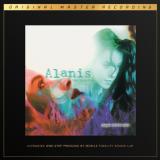
When Alanis Morissette took direct aim at an ex who wronged her on the eviscerating “You Oughta Know” in 1995, everything about the Top 10 song communicated it wasn’t the usual narrative about love gone south. Or the typical wounded singer wallowing in self pity. Morissette, and both the lead single from and her entire American major-label debut — the profoundly personal Jagged Little Pill — represented a sea change. They kickstarted a movement, one whose impact continues to echo throughout the mainstream nearly three decades later.
Ranked the 69th Greatest Album of All Time by Rolling Stone, included on the Rock and Roll Hall of Fame’s list of 200 Definitive Albums, and featured in several books about essential albums, Jagged Little Pill remains more than a blockbuster that has sold more than 17 million copies in the U.S. and 33 million units worldwide. It’s a statement, an attitude, a soundtrack for anyone seeking inspiration, an outlet, or permission to be themselves.
Sourced from the original master tapes, pressed at Fidelity Record Pressing on MoFi SuperVinyl, and strictly limited to 4,000 numbered copies, Mobile Fidelity’s UltraDisc One-Step 180g 45RPM 2LP box set of Jagged Little Pill presents the landmark effort in audiophile-grade sound for the first time. A key part of the record’s appeal and accessibility — Glen Ballard’s smooth production, touches that help Morissette’s exposed-nerve fare seem more accessible and melodic — comes through on this special 30th anniversary edition with an openness, presence, and dynamic explosiveness that make the vocalist’s songs that much more real and visceral.
The singer’s distinctive mezzo-soprano deliveries — the octave-rippling highs, dark-hued lows, dramatic crescendos, belted choruses, wispy reflections, occasional yodels — resonate with full-range ardor and depth. As crucial as anything on the record, Morissette’s confessional words take center stage like never before. Ditto the instrumentation and atmospherics that form the magnetic backgrounds of the songs. Key in on the contributions from Red Hot Chili Peppers Dave Navarro and Flea on “You Oughta Know” to Tom Petty & the Heartbreakers' co-founder Benmont Tench’s organ playing on six tracks.
The deluxe packaging of Mobile Fidelity’s Jagged Little Pill UD1S set underscores the work’s distinguished status. Housed in a slipcase, the LPs come in special foil-stamped jackets with faithful-to-the-original graphics that illuminate the splendor of the recording. Benefitting from an ultra-low noise floor, superior groove definition, and dead-quiet surfaces, this UD1S reissue is for listeners who prize sound quality and desire to engage themselves in everything involved with the album, including the now-iconic cover art that juxtaposes two portraits of the then-21-year-old singer-songwriter and features typewriter font.
That script — which suggests a raw, blood-on-the-floor document created without modern aids like spell check or language correction — hints at the heightened level of unvarnished intimacy, honesty, and catharsis Morissette offers throughout Jagged Little Pill. Named after a phrase uttered on the astute “You Learn,” the album explores the frank emotions, inherent contradictions, and wishful desires people feel everyday but are often too afraid to express. Morissette displays no such fear or shyness.
Akin to a woman reading from a diary, Morissette leaves nothing to the imagination as she skewers hypocrisy during the poignant “Forgiven,” seeks recompense on the vengeful “You Oughta Know,” and spills her guts on the soul-purging “All I Really Want.” For all the anger and bile ascribed to the singer and record, Jagged Little Pill is incredibly healthy and upbeat. Morissette uses the catchy pop-rock frameworks and moody ambience to suss out situations, to learn, to give hope. There’s the clever yearning of “Hand in My Pocket”; wry contrarianism of “Ironic”; kind-heartedness of “Hand over Feet”; the live-and-let-live spirit of “You Learn” – all positive and amiable.
Throughout Jagged Little Pill, the ever-approachable Morissette connects with listeners who recognize themselves in her — and has an intelligent conversation with anyone who wants to participate. It seemed almost everyone did. In addition to the mammoth sales that make the effort the 17th-best-selling album in American history, Jagged Little Pill collected four Grammy Awards, two American Music Awards, three Billboard Music Awards, and eight Juno Awards. In 2018, the record became the basis for a musical that netted 15 Tony nominations on Broadway.
Ironic? Anything but. Jagged Little Pill transcends generations, gender, and trends. As Morissette sings on the opening “All I Really Want,”, the album represents “deliverance” — “a place to find common ground.”
This 15-track project cements BigXThaPlug's status as one of hip-hop's most authentic and compelling voices. Executively produced by Bandplay—the mastermind behind "The Largest"—alongside longtime collaborators Tony Coles, Charley Cooks and others, Take Care offers a raw and unfiltered reflection of BigXThaPlug's rise to stardom. The album showcases his electrifying energy while exploring new sonic territories, all while remaining true to his signature sound.
BigXThaPlug's artistic evolution is evident in his lyricism, a masterful blend of melodic instrumentation and commanding beats. Drawing inspiration from the sounds of '70s and '80s hip hop, Take Care features a powerful tracklist that includes viral sensations "Mmhmm,” and “Change Me,” along with fresh tracks like "Lost The Love," "2AM," and "The Story of X." Throughout the project, he crafts an innermost narrative that speaks to his journey, proving that success hasn't clouded his vision or altered his core values.
The album announcement arrives with a compelling trailer and the launch of pre-orders, igniting anticipation among BigXThaPlug's devoted fanbase. Masterfully directed by creative director TreySoulss, the intimate trailer features his grandmother's voice guiding viewers through precious family footage and pivotal moments, revealing the forces that shaped his meteoric rise. This project not only promises to further establish him as a leading voice in hip-hop's new generation but serves as testament that his success is no fleeting moment—it's the foundation of an enduring legacy.
- A1: My Boy Lollipop
- A2: Oh, Henry
- A3: Do-Re-Mi
- A4: Since You've Been Gone
- A5: I'm In Love Again
- A6: Sugar Dandy
- A7: Sweet William
- A8: Bluey Louey
- A9: Something Gotta Be Done
- B1: He's Mine
- B2: Tom Hark
- B3: Be My Guest
- B4: Walking To New Orleans
- B5: Let The Four Winds Blow
- B6: Don't You Know
- B7: Until You're Mine
- B8: I Want You To Know
- B9: See You Later Alligator
My Boy Lollipop is the debut album by Jamaican singer Millie Small, capturing the infectious energy of the early ska movement. Driven by the global success of the title track, a genre-defining hit, the album delivers a lively mix of upbeat rhythms, playful melodies, and Millie’s unmistakable high-pitched vocals. With a blend of ska, pop, and R&B influences, it's a vibrant showcase of the sound that helped bring Jamaican music to international audiences. A must-have for fans of classic ska and timeless feel-good tunes.
REPRESS
New Delhi-based Peter Cat Recording Co. will release their debut album, ‘Bismillah’ on June 14, 2019 via French independent label Panache Records. Debut UK live shows are soon also to be announced by the band.
Peter Cat Recording Co. could almost have a question mark on the end of its name. Not least as founder & frontman Suryakant Sawhney refuses to explain where that name really comes from or what it means (perhaps a reference to the Tokyo jazz club owned by Haruki Murakami), but also since the very existence of the band itself raises a raft of questions. When was the last time we fell for an indie rock band for the right reasons? Not because the band in question nostalgically imitate a perceived ‘golden age’ but because they innately embody the fundamentals of such music: fantasy, sincerity and the freedom to make music without rules or career aspi- rations. And when was the last time this kind of band sounded like Sinatra, Barry White, the sweetest doo-wop, humid fanfares and a psychedelic wedding band, all at once? And all of this coming from India?
In truth, the story of Peter Cat Recording Co. was written within the triangle of San Francisco, Delhi and Paris.
In the first of these cities, Sawhney (a native of Delhi) pitched up to study film-making. More distracted by the city’s peaking live scene of the early noughties, this is where he started to make music and to sketch out an idea for the band.“
The people I lived with supported my idea of writing music, they introduced me to great mu-
sic. There used to be a great garage scene in San Francisco, like The Oh Sees also Ty Seagall, Mikal Conin, all those bands. This is a world I had never seen in my entire life. A big inspiration from San Francisco was that you could record yourself. You don’t need to be in a studio and spend a lot of money to make an album. You can do it”.
At the end of the 2000s, Suryakant returned home to New Delhi, and started his band for real, more or less the same band that plays today. “I wasn’t so concerned about will we be performing, will we be the greatest band, will we be trendy. I just wanted to make something that was consequential and important for us, I think. Something which would last, something people could listen to and be like « this is life changing ». It was for the sake of beauty”.
For the first few years and in India alone, this is exactly what Peter Cat Recording Co. did, in total indifference to the rest of the world. This was until young Parisian label Panache stumbled across the band online via Vice’s THUMP subsidiary, stupefied by the band’s cosmic video for seven-minutes-and-counting track, ‘Love De- mons’. And so in spring of 2018, ‘Portrait Of A Time: 2010-2016’ was released on Panache - making the first international release from Peter Cat Recording Co., bizarrely enough, an anthology of re-mastered, hidden gems from the band’s ramshackle back catalogue, previously recorded in Suryakant’s own living room. With Peter Cat’s off-kilter charm hitherto unheard of beyond the fringes of India, the release provided a gateway op-
Whilst the title track found its way onto Tracks Of The Year lists at the Guardian & NME, it was tricky for new PCRC enthusiasts to get a firm grip on the startling push/pull between the immediate, uncanny music this release gathered, and the cultural backdrop of New Delhi at which it was so startlingly at odds.
Opportunity for a wider fanbase to fall in love with their cloud-like, drunken songs for the first time.
If discovering your favourite new band via a ‘Best Of’ feels a curious premise, then ‘Bismillah’ does more than hint towards the promise of Peter Cat Recording Co’s future. Blending gypsy jazz, psychedelic cabaret, space disco, bossa supernova, Bollywood and uneasy listening with kaleidoscopic ease, in many senses, the band’s knack hasn’t altered. Always different, paradoxical, unpredictable yet somehow familiar. The new album opens to the strains of bird chatter, the whisper of a city’s soundscape and the first few notes from an instrument which seem to be calling us to the departure lounge, a fore-shadow of the flight ‘Bismillah’ launches its listener
on. Suryakant sings with the detached, rueful elegance of Sinatra marooned on a desert island, whilst his band create small space-time capsules which navigate their way through genres and eras – including the future – and between nostalgia and eccentricity.
Peter Cat recently trailed ‘Bismillah’ with the release of ‘Floated By’, an appositely titled musing on failure & missed opportunities, punctuated by the fulsome brass section which weaves through so much of the album.
The languid, blue quality to the track is offset by the attendant music video, created with footage shot, implau- sibly enough, at Suryakant’s own marriage ceremony (needless to say, the wedding band hired for the day was of course, Peter Cat Recording Co.) Sawhney dryly notes; “Hopefully it’s not a many-a-times-in-a-lifetime event. You can’t fake that set, those people actually having a good time, being really emotional and intense.” ‘Bismillah’’s colour-drenched album cover also captures Suryakant’s father-in-law making his wedding toast on that same day - a nod back towards the cover of ‘Portrait Of A Time’, itself a black & white image taken at the wedding ceremony of Suryakant’s own father.
A stumbling but gracious collection of songs rooted in a kind of drunken soul music, the melancholy nature of some of the songs on ‘Bismillah’ renders them almost liquid, before they develop into more dance-like shapes. Suryakant’s rangy voice swoops from the falsetto glide of ‘I’m This’ to the beat-up baritone blown along by the warm breeze of ‘Soulless Friends’. The elliptical structure of album opener ‘Where The Money Flows’ also al-
lows for the use of brief bursts of autotune effect on his vocal without feeling incongruous, whilst the desultory lyrics of ‘Heera’ (a Hindi word for diamond) - sharing something with the Morricone school of grand storytelling - have an emotional weight that would impress even coming from a native English speaker. Perhaps the most gleefully unpredictable moment on ‘Bismillah’ comes with the illusory, vocal loops on the intro to ‘Memory Box’, errupting into 8 exhilarating minutes worth of unbridled, string-backed disco joy. A cat might have nine lives, but on ‘Bismillah’ and beyond, Peter Cat Recording Co. are hinting towards an un- knowable multitude of dimensions. Throw them all together, and it equates less to a listening experience and more to an out-of-body experience.
Peter Cat Recording Co. are: Suryakant Sawhney (vocals/guitar/organ), Dhruv Bhola (bass), Kartik S Pillai (organ/guitar/electronics), Rohit Gupta (horns), Karan Singh (drums)
2023 Repress
It's the quiet ones we should watch, they always say. Which is particularly astute advice right now, when loud, constant self-declaration and saturated 'brand' visibility have become the norm. But above the babble and brightness, some voices will always speak quiet volumes - with calm eloquence and the kind of certitude that comes from valuing the playing out, not just the prize.
Sweden's José González is just such a voice. He first charmed his way into the UK's earshot via the murmurous and elegant, classically finger-picked folk pop of his 2005 album, Veneer, which has since sold over a staggering 430, 000 copies in UK alone. Two years later came In Our Nature, a further exploration of José's influences (Argentinian Folklore, the '60s US folk tradition and the British pastoral folk-pop style of the same era), on which he resisted the temptation to beef up his alluringly introvert aesthetic. The albums made the UK Top 10 and Top 20 respectively.
Conceived as the natural third part in an acoustic trilogy, Vestiges & Claws is a(nother) hushed and delicate solo set that forefronts the artist and guitarist's compellingly intimate vocal style and intricate playing technique, but it's often strikingly rhythmic in nature and cohere's perfectly, with hand claps and taps on the body of his instrument underlining the songs' mantric rise-and-fall pattern, while elsewhere, over-dubbed guitar parts and multi-tracked vocal harmonies entwine to sweetly immersive effect.
The title refers to both cultural practices and biological features that survive despite having lost their original function, and to currently useful tools, ie the 'claws' of modern life.
Vestiges & Claws was recorded almost entirely by José and self-produced, mostly in his Gothenburg home, using computer plug-ins to achieve a warm, analogue sound. He prefers working alone, mainly for artistic reasons. 'There were a couple of things that enabled me to complete this record: one was curiosity, to be able to play percussion and do a lot of harmonies and also to produce and mix the album; the other was aesthetics. I love to listen to Arthur Russell and Shuggie Otis, to music that has been done mostly by one person in their solitary state.'
As José sees it, the record is his personal, 'zoomed-out eye on humanity on a small, pale blue dot in a cold, sparse and unfriendly space. The amazing fact that we are all here, an attempt at encouraging us to understand ourselves and to make the best of the one life we know we have - after birth and before death.
- A1: Pharoah Jones
- A2: Ghost Gospel
- A3: Ill Feeling
- A4: Capital Punishment
- A5: Do Not Adjust
- A6: Cool Green Trees
- A7: Chill Scratch
- A8: Poisonous Fumes
- A9: Welcome Aboard The Starship
- B1: Keep On Runnin
- B2: Sounds Impossible
- B3: Painted Faces
- B4: The Knew Style
- B5: Chicken Wing Blues Sauce
- B6: Kool Breeze
- B7: Sexx Bullets
- B8: Soul Child
- B9: Take Off Runnin
- B10: Centurian
- B11: Bozack
- B12: Church
- B13: Splash One
- B14: Hank
- B15: 73 Goatee
"Chasing the funky symphonies that filled my head and my dreams..."
December 25th, 2023 - an Instagram post. Stimulator Jones shared half a dozen FIRE tracks from his beat tape archive. We were immediately drawn to the rough hewn boom bap.
"I'd release that", Rob commented.
Hours of material was shared and the result is this: Cool Green Trees (1999-2005). A collection of beats and loops Stimulator Jones created between the ages of 14-20 at home in his basement, bedroom and computer room in Roanoke, Virginia.
You will not believe the profound soulful genius contained within these naive schoolboy melodies.
December 25th, 1998 - 25 years ago to the day and his much-coveted Yamaha SU10 sampler was finally bestowed upon young Stimmy AKA Sam Lunsford: "I immediately hooked up a CD Walkman to the input jack and looped the beginning two bars of Grover Washington Jr.'s "Mercy Mercy Me". I don't know what exactly was so thrilling about hearing two measures of music repeating over and over but it was so infectious and hypnotizing and enthralling to me. I'll never forget that ecstatic rush of making my first loop - an uncontrollable, gleeful smile plastered all over my face." When you hear the pocket breakbeat symphonies featured here on Cool Green Trees, you'll feel the same sense of frisson.
In the wake of his Stones Throw breakthrough - Exotic Worlds & Master Treasures - Stimulator Jones was pegged by many as a 90s throwback artist. However, he literally IS a 90s artist. He's been recording music most of his life and he's now 40. He created the bulk of Cool Green Trees as a teenager. Everything before 2004 was recorded when Sam was still in school. He was in 8th grade when he made the 1999 tracks - he didn't even have his learner's permit. This album is a snapshot of a young man in a simpler time. Things were still mysterious back then and he was flying blind, relying on his ears and having to figure things out for himself: "I had no road map for becoming a beatmaker. I have been collecting music since I was a kid, I am a lifelong digger and seeker of cool and interesting sounds. I was there in the golden age of Hip Hop, and while I may have been a suburban white kid in Roanoke, Virginia, I was tuned in and I bought so many classic albums when they came out. I was attracted to Hip Hop because of the musical and poetic quality. I was hypnotized by the rhythms, partially because I was a drummer. I didn't brag about collecting my breakbeat records or making beats - it was something I did in isolation. It wasn't something I generally wanted to bring attention to and it didn't really score me any cool points. I certainly wasn't flexing on social media about it."
Hell, he can do that now!
Opener "Pharoah Jones" was inspired by Yesterday's New Quintet and Madlib's ability to capture that classic 70s sound whilst playing all the instruments. Sam created this one stoned afternoon by laying down a 2 bar loop and a shaker loop on his Yamaha SU700 sampler. He hung a microphone from the ceiling and played his Yamaha Stage Custom drum kit over the top before adding ender Rhodes and playing his dad's Selmer tenor sax through an Electro Harmonix Memory Man echo pedal. Yes! Up next, "Ghost Gospel" utilises a dope loop from a gospel record and adds some soul-funk drums overtop, whilst working that filter knob. Says Sam: "The loop reminded me of something Ghostface would rap over. The sample was in 3/4 waltz time but I flipped it for a 4/4 groove, a technique I picked up from RZA. "Ill Feeling" uses sped-up pieces from a dusty old funk record and putting them over a classic NOLA drum loop; gain chopping up a slow, bluesy 3/4 time signature and bending it to a 4/4 groove. Classy shit. "Capital Punishment" features drums tapped in live, inspired by MF Doom's Special Herbs series. "Do Not Adjust" consists loops found on a compilation of 70s French music at Happy's Flea Market, a classic Roanoke digging spot.
The sublime, evocative title track, "Cool Green Trees" was created when Sam was still living at home. He dumped samples off his SU10 into the family desktop and arranged them in a demo version of Pro Tools: "This track was sort of my ode to the DJ Shadow style of sample based production. Super spacey, slow, and moody. The heavily filtered drums were inspired by Alec Empire's 'Low on Ice' album. I later added some scratches and sounds from a Spider Man storybook record." "Chill Scratch" snags the final bit of a bossanova record and pairs it with a drum loop before adding experimental scratching run through an Electro Harmonix Memory Man echo pedal. "Poisonous Fumes" was made using a sampler, mixer and a turntable; a kind of mixtape beat collage with added scratches and sounds from various records. Using dialogue from superhero records was a nod to Madlib. "Welcome Aboard The Starship" is dark, downtempo trip-hop with a spooky bent. Sam paired a slow, hard drum loop with a guitar sample grabbed off a psychedelic rock record. To finish, he added various backwards sounds and weird atmospheric effects and a little scratching. Swoon.
Side B opens with "Keep On Runnin", made on a borrowed Roland SP202 sampler. Having always loved the sound of the Lo-Fi filter on those machines, reminiscent of the Emu SP1200, Sam always imagined Del or another of the Hieroglyphics crew rapping over this beat. You can certainly hear why. "Sounds Impossible" sees Sam experimenting with layering multiple kick samples at different volumes to create patterns similar to those heard by Showbiz and Lord Finesse during their God-level 1995 period. "Painted Faces" was made by chopping up a REDACTED record which he had gotten from Happy's Flea Market and paired it with a REDACTED drum loop. By the time Sam recorded "The Knew Style", he had acquired a shitty old 1960s portable turntable off eBay. It didn't function properly when he bought it but his brother opened it up, cleaned it out and got it working: "I remember he told me that there was a bunch of sand inside of it when he opened it up, as if its previous owner had taken it to the beach. I would take that turntable on my Happy's Flea Market digs so I could preview records...that's how I found this loop."
"Chicken Wing Blues Sauce" loops up a classic blues joint and pairs it with some REDACTED drums. A bit of filtering and arranging et voilà! "Kool Breeze", from 1999, is one of Sam's oldest surviving beats, as is "Sexx Bullets". The Roots sampled the same record, leaving Sam frustrated yet vindicated. "Soul Child" was an early SU10 creation, looping a dusty old Soul Children 45 and pairing it with 70s rock drum loops to great effect. "Take Off Runnin" was another loop found digging with a portable turntable. Paired with some boom bap drums it makes for a hypnotic head-nod groove. "Centurian" was intended to be a little beat interlude a la Pete Rock. The sample is from a sun-dappled soft-psych record and it's paired with a Robin Trower drum loop that just happens to fit perfectly. Sometimes you slap things together kind of haphazardly and magic happens. "Bozack" was the first beat Sam made using Pro Tools, his first foray into using chopped sounds instead of loops, an exciting new world. "Church" is beat interlude using a Phil Upchurch loop with the "Long Red" drums - a favourite break of Dilla et al. Sam was really on a tear in late 2004, probably because he was unemployed and phoneless and able to just make beats all day. He made "Splash One" on a borrowed Yamaha SU700 and again was experimenting with tapping the drums in live with his fingers, instead of using a loop or sequenced pattern. Channeling 9th Wonder, Sam used a water splash sound effect from a Batman record as a percussive element, hence the title (also a 13th Floor Elevators reference). The main loop is a backwards portion of one of his favourite Roy Ayers songs.
"Hank" is another fun little beat interlude thing, created on a borrowed Roland SP202 sampler with the fantastic Lo-Fi effect that resembled the Emu SP1200 at a fraction of the price. "73 goatee", from 99, is another of his oldest surviving beats, created in his bedroom with his Yamaha SU10 and his brother's Vestax MR-300 4-track recorder: "This one will always feel special. I can remember having a feeling all the way back then on the night that I created it that this was a solid beat with a catchy loop. There was something in the Fender Rhodes melody that resonated with me emotionally, and I had never heard a producer sample that portion before. I felt like I had found my own unique sound, my own unique loop. It came from an Ahmad Jamal '73. I actually even recorded myself rapping and scratching over this beat way back then, I still have that version in all its imperfect sloppy glory."
Sam explains just how much these tracks mean to him: "They all have immense historical and sentimental value and I'm proud of them. These beats come from an innocent, simple time when I was just figuring out how to craft these sounds. They're something very personal to me. They are the initial part of a journey that I really was taking *alone*. There was no YouTube. I couldn't Google shit. I didn't even know any other beatmakers, producers or DJs in my town that could teach me anything. It was always just me, alone, in a room with some equipment - chasing the funky symphonies that filled my head and my dreams. What I was doing wasn't cool. Most of my peers thought I was a weirdo and couldn't care less. Creating these sounds was an anti-social endeavour. In a sense, I felt like it was me against the world, and all I had to instruct and assist me were the recordings produced by my heroes - RZA, DJ Premier, Erick Sermon, Beatminerz, Showbiz, Diamond D, Beatnuts, Prince Paul, The Bomb Squad, Pete Rock, Q-Tip, E-Swift, Mista Lawnge, DJ Shadow, Cut Chemist, Peanut Butter Wolf, El-P and so many more...I dedicate this collection to them, and to my older brother Joe who has always been a musical and technical guiding light for me.
This was a time before every kid was a self-described producer and beatmaker, before everyone had a DAW, before Kanye and "chipmunk soul", before Red Bull beat battles, before there was any social media beyond chat rooms and AOL Instant Messenger, before Soundcloud, before SP-404 mania, before lo-fi beats to study to, before Splice, before targeted ads for MIDI chord packs, etc. In 99 when I told people that I had a sampler and made beats I was mostly met with bewildered confusion and indifference. Kids and adults alike would wonder why I got this weird machine for Christmas instead of something worthwhile like a Playstation or a mountain bike or even a guitar for that matter because at least that could be used to make "real music". Back then, sampling was still not widely respected as an art form - it was seen as lazy, talentless and unoriginal at best and outright criminal theft at worst. I had gotten respect for playing drums and guitar and things of that nature but this was a step in the wrong direction in the eyes of many."
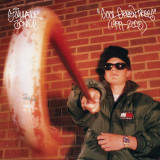
The cover photo is a picture of Sam standing on his back porch in the latter part of 1998, just before he got his first sampler. He was 13 years old, in 8th grade. His dad took the picture with his 35mm film camera: "I actually wanted to be pointing my dad's .22 pistol at the camera lens but he wouldn't let me. He gave me an old walking cane to use instead. The Tommy Hilfiger puffer jacket came from the lost and found at William Fleming High School where my mom worked as a secretary. I was thrilled when she brought it home because we never spent money on expensive name brand clothing like that - we were for the most part strictly a sale rack, bargain bin, thrift store, yard sale, flea market kind of family when it came to clothes. My watch is some cheap off-brand fake gold department store watch." Mastering for this vinyl edition was overseen by Be With regular Simon Francis and it was cut by the esteemed Cicely Balston at Abbey Road Studios to be pressed in the Netherlands by Record Industry.
New Traditions is a collection of pipe music, electronic music, mouth music and folk music from five emerging and prominent Scottish artists.
It started in Sutherland with a recording of The Waters of Kylesku. “Do you learn any Gaelic at the school?” asks Hamish Henderson of Christine Stewart. “No,” she answers. “That’s a shame,” he responds, “Isn’t it?” she says. Then she sings. Her voice is of the peat itself, grown from the earth as the language was. It soars raptor-like above drenched ground and scoured pink rock.
Next, to Nancy Dorian, a linguistic missionary of sorts, who came from America to watch a language die. She charted the decline of Gaelic in a cluster of Sutherland villages from 1963 to 2020 when the terminal native speaker passed. Gaelic has origins in nature, with each letter of the alphabet named after a tree. It seems significant that the land of the north is now all-but devoid of forest.
Enter Alan Lomax, who travelled the world documenting indigenous music. Material from his archives feature on (fucking) Moby’s platinum selling Play. Despite the record’s worldwide commercial success we know very little of the music he essentially exploited.
Then musician Martyn Bennett, who built tracks around Lomax recordings of Scots and Gaelic voices, and did so with love that shared his blood with the cancer that killed him. His records both popularised and preserved obscure indigenous Scottish music.
This collection of tunes has similar intent: to consolidate ephemeral words in physical grooves - real as the rigs that still scar the earth - but also a desire to interpret. These versions have the greatest reverence for the originals at heart, but like the architecture of a great gallery, serve to protect and elevate.
The first and most independent of all independent producers, Joe Meek needs little introduction. He was the first to chart in both the UK and the USA with an independently produced song -which was actually recorded in his home’s kitchen- when The Tornados' Telstar took the world in 1962. Meek was, of course, one of the most in vogue producers of the first half of the 1960s, providing the soundtrack to the evolution of UK Rock’n'Roll to Swinging London, scoring hits with actors like John Leyton (Johnny Remember Me), showmen like Screaming Lord Sutch and bands like The Outlaws and The Tornados. He also produced a wide stream of R&B and freakbeat 45s that are nowadays hardly sought after by the collectors with the biggest bank accounts.
Joe Meek experimented with all kinds of recording techniques in his home studio, his tricks and gimmicks won his productions chart placement and critical and public acclaim, but none of his projects was so advanced and way out as the avantgarde experimentation showed in his I Hear a New World electronic symphony from 1960. Aided by The Blue Men formed by Rod Freeman (group leader, guitar, vocals), Ken Harvey (tenor sax, vocals), Roger Fiola (Hawaiian Guitar), Chris White (guitar), Doug Collins (bass), Dave Golding (drums) -also known as Rodd-Ken and The Cavaliers- who provided a tight base to his electronically produced sounds, Meek came up with what he envisioned as the soundtrack of the future, the sounds he envisioned were to be heard in outer space. It was too way out for its time, certainly. To the point that of all the opus, only four tracks saw the light of day on a 7" EP released on Triumph, Meeks very own label. It wouldn’t be until 1991 that the whole recordings from the I Hear a New World sessions would see the light of day on a CD issued by the RPM label.
Wah Wah offers a new reissue of this now classic early electronics masterpiece, housed in a beautiful front-laminated back-flapped sleeve and offered as a limited 400 copies only black vinyl version and an ultra-limited 100 copies only transparent purple vinyl. Get yours before they fly!
RIYL : Delia Derbyshire and The BBC Radiophonic Workshop, Louis and Bebe Barron’s soundtrack to Forbidden Planet, Raymond Scott, Tom Dissevelt & Kid Baltan, Morton Subotnick…
The first and most independent of all independent producers, Joe Meek needs little introduction. He was the first to chart in both the UK and the USA with an independently produced song -which was actually recorded in his home’s kitchen- when The Tornados' Telstar took the world in 1962. Meek was, of course, one of the most in vogue producers of the first half of the 1960s, providing the soundtrack to the evolution of UK Rock’n'Roll to Swinging London, scoring hits with actors like John Leyton (Johnny Remember Me), showmen like Screaming Lord Sutch and bands like The Outlaws and The Tornados. He also produced a wide stream of R&B and freakbeat 45s that are nowadays hardly sought after by the collectors with the biggest bank accounts.
Joe Meek experimented with all kinds of recording techniques in his home studio, his tricks and gimmicks won his productions chart placement and critical and public acclaim, but none of his projects was so advanced and way out as the avantgarde experimentation showed in his I Hear a New World electronic symphony from 1960. Aided by The Blue Men formed by Rod Freeman (group leader, guitar, vocals), Ken Harvey (tenor sax, vocals), Roger Fiola (Hawaiian Guitar), Chris White (guitar), Doug Collins (bass), Dave Golding (drums) -also known as Rodd-Ken and The Cavaliers- who provided a tight base to his electronically produced sounds, Meek came up with what he envisioned as the soundtrack of the future, the sounds he envisioned were to be heard in outer space. It was too way out for its time, certainly. To the point that of all the opus, only four tracks saw the light of day on a 7" EP released on Triumph, Meeks very own label. It wouldn’t be until 1991 that the whole recordings from the I Hear a New World sessions would see the light of day on a CD issued by the RPM label.
Wah Wah offers a new reissue of this now classic early electronics masterpiece, housed in a beautiful front-laminated back-flapped sleeve and offered as a limited 400 copies only black vinyl version and an ultra-limited 100 copies only transparent purple vinyl. Get yours before they fly!
RIYL : Delia Derbyshire and The BBC Radiophonic Workshop, Louis and Bebe Barron’s soundtrack to Forbidden Planet, Raymond Scott, Tom Dissevelt & Kid Baltan, Morton Subotnick…
Franky Wah makes Crosstown Rebels debut with ‘Disconnect’ EP, featuring Kuuda. Out on 20th June 2025, the four-tracker sees the acclaimed UK producer make his first appearance on the revered imprint.
A producer known for balancing dancefloor energy with introspective songwriting, Franky Wah’s rise has been fuelled by a string of chart-topping singles, non-stop global club and festival appearances, and the launch of his own imprint and event brand, SHÈN. With musical influences stretching from trance and breakbeat to afro-house and techno, he now brings that rich sound palette to the Crosstown fold for the first time with a release that’s equal parts euphoric and deep as it is driving. Delivering a powerful and emotionally charged four-track release, 'Disconnect' showcases the Yorkshire-born artist’s blend of underground grit and melodic sophistication, featuring two standout collaborations with rising vocal trio Kuuda.
Opening the EP, the title track pairs swirling textures, brooding basslines and crisp percussion with commanding vocals, setting the tone for the journey ahead. The synergy continues on ‘Off The Wall’, a hazy, late-night jam elevated by Kuuda’s signature warped vox interjections. On the flip, ‘Desert Dance’ continues further into hypnotic territory with wicked bass licks and layered synth work, before closing track ‘Freak In The Sheets’ delivers another impactful, heads-down groove laced with attitude. Featured on two of the EP’s four cuts, Brighton-based trio Kuuda continue to emerge as a rapidly ascending vocal project within electronic music. Known for their genre-fluid songwriting and dynamic live presence, their collaborations with Hot Since 82, Yousef and Artche have earned them widespread support from the likes of Pete Tong, Danny Howard and RÜFÜS DU SOL. Blending emotional depth with club-ready impact, ‘Disconnect’ marks an inspired meeting point between Franky Wah’s expansive production style and the Crosstown Rebels spirit—one that looks set to soundtrack dancefloors throughout the summer and beyond.
TAMTEN, the master storyteller behind the synthesizers, extends his invitation to every curious listener to ponder the same questions that haunt him throughout his peculiar career: what impacts the sound of an era? How are we shaped by what we hear and see? Do we channel our collective feelings of longing and desire for higher purpose in accord or in opposition to major historical and political forces?
On "Wschodnia Fala: The Reimagined Vision of Eastern-European Wave Music" TAMTEN takes us on a kaleidoscopic voyage through a parallel universe where the symbols and echoes of days gone by are so much more than just archived exhibits of nostalgia. Through an array of meticulous, cut & paste rearrangements, the Warsaw-based artist manages to animate yet another fantastic world of "what could be", following his more apocalyptical take on the previous LP.
There is boldness in every aspect of the release. The saga-like story unfolds evoking the excitement of seashore autobahn ride, thrills of long-forgotten discotheque nights, rush of obsessive romance and intriguing, noir-inspired drama of introspection. The analogies between Polish wave music (with nods to Aya RL, Republika, Klaus Mittfoch, Papa Dance or even Bajm) and global disco-era top chart phenomenons like Kraftwerk, Grace Jones, Giorgio Moroder and Duran Duran, could spark hour-long musicology debates. The melodies and harmonies heard on the album resemble compositions everybody knows but also sound completely new and exhilarating, just as western music clips experienced for the first time behind the Iron Curtain and then collected compulsively on VHS tapes. The feeling of the author's frenetic attempt to capture sensations, memories, artifacts and ideas never escapes the listener till the very last minute of the recording.
"Wschodnia Fala" could pass for an eerie, anonymous late 80s lost-and-found cassette mixtape unearthed on any of the Berlin Wall's sides, if it wasn't for its crystal-clear, contemporary production value and the fluent, educated use of samples ranging from bizarre and opaque to deliberately retro-pop-influenced. Those elaborate winks of the eye for those in the know are already TAMTEN's trademark and they reflect his long-standing fascination with the dancefloor anthropology rather than just the dancefloor itself. Even though never leaning towards formulaic, easy-to-mix, club-ready stompers, his ideas are still groovy enough to make anyone move.
The album strives for some sort of unattainable totality - it's a ticket to a seance, an experience, a rite. It is a chance to time travel and dance with your ancestors in a glass labyrinth on acid or to watch an 80s teenage adventure, coming-of-age, road cruising film in the cinema of your imagination with only a soundtrack provided. A "the best of" CD compilation of hits from a childhood we remember from a different timeline. A comic book sketch, a diary of an archivist, an elegy for the times that never were and a party you wish you could go to right now. The adventure is always different with another listen.
Step in. Close your eyes. Reimagine.
Embrace the wave
Just a year after her critically-acclaimed album Still, Erika de Casier returns to surprise release her fourth album Lifetime.
A sonic moodboard fully written and produced by Erika herself, Lifetime is a testament to de Casier’s singular taste—her ability to pull from the past, to curate sonic and visual references with intention, and to transform them into something uniquely hers. Thoughtfully composed yet effortlessly cool, Lifetime is an album that resonates, proving that Erika’s vision isn’t just about what she creates, but how she makes us feel when we listen.
She began dropping breadcrumbs about the record last month, Erika mysteriously putting a limited set of nameless cassettes up for sale on Bandcamp. Even with no context of what was on it, the tapes quickly sold-out in under thirty minutes and fans began to speculate new music coming. As cassette deliveries began to pour in last week, their theories proved correct. Derrick Gee streamed the cassette live on his channel and fans online began freaking out as they put the pieces together (see here and here!). That so many rushed to embrace the music before even knowing what it was speaks volumes — Erika isn’t just admired, she’s trusted, and with Lifetime, she rewards that devotion in the most Erika way: subtly, stylishly, and on her own terms.
Lifetime follows last year’s aforementioned album Still, which was named one of the Best Albums of the Year by Pitchfork, Stereogum, NPR, Vogue, Vulture and more, and features Blood Orange, They Hate Change, and Shygirl. The album took her on a world tour including a US run that included both weekends of Coachella. She also released one of the best songs of the summer shortly after in the form of “Bikini,” a track with her frequent collaborator Nick León (“Ex-Girlfriend,” “Friendly” Remix) that was named the #1 song of the year by The FADER and Resident Advisor.