Suche:self

Styles
Alle
George Smallwood - Loser

Beautiful soulful album by George Smallwood - including original material from home sessions prior to George's 1980 self- released LP. The rest, a sampling from the Smallwood mind's library of classic song writers. Huge tip!
"Recorded Live in Hyattsville, MD 1975-2015. George really had no interest in releasing this record. 'Seeing Is believing, they don't need records, trust me I did that, today they getting it live.' So this record is that, live tapes from the house, recorded on a government issued cassette recorder from National Library Service for the Blind. George calls these his practice tapes for songwriting, and performance warm-up, and never beyond his ears were they intended to travel. 'You just got to see me live if you want to really see me.. so when we get there just plug me in, and point me at that crowd' Last time I saw George they had him wired to the club system. He unplugs his Yamaha keyboard, licks the tip of the power cord and taps a beat on it, finally plugging in, synth lights up, tones all at zero, beats at zero. Then he builds from there, counting blind through a preset one hunderd factory tones and rhythm patterns. 'I gotta start off at zero, and go from there.' After the Marshmellow Band disperesed, he got this Yamaha keyboard, same one he's been playing since 1990, endless scrolling over the same presets, trying to make them fit, tempo down, tapping while telling the story and asking if that feels right to you. 'This always gonna be different live.'
Andrew Morgan (Peoples Potential Unlimited)

Auf Lager

Bei uns am Lager und sofort versandfertig

27,69
Various - Straight Outta Tenggara: Southeast Asian Hip-Hop, 1990s-2000s MC (TAPE)
  • A | Side A
  • B | Side B

Another DINTE tape curated by cult WFMU show and blogger Bodega Pop; Gary Sullivan's long-running project rooted in a passion for digging for music in bodegas and cell-phone stores across NYC's boroughs. This edition focuses in on late 1990s and early 00s hip-hop & rnb from across Southeastern Asia.

"While on a work trip to Chicago in the mid-2000s, I was craving a bowl of pho. A bit of sleuthing led me to hop on the red line "L" up to Argyle Street, ground zero of Chicago's Little Saigon. In the 1960s, Chicago restaurateur Jimmy Wong invested in property on Argyle Street with a vision to build the city's new Chinatown, a kind of mall with pagodas, trees, and reflecting pools. In 1971, the Hip Sing Association, a labor/criminal organization, established itself in the area, and along with Wong, they bought up 80% of the buildings on a three-block stretch of the street. Wong reportedly broke both hips in an accident, leaving his dream to wither; in 1979, Charlie Soo of the Asian American Small Business Association brought it back to life.

Soo expanded the area into a vibrant mix of Chinese, Vietnamese, and other Southeast Asian businesses, pushing for renovations, including an Argyle station facelift and the Taste of Argyle festival. At the time I exited the station and crossed the street to get a better look at a shop with a poster for A Vertical Ray of the Sun in the window, the area was home to some 37,000 Vietnamese residents.

Opening the door, I was gobsmacked by a cavernous Southeast Asian media store, bigger than any I'd been to in Dallas, Montreal, New York, or Seattle. I spent some time at the bins, pulling out collections by some of my then-favorite singers — Giao Linh, Khánh Ly, Phương Dung — before approaching the register to ask the young woman behind the counter if the they carried any Vietnamese rap. It was a longshot, I knew, but if such a thing existed on physical media and anyone carried it, it would be this place.

'Have you heard Vietnamese rap?' she replied, her tone of voice and facial expression betraying a comically exaggerated level of distaste. I admitted my ignorance but assured her that I had long cultivated a high threshold for cheesy pop music of all kinds and genuinely tended to like hip hop from around the world.

She rolled her eyes and pointed to an area I had missed. I walked toward a far corner of the store and knelt over a small box on the floor sparsely populated with CDs, VCDs, and cassettes. I pulled out half a dozen Vietnamese hip hop compilations and a strange-looking CD with a cavalcade of odd typefaces in a queasy multitude of colors: THAILAND RAP HIT, it boasted, with 泰國 "燒香" 勁歌金曲 below it. The information on the back provided an address in Kuala Lumpur and the titles in Thai and English translation. The first track included three simplified Chinese characters after the English-language version of the title, "The Chinese Association": 自己人.

WTF was going on here? Walking back to the register, I waved the CD, asking "What's up with this one?" She gave me a look. I placed it on the counter so she could bask in the cover's full glory. She shrugged. "I'm guessing it's Thai rap?" She looked disappointed in me when I said I'd take it.

It turned out to be a Malaysian pressing of half-Chinese Thai hip hop artist Joey Boy's third album, Fun Fun Fun from 1996, and it completely changed my sense what the genre could sound like. The rapper's self-assured, effortless, silly-but-cool rapid-fire delivery weaved in and out of the most bizarre, antic beats I'd ever heard. The six Vietnamese hip hop CDs were a mixed bag, mostly "serious" sounding mimicry of US rapping over predictable production, but the highs were very high. When I got home and listened to it all, I made a point to find as much hip hop from this part of the world as I could.

The tracks collected here provide a limited but potent reflection of the two-decade ascendency
and ultimate world-takeover of hip hop, as it displaced rock and its endless variants for millions of listeners. This not a fair and balanced overview of regional production: I've only included tracks from Cambodia, Indonesia, Myanmar, Philippines, Thailand, and Vietnam. Nor is this a biggest or most important artists collection; instead, I've tried to recapture the pure visceral thrill of that first time I heard Joey Boy, choosing bangers that sound like nothing else, from nowhere else."

—Gary Sullivan

Auf Lager

Bei uns am Lager und sofort versandfertig

16,39
Megadeth - Megadeth LP 2x12"

Megadeth

Megadeth LP 2x12"

2x12inchBBLP1532
BLKIIBLK
21.01.2026

Megadeth have announced their final, self titled album, for release in 2026, via Dave Mustaine’s Tradecraft imprint in partnership with Frontiers Label Group’s new BLKIIBLK label. The campaign is anchored by the first single “Tipping Point”, multiple variants and exclusives and and a farewell tour has been hinted for 2026 “There's so many musicians that have come to the end of their career, whether accidental or intentional,” DAVE MUSTAINE says. “Most of them don't get to go out on their own terms on top, and that's where I'm at in my life right now. I have traveled the world and have made millions upon millions of fans and the hardest part of all of this is saying goodbye to them. We can't wait for you to hear this album and see us on tour. If there was ever a perfect time for us to put out a new album, it's now."

Auf Lager

Bei uns am Lager und sofort versandfertig

35,08
Smile Davis - Mind Control, Modern Slavery

Smile Davis

Mind Control, Modern Slavery

7"-VinylULR024C
Uluru
20.01.2026
 
2
auch erhältlich

Black Version[11,98 €]


ULURU is a large sandstone rock formation in Australia. It's sacred to the Anangu, the local Indigenous of the area. For many years it had been deprived of its spiritual significance, due to mass tourism, capitalism, as well as greedy and selfishness of people who just want to make money out of it. However, as a result of the Anangu’s resilience, care and staunchness, huge changes took place in the national park around Uluru as well as in the broader public's consciousness, giving again to the Uluru the sacred identity that had been lost.

You might be reading and thinking now: so what's the point? Actually, there's no real point. I would rather say, there’s hope. The hope of seeing humans all around the world following the example of the Anangu. The hope of seeing humans finally stopping to treat the earth and all what’s part of it, what’s on and what’s in it, as a slave without soul. The hope of changing today, and if not today at latest by tomorrow. This system is failing. It's no longer sustainable, and there's no much time left.

So everybody, don't sleep, be critical.

Auf Lager

Bei uns am Lager und sofort versandfertig

13,40
Laila Sakini - Like a Gun

Laila Sakini

Like a Gun

7"-VinylRES7003
Futura Resistenza
20.01.2026

"Like A Gun," originally self-released in 2019, is Laila Sakini's debut solo release, now remastered on limited 7-inch vinyl. The title track blends dark, atmospheric textures with dreamlike moments, while "Life Out Here Is Changing" offers a haunting, introspective soundscape. Features original cover art by Sophie Gemmill, with some copies including a new painting. A must-have for fans of experimental, emotive soundscapes!

Auf Lager

Bei uns am Lager und sofort versandfertig

15,55
Dellarge - INRI (INDUSTRIA NACIONAL DEL RUIDO INFINITO)

lim. 150 blue transparent 180 Gr LP + 7" + Poster / incl. Silent Servant Remix

A cross-cutting label exploring the boundaries between different disciplines based on deep listening and music research, Modern Obscure Music is set to release 'INRI' (INDUSTRIA NACIONAL DEL RUIDO INFINITO) on the 1st December, the new album from Dellarge.

Inspired by the scenic beauty of his studio's surroundings at Lake Pátzcuaro in Michoacan, Mexico, Alejandro Barba, aka Dellarge, delves deep into the depths of his artistic consciousness to craft a spiritual album that encapsulates the essence of the place. 'INRI' stands for Industria Nacional del Ruido Infinito (National Industry of Infinite Noise) and serves as a vessel for Dellarge's innermost self-expression and reflections on the potential of humanity.

A multifaceted artist and veteran of the music industry for over two decades, his latest musical creation is an intimate and personal album and a departure from previous Techno/EBM-orientated Dellarge releases. 'INRI' (INDUSTRIA NACIONAL DEL RUIDO INFINITO) offers a mesmerizing blend of ambient, futuristic, and industrial sounds that transport listeners into a realm of mysticism, futurism, and duality and stands as a testament to Dellarge's artistic growth and his ability to transcend boundaries, offering listeners an immersive experience that connects them to his world.

Drawing inspiration from numerous sources, Dellarge found creative fuel in books such as 'El Arte de los Ruidos' by Luigi Russolo, 'Manifiestos y Textos Futuristas' by F.T. Marinetti, and science fiction classics including 'Congreso de Futurología' by Stanislaw Lem, 'Neuromancer' by William Gibson, and 'Dune' by Frank Herbert. Musically, he delved into the works of Coil, Michael Bundt, The Threshold Houseboys Choir, krautrock legends CAN and Popol Vuh, early Kraftwerk, Arthur Brown, Yello, Esquivel, The Residents, and Hector Lavoe for inspiration.

When asked about the creative process behind the album, Dellarge revealed a disciplined routine that involved immersing himself in the sounds, focusing on minute details that connected with the vivid world he envisioned. Ethereal tracks such as 'Viento Androide' and 'Viaje al Sol' offer a glimpse of a hopeful future, while darker compositions such as 'Corpus de Sangre' and 'Toro de Falaris', explore the wickedness and compassion within humanity. Each piece in the album represents a unique sonic journey.

'Viaje al Sol', the first single to be taken from the album, is set for release on the 27th October, and is also available as an EP which includes a remix from Juan Mendez aka Silent Servant. The remix is also included on the digital version of the album and available on 7" vinyl alongside an exclusive reworking of 'Cascabel' by the founder of Modern Obscure Music, Pedro Vian.

Auf Lager

Bei uns am Lager und sofort versandfertig

28,36
Shungu - Faith in the Unknown (TAPE)

“I've always dreamed of making an album where I could bring together artists I deeply admire, curating voices, energies, and sensibilities that have inspired me,” says Brussels-born producer and multidisciplinary artist ShunGu of his new record, Faith in the Unknown. “It took time, and it grew into something very human, rooted in trust, patience, and creative risk. These songs are conversations, not just between me and the artists, but between worlds, eras, and ways of feeling.”
That spirit of dialogue and discovery is what defines Faith in the Unknown. Emerging from years of steady, meticulous work in the underground, the album is both a bold statement of identity and an invitation into Shungu’s world. Across 14 tracks, each a self-contained vignette, ShunGu guides the listener through shifting moods and perspectives- moments of intimacy, defiance, reflection and release, coalescing into a much larger story.
His distinct touch threads through the surefire cast of collaborators - Pink Siifu, Liv.e, Fly Anakin, Chester Watson, Fatima, Maxo, Navy Blue, Dreamcastmoe, Ruqqiyah, Zekeultra and Goya Gumbani — each track unfolding as a new dimension in the same universe.
ShunGu has long been a boundary-pusher, known for weaving jazz-inflected samples, skilfully constructed textures, and MPC-driven grooves into production that feels timeless yet untethered. With Faith in the Unknown he pushes further still: a project as much about collective energy as it is about personal vision. It’s a leap into uncertainty, carried by trust in the process and the people involved.
From the lo-fi beat tapes that first won him a cult following, to collaborations that span the globe, Shungu has forged a body of work rooted in exploration and community. Faith in the Unknown crystallises those qualities into his most ambitious statement yet; a record that doesn’t just blur boundaries between genres, but asks what happens when vulnerability and experimentation are treated as shared ground.
The result is a record that trades in subtlety. Each artistic contribution adds its own shade to the larger mosaic, pulling the listener deeper into an expanding narrative. If Faith in the Unknown has a message, it’s that art can thrive in uncertainty - that in the spaces where trust, risk, and vulnerability intersect, something entirely new can emerge.

Auf Lager

Bei uns am Lager und sofort versandfertig

16,39
Shungu - Faith in the Unknown

Shungu

Faith in the Unknown

12inchLEX198LP
LEX RECORDS
15.01.2026

“I've always dreamed of making an album where I could bring together artists I deeply admire, curating voices, energies, and sensibilities that have inspired me,” says Brussels-born producer and multidisciplinary artist ShunGu of his new record, Faith in the Unknown. “It took time, and it grew into something very human, rooted in trust, patience, and creative risk. These songs are conversations, not just between me and the artists, but between worlds, eras, and ways of feeling.”
That spirit of dialogue and discovery is what defines Faith in the Unknown. Emerging from years of steady, meticulous work in the underground, the album is both a bold statement of identity and an invitation into Shungu’s world. Across 14 tracks, each a self-contained vignette, ShunGu guides the listener through shifting moods and perspectives- moments of intimacy, defiance, reflection and release, coalescing into a much larger story.
His distinct touch threads through the surefire cast of collaborators - Pink Siifu, Liv.e, Fly Anakin, Chester Watson, Fatima, Maxo, Navy Blue, Dreamcastmoe, Ruqqiyah, Zekeultra and Goya Gumbani — each track unfolding as a new dimension in the same universe.
ShunGu has long been a boundary-pusher, known for weaving jazz-inflected samples, skilfully constructed textures, and MPC-driven grooves into production that feels timeless yet untethered. With Faith in the Unknown he pushes further still: a project as much about collective energy as it is about personal vision. It’s a leap into uncertainty, carried by trust in the process and the people involved.
From the lo-fi beat tapes that first won him a cult following, to collaborations that span the globe, Shungu has forged a body of work rooted in exploration and community. Faith in the Unknown crystallises those qualities into his most ambitious statement yet; a record that doesn’t just blur boundaries between genres, but asks what happens when vulnerability and experimentation are treated as shared ground.
The result is a record that trades in subtlety. Each artistic contribution adds its own shade to the larger mosaic, pulling the listener deeper into an expanding narrative. If Faith in the Unknown has a message, it’s that art can thrive in uncertainty - that in the spaces where trust, risk, and vulnerability intersect, something entirely new can emerge.

Auf Lager

Bei uns am Lager und sofort versandfertig

28,36
Plants Heal - Forest Dwellers LP

Seeking out the inspirational intersection between free improvisation, rave and ancient mysticism, Plants Heal deliver an album of kaleidoscopic, organic beatdowns to Quindi.
Plants Heal is a collaborative project between Dan Nicholls on synths, Dave De Rose on drums and Lou Zon (aka Louise Boer) on visuals. The roots of the project are entwined with Dan and Lou's London-based event Free Movements, which began in 2018 to explore how instrumental music could merge with live electronics and DJ sets. Dave and Dan found themselves playing together frequently at the event and as part of Dave's free improv project Agile Experiments, with their accomplished track records as multi-instrumentalists reaching across many layers of music culture. The particular synergy of their partnership taps into the subliminal, surreal and transcendental soundscapes, but they're reliably anchored by instinctive rhythms and driven by a natural flow-state.
From the tentative steps of their first collaborations, Dan and Dave coalesced Plants Heal as a more pronounced project with Lou's live visuals, culminating in a first self-released album in 2021 and since organically fed and watered through continued performances across adventurous festivals and intimate club spaces. Every incremental step along the path of the project yielded new surprises and the deepening sense of a unique, powerful energy. The trio opted to pour this energy into two days of studio sessions at Sonic Playground Studios in Athens, maintaining their unplanned approach and letting the music and visuals unfold in the moment. The end result is Forest Dwellers, a sincere document of truly free music that uses the rhythmic structure of dance and trance music as a springboard into heightened consciousness.
Throughout the album you can hear hints of the familiar - dub techno shimmers, trip hop boom-bap, kosmische momentum, snarling bass modulation, new age ambience and even the odd sizzle of disco. But none of these references are explicit, and they weave in and out of less placeable expressions deeply bedded into Dan and Dave's sonic practices. The end result is a swirling tapestry of unspooling groove, wide open and agile enough to shift gears mid-flow - just as comfortable letting the propulsion melt away as locking into a four-to-the-floor throwdown. From the slippery syncopation of 'Avena Moon' to the angular bait-and-switch of 'Alien Hardware', 'Yarrow's starry-eyed reverie and the rolling, warm-hearted funk of 'Space Ballad', the Plants Heal sound world is expansive and equally enthusiastic for immediate musical motifs as much as wild abstraction.
Lou's visual practice is an intrinsic part of the project. During performances she improvises with analogue footage from her library run through video mixers and synthesisers, focused on medicinal plants such as yarrow, hawthorn, nettle and thistle. All those plants feature in processed form on the cover of the record, which was designed in collaboration with Lou's brother Arthur Boer. Meanwhile, Lou recorded additional footage in Athens during the recording sessions to feed into the continued cycle of the project's live evolution.
Forest Dwellers' meaning honours this cycle and its reflection of the eternal undulations of the natural world. It's also a sincere tribute to the spiritual importance and radical potential of the dancefloor, drawn from the freedom taught by jazz and dedicated to reclaiming lost ideas about community, agency, bodies and the enduring allure of the unknown.

Auf Lager

Bei uns am Lager und sofort versandfertig

21,81
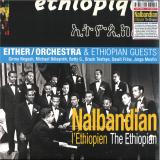
NALBANDIAN THE ETHIOPIAN & EITHER/ORCHESTRA - NALBANDIAN THE ETHIOPIAN (ETHIOPIQUES)

The Éthiopiques series returns! Essential archive recordings from an extremely fruitful period in Ethiopian music.

Before “Swinging Addis” took over the world, there was Moussié Nerses Nalbandian — the Armenian-born composer who shaped modern Ethiopian music. Mentor, arranger, and pioneer, he laid the foundations of Ethio-jazz.

This Éthiopiques volume revives his forgotten legacy, recorded live by Either/ Orchestra First issue ever with new exclusive photos and in depth liner 8-page insert.

“Ethiopian jazzmen are the best musicians that we have seen so far in Africa.
They really are promising handlers of jazz instruments.”

Wilbur De Paris
(1959, after a concert in Addis Ababa)

አዲስ፡ዘመን። *Addis zèmèn* **A new era.**
The time is the mid-1950s and early 1960s, just before "Swinging Addis" bloomed – or rather boomed – onto the scene. Brass instruments are still dominant, but the advent of the electric guitar, and the very first electronic organs, are just around the corner. Rock’n'Roll, R’n’B, Soul and the Twist have not yet barged their way in. Addis Ababa is steeped in the big band atmosphere of the post-war era, with Glenn Miller's *In the* *Mood* as its world-wide theme song, neck and neck with the Latin craze that was in vogue at the same period. Life has become enjoyable once again, with the return of peace after the terrible Italian Fascist invasion of Ethiopia (1935-1941). The redeployment of modern music is part and parcel of the postwar reconstruction. *Addis zèmèn* – a new era – is the watchword of the postwar period, just as it was all across war-torn Europe.
The generation who were the young parents of baby boomers** were the first to enjoy this musical renaissance, before the baby boomers themselves took over and forever super-charged the soundtrack of the final days of imperial reign. Music is Ethiopia's most popular art form, and very often serves as the best barometer for the upsurge of energy that is critical for reconstruction. Whether it be jazz in Saint-Germain-des-Prés or the *zazous* who revolutionised both jazz and French *chanson* after the *Libération*, be it Madrid's post-Franco Movida, or Dada, the Surrealists and *les années folles* that followed World War I, the periods just after mourning and hardship always give rise to brighter and more tuneful tomorrows. Addis Ababa, as the country's capital, and the epicentre of change, was no exception to this vital rule.

**Two generations of Nalbandian musicians**
Nersès Nalbandian belonged to a family of Armenian exiles, who had moved to Ethiopia in the mid-1920s. The uncle Kevork arrived along with the fabled "*Arba Lidjotch*", the** "*40 Kids*", young Armenian orphans and musicians that the Ras Tafari had recruited when he visited Jerusalem in 1924, intending to turn their brass band into the official imperial band. If Kevork Nalbandian was the one who first opened the way of modernism, pushing innovation so far as to invent musical theatre, it was his nephew Nersès who would go on to become, from the 1940s and until his death in 1977, a pivotal figure of modern Ethiopian music and of the heights it. Going all the way back to the 1950s. Nothing less. And it is Nersès who is largely to thank for the brassy colours that so greatly contributed to the international renown of Ethiopian groove. While the younger generations today venture timidly into the genealogy of their country's modern music, often losing their way amidst a distinctly xenophobic historiographical complacency, many survivors of the imperial period are still around to bear witness and pay tribute to the essential role that "Moussié Nersès" played in the rise of Abyssinia's musical modernity.
Given the year of his birth (15 March 1915), no one knows for sure if Nersès Nalbandian was born in Aintab, today Gaziantep (Turkiye/former Ottoman Empire) or on the other side of the border in Alep, Syria... What is certain is that his family, like the entire Armenian community, was amongst the victims of the genocide perpetrated by the Turks. Alep, the place of safety – today in ruins.
Before Nersès then, there was uncle Kevork (1887-1963). For a quarter of a century, he was a whirlwind of activity in music teaching and theatrical innovation. *Guèbrè Mariam le Gondaré* (የጎንደሬ ገብረ ማርያም አጥቶ ማግኘት, 1926 EC=1934) is his most famous creation. This play included "ten Ethiopian songs" — a totally innovative approach. According to his autobiographical notes, preserved by the Nalbandian family, Kevork indicates that he composed some 50 such pieces over the course of his career. This shows just how much he understood, very early on, the critical importance of song as Ethiopia's crowning artistic form. Indeed, for Ethiopian listeners, the most important thing is the lyrics, with all their multifarious mischief, far more than a strong melody, sophisticated arrangements or even an exceptional voice. (This is also why Ethiopians by and large, and beginning with the artists and producers themselves, believed for a long time — and wrongly — that their music could not possibly be exported, and could never win over audiences abroad, who did not speak the country's languages).

Last but not least, one of Kevork's major contributions remains composing Ethiopia's first national anthem – with lyrics by Yoftahé Negussié.
Nersès Nalbandian moved to Ethiopia at the end of the 1930s, at the behest of his ground-breaking uncle. Proficient in many instruments (pretty much everything but the drums), conductor, choir director, composer, arranger, adapter, creator, piano tuner, purveyor of rented pianos,... he was above all an energetic and influential teacher. From 1946 onwards, thanks to Kevork's connexion, Nersès was appointed musical director of the Addis Ababa Municipality Band. In just a few years, Nersès transformed it into the first truly modern ensemble, thanks to the quality of his teaching, his choice of repertoire, and the sophistication of his arrangements. It was this group that would go on to become the orchestra of the Haile Selassie Theatre shortly after its inauguration in 1955, which was a major celebration of the Emperor's jubilee, marking the 25th anniversary of his on-again-off-again reign.

At some point or other in his long career, Nersès Nalbandian had a hand in the creation of just about every institutional band (Municipality Band, Police Orchestra, Imperial Bodyguard Band, Army Band, Yared Music School…), but it was with the Haile Selassie Theatre – today the National Theatre – that his abilities were most on display, up until his death in 1977. To this must be added the development of choral singing in Ethiopia, hitherto unknown, and a sort of secret garden dedicated to the memory of Armenian sacred music, and brought together in two thick, unpublished volumes. Shortly before his death (November 13, 1977), he was appointed to lead the impressive Ethiopian delegation at Festac in Lagos, Nigeria (January-February 1977).

His status as a stateless foreigner regularly excluded him from the most senior positions, in spite of the respect he commanded (and commands to this day) from the musicians of his era. Naturally gifted and largely self-taught, Nerses was tirelessly curious about new musical developments, drawing inspiration from the very first imported records, and especially from listening intensely to the musical programmes broadcast over short-wave radio – BBC *First*. A prolific composer and arranger, he was constantly mindful of formalising and integrating Ethiopian parameters (specific “musical modes”, pentatonic scale, and the dominance of ternary rhythms) into his “modernisation” of the musical culture, rather than trying to over-westernise it. It even seems very probable that *Moussié* Nerses made a decisive contribution to the development of tighter music-teaching methods, in order to revitalise musical education during this period of prodigious cultural ferment. Flying in the face of all the historiographical and musicological evidence, it is taken as sacrosanct dogma that the four musical modes or chords officially recognised today, the *qǝñǝt* or *qiñit* (ቅኝት), are every bit as millennial as Ethiopia itself. It would appear however that some streamlining of these chords actually took place in around 1960. It was only from this time onward that music teaching was structured around these four fundamental musical modes and chords: *Ambassel*, *Bati*, *Tezeta* and *Antchi Hoyé*. A historical and musical “details” that is, apparently, difficult to swallow, especially if that should honour a *foreigner*. Modern Ethiopian music has Nersès to thank for many of its standards and, to this day, it is not unusual for the National Radio to broadcast thunderous oldies that bear unmistakable traces of his outrageously groovy touch.

Auf Lager

Bei uns am Lager und sofort versandfertig

22,06
TONI TORNADO - TONI TORNADO LP

TONI TORNADO

TONI TORNADO LP

12inchVAMPI339
Vampisoul
15.01.2026

Originally released in 1972, Toni Tornado's self-titled debut is a landmark in Brazilian soul and funk - a gritty, groovy record that helped define the sound of the Black Rio movement. Blending deep soul, psychedelic funk, and bold orchestration, this album channels the revolutionary energy of James Brown with the tropical swagger of Rio's streets. From the urgent rhythms of 'Torniente' to the undeniable strut of 'Mané Beleza' and 'Tornado,' Toni's music pulses with a fierce sense of pride and liberation. It's the sound of a new cultural identity taking shape - where African-American soul met Afro-Brazilian reality. Often compared to the legendary Tim Maia, Tornado brought his own explosive edge to Brazil's growing soul scene. By the 1970s, other Brazilian musicians, such as Banda Black Rio, Cassiano, Gerson King Combo, Jorge Ben and Gilberto Gil, began making soul records. DJs started throwing soul-only parties. Toni Tornado's voice carries grit and passion, his grooves hit hard, and his message is crystal clear - Black is beautiful, and the funk is real. Back on vinyl for a new generation, this reissue is more than a collector's gem - it's a time capsule from an era when music moved bodies and minds. Essential listening for fans of vintage soul, global funk, and revolutionary sounds. Reissue on 180g vinyl.

Auf Lager

Bei uns am Lager und sofort versandfertig

28,53
Enrico Sangiuliano & Vito Gatto - Order In Chaos EP

Chaos is fundamental for creating something powerful. It teaches us to be at ease with how things are, to listen to ourselves, and find our own order’. (Enrico Sangiuliano)

Pioneering, avant garde yet chart-storming sound designer/producer/live performer Enrico Sangiuliano drops EP ‘Order In Chaos’ as release #1 in his self-destructing countdown imprint ‘NINETOZERO’, out 20th November. The EP’s three tracks respectively represent a triptych of sound exploring tension, release, and dissolution, with violinist and composer Vito Gatto joining Italian techno/melodic maestro Sangiuliano for tracks 1 and 3. The EP blends electronic, classical and electro-acoustic genres, resulting in a fresh, unique product that defies typical techno expectation, as Sangiuliano and Gatto explore the concept of disorder as a creative playground.

‘With this chapter, we dive into chaos – something that can be uncomfortable, but is the place in which you can find unexpected or new ideas. Chaos is fundamental for creating something powerful. It teaches us to be at ease with how things are, to listen to ourselves, and find our own order’. (Sangiuliano)

The ‘Order In Chaos’ EP continues a momentous year for Enrico Sangiuliano, and heralds his upcoming all-night-long SOLO show at Nitsa in Barcelona (Nov 28th, tickets here). His highly acclaimed NINETOZERO label has also previously featured Charlotte de Witte, Antonio d’Africa, Mattia Saviolo, GMS, Alex Lentini, STOMP BOXX, Zimmz, Secret Cinema and About Sofiya.

Vito Gatto is a Milan-based violinist, composer and sound explorer. He is the founder of label/collective NeMu (‘Neutral Mutation’) producing Italian projects at the interface of electronic and organic sound. His self-description as ‘Making sounds, looking for silence’ makes him the perfect collab partner for ‘Order In Chaos’, which ‘embraces the paradox: chaos births order, and order dissolves back into chaos.’

‘Whilst classically trained, I have always been fascinated by the world of electronic music, in all its expressive forms’ Gatto says. ‘I use real instruments and natural sound sources processing them through electronics to enhance their unpredictability, always remembering that the core of music - whether classical or electronic - is communication and storytelling. This philosophy guided our creative synthesis on this release.’

The collaborative workflow combined remote and in-person studio work over roughly a year, culminating in these three key tracks reflecting different musical and conceptual layers.

‘Order In Chaos’ EP tracks:
Enrico Sangiuliano & Vito Gatto ‘Adaptation for Strings and 909’: A cinematic overture built from the raw intimacy of Vito Gatto’s violin, processed and layered with unquantized 909 drums. Out of grid, out of rules. Drama and turbulence surge until thunderous kicks strike like sudden storms. ‘This track symbolises both of us. Vito sent the strings, I added the iconic Roland 909. It has no structure and no grid, the arrangement is not precise, it’s a very pure track and a great example of disorder and freedom.’
Enrico Sangiuliano ‘Order in Chaos’: The title track is a pure techno weapon and dancefloor igniter: rolling, stripped, euphoric. A shape-shifting lead synth constantly mutates, flirting with disorder until the kick restores gravity. Chaos becomes dancefloor order.
Enrico Sangiuliano & Vito Gatto ‘Dissolution’: The closing moment. Strings and drums dissolve into a weightless drone. Beatless and infinite, it invites surrender into space. ‘This cinematic track slowly melts ‘Order in Chaos’, adding processed organic sounds and field recordings from the mountains.. coming back to nature, and silence.’ (Gatto).

Still #0 to go in the NINETOZERO countdown… And then what? With Sangiuliano, it’ll be something unexpected and brilliantly innovative.

Auf Lager

Bei uns am Lager und sofort versandfertig

19,54
CoLD SToRAGE - wipE′out″ - The Zero Gravity Soundtrack Vol. 2 (3x12")

The legacy of wipE′out′′ has transcended time and cemented itself as a true transgenerational phenomenon. Launched in 1995, it didn’t just revolutionise the gaming industry, it created a bridge between the gaming ecosystem and the raver community. Its futuristic aesthetics and forward-thinking sound left a mark not only on mainstream audiences but also on the most demanding corners of the underground.

Decades later, the game’s impact is still alive. The release in 2023 of The Zero Gravity Soundtrack on Lapsus Records proved once again that wipE′out′′’s accompanying audio will go down in history as much more than just an anti-gravity racing game soundtrack.

This is why we decided to go deeper into the slipstream and build the second volume you’re now holding in your hands. Drawn from the original archives of Tim Wright, aka CoLD SToRAGE, this new collection surfaces unreleased cuts, pieces that couldn’t fit on the first edition, and a suite of self-authored ambient reworks that translate pure velocity into wide-screen atmospherics engineered for the long straights, the drone of airbrakes, the blue hour between checkpoints. It also reconnects the circuit, gathering selections and variants tied to later chapters of the saga — wipE′out′′ HD and wipE′out′′ Pure — plus alternative mixes that, until now, only existed in the Sega Saturn dimension of the franchise.

Finally, the material takes a leap into the future in the hands of four remixers especially chosen for this release: Tim Reaper, SHERELLE, Mantra, and NikNak, who collectively forge links between CoLD SToRAGE’s pioneering musical vision, the sound world of the game, and the contemporary breakbeats and drum & bass vanguard.

Expect the DNA you remember — accelerated breaks, trance-vector synths, jungle influences, sub-bass rumbling neatly beneath the craft’s hull, and at times even echoes of classic hardstyle — now revealed with new angles and air. The previously unheard material carries the same aerodynamic design sense that made these tracks feel faster than the track map itself, while the ambient versions open the field of view with melodies hovering at the lip of overdrive. Without a doubt, here you’ll find a strong sense of nostalgia. But this isn’t just nostalgia; it’s also proof that this sound world continues to evolve when you ease off the throttle.

For the faithful — crate-digging ravers, speed-run obsessives, and design nerds — this is an essential expansion pack: compiling rarities, restoring context, and reframing the emotional core of wipE′out′′ for late nights and early mornings alike. Bridging memory and momentum, club and console, rush and afterglow. Strap in.

Detailed tracklist, with annotations by Tim Wright aka CoLD SToRAGE

· Scratch Pad 1: “This track was composed using incomplete tracks that were developed around the time of the first wipE′out′′. It’s so long because it was used for a marathon-length Psygnosis promotional video.”

· Messij Received: “Messij was a firm favourite with wipE′out′′ fans, so it made sense that there’d be more where that came from — this was one of those re-workings.”

· God’s Gift: “I was always very fond of Erasure’s track Love to Hate You with the canned crowd FX sounds. God’s Gift was a tongue-in-cheek reference to how some musicians think they are just that. This was way before I even played live as CoLD SToRAGE.”

· Tentative: “I wasn’t sure about introducing some wacky beats and distorted sounds into one of the tracks, because it was kinda heading away from the other tracks, hence Tentative — but it turned out OK.”

· Canada 2048: “When wipE′out′′ 2048 was launched I decided to re-make Canada as a kind of tribute, but in a slightly new-tech, laid-back way, using Propellerhead Reason and all software synths.”

· Wiped Out: “Based on a few riffs from a MIDI file unused at the time of the original wipE′out′′ game compositions, this featured on my debut album MELT.”

· Body in Motion (Body Plus Mix): “A more trippy interpretation of Body in Motion that featured on non PlayStation versions of the game e.g. Sega Saturn.”

· Onyx (“Dark Side of the Moon”): “Onyx was my sole contribution to wipE′out′′ Pure on the Sony PSP handheld gaming console. This version was something I developed in a darker style, that eventually erupts into a crescendo.”

· Messij Received (WSTWGBE Mix): “Like I say, Messij was a hit with most wipE′out′′ fans, so when I was asked to compose more music for non-PlayStation versions, I adapted this tune into a parallel-universe version for PC and Sega Saturn. By the way, WSTWGBE refers to Who Said This Was Going To Be Easy?”

· Canada (Drunken Ausländer Mix): “In early 2018 I released a fresh album called Ch'illout′′, a re-working of many of my wipE′out′′ tracks in an ambient, Sunday-morning vibe style — it was a few years’ work, here and there.”

· Tentative (Woffenfum Mix): “Another chilled re-working of one of my wipE′out′′ tracks, the mix named with a nod to a good friend of mine, Carl Woffenden — someone who I've worked with for many years in the games industry.”

· Messij (Bobbing Boat Mix): “A nice cheesy computer blip-blop start belies its deep and upbeat chilled-out melodic finale.”

· Body in Motion (Timeless Techno Mix): “Another classic track given the chilled-out vibe mix, as featured originally on my Ch'illout′′ album. This one’s a really trippy, deep-space take on the original.”

· DOH-T (AM / FM Mix): “The idea with this chilled-out mix was to imagine all the melodic parts of this varied track being broadcast on terrestrial radio, so each theme drifts in and out through the radio static.”

· ’95 Future Echoes: “Originally developed as a companion album for wipE′out′′ HD, this track actually has its roots in a tiny loop of a song that never progressed to anything special back in the mid-’90s when I was composing for the original game.”

· Turbine: “Also from my wipE′out′′ HD album, it leans heavily into the upbeat, uplifting tunes from the original game, but also steals a bit of vibe and energy from The Prodigy, with those distorted flute sounds.”

· Pencil Neck: “This excerpt from my wipE′out′′ HD album features lots of sounds centre-stage and forward from Propellerhead Reason’s Subtractor virtual synth. I learned to love this more than my JD-800!”

· Messij 2005 (New Science Mix): “Yet another take on the track that still raises a smile, this time through a mix of samples from the original and Propellerhead Reason — the ‘new science’ when compared to an Amiga 1200 running Bars and Pipes.”

Auf Lager

Bei uns am Lager und sofort versandfertig

34,87
White Chief - The Background Character For Self_Sabotage Deconstruction

The White Chief project has been defined by her creator as the background character for self_sabotage deconstruction. Deeply inspired in early Industrial, Noise and Power Electronics taking, musically and conceptually some development model acts like Throbbing Gristle or Whitehouse, and certain complex lyrical compositions like could be some Fad Gadget tracks, Maria Barros, a colombian dj and producer known as Gatasanta delivers 5 dense, raw, noisey and dark cuts with the aesthetical connotation of the violent modern times, created among other analogical sounds with multiple Moog bass lines. This record includes also, two tracks from AMAS, Gatasanta's first live project with artist performer Ivana Ray Singh, both artists based in Barcelona. These two tracks appears on the EP as a tribute to the duo's early years of electronic production and performance tours around. All tracks has been produced 100% hardware.

Auf Lager

Bei uns am Lager und sofort versandfertig

19,29
Smile Davis - Mind Control, Modern Slavery
 
2
auch erhältlich

Dark Transparent Green[13,40 €]


ULURU is a large sandstone rock formation in Australia. It's sacred to the Anangu, the local Indigenous of the area. For many years it had been deprived of its spiritual significance, due to mass tourism, capitalism, as well as greedy and selfishness of people who just want to make money out of it. However, as a result of the Anangu’s resilience, care and staunchness, huge changes took place in the national park around Uluru as well as in the broader public's consciousness, giving again to the Uluru the sacred identity that had been lost.

You might be reading and thinking now: so what's the point? Actually, there's no real point. I would rather say, there’s hope. The hope of seeing humans all around the world following the example of the Anangu. The hope of seeing humans finally stopping to treat the earth and all what’s part of it, what’s on and what’s in it, as a slave without soul. The hope of changing today, and if not today at latest by tomorrow. This system is failing. It's no longer sustainable, and there's no much time left.

So everybody, don't sleep, be critical.

Auf Lager

Bei uns am Lager und sofort versandfertig

11,98
La Femme - Psycho Tropical Berlin LP 2x12"

First album of French band La Femme released in 2013 with which they won Best New Band of the year at the French Music Awards and god certified gold. It marked also the beginning of their international recognition, confirmed since with their 2nd album Mystère in 2016 and their brand new album Paradigmes today. Includes the hits Sur La Planche, It's Time to Wake Up and Antitaxi! La Femmes's debut LP, is a mix of surf revival, updated cold wave (in a similar vein to countryman Lescop), 1960s yéyé and psychedelia. "Psycho Tropical Berlin: is apparently also their self-penned genre, they have also said "strange wave, new Motown, witch wave, silly mental wave"... whatever, aach term makes for a pillar to describe their music. Psycho Tropical Berlin is the story of a couple who slipped into chaos and survives by watching each other. Le Danger est partout - Peril is all around - as written in the booklet. Rock and pop, rococo bauhaus, fed from multiples influences (Krafwerk, Elli & Jacno). La Femme just want to please you. Generous and welcoming, she stretches you her white hand in the dark, if you grasp it, it could be the shiver of your life.

Auf Lager

Bei uns am Lager und sofort versandfertig

26,47
Aquafaba - Plura LP 2x12"

How about a volley of hydraulic heaters from one of Denmark’s finest?

Already a man of many projects, both on the label side and in the studio, Natal Zaks has minted a brand-new alias… Enter Aquafaba, the ocean floor operator kicking it on a subaqueous tip.

Not many moving like this today. Properly submerged techno, masterful and ultra-essential by Aquafaba, self-monikered after the starchy, liquid byproduct of cooking chickpeas. Patrick Star would be proud for sure.

From Aarhus to the deepest ocean trenches in pursuit of that fathoms-below sound. Nods to the Midwest – chiefly mid-’90s Robert Hood and Cajmere’s ‘Percolator’ – felt in parts, but it’s also riddled with ultra-engrossing detail. Zaks goes heavy with the effects as tracky rollers are propelled to new mesmeric heights, even allowing for a moment of proper widescreen ascension.

Heads-down dynamixxx in full effect as we harness immense hydraulic power. Eschewing instant dancefloor gratification, Zaks emerges with tension and funk, like only the finest strains of techno can achieve.

Auf Lager

Bei uns am Lager und sofort versandfertig

22,65
The Human Aerial - Antenna LP

The Human Aerial

Antenna LP

12inchRUSS004
Russ
16.12.2025

Our journeys into uncharted lands of the Reducerverse continue.

Essential must-buy shit for all disciples of: The Rootsman x Muslimgauze, Love's Secret Domain era Coil, Chris & Cosey, Meat Beat Manifesto, early Reinforced Recs, Shut Up & Dance, He Dark Age, Zombies Under Stress, SPK.

If you've just joined us: Reducer ARE the greatest lost dub punks. Rumoured to have almost signed to On-U Sound but told Sherwood to stuff it when he wanted his hands on the desk. Fame never found them, cos they didn't want it anyway. Living in the obscure memories of the select squatters and weirdos lucky enough to have had their minds blown, their first recordings were scraped off the linings of the cosmic dustbin recently through a series of self-released 12"s, cassettes, USBs and strangest of all a 3D performance screened at the Cube (in association with pals Bokeh Versions).

In short: Reducer's the most thrilling fairytale resurrection these pages have been privy to, joining 23 Skidoo, Killing Joke, PiL, Slits, Terminal Cheescake etc on the Mount Olympus of the Punky Reggae Party.

This latest slice of karmic justice comes from The Human Aerial aka Reducer's guitarist and prime mover Hooly. And ohhhh what a justice it is. Drawing on 40 years of private solo recordings across 7 tracks from Abu Ama style dabke jaguar steppas punishment to thumping bass-led electro, peak Depth Charge dubby big beat to careening breakbeat hardcore, trashcan gamelan spirituals and Jamie Vex'd style maximalist beats blissouts,

Tying together this jaw-dropping range of styles and fashions is a relentless sampladelic bombardment. The Human Aerial's habitual pilfering of TV and radio for into lovingly spliced tape loops and samples showcases humanity at its best and absolute worst. Tele-evangelists rub shoulders with long dead chieftans: "there is no death, only change of worlds" "We're MAD AS HELL AND WERE NOT GONNA TAKE IT ANYMORE" "THe land is sacred, a cathedral of the spirit". These wisdoms and grave sins slip into us subliminal through the dance, the needle drops like a waking dream.

While the Reducer archives may be running low, we assure you the Human Aerial coffers are full. And long may our minds be blown by this ongoing renaissance.

Auf Lager

Bei uns am Lager und sofort versandfertig

21,43
Low End Activist - Airdrop II MC (CASS)

Continuing his refraction of the rave continuum into pointedly dislocated, delicately bruising sound system meditations, Low End Activist returns to Peak Oil with a second instalment in his Airdrop series. This time around, he channels the ghosts of foundational tech-step and the quantum leaps of late-90s D&B to provide the inspirational fuel for his skeletal, astral constructions. A strong stylistic thread continues to weave through the LEA output from his earlier self-released EPs and Sneaker Social Club albums, where haunted atmospherics, blown out subs and snatches of breaks dart around each other in empty dancehalls, but the finer point of the sound design and synthesis makes very specific references to landmark moments in hardcore's evolution.

By weaving his own autobiography into the music, the Activist maintains a fundamental theme of his work to date. 'Colin's Golf', 'Smithy's Porsche,' 'Merv's Lazy Eye' and 'Brillo's Teeth' are all personal codes harking back to the formative Oxford rave scene. With the framework in place, he uses textures, timbres and studio tricks from scene-leading pioneers and local heroes of the era as ingredients in thoroughly modernist concoctions. None of the reference points are deployed as literal callbacks — they're waymarkers for the creative process and faint triggers bedded deep into Airdrop II's strange formations. Fleeting sonics might trigger latent memories for those who were there. For everyone else, Airdrop II is another step further along rave's eternally unspooling odyssey, guided by decades of precedents on a path into the future.

Auf Lager

Bei uns am Lager und sofort versandfertig

20,80
RAFAEL TORAL - TRAVELING LIGHT LP 2x12"

From out of the dark, sparks of feedback birdsong signal a return to the singular sonic environments of Rafael Toral"s sound-world. A year after Spectral Evolution, his acclaimed album of electric guitar conceptions, comes the companion work Traveling Light. Sharpening his focus around a set of jazz standards, his move from abstract form to solid song elicits glints from beyond time and space, crafting a unique listening lens for deep listeners. In the early years of his practice, Toral used the guitar as a generator to create discreet texture and droning tones. Later, he abandoned the guitar entirely, focusing on self-made electronics to render his music with a post-free jazz perspective. For the music of Spectral Evolution and Traveling Light, Toral has combined his methodologies: radically expanding the space within their harmonies with his self-made machines, while engaging directly with his instrument and the chords of the material. In addition to Toral"s proxy orchestra of guitars, sine wave, feedback and bass guitar, Traveling Light features the sounds of clarinetist José Bruno Parrinha, tenor saxophonist Rodrigo Amado, flügelhorn player Yaw Tembe, flautist Clara Saleiro, who each guest on one song. In every contour of Traveling Light"s path - arrangement, improvisation and production - the spring of the old pours through the new in an unstoppable flow. The result is a listening experience of these standards that remains "in the tradition", even as the elongated harmonies seem to alter time such that, as Toral notes, "the chords become events on their own."

Auf Lager

Bei uns am Lager und sofort versandfertig

37,40
Artikel pro Seite:
N/ABPM
Vinyl