
quête:semi automatic
- 1
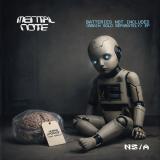
‘Batteries Not Included (Brain Sold Separately)’ EP Arrives Via No Static Automatic
No Static Automatic is proud to announce the new EP from UK Electro legend Phil Klein under his Mental Note alias. Titled “Batteries Not Included (Brain Sold Separately),” this release marks the dynamic follow-up to the acclaimed 2020 debut “Voices In My Head (Noises In My Pants).”
Few authentic Electro producers from the UK can wear the badge ‘legend’ with the same level of justification as Phil Klein, aka Bass Junkie. Active since the late 80s, Klein has tirelessly shaped his distinct vision of Electro, both as a solo artist and through storied collaborations with icons like Dynamix II, Keith Tenniswood (Radioactiveman), and Si Brown (Dexorcist). As a DJ, remixer, live act, and the driving force behind the seminal Battle Trax label, his influence is woven into the fabric of the genre.
With essential releases on labels including DMX Krew’s Breakin’ Records, Andrea Parker’s Touchin’ Bass, and Billy Nasty’s Elektrix, the Bass Junkie sound seamlessly bridges the old-school beats of Electro’s origins with a potent, borderline-industrial edge. As noted by Andy Barton of Bass Agenda: “From funky to ferocious, Bass Junkie’s discography is a must-have for anyone claiming passion for the genre – influential, individual, and infectious with every beat.”
Now, as Mental Note, Klein continues his exploration of electronic psychedelia. The new EP, “Batteries Not Included (Brain Sold Separately),” is a four-track expedition through the Electro cosmos:
“Brainwash” immerses the listener in swirling, hypnotic synths.
“They're Not Blue, They’re Purple” delivers a masterclass in crunchy, textured drums.
“Primordial Soup” showcases frantic, intricate programming.
“Kluster Funk” offers a moment of deep, sonic relief and groove.
Each track reinforces Mental Note’s signature: a journey that is cerebral, raw, and irresistibly rhythmic.
About Bass Junkie/Mental Note:
Phil Klein, operating primarily under the alias Bass Junkie, is a cornerstone of the UK Electro scene. For over three decades, his work has defined and evolved the sound, earning him a revered status among peers and purists. His Mental Note project is a focused outlet for a deeper, more experimental strand of his production genius, further solidifying his legacy as an electronic music innovator.

- Miss Wales 2012
- A Good Day For Dying
- Make It Count
- Cut To Black
- Full Range Of Motion
- Pretty As A Magazine
- Look Like Me
- How Can We Be Friends
- Every Single Muscle
- Shiny And Wet
- Semi-Automatic
- In My Short Life
- Watching The Omnibus
- It's Our Manager David
- Yours (If You Want Me)
- All My Clothes Fell Off
- Third Best Friend
- My Uncle Warren Drives A Passat
The Bug Club sind mit einem neuen Album zurück. Seit ihrem letzten Album sind ganze sieben Monate vergangen. Wo waren sie denn? Every Single Muscle, das fünfte Album der Band, ist das dritte, das von Sub Pop, dem angesehenen Label des walisischen Duos aus Seattle, veröffentlicht wird. Seit Very Human Features, das im Juni 2025 rauskam, sind die Lieblinge von BBC 6 Music und KEXP auf ihrer Nonstop-Tour quer über den Atlantik geflitzt, wie sie es früher auf der Severn Bridge gemacht haben. Verschiedene Festivalauftritte im Sommer haben sie davon abgehalten, Urlaub zu machen - wer braucht schon Urlaub, wenn man in Wales lebt? - bis es Zeit war, wieder ins Songwriting-Studio zu gehen. Das ist wahrscheinlich immer noch ein Schlafzimmer in Caldicott, das von einem Windhund namens Ted frequentiert wird (aufgepasst - er taucht in einem der Songs auf). Die Songwriter Sam (Gitarre, Gesang) und Tilly (Bass, Gesang) sind immer bescheiden und behaupten sogar, dass sie während des Songs ,It's Our Manager David" nur ,herumsassen und nichts taten". Das ist eindeutig eine Lüge. Every Single Muscle startet mit ,Miss Wales 2012" voll durch und bezieht sich dabei auf einen Wettbewerb, den sowohl Tilly als auch Sam tatsächlich gewonnen haben. Es ist der erste von vielen Tracks auf dem Album, die weniger als zwei Minuten lang sind, und gibt den Ton für das bisher punkigste Album von The Bug Club an, das sowohl an die kurzen, knackigen Snaps ihrer allerersten Singles als auch an das Grunzen ihrer jüngsten Veröffentlichungen erinnert. Das Album ist so vollgepackt mit Riffs und eingängigen Hooks, dass Sam tatsächlich um Erlaubnis bittet, im zweiten Track ,A Good Day For Dying" ein Solo einbauen zu dürfen. Er bekommt zwei Sekunden Zeit. Glücklicherweise fragt Sam später noch einmal und bekommt mehr Zeit. Auf achtzehn Songs gibt's genug klassisches Gitarrenspiel von Sam und Tilly, um selbst die lautstärksten Bug Club-Fans zufrieden zu stellen und die Behauptung der Band, sie seien ,nur technisch versiert auf ihren Instrumenten", klar zu widerlegen. Dieses Album ist ein Beispiel für effizienten Maximalismus - so wie wenn dein Vater das Auto für den Urlaub vollpackt. Bring mit, was du willst; der Platz ist knapp, aber sie kriegen es irgendwie rein. Zu den Texten: Während ,Very Human Features" hervorragend alltägliche Dinge aufzeigte und ihre Absurdität hervorhob, schauen The Bug Club auf ,Every Single Muscle" genauer auf sich selbst. Allerdings nicht so sehr auf introspektive Weise, sondern eher so, wie ein Außerirdischer ein gefangenes Exemplar auf einer intergalaktischen Trage untersuchen würde. Horrorfilme haben ihr ,Body"-Subgenre, jetzt bekommen auch Garage-Rock-Alben ihres. In einem völlig neuen Sinne des Wortes selbstbezogen, wird die menschliche Form und Verfassung im Laufe des Albums aus jedem Blickwinkel beleuchtet und untersucht. Wir spüren eine surreale Distanz zum Selbst, die den allgegenwärtigen, von Langeweile geprägten Humor hervorbringt; im letzten Song verkündet Sam, dass er ,es satt hat, ein Mensch zu sein". The Bug Club scheinen dem Konzept, ein Mensch zu sein, fast misstrauisch gegenüberzustehen - als wären sie in einem Kostüm aufgewacht, das sie nicht anziehen wollten und nicht ausziehen können. Ist drei die magische Zahl? Wahrscheinlich nicht. Aber Every Single Muscle - das dritte Sub-Pop-Album von The Bug Club - kommt dieser Vorstellung nahe genug, um den durchschnittlichen seltsamen Menschen davon zu überzeugen, dass es so sein könnte.

Following their eponymous debut album and the vertiginous Everest, Rue des Garderies continue their semi-narcotic explorations with Jiddu.
Around a stretched, distorted sample, a 16-minute improvisation recorded on a summer's night, interacting with their immediate environment: truncated discussions, laughter, noises of joy, silences, love...
The whole piece seems to exist in an unknown zone of our psyche - unknown until then, but which was obvious at the time: an automatic writing done in total freedom, reminiscent of trip-hop and abstract electronic from the 90s.
Was it a dream?
On the b-side; a drawing by French artist Rebecca Bournigault is etched.

- 1: Automatic
- 2: Happyman
- 3: 9Th At Pine
- 4: Sugar In Your Gas Tank
- 5: Shindo
- 6: 107
- 7: Johnny Quest Thinks We're Sellouts
- 8: Krazy Glue
- 9: Never Going Back To Jersey
- 10: How's My Driving, Doug Hastings?
- 11: Just Like Frank
- 12: Ask The Magic 8 Ball
- 13: Dopeman
- 14: Jen Doesn't Like Me Anymore
- 15: Rock-N-Roll Pizzeria
- 16: Lockdown
The Official “Forever” Versions of Less Than Jake’s first full lenght album, Pezcore and Losing Streak are here! "Losing Streak" comes with reimagined artwork done by the legendary punk artist Chris Shary (Descendents, ALL, Black Flag), this special version celebrates the history of this seminal album, with a fresh new look!

Neue Vinylauflage des zweiten Albums UNION (2009) der britischen Indie-Rock-Band The Boxer Rebellion mit den Singles "Evacuate", "Flashing Red Light Means Go", "Soviets" und "Spitting Fire", das My Morning Jacket von #1 der US-Alternative-Alben bei iTunes verdrängte und zum ersten Album einer Band ohne Vertrag wurde, das nur als digitaler Release in die Billboard Top 100 Album-Charts einstieg. UNION erschien - remastered - 2023 erstmals auf Vinyl.

Erstmals auf Vinyl: Das zweite Album UNION (2009) der britischen Indie-Rock-Band The Boxer Rebellion mit der Single 'Evacuate', das My Morning Jacket von Platz 1 der US-Alternative-Alben bei iTunes verdrängte und zum ersten Album einer Band ohne Vertrag wurde, das nur als digitale Veröffentlichung in die Billboard Top 100 Album-Charts einstieg. Limitierte, remasterte Auflage auf bronzefarbigem Vinyl.

4

5
Blue Vinyl
Throughout his productive career, Carl Oesterhelt has proven to be an artist who finds it easy to move between musical genres and concepts. Much of his work has been within classical and chamber music, but he has also scored museum exhibitions and he is sometimes part of The Notwist crew as an angular figure on the Munich scene.
In Umor Rex we have been lucky enough to publish an array of Oesterhelt's universes. In Eleven Pieces for Synthesizer (Umor Rex 2019) we heard his kosmische side, where the connections with Harmonia or Klaus Schulze were amalgamated with ecclesiastical organ pieces and intense semi-automatic rhythms. A deeply melodic, fresh album. Pure syntax of the modern synthesizer. Further, in The Aporias of Futurism (Umor Rex 2021), in collaboration with Andreas Gerth (Driftmachine, Tied & Tickled Trio), Oesterhelt showed what is perhaps his darkest side —a work full of nuances within concrete music and midnight atmospheres. As deep and cerebral an album as it is surprising and catatonic.
Yet it seems that Carl Oesterhelt has another ace up his sleeve. Now he surprises us with The Dualistic Principle, a fantastic album full of weird but charming electronic melodies, rhythms that push the body to movement, sometimes syncopated and abstract, others permanent and fluid. In this work, Oesterhelt invited Johan Simons to give voice to the lyrics. The Dualistic Principle is a sort of rendition of a philosophical review or a nostalgic memory of the glamorous years. There is also underlying humor in the Post / Space-pop / Munich-disc assortment. The Dualistic Principle is the score to an imaginary film of contemporary hedonism.
All music & lyrics by Carl Oesterhelt. Voice by Johan Simons. Additional strings played by the Ensemble für synkretische Musik. Recorded in Munich & Bochum, Germany. Mastered by John Tejada in Sherman Oaks, USA. Artwork by Daniel Castrejón in Mexico City.

13
Liz Phair announces ‘Soberish’, her highly-anticipated new album and first collection of original
material in eleven years. Produced by Phair’s longtime collaborator Brad Wood - known for helming
Phair’s seminal albums ‘Exile In Guyville’, ‘Whip-Smart’ and ‘whitechocolatespaceegg’ - ‘Soberish’ is
released via Chrysalis Records.
Almost thirty years since her peerless debut album ‘Exile In Guyville’ was released (voted #56 in
Rolling Stone’s 2020 list of the 500 Greatest albums Of All Time), Phair returns with a new record that
will both intrigue and satisfy her long-standing fans and introduce her to a smart young audience
whose contemporary heroes have been reading from Phair’s playbook since they first picked up a
guitar.
Liz Phair has achieved the kind of status in her industry rarely bestowed on recording artists. Her
albums in the 1990s were central to the indie rock canon of the day. Her image was featured in
countless magazines, early Apple commercials and Gap ads. Her eponymous album for Capitol
Records in 2003 took Phair in a pop direction that ruffled some critics’ feathers but nonetheless went
gold, galvanizing a host of new fans, particularly among young women who fell in love with hits like
‘Why Can’t I’ and ‘Extraordinary’, tracks that were featured in several major films and TV shows,
including 13 Going On 30, Raising Helen and How To Deal. Liz has picked up two Grammy
nominations and a spot in Pitchfork’s Greatest Albums Of The 90s, with over five million record sales
to date (including three US gold albums). She sang ‘God Bless America’ at the opening game of the
Chicago White Sox World Series victory in her hometown in 2005.
‘Soberish’ is a portrait of Phair in the present tense, taking all of the facets of her melodic output over
the years and synthesizing them into a beautiful, perfect whole. She’s at the top of her game in the
recording studio, drawing upon years of experience in television composition to weave through the
songs daring and unexpected sound design. With Brad Wood’s exquisite engineering and masterful
production, the result is a wholly fresh yet satisfyingly familiar sound that challenges on the first listen
and seduces with each subsequent play through. The earworms are strong with this one.
Phair says, “I found my inspiration for ‘Soberish’ by delving into an early era of my music development,
my art school years spent listening to Art Rock and New Wave music non-stop on my Walkman. The
English Beat, The Specials, Madness, R.E.M.s Automatic for the People, Yazoo, The Psychedelic
Furs, Talking Heads, Velvet Underground, Laurie Anderson, and the Cars. The city came alive for me
as a young person, the bands in my headphones lending me the courage to explore.”
None of the arrangements on Soberish are traditional songwriting standards but the hooks are so
catchy, the imagery so compelling, that the listener is drawn effortlessly along with the music. There
are the off-kilter, unexpected guitar chords listeners will recognize as her signature style, a mainstay
from her earliest work; the instantly knowable choruses of her most pop-friendly songs of the early
2000s; the frank lyricism and storytelling that has opened doors for countless women picking up
guitars and attempting to speak about their experiences.
Phair shares insight into the meaning of her title: “‘Soberish’ can be about partying. It can be about
self-delusion. It can be a about chasing that first flush of love or, in fact, any state of mind that allows
you to escape reality for a while and exist on a happier plane. It’s not self-destructive or out of control;
it’s as simple as the cycle of dreaming and waking up. That’s why I chose to symbolize ‘Soberish’ with
a crossroads, with a street sign. It’s best described as a simple pivot of perspective. When you meet
your ‘ish’ self again after a period of sobriety, there’s a deep recognition and emotional relief that
floods you, reminding you that there is more to life, more to reality and to your own soul than you are
consciously aware of. But if you reach for too much of a good thing, or starve yourself with too little,
you’ll lose that critical balance.”

4
Automatic Tasty (Jonny Dillon) has been away from Central Processing Unit for five years now, releasing on labels such as AC Records and Furthur Electronix in the intervening time. However, new EP The Future Is Not What It Used To Be shows that the chemistry between label and artist is still in good nick by offering up four tracks of contemplative electro-boogie.
While the preceding CPU/Automatic Tasty drop may be 2015's The Life Parochial, The Future Is Not What It Used To Be actually has more in common with Sentimentalist's Choice, Automatic Tasty's CPU debut which came out back in 2013. This is not due to a huge stylistic shift - all three records bring together classic electro, techno and boogie sounds to create charming and melodious tracks - but more to do with the tone of the record. You see, while The Life Parochial was a squelchy machine-funk delight, The Future Is Not What It Used To Be is a more pensive affair befitting its title.
This isn't to say that The Future Is Not What It Used To Be is a muted EP. Far from it - this record contains some of the most gorgeous electro joints you'll hear all year. The vibe is established on its eponymous opening jam, a vocoder-laced production pitched somewhere between the more ruminative tunes on Posthuman's 2018 LP Mutant City Acid and contemporary boogie acts such as Funkineven/Steven Julien and Galaxians. The track is made by the beautiful, bittersweet timbre of its synths, and these are maintained on following number 'Romance In The Old Country'. Given the offbeat skip in its groove and sunset-glow ruefulness of the keys, 'Romance In The Old Country' is a cut which invokes the instrumentals of Jessy Lanza LPs - and even (whisper it) a little Sade.
The Future Is Not What It Used To Be is an EP of evocative track titles, but there may be none more accurate than first B-side 'Rising Sun'. Here, Automatic Tasty tweaks the wistfulness of the A-side cuts into something more uplifting. While a thoughtful quality remains in 'Rising Sun's soft synths and skittering 808s, the track is driven by the exuberant energy of the 'Woo! Yeah!' drum break to become the sort of tune you drop as dawn begins to break over the rave. 'Rising Sun's afterglow falls over the closing track 'Adventures In The World Of Becoming', a steady IDM-electro pulse that channels the spirit of Aphex Twin's seminal Selected Ambient Works 85-92.
'The future is not what it used to be - no past, no memory'. With this robo-voiced intonation, Automatic Tasty returns to Sheffield's Central Processing Unit with four moving, poignant machine-funk tracks.

- A1: Sceechie Dan - We A Don
- A2: Lone Ranger - My Number
- A3: Dennis Alcapone - Riddle I This
- A4: Kentrus - It A Fi Bun
- A5: Lone Ranger - Apprentice Dentist
- B1: King Sporty - Dj Special
- B2: Prince Jazzbo - Little Joe
- B3: Jim Brown - Ragga Muffin
- B4: Mad Roy - Universal Love
- B5: King Sporty - Choice Of Music
- C1: King Stitt - Rhyming Time
- C2: Prince Jazzbo - Fire Coal Version
- C3: Dillinger - Fountain On The Mountain
- C4: Michigan & Smiley - Thank You Jah
- D1: Prince Garthie - Raindrops
- D2: Jah Buzz - Automatic Clapping
- D3: Dennis Alcapone - El Paso
- D4: Big Joe - Nanny Version Skank
18
Featuring Prince Jazzbo, Dillinger, Dennis Alcapone, Lone Ranger, Michigan & Smiley and many more. Soul Jazz Records’ new Studio One DJ Party is the latest installation from the mighty Studio One Records catalogue, a wicked new collection of the finest DJs and toasters ever to inhabit the world of reggae – seminal Jamaican artists including Prince Jazzbo, Dillinger, Dennis Alcapone, Michigan & Smiley, Lone Ranger as well as a host of lesser known artists and rare cuts from Studio One. From the earliest days when Clement ‘Sir Coxsone’ Dodd ran his Downbeat soundsystem up and down the length of Jamaica, DJs and toasters such as King Stitt and Count Machukie were always a part of the sound of Studio One, introducing new records and exciting audiences with catchphrase lines such as: “No matter what the people say these sounds lead the way It's the order of the day from your boss deejay” King Stitt So when DJ emerged as a distinct reggae style at the start of the 1970s, Studio One was, as always, way ahead of their competitors. Legendary artists of the calibre of Dillinger, Dennis Alcapone and Prince Jazzbo all queued up to record for the equally legendary label. At the end of the 1970s, as dancehall exploded onto the island, Clement Dodd was once again able to maintain Studio One’s position on the throne as the number one sound in the Jamaica, fighting off upstart competitors such as Channel One and Joe Gibbs who tried to replicate Studio One’s unique sound. During this period Clement Dodd released a series of stunning dancehall releases from young DJ/dancehall artists at the label including Lone Ranger and Michigan & Smiley. This selection spans the early 70s up until the mid-1980s, from the earliest days of deejay toasting right up until digital dancehall, ground-breaking tracks over the finest selection of the ultimate Studio One rhythms and tracks. Who could ask for more? Studio One DJ Party includes specially commissioned sleevenotes by Chris Lane, founder of the legendary British reggae label Fashion Records, as well as fantastic original artwork commissioned by the illustrator Ski Williams. The album is released as double heavyweight vinyl (+download code), and distinctive Soul Jazz Records CD with slipcase
- 1
Articles par page:
