Guests are Jessica Higgins and Matthew Walkerdine of Glasgow, UK, both formerly of the bands Vital Idles and Mordwaffe. They have been closely tied with DIY music, art and publishing for over a decade. Using (amateur) electronics, singing, speaking and field recording they make songs which blend the rhythms of popular music and contemporary approaches to collage, sampling, improvisation and repetition. As inspired by film and art as they are the legacies of twee underground and avant garde experimentalism, their loose, domestically twinged compositions explore feelings, atmospheres and moments which are hard to articulate and the quite literal notion of being a “guest”.
“I wish I was special” is their debut record, and with it a chance taken to explore terrain not previously covered by their other groups. The ideology of DIY practice appears integral to these eleven compositions, side-stepping virtuosity in favour of instinct and impression, unafraid to press unknown buttons and walk head first into mistake, finding inspiration where convention might not otherwise allow one to tread. The results are confoundingly fresh, sharp-of-mind, and unusually intimate. There’s an obvious intelligence at play here, and no little humour of course, but crucially there’s also a sense of the personal, a first-thought/best-thought (auto)didacticism that celebrates shared understanding and implicit trust. What, ultimately, we might view as the fearlessness in radically being yourself around another. It’s an approach that draws some comparison with the private musings of Flaming Tunes, Idea Fire Company’s domestic electronics, or perhaps even Annea Lockwood’s framing of emotional connection within avant garde structures. More so, Guests represent a compelling continuation of DIY post-punk experimentation that values intuition over prowess, and with it guides the listener into unexpected spaces that somehow comfort as much as they challenge.
d Arrangements, as in Making Them [VIDEO]
Suche:sen
The latest in a prolific string of solo and collaborative releases by James Rushford, Turzets collects a pair of new works primarily created and recorded last year while the Australian composer-performer was in residence at La Becque, an art center on Lake Geneva in Switzerland. The side-length piece "Fallaway Whisk" explores hesitation in its many forms_reticence of speech, sonic restraint_using live, abstracted translations of text from English to German against a lush and swelling soundscape. On the flip side, "Quire" is a work in ten movements influenced by the composer's study of late medieval repertoire on portative organ, weaving the instrument's woodsy interlocking melodies with angelic Yamaha CS-80 synth sweeps and stuttering glitches. The combined effort is somewhat a departure for Rushford, working in traces of Klaus Schulze, concrete poetry, and ars subtilior into a precise and ever-unfolding tapestry. Rushford's work draws from a wide range of collagist and improvisatory musical languages, staking out an idiosyncratic stylistic space that has been variously described as "electro-acoustic experimentation with a beating heart" (Boomkat) and "haunted Jacobean ASMR" (The Wire). Investigating the creases, cracks, and folds in traditions ranging from early music to New Age, Rushford's work subtly exaggerates seemingly liminal aspects such as atmosphere and the bodily presence of the performer until these take on a weight equal to musical elements such as pitch, rhythm, and timbre. In recent years, Rushford's solo work has been guided by his theorization of sonic images, particularly the shadow, which has inspired pieces as diverse as an hour-long companion to Federico Mompou's 1959-67 piano cycle Música Callada (2016) and a sumptuous translation of the play of light across flat surfaces into synthetic sound (The Lake from the Louvers, Shelter Press, 2021). His long-standing performance practice for piano, portative organ, synthesizers, and electroacoustic devices, is constantly infused with a delicacy of touch and a harmonic sensibility in which unorthodox tunings coexist with influences from fin de siècle Impressionism, the twentieth century avant-garde, and popular musical structures. He has worked with a vast range artists including Klaus Lang, Annea Lockwood, David Behrman, Tashi Wada, Haroon Mirza, Dennis Cooper, Ora Clementi, crys cole, Oren Ambarchi, Kassel Jaeger, Will Guthrie, and Graham Lambkin. He has performed as Golden Fur (with Sam Dunscombe and Judith Hamann) and Food Court (with Joe Talia and Francis Plagne).
Ein neues Lava-Mix-Vinylformat der 2022er Debüt-LP "I'm Scared That's All There Is" der US-Emo-Band Ben Quad. Das Quartett aus Oklahoma City bietet die genau richtige Balance aus zarter Verletzlichkeit, rasanter, gitarrengetriebener Energie und melodischem Einfallsreichtum. Trotz der augenzwinkernden Behauptung, es sei "Emo-Butt-Rock", nimmt die Band ihre Songkunst ernst, und das Ergebnis ist eine lebendige chemische Mischung aus Sensibilität, einer charmanten Prise Albernheit und treibenden, hookreichen und clever geschriebenen Songperlen.
From the propulsive immediacy of the bass and drums’ taut groove, it’s clear something has changed in Broken Chanter's world. Thudding, powerful odes to the strength of collectivity and togetherness, David MacGregor’s Broken Chanter bristle with energy and empathy on their incendiary third album Chorus Of Doubt. Recorded (and produced) by Paul Savage over 2023’s spring and summer months in Chemikal Underground’s in-house studio Chem 19, Chorus Of Doubt is fuelled by a burning desire to resist an encroaching, global tide of misery, informed by a wide-eyed sense of solidarity and the searing truth that a universal humanity is the only path out of darkness.
Featuring frequent collaborators Charlotte Printer, Bart Owl and Martin Johnston, Broken Chanter’s world is populated by hope and vitriol rendered in ecstatic rock music, terse agit-Funk and soaring choruses.
The most immediate Broken Chanter record to date, Chorus Of Doubt is David MacGregor’s open love letter to never giving up, a personal road map out of collective lethargy.
11:68PM returns to What If It Works with a 4-track EP dubbed wide screen narrow mind.
You were handed a myriad of tools before, but these are designed as perception devices discerning between simulation and reality. Even if you can't tell the difference you might sense it. Confront yourself with what you are handed, a sonic cross section of sun drenched synth contours and sub surface movements. This is a real-time report on inner screen time, carved out of the depths of the human mind.
11:68PM's second runny faced outing on What If It Works is pure technology for a reality that does not yet exist, you must decide for yourself how to proceed.
Lewis Fautzi's new alias, Space Program, debuts in the scene with a deep dive into the edge of his creative and artistic mind, where new visions and ideas have been boiling for so long. A futuristic and spacial sound, emerges from psychedelic soundscapes and places the audience in an expedition to unexplored galaxies and alternate realities.
Scientific Side EP is the first outcome of years and years of methodic experiences in his studio and awakens a profound sense of vitality that goes beyond the basic comprehension of music.
"The Piano Guys have become a YouTube sensation with their clever and inspiring takes on popular music and creative videos that accompany them. From Beethoven to Adele, their eclectic mix of classical, film score, rock and pop favorites resonate with audiences across generations and from all walks of life. The band consists of American musicians Jon Schmidt, Steven Sharp Nelson, Paul Anderson, and Al van der Beek. Their 2012 debut album The Piano Guys reached #1 on the Billboard New Age Albums and Classical Albums charts. With over 7 million subscribers on their YouTube channel, at least 20 million views on each of their videos and even some surpassing the 100 million views, The Piano Guys are quite the hit. In June 2011, they won the Most Up-and-Coming Channel award in the YouTube on the Rise-contest with ""Michael Meets Mozart"", featuring Jon Schmidt and Steven Sharp Nelson. The Piano Guys is available as a limited edition of 1000 individually numbered copies on translucent blue coloured vinyl and includes a 4-page booklet. "
The Piano Guys by Piano Guys, released 4 April 2024, includes the following tracks: "Code Name Vivaldi", "Over the Rainbow / Simple Gifts", "Arwen's Vigil", "A Thousand Years" and more.
This version of The Piano Guys comes as a 1xLP. This release comes with (a) Booklet.
As Sonny Falls, Ryan Ensley makes rollicking and resonant rock songs that feel like self-contained journeys. The Chicago bandleader combines breezy, timeless songwriting with a bracing emotional potency that sneaks up on you. There are ample power pop hooks, driving riffs, and a consistently tasteful sensibility in these tunes that he’s been honing across four sprawling albums. His latest, Sonny Falls, feels like a new era for Ensley: not for any drastic sonic reinvention but for the fact that he took his time and didn’t rush himself for the first time in his career. The resulting 11 tracks on this album are his most cohesive, engaging, and immediate yet: a testament to Ensley’s patience and maturity as a songwriter.
-Entire album produced by HAVOC of Mobb Deep.
-Having a West Coast lyrical perspective by Ras Kass on this production is like having Kendrick Lamar on a QTip track.
-Features from Method Man, Twista, Philly Freeway, Fame (MOP) Kurupt (Dogg Pound) Raekwon the Chef, and more.
-Appearances by Sway, DJ Kid Capri, KD Aubert, Kxng Crooked, and other celebrity personalities.
GUTTR is not only a collective of respected legendary Hip Hop emcees and up and up-and-coming artists, but also a mindset. GUTTR is a collective, and in a sense, Rap’s first unionization. The entire project was produced by HAVOC from Mobb Deep and spearheaded by Executive Producer, Storm. This debut project is front-manned by West Coast renowned lyricist Ras Kass and Philly's newest buzz, R.J. Payne. The two share sharp bars along with a star studded list of stellar guest features. With HAVOC supplying the entire album's soundscape, the music is respectfully reminiscent of the classic Mobb Deep albums we all know and love. Having a West Coast lyrical perspective by Ras Kass on this production is like having Kendrick Lamar on a QTip track. This combination creates a sound that is different, unique, and magical.
To quote Ras Kass, "We all miss P(rodigy) and that classic Mobb Deep Energy, there is no replacing that or him, period! I did want to pay homage to them and channel that vibe. Havoc being on board to set the musical canvas on an entire album for brothers to paint these bars has been the opportunity of a lifetime."
Coming in hot with 11 tracks of straight up BARS, this album marks a once-in-a-lifetime collab that has been years in the works.
Für den Nachfolger seines ECM-Leader-Debüts La traversée erweitert der französische Saxophonist Matthieu Bordenave sein Trio mit dem deutschen Pianisten Florian Weber und dem französischen Bassisten Patrice Moret um die einzigartige Sensibilität des Schlagzeugers James Maddren, dessen beharrlicher Puls einen gewandten Kontrapunkt zum ohnehin schon eigenwilligen Sound der Gruppe setzt. Neben der gefühlvoll kantigen Wiedergabe von John Coltranes ”Compassion” nimmt sich das Quartett acht Bordenave-Originale vor, die eine Brücke zwischen kammerjazziger Dynamik und Post-Swing-Designs schlagen. Webers und Bordenaves eigenwillige Herangehensweise an ihre Instrumente - Bordenave ist sowohl auf dem Tenor- als auch auf dem Sopransaxophon zu hören - gehen nahtlos ineinander über und spinnen unerwartete Linien über einer höchst interaktiven Rhythmusgruppe. The Blue Land wurde 2022 in Pernes-Les-Fontaines aufgenommen und von Manfred Eicher produziert.
FYEAR is a Montréal-based ensemble led by composer Jason Sharp and poet/writer Kaie Kellough that fuses spoken word into genre-bending compositions for electronics, two voices, two drummers, and processed saxophone, pedal steel guitar, and violins. FYEAR incorporates drone, out-jazz, post-classical, ambient metal, avant-rock, and modular synthesis in a sonic and stylistic palette the opposite of collage or pastiche: the FYEAR ensemble integrates a unique and unified sound/aesthetic while traversing adventurous and variegated terrain. Kellough’s poetic materiality conveys acute political-existential themes, alternating between declarative, meditative, and cut-up/semiotic manifestations. This self-titled debut album is a supremely innovative 40-minute multi-movement work; an ardent mission statement that mines the interzone where Saul Williams, Moor Mother/Irreversible Entanglements, Shabazz Palaces, Zulu, Angel Bat Dawid, Damon Locks/Black Monument Ensemble, Shabaka Hutchings, and Matana Roberts are all iconoclastic neighbours. FYEAR melds improvisation and composition, traditional notation and graphic scoring, electronic and acoustic instrumentation, lucid recitation and abstract vocalization, balancing intensive structure with an expansive sense of exploration. Through several years of collaboration, development, workshops, commissions and performances conducted by Sharp and Kellough, their wordsound practice has culminated in this nine-piece group which also features poet/writer/activist Tawhida Tanya Evanson (present director of the Banff Centre Spoken Word program) violinists Josh Zubot and Jesse Zubot (Tanya Tagaq, Darius Jones, Joshua Hyslop), pedal steel player Joe Grass (Tim Hecker, Patrick Watson), drummers Stefan Schneider (Bell Orchestre) and Tommy Crane (The Mingus Big Band, Aaron Parks), with live visual typographics from Kevin Yuen-Kit Lo, who also designs the album art. Propelled by the vocal interactions of Kellough and Evanson, FYEAR interrogates our present and future post-capitalist polycrisis, invoking collective anxieties, emotions, and critiques. FYEAR re-poetizes our constructed, manipulated social/conceptual realities, re-inscribing questions about the future by setting them to a wildly dynamic and evocative temporal soundtrack: Who does it belong to? How will it be shared? How do we project a collective future into the contested challenges of climate change, global migration, wealth gaps, safety/precarity, identity/affinity, segmentation / segregation, all our seemingly irreconcilable histories and forward visions for the world we dream to inhabit
, Old fat furry cat-puss , Wake up and look at this thing that I bring, Wake up, be bright , Be golden and light , Bagpuss, Oh hear what I sing. 12th of February, 1974, and for an audience of small children at 1:45pm, a life irrevocably coloured by the wayward wonderings of one saggy cloth cat. Some 44 years later and Earth Recordings opens the door to Bagpuss & Co. once again, revealing for the first time the original music in all its newly-mastered splendour. The 32 tracks that make up the main body of the compositions are – like all good folk music – a patchwork of traditional pieces, half-remembered tunes and pure improvisation. It's testament to Sandra Kerr and John Faulkner's musicianship that the recordings work so well, not only within the context of the television episodes, but as an album in its own right. Of the recording, Oliver Postgate (in his exquisite autobiography 'Seeing Things') says: "Between them Sandra and John could play every sort of instrument from a mountain dulcimer to an Irish fiddle. They knew and could sing every tune in the world and didn't bother with written music, except as a last resort. They were exactly suited to Gabriel the Toad and Madeleine the Rag Doll and in those roles were happy to play whatever music and sing whatever songs would be needed." Those songs manifested themselves as reworkings of familiar tunes ('I Saw A Ship'; 'Row Your Boat'; 'Bucket's Burning'), takes on traditional ballads ('Brian O'Lynn'; 'The Frog Princess'; 'Weaving Song'; 'The Old Woman Tossed Up in a Basket') and delicious flights of fancy ('The Bony King of Nowhere'; 'Turtle Calypso'; 'Uncle Feedle'). The counterpart to Madeleine and Gabriel's more polished ditties are the interludes from the mice; a raggle-taggle chorus that accompanies the creatures' efforts of help (with the mice once famously going on strike when they were not permitted sang as they worked). Again, Postgate muses: "Once I had worked out a few episodes I would make a very rough list of the bits where I though music would be appropriate. I would send it to Sandra and John to think about. Then we would borrow a fairly silent room in a remote house and, taking the various articles that we intended to celebrate with us, would spend a happy day with a tape recorder, thinking up and recording whatever songs and tunes came to mind." The outtakes provide an intimate – and often very humourous – insight into the trio's work ethic, if it can be called such a thing. (By all accounts they sound as though they're having a very jolly time indeed.) Highlights include alternative opening words and end music, as well as Postgate sound-checking in character as Bagpuss. This never-before heard audio provides a real treat for fans (and indeed those new to the Smallfilms stable) – affirmation again to the enduring quality of these special recordings, and the beloved programme that inspired them. "An accidental classic of the folk-roots underground that we never dared hope we’d hear with such clarity."Stewart Lee
„Live at The Scala Theatre“ ist die neueste Aufnahme des Blues-Troubadours Eric Bibb, die auf das für den Grammy nominierte Album „Ridin’“ aus dem Jahr 2023 folgt. Die Aufnahmen wurden am 30. September 2022 vor einem LivePublikum im Stockholmer Scala-Theater aufgeführt und aufgenommen. Die in diesen Aufnahmen eingefangene Atmosphäre ist elektrisierend.
Mit einer mittlerweile fünf Jahrzehnte währenden Karriere, drei Grammy-Nominierungen, einer Vielzahl von Blues Foundation-Auszeichnungen und unzähligen weiteren Auszeichnungen hat sich Eric Bibb sein Vermächtnis als legendäre Figur im Blues- und Roots-Genre gesichert. „Live at The Scala Theatre“ enthält eine Auswahl von Liedern, die aus der Geschichte von Bibb ausgewählt wurden und von der Folk- und Blues-Tradition mit zeitgenössischen Sensibilitäten
durchdrungen sind.
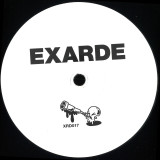
“In search of an afterparty” the name of this split EP we are witnessing coming straight from a miraculous country called Uruguay.
The story of a teacher and a student, the tale of different senses and perspectives, the dance of elusive, fictional Jair himself and the spies of the afterparty which can be on either way of self-data collection or when levels of paranoia have come to a boiling point and sense that the eyes are watching doesn’t go away that easily.
The A side is taken by Muten, an artist who has already made a lot of noise not just in his native country but all over the world too whether it’s with an outstanding liveset, flawless dj set or a timeless record that he has crafted. The B side is a story of a rising and promising producer Flhez, and his quest of frequency manipulation + sound perfection. True honor to have these Uruguayan performers to join Exarde and deliver this outstanding body of work for it.
João Pais Filipe delivers three acoustic solo percussion works for Ondes HXCX. The tracks were originally recorded for an exhibition called "Membrana" which took place in a church in Northern Portugal, using only drums. Different odd time signatures were extensively explored on each of the tracks. 18/16, 19/16, 23/16 and for the first time, a technique called "omission" was also introduced. It consists of omitting notes of the Rhythm without changing it, creating a sense of illusion and changing the perspective of the Rhythm. Burnt Friedman, an accomplice of João's studies on odd rhythms focused on blending counter-rhythmic electronic elements into the 23/16 track.
Ink stamped artwork.
A quietly influential figure among electronic and experimental circles since the late 90s, Berlin based sound artist Hanno Leichtmann has been developing a sprawling and idiosyncratic vision both as a creator and curator.
With a keen sense for charting new territories, Leichtmann's work spawns a multitude of languages that go from deli-cate ambient excursions to techno explorations or abstract sceneries on numerous sound installations, releases on such esteemed labels like Entr'acte or The Tapeworm and collaborations with artists like Valerio Tricoli or Jan Jelinek. A reflection of his keen sense of discovery.
Centered around the Villa Aurora Organ, an intriguing and mostly unknown instrument built in 1928/29 by the Artcraft Organ Company in Santa Monica, California, 'Outerlands' presents a deeply personal approach to the instrument's particular properties, very much in line with Discrepant's ethos. Consisting of a pipe organ, a wall mounted marimba and a two octave tubular bells/chimes ensemble, remotely controllable by MIDI, the Villa Aurora Organ's rich palette of sounds is translated into 12 short tracks capable of conveying the mesmerising spirits of minimalism, exotica and de-votional music.
Starting with the ecstatic sound of the pipe organ, 'Lucero' sets up the hypnotic mood for 'Outerland's excursions through moments of spiralling repetition - 'Tramonto' -, blissful contemplation - 'Sunset' or 'Notteargenta' - or underly-ing tension - ‘Coperto’. 'Espera' amps up the unease, with queasy organ tones lurking beneath marimba harmonic motifs that wouldn't sound out of of place on some survival horror movie, while 'Miramar' or 'Revello' bring an uncanny sense of familiarity through its repetitive melodies.
Drifting seamlessly through a variety of moods that somehow feel connected - the outerlands are within you, if you allow yourself to let go.
2024 Repress
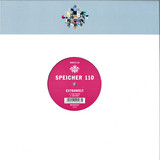
Since their first release as Extrawelt 'Soopertrack' dropped on Border Community in 2005 Arne Schaffhausen and Wayan Raabe have had a remarkable run. They relentlessly toured the world with their highly esteemed live show and released plenty of killer releases on labels like Traum or Cocoon. Naturally, our ears were wide open when the Hamburg-based couple sent over a bunch of new productions to the KOMPAKT HQ. Announced as what they call a new, alternative path of production for them, more precisely "less computer, more hands on" we were directly intrigued by the power and rawness of their new sound.
In particular, two cuts stood out: 'PINK PANZER' is pure analog funk. A sluggish beat is paired with a highly effective synth riff. The idea is as simple as it gets but it's executed in such a masterful way. You can drop this track anywhere and anytime - it'll certainly set things on fire right away. 'ARGONAUT' follows an equally simple recipe but ups the tempo and energy levels by 100%. Heavy prime time saw tooth techno for the new generation that recall vintage Thomas P. Heckmann – perhaps if he were to wake up in a funky mood.
Seit „Soopertrack“, das erste Release von Extrawelt, 2005 auf Border Community veröffentlicht wurde, haben Arne Schaffhausen und Wayan Raabe einen guten Run. Ausgiebig betourten sie die Welt mit ihrer vielgelobten Live-Show und veröffentlichen zahlreiche Hit-Releases auf Traum oder Cocoon. Natürlich haben wir die Ohren gespitzt, als das Hamburger Duo uns einige neue Tracks ins Büro geschickt hat. Angesagt war ein neuer, alternativer Produktionsprozess, genauer, „weniger Computer- und mehr Handarbeit“ – von der rohen Kraft ihres neuen Sounds waren wir sofort fasziniert.
Besonders zwei Cuts stechen heraus: „PINK PANZER“ ist der reinste Analog-Funk. Ein schleppender Beat gekoppelt mit einem eindrucksvollen Synth-Riff. Die Idee ist so einfach wie genial und ausgearbeitet auf meisterlicher Art und Weise. Überall wo man den spielt –die Hütte brennt garantiert. „ARGONAUT“ folgt einem ähnlichen Prinzip, beschleunigt ist nur das Tempo und Energielevel. Schwerer Sägezahn-Techno für die Peak-Time und eine neue Generation, die sich noch an den alten Thomas P. Heckmann erinnern können – vielleicht, wenn er mal in einem funky Mood aufgewacht wäre.
Molto morbidi's debut album String Cheese Theory is filled with an organic warmth and has the feeling of quiet classics or cult records rediscovered years after their release. A certain sense of closeness, even intimacy, comes through the listening experience of String Cheese Theory, that lays claim to unbridled creativity, halfway between pop music and the avant-garde.
Second in a series of reissues from Pierre Jaubert’s Parisound studio archive on Strut Record IS Lafayette Afro Rock Band's elusive funk/Afro original album, 'Soul Makossa' originally released in 1973. Transparent blue colored LP
In 1971, an undocumented seven-member Afro-American ensemble known as the Bobby Boyd Congress made a transformative journey from the United States to France. Bandleader Frank Abel recollects, "We sensed that the soul and funk market was saturated back home, and our original plan was a brief 6-month stint in Paris. Surprisingly, we ended up staying for a decade." Upon lead singer Bobby Boyd's return to the U.S., the group rebranded as Ice and crossed paths with independent producer Pierre Jaubert, a seasoned studio professional with credits on groundbreaking recordings alongside Charles Mingus, John Lee Hooker, and Archie Shepp, among others.
Drawing inspiration from Motown's work ethic, Jaubert initiated regular rehearsals with Ice. He recalled, "I didn't want to mimic Berry, but with seven talented musicians collaborating daily, something unique emerged." The band, residing in Paris and immersed in the African-dominated Barbesse district, began infusing African elements into their music frequently performing with Paris-dwelling Camaroonian and legendary composer Manu Dibango.
Rechristening themselves Lafayette Afro Rock Band, the group's musical direction shifted towards predominantly instrumental compositions, characterized by a weightier, more intricate Afro-funk sound. Their debut recording under this new moniker, 'Soul Makossa,' made a powerful impact with a dynamic rendition of Dibango's classic, coupled with the intense break of 'Hihache' and the contagious 'Nicky.' Initially released by Musidisc in France and later in the U.S. via Editions Makossa, the album omitted the title track due to publishing clearance issues.
Despite modest sales upon its initial release, the album's enduring influence became evident as hip-hop culture surged in the '80s, establishing it as a primary source for samples and riffs. The iconic 'Hihache' break found fame in Biz Markie's 'Nobody Beats The Biz,' and tracks from the album were lifted by LL Cool J, The Beatnuts, Kruder & Dorfmeister, and numerous others.
Black vinyl[22,27 €]
First in a series of reissues from Pierre Jaubert’s Parisound studio archive on Strut Record IS Lafayette Afro Rock Band's elusive funk/Afro original album, 'Malik,' originally released in 1974. Transparent blue colored LP
In 1971, an undocumented seven-member Afro-American ensemble known as the Bobby Boyd Congress made a transformative journey from the United States to France. Bandleader Frank Abel recollects, "We sensed that the soul and funk market was saturated back home, and our original plan was a brief 6-month stint in Paris. Surprisingly, we ended up staying for a decade." Upon lead singer Bobby Boyd's return to the U.S., the group rebranded as Ice and crossed paths with independent producer Pierre Jaubert, a seasoned studio professional with credits on groundbreaking recordings alongside Charles Mingus, John Lee Hooker, and Archie Shepp, among others.
Drawing inspiration from Motown's work ethic, Jaubert initiated regular rehearsals with Ice. He recalled, "I didn't want to mimic Berry, but with seven talented musicians collaborating daily, something unique emerged." The band, residing in Paris and immersed in the African-dominated Barbesse district, began infusing African elements into their music frequently performing with Paris-dwelling Camaroonian and legendary composer Manu Dibango.
Under the new moniker Lafayette Afro Rock Band, the group's music transitioned to predominantly instrumental compositions, featuring a denser Afro-funk sound. Their inaugural recording with the new name, 'Soul Makossa,' included a compelling rendition of Dibango's classic and the impactful break in 'Hihache.' The subsequent release a year later, 'Malik,' refined their sound with the percussive Afro party jam 'Conga,' the atmospheric vocoder and piano-led piece 'Djungi,' and the robust funk of 'Darkest Light.' Despite a limited impact upon its initial release, 'Malik' found appreciation as hip-hop culture flourished in the '80s, establishing itself as a rich source of samples and riffs. 'Conga' was featured in the 'Ultimate Breaks And Beats' series, while the opening horn line from 'Darkest Light' became a pivotal hip-hop motif, employed by Jay-Z, Public Enemy, Wreckx 'N' Effect, and many others