REPRESS
Alessandro Cortini (Nine Inch Nails/How To Destroy Angels) composed the Forse series using a Buchla Music Easel. Forse, meaning "maybe" In Italian, is a series of 3 double LP releases Cortini recorded for Imprec to release in 2013.
"All pieces were written and performed live on a Buchla Music Easel, in the span of one month. I found that the limited array of modules that the instrument offers sparked my creativity. Most pieces consist of a repeating chord progression, where the real change happens at a spectral/dynamic level, as opposed to the harmonic/chordal one. I believe that the former are just as effective as the latter, in the sense that the sonic presentation (distortion , filtering, wave shaping, etc) are just as expressive as a chord change or chord type, and often reinforce said chord progressions.
Of all the years with Nine Inch Nails the period spent writing and recording the instrumental record Ghosts I-IV is probably the one which changed my approach to music making the most. After that record I started getting more into instrumental composition, although I tried to approach it in a different way. While we had a vast array of tools and instruments at our disposal then, I decided to approach my pieces limiting myself to one instrument only, as I found myself being more decisive when faced with a limited creative environment."
Cerca:sen
Repress!
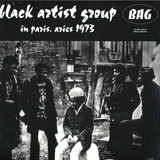
Outstanding free jazz session recorded in 1973 in Paris by Chicago outfit BAG.
It was Lester Bowie, trumpeter with the Art Ensemble of Chicago, who suggested that the Black Artists' Group (BAG) should head for Paris. In 1972 several members of BAG took his advice and flew to France for an extended stay. The following year a concert featuring saxophonist Oliver Lake, trumpeters Baikida Carroll and Floyd LeFlore, drummer Charles Bobo Shaw and trombonist Joseph Bowie (Lester's younger brother) was recorded and subsequently issued as In Paris, Aries 1973, a strictly limited edition LP on the group's own label.
Since the formation of Black Artists' Group in 1968, the home of this multidisciplinary arts collective had been St Louis, Missouri, the city where the Bowie brothers had grown up. It was there that Lester Bowie had started to investigate the expanding horizons of jazz before moving, in 1966, to Chicago where he joined the recently established Association for the Advancement of Creative Musicians (AACM). His close friend Oliver Lake visited Bowie, attended AACM concerts and meetings and was inspired not only by their artistic vision and integrity but also by their efficient organisation. In Chicago musicians were making things happen for themselves, taking control of their own destinies and giving shape to their lives as creative artists.
In June 1969, the Art Ensemble of Chicago had taken their music to France. During the preceding decade Paris had established a reputation for audiences that were unusually well-informed and open-minded, receptive to the uncompromising music of black American innovators such as Cecil Taylor, Ornette Coleman, Albert Ayler and Sun Ra. The city that had nurtured not only Cubism and Surrealism, but also Jean-Luc Godard and contemporary cinema's Nouvelle Vague was well prepared for the sonic collage forms and stylistic dislocations of the Art Ensemble. During that same month violinist Leroy Jenkins, trumpeter Leo Smith and saxophonist Anthony Braxton also arrived in Paris, three further emissaries from the AACM.
The adventure of collective improvisation resonated with the Parisian zeitgeist. Enthusiastic audiences attended their concerts and coverage in the media. In Paris, Aries 1973 offers an isolated and fascinating glimpse into that phase of the group's existence. The album is dedicated to the memory of Kada Kayan, a bassist who had hoped to make the trip from St Louis to France but, tragically, had grown ill and died. His absence adds special poignancy to the sound of the bass when it appears on this recording, played by Baikida Carroll. Listeners keen to hear Kayan himself in the company of Lake, Bowie, Shaw, LeFlore and Carroll should seek out Red, Black and Green by the 10-piece Solidarity Unit, Inc. That album, recorded on 18th September 1970 and dedicated to Jimi Hendrix, who died on that day, features an earlier version of Shaw's composition 'Something to Play On.'
In Paris, Aries 1973 reveals BAG's musical affinities with the Art Ensemble of Chicago. Both groups preserved an independently minded approach to the notion of free jazz and a carefully filtered awareness of pan-African musical practices, while their creative interest in space, mobile structure, chance occurrences and simultaneity also suggests parallels with the concerns of leading experimental composers working at that time. These performances in Paris of Shaw's 'Something to Play On' and Lake's 'Re-Cre-A-Tion,' plus two collective compositions/improvisations, display the dedication to structural fluency and sensitivity to coloration that accompanied BAG's unorthodox group dynamics and their unconventional instrumental combinations. In this case the musicians embrace congas, log drums, marimbas, woodblocks, cowbells and gongs. This is not a showcase for solos, but a shape-shifting and multi-centred statement of togetherness, quest and discovery. Removed from BAG's original multidisciplinary context the music still exudes an exhilarating spirit of collaborative exploration and shared excitement.
Knowledge is a tool, and like all tools, its impact is in the hands of the user.
ARTS WHITE presents the debut of one of the brightest artists in the Italian scene, 'Earwax' is a project that aim on highly energetic techno, ispired by the good old habits, this EP showcases a variety of ways to destroy floors in dusty Raves. Club 25 represents the modern key to non-sense underground rave music.
First release on this Milan-based reissue label fueled by a passionate interest for visionary genre-crossing music,
A young, free-reined musician with a rich music vocabulary and avant-garde sensibilities pours his heart out on cutting-edge musical equipment. Recorded in Northern Italy in 1989 by Michele Tadini, this release effortlessly fuses ambient and library overtones with the influence of early digital electronic music, underlined by an ethereal atmosphere eerily reminiscent of the best soundtracks by John Carpenter. Seemingly unplaceable in time and space, it is both Italian and world-spanning.
When Leon Michels and El Michels Affair released their rst record, Sounding Out The City, in 2005, it was hard to guess what was next for Michels and his then-introduced, now-patented "cinematic soul" sound. Now, four EMA studio albums and scores of tribute and remix projects later - all while producing for some of the biggest names in the industry - Michels has trademarked his sound, with each project taking audiences somewhere new and pushing the boundaries of what he is known for. The man is a river, not a lake and this time he takes his golden touch into the realm of hip-hop laying down a musical bed for one of the greatest to ever rhyme into a microphone: Black Thought of The Roots crew. Releasing on Big Crown Records, the LP is called Glorious Game and it is a remarkable debut partnership in more ways than one. Michels provides his bottom-heavy, soul-tinged production for Black Thought who gives us some of the more personal and transparent verses we've ever heard from him. Michels and Black Thought have been in each other's orbit for a while now. The two first met in the 2000s when Thought was first getting familiar with the contemporary soul scene. "Out of that whole world, Menahan Street Band was probably my favorite," recalling the funk and soul group Michels was a founding member of back in 2007. Fast forward a few years and musicians from that collective - Dave Guy on trumpet and Ian Hendrickson-Smith on sax - are now full time players with The Roots. This connection eventually led Leon and Thought to doing a few fundraising events around NYC and Philly together. "Before long, Black Thought was coming around the studio and would jam with us from time to time," Michels explains. "Then, fast forward to 2020 and COVID lockdowns, he just hit me up out of the blue, wanting me to send him stuff to write to. We both were looking to stay busy" Being that Black Thought is the co-founder and emcee for, hands down, the best live-band group in hip-hop. Michels took a decidedly different approach to this project and instead of sending recorded tracks of live compositions, he pulled out the sampler and sampled himself and some records from his collection. "I'm a big fan of soul music," as if Michels has to remind us. "And part of hip-hop's appeal to me has always been the sample-based production" For Glorious Game, Michels would make wholly composed and recorded soul songs in his studio, sample himself, then chop and/or loop up his sounds and create instrumentals for Black Thought. On some tracks he took a more traditional hip-hop approach, starting from samples of other people's music but then adding live instrumentation on top. But for the most part, it's him reinterpreting his own compositions into something new. The result is an organic feel of loop-based tracks that breathe and uctuate enough for Black Thought to ex on. "What I write about is determined by the equation of the producer's energy and my energy," Black Thought says. "It's about where we meet." So armed with Michels sampled and re-sampled soul cinematics, Black Thought rhymes through personal memories.
SKY HIGH BLUE COLOURED VINYL
When Leon Michels and El Michels Affair released their rst record, Sounding Out The City, in 2005, it was hard to guess what was next for Michels and his then-introduced, now-patented "cinematic soul" sound. Now, four EMA studio albums and scores of tribute and remix projects later - all while producing for some of the biggest names in the industry - Michels has trademarked his sound, with each project taking audiences somewhere new and pushing the boundaries of what he is known for. The man is a river, not a lake and this time he takes his golden touch into the realm of hip-hop laying down a musical bed for one of the greatest to ever rhyme into a microphone: Black Thought of The Roots crew. Releasing on Big Crown Records, the LP is called Glorious Game and it is a remarkable debut partnership in more ways than one. Michels provides his bottom-heavy, soul-tinged production for Black Thought who gives us some of the more personal and transparent verses we've ever heard from him. Michels and Black Thought have been in each other's orbit for a while now. The two first met in the 2000s when Thought was first getting familiar with the contemporary soul scene. "Out of that whole world, Menahan Street Band was probably my favorite," recalling the funk and soul group Michels was a founding member of back in 2007. Fast forward a few years and musicians from that collective - Dave Guy on trumpet and Ian Hendrickson-Smith on sax - are now full time players with The Roots. This connection eventually led Leon and Thought to doing a few fundraising events around NYC and Philly together. "Before long, Black Thought was coming around the studio and would jam with us from time to time," Michels explains. "Then, fast forward to 2020 and COVID lockdowns, he just hit me up out of the blue, wanting me to send him stuff to write to. We both were looking to stay busy" Being that Black Thought is the co-founder and emcee for, hands down, the best live-band group in hip-hop. Michels took a decidedly different approach to this project and instead of sending recorded tracks of live compositions, he pulled out the sampler and sampled himself and some records from his collection. "I'm a big fan of soul music," as if Michels has to remind us. "And part of hip-hop's appeal to me has always been the sample-based production" For Glorious Game, Michels would make wholly composed and recorded soul songs in his studio, sample himself, then chop and/or loop up his sounds and create instrumentals for Black Thought. On some tracks he took a more traditional hip-hop approach, starting from samples of other people's music but then adding live instrumentation on top. But for the most part, it's him reinterpreting his own compositions into something new. The result is an organic feel of loop-based tracks that breathe and uctuate enough for Black Thought to ex on. "What I write about is determined by the equation of the producer's energy and my energy," Black Thought says. "It's about where we meet." So armed with Michels sampled and re-sampled soul cinematics, Black Thought rhymes through personal memories.
Tape
When Leon Michels and El Michels Affair released their rst record, Sounding Out The City, in 2005, it was hard to guess what was next for Michels and his then-introduced, now-patented "cinematic soul" sound. Now, four EMA studio albums and scores of tribute and remix projects later - all while producing for some of the biggest names in the industry - Michels has trademarked his sound, with each project taking audiences somewhere new and pushing the boundaries of what he is known for. The man is a river, not a lake and this time he takes his golden touch into the realm of hip-hop laying down a musical bed for one of the greatest to ever rhyme into a microphone: Black Thought of The Roots crew. Releasing on Big Crown Records, the LP is called Glorious Game and it is a remarkable debut partnership in more ways than one. Michels provides his bottom-heavy, soul-tinged production for Black Thought who gives us some of the more personal and transparent verses we've ever heard from him. Michels and Black Thought have been in each other's orbit for a while now. The two first met in the 2000s when Thought was first getting familiar with the contemporary soul scene. "Out of that whole world, Menahan Street Band was probably my favorite," recalling the funk and soul group Michels was a founding member of back in 2007. Fast forward a few years and musicians from that collective - Dave Guy on trumpet and Ian Hendrickson-Smith on sax - are now full time players with The Roots. This connection eventually led Leon and Thought to doing a few fundraising events around NYC and Philly together. "Before long, Black Thought was coming around the studio and would jam with us from time to time," Michels explains. "Then, fast forward to 2020 and COVID lockdowns, he just hit me up out of the blue, wanting me to send him stuff to write to. We both were looking to stay busy" Being that Black Thought is the co-founder and emcee for, hands down, the best live-band group in hip-hop. Michels took a decidedly different approach to this project and instead of sending recorded tracks of live compositions, he pulled out the sampler and sampled himself and some records from his collection. "I'm a big fan of soul music," as if Michels has to remind us. "And part of hip-hop's appeal to me has always been the sample-based production" For Glorious Game, Michels would make wholly composed and recorded soul songs in his studio, sample himself, then chop and/or loop up his sounds and create instrumentals for Black Thought. On some tracks he took a more traditional hip-hop approach, starting from samples of other people's music but then adding live instrumentation on top. But for the most part, it's him reinterpreting his own compositions into something new. The result is an organic feel of loop-based tracks that breathe and uctuate enough for Black Thought to ex on. "What I write about is determined by the equation of the producer's energy and my energy," Black Thought says. "It's about where we meet." So armed with Michels sampled and re-sampled soul cinematics, Black Thought rhymes through personal memories.
PURPLE VINYL
A Wednesday song is a quilt. A short story collection, a half-memory, a patchwork of portraits of the American south, disparate moments that somehow make sense as a whole. Karly Hartzman, the songwriter/ vocalist/guitarist at the helm of the project, is a story collector as much as she is a storyteller: a scholar of people and one-liners. Rat Saw God, the Asheville quintet's new and best record, is ekphrastic but autobiographical and above all, deeply empathetic. Across the album's ten tracks Hartzman, guitarist MJ Lenderman, bassist Margo Shultz, drummer Alan Miller, and lap/pedal steel player Xandy Chelmis build a shrine to minutiae. Half-funny, half-tragic dispatches from North Carolina unfurling somewhere between the wailing skuzz of Nineties shoegaze and classic country twang, that distorted lap steel and Hartzman's voice slicing through the din. Rat Saw God is an album about riding a bike down a suburban stretch in Greensboro while listening to My Bloody Valentine for the first time on an iPod Nano, past a creek that runs through the neighborhood riddled with broken glass bottles and condoms, a front yard filled with broken and rusted car parts, a lonely and dilapidated house reclaimed by kudzu. Four Lokos and rodeo clowns and a kid who burns down a corn field. Roadside monuments, church marquees, poppers and vodka in a plastic water bottle, the shit you get away with at Jewish summer camp, strange sentimental family heirlooms at the thrift stores. The way the South hums alive all night in the summers and into fall, the sound of high school football games, the halo effect from the lights polluting the darkness. It's not really bright enough to see in front of you, but in that stretch of inky void - somehow - you see everything. The songs on Rat Saw God don't recount epics, just the everyday. They're true, they're real life, blurry and chaotic and strange - which is in-line with Hartzman's own ethos: "Everyone's story is worthy," she says, plainly. "Literally every life story is worth writing down, because people are so fascinating." But the thing about Rat Saw God - and about any Wednesday song, really - is you don't necessarily even need all the references to get it, the weirdly specific elation of a song that really hits. Yeah, it's all in the details - how fucked up you got or get, how you break a heart, how you fall in love, how you make yourself and others feel seen - but it's mostly the way those tiny moments add up into a song or album or a person.
Eric D. Johnson rarely lingers at one location too long. As a kid growing up in the Midwest, Johnson's family moved around a lot, but it wasn't until he became a touring musician years later that motion became a central part of his identity. That transient lifestyle stoked an enduring reverence for the world he watched pass by through a van window. A sense of place is a unifying theme he's revisited with Fruit Bats throughout its many lives. From the project's origins in the late '90s as a vehicle for Johnson's lo-fi tinkering to the more sonically ambitious work of recent years, Fruit Bats has often showcased love songs where people and locations meld into one. It's a loose song structure that navigates what he calls "the geography of the heart." "The songs exist in a world that you can sort of travel from one to another," says Johnson. "There are roads and rivers between these songs." Those pathways extend straight through the newest Fruit Bats album, aptly titled A River Running to Your Heart . Self-produced by Johnson_a first for Fruit Bats_with Jeremy Harris at Panoramic House just north of San Francisco, it's Fruit Bats' tenth full-length release and one that finds the project in the middle of a creative resurgence. After two decades of making music, hard-earned emotional maturity has seeped into Johnson's songs, resulting in a more complex sound that's connected with audiences like no other previous version of Fruit Bats. A River Running to Your Heart represents the fullest realization of that creative vision to date. It's a sonically diverse effort that largely explores the importance of what it means to be home, both physically and spiritually. And while that might seem like a peculiar focus for an artist who's constantly in motion, for Fruit Bats, home can take many forms_from the obvious to the obscure. Lead single "Rushin' River Valley" is a self-propelled love song written about Johnson's wife that clings to the borrowed imagery of the place where she grew up in northern California. Then, there's the gentle and unfussy acoustic ballad "We Used to Live Here," which looks back to a time of youthful promise and cheap rent. But the wistful "It All Comes Back" is perhaps the most stunning and surprising track on the album, Johnson's production skills on full display. Built upon intricate layers of synths, keyboards, and guitars, it's a pitch-perfect blend of tone and lyricism that taps into our shared apprehensions and hopes for a post-pandemic life. "We lost some time / But we can make it back / Let's take it easy on ourselves, okay?" sings a world-weary but ultimately reassuring Johnson in the song's opening lines. It's the kind of performance that makes you hope Fruit Bats stays in this one place, at least for a little while longer.
BLUE & BONE VINYL
Eric D. Johnson rarely lingers at one location too long. As a kid growing up in the Midwest, Johnson's family moved around a lot, but it wasn't until he became a touring musician years later that motion became a central part of his identity. That transient lifestyle stoked an enduring reverence for the world he watched pass by through a van window. A sense of place is a unifying theme he's revisited with Fruit Bats throughout its many lives. From the project's origins in the late '90s as a vehicle for Johnson's lo-fi tinkering to the more sonically ambitious work of recent years, Fruit Bats has often showcased love songs where people and locations meld into one. It's a loose song structure that navigates what he calls "the geography of the heart." "The songs exist in a world that you can sort of travel from one to another," says Johnson. "There are roads and rivers between these songs." Those pathways extend straight through the newest Fruit Bats album, aptly titled A River Running to Your Heart . Self-produced by Johnson_a first for Fruit Bats_with Jeremy Harris at Panoramic House just north of San Francisco, it's Fruit Bats' tenth full-length release and one that finds the project in the middle of a creative resurgence. After two decades of making music, hard-earned emotional maturity has seeped into Johnson's songs, resulting in a more complex sound that's connected with audiences like no other previous version of Fruit Bats. A River Running to Your Heart represents the fullest realization of that creative vision to date. It's a sonically diverse effort that largely explores the importance of what it means to be home, both physically and spiritually. And while that might seem like a peculiar focus for an artist who's constantly in motion, for Fruit Bats, home can take many forms_from the obvious to the obscure. Lead single "Rushin' River Valley" is a self-propelled love song written about Johnson's wife that clings to the borrowed imagery of the place where she grew up in northern California. Then, there's the gentle and unfussy acoustic ballad "We Used to Live Here," which looks back to a time of youthful promise and cheap rent. But the wistful "It All Comes Back" is perhaps the most stunning and surprising track on the album, Johnson's production skills on full display. Built upon intricate layers of synths, keyboards, and guitars, it's a pitch-perfect blend of tone and lyricism that taps into our shared apprehensions and hopes for a post-pandemic life. "We lost some time / But we can make it back / Let's take it easy on ourselves, okay?" sings a world-weary but ultimately reassuring Johnson in the song's opening lines. It's the kind of performance that makes you hope Fruit Bats stays in this one place, at least for a little while longer.
Light in the Attic Records is proud to present the next installment of the Nancy Sinatra Archival Series with the first ever reissue of the classic 1972 album Nancy & Lee Again. Recorded during a 1972 reunion between Nancy and the enigmatic Hazlewood, the album contains some of the pair's most enduring and ambitious duets including the epic "Arkansas Coal (Suite)," the sensual "Paris Summer" and the incredibly powerful Dolly Parton-penned "Down From Dover." Equal parts daring, psychedelic, cinematic, and sweet, Nancy & Lee Again reveals with each track a timeless, natural chemistry between two artists who would remain influential for generations to come. Nancy & Lee Again is available in a variety of formats, including vinyl and CD. The vinyl LP is presented in an expanded gatefold jacket and is accompanied by a 20-page booklet, featuring an array of photos from the legendary singer, actress, and activist's personal collection, as well as in-depth Q&A with Nancy Sinatra, conducted by the reissue's GRAMMYr-nominated co-producer, Hunter Lea (also available in the CD package). All formats have been beautifully designed by Darryl Norsen of D. Norsen Design, and include two bonus tracks, "Machine Gun Kelly" (first time on vinyl) and the previously unreleased "Think I'm Coming Down." Nancy, the eldest daughter of Frank Sinatra, had been working with the Oklahoma-born songwriter since 1965, when she topped the pop charts with "These Boots Are Made For Walkin'." Over the next five years, the two artists forged a prolific relationship in the studio, with Hazlewood writing and producing many of Nancy's solo hits. Soon, the duo found success with a series of duets, including "Sand," "Summer Wine," and "Some Velvet Morning" - all of which appeared on their highly-influential 1968 debut. Not long after the critical acclaim and chart success of Nancy & Lee died down, however, Hazlewood unexpectedly relocated to Sweden, leaving his musical partner in the proverbial dust. America, meanwhile, was in the midst of a cultural shift, as the Vietnam War waged on. By the turn of the decade, the musical landscape had changed significantly. "Trivial music and not profound music became unimportant," recalls Nancy, speaking to Hunter Lea. "It was a tough time." And yet, despite the circumstances, the stars somehow aligned for the duo to record some of their most magnificent music together. Returning to Los Angeles for the project, Hazlewood - who reprised his role as producer - chose to take a new direction with the duo's sophomore album. Nancy recalls, "It was more dramatic; it was more fun to do, more challenging to do_. It was more grandiose." Nancy & Lee Again remains a creative high point in the careers of Sinatra and Hazlewood and, upon its release, garnered rave reviews from Billboard, Record World, and Cash Box, among others. Yet, Nancy & Lee Again never received the spotlight it so utterly deserved. "We didn't have label support at all in those days," recalls Nancy. "Without the strength of a label, records die. We were old. We were old-fashioned. We were just not what was happening. It's a very ageist kind of business." Nevertheless, she adds, "I think it's a very good album. I think it's timeless." Now, after years of being a sought-after rarity, this gem in the Sinatra-Hazlewood canon can finally get its due.
More in tune now with the rhythm of the sun and moon, Xylouris White (Dirty Jim White and George Xylouris) speak to each other across great distances with the intuition and fellowship that can only be found over years in each other"s company. With fewer distractions, appreciative of the freedom to play with new sounds and spaces, they carve The Forest In Me from unbelievably thin air. Once you set the needle down on the record and hear for yourself, the intimacies and impressionism, abstraction and unfiltered emotion found in The Forest In Me, you may wonder what was the mood of the room in which this music came to be. George, Jim and long-time producer (and secret third member) Guy Picciotto share their thoughts: Guy Picciotto: "In late 2019, we had begun taking steps to working on new material. In a haphazard fashion, Jim and I started tracking drums in my basement, cutting them up into shapes with no set landing in mind. Some of it we sent to Giorgos in Crete - he responded with his lyra and his lute. Without intention we had initiated a process that would soon become more ruthlessly mandated by the world events that separated and isolated us to three corners of the globe in the following year." Giorgos Xylouris: "While we were recording, I noticed that the music had a certain solitude about it, both from the title and from inside. That led us to find more music from within that we had not yet discovered." Jim White: "The idea emerged, naturally nourished and nourishing a record with none of our usual angles and themes, no verbal language, no angst nor sudden dynamics, a more subtle structure. And we found The Forest In Me." The first revelation from The Forest In Me is "Latin White", in which Jim"s jaunty pattern sets the stage for George"s Cretan lyra and lute figurations, giving this short dance piece the feel of a welcome hoedown around the campfire, warding off the encroaching darkness of an emptied world. The repetitions, gathered to induce joy, have a glassy-eyed mechanical drive to them; their dervish-istic seeking betrays any suggestion of balm.
Joel Vandroogenbroeck was an arranger, conductor, producer and, above all, a unique multi-instrumentalist in the world of music. The Belgian artist was also famous for being the only permanent member of the group Brainticket and the main promoter of its creativity, often renewed with the contribution of exotic instruments. At the dawn of the Seventies, this versatile musician began a parallel life as a composer of singular music libraries tailored to comment documentary images. “L'Immagine Del Suono” was one of them, originally released by Italy's Flirt Records and now repressed on vinyl
by Musica Per Immagini for the first time. This album circulated, however, unnoticed in a limited number of copies among insiders, only rediscovered later by fans, thus raising Joel Vandroogenbroeck as a real pioneer of ambient and new age music.
It is appropriate to consider the twelve short-lived pieces of L'Immagine Del Suono” as a sort of continuous and visionary experiment, with the addition of electronic gasps, a strong dose of inevitable psychedelia, fragments of synthesized jazz, all coming from experiences both internal and external, hallucinatory and hedonistic. All of this combined creates a mysterious and abstract hybrid. Sonic raw material is sculpted with artisanal care, at times twisted and cryptic, characterized by a transversal irony, to the point that the interference of rock elements in the course of the set divert the listener's attention and momentarily interrupt the flow of consciousness. “L'Immagine Del Suono” is a concentrated example of the avant-garde, free from categorisation of any kind, developed in a non-commercial key and, equally, is drawn from a direct line via what was previously expressed within the folds of the then contemporary works of Brainticket.
She’s out of this world…
Maltese musician & producer Joon’s galactic debut arrives on our shores fully formed a decade after she first set sail. 12 cuts of uniquely addictive Synthesized Pop twist & turn on the rocky waters of life.
Her story begins after a life-changing car crash on the streets of Malta many moons ago. She was lucky to walk away in one piece. “That car crash was a wake-up call,” she says. “It made me realize how precious life is & I started living the life I felt was worth living.” Inspired to finally pursue her love of music full time, she began collecting instruments. Starting with a Stylophone& a vintage rhythm box, she started documenting ideas. Returning home to Malta after a few years in London, she only met one other woman making electronic music on the island. Driven by the desire to make music possible & accessible for the next generation, Joon co-founded the Malta Sound Women’s Network.
Ten years later, she sends us messages in a bottle from across the Mediterranean Sea. Armed with a Moog & her ethereal voice, she transmits hope & joy from a bedroom somewhere between Sicily & North Africa. Her music is right at home alongside outsider pioneers like Fever Ray, Grimes, Laurie Anderson & Molly Nilsson. Dream Again glides across heavy rhythms & eclectic electro. Telling stories of alienation with a throbbing heartbeat & space-age melodies, she lets us into her ultra-vivid world where anything is possible. Produced by Johnny Jewel, the album shines bright like comet orbiting the label’s dark sky, a much-needed vision of light on the horizon.
“Even if I’m sad or heartbroken, I remain optimistic. I want to grow old with no regrets.”
It’s time to Dream Again…
- A1: Volare (Nel Blu Dipinto Di Blu) – Dean Martin
- A2: I’ve Got You Under My Skin – Frank Sinatra
- A3: Frankie And Johnny – Sammy Davis Jr
- A4: That’s Amore – Dean Martin
- A5: You Make Me Feel So Young – Frank Sinatra
- A6: Once In A Lifetime – Sammy Davis Jr
- A7: Mambo Italiano – Dean Martin
- A8: How About You? – Frank Sinatra
- B1: I Get A Kick Out Of You – Frank Sinatra
- B2: My Funny Valentine – Sammy Davis Jr
- B3: Memories Are Made Of This – Dean Martin
- B4: Three Coins In The Fountain – Frank Sinatra
- B5: Spoken For – Sammy Davis Jr
- B6: I Can’t Give You Anything But Love – Dean Martin
- B7: My Blue Heaven – Frank Sinatra
- B8: Something’s Gotta Give – Sammy Davis Jr
- C1: On An Evening In Roma (Sott’er Celo De Roma) – Dean Martin
- C2: Makin’ Whoopee – Frank Sinatra
- C3: You Do Something To Me – Sammy Davis Jr
- C4: In Napoli – Dean Martin
- C5: Sentimental Journey – Frank Sinatra
- C6: What Kind Of Fool Am I? – Sammy Davis Jr
- C7: When You’re Smiling – Dean Martin
- C8: Old Devil Moon – Frank Sinatra
- D1: Ain’t That A Kick In The Head – Dean Martin
- D2: Nice ‘N’ Easy – Frank Sinatra
- D3: Return To Me – Dean Martin
- D4: Me And My Shadow – Sammy Davis Jr. & Frank Sinatra
- D5: C’est Si Bon – Dean Martin
- D6: Pennies From Heaven – Frank Sinatra
- D7: Buona Sera – Dean Martin
- D8: Too Close For Comfort – Sammy Davis Jr
- E1: Come Fly With Me – Frank Sinatra
- E2: Let Me Go, Lover – Dean Martin
- E3: I Got Plenty Of Nuttin’ – Sammy Davis Jr
- E4: Under The Bridges Of Paris – Dean Martin
- E5: Easy To Love – Sammy Davis Jr
- E6: Love And Marriage – Frank Sinatra
- E7: Rio Bravo – Dean Martin
- E8: Lonesome Road – Sammy Davis Jr
- F1: Young At Heart – Frank Sinatra
- F2: Sway – Dean Martin
- F3: Song And Dance Man – Sammy Davis Jr
- F4: Too Marvelous For Words – Frank Sinatra
- F5: Hey There – Sammy Davis Jr
- F6: The Naughty Lady Of Shady Lane – Dean Martin
- F7: On The Road To Mandalay – Frank Sinatra
- F8: That Old Black Magic – Sammy Davis Jr
Long before today's 'rebellious' pop idols, singers Frank Sinatra,
Dean Martin and Sammy Davis Jr. plus Actor Peter Lawford and
Comedian Joey Bishop had entered showbiz legend as the
genuinely hellraisin' Rate Pack. The handle proved a gift to
journalists chronicling the life and high times of the all-male quintet
whose leading lights were, without a doubt, three of the greatest
entertainers of the 20th Century. Captured on this 3LP compilation
album are some excellent musical memories performed at their best
We’re still harvesting the fruits of those past days in seclusion, the cabin fever induced creative outbursts, ideas that would probably have never surfaced without these enforced trips to our inner minds. Lockdown transcendence.
“Don’t Cry” by Italo-Brazilian DJ producer Stephan Barnem and Futuristant is another impressive testament of those days. Secluded in Stephan’s studio in Northern Italy, the duo subconsciously conjured the spirits of one of their mutual favorite bands, Depeche Mode and created a fierce, boombappy Neo New Wave smasher contrived to send rays of hope into the darkest corners of this mad world. We had to add a gratuitous beatless version to the EP that amplifies the cinematic depth and healing potency of this song.
If “Don’t Cry” echoes the dark brooding euphoria of Depeche Mode’s “Music For The Masses” era, the flipside cut “Elysium” harks back to the synthwave happy days of their debut “Speak & Spell”. It’s a wonderfully careless track that’s bringing a dearly needed breeze of fresh air to today’s discerning dancefloors.
Boys don’t cry for me Argentina. Save your tears for another day.
Wir ernten immer noch die Früchte jener vergangenen Tage in Abgeschiedenheit, der vom Lagerkoller verursachten kreativen Ausbrüche, Ideen, die ohne diese erzwungenen Reisen in unser Inneres wahrscheinlich nie entstanden wären. Lockdown-Transzendenz.
„Don’t Cry“ des italo-brasilianischen DJ-Produzenten Stephan Barnem und Futuristant ist ein weiteres beeindruckendes Zeugnis jener Tage. In der Abgeschiedenheit von Stephans Studio in Norditalien, beschwor das Duo unbewusst die Geister einer ihrer gemeinsamen Lieblingsbands, Depeche Mode, herauf und schuf einen wilden, boombappigen Neo-New-Wave-Smasher, der Licht in die dunkelsten Ecken dieser verrückten Welt senden wird. Wir mussten der EP eine Beatless-Version von “Don’t Cry” hinzufügen, die die filmische Tiefe und heilende Kraft dieses Songs noch verstärkt.
Wenn „Don’t Cry“ die dunkle, grüblerische Euphorie von Depeche Modes „Music For The Masses“-Ära widerspiegelt, erinnert der Flipside-Cut „Elysium“ an die Happy Synthwave-Tage ihres Debüts „Speak & Spell“. Es ist ein wunderbar sorgloser Track, der den dringend benötigten frischen Wind auf die anspruchsvollen Tanzflächen von heute bringt.
Boys don’t cry for me Argentina. Save your tears for another day.
- A1: Out Of The Silent Planet
- A2: Over My Head
- A3: Summerland
- B1: Everybody Knows A Little Bit Of Something
- B2: The Difference (In The Garden Of St. Anne’s-On-The-Hill)
- B3: I’ll Never Be The Same
- C1: Mission
- C2: Fall On Me
- C3: Pleiades
- C1: Don’t Believe It (It’s Easier Said Than Done)
- C2: Send A Message
- C3: The Burning Down
Gretchen Goes to Nebraska is the second studio album by American heavy metal/hard rock trio King’s X. It is a concept album based on a short story written by drummer Jerry Gaskill.
The album received virtually universal critical praise for its uniquely progressive musical approach and varied styles and is considered as one of their works, a seminal record within the progressive metal genre. It achieved high slots on various Album Of The Year-lists, including #4 in Kerrang!.
Gretchen Goes To Nebraska is available as a limited edition of
1500 individually numbered copies on gold coloured vinyl.
Light in the Attic Records is proud to present the next installment of the Nancy Sinatra Archival Series with the first ever reissue of the classic 1972 album Nancy & Lee Again. Recorded during a 1972 reunion between Nancy and the enigmatic Hazlewood, the album contains some of the pair's most enduring and ambitious duets including the epic "Arkansas Coal (Suite)," the sensual "Paris Summer" and the incredibly powerful Dolly Parton-penned "Down From Dover." Equal parts daring, psychedelic, cinematic, and sweet, Nancy & Lee Again reveals with each track a timeless, natural chemistry between two artists who would remain influential for generations to come. Nancy & Lee Again is available in a variety of formats, including vinyl and CD. The vinyl LP is presented in an expanded gatefold jacket and is accompanied by a 20-page booklet, featuring an array of photos from the legendary singer, actress, and activist's personal collection, as well as in-depth Q&A with Nancy Sinatra, conducted by the reissue's GRAMMYr-nominated co-producer, Hunter Lea (also available in the CD package). All formats have been beautifully designed by Darryl Norsen of D. Norsen Design, and include two bonus tracks, "Machine Gun Kelly" (first time on vinyl) and the previously unreleased "Think I'm Coming Down." Nancy, the eldest daughter of Frank Sinatra, had been working with the Oklahoma-born songwriter since 1965, when she topped the pop charts with "These Boots Are Made For Walkin'." Over the next five years, the two artists forged a prolific relationship in the studio, with Hazlewood writing and producing many of Nancy's solo hits. Soon, the duo found success with a series of duets, including "Sand," "Summer Wine," and "Some Velvet Morning" - all of which appeared on their highly-influential 1968 debut. Not long after the critical acclaim and chart success of Nancy & Lee died down, however, Hazlewood unexpectedly relocated to Sweden, leaving his musical partner in the proverbial dust. America, meanwhile, was in the midst of a cultural shift, as the Vietnam War waged on. By the turn of the decade, the musical landscape had changed significantly. "Trivial music and not profound music became unimportant," recalls Nancy, speaking to Hunter Lea. "It was a tough time." And yet, despite the circumstances, the stars somehow aligned for the duo to record some of their most magnificent music together. Returning to Los Angeles for the project, Hazlewood - who reprised his role as producer - chose to take a new direction with the duo's sophomore album. Nancy recalls, "It was more dramatic; it was more fun to do, more challenging to do_. It was more grandiose." Nancy & Lee Again remains a creative high point in the careers of Sinatra and Hazlewood and, upon its release, garnered rave reviews from Billboard, Record World, and Cash Box, among others. Yet, Nancy & Lee Again never received the spotlight it so utterly deserved. "We didn't have label support at all in those days," recalls Nancy. "Without the strength of a label, records die. We were old. We were old-fashioned. We were just not what was happening. It's a very ageist kind of business." Nevertheless, she adds, "I think it's a very good album. I think it's timeless." Now, after years of being a sought-after rarity, this gem in the Sinatra-Hazlewood canon can finally get its due.
(Note: Same tracklist on A & B Sides)
Across 8 concise vignettes, Chantal Michelle alchemizes acoustic instrumentation with a spectrum of layered feedback and field sounds, depicting fractured beauty amongst a precarious reality.
Chantal’s work is characterized by intoxicating juxtaposition and enriched with an array of source material to construct immersive narrative. Much of the work here was recorded during her time in New York City, perhaps a pre-requisite to the heightened tension at play.
Opening with lucid choral vocals, a mysteriously seductive anaesthesia disseminates before evaporating into surging feedback, vocals dissolving as quickly as they appeared.
It’s this oscillation between states that permeates throughout the work. Whether it’s the esoteric rumbling of acoustic drones, or the radiant fusion of distorted chords amongst the warming sounds of tropical atmospheres, moments of serenity are conjured up in a space so bliss that their endings incite an immediate nostalgia. Fleeting melodies are pierced by shattering cries of feedback; gossamer tones engulfed in saturated noise.
Amongst the instrumentation, buzzing field sounds tremor with hyperreal peculiarity and hallucinations shape noise into sounds of the familiar; the rumbling of an overheard aeroplane or the whirring of distant grasshoppers. Similarly, recurring motifs elicit a false sense of security in their subliminal familiarity, soon exposed as echoes, a reverberation of what was left behind.
At the approaching climax, the blissful onset anaesthesia has worn off, interrupted by a powerful chorus of deep, gothic synthesis that fuels post-apocalyptic fever dreams, an unnerving and mesmerising symphony. The unresolved tension leaves us in a state of delirium, questioning if the tranquillity we experienced was ever really there.
Chantal was immersed in Fleur Jaeggy’s The Water Statues whilst recording, and its imprint is woven into the sonic fabric of Broken to Echoes; a sublime liminal dream-state, pervaded by haunting visions. It’s a view of the world captured from inside the enclosure of a cell membrane. Through translucent mesh, we see the billowing tension of our surroundings, protected only by the most delicate walls.
Chantal Michelle is a sound artist, musician, and composer based between the United States and Europe. She works with acoustic instrumentation, synthesis, field recordings, and voice to form densely textured aural landscapes. Her work is characterized by tension, disparate sounds, and non-linear arrangements. It has been realized as multichannel installations, live performances, and recorded material.
She has released three albums to date: Pulse, Puls-ar, Procession (Dinzu Artefacts, 2022), Night Blindness (Quiet Time, 2021) and the collaborative Aunis (Injazero, 2019), all to critical acclaim. The Wire called Night Blindness “a dynamic and engrossing narrative,” and Aunis received praise in The Guardian as “a virtually unprecedented palette of synth sounds.”