For 46 minutes Alex Zhang Hungtai punctures our perception of linearity, working like a conductor, encouraging percussive flurries to trip and fall over each other, sometimes tempered by contact mic feedback to help skewer the chronology. He’s assisted by three additional percussionists - Wet Hair’s Ryan Garbes and Shawn Reed, and Leonard King - while Signal Decay’s Nick Yeck-Stauffer plays trumpet, with each extra voice blurred into the middle distance, curling like pipe smoke into convulsive whorls.
The piece is frankly astonishing in its grasp of the maelstrom. Initially tentative, searching, with higher register hits like moths butting lone lightbulbs in an abandoned apartment block, the distant, plangent peal of twin brass wafts between rooms to impart a distinctly floating, OOBE- like feel for space. The brass recedes while the drums’ low end thickens and roils like a gamelan tempest, blurring impressions of knackered buildings or the temple rituals of ancient epochs, with sounds wafting in from other rooms to mess with the stereo field like ghosts of worshippers doing their thing. Remarkably, it conjures a fever dream miasma of ricocheting, thunderous polymetric clatter and proprioceptive fuckry without ever losing its head.
Hungtai’s canny use of contact mic feedback drone and cymbal saw gives the whole thing a sense of gauzy delirium that unites the grouches like mildewed grout and cobwebs, coarsely gelling the elements in a way that resonates with Pauline Oliveros and co’s Deep Listening band acousmagique as much as Basil Kirchin’s keeling ‘World Within World’ classic, the ghosts of Sun Ra’s ‘Nuclear War’, the possessed atmosphere of the cabin where Harley Gaber recorded ‘Wind Rises in the North’, and no doubt Harry Bertoia’s massive metallic sculptures, agitated at midnight.
Humid, menacing, and wraithlike, the album’s’ sense of keening chronics belies a visionary hand at the tiller, here tightened by Rashad Becker’s mastering, which faithfully brings to light, and shadow, the depth of perception and wild but concentrated energies at play, sealing in place a truly staggering session for adventurous ears, cineastes and Lynchian acolytes alike.
Search:sense of sun
For more than 30 years, singer-songwriter and guitar hero Mary Timony has cut a distinctive path through the world of independent music, most recently as vocalist and guitarist of acclaimed garage-pop power trio Ex Hex (Merge) but also as a member of seminal postpunk band Autoclave (Dischord), celebrated leader of the deeply influential Helium (Matador), multifaceted solo artist (Matador, Lookout!, Kill Rock Stars), and a co-founder of supergroup Wild Flag (Merge). Described by Sleater-Kinney's Carrie Brownstein as "Mary Shelley with a guitar" and dubbed "a trailblazer and an innovator" by Lindsey Jordan a.k.a. Snail Mail, Timony has distinguished herself as one of her generation's most influential. Although she has remained a cult hero and critical favorite since the early '90s, Timony's many triumphs have long been counterbalanced by crippling doubt and self-nullification. Her fifth solo album, Untame the Tiger, approaches these emotions head on. Her first solo release in 15 years is a startling document of an artist fully coming into her own power during the fourth decade of her career. It is the product of lessons learned during life-altering struggle. The mystical, acoustic-driven Untame the Tiger emerged after the dissolution of a long-term relationship and was bookended by the deaths of Timony's father and mother. The album was recorded during a two-year period during which she was the primary caregiver for her ailing parents. The tectonic psychic shift Mary experienced due to this loss informs many of her lyrics. Standout track "No Thirds" "is a song about losing everything and having to keep on going," says Timony. "I wanted the verses to sound like a wide-open barren space, like driving across a desert, because that is what the song is about - losing people and the feeling that your future is a giant, wide-open blank space." The stripped-back acoustic instrumentation of "The Guest" conjures Sweetheart-era Byrds. Timony describes it as a song sung directly to loneliness: "I was imagining loneliness as a house guest who keeps knocking on your door. I thought it would be funny to say loneliness is the only one who always comes back." Untame the Tiger does not eschew Timony's guitar hero reputation; in fact, "Summer" relishes in it, a straight-up banger that you'd be half tempted to call "no frills" until its initial garage rock stomp breaks into the unexpected bliss of a twin guitar solo conclusion. "I wanted the recording to have the energy of the Kinks, early Dio and Elf, or Rory Gallagher," she explains. "I was also listening to a lot of Gerry Rafferty's first solo album and was inspired to have two simultaneous guitar solos." Untame the Tiger picks up the thread woven through Timony's freak-folk-anticipating solo albums of the early '00s. Basic tracks were recorded at Studio 606 in Los Angeles, with Timony backed by Dave Mattacks, drummer of legendary British folk-rock band Fairport Convention. "Mattacks is a hero of mine and one of my favorite musicians of all time. He is a true legend. I never in a million years thought he'd agree to play on my record," says Timony. "Before the session, I had a panic attack and had to go sit alone in the parking lot_ Once we started playing together, it felt so great that the fear subsided and turned into excitement. His playing felt instantly familiar, which makes sense because it's the foundation of many of my favorite records." Untame the Tiger was produced by Mary Timony, Joe Wong, and Dennis Kane. The album was recorded over the course of two years at Studio 606, Magpie Cage, 38North, and in Mary's basement Additional engineering by J. Robbins (Jawbox, Burning Airlines). Musicians include Chad Molter (Faraquet, Medications), David Christian (Karen O, Hospitality), and Brian Betancourt (Cass McCombs, Devendra Banhart, Hospitality). The album was mixed by Dave Fridmann (MGMT, The Flaming Lips, Mercury Rev), Dennis Kane, and John Agnello (Dinosaur Jr., Kurt Vile, Waxahatchee).
standard 2x12"[32,73 €]
Immerse yourself in a unique narrative experience, embarking on a vibrant journey that will awaken your senses and evoke warm memories.
Play as Mimi, exploring the precious recollections of your childhood and the times shared with your late grandmother. As past meets present, confront your adult choices with fond childhood memories to uncover lost family secrets.
For the OST, SUPERNAIVE brothers oscillates between melancholy and wonder. They build a strong narrative throughout the songs, taking the listener by the hand to discover their unique poetic universe.
- A1: Darkland (00:39)
- A2: Tulips (02:55)
- A3: Immaculate Conception (00:46)
- A4: Love Theme No 3 (01:23)
- A5: The Owl In Daylight (00:51)
- A6: Innovative Patterns (02:24)
- A7: Osiris (00:58)
- A8: Groove Experiment No 3 (01:49)
- B1: Raincloud (03:57)
- B2: Phonic (00:48)
- B3: Love Theme No 2 (01:58)
- B4: Italian Summer (00:52)
- B5: Endless (02:11)
- B6: Wonder Theme (01:09)
- B7: Willow (01:06)
2023 Repress
Maston’s Darkland is a breezy collection of the material from the Tulips sessions that didn’t make it on to the original LP. Originally a digital-only release for those in the know in the autumn of 2018, after re-issuing Tulips in 2020 it made too much sense for Be With to give Darkland a vinyl release.
Like Tulips, Darkland was recorded mostly in Hoorn, in the Netherlands, between 2015-2017 during downtime from Frank’s touring duties with Jacco Gardner’s band. Bits were also done in Los Angeles on some extended trips back home.
The collection plays like an alternate view of Maston’s instant modern classic Tulips; a companion piece to the LP proper with similar mixture of shorter themes and more full length tracks. As Frank Maston explains: “I think Darkland is the shadow of Tulips in a way… what it might’ve been in a different universe. But the heart of Tulips beats in these songs as well and they evoke the same memories and feelings for me. I see my process playing out across these songs - lots of experimentation and trying out new techniques and sounds and just sort of going for it.”
Frank goes on: “It was all from the same pool of material, like 30+ ideas. I was making a lot of little demos… some would be more fleshed out and become songs and others would just be a cool riff and not go anywhere. When I started trying to form it all into an LP I went through all the sessions and ideas and collected the ones I thought were the most fleshed out and cohesive together as a whole. There were a fair amount of songs that were finished and in hindsight really should have been on Tulips (like what would’ve been the title track). And the rest of these songs are either very early versions of tunes that ended up on Tulips or some cool ideas that just ended up being dead ends. It definitely shows how wide my net was in the beginning before I narrowed the record down stylistically.”
Darkland opens with its ornate 39 second title-track before striding into “Tulips”, that full-length title-track that never was. It’s a real head-nod, percussive-rich electric piano stunner that would’ve been a comfortable standout on the album proper. But now this “downlifting” gem is given ample room to shine on this record.
The funky organ-led bass and drums workout “Immaculate Conception” will keep your neck gently snapping while MPC fiends go reaching for their sampler. And that’s gospel. “Love Theme No 3” cuts a breathtakingly stylish vibra-slapped swathe through the middle of the opening side before we’re startled by the pronounced bass and twinkling percussion of “The Owl In Daylight”. Charming digi-drums underpin the wonky synth (quiet-)banger “Innovative Patterns” which has a lovely melodic switch-up in the final third before the tempo (and hairs on your neck) rise on the faintly creepy yet imminently groovy “Osiris”. The gorgeously soft-focus “Groove Experiment No 3” closes out the first half in slow-mo wonderment.
The lushly melancholic “Raincloud” ushers in side B before the emotionally-stirring “Phonic” taps at the door, coming on like the long lost sister to Pet Sounds’ “Let’s Go Away For A While”. Next up, the swooning beauty “Love Theme No 2” keenly sways in front of you, growing ever more insistent and hypnotic. The too-short “Italian Summer” conjures the same flirtatious imagery as the title hints at whilst “Endless” is a fascinating “piano-pella” alternative version to “Rain Dance” from Tulips. “Wonder Theme” has a nostalgic, exotic 60s swing and album closer “Willow” is a hushed, campfire folk gem. The gently circular strumming is just magical.
Speaking to Aquarium Drunkard back in 2019 about the sessions that became Tulips, Frank noted: “I was really surprised by the lack of sunlight during my first winter in Holland, so I would call it Darkland which then became the name of the first demo I wrote during that time. It was also the working title of the record when I first started writing. Some are full songs that didn’t make the cut (including what would have been the title track), some are just ideas that I never finished.”
Whilst we were working on Darkland’s vinyl release Frank explained more specifically about the music that didn’t make it on to Tulips: “When I was putting together the tracklisting for Tulips I was already thinking that whatever didn’t make it onto the LP would be cool to release eventually somehow. The response to Tulips has been so passionate over the years that it’s nice to be able to offer another piece of that world. And for me personally it’s amazing to have more of my work out there in the world. Most common bit of feedback was that many of these songs should have been on Tulips. The odd friend says it’s much better than Tulips.”
Just like Tulips before it, Simon Francis’s vinyl mastering for Darkland has been cut at 45rpm so you can trip out to this as well at a woozy 33 1/3. The artwork too has been designed by Frank himself as a literal visual continuation of the Tulips cover.
We couldn’t possibly say whether Darkland is better than Tulips, and luckily we don’t have to decide.
Danielle Boutet’s P »Pièces« is a mysterious artifact of Quebecois marginalia, self-released in 1985. Moving from languid ennui to high drama, »Pièces« is a dreamy gestalt, an album that borders Chanson, spoken-word, jazz noir, and minimalism, conjured from the chasm between acoustic and electronic realms. »Pièces« allows us a window into the highly intimate songcraft and compositional skill of an artist who longed to linger not in the public eye, but in relation with others and the world around her.
Born in Quebec City, Boutet studied music at the University of Montreal, where she focused on composition and percussion, before becoming involved in Montreal’s feminist and lesbian art scene. Primarily written, performed, and recorded by Boutet, with voice, guitar work, and technical assistance by Sylvie Gagnon, Pièces was created during a paradigm shift in home recording. Originally composed for the piano, Boutet and Gagnon utilized a consumer-friendly Tascam 4-track Portastudio and versatile Yamaha DX-7, alongside guitar, bass, marimba, and the human voice, to expand and contemporize the original composition’s scope.
Inspired by prog rock and British poet and musician Anne Clark, »Pièces« translates Boutet’s influence by moving between sunny, wistful fairytale and dark, wintry dirge. Filled with longing marimba, vertiginous, startling synth pads, and folk guitar, each track on Pièces offers a wholly unique proposition. Some are modal and rife with the ethereal psychological tension of a sci-fi soundtrack, while others are more like entering a smoke-laced lounge, the entertainer embodying seduction.
With the sprechgesang of artists like Serge Gainsbourg, there is an intense intimacy to Boutet’s delivery, sometimes as if she is performing for an audience of one. As one lyric goes, translated to English from French: “Like holograms/ Images from a world/ That inhales souls/ And exudes drama.” Another song contains an excerpt from The Tao of Physics: “The eastern sages specify clearly that they do not identify an ordinary void, but rather, a void having an infinite creative potential.”
To English-language audiences, the album’s title, »Pièces«, might seem to simply refer to the eleven different pieces. The title can also, of course, refer to parts of a larger whole, but Boutet is keen to point out that there is also another meaning: In French, a pièce is a room. On the cover of the original cassette, Boutet is seen sitting on a chair, alone in an empty apartment, a cable snaking at her feet. Listening to »Pièces« is like entering eleven different rooms: whether a study encased in shadow, a greenhouse left to wither in an eternal frost, or a divine nave.
Boutet sold a few dozen copies around Montreal, a scene mostly occupied by the new wave explosion de rigueur, but the inclusion of Pièces in the 1987 issue of Ladyslipper—the North Carolina-based mail order catalog that championed women musicians of all calibers and careers—led to more exposure throughout North America. “In the catalog,” Boutet says, “they included it in the New Age section, but I was, and still am, aware that this album is relatively unclassifiable.”
Boutet would release one more album, titled Musiques Urbaines, before getting pulled in the direction of interdisciplinary art and theory. “Although I never stopped making music, I lost all interest in public diffusion or performance,” Boutet says. Despite her departure from performance and publicly releasing music, she left behind a strange and enthralling document of Montreal’s 1980s feminist fringe, an aural document of the historic moment when self-recorded music and its practical potential became a prismatic reality.
Danielle Boutet’s Pièces arrives February 16, 2024 as part of uncommon¢ (“uncommon sense”), an open-ended, serialized endeavor from Freedom to Spend that provides new meaning for rarefied recordings from music’s outermost fringe.
Sun Yellow LP[21,22 €]
Clear Vinyl
Blue Lake is the musical moniker of American born, Copenhagen based multidisciplinary artist and musician Jason Dungan, who signs to the Tonal Union imprint for the release of his new longform album ‘Sun Arcs’. It follows 2022’s release ‘Stikling’, earning a nomination for ‘Album of the Year’ at the Danish Music Awards plus warm praise from The Hum blog and musicians and DJs alike including Jack Rollo (Time is Away/NTS) and Carla dal Forno. A self taught player, Dungan began freely experimenting with self-built multi-string instruments, preferring to build his own hybrid 48-string zither and working in the realms of left-field ambient music, off kilter folk and improvised acoustic minimalism.
The starting point of ‘Sun Arcs’ saw Jason travel for a week alone to Andersabo, a cabin set in the idyllic Swedish woods just outside of Unnaryd, known also as the music project, festival and residency space which has been run by Dungan since 2016, hosting artists like Sofie Birch, Johan Carøe and Ellen Arkbro. Whilst writing 1-2 pieces per day, a conscious decision was made to leave behind everyday distractions and shut out the outside world to instead focus on the natural passage of time as Dungan recalls: “My only sense of time came from these daily walks out in the woods with my dog, and an awareness of the sun’s path as it moved across the sky each day.”
The album’s immersive world unfolds with the opener ‘Dallas’, an ode to his home state and a musical synthesis of these two disparate spaces (Texas and Denmark), the touchstones of Dungan’s life. A folk-esque single acoustic builds to a flowing arrangement of clarinets, organ and cello drones coupled with percussion. ‘Green-Yellow Field’ chimes in as the first of two solo oriented zither recordings twinned with the dreamlike title track ‘Sun Arcs’, both densely rich as cascading and overlapping harmonic tones resound. ‘Bloom’ emerges with a krautrock psyche before an eruption of cello drones, slide guitar and free-ranging zither playing, ushering in the anticipation of spring. With half of the recordings conceived in Andersabo, Jason returned to Copenhagen to form the album's centre piece ‘Rain Cycle’ which features a tempered Roland drum machine alongside shifting zither improvisations. ‘Writing’ explores the shimmering harp-like qualities of sweeping playing figurations with Dungan mapping out adjusted tuning “zones” on the zither for unconventional but creatively liberating effects. ‘Fur’ captures the feeling of openness and the momentum of time, seeing Dungan perform waves of solo clarinet, often in one takes and embellished with textural drones, a zither solo, and layers of guitar. ‘Wavelength’ the album's closer is fondly inspired by the film works of Michael Snow and Don Cherry’s seminal live album ‘Blue Lake’ (1974), as it builds out from a drone-generated zither chord and features an alto recorder solo. Dungan found a deep connection to Cherry’s stripped back performance ethos, focusing on the core beauty of minimal instrumentation creating a genre-less meeting between folk and jazz. A dialogue is formed between the solo and the bandlike performances, interlinked in a geographical duality with all finding a sense of commonplace as musical sketches of visited landscapes. The bountiful instrumentation ebbs and flows as further layers emerge with Dungan constructing his material much like an artist would, recording and reviewing, adding and subtracting.
Musically it portrays a form of double life led by an American-identifying person living in Scandinavia, and a new found presence in Denmark, seeking out underdeveloped marshlands and barren stretches of beach adrift from other rhythms and distractions. Highlighting their individual and potent importance Dungan concludes: “Both places feel like “me”, I think on some level the music is always some kind of self-portrait.” ‘Sun Arcs’ depicts the intricate balance of nature’s cycles and the paths outlined by the seasons, from a winter dormancy to a warm sun drenched scene. The album scales new glorying heights and further defines Dungan’s musical narrative, inhabiting a unique space in left-field, improvised and experimental music, borning his most accomplished compositions to date. A singular and visionary expression, drawing on an array of instruments and sound worlds with a renewed sense of joy and discovery.
The album's rich tapestry was mixed by Jeff Zeigler (Laraaji, Mary Lattimore, Kurt Vile /Steve Gunn) and mastered by Stephan Mathieu (Kali Malone, KMRU, Félicia Atkinson).
The Vampisoul chicas are back. And for the third time. And, although collectors and connoisseurs have never stopped playing the songs by these Spanish female singers, here they are again, sounding as vibrant as they did half a century ago. Because these children of their times, the musical decades of the 60s and 70s covered by this compilation, boldly ventured into the limited spaces of freedom open to female artists back then. And they did so with attitude, in search of the right repertoire, proudly presenting new, daring personal projects often breaking away from the demure tone adopted by mainstream local female singers. And they were canny about it too. Realizing that the censors working back would just listen to the song that the record company flagged up as the listening target on the A side and not bother to flip the single over, they recorded many of their racier songs on the B side. That exciting dark side of singles, which have long tempted collectors. Lacking the freedom and visibility enjoyed today, these daring records by these female singers went as far as they could and a few managed to go beyond. The songs on this compilation tell everyday stories, narrating small socio-musical conquests revolving round the enduring theme of young love. Sass, sex, boy-girl rivalry, the defense of liberating women's fashion and, saying what women think loud and clear, all characterize these grooves. Performed in a variety of musical styles ranging from ye-yé, twist, disco, beat, popcorn, flamenco pop to Northern Soul, and, even more surprisingly, sung in an everyday, natural and self-assured tone that must have ruffled some feathers. As in previous volumes of "¡Chicas!", this third compilation includes female singers from outside Spain but whose career, their decision to sing in Spanish or their long tours and local stays, and occasionally permanent residence, meant their albums were created, recorded or produced here in Spain. It's a winning proposition for everyone. Take the band Los Bravos, four of the singers that passed through the ranks of this quintessentially Spanish group were foreigners. It's part of our open-door policy. Spain is different. In every sense. But let's get down to the serious stuff and the ritual: vinyl on the turntable and needle poised ready to play. Third volume of Vampis' ¡Chicas! series, an irresistible collection of ye-yé, twist, disco, beat, popcorn, flamenco pop and even Northern Soul! From the early 60s and in the middle of a difficult political and social context, Spanish female singers - and those who moved to Spain - disregarded conventions and overcame all barriers to be part of a music movement that shook the Spanish society of the period. Many of the 24 tracks are reissued for the first time, including very hard-to-find records. It includes extensive notes by Vicente Fabuel featuring all the original record sleeves and artist photos.
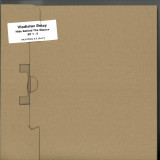
Vladislav Delay's complete "Hide Behind The Silence" series. Intuitive and raw music, momentary and reflective, released on Ripatti's own label Rajaton.
Stillness is a myth. Consider concepts such as ”still water”, or ”still air” for that matter. Go to a restaurant, ask them for a glass of still water, hold it against the light and see where we’re at. Even though the water itself has been captured and imprisoned in the glass, it never stops breathing. It’s filled with tiny particles, dancing. Everything can be explained on a molecular level, but since we’re not scientists – and even if you happen to be – it’s the natural world of perception that moves me.
Still air is very similar. A hot summer’s day with zero wind feels completely still. It’s the closest I have felt to complete stillness. Or for a more urban adaptation, imagine the same vibe inside a normal apartment. In those moments, revelations and mind- blowing experiences can be had with experiments in stillness.
Try this: Just sit down for a minute on a sunny day, making sure there’s enough natural light. Do absolutely nothing. Try not to breathe for a bit. (If you need a mental anchor, you can play Cage’s 4’33” in your head but nothing else.) Watch the tiny dots of dust dancing :..’ ̈.:; ́ ́*°.,’:,. ̈ ̈ ̈ ̈:,.’
The movement is crazy, but the feeling of stillness comes from witnessing how subtle it is. In (perceived) complete stillness, every act of microscopic mobility seems to speak volumes. Yet, it feels both reassuring and oddly threatening that the stillness is never complete. What if we would need absolute stillness? Or is it just enough that we can perceive something as such? Extremes attract, so for both water and air, extraordinary movement is equally fascinating. That is also a luxury item of sorts. For us to enjoy a very ”loud” body of water or air, we need to be safe, in enough control of the situation. So when you are, it’s worthwhile to pay attention and take it all in.
A rapid flowing free with extreme strength and just barely in control. Look at that water go! No still water on this one, only ”sparkling”. A windy day when birds seem surprised how hard it is to fly, but in the end they make it. Trees bend but don’t break. The wind shows you its movement but doesn’t hurt you. It feels friendly, like a big clumsy dog that doesn’t quite understand its size.
It’s beautiful to be a guest of the elements, but not at the mercy of them. A new kind of dialogue forms.
Q&A with Sasu Ripatti:
1) Tell us something about the EP series ”Hide Behind the Silence”, what’s the idea and what can we expect?
Exploration of inaction. Of many kinds. In arts and in personal life, or at bigger and more serious levels. Questioning myself as a human being as well as an artist. Acknowledging the growing activism all around, and the very clear need for it, and how it reflects my own inaction.
Musically speaking, after Rakka, Isoviha and Speed Demon, I finally found some relief, but more importantly lost the need to go musically ever more outward and intensive. I felt quite strongly certain periods/moods from the past and they made me revisit some musical ideas or states of mind I was exploring early on.
It’s about live moments being captured, not much premeditation or editing. More intuitive and raw, even though the end result (to me) feels and sounds quite introspective and calm. It’s not very ambitious. Momentary and reflective.
2) Your music doesn’t sound very silent. Does it come from somewhere behind the silence?
Oh, this time to me it sounds quite quiet and playing with space if not silence. I don’t know what’s actually behind silence, but I think silence is the source of everything. We just don’t understand it yet.
3) What kind of thoughts or experiences gave inspiration to this series?
Writing this in Nov ’22, it’s not a stretch to say the world has been really unwell. Sometimes, like Mika Vainio put it, the world eats you up. I feel a bit like that. And I try to hide in my studio and stay away from it all, but it’s getting harder by the day. I’ve been questioning myself and thinking if what us artists are doing is worth anything, and whether it’s just a selfish thing I’ve been doing for the past 25 years, running away from everything. I haven’t come to a conclusion yet.
4) Is it easy for you to be in silence, or around silence?
Absolutely. I not only hide behind silence but I also love silence. It’s only since I started going back to nature as a grown-up person that I sensed and was enveloped by silence, true silence. I have begun to appreciate it a lot. I think all the people should spend more time in silence.
All tracks composed and produced by Sasu Ripatti.
Artwork by Marc Hohmann, photography by Shinnosuke Yoshimori.
Mastering by Stephan Mathieu for Schwebung Mastering.
Vinyl cut by SST Brueggemann.
Publishing by WARP Music Ltd.
Soliton maximizes the compact format by further illuminating lesser-traveled paths. Contemplation and exploration weave harmoniously through five mysterious tracks. Influenced by a wide range of styles and sounds, such as Japanese ambient, the muted dissonance of Pharoah Sanders, and the chilly dub of the Scape catalog, Soliton evokes visions of lonely night drives punctuated by bright moments of bliss. The Calque EP from January 2023 saw them pursuing the minimal electronic side of their work even further. The opening track, "Kottbusser Tor,” showcases a conspicuous absence of the processed guitars that characterize most of their work, and instead explores sequenced filters, tape delays and analog synth patterns for eight minutes. On "Ammosel", they dive directly into dubby soundscapes, with crackling electronics and deep basslines, while "Kiyosumi" and "Fade Into Air" pay a visit to more familiar ambient territory. A darker undercurrent pervades on this EP, but one that goes particularly well with the coldest of seasons and its frosty air. The duo, consisting of Jason Kolb (Michigan, US) and Jonas Munk (Denmark) started working together in 2006, sending each other tracks across the Atlantic, eventually resulting in a full-length release on Felte in 2012. What started out as a side project to their respective main projects (Auburn Lull and Manual) have slowly become the main activity for both artists, now with a total of four full-lengths under their belt. Their music has also evolved and matured over the years, reaching a level of perfection that’s only granted producers who've been in the game for decades. Billow Observatory have by now established themselves as purveyors of highly refined ambient music and the Soliton EP sees them elegantly blend new and old, electronic and organic, into a gently drifting, enveloping whole. “.. mind drenching sunrises, glittering constellations, and sailing clouds, richly furnishing the familiar sense of hovering over vast natural orders that you're also inside. – Pitchfork // “So the world it inhabits is essentially that one between states, simulating a quietly vibrant ecology of sub-aquatic bass rumbles, washed out expanses of mid-range swirl and keening top end whose elusive colours seem to fade and coruscate in the low light. Lovely
New Heavy Sounds is super stoked to announce a very very special team up between our favourite punk sisters, Shooting Daggers and Death Pill. Both bands have recorded a brand new song, and what better way is there to present them (or any kind of punk) than a good old split single. So kicking off the Shooting Daggers/Death Pill split, is this never before recorded Death Pill track 'MONSTERS'. Ukrainian punk trio Death Pill certainly made a stir when they hit the UK as part of their first ever European tour. Articles in the likes of the Guardian and Sunday, featured in all the music mags, plus the band showed that they were a pretty ferocious musical outfit, as those who were witness to the full on live experience can testify. Whilst in London, the band also had time to cut 'MONSTERS'. Recorded live in the studio with Wayne Adams (Pet Brick, Big Lad and producer of Green Lung) at the helm, MONSTERS is a short, sharp shock. An angry, sardonic and skewed amalgam of riffs and full on blast beats … it growls and it rips. The band says .. “This track is about how our parents knowingly or unknowingly lose their children. As an example - here are the most painful things you could hear from your folks: "When will you finish your music games?” "You will never achieve anything!” "When are you finally going to do something useful?" Therefore, when there was an opportunity to record a one live song in London, the choice of a song became obvious. Just imagine the "surprise" on the faces of our mums... Many thanks for Ged and Paul from the NHS label for supporting this idea, and to Wayne from Bear Bites Horse for the sick and fat sound” What makes this release all the more exciting, is that Shooting Daggers are dropping their first new music since last year's EP 'Athames'. Sal, Bea and Raquel are most definitely on the way up, their exciting blend of hard as nails hardcore, punk attitude and a neat melodic sense have made them a much sought after outfit, for gigs and festivals here and across Europe. They are slowly but surely proving themselves to be one of THE bands to watch in 2024. If the EP left their growing legion of fans gagging for more, new track 'NOT MY RIVAL' will not disappoint. It's a catchy, pogo-tastic, queercore punk banger, full of feminist grit and a killer earworm chorus. The band says ... "Not My Rival, is a song about dismantling the male gaze, fighting against the internalised patriarchal messages that we all unconsciously absorb. It's about breaking the cycle of female rivalry. We want to encourage lifting each other up instead of tearing each other down" The Shooting Daggers debut album is due in the new year .... you have been warned, this is the shape of things to come. But there’s more ... a very special 7” single strictly limited to 250 copies. Classic black vinyl, with a reversible foldover sleeve with artwork from each band on each side so you can choose your own cover, full colour printed labels housed in a poly overbag
20 years ago Sunburned Hand of the Man released "Headdress" and it
cracked there world open
This is not hyperbole. The album resulted in the band becoming the cover children for a scene / genre-defining story titled "New Weird America" by the Wire and also saw the album given a 9.0 / Best New Music tag from Pitchfork ("...the music flows so readily with complete and utter disdain for trend and fashion that it feels simultaneously primitive and advanced..."). Largely out of print since back then, "Headdress" is back to help put the world back on a better path.
Remastered for this 20th anniversary edition freshly from the original masters and housed within a gatefold bearing archival photos, this is true head music for true heads.
Tune in, shake yr ass and drop out with this ever-providing slab.
EASYGOING PORTRAIT OF DOWN-HOME SOUL SINGER COMING INTO HIS OWN AND ESTABLISHING AN INDELIBLE BOND BETWEEN PERFORMER AND AUDIENCE
1/4" / 15 IPS / Dolby A analogue master to DSD 64 to analogue console to lathe
On par with the most treasured concert albums of the 60s and 70s, Bill Withers' transformative Live at Carnegie Hall is a forgotten classic – an easygoing portrait of a down-home soul artist coming into his own in front of an audience eager to share every moment of his brilliance. Soothing with subtlety, charming with calmness, and healing with a vocal timbre as relaxing as his grooves, Withers uses the stage to expand the range of favorites and engage in dialog with the crowd. Distinguished with sonics that restore the performances' balance and improve the sound-staging, this reissue takes you inside the venue.
Moreover, aspects that really make this concert document unique – the energetic crowd, Withers and his band's willingness to extend arrangements, and the undeniable communicative bond between the performer and his fans – are brought into fuller relief. While most live albums give you the sense of what transpired, our reissue allows it to seem that what you're hearing and sensing is happening right now, in the moment. You are as much a participant as listener. For this reason and more, Live at Carnegie Hall ranks with James Brown's Live at the Apollo and B.B. King's Live at the Regal. No small claims, but the proof is in the grooves.
The antithesis of the sweaty R&B shouter that prowls the edge of stages, Withers deals in mellowness and vulnerability, qualities that come to fore. The songs here span soul, blues, and folk and often times, contain elements of all three styles. Live at Carnegie Hall also deals with serious subject matter with unflinching honesty and simple directness. Companionship, poverty, war, maturity, family, and love all crop up within Withers' tunes, yet the messages are never overly cumbersome or preachy. Credit goes to his easygoing style and relatable lyrics, not to mention a tight-as-a-vice band that on this night is simply "on."
"One more time?" Withers asks in response to a request for another stanza during "Use Me," and like the snap of fingers, his musicians are right back on cue, the crowd clapping along on every beat. This classic, as well as the instantly familiar "Ain't No Sunshine," poignant "Grandma's Hands," and all-time favorite "Lean On Me" are delivered with utmost soulfulness, passion, and electricity. Few, if any, live albums demonstrate such a bond between the crowd and artist as Live at Carnegie Hall. You'll definitely want to be there.
- On The Sunny Side Of The Ocean
- Special Rider Blues
- St Louis Blues
- How Green Was My Valley
- (Poor Boy) Long Way From Home
- The Death Of The Claptop Peacock
- Spanish Two Step
- In Christ There Is No East Or West
- Steam Boat Gwine Round The Bend
- Sligo River Blues
- Poor Boy
- When The Springtime Comes Again
- On The Sunny Side Of The Ocean
David Tattersall, the Wave Pictures guitarist and frontman releases a solo album of interpretations of John Fahey tunes, recorded live in the studio. "I have been a fan of John Fahey's music since I was very young; it has always been with me and I can't remember a time when I wasn't affected by it. It is weird music, and very good. Of course, Fahey is an important cult figure in the history of music: as the first man to find a language for steel string guitar that can stand proudly alongside the established tradition of nylon string classical guitar; as one of many men who rediscovered obscure old blues musicians and recorded them for a new generation in the 1960s; as one uniquely able to reconcile 20th century avant-garde music with folk tradition; as an early indie-label DIY pioneer. For me personally, Fahey went beyond technique, and to some extent beyond historical or intellectual justifications for his work. He explored his emotions through his instrument of choice, and in so doing made the case for the guitar as the ultimate conduit for emotional expression. While there are many imitators who try to play ''like Fahey'', I avoided using his fingerpicking style or sense of rhythm, and tried instead to use his music to explore my own emotions, my own dreams and memories. I was more interested in the lyrical and expressive aspects of Fahey's music than in the techniques of it. I tried to find myself within his compositions and without composing anything I feel that I have managed to make a David Tattersall record that says as much about me as any of the many albums that I have written. John Fahey's beautiful discography shows that the guitar can carry as much mystery and soul as the human voice, and simply put, I wanted in on a little of this action. This is my second all-instrumental solo acoustic album, and where this differs from my first attempt, Little Martha, is that here I improvised freely. I used Fahey's originals only as guides. I'm not sure what I was looking for, perhaps something beyond explanation, but I tried to be as free as possible, and I am delighted by the spontaneous results. Hopefully, they will make the listener feel happy and dreamy, just like the effect that Fahey's many albums have on me. One of the most important things that Fahey ever said was his advice to guitarists to try to feel the emotions that each chord they play on a guitar brings forth. He is telling guitarists to not only play the guitar, but to let the guitar play them. I did my best to follow this advice. I hope you enjoy listening to the album, that it brings you some dreamy moments, and that it sends you back to happily explore the originals. I had a great time recording it. Naturally, I can't put the experience adequately into words but that's the whole point. I think Fahey was a genius of the kind that creates a whole genre single-handedly. There could be thousands, millions, of reinterpretations of his compositions. In fact, there probably already are. And long may this continue. All tracks were recorded live with no tampering."
Originally released as a hand-numbered CD on New Year's Eve of 2004, Last Light captures Tor Lundvall 's hushed songcraft at its most ghostly and grayscale, stripped bare like branches bracing for winter. Initially conceived of as "a piano album with sparse electronics" (with the working title November), Lundvall's palette steadily expanded, incorporating synthesizer, samples, bass, metronomes, and his signature spectral vocals. A journal entry from the spring of 2002 proved formative to his evolving vision: "I remember watching the blueish-grey light shimmering outside and hearing distant sounds echoing far away, eventually sinking into silence and stillness." The album's 12 tracks are steeped in this sense of autumnal transience, of bearing witness to what fades. The music moves in whispered swells, between dirge, drift, and devotional. Synths chime like slow-tolling bells; percussion shuffles and shivers, icy and isolated; bass traces a low-lidded plod - it's a mode both austere and seductive, lulling the listener into its landscapes of deepening dusk. Lyrically, Lundvall's language skews observational and depressive ("through lace curtains / grey light falls / dark clouds gather / in my soul" ), with each song like a gauzy glimpse into a different tableau framing winter's descent: rust - colored leaves, frozen ponds, cold crescent moons. Lundvall has long considered Last Light a "personal favorite" in his discography, and it's easy to hear why. In texture, finesse, and pacing, it vividly evokes the rare mood of fragile, frosty pastoral noir depicted in his iconic oil paintings. His is an art of the half-seen and half-remembered, of fleeting figures, shapes and shadows, and gathering darkness. Of all that disappears, and the ghosts that never leave: "So I wait / as the years / slowly drain the magic and the light / and the girl / I never loved / haunts me through the dark roads of my life."
Clear Vinyl
On Rock Island, their second LP, Palm produces evidence of a distinct musical language, developed over time, in isolation, and out of necessity. On the island, melodies are struck on what might be shells or spines. Rhythms are scratched out, swept over, scratched again. Individual instruments, and sometimes entire sections, skip and stutter. There is the sense of a music box with wonky tension or a warped transmission in which all the noise is taken for signal.
Like other groups so acclaimed for their compulsive live show, Palm has been burdened by the constant comparison between their recorded material and their touring set. On Rock Island, they render this tired discussion moot, using the album form to present that which could never be completely live, reserving for performance that which could never be completely reproduced.
Despite appearing behind the instruments typical of rock music, Palm trades in sounds of their own making. On these songs, one of the guitars and the drum kit are used as MIDI triggers, producing an index that can be combed through later and replaced with new information. The percussion is sometimes augmented so as to suggest a multiplication of limbs. The strings are manipulated to choke, crack, and hum like other instruments, or other bodies, might.
Working again with engineer Matt Labozza, the band spent the better part of a month in a rented farmhouse in Upstate New York. With the benefits of time and space, Palm recorded the various elements piecemeal, only rarely playing together in groups larger than two or three. While some members tracked, others holed up in the next room, experimenting with quantization, beat replacement, and other methods borrowed from electronic music. Even accounting for the many labors that brought them to be, these materials seem produced by an organic logic. Their complex friction forms a habit of thought, scores a network of grooves on the floor of the mind.
This is music with dimensionality. Sonic objects are deployed, developed, and dissected in various states of mutation. The listener flits about between the field and the lab. The tone is warm in a way only the sun could make, the pace as forceful and as variable as a gale. Whether one locates Rock Island in a sea or in a refinished attic (as in Greg Burak's album cover), whether one escapes to there or is banished, its psychic environs are charted clearly enough. Only at this remove from the mainland can we sense the conditions necessary for such a strange species of sound.
- A1: Work & Roti W/ Scapa, Vindya
- A2: Yellow Crocus
- A3: Help Me W/ Shanique Marie
- A4: Fresh W/ Gavsborg, Lintd, Joey B
- A5: Create Your Own Bless W/ Fox
- A6: Oil Money W/ Lintd & Raheel Khan
- A7: Dirty Dirty W/ Thai Chi Rosè
- A8: Samrai - Breathe W/ Chesqua & Deepikaa
- B9: Bhangbow
- B10: Tabla Freeform (Original Demo Mix) W/ Raheel Khan
- B11: Samrai, Lintd & Scapa - Live In Leeds At Howard Assembly Room, 8Th September 2023
TAPE + TEA TOWEL[18,91 €]
Producer, DJ, Facilitator & Publisher (Balraj) Samrai (of Swing Ting/SEEN Magazine) steps out for their first full length release "Work & Roti" along with a host of talented collaborators on new label Sangha Industries.
The album title came from a phone conversation with Samrai's mum who features on the opener reflecting on first generation Punjabis heading to the UK only going to work and eating roti, not getting a chance to travel until their senior years. In addition the project explores the complexity of migrant experiences - healing, self-love/care, reciprocity and connections to the earth. A theme throughout is the inclusion of South Asian percussion and rhythms such as Tabla, Dholak, Kanjira, Dhol and Mridangam overtly at times as well as covertly which grounds the record.
Samrai is joined by host of talented collaborators across the 8 tracks - SCAPA, Vindya, Vikaash Sankadecha, Pops Roberts, Shanique Marie, LINTD, Gavsborg, Joey B, Fox, Raheel Khan, Thai Chi Rosè, Chesqua and Deepikaa Sreenivasan who all enrich the project with vocals, additional production and instrumentation. Although at times dealing with difficult subjects (Help Me, Oil Money, Dirty Dirty) there's a sense of joy, playfulness (Fresh) and release across the set (Yellow Crocus, Create Your Own Bless) culminating in closer (Breathe) when you feel the sunlight pushing through despite the clouds above…
- A1: Work & Roti W/ Scapa, Vindya
- A2: Yellow Crocus
- A3: Help Me W/ Shanique Marie
- A4: Fresh W/ Gavsborg, Lintd, Joey B
- A5: Create Your Own Bless W/ Fox
- A6: Oil Money W/ Lintd & Raheel Khan
- A7: Dirty Dirty W/ Thai Chi Rosè
- A8: Samrai - Breathe W/ Chesqua & Deepikaa
- B9: Bhangbow
- B10: Tabla Freeform (Original Demo Mix) W/ Raheel Khan
- B11: Samrai, Lintd & Scapa - Live In Leeds At Howard Assembly Room, 8Th September 2023
TAPE[15,76 €]
Producer, DJ, Facilitator & Publisher (Balraj) Samrai (of Swing Ting/SEEN Magazine) steps out for their first full length release "Work & Roti" along with a host of talented collaborators on new label Sangha Industries.
The album title came from a phone conversation with Samrai's mum who features on the opener reflecting on first generation Punjabis heading to the UK only going to work and eating roti, not getting a chance to travel until their senior years. In addition the project explores the complexity of migrant experiences - healing, self-love/care, reciprocity and connections to the earth. A theme throughout is the inclusion of South Asian percussion and rhythms such as Tabla, Dholak, Kanjira, Dhol and Mridangam overtly at times as well as covertly which grounds the record.
Samrai is joined by host of talented collaborators across the 8 tracks - SCAPA, Vindya, Vikaash Sankadecha, Pops Roberts, Shanique Marie, LINTD, Gavsborg, Joey B, Fox, Raheel Khan, Thai Chi Rosè, Chesqua and Deepikaa Sreenivasan who all enrich the project with vocals, additional production and instrumentation. Although at times dealing with difficult subjects (Help Me, Oil Money, Dirty Dirty) there's a sense of joy, playfulness (Fresh) and release across the set (Yellow Crocus, Create Your Own Bless) culminating in closer (Breathe) when you feel the sunlight pushing through despite the clouds above…
David Tattersall, the Wave Pictures guitarist and frontman releases a solo album of interpretations of John Fahey tunes, recorded live in the studio. "I have been a fan of John Fahey's music since I was very young; it has always been with me and I can't remember a time when I wasn't affected by it. It is weird music, and very good. Of course, Fahey is an important cult figure in the history of music: as the first man to find a language for steel string guitar that can stand proudly alongside the established tradition of nylon string classical guitar; as one of many men who rediscovered obscure old blues musicians and recorded them for a new generation in the 1960s; as one uniquely able to reconcile 20th century avant-garde music with folk tradition; as an early indie-label DIY pioneer. For me personally, Fahey went beyond technique, and to some extent beyond historical or intellectual justifications for his work. He explored his emotions through his instrument of choice, and in so doing made the case for the guitar as the ultimate conduit for emotional expression. While there are many imitators who try to play ''like Fahey'', I avoided using his fingerpicking style or sense of rhythm, and tried instead to use his music to explore my own emotions, my own dreams and memories. I was more interested in the lyrical and expressive aspects of Fahey's music than in the techniques of it. I tried to find myself within his compositions and without composing anything I feel that I have managed to make a David Tattersall record that says as much about me as any of the many albums that I have written. John Fahey's beautiful discography shows that the guitar can carry as much mystery and soul as the human voice, and simply put, I wanted in on a little of this action. This is my second all-instrumental solo acoustic album, and where this differs from my first attempt, Little Martha, is that here I improvised freely. I used Fahey's originals only as guides. I'm not sure what I was looking for, perhaps something beyond explanation, but I tried to be as free as possible, and I am delighted by the spontaneous results. Hopefully, they will make the listener feel happy and dreamy, just like the effect that Fahey's many albums have on me. One of the most important things that Fahey ever said was his advice to guitarists to try to feel the emotions that each chord they play on a guitar brings forth. He is telling guitarists to not only play the guitar, but to let the guitar play them. I did my best to follow this advice. I think Fahey was a genius of the kind that creates a whole genre single-handedly. There could be thousands, millions, of reinterpretations of his compositions. In fact, there probably already are. And long may this continue. All tracks were recorded live with no tampering
Kanaan from Oslo, Norway is back with their 2nd album in 2020. Following the impromptu Odense Sessions with Causa Sui guitarist Jonas Munk released in February, Double Sun is a different beast all together: Treading the same path as their 2018 debut Windborne, Double Sun is a studio effort in the best sense of the word. Perfectly balanced on the edge of dynamic improv, throbbing beats sizzled in scorching fuzz and topped off with deeply layered soundscapes. This album sees Kanaan reach a new plateau. Kanaan presents a unique perspective to psychedelic rock, painting with a wide palette that includes jazz and post-rock. Double Sun devotes as much energy to sonic colour as it does to groove and energy. The spirit of experimentation is everywhere: From the savory, pastoral sounds of opening track Worlds Together, to the soaring exploratory paths of the two-part title track. In the creative process, Kanaan dived deep into the possibilities of the studio, adding intricate layers and twists and turns to these tunes: acoustic guitars, percussions & synthesizers embrace and enhance the Norwegian modern day version of a power-trio.