Liz Stringer has been a steadfast and captivating feature of the Australian musical landscape over a six album career. Venerated by her musical peers and devoted fanbase alike, Stringer's world-class vocals, multi-instrumental prowess, notoriously powerful live performances and story-rich, genre-defying songs place her among the most important songwriters of her era. Mirroring the scope and complexity of Stringer's sensibilities and accomplishment as an artist, The Second High draws from Stringer's wider influences of jazz, funk and soul, and takes her ability to dissect the minutiae of the human condition through song - and connect with her audience - to a new level. The album is redolent with motifs of self-actualisation, lessons learned, sharp and ever-relevant commentary on social issues, and a strong and consistent focus on justice and equality. Fuelled by keys-driven grooves ranging from poignant grand piano lamentations (When You Met Me), the Rhodes-led jazz odyssey of On the Level, hip-hop flavoured keys brightening the bottom-heavy and deeply funky The Second High, to virtuosic keys that dance between strings and soaring multi-layered vocals in To Survive, Stringer's seventh studio album is a fresh and engaging ride to a destination yet uncharted, even by Stringer's standards - thrilling, stark and transformative. If 2021's First Time Really Feeling was an excavation, The Second High is an exorcism.
Buscar:sensi
Flutter Ridder is the duo of Norwegian multidisciplinary artists Espen Friberg and Jenny Berger Myhre, both of whom play important roles in Oslo’s contemporary art and music underground. The pair first collaborated during the production of Friberg’s debut solo record, “Sun Soon” (Hubro, 2022), quickly recognizing in one another a creative kinship rooted in a playful, intentionally naive approach towards making art. In November of 2023, the pair decamped to the coastal town of Hvisten in southeastern Norway to record what would become this debut, self-titled album in an ancient wooden church. Drawing from a palette of Friberg’s idiosyncratic Serge modular system and the church’s resident pipe organ and intoxicating acoustic reverb, they began recording and sculpting music informed by the notion that air and electricity share a common flow, a continuous current that can be directed through valves and potentiometers. The pair came to think of the Serge and pipe organ as sibling instruments, the former yielding characteristically unpredictable and complex timbres that complement the wooly, reedy drones and strange, microtonal overtones of the latter. At once sublime, liturgical, and whimsical, Flutter Ridder offers its listener a series of moving, cinematic natural landscapes, affirming the sensibilities of its makers and the indelible influence of the environment in which it was produced.
Another foggy day in Yorkshire. A steel grey sky. Raindrops tracing one another down the windowpane. Kirk Barley sits in his studio and assembles compositions from scraps of found sound and live instrumentation. Melodies swell, withdraw and repeat like waves. Time slows. Accelerates. Slows again. The light bends, tweaked at the edges. Twisted by rhythms that never quite resolve.
Written, recorded and produced by Barley in Yorkshire in early 2024, Lux picks up where 2023 LP Marionette leaves off, conjuring a mystical, reflective space between formal minimalism and sonic imaginaries of northern landscapes.
And yet, where Marionette relied at times on more recognisable field recordings, Lux leans into Barley’s skill as an instrumentalist and sound designer, working from a palette of short samples and utilising a variety of alternate tuning systems to build, layer and coax his compositions into being. Most evident on tracks ‘Vita’, ‘Sprite’ and ‘Descendent’, these tunings create an otherworldly harmonic language that is easier to perceive than describe.
Alongside more familiar instruments of guitar, bass, drums, organ and clarinet, here Barley draws on plastic saxophones and bells, and recordings of glass, wood and metal sound objects to provide the organic matter. Rather than directly representative of the natural world, Lux enters into a dialogue with it which, like the grasses and flowers of the album’s cover, exists somewhere between reality and artifice.
On album opener ‘Cache’, Barley constructs his own sense of time from a recording of an umbrella crank, a sparse and spectral piece which hints at memories embedded in the track’s title. Introspection blossoms into new life on ‘Vita’, crumpling again into the percussive ambience of ‘Verre’. A track that takes its harmonic lead from the clinks of glass, it features Barley’s long-time collaborator Matt Davies on drums, whose nuanced, tonally sensitive playing gives ‘Verre’ a fizzing, ice-like quality.
There are several moments where Lux picks up on themes Barley explored under electronic moniker Church Andrews on recent works with Davies, stretching and distorting temporalities most explicitly on ‘Descendent’, whose ritualistic air unfurls around a pattern in exponential decline.
Embracing the surrealism Barley absorbed over years watching classic film noir and the works of David Lynch and Federico Fellini, Lux wends its way through the enchanted sound worlds of ‘Sprite’ and ‘Balanced’ before arriving at the album’s title track.
An expression of his recent experiments in live, prepared guitar, ‘Lux’ brings the album back to earth, returning us to the room where the rain has stopped, the clouds have parted, and the soft warmth of the spring sun is pouring in through the open window.
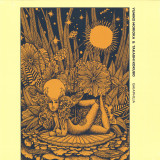
Japanese artists Yumiko Morioka and Takashi Kokubo unite for Gaiaphilia, a journey through ambient soundscapes that seamlessly blends Morioka’s graceful piano compositions with Kokubo’s immersive field recordings and atmospheric synthesisers.
This collaboration brings together two of Japan’s most influential pioneers in ambient and new age music, each with decades of groundbreaking work. Morioka, celebrated for her 1987 album Resonance—reissued to critical acclaim by Métron Records—infuses her introspective playing with Kokubo’s vivid environmental textures, creating a dialogue between nature and melody.
After releasing Resonance, Morioka stepped away from music, moving to America to raise her family. For years, her work was quietly cherished by fans, only gaining wider recognition with its reissue in 2020. A devastating wildfire destroyed her California home seven years ago, prompting her return to Tokyo where she became a chocolatier before rediscovering her passion for the piano in recent years, playing live shows and making new recordings.
Takashi Kokubo’s legendary discography spans over 30 years, and has found wider acclaim in recent years via YouTube algorithms and bootleg uploads, wracking up tens of millions of plays. Yet he is probably best known for his sound design work, specifically the Japanese earthquake alert sound as well as credit card payment jingles - his creations are pervasive in Japanese society.
“From our love and concern for our planet, we both offer a unique sensibility and spirit of inquiry which we express through our music.”
Rooted in shared philosophical interests, Gaiaphilia reflects a profound reverence for nature’s resilience and harmony. Themes of Gaia, Mother Earth’s renewal, and the interconnectedness of life are central, with inspirations drawn from cosmology, sacred geometry, and Japan’s mystical Katakamuna tradition. The album invites listeners into a meditative space where sound mirrors the delicate balance of the natural world.
A master of sound design, Kokubo enhances this vision with his distinctive field recordings, captured using a self-made binaural microphone shaped like a crash test dummy’s head. From the jungles of Borneo to the gentle rhythm of ocean waves, Kokubo’s globe-spanning recordings transform into immersive soundscapes that perfectly complement Morioka’s introspective piano compositions.
“The title, Gaiaphilia, is a newly created word to encompass our love and respect for nature and life, this feeling is the theme we hoped to express.”
Released on Métron Records on 12/03/25 and with artwork from Ventral Is Golden, Gaiaphilia marks a remarkable new chapter for Morioka and Kokubo. Recorded at Kokubo’s log house studio named Studio Ion in Yamanashi, their collaboration offers listeners a deeply emotional and transcendent experience, rooted in the timeless beauty of Japan’s natural landscapes.
Black Vinyl[33,82 €]
A crisp, spellbinding intro sets the mood for the first song on 'Maintenant Jamais', Population II's third album. With the guidance of producer Dominic Vanchesteing (Marie Davidson, Chocolat, Peter Peter), the turbulence of the band’s previous releases is structured and refined. The result is a sophisticated rock album that surprises with its languorous grooves, as heard on "Le thé est prêt", while staying true to the raw power for which the band is renowned, as demonstrated on vigorous tracks such as "La Trippance" and "Rédemption naturelle".
The album follows with "Prévisions", a song that ripples with finesse before abruptly transitioning into the instrumental number "Macavélique rock". While "Haut-fond" and "Cardinaux" are true feats of elegant prog rock, "Mariano (Jamais je ne t'oublierai)" and "homme étoilé" prove that Population II is also endowed with a profound melodic sensibility capable of creating catchy and explosive hooks.
On this new album, the trio fine-tunes the distinctive style they’ve been developing for several years, thanks in part to a fusion of shared influences – from Soft Machine to MC5 to L'Infonie – but also to a rare complicity that can only blossom between such close friends. This creative chemistry is what makes the band's complex songwriting seem so fluid and supple. Population II breaks through their previous sonic frontiers while remaining true to their roots. Therein lies the achievement of 'Maintenant Jamais'.
Coke Bottle Green Clear Vinyl[36,56 €]
A crisp, spellbinding intro sets the mood for the first song on 'Maintenant Jamais', Population II's third album. With the guidance of producer Dominic Vanchesteing (Marie Davidson, Chocolat, Peter Peter), the turbulence of the band’s previous releases is structured and refined. The result is a sophisticated rock album that surprises with its languorous grooves, as heard on "Le thé est prêt", while staying true to the raw power for which the band is renowned, as demonstrated on vigorous tracks such as "La Trippance" and "Rédemption naturelle".
The album follows with "Prévisions", a song that ripples with finesse before abruptly transitioning into the instrumental number "Macavélique rock". While "Haut-fond" and "Cardinaux" are true feats of elegant prog rock, "Mariano (Jamais je ne t'oublierai)" and "homme étoilé" prove that Population II is also endowed with a profound melodic sensibility capable of creating catchy and explosive hooks.
On this new album, the trio fine-tunes the distinctive style they’ve been developing for several years, thanks in part to a fusion of shared influences – from Soft Machine to MC5 to L'Infonie – but also to a rare complicity that can only blossom between such close friends. This creative chemistry is what makes the band's complex songwriting seem so fluid and supple. Population II breaks through their previous sonic frontiers while remaining true to their roots. Therein lies the achievement of 'Maintenant Jamais'.
- A1: Jungstötter - Waiting For Sleep (Short) 1 39
- A2: Gregor Schwellenbach - Vorspann 1 10
- A3: Gregor Schwellenbach - Ein Magischer Moment 1 30
- A4: Gregor Schwellenbach - Wie Eine Kathedrale 0 54
- A5: Gregor Schwellenbach - Freiheit Der Forschung 0 33
- A6: Gregor Schwellenbach - Verwildertes Zimmer 2 26
- A7: Gregor Schwellenbach - Körperkontakt 3 06
- A8: Gregor Schwellenbach - Da Ist Irgendwas 5 14
- A9: Gregor Schwellenbach - Rot 4 2 24
- B1: Jungstötter - Ploughing 1 39
- B2: Gregor Schwellenbach - Befreiung 1 2 23
- B3: Gregor Schwellenbach - Verrat 0 43
- B4: Gregor Schwellenbach - Bunte Pillen 1 37
- B5: Gregor Schwellenbach - Befreiung 2 2 21
- B6: Gregor Schwellenbach - Tischtennisball Walzer 1 11
- B7: Gregor Schwellenbach - Libidolos 1 18
- B8: Gregor Schwellenbach - Morgendämmerung 1 15
- B9: Gregor Schwellenbach - Am Rand Der Lichtung 1 56
- B10: Gregor Schwellenbach - Waldhaus In Flammen 1 35
- B11: Jungstötter / Isabelle Pabst - Waiting For Sleep 3 00
VINYL COMES IN A HIGH-QUALITY SCREEN-PRINTED COVER!
LIMITED TO 200 COPIES!
Coinciding the cinema release of ‘Der Wald in mir’, the soundtrack by Gregor Schwellenbach is being released in an exclusive edition in high-quality screen-printed covers by director and artist Sebastian Fritzsch. Microtonal strings in dialogue with electronic sounds, noise music, drones and ambient, complemented by improvisations by experimental string wizards Emily Wittbrodt and Matthias Kaiser. These different worlds of sound are linked by melodic motifs that come together in the final end credits song. This closing track was created in collaboration with indie artist Jungstötter, 'a singer, whose intense aura I associate with the sensitivity and emotional depth of the main character Jan, just as I hear the strength and unflinching devotion of the character Alice in co-singer Isabelle Pabst.’ (Gregor Schwellenbach)
Pünktlich zum Kinostart von „Der Wald in mir“ erscheint der Soundtrack von Gregor Schwellenbach in einer exklusiven Schallplattenedition in hochwertigen Siebdruck-Covern von Regisseur und Künstler Sebastian Fritzsch. "Um Jans Innenwelt gerecht zu werden, wollten wir uns einer enormen musikalischen Vielfalt bedienen: Mikrotonale Streicher im Dialog mit elektronischen Klängen, Geräuschmusik, Drones und Ambient, ergänzt durch Improvisationen von Emily Wittbrodt und Matthias Kaiser, bis hin zu New Wave und zur Indiepop-Ballade. Diese verschiedenen Klangwelten werden durch melodische Motive verbunden, die im finalen Abspannsong zusammenfinden. Dieser Schlusstitel entstand in Zusammenarbeit mit Jungstötter, einem Künstler, dessen intensive Aura ich mit der Sensibilität und emotionaler Tiefe der Hauptfigur Jan verbinde, so wie ich in Co-Sängerin Isabelle Pabst die Stärke und unbeirrte Zugewandtheit der Figur Alice höre." (Gregor Schwellenbach)
Sunset edition - 300 copies
Driving is Sam Wilkes’ Indie Rock record. Iit is the first release on Wilkes Records, an imprint borne of the artist’s emergent need to self-release. The songs presented here exist comfortably within the ever-expanding Wilkesian cosmos, characterized as they are by virtuosity, torqued experimentalism, and collaboration with a range of talented musicians. But Driving’s influences, its sincerity, and its allegiance to a certain pop sensibility reflects a departure for an artist who has primarily staked his claim within the experimental jazz idiom.
Take the first track, “Folk Home,” which inaugurates the album’s fecundity—a bright, green, humid, summer feel. A swirling, freakout coda of reversed vocals gives way, in no short order, to a caterwaul of flute work that conjures Van Morrison’s (in)famous Astral Weeks sessions. Standing beside Morrison, the usual suspects are all present, if somewhat abstractedly. Dylan, The Dead, Joni, the Fab Four. Wilkes has developed a reputation as an experimental jazz luminary, but his deep affinity for the pop/rock/folk idiom of the latter twentieth century rings clear throughout Driving. More so than any Wilkes release to date, Driving is a collection guided by and dedicated to the man’s attention to songcraft.
Written and recorded during a period of rain-damage induced renter’s itinerance (and the attendant desire to produce a kind of therapeutic, self-soothing, home-feeling music), Driving loosely charts the trajectory/experience of “a protagonist,” both Wilkes and not, “who has figured out how to live an enlightened and fulfilled life, but is unable to do so because he thinks about it too much.” This friction is surely relatable — a symptom of our compulsively self-aware present. But Wilkes avoids the obvious pitfalls of public hand-wringing. Rather, Driving’s nine tracks evince a genuine, and mature searching-ness, both sonically and lyrically. The ending refrain of “Own” serves like something close to a thesis— “Letting go // isn’t a concept // it’s an action.” In an attempt to beat back ego, hyper-cogitation, language itself, Wilkes arrives at an axiom that feels so true and familiar, you’d swear you’d heard it one hundred times before.
Driving’s final third is, fittingly, its most emotive and cathartic. Tracks seven and eight, “Again, Again” and “And Again,” form a diptych, joined most obviously by the jangling, recursive grooves of guitarist Daryl Johns. Wilkes is said to have encouraged Johns to go “full Lindsey Buckingham” (clearly a welcome and resonant prompt), but one also catches stray Knopfler vibes, some intermittent Fripp, and (perhaps more-so in tone than technique) the spirit of DIY prophet and jangling man himself, Martin Newell (the Cleaners from Venus). Wilkes has stated that he finds joy in creating musical environments suitable to the contribution and flourishing of his favorite musicians. Throughout Driving, and in these two tracks especially, he has more than succeeded.
The record closes with the titular track: a story-song that, according to Wilkes, poured out of him (melody, composition, and lyrics) in a single sitting. The tale is told plainly, bravely, starkly; a mistake was made, regrets have been had, and all is wrapped up in the recollection of a deeply felt adolescent heartsickness—a time when the narrator was first afire with music and automotive freedom. The song captures the moment when meaning inexplicably falls into place, when a long-nagging memory suddenly assumes narrative form, and the subsequent sense of lightness and unburdening. It is fitting that Driving, a record conceived as a form of self-therapy, should culminate with a sense of humble revelation. That Wilkes is plainly eager to share the vulnerable fruits of this labor constitutes Driving’s joyful offering.
Words by Emmett Shoemaker
Nach einem Jahrzehnt, in dem die Band das Beste aus improvisierten Aufnahmeräumen in Lagerhäusern, Wohnwagen und Lofts gemacht hat, ist „For Melancholy Brunettes (& sad women)“, das vierte Album von Japanese Breakfast, die erste richtige Studioveröffentlichung der Band. Produziert von Grammy-Preisträger Blake Mills, zieht sich Frontfrau und Songschreiberin Michelle Zauner von der hellen Extrovertiertheit des Vorgängers „Jubilee“ zurück, um die dunkleren Wogen zu erforschen, die in ihrem Inneren aufgewühlt sind, das launische, fruchtbare Feld der Melancholie, das seit langem als der psychische Zustand von Dichtern am Rande der Inspiration gilt. Das Ergebnis ist eine künstlerische Absichtserklärung: ein reifes, komplexes, kontemplatives Werk, das den romantischen Nervenkitzel einer Gothic Novel heraufbeschwört. „For Melancholy Brunettes (& sad women)“ folgt einer transformativen Periode in Zauners Leben, in der ihr zweifach GRAMMY-nominiertes Durchbruchsalbum ‚Jubilee‘ und ihre Bestseller-Memoiren ‚Crying In H Mart‘ sie in den kulturellen Mainstream katapultierten und ihre tiefsten künstlerischen Ambitionen erfüllten. Als sie über diesen Erfolg nachdachte, erkannte Zauner die Ironie der Sehnsucht, die so oft Glückseligkeit und Verderben miteinander verbindet. „Ich fühlte mich verführt, das zu bekommen, was ich immer wollte“, sagt sie. „Ich flog zu nah an die Sonne heran, und mir wurde klar, dass ich sterben würde, wenn ich weiterflöge“. Das Schicksal von Ikarus und anderen Verdammten verleiht „For Melancholy Brunettes (& sad women)“ sein beständigstes Thema: die Gefahren des Begehrens. Wie zerstreutes Licht führen seine spektralen Teile die Charaktere des Albums durch Zyklen von Versuchung, Übertretung und Vergeltung. In „Orlando in Love“ - ein Riff auf John Cheevers Riff auf „Orlando Innamorato“, einem unvollendeten Epos, das aus 68 Cantos des Renaissance-Dichters Matteo Maria Boiardo besteht - ist der Held ein gutmütiger Dichter, der sein Winnebago am Meer parkt und dem Ruf einer Sirene zum Opfer fällt, seinem 69. Canto (selbst im erhabenen Reich des klassischen Mythos hat Zauner ein Faible für Anspielungen). „Honey Water“ lotet die stille Wut einer Frau aus, die mit einem untreuen Mann verheiratet ist und zusieht, wie er immer wieder der Lust nachgibt wie ein niederes Insekt, das seinen eigenen Untergang herbeiführt Traurigkeit ist in der Tat die dominierende emotionale Tonart dieser Platte, aber es ist eine Traurigkeit der besonderen Art: die nachdenkliche, vorausschauende Traurigkeit der Melancholie, in der die Erkenntnis des im Wesentlichen tragischen Charakters des Lebens mit Sensibilität für seine flüchtige Schönheit einhergeht. Zauner findet in ihr genügend Raum für Hoffnungsschimmer. Es sind die Tröstungen der Sterblichen, die Dichter vor ihr gerufen haben und die Dichter nach ihr immer wieder neu entdecken werden: Liebe und Arbeit, und obwohl sie sich wie stärkende Vorsätze durch die vielen Episoden des Albums ziehen, erklingen sie am deutlichsten im letzten Song, „Magic Mountain“, einer Auseinandersetzung mit Thomas Manns berühmtem gleichnamigen Roman. Für sie fühlt sich jede Arbeit wie das Erklimmen eines Berges an, aber von der Spitze von „For Melancholy Brunettes (& sad women)“ aus blickt sie in die Zukunft.
- Here Is Someone
- Orlando In Love
- Honey Water
- Mega Circuit
- Little Girl
- Leda
- Picture Window
- Men In Bars
- Winter In La
- Magic Mountain
Nach einem Jahrzehnt, in dem die Band das Beste aus improvisierten Aufnahmeräumen in Lagerhäusern, Wohnwagen und Lofts gemacht hat, ist „For Melancholy Brunettes (& sad women)“, das vierte Album von Japanese Breakfast, die erste richtige Studioveröffentlichung der Band. Produziert von Grammy-Preisträger Blake Mills, zieht sich Frontfrau und Songschreiberin Michelle Zauner von der hellen Extrovertiertheit des Vorgängers „Jubilee“ zurück, um die dunkleren Wogen zu erforschen, die in ihrem Inneren aufgewühlt sind, das launische, fruchtbare Feld der Melancholie, das seit langem als der psychische Zustand von Dichtern am Rande der Inspiration gilt. Das Ergebnis ist eine künstlerische Absichtserklärung: ein reifes, komplexes, kontemplatives Werk, das den romantischen Nervenkitzel einer Gothic Novel heraufbeschwört. „For Melancholy Brunettes (& sad women)“ folgt einer transformativen Periode in Zauners Leben, in der ihr zweifach GRAMMY-nominiertes Durchbruchsalbum ‚Jubilee‘ und ihre Bestseller-Memoiren ‚Crying In H Mart‘ sie in den kulturellen Mainstream katapultierten und ihre tiefsten künstlerischen Ambitionen erfüllten. Als sie über diesen Erfolg nachdachte, erkannte Zauner die Ironie der Sehnsucht, die so oft Glückseligkeit und Verderben miteinander verbindet. „Ich fühlte mich verführt, das zu bekommen, was ich immer wollte“, sagt sie. „Ich flog zu nah an die Sonne heran, und mir wurde klar, dass ich sterben würde, wenn ich weiterflöge“. Das Schicksal von Ikarus und anderen Verdammten verleiht „For Melancholy Brunettes (& sad women)“ sein beständigstes Thema: die Gefahren des Begehrens. Wie zerstreutes Licht führen seine spektralen Teile die Charaktere des Albums durch Zyklen von Versuchung, Übertretung und Vergeltung. In „Orlando in Love“ - ein Riff auf John Cheevers Riff auf „Orlando Innamorato“, einem unvollendeten Epos, das aus 68 Cantos des Renaissance-Dichters Matteo Maria Boiardo besteht - ist der Held ein gutmütiger Dichter, der sein Winnebago am Meer parkt und dem Ruf einer Sirene zum Opfer fällt, seinem 69. Canto (selbst im erhabenen Reich des klassischen Mythos hat Zauner ein Faible für Anspielungen). „Honey Water“ lotet die stille Wut einer Frau aus, die mit einem untreuen Mann verheiratet ist und zusieht, wie er immer wieder der Lust nachgibt wie ein niederes Insekt, das seinen eigenen Untergang herbeiführt Traurigkeit ist in der Tat die dominierende emotionale Tonart dieser Platte, aber es ist eine Traurigkeit der besonderen Art: die nachdenkliche, vorausschauende Traurigkeit der Melancholie, in der die Erkenntnis des im Wesentlichen tragischen Charakters des Lebens mit Sensibilität für seine flüchtige Schönheit einhergeht. Zauner findet in ihr genügend Raum für Hoffnungsschimmer. Es sind die Tröstungen der Sterblichen, die Dichter vor ihr gerufen haben und die Dichter nach ihr immer wieder neu entdecken werden: Liebe und Arbeit, und obwohl sie sich wie stärkende Vorsätze durch die vielen Episoden des Albums ziehen, erklingen sie am deutlichsten im letzten Song, „Magic Mountain“, einer Auseinandersetzung mit Thomas Manns berühmtem gleichnamigen Roman. Für sie fühlt sich jede Arbeit wie das Erklimmen eines Berges an, aber von der Spitze von „For Melancholy Brunettes (& sad women)“ aus blickt sie in die Zukunft.
- A1: Caravan (Tizol, Ellington) 5:50
- A2: Wishes (F. Sotgiu) 3:05
- A3: Ballad For Aisha (Tyner) 5:11
- A4: Stranatole (F. Sotgiu) 2:50
- B1: Black Bats And Poles (Walrath) 4:14
- B2: 7Th Street (F. Sotgiu) 4:48
- B3: Wise One (Coltrane) 3:24
- A1: Afro Blue (Santamaria) 3:37
- A2: Duke Ellington’s Sound Of Love (Miingus) 4:48
- A3: Take Five (Desmond) 5:00
- A4: Lotus Blossom (Strayhorn) 1:06
- B1: Passing (F. Sotgiu, L. Bonafede) 7:09
- B2: Calm (F. Sotgiu) 4:35
- B3: My Foolish Heart (Washington, Young) 6:37
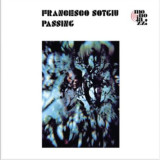
Francesco Sotgiu has forged a unique and very swinging project of songs. With a quintet consisting of Luigi Bonafede on piano, Emanuele Cisi and Riccardo Luppi on woodwinds, Salvatore Maiore on bass, Francesco on drums, and with special guest Paolo Fresu on trumpet to cap off this heartfelt collection. There is also a nice diversity of groups within this larger collection. A nice trio piece called “Calm” featuring Paolo Birro sitting in with Marco Micheli and Francesco. And one called “Lotus Blossom” where Francesco shows his considerable skills and soul on violin. But the bulk of the material is straight-ahead jazz and is totally swinging and soulful, proving that jazz has no borders and is a worldwide language to which Francesco has added to that tradition with this project and all the great voices he has included here. Bravo maestro.
This is the comment of Gil Goldstein, American accordion player who won 5 Grammys and collaborated with giants such as Gil Evans, Wayne Shorter, and Michel Petrucciani.
This record was recorded in the middle of the pandemic times, and most of the work for preparing this record took place via the telephone: the selection of the songs on paper, the exchange of ideas on arrangements, staff and instruments, a sort of “phone rehearsal” of the structure of the songs, with the choice of a solo; everything else, everything that will happen in the recording sessions, is the result of a controlled improvisation, a jam session masterfully captured in the studio through the use of well-positioned ribbon microphones.
This is why “Passing,” literally “passing” or “crossing”: because the musicians have gone through listening to these songs as teenagers, and find themselves today, as a mature meeting of old friends who create an informal game made of nostalgic fun, great personality, confrontation, and deep spirituality. In the classic “Caravan” by Ellington and Tizol or “Afro Blue” by Mongo Santamaria, Coltrane toning, the Latin accent of the rhythm section supports the interpretation of the theme and the interplay in the solos between the soprano and tenor saxophones by Cisi & Luppi, and the piano by Bonafede.
A certain elegance in the execution distinguishes pieces such as Duke Ellington’s “Sound of Love,” yet another tribute by Mingus to the Duke, with a calibrated solo on the double bass of Maiore and the flute by Luppi, the immortal “Take Five” by Paul Desmond, with the highlighted soprano by Cisi, “Wishes,” “7th Street,” and the eponymous “Passing,” all pieces composed by Sotgiu, characterized by the precise medium/fast drive of the drums and a certain “cinematic” taste of the main themes.
In songs such as “Black Bats and Poles,” composed by trumpeter Jack Walrath for the Mingus Orchestra, and in “Stranatole,” an original piece in which Sotgiu writes a theme of Monk’s influence and enjoys overturning the traditional “Anatole Jazz” structure, the quintet opts for an effective hard bop language, with exciting moments of dazzling virtuosity in Bonafede’s solo. While in Coltrane’s “Wise One” and McCoy Tyner’s “Ballad for Aisha,” we enter a modal, mystical, and ceremonial jazz, of a cosmic depth, which seems to hover in the sweet volume of the great hall of the recording studio. These are truly magnificent interpretations.
A special separate mention for two classics such as “My Foolish Heart” by Victor Young, performed in trio by Sotgiu, Maiore, and the unmistakable trumpet by Paolo Fresu, and the (unfortunately very short) “Lotus Blossom” by Billy Strayhorn and Duke Ellington, which in the piano-violin duo of Birro and Sotgiu, in a minute gives a suspended momentary magic, sums up the roots of African-American jazz music, and also referencing an old-fashioned Italian musical sensitivity, typical of Nino Rota’s music for Federico Fellini’s films.
- A1: Alfonso Zenga, Paolo Gatti – Sparklin' Conversation – 3:10 | From Sensi Caldi (1980) *
- A2: Gianni Ferrio – La Musica È – 3:21 | From L'infermiera Di Notte (1979) *
- A3: Carlo Savina – Una Vergine In Famiglia – 1:28 | From Una Vergine In Famiglia (1975)
- A4: Franco Campanino – Avere Vent'anni (Disco) 2:33 | From Avere Vent'anni (1978)*
- A5: Gianni Ferrio – Quando Vuoi Con Chi Vuoi – 2:52 | From La Liceale Seduce I Professori (1979)*
- B1: Don Powell – Amori Stellari – Giochi Erotici Nella Terza Galassia (Titoli) – 2:11 | From Amori Stellari – Giochi Erotici Nella Terza Galassia (Titoli) (1981)
- B2: Nico Fidenco – Eros Perversion (Orsino Rock) – 3:17 | From Eros Perversion (1979)
- B3: Nico Fidenco – Sexy Night – 3:09 | From Porno Holocaust (1977)
- B4: Pulsar Music Ltd. – Taxi Girl (Ritmico Disco) – 0:53 | From Taxi Girl (1977)
- B5: Stelvio Cipriani – Nude Odeon (Ritmico Funk) – 4:09 | From Nude Odeon (1978)
- C1: Riz Ortolani – L'erotomane (Beat) – 2:50 | From L'erotomane (1974)
- C2: Stelvio Cipriani – What Can I Do – 2:25 | From La Supplente Va In Citta' (1979)
- C3: Bruno Nicolai – Servizio Fotografico – 1:59 | From La Dama Rossa Uccide Sette Volte (1972)
- C4: Franco Campanino – Do It With The Pamango – 4:42 | From Una Moglie, Due Amici, Quattro Amanti (1980) °
- C5: Gianni Ferrio – La Settimana Bianca – 3:02 | From La Settimana Bianca (1980)
- D1: Giuseppe De Luca – Studio X – 2:35 | From L'altra Faccia Del Peccato (1969)
- D2: Giuseppe De Luca – Studio Z – 2:15 | From L'altra Faccia Del Peccato (1969)
- D3: Giacomo Dell'orso – I'm So Young – Versione Coro - 3:01 | From L'infermiera Di Mio Padre (1981)
- D4: Daniele Patucchi – Runnin' Around – 6:23 | From Bionda Fragola (1980)°
- D5: Stelvio Cipriani – Il Sesso Del Diavolo (Finale) – 2:51 | From Il Sesso Del Diavolo (1971)
Black Vinyl[33,82 €]
American director and actor Eli Roth takes you on a forbidden journey across the vaults of legendary Italian soundtrack label CAM Sugar. Setting the mood for his very own red light discothéque, Tarantino’s right-hand man and Italian B-movies connoisseur has sourced and selected 20 juicy tracks, spanning from kinky disco and funk to seductive bossa nova and psych, from Italian Sexy Comedy and softcore films (1969-1981). It includes 9 previously unreleased tracks with 4 previously unreleased on vinyl and music by some of Italian film music's most cult composers, including Stelvio Cipriani, Bruno Nicolai, Riz Ortolani, Franco Campanino, Gianni Ferrio, Nico Fidenco as well as unique vocal performances by actress and Italian sexy comedy actress Gloria Guida.
Sunburst Yellow/Red Vinyl[38,24 €]
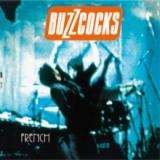
Presenting the vinyl reissue of "French" by the legendary Buzzcocks, an electrifying live album capturing the band’s dynamic performance during their iconic Paris show in 1995. Known for their pioneering sound that fused punk’s raw energy with melodic sensibilities, Buzzcocks deliver a setlist packed with fan favorites and deep cuts, showcasing their impact on generations of punk and alternative rock. This album captures the intensity of their live presence, with Pete Shelley's unmistakable voice delivering heartfelt lyrics on love, desire, and disillusionment, supported by Steve Diggle’s powerful guitar riffs and the tight rhythm section of bassist Tony Barber and drummer Phil Barker. Buzzcocks have long been celebrated for their emotionally charged songwriting and high-energy performances, making "French" an essential recording that preserves their legacy. This vinyl edition invites both long-time fans and newcomers to experience the unfiltered sound of a Buzzcocks concert in its raw, analog glory.
- Endangered Species
- Living Dead
- Countdown
- Ambition
- Fear Of Girls
- Lie Down And Die
- Down On The Farm
- Sensitive Boys
- ÷8×5
- Ice Age
- I Robot
- Flesh Wound
Black Vinyl[29,87 €]
Introducing "Endangered Species" by U.K. Subs, a seminal punk rock album that has stood the test of time since its original release in 1982. This reissue brings back the raw energy and rebellious spirit that defined an era and solidified U.K. Subs' place in punk rock history. "Endangered Species" features hard-hitting tracks that showcase the band's distinctive sound, with powerful guitar riffs, gritty vocals, and relentless drumming. U.K. Subs, formed in 1976, quickly became a cornerstone of the punk movement with their uncompromising style and politically charged lyrics. The lineup for this iconic album includes Charlie Harper on vocals, Nicky Garratt on guitar, Alvin Gibbs on bass, and Steve Roberts on drums, each member contributing their unique energy and talent. This vinyl reissue offers a pristine listening experience, meticulously remastered to capture the original intensity of the recording. Fans of the genre will appreciate classics like "Down on the Farm" and "Flesh Wound" which continue to resonate with their raw honesty and vigor.
- A1: I Don't Mind
- A2: Who'll Help Me To Forget
- A3: Get On Our Own
- A4: Unthinkable
- A5: Strange Thing
- B1: Energy
- B2: Breakdown
- B3: Innocent
- B4: Roll It Over
- B5: Why She's A Girl From The Chainstore
- C1: Last To Know?
- C2: Running Free
- C3: Libertine Angel
- C4: Why Can't I Touch It
- C5: Noise Annoys
- C6: Isolation
- D1: Boredom
- D2: Do It
- D3: Harmony In My Head
- D4: I Believe
Black Vinyl[38,70 €]
Presenting the vinyl reissue of "French" by the legendary Buzzcocks, an electrifying live album capturing the band’s dynamic performance during their iconic Paris show in 1995. Known for their pioneering sound that fused punk’s raw energy with melodic sensibilities, Buzzcocks deliver a setlist packed with fan favorites and deep cuts, showcasing their impact on generations of punk and alternative rock. This album captures the intensity of their live presence, with Pete Shelley's unmistakable voice delivering heartfelt lyrics on love, desire, and disillusionment, supported by Steve Diggle’s powerful guitar riffs and the tight rhythm section of bassist Tony Barber and drummer Phil Barker. Buzzcocks have long been celebrated for their emotionally charged songwriting and high-energy performances, making "French" an essential recording that preserves their legacy. This vinyl edition invites both long-time fans and newcomers to experience the unfiltered sound of a Buzzcocks concert in its raw, analog glory.
- A1: Alfonso Zenga, Paolo Gatti – Sparklin' Conversation – 3:10 From Sensi Caldi (1980) *
- A2: Gianni Ferrio – La Musica È – 3:21 From L'infermiera Di Notte (1979) *
- A3: Carlo Savina – Una Vergine In Famiglia – 1:28 From Una Vergine In Famiglia (1975)
- A4: Franco Campanino – Avere Vent'anni (Disco) 2:33 From Avere Vent'anni (1978)*
- A5: Gianni Ferrio – Quando Vuoi Con Chi Vuoi – 2:52 From La Liceale Seduce I Professori (1979)*
- B1: Don Powell – Amori Stellari – Giochi Erotici Nella Terza Galassia (Titoli) – 2:11 From Amori Stellari – Giochi Erotici Nella Terza Galassia (Titoli) (1981)
- B2: Nico Fidenco – Eros Perversion (Orsino Rock) – 3:17 From Eros Perversion (1979)
- B3: Nico Fidenco – Sexy Night – 3:09 From Porno Holocaust (1977)
- B4: Pulsar Music Ltd. – Taxi Girl (Ritmico Disco) – 0:53 From Taxi Girl (1977)
- B5: Stelvio Cipriani – Nude Odeon (Ritmico Funk) – 4:09 From Nude Odeon (1978)
- C1: Riz Ortolani – L'erotomane (Beat) – 2:50 From L'erotomane (1974)
- C2: Stelvio Cipriani – What Can I Do – 2:25 From La Supplente Va In Citta' (1979)
- C3: Bruno Nicolai – Servizio Fotografico – 1:59 From La Dama Rossa Uccide Sette Volte (1972)
- C4: Franco Campanino – Do It With The Pamango – 4:42 From Una Moglie, Due Amici, Quattro Amanti (1980) °
- C5: Gianni Ferrio – La Settimana Bianca – 3:02 From La Settimana Bianca (1980)
- D1: Giuseppe De Luca – Studio X – 2:35 From L'altra Faccia Del Peccato (1969)
- D2: Giuseppe De Luca – Studio Z – 2:15 From L'altra Faccia Del Peccato (1969)
- D3: Giacomo Dell'orso – I'm So Young – Versione Coro - 3:01 From L'infermiera Di Mio Padre (1981)
- D4: Daniele Patucchi – Runnin' Around – 6:23 From Bionda Fragola (1980)°
- D5: Stelvio Cipriani – Il Sesso Del Diavolo (Finale) – 2:51 From Il Sesso Del Diavolo (1971)
Red Vinyl[55,67 €]
- A1: First Place Winner
- A2: It Ain't Easy Being Green
- A3: America
- A4: You Cared Very Little
- A5: Over You
- A6: Even When I Lose I Still Win
- A7: Ain't Enough Time
- A8: So Glad
- A9: Raindrops
- A10: Good Vibrations
- B1: Fade Away
- B2: Smile
Also known as "Portland's Pillar Of Soul", Ural Thomas is a widely esteemed Portland based r&b singer-songwriter and musician, active since the 1950s. Still going strong over almost three-quarter century's worth of performing and releasing, Thomas' breathtaking oeuvre comes to a recent head on this latest LP+7" via Cairo, 'Nat Ural'. Eschewing his latest incarnation with backing The Pain (making up Ural Thomas and the Pain), which was formed after a long hiatus, we return to Thomas' solo sensibility here. A new LP backed up by a sneaky extra 7", Thomas' distinctive, homely brand of strutting vocal soul is once more put on display here.
In the words of Hamlin Garland....I remember a hundred lovely lakes, and recall the fragrant breath of pine and fir and cedar and poplar trees. The trail has strung upon it, as upon a thread of silk, opalescent dawns and saffron sunsets. It has given me blessed release from care and worry and the troubled thinking of our modern day. It has been a return to the primitive and the peaceful. Whenever the pressure of our complex city life thins my blood and benumbs my brain, I seek relief in the trail; and when I hear the Coyote wailing to the yellow dawn, my cares fall from me - I am happy. Coyote wail away all your troubles. Their dub sensibilities to the fore and supported by ambient textures and chunky bounding percussive rhythms.Another unique listening experience from the IIB overlords
- Anonymous Iv
- Blest Age!
- Richmond Rd
- Courante
- Anonymous V
- Materiadiscipuli
- Novus Lumen
- Pentaarc
- Flit
- Arislei Bone
- Strewn
T. Gowdy returns with a major statement and luminous stylistic expansion on his third album for Constellation. Trill Scan is an exquisite suite of songs literally and figuratively about alchemy, where Gowdy melds his background in choral and medieval music with his trademark analogue electronics. Following the acclaimed Miracles (Bleep Album of the Week / Albums of the Year 2022), Gowdy's bar-raising new LP centers human voice for the first time. Choral set-pieces and solo lead vocals, along with his own lute playing, are novel elements in Gowdy's work, and draw on strains of Middle Ages polyphony and the Baroque "broken style" to further distinguish Trill Scan from anything in his discography to date. Gowdy sees "the modal language of medieval Europe as a less distant cousin to indigenous traditional music practice" compared to a Classical-colonial "patriarchal order of tonality that honours a system of domination." The 12th century Notre Dame School of choral music and 17th century style brisé each carry tonal materiality, heterodox technique, and cultural-historical symbolism central to Trill Scan's conceptual and compositional alchemy. Gowdy coheres these beautifully into his palette of serpentine slowburn electronics, a minimal analogue-driven techno shaped by aleatory strategies and tinged with post-punk grit. Gowdy's sound has been aptly described as "gently transportative, flickering like a busted halogen lamp" and his overriding pursuit of psychoacoustic immanence likened to "getting your brain massaged" and praised as "blissful work that bristles with effervescent energy, like brain waves coming in and out of focus." Trill Scan expands this sonic sensibility with more conspicuous harmonic complexity, stylistic variety, and humanistic narrative arc. Alternately sacramental and intimately personal vocals, sometimes wordless and sometimes lyrical, are worked into superlative instrumental tracks, yielding a warmly immersive concept album that's equally Gowdy's most musical. Gowdy sings explicitly of alchemy on the hypnotic album centerpiece "Novus Lumen" with lyrics that gesture at these medieval processes of material investigation. The tension between the scientific and esoteric is crucial; the separation and synthesis of physical substances in medieval alchemy maps onto his fixation with the interplay between the materiality of sound and psychoacoustics. Gowdy follows the Jungian interpretation of classic alchemical texts as an historical bridge to theories of the psyche, where consciousness itself is treated as materiality and similarly subjected to methodical analysis and experimentation, to deconstruction, dissolution, transformation, reintegration, metamorphosis. Song titles like "Arislei Bone" and "Materiadiscipuli" further reference these mythopoetic throughlines from medieval alchemy to modern psychology. Gowdy chooses disruptive forms from the history of Western music that symbolize and prefigure the modern psychological subject and its struggle for/against order, even as they also evoke liturgy and the Renaissance court. The sacramental adds a potent dimension to his pursuit of psychoacoustic activation, meditation, and transcendence, as choral passages intersperse with electronic drone and pointillism throughout the album. His gorgeous Fennesz-meets-lute rendition of the Baroque composition "Courante" by François Dufault offers idiomatic salon-secular counterpoint. Album closer "Strewn" is bookended by a final recurrence of choral invocation, with pulsing earworm motorik techno in between, over which Gowdy whisper-sings a dreamlike vision quest of mythic-alchemical imagery: "as I washed my eyes they turned to metal / and the memories melted to the metal / the metal of my heart." A mesmerizing final song that explicitly invokes Gowdy's search for materialized abstraction and substantive musical immanence wrought from his own psycho-therapeutic subjectivity, and encapsulates the album's turn towards more harmonic, historicized, and humanistic elements. Trill Scan commingles empyrean and earthly electronic songcraft to genuinely original and absorbing effect. Thanks for listening. RIYL: Coil, Nicolás Jaar, Alessandro Cortini, Pantha Du Prince, Fennesz, Visible Cloaks, Actress,