Cassandra Jenkins' An Overview on Phenomenal Nature emerged from the blue earlier this year. With pandemic unknowns and political upheaval leaving most at frayed ends, the New York-born musician’s assuring voice and expansive fresh take on songwriting created a much needed reflective space for listeners worldwide. As 2021 comes to a close, Jenkins revisits those flowing textures and refrains with (An Overview On) An Overview On Phenomenal Nature, a collection of previously unreleased sonic sketches, initial run-throughs, demos, and sound recordings from the cutting room floor that provided the scaffolding for what became one of this year’s most critically acclaimed albums.
When Jenkins visited Josh Kaufman’s studio this summer, they opened up their original sessions to uncover the ideas that were shed in the creative process. The new collection, (An Overview On) An Overview On Phenomenal Nature, isn’t merely a retrospective; it acts as a clear-eyed addendum as well as a compelling origin story, coming to life as a subconscious companion to the original album.
First takes of “New Bikini” and “Hailey” are born from opposite starting points; while “New Bikini” began as an airy alto meander, “Hailey”’s origins lie in an upbeat dance track. On “Crosshairs (Interlude),” Jenkins’ pitched vocal delivers a straight monotone, recasting the format as poetry with music highlighting her words, and “Ambiguous Norway (Instrumental)” lifts the ambient nature of the mournful song into glimmering waves. The demo version of “Michelangelo” contains alternate lyrics “I’m Michelangelo, a Teenage Mutant Ninja Turtle,” a lost contrast to the later verse where Jenkins’ likens herself to the sculptor. On “Hard Drive (Security Guard),” we join Jenkins as she listens to a passionate museum guard whose promised “overview” of the exhibit on view builds into a monologue of observations on art, politics, feminism and the human condition. This candid interaction evolved into the cornerstone and title of Jenkins’ album.
Before they decided to make an album together, Jenkins brought Kaufman a song called “American Spirits.”The dusky ballad takes us to the Texas plains via a voicemail from the payphone of a county jail (“Miss Cassandra”). Cassandra sings, “Time here burns through the sunsets / Like you and a pack of American Spirits” over warm instrumentation with a vocal delivery that reinforces Jenkins’ unwavering tenderness towards her subjects.
(An Overview On) An Overview On Phenomenal Nature bookends Cassandra Jenkins' musical output this year with nuance, coloring in the corners, and giving us another window into her ever-expanding world of chance encounters, experiences, and sonic textures. They glimmer like the sun’s changing patterns on the wall as a new day gets going.
Поиск:session view
Все
"Sonny Stitt & The Top Brass" - Sonny Stitt (as); Jimmy Cleveland, Matthew Gee (tb); Blue Mitchell, Dick Vance, Reunald Jones (tp); Willie Ruff (frh); Duke Jordan (p); Perri Lee (org); Joe Benjamin (b); Philly Joe Jones, Frank Brown (dr)
General opinion has it that Sonny Stitt always stood in Charlie Parker’s shadow. That, however, is unjustifiable. The legendary jazz critic Nat Hentoff wrote, for example: »Sonny has been one of the wholly involved players, well known and admired for his soul and the earthiness of his message only by musicians who feel and play like he does and by that part of the jazz audience that is most moved by naked, open emotion. He has made his mark with them as an honest yea-sayer who can’t help but play what he knows and feels.« The present recording is proof of this – a session which shouldn’t really have worked out so well. Sonny Stitt’s alto saxophone presides over a seven-man-strong brass group, and although the prospect of a Sonny Stitt big band does not sound too promising initially, this rendezvous is really enjoyable, thanks in part to Stitt’s superb solos. At this time he was on the top of his form and he plays freely over the basis provided by the brass section consisting of Blue Mitchell, Jimmy Cleveland and Willie Ruff. The arrangements by Tadd Dameron and Jimmy Mundy are closely-knit yet offer enough room for swing and a generous pinch of soul. Special highlights are contributed by the unknown, female organist Perri Lee –, little groovy additions that are really successful and infuse the arrangements with a slender sound and sparkle. Although "Sonny Stitt & The Top Brass" may not stand in the limelight like "Boss Tenors" or "Salt And Pepper", it is certainly on a par with these from an artistic point of view.
- A1 22: 02 Fm
- A2: Radio Skit 1
- A3: Changed
- A4: Falling Featuring – Melanin 9*
- A5: Summer In The Bits
- A6: Scences
- B1: Radio Skit 2
- B2: Decline Of Self Featuring – Confucius Mc, Coops
- B3: Piece Of Shit
- B4: Hold Ur Own
- B5: Kno Tha Status Featuring – Axel Holy, Datkid, Upfront*
- C1: Radio Skit 3
- C2: The Rain Featuring – Riah
- C3: Weekend Blues Featuring – Indira May
- C4: Men Can Breathe Featuring – Benaddict
- C5: Limitless
- D1: Radio Skit 4
- D2: My Wonders Featuring – Fliptrix
- D3: The Feeling
- D4: Hope Featuring – Dialect
- D5: In My Mind
- D6: Radio Skit 5
Rapper and producer duo Verbz & Mr Slipz announce their latest album ‘Radio Waves’ due out 13th November 2020. Released on the acclaimed Hip-Hop label High Focus Records, the 22-track project sits perfectly between present-day greatness and unrivalled nostalgia welcoming us into their unique rap landscape. The cover, designed by Matt Littler, captures the essence of the album perfectly.
Born and raised in Croydon, rapper Verbz has proven himself time after time with his innovative rhyming style and distinct flow. The creative partnership wouldn’t be complete without Brighton based producer Mr Slipz who marries Verbz’ form with his laid back jazzy sound as well as unmistakable attention to detail. The pair started making music together in 2017 when they released their debut collaboration ‘Lessons Of Adolescence’. This was followed by extensive tours and studio sessions where their musical alliance was cemented and their bond has been untouchable ever since.
Kicking off the album with humour and personality, '2202 FM’ is a full-bodied track which sees Verbz spit tales of admiration for his city whilst at the same time striving to escape. With London on the brain,
‘Summer In The Bits’ is an introspective analysis of a summer's day in the capital full of tense trials and tribulations. Moving throughout the album, ‘Kno The Status’ welcomes three potent guest verses from Alex Holy, Datkid & Upfront paired with an unrivaled arrangement and instrumentation magnifying Mr Slipz’ craft. Once again his incomparable production delivers on ‘Weekend Blues’ which see’s Verbz regretfully address craving more from his weekend to then be greeted by numbness on a Monday morning. High Focus linchpin Fliptrix delivers some captivating combinations on ‘My Wonders’ honing n on the current state of the world from his point of view. Up next is one of the lead singles
‘The Feeling’, which is a refreshing and rare representation of the classic Boom Bap sound. Before signing out, Verbz’ impressive storytelling shines through on ‘In My Mind’ offering insight into his artistry as he allows access to his inner thoughts via vivid storytelling lyrics. Sandwiched amongst the project are evocative radio skits placed to perfection, offering angles of comedy including a mini-interview acting as the final pieces to the puzzle.
This record is the culmination of two years of hard work packed with skill and finesse, as we have all come to expect. With their unrivalled chemistry, the dynamic duo have proven themselves to be some the most exciting artists on the scene, and 'Radio Waves' is going to cement their position at the top of the ranks.
Los Retros is the young Mexican American singer songwriter whose music has captured the hearts of fans around the world. He broke onto the scene with the viral single ‘Someone to Spend Time With’
in 2019, which has racked up over 40m streams. ‘Looking Back’ is his third EP.
Los Retros was just sixteen when he first began recording in his family’s living room on an old fourtrack. The recordings comprising ‘Looking Back’ grew out of these early sessions. Now officially released for the first time. Includes fan favourite ‘Amtrak’ (2.5m YouTube views).
For fans of Cuco, Beebadoobee, Toro Y Moi, Yellow Days, Mild High Club, Boy Pablo.
- A1: The Sky Without You
- A2: It Gets Easier
- A3: World Of Echo
- A4: Something Like Love
- A5: Jenny Holzer B. Goode
- B1: Way Of The World
- B2: Riverside
- B3: We All Fall Down
- B4: No Getting Out Alive
- C1: The Looking Glass
- C2: Love Is The Frequency
- C3: Gyre And Gimble
- C4: Lifeline
- C5: She Calls The Time
- D1: Sidewinder
- D2: When The Lights Go Down
- D3: This Is Our Year
- D4: Holiday In The Sun
‘Flicker’ is the second album from Ride guitarist and songwriter Andy Bell. Written almost as a conversation with his teenage self, it follows the triumphant solo debut that was 2020’s ‘The View From Halfway Down’. This 18-track double album finds Andy moving towards classic songwriting, notably on the reflective lead single ‘Something Like Love’, the strident harmonies of ‘World of Echo’, the joyous refracted loops of ‘Jenny Holzer B. Goode’ and the fuzz-laden late-’60s balladeering of ‘Love Is The Frequency’. Stylistically, the four sides of ‘Flicker’ take in everything from modern psychedelia to fingerpicked folk, whimsical baroque pop, and Byrdsian 12-string beauty. It’s a breathtaking array and makes it even more abundantly clear that Andy has entered a purple patch in his songwriting, hitting a new velocity in contrast to his initial inhibitions about becoming a solo artist. He gradually overcame these after the passing of David Bowie in 2016, with the Thin White Duke’s bountiful 50 years of music providing inspiration from beyond the grave. ‘Flicker’ is also an apt description for the genesis of the album. At the start of 2021, Andy returned to the stems of the recording sessions he made at Beady Eye and Oasis bandmate Gem Archer’s North London studio and added fuel to the fire, writing melodies and lyrics and turning them into fully formed songs. The same sessions were also the starting point for ‘The View From Halfway Down’ and this album picks up where that one left off, quite literally, with the very first words being “I was halfway down…”. This is the first of several playful, possibly intentional, references to albums and song titles that litter the record like a musical breadcrumb trail. As much as this is a modern sounding and forward-looking record, it’s also very much about looking back, something that is clear from the first glimpse of the front cover – a previously unseen outtake from Joe Dilworth’s photo sessions for the inner sleeve of Ride’s debut album, ‘Nowhere’. “When I think about ‘Flicker’, I see it as closure,” explains Andy. “Most literally, on a half-finished project from over six years ago, but also on a much bigger timescale. Some of these songs date back to the ’90s and the cognitive dissonance of writing brand new lyrics over songs that are 20-plus years old makes it feel like it is, almost literally, me exchanging ideas with my younger self.” This conversation takes place across ‘Flicker’’s 18 tracks. Essentially it advises us to stop worrying about the future and enjoy each day as it comes, embracing the crushing, unpredictable lows of life as much as the almighty highs of being in love. Some of it remains unspoken, taking place sonically rather than verbally: the album has a reflective, meditative feeling throughout, exploring many aspects of mental health, and the beautiful stillness of first single ‘Something Like Love’ could almost be a musical salve to the heartache 19-year-old Andy poured into ‘Vapour Trail’ in 1990. “The ‘Flicker’ I’m talking about in the lyrics is that flame that makes a person who they are,” explains Andy. “I wanted to find that in myself, so I went back to the teenage me – a technique I learned in therapy and have been doing ever since – and got some advice on how to live and be happy in the 2020s.“‘The View From Halfway Down’ was about turning 50 in a very weird time of introspection. ‘Flicker’ is about gathering the tools to equip myself mentally for life in 2022 and beyond – post-pandemic, post-Brexit, post-truth.”
The debut album from hotly tipped kiwi band Jamie and The Numbers, finally sees a release via Pete Brady’s Superfly Funk and Soul Records. After years of limited release 7”s being fought over worldwide by collectors and fans, this superb LP is the culmination of years of work for highly gifted Tongan-Kiwi Jamie Mavusa. Based in Wellington she can occasionally be seen singing soul tunes for Tapestry Music Promotions at many of their Music Reviews and also in her gospel choir at Church. It was at one of the Tapestry Music shows in Wellington that Jamie met Simon from Deltaphonic Records/The Numbers and after watching Jamie perform an amazing version of "Wade In The Water”. It was suggested they do some recording together with the view of doing some cool Soul classics and a bunch of originals too, the rest is now history.
The Numbers are an incredibly tight Wellington based band. Prolific writers of their own original material they are a 4 piece that consist of three brothers from Wainuiamata and a newly adopted Kiwi originally from Birmingham England. If you get a chance check these guys out they are brimming with cool retro tunes and some barnstorming original songs played with verve and passion and their shows are always fun, 2019 they supported "From The Jam" on their visit to New Zealand and after teaming up with Jamie have played Pasifika Festivals and open-air concerts to thousands of people. The Numbers collectively have played, sessioned, recorded for other artists on such labels as Gut Records, D-Star, EG Records, Imaginary Records and have in excess of 40+ published songs with Universal, Complete Music, KWS Records NYC and Cherry Red Records.
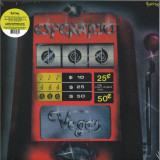
After the recent reissue of their first eponymous album, Favorite Recordings proudly presents Vegas, the second LP from Venezuelan band Esperanto. Rare and sought-after for many collectors, it was recorded in between Las Vegas and Caracas and originally released in 1981. Following bandleader Jorge Aguilar in his musical trip to the infamous American city bathing into flashing lights and vivid colors, we're invited to an excursion in Disco, Boogie and Jazz-Funk territories. Finally reissued, fully remastered, Vegas will be available as Gatefold Tip-On Vinyl LP.
With great care and attention to details, Esperanto managed to create a very convincing sequel to their Jazz-Funk debuts. Vegas keeps indeed a perfect balance between various influences. Through energic disco beats with intense funky solos, catchy AOR-influenced songs, where Jorge delivers convincing vocal performance, or sunny jazz-funk slow jams, the album still reveals something quite authentic. And this feeling echoes surely the one that could have been felt by Jorge Aguilar while discovering USA on a trip - where it all started for the music he loves. Like sometimes a foreigner's enriching view on some local specialty, he surely brought with the band all his authenticity and young but vibrant experience while convincing at the same time major labels for distribution.
With certain notoriety coming with the release of their first album, Jorge Aguilar and his drummer Pablo Matarazzo planned to go to Los Angeles for a few gigs. But once there, they realized their contact had to leave for Tina Turner's tour in Europe. Before that, he invited them to come along to Las Vegas and eventually meet musicians there. Luckily, the plan worked perfectly: Jorge came back to Los Angeles with a lot of contacts then moved to Boston and NYC before finally coming back to Caracas. He told: "I was so impressed with this trip that I told myself that one day I would return to Los Angeles and Las Vegas. The first tracks I did them in Los Angeles with Kenny More, James Gadson and other session musicians from that city. Later, I took the tracks to Caracas where the musicians of the band recorded overdubs. After that, I returned to Los Angeles to master with Bernie Grundman who was still working in his small studio at A & M records studios in Hollywood. As can be seen in the title of some of the songs like "Hollywood", "Vegas", "Kenny's Place", were only the translation of my experiences at the time."
CELESTE have been breaking the outer boundaries of heavy music for over fifteen years. When they first evolved from the Lyon hardcore punk scene, they were absolutely brutal and entirely unique, delivering extremity on their own terms that they pushed further and further with each successive album. “We just wanted to get darker and more violent,” says drummer Antoine Royer, until 2017’s Infidèle(s) saw the incorporation of a more melodic streak. Their most focussed record yet, it was tremendously received, critically adored, and backed with the band’s biggest shows to date.
Its follow-up was always going to be something radical. Even by their own inordinately high standards, however, new record Assassine(s) is one hell of a step forward. Even if this album still contains cyclonic walls of guitar, of battering rhythm, and passages of blissful, rushing release. it’s unlike anything the band have ever released; embracing a modern and forward-thinking production, they're just as complex but more direct, diverse and accessible than before. “Our leitmotif here was to open our minds,” says guitarist Sébastien Ducotté. “We made a real effort to think outside of our box.”
During lockdown CELESTE’s members were forced to each write individually. “We each went further into our personal, inner views of what the songs were,” says bassist and vocalist Johan Girardeau. When eventually they began sessions under producer Chris Edrich, it was gruelling. “We ended up exhausted, physically and mentally” says Johan. “There was no break in two weeks. We didn’t see the sun at all during that time. Every night we were so tired that we didn’t enjoy being together as much as we’re used to.” Nevertheless, in the same way the hardships of isolation led to richer and more complex songwriting, it’s that relentlessness that led to the record’s razor-sharp edges.
Above all else, CELESTE are innovators. Whether by pioneering French avant-garde metal when they formed at the turn of the millennium, by making their boldest leaps despite being seven albums deep into their career, or using two years away from live shows to tightly finetune their stagecraft, they refuse at all costs to rest on their laurels. There can be consequences to this instinct – fans of the band’s older work might be thrown off by their constant shifts of pace – but they’re throwing caution to the wind. A bit of backlash “would be a good thing, because it would mean that we’ve really changed,” says Guillaume . “It's not disrespectful, it's just that we never made music to please people, but just to enjoy what we're doing.” In the end, CELESTE are a band so forward-thinking that they can only be judged on the strength of their latest work. And when it comes to a record as bold as Assassine(s), they’ve hit a whole new peak entirely.
Handpicked by Gilles Peterson from Manchester’s vibrant live music scene, and newly signed to Brownswood, 2021 set to be the main stage for them to breeze on to the scene, as a multi-generational band breathing new life into the classic British street-soul sound, founded by singer/song-writer Kemani Anderson, multi-instrumentalist and song-writer Callum Connell and Manchester music scene stalwart Stuart Whitehead.
Debut track ‘The Sun’ was inspired by a poem written by Callum Connell at the top of Greenwich Park viewpoint looking over the infamous London cityscape as the sun set. At the time the band were writing and arranging separately with Callum & Kemani living in South London while they attended Trinity Laban (following in the footsteps of many of the UK’s young Jazz prodigies). Eventually, they congregated for a fateful recording session at Blueprint studios in Manchester, that would be the amalgamation of their individual processes, to create ‘The Sun’. Inspired by four bass chords flowing like a stream of consciousness, Callum’s poem sprung
to life as the centrepiece of the track, with the melody being polished and refined by Kemani on keys and vocals. The result is an invigorating debut produced by influential music producer and sound engineer Yvonne Ellis (Simply Red & Swing Out Sister). Kemani coins this sound as “spiritual and healing” whilst Callum shares “The Sun’ is a powerful and uplifting song that can take you on a
spiritual journey but also make you reflect on everyday life.”
Los Retros is the young Mexican American singer
songwriter whose music has captured the hearts of
fans around the world. He broke onto the scene
with the viral single ‘Someone to Spend Time With’
in 2019, which has racked up over 40m streams.
‘Looking Back’ is his third EP.
Los Retros was just sixteen when he first began
recording in his family’s living room on an old fourtrack. The recordings comprising ‘Looking Back’
grew out of these early sessions. Now officially
released for the first time. Includes fan favourite
‘Amtrak’ (2.5m YouTube views).
For fans of Cuco, Beebadoobee, Toro Y Moi,
Yellow Days, Mild High Club, Boy Pablo.
- A1: Begin
- A2: Betweemus
- A3: Soaky In The Pooper
- A4: Because You Are The Very Air He Breathes
- B1: Under The Same Moon
- B2: I Will Drive Slowly
- B3: Oh, What A Disappointment
- B4: Hellmouth
- C1: Bon Soir, Bon Soir
- C2: Hickey
- C3: Breathe Deep
- C4: So I Hear You're Moving
- D1: Let's Go Bowling
- D2: What Was He Wearing?
- D3: Cowboy On The Moon
- D4: Or Thousands Of Prices
- D5: The Pack-Up Song
Back in 1994, when Lambchop first lurched lackadaisically into public view, they seemed to many people freakish, outlandish, destined at best for the pages of photocopied fanzines and the graveyard hours of specialist radio stations. A sprawling collective of Nashville musicians —eleven were credited on the sleeve of I Hope You’re Sitting Down / Jack’s Tulips, one of them apparently responsible for “open-end wrenches” —they’d named themselves after a sock puppet, inexplicably given their album two titles, and stuck a painting on the cover of a small, barefooted child holding a dog whose cock and balls are on proud display. Perhaps to counteract this bold depiction of canine masculinity, the inner sleeve offered a black-and-white shot of what the more refined sometimes call a “lady garden.” The back cover offered a painting detail of a wedding dress. So far, so weird.
Where Lambchop brought us was somewhere so singular and bewilderingly gripping that — to perhaps no one’s greater surprise than
the band themselves, whose homeland remained baffled for quite some years to come — the album ended up in British music paper NME’s Top 50 Albums of the Year. In case anyone were to consider this an anomaly, France’s similarly influential Les Inrockuptibles placed it at number 25 on their own list. Not bad for a band who had gathered since the mid-1980s, once a week, purely for pleasure, in that smoky, dimly lit basement. Not bad, either, for a record whose sessions were initially only expected to produce enough material for a handful of 7 -inch singles. Disheveled yet tender, anarchic yet intricate, I Hope You’re Sitting Down / Jack’s Tulips instead provided the springboard for a career — still ongoing, despite repeated reinventions, and still compelled by stubbornly freakish, outlandish intentions — during which Lambchop’s ever-changing line-up has continued to confound expectations. Wagner, meanwhile, remains one of our most cryptic but crucial voices, an authentic poet of the magical banal. Sure, it was weird here, but it was wonderful, too. Over a quarter century later, it still is.
Germany-based metal band OBSCURA launch trilogy concept on stunning new album “A Valediction”. The group’s first (sixth overall) album for Nuclear Blast pivots on many fronts. Advanced, elegant, and yet refreshing, “A Valediction” sums up past endeavors effortlessly as it gazes with purpose and conviction into the future. OBSCURA are fan-renowned and critically acclaimed for challenging and then expanding upon norms. From “Cosmogenesis” (2009) through “Diluvium” (2018), the band flourished and made significant progress in a musical genre unprepared for a creative shot of German invention. “A Valediction” spearheads OBSCURA into a new era of extreme metal.
Guitarist/vocalist Steffen Kummerer founded OBSCURA in 2002. Early on, he set out to improve, redefine, and push forward. Under his self-label creation, the Bavarian released debut album “Retribution” (2006), followed by heavy touring throughout Europe. Word quickly spread that a brand-new band from the south of Germany was on the rise. Buzz lead to a deal with U.S.-based Relapse Records. The first record out was “Cosmogenesis”. In Europe, Metal Hammer Germany awarded the album 6/7 while in the U.S., “Cosmogenesis” hit the Billboard charts at #71. The cross-continental praise and fevered momentum landed OBSCURA on high-profile tours in Europe, North America, and Japan.
When follow-up “Omnivium” arrived in 2011, they upped their chart success (Billboard #11; Media Control #14), received more accolades from publications like Terrorizer, Rock Hard, and Decibel, had another massive round-world tour cycle, while enhancing and making progress on their clever brutality. OBSCURA further developed their sound on “Akróasis” (2016). Moored by jaw-dropping tracks like ‘Sermon of the Seven Suns,’ ‘Ode to the Sun,’ and the title track, “Akróasis” elevated OBSCURA to the highest levels of international renown, having climbed up the Billboard charts (#5) as well as earning top marks in Rock Hard (8.5/10), Metal Hammer Germany (6/7), and Revolver (4/5). The Germans toured the world yet again, playing over 100 shows in support of “Akróasis”.
OBSCURA’s most significant accomplishment was, however, just around the corner. The final part of a tetralogy, “Diluvium” (2018), fiercely pursued OBSCURA’s multi-album transformation into musical innovators and metal powerhouses. Music videos for the title track, ‘Emergent Evolution’ and ‘Mortification of the Vulgar Sun,’ in concert with a substantial interest in virtuosic, forward-thinking metal, posited OBSCURA in the good graces (yet again) of the worldwide press in addition to rocketing up, for the very first time, the official album charts in Germany (#58) and Switzerland (#93). The Germans also topped out at #3 on the Billboard Heatseekers chart with “Diluvium”.
OBSCURA‘s stats have been impressive: Twenty years active; six highly prized albums; over 600 shows on four continents. Worldwide fan and press engagement—the videos for ‘The Anticosmic Overload,’ ‘Akróasis,’ and ‘Diluvium’ have over 4.5 million views—is only getting stronger the longer OBSCURA continue to offer up and interact with (via play-throughs and member/gear spotlights) their very captive audience. This is only the tip of Kummerer’s custom ESP guitar, however. A Valediction finds OBSCURA turning the page to a new chapter in the band’s evolution. A year in the works, the songwriting sessions followed a new approach, where the framework was relaxed, allowing new inspirations, imagining, and opportunities to arise. Songs like the opening epic ‘Forsaken,’ the '80s-tinted ‘When Stars Collide’ (featuring Soilwork/The Night Flight Orchestra frontman Björn Strid), the brutal groove of ‘Devoured Usurper,’ the ethereal artistry of ‘Heritage,’ and the fleet-fingered title track benefitted compositionally (refined structures) and aesthetically (more dynamism) from OBSCURA’s restyled songwriting stratagem.
OBSCURA wrote, recorded, and finalized “A Valediction” during the pandemic. The stipulations of working during this time allowed OBSCURA to work cross-country, tracking each respective part—drums, guitar, and bass—in national studios across The Netherlands, Austria, and Germany. Once the pieces were completed, the recordings were shipped off to award-winning producer Fredrik Nordström and Studio Fredman (In Flames, Architects) in Gothenburg, Sweden, where Kummerer and Münzner completed vocals and acoustic guitars using custom-built ENGL amps. Nordström was also tapped to mix and master. The final result is a deeper, heavier, yet more rounded production.
Lyrically, “A Valediction” is layered in structure and meaning. The word ‘valediction,’ by definition, deals with goodbyes and farewells. In a way, this is auf wiedersehen to the four-part album series while also addressing complex topics of Kummerer’s personal life. Instead of obscuring issues of loss, death, and abandonment in metaphor and allusion, the German laid bare his torment across songs like ‘Forsaken,’ ‘Solaris,’ ‘In Unity,’ ‘The Neuromancer,’ and ‘In Adversity.’ But for every line of desperation, he also offers positivity. Indeed, new beginnings—physical, emotional, or environmental—can provide light in the darkness. Lauded artist Eliran Kantor (Testament, Helloween) was brought on board to visualize the leitmotif. The bronze-themed colourway Kantor used exemplifies OBSCURA’s resistance to individual and sonic corrosion.
In 2021, OBSCURA will lighthouse their musical prowess, thematic complexity, and lyrical ambition on “A Valediction”. The group continue to be a beacon for change. No doubt OBSCURA’s new stats will amaze, but what they’re focused on is the release of “A Valediction” and then taking it on the road. Several high-caliber tours of Europe, North America, and Asia are planned through to 2023, with routes are in the works for the band to visit Australia, South America, and beyond. Truly, there is no band quite like OBSCURA. “A Valediction” proves that persistence, perseverance, and enterprising minds can achieve anything. Welcome to the next level!
No less than 12 months later arrives ‘Deep Blue View’ – not so much of a follow-up, as a mini-flipside moving the Jazz from AM to PM, between city and sea.
“I originally had AM Jazz down as walking around some New York backstreet at 4am, smoking in a fedora, looking for crimes to solve but it now ends as night begins,” reveals Al, of his latest tale’s gradual evolution. “Deep Blue View is the night-time album now… like losing yourself deeper in the fog, or disappearing in the sea… would someone, or some 'thing' come to save you or would they , or it , come along for the ride?”
Usually by now, Daveyhulme’s own could-be John Barry would have left distractions of success for suburban side-projects and writing with his fellow Mancunian musicians, but AM Jazz left unfinished business - and, with 50 or so session recordings leaving a litter of sonic debris strewn about the cutting room floor, one major clean-up. Deep Blue View is 6 brand new tracks crafted from its reconstructed and revived remnants, unfurling like Sinatra’s Wee Small Hours to reinforce the strangely beautiful atmosphere of Al’s now revered repertoire. “I had the urge to create something new and started playing around with different EPs and pseudonyms but when I sequenced these tracks, I was really happy how smoothly they flowed; it just needed an opener. I quickly wrote ‘Deep Blue View’ and it fell into place. It’s great, so I carried on, knowing it was time to save the best stuff for myself,” Al grins.
Just as AM Jazz was created in the spirit of his earlier working style on debut album Tower of Love, Deep Blue View fuses Al’s love of finding the ‘right’ in the odd, weird, back-to-front and everything in between, with the hi-fi meets lo-fi sounds of his crate-digging curiosity and empathy for TV themes and movie soundtracks. Guided by melody, his home-based sorcery of working with analog, tape and field recordings opposed to the lure of studio mechanics allowed his inner subconscious to tap at the door and reveal itself in new musical forms. “In the studio it’s tempting to turn everything up loud but I’ve got bad tinnitus and don’t want to write anything else in a Beatles style. I have done all that now… at home I have a computer, a microphone and just go crazy and lose myself staring at the screen. Then suddenly loads of music is written.”
Setting his inner autopilot to flight mode, ‘Peppergone’ adds to the tracks’ nocturnal narrative and appears reborn after a last-minute culling from AM Jazz’s initial tracklist. Like a beautifully romantic ode to Beethoven’s Moonlight Sonata, it is a fitting tribute to dearly departed best friend 'Batfinks', written in the middle of a tough night. “I have no idea why or how the song came about because I was so upset to do anything, let alone record any music. But there you go. Somehow I did and it’s a really special thing. I know he would have dug me using his chords; growing up we’d both try to create the perfect chord sequence. This is his idea of that. I hope he doesn’t think it’s shit,” Al jests.
Also revived from AM Jazz’s archive is the simmering groove of ‘Night Talk Late Street’ and instrumental ‘Star Six Seven’, whilst ‘Have Another Cigar’ weaves its own semi-autobiographical fairy-tale with lyrics written and sung by long-time pal and former housemate Aidan Smith. Transformed from backing track into a cool morsel of story pop, it recalls the drunken joy of when the pair would make recordings together between singing the Everly Brothers at full volume. “I’m sure it’s about not wanting the musical party to stop and having to get on with real life,” Al says.
‘String Beat’ meanwhile, soars like a beautiful Bond theme with the shimmer of Lee Hazlewood holidaying in Palm Springs, alongside perhaps, the waltzing string-like synthonies of some long-lost rhythm and blues orchestra of Davyhulme (whose real-life origins reside with the Berlin Symphony Orchestra), introduced to him by Super Furry Animals’ Cian Ciaran. “I’ve never created anything this moody before and have always threatened to do something John Barry-esque with some slightly dark and spooky musical changes.”
one hand on the steering wheel the other sewing a garden is the name of the second album by Canadian songwriter Alexandra Levy, publicly known by the moniker Ada Lea. On one hand, it’s a collection of walking-paced, cathartic pop/folk songs, on the other it’s a
book of heart-twisting, rear-view stories of city life. Ada Lea has followed up the creative, indie-rock songcraft of her debut what we say in private with surprising arrangements and new perspectives. The album is set in Montreal and each song exists as a dot on a personal history map of the city where Levy grew up. Due on September 24th from Saddle Creek and Next Door Records in Canada, the physical record will be released alongside a map of song locations and a songbook with chords and lyrics, inspired by Levy’s love of real book standards.
Levy penned and demoed this batch of songs in an artist residency in Banff, Alberta. After sorting and editing she made her way to Los Angeles to record with producer/engineer Marshall Vore (Phoebe Bridgers) who had previously worked on 2020’s woman, here E.P. After a long walk to the studio each morning, Levy spent her session days diving into the arrangements, playfully letting everything fall in place with complete trust for her collaborators. She notes “Marshall’s expertise and experience with drumming and songwriting was the perfect blend for what the songs needed. He was able to support me in a harmonic, lyrical, and rhythmic sense.” Other contributors that left a notable fingerprint on the soundscape include drummer Tasy Hudson, guitarist Harrison Whitford (of Phoebe Bridgers band), and mixing engineer Burke Reid (Courtney Barnett). Many songs came together with a blend of studio tracks and elements from the pre-recorded demos.
The resulting sounds range from classic, soft-rock beauty to intimate finger-picked folk passages and night-drive art-pop. And the textures are frequently surprising due to the collage of lo-fi and hi-fi sounds that tastefully decorate the album without ever clouding the heart-center of the song. Tracks like “damn” and “oranges” feel timeless with their AM gold groove and 70’s studio sheen, while songs like “my love 4 u is real '', “salt spring” and “can’t stop me from dying” sound completely modern in their use of electronics, sound effects, and pitched vocals. In their subtle, sonic variety, all of the album’s songs flow together with ease into one big, romantic dream for Levy’s silken vocals to float above.
Inspired by personal experience, daydreams, and Elena Ferrante’s Neapolitan novels, the lyrics of one hand... center storytelling on a bigger scale. The experience and emotions of a year are communicated through Levy’s vignettes of city life. Her prose is centered in its setting of the St Denis area of Montreal as it draws up memories from local haunts like Fameux, La Rockette, and Quai des Brumes in rearview reverie. Levy creates a balance through the album’s year by splitting her songs evenly into four seasons. Opening track “damn”, as a song of winter, kicks off the narrative with the events of a cursed New Year’s Eve party. Immediately this timeline becomes jumbled into a Proustian haziness. The listener is then led through the heat-stricken, brain fog of Summer song, “can’t stop me from dying” and then into the autumnal romanticism of “oranges” before returning back to New Year’s on “partner,” which Levy describes as “a woozy late-night taxi blues reflection on moments when timing can be so right, yet so wrong…”. These collected stories as a whole chart the unavoidable growth that comes with experience. “All is forgiven in time. All is forgotten in time. And when the music stopped, I heard an answer” (from “my love 4 u is real”).
Whether to consider these songs fiction or memoir remains unknown. On one hand, Levy says “Why would I try to write a story that’s not my own? What good would that do?” but on the other hand, she is quick to note the ways that language fails to describe reality, and how difficult this makes it to tell an actually true story. The poetic misuse of the word “sewing” in the album’s title serves as a nod to the limitations words provide. What does it mean to sew the garden? And how can we appreciate its carefully knit blooms when the rearview mirror is so full of car exhaust?
one hand on the steering wheel the other sewing a garden is the name of the second album by Canadian songwriter Alexandra Levy, publicly known by the moniker Ada Lea. On one hand, it’s a collection of walking-paced, cathartic pop/folk songs, on the other it’s a
book of heart-twisting, rear-view stories of city life. Ada Lea has followed up the creative, indie-rock songcraft of her debut what we say in private with surprising arrangements and new perspectives. The album is set in Montreal and each song exists as a dot on a personal history map of the city where Levy grew up. Due on September 24th from Saddle Creek and Next Door Records in Canada, the physical record will be released alongside a map of song locations and a songbook with chords and lyrics, inspired by Levy’s love of real book standards.
Levy penned and demoed this batch of songs in an artist residency in Banff, Alberta. After sorting and editing she made her way to Los Angeles to record with producer/engineer Marshall Vore (Phoebe Bridgers) who had previously worked on 2020’s woman, here E.P. After a long walk to the studio each morning, Levy spent her session days diving into the arrangements, playfully letting everything fall in place with complete trust for her collaborators. She notes “Marshall’s expertise and experience with drumming and songwriting was the perfect blend for what the songs needed. He was able to support me in a harmonic, lyrical, and rhythmic sense.” Other contributors that left a notable fingerprint on the soundscape include drummer Tasy Hudson, guitarist Harrison Whitford (of Phoebe Bridgers band), and mixing engineer Burke Reid (Courtney Barnett). Many songs came together with a blend of studio tracks and elements from the pre-recorded demos.
The resulting sounds range from classic, soft-rock beauty to intimate finger-picked folk passages and night-drive art-pop. And the textures are frequently surprising due to the collage of lo-fi and hi-fi sounds that tastefully decorate the album without ever clouding the heart-center of the song. Tracks like “damn” and “oranges” feel timeless with their AM gold groove and 70’s studio sheen, while songs like “my love 4 u is real '', “salt spring” and “can’t stop me from dying” sound completely modern in their use of electronics, sound effects, and pitched vocals. In their subtle, sonic variety, all of the album’s songs flow together with ease into one big, romantic dream for Levy’s silken vocals to float above.
Inspired by personal experience, daydreams, and Elena Ferrante’s Neapolitan novels, the lyrics of one hand... center storytelling on a bigger scale. The experience and emotions of a year are communicated through Levy’s vignettes of city life. Her prose is centered in its setting of the St Denis area of Montreal as it draws up memories from local haunts like Fameux, La Rockette, and Quai des Brumes in rearview reverie. Levy creates a balance through the album’s year by splitting her songs evenly into four seasons. Opening track “damn”, as a song of winter, kicks off the narrative with the events of a cursed New Year’s Eve party. Immediately this timeline becomes jumbled into a Proustian haziness. The listener is then led through the heat-stricken, brain fog of Summer song, “can’t stop me from dying” and then into the autumnal romanticism of “oranges” before returning back to New Year’s on “partner,” which Levy describes as “a woozy late-night taxi blues reflection on moments when timing can be so right, yet so wrong…”. These collected stories as a whole chart the unavoidable growth that comes with experience. “All is forgiven in time. All is forgotten in time. And when the music stopped, I heard an answer” (from “my love 4 u is real”).
Whether to consider these songs fiction or memoir remains unknown. On one hand, Levy says “Why would I try to write a story that’s not my own? What good would that do?” but on the other hand, she is quick to note the ways that language fails to describe reality, and how difficult this makes it to tell an actually true story. The poetic misuse of the word “sewing” in the album’s title serves as a nod to the limitations words provide. What does it mean to sew the garden? And how can we appreciate its carefully knit blooms when the rearview mirror is so full of car exhaust?
- 1: ) Songs To Die For
- 2: ) Things That Make Me Happy
- 3: ) Revolt Against An Age Of Plenty
- 4: ) Losing Faith In The Wall
- 5: ) Giving Back Is Good For You
- 6: ) Debra 2021
- 7: ) Words On Fire
- 8: ) Can You Kanreki?
- 9: ) A Life More Ordinary
- 10: ) It’s A Wonderful Life
- 11: ) My World Is Not My Own Anymore
- 12: ) When Our Kingdom Comes
- 13: ) Songs To Die To Reprise
Double vinyl on blue and orange transparent vinyl in gatefold sleeve with download code.
Former bIG*fLAME singer and bassist Alan Brown returns with his long term solo project The Great Leap Forward, releasing a powerful and trademark new album ‘Revolt Against An Age Of Plenty’.
Vigorous, scintillating and life-affirming, this 13-song album sees Brown reach a milestone birthday, as explored in 'Can You Kanreki?’ - the Japanese concept of second childhood and re-birth. Then there are the trademark political and social vignettes, such as the title song of the album 'Revolt Against An Age Of Plenty' – railing against mass consumerism and media control; the wistful 'dEBRA 2021' (a re-working of the bIG*fLAME classic 'Debra'); and the ascerbic 'It's A Wonderful Lie' – a scathing attack on the lack of openness, honesty and humility of our political leaders.
Brown featured on the legendary and influential C86 NME cassette as singer and bassist with Manchester agit-post-punk trio bIG*fLAME, and recorded nine John Peel sessions for BBC Radio One in the 1980’s with bIG*fLAME (4), The Great Leap Forward (2), A Witness (2) and Inca Babies (1).
Formed by Brown following the disbandment of bIG*fLAME in 1986, The Great Leap Forward is essentially a solo project in which Brown writes all songs and lyrics, and plays / programs all instruments on recordings.
The style and sound is more melodic and accessible than bIG*fLAME, but still with overtly political lyrics and a socialist / humanist ethos: incisive political and social commentary layered over sharp yet melodic guitar pop – and with a touch of electro and humour thrown in for good measure…
Stuart Maconie, writing for NME, summed up the band's sound: "First there's the jagged guitar melodics, sweet but never tacky. Then there's the ferocious rhythmic drive. But best of all there's the stylish and witty use of found voices...snatches and snippets of speech and propaganda that are integral to the songs."
Little wonder that as with McCarthy, The Great Leap Forward were loved by a young James Dean Bradfield.
Brown writes- “This album is the culmination of four year's writing, and it has a much more varied approach than previous releases. Whereas previously I've concentrated on a political approach, this album takes a wider view of the world. Of course I still provide the trademark political and social vignettes - how could I not - such as the title song of the album 'Revolt Against An Age Of Plenty' – named after a collection of works by the English writer Jack Common in which I rail against mass consumerism and media control; the wistful 'dEBRA 2021' (a re-working of the bIG*fLAME classic 'Debra'); and the ascerbic 'It's A Wonderful Lie' – with what I think is a scathing attack on the lack of openness, honesty and humility of our political leaders.
Three years ago Danish guitar player and highly acclaimed session musician Jacob Gurevitsch made his solo debut with 'Lovers In Paris', a sweetly melancholic single which conquered sunsets worldwide and earned a place in many quality compilations and has over 10 million views on Youtube. Roll forward to 2018 and this stunning track now heads up the Danish guitarist's first vinyl album, on Kenneth Bager's renowned Music For Dreams label. The original album of 'Lovers In Paris' album entered the iTunes chart at #1 position in Denmark and was (back then) being hailed as one of the Records of the Year by the Balearic Community. And the success story continues. With over 2 million monthly streams Jacob Gurevitsch is a name to watch.
This vinyl debut album 'An Introduction' consists of selected works from the 'Lovers In Paris album, a few from his 'Cinematica' Ep and some from his forthcoming album 'In Search Of Lost Time.'
One could say A kind of Greatest Hits.!
10 melodic and beautiful originals.
'Mexican Margarita' is a truly impressive piece of guitar work with superb bongos and bass - already an essential tune for any Balearic collector - and the recently released single 'Spanish Inquisition' a current DJ Harvey fave, shows his technical and compositional ante into the world of Flamenco. 'Mapa De Soledad' and 'Poesia Del Mar' both gorgeous and moving Mediterranean-flavoured ballads full of emotional keyboards, soulful strings and accordions. The indelible upbeat of 'Motive Loco' and elegiac cinematic 'In Search Of Lost Time' remains memorable long after listening and this hits the nail on the head.
Jacob Gurevitsch the guitar player and composer has a unique sensibility to write themes and melodies that transcend time and sound like divine interventions.
Following on from their ‘Insect-Talk’ 12”, O Yuki Conjugate return to Utter for the vinyl version of their most recent album ‘Sleepwalker’.
‘Sleepwalker’ documents O Yuki Conjugate’s 2017-2019 live shows but also doubles as the soundtrack to a film of the same name by founder member Andrew Hulme. The music and images were conceived together and the resulting album comprises 10 tracks taken from 24 live performances in nine countries across Europe. ‘Sleepwalker’ captures OYC’s current musical direction, a blend of plangent keyboards, abstract guitars and electronic rhythms, presented in OYC’s inimical style.
Originally released in 2019 on CD by German label Auf Abwegen, ‘Sleepwalker’ is finally available in vinyl form complete with three additional live studio recordings from OYC’s ‘Flesh and Bones’ NTS session of the same year.
The album features a contribution from musician and actor Keeley Forsyth on ‘Eyelids Burn’ (courtesy of Leaf Records). It was mixed and mastered by Nurse With Wound’s Colin Potter and then transferred and cut by Helmut Erler at Dubplates & Mastering.
The sleeve houses a 16 page 10”x10” size booklet displaying images and text from the ‘Sleepwalker’ film, a special 12”x12” tour insert plus codes to download the album and view the film.
Flat Worms on 45! These two tracks charge forth in perfect accord with the increased speed of the format. Culled from their sessions at Electrical Audio for the just-released ‘Antarctica’, this is the upper-cut to follow the album’s gut-punch, a classic knockout move.
The dance called ‘The Guest’ is a bit like The Twist but with more writhing involved. There’s horror there so it’s earned writhing on your part. For this song, Flat Worms take a DEVO-esque view, looking passively upon the actions of the real people. It’s pretty scary.
‘Circle’ belongs to that tradition of 45 tracks that may or may not allude to the 45 itself. “Find the circle! Find the center!” might serve as both timely
polemic and shameless self-promotion. Or maybe not. One thing that’s not ambiguous is the acidglazed lead guitar that hovers like a neon apparition above the thrashing rhythm section. It’s
definitively eerie.
‘Antarctica’ was a life sentence. This double-A-side
45 is the emphatic exclamation point that follows.
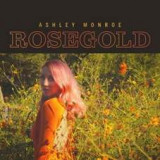
A reliable traditionalist with a penchant for bittersweet songs of heartbreak and loss, Ashley Monroe pulled a complete 180 for her spectacular new album, Rosegold, riding the joyful emotional wave that followed the birth of her son to create her most ecstatic, blissed-out collection yet. Written and recorded over the past two years, the record finds the GRAMMY-nominated Nashville star pushing her sound in bold new directions, drawing on everything from Kanye West and Kid Cudi to Beck and The Beach Boys as she layers lush vocal harmonies atop dreamy, synthesized soundscapes and sensual, intoxicating beats. Monroe worked with a variety of producers on the album, letting the tracks dictate her direction rather than any arbitrary adherence to genre or tradition, and the result is a record as daring as it is rewarding, an ecstatic, revelatory meditation on happiness and gratitude that tosses expectation to the wind as it celebrates our endless capacity to love, and to be loved, even in the midst of chaos and tragedy.Born in Knoxville, TN, Monroe first began turning heads in Nashville as a teenager, when she arrived in town with a notebook full of mature, emotionally sophisticated songs that belied her young age. A jack-of-all-trades, she picked up work behind the scenes at first, singing on sessions at Jack White’s Third Man Studios and penning tunes that would appear on albums by the likes of Guy Clark, Carrie Underwood, Jason Aldean, and Miranda Lambert. Monroe and Lambert forged a close personal bond through their collaborations, and in 2011, they teamed up with fellow Nashville journey woman Angaleena Presley to launch the critically acclaimed trio Pistol Annies, which would go on to top the Country Album charts, crack the Top 5 on the Billboard 200, and earn a GRAMMY nomination for Best Country Album. Monroe’s solo output was equally lauded, with NPRhailing her work as “subtle and breathtaking” and Rolling Stone praising her writing as “riveting and sharp-witted.” Over the course of three studio albums, Monroe would land her own GRAMMY nomination for Best Country Album, share bills with the likes of Vince Gill and John Prine, and perform everywhere from The Tonight Show and Conan to Late Night and The View.