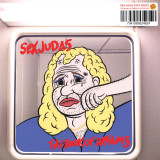
Oslo’s Sex Judas feat. Ricky announces 2 x LP for Norway’s Snick Snack Music
The band’s varied concept album portrays a break-up of epic proportions and releases Jabnuary 2025
Digital Release Date: 3rd May 2024
Vinyl Release Date: Jan 2025
“Are you ready for the big disaster? The moment when everything unravels?
On their third album, Sex Judas feat. Ricky portrays a break-up of astronomical proportions. The band's mascots, Sex Judas and Ricky, embodied by artist Sindre Goksøyr, find themselves in the midst of a separation, and their feelings are sprayed all over the big screen.
But what is actually going on? Sex Judas feat. Ricky consists of the musicians Tore Gjedrem (Ost & Kjex), Sidiki Camara, Ivar Winther, Tracee Meyn, Tore Brevik, Kristian Edvardsen and Linn Nystadnes, a stellar team part of Oslo's musical underground. Together, they play a mixture of funk, disco, post-punk, traditional music from Mali and electronica that always moves the dance floor, with two previous critically acclaimed albums on the Scottish Optimo Music and a Norwegian Grammy to show.
Sex Judas’ third album, ‘The Book Of Dreams / After Sex’, is a double disc and a two-part musical affair. In the first part, Sex Judas' version of the breakup is depicted in a band format, with music inspired by the alternative 80s. Think Grace Jones, Tom Tom Club, DAF, No Wave, and the Compass Point Studio backing band in a blissful cocktail.
In part two, depicting Ricky’s breakdown, the band has created their most experimental music to date in close collaboration with contemporary composer Ole-Henrik Moe. The songs influenced by Ole-Henrik's tones are fluid and beautifully ambient, with inspiration ranging from 30s and 40s film music, Norwegian folk, contemporary electronica and IDM topped with Moe’s modern string arrangements.” - Snick Snack Music
Suche:sex band
‘One of the finest jazz guitarists of her generation, Halvorson is possessed of a questing, restless spirit.’ – Jazzwise
‘With an album of string quartet music as strong as this one, she is worthy of as much renown in the classical field as she holds in the jazz community.’ – New York Times
‘One of America’s finest guitarists. Halvorson’s musicianship is open-minded, demanding and richly engaging.’ – Uncut
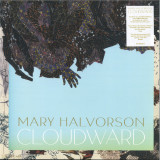
Nonesuch Records releases Cloudward by Brooklyn-based guitarist, composer, and MacArthur fellow Mary Halvorson on January 19. The album features eight new compositions by Halvorson, performed with her sextet Amaryllis, the improvisatory band that performed on her critically praised 2022 albums Amaryllis and Belladonna comprising Halvorson, Patricia Brennan (vibraphone), Nick Dunston (bass), Tomas Fujiwara (drums), Jacob Garchik (trombone), and Adam O’Farrill (trumpet). Labelmate Laurie Anderson also is featured on the album track ‘Incarnadine’. Halvorson and Amaryllis will tour internationally following the release of the new album, including January dates in Europe, as well as at the Big Ears Festival as part of Nonesuch’s 60th anniversary celebration.
Halvorson says, “All of the music on Amaryllis was written in 2020, during the thick of the pandemic, in one of the more bizarre time periods I’ve experienced in my life. While composing for Amaryllis, I expanded upon certain musical concepts I’d developed in my life up until that point—the ones that felt fruitful—and left others behind, hitting the reset button and attempting to build from scratch. Two years later, after the release of the first album, I was still writing music for Amaryllis.
“All the music on Cloudward was written in 2022, mostly in the fall and winter, when things started moving forward. Life felt like a creaky machine starting up again,” she continues. “Air travel, however chaotic, had resumed, and we were once again cloudward. Performances and tours and recordings were happening after a long hiatus and with a renewed sense of gratitude. This band, for me, was quite simply working, both musically and personally, and the main thing I felt while writing the music was optimism.”
The Guardian said Halvorson’s 2022 double release “shows how far this single-minded original has come, and affords a glimpse of how far she may go. Both sessions confirm how years of jaggedly lyrical solo and ensemble improvising and a quirkily subversive affection for mainstream music have now nurtured a composer of unpredictable but warmly expressive character… These are new landmarks in Halvorson’s already inimitable discography.” Pitchfork said, “Amaryllis and Belladonna are distinct statements; one could hear either album on its own without a sense that something is missing. But they are most powerful when taken together, like a landscape and its reflection in rippling water.”
Halvorson has released a series of critically acclaimed albums, from Dragon’s Head (2008), her trio debut featuring bassist John Hébert and drummer Ches Smith, expanding to a quintet with trumpeter Jonathan Finlayson and alto saxophonist Jon Irabagon on Saturn Sings (2010) and Bending Bridges (2012), a septet with tenor saxophonist Ingrid Laubrock and trombonist Jacob Garchik on Illusionary Sea (2014), and finally an octet with pedal steel guitarist Susan Alcorn on Away With You (2016). She also released the solo recording Meltframe (2015), and most recently debuted Code Girl (2018, 2020), a new ensemble featuring vocalist Amirtha Kidambi (singing Halvorson’s own lyrics), trumpeter Adam O’Farrill, saxophonist and vocalist María Grand, bassist Michael Formanek, and drummer Tomas Fujiwara.
One of New York City’s most in-demand guitarists, over the past decade Halvorson has worked with such diverse musicians as Tim Berne, Anthony Braxton, Taylor Ho Bynum, John Dieterich, Trevor Dunn, Bill Frisell, Ingrid Laubrock, Jason Moran, Joe Morris, Tom Rainey, Jessica Pavone, Tomeka Reid, Marc Ribot, and John Zorn. She is also part of several collaborative projects, most notably the longstanding trio Thumbscrew with Michael Formanek on bass and Tomas Fujiwara on drums.
Barkley Bandon’s debut album “Love Machine” is a sexy concept album, perfect pop record and an experimental look at club music all in one.
Hard to pin down stylistically, it’s visiting multiple spaces on a colour spectrum, with hues of Sophie’s hyperpop, Hudson Mohawke’s cheek, the nostalgic shades of Oneohtrix Point Never, a nod to Dean Blunt’s DIY aesthetic and maybe flirting a little with the of Teaches of Peaches. But really, it’s carving out a sound all for itself that is like nothing else out there.
The mysterious London producer recently contributed a song on CASISDEAD’s chart topping, Brit Award winning debut album ‘Famous Last Words’ and has worked with London RnB vocalist Gloria on her release Metal, which came out on Gaika’s label The Spectacular Empire.
Working here, on in his own playpen, he shows off his pop production skills on tunes like ‘Green Light’ and ‘Nails’ (collaborations with rising artist Kaleab Samuel from Aurora, Colorado) and ‘You Decide’, a collab with pig$ - the incredible producer from LA who makes up the other half of their joint project Parking Big. Then he flips the approach, stuffs a bunch of percussion sounds in a box, shakes it and lets clanky club bangers like ‘Vertigo’ and ‘Eye Candy’ tumble out.
Fronting the cover we see Barkley’s real life wife as a teen dream - his ultimate Love Machine.
The album will be released on 25.10.2024 on his own label Laterhosen Records on digital and limited cassette tapes.
“That bass… absolutely filthy” Tom Ravenscroft, BBC Radio 6
- A1: Annihilated(Force Of Gravity)
- A2: Shafted(Laws Of Attraction/Repulsion)
- A3: Sickness(Slowly Dying)
- B1: Vertical(Never See You Again)
- B2: Floored(Point Of Impact)
- B3: Drop(Machine Sex)
- C1: Hypnotised(F-Cked Up)
- C2: Inhuman(Let Machines Do The Talking)
- C3: Departed(Left The Body Behind)
- D1: Buried(Your Life Is Short)
- D2: Bodied(Send For The Hearse)
- D3: Exit(Wasteman)
Maverick UK producer Kevin Richard Martin (Zonal / Techno Animal / King Midas Sound) joins Relapse for the release of his devastating new double album Machine, his first solo instrumental record as THE BUG.
Machine started life as a series of self-released "floor weapons" (to use Martin’s description), landing in installments between 2023 and 2024 on the Bandcamp page of Martin’s own PRESSURE label. And now - always his intention - Martin has collated a single, powerful, unified statement from those EPs. The album detonates apocalyptic dread-tech mutations of crushing intensity, fusing a unique new strain of futuristic dub with deadly deep electronics and killer bass riffs worthy of the heaviest metal. It is, writes Martin, “ice cold and dystopian.” It celebrates “atmospheric pressure, and the joy of full body assaults, via oversized sound systems in undersized club rooms.” Machine also represents the latest metamorphosis of the "Macro Dub Infection" philosophy Martin germinated with the groundbreaking series of compilations he began curating for Virgin Records as early as the mid 90’s.
Welcome to Aqualaxy, a collaborative project where Warning joins forces with art historian C.C. McKee from Philadelphia and international queer activist dia_shi from Berlin. Accompanying McKee’s book on the debut album by late-90s electronic pop band Aqua, Aqualaxy is a compilation of contemporary queer artists from North America and Europe commissioned to create their own takes on songs from Aqua's debut album. The result is an expansive blossoming variety of music, from sizzling trance pop, to eerie darkwave atmospheres, to cheeky dancefloor weapons.
With Aqualaxy, Warning presents a release that playfully deviates from the label's usual tracks, highlights trans musicians, and offers fresh takes on nostalgic favourites to the community. Embrace Aqualaxy’s endless fluidity, a space where everything becomes possible, where some changes aren’t even a second thought. Did you know that when the kobudai reef fish reaches a certain size she changes her sex from female to male? Did you know that when the largest female in a school of Clownfish dies the male swaps sex to take her place? Protogyny, protandry, it all just seems like fun; not to mention the host of genders and ways of fucking we don’t even have words for as humans! In Aqualaxy, everything is possible under the water. Imagination, life is your creation!
Created by musician and multi-instrumentalist Jorge Queijo, Nelembe emerged with some drum rhythms recorded at random and stored on a hard drive. From them, and in the middle of the pandemic, Jorge Queijo built a musical concept that goes beyond borders and styles, embracing afrobeat and highlife, without forgetting soul, funk and jazz all of which in constant confrontation.
In addition to the rhythmic and sound issue, with several latitudes within it, afrobeat translates into a revolutionary and combative behavioral DNA of the fight for freedom and social justice. Daniel Belo's vocals and saxophonist João Cabrita's arrangements defined what the band came to call dirty afrobeat - a musical celebration where the only rule is the absence of rules, and the desire to be free that only music gives us.
- A1: The Second Dreams (Theme From House On The Sand)
- A2: The Torture (Theme From Time Of Heroes)
- A3: Motorcycle (Theme From The Exile)
- A4: The Opening Night (Theme From Ljuba Par Lui Meme)
- A5: In The Beaubourg Gallery (Theme From Ljuba Par Lui Meme)
- A6: All And Nothing At All (Main Theme From All And Nothing At All)
- A7: All And Nothing At All (Unused Theme From All And Nothing At All)
- A8: Jere And Marija In The Room (Theme From Marjuca Or Death)
- A9: The Bitter Tears Of Petra Von Kant I (Theme From The Bitter Tears Of Petra Von Kant)
- A10: The Bitter Tears Of Petra Von Kant Ii (Theme From The Bitter Tears Of Petra Von Kant)
- B1: Cassandra (Theme From The Trojan War Will Not Take Place)
- B2: Peace (Theme From The Trojan War Will Not Take Place)
- B3: Fourth Choir - Sun Ray (Theme From Biedermann Und Die Brandstifter)
- B4: Second Choir - Marching Step (Theme From Biedermann Und Die Brandstifter)
- B5: The Beginning Before The Beginning (Theme From Fool For Love - Savage Love)
- B6: She Runs Away (Theme From Fool For Love - Savage Love)
- B7: Eddie Enters (Theme From Fool For Love - Savage Love)
- B8: A Jerk (Theme From Fear And Hope Of The German Federal Republic)
- B9: Song 3 (Theme From Fear And Hope Of The German Federal Republic)
- B10: Chernobyl (Theme From Fear And Hope Of The German Federal Republic
A collection of music for the various films and theatre plays by Mirko Krsticevic, Croatian and Yugoslavian composer and musician active since 1970s. All and Nothing at All (Film and Theatre Music 1978 - 1988) focuses on his work for the underground and avantgarde cinema from the era: directors Ivan Martinac, Svemir Pavic, Lordan Zafranovic, Aleksandar F. Stasenko and Vanca Kljakovic are all part of the Split Cinema Club association; their work explores art, death, sexuality and eroticism. Pavic's portrait of surrealist painter Ljuba Popovic, made in the same year as its counterpart by Walerian Borowczyk, features scenes form Beaubourg Gallery in Paris and Udo Kier as a guest. Side B of the record is all about theatre: plays by Sam Shepard, Rainer Werner Fassbinder and Jean Giraudoux were all produced in Sarajevo and Split in the 1980s, with the rare electronic takes by Mirko Krsticevic and his subtle minimalist soundings of the themes from the Cold War era. This unique and diverse compositions by founder of the rock band Metak and sound studio Tetrapak from Split, are document of the time that is, especially in the closing Chernobyl theme, relevant again. Composer, musician and musical arranger Mirko Krsticevic was born in 1948 in Sibenik. He graduated in music theory at the Pedagogical Academy in Split and then at the Music Academy in Sarajevo. He studied composition with Josip Magdic, Mladen Pozajic and Miroslav Spiler. He is the co-founder of the Tetrapak music studio in Split, where numerous performers and musicians have recorded (Animatori, D'Boys, Haustor, Oliver Mandic, Gibonni, Srdjan Marjanovic, Stil, Trotakt Projekt and others). The first group he founded was the rock group Che, which performed his own songs, in which he played bass guitar. It was founded in the summer of 1969. Together with Ranko Boban and Momcilo Popadic, he founded the Metak group in the spring of 1978 in Prigradica on Korcula. In the group, he is the author of songs and lyrics, and he also plays the bass guitar. "Da mi je biti morski pas" is the group's most successful single, which in 1980 became one of the most played songs on radio and television. Metak performed in Belgrade in front of 70,000 people, and the media declared them the best group along with Macedonian Leb i sol. In compositional work and arrangements for other pop and rock artists, Krsticevic had high commercial success with Tutti Frutti Balkan Band, Biljana Petrovic, Seid Memic Vajta, Pepel in kri, Osmi putnik, Oliver Dragojevic , Djordji Peruzovic, Henda and others. Parallel to his pop and rock career, Krsticevic composed stage and film music for 45 films, mostly collaborating with the circle of experimental and amateur directors of the Split Cinema Club (Kino klub Split) as well as the rest of the local underground scene. He is the author of stage music for 130 theatre plays, and also records his own compositions in the field of contemporary music. He wrote over 30 works for solo instruments, chamber and symphonic music. At the end of 2007, he founded the Split society for contemporary music and the contemporary music ensemble Splithesis. In 2015, he founded his own orchestra The Highway to Well Family, composed of fourteen musicians and three singers. In 2021, he founded Arthesis, an artistic organization for contemporary music and visual arts. He is the author of four operas: "Krvava svadba" (1997), "Halugica" (1999), "Atlantida - Legenda o Dan'zoru" (2018) i "Atlantida II - Lu'blis Kaoamos" (2020). He is the winner of numerous awards, lives and works in Split. Gatefold LP with extensive liner notes, Direct Metal Mastering (DMM) from original tapes, pressed at Record Industry. File under: Soundtrack, Stage, Electronica
Originally released in Canada in 2006, and worldwide by 2007, Patrick Watson's breakthrough album has sold over 100,000 copies. Winner of Canada's Polaris Prize in 2007, it has received critical praise across the globe and continues to sell as the band's profile increases. Features the single The Great Escape.' A six-panel digipak with accordion foldout, the album is now available via original label Secret City Records.
Deluxe gatefold 2LP edition with bonus track Interference From the Sky'. MP3 download included.
There was always something sexy about Purgatory. No one wants to hang out in Hell, but was Heaven ever really that appealing either How does that Talking Head song go Heaven is a place where nothing ever happens...' Close to Paradise is one of those rare gems of an album that can stand as a gateway to wherever you want it to take you.
*Repress*
An artist as imaginative and unique as Ana Mazzotti doesn’t come around often. Dubbed a “super-musician” by fellow Brazilian virtuoso Hermeto Pascoal, Mazzotti’s short but rich musical career culminated in just two studio albums: Ninguem Vai Me Segurar (1974), and Ana Mazzotti (1977). Outside circles of Brazilian funk aficionados, these two gems of spellbinding samba-jazz, lysergic funk and trippy bossa have remained relatively obscure. This was partly as a result of Mazzotti’s premature death (she lost her battle with cancer in her mid-thirties), but also due to financial restraints and the prejudice she faced as a female songwriter in a fundamentally sexist society.
Born in Caixas, in Brazil’s Rio Grande do Sul municipality, Mazzotti began to play the accordion aged five, before moving with prodigious ease onto the piano. By the age of twelve she was already conducting her convent school’s choir, and at twenty-one she led her city’s premier chorus, the Coral Bento Goncalves. When rock and roll hit South America in the sixties, a young Mazzotti was one of the early adopters, fronting various guitar groups including an all female Beatles cover band, and an eclectic, eight-piece psychedelic group Desenvolvemento. Before moving to Sao Paulo to start her career proper, Mazzotti met drummer, producer and fellow music educator Romido Santos, who she would later marry. Romildo introduced Mazzotti to jazz, and music by the likes of Chick Corea and Hermeto Pascoal who she would later befriend and perform with.
In 1974 Mazzotti recorded her first album Ninguem Vai Me Segurar (1974), enlisting the in-demand arrangement talents of Azymuth’s original keyboard maestro Jose Roberto Bertrami who co-wrote several of the tracks and plays organ, piano and synthesizers on the album. It also features Azymuth’s bassist Alex Malheiros and percussionist Ariovaldo Contestini, with Romildo Santos who produced the album on drums. Recorded in Estudio Haway around the same time Azymuth recorded their debut album there, it’s no wonder the samba jazz-funk pioneer’s distinctive aesthetic is present throughout, and Mazzotti’s sensational compositions are made even more beautiful for it.
Kicking off with the swirling samba-jazz-dance masterpiece ‘Agora Ou Nunca Mais’, the album hosts several groove-heavy Brazilian cult-classics including ‘Roda Mundo’ and ‘Eu Sou Mais Eu’. Deeper moments come in the form of the alluring future soul synth sounds on ‘Bairro Negro’ and ‘Sou’, and Mazzotti’s tender, hallucinatory version of ‘Feel Like Making Love’ (made famous by Roberta Flack) perfectly reflecting the idiosyncratic genius Mazzotti achieved with Bertrami’s visionary arrangements, and Romildo’s impeccable production approach.
Far Out Recordings is proud to present the official reissue of this cult favourite Brazilian treasure. Remastered and pressed to 180g vinyl, Ninguem Vai Me Segurar (1974) will be available on vinyl LP, CD and digitally from 13th September.
HEART-SOUL & INSPIRATION Featuring VINCE HOWARD - I’M GONNA LOVE YOU MORE
Mythical band ‘Heart-Soul & Inspiration’ and their band leader, L.A. drummer and producer Vince Howard cut their self-titled (and only) album in 1974 for the Los Angeles-based Viscojon label. The result was an astonishing collection of music filled with playful sexy moans, climaxing grooves and soulful hooks.
One of the album’s highlights (and clocking in at an epic eleven minutes) is ‘I’m Gonna Love You More” - a tantric reimagining of Barry White’s 1973 sexually charged classic. Where White was content delivering a subtle and syrupy innuendo, Howard transformed the break-heavy track into a meandering funk workout.
We are proud to present ‘I’m Gonna Love You More’ on a 7” for the first time - cut at 33⅓ RPM over two sides (Parts One & Two)
As we get ready to say goodbye to the Telomere Plastic series, we are excited to present Telomere 020.1, aka the first part out of 5.
Each release will have four different artists, making it a compilation of twenty different artists who will deliver unique, juicy and eclectic frequencies that will keep your telomeres bopping for the rest of time!
This first VA, features producers, ESB, Synaptic Voyager, Vinaya and Vonsuck.
A1, Fancy Organ from Vinaya, is a sexy deep and house cut that is guaranteed to bring smiles all around the dance floor. Arpeggios and groovy bass lines galore. Prepare your piano hands because you will find yourself playing that sweet air organ on this one!
A2, Self Destruct Sequence from Synaptic Voyager (aka Telomere 014’s Illuminators), is a very emotional cut. Originally released digitally on Frame Of Mind, we were overjoyed to be given the green light to put this beauty on wax. Deep pads, tommy drums, hints of IDM and techno, and soul striking arpeggios pave the way for a special sonic journey. Close your eyes and melt away with this one!
B1, Keio Acid from ESB. We are always delighted to share more ESB with you. Elan’s love for analog and tape give off a raw and authentic energy that is hard to come by. This deep, jazzy and loopy cut will keep you on your toes from start to finish. We can only dream of being on the dance floor as this one plays out!
B2, Unemati from Vonsuck, is a deep and dubby cut that beautifully blends the three genres dub techno, house and techno. Dark rooms and dark skies are recommend for this one here, even though we could see these frequencies accompanied by a pink and red sunrise bringing waves of energy and nostalgia to your soul. Its a real treat to have Vonsuck aka Galaktlan on the Telomere series!
Very limited black copies as always with a few colored copies available via the Wex bandcamp, be quick!
John Ghost (Ghent, Belgium) is the sextet led by guitarist/composer Jo De Geest. As a group, they draw influences from jazz, rock, and contemporary classical music. Minimalism, electronics, and an overall cinematic quality characterize their instrumental sound. The ensemble's sound can be described as a symbiosis of Hidden Orchestra, Portico Quartet, and James Holden.
After the critically acclaimed “Airships Are Organisms” (4-star reviews in The Guardian and Financial Times, as well as airplay on BBC 6 and Worldwide FM) John Ghost is back with “Thin Air . Mirror Land”, to be released on October 6 via Sdban Ultra, the label of ECHT!, Black Flower, Glass Museum, STUFF. and more.
For this album, they continued their fruitful collaboration with legendary producer Jørgen Træen, known for his work with Jaga Jazzist, Electric Eye, Kaizers Orchestra, and numerous projects on the Hubro Record Label. The result is an album with a slightly more somber tone, focussing on a broader range of instruments and an emphasis on percussive elements."Thin Air . Mirror Land" unfolds as an aesthetic refuge in stormy times. It is a musical urge for introspection in a chaotic reality, and a longing to reconnect with a natural environment.
During the creative process, Jo drew inspiration from the music of artists such as Hans Zimmer, György Ligeti, Magma, The Residents, Disasterpeace, James Holden & The Animal Spirits, Do Make Say Think, William Basinski, and Jóhann Jóhannsson. The album title "Thin Air . Mirror Land" and the song titles are driven by a fascination with the artwork of Edvard Munch. Jo found inspiration in Munch's painting "The Storm" (1893) as a catalyst for the writing process, exploring a dystopian backdrop and the intriguing interplay between comfort and unrest. Heavily inspired by the music, Jaak De Digitale created the gloomy artwork for the album.
Members of the band are Jo De Geest (Endlingr), Rob Banken (Rapidman, HAST), Wim Segers (Compro Oro, PAARD.), Karel Ceulenaere (Black Flower), Lieven Van Pée (Echoes of Zoo, De Beren Gieren) and Elias Devoldere (Nordmann, Elias) who went through a thoughtful studio process, with the result being a conceptual and slightly dystopian atmosphere.
Baby Buddha is David Javelosa and musical partner Charles Hornaday playing instruments and providing their own whacked-out vocals. Baby Buddha really was less of a band than a project; a side project in fact, for some members of another group, Los Microwaves. Baby Buddha would eventually record and release an album, 1981's provocatively-titled Music for Teenage Sex on Robbie Fields' L.A.-based Posh Boy label.
Happily, the project's guiding creative light, David Javelosa has recently seen to a vinyl reissue of the now-40-year-old record, mystifyingly retitled Music for Teenage Sects. Definitely among the stranger releases of the new wave era, Music for Teenage Sex/Sects could perhaps only have been created when and where it was made. But on the occasion of its 40th anniversary, the music sounds as weirdly wonderful as ever. "We Are Not" sounds like Human League stuck in a car with The Residents. And their cover of "All Shook Up" sounds like a musical kin to those inscrutable eyeball guys too; it wouldn't be out of place on Meet the Residents. "Little Things" is a house-of-mirrors, scary track, with spoken-word vocals by Los Microwaves' Meg Brazill and label head Fields.
The album cover is slightly different as well: it displays a bedroom scene like the original LP, but with the young female model absent. The new release (on Javelosa's own Hyperspace Communications label) is pressed on beautiful translucent blue vinyl and comes in a gatefold sleeve with a lively collage of photos, buttons, gig posters. Limited to 500 copies.This playfully titled release features David Javelosa (on synth and vocals) along with Meg Brazill (on bass and vocals) plus drummer Todd "Rosa" Rosencrans. Side One features five studio tracks, none of which were included on the band's 1981 Posh Boy LP, Life After Breakfast. Three of these tracks were recorded in '82; there's no information regarding the provenance of the other two songs. The records' second side collects five live recordings, capturing Los Microwaves onstage in New York City (The Peppermint Lounge) and Boston as well as at San Francisco's own I-Beam, a venue that often played host to the band. Those tracks date form roughly the same ear, 1980-83. Sonically the songs variously recall Blondie, Flying Lizards, Gang of Four and a far less dour Human League. Importantly, the band rocks, even when it's employing a spare drum kit, solid but elemental bass, and monophonic analog synthesizers. The stripped down aesthetics of the group – necessitated by its minimalist instrumental approach – are nonetheless thrilling. Even if you weren't there in 1980, this'll take you back.
Samosa Records releases are coming thick and fast in what could be their finest year yet. Lex & Locke are the latest talent to make their Samosa debut with their ‘Pacifica’ EP – a sublime three tracker which is mouth watering from the off.
First up is Balandra. From the moment you hear the raw four to the floor drumbeat, you’re under its spell. The infectious bass riff moves the scenery around a little, whilst the subtle bongo attack teases what’s to come. And what’s coming is a funky, rolling cosmic lead synth that has no right to sound that damn sexy, no right at all. The vibe quickly grows into an interstellar journey, aided by an outrageously funky clav jam that gets inside your head. Balandra feels like the soundtrack to an ‘after dark’ undercover stakeout in a 1970s cop thriller. Detectives Lex & Locke are on the case and the evidence is compelling. A unique, 122bpm funk bomb which has the Samosa fingerprints all over it.
A2 is Cabo Pulmo – continuing the vibe of Balandra, Lex & Locke lay down some serious grooves in what initially sounds like a live funk band jamming away in the studio without a care in the world. No soon as we get into the beat and the bass, there’s an immediate switch to a swirling, bold cocktail of funk infused with a touch of jazz that belies the 124bpm tempo. The production is expertly tight; layers of synth, electric organ and punchy guitar riffs make this ideal for both the sun terrace and the dance floor. You’re under arrest, and Lex & Locke are reading you your rights!
The final track, Nine Palms has a real quirky, almost broken beat feel to it with its high-hat ride pattern and punchy bass drum. A wickedly twisted analogue organ riff is quickly introduced, which is cleverly used as both a rhythm device and the melodic platform that sets up the whole track. Lex & Locke seem to be total masters of a ‘free-style funky synth lead’, and we’re treated to another slice of this particularly tasty pie in ‘Nine Palms’. Whereas Balandra is the late-night stake-out, Nine Palms is the final act where Lex & Locke high five each other following another successful bust.
The Pacifica EP has a wonderfully intimate and assured vibe about it and is sure to feature in many a summer soundtrack. This release also proves that Samosa Records aren’t afraid to go off the beaten path occasionally - and when it’s this good we’re more than happy to follow. Grab this amazing cut of wax while you can!
- A1: Sweet Potato Gravy Maurice Simon & Pie Men
- A2: Mmm Mmm Mmm Dave Lewis
- A3: Sorry ‘Bout That Harold Johnson Sextet
- A4: Sophisticated Funk John Roberts
- A5: Chittlin' Salad The Soul Runners
- A6: Hijack Jackie Hairston
- A7: Whip You Little Charles Whitworth
- A8: The Shing-A-Ling Thing The Naked Truth
- B1: I Can't Afford To Lose Him Sound Stage House Band
- B2: Sunny Jerome Richardson
- B3: Bucket O Grease Les Mccann
- B4: Cornbread And Buttermilk Leon Haywood
- B5: Dead The Mark Ii
- B6: The Skrooch Little Eddie
- B7: Flunky Flunky The Soul Set
- B8: Mother Blues Gene Ludwig
- A1: God Save Us All From Misery
- A2: Someone Dropped A Bomb In The U.k
- A3: God Save The King
- B1: Mal-One’s Out To Lunch
- B2: Holiday In Someone Else’s Misery
Well here we are unbelievably 50 years on from year zero 1976, when the world stood still at the birth of Punk Rock. To celebrate this monumental occasion Mal-One has worked up a new song called God Save Us All From Misery and to accompany this fine effort he has also worked up alternative versions to what could be the best first 4 singles released by any band. The first four singles released by the Sex Pistols. He has produced his own takes on these classic singles with.. Someone Dropped a Bomb In The UK (Anarchy In U.K.), God Save The King (God Save The Queen), Mal-One’s Out To Lunch (Pretty Vacant) and Holiday In Someone Else’s Misery (Holidays In The Sun). So creating this rocking 5 track 12” E.P. Hope you enjoy the results and here’s to another 50 years… God save Us All…
- A1: The Crystal Ship
- B1: Anna Karenina
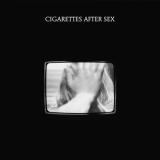
Cigarettes After Sex return with a double single that showcases both their future and their past. The single featured on the B-side, “Anna Karenina,” is a quintessential Cigs track, sensual, slow-burning, and emotionally oversized, with lyrics so confessional they verge on too much. But its inclusion of spoken word verses adds a striking new dimension to Greg Gonzalez’s world, expanding the band’s intimate palette. Its chorus (“I cried at the end of Anna Karenina, when she threw herself under the train”) might be the most Cigarettes After Sex lyric ever written. The A-side is a long-rumored fan favorite finally seeing release: a gorgeously faithful cover of The Doors’ “The Crystal Ship,” recast in the band’s signature haze. Jim Morrison’s romantic fatalism never sounded more at home.
A4 paperback, 120 pages
The second in our series of book relaunches is one of the original books on The Jam ( the first being The Sex Pistols
Retrospective ).
The Jam one of the most important British groups of all time, crashed on the scene with the Punk Explosion, but soon found their own niche. Charting consistently from 1977’s `In The City’ debut to 1982’s `Beat Surrender’ single.
The book details the groups worldwide releases with over 200 colour and black and white illustrations, The Jam 7” worldide release chart and a detailed timeline of the bands history and list of gigs and appearances up to the bands split in 1982.
The Jam are one of the UK’s most loved bands and have been surely missed but more importantly not forgotten.
The Jam were very much a vinyl orientated phenomenon that consisted of great artwork. So sit back and enjoy their story through their releases around the world.
Over 200 pictures of rare and deleted releases throughout the world
Plus history of the band and list of gigs and appearances.
Author: Agent Provocateur
Weight: 550gm
Height: 297mm
Width: 210mm
Depth: 10mm
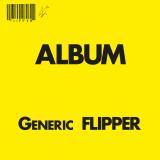
Generic Flipper, the debut album by Flipper, remains the most absorbing full-length LP to emerge from the early San Francisco punk scene. A constant source of imitation for so-called "noise rock" bands, it has yet to be surpassed in its nihilistic glee.
Recorded between October 1980 and August 1981 and released in 1982 on the indispensable Subterranean Records, this album functions as a chaotic, sticky mass of individual personalities: the magma-like bass eruptions and dual vocals of Will Shatter and Bruce Loose, Ted Falconi's icy guitar scraping and the relentless beat of drummer Steve DePace. At times playful and taciturn, paranoid and absurd, Generic charts a deliberate path that willfully chances destruction.
In early '80s punk, when the hardening default was "faster-shorter-louder," Generic subverts the nascent hardcore scene with a strictly applied regimen of turgid-slower-heavier. The lyrics are bleak, yet unnervingly beautiful. "Ever" sets the tone with trademark restraint – "Ever wish the human race didn't exist? And then realize you're one too?" – while closer "Sex Bomb" is a churning, 8-minute epic with looping bass, saxophone accompaniment and electronic effects of dropping bombs.
Tons of indie bands have attempted to recreate Flipper's mix of acidic guitar, metallic bass sludge and sardonically brilliant lyricism, using the seemingly effortless template they pioneered; however, the effect usually drives listeners right back to Generic. While most of their contemporaries wilt under direct comparison, No Trend, the Butthole Surfers, feedtime and Church Police are a few who can stand the frigid heat.
UILTY RAZORS, BONA FIDE PUNKS.
Writings on the topic that go off in all directions, mind-numbing lectures given by academics, and testimonies, most of them heavily doctored, from those who “lived through that era”: so many people today fantasize about the early days of punk in our country… This blessed moment when no one had yet thought of flaunting a ridiculous green mohawk, taking Sid Vicious as a hero, or – even worse – making the so-called alternative scene both festive and boorish. There was no such thing in 1976 or 1977, when it wasn’t easy to get hold of the first 45s by the Pistols or the Clash. Few people were aware of what was happening on the fringes of the fringes at the time. Malcolm McLaren was virtually unknown, and having short hair made you seem strange. Who knew then that rock music, which had taken a very bad turn since the early 1970s, would once again become an essential element of liberation? That, thanks to short and fast songs, it would once again rediscover that primitive, social side that was so hated by older generations? Who knew that, besides a few loners who read the music press (it was even better if they read it in English) and frequented the right record stores? Many of these formed bands, because it was impossible to do otherwise. We quickly went from listening to the Velvet Underground to trying to play the Stooges’ intros. It’s a somewhat collective story, even though there weren’t many people to start it.
The Guilty Razors were among those who took part in this initial upheaval in Paris. They were far from being the worst. They had something special and even released a single that was well above the national average. They also had enough songs to fill an album, the one you’re holding. In everyone’s opinion, they were definitely not among the punk impostors that followed in their wake. They were, at least, genuine and credible.
Guilty Razors, Parisian punk band (1975-1978). To understand something about their somewhat linear but very energetic sound, we might need to talk about the context in which it was born and, more broadly, recall the boredom (a theme that would become capital in punk songs) coupled with the desire to blow everything off, which were the basis for the formation of bands playing a rejuvenated rock music ; about the passion for a few records by the Kinks or the early Who, by the Stooges, by the Velvet mostly, which set you apart from the crowd.
And of course, we should remember this new wave, which was promoted by a few articles in the specialized press and some cutting-edge record stores, coming from New York or London, whose small but powerful influence could be felt in Paris and in a handful of isolated places in the provinces, lulled to sleep by so many appalling things, from Tangerine Dream to President Giscard d’Estaing...
In 1975-76, French music was, as almost always, in a sorry state ; it was still dominated by Johnny Hallyday and Sylvie Vartan. Local rock music was also rather bleak, apart from Bijou and Little Bob who tried to revive this small scene with poorly sound-engineered gigs played to almost no one.
In the working class suburbs at the time, it was mainly hard rock music played to 11 that helped people forget about their gruelling shifts at the factory. Here and there, on the outskirts of major cities, you still could find a few rockers with sideburns wearing black armbands since the death of Gene Vincent, but it wasn’t a proper mass movement, just a source of real danger to anyone they came across who wasn't like them. In August 1976, a festival unlike any other took place in Mont-de-Marsan – the First European Punk Festival as the poster said – with almost as many people on stage as in the audience. Yet, on that day, a quasi historical event happened, when, under the blazing afternoon sun, a band of unknowns called The Damned made an unprecedented noise in the arena, reminiscent of the chaotic Stooges in their early adolescence. They were the first genuine punk band to perform in our country: from then on, anything was possible, almost anything seemed permissible.
It makes sense that the four+1 members of Guilty Razors, who initially amplified acoustic guitars with crappy tape recorder microphones, would adopt punk music (pronounced paink in French) naturally and instinctively, since it combines liberating noise with speed of execution and – crucially – a very healthy sense of rebellion (the protesters of May 1968 proclaimed, and it was even a slogan, that they weren’t against old people, but against what had made them grow old. In the mid-1970s, it seemed normal and obvious that old people should now ALSO be targeted!!!).
At the time, the desire to fight back, and break down authority and apathy, was either red or black, often taking the form of leafleting, tumultuous general assemblies in the schoolyard, and massive or shabby demonstrations, most of the time overflowing with an exciting vitality that sometimes turned into fights with the riot police. Indeed, soon after the end of the Vietnam War and following Pinochet’s coup in Chile, all over France, Trotskyist and anarcho-libertarian fervour was firmly entrenched among parts of the educated youth population, who were equally rebellious and troublemakers whenever they had the chance. It should also be noted that when the single "Anarchy in the UK" was first heard, even though not many of us had access to it, both the title and its explosive sound immediately resonated with some of those troublemakers crying out for ANARCHY!!! Meanwhile, the left-wing majority still equated punks with reckless young neo-Nazis. Of course, the widely circulated photos in the mainstream press of Siouxsie Sioux with her swastikas didn’t necessarily help to win over the theorists of the Great Revolution. It took Joe Strummer to introduce The Clash as an anti-racist, anti-fascist and anti-ignorance band for the rejection of old-school revolutionaries to fade a little.
The Lycée Jean-Baptiste Say at Porte d’Auteuil, despite being located in the very posh and very exclusive 16th arrondissement of Paris, didn’t escape these "committed" upheavals, which doubled as the perfect outlet for the less timid members of this generation.
“Back then, politics were fun,” says Tristam Nada, who studied there and went on to become Guilty Razors’ frontman. “Jean-Baptiste was the leftist high-school in the neighbourhood. When the far right guys from the GUD came down there, the Communist League guys from elsewhere helped us fight them off.”
Anything that could challenge authority was fair game and of course, strikes for just about any reason would lead to increasingly frequent truancy (with a definitive farewell to education that would soon follow). Tristam Nada spent his 10th and 11th unfinished grades with José Perez, who had come from Spain, where his father, a janitor, had been sentenced to death by Franco. “José steered my tastes towards solid acts such as The Who. Like most teenagers, I had previously absorbed just about everything that came my way, from Yes to Led Zeppelin to Genesis. I was exploring… And then one day, he told me that he and his brother Carlos wanted to start a rock band.” The Perez brothers already played guitar. “Of course, they were Spanish!”, jokes their singer. “Then, somewhat reluctantly, José took up the bass and we were soon joined by Jano – who called himself Jano Homicid – who took up the rhythm guitar.” Several drummers would later join this core of not easily intimidated young guys who didn’t let adversity get the better of them.
The first rehearsals of the newly named Guilty Razors took place in the bedroom of a Perez aunt. There, the three rookies tried to cover a few standards, songs that often were an integral part of their lives. During a first, short gig, in front of a bewildered audience of tough old-school rockers, they launched into a clunky version of the Velvet Underground's “Heroin”. Challenge or recklessness? A bit of both, probably… And then, step by step, their limited repertoire expanded as they decided to write their own songs, sung in a not always very accurate or academic English, but who cared about proper grammar or the right vocabulary, since what truly mattered was to make the words sound as good as possible while playing very, very fast music? And spitting out those words in a language that left no doubt as to what it conveyed mattered as well.
Trying their hand a the kind of rock music disliked by most of the neighbourhood, making noise, being fiercely provocative: they still belonged to a tiny clique who, at this very moment, had chosen to impose this difference. And there were very few places in France or elsewhere, where one could witness the first stirrings of something that wasn’t a trend yet, let alone a movement.
In the provinces, in late 1976 or early 1977, there couldn’t be more than thirty record stores that were a bit more discerning than average, where you could hear this new kind of short-haired rock music called “punk”. The old clientele, who previously had no problem coming in to buy the latest McCartney or Aerosmith LP, now felt a little less comfortable there…
In Paris, these enlightened places were quite rare and often located nex to what would become the Forum des Halles, a big shopping mall. Between three aging sex workers, a couple of second-hand clothes shops, sellers of hippie paraphernalia and small fashion designers, the good word was loudly spread in two pioneering places – propagators of what was still only a new underground movement. Historically, the first one was the Open Market, a kind of poorly, but tastefully stocked cave. Speakers blasted out the sound of sixties garage bands from the Nuggets compilation (a crucial reference for José Perez) or the badly dressed English kids of Eddie and the Hot Rods. This black-painted den was opened a few years earlier by Marc Zermati, a character who wasn’t always in a sunny disposition, but always quite radical in his (good) choices and his opinions. He founded the independent label Skydog and was one of the promoters of the Mont-de-Marsan punk festivals. Not far from there was Harry Cover, another store more in tune with the new New York scene, which was amply covered in the house fanzine, Rock News (even though it was in it that the photos of the Sex Pistols were first published in France).
It was a favorite hang-out of the Perez brothers and Tristam Nada, as the latter explained. “It’s at Harry Cover’s that we first heard the Pistols and Clash’s 45s, and after that, we decided to start writing our first songs. If they could do it, so could we!”
The sonic shocks that were “Anarchy in the UK”, “White Riot” or the Buzzcocks’s EP, “Spiral Scratch” – which Guilty Razors' sound is reminiscent of – were soon to be amplified by an unparalleled visual shock. In April 1977, right after the release of their first LP, The Clash performed at the Palais des Glaces in Paris, during a punk night organised by Marc Zermati. For many who were there, it was the gig of a lifetime…
Of course, Guilty Razors and Tristam were in the audience: “That concert was fabulous… We Parisian punks were almost all dressed in black and white, with white shirts, skinny leather ties, bikers jackets or light jackets, etc. The Clash, on the other hand, wore colourful clothes. Well, the next day, at the Gibus, you’d spot everyone who had been at this concert, but they weren’t wearing anything black, they were all wearing colours.”
It makes sense to mention the Gibus club, as Guilty Razors often played there (sometimes in front of a hostile audience). It was also the only place in Paris that regularly scheduled new Parisian or Anglo-Saxon acts, such as Generation X, Siouxsie and the Banshees, the Slits, and Johnny Thunders who would become a kind of messed-up mascot for the venue. A little later, in 1978, the Rose Bonbon – formerly the Nashville – also attracted nightly owls in search of electric thrills… In 1977, the iconic but not necessarily excellent Asphalt Jungle often played at the Gibus, sometimes sharing the bill with Metal Urbain, the only band whose aura would later transcend the French borders (“I saw them as the French Sex Pistols,” said Geoff Travis, head of their British label Rough Trade). Already established in this small scene, Metal Urbain helped the young and restless Guilty Razors who had just arrived. Guitarist for Metal Urbain Hermann Schwartz remembers it: “They were younger than us, we were a bit like their mentors even if it’s too strong a word… At least they were credible. We thought they were good, and they had good songs which reminded of the Buzzcocks that I liked a lot. But at some point, they started hanging out with the Hells Angels. That’s when we stopped following them.”
The break-up was mutual, since, Guilty Razors, for their part, were shocked when they saw a fringe element of the audience at Metal Urbain concerts who repeatedly shouted “Sieg Heil” and gave Nazi salutes. These provocations, even still minor (the bulk of the skinhead crowd would later make their presence felt during concerts), weren’t really to the liking of the Perez brothers, whose anti-fascist convictions were firmly rooted. Some things are non-negotiable.
A few months earlier (in July 1978), Guilty Razors had nevertheless opened very successfully for Metal Urbain at the Bus Palladium, a more traditonally old-school rock night-club. But, as was sometimes the case back then, the night turned into a mass brawl when suburban rockers came to “beat up punks”.
Back then, Parisian nights weren’t always sweet and serene.
So, after opening as best as they could for The Jam (their sound having been ruined by the PA system), our local heroes were – once again – met outside by a horde of greasers out to get them. “Thankfully,” says Tristam, “we were with our roadies, motorless bikers who acted as a protective barrier. We were chased in the neighbouring streets and the whole thing ended in front of a bar, with the owner coming out with a rifle…”
Although Tristam and the Perez brothers narrowly escaped various, potentially bloody, incidents, they weren’t completely innocent of wrongdoing either. They still find amusing their mugging of two strangers in the street for example (“We were broke and we simply wanted to buy tickets for the Heartbreakers concert that night,” says Tristam). It so happened that their victims were two key figures in the rock business at the time: radio presenter Alain Manneval and music publisher Philippe Constantin. They filed a complaint and sought monetary compensation, but somehow the band’s manager, the skilful but very controversial Alexis, managed to get the complaint withdrawn and Guilty Razors ended up signing with Constantin with a substantial advance.
They also signed with Polydor and the label released in 1978 their only three-track 45, featuring “I Don't Wanna be A Rich”, “Hurts and Noises” and “Provocate” (songs that exuded perpetual rebellion and an unquenchable desire for “class” confrontation). It was a very good record, but due to a lack of promotion (radio stations didn’t play French artists singing in English), it didn’t sell very well. Only 800 copies were allegedly sold and the rest of the stock was pulped… Initially, the three tracks were to be included on a LP that never came to be, since they were dropped by Polydor (“Let’s say we sometimes caused a ruckus in their offices!” laughs Tristam.) In order to perfect the long-awaited LP, the band recorded demos of other tracks. There was a cover of Pink Floyd's “Lucifer Sam” from the Syd Barrett era – proof of an enduring love for the sixties’ greats –, “Wake Up” a hangover tale and “Bad Heart” about the Baader-Meinhof gang, whose actions had a profound impact on the era and on a generation seeking extreme dissent... On the album you’re now discovering, you can also hear five previously unreleased tracks recorded a bit later during an extended and freezing stay in Madrid, in a makeshift studio with the invaluable help of a drummer also acting as sound engineer. He was both an enthusiastic old hippie and a proper whizz at sound engineering. Here too, certain influences from the fifties and sixties (Link Wray, the Troggs) are more than obvious in the band’s music.
Shortly after a final stormy and rather barbaric (on the audience’s side) “Punk night” at the Olympia in June 1978, Tristam left the band ; his bandmates continued without him for a short while.
But like most pioneering punk bands of the era, Guilty Razors eventually split up for good after three years (besides once in Spain, they’d only played in Paris). The reason for ceasing business activities were more or less the same for everyone: there were no venues outside one’s small circuit to play this kind of rock music, which was still frightening, unknown, or of little interest to most people. The chances of recording an LP were virtually null, since major labels were only signing unoriginal but reassuring sub-Téléphone clones, and the smaller ones were only interested in progressive rock or French chanson for youth clubs. And what about self-production? No one in our small safety-pinned world had thought about it yet. There wasn’t enough money to embark on that sort of venture anyway.
So yes, the early days of punk in France were truly No Future!