Dark Entries is pleased to announce a deluxe reissue of Sexual Harrassment’s 1983 opus I Need A Freak. Lynn Tolliver, DJ/Program Director at Cleveland’s WZAK, adopted the pseudonym David Payton in order to keep his musical endeavors separate from his public persona. Sexual Harrassment (misspelled deliberately) was formed as a concept band, with members selected based on appearance and choreographic skill rather than musical ability. Tolliver’s explicit lyrics focused on the central themes of desire and sexual relations. Working at a studio in Akron, he recorded an album of quirky-yet-lurid electro funk, which was released on Heat Records. Tolliver remarks, “I learned as a youngster, sex sells! The things that are rated the worst – violence, horror and sex – are the things people want to see or hear about.” I Need a Freak was a surprise hit, selling over 100,000 copies.
I Need A Freak is presented here for the first time on double LP, pressed at 45 rpm for maximum DJ-friendliness. While the album’s naughtier moments seem quaint by contemporary standards, the fusion of lo-fi funk and disaffected vocals still stuns today. On the eternal electro-raunch anthem “I Need a Freak”, minimalism serves to highlight the lasciviousness of the deadpan lyrics, which were inspired by Lourdes Figueroa, Tolliver’s girlfriend at the time. Tolliver’s whimsy shines on tracks like “If I Gave You a Party” and “K.I.S.S.I.N.G.”, which contrast nursery rhyme structures with decidedly R-rated lyrics. “Exercise Your Ass Off” lampoons the home exercise craze, but with a more-than-suggestive sexual bent. Also included are two bonus cuts, “We Want Prince” and “These Are The Things That I Like”, previously released as singles in 1984 and 1986, respectively. “We Want Prince” is both a homage to the Purple one and a gentle satire of obsessive fandom.
I Need A Freak has been remastered by George Horn at Fantasy Studios. The album comes in a gatefold sleeve featuring the original artwork. Included are lyrics, photos, and liner notes by Lynn Tolliver and drummer Dale Jackson. Tolliver’s sly provacateurship is best captured by the quote: “It’s funny – without sex, mankind is dead, yet we hide the very thing we need.”
quête:sex band
In celebration of its 5th anniversary Sony Music is proud to release the debut album from acclaimed country hit makers on vinyl for the first time. The album contains the #1 hit singles ‘Break Up With Him’ and ‘Song For Another Time.’ Old Dominion has emerged as one of the hottest breaking bands out of Nashville, fusing clever lyrics and an infectious sound. Their lyrical wit and hook heavy songwriting has certainly proved a winning method: since breaking onto the music scene in 2014, the band has notched eight US #1 singles, surpassed one billion on-demand streams, earned several Platinum and Gold single certifications and headlined arenas and amphitheatres around the globe. An x11 trk, standard Black LP Vinyl. Specialist promo & marketing activity.
Reissue of this mesmerizing record including an unreleased alternate mix of "Subterranean Zappa Blues". Hypnotic rhythms made of slow minimal beats, industrial textures, intoxicating drones and repetitive voices that seem to merge from dreams. Everything built by two of the most brilliant industrial music minds: Steven Stapleton and Colin Potter.
"This album arrived somewhere after a dream meeting of several individuals, Graham Bond, Joe Meek, Jacques Berrocal and myself. After a few beers and a heated disscussion of puncture repair we all lay down in a circle and point our penises at Venus, telepathic messages are sent out to Colin saying he can use the two golden microphones. He did, and here we are." Steven Stapleton, 17.1.94.
Rock 'n Roll Station began life with Steven Stapleton asking engineer Colin Potter to remix some of the more rhythmic elements of 'Colder Still' from 1992's Thunder Perfect Mind. As Potter gradually warped these sections into weirder and weirder pieces, a new album began to emerge. Potter himself explained it to David Keenan in England’s Hidden Reverse: “What I sometimes did in the studio was to ‘over-use’ effects and processors to totally mutate a piece into something completely different” while Stapleton observed how “it was almost as though telepathic messages were sent over to Colin. We’d started an album together at IC Studio that was never finished. He then sent me some vague mixes, which were just what I had in mind. So, from that basis, I started putting the album together.”
Potter would quickly become a key player in Nurse With Wound’s productions, a position he continues to fulfil to this day. He was first credited as a member on 1992’s Thunder Perfect Mind, a tour-de-force of cold, at times hostile, machined atmospheres, but considers Rock ‘N Roll Station from the following year to still be his favourite.
Building on percussion and drone elements, Stapleton and Potter throw in a huge range of bizarre and atmospheric elements: didgeridoos, chanting voices, and their usual selection of unidentifiable sounds.
Its strong focus on rhythm was erroneously surmised by some as an attempt to join the then rising electronic dance music scene. But it was Stapleton’s recent obsession with the music of ‘King of the Mambo’ Pérez Prado that was beating at the heart of Rock N’ Roll Station’s heady rhythms.
The album’s title alluded to two specifically rock-related stations of influence: the song of the same name by Jac Berrocal, of which a surprisingly straight cover opens the album in homage; and the tragic life of the Sixties British R&B organist Graham Bond who influenced bands such as Deep Purple and Cream. Beset by mental health problems (at one point believing he was the son of Aleister Crowley), Bond died under a train at a Tube station in 1989 and it is this tragic scene that Rock ‘n Roll Station’s closing track, ‘Finsbury Park, May 8th, 1:35 PM (I'll See You In Another World)’, sets in sound.
- 1: The Niambi Big Band - Brass Winds
- 2: Brother Yu Sextet - Freedom
- 3: Morton And The Uptights - Montego
- 4: Organic Pulse Ensemble - Attitude
- 5: James Scales & All Stars - Ser-Vi-Tude
- 6: Donn Preston Group - Ghana-Cha!
- 7: Lonnell Dantzler - Bo-Ghana
- 8: Tommy Jones - Egg Nog
- 9: Bohannon Trio - Untitled No 1
- 10: Wayne Powell Octet - Quernemoen
Tramp Records continues their pilgrimage to the soulful fringes of spiritual jazz and progressive rock and funk with their 3rd and 4th volumes of their "Peace Chant, Raw, Deep and Spiritual Jazz" series, and the world could not be more ready.
As we turn together on this tiny blue ball hanging lonely in space, and as we together face existential threats ranging from climate catastrophe, the rise of brutal authoritarian regimes, the breaking of the industrial storm and the imminent collapse of empire, not to mention the raging covid-19 crisis and the continuing racial and social struggles across the globe, we are thrust into a society-wide grand awakening that has been in the making for a very long time. Of course, our musical teachers have trod this path before us, and have worked out solutions to these problems, the songs of the Peace Chant series ring out loud and clear as our ancestors' proof of concept. They say history repeats herself, maybe it's because we weren't listening the first time. Thanks to Tramp Records, we have been granted another opportunity.
Today, the musical and spiritual truths enshrined within the spiritual jazz diaspora seem to be more and more sought-after, and crucial at a time when we as a society seek higher and farther for those bold truths. With each generation, that truth doesn't change, and the artists featured in the series speak those truths along a continuum that ranges from the late-60s up to the present day.
Volume 4, the second LP opens with a gorgeous and lush Wurlitzer-oriented big band piece that among its many treasures also features the 17-year-old visionary-saxophonist-to-be, Steve Coleman in his alleged first recording! The contributions of Brother Yusuf Salim and Bus Brown, figures who should be very familiar to Tramp Records aficionados, are consecrated here with a live recording of Freedom from one of Brother Yu's last public performances. One of the two European contributions to the comp, Attitude, by Organic Pulse 'onesemble', reads like a double entendre, the word "attitude" meaning simultaneously one's disposition or state of mind, and also one's orientation relative to the horizon. The Peace Chant series continues to touch all the sacred meridians: more devotional music with James Scales & All Stars' Ser-Vi-Tude, trance music of non-dominant traditions with Donn Preston Group's Ghana-Cha!, a modal and blue organ trio offering from Tommy Jones, and closing with a rich and righteous ballad, Quernemoen, from the Wayne Powell Octet.
Peace Chant is the center of the mandala, representing the nucleus of the post-bop, modal jazz, avant-garde, transcendental, spiritual, ethnic, and freedom music universe without necessarily suggesting anything immediately identifiable as any of the above. This is the soundtrack to the raising of human consciousness and the salvation of society's very soul.
We give thanks to Tramp Records for leading our thirsty hearts to this rich fountain.
In 1990 Neil Hannon started recording and releasing under the name
The Divine Comedy. Thirty years and twelve great albums later,
Hannon is rightly adjudged one of the finest singer songwriters of his
generation. To celebrate, Divine Comedy Records are remastering
and reissuing nine of the band's classic albums.
The nine reissued albums have been remastered from the original
tapes at the legendary Abbey Road Studios by mastering engineer
Frank Arkwright (Blur, The Smiths). Overseeing the audio throughout
the campaign is engineer / mixer / producer Guy Massey, whose
work on the Beatles Stereo Remasters won him a Grammy Award.
‘Casanova’ was the band’s third album and the first to bring real
success. First released in 1996 it explored and dissected a world of
casual affairs, loose morals and a thousand anxieties in between.
From the NME: “‘Casanova’ fairly teems with sex, with suppressed
desires... with ample evidence of what dicks men can be.” Mojo
described it as a “glorious... sumptuous paean to life, love and
longing.” Select said “Only a barren heart could resist it... Sensible
people simply swooned.” Singles ‘Something For The Weekend’,
‘Becoming More Like Alfie’ and ‘The Frog Princess’ became chart hits
and airplay staples while an alternate version of ‘Songs Of Love’
became the theme music for legendary Channel 4 sitcom Father Ted
Following up on their debut LP Kick Drunk Love for Marcel Vogel’s Intimate Friends imprint a few years back, we are proud to present the next installment in the sporadic KAMM legacy: Cookie Policies.
Far more sonically rich and musically adventurous than its predecessor, Cookie Policies sees the band make bold strides into new territories where classically hardwired categories such as jazz, indie rock, and electronica melt into one another with immaculate, timeless ease.
The band members’ positions are more clear cut as well this round, with Marc David Barrite (aka Dave Aju, who also did one of his coveted mix engineering jobs on the LP) on prominent lead vocals in many of the pieces, Alland Byallo on trumpet, Kenneth Scott on synth bass, and Marc Smith adding guitar sections while the others shared the arranging and programming duties. This makes for a deeper continuation of the otherworldly combination of their known individual production styles, as well as a musical whole truly greater than the sum of its parts.
The set starts off with “Bird Call”, whose opening ode to Morricone ok corral-meets-samurai showdown riffs flow into a loose and drifting psychedelic boom bap blip, building until a glorious change-up of key and energy brings the track to its peak and deconstructed back down. “Rachel, the Largest Bullfrog” then takes things in a sweeter, slightly more traditionally-structured direction where dusty indie-folk ballad vibes intersect with an array of twisted cosmic tones, bits of computer keyboard percussion, and deep rolling sub bass. “Buckle Down” then moves things back away from acoustic restraints into a beautiful synth-laden musing on potential regret, with an ultra-potent horn section from Byallo vs a nasty stacked Roland SH-101 finish.
“CCBPGC” cools things off for a few minutes with an ambient field recording slice-and-dice motif, which slowly but surely evolves into a slinking jazz noir groove from another dimension. The more traditional song structures return on the lovely “La Luna”, where Barrite’s pen and soulful voice take to nautical longing themes over apropos waves of sonic textures. The ebb and flow of the verse/chorus sections eventually rise and give way to an absolutely gorgeous denouement. “Shleem” then takes us into pure unadulterated soaring sci-fi soundtrack ambient blast-off bliss, while the epic closing track “The Soft Glow of Electric Sex” gives a hearty nod to early masters of sprawling psychedelic jam sessions, from Pink Floyd and Can to In A Silent Way-era Miles and Liquid Liquid, while bringing it clearly into futurist millennia. The gradual evolution of the piece into its grand finale is the stuff we true music-lovers live and die for. We hope you enjoy the ride as much as we do.
Nimbus Sextet are a major new talent on the UK jazz scene. Led by pianist/keyboardist Joe Nichols, the Glaswegian contemporary jazz outfit play infectiously original music that spans the musical spectrum. Nimbus Sextet’s fresh take on jazz blends instantly relatable melodic hooks with driving grooves, sophisticated musicianship and episodic compositions.
The core of the Nimbus Sextet sound comes courtesy of Joe with long-time collaborators Alex Palmer and Mischa Stevens. The trio met while studying at Edinburgh University and have continued to perform together ever since. Nimbus Sextet was fully formed in 2018 with the addition of Martin Fell and Euan Allardice joining the line-up with James Mackay arriving later.
It was around this point the band started to compose and record the first shoots of what would become Nimbus Sextet’s blend. A decidedly wellbalanced alchemy, arrived at somewhat naturally
by way of the varied musical influences and contributions from each of its culturally diverse members. You’re as likely to hear elements of
Herbie Hancock and Gil Scott-Heron as easily as The Roots and Robert Glasper.
A 38 minutes exorcism, dionysac sexyness fueled with romanticism, made of mechanical incantations mixed with spectral vocals of forgotten imaginary tribes, words from a physicist (Incomprehensible Image), and mystical breathings… To remind you that music is demanding your soul and body, fully.
A master irritator, disclosing this talent all the way, down to every chosen title, for the album itself and all of its components (would you put Milk in Water ?). As repetitive or minimalist music may already make some of you feel nervous, it seems more accurate to talk here about primitive music – notwithstanding a non violent anarchism. But those are only words and vain attempts to attach TLT to a region or a family. Neither the burden of classical European music legacy, which eventually lead to pop music, seemed to interfere with his wild mind, and if it is no surprising to hear Bach in German electronic music, there is here a clear statement that you are out of this sirupy prison…
For D.W. is a sorcerer. He’s been empirically learning the speaking of trance with years of touring and experimenting with all kinds of audience and venues, from clubs to museums, from Mongolia to Brazil, from his performances with his bands Kreidler or Toresch to solo ones, sustained by a steady limited set up, as the one used when he’s recording : one MPC, rudimentary synths, few effects and a mixer. No sound engineer on stage as only he knows his secret language… Raw dubmaking, leaning towards hip hop, indubitably underlining here a significant distanciation from his previous industrial inspirations. The bewitchment of this record is operating with no warning from the very first seconds until the last epiphany of Sales Pitch.
He is using his knowledge of techno, psychedelism (Inverted Sea), UK bass (Jumping Dead Leafs), only to bring you out of it. We all tend to be slaves, without even being conscious about it, and a balance must be existing between being a slave and showing off. Mr. Weinrich’s answer is unsettling because it is an utter call to this balance, in our world of black and white and political correctness. There is no morality in music… Don’t expect anything else than an unaccountable liberating immediate experience. Don’t expect any kind of music because you are already in the past or the future… From his recording technique mainly relying on one takes, his adoration of mistakes and jeopardy, to the core essence of repetitive music, it is all here about being in the present. No ears no glasses.
Sublime, unique, sexy and peculiar unreleased scores by electronic and jazz pioneer Ron Geesin, made for the sublime, unique, sexy and peculiar films by maverick director Stephen Dwoskin. There. we’ve said it. And if you have not heard of one or either of these two dudes it doesn’t really matter. Geesin made great music and worked with Pink Floyd. Dwoskin made odd films, most of them are in the BFI permanent collection. They are great and a bit strange.
These superb unreleased soundtracks come from a fascinating, progressive and important period in British film history. They represent an intriguing collaboration between the lively Ron Geesin from Scotland and the American Stephen Dwoskin, who both met in London.
Musically they are minimal, charismatic and quite groundbreaking. Here is the story…
HISTORY:
Steve Dwoskin arrived in London in 1964, aged 25, with several 16mm films in his trunk, shot in the cold-water flats of Greenwich Village. He had been on the fringe of the Factory scene, and some of his films starred Beverly Grant, ‘the queen of the underground’. But they had scarcely been seen, and they didn’t have soundtracks. For almost a year they stayed in the trunk, and stayed silent. Then he met Ron Geesin, somewhere around Portobello Road.
‘Slept last night, completely dressed after working over 12 hours on sound tracks at Ron’s,’ wrote Dwoskin in his diary for 29 July 1965. ‘My films are not anywhere near being anything. I need more energy, more concise and positive ideas and less inhibition. And of course space, money and people.’ Dwoskin, who taught and practised graphic design by day, had recently decided to stay in London beyond the term of the Fulbright scholarship that had brought him there.
Ron, living with Frankie in a basement flat in Elgin Crescent – they would marry the next year, with Dwoskin as best man – was about to leave the Original Downtown Syncopators, the trad jazz band he had joined aged seventeen-and-a-half, and was trying to go solo. On stage he would make vigorous use of piano and banjo; at home Frankie had bought him a new kind of instrument – a tape recorder. ‘Soon I had one tape recorder, two tape recorders, three tape recorders.’
Ron, wrote Dwoskin in his unpublished autobiography, ‘loved to record, and to cut and splice the quarter-inch recording tape to make new sounds. This triggered in me the idea of getting back to my films and finishing them’. Soon he was living in a dank basement in Denbigh Road, a few minutes’ walk from Elgin Crescent. Ron’s soundtracks for Dwoskin’ films, recorded in the Geesins’ flat, encompassed Ron’s very eclectic range of styles – madcap piano and fretted banjo as well as tape manipulation.
Aside from Ron’s soundtracks, some of which belong to films that no longer exist (including Pot Boiler), Frankie would act in one of the films that Dwoskin either lost or never finished during these years. He was disabled, having contracted polio as a child, and Ron and Frankie were both carers and collaborators; Ron had met him when he was struggling into his car.
There was no London equivalent to the underground film scene that Dwoskin had known in New York, and his films remained unseen until such a scene began to come into being, in the autumn of 1966. Some of them made their debut at the Mercury Theatre, near Notting Hill Gate, that September. Dwoskin wrote that Alone, starring Zelda Nelson (from Ron Rice’s Chumlum), and Chinese Checkers, with Beverly Grant and Dwoskin’s friend Joan Adler, went over best.
Soon both Dwoskin and Geesin became involved in the nascent London Film-Makers’ Co-op, which put on screenings in Better Books on Charing Cross Road – ‘if you can call them screenings,’ Ron recalls; ‘I’d call it fifteen blokes in various stages of disarray, peering through the smoke’. One or more of the films had been ‘striped’ with magnetic audiotape; with others ‘we had no means of direct syncing to the picture, so he started the film and I started the tape recorder’.
In the same autumn, Dwoskin moved into a flat almost opposite the Geesins on Elgin Crescent. More collaborations followed, including Naissant, on which Gavin Bryars, whom Geesin had met during a stint on the northern club circuit with novelty act Dr Crock and His Crackpots, played double bass.
Around the end of 1967 Geesin released his first solo LP, A Raise of Eyebrows, and Dwoskin won recognition the Fourth Experimental Film Competition, aka EXPRMNTL 4, an occasional film festival staged at Knokke-le-Zoute in Belgium. By now the films had optical soundtracks.
It was only after this that Dwoskin completed his first ‘British’ films, including Me Myself and I, with Barbara Gladstone, an American dancer who had appeared in Barbara Rubin’s Christmas on Earth, and with whom Dwoskin and Geesin had at one point devised a stage show, never produced. For Moment, a single-shot film, Geesin provided his most experimental score yet. At the time of its debut in 1970, Dwoskin and the Geesins were sharing a house in Ladbroke Grove.
By then, Ron was working with Pink Floyd, and soon afterwards he and Frankie moved out to the country, to be replaced by Bryars both in the house and as Dwoskin’s principal collaborator.
Until now these scores have remained part of the Geesin Archive and have never been issued.
Sex Judas feat. Ricky started out as the solo project of Norwegian producer Tore Gjedrem known for his work as one half of electronic duo Ost & Kjex. Over time the project has developed as a fully fledged band including the talents of multi instrumentalist Ivar Winther, the bass magic of Kristian «Gesse» Edvardsen, the percussive force that is Sidiki Camara and Tore Brevik and the vocal talents of Tracee Meyn. The band has also many friends, most notably modern composer and violinist Ole Henrik Moe which often lends his avantgarde leanings to the group. Illustrator Sindre Goksøyr is also a key member, giving visual life to the project. The bands foremost home is the Glasgow label Optimo Music, that released Sex Judas debut album «Go Down Judas» in 2018. Earning the band a Norwegian Grammy, called the Spellemann.
Dead Or Alive have sold more than 30 million albums and 25 million singles worldwide and gave Stock Aitken Waterman their first #1
single. Their first three albums, which the band wrote, all reached the UK Top 30, with ‘Youthquake’ reaching the Top 10. In the 1980s, they charted seven unique singles in the UK Top 40, with two further re-entries this century, with a remix and original version of ‘You Spin Me Round (Like A Record)’. Respected US magazine Billboard, ranked them in their all-time Top 100 most successful ‘dance artists’ chart.
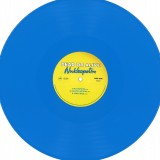
Recorded at PWL Studios, London, “Nukleopatra” is the Band’s sixth studio album and was initially released in Japan in 1995, although
subsequently released in different versions - track existing / versions / durations / artwork - in eight other countries between 1996 and 1998. It contains the singles ‘Rebel Rebel’ and ‘Sex Drive’. The album was not released in the UK, until a re-worked version was included within the ‘Sophisticated Boom Box MMXVI’ box set in 2016. This vinyl edition replicates the original Japanese version, which features longer versions ‘Nukleopatra’ and ‘Sex Drive’, along with rerecorded versions of ‘Unhappy Birthday’ and ‘Gone Too Long’, which appeared on “Fan the Flame (Part 1)”. This special 25th Anniversary Edition of “Nukleopatra” is the first time that the album has been commercially released on vinyl in its original configuration, with original playing durations and will be pressed on 180g heavyweight blue colour vinyl.
- A1: East Man & Streema - Know Like Dat
- A2: East Man & Mic Ty - Everybody Knows
- A3: East Man & Fernando Kep - Ouroboros
- A4: East Man & Lyrical Strally - Ten Ton Riddim
- A5: East Man & Ny Ny - Boys
- A6: East Man & Whack Eye - Who Am I?
- B1: East Man & Eklipse - East Man Theme (Reprise)
- B2: East Man & Darkos Strife - Wow How?
- B3: Ease Up
- B4: Look & Listen (Part 2)
- B5: Machine Gun
- B6: Hi Tek Theme
'Prole Art Threat' is producer Anthoney Hart's second LP for Planet Mu under his East Man alias, after 2018's well received debut 'Red White & Zero'. It brings together a set of MCs from all over London, Darkos and Eklipse from East London and Lyrical Strally from near Feltham who were on the first album, Ny Ny and Mic Ty also from East London, Streema and 'Vision Crew' member Whack Eye from Lewisham plus Fernando Kep, an MC from the burgeoning Brazil grime scene. They work across a cohesive set of tight riddims forged from thoughtful amalgams of grime, dancehall and drum & bass. The album takes its name from a Fall song/mission statement of the same title, the band being self-consciously working class and led by a brilliant autodidact in Mark E Smith. East Man relates that the title is to be taken as “a reflection of working-class creativity and how the establishment marginalise us and (perhaps on a subconscious level) see us as a threat.” Les Back, author of 'The Art of Listening' and 'Out of Whiteness: Color, Politics and Culture (with Vron Ware)' contributes liner notes to the record: East Man understands the force and the democracy of the mic. Listening to Prole Art Threat is like being at a dance. As the mic is passed between each of the MCs, a different tale is ‘elevated... off the map’ as Ny Ny puts it. We hear instalmentsfrom Forest Gate, Lee, Lewisham and Manor Park as these ‘lyrical gaffers’ and ’top boys and girls’ tell tough stories of life under the scrutiny of the ‘Feds’ in a brutal and divided city. The bars and rhymes document what it means to live here; from the double standards applied to the sexuality of young girls and boys to the corrosive violence of everyday life. All this is dissected without compromise. This is not just aLondon story though, the inclusion of Fernando Kep from the burgeoning Grime scene in Brazil is evidence of the outernational reach of the music. The tracks on East Man’s album explode the wilful ignorance of those who see ‘the working class’ in contemporary London as code for whiteness. This is the sound of a proletarian urban multiculture, made from Caribbean and African influences, sound system culture, pirate radio and the inexorable rhythms of Grime, Drum & Bass, Techno and Dancehall. It is the stirring of the "white" & "black" working classes who are living together and coming together on their own terms in sound. ‘Making music because you love it... what the fuck else could you do?’ as East Man says. The tracks and voices you are holding in your hands are, as a result urgent, vital, as hard nails and twice as sharp.
- A1: Frenetics - The Madman Talk
- A2: Vox Rei - Le Ombre Dei Soldati
- A3: The End - Tears In My Eyes
- A4: Les Blusons Noirs - The Scream
- B1: Illogico - Africani Gemiti
- B2: Blaue Reiter - My Inner Tought
- B3: Polaroid - Vita Immaginaria
- B4: Atelier Du Mal - Back To Taiwan
- C1: Sex - A Sickness Called Distress
- C2: Ship Of Fools - Metal Box
- C3: Ideal Standard - Another Loser
- C4: Nadja - Possession
- D1: The Age - Uer
- D2: Dark Ride - Apocalypse
- D3: Mono - From Planets & Satellites
- D4: Tv Dance - Schneller Leben
Searching for new languages beyond the bitter and nihilist dialect of punk, bands like Gaz Nevada, Litfiba, CCCP, Diaframma, Neon, and many others, began spreading their message all along the Italian peninsula during the early eighties and many of the members of these bands are now some of the best musicians/producers in the Italian independent music panorama (Giovanni Lindo Ferretti, Piero Pelù/Litfiba, Bisca, etc.). 16 tracks by 16 Italian underground bands from 1982-1984: bands who faded into oblivion before ever releasing anything of their own on vinyl. It should, however, be stated that if these sixteen bands had been found on an album, EP or single, they certainly would not have lowered the average quality of albums in that genre…not even in terms of sound quality, which has actually been improved upon here (considering that the original tapes had been lying around collecting dust for at least a quarter of a century) by careful restoration.
Die erste Neuauflage vom offiziellen "Die Ärzte" Debut seit vielen Jahren in guter Austattung ( LP, black, 180 gram + DLC )
Gitarre, Schlagzeug, Bass. Drei junge Menschen, die eben noch im Besetzereck ihr erstes Konzert gegeben haben. die Ärzte sind aus Berlin (aus Berlin!). Viele, die BelaFarinRod in letzter Zeit im kleinen Club ihres Vertrauens live gesehen haben, schwören darauf, dass wir hier das Nächste Große Ding haben. Quasi die Beste Band der Welt in the making: Spontan, unberechenbar, witzig, aus Versehen tiefsinnig an den richtigen Stellen und auch sonst ganz einfach wahnsinnig. Nur halt in gut. Acht Tage waren sie im Studio, die dreizehn Tracks ihres Debütalbums klingen standesgemäß rau, laut und so unkonventionell frisch als hätten wir gerade 1984. Mit potenziellen Klassikern wie „Mädchen“ oder „Zu spät“, zukünftigen Lieblingsliedern à la „Schlaflied“ und „Roter Minirock“ sowie einem ganzen Haufen weiterer Songperlen, die man sich auch in dreißig oder vierzig Jahren noch ganz unpeinlich berührt wird anhören können. Und mit „Claudia hat ’nen Schäferhund“. „Debil“ erscheint nun als Vinylalbum (mit Downloadcode)!
- A1: Harold Berty - Django
- A2: Ti L'afrique - Pop Soul Sega
- A3: Claudio - Qui Fine Arrive
- A4: Paul Labonne - Ti Malgache Ti Madras
- A5: Georges Gabriel - Pop Sega
- A6: The Features Of Life - Soul Sabattah
- B1: Roland Fatime - Silvie
- B2: Jean-Claude - Machin Sex
- B3: Joss Henri - Apollo Pop 76
- B4: Coulouce - Beau Pere
- B5: John Kenneth Nelson - Change To Maniere
- B6: Lelou Menwar - Capito
- B7: Daniel Delord - Maria
Killer 13-track compilation of 70's music from Mauritius that evolved from the original sega genre - the music of the slaves as well as their descendants, sung to protest against injustices in Mauritian society.
Created at the crossroads of Afro-Malagasy, the 70s strain fused Western and Indian cultures, pop, soul and funk arrangements, syncopated polyrhythms, saturated guitars, psychedelic organs and Creole vocals. Although the exact origins of sega remain unknown, it contains vocal and percussive practices that originated from Madagascar, Mozambique and East Africa. A social escape and a space for improvisation, satire and verbal jousting, it transcended everyday life and made room for the expression of conflicts and the transgression of taboos.
The main instrument of sega is the ravanne, a large tambourine-like drum made of a large wooden frame and goat skin. It is accompanied by the maravanne, a rectangular rattle filled with seeds, and other homemade forms of percussion. Eric Nelson a solo guitarist and arranger, set up the band Features Of Life which, in the mid 70’s, gave birth to a new sound. Fuzzy distorted guitars and funky beats invite each other to play over the unbridled beats created by fabulous drummer Raoul Lacariate.
The band accompanied a new wave of singers, including the atypical Joseph Roland Fatime aka Ti L’Afrique, a hyperbolic and hyperactive character, a fan of blues and James Brown who launched an explosive raw, and funky style of sega.
In 2016 Patrick Doyle relocated from London to LA, midway through writing his new album – the follow up to his recent acclaimed release as Boys Forever. The self-titled Boys Forever album was Patrick’s debut as a solo artist after years of playing in well-loved indie bands including Veronica Falls, The Royal We and Sexy Kids.
On moving to LA he continued working on the songs for his next record – emailing them to Helen Skinner (who toured as a member of the Boys Forever three-piece live band, and now plays in Barry) who added a bass line to the songs and sent them back to Patrick. They continued to finish writing the record via email and in February 2017 Helen joined Patrick in LA to record Keeping Up Appearances. They recorded the album over four days in February 2017 at LA’s Golden Beat Studios – with Patrick once again teaming up with Andrew Schubert who produced Boys Forever.
It's album release time for this Madrid-based soul/jazz organ trio who have been burning up stages and festivals throughout 2019 and who have already had a successful single out on Rocafort Records. Beat Bronco Organ Trio have not rewritten the Hammond musical handbook, but they do what it says on the tin rather splendidly – a Road Trip that grooves, swings and sashays around the familiar but much loved funky jazz theme.
Although it's impossible to listen to the album without summoning up the ghosts of Jimmies McGriff & Smith and the like, nearly all tracks here are originals and shout out personality, verve and respectful homage to the tradition. Featuring the usual leitmotifs: Shaftish film sountrack, lo-fi lounger, gospel-tinged toe-tapper, the hip shaker and much wah-wah frenesi, there's nothing not to like if the genre is your bag.
The steaming horn section on "Hard Play" thickens the sauce à la JBs and the Meters, aided along by a unique orchestra of handclaps. Vocalist and guitarist Alberto Palacios Anaut storms in with "Hey Hey", an old Dave Bartholomew classic from New Orleans, just to remind us where Fats Domino and Ray Charles got it all from. Chip Wickham makes two welcome appearances on flute, adding an extra jazzy touch to "Squirtly" and "Electro Pi" – the latter a fabulous trippy, spacious head-nodder that demands in our opinion some kind of a wigged out drum'n'bass remix. Every track is clearly dominated by variations on the vintage keyboard, be it Hammond, Clavinet or Minimoog; all roads lead to that sexy, sacred sound.
Spain is already prominent on the modern-day Funk map thanks to groups like The Sweet Vandals, Speak Low and Mighty Vamp – and it comes as no surprise that our hero trio featured at various times in all these bands. Gabri Casanova (keys), Lucas de Mulder (guitar, percussion) and Antonio "Pax" Alvarez (drums, percussion) have been busy reviving the funk gospel for some time now. Road Trip is an elegant culmination of their efforts in keeping alive a revered and timeless tradition that still today serves as a reference to where all the good stuff came from: The Church!
After Nu Guinea’s LP, Nuova Napoli, and Napoli Segreta first compilation, NG RECORDS follows up with an exploration into the unknown groovy side of Naples by releasing Napoli Segreta Vol. 2 Famiglia Discocristiana, DNApoli and Nu Guinea team up again selecting more tracks from their archives, for a new compilation containing 9 mysterious Neapolitan tracks, found in the most hidden corners of remote flea markets around the Vesuvius.
But forget classical Neapolitan songs, "'O Sole Mio" or "Luna Rossa"... Forget about what you expect to find once you land in town … Oh and also forget about Google Maps.
Take a dodgy local guide, keep your eyes open, and follow it to enter the secret downtown, the underground, the routes that no satellite can detect, but beware there is no easy way out.
Napoli Segreta Vol. 2 is a musical journey into the sonic landscapes of Naples that you have never heard of before. A variety of genres merging soul, disco, funk, blues, new wave, afro-beat and boogie, including lyrics in Neapolitan urban slang, instrumental tracks with progressive flavour, and also some unexpected covers!
In Ghana "to chop" is to eat, so the phrase No Funk No Chop quite simply means; deliver afro funk and disco bombs, or no one will eat today. With this in mind we jump on the bus to begin our journey. We find our man Grégoire Lawani in fine form with one of the greatest party starters "Africa Land of Soul". Brethren Tany Welck tells the world that he is indeed a" Sexy Man". Peter Mukoko "Esimo Esimo" delivers the breakdown to end all breakdowns. Django Strong supplies us with his super slick "Hoo Dou Hoo Mine". Jide Obi "Give's It Everything he has got", just listen to that bass! Fosto transports us with a synth laden boogie portraying his vision of Africa, K3 Band give us the "Feeling" and we reach our destination ending with Tchamy Patterson's "Camerounaise Children". So, let's eat!!
We hope you enjoyed your trip!
A record to be enjoyed to its very last second AM Jazz is set to place this songwriter where he just might, finally, receive the recognition he deserves; from unsung hero to a truly worthy candidate for being called up to join the City of Manchester’s ranks of great musical icons. Whether you prefer to know him as Mr. Roberts or simply call him Al, it’s time to become acquainted with the real Jim Noir.
Tossing his bowler onto the hat stand and sliding on his slippers, AM Jazz sees ‘Jim’ putting his feet up whilst Alan Roberts takes the lead. A creative masterpiece for the record player and the mantlepiece, it’s a multi-layered album that features close friends including those dearly departed, and is his truest record to date, by a songwriter painting his own hypnotic Portrait of the Artist as a Young Man.
“I haven’t 'felt' like Jim Noir for a long time. I’m not sure I ever did; it was a construct of other people’s imaginations,” reveals Al. “AM Jazz is definitely the kind of music I make generally. It harks back to when I started making music years ago and didn’t worry about capturing a particular style. It will be nice to show people more of that.
It's the best album I've written; real hypnotic minimalism, the good stuff!” 15 years since he recorded the first ever 'Jim Noir' EP, AM
Jazz is the record all Noirheads won’t be surprised Al had inside him.
Letting the Beatlesesque stylings of his most recent album Finnish Line be (5 years ago no less), AM Jazz suits the Noir repertoire of his catalogue so far and is another homegrown offering which sees the Daveyhulme composer tinkering in his suburban Manchester studio once more, with the magic of his computer work sorcery, analog and tape recordings.
“For this I went back to the slightly more haphazard way I wrote my first album, Tower Of Love, wherein I’d use things in front of me, or a bit wrong like headphones for a microphone, to make the most Hi-Fi Lo-fi album ever.”
Whilst a brief disappearance of Jim’s online persona may have provoked bleak theories as to his whereabouts, Al had little time for digital distraction. Whilst writing and creating with friends, he has worked on electronic pet project, FAX with former Alfie guitarist, Ian Smith, and the vintage analogue house meets electro sound of his own solo EP Granada Personnel Recovery, as well as producing local band, Shaking Chainsor, and helping long-time musical colleague, Aidan Smith with his long-awaited 'The Planets' project; “I’ve been writing in dribs and drabs when I feel like it,” Al says. “I used to write all day everyday but it’s a lot harder now I’m (feeling) over 100 years old.” Never not sonically exploring or being inspired by the sounds around him, there was even a red-carpet moment when he appeared as a film premier guest after a couple of his songs were selected for the OST of director Jason Wingard’s film Eaten By Lions.
Performing all AM Jazz’s instrumental parts himself but also, at the right moment, bringing in present and past pals along the way, sexy lounge song, ‘Hexagons’ features 'Phil Anderson' and Mark Williamson singing and playing “legendary OTT guitar solo” respectively. Meanwhile the orchestration of ‘Peppergone’ waltzes like a beautifully romantic ode to Beethoven’s Moonlight Sonata – a tribute to dearly departed best friend 'Batfinks' who originally wrote the chords in his song 'Peppercorn.' “I hope he doesn’t think it’s shit,” Al jests. Listen closely and you may even find a few unsuspecting celebrity guest appearances as, perhaps, it could be the very first album to feature soundbites of podcasts sneaking onto the recordings. “I will have a podcast on if I’m recording; Adam Buxton, Athletico Mince, Frank Skinner or Richard Herring… I’m sure some mics will have picked them up, like in the old Tower of Love days,” he says referring to his breakout debut.
Culled from around 50 tunes AM Jazz moves like the time of the day, from dawn to night, stirring from the pop of ‘Good Mood’ and ‘Upside Down’s Beta Band groove. “As the album was playing, I imagined this smoky backstreet with all those neon signs outside clubs at about 4am,” Al says. Mellow ‘TOL Circle’ is like Percy Faith’s Theme From A Summer Place synthesized, capturing the style of TV library music or movie soundtrack obscurity that has always stirred Al’s curiosity, and the album plunges into a vast chasm of instrumental exploration with ‘Mystermoods,’ visiting Japan’s funky synth whiz duo Testpattern and Hakabashi Sakamoto. Darkening and deepening in intensity, ‘Eggshell’ is like an undiscovered gem from Angelo Badalamenti’s cutting room floor, the Panda Bear shimmer of ‘Lander’ is where blissful positivity and sadness meet, about another of his friends who left the world too young. “By the album’s close, its nearly time to let go and enter the ether,” he says of the album’s story. “Like one would do when they take their final sigh on this earth.”